
Levothyroxine Sodium .05 mg Tablet, 60-count — NDC 71205-242-60 (Billing 71205-0242-60)
This is a package of 60 tablets of Levothyroxine Sodium .05 mg Tablet from Proficient Rx LP, marketed since Dec 2003 and currently FDA-listed.
NDC database record
One package, one record: these facts belong to NDC 71205-242-60 alone.
- Record
- FDA NDC Directory package listing · Human prescription drug
- Code segments
- 71205 labeler · 242 product · 60 package
- Package marketed since
- Mar 1, 2019
- Sample package
- No — commercial package
- Listing certified through
- Dec 31, 2026
- Barcode (UPC-A, from the NDC)
- 3 7120524260 2
- FDA record last changed
- Jul 24, 2026
Other active recalls for Levothyroxine Sodium (different manufacturers) — 6 · tap to view
Identity & classification
Regulatory identifiers FDA, NLM and CMS codes for this package
Drug-database identifiers Medi-Span GPI and First Databank GCN / HICL / AHFS classification
- GSN (GCN sequence number): 006649
- GCN: 26322
- HICL (First Databank): 002849
- AHFS class code: 68:36.04.00
- RxCUI (RxNorm): 966221
Where does this data come from?
- FDA openFDA NDC Directory · synced Oct 1, 2026
- FDA label on DailyMed · label index refreshed Oct 6, 2026
- RxNorm (NLM RxNav) · catalog refreshed Oct 1, 2026
- Medi-Span GPI (licensed)
- First Databank (licensed) · refreshed Oct 1, 2026
RxNorm drug class
This medicine belongs to the l-Thyroxine class.
Where does this data come from?
- RxClass (NLM) · catalog refreshed Oct 1, 2026
Clinical
- It replaces thyroid hormone when your thyroid doesn’t make enough, a condition called hypothyroidism. Oral forms are also used with surgery and radioiodine for certain thyroid canc...
- Oral forms are usually taken once a day on an empty stomach, about 15 to 60 minutes before breakfast, depending on the product. Keep calcium, iron and antacids at least 4 hours awa...
- Full effect may take 4 to 6 weeks. Your doctor will check TSH and/or T4 blood tests to adjust your dose.
- No. It doesn’t cause weight loss at normal doses if your thyroid is normal. Larger doses can be seriously toxic.
Patient education
Supplement & herbal interactions
Some supplements/herbs that may interact with Levothyroxine Sodium — tap one for details:
Where does this data come from?
- MedlinePlus (NLM) · refreshed Oct 1, 2026
- FDA label on DailyMed · label index refreshed Oct 6, 2026
Ask a licensed pharmacist directly — free, answered by our team.
Pricing
A drug doesn't have one price. Each row is a different public payment system, and none is what you'd pay at the counter — that depends on your insurance. The ⓘ on each row explains what it measures.
| Price system | Per each | Per package |
|---|---|---|
| Retail pharmacies payNADAC · weekly | Not in the retail survey — common for institutional, discontinued, or low-volume packs. | |
| Medicaid paysCMS SDUD · 12 mo | No recent Medicaid claims on file for this NDC — rare and low-volume NDCs are suppressed in the public data. | |
| Medicare drug plans payPart D · Q2 2026 | $0.1283 | $7.70 / 60 tablets |
Where does this data come from?
- CMS NADAC weekly file
- CMS ASP pricing files · refreshed Sep 20, 2026
- CMS Medicaid State Drug Utilization Data · refreshed Oct 8, 2026
- CMS Part D plan pricing files · refreshed Sep 24, 2026
- VA National Acquisition Center price file
Packaging — all sizes for this product
| Package NDC | Description | Marketing start | Marketing end | Status |
|---|---|---|---|---|
| 71205-0242-30 71205-242-30 Main listing | 30 TABLET in 1 BOTTLE, PLASTIC | 2019-03-01 | — | Active |
| 71205-0242-60 You're viewing this | 60 TABLET in 1 BOTTLE, PLASTIC | 2019-03-01 | — | Active |
| 71205-0242-90 71205-242-90 | 90 TABLET in 1 BOTTLE, PLASTIC | 2019-03-01 | — | Active |
You're viewing one of 3 pack sizes for this product.
Pack size FAQ
What quantity is in this package?
How does this package differ from NDC 71205-0242-30?
What NDC number is used to bill for this package of Levothyroxine Sodium .05 mg Tablet?
Therapeutic equivalents
| Product | Labeler | Pack | NADAC/unit | TE | Status | Price vs. this |
|---|---|---|---|---|---|---|
| Levothyroxine Sodium 50 ug 00378-1803-10 | Mylan | 1000 tablets | $0.041 | AB1,AB2,AB3,AB4 | Availability likely | — |
| Levothyroxine Sodium 50 ug 00527-3281-43 | Lannett | 1000 tablets | $0.041 | AB1,AB2,AB3 | Availability likely | — |
| Levothyroxine Sodium .05 mg 00904-6950-61 | Major | 100 tablets | $0.041 | AB1,AB2,AB3 | Availability likely | — |
| Levothyroxine sodium 50 ug 16729-0448-15 | Accord | 90 tablets | $0.041 | AB1,AB2,AB3,AB4 | Availability likely | — |
| Levothyroxine Sodium 50 ug 33342-0394-10 | Macleods | 90 tablets | $0.041 | AB1,AB2,AB3,AB4 | Availability likely | — |
| levothyroxine sodium 50 ug 47781-0643-10 | Alvogen, | 1000 tablets | $0.041 | AB1,AB2,AB3,AB4 | Availability likely | — |
| Levothyroxine Sodium 50 ug 51079-0440-20 | Mylan | 100 tablets | $0.041 | AB1,AB2,AB3,AB4 | Availability likely | — |
| Levothyroxine Sodium .05 mg 60687-0464-01 | American | 100 tablets | $0.041 | AB1,AB2,AB3 | Availability likely | — |
| Levothyroxine Sodium .05 mg 68180-0966-01 | Lupin | 100 tablets | $0.041 | AB1,AB2,AB3 | Availability likely | — |
| Levothyroxine Sodium .05 mg 69238-1831-01 | Amneal | 100 tablets | $0.041 | AB1,AB2,AB3 | Availability likely | — |
| Levothyroxine Sodium 50 ug 72603-0661-01 | NorthStar | 1000 tablets | $0.041 | AB1,AB2,AB3,AB4 | Availability likely | — |
| Euthyrox 50 ug 72305-0050-30 | Provell | 30 tablets | $0.198 | — | Discontinued | — |
| Levoxyl 50 ug 60793-0851-01 | Pfizer | 100 tablets | $0.854 | AB1,AB3 | Availability likely | — |
| Synthroid 50 ug 00074-4552-11 | AbbVie | 100 tablets | $1.662 | AB1,AB2 | Availability likely | — |
| Unithroid 50 ug 60846-0802-01 | Amneal | 100 tablets | $4.183 | AB1,AB2,AB3 | Availability likely | — |
| Levothyroxine sodium 50 ug 00480-8687-01 | Teva | 100 tablets | — | AB1,AB2,AB3,AB4 | Discontinued | — |
| Levothyroxine Sodium .05 mg 00615-8574-05 | NCS | 15 tablets | — | AB1,AB2,AB3 | FDA listed | — |
| Levothyroxine Sodium .05 mg 31722-0285-01 | Camber | 100 tablets | — | AB4 | FDA listed | — |
| Levothyroxine sodium 50 ug 50090-6090-00 | A-S | 30 tablets | — | AB1,AB2,AB3,AB4 | FDA listed | — |
| Levothyroxine Sodium .05 mg 50090-6569-00 | A-S | 30 tablets | — | AB1,AB2,AB3 | FDA listed | — |
| Levothyroxine Sodium .05 mg 50090-6572-00 | A-S | 90 tablets | — | AB1,AB2,AB3 | FDA listed | — |
| Levothyroxine Sodium 50 ug 50090-6594-00 | A-S | 90 tablets | — | AB1,AB2,AB3 | FDA listed | — |
| Levothyroxine sodium 50 ug 50090-6660-00 | A-S | 90 tablets | — | AB1,AB2,AB3,AB4 | FDA listed | — |
| Levothyroxine Sodium 50 ug 50090-7562-00 | A-S | 30 tablets | — | AB1,AB2,AB3,AB4 | FDA listed | — |
| Levothyroxine Sodium 50 ug 50090-7563-00 | A-S | 90 tablets | — | AB1,AB2,AB3,AB4 | FDA listed | — |
| Levothyroxine Sodium .05 mg 51655-0453-52 | Northwind | 30 tablets | — | AB1,AB2,AB3 | FDA listed | — |
| Levothyroxine Sodium 50 ug 51655-0532-52 | Northwind | 30 tablets | — | AB1,AB2,AB3 | FDA listed | — |
| levothyroxine sodium 50 ug 51655-0723-52 | Northwind | 30 tablets | — | AB1,AB2,AB3,AB4 | FDA listed | — |
| Levothyroxine sodium 50 ug 51655-0739-52 | Northwind | 30 tablets | — | AB1,AB2,AB3,AB4 | FDA listed | — |
| Levothyroxine Sodium .05 mg 51655-0924-52 | Northwind | 30 tablets | — | AB1,AB2,AB3 | FDA listed | — |
| Levothyroxine Sodium .05 mg 55154-3559-00 | Cardinal | 10 tablets | — | AB1,AB2,AB3 | FDA listed | — |
| Levothyroxine Sodium 50 ug 55154-5380-00 | Cardinal | 10 tablets | — | AB1,AB2,AB3,AB4 | FDA listed | — |
| levothyroxine sodium 50 ug 63629-8712-01 | Bryant | 1000 tablets | — | AB1,AB2,AB3,AB4 | FDA listed | — |
| Levothyroxine Sodium .05 mg 68071-3750-09 | NuCare | 90 tablets | — | AB1,AB2,AB3 | FDA listed | — |
| Levothyroxine Sodium 50 ug 68071-3996-09 | NuCare | 90 tablets | — | AB1,AB2,AB3,AB4 | FDA listed | — |
| levothyroxine sodium 50 ug 68071-5226-09 | NuCare | 90 tablets | — | AB1,AB2,AB3,AB4 | FDA listed | — |
| Levothyroxine Sodium 50 ug 68788-4005-03 | Preferred | 30 tablets | — | AB1,AB2,AB3,AB4 | FDA listed | — |
| levothyroxine sodium 50 ug 68788-7698-03 | Preferred | 30 tablets | — | AB1,AB2,AB3,AB4 | FDA listed | — |
| Levothyroxine sodium 50 ug 68788-7911-03 | Preferred | 30 tablets | — | AB1,AB2,AB3,AB4 | FDA listed | — |
| Levothyroxine sodium 50 ug 70518-3208-00 | REMEDYREPACK | 90 tablets | — | AB1,AB2,AB3,AB4 | FDA listed | — |
| Levothyroxine Sodium .05 mg 70518-4390-00 | REMEDYREPACK | 90 tablets | — | AB1,AB2,AB3 | FDA listed | — |
| Levothyroxine Sodium .05 mgthis 71205-0242-60 | Proficient | 60 tablets | — | AB1,AB2,AB3 | FDA listed | — |
| levothyroxine sodium 50 ug 71205-0352-30 | Proficient | 30 tablets | — | AB1,AB2,AB3,AB4 | FDA listed | — |
| Levothyroxine sodium 50 ug 71205-0646-30 | Proficient | 30 tablets | — | AB1,AB2,AB3,AB4 | FDA listed | — |
| levothyroxine sodium 50 ug 71335-1502-01 | Bryant | 30 tablets | — | AB1,AB2,AB3,AB4 | FDA listed | — |
| levothyroxine sodium 50 ug 71335-2288-01 | Bryant | 1000 tablets | — | AB1,AB2,AB3,AB4 | FDA listed | — |
| Levothyroxine sodium 50 ug 71335-9617-01 | Bryant | 30 tablets | — | AB1,AB2,AB3,AB4 | FDA listed | — |
| Levothyroxine Sodium 50 ug 71335-9762-01 | Bryant | 30 tablets | — | AB1,AB2,AB3 | FDA listed | — |
| Levothyroxine Sodium 50 ug 72189-0155-30 | DIRECT | 30 tablets | — | AB1,AB2,AB3,AB4 | FDA listed | — |
| Levothyroxine sodium 50 ug 72789-0272-30 | PD-Rx | 30 tablets | — | AB1,AB2,AB3,AB4 | FDA listed | — |
| Levothyroxine Sodium .05 mg 72865-0237-10 | XLCare | 1000 tablets | — | AB4 | FDA listed | — |
| Levothyroxine Sodium 50 ug 82804-0099-30 | Proficient | 30 tablets | — | AB1,AB2,AB3 | FDA listed | — |
| Levothyroxine sodium 50 ug 82804-0149-30 | Proficient | 30 tablets | — | AB1,AB2,AB3,AB4 | FDA listed | — |
| Levothyroxine sodium 50 ug 87063-0084-00 | ASCLEMED | 1000 tablets | — | AB1,AB2,AB3,AB4 | FDA listed | — |
| Levothyroxine Sodium .05 mg 67046-0819-03 | Coupler | 30 tablets | — | AB1,AB2,AB3 | FDA listed | — |
| Levothyroxine Sodium .05 mg 82804-0314-30 | Proficient | 30 tablets | — | AB1,AB2,AB3 | FDA listed | — |
Where does this data come from?
- FDA openFDA NDC Directory · synced Oct 1, 2026
- FDA Orange Book · refreshed Oct 3, 2026
- CMS NADAC weekly file
Availability & generic status
FDA-approved generic versions are listed, and recent pricing/market data suggests they may be available — see Therapeutic equivalents.
Where does this data come from?
- FDA Orange Book · refreshed Oct 3, 2026
Inactive Ingredients / Excipients
Inactive ingredients, also called excipients, are components of the drug product other than the active ingredient. They may include fillers, dyes, coatings, preservatives, flavors, or other formulation ingredients.
🧪 Avoiding an ingredient? See Levothyroxine inactive ingredients by manufacturer: every current product's list side by side, so you can ask your pharmacy for the version that does not list it.
💡 Tap an ingredient (hover on desktop) to see what it is and why it’s used.
-
UNII 5C5403N26O
Acacia is a natural gum derived from acacia tree sap. It serves as a binder, thickener, and emulsifier to help hold ingredients together, improve texture, and stabilize the medicine.
-
UNII J2B2A4N98G
Lactose is a natural sugar derived from milk. In medications, it serves as a filler and binder to add bulk and help hold tablet or capsule ingredients together during manufacturing.
-
UNII 70097M6I30
Magnesium stearate is a salt made from magnesium and stearic acid, a fatty substance. It's used in tablets and capsules as a lubricant and glidant to help ingredients flow smoothly during manufacturing and prevent sticking.
-
UNII OP1R32D61U
Microcrystalline cellulose is a purified form of cellulose, a natural fiber from plant sources. It acts as a binder and filler in tablets and capsules, helping hold ingredients together and give the medicine its shape and size.
-
UNII ETJ7Z6XBU4
Silicon dioxide is a naturally occurring mineral used as a glidant and anti-caking agent. It helps powder ingredients flow smoothly and prevents clumping during manufacturing and storage.
-
UNII 5856J3G2A2
A starch-based powder made from potatoes and processed with sodium. It acts as a disintegrant, helping the tablet or capsule break apart quickly in the stomach so the medicine can be absorbed.
-
UNII O8232NY3SJ
A plant-based carbohydrate derived from corn kernels. It acts as a filler to add bulk, a binder to hold ingredients together, and a disintegrant to help the tablet break apart in your stomach for absorption.
7 inactive ingredients listed in the exact product block matched to this NDC.
Where does this data come from?
ingredient classCode="IACT" elements from the exact product block matched by this NDC. Label-section narrative from DailyMed / the openFDA label index is shown separately when available.- FDA label on DailyMed · label index refreshed Oct 6, 2026
- FDA openFDA NDC Directory · synced Oct 1, 2026
Inactive ingredient FAQ
Are inactive ingredients the same for every manufacturer?
Why might an inactive ingredient be missing?
Can inactive ingredients matter?
Manufacturer & labeler
More NDCs from Proficient Rx LP labeler code 71205
- Lorazepam 1 mg Tablet NDC 71205-235-02
- Eszopiclone 3 mg Tablet, Film Coated NDC 71205-236-30
- Levothyroxine Sodium .137 mg Tablet NDC 71205-237-30
- Prednisone 20 mg Tablet NDC 71205-239-05
- Levothyroxine Sodium .1 mg Tablet NDC 71205-240-30
- Carisoprodol 350 mg Tablet NDC 71205-241-20
- Acyclovir 200 mg Capsule NDC 71205-243-30
- Benazepril Hydrochloride 20 mg Tablet NDC 71205-244-30
- Lamotrigine 100 mg Tablet NDC 71205-245-30
- Atorvastatin Calcium 10 mg Tablet, Film Coated NDC 71205-246-30
- Atorvastatin Calcium 20 mg Tablet, Film Coated NDC 71205-247-30
- Valsartan and Hydrochlorothiazide 12.5 mg; 80 mg Tablet, Film Coated NDC 71205-249-30
Where does this data come from?
- FDA openFDA NDC Directory · synced Oct 1, 2026
- Drugs@FDA
Full prescribing information FDA SPL
🚨 Boxed Warning ▾
WARNING: Thyroid hormones, including Levothyroxine Sodium Tablets, USP, either alone or with other therapeutic agents, should not be used for the treatment of obesity for weight loss. In euthyroid patients, doses within the range of daily hormonal requirements are ineffective for weight reduction. Larger doses may produce serious or even life threatening manifestations of toxicity, particularly when given in association with sympathomimetic amines such as those used for their anorectic effects.
🎯 Indications and Usage ▾
INDICATIONS AND USAGE Levothyroxine sodium is used for the following indications: Hypothyroidism - As replacement or supplemental therapy in congenital or acquired hypothyroidism of any etiology, except transient hypothyroidism during the recovery phase of subacute thyroiditis. Specific indications include: primary (thyroidal), secondary (pituitary), and tertiary (hypothalamic) hypothyroidism and subclinical hypothyroidism. Primary hypothyroidism may result from functional deficiency, primary atrophy, partial or total congenital absence of the thyroid gland, or from the effects of surgery, radiation, or drugs, with or without the presence of goiter.
Pituitary TSH Suppression - In the treatment or prevention of various types of euthyroid goiters (see WARNINGS and PRECAUTIONS ), including thyroid nodules (see WARNINGS and PRECAUTIONS ), subacute or chronic Iymphocytic thyroiditis (Hashimoto's thyroiditis), multinodular goiter (see WARNINGS and PRECAUTIONS ), and, as an adjunct to surgery and radioiodine therapy in the management of thyrotropin-dependent well-differentiated thyroid cancer.
⏱️ Dosage and Administration ▾
DOSAGE AND ADMINISTRATION General Principles: The goal of replacement therapy is to achieve and maintain a clinical and biochemical euthyroid state. The goal of suppressive therapy is to inhibit growth and/or function of abnormal thyroid tissue. The dose of Levothyroxine Sodium Tablets, USP that is adequate to achieve these goals depends on a variety of factors including the patient's age, body weight, cardiovascular status, concomitant medical conditions, including pregnancy, concomitant medications, and the specific nature of the condition being treated (see WARNINGS and PRECAUTIONS ).
Hence, the following recommendations serve only as dosing guidelines. Dosing must be individualized and adjustments made based on periodic assessment of the patient's clinical response and laboratory parameters (see PRECAUTIONS, Laboratory Tests ). Levothyroxine Sodium Tablets, USP should be taken in the morning on an empty stomach, at least one-half hour to one hour before any food is eaten.
Levothyroxine Sodium Tablets, USP should be taken at least 4 hours apart from drugs that are known to interfere with its absorption (see PRECAUTIONS, Drug Interactions ). Due to the long half-life of levothyroxine, the peak therapeutic effect at a given dose of levothyroxine sodium may not be attained for 4-6 weeks. Caution should be exercised when administering Levothyroxine Sodium Tablets, USP to patients with underlying cardiovascular disease, to the elderly, and to those with concomitant adrenal insufficiency (see PRECAUTIONS ).
Specific Patient Populations: Hypothyroidism in Adults and in Children in Whom Growth and Puberty are Complete (see WARNINGS and PRECAUTIONS, Laboratory Tests ). Therapy may begin at full replacement doses in otherwise healthy individuals less than 50 years old and in those older than 50 years who have been recently treated for hyperthyroidism or who have been hypothyroid for only a short time (such as a few months). The average full replacement dose of levothyroxine sodium is approximately 1.7 mcg/kg/day (e.g., 100-125 mcg/day for a 70 kg adult).
Older patients may require less than 1 mcg/kg/day. Levothyroxine sodium doses greater than 200 mcg/day are seldom required. An inadequate response to daily doses ≥ 300 mcg/day is rare and may indicate poor compliance, malabsorption, and/or drug interactions.
For most patients older than 50 years or for patients under 50 years of age with underlying cardiac disease, an initial starting dose of 25-50 mcg/day of levothyroxine sodium is recommended, with gradual increments in dose at 6-8 week intervals, as needed. The recommended starting dose of levothyroxine sodium in elderly patients with cardiac disease is 12.5-25 mcg/day , with gradual dose increments at 4-6 week intervals. The levothyroxine sodium dose is generally adjusted in 12.5-25 mcg increments until the patient with primary hypothyroidism is clinically euthyroid and the serum TSH has normalized.
In patients with severe hypothyroidism, the recommended initial levothyroxine sodium dose is 12.5-25 mcg/day with increases of 25 mcg/day every 2-4 weeks, accompanied by clinical and laboratory assessment, until the TSH level is normalized. In patients with secondary (pituitary) or tertiary (hypothalamic) hypothyroidism, the levothyroxine sodium dose should be titrated until the patient is clinically euthyroid and the serum free-T 4 level is restored to the upper half of the normal range. Pediatric Dosage - Congenital or Acquired Hypothyroidism (see PRECAUTIONS, Laboratory Tests ) General Principles In general, levothyroxine therapy should be instituted at full replacement doses as soon as possible.
Delays in diagnosis and institution of therapy may have deleterious effects on the child's intellectual and physical growth and development. Undertreatment and overtreatment should be avoided (see PRECAUTIONS, Pediatric Use ). Levothyroxine Sodium Tablets, USP may be administered to infants and children who cannot swallow intact tablets by… [Excerpted — this section continues on DailyMed.]
⛔ Contraindications ▾
CONTRAINDICATIONS Levothyroxine is contraindicated in patients with untreated subclinical (suppressed serum TSH level with normal T 3 and T 4 levels) or overt thyrotoxicosis of any etiology and in patients with acute myocardial infarction. Levothyroxine is contraindicated in patients with uncorrected adrenal insufficiency since thyroid hormones may precipitate an acute adrenal crisis by increasing the metabolic clearance of glucocorticoids (see PRECAUTIONS ). Levothyroxine Sodium Tablets, USP is contraindicated in patients with hypersensitivity to any of the inactive ingredients in Levothyroxine Sodium Tablets, USP.
(See DESCRIPTION, Inactive Ingredients ).
⚠️ Warnings ▾
WARNINGS WARNING: Thyroid hormones, including Levothyroxine Sodium Tablets, USP, either alone or with other therapeutic agents, should not be used for the treatment of obesity for weight loss. In euthyroid patients, doses within the range of daily hormonal requirements are ineffective for weight reduction. Larger doses may produce serious or even life threatening manifestations of toxicity, particularly when given in association with sympathomimetic amines such as those used for their anorectic effects.
Levothyroxine sodium should not be used in the treatment of male or female infertility unless this condition is associated with hypothyroidism. In patients with nontoxic diffuse goiter or nodular thyroid disease, particularly the elderly or those with underlying cardiovascular disease, levothyroxine sodium therapy is contraindicated if the serum TSH level is already suppressed due to the risk of precipitating overt thyrotoxicosis (see CONTRAINDICATIONS ). If the serum TSH level is not suppressed, Levothyroxine Sodium Tablets, USP should be used with caution in conjunction with careful monitoring of thyroid function for evidence of hyperthyroidism and clinical monitoring for potential associated adverse cardiovascular signs and symptoms of hyperthyroidism.
🤒 Adverse Reactions ▾
ADVERSE REACTIONS Adverse reactions associated with levothyroxine therapy are primarily those of hyperthyroidism due to therapeutic overdosage (see PRECAUTIONS and OVERDOSAGE ). They include the following: General: fatigue, increased appetite, weight loss, heat intolerance, fever, excessive sweating; Central nervous system: headache, hyperactivity, nervousness, anxiety, irritability, emotional lability, insomnia; Musculoskeletal: tremors, muscle weakness; Cardiovascular: palpitations, tachycardia, arrhythmias, increased pulse and blood pressure, heart failure, angina, myocardial infarction, cardiac arrest; Respiratory: dyspnea; Gastrointestinal: diarrhea, vomiting, abdominal cramps and elevation in liver function tests; Dermatologic: hair loss; flushing; Endocrine: decreased bone mineral density; Reproductive: menstrual irregularities, impaired fertility.
Pseudotumor cerebri and slipped capital femoral epiphysis have been reported in children receiving levothyroxine therapy. Overtreatment may result in craniosynostosis in infants and premature closure of the epiphyses in children with resultant compromised height. Seizures have been reported rarely with the institution of levothyroxine therapy.
Inadequate levothyroxine dosage will produce or fail to ameliorate the signs and symptoms of hypothyroidism. Hypersensitivity reactions to inactive ingredients have occurred in patients treated with thyroid hormone products. These include urticaria, pruritus, skin rash, flushing, angioedema, various Gl symptoms (abdominal pain, nausea, vomiting and diarrhea), fever, arthralgia, serum sickness and wheezing.
Hypersensitivity to levothyroxine itself is not known to occur.
🔄 Drug Interactions ▾
Drug Interactions Many drugs affect thyroid hormone pharmacokinetics and metabolism (e.g., absorption, synthesis, secretion, catabolism, protein binding, and target tissue response) and may alter the therapeutic response to Levothyroxine Sodium Tablets, USP. In addition, thyroid hormones and thyroid status have varied effects on the pharmacokinetics and action of other drugs. A listing of drug-thyroidal axis interactions is contained in Table 2.
The list of drug-thyroidal axis interactions in Table 2 may not be comprehensive due to the introduction of new drugs that interact with the thyroidal axis or the discovery of previously unknown interactions. The prescriber should be aware of this fact and should consult appropriate reference sources (e.g., package inserts of newly approved drugs, medical literature) for additional information if a drug-drug interaction with levothyroxine is suspected. Table 2: Drug-Thyroidal Axis Interactions Drug or Drug Class Effect Drugs that may reduce TSH secretion - the reduction is not sustained; therefore, hypothyroidism does not occur Dopamine/Dopamine Agonists Glucocorticoids Octreotide Use of these agents may result in a transient reduction in TSH secretion when administered at the following doses: dopamine ( ≥ 1 mcg/kg/min); Glucocorticoids (hydrocortisone ≥ 100 mg/day or equivalent); Octreotide ( > 100 mcg/day).
Drugs that alter thyroid hormone secretion Drugs that may decrease thyroid hormone secretion, which may result in hypothyroidism Aminoglutethimide Amiodarone Iodide (including iodine-containing Radiographic contrast agents) Lithium Methimazole Propylthioracil (PTU) Sulfonamides Tolbutamide Long-term lithium therapy can result in goiter in up to 50% of patients, and either subclinical or overt hypothyroidism, each in up to 20% of patients. The fetus, neonate, elderly and euthyroid patients with underlying thyroid disease (e.g., Hashimoto's thyroiditis or with Grave's disease previously treated with radioiodine or surgery) are among those individuals who are particularly susceptible to iodine-induced hypothyroidism.
Oral cholecystographic agents and amiodarone are slowly excreted, producing more prolonged hypothyroidism than parenterally administered iodinated contrast agents. Long-term amino-glu-tethimide therapy may minimally decrease T 4 and T 3 levels and increase TSH, although all values remain within normal limits in most patients. Drugs that may increase thyroid hormone secretion, which may result in hyperthyroidism Amiodarone Iodide (including iodine-containing Radiographic contrast agents) Iodide and drugs that contain pharmacologic amounts of iodide may cause hyperthyroidism in euthyroid patients with Grave's disease previously treated with antithyroid drugs or in euthyroid patients with thyroid autonomy (e.g., multinodular goiter or hyper functioning thyroid adenoma).
Hyperthyroidism may develop over several weeks and may persist for several months after therapy discontinuation. Amiodarone may induce hyperthyroidism by causing thyroiditis. Drugs that may decrease T 4 absorption, which may result in hypothyroidism Antacids - Aluminum & Magnesium Hydroxides - Simethicone Bile Acid Sequestrants - Cholestyramine - Colestipol Calcium Carbonate Cation Exchange Resins - Kayexalate Ferrous Sulfate Orlistat Sucralfate Concurrent use may reduce the efficacy of levothyroxine by binding and delaying or preventing absorption, potentially resulting in hypothyroidism.
Calcium carbonate may form an insoluble chelate with levothyroxine, and ferrous sulfate likely forms a ferric-thyroxine complex. Administer levothyroxine at least 4 hours apart from these agents. Patients treated concomitantly with orlistat and levothyroxine should be monitored for changes in thyroid function.
Drugs that may alter T 4 and T 3 serum transport - but FT 4 concentration remains normal; and, therefore, the patient remains euthyroid Drugs that may increase serum TBG concentration Drugs that may decrease serum TB… [Excerpted — this section continues on DailyMed.]
🔄 Drug / Laboratory Test Interactions ▾
Drug-Laboratory Test Interactions Changes in TBG concentration must be considered when interpreting T 4 and T 3 values, which necessitates measurement and evaluation of unbound (free) hormone and/or determination of the free T 4 index (FT 4 I). Pregnancy, infectious hepatitis, estrogens, estrogen-containing oral contraceptives, and acute intermittent porphyria increase TBG concentrations. Decreases in TBG concentrations are observed in nephrosis, severe hypoproteinemia, severe liver disease, acromegaly, and after androgen or corticosteroid therapy (see also Table 2 ).
Familial hyper- or hypo-thyroxine binding globulinemias have been described, with the incidence of TBG deficiency approximating 1 in 9000.
🤰 Pregnancy ▾
Pregnancy - Category A Studies in women taking levothyroxine sodium during pregnancy have not shown an increased risk of congenital abnormalities. Therefore, the possibility of fetal harm appears remote. Levothyroxine Sodium Tablets, USP should not be discontinued during pregnancy and hypothyroidism diagnosed during pregnancy should be promptly treated.
Hypothyroidism during pregnancy is associated with a higher rate of complications, including spontaneous abortion, pre-eclampsia, stillbirth and premature delivery. Maternal hypothyroidism may have an adverse effect on fetal and childhood growth and development. During pregnancy, serum T 4 levels may decrease and serum TSH levels increase to values outside the normal range.
Since elevations in serum TSH may occur as early as 4 weeks gestation, pregnant women taking Levothyroxine Sodium Tablets, USP should have their TSH measured during each trimester. An elevated serum TSH level should be corrected by an increase in the dose of Levothyroxine Sodium Tablets, USP. Since postpartum TSH levels are similar to preconception values, the Levothyroxine Sodium Tablets, USP dosage should return to the pre-pregnancy dose immediately after delivery.
A serum TSH level should be obtained 6-8 weeks postpartum. Thyroid hormones cross the placental barrier to some extent as evidenced by levels in cord blood of athyroceotic fetuses being approximately one third maternal levels. Transfer of thyroid hormone from the mother to the fetus, however, may not be adequate to prevent in utero, hypothyroidism.
🧒 Pediatric Use ▾
Pediatric Use General The goal of treatment in pediatric patients with hypothyroidism is to achieve and maintain normal intellectual and physical growth and development. The initial dose of levothyroxine varies with age and body weight (see DOSAGE AND ADMINISTRATION , Table 3 ). Dosing adjustments are based on an assessment of the individual patient's clinical and laboratory parameters (see PRECAUTIONS, Laboratory Tests ).
In children in whom a diagnosis of permanent hypothyroidism has not been established, it is recommended that levothyroxine administration be discontinued for a 30-day trial period, but only after the child is at least 3 years of age. Serum T 4 and TSH levels should then be obtained. If the T 4 is low and the TSH high, the diagnosis of permanent hypothyroidism is established, and levothyroxine therapy should be reinstituted.
If the T 4 and TSH levels are normal, euthyroidism may be assumed and, therefore, the hypothyroidism can be considered to have been transient. In this instance, however, the physician should carefully monitor the child and repeat the thyroid function tests if any signs or symptoms of hypothyroidism develop. In this setting, the clinician should have a high index of suspicion of relapse.
If the results of the levothyroxine withdrawal test are inconclusive, careful follow-up and subsequent testing will be necessary. Since some more severely affected children may become clinically hypothyroid when treatment is discontinued for 30 days, an alternate approach is to reduce the replacement dose of levothyroxine by half during the 30-day trial period. If, after 30 days, the serum TSH is elevated above 20 mU/L, the diagnosis of permanent hypothyroidism is confirmed, and full replacement therapy should be resumed.
However, if the serum TSH has not risen to greater than 20 mU/L, levothyroxine treatment should be discontinued for another 30-day trial period followed by repeat serum T 4 and TSH. The presence of concomitant medical conditions should be considered in certain clinical circumstances and, if present, appropriately treated (see PRECAUTIONS ). Congenital Hypothyroidism (see PRECAUTIONS, Laboratory Tests and DOSAGE AND ADMINISTRATION ) Rapid restoration of normal serum T 4 concentrations is essential for preventing the adverse effects of congenital hypothyroidism on intellectual development as well as on overall physical growth and maturation.
Therefore, Levothyroxine Sodium Tablets, USP therapy should be initiated immediately upon diagnosis and is generally continued for life. During the first 2 weeks of Levothyroxine Sodium Tablets, USP therapy, infants should be closely monitored for cardiac overload, arrhythmias, and aspiration from avid suckling. The patient should be monitored closely to avoid undertreatment or overtreatment.
Undertreatment may have deleterious effects on intellectual development and linear growth. Overtreatment has been associated with craniosynostosis in infants, and may adversely affect the tempo of brain maturation and accelerate the bone age with resultant premature closure of the epiphyses and compromised adult stature. Acquired Hypothyroidism in Pediatric Patients The patient should be monitored closely to avoid undertreatment and overtreatment.
Undertreatment may result in poor school performance due to impaired concentration and slowed mentation and in reduced adult height. Overtreatment may accelerate the bone age and result in premature epiphyseal closure and compromised adult stature. Treated children may manifest a period of catch-up growth, which may be adequate in some cases to normalize adult height.
In children with severe or prolonged hypothyroidism, catch-up growth may not be adequate to normalize adult height.
🧓 Geriatric Use ▾
Geriatric Use Because of the increased prevalence of cardiovascular disease among the elderly, levothyroxine therapy should not be initiated at the full replacement dose (see WARNINGS , PRECAUTIONS and DOSAGE AND ADMINISTRATION ).
🆘 Overdosage ▾
OVERDOSAGE The signs and symptoms of overdosage are those of hyperthyroidism (see PRECAUTIONS and ADVERSE REACTIONS ). In addition, confusion and disorientation may occur. Cerebral embolism, shock, coma, and death have been reported.
Seizures have occurred in a child ingesting 18 mg of levothyroxine. Symptoms may not necessarily be evident or may not appear until several days after ingestion of levothyroxine sodium. Treatment of Overdosage Levothyroxine sodium should be reduced in dose or temporarily discontinued if signs or symptoms of overdosage occur.
Acute Massive Overdosage - This may be a life-threatening emergency, therefore, symptomatic and supportive therapy should be instituted immediately. If not contraindicated (e.g., by seizures, coma, or loss of the gag reflex), the stomach should be emptied by emesis or gastric lavage to decrease gastrointestinal absorption. Activated charcoal or cholestyramine may also be used to decrease absorption.
Central and peripheral increased sympathetic activity may be treated by administering β-receptor antagonists, e.g., propranolol, provided there are no medical contraindications to their use. Provide respiratory support as needed; control congestive heart failure and arrhythmia; control fever, hypoglycemia, and fluid loss as necessary. Large doses of antithyroid drugs (e.g., methimazole or propylthiouracil) followed in one to two hours by large doses of iodine may be given to inhibit synthesis and release of thyroid hormones.
Glucocorticoids may be given to inhibit the conversion of T 4 to T 3 . Plasmapheresis, charcoal hemoperfusion and exchange transfusion have been reserved for cases in which continued clinical deterioration occurs despite conventional therapy. Because T 4 is highly protein bound, very little drug will be removed by dialysis.
🧬 Clinical Pharmacology ▾
CLINICAL PHARMACOLOGY Thyroid hormone synthesis and secretion is regulated by the hypothalamic-pituitary-thyroid axis. Thyrotropin-releasing hormone (TRH) released from the hypothalamus stimulates secretion of thyrotropin-stimulating hormone, TSH, from the anterior pituitary. TSH, in turn, is the physiologic stimulus for the synthesis and secretion of thyroid hormones, L-thyroxine (T 4 ) and L-triiodothyronine (T 3 ), by the thyroid gland.
Circulating serum T 3 and T 4 levels exert a feedback effect on both TRH and TSH secretion. When serum T 3 and T 4 levels increase, TRH and TSH secretion decrease. When thyroid hormone levels decrease, TRH and TSH secretion increase.
The mechanisms by which thyroid hormones exert their physiologic actions are not completely understood, but it is thought that their principal effects are exerted through control of DNA transcription and protein synthesis. T 3 and T 4 diffuse into the cell nucleus and bind to thyroid receptor proteins attached to DNA. This hormone nuclear receptor complex activates gene transcription and synthesis of messenger RNA and cytoplasmic proteins.
Thyroid hormones regulate multiple metabolic processes and play an essential role in normal growth and development, and normal maturation of the central nervous system and bone. The metabolic actions of thyroid hormones include augmentation of cellular respiration and thermogenesis, as well as metabolism of proteins, carbohydrates and lipids. The protein anabolic effects of thyroid hormones are essential to normal growth and development.
The physiologic actions of thyroid hormones are produced predominately by T 3 , the majority of which (approximately 80%) is derived from T 4 by deiodination in peripheral tissues. Levothyroxine, at doses individualized according to patient response, is effective as replacement or supplemental therapy in hypothyroidism of any etiology, except transient hypothyroidism during the recovery phase of subacute thyroiditis. Levothyroxine is also effective in the suppression of pituitary TSH secretion in the treatment or prevention of various types of euthyroid goiters, including thyroid nodules, Hashimoto's thyroiditis, multinodular goiter and, as adjunctive therapy in the management of thyrotropin-dependent well-differentiated thyroid cancer (see INDICATIONS AND USAGE , PRECAUTIONS , DOSAGE AND ADMINISTRATION ).
PHARMACOKINETICS Absorption - Absorption of orally administered T 4 from the gastrointestinal (GI) tract ranges from 40% to 80%. The majority of the levothyroxine dose is absorbed from the jejunum and upper ileum. The relative bioavailability of Levothyroxine Sodium Tablets, USP, compared to an equal nominal dose of oral levothyroxine sodium solution, is approximately 99%.
T 4 absorption is increased by fasting, and decreased in malabsorption syndromes and by certain foods such as soybean infant formula. Dietary fiber decreases bioavailability of T 4 . Absorption may also decrease with age.
In addition, many drugs and foods affect T 4 absorption (see PRECAUTIONS, Drug Interactions and Drug-Food Interactions ). Distribution - Circulating thyroid hormones are greater than 99% bound to plasma proteins, including thyroxine-binding globulin (TBG), thyroxine-binding prealbumin (TBPA), and albumin (TBA), whose capacities and affinities vary for each hormone. The higher affinity of both TBG and TBPA for T 4 partially explains the higher serum levels, slower metabolic clearance, and longer half-life of T 4 compared to T 3 .
Protein-bound thyroid hormones exist in reverse equilibrium with small amounts of free hormone. Only unbound hormone is metabolically active. Many drugs and physiologic conditions affect the binding of thyroid hormones to serum proteins (see PRECAUTIONS, Drug Interactions and Drug-Laboratory Test Interactions ).
Thyroid hormones do not readily cross the placental barrier (see PRECAUTIONS, Pregnancy ). Metabolism - T 4 is slowly eliminated (see TABLE 1 ). The major pathway of thyro… [Excerpted — this section continues on DailyMed.]
📦 How Supplied / Storage and Handling ▾
HOW SUPPLIED Levothyroxine Sodium Tablets, USP are round, color coded, partial bisected tablets debossed with JSP and ID Number: Strength (mcg) Color NDC# for bottles of 30 NDC# for bottles of 60 NDC# for bottles of 90 50 White NDC 71205-242-30 NDC 71205-242-60 NDC 71205-242-90 STORAGE CONDITIONS 20°C to 25°C (68°F to 77°F) with excursions between 15°C to 30°C (59°F to 86°F) Rx only Manufactured for: Amneal Pharmaceuticals LLC Bridgewater, NJ 08807 Manufactured by: Jerome Stevens Pharmaceuticals, Inc. Bohemia, NY 11716 Manufactured by: Proficient Rx LP Thousand Oaks, CA 91320 Rev.
10/18 MG #18326
📋 Description ▾
DESCRIPTION Levothyroxine Sodium Tablets, USP contain synthetic crystalline L-3,3',5,5'-tetraiodothyronine sodium salt [levothyroxine (T 4 ) sodium]. Synthetic T 4 is identical to that produced in the human thyroid gland. Levothyroxine (T 4 ) sodium has an empirical formula of C 15 H 10 I 4 N NaO 4 • H 2 O, molecular weight of 798.86 g/mol (anhydrous), and structural formula as shown: Inactive Ingredients Colloidal silicon dioxide, lactose, magnesium stearate, microcrystalline cellulose, corn starch, acacia and sodium starch glycolate.
The following are the coloring additives per tablet strength: Strength (mcg) Color Additive(s) 25 FD&C Yellow No. 6 Aluminum Lake 50 None 75 FD&C Red No. 40 Aluminum Lake, FD&C Blue No.
2 Aluminum Lake 88 D&C Yellow No. 10 Aluminum Lake, FD&C Yellow No. 6 Aluminum Lake, FD&C Blue No.
1 Aluminum Lake 100 D&C Yellow No. 10 Aluminum Lake, FD&C Yellow No. 6 Aluminum Lake 112 D&C Red No.
27 Aluminum Lake 125 FD&C Yellow No. 6 Aluminum Lake, FD&C Red No. 40 Aluminum Lake, FD&C Blue No.
1 Aluminum Lake 137 FD&C Blue No. 1 Aluminum Lake 150 FD&C Blue No. 2 Aluminum Lake 175 FD&C Blue No.
1 Aluminum Lake, D&C Red No. 27 Aluminum Lake 200 FD&C Red No. 40 Aluminum Lake 300 D&C Yellow No.
10 Aluminum Lake, FD&C Yellow No. 6 Aluminum Lake, FD&C Blue No. 1 Aluminum Lake Chemical Structure
💬 Information for Patients ▾
Information for Patients Patients should be informed of the following information to aid in the safe and effective use of Levothyroxine Sodium Tablets, USP: 1. Notify your physician if you are allergic to any foods or medicines, are pregnant or intend to become pregnant, are breast-feeding or are taking any other medications, including prescription and over-the-counter preparations. 2.
Notify your physician of any other medical conditions you may have, particularly heart disease, diabetes, clotting disorders, and adrenal or pituitary gland problems. Your dose of medications used to control these other conditions may need to be adjusted while you are taking Levothyroxine Sodium Tablets, USP. If you have diabetes, monitor your blood and/or urinary glucose levels as directed by your physician and immediately report any changes to your physician.
If you are taking anticoagulants (blood thinners), your clotting status should be checked frequently. 3. Use Levothyroxine Sodium Tablets, USP only as prescribed by your physician.
Do not discontinue or change the amount you take or how often you take it, unless directed to do so by your physician. 4. The levothyroxine in Levothyroxine Sodium Tablets, USP is intended to replace a hormone that is normally produced by your thyroid gland.
Generally, replacement therapy is to be taken for life, except in cases of transient hypothyroidism, which is usually associated with an inflammation of the thyroid gland (thyroiditis). 5. Take Levothyroxine Sodium Tablets, USP in the morning on an empty stomach, at least one-half hour to one hour before eating any food.
6. It may take several weeks before you notice an improvement in your symptoms. 7.
Notify your physician if you experience any of the following symptoms: rapid or irregular heartbeat, chest pain, shortness of breath, leg cramps, headache, nervousness, irritability, sleeplessness, tremors, change in appetite, weight gain or loss, vomiting, diarrhea, excessive sweating, heat intolerance, fever, changes in menstrual periods, hives or skin rash, or any other unusual medical event. 8. Notify your physician if you become pregnant while taking Levothyroxine Sodium Tablets, USP.
It is likely that your dose of Levothyroxine Sodium Tablets, USP will need to be increased while you are pregnant. 9. Notify your physician or dentist that you are taking Levothyroxine Sodium Tablets, USP prior to any surgery.
10. Partial hair loss may occur rarely during the first few months of Levothyroxine Sodium Tablets, USP therapy, but this is usually temporary. 11.
Levothyroxine Sodium Tablets, USP should not be used as a primary or adjunctive therapy in a weight control program. 12. Keep Levothyroxine Sodium Tablets, USP out of the reach of children.
Store Levothyroxine Sodium Tablets, USP away from heat, moisture, and light. 13. Agents such as iron and calcium supplements and antacids can decrease the absorption of levothyroxine sodium tablets.
Therefore, levothyroxine sodium tablets should not be administered within 4 hrs of these agents.
⚠️ Precautions ▾
PRECAUTIONS General Levothyroxine has a narrow therapeutic index. Regardless of the indication for use, careful dosage titration is necessary to avoid the consequences of over- or under-treatment. These consequences include, among others, effects on growth and development, cardiovascular function, bone metabolism, reproductive function, cognitive function, emotional state, gastrointestinal function, and on glucose and lipid metabolism.
Many drugs interact with levothyroxine sodium necessitating adjustments in dosing to maintain therapeutic response (see Drug Interactions ). Effects on bone mineral density - In women, long-term levothyroxine sodium therapy has been associated with increased bone resorption, thereby decreasing bone mineral density, especially in post-menopausal women on greater than replacement doses or in women who are receiving suppressive doses of levothyroxine sodium. The increased bone resorption may be associated with increased serum levels and urinary excretion of calcium and phosphorous, elevations in bone alkaline phosphatase and suppressed serum parathyroid hormone levels.
Therefore, it is recommended that patients receiving levothyroxine sodium be given the minimum dose necessary to achieve the desired clinical and biochemical response. Patients with underlying cardiovascular disease - Exercise caution when administering levothyroxine to patients with cardiovascular disorders and to the elderly in whom there is an increased risk of occult cardiac disease. In these patients, levothyroxine therapy should be initiated at lower doses than those recommended in younger individuals or in patients without cardiac disease (see WARNINGS ; PRECAUTIONS, Geriatric Use ; and DOSAGE AND ADMINISTRATION ).
If cardiac symptoms develop or worsen, the levothyroxine dose should be reduced or withheld for one week and then cautiously restarted at a lower dose. Overtreatment with levothyroxine sodium may have adverse cardiovascular effects such as an increase in heart rate, cardiac wall thickness, and cardiac contractility and may precipitate angina or arrhythmias. Patients with coronary artery disease who are receiving levothyroxine therapy should be monitored closely during surgical procedures, since the possibility of precipitating cardiac arrhythmias may be greater in those treated with levothyroxine.
Concomitant administration of levothyroxine and sympathomimetic agents to patients with coronary artery disease may precipitate coronary insufficiency. Patients with nontoxic diffuse goiter or nodular thyroid disease - Exercise caution when administering levothyroxine to patients with nontoxic diffuse goiter or nodular thyroid disease in order to prevent precipitation of thyrotoxicosis (see WARNINGS ). If the serum TSH is already suppressed, levothyroxine sodium should not be administered (see Contraindications ).
Associated endocrine disorders Hypothalamic/pituitary hormone deficiencies - In patients with secondary or tertiary hypothyroidism, additional hypothalamic/ pituitary hormone deficiencies should be considered, and, if diagnosed, treated (see PRECAUTIONS, Autoimmune polyglandular syndrome for adrenal insufficiency). Autoimmune polyglandular syndrome - Occasionally, chronic autoimmune thyroiditis may occur in association with other autoimmune disorders such as adrenal insufficiency, pernicious anemia, and insulin-dependent diabetes mellitus.
Patients with concomitant adrenal insufficiency should be treated with replacement glucocorticoids prior to initiation of treatment with levothyroxine sodium. Failure to do so may precipitate an acute adrenal crisis when thyroid hormone therapy is initiated, due to increased metabolic clearance of glucocorticoids by thyroid hormone. Patients with diabetes mellitus may require upward adjustments of their antidiabetic therapeutic regimens when treated with levothyroxine (see PRECAUTIONS, Drug Interactions ).
Other associated medical conditions Infants with congenital hypothyroidi… [Excerpted — this section continues on DailyMed.]
🍼 Nursing Mothers ▾
Nursing Mothers Although thyroid hormones are excreted only minimally in human milk, caution should be exercised when Levothyroxine Sodium Tablets, USP is administered to a nursing woman. However, adequate replacement doses of levothyroxine are generally needed to maintain normal lactation.
🧬 Pharmacokinetics ▾
PHARMACOKINETICS Absorption - Absorption of orally administered T 4 from the gastrointestinal (GI) tract ranges from 40% to 80%. The majority of the levothyroxine dose is absorbed from the jejunum and upper ileum. The relative bioavailability of Levothyroxine Sodium Tablets, USP, compared to an equal nominal dose of oral levothyroxine sodium solution, is approximately 99%.
T 4 absorption is increased by fasting, and decreased in malabsorption syndromes and by certain foods such as soybean infant formula. Dietary fiber decreases bioavailability of T 4 . Absorption may also decrease with age.
In addition, many drugs and foods affect T 4 absorption (see PRECAUTIONS, Drug Interactions and Drug-Food Interactions ). Distribution - Circulating thyroid hormones are greater than 99% bound to plasma proteins, including thyroxine-binding globulin (TBG), thyroxine-binding prealbumin (TBPA), and albumin (TBA), whose capacities and affinities vary for each hormone. The higher affinity of both TBG and TBPA for T 4 partially explains the higher serum levels, slower metabolic clearance, and longer half-life of T 4 compared to T 3 .
Protein-bound thyroid hormones exist in reverse equilibrium with small amounts of free hormone. Only unbound hormone is metabolically active. Many drugs and physiologic conditions affect the binding of thyroid hormones to serum proteins (see PRECAUTIONS, Drug Interactions and Drug-Laboratory Test Interactions ).
Thyroid hormones do not readily cross the placental barrier (see PRECAUTIONS, Pregnancy ). Metabolism - T 4 is slowly eliminated (see TABLE 1 ). The major pathway of thyroid hormone metabolism is through sequential deiodination.
Approximately eighty-percent of circulating T 3 is derived from peripheral T 4 by monodeiodination. The liver is the major site of degradation for both T 4 and T 3 ; with T 4 deiodination also occurring at a number of additional sites, including the kidney and other tissues. Approximately 80% of the daily dose of T 4 is deiodinated to yield equal amounts of T 3 and reverse T 3 (rT 3 ).
T 3 and rT 3 are further deiodinated to diiodothyronine. Thyroid hormones are also metabolized via conjugation with glucuronides and sulfates and excreted directly into the bile and gut where they undergo enterohepatic recirculation. Elimination - Thyroid hormones are primarily eliminated by the kidneys.
A portion of the conjugated hormone reaches the colon unchanged and is eliminated in the feces. Approximately 20% of T 4 is eliminated in the stool. Urinary excretion of T 4 decreases with age.
Table 1: Pharmacokinetic Parameters of Thyroid Hormones in Euthyroid Patients Hormone Ratio in Thyroglobulin Biologic Potency t 1/2 (days) Protein Binding (%) 2 Levothyroxine (T 4 ) 10 - 20 1 6-7 1
99.96Liothyronine (T 3 ) 1 4 ≤ 2 99.5 1 3 to 4 days in hyperthyroidism, 9 to 10 days in hypothyroidism; 2 Includes TBG, TBPA, and TBA
📄 Carcinogenesis, Mutagenesis, Impairment of Fertility ▾
Carcinogenesis, Mutagenesis, and Impairment of Fertility Animal studies have not been performed to evaluate the carcinogenic potential, mutagenic potential or effects on fertility of levothyroxine. The synthetic T 4 in Levothyroxine Sodium Tablets, USP is identical to that produced naturally by the human thyroid gland. Although there has been a reported association between prolonged thyroid hormone therapy and breast cancer, this has not been confirmed.
Patients receiving Levothyroxine Sodium Tablets, USP for appropriate clinical indications should be titrated to the lowest effective replacement dose.
📄 Package Label / Principal Display Panel ▾
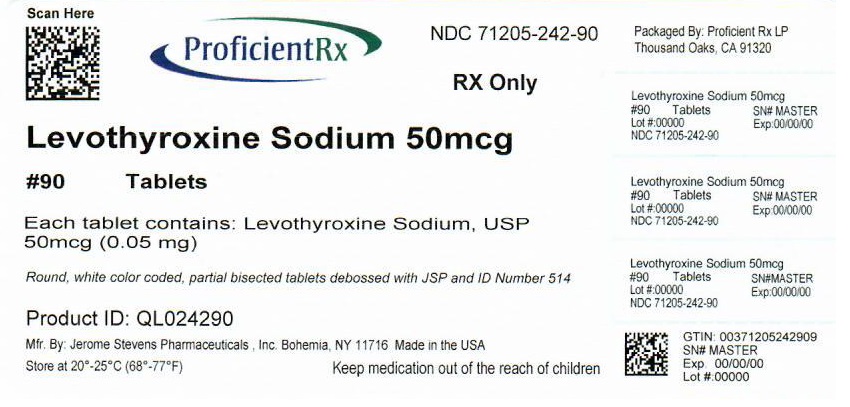
PRINCIPAL DISPLAY PANEL NDC 71205-242-90 LEVOTHYROXINE SODIUM TABLETS, USP 50 mcg (0.05 mg) Rx ONLY 90 TABLETS 71205-242-90
Medicare Part D spend CMS · PART D · 2026 (Q1)
About this NDC listing & data coverage
What data is (and isn’t) available for this NDC — tap to expand
| NDC identity (package / product / labeler codes) | ✓ Available |
| Labeler | ✓ Available |
| Product & package description | ✓ Available |
| Marketing category & status | ✓ Available |
| Active ingredient / dosage form / route | ✓ Available |
| FDA label (SPL via DailyMed) | ✓ Available |
| Package photos | ✓ Available |
| Inactive ingredients (structured) | ✓ Available |
| NADAC pharmacy acquisition price (CMS) | — Not published for this NDC CMS publishes NADAC only for NDCs reported in its retail-pharmacy survey. |
| Orange Book / therapeutic-equivalence data | ✓ Available |
| HCPCS J-code billing crosswalk | — Not published for this NDC Most self-administered / retail products have no J-code — that is normal. |
| Medicaid utilization (CMS SDUD) | — Not published for this NDC CMS reports utilization only for NDCs with Medicaid claims above its privacy threshold. |