
Eptifibatide 2 mg/mL Injection, Solution — NDC 71288-412-10 (Billing 71288-0412-10)
This is a package of Eptifibatide 2 mg/mL Injection, Solution from Meitheal Pharmaceuticals Inc., marketed since May 2024 and currently FDA-listed. It is this product's only package size.
NDC database record
One package, one record: these facts belong to NDC 71288-412-10 alone.
- Record
- FDA NDC Directory package listing · Human prescription drug
- Code segments
- 71288 labeler · 412 product · 10 package
- Package marketed since
- May 9, 2024
- Sample package
- No — commercial package
- Listing certified through
- Dec 31, 2026
- Barcode (UPC-A, from the NDC)
- 3 7128841210 7
- FDA record last changed
- Jul 24, 2026
Other active recalls for Eptifibatide (different manufacturers) — 2 · tap to view
Identity & classification
Regulatory identifiers FDA, NLM and CMS codes for this package
Drug-database identifiers Medi-Span GPI and First Databank GCN / HICL / AHFS classification
- GSN (GCN sequence number): 039892
- GCN: 49152
- HICL (First Databank): 018422
- AHFS class code: 20:12.18.00
- RxCUI (RxNorm): 200349
Where does this data come from?
- FDA openFDA NDC Directory · synced Oct 8, 2026
- FDA label on DailyMed · label index refreshed Oct 8, 2026
- RxNorm (NLM RxNav) · catalog refreshed Oct 1, 2026
- Medi-Span GPI (licensed)
- First Databank (licensed) · refreshed Oct 8, 2026
RxNorm drug class
This medicine belongs to the Platelet Aggregation Inhibitor class.
Where does this data come from?
- RxClass (NLM) · catalog refreshed Oct 1, 2026
Clinical
Patient education
Supplement & herbal interactions
Some supplements/herbs that may interact with Eptifibatide — tap one for details:
Where does this data come from?
- MedlinePlus (NLM) · refreshed Oct 8, 2026
- FDA label on DailyMed · label index refreshed Oct 8, 2026
Ask a licensed pharmacist directly — free, answered by our team.
Pricing
A drug doesn't have one price. Each row is a different public payment system, and none is what you'd pay at the counter — that depends on your insurance. The ⓘ on each row explains what it measures.
| Price system | Per mL | Per package |
|---|---|---|
| Retail pharmacies payNADAC · weekly | Not in the retail survey — common for institutional, discontinued, or low-volume packs. | |
| Medicaid paysCMS SDUD · 12 mo | No recent Medicaid claims on file for this NDC — rare and low-volume NDCs are suppressed in the public data. | |
| Medicare drug plans payPart D · quarterly | No Part D plan price is available for this NDC in our data. | |
| Medicare Part B allowsASP · J1327 | No ASP payment limit on file for J1327 this quarter. | |
Where does this data come from?
- CMS NADAC weekly file
- CMS ASP pricing files · refreshed Sep 20, 2026
- CMS Medicaid State Drug Utilization Data · refreshed Oct 8, 2026
- CMS Part D plan pricing files · refreshed Sep 24, 2026
- VA National Acquisition Center price file
Billing & reimbursement
Where does this data come from?
- CMS ASP NDC-HCPCS crosswalk · refreshed Sep 22, 2026
- DMEPDAC NDC-HCPCS crosswalk
- openFDA NSDE billing units · refreshed Oct 7, 2026
Packaging — all sizes for this product
| Package NDC | Description | Marketing start | Marketing end | Status |
|---|---|---|---|---|
| 71288-0412-10 You're viewing this Main listing | 1 VIAL, SINGLE-DOSE in 1 CARTON / 10 mL in 1 VIAL, SINGLE-DOSE | 2024-05-09 | — | Active |
Therapeutic equivalents
| Product | Labeler | Pack | NADAC/unit | TE | Status | Price vs. this |
|---|---|---|---|---|---|---|
| Eptifibatide 2 mg/mL 52958-0402-01 | Hainan | 1 vial | — | AP | FDA listed | — |
| Eptifibatide 20 mg/10mL 55150-0219-10 | Eugia | 1 vial | — | AP | FDA listed | — |
| Eptifibatide 2 mg/mL 67457-0629-10 | Mylan | 1 vial | — | AP | FDA listed | — |
| Eptifibatide 2 mg/mL 70436-0026-80 | Slate | 10 ml | — | AP | FDA listed | — |
| Eptifibatide 2 mg/mL 70436-0162-80 | Slate | 10 ml | — | AP | FDA listed | — |
| Eptifibatide 2 mg/mLthis 71288-0412-10 | Meitheal | 1 vial | — | AP | FDA listed | — |
| Eptifibatide 2 mg/mL 72078-0025-10 | Mylan | 1 vial | — | AP | FDA listed | — |
| Eptifibatide 2 mg/mL 83634-0300-10 | Avenacy, | 1 vial | — | AP | FDA listed | — |
| Eptifibatide 2 mg/mL 67457-0630-10 | Mylan | 1 vial | — | AP | FDA listed | — |
| Eptifibatide 2 mg/mL 72078-0027-10 | Mylan | 1 vial | — | AP | FDA listed | — |
Where does this data come from?
- FDA openFDA NDC Directory · synced Oct 8, 2026
- FDA Orange Book · refreshed Oct 3, 2026
- CMS NADAC weekly file
Availability & generic status
This product is an FDA-approved generic. Other versions of the same drug are listed under Therapeutic equivalents, least expensive first.
Where does this data come from?
- FDA Orange Book · refreshed Oct 3, 2026
Inactive Ingredients / Excipients
Inactive ingredients, also called excipients, are components of the drug product other than the active ingredient. They may include fillers, dyes, coatings, preservatives, flavors, or other formulation ingredients.
💡 Tap an ingredient (hover on desktop) to see what it is and why it’s used.
-
5.25 mg / 1 mL
UNII 2968PHW8QP
A weak organic acid derived from citrus fruits or made through fermentation. It works as a buffer to control pH, a preservative to extend shelf life, and a flavoring agent in medications.
-
UNII 55X04QC32I
A strong alkaline chemical used to adjust and maintain the pH balance of liquid medicines. It helps keep the medicine stable and ensures it stays effective during storage.
-
UNII 059QF0KO0R
Water is a liquid solvent that dissolves and mixes ingredients together in liquid medicines, syrups, and injections. It helps distribute the active drug evenly throughout the product.
3 inactive ingredients listed in the exact product block matched to this NDC.
Where does this data come from?
ingredient classCode="IACT" elements from the exact product block matched by this NDC. Label-section narrative from DailyMed / the openFDA label index is shown separately when available.- FDA label on DailyMed · label index refreshed Oct 8, 2026
- FDA openFDA NDC Directory · synced Oct 8, 2026
Inactive ingredient FAQ
Are inactive ingredients the same for every manufacturer?
Why might an inactive ingredient be missing?
Can inactive ingredients matter?
Manufacturer & labeler
More NDCs from Meitheal Pharmaceuticals Inc. labeler code 71288
- Heparin Sodium 1000 [USP'U]/mL Injection NDC 71288-402-02
- Heparin Sodium 5000 [USP'U]/mL Injection NDC 71288-403-02
- Heparin Sodium 10000 [USP'U]/mL Injection NDC 71288-404-02
- Heparin Sodium 5000 [USP'U]/.5mL Injection, Solution NDC 71288-405-81
- Heparin Sodium 5000 [USP'U]/mL Injection, Solution NDC 71288-406-82
- Palonosetron Hydrochloride .25 mg/5mL Injection, Solution NDC 71288-409-05
- Eptifibatide .75 mg/mL Injection, Solution NDC 71288-413-51
- Glycopyrrolate .2 mg/mL Injection NDC 71288-414-03
- Glycopyrrolate .2 mg/mL Injection NDC 71288-415-06
- Enoxaparin Sodium 300 mg/3mL Injection NDC 71288-426-03
- BIVALIRUDIN 250 mg/5mL Injection, Powder, Lyophilized, For Solution NDC 71288-427-11
- Enoxaparin Sodium 100 mg/mL Injection NDC 71288-432-81
Where does this data come from?
- FDA openFDA NDC Directory · synced Oct 8, 2026
- Drugs@FDA
Full prescribing information FDA SPL
🎯 Indications and Usage ▾
1 INDICATIONS AND USAGE Eptifibatide Injection is a platelet aggregation inhibitor indicated for: Treatment of acute coronary syndrome (ACS) managed medically or with percutaneous coronary intervention (PCI) ( 1.1 ) Treatment of patients undergoing PCI (including intracoronary stenting) ( 1.2 )
1.1Acute Coronary Syndrome (ACS) Eptifibatide Injection is indicated to decrease the rate of a combined endpoint of death or new myocardial infarction (MI) in patients with ACS (unstable angina [UA]/non-ST-elevation myocardial infarction [NSTEMI]), including patients who are to be managed medically and those undergoing percutaneous coronary intervention (PCI).
1.2Percutaneous Coronary Intervention (PCI) Eptifibatide Injection is indicated to decrease the rate of a combined endpoint of death, new MI, or need for urgent intervention in patients undergoing PCI, including those undergoing intracoronary stenting [see Clinical Studies ( 14.1 , 14.2 )] .
⏱️ Dosage and Administration ▾
2 DOSAGE AND ADMINISTRATION Before infusion of eptifibatide injection, the following laboratory tests should be performed to identify pre-existing hemostatic abnormalities: hematocrit or hemoglobin, platelet count, serum creatinine, and PT/aPTT. In patients undergoing PCI, the activated clotting time (ACT) should also be measured. The activated partial thromboplastin time (aPTT) should be maintained between 50 and 70 seconds unless PCI is to be performed.
In patients treated with heparin, bleeding can be minimized by close monitoring of the aPTT and ACT. ACS or PCI: 180 mcg/kg IV bolus as soon as possible after diagnosis followed by infusion at 2 mcg/kg/min. ( 2.1 , 2.2 ) PCI: Add a second 180 mcg/kg bolus at 10 minutes.
( 2.2 ) In patients with creatinine clearance less than 50 mL/min, reduce the infusion to 1 mcg/kg/min. ( 2.1 , 2.2 , 2.3 )
2.1Dosage in Acute Coronary Syndrome (ACS) Indication Normal Renal Function Creatinine Clearance less than 50 mL/min Patients with ACS 180 mcg/kg intravenous (IV) bolus as soon as possible after diagnosis, followed by continuous infusion of 2 mcg/kg/min 180 mcg/kg IV bolus as soon as possible after diagnosis, followed by continuous infusion of 1 mcg/kg/min Infusion should continue until hospital discharge or initiation of coronary artery bypass graft surgery (CABG), up to 72 hours If a patient is to undergo PCI, the infusion should be continued until hospital discharge or for up to 18 to 24 hours after the procedure, whichever comes first, allowing for up to 96 hours of therapy Aspirin, 160 to 325 mg, should be given daily Eptifibatide injection should be given concomitantly with heparin dosed to achieve the following parameters: During Medical Management : Target aPTT 50 to 70 seconds If weight greater than or equal to 70 kg, 5,000-unit bolus followed by infusion of 1,000 units/h.
If weight less than 70 kg, 60-units/kg bolus followed by infusion of 12 units/kg/h. During PCI : Target ACT 200 to 300 seconds If heparin is initiated prior to PCI, additional boluses during PCI to maintain an ACT target of 200 to 300 seconds. Heparin infusion after the PCI is discouraged.
2.2Dosage in Percutaneous Coronary Intervention (PCI) Indication Normal Renal Function Creatinine Clearance less than 50 mL/min Patients with PCI 180 mcg/kg IV bolus immediately before PCI followed by continuous infusion of 2 mcg/kg/min and a second bolus of 180 mcg/kg (given 10 minutes after the first bolus) 180 mcg/kg IV bolus immediately before PCI followed by continuous infusion of 1 mcg/kg/min and a second bolus of 180 mcg/kg (given 10 minutes after the first bolus) Infusion should be continued until hospital discharge, or for up to 18 to 24 hours, whichever comes first.
A minimum of 12 hours of infusion is recommended. In patients who undergo CABG surgery, eptifibatide injection infusion should be discontinued prior to surgery. Aspirin, 160 to 325 mg, should be given 1 to 24 hours prior to PCI and daily thereafter.
Eptifibatide injection should be given concomitantly with heparin to achieve a target ACT of 200 to 300 seconds. Administer 60-units/kg bolus initially in patients not treated with heparin within 6 hours prior to PCI. Additional boluses during PCI to maintain ACT within target.
Heparin infusion after the PCI is strongly discouraged. Patients requiring thrombolytic therapy should discontinue eptifibatide injection.
2.3Important Administration Instructions Inspect eptifibatide injection for particulate matter and discoloration prior to administration, whenever solution and container permit. May administer eptifibatide injection in the same intravenous line as alteplase, atropine, dobutamine, heparin, lidocaine, meperidine, metoprolol, midazolam, morphine, nitroglycerin, or verapamil. Do not administer eptifibatide injection through the same intravenous line as furosemide.
May administer eptifibatide injection in the same IV line with 0.9% NaCl or 0.9% NaCl/5% dextrose. With either vehicle, the infusion may a… [Excerpted — this section continues on DailyMed.]
💊 Dosage Forms and Strengths ▾
3 DOSAGE FORMS AND STRENGTHS Injection: 20 mg of Eptifibatide Injection in 10 mL (2 mg per mL), for intravenous bolus Injection: 75 mg of Eptifibatide Injection in 100 mL (0.75 mg per mL), for intravenous infusion 20 mg per 10 mL (2 mg per mL) in a single-dose vial for bolus injection ( 3 ) 75 mg per 100 mL (0.75 mg per mL) in a single-dose vial for infusion ( 3 )
⛔ Contraindications ▾
4 CONTRAINDICATIONS Treatment with eptifibatide is contraindicated in patients with: A history of bleeding diathesis, or evidence of active abnormal bleeding within the previous 30 days Severe hypertension (systolic blood pressure >200 mm Hg or diastolic blood pressure >110 mm Hg) not adequately controlled on antihypertensive therapy Major surgery within the preceding 6 weeks History of stroke within 30 days or any history of hemorrhagic stroke Current or planned administration of another parenteral GP IIb/IIIa inhibitor Dependency on renal dialysis Hypersensitivity to eptifibatide or any component of the product (hypersensitivity reactions that occurred included anaphylaxis and urticaria) Bleeding diathesis or bleeding within the previous 30 days ( 4 ) Severe uncontrolled hypertension ( 4 ) Major surgery within the preceding 6 weeks ( 4 ) Stroke within 30 days or any history of hemorrhagic stroke ( 4 ) Coadministration of another parenteral GP IIb/IIIa inhibitor ( 4 ) Dependency on renal dialysis ( 4 ) Known hypersensitivity to any component of the product ( 4 )
⚠️ Warnings and Cautions ▾
5 WARNINGS AND PRECAUTIONS Eptifibatide injection can cause serious bleeding. If bleeding cannot be controlled, discontinue eptifibatide injection immediately. Minimize vascular and other traumas. If heparin is given concomitantly, monitor aPTT or ACT. ( 5.1 ) Thrombocytopenia: Discontinue eptifibatide injection and heparin. Monitor and treat condition appropriately. ( 5.2 )
5.1Bleeding Bleeding is the most common complication encountered during eptifibatide therapy. Administration of eptifibatide is associated with an increase in major and minor bleeding, as classified by the criteria of the Thrombolysis in Myocardial Infarction Study group (TIMI) [see Adverse Reactions ( 6.1 )] . Most major bleeding associated with eptifibatide has been at the arterial access site for cardiac catheterization or from the gastrointestinal or genitourinary tract.
Minimize the use of arterial and venous punctures, intramuscular injections, and the use of urinary catheters, nasotracheal intubation, and nasogastric tubes. When obtaining intravenous access, avoid non-compressible sites (e.g., subclavian or jugular veins). Use of Thrombolytics, Anticoagulants, and Other Antiplatelet Agents Risk factors for bleeding include older age, a history of bleeding disorders, and concomitant use of drugs that increase the risk of bleeding (thrombolytics, oral anticoagulants, nonsteroidal anti-inflammatory drugs, and P2Y 12 inhibitors).
Concomitant treatment with other inhibitors of platelet receptor glycoprotein (GP) IIb/IIIa should be avoided. In patients treated with heparin, bleeding can be minimized by close monitoring of the aPTT and ACT [see Dosage and Administration ( 2 )] . Care of the Femoral Artery Access Site in Patients Undergoing Percutaneous Coronary Intervention (PCI) In patients undergoing PCI, treatment with eptifibatide is associated with an increase in major and minor bleeding at the site of arterial sheath placement.
After PCI, eptifibatide infusion should be continued until hospital discharge or up to 18 to 24 hours, whichever comes first. Heparin use is discouraged after the PCI procedure. Early sheath removal is encouraged while eptifibatide is being infused.
Prior to removing the sheath, it is recommended that heparin be discontinued for 3 to 4 hours and an aPTT of <45 seconds or ACT <150 seconds be achieved. In any case, both heparin and eptifibatide should be discontinued and sheath hemostasis should be achieved at least 2 to 4 hours before hospital discharge. If bleeding at access site cannot be controlled with pressure, infusion of eptifibatide and heparin should be discontinued immediately.
5.2Thrombocytopenia There have been reports of acute, profound thrombocytopenia (immune-mediated and non-immune mediated) with eptifibatide. In the event of acute profound thrombocytopenia or a confirmed platelet decrease to <100,000/mm 3 , discontinue eptifibatide and heparin (unfractionated or low-molecular weight). Monitor serial platelet counts, assess the presence of drug-dependent antibodies, and treat as appropriate [see Adverse Reactions ( 6.1 )] .
There has been no clinical experience with eptifibatide initiated in patients with a baseline platelet count <100,000/mm 3 . If a patient with low platelet counts is receiving eptifibatide, their platelet count should be monitored closely.
🤒 Adverse Reactions ▾
6 ADVERSE REACTIONS The following serious adverse reaction is also discussed elsewhere in the labeling: Bleeding [see Contraindications ( 4 ) and Warnings and Precautions ( 5.1 )] Bleeding and hypotension are the most commonly reported adverse reactions. ( 6.1 ) To report SUSPECTED ADVERSE REACTIONS, contact Meitheal Pharmaceuticals, Inc. at 1-844-824-8426 or FDA at 1-800-FDA-1088 or www.fda.gov/medwatch .
6.1Clinical Trials Experience Because clinical studies are conducted under widely varying conditions, adverse reaction rates observed in the clinical studies of a drug cannot be directly compared to rates in the clinical trials of another drug and may not reflect the rates observed in clinical practice. A total of 16,782 patients were treated in the Phase III clinical trials (PURSUIT, ESPRIT, and IMPACT II) [see Clinical Studies ( 14 )] . These 16,782 patients had a mean age of 62 years (range: 20-94 years).
Eighty-nine percent of the patients were Caucasian, with the remainder being predominantly Black (5%) and Hispanic (5%). Sixty-eight percent were men. Because of the different regimens used in PURSUIT, IMPACT II, and ESPRIT, data from the 3 studies were not pooled.
Bleeding and hypotension were the most commonly reported adverse reactions (incidence ≥5% and greater than placebo) in the eptifibatide controlled clinical trial database. Bleeding The incidence of bleeding and transfusions in the PURSUIT and ESPRIT studies are shown in Table 2 . Bleeding was classified as major or minor by the criteria of the TIMI study group.
Major bleeding consisted of intracranial hemorrhage and other bleeding that led to decreases in hemoglobin greater than 5 g/dL. Minor bleeding included spontaneous gross hematuria, spontaneous hematemesis, other observed blood loss with a hemoglobin decrease of more than 3 g/dL, and other hemoglobin decreases that were greater than 4 g/dL but less than 5 g/dL. In patients who received transfusions, the corresponding loss in hemoglobin was estimated through an adaptation of the method of Landefeld et al.
Table 2: Bleeding and Transfusions in the PURSUIT and ESPRIT Studies Note: Denominator is based on patients for whom data are available. * For major and minor bleeding, patients are counted only once according to the most severe classification. † Includes transfusions of whole blood, packed red blood cells, fresh frozen plasma, cryoprecipitate, platelets, and autotransfusion during the initial hospitalization. PURSUIT (ACS) Placebo n (%) Eptifibatide 180/2 n (%) Patients 4696 4679 Major bleeding* 425 (9.3%) 498 (10.8%) Minor bleeding* 347 (7.6%) 604 (13.1%) Requiring transfusions † 490 (10.4%) 601 (12.8%) ESPRIT (PCI) Placebo n (%) Eptifibatide 180/2/180 n (%) Patients 1024 1040 Major bleeding* 4 (0.4%) 13 (1.3%) Minor bleeding* 18 (2%) 29 (3%) Requiring transfusions † 11 (1.1%) 16 (1.5%) The majority of major bleeding reactions in the ESPRIT study occurred at the vascular access site (1 and 8 patients, or 0.1% and 0.8% in the placebo and eptifibatide groups, respectively).
Bleeding at "other" locations occurred in 0.2% and 0.4% of patients, respectively. In the PURSUIT study, the greatest increase in major bleeding in eptifibatide-treated patients compared to placebo-treated patients was also associated with bleeding at the femoral artery access site (2.8% versus 1.3%). Oropharyngeal (primarily gingival), genitourinary, gastrointestinal, and retroperitoneal bleeding were also seen more commonly in eptifibatide-treated patients compared to placebo-treated patients.
Among patients experiencing a major bleed in the IMPACT II study, an increase in bleeding on eptifibatide versus placebo was observed only for the femoral artery access site (3.2% versus 2.8%). Table 3 displays the incidence of TIMI major bleeding according to the cardiac procedures carried out in the PURSUIT study. The most common bleeding complications were related to cardiac revascularization (CABG-related or femoral artery access site ble… [Excerpted — this section continues on DailyMed.]
🔄 Drug Interactions ▾
7 DRUG INTERACTIONS Coadministration of antiplatelet agents, thrombolytics, heparin, aspirin, and chronic NSAID use increases the risk of bleeding. Avoid concomitant use with other glycoprotein (GP) IIb/IIIa inhibitors. ( 7.1 )
7.1Use of Thrombolytics, Anticoagulants, and Other Antiplatelet Agents Coadministration of antiplatelet agents, thrombolytics, heparin, aspirin, and chronic NSAID use increases the risk of bleeding. Concomitant treatment with other inhibitors of platelet receptor GP IIb/IIIa should be avoided.
👥 Use in Specific Populations ▾
8 USE IN SPECIFIC POPULATIONS Geriatric Use: Risk of bleeding increases with age. ( 8.5 )
8.1Pregnancy Risk Summary Available data on eptifibatide use in pregnant women from published literature and the pharmacovigilance database are insufficient to establish a drug-associated risk of major birth defects, miscarriage or adverse maternal or fetal outcomes. Untreated myocardial infarction can be fatal to the pregnant woman and fetus (see Clinical Considerations ) . In animal reproduction studies, there was no evidence of adverse developmental effects when eptifibatide was administered intravenously to pregnant rats and rabbits at approximately 4 times the recommended maximum daily human dose.
The estimated background risk of major birth defects and miscarriage for the indicated population is unknown. All pregnancies have a background risk of birth defect, loss, or other adverse outcomes. In the U.S. general population, the estimated background risk of major birth defects and miscarriage in clinically recognized pregnancies is 2 to 4% and 15 to 20%, respectively.
Clinical Considerations Disease-associated maternal and/or embryo/fetal risk Myocardial infarction is a medical emergency in pregnancy which can be fatal to the pregnant woman and fetus if left untreated. Therapy for the pregnant woman should not be withheld because of potential concerns regarding the effects of eptifibatide on the fetus. Data Animal Data Embryo-fetal development studies have been performed by continuous intravenous infusion of eptifibatide in pregnant rats during the period of organogenesis at total daily doses of up to 72 mg/kg/day (about 4 times the recommended maximum daily human dose on a body surface area basis) and in pregnant rabbits during the period of organogenesis at total daily doses of up to 36 mg/kg/day (also about 4 times the recommended maximum daily human dose on a body surface area basis).
These studies revealed no evidence of harm to the fetus due to eptifibatide.
8.2Lactation Risk Summary There are no available data on the presence of eptifibatide in human milk, the effects on the breastfed infant, or the effects on milk production. As eptifibatide is a peptide, it is likely to be destroyed in the infant’s gastrointestinal tract and not absorbed orally by the breastfed infant.
8.4Pediatric Use Safety and effectiveness of eptifibatide in pediatric patients have not been studied.
8.5Geriatric Use The PURSUIT and IMPACT II clinical studies enrolled patients up to the age of 94 years (45% were age 65 and over; 12% were age 75 and older). There was no apparent difference in efficacy between older and younger patients treated with eptifibatide. The incidence of bleeding complications was higher in the elderly in both placebo and eptifibatide groups, and the incremental risk of eptifibatide-associated bleeding was greater in the older patients.
No dose adjustment was made for elderly patients, but patients over 75 years of age had to weigh at least 50 kg to be enrolled in the PURSUIT study; no such limitation was stipulated in the ESPRIT study [see Adverse Reactions ( 6.1 )] .
8.6Renal Impairment Approximately 50% of eptifibatide is cleared by the kidney in patients with normal renal function. Total drug clearance is decreased by approximately 50% and steady-state plasma eptifibatide concentrations are doubled in patients with an estimated CrCl <50 mL/min (using the Cockcroft-Gault equation). Therefore, the infusion dose should be reduced to 1 mcg/kg/min in such patients [see Dosage and Administration ( 2 )] .
The safety and efficacy of eptifibatide in patients dependent on dialysis has not been established.
🤰 Pregnancy ▾
8.1Pregnancy Risk Summary Available data on eptifibatide use in pregnant women from published literature and the pharmacovigilance database are insufficient to establish a drug-associated risk of major birth defects, miscarriage or adverse maternal or fetal outcomes. Untreated myocardial infarction can be fatal to the pregnant woman and fetus (see Clinical Considerations ) . In animal reproduction studies, there was no evidence of adverse developmental effects when eptifibatide was administered intravenously to pregnant rats and rabbits at approximately 4 times the recommended maximum daily human dose.
The estimated background risk of major birth defects and miscarriage for the indicated population is unknown. All pregnancies have a background risk of birth defect, loss, or other adverse outcomes. In the U.S. general population, the estimated background risk of major birth defects and miscarriage in clinically recognized pregnancies is 2 to 4% and 15 to 20%, respectively.
Clinical Considerations Disease-associated maternal and/or embryo/fetal risk Myocardial infarction is a medical emergency in pregnancy which can be fatal to the pregnant woman and fetus if left untreated. Therapy for the pregnant woman should not be withheld because of potential concerns regarding the effects of eptifibatide on the fetus. Data Animal Data Embryo-fetal development studies have been performed by continuous intravenous infusion of eptifibatide in pregnant rats during the period of organogenesis at total daily doses of up to 72 mg/kg/day (about 4 times the recommended maximum daily human dose on a body surface area basis) and in pregnant rabbits during the period of organogenesis at total daily doses of up to 36 mg/kg/day (also about 4 times the recommended maximum daily human dose on a body surface area basis).
These studies revealed no evidence of harm to the fetus due to eptifibatide.
🧒 Pediatric Use ▾
8.4Pediatric Use Safety and effectiveness of eptifibatide in pediatric patients have not been studied.
🧓 Geriatric Use ▾
8.5Geriatric Use The PURSUIT and IMPACT II clinical studies enrolled patients up to the age of 94 years (45% were age 65 and over; 12% were age 75 and older). There was no apparent difference in efficacy between older and younger patients treated with eptifibatide. The incidence of bleeding complications was higher in the elderly in both placebo and eptifibatide groups, and the incremental risk of eptifibatide-associated bleeding was greater in the older patients.
No dose adjustment was made for elderly patients, but patients over 75 years of age had to weigh at least 50 kg to be enrolled in the PURSUIT study; no such limitation was stipulated in the ESPRIT study [see Adverse Reactions ( 6.1 )] .
🆘 Overdosage ▾
10 OVERDOSAGE There has been only limited experience with overdosage of eptifibatide. There were 8 patients in the IMPACT II study, 9 patients in the PURSUIT study, and no patients in the ESPRIT study who received bolus doses and/or infusion doses more than double those called for in the protocols. None of these patients experienced an intracranial bleed or other major bleeding.
Eptifibatide was not lethal to rats, rabbits, or monkeys when administered by continuous intravenous infusion for 90 minutes at a total dose of 45 mg/kg (about 2 to 5 times the recommended maximum daily human dose on a body surface area basis). Symptoms of acute toxicity were loss of righting reflex, dyspnea, ptosis, and decreased muscle tone in rabbits and petechial hemorrhages in the femoral and abdominal areas of monkeys. From in vitro studies, eptifibatide is not extensively bound to plasma proteins and thus may be cleared from plasma by dialysis.
🧬 Clinical Pharmacology ▾
12 CLINICAL PHARMACOLOGY
12.1Mechanism of Action Eptifibatide reversibly inhibits platelet aggregation by preventing the binding of fibrinogen, von Willebrand factor, and other adhesive ligands to GP IIb/IIIa. When administered intravenously, eptifibatide inhibits ex vivo platelet aggregation in a dose- and concentration-dependent manner. Platelet aggregation inhibition is reversible following cessation of the eptifibatide infusion; this is thought to result from dissociation of eptifibatide from the platelet.
12.2Pharmacodynamics Infusion of eptifibatide into baboons caused a dose-dependent inhibition of ex vivo platelet aggregation, with complete inhibition of aggregation achieved at infusion rates greater than 5 mcg/kg/min. In a baboon model that is refractory to aspirin and heparin, doses of eptifibatide that inhibit aggregation prevented acute thrombosis with only a modest prolongation (2- to 3-fold) of the bleeding time. Platelet aggregation in dogs was also inhibited by infusions of eptifibatide, with complete inhibition at 2 mcg/kg/min.
This infusion dose completely inhibited canine coronary thrombosis induced by coronary artery injury (Folts model). Human pharmacodynamic data were obtained in healthy subjects and in patients presenting with UA or NSTEMI and/or undergoing percutaneous coronary intervention. Studies in healthy subjects enrolled only males; patient studies enrolled approximately one-third women.
In these studies, eptifibatide inhibited ex vivo platelet aggregation induced by adenosine diphosphate (ADP) and other agonists in a dose- and concentration-dependent manner. The effect of eptifibatide was observed immediately after administration of a 180 mcg/kg intravenous bolus. Table 4 shows the effects of dosing regimens of eptifibatide used in the IMPACT II and PURSUIT studies on ex vivo platelet aggregation induced by 20 μM ADP in PPACK-anticoagulated platelet-rich plasma and on bleeding time.
The effects of the dosing regimen used in ESPRIT on platelet aggregation have not been studied. Table 4: Platelet Inhibition and Bleeding Time * 180 mcg/kg bolus followed by a continuous infusion of 2 mcg/kg/min. PURSUIT 180/2* Inhibition of platelet aggregation 15 min after bolus 84% Inhibition of platelet aggregation at steady state >90% Bleeding-time prolongation at steady state <5x Inhibition of platelet aggregation 4h after infusion discontinuation <50% Bleeding-time prolongation 6h after infusion discontinuation 1.4x The eptifibatide dosing regimen used in the ESPRIT study included two 180 mcg/kg bolus doses given 10 minutes apart combined with a continuous 2 mcg/kg/min infusion.
When administered alone, eptifibatide has no measurable effect on PT or aPTT. There were no important differences between men and women or between age groups in the pharmacodynamic properties of eptifibatide. Differences among ethnic groups have not been assessed.
12.3Pharmacokinetics The pharmacokinetics of eptifibatide are linear and dose-proportional for bolus doses ranging from 90 to 250 mcg/kg and infusion rates from 0.5 to 3 mcg/kg/min. Plasma elimination half-life is approximately 2.5 hours. Administration of a single 180 mcg/kg bolus combined with an infusion produces an early peak level, followed by a small decline prior to attaining steady state (within 4-6 hours).
This decline can be prevented by administering a second 180 mcg/kg bolus 10 minutes after the first. The extent of eptifibatide binding to human plasma protein is about 25%. Clearance in patients with coronary artery disease is about 55 mL/kg/h.
In healthy subjects, renal clearance accounts for approximately 50% of total body clearance, with the majority of the drug excreted in the urine as eptifibatide, deaminated eptifibatide, and other, more polar metabolites. No major metabolites have been detected in human plasma. Special Populations Geriatric Patients in clinical studies were older (range: 20-94 years) than those in the clinical pharmacology studies.
Elder… [Excerpted — this section continues on DailyMed.]
🧬 Mechanism of Action ▾
12.1Mechanism of Action Eptifibatide reversibly inhibits platelet aggregation by preventing the binding of fibrinogen, von Willebrand factor, and other adhesive ligands to GP IIb/IIIa. When administered intravenously, eptifibatide inhibits ex vivo platelet aggregation in a dose- and concentration-dependent manner. Platelet aggregation inhibition is reversible following cessation of the eptifibatide infusion; this is thought to result from dissociation of eptifibatide from the platelet.
📦 How Supplied / Storage and Handling ▾
16 HOW SUPPLIED/STORAGE AND HANDLING
16.1How Supplied Eptifibatide Injection is a sterile solution and is supplied as follows: NDC Eptifibatide Injection (2 mg per mL) Package Factor 71288- 412 -10 20 mg per 10 mL Single-Dose Vial 1 vial per carton NDC Eptifibatide Injection (0.75 mg per mL) Package Factor 71288- 413 -51 75 mg per 100 mL Single-Dose Vial 1 vial per carton
16.2Storage Vials should be stored refrigerated between 2° and 8°C (36° and 46°F). Vials may be transferred to room temperature storage* for a period not to exceed 2 months. Upon transfer, vial cartons must be marked by the dispensing pharmacist with a "DISCARD BY" date (2 months from the transfer date or the labeled expiration date, whichever comes first).
Protect from light until administration. * Store at 25°C (77°F); excursions permitted between 15° and 30°C (59° and 86°F). [See USP Controlled Room Temperature.] Discard unused portion. Sterile, Nonpyrogenic, Preservative-free. The container closure is not made with natural rubber latex.
16.1How Supplied Eptifibatide Injection is a sterile solution and is supplied as follows: NDC Eptifibatide Injection (2 mg per mL) Package Factor 71288- 412 -10 20 mg per 10 mL Single-Dose Vial 1 vial per carton NDC Eptifibatide Injection (0.75 mg per mL) Package Factor 71288- 413 -51 75 mg per 100 mL Single-Dose Vial 1 vial per carton
📦 Storage and Handling ▾
16.2Storage Vials should be stored refrigerated between 2° and 8°C (36° and 46°F). Vials may be transferred to room temperature storage* for a period not to exceed 2 months. Upon transfer, vial cartons must be marked by the dispensing pharmacist with a "DISCARD BY" date (2 months from the transfer date or the labeled expiration date, whichever comes first).
Protect from light until administration. * Store at 25°C (77°F); excursions permitted between 15° and 30°C (59° and 86°F). [See USP Controlled Room Temperature.] Discard unused portion. Sterile, Nonpyrogenic, Preservative-free. The container closure is not made with natural rubber latex.
📋 Description ▾
11 DESCRIPTION Eptifibatide is a cyclic heptapeptide containing 6 amino acids and 1 mercaptopropionyl (des-amino cysteinyl) residue. An interchain disulfide bridge is formed between the cysteine amide and the mercaptopropionyl moieties. Chemically it is N 6 -(aminoiminomethyl)-N 2 -(3-mercapto-1-oxopropyl)-L-lysylglycyl-L-α-aspartyl-L-tryptophyl-L-prolyl-L-cysteinamide, cyclic (1→6)-disulfide.
Eptifibatide binds to the platelet receptor glycoprotein (GP) IIb/IIIa of human platelets and inhibits platelet aggregation. The eptifibatide peptide is produced by solid-phase peptide synthesis, and is purified by preparative reverse-phase liquid chromatography and lyophilized. The structural formula is: Eptifibatide Injection is a clear, colorless, sterile, nonpyrogenic solution for intravenous (IV) use with an empirical formula of C 35 H 49 N 11 O 9 S 2 and a molecular weight of 831.96.
Each 10 mL single-dose vial contains 2 mg per mL of Eptifibatide Injection and each 100 mL single-dose vial contains 0.75 mg per mL of Eptifibatide Injection. Each vial of either size also contains 5.25 mg per mL citric acid monohydrate and sodium hydroxide to adjust the pH to 5.35. structural formula
💬 Information for Patients ▾
17 PATIENT COUNSELING INFORMATION Advise the patient to inform the doctor or healthcare provider about any medical conditions, medications, and allergies. Brands listed are the trademarks of their respective owners. meitheal ® Mfd. for Meitheal Pharmaceuticals Chicago, IL 60631 (USA) ©2021 Meitheal Pharmaceuticals Inc. Mfd. by Nanjing King-Friend Biochemical Pharmaceutical Co., Ltd. Nanjing, China 210061 May 2021 810042-00
🧬 Pharmacokinetics ▾
12.3Pharmacokinetics The pharmacokinetics of eptifibatide are linear and dose-proportional for bolus doses ranging from 90 to 250 mcg/kg and infusion rates from 0.5 to 3 mcg/kg/min. Plasma elimination half-life is approximately 2.5 hours. Administration of a single 180 mcg/kg bolus combined with an infusion produces an early peak level, followed by a small decline prior to attaining steady state (within 4-6 hours).
This decline can be prevented by administering a second 180 mcg/kg bolus 10 minutes after the first. The extent of eptifibatide binding to human plasma protein is about 25%. Clearance in patients with coronary artery disease is about 55 mL/kg/h.
In healthy subjects, renal clearance accounts for approximately 50% of total body clearance, with the majority of the drug excreted in the urine as eptifibatide, deaminated eptifibatide, and other, more polar metabolites. No major metabolites have been detected in human plasma. Special Populations Geriatric Patients in clinical studies were older (range: 20-94 years) than those in the clinical pharmacology studies.
Elderly patients with coronary artery disease demonstrated higher plasma levels and lower total body clearance of eptifibatide when given the same dose as younger patients. Limited data are available on lighter weight (<50 kg) patients over 75 years of age. Renal Impairment In patients with moderate to severe renal insufficiency (CrCl <50 mL/min using the Cockcroft-Gault equation), the clearance of eptifibatide is reduced by approximately 50% and steady-state plasma levels approximately doubled [see Use in Specific Populations ( 8.6 ) and Dosage and Administration ( 2 )] .
Hepatic Impairment No studies have been conducted in patients with hepatic impairment. Gender Males and females have not demonstrated any clinically significant differences in the pharmacokinetics of eptifibatide.
🧬 Pharmacodynamics ▾
12.2Pharmacodynamics Infusion of eptifibatide into baboons caused a dose-dependent inhibition of ex vivo platelet aggregation, with complete inhibition of aggregation achieved at infusion rates greater than 5 mcg/kg/min. In a baboon model that is refractory to aspirin and heparin, doses of eptifibatide that inhibit aggregation prevented acute thrombosis with only a modest prolongation (2- to 3-fold) of the bleeding time. Platelet aggregation in dogs was also inhibited by infusions of eptifibatide, with complete inhibition at 2 mcg/kg/min.
This infusion dose completely inhibited canine coronary thrombosis induced by coronary artery injury (Folts model). Human pharmacodynamic data were obtained in healthy subjects and in patients presenting with UA or NSTEMI and/or undergoing percutaneous coronary intervention. Studies in healthy subjects enrolled only males; patient studies enrolled approximately one-third women.
In these studies, eptifibatide inhibited ex vivo platelet aggregation induced by adenosine diphosphate (ADP) and other agonists in a dose- and concentration-dependent manner. The effect of eptifibatide was observed immediately after administration of a 180 mcg/kg intravenous bolus. Table 4 shows the effects of dosing regimens of eptifibatide used in the IMPACT II and PURSUIT studies on ex vivo platelet aggregation induced by 20 μM ADP in PPACK-anticoagulated platelet-rich plasma and on bleeding time.
The effects of the dosing regimen used in ESPRIT on platelet aggregation have not been studied. Table 4: Platelet Inhibition and Bleeding Time * 180 mcg/kg bolus followed by a continuous infusion of 2 mcg/kg/min. PURSUIT 180/2* Inhibition of platelet aggregation 15 min after bolus 84% Inhibition of platelet aggregation at steady state >90% Bleeding-time prolongation at steady state <5x Inhibition of platelet aggregation 4h after infusion discontinuation <50% Bleeding-time prolongation 6h after infusion discontinuation 1.4x The eptifibatide dosing regimen used in the ESPRIT study included two 180 mcg/kg bolus doses given 10 minutes apart combined with a continuous 2 mcg/kg/min infusion.
When administered alone, eptifibatide has no measurable effect on PT or aPTT. There were no important differences between men and women or between age groups in the pharmacodynamic properties of eptifibatide. Differences among ethnic groups have not been assessed.
🔬 Clinical Studies ▾
14 CLINICAL STUDIES Eptifibatide was studied in 3 placebo-controlled, randomized studies. PURSUIT evaluated patients with acute coronary syndromes: UA or NSTEMI. Two other studies, ESPRIT and IMPACT II, evaluated patients about to undergo a PCI. Patients underwent primarily balloon angioplasty in IMPACT II and intracoronary stent placement, with or without angioplasty, in ESPRIT.
14.1Non-ST-Segment Elevation Acute Coronary Syndrome Non-ST-segment elevation acute coronary syndrome is defined as prolonged (≥10 minutes) symptoms of cardiac ischemia within the previous 24 hours associated with either ST-segment changes (elevations between 0.6 mm and 1 mm or depression >0.5 mm), T-wave inversion (>1 mm), or positive CK-MB. This definition includes "unstable angina" and "NSTEMI" but excludes MI that is associated with Q waves or greater degrees of ST-segment elevation. PURSUIT (Platelet Glycoprotein IIb/IIIa in Unstable Angina: Receptor Suppression Using Eptifibatide Therapy) PURSUIT was a 726-center, 27-country, double-blind, randomized, placebo-controlled study in 10,948 patients presenting with UA or NSTEMI.
Patients could be enrolled only if they had experienced cardiac ischemia at rest (≥10 minutes) within the previous 24 hours and had either ST-segment changes (elevations between 0.6 mm and 1 mm or depression >0.5 mm), T-wave inversion (>1 mm), or increased CK-MB. Important exclusion criteria included a history of bleeding diathesis, evidence of abnormal bleeding within the previous 30 days, uncontrolled hypertension, major surgery within the previous 6 weeks, stroke within the previous 30 days, any history of hemorrhagic stroke, serum creatinine >2 mg/dL, dependency on renal dialysis, or platelet count <100,000/mm 3 .
Patients were randomized to placebo, to eptifibatide 180 mcg/kg bolus followed by a 2 mcg/kg/min infusion (180/2), or to eptifibatide 180 mcg/kg bolus followed by a 1.3 mcg/kg/min infusion (180/1.3). The infusion was continued for 72 hours, until hospital discharge, or until the time of CABG, whichever occurred first, except that if PCI was performed, the eptifibatide infusion was continued for 24 hours after the procedure, allowing for a duration of infusion up to 96 hours. The lower-infusion-rate arm was stopped after the first interim analysis when the 2 active-treatment arms appeared to have the same incidence of bleeding.
Patient age ranged from 20 to 94 (mean 63) years, and 65% were male. The patients were 89% Caucasian, 6% Hispanic, and 5% Black, recruited in the United States and Canada (40%), Western Europe (39%), Eastern Europe (16%), and Latin America (5%). This was a "real world" study; each patient was managed according to the usual standards of the investigational site; frequencies of angiography, PCI, and CABG therefore differed widely from site to site and from country to country.
Of the patients in PURSUIT, 13% were managed with PCI during drug infusion, of whom 50% received intracoronary stents; 87% were managed medically (without PCI during drug infusion). The majority of patients received aspirin (75-325 mg once daily). Heparin was administered intravenously or subcutaneously, at the physician's discretion, most commonly as an intravenous bolus of 5,000 units followed by a continuous infusion of 1000 units/h.
For patients weighing less than 70 kg, the recommended heparin bolus dose was 60 units/kg followed by a continuous infusion of 12 units/kg/h. A target aPTT of 50 to 70 seconds was recommended. A total of 1250 patients underwent PCI within 72 hours after randomization, in which case they received intravenous heparin to maintain an ACT of 300 to 350 seconds.
The primary endpoint of the study was the occurrence of death from any cause or new MI (evaluated by a blinded Clinical Endpoints Committee) within 30 days of randomization. Compared to placebo, eptifibatide administered as a 180 mcg/kg bolus followed by a 2 mcg/kg/min infusion significantly (p=0.042) reduced the incidence of endpoint… [Excerpted — this section continues on DailyMed.]
🧪 Nonclinical Toxicology ▾
13 NONCLINICAL TOXICOLOGY
13.1Carcinogenesis, Mutagenesis, Impairment of Fertility No long-term studies in animals have been performed to evaluate the carcinogenic potential of eptifibatide. Eptifibatide was not genotoxic in the Ames test, the mouse lymphoma cell (L 5178Y, TK+/-) forward mutation test, the human lymphocyte chromosome aberration test, or the mouse micronucleus test. Administered by continuous intravenous infusion at total daily doses up to 72 mg/kg/day (about 4 times the recommended maximum daily human dose on a body surface area basis), eptifibatide had no effect on fertility and reproductive performance of male and female rats.
📄 Carcinogenesis, Mutagenesis, Impairment of Fertility ▾
13.1Carcinogenesis, Mutagenesis, Impairment of Fertility No long-term studies in animals have been performed to evaluate the carcinogenic potential of eptifibatide. Eptifibatide was not genotoxic in the Ames test, the mouse lymphoma cell (L 5178Y, TK+/-) forward mutation test, the human lymphocyte chromosome aberration test, or the mouse micronucleus test. Administered by continuous intravenous infusion at total daily doses up to 72 mg/kg/day (about 4 times the recommended maximum daily human dose on a body surface area basis), eptifibatide had no effect on fertility and reproductive performance of male and female rats.
📄 Package Label / Principal Display Panel ▾
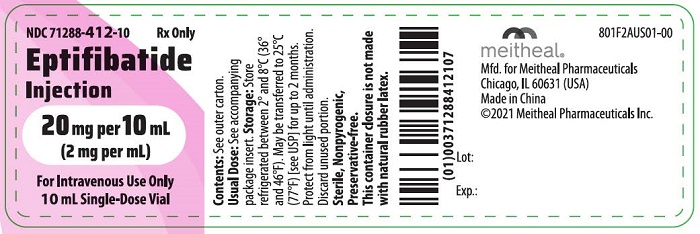
PRINCIPAL DISPLAY PANEL – Eptifibatide Injection, 20 mg per 10 mL Container Label NDC 71288- 412 -10 Rx Only Eptifibatide Injection 20 mg per 10 mL (2 mg per mL) For Intravenous Use Only 10 mL Single-Dose Vial PRINCIPAL DISPLAY PANEL – Eptifibatide Injection, 20 mg per 10 mL Container Label
PRINCIPAL DISPLAY PANEL – Eptifibatide Injection, 20 mg per 10 mL Carton NDC 71288- 412 -10 Rx Only Eptifibatide Injection 20 mg per 10 mL (2 mg per mL) For Intravenous Use Only 1 x 10 mL Single-Dose Vial for weight-adjusted bolus dosing PRINCIPAL DISPLAY PANEL – Eptifibatide Injection, 20 mg per 10 mL Carton
PRINCIPAL DISPLAY PANEL – Eptifibatide Injection, 75 mg per 100 mL Container Label NDC 71288- 413 -51 Rx Only Eptifibatide Injection 75 mg per 100 mL (0.75 mg per mL) For Intravenous Use Only 100 mL Single-Dose Vial PRINCIPAL DISPLAY PANEL – Eptifibatide Injection, 75 mg per 100 mL Container Label
PRINCIPAL DISPLAY PANEL – Eptifibatide Injection, 75 mg per 100 mL Carton NDC 71288- 413 -51 Rx Only Eptifibatide Injection 75 mg per 100 mL (0.75 mg per mL) For Intravenous Use Only 1 x 100 mL Single-Dose Vial for weight-adjusted infusion PRINCIPAL DISPLAY PANEL – Eptifibatide Injection, 75 mg per 100 mL Carton
About this NDC listing & data coverage
What data is (and isn’t) available for this NDC — tap to expand
| NDC identity (package / product / labeler codes) | ✓ Available |
| Labeler | ✓ Available |
| Product & package description | ✓ Available |
| Marketing category & status | ✓ Available |
| Active ingredient / dosage form / route | ✓ Available |
| FDA label (SPL via DailyMed) | ✓ Available |
| Package photos | ✓ Available |
| Inactive ingredients (structured) | ✓ Available |
| NADAC pharmacy acquisition price (CMS) | — Not published for this NDC CMS publishes NADAC only for NDCs reported in its retail-pharmacy survey. |
| Orange Book / therapeutic-equivalence data | ✓ Available |
| HCPCS J-code billing crosswalk | ✓ Available |
| Medicaid utilization (CMS SDUD) | — Not published for this NDC CMS reports utilization only for NDCs with Medicaid claims above its privacy threshold. |