
levothyroxine sodium 88 ug Tablet, 60-count — NDC 71335-1438-5 (Billing 71335-1438-05)
This is a package of 60 tablets of levothyroxine sodium 88 ug Tablet from Bryant Ranch Prepack, marketed since May 2019 and currently FDA-listed.
NDC database record
One package, one record: these facts belong to NDC 71335-1438-5 alone.
- Record
- FDA NDC Directory package listing · Human prescription drug
- Code segments
- 71335 labeler · 1438 product · 5 package
- Package marketed since
- Dec 16, 2019
- Sample package
- No — commercial package
- Listing certified through
- Dec 31, 2026
- Barcode (UPC-A, from the NDC)
- 3 7133514385 5
- FDA record last changed
- Jul 24, 2026
Other active recalls for Levothyroxine Sodium (different manufacturers) — 6 · tap to view
Identity & classification
Regulatory identifiers FDA, NLM and CMS codes for this package
- RxCUI (RxNorm): 892246
Where does this data come from?
- FDA openFDA NDC Directory · synced Oct 8, 2026
- FDA label on DailyMed · label index refreshed Oct 8, 2026
- RxNorm (NLM RxNav) · catalog refreshed Oct 8, 2026
- Medi-Span GPI (licensed)
- First Databank (licensed) · refreshed Oct 8, 2026
RxNorm drug class
This medicine belongs to the l-Thyroxine class.
Where does this data come from?
- RxClass (NLM) · catalog refreshed Oct 8, 2026
Clinical
- It replaces thyroid hormone when your thyroid doesn’t make enough, a condition called hypothyroidism. Oral forms are also used with surgery and radioiodine for certain thyroid canc...
- Oral forms are usually taken once a day on an empty stomach, about 15 to 60 minutes before breakfast, depending on the product. Keep calcium, iron and antacids at least 4 hours awa...
- Full effect may take 4 to 6 weeks. Your doctor will check TSH and/or T4 blood tests to adjust your dose.
- No. It doesn’t cause weight loss at normal doses if your thyroid is normal. Larger doses can be seriously toxic.
Patient education
Supplement & herbal interactions
Some supplements/herbs that may interact with Levothyroxine Sodium — tap one for details:
Where does this data come from?
- MedlinePlus (NLM) · refreshed Oct 8, 2026
- FDA label on DailyMed · label index refreshed Oct 8, 2026
Ask a licensed pharmacist directly — free, answered by our team.
Pricing
A drug doesn't have one price. Each row is a different public payment system, and none is what you'd pay at the counter — that depends on your insurance. The ⓘ on each row explains what it measures.
| Price system | Per each | Per package |
|---|---|---|
| Retail pharmacies payNADAC · weekly | Not in the retail survey — common for institutional, discontinued, or low-volume packs. | |
| Medicaid paysCMS SDUD · 12 mo | No recent Medicaid claims on file for this NDC — rare and low-volume NDCs are suppressed in the public data. | |
| Medicare drug plans payPart D · Q2 2026 | $0.1283 | $7.70 / 60 tablets |
Where does this data come from?
- CMS NADAC weekly file
- CMS ASP pricing files · refreshed Sep 20, 2026
- CMS Medicaid State Drug Utilization Data · refreshed Oct 9, 2026
- CMS Part D plan pricing files · refreshed Sep 24, 2026
- VA National Acquisition Center price file
Packaging — all sizes for this product
| Package NDC | Description | Marketing start | Marketing end | Status |
|---|---|---|---|---|
| 71335-1438-01 71335-1438-1 Main listing | 30 TABLET in 1 BOTTLE | 2019-12-16 | — | Active |
| 71335-1438-02 71335-1438-2 | 90 TABLET in 1 BOTTLE | 2019-12-16 | — | Active |
| 71335-1438-03 71335-1438-3 | 28 TABLET in 1 BOTTLE | 2019-12-16 | — | Active |
| 71335-1438-04 71335-1438-4 | 100 TABLET in 1 BOTTLE | 2019-12-16 | — | Active |
| 71335-1438-05 You're viewing this | 60 TABLET in 1 BOTTLE | 2019-12-16 | — | Active |
You're viewing one of 5 pack sizes for this product.
Pack size FAQ
What quantity is in this package?
How does this package differ from NDC 71335-1438-03?
What NDC number is used to bill for this package of levothyroxine sodium 88 ug Tablet?
Therapeutic equivalents
| Product | Labeler | Pack | NADAC/unit | TE | Status | Price vs. this |
|---|---|---|---|---|---|---|
| Levothyroxine Sodium 88 ug 00378-1807-10 | Mylan | 1000 tablets | $0.049 | AB1,AB2,AB3,AB4 | Availability likely | — |
| Levothyroxine Sodium 88 ug 00527-3283-43 | Lannett | 1000 tablets | $0.049 | AB1,AB2,AB3 | Availability likely | — |
| Levothyroxine Sodium .088 mg 00904-6952-61 | Major | 100 tablets | $0.049 | AB1,AB2,AB3 | Availability likely | — |
| Levothyroxine sodium 88 ug 16729-0450-15 | Accord | 90 tablets | $0.049 | AB1,AB2,AB3,AB4 | Availability likely | — |
| Levothyroxine Sodium 88 ug 33342-0396-10 | Macleods | 90 tablets | $0.049 | AB1,AB2,AB3,AB4 | Availability likely | — |
| Levothyroxine Sodium 88 ug 42292-0038-20 | Mylan | 100 tablets | $0.049 | AB1,AB2,AB3,AB4 | Availability likely | — |
| levothyroxine sodium 88 ug 47781-0649-10 | Alvogen, | 1000 tablets | $0.049 | AB1,AB2,AB3,AB4 | Availability likely | — |
| Levothyroxine Sodium .088 mg 60687-0486-01 | American | 100 tablets | $0.049 | AB1,AB2,AB3 | Availability likely | — |
| Levothyroxine Sodium .088 mg 68180-0968-01 | Lupin | 100 tablets | $0.049 | AB1,AB2,AB3 | Availability likely | — |
| Levothyroxine Sodium .088 mg 69238-1833-01 | Amneal | 100 tablets | $0.049 | AB1,AB2,AB3 | Availability likely | — |
| Levothyroxine Sodium 88 ug 72603-0663-01 | NorthStar | 1000 tablets | $0.049 | AB1,AB2,AB3,AB4 | Availability likely | — |
| Levo-T 88 ug 55466-0107-11 | Neolpharma, | 90 tablets | $0.049 | AB1,AB2,AB3 | Discontinued | — |
| Levoxyl 88 ug 60793-0853-01 | Pfizer | 100 tablets | $0.959 | AB1,AB3 | Availability likely | — |
| Synthroid 88 ug 00074-6594-19 | AbbVie | 1000 tablets | $1.663 | AB1,AB2 | Availability likely | — |
| Unithroid 88 ug 60846-0804-01 | Amneal | 100 tablets | $4.191 | AB1,AB2,AB3 | Availability likely | — |
| Levothyroxine sodium 88 ug 00480-8693-01 | Teva | 100 tablets | — | AB1,AB2,AB3,AB4 | Discontinued | — |
| Levothyroxine Sodium .088 mg 00615-8598-05 | NCS | 15 tablets | — | AB1,AB2,AB3 | FDA listed | — |
| Levothyroxine Sodium .088 mg 31722-0287-01 | Camber | 100 tablets | — | AB4 | FDA listed | — |
| Levothyroxine Sodium .088 mg 50090-4951-00 | A-S | 30 tablets | — | AB1,AB2,AB3 | FDA listed | — |
| Levothyroxine sodium 88 ug 50090-6087-00 | A-S | 30 tablets | — | AB1,AB2,AB3,AB4 | FDA listed | — |
| Levothyroxine Sodium .088 mg 50090-6984-00 | A-S | 90 tablets | — | AB1,AB2,AB3 | FDA listed | — |
| Levothyroxine Sodium 88 ug 50090-7608-00 | A-S | 30 tablets | — | AB1,AB2,AB3,AB4 | FDA listed | — |
| Levothyroxine Sodium 88 ug 50090-7609-00 | A-S | 90 tablets | — | AB1,AB2,AB3,AB4 | FDA listed | — |
| Levothyroxine sodium 88 ug 50090-7871-00 | A-S | 90 tablets | — | AB1,AB2,AB3,AB4 | FDA listed | — |
| Levothyroxine Sodium 88 ug 50090-7901-00 | A-S | 30 tablets | — | AB1,AB2,AB3,AB4 | FDA listed | — |
| Levothyroxine Sodium 88 ug 50090-7902-00 | A-S | 90 tablets | — | AB1,AB2,AB3,AB4 | FDA listed | — |
| Levothyroxine Sodium .088 mg 51655-0483-26 | Northwind | 90 tablets | — | AB1,AB2,AB3 | FDA listed | — |
| Levothyroxine Sodium 88 ug 51655-0529-52 | Northwind | 30 tablets | — | AB1,AB2,AB3,AB4 | FDA listed | — |
| Levothyroxine Sodium .088 mg 51655-0705-52 | Northwind | 30 tablets | — | AB1,AB2,AB3 | FDA listed | — |
| Levothyroxine Sodium 88 ug 51655-0728-52 | Northwind | 30 tablets | — | AB1,AB2,AB3 | FDA listed | — |
| Levothyroxine Sodium .088 mg 55154-4309-00 | Cardinal | 10 tablets | — | AB1,AB2,AB3 | FDA listed | — |
| Levothyroxine Sodium 88 ug 63629-2092-01 | Bryant | 1000 tablets | — | AB1,AB2,AB3 | FDA listed | — |
| Levothyroxine Sodium .088 mg 68071-3814-03 | NuCare | 30 tablets | — | AB1,AB2,AB3 | FDA listed | — |
| levothyroxine sodium 88 ug 68788-7759-01 | Preferred | 100 tablets | — | AB1,AB2,AB3,AB4 | FDA listed | — |
| Levothyroxine sodium 88 ug 68788-7943-01 | Preferred | 100 tablets | — | AB1,AB2,AB3,AB4 | FDA listed | — |
| Levothyroxine sodium 88 ug 68788-8792-03 | Preferred | 30 tablets | — | AB1,AB2,AB3,AB4 | FDA listed | — |
| Levothyroxine sodium 88 ug 70518-3154-00 | REMEDYREPACK | 90 tablets | — | AB1,AB2,AB3,AB4 | FDA listed | — |
| Levothyroxine Sodium 88 ug 70518-4434-00 | REMEDYREPACK | 90 tablets | — | AB1,AB2,AB3,AB4 | FDA listed | — |
| Levothyroxine Sodium .088 mg 71205-0261-30 | Proficient | 30 tablets | — | AB1,AB2,AB3 | FDA listed | — |
| levothyroxine sodium 88 ugthis 71335-1438-05 | Bryant | 60 tablets | — | AB1,AB2,AB3,AB4 | FDA listed | — |
| Levothyroxine Sodium 88 ug 71335-1734-01 | Bryant | 30 tablets | — | AB1,AB2,AB3 | FDA listed | — |
| Levothyroxine sodium 88 ug 71335-1966-01 | Bryant | 30 tablets | — | AB1,AB2,AB3,AB4 | FDA listed | — |
| Levothyroxine Sodium 88 ug 71335-2290-01 | Bryant | 1000 tablets | — | AB1,AB2,AB3 | FDA listed | — |
| Levothyroxine sodium 88 ug 71335-2538-01 | Bryant | 30 tablets | — | AB1,AB2,AB3,AB4 | FDA listed | — |
| Levothyroxine Sodium 88 ug 72162-1090-00 | Bryant | 1000 tablets | — | AB1,AB2,AB3 | FDA listed | — |
| Levothyroxine Sodium 88 ug 72189-0163-90 | DIRECT | 90 tablets | — | AB1,AB2,AB3,AB4 | FDA listed | — |
| Levothyroxine Sodium 88 ug 72189-0604-90 | Direct_rx | 90 tablets | — | AB1,AB2,AB3,AB4 | FDA listed | — |
| Euthyrox 88 ug 72305-0088-30 | Provell | 30 tablets | — | — | Discontinued | — |
| Levothyroxine Sodium .088 mg 72865-0239-10 | XLCare | 1000 tablets | — | AB4 | FDA listed | — |
| Levothyroxine Sodium .088 mg 82804-0281-30 | Proficient | 30 tablets | — | AB1,AB2,AB3 | FDA listed | — |
| Levothyroxine sodium 88 ug 87063-0086-00 | ASCLEMED | 1000 tablets | — | AB1,AB2,AB3,AB4 | FDA listed | — |
Where does this data come from?
- FDA openFDA NDC Directory · synced Oct 8, 2026
- FDA Orange Book · refreshed Oct 3, 2026
- CMS NADAC weekly file
Availability & generic status
FDA-approved generic versions are listed, and recent pricing/market data suggests they may be available — see Therapeutic equivalents.
Where does this data come from?
- FDA Orange Book · refreshed Oct 3, 2026
What it looks like
Where does this data come from?
- FDA label on DailyMed · label index refreshed Oct 8, 2026
Inactive Ingredients / Excipients
Inactive ingredients, also called excipients, are components of the drug product other than the active ingredient. They may include fillers, dyes, coatings, preservatives, flavors, or other formulation ingredients.
🧪 Avoiding an ingredient? See Levothyroxine inactive ingredients by manufacturer: every current product's list side by side, so you can ask your pharmacy for the version that does not list it.
💡 Tap an ingredient (hover on desktop) to see what it is and why it’s used.
-
UNII 1P9D0Z171K
BHT is a synthetic antioxidant that prevents fats and oils in medicines from breaking down and becoming rancid. It helps keep the product stable and effective during storage.
-
UNII 35SW5USQ3G
A synthetic yellow dye used to color medicines. It helps make tablets, capsules, and liquids visually distinct so patients can easily identify their medication.
-
UNII O7TSZ97GEP
A mineral compound that serves as a filler and binding agent in tablets and capsules. It adds bulk to the medicine and helps hold ingredients together during manufacturing.
-
UNII H3R47K3TBD
FD&C Blue No. 1 is a synthetic blue dye approved for use in foods and medicines. It serves as a colorant to give the medication its distinctive appearance and help with product identification.
-
UNII H77VEI93A8
A synthetic yellow dye used to color medications. It helps identify the drug and make it visually distinctive, with no effect on how the medicine works.
-
UNII 70097M6I30
Magnesium stearate is a salt made from magnesium and stearic acid, a fatty substance. It's used in tablets and capsules as a lubricant and glidant to help ingredients flow smoothly during manufacturing and prevent sticking.
-
UNII OP1R32D61U
Microcrystalline cellulose is a purified form of cellulose, a natural fiber from plant sources. It acts as a binder and filler in tablets and capsules, helping hold ingredients together and give the medicine its shape and size.
-
UNII FZ989GH94E
Povidone is a synthetic polymer made from a plastic-like material. It acts as a binder to hold tablet ingredients together and as a disintegrant to help the tablet break apart in your stomach so the medicine can be absorbed.
-
UNII 5856J3G2A2
A starch-based powder made from potatoes and processed with sodium. It acts as a disintegrant, helping the tablet or capsule break apart quickly in the stomach so the medicine can be absorbed.
9 inactive ingredients listed in the exact product block matched to this NDC.
Where does this data come from?
ingredient classCode="IACT" elements from the exact product block matched by this NDC. Label-section narrative from DailyMed / the openFDA label index is shown separately when available.- FDA label on DailyMed · label index refreshed Oct 8, 2026
- FDA openFDA NDC Directory · synced Oct 8, 2026
Inactive ingredient FAQ
Are inactive ingredients the same for every manufacturer?
Why might an inactive ingredient be missing?
Can inactive ingredients matter?
Manufacturer & labeler
More NDCs from Bryant Ranch Prepack labeler code 71335
- Trandolapril 2 mg Tablet NDC 71335-1431-1
- Progesterone 200 mg Capsule NDC 71335-1432-1
- Midodrine Hydrochloride 5 mg Tablet NDC 71335-1433-1
- ropinirole hydrochloride 1 mg Tablet, Film Coated NDC 71335-1434-1
- levothyroxine sodium 200 ug Tablet NDC 71335-1435-1
- Sildenafil Citrate 100 mg Tablet, Film Coated NDC 71335-1437-0
- Progesterone 100 mg Capsule NDC 71335-1443-1
- Hydrocodone Bitartrate and Acetaminophen 10 mg; 325 mg Tablet NDC 71335-1444-1
- Duloxetine 60 mg Capsule, Delayed Release Pellets NDC 71335-1445-1
- levothyroxine sodium 25 ug Tablet NDC 71335-1447-1
- Fluconazole 150 mg Tablet NDC 71335-1448-1
- Hydrochlorothiazide 50 mg Tablet NDC 71335-1451-0
Where does this data come from?
- FDA openFDA NDC Directory · synced Oct 8, 2026
- Drugs@FDA
Full prescribing information FDA SPL
🚨 Boxed Warning ▾
WARNING: NOT FOR TREATMENT OF OBESITY OR FOR WEIGHT LOSS Thyroid hormones, including Levothyroxine Sodium Tablets, either alone or with other therapeutic agents, should not be used for the treatment of obesity or for weight loss. In euthyroid patients, doses within the range of daily hormonal requirements are ineffective for weight reduction. Larger doses may produce serious or even life threatening manifestations of toxicity, particularly when given in association with sympathomimetic amines such as those used for their anorectic effects [see Adverse Reactions ( 6 ) , Drug Interactions ( 7.7 ) , and Overdosage ( 10 )] .
WARNING: NOT FOR TREATMENT OF OBESITY OR FOR WEIGHT LOSS See full prescribing information for complete boxed warning Thyroid hormones, including Levothyroxine Sodium Tablets should not be used for the treatment of obesity or for weight loss. Doses beyond the range of daily hormonal requirements may produce serious or even life threatening manifestations of toxicity ( 6 , 10 ).
🎯 Indications and Usage ▾
1 INDICATIONS AND USAGE Hypothyroidism Levothyroxine Sodium Tablets are indicated in adult and pediatric patients, including neonates, as a replacement therapy in primary (thyroidal), secondary (pituitary), and tertiary (hypothalamic) congenital or acquired hypothyroidism. Pituitary Thyrotropin (Thyroid-Stimulating Hormone, TSH) Suppression Levothyroxine Sodium Tablets are indicated in adult and pediatric patients, including neonates, as an adjunct to surgery and radioiodine therapy in the management of thyrotropin-dependent well-differentiated thyroid cancer.
Limitations of Use Levothyroxine Sodium Tablets are not indicated for suppression of benign thyroid nodules and nontoxic diffuse goiter in iodine-sufficient patients as there are no clinical benefits and overtreatment with Levothyroxine Sodium Tablets may induce hyperthyroidism [see Warnings and Precautions ( 5.1 )] . Levothyroxine Sodium Tablets are not indicated for treatment of hypothyroidism during the recovery phase of subacute thyroiditis. Levothyroxine Sodium Tablets are L-thyroxine (T4) indicated in adult and pediatric patients, including neonates, for: Hypothyroidism: As replacement therapy in primary (thyroidal), secondary (pituitary), and tertiary (hypothalamic) congenital or acquired hypothyroidism.
( 1 ) Pituitary Thyrotropin (Thyroid-Stimulating Hormone, TSH) Suppression: As an adjunct to surgery and radioiodine therapy in the management of thyrotropin-dependent well-differentiated thyroid cancer. ( 1 ) Limitations of Use Not indicated for suppression of benign thyroid nodules and nontoxic diffuse goiter in iodine-sufficient patients Not indicated for treatment of hypothyroidism during the recovery phase of subacute thyroiditis
⏱️ Dosage and Administration ▾
2 DOSAGE AND ADMINISTRATION Administer once daily, preferably on an empty stomach, one-half to one hour before breakfast. ( 2.1 ) Administer at least 4 hours before or after drugs that are known to interfere with absorption. ( 2.1 ) Evaluate the need for dose adjustments when regularly administering within one hour of certain foods that may affect absorption.
( 2.1 ) Starting dose depends on a variety of factors, including age, body weight, cardiovascular status, and concomitant medications. Peak therapeutic effect may not be attained for 4-6 weeks. ( 2.2 ) See full prescribing information for dosing in specific patient populations.
( 2.3 ) Adequacy of therapy determined with periodic monitoring of TSH and/or T4 as well as clinical status. ( 2.4 )
2.1Important Administration Instructions Administer Levothyroxine Sodium Tablets as a single daily dose, on an empty stomach, one-half to one hour before breakfast. Administer Levothyroxine Sodium Tablets at least 4 hours before or after drugs known to interfere with Levothyroxine Sodium Tablets absorption [see Drug Interactions ( 7.1 )] . Evaluate the need for dosage adjustments when regularly administering within one hour of certain foods that may affect Levothyroxine Sodium Tablets absorption [see Dosage and Administration ( 2.2 and 2.3 ), Drug Interactions ( 7.9 ) and Clinical Pharmacology ( 12.3 )] .
Administer Levothyroxine Sodium Tablets to pediatric patients who cannot swallow intact tablets by crushing the tablet, suspending the freshly crushed tablet in a small amount (5 to 10 mL) of water and immediately administering the suspension by spoon or dropper. Ensure the patient ingests the full amount of the suspension. Do not store the suspension.
Do not administer in foods that decrease absorption of Levothyroxine Sodium Tablets, such as soybean-based infant formula [see Drug Interactions ( 7.9 )] .
2.2Important Considerations for Dosing The dosage of Levothyroxine Sodium Tablets for hypothyroidism or pituitary TSH suppression depends on a variety of factors including: the patient's age, body weight, cardiovascular status, concomitant medical conditions (including pregnancy), concomitant medications, co-administered food and the specific nature of the condition being treated [see Dosage and Administration ( 2.3 ), Warnings and Precautions ( 5 ), and Drug Interactions ( 7 )] . Dosing must be individualized to account for these factors and dosage adjustments made based on periodic assessment of the patient's clinical response and laboratory parameters [see Dosage and Administration ( 2.4 )] .
For adult patients with primary hypothyroidism, titrate until the patient is clinically euthyroid and the serum TSH returns to normal [see Dosage and Administration ( 2.3 )] . For secondary or tertiary hypothyroidism, serum TSH is not a reliable measure of Levothyroxine Sodium Tablets dosage adequacy and should not be used to monitor therapy. Use the serum free-T4 level to titrate Levothyroxine Sodium Tablets dosing until the patient is clinically euthyroid and the serum free-T4 level is restored to the upper half of the normal range [see Dosage and Administration ( 2.3 )] .
The peak therapeutic effect of a given dose of Levothyroxine Sodium Tablets may not be attained for 4 to 6 weeks.
2.3Recommended Dosage and Titration Primary, Secondary, and Tertiary Hypothyroidism in Adults The recommended starting daily dosage of Levothyroxine Sodium Tablets in adults with primary, secondary, or tertiary hypothyroidism is based on age and comorbid cardiac conditions, as described in Table 1. For patients at risk of atrial fibrillation or patients with underlying cardiac disease, start with a lower dosage and titrate the dosage more slowly to avoid exacerbation of cardiac symptoms. Dosage titration is based on serum TSH or free-T4 [see Dosage and Administration ( 2.2 )] .
Table 1. Levothyroxine Sodium Tablets Dosing Guidelines for Hypothyroidism in Adults* Patient Population Starting Dosage Dosage T… [Excerpted — this section continues on DailyMed.]
💊 Dosage Forms and Strengths ▾
3 DOSAGE FORMS AND STRENGTHS Levothyroxine Sodium Tablets, in the shape of caplet, are available as follows (Table 4): Table 4. Levothyroxine Sodium Tablets Tablet Strengths and Identifying Features Tablet Strength Tablet Color Tablet Markings 25 mcg Orange "T|4" and "25" 50 mcg White "T|4" and "50" 75 mcg Violet "T|4" and "75" 88 mcg Mint Green "T|4" and "88" 100 mcg Yellow "T|4" and "100" 112 mcg Rose "T|4" and "112" 125 mcg Brown "T|4" and "125" 137 mcg Deep Blue "T|4" and "137" 150 mcg Light Blue "T|4" and "150" 175 mcg Lilac "T|4" and "175" 200 mcg Pink "T|4" and "200" 300 mcg Green "T|4" and "300" Tablets: 25, 50, 75, 88, 100, 112, 125, 137, 150, 175, 200, and 300 mcg ( 3 )
⛔ Contraindications ▾
4 CONTRAINDICATIONS Levothyroxine Sodium Tablets are contraindicated in patients with uncorrected adrenal insufficiency [see Warnings and Precautions (5.4)] . Uncorrected adrenal insufficiency ( 4 )
⚠️ Warnings and Cautions ▾
5 WARNINGS AND PRECAUTIONS Serious risks related to overtreatment or undertreatment with Levothyroxine Sodium Tablets: Titrate the dose of Levothyroxine Sodium Tablets carefully and monitor response to titration. ( 5.1 ) Cardiac adverse reactions in the elderly and in patients with underlying cardiovascular disease: Initiate Levothyroxine Sodium Tablets at less than the full replacement dose because of the increased risk of cardiac adverse reactions, including atrial fibrillation. ( 2.3 , 5.2 , 8.5 ) Myxedema coma: Do not use oral thyroid hormone drug products to treat myxedema coma.
( 5.3 ) Acute adrenal crisis in patients with concomitant adrenal insufficiency: Treat with replacement glucocorticoids prior to initiation of Levothyroxine Sodium Tablets treatment. ( 5.4 ) Worsening of diabetic control: Therapy in patients with diabetes mellitus may worsen glycemic control and result in increased antidiabetic agent or insulin requirements. Carefully monitor glycemic control after starting, changing, or discontinuing thyroid hormone therapy.
( 5.5 ) Decreased bone mineral density associated with thyroid hormone over-replacement: Over-replacement can increase bone resorption and decrease bone mineral density. Give the lowest effective dose. ( 5.6 )
5.1Serious Risks Related to Overtreatment or Undertreatment with Levothyroxine Sodium Tablets Levothyroxine Sodium Tablets have a narrow therapeutic index. Overtreatment or undertreatment with Levothyroxine Sodium Tablets may have negative effects on growth and development, cardiovascular function, bone metabolism, reproductive function, cognitive function, gastrointestinal function, and glucose and lipid metabolism in adult or pediatric patients. In pediatric patients with congenital and acquired hypothyroidism, undertreatment may adversely affect cognitive development and linear growth, and overtreatment is associated with craniosynostosis and acceleration of bone age [see Use in Specific Populations ( 8.4 )] .
Titrate the dose of Levothyroxine Sodium Tablets carefully and monitor response to titration to avoid these effects [see Dosage and Administration ( 2.4 )] . Consider the potential for food or drug interactions and adjust the administration or dosage of Levothyroxine Sodium Tablets as needed [see Dosage and Administration ( 2.1 ), Drug Interactions ( 7.1 , 7.9 ), and Clinical Pharmacology ( 12.3 )] .
5.2Cardiac Adverse Reactions in the Elderly and in Patients with Underlying Cardiovascular Disease Overtreatment with levothyroxine may cause an increase in heart rate, cardiac wall thickness, and cardiac contractility and may precipitate angina or arrhythmias, particularly in patients with cardiovascular disease and in elderly patients. Initiate Levothyroxine Sodium Tablets therapy in this population at lower doses than those recommended in younger individuals or in patients without cardiac disease [see Dosage and Administration ( 2.3 ) and Use in Specific Populations ( 8.5 )] .
Monitor for cardiac arrhythmias during surgical procedures in patients with coronary artery disease receiving suppressive Levothyroxine Sodium Tablets therapy. Monitor patients receiving concomitant Levothyroxine Sodium Tablets and sympathomimetic agents for signs and symptoms of coronary insufficiency. If cardiac symptoms develop or worsen, reduce the Levothyroxine Sodium Tablets dose or withhold for one week and restart at a lower dose.
5.3Myxedema Coma Myxedema coma is a life-threatening emergency characterized by poor circulation and hypometabolism, and may result in unpredictable absorption of levothyroxine sodium from the gastrointestinal tract. Use of oral thyroid hormone drug products is not recommended to treat myxedema coma. Administer thyroid hormone products formulated for intravenous administration to treat myxedema coma.
5.4Acute Adrenal Crisis in Patients with Concomitant Adrenal Insufficiency Thyroid hormone increases metabolic clearance of glucocorticoids. Initiation of thyroid hormone… [Excerpted — this section continues on DailyMed.]
🤒 Adverse Reactions ▾
6 ADVERSE REACTIONS Adverse reactions associated with Levothyroxine Sodium Tablets therapy are primarily those of hyperthyroidism due to therapeutic overdosage [see Warnings and Precautions ( 5 ) and Overdosage ( 10 )] . They include the following: General: fatigue, increased appetite, weight loss, heat intolerance, fever, excessive sweating Central nervous system: headache, hyperactivity, nervousness, anxiety, irritability, emotional lability, insomnia Musculoskeletal: tremors, muscle weakness, muscle spasm Cardiovascular: palpitations, tachycardia, arrhythmias, increased pulse and blood pressure, heart failure, angina, myocardial infarction, cardiac arrest Respiratory: dyspnea Gastrointestinal: diarrhea, vomiting, abdominal cramps, elevations in liver function tests Dermatologic: hair loss, flushing, rash Endocrine: decreased bone mineral density Reproductive: menstrual irregularities, impaired fertility Seizures have been reported rarely with the institution of levothyroxine therapy.
Adverse Reactions in Pediatric Patients Pseudotumor cerebri and slipped capital femoral epiphysis have been reported in pediatric patients receiving levothyroxine therapy. Overtreatment may result in craniosynostosis in infants who have not undergone complete closure of the fontanelles, and in premature closure of the epiphyses in pediatric patients still experiencing growth with resultant compromised adult height. Hypersensitivity Reactions Hypersensitivity reactions to inactive ingredients have occurred in patients treated with thyroid hormone products.
These include urticaria, pruritus, skin rash, flushing, angioedema, various gastrointestinal symptoms (abdominal pain, nausea, vomiting and diarrhea), fever, arthralgia, serum sickness, and wheezing. Hypersensitivity to levothyroxine itself is not known to occur. Adverse reactions associated with Levothyroxine Sodium Tablets therapy are primarily those of hyperthyroidism due to therapeutic overdosage: arrhythmias, myocardial infarction, dyspnea, muscle spasm, headache, nervousness, irritability, insomnia, tremors, muscle weakness, increased appetite, weight loss, diarrhea, heat intolerance, menstrual irregularities, and skin rash.
( 6 ) To report SUSPECTED ADVERSE REACTIONS, contact Alvogen, Inc. at 1-866-770-3024 or FDA at 1-800-FDA-1088 or www.fda.gov/medwatch.
🔄 Drug Interactions ▾
7 DRUG INTERACTIONS See full prescribing information for drugs that affect thyroid hormone pharmacokinetics and metabolism (e.g., absorption, synthesis, secretion, catabolism, protein binding, and target tissue response) and may alter the therapeutic response to Levothyroxine Sodium Tablets. ( 7 )
7.1Drugs Known to Affect Thyroid Hormone Pharmacokinetics Many drugs can exert effects on thyroid hormone pharmacokinetics and metabolism (e.g., absorption, synthesis, secretion, catabolism, protein binding, and target tissue response) and may alter the therapeutic response to Levothyroxine Sodium Tablets (Tables 5 to 8). Table 5. Drugs That May Decrease T4 Absorption (Hypothyroidism) Potential impact: Concurrent use may reduce the efficacy of Levothyroxine Sodium Tablets by binding and delaying or preventing absorption, potentially resulting in hypothyroidism.
Drug or Drug Class Effect Phosphate Binders (e.g., calcium carbonate, ferrous sulfate, sevelamer, lanthanum) Phosphate binders may bind to levothyroxine. Administer Levothyroxine Sodium Tablets at least 4 hours apart from these agents. Orlistat Monitor patients treated concomitantly with orlistat and Levothyroxine Sodium Tablets for changes in thyroid function.
Bile Acid Sequestrants (e.g., colesevelam, cholestyramine, colestipol) Ion Exchange Resins (e.g., Kayexalate) Bile acid sequestrants and ion exchange resins are known to decrease levothyroxine absorption. Administer Levothyroxine Sodium Tablets at least 4 hours prior to these drugs or monitor TSH levels. Proton Pump Inhibitors Sucralfate Antacids (e.g., aluminum & magnesium hydroxides, simethicone) Gastric acidity is an essential requirement for adequate absorption of levothyroxine.
Sucralfate, antacids and proton pump inhibitors may cause hypochlorhydria, affect intragastric pH, and reduce levothyroxine absorption. Monitor patients appropriately. Table 6.
Drugs That May Alter T4 and Triiodothyronine (T3) Serum Transport Without Affecting Free Thyroxine (FT4) Concentration (Euthyroidism) Drug or Drug Class Effect Clofibrate Estrogen-containing oral contraceptives Estrogens (oral) Heroin / Methadone 5-Fluorouracil Mitotane Tamoxifen These drugs may increase serum thyroxine-binding globulin (TBG) concentration. Androgens / Anabolic Steroids Asparaginase Glucocorticoids Slow-Release Nicotinic Acid These drugs may decrease serum TBG concentration. Potential impact (below): Administration of these agents with Levothyroxine Sodium Tablets results in an initial transient increase in FT4.
Continued administration results in a decrease in serum T4 and normal FT4 and TSH concentrations. Salicylates (greater than 2 g/day) Salicylates inhibit binding of T4 and T3 to TBG and transthyretin. An initial increase in serum FT4 is followed by return of FT4 to normal levels with sustained therapeutic serum salicylate concentrations, although total T4 levels may decrease by as much as 30%.
Other drugs: Carbamazepine Furosemide (greater than 80 mg IV) Heparin Hydantoins Non-Steroidal Anti-inflammatory Drugs - Fenamates These drugs may cause protein-binding site displacement. Furosemide has been shown to inhibit the protein binding of T4 to TBG and albumin, causing an increase free T4 fraction in serum. Furosemide competes for T4-binding sites on TBG, prealbumin, and albumin, so that a single high dose can acutely lower the total T4 level.
Phenytoin and carbamazepine reduce serum protein binding of levothyroxine, and total and free T4 may be reduced by 20% to 40%, but most patients have normal serum TSH levels and are clinically euthyroid. Closely monitor thyroid hormone parameters. Table 7.
Drugs That May Alter Hepatic Metabolism of T4 (Hypothyroidism) Potential impact: Stimulation of hepatic microsomal drug-metabolizing enzyme activity may cause increased hepatic degradation of levothyroxine, resulting in increased Levothyroxine Sodium Tablets requirements. Drug or Drug Class Effect Phenobarbital Rifampin Phenobarbital has been shown to re… [Excerpted — this section continues on DailyMed.]
🔄 Drug / Laboratory Test Interactions ▾
7.10Drug-Laboratory Test Interactions Consider changes in TBG concentration when interpreting T4 and T3 values. Measure and evaluate unbound (free) hormone and/or determine the free-T4 index (FT4I) in this circumstance. Pregnancy, infectious hepatitis, estrogens, estrogen-containing oral contraceptives, and acute intermittent porphyria increase TBG concentration.
Nephrosis, severe hypoproteinemia, severe liver disease, acromegaly, androgens, and corticosteroids decrease TBG concentration. Familial hyper- or hypo-thyroxine binding globulinemias have been described, with the incidence of TBG deficiency approximating 1 in 9000.
👥 Use in Specific Populations ▾
8 USE IN SPECIFIC POPULATIONS Pregnancy may require the use of higher doses of Levothyroxine Sodium Tablets. ( 2.3 , 8.1 )
8.1Pregnancy Risk Summary The clinical experience, including data from postmarketing studies, in pregnant women treated with oral levothyroxine to maintain euthyroid state have not reported increased rates of major birth defects, miscarriages, or other adverse maternal or fetal outcomes. There are risks to the mother and fetus associated with untreated hypothyroidism in pregnancy. Since TSH levels may increase during pregnancy, TSH should be monitored and Levothyroxine Sodium Tablets dosage adjusted during pregnancy (see Clinical Considerations) .
Animal reproductive studies have not been conducted with levothyroxine sodium. Levothyroxine Sodium Tablets should not be discontinued during pregnancy and hypothyroidism diagnosed during pregnancy should be promptly treated. The estimated background risk of major birth defects and miscarriage for the indicated population is unknown.
All pregnancies have a background risk of birth defect, loss, or other adverse outcomes. In the U.S. general population, the estimated background risk of major birth defects and miscarriage in clinically recognized pregnancies is 2% to 4% and 15% to 20%, respectively. Clinical Considerations Disease-Associated Maternal and/or Embryo/Fetal Risk Maternal hypothyroidism during pregnancy is associated with a higher rate of complications, including spontaneous abortion, gestational hypertension, pre-eclampsia, stillbirth, and premature delivery.
Untreated maternal hypothyroidism may have an adverse effect on fetal neurocognitive development. Dose Adjustments During Pregnancy and the Postpartum Period Pregnancy may increase Levothyroxine Sodium Tablets requirements. Serum TSH levels should be monitored and the Levothyroxine Sodium Tablets dosage adjusted during pregnancy.
Since postpartum TSH levels are similar to preconception values, the Levothyroxine Sodium Tablets dosage should return to the pre-pregnancy dose immediately after delivery [see Dosage and Administration ( 2.3 )] .
8.2Lactation Risk Summary Published studies report that levothyroxine is present in human milk following administration of oral levothyroxine. No adverse effects on the breastfed infant have been reported and there is no information on the effects of levothyroxine on milk production. Adequate levothyroxine treatment during lactation may normalize milk production in hypothyroid lactating mothers with low milk supply.
The developmental and health benefits of breastfeeding should be considered along with the mother’s clinical need for Levothyroxine Sodium Tablets and any potential adverse effects on the breastfed infant from Levothyroxine Sodium Tablets or from the underlying maternal condition.
8.4Pediatric Use Levothyroxine Sodium Tablets are indicated in patients from birth to less than 17 years of age: As a replacement therapy in primary (thyroidal), secondary (pituitary), and tertiary (hypothalamic) congenital or acquired hypothyroidism. As an adjunct to surgery and radioiodine therapy in the management of thyrotropin-dependent well-differentiated thyroid cancer. Rapid restoration of normal serum T4 concentrations is essential for preventing the adverse effects of congenital hypothyroidism on cognitive development as well as on overall physical growth and maturation.
Therefore, initiate Levothyroxine Sodium Tablets therapy immediately upon diagnosis. Levothyroxine is generally continued for life in these patients [see Warnings and Precautions ( 5.1 )] . Closely monitor infants during the first 2 weeks of Levothyroxine Sodium Tablets therapy for cardiac overload and arrhythmias.
8.5Geriatric Use Because of the increased prevalence of cardiovascular disease among the elderly, initiate Levothyroxine Sodium Tablets at less than the full replacement dose [see Dosage and Administration ( 2.3 ) and Warnings and Precautions ( 5.2 )] . Atrial arrhythmias can occur… [Excerpted — this section continues on DailyMed.]
🤰 Pregnancy ▾
8.1Pregnancy Risk Summary The clinical experience, including data from postmarketing studies, in pregnant women treated with oral levothyroxine to maintain euthyroid state have not reported increased rates of major birth defects, miscarriages, or other adverse maternal or fetal outcomes. There are risks to the mother and fetus associated with untreated hypothyroidism in pregnancy. Since TSH levels may increase during pregnancy, TSH should be monitored and Levothyroxine Sodium Tablets dosage adjusted during pregnancy (see Clinical Considerations) .
Animal reproductive studies have not been conducted with levothyroxine sodium. Levothyroxine Sodium Tablets should not be discontinued during pregnancy and hypothyroidism diagnosed during pregnancy should be promptly treated. The estimated background risk of major birth defects and miscarriage for the indicated population is unknown.
All pregnancies have a background risk of birth defect, loss, or other adverse outcomes. In the U.S. general population, the estimated background risk of major birth defects and miscarriage in clinically recognized pregnancies is 2% to 4% and 15% to 20%, respectively. Clinical Considerations Disease-Associated Maternal and/or Embryo/Fetal Risk Maternal hypothyroidism during pregnancy is associated with a higher rate of complications, including spontaneous abortion, gestational hypertension, pre-eclampsia, stillbirth, and premature delivery.
Untreated maternal hypothyroidism may have an adverse effect on fetal neurocognitive development. Dose Adjustments During Pregnancy and the Postpartum Period Pregnancy may increase Levothyroxine Sodium Tablets requirements. Serum TSH levels should be monitored and the Levothyroxine Sodium Tablets dosage adjusted during pregnancy.
Since postpartum TSH levels are similar to preconception values, the Levothyroxine Sodium Tablets dosage should return to the pre-pregnancy dose immediately after delivery [see Dosage and Administration ( 2.3 )] .
🧒 Pediatric Use ▾
8.4Pediatric Use Levothyroxine Sodium Tablets are indicated in patients from birth to less than 17 years of age: As a replacement therapy in primary (thyroidal), secondary (pituitary), and tertiary (hypothalamic) congenital or acquired hypothyroidism. As an adjunct to surgery and radioiodine therapy in the management of thyrotropin-dependent well-differentiated thyroid cancer. Rapid restoration of normal serum T4 concentrations is essential for preventing the adverse effects of congenital hypothyroidism on cognitive development as well as on overall physical growth and maturation.
Therefore, initiate Levothyroxine Sodium Tablets therapy immediately upon diagnosis. Levothyroxine is generally continued for life in these patients [see Warnings and Precautions ( 5.1 )] . Closely monitor infants during the first 2 weeks of Levothyroxine Sodium Tablets therapy for cardiac overload and arrhythmias.
🧓 Geriatric Use ▾
8.5Geriatric Use Because of the increased prevalence of cardiovascular disease among the elderly, initiate Levothyroxine Sodium Tablets at less than the full replacement dose [see Dosage and Administration ( 2.3 ) and Warnings and Precautions ( 5.2 )] . Atrial arrhythmias can occur in elderly patients. Atrial fibrillation is the most common of the arrhythmias observed with levothyroxine overtreatment in the elderly.
🆘 Overdosage ▾
10 OVERDOSAGE The signs and symptoms of overdosage are those of hyperthyroidism [see Warnings and Precautions ( 5 ) and Adverse Reactions ( 6 )] . In addition, confusion and disorientation may occur. Cerebral embolism, shock, coma, and death have been reported.
Seizures occurred in a 3-year-old child ingesting 3.6 mg of levothyroxine. Symptoms may not necessarily be evident or may not appear until several days after ingestion of levothyroxine sodium. Reduce the Levothyroxine Sodium Tablets dose or discontinue temporarily if signs or symptoms of overdosage occur.
Initiate appropriate supportive treatment as dictated by the patient's medical status. For current information on the management of poisoning or overdosage, contact the National Poison Control Center at 1-800-222-1222 or www.poison.org.
🧬 Clinical Pharmacology ▾
12 CLINICAL PHARMACOLOGY
12.1Mechanism of Action Thyroid hormones exert their physiologic actions through control of DNA transcription and protein synthesis. Triiodothyronine (T3) and L-thyroxine (T4) diffuse into the cell nucleus and bind to thyroid receptor proteins attached to DNA. This hormone nuclear receptor complex activates gene transcription and synthesis of messenger RNA and cytoplasmic proteins.
The physiological actions of thyroid hormones are produced predominantly by T3, the majority of which (approximately 80%) is derived from T4 by deiodination in peripheral tissues.
12.2Pharmacodynamics Oral levothyroxine sodium is a synthetic T4 hormone that exerts the same physiologic effect as endogenous T4, thereby maintaining normal T4 levels when a deficiency is present.
12.3Pharmacokinetics Absorption Absorption of orally administered T4 from the gastrointestinal tract ranges from 40% to 80%. The majority of the Levothyroxine Sodium Tablets dose is absorbed from the jejunum and upper ileum. The relative bioavailability of Levothyroxine Sodium Tablets, compared to an equal nominal dose of oral levothyroxine sodium solution, is approximately 94%.
T4 absorption is increased by fasting, and decreased in malabsorption syndromes and by certain foods such as soybeans. Dietary fiber decreases bioavailability of T4. Absorption may also decrease with age.
In addition, many drugs and foods affect T4 absorption [see Drug Interactions ( 7 )] . Distribution Circulating thyroid hormones are greater than 99% bound to plasma proteins, including thyroxine-binding globulin (TBG), thyroxine-binding prealbumin (TBPA), and albumin (TBA), whose capacities and affinities vary for each hormone. The higher affinity of both TBG and TBPA for T4 partially explains the higher serum levels, slower metabolic clearance, and longer half-life of T4 compared to T3.
Protein-bound thyroid hormones exist in reverse equilibrium with small amounts of free hormone. Only unbound hormone is metabolically active. Many drugs and physiologic conditions affect the binding of thyroid hormones to serum proteins [see Drug Interactions ( 7 )] .
Thyroid hormones do not readily cross the placental barrier [see Use in Specific Populations ( 8.1 )] . Elimination Metabolism T4 is slowly eliminated (Table 10). The major pathway of thyroid hormone metabolism is through sequential deiodination.
Approximately 80% of circulating T3 is derived from peripheral T4 by monodeiodination. The liver is the major site of degradation for both T4 and T3, with T4 deiodination also occurring at a number of additional sites, including the kidney and other tissues. Approximately 80% of the daily dose of T4 is deiodinated to yield equal amounts of T3 and reverse T3 (rT3).
T3 and rT3 are further deiodinated to diiodothyronine. Thyroid hormones are also metabolized via conjugation with glucuronides and sulfates and excreted directly into the bile and gut where they undergo enterohepatic recirculation. Excretion Thyroid hormones are primarily eliminated by the kidneys.
A portion of the conjugated hormone reaches the colon unchanged and is eliminated in the feces. Approximately 20% of T4 is eliminated in the stool. Urinary excretion of T4 decreases with age.
Table 10. Pharmacokinetic Parameters of Thyroid Hormones in Euthyroid Patients * Includes TBG, TBPA, and TBA ** 3 to 4 days in hyperthyroidism, 9 to 10 days in hypothyroidism Hormone Ratio in Thyroglobulin Biologic Potency t 1/2 (days) Protein Binding (%)* Levothyroxine (T4) 10 - 20 1 6-7**
99.96Liothyronine (T3) 1 4 ≤ 2 99.5
🧬 Mechanism of Action ▾
12.1Mechanism of Action Thyroid hormones exert their physiologic actions through control of DNA transcription and protein synthesis. Triiodothyronine (T3) and L-thyroxine (T4) diffuse into the cell nucleus and bind to thyroid receptor proteins attached to DNA. This hormone nuclear receptor complex activates gene transcription and synthesis of messenger RNA and cytoplasmic proteins.
The physiological actions of thyroid hormones are produced predominantly by T3, the majority of which (approximately 80%) is derived from T4 by deiodination in peripheral tissues.
📦 How Supplied / Storage and Handling ▾
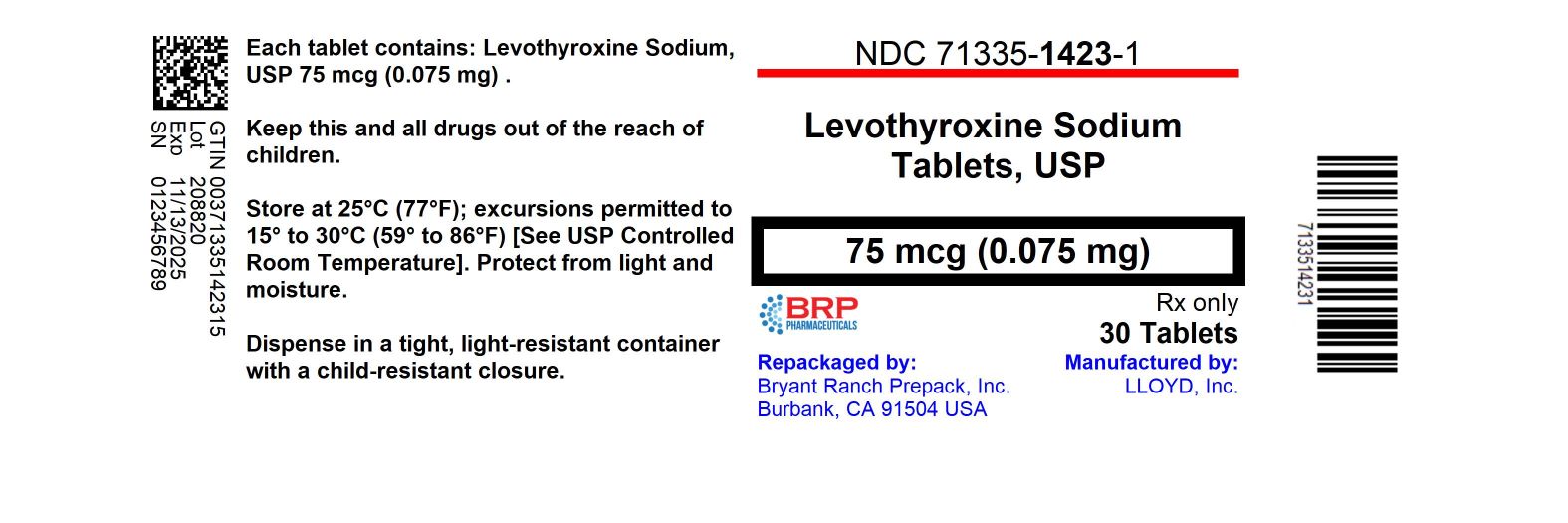
16 HOW SUPPLIED/STORAGE AND HANDLING Levothyroxine Sodium Tablets, in the shape of caplet are supplied as follows: 75 mcg - Violet - Imprint "T|4" and "75" NDC: 71335-1423-1 30 TABLET in a BOTTLE NDC: 71335-1423-2 100 TABLET in a BOTTLE NDC: 71335-1423-3 60 TABLET in a BOTTLE NDC: 71335-1423-4 90 TABLET in a BOTTLE NDC: 71335-1423-5 28 TABLET in a BOTTLE NDC: 71335-1423-6 10 TABLET in a BOTTLE 200 mcg - Pink - Imprint "T|4" and "200" NDC: 71335-1435-1 100 TABLET in a BOTTLE NDC: 71335-1435-2 30 TABLET in a BOTTLE NDC: 71335-1435-3 90 TABLET in a BOTTLE NDC: 71335-1435-4 60 TABLET in a BOTTLE NDC: 71335-1435-5 18 TABLET in a BOTTLE 88 mcg - Mint Green - Imprint "T|4" and "88" NDC: 71335-1438-1 30 TABLET in a BOTTLE NDC: 71335-1438-2 90 TABLET in a BOTTLE NDC: 71335-1438-3 28 TABLET in a BOTTLE NDC: 71335-1438-4 100 TABLET in a BOTTLE NDC: 71335-1438-5 60 TABLET in a BOTTLE 25 mcg - Orange - "T|4" and "25" NDC: 71335-1447-1 30 TABLET in a BOTTLE NDC: 71335-1447-2 90 TABLET in a BOTTLE NDC: 71335-1447-3 100 TABLET in a BOTTLE NDC: 71335-1447-4 60 TABLET in a BOTTLE NDC: 71335-1447-5 28 TABLET in a BOTTLE NDC: 71335-1447-6 10 TABLET in a BOTTLE NDC: 71335-1447-7 1000 TABLET in a BOTTLE 125 mcg - Brown - "T|4" and "125" NDC: 71335-1456-1 30 TABLET in a BOTTLE NDC: 71335-1456-2 100 TABLET in a BOTTLE NDC: 71335-1456-3 90 TABLET in a BOTTLE NDC: 71335-1456-4 60 TABLET in a BOTTLE NDC: 71335-1456-5 28 TABLET in a BOTTLE 112 mcg - Rose - Imprint "T|4" and "112" NDC: 71335-1465-1 30 TABLET in a BOTTLE NDC: 71335-1465-2 90 TABLET in a BOTTLE NDC: 71335-1465-3 60 TABLET in a BOTTLE NDC: 71335-1465-4 18 TABLET in a BOTTLE NDC: 71335-1465-5 100 TABLET in a BOTTLE 100 mcg - Yellow - "T|4" and "100" NDC: 71335-1478-1 100 TABLET in a BOTTLE NDC: 71335-1478-2 30 TABLET in a BOTTLE NDC: 71335-1478-3 60 TABLET in a BOTTLE NDC: 71335-1478-4 7 TABLET in a BOTTLE NDC: 71335-1478-5 14 TABLET in a BOTTLE NDC: 71335-1478-6 90 TABLET in a BOTTLE NDC: 71335-1478-7 28 TABLET in a BOTTLE NDC: 71335-1478-8 56 TABLET in a BOTTLE NDC: 71335-1478-9 180 TABLET in a BOTTLE NDC: 71335-1478-0 1000 TABLET in a BOTTLE 50 mcg - White - Imprint "T|4" and "50" NDC: 71335-1502-1 30 TABLET in a BOTTLE NDC: 71335-1502-2 90 TABLET in a BOTTLE NDC: 71335-1502-3 100 TABLET in a BOTTLE NDC: 71335-1502-4 7 TABLET in a BOTTLE NDC: 71335-1502-5 14 TABLET in a BOTTLE NDC: 71335-1502-6 60 TABLET in a BOTTLE NDC: 71335-1502-7 21 TABLET in a BOTTLE NDC: 71335-1502-8 42 TABLET in a BOTTLE 150 mcg - Light Blue - Imprint "T|4" and "150" NDC: 71335-1512-1 30 TABLET in a BOTTLE NDC: 71335-1512-2 100 TABLET in a BOTTLE NDC: 71335-1512-3 90 TABLET in a BOTTLE NDC: 71335-1512-4 60 TABLET in a BOTTLE 137 mcg - Deep Blue - Imprint "T|4" and "137" NDC: 71335-1528-1 30 TABLET in a BOTTLE NDC: 71335-1528-2 100 TABLET in a BOTTLE NDC: 71335-1528-3 90 TABLET in a BOTTLE NDC: 71335-1528-4 28 TABLET in a BOTTLE NDC: 71335-1528-5 60 TABLET in a BOTTLE 175 mcg - Lilac - Imprint "T|4" and "175" NDC: 71335-1637-1 30 TABLET in a BOTTLE NDC: 71335-1637-2 90 TABLET in a BOTTLE NDC: 71335-1637-3 100 TABLET in a BOTTLE NDC: 71335-1637-4 38 TABLET in a BOTTLE NDC: 71335-1637-5 28 TABLET in a BOTTLE NDC: 71335-1637-6 60 TABLET in a BOTTLE Storage and Handling Store at 20°C to 25°C (68°F to 77°F); excursions permitted to 15°C and 30°C (59°F to 86°F) [see USP Controlled Room Temperature].
Protect Levothyroxine Sodium Tablets from light and moisture. Repackaged/Relabeled by: Bryant Ranch Prepack, Inc. Burbank, CA 91504
📋 Description ▾
11 DESCRIPTION Levothyroxine Sodium Tablets are L-thyroxine (T4) and contain the active ingredient, levothyroxine, a synthetic crystalline L-3,3',5,5'-tetraiodothyronine sodium salt. Synthetic T4 is chemically identical to that produced in the human thyroid gland. Levothyroxine (T4) sodium has an empirical formula of C 15 H 10 I 4 NNaO 4 •H 2 O, molecular weight of 798.86 g/mol (anhydrous), and structural formula as shown: Levothyroxine Sodium Tablets are for oral administration and are available in the following strengths: 25 mcg, 50 mcg, 75 mcg, 88 mcg, 100 mcg, 112 mcg, 125 mcg, 137 mcg, 150 mcg, 175 mcg, 200 mcg, and 300 mcg.
Each levothyroxine sodium tablet contains the inactive ingredients butylated hydroxytoluene, calcium phosphate dibasic dihydrate, magnesium stearate, microcrystalline cellulose, povidone, sodium starch glycolate, and color additive(s). Table 9 provides a listing of the color additives by tablet strength: Table 9. Levothyroxine Sodium Tablets Color Additives Strength (mcg) Color additive(s) 25 FD&C Yellow No.
6 Aluminum Lake Note – FD&C Yellow No. 6 is orange in color. 50 None 75 FD&C Red No.
40 Aluminum Lake, FD&C Blue No. 2 Aluminum Lake 88 FD&C Blue No. 1 Aluminum Lake, FD&C Yellow No.
6 Aluminum Lake*, D&C Yellow No. 10 Aluminum Lake 100 D&C Yellow No. 10 Aluminum Lake, FD&C Yellow No.
6 Aluminum Lake* 112 D&C Red No. 27 & 30 Aluminum Lake 125 FD&C Yellow No. 6 Aluminum Lake*, FD&C Red No.
40 Aluminum Lake, FD&C Blue No. 1 Aluminum Lake 137 FD&C Blue No. 1 Aluminum Lake 150 FD&C Blue No.
2 Aluminum Lake 175 FD&C Blue No. 1 Aluminum Lake, D&C Red No. 27 & 30 Aluminum Lake 200 FD&C Red No.
40 Aluminum Lake 300 D&C Yellow No. 10 Aluminum Lake, FD&C Yellow No. 6 Aluminum Lake*, FD&C Blue No.
1 Aluminum Lake
💬 Information for Patients ▾
17 PATIENT COUNSELING INFORMATION Inform the patient of the following information to aid in the safe and effective use of Levothyroxine Sodium Tablets: Dosing and Administration Instruct patients to take Levothyroxine Sodium Tablets only as directed by their healthcare provider. Instruct patients to take Levothyroxine Sodium Tablets as a single dose, preferably on an empty stomach, one-half to one hour before breakfast. Inform patients that agents such as iron and calcium supplements and antacids can decrease the absorption of levothyroxine.
Instruct patients not to take Levothyroxine Sodium Tablets within 4 hours of these agents. Instruct patients to notify their healthcare provider if they are pregnant or breastfeeding or are thinking of becoming pregnant while taking Levothyroxine Sodium Tablets. Important Information Inform patients that it may take several weeks before they notice an improvement in symptoms.
Inform patients that the levothyroxine in Levothyroxine Sodium Tablets is intended to replace a hormone that is normally produced by the thyroid gland. Generally, replacement therapy is to be taken for life. Inform patients that Levothyroxine Sodium Tablets should not be used as a primary or adjunctive therapy in a weight control program.
Instruct patients to notify their healthcare provider if they are taking any other medications, including prescription and over-the-counter preparations. Instruct patients to notify their physician of any other medical conditions they may have, particularly heart disease, diabetes, clotting disorders, and adrenal or pituitary gland problems, as the dose of medications used to control these other conditions may need to be adjusted while they are taking Levothyroxine Sodium Tablets. If they have diabetes, instruct patients to monitor their blood and/or urinary glucose levels as directed by their physician and immediately report any changes to their physician.
If patients are taking anticoagulants, their clotting status should be checked frequently. Instruct patients to notify their physician or dentist that they are taking Levothyroxine Sodium Tablets prior to any surgery. Adverse Reactions Instruct patients to notify their healthcare provider if they experience any of the following symptoms: rapid or irregular heartbeat, chest pain, shortness of breath, leg cramps, headache, nervousness, irritability, sleeplessness, tremors, change in appetite, weight gain or loss, vomiting, diarrhea, excessive sweating, heat intolerance, fever, changes in menstrual periods, hives or skin rash, or any other unusual medical event.
Inform patients that partial hair loss may occur rarely during the first few months of Levothyroxine Sodium Tablets therapy, but this is usually temporary.
🧬 Pharmacokinetics ▾
12.3Pharmacokinetics Absorption Absorption of orally administered T4 from the gastrointestinal tract ranges from 40% to 80%. The majority of the Levothyroxine Sodium Tablets dose is absorbed from the jejunum and upper ileum. The relative bioavailability of Levothyroxine Sodium Tablets, compared to an equal nominal dose of oral levothyroxine sodium solution, is approximately 94%.
T4 absorption is increased by fasting, and decreased in malabsorption syndromes and by certain foods such as soybeans. Dietary fiber decreases bioavailability of T4. Absorption may also decrease with age.
In addition, many drugs and foods affect T4 absorption [see Drug Interactions ( 7 )] . Distribution Circulating thyroid hormones are greater than 99% bound to plasma proteins, including thyroxine-binding globulin (TBG), thyroxine-binding prealbumin (TBPA), and albumin (TBA), whose capacities and affinities vary for each hormone. The higher affinity of both TBG and TBPA for T4 partially explains the higher serum levels, slower metabolic clearance, and longer half-life of T4 compared to T3.
Protein-bound thyroid hormones exist in reverse equilibrium with small amounts of free hormone. Only unbound hormone is metabolically active. Many drugs and physiologic conditions affect the binding of thyroid hormones to serum proteins [see Drug Interactions ( 7 )] .
Thyroid hormones do not readily cross the placental barrier [see Use in Specific Populations ( 8.1 )] . Elimination Metabolism T4 is slowly eliminated (Table 10). The major pathway of thyroid hormone metabolism is through sequential deiodination.
Approximately 80% of circulating T3 is derived from peripheral T4 by monodeiodination. The liver is the major site of degradation for both T4 and T3, with T4 deiodination also occurring at a number of additional sites, including the kidney and other tissues. Approximately 80% of the daily dose of T4 is deiodinated to yield equal amounts of T3 and reverse T3 (rT3).
T3 and rT3 are further deiodinated to diiodothyronine. Thyroid hormones are also metabolized via conjugation with glucuronides and sulfates and excreted directly into the bile and gut where they undergo enterohepatic recirculation. Excretion Thyroid hormones are primarily eliminated by the kidneys.
A portion of the conjugated hormone reaches the colon unchanged and is eliminated in the feces. Approximately 20% of T4 is eliminated in the stool. Urinary excretion of T4 decreases with age.
Table 10. Pharmacokinetic Parameters of Thyroid Hormones in Euthyroid Patients * Includes TBG, TBPA, and TBA ** 3 to 4 days in hyperthyroidism, 9 to 10 days in hypothyroidism Hormone Ratio in Thyroglobulin Biologic Potency t 1/2 (days) Protein Binding (%)* Levothyroxine (T4) 10 - 20 1 6-7**
99.96Liothyronine (T3) 1 4 ≤ 2 99.5
🧬 Pharmacodynamics ▾
12.2Pharmacodynamics Oral levothyroxine sodium is a synthetic T4 hormone that exerts the same physiologic effect as endogenous T4, thereby maintaining normal T4 levels when a deficiency is present.
🧪 Nonclinical Toxicology ▾
13 NONCLINICAL TOXICOLOGY
13.1Carcinogenesis, Mutagenesis, Impairment of Fertility Long-term carcinogenicity studies in animals to evaluate the carcinogenic potential of levothyroxine have not been performed. Studies to evaluate mutagenic potential and animal fertility have not been performed.
📄 Carcinogenesis, Mutagenesis, Impairment of Fertility ▾
13.1Carcinogenesis, Mutagenesis, Impairment of Fertility Long-term carcinogenicity studies in animals to evaluate the carcinogenic potential of levothyroxine have not been performed. Studies to evaluate mutagenic potential and animal fertility have not been performed.
📄 Recent Major Changes ▾
Indications and Usage ( 1 ) 11/2023 Dosage and Administration ( 2.2 , 2.3 ) 11/2023 Warnings and Precautions ( 5.1 , 5.4 ) 11/2023
📄 Package Label / Principal Display Panel ▾
Levothyroxine Sodium 75mcg Tablet image description
Levothyroxine Sodium 200mcg Tablet image description
Levothyroxine Sodium 88 mcg Tablet image description
Levothyroxine Sodium 25mcg Tablet image description
Levothyroxine Sodium 125mcg Tablet image description
Levothyroxine Sodium 112mcg Tablet image description
Levothyroxine Sodium 100mcg Tablet image description
Levothyroxine Sodium 50 mcg Tablet image description
Levothyroxine Sodium 150mcg Tablet image description
Levothyroxine Sodium 137mcg Tablet image description
Levothyroxine Sodium 175mcg Tablet image description
Medicare Part D spend CMS · PART D · 2026 (Q1)
About this NDC listing & data coverage
What data is (and isn’t) available for this NDC — tap to expand
| NDC identity (package / product / labeler codes) | ✓ Available |
| Labeler | ✓ Available |
| Product & package description | ✓ Available |
| Marketing category & status | ✓ Available |
| Active ingredient / dosage form / route | ✓ Available |
| FDA label (SPL via DailyMed) | ✓ Available |
| Package photos | ✓ Available |
| Inactive ingredients (structured) | ✓ Available |
| NADAC pharmacy acquisition price (CMS) | — Not published for this NDC CMS publishes NADAC only for NDCs reported in its retail-pharmacy survey. |
| Orange Book / therapeutic-equivalence data | ✓ Available |
| HCPCS J-code billing crosswalk | — Not published for this NDC Most self-administered / retail products have no J-code — that is normal. |
| Medicaid utilization (CMS SDUD) | — Not published for this NDC CMS reports utilization only for NDCs with Medicaid claims above its privacy threshold. |