
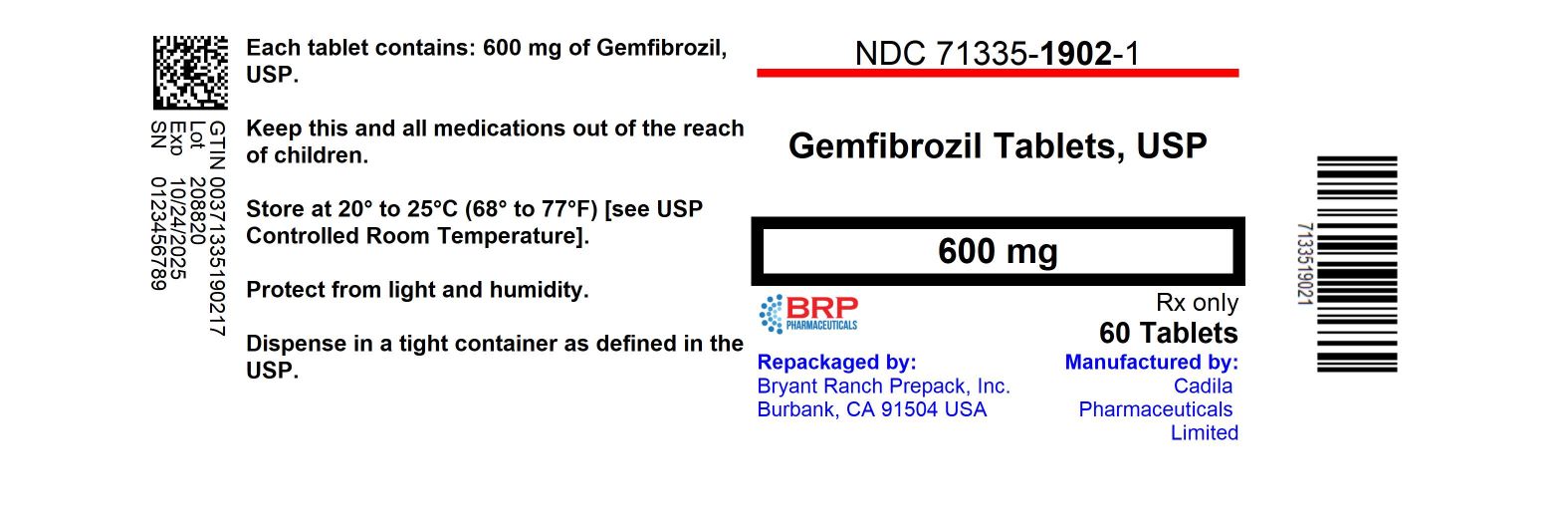
Gemfibrozil 600 mg Tablet, 60-count — NDC 71335-1902-1 (Billing 71335-1902-01)
This is a package of 60 tablets of Gemfibrozil 600 mg Tablet from Bryant Ranch Prepack, marketed since Feb 2017 and currently FDA-listed. It is the main listing for this product, which comes in 5 package sizes.
Identity & classification
Regulatory identifiers FDA, NLM and CMS codes for this package
- RxCUI (RxNorm): 310459
Where does this data come from?
- FDA openFDA NDC Directory · synced Oct 1, 2026
- FDA label on DailyMed · label index refreshed Oct 1, 2026
- RxNorm (NLM RxNav) · catalog refreshed Oct 1, 2026
- Medi-Span GPI (licensed)
- First Databank (licensed) · refreshed Oct 1, 2026
RxNorm drug class
This medicine belongs to the Peroxisome Proliferator-activated Receptor alpha Agonist class.
Where does this data come from?
- RxClass (NLM) · catalog refreshed Oct 1, 2026
Clinical
Gemfibrozil is used to reduce the amount of cholesterol (a fat-like substance that can build up in blood vessels leading to heart attack or strokes or other medical conditions) and triglycerides (other fatty substances) in the blood. Gemfibrozil is in a class of lipid-regulating medications called fibrates. It works by reducing the production of triglycerides in the liver.
Read the full MedlinePlus article ↗- It's used with diet to treat very high triglycerides, especially when they raise your risk of pancreatitis. It's also used in a narrow group of people to lower the risk of coronary...
- Take it by mouth twice a day, 30 minutes before breakfast and dinner. Follow your prescriber's directions and your label.
- Stomach issues like indigestion, belly pain, diarrhea and nausea are the most common. Fatigue, rash, vertigo and headache can also occur. Let me know if they bother you.
- Call promptly for muscle pain, tenderness or weakness, ongoing or severe belly pain, yellow skin or eyes, or signs of allergic reaction like swelling or trouble breathing.
Patient education
Supplement & herbal interactions
Some supplements/herbs that may interact with Gemfibrozil — tap one for details:
Gemfibrozil may be associated with lower levels of 1 nutrient — worth a chat with your pharmacist, not a cause for alarm.
Where does this data come from?
- MedlinePlus (NLM) · refreshed Oct 1, 2026
- FDA label on DailyMed · label index refreshed Oct 1, 2026
Ask a licensed pharmacist directly — free, answered by our team.
Pricing
A drug doesn't have one price. Each row is a different public payment system, and none is what you'd pay at the counter — that depends on your insurance. The ⓘ on each row explains what it measures.
| Price system | Per each | Per package |
|---|---|---|
| Retail pharmacies payNADAC · weekly | Not in the retail survey — common for institutional, discontinued, or low-volume packs. | |
| Medicaid paysCMS SDUD · 12 mo | No recent Medicaid claims on file for this NDC — rare and low-volume NDCs are suppressed in the public data. | |
| Medicare drug plans payPart D · Q2 2026 | $0.2303 | $13.82 / 60 tablets |
Where does this data come from?
- CMS NADAC weekly file
- CMS ASP pricing files · refreshed Sep 20, 2026
- CMS Medicaid State Drug Utilization Data · refreshed Oct 2, 2026
- CMS Part D plan pricing files · refreshed Sep 24, 2026
- VA National Acquisition Center price file
Packaging — all sizes for this product
| Package NDC | Description | Marketing start | Marketing end | Status |
|---|---|---|---|---|
| 71335-1902-01 You're viewing this Main listing | 60 TABLET in 1 BOTTLE | 2021-07-13 | — | Active |
| 71335-1902-02 71335-1902-2 | 30 TABLET in 1 BOTTLE | 2021-08-03 | — | Active |
| 71335-1902-03 71335-1902-3 | 100 TABLET in 1 BOTTLE | 2022-03-10 | — | Active |
| 71335-1902-04 71335-1902-4 | 90 TABLET in 1 BOTTLE | 2022-03-10 | — | Active |
| 71335-1902-05 71335-1902-5 | 180 TABLET in 1 BOTTLE | 2021-09-13 | — | Active |
You're viewing one of 5 pack sizes for this product.
Pack size FAQ
What quantity is in this package?
How does this package differ from NDC 71335-1902-02?
What NDC number is used to bill for this package of Gemfibrozil 600 mg Tablet?
Therapeutic equivalents
| Product | Labeler | Pack | NADAC/unit | TE | Status | Price vs. this |
|---|---|---|---|---|---|---|
| Gemfibrozil 600 mg 75834-0131-05 | Nivagen | 500 tablets | $0.103 | AB | Discontinued | — |
| Gemfibrozil 600 mg 16571-0784-06 | Rising | 60 tablets | $0.104 | AB | Availability likely | — |
| Gemfibrozil 600 mg 16714-0101-02 | Northstar | 60 tablets | $0.104 | AB | Availability likely | — |
| Gemfibrozil 600 mg 31722-0128-05 | Camber | 500 tablets | $0.104 | AB | Availability likely | — |
| Gemfibrozil 600 mg 50268-0350-15 | AvPAK | 50 tablets | $0.104 | AB | Availability likely | — |
| Gemfibrozil 600 mg 60687-0224-01 | American | 100 tablets | $0.104 | AB | Availability likely | — |
| Gemfibrozil 600 mg 65862-0624-05 | Aurobindo | 500 tablets | $0.104 | — | Availability likely | — |
| Gemfibrozil 600 mg 69097-0821-03 | Cipla | 60 tablets | $0.104 | AB | Availability likely | — |
| Gemfibrozil 600 mg 72603-0206-01 | NorthStar | 60 tablets | $0.104 | AB | Availability likely | — |
| Gemfibrozil 600 mg 76282-0225-05 | Exelan | 500 tablets | $0.104 | AB | Availability likely | — |
| Lopid 600 mg 00071-0737-20 | Parke-Davis | 60 tablets | — | AB | FDA listed | — |
| Gemfibrozil 600 mg 00615-8354-39 | NCS | 30 tablets | — | AB | FDA listed | — |
| Gemfibrozil 600 mg 43063-0745-60 | PD-Rx | 60 tablets | — | AB | FDA listed | — |
| Gemfibrozil 600 mg 50090-5808-00 | A-S | 60 tablets | — | AB | FDA listed | — |
| Gemfibrozil 600 mg 50090-6913-00 | A-S | 60 tablets | — | AB | FDA listed | — |
| Gemfibrozil 600 mg 50090-6939-00 | A-S | 90 tablets | — | AB | FDA listed | — |
| Gemfibrozil 600 mg 50090-7233-00 | A-S | 60 tablets | — | AB | FDA listed | — |
| Gemfibrozil 600 mg 50090-7234-00 | A-S | 90 tablets | — | AB | FDA listed | — |
| Gemfibrozil 600 mg 50090-7809-00 | A-S | 90 tablets | — | AB | FDA listed | — |
| Gemfibrozil 600 mg 51655-0143-26 | Northwind | 90 tablets | — | AB | FDA listed | — |
| Gemfibrozil 600 mg 62135-0160-31 | Chartwell | 300 tablets | — | AB | FDA listed | — |
| Gemfibrozil 600 mg 63187-0772-30 | Proficient | 30 tablets | — | AB | FDA listed | — |
| Gemfibrozil 600 mg 66267-0436-30 | NuCare | 30 tablets | — | AB | FDA listed | — |
| Gemfibrozil 600 mg 67046-0233-03 | Coupler | 30 tablets | — | AB | FDA listed | — |
| Gemfibrozil 600 mg 68071-1733-06 | NuCare | 60 tablets | — | AB | FDA listed | — |
| Gemfibrozil 600 mg 68071-2387-03 | NuCare | 30 tablets | — | AB | FDA listed | — |
| Gemfibrozil 600 mg 68382-0553-01 | Zydus | 100 tablets | — | — | FDA listed | — |
| Gemfibrozil 600 mg 68788-7964-03 | Preferred | 30 tablets | — | AB | FDA listed | — |
| Gemfibrozil 600 mg 70518-1563-00 | REMEDYREPACK | 45 tablets | — | AB | Discontinued | — |
| Gemfibrozil 600 mg 70518-4305-00 | REMEDYREPACK | 180 tablets | — | AB | FDA listed | — |
| Gemfibrozil 600 mg 70771-1431-00 | Zydus | 1000 tablets | — | — | FDA listed | — |
| Gemfibrozil 600 mg 71209-0008-03 | Cadila | 60 tablets | — | AB | FDA listed | — |
| Gemfibrozil 600 mg 71335-0051-01 | Bryant | 60 tablets | — | AB | FDA listed | — |
| Gemfibrozil 600 mg 71335-0971-01 | Bryant | 60 tablets | — | AB | Discontinued | — |
| Gemfibrozil 600 mgthis 71335-1902-01 | Bryant | 60 tablets | — | AB | FDA listed | — |
| Gemfibrozil 600 mg 71335-1996-01 | Bryant | 60 tablets | — | AB | FDA listed | — |
| Gemfibrozil 600 mg 71335-2025-01 | Bryant | 60 tablets | — | AB | FDA listed | — |
| Gemfibrozil 600 mg 71610-0107-53 | Aphena | 60 tablets | — | AB | FDA listed | — |
| Gemfibrozil 600 mg 71610-0200-60 | Aphena | 90 tablets | — | AB | FDA listed | — |
| Gemfibrozil 600 mg 71610-0601-53 | Aphena | 60 tablets | — | AB | FDA listed | — |
| Gemfibrozil 600 mg 71610-0824-30 | Aphena | 30 tablets | — | AB | FDA listed | — |
| Gemfibrozil 600 mg 72162-2119-06 | Bryant | 60 tablets | — | AB | FDA listed | — |
| Gemfibrozil 600 mg 72578-0066-01 | Viona | 100 tablets | — | — | FDA listed | — |
| Gemfibrozil 600 mg 72865-0186-05 | XLCare | 500 tablets | — | AB | FDA listed | — |
| Gemfibrozil 600 mg 82804-0221-90 | Proficient | 90 tablets | — | AB | FDA listed | — |
Where does this data come from?
- FDA openFDA NDC Directory · synced Oct 1, 2026
- FDA Orange Book · refreshed Sep 3, 2026
- CMS NADAC weekly file
Availability & generic status
This product is an FDA-approved generic. Other versions of the same drug are listed under Therapeutic equivalents, least expensive first.
Where does this data come from?
- FDA Orange Book · refreshed Sep 3, 2026
Inactive Ingredients / Excipients
Inactive ingredients, also called excipients, are components of the drug product other than the active ingredient. They may include fillers, dyes, coatings, preservatives, flavors, or other formulation ingredients.
💡 Tap an ingredient (hover on desktop) to see what it is and why it’s used.
-
UNII 8PJ61P6TS3
Butyl alcohol is a clear liquid organic solvent derived from petroleum or natural sources. In medicines, it helps dissolve active ingredients and serves as a solvent in liquid formulations and some topical products.
-
UNII 776XM7047L
Calcium stearate is a white powder derived from stearic acid and calcium. It works as a lubricant and glidant to help the medicine flow smoothly during manufacturing and prevent ingredients from sticking to equipment.
-
UNII M28OL1HH48
Croscarmellose sodium is a plant-based substance derived from cellulose. It acts as a disintegrant, helping tablets and capsules break down quickly in the digestive system so the medicine can be absorbed.
-
UNII H3R47K3TBD
FD&C Blue No. 1 is a synthetic blue dye approved for use in foods and medicines. It serves as a colorant to give the medication its distinctive appearance and help with product identification.
-
UNII RFW2ET671P
Hydroxypropyl cellulose is a plant-derived thickening agent made from cellulose. It acts as a binder to hold tablet ingredients together and as a film-former to coat tablets or control how fast the medicine releases.
-
UNII 0WZ8WG20P6
Hypromellose 2910 is a plant-based cellulose derivative that acts as a thickener, binder, and film-coating agent. It helps control how quickly the medicine dissolves and protects the tablet or capsule from moisture and light.
-
UNII ND2M416302
Isopropyl alcohol is a clear liquid solvent derived from petroleum. In medicines, it dissolves active ingredients and other components, helps the product flow smoothly, and aids in sterilization during manufacturing.
-
UNII OP1R32D61U
Microcrystalline cellulose is a purified form of cellulose, a natural fiber from plant sources. It acts as a binder and filler in tablets and capsules, helping hold ingredients together and give the medicine its shape and size.
-
UNII B697894SGQ
Polyethylene glycol 400 is a clear, thick liquid made from petroleum-derived polymers. It acts as a solvent and humectant in medicines, helping dissolve active ingredients and retain moisture in the formulation.
-
UNII 6OZP39ZG8H
Polysorbate 80 is a synthetic emulsifier derived from sorbitol and oleic acid. It helps mix oil and water-based ingredients together in medications and improves how the product disperses in the body.
-
UNII 6DC9Q167V3
Propylene glycol is a clear liquid derived from petroleum or vegetable sources. It acts as a solvent, humectant, and preservative in medicines, helping dissolve active ingredients and maintain product stability.
-
UNII 46N107B71O
Shellac is a natural resin secreted by the lac beetle. It's used as a coating on tablets and capsules to control how quickly the medicine dissolves and to improve appearance and stability.
-
UNII ETJ7Z6XBU4
Silicon dioxide is a naturally occurring mineral used as a glidant and anti-caking agent. It helps powder ingredients flow smoothly and prevents clumping during manufacturing and storage.
-
UNII O8232NY3SJ
A plant-based carbohydrate derived from corn kernels. It acts as a filler to add bulk, a binder to hold ingredients together, and a disintegrant to help the tablet break apart in your stomach for absorption.
-
UNII 15FIX9V2JP
Titanium dioxide is a bright white mineral powder commonly used as a colorant and opacifying agent. It makes pills and tablets white or lighter in color and helps make coatings non-transparent.
15 inactive ingredients listed in the exact product block matched to this NDC.
Where does this data come from?
ingredient classCode="IACT" elements from the exact product block matched by this NDC. Label-section narrative from DailyMed / the openFDA label index is shown separately when available.- FDA label on DailyMed · label index refreshed Oct 1, 2026
- FDA openFDA NDC Directory · synced Oct 1, 2026
Inactive ingredient FAQ
Are inactive ingredients the same for every manufacturer?
Why might an inactive ingredient be missing?
Can inactive ingredients matter?
Manufacturer & labeler
Where does this data come from?
- FDA openFDA NDC Directory · synced Oct 1, 2026
- Drugs@FDA
Full prescribing information FDA SPL
🎯 Indications and Usage ▾
INDICATIONS AND USAGE Gemfibrozil tablets, USP are indicated as adjunctive therapy to diet for: Treatment of adult patients with very high elevations of serum triglyceride levels (Types IV and V hyperlipidemia) who present a risk of pancreatitis and who do not respond adequately to a determined dietary effort to control them. Patients who present such risk typically have serum triglycerides over 2000 mg/dL and have elevations of VLDL-cholesterol as well as fasting chylomicrons (Type V hyperlipidemia). Subjects who consistently have total serum or plasma triglycerides below 1000 mg/dL are unlikely to present a risk of pancreatitis.
Gemfibrozil therapy may be considered for those subjects with triglyceride elevations between 1000 and 2000 mg/dL who have a history of pancreatitis or of recurrent abdominal pain typical of pancreatitis. It is recognized that some Type IV patients with triglycerides under 1000 mg/dL may, through dietary or alcoholic indiscretion, convert to a Type V pattern with massive triglyceride elevations accompanying fasting chylomicronemia, but the influence of gemfibrozil therapy on the risk of pancreatitis in such situations has not been adequately studied.
Drug therapy is not indicated for patients with Type I hyperlipoproteinemia, who have elevations of chylomicrons and plasma triglycerides, but who have normal levels of very low density lipoprotein (VLDL). Inspection of plasma refrigerated for 14 hours is helpful in distinguishing Types I, IV, and V hyperlipoproteinemia. Reducing the risk of developing coronary heart disease only in Type IIb patients without history of or symptoms of existing coronary heart disease who have had an inadequate response to weight loss, dietary therapy, exercise, and other pharmacologic agents (such as bile acid sequestrants and nicotinic acid, known to reduce LDL-and raise HDL-cholesterol) and who have the following triad of lipid abnormalities: low HDL-cholesterol levels in addition to elevated LDL-cholesterol and elevated triglycerides (see WARNINGS , PRECAUTIONS , and CLINICAL PHARMACOLOGY ).
The National Cholesterol Education Program has defined a serum HDL-cholesterol value that is consistently below 35 mg/dL as constituting an independent risk factor for coronary heart disease. Patients with significantly elevated triglycerides should be closely observed when treated with gemfibrozil. In some patients with high triglyceride levels, treatment with gemfibrozil is associated with a significant increase in LDL-cholesterol.
BECAUSE OF POTENTIAL TOXICITY SUCH AS MALIGNANCY, GALLBLADDER DISEASE, ABDOMINAL PAIN LEADING TO APPENDECTOMY AND OTHER ABDOMINAL SURGERIES, AN INCREASED INCIDENCE IN NON-CORONARY MORTALITY, AND THE 44% RELATIVE INCREASE DURING THE TRIAL PERIOD IN AGE-ADJUSTED ALL-CAUSE MORTALITY SEEN WITH THE CHEMICALLY AND PHARMACOLOGICALLY RELATED DRUG, CLOFIBRATE, THE POTENTIAL BENEFIT OF GEMFIBROZIL IN TREATING TYPE IIA PATIENTS WITH ELEVATIONS OF LDL-CHOLESTEROL ONLY IS NOT LIKELY TO OUTWEIGH THE RISKS. GEMFIBROZIL IS ALSO NOT INDICATED FOR THE TREATMENT OF PATIENTS WITH LOW HDL-CHOLESTEROL AS THEIR ONLY LIPID ABNORMALITY.
In a subgroup analysis of patients in the Helsinki Heart Study with above-median HDL-cholesterol values at baseline (greater than 46.4 mg/dL), the incidence of serious coronary events was similar for gemfibrozil and placebo subgroups (see Table I ). The initial treatment for dyslipidemia is dietary therapy specific for the type of lipoprotein abnormality. Excess body weight and excess alcohol intake may be important factors in hypertriglyceridemia and should be managed prior to any drug therapy.
Physical exercise can be an important ancillary measure, and has been associated with rises in HDL-cholesterol. Diseases contributory to hyperlipidemia such as hypothyroidism or diabetes mellitus should be looked for and adequately treated. Estrogen therapy is sometimes associated with massive rises in plasma triglycerides, especially in subjects with fa…
⏱️ Dosage and Administration ▾
DOSAGE AND ADMINISTRATION The recommended dose for adults is 1200 mg administered in two divided doses 30 minutes before the morning and evening meals (see CLINICAL PHARMACOLOGY ).
⛔ Contraindications ▾
CONTRAINDICATIONS Hepatic or severe renal dysfunction, including primary biliary cirrhosis. Preexisting gallbladder disease (see WARNINGS ). Hypersensitivity to gemfibrozil. Combination therapy of gemfibrozil with simvastatin (see WARNINGS and PRECAUTIONS ). Combination therapy of gemfibrozil with repaglinide (see PRECAUTIONS ). Combination therapy of gemfibrozil with dasabuvir (see PRECAUTIONS ).
⚠️ Warnings ▾
WARNINGS 1. Because of chemical, pharmacological, and clinical similarities between gemfibrozil and clofibrate, the adverse findings with clofibrate in two large clinical studies may also apply to gemfibrozil. In the first of those studies, the Coronar y Drug Project, 1000 subjects with previous myocardial infarction were treated for five years with clofibrate.
There was no difference in mortality between the clofibrate-treated subjects and 3000 placebo-treated subjects, but twice as many clofibrate-treated subjects developed cholelithiasis and cholecystitis requiring surgery. In the other study, conducted by the World Health Organization (WHO), 5000 subjects without known coronary heart disease were treated with clofibrate for five years and followed one year beyond. There was a statistically significant (44%) higher age-adjusted total mortality in the clofibrate-treated group than in a comparable placebo-treated control group during the trial period.
The excess mortality was due to a 33% increase in non-cardiovascular causes, including malignancy, post¬cholecystectomy complications, and pancreatitis. The higher risk of clofibrate-treated subjects for gallbladder disease was confirmed. Because of the more limited size of the Helsinki Heart Study, the observed difference in mortality from any cause between the gemfibrozil and placebo groups is not statistically significantly different from the 29% excess mortality reported in the clofibrate group in the separate WHO study at the nine year follow-up (see CLINICAL PHARMACOLOGY ).
Noncoronary heart disease related mortality showed an excess in the group originally randomized to gemfibrozil primarily due to cancer deaths observed during the open-label extension. During the five year primary prevention component of the Helsinki Heart Study, mortality from any cause was 44 (2.2%) in the gemfibrozil group and 43 (2.1%) in the placebo group; including the 3.5 year follow-up period since the trial was completed, cumulative mortality from any cause was 101 (4.9%) in the gemfibrozil group and 83 (4.1%) in the group originally randomized to placebo (hazard ratio 1:20 in favor of placebo).
Because of the more limited size of the Helsinki Heart Study, the observed difference in mortality from any cause between the gemfibrozil and placebo groups at Year-5 or at Year-8.5 is not statistically significantly different from the 29% excess mortality reported in the clofibrate group in the separate WHO study at the nine year follow-up. Noncoronary heart disease related mortality showed an excess in the group originally randomized to gemfibrozil at the 8.5 year follow-up (65 gemfibrozil versus 45 placebo noncoronary deaths).
The incidence of cancer (excluding basal cell carcinoma) discovered during the trial and in the 3.5 years after the trial was completed was 51 (2.5%) in both originally randomized groups. In addition, there were 16 basal cell carcinomas in the group originally randomized to gemfibrozil and 9 in the group originally randomized to placebo (p=0.22). There were 30 (1.5%) deaths attributed to cancer in the group originally randomized to gemfibrozil and 18 (0.9%) in the group originally randomized to placebo (p=0.11).
Adverse outcomes, including coronary events, were higher in gemfibrozil patients in a corresponding study in men with a history of known or suspected coronary heart disease in the secondary prevention component of the Helsinki Heart Study (see CLINICAL PHARMACOLOGY ). A comparative carcinogenicity study was also done in rats comparing three drugs in this class: fenofibrate (10 and 60 mg/kg; 0.3 and 1.6 times the human dose, respectively), clofibrate (400 mg/kg; 1.6 times the human dose), and gemfibrozil (250 mg/kg; 1.7 times the human dose).
Pancreatic acinar adenomas were increased in males and females on fenofibrate; hepatocellular carcinoma and pancreatic acinar adenomas were increased in males and hepatic neoplastic nodules in females treated with clofibrate; hepatic…
🤒 Adverse Reactions ▾
ADVERSE REACTIONS In the double-blind controlled phase of the primary prevention component of the Helsinki Heart Study, 2046 patients received gemfibrozil for up to five years. In that study, the following adverse reactions were statistically more frequent in subjects in the gemfibrozil group: Gemfibrozil (N=2046) PLACEBO (N=2035) Frequency in percent of subject Gastrointestinal reaction 34.2
23.8Dyspepsia 19.6
11.9Abdominal pain 9.8
5.6Acute appendicitis (Histological confirmed in most cases where data were available) 1.2
0.6Atrial fibrillation 0.7
0.1Adverse event reported by more than 1% of subject, but without a significant difference between groups: Diarrhea 7.2
6.5Fatigue 3.8
3.5Nausea/Vomiting 2.5
2.1Eczema 1.9
1.2Rash 1.7
1.3Vertigo 1.5
1.3Constipation 1.4
1.3Headache 1.2
1.1Gallbladder surgery was performed in 0.9% of gemfibrozil and 0.5% of placebo subjects in the primary prevention component, a 64% excess, which is not statistically different from the excess of gallbladder surgery observed in the clofibrate group compared to the placebo group of the WHO study. Gallbladder surgery was also performed more frequently in the gemfibrozil group compared to the placebo group (1.9% versus 0.3%, p=0.07) in the secondary prevention component. A statistically significant increase in appendectomy in the gemfibrozil group was seen also in the secondary prevention component (6 on gemfibrozil versus 0 on placebo, p=0.014).
Nervous system and special senses adverse reactions were more common in the gemfibrozil group. These included hypesthesia, paresthesias, and taste perversion. Other adverse reactions that were more common among gemfibrozil treatment group subjects but where a causal relationship was not established include cataracts, peripheral vascular disease, and intracerebral hemorrhage.
From other studies it seems probable that gemfibrozil is causally related to the occurrence of MUSCULOSKELETAL SYMPTOMS (see WARNINGS ), and to ABNORMAL LIVER FUNCTION TESTS and HEMATOLOGIC CHANGES (see PRECAUTIONS ). Reports of viral and bacterial infections (common cold, cough, urinary tract infections) were more common in gemfibrozil treated patients in other controlled clinical trials of 805 patients. Additional adverse reactions that have been reported for gemfibrozil are listed below by system.
These are categorized according to whether a causal relationship to treatment with gemfibrozil is probable or not established: CAUSAL RELATIONSHIP PROBABLE CAUSAL RELATIONSHIP NOT ESTABLISHED General: weight loss Cardiac: extrasystoles Gastrointestinal: cholestatic jaundice pancreatitis hepatoma colitis Central Nervous System: dizziness somnolence paresthesia peripheral neuritis decreased libido depression headache confusion convulsions syncope Eye: blurred vision retinal edema Genitourinary: impotence decreased male fertility renal dysfunction Musculoskeletal: myopathy myasthenia myalgia painful extremities arthralgia synovitis rhabdomyolysis (see WARNINGS and Drug Interaction under PRECAUTIONS Clinical Laboratory: increased creatine phosphokinase increased bilirubin increased liver transaminases (AST, ALT) increased alkaline phosphatase positive antinuclear antibody Hematopoietic: anemia leukopenia bone marrow hypoplasia eosinophilia thrombocytopenia Immunologic: angioedema laryngeal edema urticaria anaphylaxis Lupus-like syndrome vasculitis Integumentary: exfoliative dermatitis rash dermatitis pruritus alopecia photosensitivity Additional adverse reactions that have been reported include cholecystitis and cholelithiasis (see WARNINGS ).
🔄 Drug Interactions ▾
3. Drug Interactions (A) HMG-CoA Reductase Inhibitors The concomitant administration of gemfibrozil with simvastatin is contraindicated (see CONTRAINDICATIONS and WARNINGS ). The risk of myopathy and rhabdomyolysis is increased with combined gemfibrozil and HMG-CoA reductase inhibitor therapy.
Myopathy or rhabdomyolysis with or without acute renal failure have been reported as early as three weeks after initiation of combined therapy or after several months (see WARNINGS ). There is no assurance that periodic monitoring of creatine kinase will prevent the occurrence of severe myopathy and kidney damage. (B) Anticoagulants CAUTION SHOULD BE EXERCISED WHEN WARFARIN IS GIVEN IN CONJUNCTION WITH GEMFIBROZIL.
THE DOSAGE OF WARFARIN SHOULD BE REDUCED TO MAINTAIN THE PROTHROMBIN TIME AT THE DESIRED LEVEL TO PREVENT BLEEDING COMPLICATIONS. FREQUENT PROTHROMBIN DETERMINATIONS ARE ADVISABLE UNTIL IT HAS BEEN DEFINITELY DETERMINED THAT THE PROTHROMBIN LEVEL HAS STABILIZED. (C) CYP2C8 Substrates Gemfibrozil is an inhibitor of CYP2C8 and may increase exposure of drugs mainly metabolized by CYP2C8 (e.g., dabrafenib, loperamide, montelukast, paclitaxel, pioglitazone, rosiglitazone).
Therefore, dosing reduction of drugs that are mainly metabolized by CYP2C8 enzyme may be required when gemfibrozil is used concomitantly (see WARNINGS ). Repaglinide In healthy volunteers, co-administration with gemfibrozil (600 mg twice daily for 3 days) resulted in an 8.1-fold (range 5.5-to 15.0-fold) higher repaglinide AUC and a 28.6-fold (range 18.5-to 80.1-fold) higher repaglinide plasma concentration 7 hours after the dose. In the same study, gemfibrozil (600 mg twice daily for 3 days) + itraconazole (200 mg in the morning and 100 mg in the evening at Day 1, then 100 mg twice daily at Day 2–3) resulted in a 19.4-(range 12.9- to 24.7-fold) higher repaglinide AUC and a 70.4-fold (range 42.9-to 119.2-fold) higher repaglinide plasma concentration 7 hours after the dose.
In addition, gemfibrozil alone or gemfibrozil + itraconazole prolonged the hypoglycemic effects of repaglinide. Co-administration of gemfibrozil and repaglinide increases the risk of severe hypoglycemia and is contraindicated (see CONTRAINDICATIONS ). Dasabuvir Co-administration of gemfibrozil with dasabuvir increased dasabuvir AUC and Cmax (ratios: 11.3 and 2.01, respectively) due to CYP2C8 inhibition.
Increased dasabuvir exposure may increase the risk of QT prolongation, therefore, coadministration of gemfibrozil with dasabuvir is contraindicated (see CONTRAINDICATIONS ). (D) OATP1B1 substrates Gemfibrozil is an inhibitor of OATP1B1 transporter and may increase exposure of drugs that are substrates of OATP1B1 (e.g., atrasentan, atorvastatin, bosentan, ezetimibe, fluvastatin, glyburide, SN-38 [active metabolite of irinotecan], rosuvastatin, pitavastatin, pravastatin, rifampin, valsartan, olmesartan). Therefore, dosing reductions of drugs that are substrates of OATP1B1 may be required when gemfibrozil is used concomitantly (see WARNINGS ).
Combination therapy of gemfibrozil with simvastatin or with repaglinide, which are OATP1B1 substrates, is contraindicated (see CONTRAINDICATIONS ). (E) In vitro studies of CYP enzymes, UGTA enzymes and OATP1B1 transporter In vitro studies have shown that gemfibrozil is an inhibitor of CYP1A2, CYP2C8, CYP2C9, CYP2C19, OATP1B1, and UDP-glucuronosyltransferase (UGT) 1A1 and 1A3 (see WARNINGS ). (F) Bile Acid-Binding Resin Gemfibrozil AUC was reduced by 30% when gemfibrozil was given (600 mg) simultaneously with resin-granule drugs such as colestipol (5 g).
Administration of the drugs two hours or more apart is recommended because gemfibrozil exposure was not significantly affected when it was administered two hours apart from colestipol. (G) Colchicine Myopathy, including rhabdomyolysis, has been reported with chronic administration of colchicine at therapeutic doses. Concomitant use of gemfibrozil may potentiate the development of myopathy.
Patients with renal d…
🤰 Pregnancy ▾
5. Pregnancy Category C Gemfibrozil has been shown to produce adverse effects in rats and rabbits at doses between 0.5 and 3 times the human dose (based on surface area). There are no adequate and well-controlled studies in pregnant women.
Gemfibrozil should be used during pregnancy only if the potential benefit justifies the potential risk to the fetus. Administration of gemfibrozil to female rats at 2 times the human dose (based on surface area) before and throughout gestation caused a dose-related decrease in conception rate, an increase in stillborns, and a slight reduction in pup weight during lactation. There were also dose-related increased skeletal variations.
Anophthalmia occurred, but rarely. Administration of 0.6 and 2 times the human dose (based on surface area) of gemfibrozil to female rats from gestation day 15 through weaning caused dose-related decreases in birth weight and suppressions of pup growth during lactation. Administration of 1 and 3 times the human dose (based on surface area) of gemfibrozil to female rabbits during organogenesis caused a dose-related decrease in litter size and, at the high dose, an increased incidence of parietal bone variations.
🧒 Pediatric Use ▾
10. Pediatric Use Safety and efficacy in pediatric patients have not been established.
🆘 Overdosage ▾
OVERDOSAGE There have been reported cases of overdosage with gemfibrozil. In one case, a 7-year-old child recovered after ingesting up to 9 grams of gemfibrozil. Symptoms reported with overdosage were abdominal cramps, abnormal liver function tests, diarrhea, increased CPK, joint and muscle pain, nausea and vomiting. Symptomatic supportive measures should be taken, should an overdose occur.
🧬 Clinical Pharmacology ▾
CLINICAL PHARMACOLOGY Gemfibrozil is a lipid regulating agent which decreases serum triglycerides and very low density lipoprotein (VLDL) cholesterol, and increases high density lipoprotein (HDL) cholesterol. While modest decreases in total and low density lipoprotein (LDL) cholesterol may be observed with gemfibrozil therapy, treatment of patients with elevated triglycerides due to Type IV hyperlipoproteinemia often results in a rise in LDL-cholesterol. LDL-cholesterol levels in Type IIb patients with elevations of both serum LDL-cholesterol and triglycerides are, in general, minimally affected by gemfibrozil treatment; however, gemfibrozil usually raises HDL-cholesterol significantly in this group.
Gemfibrozil increases levels of high density lipoprotein (HDL) subfractions HDL2 and HDL3, as well as apolipoproteins AI and AII. Epidemiological studies have shown that both low HDL-cholesterol and high LDL-cholesterol are independent risk factors for coronary heart disease. In the primary prevention component of the Helsinki Heart Study, in which 4081 male patients between the ages of 40 and 55 were studied in a randomized, double-blind, placebo-controlled fashion, gemfibrozil therapy was associated with significant reductions in total plasma triglycerides and a significant increase in high density lipoprotein cholesterol.
Moderate reductions in total plasma cholesterol and low density lipoprotein cholesterol were observed for the gemfibrozil treatment group as a whole, but the lipid response was heterogeneous, especially among different Fredrickson types. The study involved subjects with serum non-HDL-cholesterol of over 200 mg/dL and no previous history of coronary heart disease. Over the five-year study period, the gemfibrozil group experienced a 1.4% absolute (34% relative) reduction in the rate of serious coronary events (sudden cardiac deaths plus fatal and nonfatal myocardial infarctions) compared to placebo, p=0.04 (see Table I ).
There was a 37% relative reduction in the rate of nonfatal myocardial infarction compared to placebo, equivalent to a treatment-related difference of 13.1 events per thousand persons. Deaths from any cause during the double-blind portion of the study totaled 44 (2.2%) in the gemfibrozil randomization group and 43 (2.1%) in the placebo group. Table I Reduction in CHD Rates (events per 1000 patients) by Baseline Lipids lipid values in mg/dL at baseline in the 2 Helsinki Heart Study, Years 0–5 P = placebo group; L= Gemfibrozil group Incidence of Events fatal and nonfatal myocardial infarctions plus sudden cardiac deaths (events per 1000 patients over 5 years) All Patients LDL-C>175; HDL-C>46.4 LDL-C>175; TG>177 LDL-C>175; TG>200; HDL-C<35 P L Dif difference in rates between placebo and Gemfibrozil groups P L Dif P L Dif P L Dif 41 27 14 32 29 3 71 44 27 149 64 85 Among Fredrickson types, during the 5-year double-blind portion of the primary prevention component of the Helsinki Heart Study, the greatest reduction in the incidence of serious coronary events occurred in Type IIb patients who had elevations of both LDL-cholesterol and total plasma triglycerides.
This subgroup of Type IIb gemfibrozil group patients had a lower mean HDL-cholesterol level at baseline than the Type IIa subgroup that had elevations of LDL-cholesterol and normal plasma triglycerides. The mean increase in HDL-cholesterol among the Type IIb patients in this study was 12.6% compared to placebo. The mean change in LDL-cholesterol among Type IIb patients was –4.1% with gemfibrozil compared to a rise of 3.9% in the placebo subgroup.
The Type IIb subjects in the Helsinki Heart Study had 26 fewer coronary events per thousand persons over five years in the gemfibrozil group compared to placebo. The difference in coronary events was substantially greater between gemfibrozil and placebo for that subgroup of patients with the triad of LDL-cholesterol >175 mg/dL (>4.5 mmol), triglycerides >200 mg/dL (>2.2 mmol), and HDL-cholesterol <35…
📦 How Supplied / Storage and Handling ▾
HOW SUPPLIED Gemfibrozil Tablets USP 600 mg: White, elliptical, film-coated, scored tablets, imprinted 'C17' on one side NDC: 71335-1902-1: 60 Tablets in a BOTTLE NDC: 71335-1902-2: 30 Tablets in a BOTTLE NDC: 71335-1902-3: 100 Tablets in a BOTTLE NDC: 71335-1902-4: 90 Tablets in a BOTTLE NDC: 71335-1902-5: 180 Tablets in a BOTTLE Repackaged/Relabeled by: Bryant Ranch Prepack, Inc. Burbank, CA 91504
📋 Description ▾
DESCRIPTION Gemfibrozil tablets, USP 600 mg is a lipid regulating agent. It is available as tablets for oral administration. Each tablet contains 600 mg gemfibrozil.
Each tablet also contains calcium stearate, NF; microcrystalline cellulose, NF; hydroxypropyl cellulose, NF; polysorbate 80, NF; colloidal silicon dioxide, NF; pregelatinized starch (maize starch), NF; croscarmellose sodium, NF; Opadry white; Opacode Blue. Opadry white contains hypromellose, titanium dioxide, polyethylene glycol 400 and Opacode blue contains shellac, FD&C Blue #1, N-butyl alcohol, titanium dioxide, propylene glycol, isopropyl alcohol. The chemical name is 5-(2,5-dimethylphenoxy)-2,2-dimethylpentanoic acid, with the following structural formula: The empirical formula is C 15 H 22 O 3 and the molecular weight is 250.35; the solubility in water and acid is 0.0019% and in dilute base it is greater than 1%.
The melting point is 58°–61° C. Gemfibrozil is a white solid which is stable under ordinary conditions.
Medicare Part D spend CMS · PART D · 2026 (Q1)
About this NDC listing & data coverage
What data is (and isn’t) available for this NDC — tap to expand
| NDC identity (package / product / labeler codes) | ✓ Available |
| Labeler | ✓ Available |
| Product & package description | ✓ Available |
| Marketing category & status | ✓ Available |
| Active ingredient / dosage form / route | ✓ Available |
| FDA label (SPL via DailyMed) | ✓ Available |
| Package photos | ✓ Available |
| Inactive ingredients (structured) | ✓ Available |
| NADAC pharmacy acquisition price (CMS) | — Not published for this NDC CMS publishes NADAC only for NDCs reported in its retail-pharmacy survey. |
| Orange Book / therapeutic-equivalence data | ✓ Available |
| HCPCS J-code billing crosswalk | — Not published for this NDC Most self-administered / retail products have no J-code — that is normal. |
| Medicaid utilization (CMS SDUD) | — Not published for this NDC CMS reports utilization only for NDCs with Medicaid claims above its privacy threshold. |