
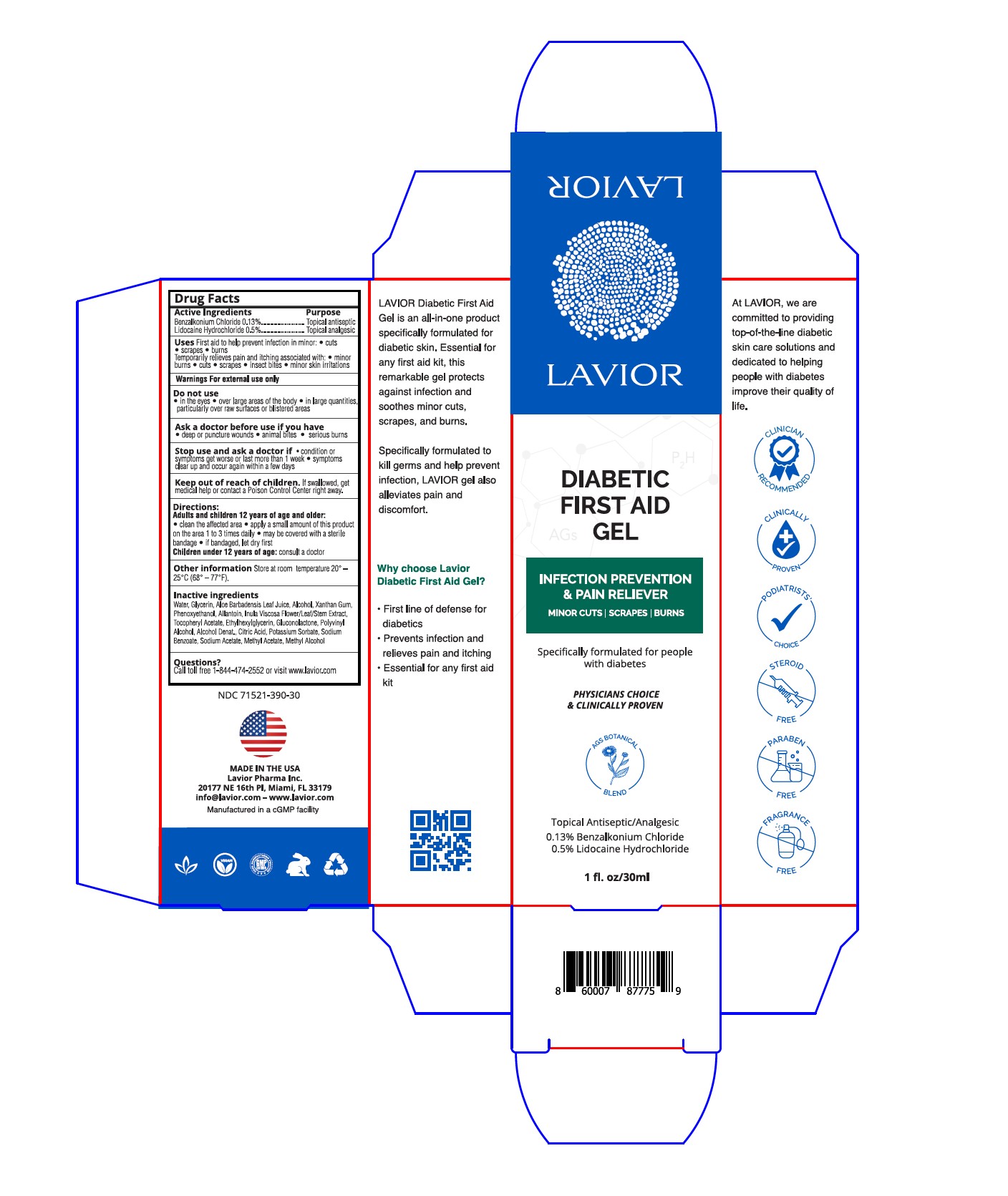
Diabetic First Aid Gel Benzalkonium Chloride, Lidocaine Hydrochloride .5 g/100g; .13 g/100g Gel, 15 g
🆔 Identity & classification
Where does this data come from?
🏷️ RxNorm drug class
This medicine belongs to the Quaternary ammonium compounds class.
Where does this data come from?
🏭 Manufacturer & labeler
Where does this data come from?
🩺 Clinical
Diabetic First Aid Gel is a topical OTC product sold under FDA's monograph rules for over-the-counter skin care. It contains benzalkonium chloride, an antiseptic commonly used to help reduce bacteria on minor cuts and scrapes, and lidocaine hydrochloride, a local anesthetic typically used to numb minor skin discomfort. This gel form is applied directly to the skin.
Patient education
Supplement & herbal interactions
Where does this data come from?
Ask a licensed pharmacist directly — free, answered by our team.
🧪 Inactive Ingredients / Excipients
Inactive ingredients, also called excipients, are components of the drug product other than the active ingredient. They may include fillers, dyes, coatings, preservatives, flavors, or other formulation ingredients.
💡 Tap an ingredient (hover on desktop) to see what it is and why it’s used.
-
UNII 9E8X80D2L0
A synthetic form of vitamin E used as an antioxidant and preservative in medications. It helps prevent the active ingredients from degrading when exposed to oxygen or light.
-
UNII 3K9958V90M
A liquid solvent derived from fermentation or chemical synthesis. In medicines, alcohol dissolves active ingredients, helps preserve the product, and improves how the body absorbs certain drugs.
-
UNII 344S277G0Z
Allantoin is a naturally derived compound that helps soften and soothe skin. In medicines, it works as a skin-conditioning agent and may help support wound healing and reduce irritation in topical formulations.
-
UNII ZY81Z83H0X
Aloe vera leaf is a plant extract derived from the aloe plant. It is used in medicines as a natural moisturizer and skin-soothing agent in topical formulations.
-
UNII 2968PHW8QP
A weak organic acid derived from citrus fruits or made through fermentation. It works as a buffer to control pH, a preservative to extend shelf life, and a flavoring agent in medications.
-
UNII 3SYW69FH88
A plant-derived ingredient from Dittrichia viscosa used as a natural binder and thickening agent to help hold the medicine's ingredients together and give the product its intended texture and consistency.
-
UNII 147D247K3P
Ethylhexylglycerin is a synthetic preservative used to prevent bacteria and mold from growing in medicines and personal care products. It helps keep the product safe and stable throughout its shelf life.
-
UNII WQ29KQ9POT
Gluconolactone is a mild organic acid derived from glucose. It functions as a buffer and pH regulator in medicines, helping maintain stable acidity levels and improve product stability.
-
UNII PDC6A3C0OX
Glycerin is a clear, thick liquid derived from plant oils or fats. It acts as a humectant to retain moisture, a sweetener, and a solvent in medications.
-
UNII HIE492ZZ3T
Phenoxyethanol is a synthetic preservative and antimicrobial agent used to prevent bacterial and fungal growth in medicines and cosmetic products, extending shelf life and maintaining product safety.
-
UNII 532B59J990
Polyvinyl alcohol is a synthetic polymer made from plant-derived materials. It's used as a binder to hold ingredients together, a film-former in coatings, and a thickener in liquid formulations.
-
UNII 1VPU26JZZ4
Potassium sorbate is a salt derived from sorbic acid, a naturally occurring preservative. It prevents growth of mold, yeast, and some bacteria, extending the medicine's shelf life.
-
UNII OJ245FE5EU
Sodium benzoate is a salt derived from benzoic acid, a preservative. It's added to medicines to prevent growth of bacteria, fungi, and other microorganisms that could spoil the product.
-
UNII TTV12P4NEE
Xanthan gum is a thickening and stabilizing ingredient made from fermented corn or other sugars. It's added to medicines to improve texture, prevent separation of liquids and solids, and help the product stay consistent.
14 inactive ingredients listed in the exact product block matched to this NDC.
Label-section wording can be broader than the structured product block and may mention additional formulation ingredients.
Where does this data come from?
ingredient classCode="IACT" elements from the exact product block matched by this NDC. Label-section narrative from DailyMed / the openFDA label index is shown separately when available.Inactive ingredient FAQ
Are inactive ingredients the same for every manufacturer?
Why might an inactive ingredient be missing?
Can inactive ingredients matter?
💲 Pricing
A drug doesn't have one price. Each row is a different public payment system, and none is what you'd pay at the counter — that depends on your insurance. The ⓘ on each row explains what it measures.
| Price system | Per g | Per package |
|---|---|---|
| Retail pharmacies payNADAC · weekly | Not in the retail survey — common for institutional, discontinued, or low-volume packs. | |
| Medicaid paysCMS SDUD · 12 mo | No recent Medicaid claims on file for this NDC — rare and low-volume NDCs are suppressed in the public data. | |
| Medicare drug plans payPart D · quarterly | No Part D plan price is available for this NDC in our data. | |
Where does this data come from?
🔁 Therapeutic equivalents
| Product | Labeler | Pack | NADAC/unit | TE | Status | Price vs. this |
|---|---|---|---|---|---|---|
| Diabetic First Aid Gel .5 g/100g; .13 g/100gthis 71521-0390-15 | Lavior | 15 g | — | — | FDA listed | — |
| First Aid Burn .5 g/100g; .13 g/100g 59898-0902-01 | Water-Jel | 1728 packets | — | — | FDA listed | — |
Where does this data come from?
⏳ Availability & generic status
We did not find an FDA-approved generic match for this exact strength, form and route.
Where does this data come from?
🔬 Reported adverse events (FAERS)
Top reported reactions
Reporter sex
Where does this data come from?
📦 Packaging — all sizes for this product
| Package NDC | Description | Marketing start | Status |
|---|---|---|---|
| 71521-0390-15 You're viewing this | 15 g in 1 TUBE (71521-390-15) | 2022-03-17 | Active |
| 71521-0390-50 | 50 g in 1 BOTTLE, PUMP (71521-390-50) | 2021-03-31 | Active |
| 71521-0390-30 | 30 g in 1 TUBE (71521-390-30) | 2023-04-01 | Active |
You're viewing the smallest of 3 pack sizes for this product.
Pack size FAQ
What quantity is in NDC 71521-0390-15?
What is the difference between NDC 71521-0390-15 and NDC 71521-0390-30?
What NDC number is used to bill for this package of Diabetic First Aid Gel Benzalkonium Chloride, Lidocaine Hydrochloride .5 g/100g; .13 g/100g Gel?
🧭 About this NDC listing & data coverage
What data is (and isn’t) available for this NDC — tap to expand
| NDC identity (package / product / labeler codes) | ✓ Available |
| Labeler | ✓ Available |
| Product & package description | ✓ Available |
| Marketing category & status | ✓ Available |
| Active ingredient / dosage form / route | ✓ Available |
| FDA label (SPL via DailyMed) | ✓ Available |
| Package photos | ✓ Available |
| Inactive ingredients (structured) | ✓ Available |
| NADAC pharmacy acquisition price (CMS) | — Not published for this NDC CMS publishes NADAC only for NDCs reported in its retail-pharmacy survey. |
| Orange Book / therapeutic-equivalence data | — Not published for this NDC Applies only to products approved under an NDA/ANDA; many listings are out of scope. |
| HCPCS J-code billing crosswalk | — Not published for this NDC Most self-administered / retail products have no J-code — that is normal. |
| Medicaid utilization (CMS SDUD) | — Not published for this NDC CMS reports utilization only for NDCs with Medicaid claims above its privacy threshold. |
Questions about this listing
Is this NDC FDA-approved?
Why is there no price listed?
Is the NDC printed on the package the same as the 11-digit billing NDC?
What do the three segments of this NDC mean?
Is this package still being marketed?
Does this product come in other package sizes?
Who lists this product with the FDA?
Do I need a prescription for this product?
Where does this data come from?
📄 FDA label — Drug Facts FDA SPL
🎯 Indications and Usage ▾
Uses First aid to help prevent infection in minor: ■cuts ■scrapes ■burns Temporarily relieves pain and itching associated with: ■minor burns ■cuts ■scrapes ■insect bites ■minor skin irritations
⏱️ Dosage and Administration ▾
Directions Adults and children 12 years of age and older: clean the affected area apply a small amount of this product on the area 1 to 3 times daily may be covered with a sterile bandage if bandaged, let dry first Children under 12 years of age: consult a doctor
⚠️ Warnings ▾
Warnings For external use only
🧪 Active Ingredient ▾
Active Ingredients Benzalkonium Chloride 0.13% .................Topical Antiseptic Lidocaine Hydrochloride 0.5% .................Topical Analgesic
🧪 Inactive Ingredients ▾
Inactive Ingredients Water, Glycerin, Inula Viscosa Flower/Leaf/Stem Extract, Aloe Barbadensis Leaf Juice, Xanthan Gum, Phenoxyethanol, Allantoin, Tocopheryl Acetate, Ethylhexylglycerin, Gluconolactone, Polyvinyl Alcohol, Alcohol, Citric Acid, Sodium Benzoate, Potassium Sorbate
🎯 Purpose ▾
Purpose Topical Antiseptic Topical Analgesic