
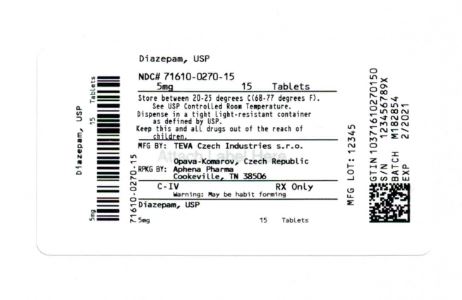
Diazepam 5 mg Tablet, 150-count
🆔 Identity & classification
Where does this data come from?
🏷️ RxNorm drug class
This medicine belongs to the Benzodiazepine class.
Where does this data come from?
🏭 Manufacturer & labeler
Where does this data come from?
🩺 Clinical
Patient education
Supplement & herbal interactions
Some supplements/herbs that may interact with Diazepam — tap one for details:
Diazepam may be associated with lower levels of 1 nutrient — worth a chat with your pharmacist, not a cause for alarm.
Where does this data come from?
Ask a licensed pharmacist directly — free, answered by our team.
💊 What it looks like
Where does this data come from?
🧪 Inactive Ingredients / Excipients
Inactive ingredients, also called excipients, are components of the drug product other than the active ingredient. They may include fillers, dyes, coatings, preservatives, flavors, or other formulation ingredients.
💡 Tap an ingredient (hover on desktop) to see what it is and why it’s used.
-
UNII 3SY5LH9PMK
Anhydrous lactose is a milk sugar with no water content. It acts as a filler and binder in tablets and capsules, adding bulk and helping ingredients stick together.
-
UNII 35SW5USQ3G
A synthetic yellow dye used to color medicines. It helps make tablets, capsules, and liquids visually distinct so patients can easily identify their medication.
-
UNII H77VEI93A8
A synthetic yellow dye used to color medications. It helps identify the drug and make it visually distinctive, with no effect on how the medicine works.
-
UNII 70097M6I30
Magnesium stearate is a salt made from magnesium and stearic acid, a fatty substance. It's used in tablets and capsules as a lubricant and glidant to help ingredients flow smoothly during manufacturing and prevent sticking.
-
UNII OP1R32D61U
Microcrystalline cellulose is a purified form of cellulose, a natural fiber from plant sources. It acts as a binder and filler in tablets and capsules, helping hold ingredients together and give the medicine its shape and size.
-
UNII ETJ7Z6XBU4
Silicon dioxide is a naturally occurring mineral used as a glidant and anti-caking agent. It helps powder ingredients flow smoothly and prevents clumping during manufacturing and storage.
-
UNII 5856J3G2A2
A starch-based powder made from potatoes and processed with sodium. It acts as a disintegrant, helping the tablet or capsule break apart quickly in the stomach so the medicine can be absorbed.
-
UNII O8232NY3SJ
A plant-based carbohydrate derived from corn kernels. It acts as a filler to add bulk, a binder to hold ingredients together, and a disintegrant to help the tablet break apart in your stomach for absorption.
8 inactive ingredients listed in the exact product block matched to this NDC.
Where does this data come from?
ingredient classCode="IACT" elements from the exact product block matched by this NDC. Label-section narrative from DailyMed / the openFDA label index is shown separately when available.Inactive ingredient FAQ
Are inactive ingredients the same for every manufacturer?
Why might an inactive ingredient be missing?
Can inactive ingredients matter?
💲 Pricing
A drug doesn't have one price. Each row is a different public payment system, and none is what you'd pay at the counter — that depends on your insurance. The ⓘ on each row explains what it measures.
| Price system | Per each | Per package |
|---|---|---|
| Retail pharmacies payNADAC · weekly | Not in the retail survey — common for institutional, discontinued, or low-volume packs. | |
| Medicaid paysCMS SDUD · 12 mo | No recent Medicaid claims on file for this NDC — rare and low-volume NDCs are suppressed in the public data. | |
| Medicare drug plans payPart D · Q2 2026 | $0.0767 | $11.51 / 150 tablets |
Where does this data come from?
🔁 Therapeutic equivalents
| Product | Labeler | Pack | NADAC/unit | TE | Status | Price vs. this |
|---|---|---|---|---|---|---|
| Diazepam 5 mg 00172-3926-60 | Teva | 100 tablets | $0.029 | AB | Availability likely | — |
| Diazepam 5 mg 00378-0345-01 | Mylan | 100 tablets | $0.029 | AB | Availability likely | — |
| Diazepam 5 mg 51079-0285-20 | Mylan | 100 tablets | $0.029 | AB | Availability likely | — |
| Diazepam 5 mg 59651-0653-01 | Aurobindo | 100 tablets | $0.029 | AB | Availability likely | — |
| Diazepam 5 mg 62135-0787-90 | Chartwell | 90 tablets | $0.029 | — | Availability likely | — |
| Valium 5 mg 00140-0005-01 | Roche | 100 tablets | — | AB | FDA listed | — |
| Diazepam 5 mg 11534-0203-01 | Sunrise | 100 tablets | — | AB | FDA listed | — |
| Diazepam 5 mg 43063-0970-04 | PD-Rx | 4 tablets | — | AB | FDA listed | — |
| Diazepam 5 mg 48433-0028-20 | Safecor | 100 tablets | — | AB | FDA listed | — |
| Diazepam 5 mg 50090-1913-00 | A-S | 15 tablets | — | AB | Discontinued | — |
| Diazepam 5 mg 50090-2249-00 | A-S | 2 tablets | — | AB | FDA listed | — |
| Diazepam 5 mg 55154-5554-00 | Cardinal | 10 tablets | — | AB | FDA listed | — |
| Diazepam 5 mg 58118-3926-08 | Clinical | 30 tablets | — | AB | FDA listed | — |
| Diazepam 5 mg 61919-0409-02 | Direct_Rx | 2 tablets | — | AB | FDA listed | — |
| Diazepam 5 mg 63187-0173-01 | Proficient | 1 tablet | — | AB | FDA listed | — |
| Diazepam 5 mg 63629-1523-00 | Bryant | 120 tablets | — | AB | FDA listed | — |
| Diazepam 5 mg 67046-0943-03 | Coupler | 30 tablets | — | AB | FDA listed | — |
| Diazepam 5 mg 68071-3682-01 | NuCare | 10 tablets | — | AB | FDA listed | — |
| Diazepam 5 mg 68071-3686-01 | NuCare | 10 tablets | — | AB | FDA listed | — |
| Diazepam 5 mg 68071-4770-01 | NuCare | 10 tablets | — | AB | FDA listed | — |
| Diazepam 5 mg 68071-4922-01 | NuCare | 10 tablets | — | AB | FDA listed | — |
| Diazepam 5 mg 68788-8466-02 | Preferred | 20 tablets | — | AB | FDA listed | — |
| Diazepam 5 mg 70518-1713-00 | REMEDYREPACK | 30 tablets | — | AB | FDA listed | — |
| Diazepam 5 mg 71335-1584-00 | Bryant | 120 tablets | — | AB | Discontinued | — |
| Diazepam 5 mg 71335-2239-00 | Bryant | 120 tablets | — | AB | FDA listed | — |
| Diazepam 5 mgthis 71610-0270-75 | Aphena | 150 tablets | — | AB | FDA listed | — |
| Diazepam 5 mg 76420-0315-00 | ASCLEMED | 1000 tablets | — | AB | FDA listed | — |
| Diazepam 5 mg 76420-0533-01 | Asclemed | 100 tablets | — | AB | FDA listed | — |
| Diazepam 5 mg 80425-0496-01 | Advanced | 30 tablets | — | AB | FDA listed | — |
| Diazepam 5 mg 87441-0026-01 | Unit | 30 tablets | — | AB | FDA listed | — |
| Valium 5 mg 80725-0005-01 | Waylis | 100 tablets | — | AB | FDA listed | — |
Where does this data come from?
⏳ Availability & generic status
This product is an FDA-approved generic. Other versions of the same drug are listed under Therapeutic equivalents, least expensive first.
Where does this data come from?
📊 Medicare Part D spend CMS · PART D · 2026 (Q1)
🔬 Reported adverse events (FAERS)
Top reported reactions
Age at onset
Reporter sex
Serious outcomes
Where does this data come from?
📦 Packaging — all sizes for this product
| Package NDC | Description | Marketing start | Status |
|---|---|---|---|
| 71610-0270-15 | 15 TABLET in 1 BOTTLE (71610-270-15) | 2019-05-01 | Active |
| 71610-0270-20 | 20 TABLET in 1 BOTTLE (71610-270-20) | 2019-05-01 | Active |
| 71610-0270-30 | 30 TABLET in 1 BOTTLE (71610-270-30) | 2019-05-01 | Active |
| 71610-0270-45 | 45 TABLET in 1 BOTTLE (71610-270-45) | 2019-05-01 | Active |
| 71610-0270-53 | 60 TABLET in 1 BOTTLE (71610-270-53) | 2019-05-01 | Active |
| 71610-0270-55 | 75 TABLET in 1 BOTTLE (71610-270-55) | 2019-05-01 | Active |
| 71610-0270-60 | 90 TABLET in 1 BOTTLE (71610-270-60) | 2019-05-01 | Active |
| 71610-0270-70 | 120 TABLET in 1 BOTTLE (71610-270-70) | 2019-05-01 | Active |
| 71610-0270-75 You're viewing this | 150 TABLET in 1 BOTTLE (71610-270-75) | 2019-05-01 | Active |
| 71610-0270-80 | 180 TABLET in 1 BOTTLE (71610-270-80) | 2019-05-01 | Active |
| 71610-0270-90 | 240 TABLET in 1 BOTTLE (71610-270-90) | 2019-05-01 | Active |
You're viewing one of 11 pack sizes for this product.
Pack size FAQ
What quantity is in NDC 71610-0270-75?
What is the difference between NDC 71610-0270-75 and NDC 71610-0270-15?
What NDC number is used to bill for this package of Diazepam 5 mg Tablet?
🧭 About this NDC listing & data coverage
What data is (and isn’t) available for this NDC — tap to expand
| NDC identity (package / product / labeler codes) | ✓ Available |
| Labeler | ✓ Available |
| Product & package description | ✓ Available |
| Marketing category & status | ✓ Available |
| Active ingredient / dosage form / route | ✓ Available |
| FDA label (SPL via DailyMed) | ✓ Available |
| Package photos | ✓ Available |
| Inactive ingredients (structured) | ✓ Available |
| NADAC pharmacy acquisition price (CMS) | — Not published for this NDC CMS publishes NADAC only for NDCs reported in its retail-pharmacy survey. |
| Orange Book / therapeutic-equivalence data | ✓ Available |
| HCPCS J-code billing crosswalk | — Not published for this NDC Most self-administered / retail products have no J-code — that is normal. |
| Medicaid utilization (CMS SDUD) | — Not published for this NDC CMS reports utilization only for NDCs with Medicaid claims above its privacy threshold. |
Questions about this listing
Why is there no price listed?
Is the NDC printed on the package the same as the 11-digit billing NDC?
What do the three segments of this NDC mean?
Is this package still being marketed?
Does this product come in other package sizes?
Who lists this product with the FDA?
Do I need a prescription for this product?
Where does this data come from?
📄 Full prescribing information FDA SPL
🚨 Boxed Warning ▾
WARNING: RISKS FROM CONCOMITANT USE WITH OPIOIDS Concomitant use of benzodiazepines and opioids may result in profound sedation, respiratory depression, coma, and death (see Drug Interactions ). Reserve concomitant prescribing of these drugs for use in patients for whom alternative treatment options are inadequate. Limit dosages and durations to the minimum required. Follow patients for signs and symptoms of respiratory depression and sedation.
🎯 Indications and Usage ▾
INDICATIONS AND USAGE Diazepam Tablets are indicated for the management of anxiety disorders or for the short-term relief of the symptoms of anxiety. Anxiety or tension associated with the stress of everyday life usually does not require treatment with an anxiolytic. In acute alcohol withdrawal, Diazepam Tablets may be useful in the symptomatic relief of acute agitation, tremor, impending or acute delirium tremens and hallucinosis.
Diazepam Tablets are a useful adjunct for the relief of skeletal muscle spasm due to reflex spasm to local pathology (such as inflammation of the muscles or joints, or secondary to trauma), spasticity caused by upper motor neuron disorders (such as cerebral palsy and paraplegia), athetosis, and stiff-man syndrome. Oral diazepam may be used adjunctively in convulsive disorders, although it has not proved useful as the sole therapy. The effectiveness of Diazepam Tablets in long-term use, that is, more than 4 months, has not been assessed by systematic clinical studies.
The physician should periodically reassess the usefulness of the drug for the individual patient.
⏱️ Dosage and Administration ▾
DOSAGE AND ADMINISTRATION Dosage should be individualized for maximum beneficial effect. While the usual daily dosages given below will meet the needs of most patients, there will be some who may require higher doses. In such cases dosage should be increased cautiously to avoid adverse effects.
ADULTS: USUAL DAILY DOSE: Management of Anxiety Disorders and Relief of Symptoms of Anxiety. Depending upon severity of symptoms – 2 mg to 10 mg, 2 to 4 times daily Symptomatic Relief in Acute Alcohol Withdrawal. 10 mg, 3 or 4 times during the first 24 hours, reducing to 5 mg, 3 or 4 times daily as needed Adjunctively for Relief of Skeletal Muscle Spasm.
2 mg to 10 mg, 3 or 4 times daily Adjunctively in Convulsive Disorders. 2 mg to 10 mg, 2 to 4 times daily Geriatric Patients, or in the presence of debilitating disease. 2 mg to 2.5 mg, 1 or 2 times daily initially; increase gradually as needed and tolerated PEDIATRIC PATIENTS: Because of varied responses to CNS-acting drugs, initiate therapy with lowest dose and increase as required.
Not for use in pediatric patients under 6 months. 1 mg to 2.5 mg, 3 or 4 times daily initially; increase gradually as needed and tolerated
⛔ Contraindications ▾
CONTRAINDICATIONS Diazepam Tablets are contraindicated in patients with a known hypersensitivity to diazepam and, because of lack of sufficient clinical experience, in pediatric patients under 6 months of age. Diazepam Tablets are also contraindicated in patients with myasthenia gravis, severe respiratory insufficiency, severe hepatic insufficiency, and sleep apnea syndrome. They may be used in patients with open-angle glaucoma who are receiving appropriate therapy, but are contraindicated in acute narrow-angle glaucoma.
⚠️ Warnings ▾
WARNINGS Concomitant use of benzodiazepiones, including diazepam, and opioids may result in profound sedation, respiratory depression, coma, and death. Because of these risks, reserve concomitant prescribing of these drugs for use in patients for whom alternative treatment options are inadequate. Observational studies have demonstrated that concomitant use of opioid analgesics and benzodiazepines increases the risk of drug-related mortality compared to use of opioids alone.
If a decision is made to prescribe diazepam concomitantly with opioids, prescribe the lowest effective dosages and minimum durations of concomitant use, and follow patients closely for signs and symptoms of respiratory depression and sedation. In patients already receiving an opioid analgesic, prescribe a lower initial dose of diazepam than indicated in the absence of an opioid and titrate based on clinical response. If an opioid is initiated in a patient already taking diazepam, prescribe a lower initial dose of the opioid and titrate based upon clinical response.
Advise both patients and caregivers about the risks of respiratory depression and sedation when diazepam is used with opioids. Advise patients not to drive or operate heavy machinery until the effects of concomitant use with the opioid have been determined (see Drug Interactions ). Diazepam is not recommended in the treatment of psychotic patients and should not be employed instead of appropriate treatment.
Since diazepam has a central nervous system depressant effect, patients should be advised against the simultaneous ingestion of alcohol and other CNS-depressant drugs during diazepam therapy. As with other agents that have anticonvulsant activity, when diazepam is used as an adjunct in treating convulsive disorders, the possibility of an increase in the frequency and/or severity of grand mal seizures may require an increase in the dosage of standard anticonvulsant medication. Abrupt withdrawal of diazepam in such cases may also be associated with a temporary increase in the frequency and/or severity of seizures.
Pregnancy An increased risk of congenital malformations and other developmental abnormalities associated with the use of benzodiazepine drugs during pregnancy has been suggested. There may also be non-teratogenic risks associated with the use of benzodiazepines during pregnancy. There have been reports of neonatal flaccidity, respiratory and feeding difficulties, and hypothermia in children born to mothers who have been receiving benzodiazepines late in pregnancy.
In addition, children born to mothers receiving benzodiazepines on a regular basis late in pregnancy may be at some risk of experiencing withdrawal symptoms during the postnatal period. Diazepam has been shown to be teratogenic in mice and hamsters when given orally at daily doses of 100 mg/kg or greater (approximately eight times the maximum recommended human dose [MRHD = 1 mg/kg/day] or greater on a mg/m 2 basis). Cleft palate and encephalopathy are the most common and consistently reported malformations produced in these species by administration of high, maternally toxic doses of diazepam during organogenesis.
Rodent studies have indicated that prenatal exposure to diazepam doses similar to those used clinically can produce long-term changes in cellular immune responses, brain neurochemistry, and behavior. In general, the use of diazepam in women of childbearing potential, and more specifically during known pregnancy, should be considered only when the clinical situation warrants the risk to the fetus. The possibility that a woman of childbearing potential may be pregnant at the time of institution of therapy should be considered.
If this drug is used during pregnancy, or if the patient becomes pregnant while taking this drug, the patient should be apprised of the potential hazard to the fetus. Patients should also be advised that if they become pregnant during therapy or intend to become pregnant they should communicate…
🤒 Adverse Reactions ▾
ADVERSE REACTIONS Side effects most commonly reported were drowsiness, fatigue, muscle weakness, and ataxia. The following have also been reported: Central Nervous System: confusion, depression, dysarthria, headache, slurred speech, tremor, vertigo Gastrointestinal System: constipation, nausea, gastrointestinal disturbances Special Senses: blurred vision, diplopia, dizziness Cardiovascular System: hypotension Psychiatric and Paradoxical Reactions: stimulation, restlessness, acute hyperexcited states, anxiety, agitation, aggressiveness, irritability, rage, hallucinations, psychoses, delusions, increased muscle spasticity, insomnia, sleep disturbances, and nightmares.
Inappropriate behavior and other adverse behavioral effects have been reported when using benzodiazepines. Should these occur, use of the drug should be discontinued. They are more likely to occur in children and in the elderly.
Urogenital System: incontinence, changes in libido, urinary retention Skin and Appendages: skin reactions Laboratories: elevated transaminases and alkaline phosphatase Other: changes in salivation, including dry mouth, hypersalivation Antegrade amnesia may occur using therapeutic dosages, the risk increasing at higher dosages. Amnestic effects may be associated with inappropriate behavior. Minor changes in EEG patterns, usually low-voltage fast activity, have been observed in patients during and after diazepam therapy and are of no known significance.
Because of isolated reports of neutropenia and jaundice, periodic blood counts and liver function tests are advisable during long-term therapy. Postmarketing Experience Injury, Poisoning and Procedural Complications: There have been reports of falls and fractures in benzodiazepine users. The risk is increased in those taking concomitant sedatives (including alcohol), and in the elderly.
🤰 Pregnancy ▾
Pregnancy Category D (see WARNINGS, Pregnancy ).
🆘 Overdosage ▾
OVERDOSAGE Overdose of benzodiazepines is usually manifested by central nervous system depression ranging from drowsiness to coma. In mild cases, symptoms include drowsiness, confusion, and lethargy. In more serious cases, symptoms may include ataxia, diminished reflexes, hypotonia, hypotension, respiratory depression, coma (rarely), and death (very rarely).
Overdose of benzodiazepines in combination with other CNS depressants (including alcohol) may be fatal and should be closely monitored. Management of Overdosage Following overdose with oral benzodiazepines, general supportive measures should be employed including the monitoring of respiration, pulse, and blood pressure. Vomiting should be induced (within 1 hour) if the patient is conscious.
Gastric lavage should be undertaken with the airway protected if the patient is unconscious. Intravenous fluids should be administered. If there is no advantage in emptying the stomach, activated charcoal should be given to reduce absorption.
Special attention should be paid to respiratory and cardiac function in intensive care. General supportive measures should be employed, along with intravenous fluids, and an adequate airway maintained. Should hypotension develop, treatment may include intravenous fluid therapy, repositioning, judicious use of vasopressors appropriate to the clinical situation, if indicated, and other appropriate countermeasures.
Dialysis is of limited value. As with the management of intentional overdosage with any drug, it should be considered that multiple agents may have been ingested. Flumazenil, a specific benzodiazepine-receptor antagonist, is indicated for the complete or partial reversal of the sedative effects of benzodiazepines and may be used in situations when an overdose with a benzodiazepine is known or suspected.
Prior to the administration of flumazenil, necessary measures should be instituted to secure airway, ventilation and intravenous access. Flumazenil is intended as an adjunct to, not as a substitute for, proper management of benzodiazepine overdose. Patients treated with flumazenil should be monitored for resedation, respiratory depression and other residual benzodiazepine effects for an appropriate period after treatment.
The prescriber should be aware of a risk of seizure in association with flumazenil treatment, particularly in long-term benzodiazepine users and in cyclic antidepressant overdose. Caution should be observed in the use of flumazenil in epileptic patients treated with benzodiazepines. The complete flumazenil package insert, including CONTRAINDICATIONS, WARNINGS , and PRECAUTIONS , should be consulted prior to use.
Withdrawal symptoms of the barbiturate type have occurred after the discontinuation of benzodiazepines (see DRUG ABUSE AND DEPENDENCE ).
🧬 Clinical Pharmacology ▾
CLINICAL PHARMACOLOGY Diazepam is a benzodiazepine that exerts anxiolytic, sedative, muscle-relaxant, anticonvulsant and amnestic effects. Most of these effects are thought to result from a facilitation of the action of gamma aminobutyric acid (GABA), an inhibitory neurotransmitter in the central nervous system. Pharmacokinetics Absorption After oral administration > 90% of diazepam is absorbed and the average time to achieve peak plasma concentrations is 1 to 1.5 hours with a range of 0.25 to 2.5 hours.
Absorption is delayed and decreased when administered with a moderate fat meal. In the presence of food mean lag times are approximately 45 minutes as compared with 15 minutes when fasting. There is also an increase in the average time to achieve peak concentrations to about 2.5 hours in the presence of food as compared with 1.25 hours when fasting.
This results in an average decrease in C max of 20% in addition to a 27% decrease in AUC (range 15% to 50%) when administered with food. Distribution Diazepam and its metabolites are highly bound to plasma proteins (diazepam 98%). Diazepam and its metabolites cross the blood-brain and placental barriers and are also found in breast milk in concentrations approximately one tenth of those in maternal plasma (days 3 to 9 post-partum).
In young healthy males, the volume of distribution at steady-state is 0.8 to 1 L/kg. The decline in the plasma concentration-time profile after oral administration is biphasic. The initial distribution phase has a half-life of approximately 1 hour, although it may range up to > 3 hours.
Metabolism Diazepam is N-demethylated by CYP3A4 and 2C19 to the active metabolite N-desmethyldiazepam, and is hydroxylated by CYP3A4 to the active metabolite temazepam. N-desmethyldiazepam and temazepam are both further metabolized to oxazepam. Temazepam and oxazepam are largely eliminated by glucuronidation.
Elimination The initial distribution phase is followed by a prolonged terminal elimination phase (half-life up to 48 hours). The terminal elimination half-life of the active metabolite N-desmethyldiazepam is up to 100 hours. Diazepam and its metabolites are excreted mainly in the urine, predominantly as their glucuronide conjugates.
The clearance of diazepam is 20 to 30 mL/min in young adults. Diazepam accumulates upon multiple dosing and there is some evidence that the terminal elimination half-life is slightly prolonged. Pharmacokinetics in Special Populations Children In children 3 to 8 years old the mean half-life of diazepam has been reported to be 18 hours.
Newborns In full term infants, elimination half-lives around 30 hours have been reported, with a longer average half-life of 54 hours reported in premature infants of 28 to 34 weeks gestational age and 8 to 81 days post-partum. In both premature and full term infants the active metabolite desmethyldiazepam shows evidence of continued accumulation compared to children. Longer half-lives in infants may be due to incomplete maturation of metabolic pathways.
Geriatric Elimination half-life increases by approximately 1 hour for each year of age beginning with a half-life of 20 hours at 20 years of age. This appears to be due to an increase in volume of distribution with age and a decrease in clearance. Consequently, the elderly may have lower peak concentrations, and on multiple dosing higher trough concentrations.
It will also take longer to reach steady-state. Conflicting information has been published on changes of plasma protein binding in the elderly. Reported changes in free drug may be due to significant decreases in plasma proteins due to causes other than simply aging.
Hepatic Insufficiency In mild and moderate cirrhosis, average half-life is increased. The average increase has been variously reported from 2 fold to 5 fold, with individual half-lives over 500 hours reported. There is also an increase in volume of distribution, and average clearance decreases by almost half.
Mean half-life is also prolong…
📦 How Supplied / Storage and Handling ▾
HOW SUPPLIED Diazepam Tablets USP, 2 mg are available as white, round, flat face, beveled edge tablets, debossed “3925” and bisected on one side and “TEVA” on the other side, containing 2 mg of diazepam, USP. NDC 0172- 3925 -60 2 mg packaged in bottles of 100 tablets NDC 0172- 3925 -70 2 mg packaged in bottles of 500 tablets Diazepam Tablets USP, 5 mg are available as yellow, round, flat face, beveled edge tablets, debossed “3926” and bisected on one side and “TEVA” on the other side, containing 5 mg of diazepam, USP.
NDC 0172- 3926 -60 5 mg packaged in bottles of 100 tablets NDC 0172- 3926 -70 5 mg packaged in bottles of 500 tablets NDC 0172- 3926 -80 5 mg packaged in bottles of 1000 tablets Diazepam Tablets USP, 10 mg are available as light blue, round, flat face, beveled edge tablets, debossed “3927” and bisected on one side and “TEVA” on the other side, containing 10 mg of diazepam, USP. NDC 0172- 3927 -60 10 mg packaged in bottles of 100 tablets NDC 0172- 3927 -70 10 mg packaged in bottles of 500 tablets NDC 0172- 3927 -80 10 mg packaged in bottles of 1000 tablets Store at 20° to 25°C (68° to 77°F) [See USP Controlled Room Temperature].
Dispense in a tight, light-resistant container as defined in the USP, with a child-resistant closure (as required). KEEP THIS AND ALL MEDICATIONS OUT OF THE REACH OF CHILDREN. Manufactured In Czech Republic By: Teva Czech Industries, s.r.o.
Opava-Komarov, Czech Republic Manufactured For: Teva Pharmaceuticals USA, Inc. North Wales, PA 19454 Rev. D 3/2017
📋 Description ▾
DESCRIPTION Diazepam Tablets USP are a benzodiazepine derivative. Chemically, diazepam, USP is 7-chloro-1,3-dihydro-1-methyl-5-phenyl-2H-1,4-benzodiazepin-2-one. It is a colorless to light yellow crystalline compound, and is insoluble in water.
Its structural formula is: C 16 H 13 ClN 2 O M.W. 284.75 Diazepam Tablets USP are available as 2 mg, 5 mg, and 10 mg tablets for oral administration and contain the following inactive ingredients: anhydrous lactose, colloidal silicon dioxide; colorants: 5 mg only (D&C Yellow No. 10 aluminum lake and FD&C Yellow No.
6); 10 mg only (FD&C Blue No. 1 aluminum lake); magnesium stearate, microcrystalline cellulose, pregelatinized corn starch, and sodium starch glycolate. Diazepam Structural Formula
💬 Medication Guide ▾
MEDICATION GUIDE Diazepam (dye-AZ-e-pam) Tablets, C-IV What is the most important information I should know about diazepam tablets? Diazepam tablets are a benzodiazepine medicine. Taking benzodiazepines with opioid medicines, alcohol, or other central nervous system depressants (including street drugs) can cause severe drowsiness, breathing problems (respiratory depression), coma and death.
Diazepam tablets can make you sleepy or dizzy, and can slow your thinking and motor skills. Do not drive, operate heavy machinery, or do other dangerous activities until you know how diazepam tablets affect you. Do not drink alcohol or take other drugs that may make you sleepy or dizzy while taking diazepam tablets without first talking to your healthcare provider.
When taken with alcohol or drugs that cause sleepiness or dizziness, diazepam tablets may make your sleepiness or dizziness much worse. Do not take more diazepam tablets than prescribed. What are diazepam tablets?
Diazepam tablets are a prescription medicine used: to treat anxiety disorders for the short-term relief of the symptoms of anxiety to relieve the symptoms of alcohol withdrawal including agitation, shakiness (tremor), sudden and severe mental or nervous system changes (delirium tremens) and seeing or hearing things that others do not see or hear (hallucinations) along with other medicines for the relief of muscle spasms along with other medicines to treat seizure disorders Diazepam tablets are a federal controlled substance (C-IV) because it can be abused or lead to dependence.
Keep diazepam tablets in a safe place to prevent misuse and abuse. Selling or giving away diazepam tablets may harm others, and is against the law. Tell your healthcare provider if you have abused or been dependent on alcohol, prescription medicines or street drugs.
It is not known if diazepam tablets are safe and effective in children under 6 months of age. It is not known if diazepam tablets are safe and effective for use longer than 4 months. Do not take diazepam tablets if you: are allergic to diazepam or any of the ingredients in diazepam tablets.
See the end of this Medication Guide for a complete list of ingredients in diazepam tablets. have a disease that can cause muscle weakness called myasthenia gravis have severe breathing problems (severe respiratory insufficiency) have severe liver problems have a sleep problem called sleep apnea syndrome Before you take diazepam tablets, tell your healthcare provider about all of your medical conditions, including if you: have or have had depression, mood problems, or suicidal thoughts or behavior have lung disease or breathing problems have liver or kidney problems are pregnant or plan to become pregnant.
Diazepam tablets may harm your unborn baby. You and your healthcare provider should decide if you should take diazepam tablets while you are pregnant. are breastfeeding or plan to breastfeed. Diazepam passes into your breast milk and may harm your baby.
Talk to your healthcare provider about the best way to feed your baby if you take diazepam tablets. Do not breastfeed while taking diazepam tablets. Tell your healthcare provider about all the medicines you take , including prescription and over-the-counter medicines, vitamins, and herbal supplements.
Taking diazepam tablets with certain other medicines can cause side effects or affect how well diazepam tablets or the other medicines work. Do not start or stop other medicines without talking to your healthcare provider. How should I take diazepam tablets?
Take diazepam tablets exactly as your healthcare provider tells you to take them. Your healthcare provider will tell you how many diazepam tablets to take and when to take them. Talk to your healthcare provider about slowly stopping diazepam tablets to avoid withdrawal symptoms.
If you take too many diazepam tablets, call your healthcare provider or go to the nearest hospital emergency room right away. What should I avoid while taking diazepam ta…