
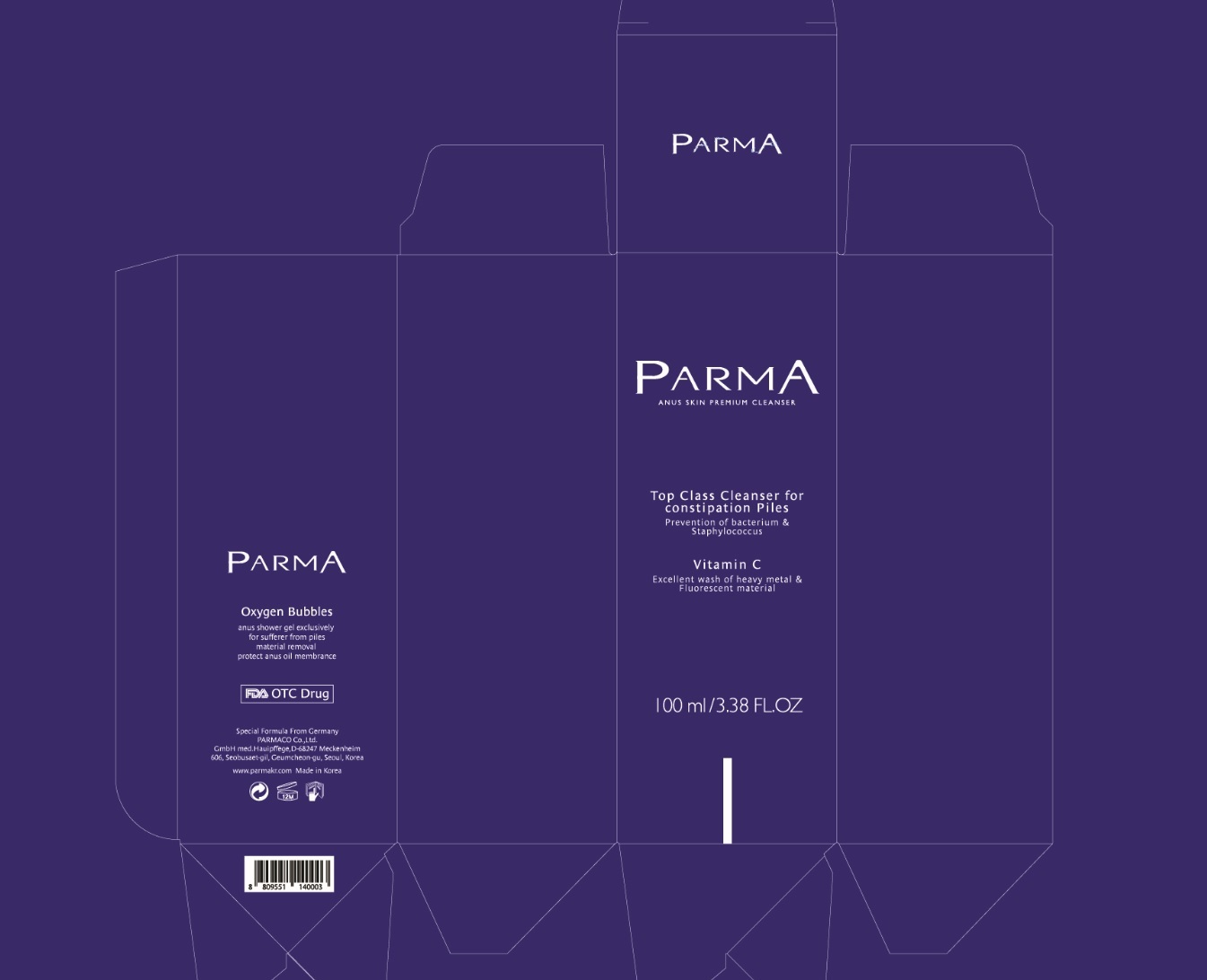
Parma Anus Skin Premium Cleanser ALLANTOIN 3 mg/mL Gel — NDC 71614-002-02 (Billing 71614-0002-02)
This is a package of Parma Anus Skin Premium Cleanser ALLANTOIN 3 mg/mL Gel from PARMA KOREA, marketed since Aug 2018 and currently FDA-listed. It is this product's only package size.
NDC database record
One package, one record: these facts belong to NDC 71614-002-02 alone.
- Record
- FDA NDC Directory package listing · Human OTC drug
- Code segments
- 71614 labeler · 002 product · 02 package
- Package marketed since
- Aug 27, 2018
- Sample package
- No — commercial package
- Listing certified through
- Dec 31, 2026
- Barcode (UPC-A, from the NDC)
- 3 7161400202 6
- FDA record last changed
- Jul 24, 2026
Identity & classification
Regulatory identifiers FDA, NLM and CMS codes for this package
Where does this data come from?
- FDA openFDA NDC Directory · synced Oct 1, 2026
- FDA label on DailyMed · label index refreshed Oct 6, 2026
- RxNorm (NLM RxNav) · catalog refreshed Oct 1, 2026
- Medi-Span GPI (licensed)
- First Databank (licensed) · refreshed Oct 1, 2026
Clinical
This is a topical gel cleanser containing 3 mg/mL of allantoin, an ingredient commonly used in skin care products. Allantoin is typically included in cleansers and personal hygiene products for its role in skin conditioning. This product is marketed as an unapproved drug and has not received FDA approval.
Patient education
Supplement & herbal interactions
Where does this data come from?
- MedlinePlus (NLM) · refreshed Oct 1, 2026
- FDA label on DailyMed · label index refreshed Oct 6, 2026
Ask a licensed pharmacist directly — free, answered by our team.
Pricing
A drug doesn't have one price. Each row is a different public payment system, and none is what you'd pay at the counter — that depends on your insurance. The ⓘ on each row explains what it measures.
| Price system | Per g | Per package |
|---|---|---|
| Retail pharmacies payNADAC · weekly | Not in the retail survey — common for institutional, discontinued, or low-volume packs. | |
| Medicaid paysCMS SDUD · 12 mo | No recent Medicaid claims on file for this NDC — rare and low-volume NDCs are suppressed in the public data. | |
| Medicare drug plans payPart D · quarterly | No Part D plan price is available for this NDC in our data. | |
Where does this data come from?
- CMS NADAC weekly file
- CMS ASP pricing files · refreshed Sep 20, 2026
- CMS Medicaid State Drug Utilization Data · refreshed Oct 7, 2026
- CMS Part D plan pricing files · refreshed Sep 24, 2026
- VA National Acquisition Center price file
Packaging — all sizes for this product
| Package NDC | Description | Marketing start | Marketing end | Status |
|---|---|---|---|---|
| 71614-0002-02 You're viewing this Main listing | 1 BOTTLE in 1 CARTON / 100 mL in 1 BOTTLE | 2018-08-27 | — | Active |
Therapeutic equivalents
| Product | Labeler | Pack | NADAC/unit | TE | Status | Price vs. this |
|---|---|---|---|---|---|---|
| Parma Anus Skin Premium Cleanser 3 mg/mLthis 71614-0002-02 | PARMA | 1 bottle | — | — | FDA listed | — |
Where does this data come from?
- FDA openFDA NDC Directory · synced Oct 1, 2026
- FDA Orange Book · refreshed Oct 3, 2026
- CMS NADAC weekly file
Availability & generic status
We did not find an FDA-approved generic match for this exact strength, form and route.
Where does this data come from?
- FDA Orange Book · refreshed Oct 3, 2026
Inactive Ingredients / Excipients
Inactive ingredients, also called excipients, are components of the drug product other than the active ingredient. They may include fillers, dyes, coatings, preservatives, flavors, or other formulation ingredients.
💡 Tap an ingredient (hover on desktop) to see what it is and why it’s used.
-
UNII TR046Y3K1G
A liquid alcohol derived from petroleum or plant sources. It acts as a solvent and humectant in medicines, helping dissolve active ingredients and retain moisture in the formulation.
-
UNII L4EL31FWIL
A synthetic peptide (short chain of amino acids) used as a conditioning or texture-enhancing agent in topical formulations. It helps improve product feel and skin compatibility in creams and lotions.
-
UNII 32MP823R8S
A plant-derived ingredient from mugwort root, used in traditional herbal formulations. It may function as a flavoring agent, botanical extract, or natural additive in the medicine.
-
UNII CUQ3A77YXI
Panax ginseng root is a plant extract traditionally used in herbal preparations. In medications, it may serve as an active botanical ingredient or be included for flavoring and as a natural preservative or binder in formulations.
-
UNII FIW80T6P6V
A plant extract from bamboo that acts as a natural filler and texture agent in medications. It helps give the product structure and consistency while being derived from plant material.
-
UNII 3XUS85K0RA
Butylene glycol is a clear liquid derived from petroleum or plants that acts as a humectant, solvent, and preservative booster in medicines. It helps keep formulations stable, dissolve active ingredients, and maintain moisture in topical products.
-
UNII 7M867G6T1U
Centella asiatica is a plant extract used in medicines as a skin-conditioning or soothing ingredient. It helps maintain product stability and may support skin comfort in topical formulations.
-
UNII 21X4Y0VTB1
A surfactant derived from coconut oil that helps mix oil and water components. It's used in formulations as an emulsifier and foam booster to improve product texture and stability.
-
UNII 3YC120743U
Diglycerin is a humectant and solvent derived from glycerin. It helps retain moisture in the formulation and improves texture and stability in liquid or semi-solid medicines.
-
UNII 8NLQ36F6MM
Edetate disodium anhydrous is a chemical compound that binds to metal ions in a medicine. It's used as a stabilizer to prevent unwanted chemical reactions and help keep the drug product effective during storage.
-
UNII S546YLW6E6
Eucalyptus globulus leaf is a plant-derived ingredient that may serve as a flavoring agent or aromatic component in medications. It is commonly used to add taste or scent to oral formulations.
-
UNII UDA30A2JJY
A plant extract from witch hazel used as an astringent and skin-conditioning agent in topical formulations. It helps tone and soothe the skin while functioning as a natural preservative.
-
UNII R33S7TK2EP
Hydroxyethyl cellulose is a thickening agent made from processed plant cellulose. It's used in medicines to increase viscosity, improve texture, and help distribute active ingredients evenly throughout liquid or semi-solid formulations.
-
UNII 76LN7P7UCU
Lauryl glucoside is a mild plant-based cleansing agent made from coconut oil and glucose. It's used in medicines as a surfactant to help dissolve and distribute ingredients evenly throughout the formulation.
-
UNII NH496X0UJX
Mandelic acid is an organic acid derived from almonds. It functions as a buffer and pH adjuster in medications, helping maintain the product's stability and proper acidity level.
-
UNII 3VNC7T6Z02
A plant extract from chamomile flowers used as a flavoring and fragrance agent in medicines. It adds taste and aroma to improve how the medicine smells and tastes.
-
UNII C9H2L21V7U
A fat derived from coconut or palm oil containing shorter fatty acid chains. It serves as a solvent and carrier to help dissolve or suspend active ingredients, improving absorption and stability in liquid formulations.
-
UNII 1LIB31N73G
Mung bean is a legume-derived plant ingredient used as a binder and filler in medications. It helps hold the tablet or capsule together and adds bulk to the formulation.
-
UNII TZK30RF92W
A lab-made protein fragment containing a few linked amino acids. It's used in formulations as a skin-conditioning agent or penetration enhancer to help other ingredients work effectively.
-
UNII 2UMI9U37CP
Oleic acid is a naturally occurring fatty acid derived from plant or animal oils. It functions as an emulsifier and solvent in medicines, helping blend water and oil-based ingredients together and dissolving other components.
-
UNII A7F3N56197
Polysorbate 85 is a man-made emulsifier and solubilizer derived from sorbitol and oleic acid. It helps keep oils and water mixed together in liquid medicines and allows poorly soluble ingredients to dissolve evenly throughout the formulation.
-
UNII 6Y8XYV2NOF
A waxy substance made by honeybees from plant resins and pollen. In medicines, it acts as a binder and coating agent to hold ingredients together and protect the product.
-
UNII M6S840WXG5
Purslane is a plant-derived ingredient used in pharmaceuticals as a natural source of beneficial compounds. It functions as an antioxidant and anti-inflammatory agent to help stabilize the formula and support product shelf life.
-
UNII G025DAL7CE
A plant extract from rhubarb root used as a natural colorant and flavoring agent in medicines. It may also help stimulate bowel movement in laxative formulations.
-
UNII R60QEP13IC
Rice bran is a natural powder made from the outer layer of rice grains. It's used in medicines as a filler and flow agent to add bulk and help the product mix and flow smoothly during manufacturing.
-
UNII 66H9NW427Y
A natural extract from the soapberry fruit used as a cleansing agent and surfactant in topical formulations. It helps distribute active ingredients evenly and may serve as a natural preservative or emulsifier in the product.
-
UNII W7Q5E87674
Sodium cocoamphoacetate is a mild cleansing agent derived from coconut oil. In medicines, it acts as an emulsifier and surfactant to help mix oil and water-based ingredients together and improve product texture and consistency.
-
UNII R1TQH25F4I
Sodium cocoate is a salt derived from coconut oil. It acts as an emulsifier and surfactant in medicines, helping to mix ingredients that normally don't blend together and improve product texture and stability.
-
UNII 059QF0KO0R
Water is a liquid solvent that dissolves and mixes ingredients together in liquid medicines, syrups, and injections. It helps distribute the active drug evenly throughout the product.
29 inactive ingredients listed in the exact product block matched to this NDC.
Label-section wording can be broader than the structured product block and may mention additional formulation ingredients.
Where does this data come from?
ingredient classCode="IACT" elements from the exact product block matched by this NDC. Label-section narrative from DailyMed / the openFDA label index is shown separately when available.- FDA label on DailyMed · label index refreshed Oct 6, 2026
- FDA openFDA NDC Directory · synced Oct 1, 2026
Inactive ingredient FAQ
Are inactive ingredients the same for every manufacturer?
Why might an inactive ingredient be missing?
Can inactive ingredients matter?
Manufacturer & labeler
Where does this data come from?
- FDA openFDA NDC Directory · synced Oct 1, 2026
- Drugs@FDA
FDA label — Drug Facts FDA SPL
🎯 Indications and Usage ▾
Anus Cleansing
⏱️ Dosage and Administration ▾
Wet anal area thoroughly. Apply an appropriate amount of the product to anal area. Massage anus and maintain 30 seconds. Rinse with water for 60 seconds.
⚠️ Warnings ▾
For external use only. Do not use on damaged or broken skin. Rinse with water to remove. Stop use and ask a doctor if rash or irritation occurs.
🧪 Active Ingredient ▾
Allantoin 0.3%
🧪 Inactive Ingredients ▾
Water Hydroxyethylcellulose Black Strap Powder Mandelic Acid Disodium EDTA Oleic Acid Lauryl Glucoside Butylene Glycol Diglycerin Sodium Cocoate Cocamide MIPA sh-Oligopeptide-1 Acetyl Hexapeptide-8 Shea Butteramidopropyl Betaine Sodium Cocoamphoacetate Oryza Sativa (Rice) Bran Extract Artemisia Vulgaris Extract Phaseolus Radiatus Seed Extract Centella Asiatica Extract Portulaca Oleracea Extract Crataegus Oxyacantha Extract Rheum Palmatum Root Extract Bambusa Vulgaris Extract Eucalyptus Globulus Leaf Extract Hamamelis Virginiana (Witch Hazel) Extract Chamomilla Recutita (Matricaria) Flower/Leaf Extract Propolis Extract Sapindus Mukorossi Fruit Extract Panax Ginseng Root Extract Polysorbate 85 1,2-Hexanediol Caprylic/Capric Triglyceride Fragrance
🎯 Purpose ▾
Skin Protectant
📄 Keep Out of Reach of Children ▾
Keep out of reach of children
📄 Package Label / Principal Display Panel ▾
image description
About this NDC listing & data coverage
Listed without an FDA application
This product's marketing category indicates it is marketed without an approved FDA application (no NDA, ANDA, or BLA on file). Having an NDC does not by itself establish FDA approval — the NDC Directory is a listing system, not an approval decision. Approval-linked data such as Orange Book therapeutic-equivalence ratings therefore does not apply.
What data is (and isn’t) available for this NDC — tap to expand
| NDC identity (package / product / labeler codes) | ✓ Available |
| Labeler | ✓ Available |
| Product & package description | ✓ Available |
| Marketing category & status | ✓ Available |
| Active ingredient / dosage form / route | ✓ Available |
| FDA label (SPL via DailyMed) | ✓ Available |
| Package photos | ✓ Available |
| Inactive ingredients (structured) | ✓ Available |
| NADAC pharmacy acquisition price (CMS) | — Not published for this NDC CMS publishes NADAC only for NDCs reported in its retail-pharmacy survey. |
| Orange Book / therapeutic-equivalence data | — Not published for this NDC Applies only to products approved under an NDA/ANDA; many listings are out of scope. |
| HCPCS J-code billing crosswalk | — Not published for this NDC Most self-administered / retail products have no J-code — that is normal. |
| Medicaid utilization (CMS SDUD) | — Not published for this NDC CMS reports utilization only for NDCs with Medicaid claims above its privacy threshold. |