
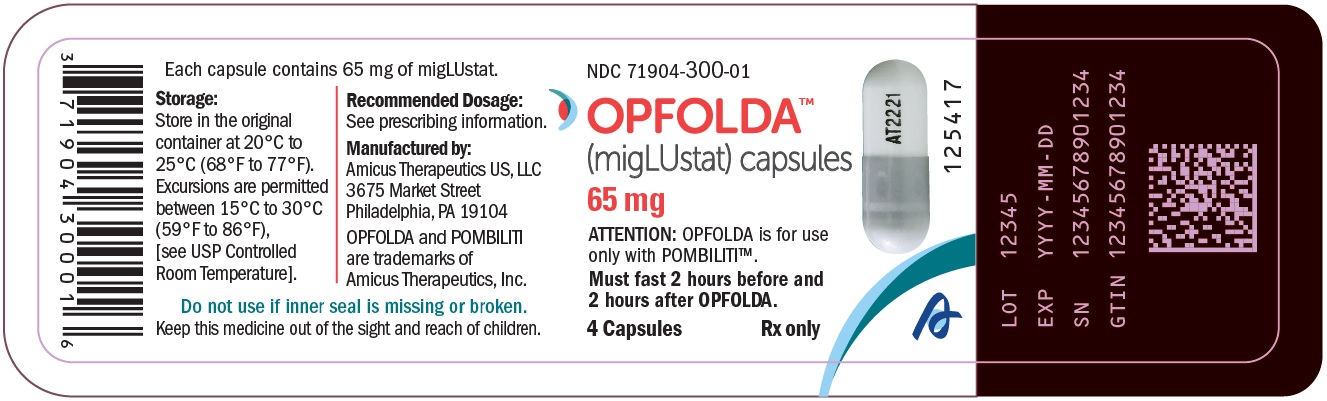
OPFOLDA miglustat 65 mg Capsule
🆔 Identity & classification
Where does this data come from?
🏷️ RxNorm drug class
This medicine belongs to the Glucosylceramide Synthase Inhibitor class.
Where does this data come from?
🏭 Manufacturer & labeler
Where does this data come from?
🩺 Clinical
Miglustat is used to treat Gaucher disease type 1 (a condition in which a certain fatty substance is not broken down normally in the body and instead builds up in some organs and causes liver, spleen, bone, and blood problems). Miglustat is also used in combination with another medication known as cipaglucosidase alfa-atga (Pombilti) to treat late onset Pompe disease (a genetic condition that causes deficiency in lysosomal acid alpha-glucosidase, which can lead to muscle weakness and wasting) in adult patients who weigh 92 pounds (40 kg) or more and who have not been improving on their enzyme...
Read the full MedlinePlus article ↗- Miglustat (also sold as Yargesa or Zavesca) treats adults with mild to moderate type 1 Gaucher disease — a rare condition where a missing enzyme lets a fatty substance build up in...
- For type 1 Gaucher disease, miglustat capsules are generally taken three times a day. You can take them with or without food — food slows absorption slightly but doesn't change how...
- How should I take my miglustat capsules?
- Yes — diarrhea is very common with miglustat, affecting up to 89% of patients in studies. It happens because miglustat interferes with the digestion of certain sugars in your gut....
Patient education
Supplement & herbal interactions
Some supplements/herbs that may interact with Miglustat — tap one for details:
Where does this data come from?
Ask a licensed pharmacist directly — free, answered by our team.
💊 What it looks like
Where does this data come from?
🧪 Inactive Ingredients / Excipients
Inactive ingredients, also called excipients, are components of the drug product other than the active ingredient. They may include fillers, dyes, coatings, preservatives, flavors, or other formulation ingredients.
Where does this data come from?
IACT rows and label-wide narrative are kept separate; availability and product-level specificity depend on the submitted label.Inactive ingredient FAQ
Are inactive ingredients the same for every manufacturer?
Why might an inactive ingredient be missing?
Can inactive ingredients matter?
💲 Pricing
A drug doesn't have one price. Each row is a different public payment system, and none is what you'd pay at the counter — that depends on your insurance. The ⓘ on each row explains what it measures.
| Price system | Per each | Per package |
|---|---|---|
| Retail pharmacies payNADAC · weekly | Not in the retail survey — common for institutional, discontinued, or low-volume packs. | |
| Medicaid paysCMS SDUD · 12 mo | No recent Medicaid claims on file for this NDC — rare and low-volume NDCs are suppressed in the public data. | |
| Medicare drug plans payPart D · quarterly | No Part D plan price is available for this NDC in our data. | |
Where does this data come from?
🔁 Therapeutic equivalents
| Product | Labeler | Pack | NADAC/unit | TE | Status | Price vs. this |
|---|---|---|---|---|---|---|
| Opfolda 65 mgthis 71904-0300-01 | AMICUS | 1 capsule | — | — | FDA listed | — |
Where does this data come from?
⏳ Availability & generic status
The FDA lists approved generic versions of this medicine, but that does not always mean a pharmacy can get one today. Patent rules, launch agreements, supply and pricing can affect when generics actually arrive.
Why the date isn’t exact: Generic timing can change because patents may be challenged, settled, licensed, added, removed, or worked around with a narrower label — and FDA approval does not always mean a pharmacy can get the generic today.
🛈 What do these terms mean?
- Patent
- Legal protection listed in the Orange Book that may delay generic approval or launch. Issued by the U.S. Patent & Trademark Office.
- Substance patent
- Covers the active drug molecule itself — the hardest to design around. A generic generally can’t launch until it expires.
- Formulation (product) patent
- Covers a specific formulation or dosage form. A generic can sometimes work around it with a different formulation.
- Method-of-use patent
- A patent covering one specific approved use of the drug — not necessarily the whole molecule. A generic can sometimes launch with a “skinny label” that carves out the protected use and keeps the others.
- Skinny label
- A generic label that omits a still-patented use when the FDA allows it — letting a generic reach the market for the unprotected uses.
- Exclusivity
- FDA-granted marketing protection, separate from patents — e.g. 5-yr new chemical entity, 7-yr orphan drug, or a +6-month pediatric extension.
- Paragraph IV
- A generic applicant’s formal challenge to a listed patent. It can potentially lead to earlier generic entry, but often involves litigation or a settlement.
- RLD / RS
- Reference Listed Drug — the brand product the FDA uses as the reference for generic applications. Reference Standard — the product the FDA expects generics to compare against in bioequivalence testing.
- TE / AB rating
- FDA therapeutic-equivalence rating. An AB rating generally means the FDA considers a generic therapeutically equivalent to — and substitutable for — the brand.
- LOE (loss of exclusivity)
- The latest patent or exclusivity currently listed — the loss-of-exclusivity / latest-listed-protection date shown on this page. Paragraph-IV challenges and settlements can move the real date earlier; FDA approval and a manufacturer’s decision to market can move it later.
Built from the FDA Orange Book. The bars above are scaled to each protection’s expiry; the red LOE marker is the last one to lapse.
| Patent | Type | Use code | Expires |
|---|---|---|---|
| US 12419937 ↗ | Method of use | U-3726 | Mar 7, 2033 |
| US 12414985 ↗ | Method of use | U-3726 | Dec 29, 2036 |
| US 12246062 ↗ | Method of use | U-3726 | Sep 16, 2038 |
| US 11753632 ↗ | Method of use | U-3726 | Sep 30, 2035 |
| US 11278601 ↗ | Method of use | U-3726 | Dec 29, 2036 |
| US 11278599 ↗ | Method of use | U-3726 | Mar 7, 2033 |
| US 10961522 ↗ | Method of use | U-3726 | Sep 30, 2035 |
| US 10857212 ↗ | Method of use | U-3726 | Aug 12, 2037 |
| US 10512677 ↗ | Method of use | U-3726 | Mar 7, 2033 |
| US 10208299 ↗ | Drug substance | U-3726 | Sep 30, 2035 |
| Code | What it grants | Expires |
|---|---|---|
| NP | New Product | Sep 28, 2026 |
Is there a generic version of OPFOLDA 65 MG CAPSULE?
The FDA approved a generic — why can’t I get it at my pharmacy yet?
Why do different websites show different generic release dates?
What does “FDA listed” mean?
What does a patent or protection date mean here?
What does “current Orange Book estimate” mean?
Can a generic come out before the last patent expires?
Can a generic come out after the listed dates?
What is the difference between patents and exclusivity?
Why are there multiple patent dates?
Where does this data come from?
📊 Medicare Part D spend CMS · PART D · 2026 (Q1)
🔬 Reported adverse events (FAERS)
Top reported reactions
Reporter sex
Serious outcomes
Where does this data come from?
📦 Packaging — all sizes for this product
| Package NDC | Description | Marketing start | Status |
|---|---|---|---|
| 71904-0300-01 You're viewing this | 4 BOTTLE, PLASTIC in 1 BOTTLE, PLASTIC (71904-300-01) / 1 CAPSULE in 1 BOTTLE, PLASTIC | 2023-10-11 | Active |
| 71904-0300-02 | 24 BOTTLE, PLASTIC in 1 BOTTLE, PLASTIC (71904-300-02) / 1 CAPSULE in 1 BOTTLE, PLASTIC | 2023-10-11 | Active |
| 71904-0300-03 | 100 BOTTLE, PLASTIC in 1 BOTTLE, PLASTIC (71904-300-03) / 1 CAPSULE in 1 BOTTLE, PLASTIC | 2023-10-11 | Active |
Pack size FAQ
What quantity is in NDC 71904-0300-01?
What NDC number is used to bill for this package of OPFOLDA miglustat 65 mg Capsule?
🧭 About this NDC listing & data coverage
What data is (and isn’t) available for this NDC — tap to expand
| NDC identity (package / product / labeler codes) | ✓ Available |
| Labeler | ✓ Available |
| Product & package description | ✓ Available |
| Marketing category & status | ✓ Available |
| Active ingredient / dosage form / route | ✓ Available |
| FDA label (SPL via DailyMed) | ✓ Available |
| Package photos | ✓ Available |
| Inactive ingredients (structured) | — Not published for this NDC The labeler did not submit a structured excipient list, or no SPL is available. |
| NADAC pharmacy acquisition price (CMS) | — Not published for this NDC CMS publishes NADAC only for NDCs reported in its retail-pharmacy survey. |
| Orange Book / therapeutic-equivalence data | ✓ Available |
| HCPCS J-code billing crosswalk | — Not published for this NDC Most self-administered / retail products have no J-code — that is normal. |
| Medicaid utilization (CMS SDUD) | — Not published for this NDC CMS reports utilization only for NDCs with Medicaid claims above its privacy threshold. |
Questions about this listing
Why is there no price listed?
Is the NDC printed on the package the same as the 11-digit billing NDC?
What do the three segments of this NDC mean?
Is this package still being marketed?
Does this product come in other package sizes?
Who lists this product with the FDA?
Do I need a prescription for this product?
Where does this data come from?
📄 Full prescribing information FDA SPL
🎯 Indications and Usage ▾
1 INDICATIONS AND USAGE OPFOLDA is indicated, in combination with Pombiliti, for the treatment of adult patients with late-onset Pompe disease (lysosomal acid alpha-glucosidase [GAA] deficiency) weighing ≥40 kg and who are not improving on their current enzyme replacement therapy (ERT). OPFOLDA is an enzyme stabilizer indicated, in combination with Pombiliti, a hydrolytic lysosomal glycogen-specific enzyme, for the treatment of adult patients with late-onset Pompe disease (lysosomal acid alpha-glucosidase [GAA] deficiency) weighing ≥40 kg and who are not improving on their current enzyme replacement therapy (ERT).
( 1 )
⏱️ Dosage and Administration ▾
2 DOSAGE AND ADMINISTRATION Verify pregnancy status in females of reproductive potential prior to initiating treatment. (2.1) Administer OPFOLDA in combination with Pombiliti. (2.2) Recommended OPFOLDA dosage (based on actual body weight), administered orally every other week, is: (2.2) 260 mg for patients weighing ≥50 kg.
195 mg for patients weighing ≥40 kg to <50 kg. Start OPFOLDA in combination with Pombiliti 2 weeks after the last ERT dose. (2.2) Take OPFOLDA with an unsweetened beverage approximately 1 hour before the start of Pombiliti infusion; do not consume other beverages or food for at least 2 hours prior to and 2 hours after taking OPFOLDA.
(2.2) Missed dose: If the OPFOLDA dosage is missed, Pombiliti should not be administered and treatment should be rescheduled at least 24 hours after OPFOLDA was last taken. If OPFOLDA in combination with Pombiliti are both missed, re-start treatment as soon as possible. (2.2) See full prescribing information for recommended OPFOLDA dosage in patients with renal impairment.
(2.3)
2.1Pregnancy Evaluation Prior to Initiating Treatment Verify the pregnancy status of females of reproductive potential prior to initiating OPFOLDA in combination with Pombiliti [see Use in Specific Populations (8.1, 8.3) ] .
2.2Recommended Dosage and Administration OPFOLDA must be administered in combination with Pombiliti (see Figure 1 for the dosing timeline). Refer to the Pombiliti Prescribing Information for Pombiliti dosage and administration recommendations. The recommended dosage of OPFOLDA is based on actual body weight.
For patients weighing: ≥50 kg, the recommended dosage is 260 mg orally every other week. ≥40 kg to <50 kg, the recommended dosage is 195 mg orally every other week. Start OPFOLDA in combination with Pombiliti 2 weeks after the last ERT dose. Take OPFOLDA approximately 1 hour before intravenous administration of Pombiliti.
Swallow the OPFOLDA capsules whole only with unsweetened beverages (e.g., water, tea or coffee with no cream, sugar, or sweeteners). Do not consume other beverages or food for at least 2 hours prior to and 2 hours after administration of OPFOLDA. Missed Dose If the OPFOLDA dosage is missed, Pombiliti should not be administered and treatment should be rescheduled at least 24 hours after OPFOLDA was last taken.
If OPFOLDA in combination with Pombiliti are both missed, re-start treatment as soon as possible. Figure 1. Dosing Timeline Figure 1
2.3Recommended Dosage in Patients with Renal Impairment The recommended dosage of OPFOLDA in patients with moderate or severe renal impairment is shown in Table 1 [see Clinical Pharmacology (12.3) ] . Table 1. Recommended OPFOLDA Dosage in Patients with Moderate or Severe Renal Impairment ∗ Renal function classified by CLcr (creatinine clearance) based on the Cockcroft-Gault equation.
Patient Weight Moderate Renal Impairment∗(CLcr 30-59 mL/minute) Severe Renal Impairment∗ (CLcr 15-29 mL/minute) ≥50 kg 195 mg 195 mg ≥40 kg to <50 kg 130 mg 130 mg For patients with mild renal impairment (creatinine clearance based on the Cockcroft-Gault equation, CLcr 60-89 mL/minute), the recommended OPFOLDA dosage is the same as for patients with normal renal function.
💊 Dosage Forms and Strengths ▾
3 DOSAGE FORMS AND STRENGTHS Capsules: 65 mg of miglustat, white opaque hard gelatin capsule with grey opaque cap with “AT2221” printed in black on the body. Capsules: 65 mg (3)
⛔ Contraindications ▾
4 CONTRAINDICATIONS OPFOLDA in combination with Pombiliti is contraindicated in Pregnancy [see Use in Specific Populations (8.1 )] Pregnancy. ( 4, 5.1, 8.1 )
⚠️ Warnings and Cautions ▾
5 WARNINGS AND PRECAUTIONS Embryo-Fetal Toxicity: May cause embryo-fetal harm. Advise females of reproductive potential of the potential risk to a fetus and to use effective contraception during treatment and for at least 60 days after the last dose. ( 4, 5.1, 8.1, 8.3 ) Risks Associated with Pombiliti: Refer to the Pombiliti Prescribing Information for a description of additional risks for Pombiliti. (5.2)
5.1Embryo-Fetal Toxicity Based on findings from animal reproduction studies, OPFOLDA in combination with Pombiliti may cause embryo-fetal harm when administered to a pregnant female and is contraindicated during pregnancy. In a rabbit embryo-fetal development study, great vessel and cardiac malformations were increased in offspring of pregnant rabbits treated with oral miglustat in combination with cipaglucosidase alfa-atga at 3-fold and 16-fold, respectively, the maximum recommended human dose (MRHD) based on plasma AUC exposure.
Verify the pregnancy status in females of reproductive potential prior to initiating treatment with OPFOLDA in combination with Pombiliti. Advise females of reproductive potential to use effective contraception during treatment with OPFOLDA in combination with Pombiliti and for at least 60 days after the last dose [see Use in Specific Populations (8.1, 8.3) ] .
5.2Risks Associated with Pombiliti OPFOLDA must be administered in combination with Pombiliti. Refer to the Pombiliti Prescribing Information for a description of additional risks for Pombiliti including, but not limited to, the warnings and precautions for Pombiliti.
🤒 Adverse Reactions ▾
6 ADVERSE REACTIONS Most common adverse reactions ≥5% are headache, diarrhea, fatigue, nausea, abdominal pain, and pyrexia. (6.1) To report SUSPECTED ADVERSE REACTIONS, contact Amicus Therapeutics at 1-877-4AMICUS or FDA at 1-800-FDA-1088 or www.fda.gov/medwatch.
6.1Clinical Trials Experience Because clinical trials are conducted under widely varying conditions, adverse reaction rates observed in the clinical trials of a drug cannot be directly compared to rates in the clinical trials of another drug and may not reflect the rates observed in practice. Adverse Reactions from the Pooled Clinical Trials Including Trial 1 The pooled safety analysis from 3 clinical trials included 151 adult patients with late-onset Pompe disease (LOPD) treated with OPFOLDA in combination with Pombiliti including: 85 patients in the randomized, double-blind, active-controlled trial in adults (Trial 1) [see Clinical Studies (14) ] , 37 patients in the open-label extension trial where patients switched from a non‑U.S.‑approved alglucosidase alfa product [see Clinical Studies (14) ] to OPFOLDA in combination with Pombiliti, 29 patients in an open-label trial.
The total median duration of exposure in these trials was 21 months, with 120 patients having at least 12 months exposure to OPFOLDA in combination with Pombiliti. In these trials, 78% (n=117) of the patients received previous ERT (ERT‑experienced) with a mean treatment duration of 7.7 years. The most common adverse reactions (≥5%) reported in the pooled safety population of patients treated with OPFOLDA in combination with Pombiliti in the 3 clinical trials were headache, diarrhea, fatigue, nausea, abdominal pain, and pyrexia.
Adverse Reactions from Trial 1 Trial 1 (a randomized, double-blind, active-controlled trial) included 123 adult patients with LOPD who were randomized in a 2:1 ratio to receive treatment with OPFOLDA in combination with Pombiliti or a non-U.S.-approved alglucosidase alfa product with placebo [see Clinical Studies (14) ]. The duration of exposure was similar for both treatment groups (overall mean exposure of 12 months). Most patients (77%) were ERT‑experienced, and a majority of patients in both treatment groups had >5 years of prior treatment with ERT (69% and 63% of patients in the OPFOLDA in combination with Pombiliti group and the non-U.S.-approved alglucosidase alfa product with placebo group, respectively).
The most common adverse reactions (≥5%) reported in the patients who received OPFOLDA in combination with Pombiliti in Trial 1 were headache and diarrhea. Table 2 summarizes frequent adverse reactions that occurred in patients treated with OPFOLDA in combination with Pombiliti in Trial 1. Trial 1 was not designed to demonstrate a statistically significant difference in the incidence of adverse reactions in the OPFOLDA in combination with Pombiliti and the non-U.S.-approved alglucosidase alfa product with placebo groups.
Table 2. Adverse Reactions that Occurred in Adults with LOPD at an Incidence of ≥2% in Trial 1 LOPD: late-onset Pompe disease ∗ Headache included migraine and migraine with aura. † Rash included erythematous rash and macular rash. ‡ Abdominal pain included upper and lower abdominal pain. § Tachycardia included sinus tachycardia. ¶ Urticaria included mechanical urticaria and urticarial rash. Adverse Reaction OPFOLDA in Combination with Pombiliti (n=85) N (%) A Non-U.S.-Approved Alglucosidase alfa Product with Placebo (n=38) N (%) Headache ∗ 7 (8.2) 3 (7.9) Diarrhea 5 (5.9) 2 (5.3) Dizziness 4 (4.7) 2 (5.3) Dyspnea 3 (3.5) 0 Abdominal distention 3 (3.5) 2 (5.3) Pyrexia 3 (3.5) 1 (2.6) Rash † 3 (3.5) 0 Abdominal pain ‡ 2 (2.4) 4 (10.5) Nausea 2 (2.4) 5 (13.2) Chills 2 (2.4) 0 Dysgeusia 2 (2.4) 0 Flushing 2 (2.4) 0 Muscle spasms 2 (2.4) 0 Pruritus 2 (2.4) 2 (5.3) Tachycardia § 2 (2.4) 0 Urticaria ¶ 2 (2.4) 0 Additional adverse reactions reported in at least 2% of patients treated with OPFOLDA in combination with Pombiliti across the 3 clinical trials i…
👥 Use in Specific Populations ▾
8 USE IN SPECIFIC POPULATIONS Lactation: Breastfeeding not recommended. (8.2)
8.1Pregnancy Risk Summary Based on findings from animal reproduction studies, OPFOLDA in combination with Pombiliti may cause embryo-fetal harm when administered to a pregnant female and is contraindicated during pregnancy. In a rabbit embryo-fetal development study, great vessel and cardiac malformations were increased in offspring of pregnant rabbits treated with miglustat in combination with cipaglucosidase alfa-atga at 3-fold and 16-fold, respectively, the MRHD of OPFOLDA and Pombiliti based on plasma AUC exposure.
A No Observed Adverse Effect Level (NOAEL) was not identified for the combination. In a pre- and post-natal development study in rats, increases in pup mortality were seen following maternal treatment with miglustat in combination with cipaglucosidase alfa-atga (400 mg/kg), or with cipaglucosidase alfa-atga (400 mg/kg) alone. The NOAEL for cipaglucosidase alfa-atga alone is 150 mg/kg (5-fold the Pombiliti MRHD margin).
A NOAEL for the combination was not identified. Margins at the lowest observed adverse effect level (LOAEL), relative to exposures at the MRHD of OPFOLDA and Pombiliti were 4-fold and 20-fold, respectively, based on plasma AUC exposure ( see Data ). There are no available human data on OPFOLDA in combination with Pombiliti use in pregnant females to evaluate for a drug-associated risk of major birth defects, miscarriage, or other adverse maternal or fetal outcomes.
Data Animal Data Reproductive toxicity studies of cipaglucosidase alfa-atga in rats and rabbits included pretreatment with diphenhydramine (DPH) to prevent or minimize hypersensitivity reactions. In a rabbit embryo-fetal development study, 25 mg/kg oral miglustat alone, or in combination with intravenous cipaglucosidase alfa-atga 175 mg/kg, was administered every other day to pregnant females during organogenesis (Gestation Day [GD] 7 through GD 19). Additional experimental groups received cipaglucosidase alfa-atga (30, 70, or 175 mg/kg) with the same dosing frequency during organogenesis.
Clusters of great vessel and cardiac malformations were increased in offspring of pregnant rabbits treated with the combination of miglustat and cipaglucosidase alfa-atga at 3-fold and 16-fold the MRHD of OPFOLDA and Pombiliti, respectively, based on plasma AUC exposure. A NOAEL for the combination was not identified. One fetus treated with miglustat alone (25 mg/kg) and one fetus treated with cipaglucosidase alfa-atga alone (175 mg/kg), each showed a similar cluster of these great vessel and cardiac malformations.
In a rat embryo-fetal development study, 60 mg/kg oral miglustat alone, or in combination with intravenous cipaglucosidase alfa-atga 400 mg/kg, was administered every other day to pregnant rats during organogenesis (GD 6 through GD 18). Additional experimental groups received cipaglucosidase alfa-atga (75, 150, or 400 mg/kg) with the same dosing frequency during organogenesis. No evidence of adverse effects was noted in pregnant rats or their offspring in any experimental group.
The margin at the NOAEL for miglustat (60 mg/kg) was 4-fold the OPFOLDA MRHD based on plasma AUC exposure. The margin at the NOAEL for cipaglucosidase alfa-atga (400 mg/kg) was 20-fold the Pombiliti MRHD based on plasma AUC exposure. In a pre-and post-natal development study in rats, 60 mg/kg oral miglustat alone, or in combination with intravenous cipaglucosidase alfa-atga 400 mg/kg, was administered to pregnant females every other day from GD 6 through GD 18, and from Lactation Day (LD) 1 through LD 19.
Additional experimental groups received cipaglucosidase alfa-atga (75, 150, or 400 mg/kg) with the same dosing frequency during pregnancy and lactation. Maternal and pup mortality were increased with the combination, and pup mortality was also increased with cipaglucosidase alfa-atga 400 mg/kg alone. The NOAEL for cipaglucosidase alfa-atga alone is 150 mg/kg (5-fold the Pombiliti MRHD ma…
🤰 Pregnancy ▾
8.1Pregnancy Risk Summary Based on findings from animal reproduction studies, OPFOLDA in combination with Pombiliti may cause embryo-fetal harm when administered to a pregnant female and is contraindicated during pregnancy. In a rabbit embryo-fetal development study, great vessel and cardiac malformations were increased in offspring of pregnant rabbits treated with miglustat in combination with cipaglucosidase alfa-atga at 3-fold and 16-fold, respectively, the MRHD of OPFOLDA and Pombiliti based on plasma AUC exposure.
A No Observed Adverse Effect Level (NOAEL) was not identified for the combination. In a pre- and post-natal development study in rats, increases in pup mortality were seen following maternal treatment with miglustat in combination with cipaglucosidase alfa-atga (400 mg/kg), or with cipaglucosidase alfa-atga (400 mg/kg) alone. The NOAEL for cipaglucosidase alfa-atga alone is 150 mg/kg (5-fold the Pombiliti MRHD margin).
A NOAEL for the combination was not identified. Margins at the lowest observed adverse effect level (LOAEL), relative to exposures at the MRHD of OPFOLDA and Pombiliti were 4-fold and 20-fold, respectively, based on plasma AUC exposure ( see Data ). There are no available human data on OPFOLDA in combination with Pombiliti use in pregnant females to evaluate for a drug-associated risk of major birth defects, miscarriage, or other adverse maternal or fetal outcomes.
Data Animal Data Reproductive toxicity studies of cipaglucosidase alfa-atga in rats and rabbits included pretreatment with diphenhydramine (DPH) to prevent or minimize hypersensitivity reactions. In a rabbit embryo-fetal development study, 25 mg/kg oral miglustat alone, or in combination with intravenous cipaglucosidase alfa-atga 175 mg/kg, was administered every other day to pregnant females during organogenesis (Gestation Day [GD] 7 through GD 19). Additional experimental groups received cipaglucosidase alfa-atga (30, 70, or 175 mg/kg) with the same dosing frequency during organogenesis.
Clusters of great vessel and cardiac malformations were increased in offspring of pregnant rabbits treated with the combination of miglustat and cipaglucosidase alfa-atga at 3-fold and 16-fold the MRHD of OPFOLDA and Pombiliti, respectively, based on plasma AUC exposure. A NOAEL for the combination was not identified. One fetus treated with miglustat alone (25 mg/kg) and one fetus treated with cipaglucosidase alfa-atga alone (175 mg/kg), each showed a similar cluster of these great vessel and cardiac malformations.
In a rat embryo-fetal development study, 60 mg/kg oral miglustat alone, or in combination with intravenous cipaglucosidase alfa-atga 400 mg/kg, was administered every other day to pregnant rats during organogenesis (GD 6 through GD 18). Additional experimental groups received cipaglucosidase alfa-atga (75, 150, or 400 mg/kg) with the same dosing frequency during organogenesis. No evidence of adverse effects was noted in pregnant rats or their offspring in any experimental group.
The margin at the NOAEL for miglustat (60 mg/kg) was 4-fold the OPFOLDA MRHD based on plasma AUC exposure. The margin at the NOAEL for cipaglucosidase alfa-atga (400 mg/kg) was 20-fold the Pombiliti MRHD based on plasma AUC exposure. In a pre-and post-natal development study in rats, 60 mg/kg oral miglustat alone, or in combination with intravenous cipaglucosidase alfa-atga 400 mg/kg, was administered to pregnant females every other day from GD 6 through GD 18, and from Lactation Day (LD) 1 through LD 19.
Additional experimental groups received cipaglucosidase alfa-atga (75, 150, or 400 mg/kg) with the same dosing frequency during pregnancy and lactation. Maternal and pup mortality were increased with the combination, and pup mortality was also increased with cipaglucosidase alfa-atga 400 mg/kg alone. The NOAEL for cipaglucosidase alfa-atga alone is 150 mg/kg (5-fold the Pombiliti MRHD margin).
A NOAEL was not identified for the combination, for which LOAEL margins…
🧒 Pediatric Use ▾
8.4Pediatric Use Safety and effectiveness of OPFOLDA in combination with Pombiliti have not been established in pediatric patients with late-onset Pompe disease.
🧓 Geriatric Use ▾
8.5Geriatric Use Of the total number of patients treated with OPFOLDA in combination with Pombiliti in clinical trials for LOPD, 17 (11%) were 65 to 74 years of age, and none were 75 years of age and older [see Clinical Studies (14) ] . Clinical trials of OPFOLDA in combination with Pombiliti did not include sufficient numbers of patients 65 years of age and older to determine whether they respond differently from younger adult patients.
🧬 Clinical Pharmacology ▾
12 CLINICAL PHARMACOLOGY
12.1Mechanism of Action Miglustat binds with, stabilizes, and reduces inactivation of cipaglucosidase alfa-atga in the blood after infusion. The bound miglustat is dissociated from cipaglucosidase alfa-atga after it is internalized and transported into lysosomes. Miglustat alone has no pharmacological activity in cleaving glycogen.
12.2Pharmacodynamics The exposure-response relationship and time course of pharmacodynamic response for the safety and effectiveness of miglustat have not been fully characterized.
12.3Pharmacokinetics Miglustat maximum concentration (C max ) and area under the plasma concentration-time curve (AUC) increases proportionally over a dosage range from 130 mg to 260 mg (0.5 to 1 times the approved recommended dosage of 260 mg in patients weighing ≥50 kg). At the recommended 260 mg dose, the mean (SD) C max was approximately 3 (0.9) mcg/mL and the mean AUC was approximately 25 (6.5) mcg∗hr/mL. Absorption The mean time to reach the maximum concentration (T max ) of miglustat ranged from 2 hours to 3 hours.
Effect of Food Co-administration of miglustat with food is predicted to result in delayed absorption and decreased C max in healthy subjects [see Dosage and Administration (2.2) ] . Distribution The apparent volume of distribution of miglustat was approximately 94 L in adult patients with LOPD. Elimination The apparent clearance of miglustat was approximately 10 L/hr.
The terminal elimination half‑life was approximately 6 hours. Specific Populations No clinically significant differences in the pharmacokinetics of miglustat were observed based on age (18 to 74 years) and sex. The effect of hepatic impairment on the pharmacokinetics of miglustat is unknown.
Patients with Renal Impairment The AUC 0-24hr of miglustat increased by 21%, 32%, and 41% in patients with mild (CLcr 60 to 89 mL/minute, estimated by Cockcroft-Gault), moderate (CLcr 30 to 59 mL/minute), and severe (CLcr 15 to 29 mL/minute) renal impairment, respectively, compared to patients with normal renal function. The effect of end stage renal disease on the pharmacokinetics of miglustat is unknown. Drug Interaction Studies In Vitro Studies Cytochrome P450 (CYP) Enzymes: Miglustat is not a known substrate or inhibitor of CYP1A2, CYP2A6, CYP2C9, CYP2C19, CYP2D6, CYP2E1, CYP3A4, or CYP4A11.
Transporter Systems: Miglustat is a substrate of P-gp, OCT1, and OCT2 but not a substrate of OAT1, OAT3, OATP1B1, OATP1B3, MATE1, MATE2-K, BCRP, or BSEP. Miglustat is an inhibitor of MATE1, but is not an inhibitor of OAT1, OAT3, OCT1, OCT2, OATP1B1, OATP1B3, MATE2-K, P-gp, BCRP, or BSEP.
🧬 Mechanism of Action ▾
12.1Mechanism of Action Miglustat binds with, stabilizes, and reduces inactivation of cipaglucosidase alfa-atga in the blood after infusion. The bound miglustat is dissociated from cipaglucosidase alfa-atga after it is internalized and transported into lysosomes. Miglustat alone has no pharmacological activity in cleaving glycogen.
📦 How Supplied / Storage and Handling ▾
16 HOW SUPPLIED/STORAGE AND HANDLING How Supplied OPFOLDA (miglustat) capsules are supplied as 65 mg, white opaque hard gelatin capsules with a grey opaque cap with “AT2221” printed in black on the body, and are available in bottles with child resistant caps. See Table 5 for the available OPFOLDA packages. Table 5.
OPFOLDA Packages Package Size NDC 4 count bottle 71904-300-01 24 count bottle 71904-300-02 100 count bottle 71904-300-03 Storage and Handling Store at 20°C to 25°C (68°F to 77°F). Excursions are permitted between 15°C to 30°C (59°F to 86°F), [see USP Controlled Room Temperature]. Store in the original container to protect from light.
📋 Description ▾
11 DESCRIPTION Miglustat is an N-alkylated iminosugar, a synthetic analog of D‑glucose. The pharmacologic class is enzyme stabilizer. The chemical name is 1,5-(butylimino)-1,5-dideoxy-D-glucitol with the molecular weight of 219.28 g/mol, the molecular formula C 10 H 21 NO 4 , and the following chemical structure: Miglustat is a white to off-white crystalline solid (powder).
It is highly soluble in water (>1,000 mg/mL as a free base). OPFOLDA (miglustat) capsules each contain 65 mg of miglustat for oral administration. The inactive ingredients are: colloidal silicon dioxide, magnesium stearate, microcrystalline cellulose, pregelatinized maize starch, and sucralose.
The capsule shells include black iron oxide, gelatin, and titanium dioxide. Edible printing ink includes black iron oxide, and shellac. Chemical Structure
💬 Information for Patients ▾
17 PATIENT COUNSELING INFORMATION Advise the patient to read the FDA‑approved patient labeling (Patient Information). OPFOLDA must be administered in combination with Pombiliti. Refer to the Pombiliti Prescribing Information for Pombiliti patient counseling information.
Administration Advise the patient and caregiver to follow the timeline recommendations for taking OPFOLDA prior to the intravenous infusion with Pombiliti and to follow the fasting recommendation. Advise the patient and caregiver that OPFOLDA should be swallowed only with unsweetened beverages [see Dosage and Administration (2.2) ] . Embryo-Fetal Toxicity OPFOLDA in combination with Pombiliti may cause embryo-fetal harm.
Advise a female patient and caregiver to inform their healthcare provider of a known or suspected pregnancy [see Warnings and Precautions (5.1) and Use in Specific Populations (8.1) ] . Advise a female of reproductive potential to use effective contraception during treatment with OPFOLDA in combination with Pombiliti and for at least 60 days after the last dose [see Use in Specific Populations (8.1, 8.3) ] . Lactation Advise a lactating female not to breastfeed during treatment with OPFOLDA in combination with Pombiliti [see Use in Specific Populations (8.2) ] .
Infertility Advise the male or female of reproductive potential that OPFOLDA in combination with Pombiliti may impair fertility [see Use in Specific Populations (8.3) ] . Manufactured for: Amicus Therapeutics US, LLC 3675 Market Street Philadelphia, PA 19104 OPFOLDA and Pombiliti are registered trademarks of Amicus Therapeutics, Inc. For more information, go to pombilitiopfoldahcp.com.