
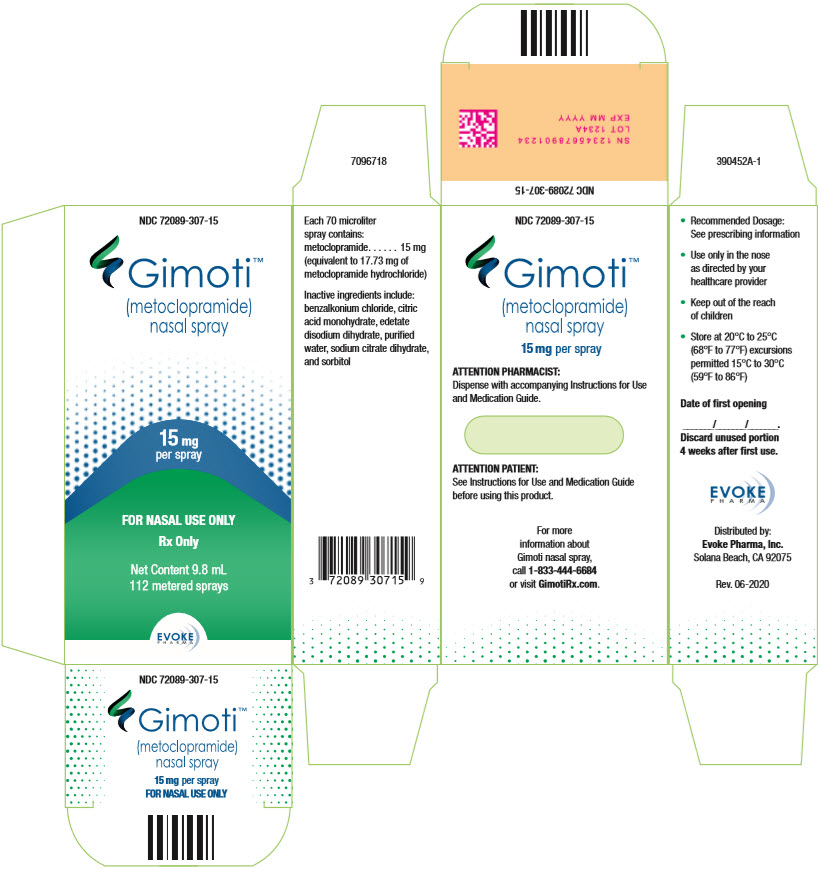
GIMOTI METOCLOPRAMIDE HYDROCHLORIDE 15 mg/.07mL Spray, 1 bottle — NDC 72089-307-15 (Billing 72089-0307-15)
This is a package of 1 bottle of GIMOTI METOCLOPRAMIDE HYDROCHLORIDE 15 mg/.07mL Spray from Evoke Pharma, Inc., marketed since Jun 2020 and currently FDA-listed. It is this product's only package size.
NDC database record
One package, one record: these facts belong to NDC 72089-307-15 alone.
- Record
- FDA NDC Directory package listing · Human prescription drug
- Code segments
- 72089 labeler · 307 product · 15 package
- Package marketed since
- Jun 19, 2020
- Sample package
- No — commercial package
- Listing certified through
- Dec 31, 2027
- Barcode (UPC-A, from the NDC)
- 3 7208930715 9
- Medicaid fills, this package
- 945 prescriptions in the last four reported quarters
- FDA record last changed
- Jul 24, 2026
Identity & classification
Regulatory identifiers FDA, NLM and CMS codes for this package
Drug-database identifiers Medi-Span GPI and First Databank GCN / HICL / AHFS classification
- GSN (GCN sequence number): 081226
- GCN: 48272
- GPI-14 (Medi-Span): 52300020102080
- HICL (First Databank): 002148
- AHFS class code: 56:32.00.00
- RxCUI (RxNorm): 2380564
Where does this data come from?
- FDA openFDA NDC Directory · synced Oct 8, 2026
- FDA label on DailyMed · label index refreshed Oct 8, 2026
- RxNorm (NLM RxNav) · catalog refreshed Oct 1, 2026
- Medi-Span GPI (licensed)
- First Databank (licensed) · refreshed Oct 8, 2026
RxNorm drug class
This medicine belongs to the Dopamine-2 Receptor Antagonist class.
Where does this data come from?
- RxClass (NLM) · catalog refreshed Oct 1, 2026
Clinical
Metoclopramide nasal spray is used to treat gastroparesis (slow stomach emptying). Metoclopramide is in a class of medications called prokinetic agents. It works by speeding the movement of food through the stomach and intestines.
Read the full MedlinePlus article ↗- Gimoti is used for adults with acute and recurrent diabetic gastroparesis. That is a condition where the stomach empties too slowly because of diabetes. It helps relieve the sympto...
- You use one spray in one nostril about 30 minutes before meals and at bedtime. Prime a new bottle with 10 sprays into the air first. If you are not sure the spray went in, don't re...
- Treatment should be as short as possible, and longer than 12 weeks should be avoided. The risk of tardive dyskinesia grows the longer you use it. Your prescriber will check regular...
- A bad taste, headache, and tiredness are the most common. Restlessness and drowsiness can happen too. Call your doctor if you notice unusual movements, mood changes, severe restles...
Patient education
Supplement & herbal interactions
Some supplements/herbs that may interact with Metoclopramide Hydrochloride — tap one for details:
Where does this data come from?
- MedlinePlus (NLM) · refreshed Oct 8, 2026
- FDA label on DailyMed · label index refreshed Oct 8, 2026
Ask a licensed pharmacist directly — free, answered by our team.
Pricing
A drug doesn't have one price. Each row is a different public payment system, and none is what you'd pay at the counter — that depends on your insurance. The ⓘ on each row explains what it measures.
| Price system | Per mL | Per package |
|---|---|---|
| Retail pharmacies payNADAC · weekly | Not in the retail survey — common for institutional, discontinued, or low-volume packs. | |
| Medicaid paysCMS SDUD · 12 mo | $239.52 | $2,347.28 / 9.8 ml |
| Medicare drug plans payPart D · Q2 2026 | $271.76 | $2,663.24 / 9.8 ml |
Where does this data come from?
- CMS NADAC weekly file
- CMS ASP pricing files · refreshed Sep 20, 2026
- CMS Medicaid State Drug Utilization Data · through Q1 2026
- CMS Part D plan pricing files · refreshed Sep 24, 2026
- VA National Acquisition Center price file
Packaging — all sizes for this product
| Package NDC | Description | Marketing start | Marketing end | Status |
|---|---|---|---|---|
| 72089-0307-15 You're viewing this Main listing | 1 BOTTLE, PUMP in 1 CARTON / 9.8 mL in 1 BOTTLE, PUMP | 2020-06-19 | — | Active |
Therapeutic equivalents
| Product | Labeler | Pack | NADAC/unit | TE | Status | Price vs. this |
|---|---|---|---|---|---|---|
| Gimoti 15 mg/.07mLthis 72089-0307-15 | Evoke | 1 bottle | — | — | FDA listed | — |
Where does this data come from?
- FDA openFDA NDC Directory · synced Oct 8, 2026
- FDA Orange Book · refreshed Oct 3, 2026
- CMS NADAC weekly file
Availability & generic status
We did not find an FDA-approved generic match for this exact strength, form and route. Patent/protection dates below may affect future generic timing.
Why the date isn’t exact: Generic timing can change because patents may be challenged, settled, licensed, added, removed, or worked around with a narrower label — and FDA approval does not always mean a pharmacy can get the generic today.
🛈 What do these terms mean?
- Patent
- Legal protection listed in the Orange Book that may delay generic approval or launch. Issued by the U.S. Patent & Trademark Office.
- Substance patent
- Covers the active drug molecule itself — the hardest to design around. A generic generally can’t launch until it expires.
- Formulation (product) patent
- Covers a specific formulation or dosage form. A generic can sometimes work around it with a different formulation.
- Method-of-use patent
- A patent covering one specific approved use of the drug — not necessarily the whole molecule. A generic can sometimes launch with a “skinny label” that carves out the protected use and keeps the others.
- Skinny label
- A generic label that omits a still-patented use when the FDA allows it — letting a generic reach the market for the unprotected uses.
- Exclusivity
- FDA-granted marketing protection, separate from patents — e.g. 5-yr new chemical entity, 7-yr orphan drug, or a +6-month pediatric extension.
- Paragraph IV
- A generic applicant’s formal challenge to a listed patent. It can potentially lead to earlier generic entry, but often involves litigation or a settlement.
- RLD / RS
- Reference Listed Drug — the brand product the FDA uses as the reference for generic applications. Reference Standard — the product the FDA expects generics to compare against in bioequivalence testing.
- TE / AB rating
- FDA therapeutic-equivalence rating. An AB rating generally means the FDA considers a generic therapeutically equivalent to — and substitutable for — the brand.
- LOE (loss of exclusivity)
- The latest patent or exclusivity currently listed — the loss-of-exclusivity / latest-listed-protection date shown on this page. Paragraph-IV challenges and settlements can move the real date earlier; FDA approval and a manufacturer’s decision to market can move it later.
Built from the FDA Orange Book. The bars above are scaled to each protection’s expiry; the red LOE marker is the last one to lapse.
| Patent | Type | Use code | Expires |
|---|---|---|---|
| US 11020361 ↗ | Method of use | U-2843 | Dec 22, 2029 |
| US 12194009 ↗ | Method of use | U-2843 | Dec 22, 2029 |
| US 12194008 ↗ | Method of use | U-2843 | Dec 22, 2029 |
| US 8334281 ↗ | Method of use | U-2843 | May 16, 2030 |
| US 11628150 ↗ | Method of use | U-2843 | Dec 22, 2029 |
| US 12377064 ↗ | Method of use | U-2843 | Nov 17, 2038 |
| US 11813231 ↗ | Method of use | U-2843 | Dec 22, 2029 |
Is there a generic version of GIMOTI 15 MG NASAL SPRAY?
The FDA approved a generic — why can’t I get it at my pharmacy yet?
Why do different websites show different generic release dates?
What does “FDA listed” mean?
What does a patent or protection date mean here?
What does “current Orange Book estimate” mean?
Can a generic come out before the last patent expires?
Can a generic come out after the listed dates?
What is the difference between patents and exclusivity?
Why are there multiple patent dates?
Where does this data come from?
- FDA Orange Book · refreshed Oct 3, 2026
Inactive Ingredients / Excipients
Inactive ingredients, also called excipients, are components of the drug product other than the active ingredient. They may include fillers, dyes, coatings, preservatives, flavors, or other formulation ingredients.
🧪 Avoiding an ingredient? See Metoclopramide Nasal Spray inactive ingredients by manufacturer: every current product's list side by side, so you can ask your pharmacy for the version that does not list it.
💡 Tap an ingredient (hover on desktop) to see what it is and why it’s used.
-
UNII F5UM2KM3W7
Benzalkonium chloride is a chemical compound that works as a preservative and antimicrobial agent in medications. It prevents bacterial and fungal growth in liquid formulations to keep the product safe during storage and use.
-
UNII 2968PHW8QP
A weak organic acid derived from citrus fruits or made through fermentation. It works as a buffer to control pH, a preservative to extend shelf life, and a flavoring agent in medications.
-
UNII 7FLD91C86K
Edetate disodium is a chemical compound that binds and removes certain metal ions. In medicines, it acts as a preservative and stabilizer by preventing metals like calcium from interfering with the product's shelf life and consistency.
-
UNII 506T60A25R
Sorbitol is a natural sugar alcohol derived from glucose. It serves as a sweetener, humectant, and bulking agent in medications to improve taste and help maintain moisture in the product.
-
UNII B22547B95K
A salt derived from citric acid that helps maintain the proper acid-base balance in the medicine. It's used as a buffer to keep the product stable and at the right pH level.
5 inactive ingredients listed in the exact product block matched to this NDC.
Where does this data come from?
ingredient classCode="IACT" elements from the exact product block matched by this NDC. Label-section narrative from DailyMed / the openFDA label index is shown separately when available.- FDA label on DailyMed · label index refreshed Oct 8, 2026
- FDA openFDA NDC Directory · synced Oct 8, 2026
Inactive ingredient FAQ
Are inactive ingredients the same for every manufacturer?
Why might an inactive ingredient be missing?
Can inactive ingredients matter?
Manufacturer & labeler
Where does this data come from?
- FDA openFDA NDC Directory · synced Oct 8, 2026
- Drugs@FDA
Full prescribing information FDA SPL
🚨 Boxed Warning ▾
WARNING: TARDIVE DYSKINESIA Metoclopramide, including GIMOTI, can cause tardive dyskinesia (TD), a potentially irreversible serious movement disorder. In patients treated with metoclopramide, including GIMOTI, the risk of developing TD increases with duration of treatment and total cumulative dosage [see Warnings and Precautions ( 5.1 )] . GIMOTI is contraindicated in patients with a history of TD.
Use GIMOTI for the shortest duration of treatment and periodically reassess the need for continued treatment. Immediately discontinue GIMOTI in patients who develop signs or symptoms of TD [see Warnings and Precautions ( 5.1 )] . Avoid a total duration of treatment with metoclopramide products, including GIMOTI, for longer than 12 weeks.
If longer-term use is unavoidable, routinely monitor for signs and symptoms of TD [see Warnings and Precautions ( 5.1 )] . WARNING: TARDIVE DYSKINESIA See full prescribing information for complete boxed warning . Metoclopramide, including GIMOTI, can cause tardive dyskinesia (TD), a potentially irreversible serious movement disorder.
In patients treated with metoclopramide, including GIMOTI, the risk of developing TD increases with duration of treatment and total cumulative dosage. ( 5.1 ) GIMOTI is contraindicated in patients with a history of TD. ( 4 ) Use GIMOTI for the shortest duration of treatment and periodically reassess the need for continued treatment.
( 2.2 , 5.1 ) Immediately discontinue GIMOTI in patients who develop signs or symptoms of TD. ( 5.1 ) Avoid a total duration of treatment with metoclopramide products, including GIMOTI, for longer than 12 weeks. If longer-term use is unavoidable, routinely monitor for signs and symptoms of TD.
( 5.1 )
🎯 Indications and Usage ▾
1 INDICATIONS AND USAGE GIMOTI is indicated for the relief of symptoms in adults with acute and recurrent diabetic gastroparesis. GIMOTI is a dopamine-2 (D 2 ) antagonist indicated for the relief of symptoms in adults with acute and recurrent diabetic gastroparesis. ( 1 ) Limitations of Use : GIMOTI is not recommended for use in: pediatric patients due to the risk of tardive dyskinesia (TD) and other extrapyramidal symptoms as well as the risk of methemoglobinemia in neonates.
( 1 , 8.4 ) moderate or severe hepatic impairment (Child-Pugh B or C), moderate or severe renal impairment (creatinine clearance less than 60 mL/minute), and patients concurrently using strong CYP2D6 inhibitors due to the risk of increased drug exposure and adverse reactions. ( 1 , 5.9 , 7.1 ) Limitations of Use : GIMOTI is not recommended for use in: pediatric patients due to the risk of developing tardive dyskinesia (TD) and other extrapyramidal symptoms as well as the risk of methemoglobinemia in neonates [see Use in Specific Populations ( 8.4 )]. moderate or severe hepatic impairment (Child-Pugh B or C), moderate or severe renal impairment (creatinine clearance less than 60 mL/minute), and patients concurrently using strong CYP2D6 inhibitors due to the risk of increased drug exposure and adverse reactions [see Warnings and Precautions ( 5.9 )].
Limitations of Use : GIMOTI is not recommended for use in: pediatric patients due to the risk of developing tardive dyskinesia (TD) and other extrapyramidal symptoms as well as the risk of methemoglobinemia in neonates [see Use in Specific Populations ( 8.4 )]. moderate or severe hepatic impairment (Child-Pugh B or C), moderate or severe renal impairment (creatinine clearance less than 60 mL/minute), and patients concurrently using strong CYP2D6 inhibitors due to the risk of increased drug exposure and adverse reactions [see Warnings and Precautions ( 5.9 )].
⏱️ Dosage and Administration ▾
2 DOSAGE AND ADMINISTRATION Administration See the full prescribing information for complete information on administration. ( 2.1 ) Recommended Dosage Adults less than 65 years of age: The recommended dosage is 1 spray (15 mg) in one nostril, 30 minutes before each meal and at bedtime (maximum of 4 sprays daily). ( 2.2 ) Adults 65 years of age and older: GIMOTI is not recommended in geriatric patients as initial therapy.
Geriatric patients receiving an alternative metoclopramide product at a stable dosage of 10 mg four times daily can be switched to GIMOTI 1 spray (15 mg) in one nostril, 30 minutes before each meal and at bedtime (maximum four times daily). ( 2.2 , 8.5 )
2.1Important Administration and Storage Instructions One spray in one nostril administers the appropriate dose. Before administering the first dose from a bottle, prime the pump by pressing down on the finger flange and releasing 10 sprays in the air. Place the spray nozzle tip under one nostril and lean the head slightly forward so the tip of spray nozzle is aimed away from the septum and toward the back of the nose.
Close the other nostril with the other index finger. Move spray pump upwards so the tip of the nozzle is in the nostril. To ensure a full dose, hold the bottle upright while pressing down firmly and completely on finger flange and release while inhaling slowly through the open nostril.
Remove spray pump nozzle tip from nostril and exhale slowly through the mouth. Wipe the spray nozzle with a clean tissue. Missed or Incomplete Doses If uncertain that the spray entered the nose, do not repeat the dose.
Take the next dose at the scheduled time. If a dose is missed, take the next dose of GIMOTI at the regularly scheduled time. Do not make up for the missed dose or double the next dose.
Storage Discard GIMOTI 4 weeks after opening even if the bottle contains unused drug.
2.2Recommended Dosage Adults Less Than 65 Years of Age The recommended dosage of GIMOTI for the treatment of acute and recurrent diabetic gastroparesis in adults is 1 spray (15 mg) in one nostril, 30 minutes before each meal and at bedtime (maximum of four times daily). Adults 65 Years of Age and Older Elderly patients may be more sensitive to the adverse effects of metoclopramide and require a lower starting dosage [see Warnings and Precautions ( 5.1 )] . GIMOTI is not recommended in geriatric patients as initial therapy.
Geriatric patients receiving an alternative metoclopramide product at a stable dosage of 10 mg four times daily can be switched to GIMOTI 1 spray (15 mg) in one nostril, 30 minutes before each meal and at bedtime (maximum four times daily). Treatment Duration Use GIMOTI for the shortest duration of treatment and periodically reassess the need for continued treatment. Avoid treatment with metoclopramide, including GIMOTI, for longer than 12 weeks.
If longer-term use is unavoidable, routinely monitor for signs and symptoms of TD [see Warnings and Precautions ( 5.1 )] .
2.1Important Administration and Storage Instructions One spray in one nostril administers the appropriate dose. Before administering the first dose from a bottle, prime the pump by pressing down on the finger flange and releasing 10 sprays in the air. Place the spray nozzle tip under one nostril and lean the head slightly forward so the tip of spray nozzle is aimed away from the septum and toward the back of the nose.
Close the other nostril with the other index finger. Move spray pump upwards so the tip of the nozzle is in the nostril. To ensure a full dose, hold the bottle upright while pressing down firmly and completely on finger flange and release while inhaling slowly through the open nostril.
Remove spray pump nozzle tip from nostril and exhale slowly through the mouth. Wipe the spray nozzle with a clean tissue. Missed or Incomplete Doses If uncertain that the spray entered the nose, do not repeat the dose.
Take the next dose at the scheduled time. If a dose is missed, take the next dose of G… [Excerpted — this section continues on DailyMed.]
💊 Dosage Forms and Strengths ▾
3 DOSAGE FORMS AND STRENGTHS Nasal Spray: 15 mg of metoclopramide in each 70 microliter spray. GIMOTI is an aqueous solution supplied in an amber glass bottle fitted with a metered spray pump attachment. Nasal Spray: 15 mg metoclopramide in each 70 microliter spray. ( 3 )
⛔ Contraindications ▾
4 CONTRAINDICATIONS GIMOTI is contraindicated: In patients with a history of tardive dyskinesia (TD) or a dystonic reaction to metoclopramide [see Warnings and Precautions ( 5.1 , 5.2) ] . When stimulation of gastrointestinal motility might be dangerous (e.g., in the presence of gastrointestinal hemorrhage, mechanical obstruction, or perforation). In patients with pheochromocytoma or other catecholamine-releasing paragangliomas.
Metoclopramide may cause a hypertensive/pheochromocytoma crisis, probably due to release of catecholamines from the tumor [see Warnings and Precautions ( 5.5 )] . In patients with epilepsy. Metoclopramide may increase the frequency and severity of seizures [see Adverse Reactions ( 6 )] .
In patients with hypersensitivity to metoclopramide. Reactions have included laryngeal and glossal angioedema and bronchospasm [see Adverse Reactions ( 6 )] . History of TD or dystonic reaction to metoclopramide ( 4 ) When stimulation of gastrointestinal motility might be dangerous ( 4 ) Pheochromocytoma, catecholamine-releasing paragangliomas ( 4 ) Epilepsy ( 4 ) Hypersensitivity to metoclopramide ( 4 )
⚠️ Warnings and Cautions ▾
5 WARNINGS AND PRECAUTIONS Tardive dyskinesia (TD), other extrapyramidal symptoms (EPS), and neuroleptic malignant syndrome (NMS) : Avoid concomitant use of other drugs known to cause TD/EPS/NMS and avoid use in patients with Parkinson's disease. If symptoms occur, discontinue GIMOTI and seek immediate medical attention. ( 5.1 , 5.2 , 5.3 , 7.1 , 7.2 ) Depression and suicidal ideation/suicide : Avoid use. ( 5.4 )
5.1Tardive Dyskinesia Metoclopramide, including GIMOTI, can cause tardive dyskinesia (TD), a syndrome of potentially irreversible and disfiguring involuntary movements of the face or tongue, and sometimes of the trunk and/or extremities. Metoclopramide, including GIMOTI, may also suppress, or partially suppress, the signs of TD, and may delay the diagnosis of TD because it may mask the underlying disease process. The effect of this symptomatic suppression upon the long-term course of TD is unknown.
TD may remit, partially or completely, if GIMOTI treatment is discontinued. In patients treated with metoclopramide, including GIMOTI, the risk of developing TD and the likelihood that TD will become irreversible increases with duration of treatment and total cumulative dosage. Additionally, the risk of developing TD is increased in elderly patients, especially in elderly women [see Use in Specific Populations ( 8.5 )] , and in patients with diabetes mellitus.
Prevention, Mitigation, and Monitoring for TD GIMOTI is contraindicated in patients with a history of TD. Avoid use of GIMOTI in patients receiving concomitant antipsychotics due to the potential additive effects of TD [see Drug Interactions ( 7.1 )] . GIMOTI is not recommended in geriatric patients as initial therapy [see Dosage and Administration ( 2.2 )] .
Use GIMOTI for the shortest duration of treatment and periodically reassess the need for continued treatment. Immediately discontinue GIMOTI immediately in patients who develop signs and symptoms of TD. Avoid a total duration of treatment with metoclopramide products, including GIMOTI, for longer than 12 weeks.
If longer-term use is unavoidable, routinely monitor for signs and symptoms of TD. If patients have continued TD symptoms, consider TD treatment.
5.2Other Extrapyramidal Symptoms In addition to TD, metoclopramide may cause other extrapyramidal symptoms (EPS), parkinsonian symptoms, and motor restlessness. Advise patients to seek immediate medical attention if such symptoms occur and to discontinue GIMOTI. Extrapyramidal symptoms (EPS), such as acute dystonic reactions, occurred in patients treated with oral metoclopramide dosages of 30 mg to 40 mg daily.
Such reactions occurred more frequently in adults less than 30 years of age and at higher than recommended dosages. EPS occurred more frequently in pediatric patients compared to adults (GIMOTI is not approved for use in pediatric patients). Symptoms can occur in the first 24 to 48 hours after starting metoclopramide.
Symptoms included involuntary movements of limbs and facial grimacing, torticollis, oculogyric crisis, rhythmic protrusion of tongue, bulbar type of speech, trismus, or dystonic reactions resembling tetanus. Rarely, dystonic reactions were present as stridor and dyspnea, possibly due to laryngospasm. Diphenhydramine hydrochloride or benztropine mesylate may be used to treat these adverse reactions.
Avoid GIMOTI in patients receiving other drugs that can cause EPS (e.g., antipsychotics). Parkinsonian symptoms (bradykinesia, tremor, cogwheel rigidity, mask-like facies) have occurred after starting metoclopramide, more commonly within the first 6 months, but also after longer periods. Symptoms generally have subsided within 2 to 3 months after discontinuation of metoclopramide.
Avoid GIMOTI in patients with Parkinson’s disease and other patients being treated with antiparkinsonian drugs due to potential exacerbation of symptoms. If treatment is unavoidable, use GIMOTI for the shortest duration of treatment and periodically reassess the need fo… [Excerpted — this section continues on DailyMed.]
🤒 Adverse Reactions ▾
6 ADVERSE REACTIONS The following adverse reactions are described, or described in greater detail, in other sections of the labeling: Tardive dyskinesia [see Boxed Warning and Warnings and Precautions ( 5.1 )] Other extrapyramidal symptoms [see Warnings and Precautions ( 5.2 )] Neuroleptic malignant syndrome [see Warnings and Precautions ( 5.3 )] Depression [see Warnings and Precautions ( 5.4 )] Hypertension [see Warnings and Precautions ( 5.5 )] Fluid retention [see Warnings and Precautions ( 5.6 )] Hyperprolactinemia [see Warnings and Precautions ( 5.7 )] Effects on the ability to drive and operate machinery [see Warnings and Precautions ( 5.8 )] The following adverse reactions have been identified from clinical studies or postmarketing reports of metoclopramide.
Because these reactions are reported voluntarily from a population of uncertain size, it is not always possible to reliably estimate their frequency or establish a causal relationship to drug exposure. The safety of GIMOTI was evaluated in clinical trials of patients with gastroparesis and established in clinical trials of oral metoclopramide. Most common adverse reactions (≥5%) are: dysgeusia, headache, and fatigue.
( 6 ) To report SUSPECTED ADVERSE REACTIONS, contact Evoke Pharma, Inc. at 1-833-4-GIMOTI (1-833-444-6684), or FDA at 1-800-FDA-1088 or www.fda.gov/medwatch. Safety of GIMOTI In a randomized, placebo-controlled clinical trial of 190 male and female patients of GIMOTI 14 mg, a slightly lower than recommended dosage, administered nasally four times daily for 4 weeks, dysgeusia was the most commonly reported adverse reaction (15% of GIMOTI-treated patients and 4% of placebo-treated patients). Other adverse reactions were similar to those reported for oral metoclopramide.
Safety of Oral Metoclopramide The most common adverse reactions (in approximately 10% of patients receiving the recommended oral metoclopramide dosage of 10 mg four times daily) were restlessness, drowsiness, fatigue, and lassitude. In general, the incidence of adverse reactions correlated with the dosage and duration of metoclopramide administration. Adverse reactions, especially those involving the nervous system, occurred after stopping metoclopramide including dizziness, nervousness, and headaches.
Central Nervous System Disorders Tardive dyskinesia, acute dystonic reactions, drug-induced parkinsonism, akathisia, and other extrapyramidal symptoms Convulsive seizures Hallucinations Restlessness, drowsiness, fatigue, and lassitude occurred in approximately 10% of patients who received metoclopramide orally 10 mg four times daily. Insomnia, headache, confusion, dizziness, or depression with suicidal ideation occurred less frequently. Neuroleptic malignant syndrome, serotonin syndrome (in combination with serotonergic agents) Endocrine Disorders : Fluid retention secondary to transient elevation of aldosterone, galactorrhea, amenorrhea, gynecomastia, impotence secondary to hyperprolactinemia Cardiovascular Disorders : Acute congestive heart failure, possible atrioventricular block, hypotension, hypertension, supraventricular tachycardia, bradycardia, fluid retention Gastrointestinal Disorders : Nausea, bowel disturbances (primarily diarrhea) Hepatic Disorders : Hepatotoxicity, characterized by, e.g., jaundice and altered liver function tests, when metoclopramide was administered with other drugs with known hepatotoxic potential Renal and Urinary Disorders : Urinary frequency, urinary incontinence Hematologic Disorders : Agranulocytosis, neutropenia, leukopenia, methemoglobinemia, sulfhemoglobinemia Hypersensitivity Reactions : Bronchospasm (especially in patients with a history of asthma), urticaria, rash, angioedema, including glossal or laryngeal edema Eye Disorders : Visual disturbances Metabolism Disorders : Porphyria
🔄 Drug Interactions ▾
7 DRUG INTERACTIONS Antipsychotics : Potential for additive effects, including TD, EPS, and NMS; avoid concomitant use. ( 7.1 ) Central nervous system (CNS) depressants : Increased risk of CNS depression. Avoid concomitant use and monitor for adverse reactions. ( 7.1 ) Monoamine oxidase (MAO) inhibitors : Increased risk of hypertension; avoid concomitant use. ( 5.5 , 7.1 ) Additional drug interactions : See Full Prescribing Information. ( 7.1 , 7.2 )
7.1Effects of Other Drugs on Metoclopramide Table 1 displays the effects of other drugs on metoclopramide. Table 1. Effects of Other Drugs on Metoclopramide Antipsychotics Clinical Impact Potential for additive effects, including increased frequency and severity of tardive dyskinesia (TD), other extrapyramidal symptoms (EPS), and neuroleptic malignant syndrome (NMS).
Intervention Avoid concomitant use [see Warnings and Precautions ( 5.1 , 5.2 , 5.3) ]. Strong CYP2D6 Inhibitors, not Included in Antipsychotic Category Above Clinical Impact Increased plasma concentrations of metoclopramide; risk of exacerbation of extrapyramidal symptoms [see Clinical Pharmacology ( 12.3 )]. Intervention Use of GIMOTI is not recommended [see Warnings and Precautions ( 5.9 )] .
Examples quinidine, bupropion, fluoxetine, and paroxetine Monoamine Oxidase Inhibitors Clinical Impact Increased risk of hypertension [see Warnings and Precautions ( 5.5 )]. Intervention Avoid concomitant use. Central Nervous System (CNS) Depressants Clinical Impact Increased risk of CNS depression [see Warnings and Precautions ( 5.8 )].
Intervention Avoid GIMOTI or the interacting drug, depending on the importance of the drug to the patient. Examples alcohol, sedatives, hypnotics, opiates, and anxiolytics Drugs that Impair Gastrointestinal Motility Clinical Impact Potential for decreased effect of metoclopramide due to opposing effects on gastrointestinal motility. Intervention Monitor for reduced effect on gastrointestinal motility.
Examples antiperistaltic antidiarrheal drugs, anticholinergic drugs, and opiates Dopaminergic Agonists and Other Drugs that Increase Dopamine Concentrations Clinical Impact Decreased therapeutic effect of metoclopramide due to opposing effects on dopamine. Intervention Monitor for reduced therapeutic effect. Examples apomorphine, bromocriptine, cabergoline, levodopa, pramipexole, ropinirole, and rotigotine
7.2Effects of Metoclopramide on Other Drugs Table 2 displays the effects of metoclopramide on other drugs. Table 2. Effects of Metoclopramide on Other Drugs Dopaminergic Agonists and Drugs Increasing Dopamine Concentrations Clinical Impact Opposing effects of metoclopramide and the interacting drug on dopamine.
Potential exacerbation of symptoms (e.g., parkinsonian symptoms). Intervention Avoid concomitant use [see Warnings and Precautions ( 5.2 )] . Examples Apomorphine, bromocriptine, cabergoline, levodopa, pramipexole, ropinirole, rotigotine Succinylcholine, Mivacurium Clinical Impact Metoclopramide inhibits plasma cholinesterase leading to enhanced neuromuscular blockade.
Intervention Monitor for signs and symptoms of prolonged neuromuscular blockade Drugs with Absorption Altered due to Increased Gastrointestinal Motility Clinical Impact The effect of metoclopramide on other drugs is variable. Increased gastrointestinal (GI) motility by metoclopramide may impact absorption of other drugs leading to decreased or increased drug exposure. Intervention Drugs with Decreased Absorption (e.g., digoxin, atovaquone, posaconazole oral suspension Interaction does not apply to posaconazole delayed-release tablet. , fosfomycin) : Monitor for reduced therapeutic effect of the interacting drug.
For digoxin, monitor therapeutic drug concentrations and increase the digoxin dose as needed (see prescribing information for digoxin). Drugs with Increased Absorption (e.g., sirolimus, tacrolimus, cyclosporine) : Monitor therapeutic drug concentrations and adjust the dose as needed. See prescribing information fo… [Excerpted — this section continues on DailyMed.]
👥 Use in Specific Populations ▾
8 USE IN SPECIFIC POPULATIONS
8.1Pregnancy Risk Summary Published studies, including retrospective cohort studies, national registry studies, and meta-analyses, do not report a consistent pattern or a consistently increased risk of adverse pregnancy-related outcomes with oral use of metoclopramide during pregnancy. However, available data from a case report of GIMOTI use in pregnancy is insufficient to evaluate for a drug-associated risk of major birth defects, miscarriage, or adverse maternal or fetal outcomes. There are potential risks to the neonate following exposure in utero to metoclopramide during delivery (see Clinical Considerations ).
In animal reproduction studies, no adverse developmental effects were observed with oral administration of metoclopramide to pregnant rats and rabbits at exposures about 6 and 12 times the maximum recommended human dose (MRHD) (see Data ) . The background risk of major birth defects and miscarriage for the indicated population is unknown. All pregnancies have a background risk of birth defects, loss, or other adverse outcomes.
In the U.S. general population, the estimated background risk of major birth defects and miscarriage in clinically recognized pregnancies is 2% to 4% and 15% to 20%, respectively. Clinical Considerations Fetal/Neonatal Adverse Reactions Metoclopramide crosses the placental barrier and may cause extrapyramidal signs and methemoglobinemia in neonates with maternal administration during delivery. Monitor neonates for extrapyramidal signs [see Warnings and Precautions ( 5.1 , 5.2) , Use in Specific Populations ( 8.4 )] .
Data Animal Data Reproduction studies have been performed following administration of oral metoclopramide during organogenesis in pregnant rats at about 6 times the MRHD calculated on body surface area and in pregnant rabbits at about 12 times the MRHD calculated on body surface area. No evidence of adverse developmental effects due to metoclopramide was observed.
8.2Lactation Risk Summary There are no data on the presence of metoclopramide in human milk following nasal administration; however, published data report the presence of metoclopramide in human milk in variable amounts following oral administration (see Data ) . Systemic exposure following nasal administration of GIMOTI 15 mg is expected to be similar to oral administration of metoclopramide 10 mg [see Clinical Pharmacology ( 12.3 )] . Breastfed infants exposed to metoclopramide have experienced gastrointestinal adverse reactions, including intestinal discomfort and increased intestinal gas formation (see Clinical Considerations ) .
Metoclopramide elevates prolactin levels [see Warnings and Precautions ( 5.7 )] ; however, the published data are not adequate to support drug effects on milk production. The developmental and health benefits of breastfeeding should be considered along with the mother's clinical need for GIMOTI and any potential adverse effects on the breastfed child from GIMOTI or from the underlying maternal condition. Clinical Considerations Monitor breastfeeding neonates because metoclopramide may cause extrapyramidal signs (dystonias) and methemoglobinemia [see Warnings and Precautions ( 5.1 , 5.2) , Use in Specific Populations ( 8.4 )] .
Data In published clinical studies, the estimated amount of metoclopramide received by the breastfed infant was less than 10% of the maternal weight-adjusted oral dose. In one study, the estimated daily amount of metoclopramide received by infants from breast milk ranged from 6 to 24 mcg/kg/day in early puerperium (3 to 9 days postpartum) and from 1 to 13 mcg/kg/day at 8 to 12 weeks postpartum.
8.4Pediatric Use Metoclopramide is not recommended for use in pediatric patients due to the risk of tardive dyskinesia (TD) and other extrapyramidal symptoms as well as the risk of methemoglobinemia in neonates. The safety and effectiveness of GIMOTI in pediatric patients have not been established. Dystonias and other extrapyramidal symptoms asso… [Excerpted — this section continues on DailyMed.]
🤰 Pregnancy ▾
8.1Pregnancy Risk Summary Published studies, including retrospective cohort studies, national registry studies, and meta-analyses, do not report a consistent pattern or a consistently increased risk of adverse pregnancy-related outcomes with oral use of metoclopramide during pregnancy. However, available data from a case report of GIMOTI use in pregnancy is insufficient to evaluate for a drug-associated risk of major birth defects, miscarriage, or adverse maternal or fetal outcomes. There are potential risks to the neonate following exposure in utero to metoclopramide during delivery (see Clinical Considerations ).
In animal reproduction studies, no adverse developmental effects were observed with oral administration of metoclopramide to pregnant rats and rabbits at exposures about 6 and 12 times the maximum recommended human dose (MRHD) (see Data ) . The background risk of major birth defects and miscarriage for the indicated population is unknown. All pregnancies have a background risk of birth defects, loss, or other adverse outcomes.
In the U.S. general population, the estimated background risk of major birth defects and miscarriage in clinically recognized pregnancies is 2% to 4% and 15% to 20%, respectively. Clinical Considerations Fetal/Neonatal Adverse Reactions Metoclopramide crosses the placental barrier and may cause extrapyramidal signs and methemoglobinemia in neonates with maternal administration during delivery. Monitor neonates for extrapyramidal signs [see Warnings and Precautions ( 5.1 , 5.2) , Use in Specific Populations ( 8.4 )] .
Data Animal Data Reproduction studies have been performed following administration of oral metoclopramide during organogenesis in pregnant rats at about 6 times the MRHD calculated on body surface area and in pregnant rabbits at about 12 times the MRHD calculated on body surface area. No evidence of adverse developmental effects due to metoclopramide was observed.
🧒 Pediatric Use ▾
8.4Pediatric Use Metoclopramide is not recommended for use in pediatric patients due to the risk of tardive dyskinesia (TD) and other extrapyramidal symptoms as well as the risk of methemoglobinemia in neonates. The safety and effectiveness of GIMOTI in pediatric patients have not been established. Dystonias and other extrapyramidal symptoms associated with metoclopramide are more common in pediatric patients than in adults [see Indications and Usage ( 1 ), Warnings and Precautions ( 5.1 , 5.2) ] .
In addition, neonates have reduced levels of NADH-cytochrome b 5 reductase, making them more susceptible to methemoglobinemia, a possible adverse reaction of metoclopramide use in neonates [see Use in Specific Populations ( 8.8 )] .
🧓 Geriatric Use ▾
8.5Geriatric Use Metoclopramide is known to be substantially excreted by the kidney, and the risk of adverse reactions, including tardive dyskinesia (TD), may be greater in patients with impaired renal function [see Warnings and Precautions ( 5.1 ), Use in Specific Populations ( 8.6 ), Clinical Pharmacology ( 12.3 )] . Elderly patients are more likely to have decreased renal function and may be more sensitive to the adverse effects of metoclopramide, especially elderly women, and require a lower starting dosage. GIMOTI is not recommended in geriatric patients as initial therapy.
Geriatric patients receiving an alternative metoclopramide product at a stable dosage of 10 mg four times daily can be switched to GIMOTI [see Dosage and Administration ( 2.2 )].
🆘 Overdosage ▾
10 OVERDOSAGE Manifestations of metoclopramide overdosage included drowsiness, disorientation, extrapyramidal reactions, other adverse reactions associated with metoclopramide use (including, e.g., methemoglobinemia), and sometimes death. Neuroleptic malignant syndrome (NMS) has been reported in association with metoclopramide overdose and concomitant treatment with another drug associated with NMS [see Warnings and Precautions ( 5.1 , 5.2 , 5.3) ]. There are no specific antidotes for metoclopramide overdosage.
If over-exposure occurs, call your Poison Control Center at 1-800-222-1222 for current information on the management of poisoning or overdosage . Methemoglobinemia can be reversed by the intravenous administration of methylene blue. However, methylene blue may cause hemolytic anemia in patients with G6PD deficiency, which may be fatal.
Hemodialysis and continuous ambulatory peritoneal dialysis do not remove significant amounts of metoclopramide.
🧬 Clinical Pharmacology ▾
12 CLINICAL PHARMACOLOGY
12.1Mechanism of Action Metoclopramide stimulates motility of the upper gastrointestinal tract without stimulating gastric, biliary, or pancreatic secretions. The exact mechanism of action of metoclopramide in the treatment of gastroesophageal reflux and acute and recurrent diabetic gastroparesis has not been fully established. It seems to sensitize tissues to the action of acetylcholine.
The effect of metoclopramide on motility is not dependent on intact vagal innervation, but it can be abolished by anticholinergic drugs. Metoclopramide increases the tone and amplitude of gastric (especially antral) contractions, relaxes the pyloric sphincter and the duodenal bulb, and increases peristalsis of the duodenum and jejunum resulting in accelerated gastric emptying and intestinal transit. It increases the resting tone of the lower esophageal sphincter.
It has little, if any, effect on the motility of the colon or gallbladder.
12.2Pharmacodynamics Cardiac Electrophysiology In a randomized, double-blind, positive-controlled thorough ECG study in 48 healthy subjects, a single administration of 80 mg metoclopramide nasal spray (approximately 5 times the recommended GIMOTI dose) had no effect on the QTc interval.
12.3Pharmacokinetics Absorption The absolute bioavailability of metoclopramide following nasal administration of 10 mg metoclopramide is 47% in healthy subjects compared to intravenous injection of metoclopramide 10 mg. The systemic absorption after nasal administration is lower than that after oral administration given the same dose. Following nasal administration of GIMOTI 15 mg in healthy subjects, the systemic exposure (C max and AUC) to metoclopramide and the time to reach C max (T max ) were similar to orally administered 10 mg metoclopramide tablet.
After single nasal administration of metoclopramide at doses ranging from 10 mg to 80 mg in healthy subjects, there was a dose-proportional increase in the mean values for C max and AUC. The pharmacokinetic parameters of metoclopramide in healthy subjects following a single nasal administration of GIMOTI 15 mg are summarized in Table 3. Table 3.
Summary of Metoclopramide Pharmacokinetic Parameters in Healthy Subjects after a Single Nasal Administration of GIMOTI 15 mg Parameter Arithmetic mean (SD) except t max for which the median (range) is reported. GIMOTI 15 mg N 94 C max (ng/mL) 41.0 (19.9) t max (h) 1.25 (0.50 – 3.50) AUC 0-t (ng∙h/mL) 349 (174.7) AUC 0-inf (ng∙h/mL) N = 93 367 (184.8) t 1/2 (h) 8.1 (2.0) Distribution Metoclopramide is not extensively bound to plasma proteins (about 30%). The whole body volume of distribution is high (about
3.5L/kg), which suggests extensive distribution of drug to the tissues. Elimination The mean elimination half-life in individuals with normal renal function is approximately 8 hours for administration with GIMOTI 15 mg. Metabolism: Metoclopramide undergoes enzymatic metabolism via oxidation as well as glucuronide and sulfate conjugation reactions in the liver.
Monodeethylmetoclopramide, a major oxidative metabolite, is formed primarily by CYP2D6, an enzyme subject to genetic variability [see Warnings and Precautions ( 5.9 ), Use in Specific Populations ( 8.9 )] . Excretion: Approximately 85% of the radioactivity of an orally administered dose appeared in the urine within 72 hours. After oral administration of 10 or 20 mg, a mean of 18% and 22% of the dose, respectively, was recovered as free metoclopramide in urine within 36 hours.
Specific Populations Patients with Renal Impairment: In a study of 24 patients with varying degrees of renal impairment (moderate, severe, and end-stage renal disease [ESRD] requiring dialysis), the systemic exposure (AUC) of metoclopramide following oral administration in patients with moderate to severe renal impairment was about 2-fold the AUC in subjects with normal renal function. The AUC of metoclopramide in patients with ESRD on dialysis was about 3.5-fold the AUC in sub… [Excerpted — this section continues on DailyMed.]
🧬 Mechanism of Action ▾
12.1Mechanism of Action Metoclopramide stimulates motility of the upper gastrointestinal tract without stimulating gastric, biliary, or pancreatic secretions. The exact mechanism of action of metoclopramide in the treatment of gastroesophageal reflux and acute and recurrent diabetic gastroparesis has not been fully established. It seems to sensitize tissues to the action of acetylcholine.
The effect of metoclopramide on motility is not dependent on intact vagal innervation, but it can be abolished by anticholinergic drugs. Metoclopramide increases the tone and amplitude of gastric (especially antral) contractions, relaxes the pyloric sphincter and the duodenal bulb, and increases peristalsis of the duodenum and jejunum resulting in accelerated gastric emptying and intestinal transit. It increases the resting tone of the lower esophageal sphincter.
It has little, if any, effect on the motility of the colon or gallbladder.
📦 How Supplied / Storage and Handling ▾
16 HOW SUPPLIED/STORAGE AND HANDLING GIMOTI (metoclopramide) nasal spray is supplied as a solution of metoclopramide in a 10 mL Type 1 amber glass bottle fitted with a metered spray pump attachment, a protective cap, and a safety clip. Each box of GIMOTI (NDC 72089-307-15) contains 1 bottle, with FDA-approved Patient Labeling (see Instructions for Use for proper actuation of the device). Each actuation delivers 15 mg of metoclopramide.
Each bottle contains 9.8 mL which is sufficient for 4 weeks of 4 times a day use. Store at 20°C to 25°C (68°F to 77°F) excursions permitted 15°C to 30°C (59°F and 86°F) [ see USP Controlled Room Temperature ]. Discard GIMOTI 4 weeks after opening even if the bottle contains unused medicine.
📦 Storage and Handling ▾
Store at 20°C to 25°C (68°F to 77°F) excursions permitted 15°C to 30°C (59°F and 86°F) [ see USP Controlled Room Temperature ]. Discard GIMOTI 4 weeks after opening even if the bottle contains unused medicine.
📋 Description ▾
11 DESCRIPTION Metoclopramide hydrochloride, the active ingredient in GIMOTI, is a dopamine-2 receptor antagonist. Metoclopramide hydrochloride is a white, crystalline, odorless substance, freely soluble in water. Its chemical name is 4-amino-5-chloro-N-[2-(diethylamino)ethyl]-2-methoxy benzamide monohydrochloride monohydrate.
The molecular formula is C 14 H 22 ClN 3 O 2 ∙HCl∙H 2 O. Its molecular weight is 354.3. The structural formula is: GIMOTI (metoclopramide) nasal spray is for nasal administration.
The product is supplied as an aqueous solution with a pH of 5.5 ± 0.5 in a 10 mL amber glass vial fitted with a metered spray pump attachment. Each unit contains 9.8 mL. Each 70 microliter spray contains 15 mg metoclopramide, equivalent to 17.73 mg of metoclopramide hydrochloride.
Inactive ingredients consist of benzalkonium chloride, citric acid monohydrate, edetate disodium dihydrate, purified water, sodium citrate dihydrate, and sorbitol. Chemical Structure
💬 Information for Patients ▾
17 PATIENT COUNSELING INFORMATION Advise the patient or caregiver to read the FDA-approved patient labeling (Medication Guide and Instructions for Use). Adverse Reactions Tardive Dyskinesia and/or other Extrapyramidal Reactions Inform patients that GIMOTI may cause tardive dyskinesia or other extrapyramidal symptoms, parkinsonian symptoms, and motor restlessness. Instruct patients to immediately discontinue GIMOTI and contact their healthcare provider if symptoms occur [see Warnings and Precautions ( 5.1 , 5.2 )] .
Neuroleptic Malignant Syndrome Inform patients that serious neuroleptic malignant syndrome (NMS) has been reported in association with concomitant treatment with another drug associated with NMS. Advise patients to report all prescription and over-the-counter medications to the healthcare provider. Instruct patients to immediately discontinue GIMOTI and seek medical attention if symptoms occur [see Warnings and Precautions ( 5.3 )] Depression and/or Possible Suicidal Ideation Inform patients that symptoms of new onset or worsening depression as well as suicidal ideation have been reported in patients taking metoclopramide.
Instruct patients to immediately discontinue GIMOTI and contact their healthcare provider if any of these symptoms occur [see Warnings and Precautions ( 5.4 )] Drug Interactions Inform the patients or their caregivers that concomitant treatment with numerous other medications can precipitate or worsen serious adverse reactions such as tardive dyskinesia or other extrapyramidal reactions, neuroleptic malignant syndrome, and CNS depression [see Drug Interactions ( 7.1 , 7.2 )] . Explain that the prescriber of any other medication must be made aware that the patient is taking GIMOTI.
Effects on the Ability to Drive and Operate Machinery Inform the patient or their caregiver that GIMOTI may cause drowsiness or dizziness, or otherwise impair the mental and/or physical abilities required for the performance of hazardous tasks such as operating machinery or driving a motor vehicle [see Warnings and Precautions ( 5.8 )] . Administration Instructions [see Dosage and Administration ( 2.1 )] Advise the patients or their caregiver to read the Instructions for Use on how to appropriately administer GIMOTI: One spray in one nostril administers the appropriate dose.
Before administering the first dose from a bottle, prime the pump by pressing down on the finger flange and releasing 10 sprays in the air. Place the spray nozzle tip under one nostril and lean the head slightly forward so the tip of spray nozzle is aimed away from the septum and toward the back of the nose. Close the other nostril with the other index finger.
Move spray pump upwards so the tip of the nozzle is in the nostril. To ensure a full dose, hold the bottle upright while pressing down firmly and completely on finger flange and release while inhaling slowly through the open nostril. Remove spray pump nozzle tip from nostril and exhale slowly through the mouth.
Wipe the spray nozzle with a clean tissue. Missed or Incomplete Doses If uncertain that the spray entered the nose, do not repeat the dose. Take the next dose at the scheduled time.
If a dose is missed, take the next dose of GIMOTI at the regularly scheduled time. Do not make up for the missed dose or double the next dose.
💬 Medication Guide ▾
This Medication Guide has been approved by the U.S. Food and Drug Administration Revised: February 2026 Medication Guide GIMOTI™ (jye-MOH-tee) (metoclopramide) nasal spray Read this Medication Guide before you start taking GIMOTI and each time you get a refill. There may be new information.
If you take another product that contains metoclopramide (such as REGLAN tablets, REGLAN injection, metoclopramide orally disintegrating tablets [ODT], or metoclopramide oral solution), you should read the Medication Guide that comes with that product. Some of the information may be different. This information does not take the place of talking with your healthcare provider about your medical condition or your treatment.
What is the most important information I should know about GIMOTI? GIMOTI can cause serious side effects, including: Tardive dyskinesia (abnormal muscle movements). These movements happen mostly in the face or tongue and sometimes in the arms or legs.
You cannot control these movements. These symptoms may not go away even after stopping GIMOTI. Your chances for getting tardive dyskinesia increase: the longer you take GIMOTI and the more GIMOTI you take.
Use for the shortest time needed. You should not take products containing metoclopramide (including GIMOTI) for more than 12 weeks. If you require treatment for longer than 12 weeks, your healthcare provider should frequently monitor you for signs and symptoms of tardive dyskinesia if you are older, especially if you are an older woman. because you have diabetes.
It is not possible for your healthcare provider to know if you will get tardive dyskinesia if you take GIMOTI. Stop taking GIMOTI and call your healthcare provider right away if you get movements you cannot stop or control, such as: lip smacking, chewing, or puckering up your mouth frowning or scowling sticking out your tongue blinking and moving your eyes shaking of your arms and legs Your healthcare provider may decide not to continue treatment with GIMOTI if you develop signs or symptoms of tardive dyskinesia. See the section "What are the possible side effects of GIMOTI?" for more information about side effects.
What is GIMOTI? GIMOTI is a prescription medicine used in adults to relieve the symptoms of slow stomach emptying in people with diabetes. GIMOTI is not recommended for use in people who: have kidney or liver problems. have been told that an enzyme in their body, called CYP2D6, breaks down (metabolizes) certain medicines in the body too slowly. are also taking medicine called CYP2D6 inhibitors, which slows how fast the body breaks down (metabolizes) certain medicines.
GIMOTI is not recommended for use in children. It is not known if GIMOTI is safe and effective in children. Do not take GIMOTI if you: have a history of tardive dyskinesia or have a problem controlling your muscles and movements after taking GIMOTI or a medicine that works like GIMOTI. have stomach or intestine problems that could get worse with GIMOTI, such as bleeding, blockage, or a tear in the stomach or bowel wall. have a type of tumor that can cause high blood pressure, such as pheochromocytoma. have epilepsy (seizures).
GIMOTI can increase your chance for seizures and make them worse. are allergic to metoclopramide. GIMOTI can cause serious allergic reactions. Stop taking GIMOTI right away and get emergency help if you have any of these symptoms: swelling of your tongue, throat, lips, eyes, or face trouble swallowing or breathing skin rash, hives, sores in your mouth, or skin blisters Before taking GIMOTI, tell your healthcare provider about all of your medical conditions, including if you: had problems controlling your muscle movements after taking any medicine. have Parkinson’s disease. have or had depression or mental illness. have kidney or liver disease. have heart failure or heart rhythm problems. have high blood pressure. drink alcohol. have diabetes.
Your dose of insulin may need to be changed. are pregnant or plan to become… [Excerpted — this section continues on DailyMed.]
🧬 Pharmacokinetics ▾
12.3Pharmacokinetics Absorption The absolute bioavailability of metoclopramide following nasal administration of 10 mg metoclopramide is 47% in healthy subjects compared to intravenous injection of metoclopramide 10 mg. The systemic absorption after nasal administration is lower than that after oral administration given the same dose. Following nasal administration of GIMOTI 15 mg in healthy subjects, the systemic exposure (C max and AUC) to metoclopramide and the time to reach C max (T max ) were similar to orally administered 10 mg metoclopramide tablet.
After single nasal administration of metoclopramide at doses ranging from 10 mg to 80 mg in healthy subjects, there was a dose-proportional increase in the mean values for C max and AUC. The pharmacokinetic parameters of metoclopramide in healthy subjects following a single nasal administration of GIMOTI 15 mg are summarized in Table 3. Table 3.
Summary of Metoclopramide Pharmacokinetic Parameters in Healthy Subjects after a Single Nasal Administration of GIMOTI 15 mg Parameter Arithmetic mean (SD) except t max for which the median (range) is reported. GIMOTI 15 mg N 94 C max (ng/mL) 41.0 (19.9) t max (h) 1.25 (0.50 – 3.50) AUC 0-t (ng∙h/mL) 349 (174.7) AUC 0-inf (ng∙h/mL) N = 93 367 (184.8) t 1/2 (h) 8.1 (2.0) Distribution Metoclopramide is not extensively bound to plasma proteins (about 30%). The whole body volume of distribution is high (about
3.5L/kg), which suggests extensive distribution of drug to the tissues. Elimination The mean elimination half-life in individuals with normal renal function is approximately 8 hours for administration with GIMOTI 15 mg. Metabolism: Metoclopramide undergoes enzymatic metabolism via oxidation as well as glucuronide and sulfate conjugation reactions in the liver.
Monodeethylmetoclopramide, a major oxidative metabolite, is formed primarily by CYP2D6, an enzyme subject to genetic variability [see Warnings and Precautions ( 5.9 ), Use in Specific Populations ( 8.9 )] . Excretion: Approximately 85% of the radioactivity of an orally administered dose appeared in the urine within 72 hours. After oral administration of 10 or 20 mg, a mean of 18% and 22% of the dose, respectively, was recovered as free metoclopramide in urine within 36 hours.
Specific Populations Patients with Renal Impairment: In a study of 24 patients with varying degrees of renal impairment (moderate, severe, and end-stage renal disease [ESRD] requiring dialysis), the systemic exposure (AUC) of metoclopramide following oral administration in patients with moderate to severe renal impairment was about 2-fold the AUC in subjects with normal renal function. The AUC of metoclopramide in patients with ESRD on dialysis was about 3.5-fold the AUC in subjects with normal renal function [see Warnings and Precautions ( 5.9 ), Use in Specific Populations ( 8.6 )].
Patients with Hepatic Impairment: In a group of 8 patients with severe hepatic impairment (Child-Pugh C), the average metoclopramide clearance was reduced by approximately 50% compared to patients with normal hepatic function after administration of oral metoclopramide [see Warnings and Precautions ( 5.9 ), Use in Specific Populations ( 8.7 )]. Sex and Body Weight: The AUC 0-t and C max of metoclopramide were 34% and 42% higher in females than in males, respectively, following administration of metoclopramide nasal spray to healthy subjects.
Based on population pharmacokinetic analysis, lean body weight (34.3 to 93.5 kg) has a significant impact on metoclopramide pharmacokinetics, with lower systemic exposure expected with higher lean body weight. The clinical significance of these findings is unknown. Drug Interactions Effect of Metoclopramide on CYP2D6 Substrates Although in vitro studies suggest that metoclopramide can inhibit CYP2D6, metoclopramide is unlikely to interact with CYP2D6 substrates in vivo at therapeutically relevant concentrations.
Effect of CYP2D6 Inhibitors on Metoclopramide Metoclopramide 20 mg was ora… [Excerpted — this section continues on DailyMed.]
🧬 Pharmacodynamics ▾
12.2Pharmacodynamics Cardiac Electrophysiology In a randomized, double-blind, positive-controlled thorough ECG study in 48 healthy subjects, a single administration of 80 mg metoclopramide nasal spray (approximately 5 times the recommended GIMOTI dose) had no effect on the QTc interval.
🔬 Clinical Studies ▾
14 CLINICAL STUDIES The effectiveness of GIMOTI has been established based on studies of oral metoclopramide for the relief of symptoms in adults with acute and recurrent diabetic gastroparesis.
🧪 Nonclinical Toxicology ▾
13 NONCLINICAL TOXICOLOGY
13.1Carcinogenesis, Mutagenesis, Impairment of Fertility Carcinogenesis A 77-week study was conducted in rats with oral metoclopramide doses up to 40 mg/kg/day (about 6 times the maximum recommended human dose on body surface area basis). Metoclopramide elevated prolactin levels, and the elevation persisted during chronic administration. An increase in mammary neoplasms was found in rodents after chronic administration of metoclopramide [see Warnings and Precautions ( 5.7 )].
In a rat model for assessing the tumor promotion potential, a 2-week oral treatment with metoclopramide at a dose of 260 mg/kg/day (about 35 times the MRHD based on body surface area) enhanced the tumorigenic effect of N-nitrosodiethylamine. Mutagenesis Metoclopramide was positive in the in vitro Chinese hamster lung cell/HGPRT forward mutation assay for mutagenic effects and in the in vitro human lymphocyte chromosome aberration assay for clastogenic effects. It was negative in the in vitro Ames mutation assay, the in vitro unscheduled DNA synthesis assay with rat and human hepatocytes, and the in vivo rat micronucleus assay.
Impairment of Fertility Metoclopramide at intramuscular doses up to 20 mg/kg/day (about 3 times the maximum recommended human dose based on body surface area) was found to have no effect on fertility and reproductive performance of male and female rats.
📄 Carcinogenesis, Mutagenesis, Impairment of Fertility ▾
13.1Carcinogenesis, Mutagenesis, Impairment of Fertility Carcinogenesis A 77-week study was conducted in rats with oral metoclopramide doses up to 40 mg/kg/day (about 6 times the maximum recommended human dose on body surface area basis). Metoclopramide elevated prolactin levels, and the elevation persisted during chronic administration. An increase in mammary neoplasms was found in rodents after chronic administration of metoclopramide [see Warnings and Precautions ( 5.7 )].
In a rat model for assessing the tumor promotion potential, a 2-week oral treatment with metoclopramide at a dose of 260 mg/kg/day (about 35 times the MRHD based on body surface area) enhanced the tumorigenic effect of N-nitrosodiethylamine. Mutagenesis Metoclopramide was positive in the in vitro Chinese hamster lung cell/HGPRT forward mutation assay for mutagenic effects and in the in vitro human lymphocyte chromosome aberration assay for clastogenic effects. It was negative in the in vitro Ames mutation assay, the in vitro unscheduled DNA synthesis assay with rat and human hepatocytes, and the in vivo rat micronucleus assay.
Impairment of Fertility Metoclopramide at intramuscular doses up to 20 mg/kg/day (about 3 times the maximum recommended human dose based on body surface area) was found to have no effect on fertility and reproductive performance of male and female rats.
📖 Instructions for Use ▾
Instructions for Use GIMOTI™ (jye-MOH-tee) (phonetic spelling) (metoclopramide) nasal spray Read this Instructions for Use before you start using GIMOTI nasal spray and each time you get a refill. This information does not take the place of talking to your healthcare provider about your medical condition or your treatment. Important information: GIMOTI is for use in your nose only.
The GIMOTI nasal spray bottle has enough medicine for 4 weeks of treatment if taken 4 times each day. 1 dose is 1 spray in 1 nostril. Your GIMOTI nasal spray bottle must be primed: before you use it for the first time, when the nasal spray has not been used for 2 weeks .
Store the GIMOTI nasal spray at room temperature between 68°F to 77°F (20°C to 25°C). Throw away (discard) the GIMOTI nasal spray 4 weeks after opening even if the bottle contains unused medicine. Keep out of the reach of children.
Parts of your GIMOTI bottle Steps to use GIMOTI 1. Uncap the GIMOTI nasal spray bottle Remove the cap from the spray nozzle by pulling straight up. 2.
Prime the GIMOTI nasal spray bottle Remove the safety clip from the spray pump. Place your index finger and middle finger on each side of the finger flange and your thumb on the bottom of the glass bottle. Turn the spray nozzle away from your face, keeping the bottle upright.
Do not spray into your eyes. Press down firmly and release 10 times on the finger flange until a spray appears from the spray nozzle. You may not see a spray the first few times you press down.
After pressing down and releasing a spray 10 times, the GIMOTI nasal spray will be primed and ready to use. If you are not able to press and release 10 sprays from the GIMOTI nasal spray, call your healthcare provider or pharmacist. The GIMOTI nasal spray bottle is now ready for use.
3. Using the GIMOTI nasal spray Place the spray nozzle tip under one of your nostrils. Tilt your head slightly forward so the tip of the spray nozzle is aimed away from the center of your nose.
Close the other nostril with your other index finger. Move the spray pump up so the tip of the nozzle is in your nostril. Press down firmly on the finger flange until it stops moving to deliver a full dose.
Release the finger flange and breathe in gently through the open nostril. Remove the spray pump nozzle tip from your nostril and breathe out slowly through your mouth. After use, wipe the spray nozzle with a clean tissue.
Place the cap on the spray nozzle by pushing straight down. Place the safety clip back onto the spray pump. Cleaning the spray pump nozzle If the spray pump nozzle becomes clogged, remove it for cleaning by grasping the base of the spray nozzle and pulling up.
Soak the spray nozzle in warm water and rinse. Do not try to unblock the spray nozzle by inserting a pin or other sharp object because this will damage the spray nozzle . Dry the spray nozzle at room temperature.
When the spray nozzle is dry, place the dry spray nozzle back on the GIMOTI bottle. Disposal instructions The used GIMOTI nasal spray may be thrown away (discarded) in the household trash. Manufactured for Evoke Pharma, Inc. by Patheon, a Division of Thermo Fisher.
GIMOTI is a trademark of Evoke Pharma. © 2020 Evoke Pharma, Inc. All rights reserved. For more information, go to www.evokepharma.com or call 1-833-4-GIMOTI (1-833-444-6684).
These Instructions for Use have been approved by the U.S. Food and Drug Administration Approved: June 2020 Image Image Image Image Image Image
📄 Recent Major Changes ▾
RECENT MAJOR CHANGES Boxed Warning 2/2026 Dosage and Administration, Recommended Dosage ( 2.2 ) 2/2026 Warnings and Precautions, Tardive Dyskinesia ( 5.1 ) 2/2026 Warnings and Precautions Other Extrapyramidal Symptoms ( 5.2 ) 2/2026
📄 Package Label / Principal Display Panel ▾
PRINCIPAL DISPLAY PANEL - 9.8 mL Bottle Carton NDC 72089-307-15 Gimoti™ (metoclopramide) nasal spray 15 mg per spray FOR NASAL USE ONLY Rx Only Net Content 9.8 mL 112 metered sprays EVOKE PHARMA PRINCIPAL DISPLAY PANEL - 9.8 mL Bottle Carton
Medicaid utilization & spend
Medicare Part D spend CMS · PART D · 2026 (Q1)
Reported adverse events (FAERS)
Top reported reactions
Age at onset
Reporter sex
Serious outcomes
Where does this data come from?
About this NDC listing & data coverage
What data is (and isn’t) available for this NDC — tap to expand
| NDC identity (package / product / labeler codes) | ✓ Available |
| Labeler | ✓ Available |
| Product & package description | ✓ Available |
| Marketing category & status | ✓ Available |
| Active ingredient / dosage form / route | ✓ Available |
| FDA label (SPL via DailyMed) | ✓ Available |
| Package photos | ✓ Available |
| Inactive ingredients (structured) | ✓ Available |
| NADAC pharmacy acquisition price (CMS) | — Not published for this NDC CMS publishes NADAC only for NDCs reported in its retail-pharmacy survey. |
| Orange Book / therapeutic-equivalence data | ✓ Available |
| HCPCS J-code billing crosswalk | — Not published for this NDC Most self-administered / retail products have no J-code — that is normal. |
| Medicaid utilization (CMS SDUD) | ✓ Available |