
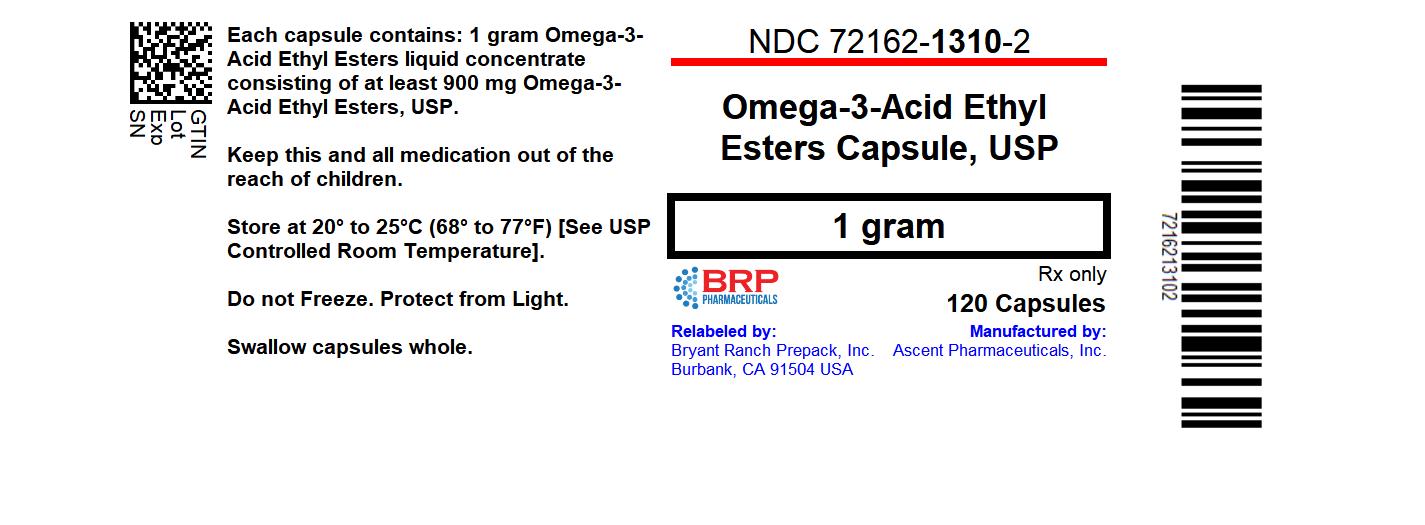
Omega-3-acid ethyl esters 1 g Capsule, Liquid Filled, 120-count — NDC 72162-1310-2 (Billing 72162-1310-02)
This is a package of 120 capsules of Omega-3-acid ethyl esters 1 g Capsule, Liquid Filled from Bryant Ranch Prepack, marketed since Feb 2019 and currently FDA-listed. It is this product's only package size.
NDC database record
One package, one record: these facts belong to NDC 72162-1310-2 alone.
- Record
- FDA NDC Directory package listing · Human prescription drug
- Code segments
- 72162 labeler · 1310 product · 2 package
- Package marketed since
- Oct 6, 2023
- Sample package
- No — commercial package
- Listing certified through
- Dec 31, 2026
- Billing quantity
- 120 EA per package
- Barcode (UPC-A, from the NDC)
- 3 7216213102 2
- FDA record last changed
- Jul 24, 2026
Other active recalls for Omega-3-acid Ethyl Esters (different manufacturers) — 1 · tap to view
Identity & classification
Regulatory identifiers FDA, NLM and CMS codes for this package
Drug-database identifiers Medi-Span GPI and First Databank GCN / HICL / AHFS classification
- GSN (GCN sequence number): 058486
- GCN: 23929
- HICL (First Databank): 026793
- AHFS class code: 24:06.12.00
- RxCUI (RxNorm): 577208
Where does this data come from?
- FDA openFDA NDC Directory · synced Oct 8, 2026
- FDA label on DailyMed · label index refreshed Oct 8, 2026
- RxNorm (NLM RxNav) · catalog refreshed Oct 8, 2026
- Medi-Span GPI (licensed)
- First Databank (licensed) · refreshed Oct 8, 2026
Clinical
Omega-3 fatty acids are used together with lifestyle changes (diet, weight-loss, exercise) to reduce the amount of triglycerides (a fat-like substance) in the blood in people with very high triglycerides. Omega-3 fatty acids are in a class of medications called antilipemic or lipid-regulating agents. Omega-3 fatty acids may work by decreasing the amount of triglycerides and other fats made in the liver.
Read the full MedlinePlus article ↗- This medication is specifically approved for adults with severely high triglyceride levels — 500 mg/dL or above. It's a prescription-strength omega-3 fatty acid, quite different fr...
- What exactly is this medication for? My doctor said my triglycerides were very high.
- Prescription omega-3-acid ethyl esters like Lovaza are not the same as over-the-counter fish oil. They contain standardized, concentrated amounts of EPA and DHA and have been teste...
- Can I just take regular fish oil from the store instead?
Patient education
Supplement & herbal interactions
Where does this data come from?
- MedlinePlus (NLM) · refreshed Oct 8, 2026
- FDA label on DailyMed · label index refreshed Oct 8, 2026
Ask a licensed pharmacist directly — free, answered by our team.
Pricing
A drug doesn't have one price. Each row is a different public payment system, and none is what you'd pay at the counter — that depends on your insurance. The ⓘ on each row explains what it measures.
| Price system | Per mL | Per package |
|---|---|---|
| Retail pharmacies payNADAC · weekly | Not in the retail survey — common for institutional, discontinued, or low-volume packs. | |
| Medicaid paysCMS SDUD · 12 mo | No recent Medicaid claims on file for this NDC — rare and low-volume NDCs are suppressed in the public data. | |
| Medicare drug plans payPart D · Q2 2026 | $0.2792 | — |
Where does this data come from?
- CMS NADAC weekly file
- CMS ASP pricing files · refreshed Sep 20, 2026
- CMS Medicaid State Drug Utilization Data · refreshed Oct 9, 2026
- CMS Part D plan pricing files · refreshed Sep 24, 2026
- VA National Acquisition Center price file
Packaging — all sizes for this product
| Package NDC | Description | Marketing start | Marketing end | Status |
|---|---|---|---|---|
| 72162-1310-02 You're viewing this Main listing | 120 CAPSULE, LIQUID FILLED in 1 BOTTLE | 2023-10-06 | — | Active |
Therapeutic equivalents
| Product | Labeler | Pack | NADAC/unit | TE | Status | Price vs. this |
|---|---|---|---|---|---|---|
| Omega-3-Acid Ethyl Esters 1 g 00904-7495-06 | Major | 1 capsule | $0.171 | AB | Availability likely | — |
| Omega-3-Acid Ethyl Esters 1 g 24658-0350-12 | PURACAP | 120 capsules | $0.171 | AB | Availability likely | — |
| Omega-3-Acid Ethyl Esters 1 g 42806-0552-12 | EPIC | 120 capsules | $0.171 | AB | Availability likely | — |
| omega-3-acid ethyl esters 900 mg 60687-0846-65 | American | 50 capsules | $0.171 | AB | Availability likely | — |
| omega-3-acid ethyl esters 900 mg 62135-0780-12 | Chartwell | 120 capsules | $0.171 | — | Availability likely | — |
| Omega-3-Acid Ethyl Esters 1 g 70756-0423-22 | Lifestar | 120 capsules | $0.171 | AB | Availability likely | — |
| Omega-3-acid ethyl esters 900 mg 00254-3010-08 | Par | 120 capsules | — | AB | FDA listed | — |
| Omega-3-Acid Ethyl Esters 1 g 00615-8550-39 | NCS | 30 capsules | — | AB | FDA listed | — |
| Omega-3-acid ethyl esters 1 g 31722-0936-05 | Camber | 500 capsules | — | AB | FDA listed | — |
| Omega-3-acid ethyl esters 1 g 50090-5799-00 | A-S | 120 capsules | — | AB | FDA listed | — |
| Omega-3-acid ethyl esters 1 g 50090-5800-02 | A-S | 1440 capsules | — | AB | FDA listed | — |
| Omega-3-Acid Ethyl Esters 1 g 50090-6691-00 | A-S | 120 capsules | — | AB | FDA listed | — |
| Omega-3-Acid Ethyl Esters 1 g 50090-6692-00 | A-S | 120 capsules | — | AB | FDA listed | — |
| Omega-3-acid ethyl esters 1 g 50090-6822-00 | A-S | 120 capsules | — | AB | FDA listed | — |
| Omega-3-Acid Ethyl Esters 1 g 51407-0763-12 | Golden | 120 capsules | — | AB | FDA listed | — |
| Omega-3-acid ethyl esters 1 g 63629-1918-01 | Bryant | 120 capsules | — | AB | FDA listed | — |
| omega-3-acid ethyl esters 900 mg 64380-0761-02 | Strides | 50 capsules | — | AB | FDA listed | — |
| Omega-3-Acid Ethyl Esters 1 g 65162-0034-06 | Amneal | 60 capsules | — | — | Discontinued | — |
| Omega-3-Acid Ethyl Ester 900 mg 69452-0175-17 | Bionpharma | 60 capsules | — | AB | FDA listed | — |
| Omega-3-Acid Ethyl Esters 1 g 70518-3040-00 | REMEDYREPACK | 180 capsules | — | AB | FDA listed | — |
| Omega-3-Acid Ethyl Esters 1 g 71335-2024-01 | Bryant | 90 capsules | — | AB | FDA listed | — |
| Omega-3-acid ethyl esters 1 gthis 72162-1310-02 | Bryant | 120 capsules | — | AB | FDA listed | — |
| Omega-3-acid ethyl esters 1 g 72865-0139-05 | XLCare | 500 capsules | — | AB | FDA listed | — |
| Omega-3-Acid Ethyl Esters 1 g 72998-0850-12 | KD | 120 capsules | — | AB | FDA listed | — |
| Omega-3-Acid Ethyl Esters 1 g 72998-0851-12 | KD | 120 capsules | — | AB | FDA listed | — |
| Lovaza 1 g 80725-0420-12 | Waylis | 120 capsules | — | AB | Discontinued | — |
| Omega-3-acid ethyl esters 1 g 70518-4744-00 | REMEDYREPACK | 180 capsules | — | AB | FDA listed | — |
Where does this data come from?
- FDA openFDA NDC Directory · synced Oct 8, 2026
- FDA Orange Book · refreshed Oct 3, 2026
- CMS NADAC weekly file
Availability & generic status
This product is an FDA-approved generic. Other versions of the same drug are listed under Therapeutic equivalents, least expensive first.
Where does this data come from?
- FDA Orange Book · refreshed Oct 3, 2026
What it looks like
Where does this data come from?
- FDA label on DailyMed · label index refreshed Oct 8, 2026
Inactive Ingredients / Excipients
Inactive ingredients, also called excipients, are components of the drug product other than the active ingredient. They may include fillers, dyes, coatings, preservatives, flavors, or other formulation ingredients.
🧪 Avoiding an ingredient? See Omega-3-Acid Ethyl Esters inactive ingredients by manufacturer: every current product's list side by side, so you can ask your pharmacy for the version that does not list it.
💡 Tap an ingredient (hover on desktop) to see what it is and why it’s used.
-
UNII H4N855PNZ1
Alpha-tocopherol is a form of vitamin E, a fat-soluble antioxidant derived from natural or synthetic sources. In medicines, it prevents oils and fats from breaking down and becoming rancid, protecting the product's stability and shelf life.
-
UNII 2G86QN327L
Gelatin is a protein derived from animal collagen, commonly used in medicines as a gelling agent and capsule material. It helps create soft or hard capsule shells that hold and release medication, and can also thicken liquid formulations.
-
UNII PDC6A3C0OX
Glycerin is a clear, thick liquid derived from plant oils or fats. It acts as a humectant to retain moisture, a sweetener, and a solvent in medications.
-
UNII 3NXW29V3WO
Hypromellose is a plant-based thickener made from cellulose. It's used in medicines as a binder to hold ingredients together, a coating for tablets, and a thickener for liquids.
-
UNII 6DC9Q167V3
Propylene glycol is a clear liquid derived from petroleum or vegetable sources. It acts as a solvent, humectant, and preservative in medicines, helping dissolve active ingredients and maintain product stability.
-
UNII 241ATL177A
Soybean oil is a natural plant oil derived from soybean seeds. It's used in medicines as a solvent and carrier to help dissolve or suspend active ingredients and improve how the body absorbs them.
-
UNII 15FIX9V2JP
Titanium dioxide is a bright white mineral powder commonly used as a colorant and opacifying agent. It makes pills and tablets white or lighter in color and helps make coatings non-transparent.
-
UNII 059QF0KO0R
Water is a liquid solvent that dissolves and mixes ingredients together in liquid medicines, syrups, and injections. It helps distribute the active drug evenly throughout the product.
8 inactive ingredients listed in the exact product block matched to this NDC.
Where does this data come from?
ingredient classCode="IACT" elements from the exact product block matched by this NDC. Label-section narrative from DailyMed / the openFDA label index is shown separately when available.- FDA label on DailyMed · label index refreshed Oct 8, 2026
- FDA openFDA NDC Directory · synced Oct 8, 2026
Inactive ingredient FAQ
Are inactive ingredients the same for every manufacturer?
Why might an inactive ingredient be missing?
Can inactive ingredients matter?
Manufacturer & labeler
More NDCs from Bryant Ranch Prepack labeler code 72162
- Metformin Hydrochloride 750 mg Tablet, Extended Release NDC 72162-1293-1
- Dutasteride .5 mg Capsule, Liquid Filled NDC 72162-1296-3
- Indomethacin 25 mg Capsule NDC 72162-1299-0
- Indomethacin 50 mg Capsule NDC 72162-1300-1
- Indomethacin 75 mg Capsule, Extended Release NDC 72162-1302-6
- Methylphenidate Hydrochloride 10 mg Tablet, Chewable NDC 72162-1306-1
- Benzonatate 200 mg Capsule NDC 72162-1316-1
- Gabapentin 250 mg/5mL Solution NDC 72162-1318-4
- Ciclopirox 80 mg/mL Solution NDC 72162-1321-2
- Phenobarbital Sodium 65 mg/mL Injection NDC 72162-1329-2
- Phenobarbital Sodium 130 mg/mL Injection NDC 72162-1330-2
- Ribavirin 6 g Powder, For Solution NDC 72162-1331-2
Where does this data come from?
- FDA openFDA NDC Directory · synced Oct 8, 2026
- Drugs@FDA
Full prescribing information FDA SPL
🎯 Indications and Usage ▾
1 INDICATIONS AND USAGE Omega-3-acid ethyl esters capsules are indicated as an adjunct to diet to reduce triglyceride (TG) levels in adult patients with severe (greater than or equal to 500 mg/dL) hypertriglyceridemia. Usage Considerations: Patients should be placed on an appropriate lipid-lowering diet before receiving omega-3-acid ethyl esters and should continue this diet during treatment with omega-3-acid ethyl esters capsules. Laboratory studies should be done to ascertain that the lipid levels are consistently abnormal before instituting therapy with omega-3-acid ethyl esters.
Every attempt should be made to control serum lipids with appropriate diet, exercise, weight loss in obese patients, and control of any medical problems such as diabetes mellitus and hypothyroidism that are contributing to the lipid abnormalities. Medications known to exacerbate hypertriglyceridemia (such as beta blockers, thiazides, estrogens) should be discontinued or changed, if possible, prior to consideration of TG-lowering drug therapy. Limitations of Use: The effect of omega-3-acid ethyl esters capsules on the risk for pancreatitis has not been determined.
The effect of omega-3-acid ethyl esters on cardiovascular mortality and morbidity has not been determined. Omega-3-acid ethyl esters capsules are a combination of ethyl esters of omega 3 fatty acids, principally eicosapentaenoic acid (EPA) and docosahexaenoic acid (DHA), indicated as an adjunct to diet to reduce triglyceride (TG) levels in adult patients with severe (≥500 mg/dL) hypertriglyceridemia. (1) Limitations of Use: The effect of omega-3-acid ethyl esters on the risk for pancreatitis has not been determined.
(1) The effect of omega-3-acid ethyl esters on cardiovascular mortality and morbidity has not been determined. (1)
⏱️ Dosage and Administration ▾
2 DOSAGE AND ADMINISTRATION Assess TG levels carefully before initiating therapy. Identify other causes (e.g., diabetes mellitus, hypothyroidism, medications) of high TG levels and manage as appropriate [see Indications and Usage (1)] . Patients should be placed on an appropriate lipid-lowering diet before receiving omega-3-acid ethyl esters capsules, and should continue this diet during treatment with omega-3-acid ethyl esters.
In clinical studies, omega-3-acid ethyl esters capsules was administered with meals. The daily dose of omega-3-acid ethyl esters capsules is 4 grams per day. The daily dose may be taken as a single 4-gram dose (4 capsules) or as two 2-gram doses (2 capsules given twice daily).
Patients should be advised to swallow omega-3-acid ethyl esters capsules whole. Do not break open, crush, dissolve, or chew omega-3-acid ethyl esters capsules. The daily dose of omega-3-acid ethyl esters capsules is 4 grams per day taken as a single 4-gram dose (4 capsules) or as two 2-gram doses (2 capsules given twice daily).
(2) Patients should be advised to swallow omega-3-acid ethyl esters capsules whole. Do not break open, crush, dissolve, or chew omega-3-acid ethyl esters capsules. (2)
💊 Dosage Forms and Strengths ▾
3 DOSAGE FORMS AND STRENGTHS Omega-3-acid ethyl esters capsules, USP are supplied as 1 gram clear, transparent oblong capsules containing clear to light yellow colored solution imprinted with ‘AT 132’ with white ink. Capsules: 1 gram
⛔ Contraindications ▾
4 CONTRAINDICATIONS Omega-3-acid ethyl esters capsules are contraindicated in patients with known hypersensitivity (e.g., anaphylactic reaction) to omega-3-acid ethyl esters or any of its components. Omega-3-acid ethyl esters capsules are contraindicated in patients with known hypersensitivity (e.g., anaphylactic reaction) to omega-3-acid ethyl esters or any of its components.
⚠️ Warnings and Cautions ▾
5 WARNINGS AND PRECAUTIONS In patients with hepatic impairment, monitor ALT and AST levels periodically during therapy. (5.1) Omega-3-acid ethyl esters capsules may increase levels of low-density lipoprotein (LDL). Monitor LDL levels periodically during therapy.
(5.1) Use with caution in patients with known hypersensitivity to fish and/or shellfish. (5.2) There is a possible association between omega-3-acid ethyl esters and more frequent recurrences of symptomatic atrial fibrillation or flutter in patients with paroxysmal or persistent atrial fibrillation, particularly within the first months of initiating therapy. (5.3)
5.1Monitoring: Laboratory Tests In patients with hepatic impairment, alanine aminotransferase (ALT) and aspartate aminotransferase (AST) levels should be monitored periodically during therapy with omega-3-acid ethyl esters capsules. In some patients, increases in ALT levels without a concurrent increase in AST levels were observed. In some patients, omega-3-acid ethyl esters increases low-density lipoprotein cholesterol (LDL-C) levels.
LDL-C levels should be monitored periodically during therapy with omega-3-acid ethyl esters. Laboratory studies should be performed periodically to measure the patient’s TG levels during therapy with omega-3-acid ethyl esters.
5.2Fish Allergy Omega-3-acid ethyl esters contains ethyl esters of omega-3 fatty acids (EPA and DHA) obtained from the oil of several fish sources. It is not known whether patients with allergies to fish and/or shellfish, are at increased risk of an allergic reaction to omega-3-acid ethyl esters. Omega-3-acid ethyl esters should be used with caution in patients with known hypersensitivity to fish and/or shellfish.
5.3Recurrent Atrial Fibrillation (AF) or Flutter In a double-blind, placebo-controlled trial of 663 subjects with symptomatic paroxysmal AF (n = 542) or persistent AF (n = 121), recurrent AF or flutter was observed in subjects randomized to omega-3-acid ethyl esters who received 8 grams/day for 7 days and 4 grams/day thereafter for 23 weeks at a higher rate relative to placebo. Subjects in this trial had median baseline TG levels of 127 mg/dL, had no substantial structural heart disease, were taking no anti-arrhythmic therapy (rate control permitted), and were in normal sinus rhythm at baseline.
At 24 weeks, in the paroxysmal AF stratum, there were 129 (47%) first recurrent symptomatic AF or flutter events on placebo and 141 (53%) on omega-3-acid ethyl esters (primary endpoint, HR: 1.19; 95% CI: 0.93, 1.35). In the persistent AF stratum, there were 19 (35%) events on placebo and 34 (52%) events on omega-3-acid ethyl esters (HR: 1.63; 95% CI: 0.91, 2.18). For both strata combined, the HR was 1.25; 95% CI: 1.00, 1.40.
Although the clinical significance of these results is uncertain, there is a possible association between omega-3-acid ethyl esters and more frequent recurrences of symptomatic AF or flutter in patients with paroxysmal or persistent AF, particularly within the first 2 to 3 months of initiating therapy. Omega-3-acid ethyl esters capsules are not indicated for the treatment of AF or flutter.
🤒 Adverse Reactions ▾
6 ADVERSE REACTIONS The most common adverse reactions (incidence >3% and greater than placebo) were eructation, dyspepsia, and taste perversion. To report SUSPECTED ADVERSE REACTIONS, contact Camber Pharmaceuticals Inc., at 1-866-495-8330 or FDA at 1-800-FDA-1088 or www.fda.gov/medwatch.
6.1Clinical Trials Experience Because clinical trials are conducted under widely varying conditions, adverse reaction rates observed in the clinical trials of a drug cannot be directly compared with rates in the clinical trials of another drug and may not reflect the rates observed in practice. Adverse reactions reported in at least 3% of subjects treated with omega-3-acid ethyl esters and at a greater rate than placebo based on pooled data across 23 clinical trials are listed in Table 1. Table 1.
Adverse Reactions Occurring at Incidence ≥ 3% and Greater than Placebo in Clinical Trials of Omega-3-acid ethyl esters capsules Adverse Reactions a Omega-3-acid ethyl esters (n = 655) Placebo (n = 370) n % n % Eructation 29 4 5 1 Dyspepsia 22 3 6 2 Taste perversion 27 4 1 <1 a Trials included subjects with hypertriglyceridemia and severe hypertriglyceridemia. Additional adverse reactions from clinical trials are listed below: Digestive System Constipation, gastrointestinal disorder, and vomiting. Metabolic and Nutritional Disorders Increased ALT and increased AST.
Skin Pruritus and rash.
6.2Postmarketing Experience In addition to adverse reactions reported from clinical trials, the events described below have been identified during post-approval use of omega-3-acid ethyl esters capsules. Because these events are reported voluntarily from a population of unknown size, it is not possible to reliably estimate their frequency or to always establish a causal relationship to drug exposure. The following events have been reported: anaphylactic reaction, hemorrhagic diathesis, urticaria.
🔄 Drug Interactions ▾
7 DRUG INTERACTIONS Omega-3-acids may prolong bleeding time. Patients taking omega-3-acid ethyl esters capsules and an anticoagulant or other drug affecting coagulation (e.g., anti-platelet agents) should be monitored periodically. (7.1)
7.1Anticoagulants or Other Drugs Affecting Coagulation Some trials with omega-3-acids demonstrated prolongation of bleeding time. The prolongation of bleeding time reported in these trials has not exceeded normal limits and did not produce clinically significant bleeding episodes. Clinical trials have not been done to thoroughly examine the effect of omega-3-acid ethyl esters and concomitant anticoagulants.
Patients receiving treatment with omega-3-acid ethyl esters and an anticoagulant or other drug affecting coagulation (e.g., anti-platelet agents) should be monitored periodically.
👥 Use in Specific Populations ▾
8 USE IN SPECIFIC POPULATIONS
8.1Pregnancy Risk Summary The available data from published case reports and the pharmacovigilance database on the use of omega-3-acid ethyl esters in pregnant women are insufficient to identify a drug-associated risk for major birth defects, miscarriage, or adverse maternal or fetal outcomes. In animal studies, omega-3-acid ethyl esters given orally to female rats prior to mating through lactation did not have adverse effects on reproduction or development when given at doses 5 times the maximum recommended human dose (MRHD) of 4 grams/day, based on a body surface area comparison.
Omega-3-acid ethyl esters given orally to rats and rabbits during organogenesis was not teratogenic at clinically relevant exposures, based on body surface area comparison (see Data). The estimated background risk of major birth defects and miscarriage for the indicated population is unknown. In the U.S. general population, the estimated background risk of major birth defects and miscarriage in clinically recognized pregnancies is 2% to 4% and 15% to 20%, respectively.
Data Animal Data: In female rats given oral doses of omega-3-acid ethyl esters (100, 600, or 2,000 mg/kg/day) beginning 2 weeks prior to mating through lactation, no adverse effects were observed at 2,000 mg/kg/day (5 times the MRHD based on body surface area [mg/m 2 ]). In a dose-ranging study, female rats given oral doses of omega-3-acid ethyl esters (1,000, 3,000, or 6,000 mg/kg/day) beginning 2 weeks prior to mating through Postpartum Day 7 had decreased live births (20% reduction) and pup survival to Postnatal Day 4 (40% reduction) at or greater than 3,000 mg/kg/day in the absence of maternal toxicity at 3,000 mg/kg/day (7 times the MRHD based on body surface area [mg/m 2 ]).
In pregnant rats given oral doses of omega-3-acid ethyl esters (1,000, 3,000, or 6,000 mg/kg/day) during organogenesis, no adverse effects were observed in fetuses at a maternally toxic dose (increased food consumption) of 6,000 mg/kg/day (14 times the MRHD based on body surface area [mg/m 2 ]). In pregnant rats given oral doses of omega-3-acid ethyl esters (100, 600, or 2,000 mg/kg/day) from Gestation Day 14 through Lactation Day 21, no adverse effects were observed at 2,000 mg/kg/day (5 times the MRHD based on body surface area [mg/m 2 ]).
In pregnant rabbits given oral doses of omega-3-acid ethyl esters (375, 750, or 1,500 mg/kg/day) during organogenesis, no adverse effects were observed in fetuses given 375 mg/kg/day (2 times the MRHD based on body surface area [mg/m 2 ]). However, at higher doses, increases in fetal skeletal variations and reduced fetal growth were evident at maternally toxic doses (reduced food consumption and body weight gain) greater than or equal to 750 mg/kg/day (4 times the MRHD), and embryolethality was evident at 1,500 mg/kg/day (7 times the MRHD).
8.2Lactation Risk Summary Published studies have detected omega-3 fatty acids, including EPA and DHA, in human milk. Lactating women receiving oral omega-3 fatty acids for supplementation have resulted in higher levels of omega-3 fatty acids in human milk. There are no data available on the effects of omega-3 fatty acid ethyl esters on the breastfed infant or on milk production.
The developmental and health benefits of breastfeeding should be considered along with the mother’s clinical need for omega-3-acid ethyl esters and any potential adverse effects on the breastfed child from omega-3-acid ethyl esters or from the underlying maternal condition.
8.4Pediatric Use Safety and effectiveness in pediatric patients have not been established.
8.5Geriatric Use A limited number of subjects older than 65 years were enrolled in the clinical trials of omega-3-acid ethyl esters. Safety and efficacy findings in subjects older than 60 years did not appear to differ from those of subjects younger than 60 years.
🤰 Pregnancy ▾
8.1Pregnancy Risk Summary The available data from published case reports and the pharmacovigilance database on the use of omega-3-acid ethyl esters in pregnant women are insufficient to identify a drug-associated risk for major birth defects, miscarriage, or adverse maternal or fetal outcomes. In animal studies, omega-3-acid ethyl esters given orally to female rats prior to mating through lactation did not have adverse effects on reproduction or development when given at doses 5 times the maximum recommended human dose (MRHD) of 4 grams/day, based on a body surface area comparison.
Omega-3-acid ethyl esters given orally to rats and rabbits during organogenesis was not teratogenic at clinically relevant exposures, based on body surface area comparison (see Data). The estimated background risk of major birth defects and miscarriage for the indicated population is unknown. In the U.S. general population, the estimated background risk of major birth defects and miscarriage in clinically recognized pregnancies is 2% to 4% and 15% to 20%, respectively.
Data Animal Data: In female rats given oral doses of omega-3-acid ethyl esters (100, 600, or 2,000 mg/kg/day) beginning 2 weeks prior to mating through lactation, no adverse effects were observed at 2,000 mg/kg/day (5 times the MRHD based on body surface area [mg/m 2 ]). In a dose-ranging study, female rats given oral doses of omega-3-acid ethyl esters (1,000, 3,000, or 6,000 mg/kg/day) beginning 2 weeks prior to mating through Postpartum Day 7 had decreased live births (20% reduction) and pup survival to Postnatal Day 4 (40% reduction) at or greater than 3,000 mg/kg/day in the absence of maternal toxicity at 3,000 mg/kg/day (7 times the MRHD based on body surface area [mg/m 2 ]).
In pregnant rats given oral doses of omega-3-acid ethyl esters (1,000, 3,000, or 6,000 mg/kg/day) during organogenesis, no adverse effects were observed in fetuses at a maternally toxic dose (increased food consumption) of 6,000 mg/kg/day (14 times the MRHD based on body surface area [mg/m 2 ]). In pregnant rats given oral doses of omega-3-acid ethyl esters (100, 600, or 2,000 mg/kg/day) from Gestation Day 14 through Lactation Day 21, no adverse effects were observed at 2,000 mg/kg/day (5 times the MRHD based on body surface area [mg/m 2 ]).
In pregnant rabbits given oral doses of omega-3-acid ethyl esters (375, 750, or 1,500 mg/kg/day) during organogenesis, no adverse effects were observed in fetuses given 375 mg/kg/day (2 times the MRHD based on body surface area [mg/m 2 ]). However, at higher doses, increases in fetal skeletal variations and reduced fetal growth were evident at maternally toxic doses (reduced food consumption and body weight gain) greater than or equal to 750 mg/kg/day (4 times the MRHD), and embryolethality was evident at 1,500 mg/kg/day (7 times the MRHD).
🧒 Pediatric Use ▾
8.4Pediatric Use Safety and effectiveness in pediatric patients have not been established.
🧓 Geriatric Use ▾
8.5Geriatric Use A limited number of subjects older than 65 years were enrolled in the clinical trials of omega-3-acid ethyl esters. Safety and efficacy findings in subjects older than 60 years did not appear to differ from those of subjects younger than 60 years.
🧬 Clinical Pharmacology ▾
12 CLINICAL PHARMACOLOGY
12.1Mechanism of Action The mechanism of action of omega-3-acid ethyl esters is not completely understood. Potential mechanisms of action include inhibition of acyl-CoA:1,2-diacylglycerol acyltransferase, increased mitochondrial and peroxisomal β-oxidation in the liver, decreased lipogenesis in the liver, and increased plasma lipoprotein lipase activity. Omega-3-acid ethyl esters may reduce the synthesis of TG in the liver because EPA and DHA are poor substrates for the enzymes responsible for TG synthesis, and EPA and DHA inhibit esterification of other fatty acids.
12.3Pharmacokinetics Absorption In healthy volunteers and in subjects with hypertriglyceridemia, EPA and DHA were absorbed when administered as ethyl esters orally. Omega-3-acids administered as ethyl esters induced significant dose-dependent increases in serum phospholipid EPA content, though increases in DHA content were less marked and not dose-dependent when administered as ethyl esters. Specific Populations Age: Uptake of EPA and DHA into serum phospholipids in subjects treated with omega-3-acid ethyl esters was independent of age (younger than 49 years versus 49 years and older).
Male and Female Patients: Females tended to have more uptake of EPA into serum phospholipids than males. The clinical significance of this is unknown. Pediatric Patients: Pharmacokinetics of omega-3-acid ethyl esters have not been studied.
Patients with Renal or Hepatic Impairment: Omega-3-acid ethyl esters has not been studied in patients with renal or hepatic impairment. Drug Interaction Studies Simvastatin: In a 14-day trial of 24 healthy adult subjects, daily coadministration of simvastatin 80 mg with omega-3-acid ethyl esters 4 grams did not affect the extent (AUC) or rate (C max ) of exposure to simvastatin or the major active metabolite, beta-hydroxy simvastatin, at steady state. Atorvastatin: In a 14-day trial of 50 healthy adult subjects, daily coadministration of atorvastatin 80 mg with omega-3-acid ethyl esters 4 grams did not affect AUC or C max of exposure to atorvastatin, 2-hydroxyatorvastatin, or 4-hydroxyatorvastatin at steady state.
Rosuvastatin: In a 14-day trial of 48 healthy adult subjects, daily coadministration of rosuvastatin 40 mg with omega-3-acid ethyl esters 4 grams did not affect AUC or C max of exposure to rosuvastatin at steady state. In vitro studies using human liver microsomes indicated that clinically significant cytochrome P450-mediated inhibition by EPA/DHA combinations are not expected in humans.
🧬 Mechanism of Action ▾
12.1Mechanism of Action The mechanism of action of omega-3-acid ethyl esters is not completely understood. Potential mechanisms of action include inhibition of acyl-CoA:1,2-diacylglycerol acyltransferase, increased mitochondrial and peroxisomal β-oxidation in the liver, decreased lipogenesis in the liver, and increased plasma lipoprotein lipase activity. Omega-3-acid ethyl esters may reduce the synthesis of TG in the liver because EPA and DHA are poor substrates for the enzymes responsible for TG synthesis, and EPA and DHA inhibit esterification of other fatty acids.
📦 How Supplied / Storage and Handling ▾
16 HOW SUPPLIED/STORAGE AND HANDLING Omega-3-acid ethyl esters capsules, USP are supplied as 1 gram clear, transparent oblong capsules containing clear to light yellow colored solution imprinted with ‘AT 132’ with white ink. NDC: 72162-1310-2: 120 Capsules in a BOTTLE Store at 20° to 25°C (68° to 77°F) [see USP Controlled Room Temperature]. Do not freeze.
Protect from light. Keep out of reach of children. Repackaged/Relabeled by: Bryant Ranch Prepack, Inc.
Burbank, CA 91504
📋 Description ▾
11 DESCRIPTION Omega-3-acid ethyl esters, USP, a lipid-regulating agent, is supplied as a liquid-filled gel capsule for oral administration. Each 1-gram capsule of omega-3-acid ethyl esters contains at least 900 mg of the ethyl esters of omega-3 fatty acids sourced from fish oils. These are predominantly a combination of ethyl esters of eicosapentaenoic acid (EPA - approximately 465 mg) and docosahexaenoic acid (DHA - approximately 375 mg).
The empirical formula of EPA ethyl ester is C 22 H 34 O 2 , and the molecular weight of EPA ethyl ester is 330.51. The structural formula of EPA ethyl ester is: The empirical formula of DHA ethyl ester is C 24 H 36 O 2 , and the molecular weight of DHA ethyl ester is 356.55. The structural formula of DHA ethyl ester is: Omega-3-acid ethyl esters capsules, USP also contain the following inactive ingredients: gelatin, glycerin, 4.4 mg α-tocopherol, soybean oil and purified water.
The capsules are printed with white imprinting ink containing titanium dioxide, hypromellose 2910 and propylene glycol.
💬 Information for Patients ▾
17 PATIENT COUNSELING INFORMATION Advise the patient to read the FDA-approved patient labeling (Patient Information). Information for Patients Omega-3-acid ethyl esters should be used with caution in patients with known sensitivity or allergy to fish and/or shellfish [see Warnings and Precautions (5.2)] . Advise patients that use of lipid-regulating agents does not reduce the importance of adhering to diet [see Dosage and Administration (2)] .
Advise patients not to alter omega-3-acid ethyl esters capsules in any way and to ingest intact capsules only [see Dosage and Administration (2)] . Instruct patients to take omega-3-acid ethyl esters as prescribed. If a dose is missed, advise patients to take it as soon as they remember.
However, if they miss one day of omega-3-acid ethyl esters, they should not double the dose when they take it. Manufactured by: Ascent Pharmaceuticals, Inc. Central Islip, NY 11722 Manufactured for: Camber Pharmaceuticals, Inc.
Piscataway, NJ 08854 Rev: 05/21
🍼 Nursing Mothers ▾
8.2Lactation Risk Summary Published studies have detected omega-3 fatty acids, including EPA and DHA, in human milk. Lactating women receiving oral omega-3 fatty acids for supplementation have resulted in higher levels of omega-3 fatty acids in human milk. There are no data available on the effects of omega-3 fatty acid ethyl esters on the breastfed infant or on milk production.
The developmental and health benefits of breastfeeding should be considered along with the mother’s clinical need for omega-3-acid ethyl esters and any potential adverse effects on the breastfed child from omega-3-acid ethyl esters or from the underlying maternal condition.
🧬 Pharmacokinetics ▾
12.3Pharmacokinetics Absorption In healthy volunteers and in subjects with hypertriglyceridemia, EPA and DHA were absorbed when administered as ethyl esters orally. Omega-3-acids administered as ethyl esters induced significant dose-dependent increases in serum phospholipid EPA content, though increases in DHA content were less marked and not dose-dependent when administered as ethyl esters. Specific Populations Age: Uptake of EPA and DHA into serum phospholipids in subjects treated with omega-3-acid ethyl esters was independent of age (younger than 49 years versus 49 years and older).
Male and Female Patients: Females tended to have more uptake of EPA into serum phospholipids than males. The clinical significance of this is unknown. Pediatric Patients: Pharmacokinetics of omega-3-acid ethyl esters have not been studied.
Patients with Renal or Hepatic Impairment: Omega-3-acid ethyl esters has not been studied in patients with renal or hepatic impairment. Drug Interaction Studies Simvastatin: In a 14-day trial of 24 healthy adult subjects, daily coadministration of simvastatin 80 mg with omega-3-acid ethyl esters 4 grams did not affect the extent (AUC) or rate (C max ) of exposure to simvastatin or the major active metabolite, beta-hydroxy simvastatin, at steady state. Atorvastatin: In a 14-day trial of 50 healthy adult subjects, daily coadministration of atorvastatin 80 mg with omega-3-acid ethyl esters 4 grams did not affect AUC or C max of exposure to atorvastatin, 2-hydroxyatorvastatin, or 4-hydroxyatorvastatin at steady state.
Rosuvastatin: In a 14-day trial of 48 healthy adult subjects, daily coadministration of rosuvastatin 40 mg with omega-3-acid ethyl esters 4 grams did not affect AUC or C max of exposure to rosuvastatin at steady state. In vitro studies using human liver microsomes indicated that clinically significant cytochrome P450-mediated inhibition by EPA/DHA combinations are not expected in humans.
🔬 Clinical Studies ▾
14 CLINICAL STUDIES
14.1Severe Hypertriglyceridemia The effects of omega-3-acid ethyl esters 4 grams per day were assessed in 2 randomized, placebo-controlled, double-blind, parallel-group trials of 84 adult subjects (42 on omega-3-acid ethyl esters, 42 on placebo) with very high TG levels. Subjects whose baseline TG levels were between 500 and 2,000 mg/dL were enrolled in these 2 trials of 6 and 16 weeks’ duration. The median TG and LDL-C levels in these subjects were 792 mg/dL and 100 mg/dL, respectively.
Median high-density lipoprotein cholesterol (HDL-C) level was 23.0 mg/dL. The changes in the major lipoprotein lipid parameters for the groups receiving omega-3-acid ethyl esters or placebo are shown in Table 2. Table 2.
Median Baseline and Percent Change from Baseline in Lipid Parameters in Subjects with Severe Hypertriglyceridemia (≥500 mg/dL) BL = Baseline (mg/dL); % Change = Median Percent Change from Baseline; Difference = omega-3-acid ethyl esters Median % Change – Placebo Median % Change. TC = Total cholesterol. VLDL-C = Very-low-density lipoprotein (VLDL) cholesterol.
Omega-3-acid ethyl esters 4 grams per day reduced median TG, VLDL-C, and non-HDL-C levels and increased median HDL-C from baseline relative to placebo. Treatment with omega-3-acid ethyl esters to reduce very high TG levels may result in elevations in LDL-C and non-HDL-C in some individuals. Patients should be monitored to ensure that the LDL-C level does not increase excessively.
The effect of omega-3-acid ethyl esters on the risk of pancreatitis has not been determined. The effect of omega-3-acid ethyl esters on cardiovascular mortality and morbidity has not been determined.
🧪 Nonclinical Toxicology ▾
13 NONCLINICAL TOXICOLOGY
13.1Carcinogenesis, Mutagenesis, Impairment of Fertility In a rat carcinogenicity study with oral gavage doses of 100, 600, and 2,000 mg/kg/day, males were treated with omega-3-acid ethyl esters for 101 weeks and females for 89 weeks without an increased incidence of tumors (up to 5 times human systemic exposures following an oral dose of 4 grams/day based on a body surface area comparison). Standard lifetime carcinogenicity bioassays were not conducted in mice. Omega-3-acid ethyl esters were not mutagenic or clastogenic with or without metabolic activation in the bacterial mutagenesis (Ames) test with Salmonella typhimurium and Escherichia coli or in the chromosomal aberration assay in Chinese hamster V79 lung cells or human lymphocytes.
Omega-3-acid ethyl esters were negative in the in vivo mouse micronucleus assay. In a rat fertility study with oral doses of 100, 600, and 2,000 mg/kg/day, males were treated for 10 weeks prior to mating and females were treated for 2 weeks prior to mating and through lactation. No adverse effect on fertility was observed at 2,000 mg/kg/day (5 times the MRHD of 4 grams/day based on body surface area [mg/m 2 ]).
📄 Carcinogenesis, Mutagenesis, Impairment of Fertility ▾
13.1Carcinogenesis, Mutagenesis, Impairment of Fertility In a rat carcinogenicity study with oral gavage doses of 100, 600, and 2,000 mg/kg/day, males were treated with omega-3-acid ethyl esters for 101 weeks and females for 89 weeks without an increased incidence of tumors (up to 5 times human systemic exposures following an oral dose of 4 grams/day based on a body surface area comparison). Standard lifetime carcinogenicity bioassays were not conducted in mice. Omega-3-acid ethyl esters were not mutagenic or clastogenic with or without metabolic activation in the bacterial mutagenesis (Ames) test with Salmonella typhimurium and Escherichia coli or in the chromosomal aberration assay in Chinese hamster V79 lung cells or human lymphocytes.
Omega-3-acid ethyl esters were negative in the in vivo mouse micronucleus assay. In a rat fertility study with oral doses of 100, 600, and 2,000 mg/kg/day, males were treated for 10 weeks prior to mating and females were treated for 2 weeks prior to mating and through lactation. No adverse effect on fertility was observed at 2,000 mg/kg/day (5 times the MRHD of 4 grams/day based on body surface area [mg/m 2 ]).
📄 Patient Package Insert ▾
PATIENT INFORMATION Omega-3-acid ethyl esters (oh-MAY-ga 3 AS-id eth-il es-ters) Capsules, USP What are omega-3-acid ethyl esters capsules? Omega-3-acid ethyl esters capsules are a prescription medicine used along with a low-fat and low-cholesterol diet to lower very high triglyceride (fat) levels in adults. It is not known if omega-3-acid ethyl esters changes your risk of having inflammation of your pancreas (pancreatitis).
It is not known if omega-3-acid ethyl esters prevents you from having a heart attack or stroke. It is not known if omega-3-acid ethyl esters are safe and effective in children. Who should not take omega-3-acid ethyl esters capsules?
Do not take omega-3-acid ethyl esters capsules if you are allergic to omega-3-acid ethyl esters or any of the ingredients in omega-3-acid ethyl esters capsules. See the end of this leaflet for a complete list of ingredients in omega-3-acid ethyl esters capsules. Before taking omega-3-acid ethyl esters, tell your healthcare provider about all of your medical conditions, including if you: have diabetes. have a low thyroid problem (hypothyroidism). have a liver problem. have a pancreas problem. have a certain heart rhythm problem called atrial fibrillation or flutter. are allergic to fish or shellfish.
It is not known if people who are allergic to fish or shellfish are also allergic to omega-3-acid ethyl esters capsules. are pregnant or plan to become pregnant. It is not known if omega-3-acid ethyl esters will harm your unborn baby. are breastfeeding or plan to breastfeed. Omega-3-acid ethyl esters can pass into your breast milk.
Talk to your healthcare provider about the best way to feed your baby if you take omega-3-acid ethyl esters capsules. Tell your healthcare provider about all the medicines you take, including prescription and over-the-counter medicines, vitamins, and herbal supplements. Omega-3-acid ethyl esters capsules can interact with certain other medicines that you are taking.
Using omega-3-acid ethyl esters capsules with medicines that affect blood clotting (anticoagulants or blood thinners) may cause serious side effects. How should I take omega-3-acid ethyl esters capsules? Take omega-3-acid ethyl esters capsules exactly as your healthcare provider tells you to take it.
You should not take more than 4 capsules of omega-3-acid ethyl esters capsules each day. Either take all 4 capsules at one time or 2 capsules two times a day. Do not change your dose or stop omega-3-acid ethyl esters capsules without talking to your healthcare provider.
Take omega-3-acid ethyl esters capsules with food. Take omega-3-acid ethyl esters capsules whole. Do not break, open, crush, dissolve, or chew omega-3-acid ethyl esters capsules before swallowing.
If you cannot swallow omega-3-acid ethyl esters capsules whole, tell your healthcare provider. You may need a different medicine. If you miss a dose of omega-3-acid ethyl esters capsules, take the missed dose as soon as you remember.
If you miss one day of omega-3-acid ethyl esters capsules, do not double your dose the next time you take it. Your healthcare provider may start you on a cholesterol-lowering diet before giving you omega-3-acid ethyl esters capsules. Stay on this diet while taking omega-3-acid ethyl esters capsules.
Your healthcare provider should do blood tests to check your triglyceride, bad cholesterol (LDL-C), and liver function (ALT and AST) levels while you take omega-3-acid ethyl esters capsules. What are the possible side effects of omega-3-acid ethyl esters capsules? Omega-3-acid ethyl esters capsules may cause serious side effects, including: changes in certain blood tests.
Omega-3-acid ethyl esters may cause an increase in the results of blood tests used to check your liver function and your bad cholesterol levels. increased risk of a heart rhythm problem in people who have a heart rhythm problem. Omega-3-acid ethyl esters may cause an increase in the frequency of a heart rhythm problem (atrial fibrillation or flut… [Excerpted — this section continues on DailyMed.]
📄 Package Label / Principal Display Panel ▾
Omega-3-Acid Ethyl Esters 1 g Cap#120 Label
Medicare Part D spend CMS · PART D · 2026 (Q1)
About this NDC listing & data coverage
What data is (and isn’t) available for this NDC — tap to expand
| NDC identity (package / product / labeler codes) | ✓ Available |
| Labeler | ✓ Available |
| Product & package description | ✓ Available |
| Marketing category & status | ✓ Available |
| Active ingredient / dosage form / route | ✓ Available |
| FDA label (SPL via DailyMed) | ✓ Available |
| Package photos | ✓ Available |
| Inactive ingredients (structured) | ✓ Available |
| NADAC pharmacy acquisition price (CMS) | — Not published for this NDC CMS publishes NADAC only for NDCs reported in its retail-pharmacy survey. |
| Orange Book / therapeutic-equivalence data | ✓ Available |
| HCPCS J-code billing crosswalk | — Not published for this NDC Most self-administered / retail products have no J-code — that is normal. |
| Medicaid utilization (CMS SDUD) | — Not published for this NDC CMS reports utilization only for NDCs with Medicaid claims above its privacy threshold. |