
Ranolazine 1000 mg Tablet, Film Coated, Extended Release, 60-count — NDC 72319-022-02 (Billing 72319-0022-02)
This is a package of 60 tablets of Ranolazine 1000 mg Tablet, Film Coated, Extended Release from i3 Pharmaceuticals, LLC, marketed since Jun 2022 and currently FDA-listed; retail pharmacies pay about $0.2743 per tablet (NADAC). It is this product's only package size.
NDC database record
One package, one record: these facts belong to NDC 72319-022-02 alone.
- Record
- FDA NDC Directory package listing · Human prescription drug
- Code segments
- 72319 labeler · 022 product · 02 package
- Package marketed since
- Jun 15, 2022
- Sample package
- No — commercial package
- Listing certified through
- Dec 31, 2026
- Billing quantity
- 60 EA per package
- Barcode (UPC-A, from the NDC)
- 3 7231902202 9
- Medicaid fills, this package
- 1,770 prescriptions in the last four reported quarters
- FDA record last changed
- Jul 24, 2026
Other active recalls for Ranolazine (different manufacturers) — 2 · tap to view
Identity & classification
Regulatory identifiers FDA, NLM and CMS codes for this package
Drug-database identifiers Medi-Span GPI and First Databank GCN / HICL / AHFS classification
- GSN (GCN sequence number): 062973
- GCN: 98733
- GPI-14 (Medi-Span): 32200040007430
- HICL (First Databank): 033446
- AHFS class code: 24:04.92.00
- RxCUI (RxNorm): 616749
Where does this data come from?
- FDA openFDA NDC Directory · synced Oct 8, 2026
- FDA label on DailyMed · label index refreshed Oct 8, 2026
- RxNorm (NLM RxNav) · catalog refreshed Oct 8, 2026
- Medi-Span GPI (licensed)
- First Databank (licensed) · refreshed Oct 8, 2026
RxNorm drug class
This medicine belongs to the Anti-anginal class.
Where does this data come from?
- RxClass (NLM) · catalog refreshed Oct 8, 2026
Clinical
Ranolazine is used alone or with other medications to treat chronic angina (ongoing chest pain or pressure that is felt when the heart does not get enough oxygen). Ranolazine is in a class of medications called anti-anginals. The exact way that ranolazine works is not known at this time.
Read the full MedlinePlus article ↗- It treats chronic angina, which is recurring chest pain from reduced blood flow to the heart. You can take it along with other heart medicines such as beta-blockers or nitrates. It...
- Take it by mouth twice a day, as your prescriber directs. Extended-release tablets can be taken with or without food and must be swallowed whole. Aspruzyo Sprinkle granules go on a...
- The most common are dizziness, headache, constipation, and nausea. Tell me or your doctor if they bother you. Call right away if you faint, have a pounding or irregular heartbeat,...
- Many medicines interact with it, so always check with me first. Some, like ketoconazole, clarithromycin, rifampin, and St. John’s wort, must not be used at all. Others, like diltia...
Patient education
Supplement & herbal interactions
Some supplements/herbs that may interact with Ranolazine — tap one for details:
Where does this data come from?
- MedlinePlus (NLM) · refreshed Oct 8, 2026
- FDA label on DailyMed · label index refreshed Oct 8, 2026
Ask a licensed pharmacist directly — free, answered by our team.
Pricing
A drug doesn't have one price. Each row is a different public payment system, and none is what you'd pay at the counter — that depends on your insurance. The ⓘ on each row explains what it measures.
| Price system | Per ea | Per package |
|---|---|---|
| Retail pharmacies payNADAC · weekly | $0.274 | $16.46 / 60 tablets |
| Medicaid paysCMS SDUD · 12 mo | $0.4566 | $27.40 / 60 tablets |
| Medicare drug plans payPart D · Q2 2026 | $0.5718 | $34.31 / 60 tablets |
Where does this data come from?
- CMS NADAC weekly file · file of Oct 7, 2026
- CMS ASP pricing files · refreshed Sep 20, 2026
- CMS Medicaid State Drug Utilization Data · through Q1 2026
- CMS Part D plan pricing files · refreshed Sep 24, 2026
- VA National Acquisition Center price file
Packaging — all sizes for this product
| Package NDC | Description | Marketing start | Marketing end | Status |
|---|---|---|---|---|
| 72319-0022-02 You're viewing this Main listing | 60 TABLET, FILM COATED, EXTENDED RELEASE in 1 BOTTLE, PLASTIC | 2022-06-15 | — | Active |
Therapeutic equivalents
| Product | Labeler | Pack | NADAC/unit | TE | Status | Price vs. this |
|---|---|---|---|---|---|---|
| Ranolazine 1000 mg 27241-0126-02 | Ajanta | 60 tablets | $0.274 | AB | Availability likely | — |
| Ranolazine 1000 mg 31722-0669-60 | Camber | 60 tablets | $0.274 | AB | Availability likely | — |
| Ranolazine 1000 mg 50268-0723-13 | AvPAK | 1 tablet | $0.274 | AB | Availability likely | — |
| Ranolazine 1000 mg 69367-0294-60 | Westminster | 60 tablets | $0.274 | AB | Availability likely | — |
| Ranolazine 1000 mg 70756-0704-60 | Lifestar | 60 tablets | $0.274 | AB | Availability likely | — |
| Ranolazine 1000 mgthis 72319-0022-02 | i3 | 60 tablets | $0.274 | AB | Availability likely | — |
| Ranolazine 1000 mg 90096-0152-60 | Zameer | 60 tablets | $0.274 | AB | Availability likely | — |
| Ranolazine 1000 mg 13668-0760-60 | Torrent | 60 tablets | — | AB | FDA listed | — |
| Ranolazine 1000 mg 29300-0297-01 | Unichem | 100 tablets | — | AB | FDA listed | — |
| Ranolazine 1000 mg 42291-0774-60 | AvKARE | 60 tablets | — | AB | FDA listed | — |
| Ranolazine 1000 mg 42571-0325-11 | Micro | 10 tablets | — | — | Discontinued | — |
| Ranolazine 1000 mg 50228-0424-05 | ScieGen | 500 tablets | — | AB | FDA listed | — |
| Ranolazine 1000 mg 59651-0010-18 | Aurobindo | 180 tablets | — | — | FDA listed | — |
| Ranolazine 1000 mg 63304-0018-05 | Sun | 500 tablets | — | — | FDA listed | — |
| Ranolazine 1000 mg 67877-0526-05 | Ascend | 500 tablets | — | AB | FDA listed | — |
| Ranolazine 1000 mg 68462-0320-05 | Glenmark | 500 tablets | — | AB | FDA listed | — |
| Ranolazine 1000 mg 70625-0207-01 | SunGen | 60 tablets | — | AB | FDA listed | — |
| Ranolazine 1000 mg 70771-1500-01 | Zydus | 100 tablets | — | AB | FDA listed | — |
| Ranolazine 1000 mg 71205-0868-00 | Proficient | 100 tablets | — | AB | FDA listed | — |
| Ranolazine 1000 mg 72578-0065-01 | Viona | 100 tablets | — | AB | FDA listed | — |
| Ranolazine 1000 mg 73141-0022-02 | A2A | 60 tablets | — | AB | FDA listed | — |
| Ranolazine 1000 mg 77771-0424-60 | Radha | 60 tablets | — | AB | FDA listed | — |
| Ranolazine 1000 mg 68180-0355-02 | Lupin | 500 tablets | — | AB | FDA listed | — |
| Ranolazine 1000 mg 60290-0056-01 | Umedica | 60 tablets | — | AB | FDA listed | — |
Where does this data come from?
- FDA openFDA NDC Directory · synced Oct 8, 2026
- FDA Orange Book · refreshed Oct 3, 2026
- CMS NADAC weekly file · file of Oct 7, 2026
Availability & generic status
This product is an FDA-approved generic. Other versions of the same drug are listed under Therapeutic equivalents, least expensive first.
Where does this data come from?
- FDA Orange Book · refreshed Oct 3, 2026
What it looks like
Where does this data come from?
- FDA label on DailyMed · label index refreshed Oct 8, 2026
Inactive Ingredients / Excipients
Inactive ingredients, also called excipients, are components of the drug product other than the active ingredient. They may include fillers, dyes, coatings, preservatives, flavors, or other formulation ingredients.
🧪 Avoiding an ingredient? See Ranolazine inactive ingredients by manufacturer: every current product's list side by side, so you can ask your pharmacy for the version that does not list it.
💡 Tap an ingredient (hover on desktop) to see what it is and why it’s used.
-
UNII EX438O2MRT
Ferric oxide yellow is a naturally occurring iron compound used as a colorant in medications. It gives tablets, capsules, and other forms a yellow or golden hue for identification and appearance.
-
UNII 36SFW2JZ0W
Hypromellose 2910 is a plant-based thickening agent derived from cellulose. In medicines, it forms a protective coating on tablets or capsules and controls how quickly the drug dissolves and releases into your body.
-
UNII 0WZ8WG20P6
Hypromellose 2910 is a plant-based cellulose derivative that acts as a thickener, binder, and film-coating agent. It helps control how quickly the medicine dissolves and protects the tablet or capsule from moisture and light.
-
UNII 70097M6I30
Magnesium stearate is a salt made from magnesium and stearic acid, a fatty substance. It's used in tablets and capsules as a lubricant and glidant to help ingredients flow smoothly during manufacturing and prevent sticking.
-
UNII 7CVR7L4A2D
A starch-derived carbohydrate produced by breaking down corn, potato, or tapioca starch. It functions as a filler and binder to give the medicine bulk and texture, and sometimes as a mild sweetener or texture enhancer in powders and tablets.
-
UNII C9H2L21V7U
A fat derived from coconut or palm oil containing shorter fatty acid chains. It serves as a solvent and carrier to help dissolve or suspend active ingredients, improving absorption and stability in liquid formulations.
-
UNII NX76LV5T8J
A synthetic plastic polymer made from methacrylic acid and ethyl acrylate. It's used as a coating or binder to control how and where the medicine dissolves in your digestive system.
-
UNII OP1R32D61U
Microcrystalline cellulose is a purified form of cellulose, a natural fiber from plant sources. It acts as a binder and filler in tablets and capsules, helping hold ingredients together and give the medicine its shape and size.
-
UNII VH2XOU12IE
Polydextrose is a synthetic polymer made from dextrose (sugar) that acts as a bulking agent and filler in medicines. It helps give tablets and capsules proper volume and texture while often adding slight sweetness.
-
UNII 6OZP39ZG8H
Polysorbate 80 is a synthetic emulsifier derived from sorbitol and oleic acid. It helps mix oil and water-based ingredients together in medications and improves how the product disperses in the body.
-
UNII 55X04QC32I
A strong alkaline chemical used to adjust and maintain the pH balance of liquid medicines. It helps keep the medicine stable and ensures it stays effective during storage.
-
UNII 368GB5141J
A detergent and foaming agent derived from coconut or palm oil. In medications, it helps break down and mix oil and water-based ingredients, aids in tablet disintegration, and improves how the drug dissolves and spreads in the mouth or digestive system.
-
UNII 7SEV7J4R1U
A powder made from a naturally occurring mineral. In medicines, talc works as a glidant and anti-caking agent, helping tablets and capsules flow smoothly during manufacturing and preventing clumping.
-
UNII 15FIX9V2JP
Titanium dioxide is a bright white mineral powder commonly used as a colorant and opacifying agent. It makes pills and tablets white or lighter in color and helps make coatings non-transparent.
14 inactive ingredients listed in the exact product block matched to this NDC.
Where does this data come from?
ingredient classCode="IACT" elements from the exact product block matched by this NDC. Label-section narrative from DailyMed / the openFDA label index is shown separately when available.- FDA label on DailyMed · label index refreshed Oct 8, 2026
- FDA openFDA NDC Directory · synced Oct 8, 2026
Inactive ingredient FAQ
Are inactive ingredients the same for every manufacturer?
Why might an inactive ingredient be missing?
Can inactive ingredients matter?
Manufacturer & labeler
More NDCs from i3 Pharmaceuticals, LLC labeler code 72319
- Everolimus .5 mg Tablet NDC 72319-015-02
- Everolimus .75 mg Tablet NDC 72319-016-02
- Everolimus 1 mg Tablet NDC 72319-017-02
- Guanfacine Gaunfacine 1 mg Tablet NDC 72319-018-04
- Guanfacine Gaunfacine 2 mg Tablet NDC 72319-019-04
- Ranolazine 500 mg Tablet, Film Coated, Extended Release NDC 72319-021-02
- Posaconazole 100 mg Tablet, Delayed Release NDC 72319-023-02
- Maraviroc 150 mg Tablet, Film Coated NDC 72319-024-02
- Maraviroc 300 mg Tablet, Film Coated NDC 72319-025-02
- Tranexamic Acid 650 mg Tablet NDC 72319-028-01
- Methscopolamine Bromide 2.5 mg Tablet NDC 72319-029-04
- Methscopolamine Bromide 5 mg Tablet NDC 72319-030-02
Where does this data come from?
- FDA openFDA NDC Directory · synced Oct 8, 2026
- Drugs@FDA
Full prescribing information FDA SPL
🎯 Indications and Usage ▾
1 INDICATIONS AND USAGE Ranolazine Extended-Release Tablets are indicated for the treatment of chronic angina. Ranolazine Extended-Release Tablets may be used with beta-blockers, nitrates, calcium channel blockers, anti- platelet therapy, lipid-lowering therapy, ACE inhibitors, and angiotensin receptor blockers. Ranolazine Extended-Release Tablets is an antianginal indicated for the treatment of chronic angina. ( 1 )
⏱️ Dosage and Administration ▾
2 DOSAGE AND ADMINISTRATION 500 mg twice daily and increase to 1000 mg twice daily, based on clinical symptoms ( 2.1 )
2.1Dosing Information Initiate Ranolazine Extended-Release Tablets dosing at 500 mg twice daily and increase to 1000 mg twice daily, as needed, based on clinical symptoms. Take Ranolazine Extended-Release Tablets with or without meals. Swallow Ranolazine Extended-Release Tablets whole; do not crush, break, or chew.
The maximum recommended daily dose of Ranolazine Extended-Release Tablets is 1000 mg twice daily. If a dose of Ranolazine Extended-Release Tablets is missed, take the prescribed dose at the next scheduled time; do not double the next dose.
2.2Dose Modification Dose adjustments may be needed when Ranolazine Extended-Release Tablets is taken in combination with certain other drugs [see Drug Interactions (7.1) ]. Limit the maximum dose of Ranolazine Extended-Release Tablets to 500 mg twice daily in patients on moderate CYP3A inhibitors such as diltiazem, verapamil, and erythromycin. Use of Ranolazine Extended-Release Tablets with strong CYP3A inhibitors is contraindicated [see Contraindications (4) , Drug Interactions (7.1) ].
Use of P-gp inhibitors, such as cyclosporine, may increase exposure to Ranolazine Extended-Release Tablets. Titrate Ranolazine Extended-Release Tablets based on clinical response [see Drug Interactions (7.1) ].
2.1Dosing Information Initiate Ranolazine Extended-Release Tablets dosing at 500 mg twice daily and increase to 1000 mg twice daily, as needed, based on clinical symptoms. Take Ranolazine Extended-Release Tablets with or without meals. Swallow Ranolazine Extended-Release Tablets whole; do not crush, break, or chew.
The maximum recommended daily dose of Ranolazine Extended-Release Tablets is 1000 mg twice daily. If a dose of Ranolazine Extended-Release Tablets is missed, take the prescribed dose at the next scheduled time; do not double the next dose.
2.2Dose Modification Dose adjustments may be needed when Ranolazine Extended-Release Tablets is taken in combination with certain other drugs [see Drug Interactions (7.1) ]. Limit the maximum dose of Ranolazine Extended-Release Tablets to 500 mg twice daily in patients on moderate CYP3A inhibitors such as diltiazem, verapamil, and erythromycin. Use of Ranolazine Extended-Release Tablets with strong CYP3A inhibitors is contraindicated [see Contraindications (4) , Drug Interactions (7.1) ].
Use of P-gp inhibitors, such as cyclosporine, may increase exposure to Ranolazine Extended-Release Tablets. Titrate Ranolazine Extended-Release Tablets based on clinical response [see Drug Interactions (7.1) ].
💊 Dosage Forms and Strengths ▾
3 DOSAGE FORMS AND STRENGTHS Ranolazine Extended-Release Tablets is supplied as film-coated, oval-shaped, extended-release tablets in the following strengths: • 500 mg tablets are orange, with I3 on one side and 21 on the other side • 1000 mg tablets are yellow, with I3 on one side and 22 on the other side Extended-release tablets: 500 mg, 1000 mg ( 3 )
⛔ Contraindications ▾
4 CONTRAINDICATIONS Ranolazine Extended-Release Tablets is contraindicated in patients: • Taking strong inhibitors of CYP3A [see Drug Interactions ( 7.1 )] • Taking inducers of CYP3A [see Drug Interactions ( 7.1 )] • With liver cirrhosis [see Use in Specific Populations ( 8.6 )] • Strong CYP3A inhibitors (e.g., ketoconazole, clarithromycin, nelfinavir) ( 4 , 7.1 ) • CYP3A inducers (e.g., rifampin, phenobarbital, St. John’s wort) ( 4 , 7.1 ) • Liver cirrhosis ( 4 , 8.6 )
⚠️ Warnings and Cautions ▾
5 WARNINGS AND PRECAUTIONS • QT interval prolongation: Can occur with ranolazine. Little data available on high doses, long exposure, use with QT interval-prolonging drugs, potassium channel variants causing prolonged QT interval, in patients with a family history of (or congenital) long QT syndrome, or in patients with known acquired QT interval prolongation. ( 5.1 ) • Renal failure: Monitor renal function after initiation and periodically in patients with moderate to severe renal impairment (CrCL<60mL/min).
If acute renal failure develops, discontinue Ranolazine Extended-Release Tablets. ( 5.2 )
5.1QT Interval Prolongation Ranolazine blocks I Kr and prolongs the QTc interval in a dose-related manner. Clinical experience in an acute coronary syndrome population did not show an increased risk of proarrhythmia or sudden death [see Clinical Studies (14.2) ]. However, there is little experience with high doses (>1000 mg twice daily) or exposure, other QT-prolonging drugs, potassium channel variants resulting in a long QT interval, in patients with a family history of (or congenital) long QT syndrome, or in patients with known acquired QT interval prolongation.
5.2Renal Failure Acute renal failure has been observed in some patients with severe renal impairment (creatinine clearance [CrCL] <30 mL/min) while taking Ranolazine Extended-Release Tablets. If acute renal failure develops (e.g., marked increase in serum creatinine associated with an increase in blood urea nitrogen [BUN]), discontinue Ranolazine Extended-Release Tablets and treat appropriately [see Use in Specific Populations (8.7) ]. Monitor renal function after initiation and periodically in patients with moderate to severe renal impairment (CrCL <60 mL/min) for increases in serum creatinine accompanied by an increase in BUN.
5.1QT Interval Prolongation Ranolazine blocks I Kr and prolongs the QTc interval in a dose-related manner. Clinical experience in an acute coronary syndrome population did not show an increased risk of proarrhythmia or sudden death [see Clinical Studies (14.2) ]. However, there is little experience with high doses (>1000 mg twice daily) or exposure, other QT-prolonging drugs, potassium channel variants resulting in a long QT interval, in patients with a family history of (or congenital) long QT syndrome, or in patients with known acquired QT interval prolongation.
5.2Renal Failure Acute renal failure has been observed in some patients with severe renal impairment (creatinine clearance [CrCL] <30 mL/min) while taking Ranolazine Extended-Release Tablets. If acute renal failure develops (e.g., marked increase in serum creatinine associated with an increase in blood urea nitrogen [BUN]), discontinue Ranolazine Extended-Release Tablets and treat appropriately [see Use in Specific Populations (8.7) ]. Monitor renal function after initiation and periodically in patients with moderate to severe renal impairment (CrCL <60 mL/min) for increases in serum creatinine accompanied by an increase in BUN.
🤒 Adverse Reactions ▾
6 ADVERSE REACTIONS Most common adverse reactions (>4% and more common than with placebo) are dizziness, headache, constipation, nausea. ( 6.1 ) To report SUSPECTED ADVERSE REACTIONS, contact i3 Pharmaceuticals, LLC at 1-844-874-7353 or FDA at 1-800-FDA-1088 or www.fda.gov/medwatch.
6.1Clinical Trial Experience Because clinical trials are conducted under widely varying conditions, adverse reaction rates observed in the clinical trials of a drug cannot be directly compared to rates in the clinical trials of another drug and may not reflect the rates observed in practice. A total of 2018 patients with chronic angina were treated with ranolazine in controlled clinical trials. Of the patients treated with Ranolazine Extended-Release Tablets, 1026 were enrolled in three double-blind, placebo-controlled, randomized studies (CARISA, ERICA, MARISA) of up to 12 weeks’ duration.
In addition, upon study completion, 1251 patients received treatment with Ranolazine Extended-Release Tablets in open-label, long-term studies; 1227 patients were exposed to Ranolazine Extended-Release Tablets for more than 1 year, 613 patients for more than 2 years, 531 patients for more than 3 years, and 326 patients for more than 4 years. At recommended doses, about 6% of patients discontinued treatment with Ranolazine Extended-Release Tablets because of an adverse event in controlled studies in angina patients compared to about 3% on placebo.
The most common adverse events that led to discontinuation more frequently on Ranolazine Extended-Release Tablets than placebo were dizziness (1.3% versus 0.1%), nausea (1% versus 0%), asthenia, constipation, and headache (each about 0.5% versus 0%). Doses above 1000 mg twice daily are poorly tolerated. In controlled clinical trials of angina patients, the most frequently reported treatment- emergent adverse reactions (>4% and more common on Ranolazine Extended-Release Tablets than on placebo) were dizziness (6.2%), headache (5.5%), constipation (4.5%), and nausea (4.4%).
Dizziness may be dose-related. In open-label, long-term treatment studies, a similar adverse reaction profile was observed. The following additional adverse reactions occurred at an incidence of 0.5 to 4.0% in patients treated with Ranolazine Extended-Release Tablets and were more frequent than the incidence observed in placebo-treated patients: Cardiac Disorders – bradycardia, palpitations Ear and Labyrinth Disorders – tinnitus, vertigo Eye Disorders – blurred vision Gastrointestinal Disorders – abdominal pain, dry mouth, vomiting, dyspepsia General Disorders and Administrative Site Adverse Events – asthenia, peripheral edema Metabolism and Nutrition Disorders – anorexia Nervous System Disorders – syncope (vasovagal) Psychiatric Disorders – confusional state Renal and Urinary Disorders – hematuria Respiratory, Thoracic, and Mediastinal Disorders – dyspnea Skin and Subcutaneous Tissue Disorders – hyperhidrosis Vascular Disorders – hypotension, orthostatic hypotension Other (<0.5%) but potentially medically important adverse reactions observed more frequently with Ranolazine Extended-Release Tablets than placebo treatment in all controlled studies included: angioedema, renal failure, eosinophilia, chromaturia, blood urea increased, hypoesthesia, paresthesia, tremor, pulmonary fibrosis, thrombocytopenia, leukopenia, and pancytopenia.
A large clinical trial in acute coronary syndrome patients was unsuccessful in demonstrating a benefit for Ranolazine Extended-Release Tablets, but there was no apparent proarrhythmic effect in these high-risk patients [see Clinical Studies (14.2)]. Laboratory Abnormalities: Ranolazine Extended-Release Tablets produces elevations of serum creatinine by 0.1 mg/dL, regardless of previous renal function, likely because of inhibition of creatinine’s tubular secretion. In general, the elevation has a rapid onset, shows no signs of progression during long-term therapy, is reversible after discontinuation of Ranolazine Extended-Re… [Excerpted — this section continues on DailyMed.]
🔄 Drug Interactions ▾
7 DRUG INTERACTIONS • Moderate CYP3A inhibitors (e.g., diltiazem, verapamil, erythromycin): Limit Ranolazine Extended-Release Tablets to 500 mg twice daily. ( 7.1 ) • P-gp inhibitors (e.g., cyclosporine): Ranolazine exposure increased. Titrate Ranolazine Extended-Release Tablets based on clinical response.
( 7.1 ) • CYP3A substrates: Limit simvastatin to 20 mg when used with Ranolazine Extended-Release Tablets. Doses of other sensitive CYP3A substrates (e.g., lovastatin) and CYP3A substrates with narrow therapeutic range (e.g., cyclosporine, tacrolimus, sirolimus) may need to be reduced with Ranolazine Extended-Release Tablets. ( 7.2 ) • OCT2 substrates: Limit the dose of metformin to 1700 mg daily when used with Ranolazine Extended-Release Tablets 1000 mg twice daily.
Doses of other OCT2 substrates may require adjusted doses. ( 7.2 ) • Drugs transported by P-gp (e.g., digoxin), or drugs metabolized by CYP2D6 (e.g., tricyclic antidepressants) may need reduced doses when used with Ranolazine Extended-Release Tablets. ( 7.2 ) See 17 for PATIENT COUNSELING INFORMATION and FDA-Approved Patient Labeling
7.1Effects of Other Drugs on Ranolazine Strong CYP3A Inhibitors Do not use Ranolazine Extended-Release Tablets with strong CYP3A inhibitors, including ketoconazole, itraconazole, clarithromycin, nefazodone, nelfinavir, ritonavir, indinavir, and saquinavir [see Contraindications (4) , Clinical Pharmacology (12.3) ]. Moderate CYP3A Inhibitors Limit the dose of Ranolazine Extended-Release Tablets to 500 mg twice daily in patients on moderate CYP3A inhibitors, including diltiazem, verapamil, erythromycin, fluconazole, and grapefruit juice or grapefruit-containing products [see Dosage and Administration (2.2) , Clinical Pharmacology (12.3) ].
P-gp Inhibitors Concomitant use of Ranolazine Extended-Release Tablets and P-gp inhibitors, such as cyclosporine, may result in increases in ranolazine concentrations. Titrate Ranolazine Extended-Release Tablets based on clinical response in patients concomitantly treated with predominant P-gp inhibitors such as cyclosporine [see Dosage and Administration (2.2) ]. CYP3A Inducers Do not use Ranolazine Extended-Release Tablets with CYP3A inducers such as rifampin, rifabutin, rifapentine, phenobarbital, phenytoin, carbamazepine, and St.
John’s wort [see Contraindications (4) , Clinical Pharmacology (12.3) ].
7.2Effects of Ranolazine on Other Drugs Drugs Metabolized by CYP3A Limit the dose of simvastatin in patients on any dose of Ranolazine Extended-Release Tablets to 20 mg once daily, when ranolazine is co-administered. Dose adjustment of other sensitive CYP3A substrates (e.g., lovastatin) and CYP3A substrates with a narrow therapeutic range (e.g., cyclosporine, tacrolimus, sirolimus) may be required as Ranolazine Extended-Release Tablets may increase plasma concentrations of these drugs [see Clinical Pharmacology (12.3) ].
Drugs Transported by P-gp Concomitant use of ranolazine and digoxin results in increased exposure to digoxin. The dose of digoxin may have to be adjusted [see Clinical Pharmacology (12.3) ]. Drugs Metabolized by CYP2D6 The exposure to CYP2D6 substrates, such as tricyclic antidepressants and antipsychotics, may be increased during co-administration with Ranolazine Extended-Release Tablets, and lower doses of these drugs may be required.
Drugs Transported by OCT2 In subjects with type 2 diabetes mellitus, concomitant use of Ranolazine Extended-Release Tablets 1000 mg twice daily and metformin results in increased plasma levels of metformin. When Ranolazine Extended-Release Tablets 1000 mg twice daily is co-administered with metformin, metformin dose should not exceed 1700 mg/day. Monitor blood glucose levels and risks associated with high exposures of metformin.
Metformin exposure was not significantly increased when given with Ranolazine Extended-Release Tablets 500 mg twice daily [see Clinical Pharmacology (12.3) ].
7.1Effects of Other Drugs on Ranolazine Strong CYP3A Inhibitor… [Excerpted — this section continues on DailyMed.]
👥 Use in Specific Populations ▾
8 USE IN SPECIFIC POPULATIONS
8.1Pregnancy Risk Summary There are no available data on Ranolazine Extended-Release Tablets use in pregnant women to inform any drug-associated risks. Studies in rats and rabbits showed no evidence of fetal harm at exposures 4 times the maximum recommended human dose (MRHD) ( see Data ). In the U.S. general population, the estimated background risk of major birth defects and of miscarriage of clinically recognized pregnancies is 2-4% and 15-20%, respectively.
Data Animal Data Embryofetal toxicity studies were conducted in rats and rabbits orally administered ranolazine during organogenesis. In rats, decreased fetal weight and reduced ossification were observed at doses (corresponding to 4-fold the AUC for the MRHD) that caused maternal weight loss. No adverse fetal effects were observed in either species exposed (AUC) to ranolazine at exposures (AUC) equal to the MRHD.
8.2Lactation Risk Summary There are no data on the presence of ranolazine in human milk, the effects on the breastfed infant, or the effects on milk production. However, ranolazine is present in rat milk [see Use in Specific Populations (8.1) ]. The developmental and health benefits of breastfeeding should be considered along with the mother’s clinical need for Ranolazine Extended-Release Tablets and any potential adverse effects on the breastfed infant from Ranolazine Extended-Release Tablets or from the underlying maternal condition.
Adult female rats were administered ranolazine orally from gestation day 6 through postnatal day 20. No adverse effects on pup development, behavior, or reproduction parameters were observed at a maternal dosage level of 60 mg/kg/day (equal to the MHRD based on AUC). At maternally toxic doses, male and female pups exhibited increased mortality and decreased body weight, and female pups showed increased motor activity.
The pups were potentially exposed to low amounts of ranolazine via the maternal milk.
8.4Pediatric Use Safety and effectiveness have not been established in pediatric patients.
8.5Geriatric Use Of the chronic angina patients treated with Ranolazine Extended-Release Tablets in controlled studies, 496 (48%) were ≥65 years of age, and 114 (11%) were ≥75 years of age. No overall differences in efficacy were observed between older and younger patients. There were no differences in safety for patients ≥65 years compared to younger patients, but patients ≥75 years of age on Ranolazine Extended-Release Tablets, compared to placebo, had a higher incidence of adverse events, serious adverse events, and drug discontinuations due to adverse events.
In general, dose selection for an elderly patient should usually start at the low end of the dosing range, reflecting the greater frequency of decreased hepatic, renal, or cardiac function, and of concomitant disease, or other drug therapy.
8.6Use in Patients with Hepatic Impairment Ranolazine Extended-Release Tablets is contraindicated in patients with liver cirrhosis. In a study of cirrhotic patients, the C max of ranolazine was increased 30% in cirrhotic patients with mild (Child-Pugh Class A) hepatic impairment, but increased 80% in cirrhotic patients with moderate (Child-Pugh Class B) hepatic impairment compared to patients without hepatic impairment. This increase was not enough to account for the 3-fold increase in QT prolongation seen in cirrhotic patients with mild to moderate hepatic impairment [see Clinical Pharmacology (12.2) ].
8.7Use in Patients with Renal Impairment A pharmacokinetic study of Ranolazine Extended-Release Tablets in subjects with severe renal impairment (CrCL<30 mL/min) was stopped when 2 of 4 subjects developed acute renal failure after receiving Ranolazine Extended-Release Tablets 500 mg twice daily for 5 days (lead-in phase) followed by 1000 mg twice a day (1 dose in one subject and 11 doses in the other). Increases in creatinine, BUN, and potassium were observed in 3 subjects during the 500 mg lead-in phase. One su… [Excerpted — this section continues on DailyMed.]
🆘 Overdosage ▾
10 OVERDOSAGE Hypotension, QT prolongation, bradycardia, myoclonic activity, severe tremor, unsteady gait/incoordination, dizziness, nausea, vomiting, dysphasia, and hallucinations have been seen in cases of oral overdose of Ranolazine Extended-Release Tablets. In cases of extreme overdose of Ranolazine Extended-Release Tablets fatal outcomes have been reported. In clinical studies, high intravenous exposure resulted in diplopia, paresthesia, confusion, and syncope.
In addition to general supportive measures, continuous ECG monitoring may be warranted in the event of overdose. Since ranolazine is about 62% bound to plasma proteins, hemodialysis is unlikely to be effective in clearing ranolazine.
🧬 Clinical Pharmacology ▾
12 CLINICAL PHARMACOLOGY
12.1Mechanism of Action The mechanism of action of ranolazine’s antianginal effects has not been determined. Ranolazine has anti-ischemic and antianginal effects that do not depend upon reductions in heart rate or blood pressure. It does not affect the rate-pressure product, a measure of myocardial work, at maximal exercise.
Ranolazine at therapeutic levels can inhibit the cardiac late sodium current (I Na ). However, the relationship of this inhibition to angina symptoms is uncertain. The QT prolongation effect of ranolazine on the surface electrocardiogram is the result of inhibition of I Kr , which prolongs the ventricular action potential.
12.2Pharmacodynamics Hemodynamic Effects Patients with chronic angina treated with Ranolazine Extended-Release Tablets in controlled clinical studies had minimal changes in mean heart rate (<2 bpm) and systolic blood pressure (<3 mm Hg). Similar results were observed in subgroups of patients with CHF NYHA Class I or II, diabetes, or reactive airway disease, and in elderly patients. Electrocardiographic Effects Dose and plasma concentration-related increases in the QTc interval [see Warnings and Precautions (5.1) ], reductions in T wave amplitude, and, in some cases, notched T waves, have been observed in patients treated with Ranolazine Extended-Release Tablets.
These effects are believed to be caused by ranolazine and not by its metabolites. The relationship between the change in QTc and ranolazine plasma concentrations is linear, with a slope of about 2.6 msec/1000 ng/mL, through exposures corresponding to doses several-fold higher than the maximum recommended dose of 1000 mg twice daily. The variable blood levels attained after a given dose of ranolazine give a wide range of effects on QTc.
At T max following repeat dosing at 1000 mg twice daily, the mean change in QTc is about 6 msec, but in the 5% of the population with the highest plasma concentrations, the prolongation of QTc is at least 15 msec. In cirrhotic subjects with mild or moderate hepatic impairment, the relationship between plasma level of ranolazine and QTc is much steeper [see Contraindications (4) ]. Age, weight, gender, race, heart rate, congestive heart failure, diabetes, and renal impairment did not alter the slope of the QTc-concentration relationship of ranolazine.
No proarrhythmic effects were observed on 7-day Holter recordings in 3162 acute coronary syndrome patients treated with Ranolazine Extended-Release Tablets. There was a significantly lower incidence of arrhythmias (ventricular tachycardia, bradycardia, supraventricular tachycardia, and new atrial fibrillation) in patients treated with Ranolazine Extended-Release Tablets (80%) versus placebo (87%), including ventricular tachycardia ≥3 beats (52% versus 61%). However, this difference in arrhythmias did not lead to a reduction in mortality, a reduction in arrhythmia hospitalization, or a reduction in arrhythmia symptoms.
12.3Pharmacokinetics Ranolazine is extensively metabolized in the gut and liver and its absorption is highly variable. For example, at a dose of 1000 mg twice daily, the mean steady-state C max was 2600 ng/mL with 95% confidence limits of 400 and 6100 ng/mL. The pharmacokinetics of the (+) R- and (-) S-enantiomers of ranolazine are similar in healthy volunteers.
The apparent terminal half-life of ranolazine is 7 hours. Steady state is generally achieved within 3 days of twice-daily dosing with Ranolazine Extended-Release Tablets. At steady state over the dose range of 500 to 1000 mg twice daily, C max and AUC 0-τ increase slightly more than proportionally to dose, 2.2- and 2.4-fold, respectively.
With twice-daily dosing, the trough:peak ratio of the ranolazine plasma concentration is 0.3 to 0.6. The pharmacokinetics of ranolazine is unaffected by age, gender, or food. Absorption and Distribution After oral administration of Ranolazine Extended-Release Tablets, peak plasma concentrations of ranolazine are reache… [Excerpted — this section continues on DailyMed.]
📦 How Supplied / Storage and Handling ▾
16 HOW SUPPLIED/STORAGE AND HANDLING Ranolazine Extended-Release Tablets is supplied as film-coated, oval-shaped, extended-release tablets in the following strengths: • 500 mg tablets are orange, with I3 on one side and 21 on the other side • 1000 mg tablets are yellow, with I3 on one side and 22 on the other side Ranolazine Extended-Release Tablets are available in: Strength NDC Unit-of-Use Bottle (60 Tablets) 500 mg 72319-021-02 Unit-of-Use Bottle (60 Tablets) 1000 mg 72319-022-02 Store Ranolazine Extended-Release Tablets at 25°C (77°F) with excursions permitted to 15° to 30°C (59° to 86°F).
Ranolazine Extended-Release Tablets come in a child-resistant package.
📋 Description ▾
11 DESCRIPTION Ranolazine Extended-Release Tablets is available as a film-coated, non-scored, extended-release tablet for oral administration. Ranolazine is a racemic mixture, chemically described as 1-piperazineacetamide, N (2,6-dimethylphenyl)-4-[2-hydroxy-3-(2-methoxyphenoxy)propyl]-, (±)-. It has an empirical formula of C24H33N3O4, a molecular weight of 427.54 g/mole, and the following structural formula: Ranolazine is a white to off-white solid.
Ranolazine is soluble in dichloromethane and methanol; sparingly soluble in tetrahydrofuran, ethanol, acetonitrile, and acetone; slightly soluble in ethyl acetate, isopropanol, toluene, and ethyl ether; and very slightly soluble in water. Ranolazine Extended-Release Tablets contain 500 mg or 1000 mg of ranolazine and the following inactive ingredients: microcrystalline cellulose, hydroxypropyl methylcellulose, methacrylic acid and ethyl acrylate copolymer, sodium lauryl sulfate, polysorbate 80, sodium hydroxide and magnesium stearate.
Additional inactive ingredients for the 500 mg tablet include polyvinyl alcohol, titanium dioxide, polyethylene glycol, talc, iron oxide yellow and iron oxide red; additional inactive ingredients for the 1000 mg tablet include hypromellose, polydextrose, titanium dioxide, talc, maltodextrin, medium chain triglycerides and iron oxide yellow. chemicalstructure
💬 Information for Patients ▾
17 PATIENT COUNSELING INFORMATION Advise the patient to read the FDA-approved patient labeling (Patient Information). Inform patients that Ranolazine Extended-Release Tablets will not abate an acute angina episode. Strong CY3PA Inhibitors, CYP3A Inducers, Liver Cirrhosis Inform patients that Ranolazine Extended-Release Tablets should not be used with drugs that are strong CYP3A inhibitors (e.g., ketoconazole, clarithromycin, nefazodone, ritonavir) [(see Contraindications (4) , Drug Interactions (7.1) ].
Inform patients that Ranolazine Extended-Release Tablets should not be used with drugs that are inducers of CYP3A (e.g., rifampin, rifabutin, rifapentine, barbiturates, carbamazepine, phenytoin, St. John’s wort) [(see Contraindications (4) , Drug Interactions (7.1) ]. Inform patients that Ranolazine Extended-Release Tablets should not be used in patients with liver cirrhosis [(see Contraindications (4) , Use in Specific Populations (8.6) ].
Moderate CYP3A Inhibitors, P-gp Inhibitors, Grapefruit Products Advise patients to inform their physician if they are receiving drugs that are moderate CYP3A inhibitors (e.g., diltiazem, verapamil, erythromycin) [see Drug Interactions (7) ]. Advise patients to inform their physician if they are receiving drugs that are P-gp inhibitors (e.g., cyclosporine) [see Drug Interactions (7) ]. Advise patients to limit grapefruit juice or grapefruit products when taking Ranolazine Extended-Release Tablets [see Drug Interactions (7) ].
QT Interval Prolongation Inform patients that Ranolazine Extended-Release Tablets may produce changes in the electrocardiogram (QTc interval prolongation) [see Warnings and Precautions (5.1) ]. Advise patients to inform their physician of any personal or family history of QTc prolongation, congenital long QT syndrome, or if they are receiving drugs that prolong the QTc interval such as Class Ia (e.g., quinidine) or Class III (e.g., dofetilide, sotalol, amiodarone) antiarrhythmic agents, erythromycin, and certain antipsychotics (e.g., thioridazine, ziprasidone) [see Warnings and Precautions (5.1) ].
Use in Patients with Renal Impairment Patients with severe renal impairment may be at risk of renal failure while on Ranolazine Extended-Release Tablets. Advise patients to inform their physician if they have impaired renal function before or while taking Ranolazine Extended-Release Tablets [see Warnings and Precautions (5.2) ]. Dizziness, Fainting Inform patients that Ranolazine Extended-Release Tablets may cause dizziness and lightheadedness.
Patients should know how they react to Ranolazine Extended-Release Tablets before they operate an automobile or machinery, or engage in activities requiring mental alertness or coordination [see Adverse Reactions (6.1) ]. Advise patients to contact their physician if they experience fainting spells while taking Ranolazine Extended-Release Tablets. Administration Instruct patients to swallow Ranolazine Extended-Release Tablets whole, with or without meals, and not to crush, break, or chew tablets.
Inform patients that if a dose is missed, to take the usual dose at the next scheduled time. The next dose should not be doubled. Inform patients that doses of Ranolazine Extended-Release Tablets higher than 1000 mg twice daily should not be used [see Dosage and Administration (2) ].
Advise patients to inform their physician of any other medications taken concurrently with Ranolazine Extended-Release Tablets, including over-the-counter medications. Manufactured and Distributed by: i3 Pharmaceuticals, LLC 200 Park Avenue, Warminster, PA 18974 OS022-02 Rev.0720 Revised: 07/2020
🔬 Clinical Studies ▾
12.3Pharmacokinetics Ranolazine is extensively metabolized in the gut and liver and its absorption is highly variable. For example, at a dose of 1000 mg twice daily, the mean steady-state C max was 2600 ng/mL with 95% confidence limits of 400 and 6100 ng/mL. The pharmacokinetics of the (+) R- and (-) S-enantiomers of ranolazine are similar in healthy volunteers.
The apparent terminal half-life of ranolazine is 7 hours. Steady state is generally achieved within 3 days of twice-daily dosing with Ranolazine Extended-Release Tablets. At steady state over the dose range of 500 to 1000 mg twice daily, C max and AUC 0-τ increase slightly more than proportionally to dose, 2.2- and 2.4-fold, respectively.
With twice-daily dosing, the trough:peak ratio of the ranolazine plasma concentration is 0.3 to 0.6. The pharmacokinetics of ranolazine is unaffected by age, gender, or food. Absorption and Distribution After oral administration of Ranolazine Extended-Release Tablets, peak plasma concentrations of ranolazine are reached between 2 and 5 hours.
After oral administration of 14 C-ranolazine as a solution, 73% of the dose is systemically available as ranolazine or metabolites. The bioavailability of ranolazine from Ranolazine Extended-Release Tablets relative to that from a solution of ranolazine is 76%. Because ranolazine is a substrate of P-gp, inhibitors of P-gp may increase the absorption of ranolazine.
Food (high-fat breakfast) has no important effect on the C max and AUC of ranolazine. Therefore, Ranolazine Extended-Release Tablets may be taken without regard to meals. Over the concentration range of 0.25 to 10 mcg/mL, ranolazine is approximately 62% bound to human plasma proteins.
Metabolism and Excretion Ranolazine is metabolized mainly by CYP3A and, to a lesser extent, by CYP2D6. Following a single oral dose of ranolazine solution, approximately 75% of the dose is excreted in urine and 25% in feces. Ranolazine is metabolized rapidly and extensively in the liver and intestine; less than 5% is excreted unchanged in urine and feces.
The pharmacologic activity of the metabolites has not been well characterized. After dosing to steady state with 500 mg to 1500 mg twice daily, the four most abundant metabolites in plasma have AUC values ranging from about 5 to 33% that of ranolazine, and display apparent half-lives ranging from 6 to 22 hours. Drug Interactions Effect of Other Drugs on Ranolazine In vitro data indicate that ranolazine is a substrate of CYP3A and, to a lesser degree, of CYP2D6.
Ranolazine is also a substrate of P-glycoprotein. Strong CYP3A Inhibitors Plasma levels of ranolazine with Ranolazine Extended-Release Tablets 1000 mg twice daily are increased by 220% when co-administered with ketoconazole 200 mg twice daily [see Contraindications (4) ]. Moderate CYP3A Inhibitors Plasma levels of ranolazine with Ranolazine Extended-Release Tablets 1000 mg twice daily are increased by 50 to 130% by diltiazem 180 to 360 mg, respectively.
Plasma levels of ranolazine with Ranolazine Extended-Release Tablets 750 mg twice daily are increased by 100% by verapamil 120 mg three times daily [see Drug Interactions (7.1) ]. Weak CYP3A Inhibitors The weak CYP3A inhibitors simvastatin (20 mg once daily) and cimetidine (400 mg three times daily) do not increase the exposure to ranolazine in healthy volunteers. CYP3A Inducers Rifampin 600 mg once daily decreases the plasma concentrations of ranolazine (1000 mg twice daily) by approximately 95% [See Contraindications (4) ].
CYP2D6 Inhibitors Paroxetine 20 mg once daily increased ranolazine concentrations by 20% in healthy volunteers receiving Ranolazine Extended-Release Tablets 1000 mg twice daily. No dose adjustment of Ranolazine Extended-Release Tablets is required in patients treated with CYP2D6 inhibitors. Digoxin Plasma concentrations of ranolazine are not significantly altered by concomitant digoxin at 0.125 mg once daily.
Effect of Ranolazine on Other Drugs In vitro ranolazine and its O-de… [Excerpted — this section continues on DailyMed.]
🧪 Nonclinical Toxicology ▾
13 NONCLINICAL TOXICOLOGY
13.1Carcinogenesis, Mutagenesis, Impairment of Fertility Ranolazine tested negative for genotoxic potential in the following assays: Ames bacterial mutation assay, Saccharomyces assay for mitotic gene conversion, chromosomal aberrations assay in Chinese hamster ovary (CHO) cells, mammalian CHO/HGPRT gene mutation assay, and mouse and rat bone marrow micronucleus assays. There was no evidence of carcinogenic potential in mice or rats. The highest oral doses used in the carcinogenicity studies were 150 mg/kg/day for 21 months in rats (900 mg/m 2 /day) and 50 mg/kg/day for 24 months in mice (150 mg/m 2 /day).
These maximally tolerated doses are 0.8 and 0.1 times, respectively, the daily maximum recommended human dose (MRHD) of 2000 mg on a surface area basis. A published study reported that ranolazine promoted tumor formation and progression to malignancy when given to transgenic APC (min/+) mice at a dose of 30 mg/kg twice daily [see References (15) ]. The clinical significance of this finding is unclear.
In male and female rats, oral administration of ranolazine that produced exposures (AUC) approximately 3-fold or 5-fold higher, respectively, than the MRHD had no effect on fertility.
13.1Carcinogenesis, Mutagenesis, Impairment of Fertility Ranolazine tested negative for genotoxic potential in the following assays: Ames bacterial mutation assay, Saccharomyces assay for mitotic gene conversion, chromosomal aberrations assay in Chinese hamster ovary (CHO) cells, mammalian CHO/HGPRT gene mutation assay, and mouse and rat bone marrow micronucleus assays. There was no evidence of carcinogenic potential in mice or rats. The highest oral doses used in the carcinogenicity studies were 150 mg/kg/day for 21 months in rats (900 mg/m 2 /day) and 50 mg/kg/day for 24 months in mice (150 mg/m 2 /day).
These maximally tolerated doses are 0.8 and 0.1 times, respectively, the daily maximum recommended human dose (MRHD) of 2000 mg on a surface area basis. A published study reported that ranolazine promoted tumor formation and progression to malignancy when given to transgenic APC (min/+) mice at a dose of 30 mg/kg twice daily [see References (15) ]. The clinical significance of this finding is unclear.
In male and female rats, oral administration of ranolazine that produced exposures (AUC) approximately 3-fold or 5-fold higher, respectively, than the MRHD had no effect on fertility.
📚 References ▾
15 REFERENCES M.A. Suckow et al. The anti-ischemia agent ranolazine promotes the development of intestinal tumors in APC (min/+) mice. Cancer Letters 209(2004):165−9.
📄 Patient Package Insert ▾
Patient Information RANOLAZINE EXTENDED-RELEASE TABLETS (ra-NOE-la-zeen) Dosing Strengths: 500 mg tablets 1000 mg tablets Read this Patient Information before you start taking Ranolazine Extended-Release Tablets and each time you get a refill. There may be new information. This information does not take the place of talking with your doctor about your medical condition or treatment.
What is RANOLAZINE EXTENDED-RELEASE TABLETS? Ranolazine Extended-Release Tablets is a prescription medicine used to treat angina that keeps coming back (chronic angina). Ranolazine Extended-Release Tablets may be used with other medicines that are used for heart problems and blood pressure control.
It is not known if Ranolazine Extended-Release Tablets are safe and effective in children. Who should not take Ranolazine Extended-Release Tablets? Do not take Ranolazine Extended-Release Tablets if: What should I tell my doctor before taking Ranolazine Extended-Release Tablets? • you take any of the following medicines: o for fungus infection: ketoconazole (Nizoral ® ), itraconazole (Sporanox ® , OnmelTM) o for infection: clarithromycin (Biaxin ® ) o for depression: nefazodone o for HIV: nelfinavir (Viracept ® ), ritonavir (Norvir ® ), lopinavir and ritonavir (Kaletra ® ), indinavir (Crixivan ® ), saquinavir (Invirase ® ) o for tuberculosis (TB): rifampin (Rifadin ® ), rifabutin (Mycobutin ® ), rifapentine (Priftin ® ) o for seizures: phenobarbital, phenytoin (Phenytek ® , Dilantin ® , Dilantin125 ® ), carbamazepine (Tegretol ® ) o St.
John’s wort (Hypericum perforatum) • you have scarring (cirrhosis) of your liver What should I tell my doctor before taking Ranolazine Extended-Release Tablets? Before you take Ranolazine Extended-Release Tablets, tell your doctor if you: have or have a family history of a heart problem, called ‘QT prolongation’ or ‘long QT syndrome’. have liver problems. have kidney problems. are pregnant or plan to become pregnant. It is not known if Ranolazine Extended-Release Tablets will harm your unborn baby. are breast-feeding or plan to breast-feed.
It is not known if Ranolazine Extended-Release Tablets passes into your breast milk. You and your doctor should decide if you will breast-feed. Tell your doctor about all the medicines you take, including all prescription and nonprescription medicines, vitamins, and herbal supplements.
Ranolazine Extended-Release Tablets may affect the way other medicines work and other medicines may affect how Ranolazine Extended-Release Tablets works. Tell your doctor if you take medicines: for your heart for cholesterol for diabetes for infection for fungus for transplant for nausea and vomiting because of cancer treatments for mental problems Know the medicines you take. Keep a list of them to show your doctor or pharmacist when you get a new medicine.
How should I take Ranolazine Extended-Release Tablets? Take Ranolazine Extended-Release Tablets exactly as your doctor tells you. Your doctor will tell you how much Ranolazine Extended-Release Tablets to take and when to take it.
Do not change your dose unless your doctor tells you to. Tell your doctor if you still have symptoms of angina after starting Ranolazine Extended-Release Tablets. Take Ranolazine Extended-Release Tablets by mouth, with or without food.
Swallow the Ranolazine Extended-Release Tablets whole. Do not crush, break, or chew Ranolazine Extended-Release Tablets before swallowing. If you miss a dose of Ranolazine Extended-Release Tablets, wait to take the next dose of Ranolazine Extended-Release Tablets at your regular time.
Do not make up for the missed dose. Do not take more than 1 dose at a time. If you take too much Ranolazine Extended-Release Tablets, call your doctor, or go to the nearest emergency room right away.
What should I avoid while taking Ranolazine Extended-Release Tablets? Grapefruit and grapefruit juice. Limit products that have grapefruit in them.
They can cause your blood levels of Ranolazine Extended-Release Tab… [Excerpted — this section continues on DailyMed.]
📄 Package Label / Principal Display Panel ▾
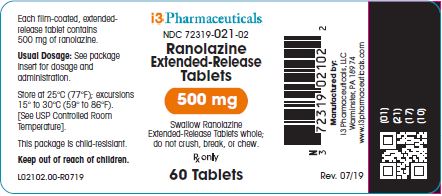
PRINCIPAL DISPLAY PANEL NDC 72319-021-02 60 Tablets Ranolazine Extended-Release Tablets 500 mg Each film-coated, extended-release tablet contains 500 mg of ranolazine. Dispense with Patient Information in package insert. i3 Pharmaceuticals, LLC Rx Only NDC 72319-022-02 60 Tablets Ranolazine Extended-Release Tablets 1,000 mg Each film-coated, extended-release tablet contains 1,000 mg of ranolazine. Dispense with Patient Information in package insert. i3 Pharmaceuticals, LLC Rx Only container-500mg-60tablets container-1000mg-60tablets