
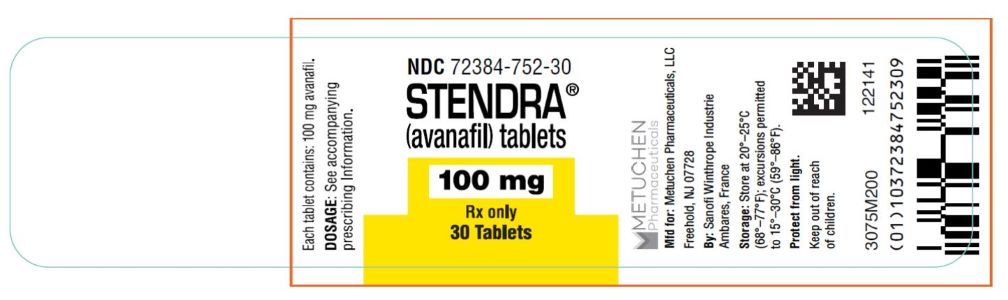
Stendra avanafil 100 mg Tablet, 6-count
🆔 Identity & classification
Where does this data come from?
🏭 Manufacturer & labeler
Where does this data come from?
🩺 Clinical
Avanafil is used to treat erectile dysfunction (ED: impotence; inability to get or keep an erection in men). Avanafil is in a class of medications called phosphodiesterase (PDE) inhibitors. It works by increasing blood flow to the penis during sexual stimulation. This increased blood flow can cause an erection. Avanafil does not cure erectile dysfunction or increase sexual desire. Avanafil does not prevent pregnancy or the spread of sexually transmitted diseases such as human immunodeficiency virus (HIV).
Read the full MedlinePlus article ↗- You can take it as early as about 15 minutes before sexual activity — that's one of the advantages of avanafil compared to some similar medications. Keep in mind it only works when...
- How long before sex should I take avanafil?
- Food isn't a problem — you can take avanafil with or without a meal. That said, a very high-fat meal may slow how quickly it kicks in, so keep that in mind. Alcohol is a different...
- Can I take avanafil with food or alcohol?
Patient education
Supplement & herbal interactions
Some supplements/herbs that may interact with Avanafil — tap one for details:
Where does this data come from?
Ask a licensed pharmacist directly — free, answered by our team.
💊 What it looks like
Where does this data come from?
🧪 Inactive Ingredients / Excipients
Inactive ingredients, also called excipients, are components of the drug product other than the active ingredient. They may include fillers, dyes, coatings, preservatives, flavors, or other formulation ingredients.
💡 Tap an ingredient (hover on desktop) to see what it is and why it’s used.
-
UNII H0G9379FGK
Calcium carbonate is a white mineral powder used as a filler and buffering agent in medicines. It helps give tablets their bulk and size while neutralizing stomach acid in some formulations.
-
UNII EX438O2MRT
Ferric oxide yellow is a naturally occurring iron compound used as a colorant in medications. It gives tablets, capsules, and other forms a yellow or golden hue for identification and appearance.
-
UNII 88XHZ13131
Fumaric acid is an organic acid used in medications as a buffer and pH regulator. It helps maintain the proper acidity level in the medicine and may aid in tablet disintegration.
-
UNII 9XZ8H6N6OH
A plant-based cellulose derivative used as a binder to hold tablet ingredients together, a thickener in liquids, and a coating agent to control how fast the medicine dissolves.
-
UNII 7773C1ROEU
Low-substituted hydroxypropyl cellulose is a plant-derived thickener and binder made from cellulose. In medicines, it helps bind tablet ingredients together, controls how quickly the medicine dissolves, and improves texture in liquids and semi-solid formulations.
-
UNII 70097M6I30
Magnesium stearate is a salt made from magnesium and stearic acid, a fatty substance. It's used in tablets and capsules as a lubricant and glidant to help ingredients flow smoothly during manufacturing and prevent sticking.
-
UNII 3OWL53L36A
A natural sugar alcohol derived from seaweed or synthesized in the lab. It's used as a filler to add bulk, a sweetener in sugar-free formulas, and a disintegrant to help tablets break apart in the stomach.
7 inactive ingredients listed in the exact product block matched to this NDC.
Where does this data come from?
ingredient classCode="IACT" elements from the exact product block matched by this NDC. Label-section narrative from DailyMed / the openFDA label index is shown separately when available.Inactive ingredient FAQ
Are inactive ingredients the same for every manufacturer?
Why might an inactive ingredient be missing?
Can inactive ingredients matter?
💲 Pricing
A drug doesn't have one price. Each row is a different public payment system, and none is what you'd pay at the counter — that depends on your insurance. The ⓘ on each row explains what it measures.
| Price system | Per each | Per package |
|---|---|---|
| Retail pharmacies payNADAC · weekly | Not in the retail survey — common for institutional, discontinued, or low-volume packs. | |
| Medicaid paysCMS SDUD · 12 mo | No recent Medicaid claims on file for this NDC — rare and low-volume NDCs are suppressed in the public data. | |
| Medicare drug plans payPart D · quarterly | No Part D plan price is available for this NDC in our data. | |
Where does this data come from?
🔁 Therapeutic equivalents
| Product | Labeler | Pack | NADAC/unit | TE | Status | Price vs. this |
|---|---|---|---|---|---|---|
| Stendra 100 mgthis 72384-0752-99 | Metuchen | 6 tablets | — | AB | Discontinued | — |
Where does this data come from?
⏳ Availability & generic status
FDA-approved generic versions are listed, and recent pricing/market data suggests they may be available — see Therapeutic equivalents.
Where does this data come from?
📦 Packaging — all sizes for this product
| Package NDC | Description | Marketing start | Status |
|---|---|---|---|
| 72384-0752-30 | 30 TABLET in 1 BOTTLE (72384-752-30) | 2013-12-27 | Inactivated by FDA |
| 72384-0752-99 You're viewing this | 6 BLISTER PACK in 1 CARTON (72384-752-99) / 1 TABLET in 1 BLISTER PACK (72384-752-01) | 2020-08-10 | Inactivated by FDA |
Pack size FAQ
What quantity is in NDC 72384-0752-99?
What is the difference between NDC 72384-0752-99 and NDC 72384-0752-30?
What NDC number is used to bill for this package of Stendra avanafil 100 mg Tablet?
🧭 About this NDC listing & data coverage
What data is (and isn’t) available for this NDC — tap to expand
| NDC identity (package / product / labeler codes) | ✓ Available |
| Labeler | ✓ Available |
| Product & package description | ✓ Available |
| Marketing category & status | ✓ Available |
| Active ingredient / dosage form / route | ✓ Available |
| FDA label (SPL via DailyMed) | ✓ Available |
| Package photos | ✓ Available |
| Inactive ingredients (structured) | ✓ Available |
| NADAC pharmacy acquisition price (CMS) | — Not published for this NDC CMS publishes NADAC only for NDCs reported in its retail-pharmacy survey. |
| Orange Book / therapeutic-equivalence data | ✓ Available |
| HCPCS J-code billing crosswalk | — Not published for this NDC Most self-administered / retail products have no J-code — that is normal. |
| Medicaid utilization (CMS SDUD) | — Not published for this NDC CMS reports utilization only for NDCs with Medicaid claims above its privacy threshold. |
Questions about this listing
Why is there no price listed?
What does the discontinued status mean for this NDC?
Is the NDC printed on the package the same as the 11-digit billing NDC?
What do the three segments of this NDC mean?
Does this product come in other package sizes?
Who lists this product with the FDA?
Do I need a prescription for this product?
Where does this data come from?
📄 Full prescribing information FDA SPL
🎯 Indications and Usage ▾
1 INDICATIONS AND USAGE STENDRA is a phosphodiesterase 5 (PDE5) inhibitor indicated for the treatment of erectile dysfunction in adult males. STENDRA is a phosphodiesterase 5 (PDE5) inhibitor indicated for the treatment of erectile dysfunction ( 1 )
⏱️ Dosage and Administration ▾
2 DOSAGE AND ADMINISTRATION The starting dose is 100 mg taken as early as approximately 15 minutes before sexual activity, on an as needed basis ( 2.1 ) Take STENDRA no more than once a day ( 2.1 ). Based on efficacy and/or tolerability, the dose may be increased to 200 mg taken as early as approximately 15 minutes before sexual activity, or decreased to 50 mg taken approximately 30 minutes before sexual activity. Use the lowest dose that provides benefit ( 2.1 ).
STENDRA may be taken with or without food ( 2.2 ) Do not use STENDRA with strong CYP3A4 inhibitors ( 2.3 ) If taking a moderate CYP3A4 inhibitor, the dose should be no more than 50 mg in a 24-hour period ( 2.3 ). In patients on stable alpha-blocker therapy, the recommended starting dose of STENDRA is 50 mg ( 2.3 ).
2.1Erectile Dysfunction The recommended starting dose is 100 mg. STENDRA should be taken orally as needed as early as approximately 15 minutes before sexual activity. Based on individual efficacy and tolerability, the dose may be increased to 200 mg taken as early as approximately 15 minutes before sexual activity, or decreased to 50 mg taken approximately 30 minutes before sexual activity.
The lowest dose that provides benefit should be used. The maximum recommended dosing frequency is once per day. Sexual stimulation is required for a response to treatment.
2.2Use with Food STENDRA may be taken with or without food. 2. 3 Concomitant Medications Nitrates Concomitant use of nitrates in any form is contraindicated [see Contraindications (4.1) ] .
Alpha-Blockers If STENDRA is co-administered with an alpha-blocker, patients should be stable on alpha-blocker therapy prior to initiating treatment with STENDRA, and STENDRA should be initiated at the 50 mg dose [see Warnings and Precautions (5.6) , Drug Interactions (7.1) and Clinical Pharmacology (12.2) ]. CYP3A4 Inhibitors For patients taking concomitant strong CYP3A4 inhibitors (including ketoconazole, ritonavir, atazanavir, clarithromycin, indinavir, itraconazole, nefazodone, nelfinavir, saquinavir and telithromycin), do not use STENDRA [see Warnings and Precautions (5.2) and Drug Interactions (7.2) ].
For patients taking concomitant moderate CYP3A4 inhibitors (including erythromycin, amprenavir, aprepitant, diltiazem, fluconazole, fosamprenavir, and verapamil), the maximum recommended dose of STENDRA is 50 mg, not to exceed once every 24 hours [see Warnings and Precautions (5.2) and Drug Interactions (7.2) ].
💊 Dosage Forms and Strengths ▾
3 DOSAGE FORMS AND STRENGTHS STENDRA (avanafil) is supplied as oval, pale yellow tablets containing 50 mg, 100 mg, or 200 mg avanafil debossed with dosage strength. Tablets: 50 mg, 100 mg, 200 mg ( 3 )
⛔ Contraindications ▾
4 CONTRAINDICATIONS Administration of STENDRA to patients using any form of organic nitrate is contraindicated ( 4.1 ) Hypersensitivity to any component of the STENDRA tablet ( 4.2 ) Administration with guanylate cyclase (GC) stimulators such as riociguat and vericiguat ( 4.3 )
4.1Nitrates Administration of STENDRA with any form of organic nitrates, either regularly and/or intermittently, is contraindicated. Consistent with its known effects on the nitric oxide/cyclic guanosine monophosphate (cGMP) pathway, STENDRA has been shown to potentiate the hypotensive effects of nitrates. In a patient who has taken STENDRA, where nitrate administration is deemed medically necessary in a life-threatening situation, at least 12 hours should elapse after the last dose of STENDRA before nitrate administration is considered.
In such circumstances, nitrates should only be administered under close medical supervision with appropriate hemodynamic monitoring [see Contraindications (4.1) , Dosage and Administration (2.3) , and Clinical Pharmacology (12.2) ] .
4.2Hypersensitivity Reactions STENDRA is contraindicated in patients with a known hypersensitivity to any component of the tablet. Hypersensitivity reactions have been reported, including pruritis and eyelid swelling.
4.3Concomitant Guanylate Cyclase (GC) Stimulators Do not use STENDRA in patients who are using a GC stimulator, such as riociguat or vericiguat. PDE5 inhibitors, including STENDRA may potentiate the hypotensive effects of GC stimulators.
⚠️ Warnings and Cautions ▾
5 WARNIN GS AND PRECAUTIONS Evaluation of erectile dysfunction (ED) should include an appropriate medical assessment to identify potential underlying causes, as well as treatment options. Before prescribing STENDRA, it is important to note the following: Patients should not use STENDRA if sexual activity is inadvisable due to cardiovascular status or any other reason ( 5.1 ) Use of STENDRA with alpha-blockers, other antihypertensives, or substantial amounts of alcohol (greater than 3 units) may lead to hypotension ( 2.3 , 5.6 , 5.7 ) Patients should seek emergency treatment if an erection lasts greater than 4 hours ( 5.3 ) Patients should stop STENDRA and seek medical care if a sudden loss of vision occurs in one or both eyes, which could be a sign of Non Arteritic Ischemic Optic Neuropathy (NAION).
STENDRA should be used with caution, and only when the anticipated benefits outweigh the risks, in patients with a history of NAION. Patients with a “crowded” optic disc may also be at an increased risk of NAION ( 5.4 , 6.2 ) Patients should stop taking STENDRA and seek prompt medical attention in the event of sudden decrease or loss of hearing ( 5.5 )
5.1Cardiovascular Risks There is a potential for cardiac risk during sexual activity in patients with pre-existing cardiovascular disease. Therefore, treatments for ED, including STENDRA, should not be used in men for whom sexual activity is inadvisable because of their underlying cardiovascular status. Patients with left ventricular outflow obstruction (e.g., aortic stenosis, idiopathic hypertrophic subaortic stenosis) and those with severely impaired autonomic control of blood pressure can be particularly sensitive to the actions of vasodilators, including STENDRA.
The following groups of patients were not included in clinical safety and efficacy trials for STENDRA, and therefore until further information is available, STENDRA is not recommended for the following groups: Patients who have suffered a myocardial infarction, stroke, life-threatening arrhythmia, or coronary revascularization within the last 6 months; Patients with resting hypotension (blood pressure less than 90/50 mmHg) or hypertension (blood pressure greater than 170/100 mmHg); Patients with unstable angina, angina with sexual intercourse, or New York Heart Association Class 2 or greater congestive heart failure.
As with other PDE5 inhibitors STENDRA has systemic vasodilatory properties and may augment the blood pressure-lowering effect of other anti-hypertensive medications. STENDRA 200 mg resulted in transient decreases in sitting blood pressure in healthy volunteers of 8.0 mmHg systolic and 3.3 mmHg diastolic [see Clinical Pharmacology (12.2) ] , with the maximum decrease observed at 1 hour after dosing. While this normally would be expected to be of little consequence in most patients, prior to prescribing STENDRA, physicians should carefully consider whether patients with underlying cardiovascular disease could be affected adversely by such vasodilatory effects, especially in combination with sexual activity.
5.2Concomitant Use of CYP3A4 Inhibitors STENDRA metabolism is principally mediated by the CYP450 isoform 3A4 (CYP3A4). Inhibitors of CYP3A4 may reduce STENDRA clearance and increase plasma concentrations of avanafil. For patients taking concomitant strong CYP3A4 inhibitors (including ketoconazole, ritonavir, atazanavir, clarithromycin, indinavir, itraconazole, nefazodone, nelfinavir, saquinavir and telithromycin), do not use STENDRA [see Drug Interactions (7.2) ].
For patients taking concomitant moderate CYP3A4 inhibitors (including erythromycin, amprenavir, aprepitant, diltiazem, fluconazole, fosamprenavir, and verapamil), the maximum recommended dose of STENDRA is 50 mg, not to exceed once every 24 hours [see Drug Interactions (7.2) ].
5.3Prolonged Erection Prolonged erection greater than 4 hours and priapism (painful erections greater than 6 hours in duration) have been reported with other PDE5 inhibi…
🤒 Adverse Reactions ▾
6 ADVERSE REACTIONS Most common adverse reactions (greater than or equal to 2%) include headache, flushing, nasal congestion, nasopharyngitis, and back pain ( 6.1 ) To report SUSPECTED ADVERSE REACTIONS, contact 844.458.4887 or FDA at 1-800-FDA-1088 or www.fda.gov/medwatch.
6.1Clinical Trials Experience Because clinical trials are conducted under widely varying conditions, adverse reaction rates observed in the clinical trials of a drug cannot be directly compared to rates in the clinical trials of another drug and may not reflect the rates observed in practice. STENDRA was administered to 2215 men during clinical trials. In trials of STENDRA for use as needed, a total of 493 patients were exposed for greater than or equal to 6 months, and 153 patients were treated for greater than or equal to 12 months.
In three randomized, double-blind, placebo-controlled trials lasting up to 3 months in duration, the mean age of patients was 56.4 years (range from 23 to 88 years). 83.9% of patients were White, 13.8% were Black, 1.4% Asian, and < 1% Hispanic. 41.1% were current or previous smokers.
30.6% had diabetes mellitus. The discontinuation rate due to adverse reactions for patients treated with STENDRA 50 mg, 100 mg, or 200 mg was 1.4%, 2.0%, and 2.0%, respectively, compared to 1.7% for placebo-treated patients. Table 1 presents the adverse reactions reported when STENDRA was taken as recommended (on an as-needed basis) from these 3 clinical trials.
Table 1: Adverse Reactions Reported by Greater Than or Equal to 2% of Patients Treated with STENDRA From 3 Placebo-Controlled Clinical Trials Lasting 3 Months for STENDRA Use as Needed Adverse Reaction Placebo (N = 349) STENDRA 50 mg (N = 217) STENDRA 100 mg (N = 34 9 ) STENDRA 200 mg (N = 352) Headache 1.7% 5.1% 6.9% 10.5% Flushing 0.0% 3.2% 4.3% 4.0% Nasal congestion 1.1% 1.8% 2.9% 2.0% Nasopharyngitis 2.9% 0.9% 2.6% 3.4% Back pain 1.1% 3.2% 2.0% 1.1% Adverse reactions reported by greater than or equal to 1%, but less than 2% of patients in any STENDRA dose group, and greater than placebo included: upper respiratory infection (URI), bronchitis, influenza, sinusitis, sinus congestion, hypertension, dyspepsia, nausea, constipation, and rash.
In an open-label, long-term extension study of two of these randomized, double-blind, placebo-controlled trials, the total duration of treatment was up to 52 weeks. Among the 712 patients who participated in this open-label extension study, the mean age of the population was 56.4 years (range from 23 to 88 years). The discontinuation rate due to adverse reactions for patients treated with STENDRA (50 mg, 100 mg, or 200 mg) was 2.8%.
In this extension trial, all eligible patients were initially assigned to STENDRA 100 mg. At any point during the trial, patients could request to have their dose of STENDRA increased to 200 mg or decreased to 50 mg based on their individual response to treatment. In total, 536 (approximately 75%) patients increased their dose to 200 mg and 5 (less than 1%) patients reduced their dose to 50 mg.
Table 2 presents the adverse reactions reported when STENDRA was taken as recommended (on an as-needed basis) in this open-label extension trial. Table 2: Adverse Reactions Reported by Greater Than or Equal to 2% of Patients Treated With STENDRA in an Open-Label Extension Trial Adverse Reaction STENDRA (N = 711) Headache 5.6% Flushing 3.5% Nasopharyngitis 3.4% Nasal congestion 2.1% Adverse reactions reported by greater than or equal to 1%, but less than 2% of patients in the open-label extension study included: upper respiratory infection (URI), influenza, sinusitis, bronchitis, dizziness, back pain, arthralgia, hypertension, and diarrhea.
The following events occurred in less than 1% of patients in the three placebo-controlled 3-month clinical trials and/or the open-label, long-term extension study lasting 12 months. A causal relationship to STENDRA is uncertain. Excluded from this list are those events that were minor, those with…
🔄 Drug Interactions ▾
7 DRUG INTERACTIONS STENDRA can potentiate the hypotensive effect of nitrates, alpha-blockers, antihypertensives, and alcohol ( 7.1 ) CYP3A4 inhibitors (e.g., ketoconazole, ritonavir, erythromycin) increase STENDRA exposure ( 7.2 )
7.1Potential for Pharmacodynamic Interactions with STENDRA Nitrates Administration of STENDRA to patients who are using any form of organic nitrate, is contraindicated. In a clinical pharmacology trial, STENDRA was shown to potentiate the hypotensive effect of nitrates. In a patient who has taken STENDRA, where nitrate administration is deemed medically necessary in a life-threatening situation, at least 12 hours should elapse after the last dose of STENDRA before nitrate administration is considered.
In such circumstances, nitrates should only be administered under close medical supervision with appropriate hemodynamic monitoring [see Contraindications (4.1) , Dosage and Administration (2.3) , and Clinical Pharmacology (12.2) ] . Alpha-Blockers Caution is advised when PDE5 inhibitors are co-administered with alpha-blockers. PDE5 inhibitors, including STENDRA, and alpha-adrenergic blocking agents are both vasodilators with blood pressure-lowering effects.
When vasodilators are used in combination, an additive effect on blood pressure may be anticipated. In some patients, concomitant use of these two drug classes can lower blood pressure significantly leading to symptomatic hypotension (e.g., dizziness, lightheadedness, fainting) [see Warnings and Precautions (5.6) , Dosage and Administration (2.3) , and Clinical Pharmacology (12.2) ]. Antihypertensives PDE5 inhibitors, including STENDRA, are mild systemic vasodilators.
A clinical pharmacology trial was conducted to assess the effect of STENDRA on the potentiation of the blood pressure-lowering effects of selected antihypertensive medications (amlodipine and enalapril). Additional reductions in blood pressure of 3 to 5 mmHg occurred following co-administration of a single 200 mg dose of STENDRA with these agents compared with placebo [see Warnings and Precautions (5.6) and Clinical Pharmacology (12.2) ]. Alcohol Both alcohol and PDE5 inhibitors, including STENDRA, act as vasodilators.
When vasodilators are taken in combination, blood pressure-lowering effects of each individual compound may be increased. Substantial consumption of alcohol (e.g., greater than 3 units) in combination with STENDRA can increase the potential for orthostatic signs and symptoms, including increase in heart rate, decrease in standing blood pressure, dizziness, and headache [see Clinical Pharmacology (12.2) ] .
7.2Potential for Other Drugs to Affect STENDRA STENDRA is a substrate of and predominantly metabolized by CYP3A4. Studies have shown that drugs that inhibit CYP3A4 can increase avanafil exposure. Strong CYP3A4 Inhibitors Ketoconazole (400 mg daily), a selective and strong inhibitor of CYP3A4, increased STENDRA 50 mg single-dose systemic exposure (AUC) and maximum concentration (C max ) equal to 13-fold and 3-fold, respectively, and prolonged the half-life of avanafil to approximately 9 hours.
Other potent inhibitors of CYP3A4 (e.g., itraconazole, clarithromycin, nefazadone, ritonavir, saquinavir, nelfinavir, indinavir, atanazavir and telithromycin) would be expected to have similar effects. Do not use STENDRA in patients taking strong CYP3A4 inhibitors [see Warnings and Precautions (5.2) and Dosage and Administration (2.3) ] . HIV Protease inhibitor — Ritonavir (600 mg twice daily), a strong CYP3A4 inhibitor, which also inhibits CYP2C9, increased STENDRA 50 mg single-dose C max and AUC equal to approximately 2-fold and 13-fold, and prolonged the half-life of avanafil to approximately 9 hours in healthy volunteers.
Do not use STENDRA in patients taking ritonavir. Moderate CYP 3A4 Inhibitors Erythromycin (500 mg twice daily) increased STENDRA 200 mg single-dose C max and AUC equal to approximately 2-fold and 3-fold, respectively, and prolonged the half-life of avanafi…
👥 Use in Specific Populations ▾
8 USE IN SPECIFIC POPULATIONS Do not use in patients with severe renal impairment ( 8.6 ) Do not use in patients with severe hepatic impairment ( 8.7 )
8.1Pregnancy Risk Summary STENDRA is not indicated for use in females. There are no data with the use of STENDRA in pregnant women to inform any drug-associated risks for adverse developmental outcomes. In animal reproduction studies conducted in pregnant rats and rabbits, no adverse developmental outcomes were observed with oral administration of avanafil during organogenesis at exposures for total avanafil at approximately 8 and 6 times, respectively, the Maximum Recommended Human Dose (MRHD) of 200 mg based on AUC ( see Data ).
Data Animal Data In pregnant rats administered orally at 100, 300, or 1000 mg/kg/day from gestation days 6 to 17, no evidence of teratogenicity, embryotoxicity, or fetotoxicity was observed at up to 300 mg/kg/day. This dose is equivalent to exposures of approximately 8 times the exposure at the Maximum Recommended Human Dose (MRHD) of 200 mg based on AUCs for total avanafil. At the maternally toxic dose (1000 mg/kg/day), decreased fetal body weight occurred with no signs of teratogenicity.
In pregnant rabbits administered orally at 30, 60, 120, or 240 mg/kg/day from gestation days 6 to 18, no teratogenicity was observed at exposures up to approximately 6 times the human exposure at the MRHD based on AUCs for total avanafil. In a pre- and post-natal development study in rats given orally at 100, 300, or 600 mg/kg/day on gestation days 6 through lactation day 20, offspring growth and maturation were reduced when maternal rats were given avanafil doses greater than or equal to 300 mg/kg/day, resulting in exposures greater than or equal to 17 times the human exposure to total avanafil at the MRHD.
There was no effect on reproductive performance of the maternal rats or offspring, or on the behavior of the offspring at up to the highest dose tested. The no observed adverse effect level (NOAEL) for developmental toxicity (100 mg/kg/day) was observed at exposures to total avanafil approximately 2-fold greater than the systemic exposure in humans at the MRHD.
8.2Lactation Risk Summary STENDRA is not indicated for use in females. There is no information on the presence of avanafil and/or its metabolites in human or animal milk, the effects on the breastfed child, or the effects on milk production.
8.3Females and Males of Reproductive Potential Infertility There have been no studies evaluating the effect of STENDRA on fertility in men [ see Clinical Pharmacology (12.2) ] Based on studies in animals, decreased fertility, abnormal sperm motility and morphology, and altered estrous cycles were observed in rats. The abnormal sperm findings were reversible at the end of a 9-week drug-free period [see Nonclinical Toxicology (13.1) ] .
8.4Pediatric Use STENDRA is not indicated for use in pediatric patients. Safety and efficacy in patients below the age of 18 years has not been established.
8.5Geriatric Use Of the total number of subjects in clinical studies of avanafil, approximately 23% were 65 and over. No overall differences in efficacy and safety were observed between subjects over 65 years of age compared to younger subjects; therefore, no dose adjustment is warranted based on age alone. However, a greater sensitivity to medication in some older individuals should be considered [ s ee Clinical Pharmacology (12.3) ] .
8. 6 Renal Impairment In a clinical pharmacology trial using single 200 mg doses of STENDRA, avanafil exposure (AUC or C max ) in normal subjects was comparable to patients with mild (creatinine clearance greater than or equal to 60 to less than 90 mL/min) or moderate (creatinine clearance greater than or equal to 30 to less than 60 mL/min) renal impairment. No dose adjustment is necessary for patients with mild to moderate renal impairment (creatinine clearance greater than or equal to 30 to less than 90 mL/min).
The pharmacokinetics of avanafil…
🤰 Pregnancy ▾
8.1Pregnancy Risk Summary STENDRA is not indicated for use in females. There are no data with the use of STENDRA in pregnant women to inform any drug-associated risks for adverse developmental outcomes. In animal reproduction studies conducted in pregnant rats and rabbits, no adverse developmental outcomes were observed with oral administration of avanafil during organogenesis at exposures for total avanafil at approximately 8 and 6 times, respectively, the Maximum Recommended Human Dose (MRHD) of 200 mg based on AUC ( see Data ).
Data Animal Data In pregnant rats administered orally at 100, 300, or 1000 mg/kg/day from gestation days 6 to 17, no evidence of teratogenicity, embryotoxicity, or fetotoxicity was observed at up to 300 mg/kg/day. This dose is equivalent to exposures of approximately 8 times the exposure at the Maximum Recommended Human Dose (MRHD) of 200 mg based on AUCs for total avanafil. At the maternally toxic dose (1000 mg/kg/day), decreased fetal body weight occurred with no signs of teratogenicity.
In pregnant rabbits administered orally at 30, 60, 120, or 240 mg/kg/day from gestation days 6 to 18, no teratogenicity was observed at exposures up to approximately 6 times the human exposure at the MRHD based on AUCs for total avanafil. In a pre- and post-natal development study in rats given orally at 100, 300, or 600 mg/kg/day on gestation days 6 through lactation day 20, offspring growth and maturation were reduced when maternal rats were given avanafil doses greater than or equal to 300 mg/kg/day, resulting in exposures greater than or equal to 17 times the human exposure to total avanafil at the MRHD.
There was no effect on reproductive performance of the maternal rats or offspring, or on the behavior of the offspring at up to the highest dose tested. The no observed adverse effect level (NOAEL) for developmental toxicity (100 mg/kg/day) was observed at exposures to total avanafil approximately 2-fold greater than the systemic exposure in humans at the MRHD.
🧒 Pediatric Use ▾
8.4Pediatric Use STENDRA is not indicated for use in pediatric patients. Safety and efficacy in patients below the age of 18 years has not been established.
🧓 Geriatric Use ▾
8.5Geriatric Use Of the total number of subjects in clinical studies of avanafil, approximately 23% were 65 and over. No overall differences in efficacy and safety were observed between subjects over 65 years of age compared to younger subjects; therefore, no dose adjustment is warranted based on age alone. However, a greater sensitivity to medication in some older individuals should be considered [ s ee Clinical Pharmacology (12.3) ] .
🆘 Overdosage ▾
10 OVERDOSAGE Single doses up to 800 mg have been given to healthy subjects, and multiple doses up to 300 mg have been given to patients. In cases of overdose, standard supportive measures should be adopted as required. Renal dialysis is not expected to accelerate clearance because avanafil is highly bound to plasma proteins and is not significantly eliminated in the urine.
🧬 Clinical Pharmacology ▾
12 C LINICAL PHARMACOLOGY Figure 1: Median Change from Baseline in Sitting Systolic Blood Pressure, Healthy Volunteers Day 4 Figure 2: Mean (SD) Change From Baseline in Standing Systolic Blood Pressure Over Time Following Administration of a Single Dose 200 mg Dose of STENDRA with Doxazosin Figure 3: Mean (SD) Change From Baseline in Standing Systolic Blood Pressure Over Time Following Administration of a Single Dose 200 mg Dose of STENDRA with Tamsulosin Figure 4: Plasma Avanafil Concentrations (mean ± SD) Following a Single 50 mg or 200 mg STENDRA Dose
12.1Mechanism of Action The physiologic mechanism of erection of the penis involves release of nitric oxide (NO) in the corpus cavernosum during sexual stimulation. NO then activates the enzyme guanylate cyclase, which results in increased levels of cGMP, producing smooth muscle relaxation in the corpus cavernosum and allowing inflow of blood. Avanafil has no direct relaxant effect on isolated human corpus cavernosum, but enhances the effect of NO by inhibiting PDE5, which is responsible for degradation of cGMP in the corpus cavernosum.
Because sexual stimulation is required to initiate the local release of nitric oxide, the inhibition of PDE5 has no effect in the absence of sexual stimulation. Studies in vitro have shown that avanafil is selective for PDE5. Its effect is more potent on PDE5 than on other known phosphodiesterases (greater than 100-fold for PDE6; greater than 1,000-fold for PDE4, PDE8 and PDE10; greater than 5,000-fold for PDE2 and PDE7; greater than 10,000-fold for PDE1, PDE3, PDE9, and PDE11).
Avanafil is greater than 100-fold more potent for PDE5 than PDE6, which is found in the retina and is responsible for phototransduction. In addition to human corpus cavernosum smooth muscle, PDE5 is also found in other tissues including platelets, vascular and visceral smooth muscle, and skeletal muscle, brain, heart, liver, kidney, lung, pancreas, prostate, bladder, testis, and seminal vesicle. The inhibition of PDE5 in these tissues by avanafil may be the basis for the enhanced platelet anti-aggregatory activity of NO observed in vitro and peripheral vasodilatation in vivo .
12.2Pharmacodynamics Effects of STENDRA on Erectile Response In a single-blind, placebo-controlled, single-dose trial of 82 patients with either organic and/or psychogenic ED, visual sexual stimulation resulted in improved erections after STENDRA administration compared to placebo, as assessed by an objective measurement of hardness and duration of erections (RigiScan ® ). Efficacy was assessed by RigiScan at discrete time intervals ranging from 20 – 40 minutes after dosing to 100 – 120 minutes after dosing. Effects of STENDRA on Blood Pressure Single oral doses of STENDRA (200 mg) administered to healthy male volunteers resulted in mean changes from baseline in systolic/diastolic blood pressure of -5.3/-3.7 mmHg at 1 hour after dosing, compared to mean changes from baseline in the placebo group of 2.7/-0.4 mmHg.
The reductions in systolic/diastolic blood pressure at 1 hour after dosing of STENDRA 200 mg compared to placebo were 8.0/3.3 mmHg. Figure 1: Median Change from Baseline in Sitting Systolic Blood Pressure, Healthy Volunteers Day 4 Effects on Cardiac Electrophysiology The effect of single 100 or 800 mg doses of STENDRA on the QT interval were evaluated in a randomized, double-blind, placebo, and active (moxifloxacin) –controlled crossover study in 52 healthy male subjects aged 18 to 45 years. There were no significant effects of the 100 mg dose.
The mean QTc (Fridericia QT correction) for avanafil 800 mg, relative to placebo was 9.4 milliseconds (two-sided 90% CI=7.2, 11.6). An 800 mg dose of STENDRA (4 times the highest recommended dose) was chosen because this dose yields exposures greater than those observed upon co-administration of avanafil with strong CYP3A4 inhibitors. A double-blind, randomized, placebo- and active-controlled (moxifloxacin), thorough QT/QTc trial of STENDRA (100…
🧬 Mechanism of Action ▾
12.1Mechanism of Action The physiologic mechanism of erection of the penis involves release of nitric oxide (NO) in the corpus cavernosum during sexual stimulation. NO then activates the enzyme guanylate cyclase, which results in increased levels of cGMP, producing smooth muscle relaxation in the corpus cavernosum and allowing inflow of blood. Avanafil has no direct relaxant effect on isolated human corpus cavernosum, but enhances the effect of NO by inhibiting PDE5, which is responsible for degradation of cGMP in the corpus cavernosum.
Because sexual stimulation is required to initiate the local release of nitric oxide, the inhibition of PDE5 has no effect in the absence of sexual stimulation. Studies in vitro have shown that avanafil is selective for PDE5. Its effect is more potent on PDE5 than on other known phosphodiesterases (greater than 100-fold for PDE6; greater than 1,000-fold for PDE4, PDE8 and PDE10; greater than 5,000-fold for PDE2 and PDE7; greater than 10,000-fold for PDE1, PDE3, PDE9, and PDE11).
Avanafil is greater than 100-fold more potent for PDE5 than PDE6, which is found in the retina and is responsible for phototransduction. In addition to human corpus cavernosum smooth muscle, PDE5 is also found in other tissues including platelets, vascular and visceral smooth muscle, and skeletal muscle, brain, heart, liver, kidney, lung, pancreas, prostate, bladder, testis, and seminal vesicle. The inhibition of PDE5 in these tissues by avanafil may be the basis for the enhanced platelet anti-aggregatory activity of NO observed in vitro and peripheral vasodilatation in vivo .
📦 How Supplied / Storage and Handling ▾
16 H OW SUPPLIED/STORAGE AND HANDLING STENDRA (avanafil) is supplied as oval, pale yellow tablets containing 50 mg, 100 mg, or 200 mg avanafil debossed with dosage strengths. 50 mg 100 mg 200 mg Bottle of 30 NDC 72384-751-30 NDC 72384-752-30 NDC 72384-753-30 Recommended Storage: Store at 20-25°C (68-77°F); excursions permitted, 15-30°C (59-86°F) [see USP Controlled Room Temperature]. Protect from light.
📋 Description ▾
11 DESCRIPTION STENDRA (avanafil) is a selective inhibitor of cGMP-specific PDE5. Avanafil is designated chemically as (S)-4-[(3-Chloro-4-methoxybenzyl)amino]-2-[2-(hydroxymethyl)-1-pyrrolidinyl]- N -(2-pyrimidinylmethyl)-5-pyrimidinecarboxamide and has the following structural formula: Avanafil occurs as white crystalline powder, molecular formula C 23 H 26 ClN 7 O 3 and molecular weight of 483.95 and is slightly soluble in ethanol, practically insoluble in water, soluble in 0.1 mol/L hydrochloric acid. STENDRA, for oral administration, is supplied as oval, pale yellow tablets containing 50 mg, 100 mg, or 200 mg avanafil debossed with dosage strengths.
In addition to the active ingredient, avanafil, each tablet contains the following inactive ingredients: mannitol, fumaric acid, hydroxypropylcellulose, low substituted hydroxypropylcellulose, calcium carbonate, magnesium stearate, and ferric oxide yellow. The following structural formula for Avanafil occurs as white crystalline powder, molecular formula C23H26ClN7O3 and molecular weight of 483.95 and is slightly soluble in ethanol, practically insoluble in water, soluble in 0.1 mol/L hydrochloric acid. STENDRA, for oral administration, is supplied as oval, pale yellow tablets containing 50 mg, 100 mg, or 200 mg avanafil debossed with dosage strengths.
In addition to the active ingredient, avanafil, each tablet contains the following inactive ingredients: mannitol, fumaric acid, hydroxypropylcellulose, low substituted hydroxypropylcellulose, calcium carbonate, magnesium stearate, and ferric oxide yellow.
💬 Information for Patients ▾
17 PATIENT COUNSELING INFORMATION Advise the patient to read the FDA-approved patient labeling ( Patient Information ).
17.1Nitrates Physicians should discuss with patients the contraindication of STENDRA with regular and/or intermittent use of organic nitrates. Patients should be counseled that concomitant use of STENDRA with nitrates could cause blood pressure to suddenly drop to an unsafe level, resulting in dizziness, syncope, or even heart attack or stroke. Physicians should discuss with patients the appropriate action in the event that they experience anginal chest pain requiring nitroglycerin following intake of STENDRA.
In such a patient, who has taken STENDRA, where nitrate administration is deemed medically necessary in a life-threatening situation, at least 12 hours should elapse after the last dose of STENDRA before nitrate administration is considered. In such circumstances, nitrates should still only be administered under close medical supervision with appropriate hemodynamic monitoring. Patients who experience anginal chest pain after taking STENDRA should seek immediate medical attention [see Contraindications (4.1) and Warnings and Precautions (5.1) ].
17.2Cardiovascular Considerations Physicians should discuss with patients the potential cardiac risk of sexual activity in patients with preexisting cardiovascular risk factors. Patients who experience symptoms upon initiation of sexual activity should be advised to refrain from further sexual activity and should seek immediate medical attention [see Warnings and Precautions (5.1) ].
17.3Concomitant Use with Drugs Which Lower Blood Pressure Physicians should advise patients of the potential for STENDRA to augment the blood pressure-lowering effect of alpha-blockers and other antihypertensive medications [see Warnings and Precautions (5.6) , Drug Interactions (7.1) , and Clinical Pharmacology (12.2) ].
17.4Potential for Drug Interactions Patients should be advised to contact the prescribing physician if new medications that may interact with STENDRA are prescribed by another healthcare provider.
17.5Priapism There have been rare reports of prolonged erections greater than 4 hours and priapism (painful erections greater than 6 hours in duration) for this class of compounds. Priapism, if not treated promptly, can result in irreversible damage to the erectile tissue. Physicians should advise patients who have an erection lasting greater than 4 hours, whether painful or not, to seek emergency medical attention.
17.6Vision Physicians should advise patients to stop use of all PDE5 inhibitors, including STENDRA, and seek medical attention in the event of a sudden loss of vision in one or both eyes. Such an event may be a sign of non-arteritic anterior ischemic optic neuropathy (NAION), a cause of decreased vision including permanent loss of vision that has been reported rarely in temporal association with the use of PDE5 inhibitors. Physicians should discuss with patients the increased risk of NAION in individuals who have already experienced NAION in one eye.
Physicians should also discuss with patients the increased risk of NAION among the general population in patients with a “crowded” optic disc, although evidence is insufficient to support screening of prospective users of PDE5 inhibitor, including STENDRA, for these uncommon conditions [see Warnings and Precautions (5.4) and Adverse Reactions (6.2) ] .
17.7Sudden Hearing Loss Physicians should advise patients to stop taking PDE5 inhibitors, including STENDRA, and seek prompt medical attention in the event of sudden decrease or loss of hearing. Use of PDE5 inhibitors has been associated with sudden decrease or loss of hearing, which may be accompanied by tinnitus and dizziness. It is not possible to determine whether these events are related directly to the use of PDE5 inhibitors or to other factors [see Adverse Reactions (6) ] .