
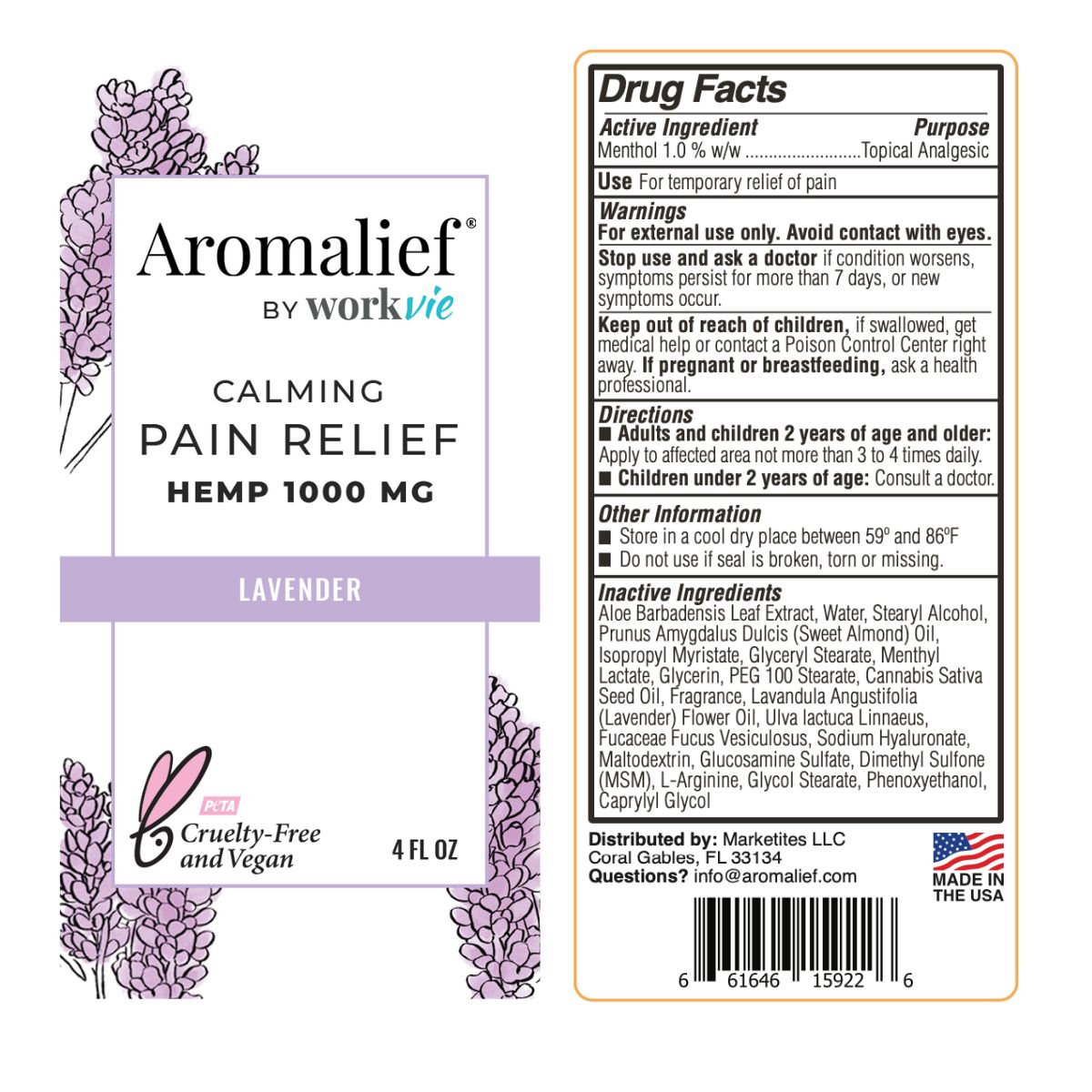
Aromalief Calming Pain Relief Cream Lavender Menthol 1 g/100g Lotion, 14 g — NDC 72393-302-04 (Billing 72393-0302-04)
This is a package of 14 g of Aromalief Calming Pain Relief Cream Lavender Menthol 1 g/100g Lotion from Marketites LLC, marketed since Aug 2020 and currently FDA-listed.
NDC database record
One package, one record: these facts belong to NDC 72393-302-04 alone.
- Record
- FDA NDC Directory package listing · Human OTC drug
- Code segments
- 72393 labeler · 302 product · 04 package
- Package marketed since
- Aug 1, 2020
- Sample package
- No — commercial package
- Listing certified through
- Dec 31, 2026
- Barcode (UPC)
- 0661646159226
- FDA record last changed
- Jul 24, 2026
Other active recalls for Menthol (different manufacturers) — 1 · tap to view
Identity & classification
Regulatory identifiers FDA, NLM and CMS codes for this package
Where does this data come from?
- FDA openFDA NDC Directory · synced Oct 8, 2026
- FDA label on DailyMed · label index refreshed Oct 8, 2026
- RxNorm (NLM RxNav) · catalog refreshed Oct 8, 2026
- Medi-Span GPI (licensed)
- First Databank (licensed) · refreshed Oct 8, 2026
Clinical
- Mostly for temporary relief of minor aches and pains in muscles and joints, like those from arthritis, backache, strains, sprains and bruises. Some products are for other things, s...
- It depends on the product. Many creams, gels and patches are limited to about 3 to 4 times a day, and patches also have a time limit, often 8 hours. Follow your product label and a...
- A brief burning feeling can happen when you first apply it and usually fades in several days. But if you get severe burning pain, swelling or blistering, stop using it and call you...
- No. Don't use menthol products with a heating pad, and avoid local heat or direct sunlight on the area. Rare cases of serious burns have been reported.
Patient education
Supplement & herbal interactions
Where does this data come from?
- MedlinePlus (NLM) · refreshed Oct 8, 2026
- FDA label on DailyMed · label index refreshed Oct 8, 2026
Ask a licensed pharmacist directly — free, answered by our team.
Pricing
A drug doesn't have one price. Each row is a different public payment system, and none is what you'd pay at the counter — that depends on your insurance. The ⓘ on each row explains what it measures.
| Price system | Per g | Per package |
|---|---|---|
| Retail pharmacies payNADAC · weekly | Not in the retail survey — common for institutional, discontinued, or low-volume packs. | |
| Medicaid paysCMS SDUD · 12 mo | No recent Medicaid claims on file for this NDC — rare and low-volume NDCs are suppressed in the public data. | |
| Medicare drug plans payPart D · quarterly | No Part D plan price is available for this NDC in our data. | |
Where does this data come from?
- CMS NADAC weekly file
- CMS ASP pricing files · refreshed Sep 20, 2026
- CMS Medicaid State Drug Utilization Data · refreshed Oct 9, 2026
- CMS Part D plan pricing files · refreshed Sep 24, 2026
- VA National Acquisition Center price file
Packaging — all sizes for this product
| Package NDC | Description | Marketing start | Marketing end | Status |
|---|---|---|---|---|
| 72393-0302-02 72393-302-02 Main listing | .07 g in 1 TUBE | 2020-08-01 | — | Active |
| 72393-0302-04 You're viewing this | .14 g in 1 TUBE | 2020-08-01 | — | Active |
Pack size FAQ
What quantity is in this package?
How does this package differ from NDC 72393-0302-02?
What NDC number is used to bill for this package of Aromalief Calming Pain Relief Cream Lavender Menthol 1 g/100g Lotion?
Therapeutic equivalents
| Product | Labeler | Pack | NADAC/unit | TE | Status | Price vs. this |
|---|---|---|---|---|---|---|
| Numbing Cream 1 g/100g 85524-2519-02 | FlexiGo | 1 bottle | — | — | FDA listed | — |
| Aromalief Pain Relief Cream Orange Ginger 1 g/100g 72393-0301-02 | Marketites | 07 g | — | — | FDA listed | — |
| Aromalief Calming Pain Relief Cream Lavender 1 g/100gthis 72393-0302-04 | Marketites | 14 g | — | — | FDA listed | — |
| Health Trak Plus Menthol-Infused Pain Relief Socks 1 g/100g 85720-8131-01 | Railroad | 1 g | — | — | FDA listed | — |
| Yynrhj Numbing Creams 1 g/100g 85593-0005-01 | Guangzhou | 60 g | — | — | Discontinued | — |
| Ching Wan Hung Soothing Herbal Balm 1 g/100g 33217-0001-01 | TIANJIN | 10 g | — | — | FDA listed | — |
| Hielo Ardiente 1 g/100g 53145-0002-01 | Menper | 454 g | — | — | FDA listed | — |
| Aromalief Cozy Vanilla Pain Relief Cream 1 g/100g 72393-0303-04 | Marketites | 14 g | — | — | FDA listed | — |
| Olelon Numbing 1 g/100g 85593-0018-01 | Guangzhou | 120 g | — | — | Discontinued | — |
| Pharmacys Prescription Analgesic Gel 1 g/100g 72197-0001-08 | American | 227 g | — | — | FDA listed | — |
| YYNRHI NUMBING Creams 1 g/100g 85593-0004-01 | Guangzhou | 60 g | — | — | Discontinued | — |
| Global Care Ice Cold Analgesic 1 g/100g 76176-0162-01 | NINGBO | 227 g | — | — | FDA listed | — |
| Global Care Ice Cold Analgesic 1 g/100g 72146-0009-01 | GLOBAL | 227 g | — | — | FDA listed | — |
Where does this data come from?
- FDA openFDA NDC Directory · synced Oct 8, 2026
- FDA Orange Book · refreshed Oct 3, 2026
- CMS NADAC weekly file
Availability & generic status
We did not find an FDA-approved generic match for this exact strength, form and route.
Where does this data come from?
- FDA Orange Book · refreshed Oct 3, 2026
Inactive Ingredients / Excipients
Inactive ingredients, also called excipients, are components of the drug product other than the active ingredient. They may include fillers, dyes, coatings, preservatives, flavors, or other formulation ingredients.
🧪 Avoiding an ingredient? See Menthol inactive ingredients by manufacturer: every current product's list side by side, so you can ask your pharmacy for the version that does not list it.
💡 Tap an ingredient (hover on desktop) to see what it is and why it’s used.
-
UNII 66YXD4DKO9
A natural oil extracted from almond kernels. It's used in medicines as an emollient and solvent to help dissolve or suspend active ingredients and improve texture in topical and oral formulations.
-
UNII ZY81Z83H0X
Aloe vera leaf is a plant extract derived from the aloe plant. It is used in medicines as a natural moisturizer and skin-soothing agent in topical formulations.
-
UNII 94ZLA3W45F
Arginine is an amino acid used in medicines as a buffer and pH adjuster. It helps maintain the proper acidity level and stability of liquid formulations.
-
UNII 69VJ1LPN1S
Cannabis sativa seed oil is a plant-based oil derived from hemp seeds. It's used in medicines as a carrier or emollient to help deliver active ingredients and improve product texture and absorption.
-
UNII 00YIU5438U
Caprylyl glycol is a clear liquid derived from coconut oil. In medicines, it acts as a humectant to retain moisture, a preservative booster to prevent microbial growth, and a solvent to help dissolve or mix other ingredients.
-
UNII 9H4PO4Z4FT
A sulfur-containing organic compound used as a solvent and penetration enhancer in medicines. It helps dissolve active ingredients and improve their absorption through skin or mucous membranes.
-
UNII 535G2ABX9M
Fucus vesiculosus is a brown seaweed that serves as a thickener, binder, and emulsifier in medicines. It helps create smooth texture and hold ingredients together in liquid and semi-solid formulations.
-
UNII 1FW7WLR731
Glucosamine sulfate is a natural compound derived from shellfish or made in laboratories. In medications, it acts as an active therapeutic ingredient rather than an inactive excipient, though it may also serve as a filler or binder in some formulations.
-
UNII PDC6A3C0OX
Glycerin is a clear, thick liquid derived from plant oils or fats. It acts as a humectant to retain moisture, a sweetener, and a solvent in medications.
-
UNII FCZ5MH785I
A waxy substance made from glycerin and stearic acid. It works as an emulsifier to help mix oil and water ingredients together, and as a thickener to give the medicine its proper texture and consistency.
-
UNII 0324G66D0E
Glycol stearate is a waxy compound made by combining stearic acid with ethylene glycol. It acts as an emulsifier and thickener, helping keep oil and water mixed together smoothly in liquid or semi-solid medicines.
-
UNII YSE9PPT4TH
Hyaluronate sodium is a natural carbohydrate that holds moisture. It's used in medicines as a lubricant, thickener, and moisture-retaining agent to improve texture and delivery of the active ingredient.
-
UNII 0RE8K4LNJS
Isopropyl myristate is an oily liquid made from coconut or palm oil. It's used in medicines as an emollient and penetration enhancer to help the medicine absorb through skin or improve spreadability in topical products.
-
UNII 19AH1RAF4M
A plant extract from lavender flowers used as a flavoring and fragrance agent in medicines. It adds taste and aroma to make the product more pleasant to take.
-
UNII 7CVR7L4A2D
A starch-derived carbohydrate produced by breaking down corn, potato, or tapioca starch. It functions as a filler and binder to give the medicine bulk and texture, and sometimes as a mild sweetener or texture enhancer in powders and tablets.
-
UNII 2BF9E65L7I
A chemical compound combining menthol with lactic acid. It's used in medicines as a flavoring agent and to provide a cooling or soothing sensation on the skin or mouth.
-
UNII YD01N1999R
A waxy substance made from polyethylene glycol and stearic acid. It helps mix oil and water-based ingredients together and serves as an emulsifier and solubilizer in liquid and semi-solid medicines.
-
UNII HIE492ZZ3T
Phenoxyethanol is a synthetic preservative and antimicrobial agent used to prevent bacterial and fungal growth in medicines and cosmetic products, extending shelf life and maintaining product safety.
-
UNII 2KR89I4H1Y
Stearyl alcohol is a waxy, fatty substance derived from natural oils or made synthetically. It acts as an emulsifier and thickener in medicines, helping mix ingredients together and give the product the right texture.
-
UNII PHR3P25W6Y
A seaweed-derived substance used as a thickener and binding agent. It helps give medicines a smooth texture and holds ingredients together in tablets and liquid formulations.
-
UNII 059QF0KO0R
Water is a liquid solvent that dissolves and mixes ingredients together in liquid medicines, syrups, and injections. It helps distribute the active drug evenly throughout the product.
21 inactive ingredients listed in the exact product block matched to this NDC.
Label-section wording can be broader than the structured product block and may mention additional formulation ingredients.
Where does this data come from?
ingredient classCode="IACT" elements from the exact product block matched by this NDC. Label-section narrative from DailyMed / the openFDA label index is shown separately when available.- FDA label on DailyMed · label index refreshed Oct 8, 2026
- FDA openFDA NDC Directory · synced Oct 8, 2026
Inactive ingredient FAQ
Are inactive ingredients the same for every manufacturer?
Why might an inactive ingredient be missing?
Can inactive ingredients matter?
Manufacturer & labeler
More NDCs from Marketites LLC labeler code 72393
Where does this data come from?
- FDA openFDA NDC Directory · synced Oct 8, 2026
- Drugs@FDA
FDA label — Drug Facts FDA SPL
🎯 Indications and Usage ▾
Use For temporary relief of pain
⏱️ Dosage and Administration ▾
Directions Adults and children 2 years of age and older: Apply to affected area not more than 3 to 4 times daily. Children under 2 years of age: consult a doctor.
⚠️ Warnings ▾
Warnings Warnings For external use only. Avoid contact with eyes. Stop use and ask a doctor if condition worsens, symptoms persist for more than 7 days, or new symptoms occur. Keep out of reach of children , if swallowed, get medical help or contact a Poison Control Center right away. If pregnant or breastfeeding , ask a health professional.
🧪 Active Ingredient ▾
Active Ingredients Menthol 1.0% w/w
🧪 Inactive Ingredients ▾
Inactive Ingredients Aloe Barbadensis Leaf Extract, Water, Stearyl Alcohol, Prunus Amygdalus Dulcis (Sweet Almond) Oil, Isopropyl Myristate, Glyceryl Stearate, Menthyl Lactate, Glycerin, PEG 100 Stearate, Cannabis Sativa Seed Oil, Ulva lactuca Linnaeus, Fucaceae Fucus Vesiculosus, Sodium Hyaluronate, Helianthus Annuus (Sunflower) Seed Oil, Fragrance, Lavandula Angustifolia (Lavender) Flower Oil, Maltodextrin, Glucosamine Sulfate, Dimethyl Sulfone (MSM), L-Arginine, Glycol Stearate, Phenoxyethanol, Caprylyl Glycol
🎯 Purpose ▾
Topical Analgesic
📄 Ask a Doctor Before Use If ▾
Stop use and ask a doctor if condition worsens, symptoms persist for more than 7 days, or new symptoms occur.
📄 Keep Out of Reach of Children ▾
Keep out of reach of children , if swallowed, get medical help or contact a Poison Control Center right away. If pregnant or breastfeeding , ask a health professional.
📄 Other Information ▾
Ohter Information Store in a cool dry place between 68º and 77ºF and relative humidity not exceeding 65%. Do not use if seal is broken, torn or missing.
📄 Questions or Comments ▾
Questions Distributed by Marketites LLC Coral Gables, FL 33134 Made in the USA Questions? [email protected]
📄 Package Label / Principal Display Panel ▾
Aromalief Calming Pain Relief Lavender 4oz Aromalief Calming Pain Relief Lavender
About this NDC listing & data coverage
What data is (and isn’t) available for this NDC — tap to expand
| NDC identity (package / product / labeler codes) | ✓ Available |
| Labeler | ✓ Available |
| Product & package description | ✓ Available |
| Marketing category & status | ✓ Available |
| Active ingredient / dosage form / route | ✓ Available |
| FDA label (SPL via DailyMed) | ✓ Available |
| Package photos | ✓ Available |
| Inactive ingredients (structured) | ✓ Available |
| NADAC pharmacy acquisition price (CMS) | — Not published for this NDC CMS publishes NADAC only for NDCs reported in its retail-pharmacy survey. |
| Orange Book / therapeutic-equivalence data | — Not published for this NDC Applies only to products approved under an NDA/ANDA; many listings are out of scope. |
| HCPCS J-code billing crosswalk | — Not published for this NDC Most self-administered / retail products have no J-code — that is normal. |
| Medicaid utilization (CMS SDUD) | — Not published for this NDC CMS reports utilization only for NDCs with Medicaid claims above its privacy threshold. |