
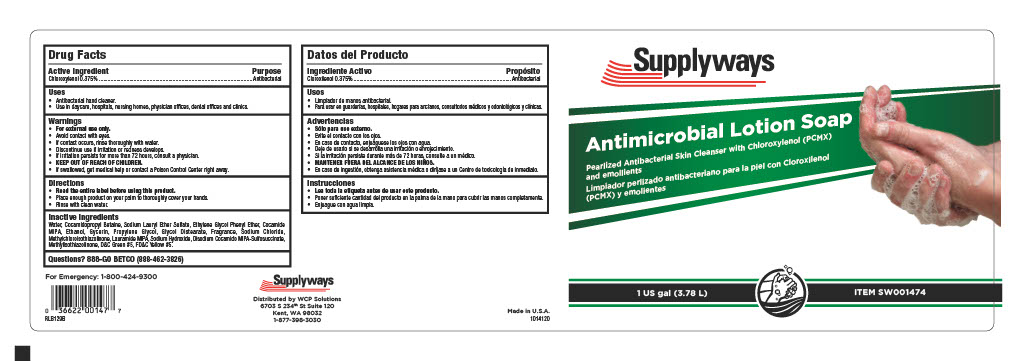
Skin Cleanser Chloroxylenol 3.75 mg/mL Soap, 3785 mL — NDC 72528-141-04 (Billing 72528-0141-04)
This is a package of 3,785 mL of Skin Cleanser Chloroxylenol 3.75 mg/mL Soap from West Coast Paper Company, no longer marketed (first marketed Aug 2022), no longer in the FDA NDC Directory. It is this product's only package size.
Identity & classification
Regulatory identifiers FDA, NLM and CMS codes for this package
- RxCUI (RxNorm): 1362618
Where does this data come from?
- FDA openFDA NDC Directory · synced Oct 1, 2026
- FDA label on DailyMed · label index refreshed Oct 1, 2026
- RxNorm (NLM RxNav) · catalog refreshed Oct 1, 2026
- Medi-Span GPI (licensed)
- First Databank (licensed) · refreshed Oct 1, 2026
RxNorm drug class
This medicine belongs to the Phenol and derivatives class.
Where does this data come from?
- RxClass (NLM) · catalog refreshed Oct 1, 2026
Clinical
This is a topical soap cleanser containing chloroxylenol, an antimicrobial agent. Chloroxylenol is commonly used in skin cleansers to help reduce bacteria on the skin surface. The product is marketed as an over-the-counter monograph drug, meaning it is sold under established FDA guidelines for this class of antiseptic soaps rather than as an individually approved application. It is intended for routine cleansing and hygiene use.
Patient education
Supplement & herbal interactions
Where does this data come from?
- MedlinePlus (NLM) · refreshed Oct 1, 2026
- FDA label on DailyMed · label index refreshed Oct 1, 2026
Ask a licensed pharmacist directly — free, answered by our team.
Pricing
A drug doesn't have one price. Each row is a different public payment system, and none is what you'd pay at the counter — that depends on your insurance. The ⓘ on each row explains what it measures.
| Price system | Per each | Per package |
|---|---|---|
| Retail pharmacies payNADAC · weekly | Not in the retail survey — common for institutional, discontinued, or low-volume packs. | |
| Medicaid paysCMS SDUD · 12 mo | No recent Medicaid claims on file for this NDC — rare and low-volume NDCs are suppressed in the public data. | |
| Medicare drug plans payPart D · quarterly | No Part D plan price is available for this NDC in our data. | |
Where does this data come from?
- CMS NADAC weekly file
- CMS ASP pricing files · refreshed Sep 20, 2026
- CMS Medicaid State Drug Utilization Data · refreshed Oct 3, 2026
- CMS Part D plan pricing files · refreshed Sep 24, 2026
- VA National Acquisition Center price file
Packaging — all sizes for this product
| Package NDC | Description | Marketing start | Marketing end | Status |
|---|---|---|---|---|
| 72528-0141-04 You're viewing this Main listing | 3785 mL in 1 BOTTLE, PUMP | 2022-08-25 | — | Inactivated by FDA |
Therapeutic equivalents
| Product | Labeler | Pack | NADAC/unit | TE | Status | Price vs. this |
|---|---|---|---|---|---|---|
| NorthWoods PowerPlay .375 g/100mL 53125-0814-04 | Northwoods | 3780 ml | — | — | FDA listed | — |
| North Woods Supreme Antiseptic Hand Cleaner .375 g/100mL 53125-0841-19 | Superior | 900 ml | — | — | FDA listed | — |
| Hi-Tech 3.75 mg/mL 57424-0708-04 | Economical | 3780 ml | — | — | FDA listed | — |
| Skin Cleanser 3.75 mg/mLthis 72528-0141-04 | West | 3785 ml | — | — | Discontinued | — |
Where does this data come from?
- FDA openFDA NDC Directory · synced Oct 1, 2026
- FDA Orange Book · refreshed Oct 3, 2026
- CMS NADAC weekly file
Availability & generic status
We did not find an FDA-approved generic match for this exact strength, form and route.
Where does this data come from?
- FDA Orange Book · refreshed Oct 3, 2026
Inactive Ingredients / Excipients
Inactive ingredients, also called excipients, are components of the drug product other than the active ingredient. They may include fillers, dyes, coatings, preservatives, flavors, or other formulation ingredients.
💡 Tap an ingredient (hover on desktop) to see what it is and why it’s used.
-
UNII WC51CA3418
A fragrance compound derived from cinnamon, used as a flavoring and scent agent in medicines to improve taste and aroma.
-
UNII 7X6O37OK2I
A synthetic fragrance compound used as a flavoring agent or aromatic component in medicines. It adds pleasant taste or smell to make the medication more acceptable to patients.
-
UNII 565OK72VNF
A natural-origin fragrance compound derived from plants like citronella and geranium. Used as a flavoring agent and fragrance ingredient to improve taste or aroma in medications.
-
UNII QB1T0AG2YL
A naturally occurring compound used in medicines as a flavoring agent to mask bitter or unpleasant tastes. It may also serve as a fragrance component in certain formulations.
-
UNII 1GD7ODM28Y
A natural compound derived from plant sources, typically used as a flavoring agent or fragrance component to enhance the taste or aroma of medicines.
-
UNII Z331YX9EL9
A synthetic fragrance compound used as a flavoring agent in medicines. It provides taste and aroma to make oral medications more palatable, particularly in liquid formulations or chewable products.
-
UNII VK5ZHH2T3F
A synthetic organic compound used as a fragrance or flavoring agent in medicines. It provides aroma or taste to mask unpleasant flavors and improve patient acceptance of the medication.
-
UNII 364FV60913
A synthetic chemical compound used primarily as a fragrance ingredient and solvent in pharmaceutical formulations. It helps dissolve other components and contributes scent to improve the taste or appeal of oral medicines.
-
UNII 30E3255185
A synthetic organic compound used as a fragrance or flavoring agent in medicines. It provides pleasant taste or smell to make the medication more palatable for patients.
-
UNII 0ECG3V79ZJ
Benzyl acetate is a clear liquid chemical used as a solvent and fragrance component in medicines. It helps dissolve other ingredients and may contribute to the product's smell or taste.
-
UNII WAO5MNK9TU
Benzyl salicylate is a fragrant chemical compound used as a flavor and scent ingredient in medicines. It helps mask unpleasant tastes or odors in liquid or oral formulations.
-
UNII S4255P4G5M
Calcium silicate is a white powder made from calcium and silicon compounds. It acts as an anti-caking agent and flow aid, helping powder ingredients move smoothly during tablet or capsule manufacturing.
-
UNII 5OCF3O11KX
A plant-derived surfactant made from coconut oil. It helps mix oil and water ingredients together in the formulation and can improve how the medicine spreads or feels on the skin.
-
UNII M4SL82J7HK
A foaming and cleansing agent derived from coconut oil. It's used in liquid formulations to create texture, improve spreadability, and help distribute active ingredients evenly throughout the product.
-
UNII 8J6RDU8L9X
A synthetic green dye used to color medications. It helps make pills and capsules visually distinct so patients can easily identify their medicine.
-
UNII 46L1B02ND9
A synthetic fragrance ingredient derived from myrcene, a natural plant oil. It adds a fresh, woody scent to the medicine and helps mask unpleasant flavors or odors of active ingredients.
-
UNII 9A87HC7ROD
A synthetic compound used as a plasticizer and conditioning agent in tablet coatings and film formulations. It helps make coatings flexible and improves how they cling to the tablet surface.
-
UNII JJH7GNN18P
Ethylene oxide is a sterilizing gas used to eliminate bacteria, viruses, and other microorganisms from medical devices and some pharmaceutical equipment during manufacturing. It helps ensure the final medicine is free from harmful contamination.
-
UNII I753WB2F1M
FD&C Yellow No. 5 is a synthetic yellow colorant approved by the FDA. It is added to medicines to make pills, tablets, or liquids visually distinct and easier to identify.
-
UNII 13W7MDN21W
A waxy compound made from glycol and stearic acid. It's used as an emulsifier to help blend oil and water-based ingredients, and as a thickener to give the medicine its desired texture and consistency.
-
UNII S3ASM14UAS
A synthetic chemical compound used as an inactive ingredient in medications. It typically serves as a fragrance or flavoring agent to improve the taste or smell of the medicine.
-
UNII 8F78EY72YL
Hexyl salicylate is a synthetic compound used as a fragrance ingredient in medications. It provides pleasant odor and taste to make medicines more acceptable to take.
-
UNII 82DUX3RRVU
A cleansing agent derived from lauric acid and isopropanolamine. It helps remove oils and impurities in topical formulations and may act as an emulsifier to mix water and oil-based ingredients together.
-
UNII D81QY6I88E
Linalool is a natural fragrant oil found in plants like lavender and citrus. It's used in medicines as a flavoring agent and to mask unpleasant tastes or smells.
-
UNII HIE492ZZ3T
Phenoxyethanol is a synthetic preservative and antimicrobial agent used to prevent bacterial and fungal growth in medicines and cosmetic products, extending shelf life and maintaining product safety.
-
UNII ML9LGA7468
A naturally-derived alcohol used as a preservative and fragrance in medicines. It helps prevent bacterial and fungal growth, extending the product's shelf life.
-
UNII 6DC9Q167V3
Propylene glycol is a clear liquid derived from petroleum or vegetable sources. It acts as a solvent, humectant, and preservative in medicines, helping dissolve active ingredients and maintain product stability.
-
UNII 058TS43PSM
Sodium aluminosilicate is a mineral-based powder used as an anti-caking agent and flow improver in solid medicines. It absorbs moisture and prevents clumping, helping tablets and capsules remain dry and easy to handle.
-
UNII OJ245FE5EU
Sodium benzoate is a salt derived from benzoic acid, a preservative. It's added to medicines to prevent growth of bacteria, fungi, and other microorganisms that could spoil the product.
-
UNII 45P3261C7T
Sodium carbonate is an alkaline mineral salt commonly used in medications as a buffer to help maintain pH balance and improve stability. It may also function as a disintegrant to help tablets break apart in the digestive system.
-
UNII 451W47IQ8X
Sodium chloride is common table salt. It's used in medicines as a buffer to maintain proper pH, as a filler to add bulk, or to adjust the osmotic balance in liquid formulations.
-
UNII 55X04QC32I
A strong alkaline chemical used to adjust and maintain the pH balance of liquid medicines. It helps keep the medicine stable and ensures it stays effective during storage.
-
UNII BPV390UAP0
Sodium laureth sulfate is a mild detergent and surfactant derived from coconut oil or petroleum. It helps mix oil and water in formulations and is often used as a cleaning or foaming agent in topical products like shampoos and cleansers.
-
UNII 368GB5141J
A detergent and foaming agent derived from coconut or palm oil. In medications, it helps break down and mix oil and water-based ingredients, aids in tablet disintegration, and improves how the drug dissolves and spreads in the mouth or digestive system.
-
UNII AB6MNQ6J6L
Succinic acid is an organic acid derived from natural sources or chemical synthesis. In medications, it functions as a buffer to help maintain the proper pH level and may also serve as a preservative or flavor enhancer in formulations.
-
UNII 91D9GV0Z28
A mineral salt made from calcium and phosphate. It acts as a filler to add bulk to the tablet or capsule, and helps bind ingredients together so the medicine holds its shape.
-
UNII 5232EN3X2F
A synthetic compound used as a colorant and flavoring agent in medications. It provides green coloring and may contribute fruity or herbal taste characteristics to tablets, capsules, or liquid formulations.
-
UNII 059QF0KO0R
Water is a liquid solvent that dissolves and mixes ingredients together in liquid medicines, syrups, and injections. It helps distribute the active drug evenly throughout the product.
38 inactive ingredients listed in the exact product block matched to this NDC.
Label-section wording can be broader than the structured product block and may mention additional formulation ingredients.
Where does this data come from?
ingredient classCode="IACT" elements from the exact product block matched by this NDC. Label-section narrative from DailyMed / the openFDA label index is shown separately when available.- FDA label on DailyMed · label index refreshed Oct 1, 2026
- FDA openFDA NDC Directory · synced Oct 1, 2026
Inactive ingredient FAQ
Are inactive ingredients the same for every manufacturer?
Why might an inactive ingredient be missing?
Can inactive ingredients matter?
Manufacturer & labeler
Where does this data come from?
- FDA openFDA NDC Directory · synced Oct 1, 2026
- Drugs@FDA
FDA label — Drug Facts FDA SPL
🎯 Indications and Usage ▾
Uses Antibacterial hand cleaner Use in daycare, hospitals, nursing homes, physician offices, dental offices and clinics
⏱️ Dosage and Administration ▾
Directions Read the entire label before using this product Place enough product on your palm to thoroughly cover your hands Rinse with clean water
⚠️ Warnings ▾
Warnings For external use only Avoid contact with eyes If contact occurs, risne thoroghly with water Discontinue use if irritation or redness develops If irritation persists for more than 72 hours, consult a physician KEEP OUT OF REACH OF CHILDREN If swallowed, get medical help or contact a Poison COntrol Center right away
🧪 Active Ingredient ▾
Active Ingredient Chloroxylenol 0.375%
🧪 Inactive Ingredients ▾
Inactive Ingredients Water, Cocamidopropyl Betaine, Sodium Lauryl Ether Sulfate, Ethylene Glycol Phenyl Ether, Cocamide MIPA, Ethanol, Gycerin, Propylene Glycol, Glycol Distearate, Fragrance, Sodium Chloride, Methylchloroisothiazolinone, Lauramide MIPA, Sodium Hydroxide, Disodium Cocamido MIPA-Sulfosuccinate, Methylisothiazolinone, D&C Green #5, FD&C Yellow #5.
🎯 Purpose ▾
Purpose Antibacterial
📄 Keep Out of Reach of Children ▾
KEEP OUT OF REACH OF CHILDREN KEEP OUT OF REACH OF CHILDREN
📄 Recent Major Changes ▾
Recent major changes Directions
📄 Package Label / Principal Display Panel ▾
Package Label Label
Reported adverse events (FAERS)
Top reported reactions
Reporter sex
Serious outcomes
Where does this data come from?
About this NDC listing & data coverage
What data is (and isn’t) available for this NDC — tap to expand
| NDC identity (package / product / labeler codes) | ✓ Available |
| Labeler | ✓ Available |
| Product & package description | ✓ Available |
| Marketing category & status | ✓ Available |
| Active ingredient / dosage form / route | ✓ Available |
| FDA label (SPL via DailyMed) | ✓ Available |
| Package photos | ✓ Available |
| Inactive ingredients (structured) | ✓ Available |
| NADAC pharmacy acquisition price (CMS) | — Not published for this NDC CMS publishes NADAC only for NDCs reported in its retail-pharmacy survey. |
| Orange Book / therapeutic-equivalence data | — Not published for this NDC Applies only to products approved under an NDA/ANDA; many listings are out of scope. |
| HCPCS J-code billing crosswalk | — Not published for this NDC Most self-administered / retail products have no J-code — that is normal. |
| Medicaid utilization (CMS SDUD) | — Not published for this NDC CMS reports utilization only for NDCs with Medicaid claims above its privacy threshold. |