
Loperamide hydrochloride 2 mg Capsule, 500-count — NDC 72578-138-05 (Billing 72578-0138-05)
This is a package of 500 capsules of Loperamide hydrochloride 2 mg Capsule from Viona Pharmaceuticals Inc, marketed since Jun 2023 and currently FDA-listed; retail pharmacies pay about $0.0549 per capsule (NADAC).
NDC database record
One package, one record: these facts belong to NDC 72578-138-05 alone.
- Record
- FDA NDC Directory package listing · Human prescription drug
- Code segments
- 72578 labeler · 138 product · 05 package
- Package marketed since
- Jun 25, 2023
- Sample package
- No — commercial package
- Listing certified through
- Dec 31, 2026
- Billing quantity
- 500 EA per package
- Barcode (UPC-A, from the NDC)
- 3 7257813805 9
- Medicaid fills, this package
- 28,629 prescriptions in the last four reported quarters
- FDA record last changed
- Jul 24, 2026
Identity & classification
Regulatory identifiers FDA, NLM and CMS codes for this package
Drug-database identifiers Medi-Span GPI and First Databank GCN / HICL / AHFS classification
- GSN (GCN sequence number): 002842
- GCN: 08370
- GPI-14 (Medi-Span): 47100020100105
- HICL (First Databank): 001236
- AHFS class code: 56:08.00.00
- RxCUI (RxNorm): 978006
Where does this data come from?
- FDA openFDA NDC Directory · synced Oct 8, 2026
- FDA label on DailyMed · label index refreshed Oct 8, 2026
- RxNorm (NLM RxNav) · catalog refreshed Oct 8, 2026
- Medi-Span GPI (licensed)
- First Databank (licensed) · refreshed Oct 8, 2026
RxNorm drug class
This medicine belongs to the Opioid Agonist class.
Where does this data come from?
- RxClass (NLM) · catalog refreshed Oct 8, 2026
Clinical
Nonprescription (over-the-counter) loperamide is used to control acute diarrhea (loose stools that come on suddenly and usually lasts less than 2 weeks), including travelers' diarrhea. Prescription loperamide is also used to control acute diarrhea and also ongoing diarrhea associated with inflammatory bowel disease (IBD; condition in which the lining of all or part of the intestine is swollen, irritated, or has sores). Prescription loperamide is also used to reduce the amount of fluid in people with ileostomies (surgery to create an opening for waste to leave the body through the abdomen). Lop...
Read the full MedlinePlus article ↗- It controls the symptoms of diarrhea, including travelers' diarrhea in over-the-counter products. Prescription-labeled capsules are also used for chronic diarrhea in adults with in...
- Take it by mouth, usually after loose stools, following the label chart for your age and weight. Drink lots of clear fluids so you don't get dehydrated. With liquids, shake well an...
- No. Taking more than directed can cause serious, even fatal, heart rhythm problems. If diarrhea lasts more than 2 days or gets worse, stop and call your doctor.
- Can I take extra if the diarrhea isn't stopping?
Patient education
Supplement & herbal interactions
Where does this data come from?
- MedlinePlus (NLM) · refreshed Oct 8, 2026
- FDA label on DailyMed · label index refreshed Oct 8, 2026
Ask a licensed pharmacist directly — free, answered by our team.
Pricing
A drug doesn't have one price. Each row is a different public payment system, and none is what you'd pay at the counter — that depends on your insurance. The ⓘ on each row explains what it measures.
| Price system | Per ea | Per package |
|---|---|---|
| Retail pharmacies payNADAC · weekly | $0.055 | $27.45 / 500 capsules |
| Medicaid paysCMS SDUD · 12 mo | $0.2767 | $138.35 / 500 capsules |
| Medicare drug plans payPart D · Q2 2026 | $0.2376 | $118.80 / 500 capsules |
Where does this data come from?
- CMS NADAC weekly file · file of Oct 7, 2026
- CMS ASP pricing files · refreshed Sep 20, 2026
- CMS Medicaid State Drug Utilization Data · through Q1 2026
- CMS Part D plan pricing files · refreshed Sep 24, 2026
- VA National Acquisition Center price file
Packaging — all sizes for this product
| Package NDC | Description | Per unit | Per pack | Marketing start | Marketing end | Status |
|---|---|---|---|---|---|---|
| 72578-0138-01 72578-138-01 Main listing | 100 CAPSULE in 1 BOTTLE | $0.0549 / ea | $5.49 | 2023-06-25 | — | Active |
| 72578-0138-05 You're viewing this | 500 CAPSULE in 1 BOTTLE | $0.0549 / ea | $27.45 | 2023-06-25 | — | Active |
| 72578-0138-77 72578-138-77 | 10 BLISTER PACK in 1 CARTON / 10 CAPSULE in 1 BLISTER PACK | — | — | 2023-06-25 | — | Active |
This pack effectively ties for the lowest per-ea cost of the 2 priced pack sizes ($0.0549 NADAC).
This pack accounts for about 39% of this product's recent Medicaid fills; most go to the 100 capsules pack. See all packs ↓
Pack size FAQ
What quantity is in this package?
How does this package differ from NDC 72578-0138-01?
What NDC number is used to bill for this package of Loperamide hydrochloride 2 mg Capsule?
Prices are the latest CMS NADAC pharmacy acquisition cost per NDC; per-pack figures are per-unit × pack quantity, shown only when the pack is denominated in the same measure NADAC prices.
Therapeutic equivalents
| Product | Labeler | Pack | NADAC/unit | TE | Status | Price vs. this |
|---|---|---|---|---|---|---|
| Loperamide Hydrochloride 2 mg 00093-0311-01 | Teva | 100 capsules | $0.055 | AB | Availability likely | — |
| Loperamide Hydrochloride 2 mg 00378-2100-01 | Mylan | 100 capsules | $0.055 | AB | Availability likely | — |
| Loperamide Hydrochloride 2 mg 00904-7472-61 | Major | 100 capsules | $0.055 | AB | Availability likely | — |
| Loperamide Hydrochloride 2 mg 42799-0605-01 | Edenbridge | 100 capsules | $0.055 | AB | Availability likely | — |
| Loperamide Hydrochloride 2 mg 50268-0482-15 | AvPAK | 50 capsules | $0.055 | AB | Availability likely | — |
| Loperamide Hydrochloride 2 mg 51079-0690-20 | Mylan | 100 capsules | $0.055 | AB | Availability likely | — |
| Loperamide Hydrochloride 2 mg 59651-0691-01 | Aurobindo | 100 capsules | $0.055 | AB | Availability likely | — |
| Loperamide Hydrochloride 2 mg 60687-0229-01 | American | 100 capsules | $0.055 | AB | Availability likely | — |
| Loperamide Hydrochloride 2 mg 69452-0271-20 | Bionpharma | 100 capsules | $0.055 | AB | Availability likely | — |
| Loperamide hydrochloride 2 mgthis 72578-0138-05 | Viona | 500 capsules | $0.055 | AB | Availability likely | — |
| Loperamide Hydrochloride 2 mg 72603-0328-01 | NorthStar | 100 capsules | $0.055 | AB | Availability likely | — |
| Anti-Diarrheal 2 mg 46122-0581-62 | AMERISOURCE | 12 capsules | $0.136 | — | Availability likely | +148% |
| Anti-Diarrheal 2 mg 70000-0461-01 | CARDINAL | 12 capsules | $0.136 | — | Availability likely | +148% |
| Anti-Diarrheal 2 mg 70677-1062-01 | STRATEGIC | 12 capsules | $0.136 | — | Availability likely | +148% |
| Anti-Diarrheal 2 mg 83324-0208-12 | CHAIN | 12 capsules | $0.136 | — | Availability likely | +148% |
| Anti-Diarrheal 2 mg 83324-0209-24 | CHAIN | 12 capsules | $0.136 | — | Availability likely | +148% |
| Anti-Diarrheal 2 mg 63868-0876-12 | CHAIN | 12 capsules | $0.140 | — | FDA listed | +154% |
| Anti-Diarrheal 2 mg 62011-0390-01 | Strategic | 12 capsules | $0.150 | — | FDA listed | +173% |
| Anti-Diarrheal 2 mg 00363-1176-08 | WALGREENS | 12 capsules | — | — | FDA listed | — |
| Loperamide Hydrochloride 2 mg 00615-8497-39 | NCS | 30 capsules | — | AB | FDA listed | — |
| Anti-Diarrheal 2 mg 11673-0177-12 | TARGET | 12 capsules | — | — | FDA listed | — |
| Anti-Diarrheal 2 mg 11822-7834-02 | Rite | 12 capsules | — | — | FDA listed | — |
| anti-diarrheal 2 mg 21130-0835-12 | Albertsons | 12 capsules | — | — | FDA listed | — |
| Anti-Diarrheal 2 mg 30142-0159-08 | KROGER | 12 capsules | — | — | FDA listed | — |
| Anti-Diarrheal 2 mg 36800-0208-12 | TOP | 12 capsules | — | — | FDA listed | — |
| Anti-Diarrheal 2 mg 37808-0988-12 | HEB | 12 capsules | — | — | FDA listed | — |
| anti-diarrheal 2 mg 41250-0210-08 | MEIJER | 12 capsules | — | — | FDA listed | — |
| First Aid Direct Anti-Diarrheal 2 mg 42961-0103-02 | Cintas | 12 capsules | — | — | FDA listed | — |
| Loperamide Hydrochloride 2 mg 43063-0020-12 | PD-Rx | 12 capsules | — | AB | FDA listed | — |
| Loperamide Hydrochloride 2 mg 43598-0770-24 | Dr. | 12 capsules | — | — | FDA listed | — |
| Loperamide Hydrochloride 2 mg 48433-0063-20 | Safecor | 100 capsules | — | AB | FDA listed | — |
| Anti-Diarrheal 2 mg 49035-0483-12 | Wal-Mart | 12 capsules | — | — | FDA listed | — |
| Loperamide Hydrochloride 2 mg 50090-0460-00 | A-S | 15 capsules | — | AB | FDA listed | — |
| Loperamide Hydrochloride 2 mg 50090-7398-00 | A-S | 15 capsules | — | AB | FDA listed | — |
| Imodium A-D 2 mg 50580-0367-01 | Kenvue | 12 capsules | — | — | FDA listed | — |
| Loperamide Hydrochloride 2 mg 51407-0999-01 | Golden | 100 capsules | — | AB | FDA listed | — |
| Anti-Diarrheal 2 mg 53943-0176-12 | DISCOUNT | 12 capsules | — | — | FDA listed | — |
| Loperamide Hydrochloride 2 mg 55154-4699-00 | Cardinal | 10 capsules | — | AB | FDA listed | — |
| Loperamide Hydrochloride 2 mg 55154-5585-00 | Cardinal | 10 capsules | — | AB | FDA listed | — |
| Loperamide Hydrochloride 2 mg 55289-0315-06 | PD-Rx | 6 capsules | — | AB | FDA listed | — |
| Anti-Diarrheal 2 mg 55910-0176-08 | DOLGENCORP, | 12 capsules | — | — | FDA listed | — |
| anti-diarrheal 2 mg 56062-0680-12 | PUBLIX | 12 capsules | — | — | FDA listed | — |
| Loperamide Hydrochloride 2 mg 58602-0727-74 | Aurohealth | 6 capsules | — | — | FDA listed | — |
| Loperamide Hydrochloride 2 mg 60468-0005-01 | allphamed | 100 capsules | — | AB | FDA listed | — |
| Loperamide Hydrochloride 2 mg 63629-8747-01 | Bryant | 100 capsules | — | AB | FDA listed | — |
| anti-diarrheal 2 mg 63941-0684-12 | VALU | 12 capsules | — | — | FDA listed | — |
| Loperamide Hydrochloride 2 mg 66267-0132-12 | NuCare | 12 capsules | — | AB | FDA listed | — |
| Loperamide Hydrochloride 2 mg 67046-1676-03 | Coupler | 30 capsules | — | AB | FDA listed | — |
| Loperamide Hydrochloride 2 mg 67296-2172-01 | Redpharm | 15 capsules | — | AB | FDA listed | — |
| Anti-Diarrheal 2 mg 68016-0058-12 | Premier | 12 capsules | — | — | FDA listed | — |
| Loperamide Hydrochloride 2 mg 68071-2257-06 | NuCare | 6 capsules | — | AB | FDA listed | — |
| Loperamide Hydrochloride 2 mg 68071-2700-01 | NuCare | 12 capsules | — | AB | FDA listed | — |
| Loperamide Hydrochloride 2 mg 68071-3618-01 | NuCare | 12 capsules | — | AB | FDA listed | — |
| anti-diarrheal 2 mg 69452-0176-12 | Bionpharma | 24 capsules | — | — | FDA listed | — |
| anti-diarrheal 2 mg 69452-0266-12 | Bionpharma | 12 capsules | — | — | FDA listed | — |
| Anti-Diarrheal 2 mg 69842-0061-12 | CVS | 12 capsules | — | — | FDA listed | — |
| Loperamide Hydrochloride 2 mg 70518-4283-00 | REMEDYREPACK | 30 capsules | — | AB | FDA listed | — |
| Loperamide hydrochloride 2 mg 70771-1769-01 | Zydus | 100 capsules | — | AB | FDA listed | — |
| Loperamide Hydrochloride 2 mg 71335-1921-00 | Bryant | 50 capsules | — | AB | FDA listed | — |
| Loperamide Hydrochloride 2 mg 71335-2061-00 | Bryant | 50 capsules | — | AB | FDA listed | — |
| Loperamide Hydrochloride 2 mg 71335-2111-00 | Bryant | 50 capsules | — | AB | FDA listed | — |
| Loperamide Hydrochloride 2 mg 71335-2487-00 | Bryant | 50 capsules | — | AB | FDA listed | — |
| Loperamide Hydrochloride 2 mg 71335-2571-00 | Bryant | 50 capsules | — | AB | FDA listed | — |
| Loperamide Hydrochloride 2 mg 71610-0648-53 | Aphena | 60 capsules | — | AB | FDA listed | — |
| Loperamide Hydrochloride 2 mg 71610-0781-53 | Aphena | 60 capsules | — | AB | FDA listed | — |
| Loperamide Hydrochloride 2 mg 71610-0950-30 | Aphena | 30 capsules | — | AB | FDA listed | — |
| Loperamide Hydrochloride 2 mg 71610-0973-53 | Aphena | 60 capsules | — | AB | FDA listed | — |
| anti-diarrheal 2 mg 72288-0313-12 | Amazon.com | 12 capsules | — | — | FDA listed | — |
| Loperamide Hydrochloride 2 mg 72888-0130-00 | Advagen | 1000 capsules | — | AB | FDA listed | — |
| WELMATE Anti Diarrheal Loperamide HCl Softgels 2 mg 73581-0102-24 | YYBA | 24 capsules | — | — | FDA listed | — |
| Loperamide Hydrochloride 2 mg 75907-0097-12 | Dr. | 12 capsules | — | — | FDA listed | — |
| Anti-Diarrheal 2 mg 80136-0851-42 | Northeast | 12 capsules | — | — | FDA listed | — |
| Loperamide Hydrochloride 2 mg 55154-0277-00 | Cardinal | 10 capsules | — | AB | FDA listed | — |
| Loperamide Hydrochloride 2 mg 59556-0959-05 | Strides | 12 capsules | — | — | FDA listed | — |
| Loperamide Hydrochloride 2 mg 73581-0177-02 | YYBA | 12 capsules | — | — | FDA listed | — |
Where does this data come from?
- FDA openFDA NDC Directory · synced Oct 8, 2026
- FDA Orange Book · refreshed Oct 3, 2026
- CMS NADAC weekly file · file of Oct 7, 2026
Availability & generic status
This product is an FDA-approved generic. Other versions of the same drug are listed under Therapeutic equivalents, least expensive first.
Where does this data come from?
- FDA Orange Book · refreshed Oct 3, 2026
What it looks like
Where does this data come from?
- FDA label on DailyMed · label index refreshed Oct 8, 2026
Inactive Ingredients / Excipients
Inactive ingredients, also called excipients, are components of the drug product other than the active ingredient. They may include fillers, dyes, coatings, preservatives, flavors, or other formulation ingredients.
🧪 Avoiding an ingredient? See Loperamide inactive ingredients by manufacturer: every current product's list side by side, so you can ask your pharmacy for the version that does not list it.
💡 Tap an ingredient (hover on desktop) to see what it is and why it’s used.
-
UNII 1K09F3G675
Ferric oxide red is an inorganic iron compound used as a colorant in medicines. It gives tablets, capsules, or other dosage forms a red or reddish tint for identification and appearance.
-
UNII EX438O2MRT
Ferric oxide yellow is a naturally occurring iron compound used as a colorant in medications. It gives tablets, capsules, and other forms a yellow or golden hue for identification and appearance.
-
UNII XM0M87F357
A dark iron oxide compound that gives medicines their black or dark color. It's used as a colorant in tablets and capsules to help identify the product and make it visually distinctive.
-
UNII 2G86QN327L
Gelatin is a protein derived from animal collagen, commonly used in medicines as a gelling agent and capsule material. It helps create soft or hard capsule shells that hold and release medication, and can also thicken liquid formulations.
-
UNII EWQ57Q8I5X
Lactose monohydrate is a natural sugar derived from milk. It serves as a filler and binder in tablets and capsules, helping create the proper size, texture, and consistency of the medicine.
-
UNII 70097M6I30
Magnesium stearate is a salt made from magnesium and stearic acid, a fatty substance. It's used in tablets and capsules as a lubricant and glidant to help ingredients flow smoothly during manufacturing and prevent sticking.
-
UNII 7T9FYH5QMK
A plant-derived powder that serves as a binder and filler in tablets and capsules. It helps hold ingredients together, adds bulk, and aids in smooth tablet disintegration when swallowed.
-
UNII PNR0YF693Y
A plant-based powder made from purified wood cellulose. It acts as a filler to add bulk, a binder to hold ingredients together, and a disintegrant to help the tablet break apart in the stomach.
-
UNII WZH3C48M4T
Potassium hydroxide is a strong alkaline chemical used in medicines to adjust and maintain the pH level of liquid formulations, helping keep the product stable and the active ingredients effective.
-
UNII U725QWY32X
Povidone K30 is a synthetic polymer made from petroleum. It acts as a binder to hold tablet ingredients together and as a disintegrant to help the tablet break apart in the stomach so the medicine can be absorbed.
-
UNII 46N107B71O
Shellac is a natural resin secreted by the lac beetle. It's used as a coating on tablets and capsules to control how quickly the medicine dissolves and to improve appearance and stability.
-
UNII ETJ7Z6XBU4
Silicon dioxide is a naturally occurring mineral used as a glidant and anti-caking agent. It helps powder ingredients flow smoothly and prevents clumping during manufacturing and storage.
-
UNII 368GB5141J
A detergent and foaming agent derived from coconut or palm oil. In medications, it helps break down and mix oil and water-based ingredients, aids in tablet disintegration, and improves how the drug dissolves and spreads in the mouth or digestive system.
-
UNII H8AV0SQX4D
A modified starch derived from potato or corn starch. It absorbs water quickly and helps tablets or capsules break apart and dissolve in the stomach, acting as a disintegrant to ensure the medicine releases its active ingredients properly.
-
UNII 15FIX9V2JP
Titanium dioxide is a bright white mineral powder commonly used as a colorant and opacifying agent. It makes pills and tablets white or lighter in color and helps make coatings non-transparent.
15 inactive ingredients listed in the exact product block matched to this NDC.
Where does this data come from?
ingredient classCode="IACT" elements from the exact product block matched by this NDC. Label-section narrative from DailyMed / the openFDA label index is shown separately when available.- FDA label on DailyMed · label index refreshed Oct 8, 2026
- FDA openFDA NDC Directory · synced Oct 8, 2026
Inactive ingredient FAQ
Are inactive ingredients the same for every manufacturer?
Why might an inactive ingredient be missing?
Can inactive ingredients matter?
Manufacturer & labeler
More NDCs from Viona Pharmaceuticals Inc labeler code 72578
- Valsartan 40 mg Tablet, Film Coated NDC 72578-131-06
- Valsartan 80 mg Tablet, Film Coated NDC 72578-132-16
- Valsartan 160 mg Tablet, Film Coated NDC 72578-133-16
- Valsartan 320 mg Tablet, Film Coated NDC 72578-134-16
- febuxostat 40 mg Tablet NDC 72578-136-01
- febuxostat 80 mg Tablet NDC 72578-137-01
- Darunavir 600 mg Tablet, Film Coated NDC 72578-147-05
- Darunavir 800 mg Tablet, Film Coated NDC 72578-148-05
- acetaZOLAMIDE 125 mg Tablet NDC 72578-149-01
- acetaZOLAMIDE 250 mg Tablet NDC 72578-150-01
- Tretinoin 1 mg/g Cream NDC 72578-153-08
- Tretinoin .25 mg/g Cream NDC 72578-155-08
Where does this data come from?
- FDA openFDA NDC Directory · synced Oct 8, 2026
- Drugs@FDA
Full prescribing information FDA SPL
🚨 Boxed Warning ▾
WARNING: TORSADES DE POINTES AND SUDDEN DEATH Cases of Torsades de Pointes, cardiac arrest and death have been reported with the use of a higher than recommended dosages of loperamide hydrochloride (see WARNINGS and OVERDOSAGE ). Loperamide hydrochloride is contraindicated in pediatric patients less than 2 years of age (see CONTRAINDICATIONS ). Avoid loperamide hydrochloride dosages higher than recommended in adults and pediatric patients 2 years of age and older due to the risk of serious cardiac adverse reactions (see DOSAGE AND ADMINISTRATION ).
🎯 Indications and Usage ▾
INDICATIONS AND USAGE Loperamide hydrochloride capsules are indicated for the control and symptomatic relief of acute nonspecific diarrhea in patients 2 years of age and older and of chronic diarrhea in adults associated with inflammatory bowel disease. Loperamide hydrochloride capsules are also indicated for reducing the volume of discharge from ileostomies.
⏱️ Dosage and Administration ▾
DOSAGE AND ADMINISTRATION Loperamide hydrochloride is contraindicated in pediatric patients less than 2 years of age due to the risks of respiratory depression and serious cardiac adverse reactions (see CONTRAINDICATIONS ). Avoid Loperamide hydrochloride dosages higher than recommended in adult or pediatric patients 2 years of age and older due to the risk of serious cardiac adverse reactions (See WARNINGS , OVERDOSAGE ). (1 capsule = 2 mg) Patients should receive appropriate fluid and electrolyte replacement as needed.
Acute Diarrhea Adults and Pediatric Patients 13 Years and Older The recommended initial dose is 4 mg (two capsules) followed by 2 mg (one capsule) after each unformed stool. The maximum daily dose is 16 mg (eight capsules). Clinical improvement is usually observed within 48 hours.
Pediatric Patients 2 Years to 12 Years of Age In pediatric patients 2 years to 5 years of age (20 kg or less), the non-prescription liquid formulation (Imodium A-D 1 mg/5 mL) should be used; for ages 6 to 12, either loperamide hydrochloride capsules or Imodium A-D liquid may be used. For pediatric patients 2 years to 12 years of age, the following schedule for capsules or liquid will usually fulfill initial dosage requirements: Recommended First Day Dosage Schedule Two years to five years (13 kg to 20 kg): 1 mg three times daily (3 mg total daily dosage) Six years to eight years (20 kg to 30 kg): 2 mg twice daily.
(4 mg total daily dosage) Eight years to twelve years (greater than 30kg): 2 mg three times daily (6 mg total daily dosage) Recommended Subsequent Daily Dosage Following the first treatment day, it is recommended that subsequent loperamide hydrochloride doses (1 mg/10 kg body weight) be administered only after a loose stool. The total daily dosage should not exceed recommended dosages for the first day. Chronic Diarrhea Adults The recommended initial dose is 4 mg (two capsules) followed by 2 mg (one capsule) after each unformed stool until diarrhea is controlled, after which the dosage of loperamide hydrochloride should be reduced to meet individual requirements.
When the optimal daily dosage has been established, this amount may then be administered as a single dose or in divided doses. The average daily maintenance dosage in clinical trials was 4 mg to 8 mg (two to four capsules per day). The maximum daily dosage is 16 mg (eight capsules per day).
If clinical improvement is not observed after treatment with 16 mg per day for at least 10 days, symptoms are unlikely to be controlled by further administration. Loperamide hydrochloride administration may be continued if diarrhea cannot be adequately controlled with diet or specific treatment. Elderly No formal pharmacokinetic studies were conducted in elderly subjects.
However, there were no major differences reported in the drug disposition in elderly patients with diarrhea relative to young patients. No dose adjustment is required for the elderly. In general, elderly patients may be more susceptible to drug-associated effects of the QT interval.
Avoid loperamide hydrochloride in elderly patients taking drugs that can result in prolongation of the QT interval (for example, Class IA or III antiarrhythmics) or in patients with risk factors for Torsades de Pointes (see WARNINGS ). Renal Impairment No pharmacokinetic data are available in patients with renal impairment. Since the metabolites and the unchanged drug are mainly excreted in the feces, no dosage adjustment is required for patients with renal impairment (see PRECAUTIONS ).
Hepatic Impairment The pharmacokinetics of loperamide have not been studied in patients with hepatic impairment. Use loperamide hydrochloride with caution in such patients because the systemic exposure may be increased due to reduced metabolism (see PRECAUTIONS ).
⛔ Contraindications ▾
CONTRAINDICATIONS Loperamide hydrochloride is contraindicated in: pediatric patients less than 2 years of age due to the risks of respiratory depression and serious cardiac adverse reactions (see WARNINGS ). patients with a known hypersensitivity to loperamide hydrochloride or to any of the excipients. patients with abdominal pain in the absence of diarrhea. patients with acute dysentery, which is characterized by blood in stools and high fever. patients with acute ulcerative colitis. patients with bacterial enterocolitis caused by invasive organisms including Salmonella , Shigella and Campylobacter . patients with pseudomembranous colitis (e.g., Clostridium difficle ) associated with the use of broad-spectrum antibiotics.
⚠️ Warnings ▾
WARNINGS Cardiac Adverse Reactions, Including Torsades de Pointes and Sudden Death Cases of prolongation of the QT/QTc interval, Torsades de Pointes, other ventricular arrhythmias, cardiac arrest, some resulting in death, have been reported in adults with use of higher than recommended doses per day of loperamide hydrochloride. Cases include patients who were abusing or misusing loperamide hydrochloride (see OVERDOSAGE and DRUG ABUSE AND DEPENDENCE ). Cases of syncope and ventricular tachycardia have been reported in adult patients receiving the recommended dosage of loperamide hydrochloride.
Some of these patients were taking other drugs or had other risk factors that may have increased their risk of cardiac adverse reactions. Additionally, postmarketing cases of cardiac arrest, syncope and respiratory depression have been reported in pediatric patients less than 2 years of age. Loperamide hydrochloride is contraindicated in pediatric patients less than 2 years of age due to the risks of respiratory depression and serious cardiac adverse reactions.
Avoid loperamide hydrochloride dosages higher than recommended in adults and pediatric patients 2 years of age and older due to the risk of serious cardiac adverse reactions (see DOSAGE AND ADMINISTRATION , OVERDOSAGE ) Avoid Loperamide Hydrochloride in: combination with others drugs or herbal products that are known to prolong the QT interval, including Class 1A (e.g., quinidine, procainamide) or Class III (e.g., amiodarone, sotalol) antiarrhythmics, antipsychotics (e.g., chlorpromazine, haloperidol, thioridazine, ziprasidone), antibiotics (e.g., moxifloxacin) or any other drug known to prolong the QT interval (e.g., pentamidine, levomethadyl acetate, methadone) patients with risk factors for QT prolongation, including patients with congenital long QT syndrome, with a history of cardiac arrhythmias or other cardiac conditions, elderly patients and those with electrolyte abnormalities.
Dehydration Fluid and electrolyte depletion often occur in patients who have diarrhea. In such cases, administration of appropriate fluid and electrolytes is very important. The use of loperamide hydrochloride does not preclude the need for appropriate fluid and electrolyte therapy.
Gastrointestinal Disorders In general, loperamide hydrochloride should not be used when inhibition of peristalsis is to be avoided due to the possible risk of significant sequelae including ileus, megacolon and toxic megacolon. Loperamide hydrochloride must be discontinued promptly when constipation, abdominal distention or ileus develop. Treatment of diarrhea with loperamide hydrochloride is only symptomatic.
Whenever an underlying etiology can be determined, specific treatment should be given when appropriate (or when indicated). Patients with AIDS treated with loperamide hydrochloride for diarrhea should have therapy stopped at the earliest signs of abdominal distention. There have been isolated reports of toxic megacolon in AIDS patients with infectious colitis from both viral and bacterial pathogens treated with loperamide hydrochloride.
Variability in Pediatric Response Loperamide hydrochloride should be used with special caution in pediatric patients because of the greater variability of response in this age group. Dehydration, particularly in pediatric patients less than 6 years of age, may further influence the variability of response to loperamide hydrochloride. Loperamide hydrochloride is contraindicated in pediatric patients less than 2 years of age due to the risks of respiratory depression and serious cardiac adverse reactions.
🤒 Adverse Reactions ▾
ADVERSE REACTIONS Clinical Trial Experience The adverse effects reported during clinical investigations of loperamide hydrochloride are difficult to distinguish from symptoms associated with the diarrheal syndrome. Adverse experiences recorded during clinical studies with loperamide hydrochloride were generally of a minor and self-limiting nature. They were more commonly observed during the treatment of chronic diarrhea.
The adverse events reported are summarized irrespective of the causality assessment of the investigators. 1) Adverse events from 4 placebo-controlled studies in patients with acute diarrhea The adverse events with an incidence of 1% or greater, which were reported at least as often in patients on loperamide hydrochloride as on placebo, are presented in the table below. Acute Diarrhea Loperamide Hydrochloride Placebo No. of treated patients 231 236 Gastrointestinal AE% Constipation 2.6% 0.8% The adverse events with an incidence of 1% or greater, which were more frequently reported in patients on placebo than on loperamide hydrochloride, were: dry mouth, flatulence, abdominal cramp and colic.
2) Adverse events from 20 placebo-controlled studies in patients with chronic diarrhea The adverse events with an incidence of 1% or greater, which were reported at least as often in patients on loperamide hydrochloride as on placebo, are presented below in the table below. Chronic Diarrhea Loperamide Hydrochloride Placebo No. of treated patients 285 277 Gastrointestinal AE% Constipation 5.3% 0% Central and peripheral nervous system AE% Dizziness 1.4% 0.7% The adverse events with an incidence of 1% or greater, which were more frequently reported in patients on placebo than on loperamide hydrochloride were: nausea, vomiting, headache, meteorism, abdominal pain, abdominal cramp and colic.
3) Adverse events from seventy-six controlled and uncontrolled studies in patients with acute or chronic diarrhea The adverse events with an incidence of 1% or greater in patients from all studies are given in the table below. a. All patients in all studies, including those in which it was not specified if the adverse events occurred in patients with acute or chronic diarrhea. Acute Diarrhea Chronic Diarrhea All Studies a No. of treated patients 1,913 1,371 3,740 Gastrointestinal AE% Nausea Constipation Abdominal cramps 0.7% 1.6% 0.5% 3.2% 1.9% 3% 1.8% 1.7% 1.4% Postmarketing Experience The following adverse events have been reported: Cardiac disorders QT/QTc interval prolongation, Torsades de Pointes, other ventricular arrhythmias, cardiac arrest, syncope and death (see WARNINGS , OVERDOSAGE ).
Skin and subcutaneous tissue disorders Rash, pruritus, urticaria and angioedema and extremely rare cases bullous eruption including erythema multiforme, Stevens-Johnson syndrome and Toxic Epidermal Necrolysis have been reported with use of loperamide hydrochloride. Immune system disorders Isolated occurrences of allergic reactions and in some cases severe hypersensitivity reactions including anaphylactic shock and anaphylactoid reactions have been reported with the use of loperamide hydrochloride. Gastrointestinal disorders Dry mouth, abdominal pain, distention or discomfort, nausea, vomiting, flatulence, dyspepsia, constipation, paralytic ileus, megacolon; including toxic megacolon (see CONTRAINDICATIONS , WARNINGS ).
Renal and urinary disorders Urinary retention Nervous system disorders Drowsiness, dizziness General disorders and administrative site conditions Tiredness A number of the adverse events reported during the clinical investigations and post-marketing experience with loperamide are frequent symptoms of the underlying diarrheal syndrome (abdominal pain/discomfort, nausea, vomiting, dry mouth, tiredness, drowsiness, dizziness, constipation and flatulence). These symptoms are often difficult to distinguish from undesirable drug effects.
You may report side effects to Viona Pharmaceuticals Inc. at 1-888-304-5011 or FDA at 1-800-FDA-1088.
🆘 Overdosage ▾
OVERDOSAGE The use of higher than recommended loperamide hydrochloride doses may result in life-threatening cardiac, CNS and respiratory adverse reactions. If over-exposure occurs, call your Poison Control Center at 1-800-222-1222 for current information on the management of poisoning or overdosage. Cardiac Effects Symptoms Cases of overdosage with loperamide hydrochloride (chronic ingestion of doses ranging from 70 mg to 1,600 mg daily; 4 times to 100 times the recommended dose) have resulted in life-threatening cardiac adverse reactions, including QT/QTc and QRS interval prolongation, Torsades de Pointes, Brugada syndrome and other ventricular arrhythmias, syncope, cardiac arrest and death.
Cases include patients who were abusing (using supratherapeutic doses in place of opioids to induce euphoria) or misusing (taking higher than recommended doses to control diarrhea or to prevent opioid withdrawal) loperamide. The following are representative cases that included cardiac adverse reactions: 25 year old abused loperamide and presented to the hospital on multiple occasions with symptoms of syncope, nausea, vomiting, bradycardia, hypotensive shock. The patient also experienced ventricular tachycardia, a prolonged QTc of 527 ms and QRS interval of 170 ms, frequent premature ventricular contractions and subsequent cardiac arrest and death (elevated loperamide blood concentration of 32 ng/ml).
54 year old misused loperamide hydrochloride (up to 144 mg per day) as a self- treatment for chronic diarrhea for over 2 years. Signs of cardiac toxicity included syncope, prolonged QT of 500 ms sinus arrest with junctional escape rhythm and polymorphic ventricular tachycardia, which required cardioversion and implantable cardioverter-defibrillator (ICD) management. 26 year old, with prior opioid abuse, presented to the hospital with recurrent syncope and developed Torsades de Pointes requiring electrical cardioversion.
An ECG revealed a sinus rhythm with a heart rate of 85 bpm and a markedly prolonged QTc interval of greater than 700 ms. The patient reported ingesting 100 mg to 250 mg of loperamide hydrochloride with 400 mg of cimetidine daily for several months to simulate the euphoric sensation associated with opioids. Management Consider loperamide as a possible cause of cardiac arrhythmias in patients who may have a history of opioid abuse or recent ingestion of unknown drugs and in the differential diagnosis of unstable arrhythmias, prolonged QTc or QRS intervals and Torsades de Pointes.
If loperamide-induced cardiac toxicity is suspected, promptly discontinue the drug and initiate therapy to manage and prevent cardiac arrhythmias and serious outcomes. In many cases of loperamide overdosage, anti-arrhythmic medications (e.g., magnesium sulfate) were ineffective in resolving the arrhythmias and preventing further episodes of Torsades de Pointes. Electrical cardioversion and overdrive pacing and isoproterenol continuous infusion were reported to manage QTc prolongation in the setting of overdose.
Laboratory Testing Loperamide serum concentrations are not widely available or clinically useful to guide patient management. CNS and Respiratory Depression Symptoms Cases of loperamide overdose (including relative overdose due to hepatic dysfunction), may cause opioid toxic effects including CNS depression (e.g. altered mental status, stupor, coordination disorders, somnolence, miosis, muscular hypertonia, respiratory depression), hypotension, urinary retention and paralytic ileus. Pediatric patients may be more sensitive to CNS effects, including respiratory depression, than adults.
Management Loperamide non-cardiac arrhythmia overdosages should be treated as opioid overdosages. Naloxone may reverse the opioid-related toxicity, including CNS and respiratory depression and hypotension, associated with loperamide overdosage. In adults and pediatric patients, naloxone may be administered intravenously.
Appropriate doses of naloxone, via intranasal… [Excerpted — this section continues on DailyMed.]
🧬 Clinical Pharmacology ▾
CLINICAL PHARMACOLOGY Mechanism of Action In vitro and animal studies show that loperamide hydrochloride acts by slowing intestinal motility and by affecting water and electrolyte movement through the bowel. Loperamide binds to the opiate receptor in the gut wall. Consequently, it inhibits the release of acetylcholine and prostaglandins, thereby reducing propulsive peristalsis and increasing intestinal transit time.
Loperamide increases the tone of the anal sphincter, thereby reducing incontinence and urgency. Pharmacodynamics Loperamide prolongs the transit time of the intestinal contents. It reduces daily fecal volume, increases the viscosity and bulk density and diminishes the loss of fluid and electrolytes.
Tolerance to the antidiarrheal effect has not been observed. Pharmacokinetics Absorption Plasma concentrations of unchanged drug remain below 2 ng/mL after the intake of a 2 mg capsule of loperamide hydrochloride. Plasma loperamide concentrations are highest approximately 5 hours after administration of the capsule and 2.5 hours after the liquid.
The peak plasma concentrations of loperamide were similar for both formulations. Distribution Based on literature information, the plasma protein binding of loperamide is about 95%. Loperamide is a P-glycoprotein substrate.
Elimination The apparent elimination half-life of loperamide is 10.8 hours with a range of 9.1 hours to 14.4 hours. Elimination of loperamide mainly occurs by oxidative N-demethylation. Metabolism In vitro loperamide is metabolized mainly by cytochrome P450 (CYP450) isozymes, CYP2C8 and CYP3A4, to form- N-demethyl loperamide.
In an in vitro study quercetin (CYP2C8 inhibitor) and ketoconazole (CYP3A4 inhibitor) significantly inhibited the N-demethylation process by 40% and 90%, respectively. In addition, CYP2B6 and CYP2D6 appear to play a minor role in loperamide N-demethylation. Concomitant use of loperamide hydrochloride with inhibitors of CYP3A4 (e.g., itraconazole) or CYP2C8 (e.g., gemfibrozil) or inhibitors of P-glycoprotein (e.g., quinidine, ritonavir) can increase exposure to loperamide (see PRECAUTIONS, Drug Interactions ).
Excretion Excretion of the unchanged loperamide and its metabolites mainly occurs through the feces.
📦 How Supplied / Storage and Handling ▾
HOW SUPPLIED Loperamide hydrochloride capsules USP, 2 mg are white to off-white colored granular powder filled in size '3' hard gelatin capsule with cream opaque cap and cream opaque body printed with 1701 in black ink and are supplies as follows: NDC 72578-138-01 in bottle of 100 capsules with child resistant closure NDC 72578-138-05 in bottle of 500 capsules NDC 72578-138-77 in unit-dose blister cartons of 100 capsules (10 x 10 unit-dose) Store at 20°C to 25°C (68ºF to 77°F); excursions permitted between 15°C to 30°C (59°F to 86°F) [See USP Controlled Room Temperature].
Dispense in a tight, light-resistant container as defined in the USP using a child-resistant closure. Call your doctor for medical advice about side effects. You may report side effects to FDA at 1-800-FDA-1088.
Please address medical inquiries to, [email protected] or Tel.: 1-888-304-5011. Trademarks listed are property of their respective owners. Manufactured by: Zydus Lifesciences Ltd.
Ahmedabad, India Distributed by: Viona Pharmaceuticals Inc. Cranford, NJ 07016 Rev: 04/23
📋 Description ▾
DESCRIPTION Loperamide hydrochloride USP, 4-(p-chlorophenyl)-4-hydroxy-N,N-dimethyl- a,a- diphenyl-1-piperidinebutyramide monohydrochloride, is a synthetic antidiarrheal for oral use. Loperamide hydrochloride is available in 2 mg capsules. Loperamide hydrochloride capsules, USP contain the following inactive ingredients: colloidal silicon dioxide, lactose monohydrate, magnesium stearate microcrystalline cellulose, povidone k-30 and sodium starch glycolate.
The capsule shell contains gelatin, iron oxide black, iron oxide red, iron oxide yellow, sodium lauryl sulfate, titanium dioxide and water. The capsule shell is imprinted with black ink and contains following inactive ingredients: black iron oxide, potassium hydroxide and shellac. Image
⚠️ Precautions ▾
PRECAUTIONS General Allergic Reactions Extremely rare allergic reactions including anaphylaxis and anaphylactic shock have been reported. Hepatic Impairment The effects of hepatic impairment on the pharmacokinetics of loperamide have not been studied. Use loperamide hydrochloride with caution in such patients because the systemic exposure to loperamide may be increased due to reduced metabolism.
Monitor patients with hepatic impairment closely for signs of central nervous system (CNS) toxicity. Renal Impairment No pharmacokinetic data are available in patients with renal impairment. Since it has been reported that the majority of the drug is metabolized and metabolites or the unchanged drug are excreted mainly in the feces, dosage adjustments in patients with renal impairment are not required.
Geriatric Use No formal studies have been conducted to evaluate the pharmacokinetics of loperamide in elderly subjects. However, in two studies that enrolled elderly patients, there were no major differences in the drug disposition in elderly patients with diarrhea relative to young patients. In general, elderly patients may be more susceptible to drug-associated effects on the QT interval.
Avoid loperamide hydrochloride in elderly patients taking drugs that can result in prolongation of the QT interval (for example, Class IA or III antiarrhythmics) or in patients with risk factors for Torsades de Pointes (see WARNINGS ). Information for Patients Advise patients: to take loperamide hydrochloride at the prescribed dosage. Use of a higher than prescribed dosage is not recommended (see WARNINGS ).
Report to a healthcare facility if you or someone you are caring for taking loperamide hydrochloride experiences fainting episode, a rapid or irregular heartbeat or become unresponsive. with acute diarrhea, that if clinical improvement is not observed in 48 hours, discontinue loperamide hydrochloride and contact their healthcare provider. to contact their healthcare provider if they see blood in their stools or if they develop a fever or abdominal distention. to use caution when driving a car or operating machinery, as tiredness, dizziness or drowsiness may occur in the setting of diarrheal syndromes treated with loperamide hydrochloride.
(see ADVERSE REACTIONS ). to tell their healthcare provider about all the medications they are taking, including prescription and over-the-counter medications, vitamins and herbal supplements, especially if they take Class 1A (e.g., quinidine, procainamide) or Class III (e.g., amiodarone, sotalol) antiarrhythmics, antipsychotics (e.g., chlorpromazine, haloperidol, thioridazine, ziprasidone), antibiotics (e.g., moxifloxacin) or any other drug known to prolong the QT interval (e.g., pentamidine, levomethadyl acetate, methadone).
Drug Interactions Effects of Other Drugs on Loperamide Concomitant use of loperamide hydrochloride with inhibitors of CYP3A4 (e.g., itraconazole) or CYP2C8 (e.g., gemfibrozil) or inhibitors of P-glycoprotein (e.g., quinidine, ritonavir) can increase exposure to loperamide. The increased systemic exposure to loperamide may increase a risk for cardiac adverse reactions especially in patients who are taking multiple CYP enzyme inhibitors or in patients with underlying cardiac conditions (see WARNINGS ). Monitor patients for cardiac adverse reactions.
CYP3A4 Inhibitors Itraconazole Concomitant administration of multiple doses of 100 mg itraconazole twice daily, an inhibitor of both CYP3A4 and P-glycoprotein, with a single 4-mg dose of loperamide hydrochloride increased the peak plasma concentration and the systemic exposure to loperamide by 2.9-fold and 3.8-fold, respectively. CYP2C8 Inhibitors Gemfibrozil When a single 4-mg dose of loperamide hydrochloride was co-administered with 600 mg gemfibrozil, a strong inhibitor of CYP2C8, on day 3 of a 5-day treatment with gemfibrozil twice daily, the mean peak plasma concentration and the systemic exposure to loperamide was increased by 1.6-fold and 2… [Excerpted — this section continues on DailyMed.]
🔒 Drug Abuse and Dependence ▾
DRUG ABUSE AND DEPENDENCE Controlled Substance Loperamide is not a controlled substance. Abuse Loperamide is a mu-opioid agonist. A human abuse potential study of loperamide hydrochloride at single doses up to 60 mg (3.75 times the recommended maximum adult dosage of 16 mg per day) was compared, in a double-blind cross-over design using nine subjects who had been active opiate users, to a threshold dose of codeine sulfate at 120 mg (96 mg base) or placebo.
This resulted in one subject (11%) feeling a drug on placebo and identifying it as "dope" (heroin) and liking it slightly. Codeine was felt by 56% of subjects and identified as "dope" by 44%. Loperamide was felt by 44% of subjects and identified as "dope" by 11% and possibly dope mixed with some other kind of drug by another 22%.
Loperamide abuse and misuse have been reported, especially at doses of 60 mg or greater. Loperamide can have greater CNS opioid effects at higher doses or with co-administration of drugs that increase systemic exposure and/or increase CNS penetration of loperamide (through inhibition of the CYP450 enzyme system or inhibition of P-glycoprotein). Loperamide is primarily being misused for relief from opioid withdrawal and abused by a few users who obtain some (reportedly mild-moderate) level of euphoria.
Dependence In animals, parenteral administration of loperamide hydrochloride can cause physical dependence, cross-tolerance to opioids and all the other pharmacologic effects typical of mu-opioid agonists. Studies in morphine-dependent monkeys demonstrated that loperamide hydrochloride at doses above those recommended for humans prevented signs of morphine withdrawal.
📄 Package Label / Principal Display Panel ▾
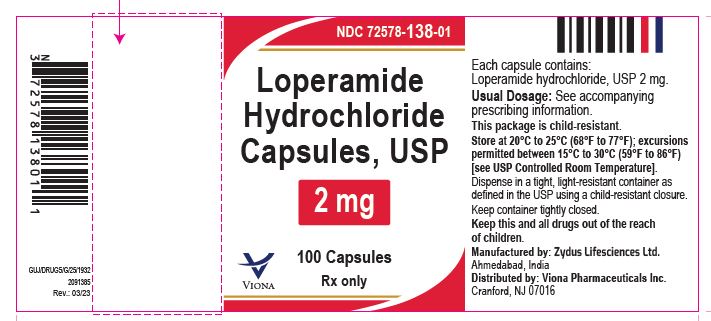
PACKAGE LABEL.PRINCIPAL DISPLAY PANEL Loperamide hydrochloride capsules USP, 2 mg NDC 72578-138-01 100 capsules Rx only container label