
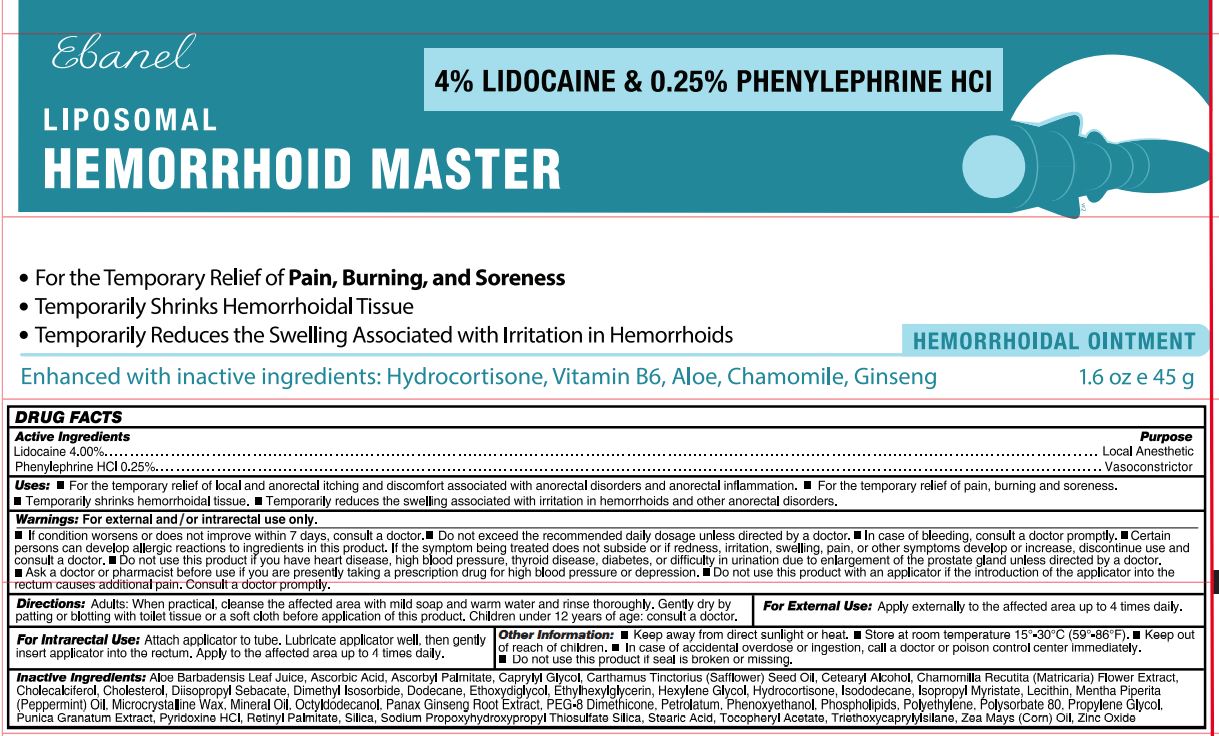
Hemorrhoid Master LIDOCAINE, PHENYLEPHRINE 40 mg/g; 2.5 mg/g Ointment, 45 g — NDC 72654-002-01 (Billing 72654-0002-01)
This is a package of 45 g of Hemorrhoid Master LIDOCAINE, PHENYLEPHRINE 40 mg/g; 2.5 mg/g Ointment from Ebanel Laboratories, Inc, marketed since Nov 2019 and currently FDA-listed. It is this product's only package size.
NDC database record
One package, one record: these facts belong to NDC 72654-002-01 alone.
- Record
- FDA NDC Directory package listing · Human OTC drug
- Code segments
- 72654 labeler · 002 product · 01 package
- Package marketed since
- Nov 1, 2019
- Sample package
- No — commercial package
- Listing certified through
- Dec 31, 2027
- Barcode (UPC-A, from the NDC)
- 3 7265400201 4
- FDA record last changed
- Jul 24, 2026
Identity & classification
Regulatory identifiers FDA, NLM and CMS codes for this package
- RxCUI (RxNorm): 2673304
Where does this data come from?
- FDA openFDA NDC Directory · synced Oct 8, 2026
- FDA label on DailyMed · label index refreshed Oct 8, 2026
- RxNorm (NLM RxNav) · catalog refreshed Oct 1, 2026
- Medi-Span GPI (licensed)
- First Databank (licensed) · refreshed Oct 8, 2026
RxNorm drug class
This medicine belongs to the Antiarrhythmic class.
Where does this data come from?
- RxClass (NLM) · catalog refreshed Oct 1, 2026
Clinical
Hemorrhoid Master is a topical ointment sold over the counter under FDA's OTC monograph rules for hemorrhoid products. It contains lidocaine, a local anesthetic typically used to numb pain and itching, and phenylephrine, an ingredient that functions as a vasoconstrictor to help reduce swelling and shrink blood vessels in the affected area. This combination is commonly used to help manage discomfort associated with external hemorrhoids.
Patient education
Supplement & herbal interactions
Where does this data come from?
- MedlinePlus (NLM) · refreshed Oct 8, 2026
- FDA label on DailyMed · label index refreshed Oct 8, 2026
Ask a licensed pharmacist directly — free, answered by our team.
Pricing
A drug doesn't have one price. Each row is a different public payment system, and none is what you'd pay at the counter — that depends on your insurance. The ⓘ on each row explains what it measures.
| Price system | Per g | Per package |
|---|---|---|
| Retail pharmacies payNADAC · weekly | Not in the retail survey — common for institutional, discontinued, or low-volume packs. | |
| Medicaid paysCMS SDUD · 12 mo | No recent Medicaid claims on file for this NDC — rare and low-volume NDCs are suppressed in the public data. | |
| Medicare drug plans payPart D · quarterly | No Part D plan price is available for this NDC in our data. | |
Where does this data come from?
- CMS NADAC weekly file
- CMS ASP pricing files · refreshed Sep 20, 2026
- CMS Medicaid State Drug Utilization Data · refreshed Oct 8, 2026
- CMS Part D plan pricing files · refreshed Sep 24, 2026
- VA National Acquisition Center price file
Packaging — all sizes for this product
| Package NDC | Description | Marketing start | Marketing end | Status |
|---|---|---|---|---|
| 72654-0002-01 You're viewing this Main listing | 45 g in 1 TUBE | 2019-11-01 | — | Active |
Therapeutic equivalents
| Product | Labeler | Pack | NADAC/unit | TE | Status | Price vs. this |
|---|---|---|---|---|---|---|
| Hemorrhoid Master 4 mg/g; 2.5 mg/g 63742-0045-01 | Clinical | 45 g | — | — | FDA listed | — |
| Dr Butlers Hemorrhoid and Fissure PF 4 g/100g; .25 g/100g 70942-0357-01 | Beyond | 1 tube | — | — | FDA listed | — |
| Hemorrhoid Master 40 mg/g; 2.5 mg/gthis 72654-0002-01 | Ebanel | 45 g | — | — | FDA listed | — |
| RRHOID RAGE Hemorrhoidal 40 mg/g; 2.5 mg/g 82433-0446-00 | POPPY | 1 tube | — | — | FDA listed | — |
| The Femme Fix Hemorrhoid Treatment 40 mg/g; 2.5 mg/g 82433-0946-00 | POPPY | 1 tube | — | — | FDA listed | — |
| Liposomal Hemorrhoid Master 4 g/100g; .25 g/100g 84735-0008-01 | Hengyang | 50 g | — | — | Discontinued | — |
Where does this data come from?
- FDA openFDA NDC Directory · synced Oct 8, 2026
- FDA Orange Book · refreshed Oct 3, 2026
- CMS NADAC weekly file
Availability & generic status
We did not find an FDA-approved generic match for this exact strength, form and route.
Where does this data come from?
- FDA Orange Book · refreshed Oct 3, 2026
Inactive Ingredients / Excipients
Inactive ingredients, also called excipients, are components of the drug product other than the active ingredient. They may include fillers, dyes, coatings, preservatives, flavors, or other formulation ingredients.
💡 Tap an ingredient (hover on desktop) to see what it is and why it’s used.
-
UNII 9E8X80D2L0
A synthetic form of vitamin E used as an antioxidant and preservative in medications. It helps prevent the active ingredients from degrading when exposed to oxygen or light.
-
UNII ZY81Z83H0X
Aloe vera leaf is a plant extract derived from the aloe plant. It is used in medicines as a natural moisturizer and skin-soothing agent in topical formulations.
-
UNII PQ6CK8PD0R
Ascorbic acid, also known as vitamin C, is a white crystalline powder. It serves as an antioxidant to prevent degradation of other ingredients and may also function as a preservative in the formulation.
-
UNII QN83US2B0N
Ascorbyl palmitate is a fat-soluble form of vitamin C used as an antioxidant in medicines. It prevents oils and fats in the product from breaking down and becoming less stable over time.
-
UNII CUQ3A77YXI
Panax ginseng root is a plant extract traditionally used in herbal preparations. In medications, it may serve as an active botanical ingredient or be included for flavoring and as a natural preservative or binder in formulations.
-
UNII 00YIU5438U
Caprylyl glycol is a clear liquid derived from coconut oil. In medicines, it acts as a humectant to retain moisture, a preservative booster to prevent microbial growth, and a solvent to help dissolve or mix other ingredients.
-
UNII 2DMT128M1S
A waxy solid derived from plant or animal sources. It acts as an emulsifier to blend oil and water components, and also thickens the medicine to give it the right texture and consistency.
-
UNII FGL3685T2X
Chamomile is a plant extract used in medications as a flavoring agent and for its mild soothing properties in formulations. It helps improve taste and aroma of the medicine.
-
UNII 1C6V77QF41
Cholecalciferol is vitamin D3, a fat-soluble vitamin added to medicines as a nutritional supplement or active ingredient fortification. It helps the body absorb calcium and support bone health.
-
UNII 97C5T2UQ7J
Cholesterol is a fatty substance found naturally in animal tissues. In medications, it's used as an ingredient in liposomal formulations and lipid-based drug delivery systems to help encapsulate and stabilize active drugs for better absorption.
-
UNII 0N8672707O
A starch derived from corn kernels. It acts as a binder to hold tablet ingredients together, a filler to give the tablet bulk, and a disintegrant to help the tablet break apart in your stomach.
-
UNII A1A1I8X02B
A clear liquid solvent derived from ethylene glycol. It helps dissolve active ingredients and improve how the medicine flows and mixes in liquid formulations.
-
UNII J8T3X564IH
A clear oily liquid derived from sebacic acid, used as a plasticizer and solvent in pharmaceutical coatings and films to improve flexibility and help active ingredients dissolve properly.
-
UNII SA6A6V432S
Dimethyl isosorbide is a clear liquid solvent derived from natural sugar sources. It helps dissolve active ingredients and improve their absorption in liquid medicines and topical products.
-
UNII 11A386X1QH
Dodecane is a clear, colorless liquid hydrocarbon derived from petroleum. It functions as a solvent and lubricant in medicines, helping dissolve active ingredients and improve how the product flows during manufacturing.
-
UNII 147D247K3P
Ethylhexylglycerin is a synthetic preservative used to prevent bacteria and mold from growing in medicines and personal care products. It helps keep the product safe and stable throughout its shelf life.
-
UNII KEH0A3F75J
Hexylene glycol is a clear liquid alcohol used as a solvent and preservative in medicines. It helps dissolve other ingredients and keeps the product stable during storage.
-
UNII UG00KM4WR7
A plastic polymer used as a container material and film coating. It helps protect the medicine from moisture and air exposure during storage and shipping.
-
UNII WI4X0X7BPJ
A synthetic steroid hormone used as the active therapeutic ingredient in this medicine. It reduces inflammation and suppresses immune responses to treat conditions like skin irritation, allergies, and hormonal deficiencies.
-
UNII A8289P68Y2
Isododecane is a lightweight liquid hydrocarbon used as a solvent and spreadability agent in topical formulations. It helps dissolve active ingredients and makes the product easier to apply and absorb into the skin.
-
UNII 0RE8K4LNJS
Isopropyl myristate is an oily liquid made from coconut or palm oil. It's used in medicines as an emollient and penetration enhancer to help the medicine absorb through skin or improve spreadability in topical products.
-
UNII 1DI56QDM62
A natural fatty substance from soybeans that helps mix oil and water-based ingredients together. It acts as an emulsifier and lubricant in medicines to improve texture and help the product break down properly in your body.
-
UNII XOF597Q3KY
A refined form of wax made from petroleum, microcrystalline wax is used in medicines as a coating agent, binder, and hardening ingredient. It helps give tablets and capsules their shape and protective outer layer.
-
UNII T5L8T28FGP
Mineral oil is a clear, odorless liquid derived from crude oil. It acts as a lubricant and emollient in medications, helping pills slide smoothly during manufacturing and aiding moisture retention in topical products.
-
UNII 461N1O614Y
A synthetic oily liquid used as an emollient and solvent in medications. It helps dissolve active ingredients and improves how the medicine spreads or absorbs through the skin.
-
UNII GIA7T764OD
A silicone-based ingredient combined with polyethylene glycol. It acts as an emulsifier and surfactant to help blend oils and water-based ingredients, and reduces foaming in liquid formulations.
-
UNII AV092KU4JH
A natural oil extracted from peppermint plants. It's used as a flavoring agent to mask bitter tastes and add a refreshing mint flavor to medicines, making them easier to take.
-
UNII 4T6H12BN9U
Petrolatum is a purified mineral oil-based jelly derived from petroleum. In medicines, it acts as an emollient, lubricant, and moisture barrier to soften skin, reduce friction, and help prevent water loss from formulations.
-
UNII HIE492ZZ3T
Phenoxyethanol is a synthetic preservative and antimicrobial agent used to prevent bacterial and fungal growth in medicines and cosmetic products, extending shelf life and maintaining product safety.
-
UNII 6OZP39ZG8H
Polysorbate 80 is a synthetic emulsifier derived from sorbitol and oleic acid. It helps mix oil and water-based ingredients together in medications and improves how the product disperses in the body.
-
UNII 6DC9Q167V3
Propylene glycol is a clear liquid derived from petroleum or vegetable sources. It acts as a solvent, humectant, and preservative in medicines, helping dissolve active ingredients and maintain product stability.
-
UNII CLV24I3T1D
A plant extract from pomegranate root bark used as a natural coloring agent and flavoring component in medicines. It may also help preserve the product and provide mild astringent properties to the formulation.
-
UNII 68Y4CF58BV
Pyridoxine hydrochloride is a form of vitamin B6, added to medicines as a nutritional supplement or to meet dietary requirements. It supports the body's metabolism and nerve function.
-
UNII 65UEH262IS
Safflower oil is a plant-based oil extracted from safflower seeds. It's used in medicines as a solvent and carrier to help dissolve or suspend active ingredients, and sometimes as an emollient to improve texture.
-
UNII ETJ7Z6XBU4
Silicon dioxide is a naturally occurring mineral used as a glidant and anti-caking agent. It helps powder ingredients flow smoothly and prevents clumping during manufacturing and storage.
-
UNII 208G222332
A synthetic compound that acts as a thickener and stabilizer in liquid formulations. It helps maintain consistent texture and prevents separation of ingredients in medicines.
-
UNII 4ELV7Z65AP
Stearic acid is a fatty acid derived from plant or animal sources. It acts as a binder and lubricant in tablets and capsules, helping them hold together and flow smoothly during manufacturing.
-
UNII LDC331P08E
A silicone-based compound that acts as a glidant and flow agent in solid medications. It reduces friction between powder particles, helping the medicine flow smoothly during manufacturing and tablet compression.
-
UNII 1D1K0N0VVC
A fat-soluble form of vitamin A used as a colorant and nutritional fortification ingredient. It gives products a yellow or orange tint and increases vitamin A content in the formula.
-
UNII SOI2LOH54Z
Zinc oxide is a white mineral powder used in medicines as a protective barrier agent and color additive. It helps shield skin in topical products and may also serve as a filler or opacifying ingredient.
40 inactive ingredients listed in the exact product block matched to this NDC.
Label-section wording can be broader than the structured product block and may mention additional formulation ingredients.
Where does this data come from?
ingredient classCode="IACT" elements from the exact product block matched by this NDC. Label-section narrative from DailyMed / the openFDA label index is shown separately when available.- FDA label on DailyMed · label index refreshed Oct 8, 2026
- FDA openFDA NDC Directory · synced Oct 8, 2026
Inactive ingredient FAQ
Are inactive ingredients the same for every manufacturer?
Why might an inactive ingredient be missing?
Can inactive ingredients matter?
Manufacturer & labeler
More NDCs from Ebanel Laboratories, Inc labeler code 72654
- Fungus Master Antifungal Treatment MICONAZOLE NITRATE 20 mg/mL Lotion NDC 72654-001-01
- Lightning Pain Relief Menthol 40 mg/g Cream NDC 72654-013-00
- Numb 520 Lidocaine 5 mg/g Cream NDC 72654-027-01
- Numb 520 Lidocaine 50 mg/g Cream NDC 72654-033-01
- Numb25 Lidocaine 5% 50 mg/g Cream NDC 72654-035-01
- Numb25 Lidocaine 50 mg/g Cream NDC 72654-036-02
- Numb520Spray Lidocaine, Phenylephrine HCl 50 mg/mL; 2.5 mg/mL Liquid NDC 72654-037-02
Where does this data come from?
- FDA openFDA NDC Directory · synced Oct 8, 2026
- Drugs@FDA
FDA label — Drug Facts FDA SPL
🎯 Indications and Usage ▾
Uses Helps relieve the anorectal itching and discomfort in the perianal area. Temporarily reduces swelling associated with irritation in hemorrhoids and other anorectal disorders. Temporarily shrinks hemorrhoidal tissue.
⏱️ Dosage and Administration ▾
Directions Adults : Apply to the affected area up to 3 times dialy. Children under 12 years of age: consult a doctor. When practical, clean affected area with mild soap and warm water and rinse thoroughly.
Gently dry (patting or blotting) with tissue or soft cloth before use. To use dispensing cap, attach it to tube, lubricate well, then gently insert part way into anus and squeeze tube to deliver medication. Thoroughly cleanse dispensing cap after use with mild soap and warm water and rinse thoroughly.
⚠️ Warnings ▾
Warnings For external and or intrarectal use only. Stop use and ask a doctor If condition worsens or does not improve within 7 days. in case of bleeding. if allergic reaction to product occurs. If the symptoms being treated does not subside or if redness. irritation, swelling, pain, or other sympoms develop or increase.
When using this product do not exceed the recommended daily dosage unless directed by a doctor. Do not use this product if you have heart disease, high blood pressure, thyroid disease, diabetes, or difficulty in urination due to enlargement of the prostate gland unless directed by a doctor. with an applicator if the introduction of the applicator into the rectum causes additional pain. Consult doctor promptly.
Ask a doctor before use if you are presently taking a prescription drug for high blood pressure or depression. Keep out of reach of children: If swallowed, seek medical help or contact a Poison Control Center immediately.
🧪 Active Ingredient ▾
Active Ingredient Lidocaine 4.00% Phenylephrine HCl 0.25% Purpose Analgesic (Pain Relief) (Vasoconstrictor)
🧪 Inactive Ingredients ▾
Inactive Ingredients Aloe Barbadensis Leaf Juice, Ascorbic Acid, Ascorbyl Palmitate, Caprylyl Glycol, Carthamus Tinctorius (Safflower) Seed Oil, Cetearyl Alcohol, Chamomilla Recutita (Matricaria) Flower Extract, Cholecalciferol, Cholesterol, Diisopropyl Sebacate, Dimethyl Isosorbide, Dodecane, Ethoxydiglycol, Ethylhexylglycerin, Hexylene Glycol, Hydrocortisone, Isododecane, Isopropyl Myristate, Lecithin, Mentha Piperita (Peppermint) Oil, Microcrystalline Wax, Mineral Oil, Octyldodecanol, Panax Ginseng Root Extract, PEG-8 Dimethicone, Petrolatum, Phenoxyethanol, Phospholipids, Polyethylene, Polysorbate 80, Propylene Glycol, Punica Granatum Extract, Pyridoxine HCl, Retinyl Palmitate, Silica, Sodium Propoxyhydroxypropyl Thiosulfate Silica, Stearic Acid, Tocopheryl Acetate, Triethoxycaprylylsilane, Zea Mays (Corn) Oil, Zinc Oxide.
🎯 Purpose ▾
Purpose Analgesic (Pain Relief) (Vasoconstrictor)
📄 Do Not Use ▾
Do not use this product if you have heart disease, high blood pressure, thyroid disease, diabetes, or difficulty in urination due to enlargement of the prostate gland unless directed by a doctor. with an applicator if the introduction of the applicator into the rectum causes additional pain. Consult doctor promptly.
📄 Ask a Doctor Before Use If ▾
Ask a doctor before use if you are presently taking a prescription drug for high blood pressure or depression.
📄 When Using This Product ▾
When using this product do not exceed the recommended daily dosage unless directed by a doctor.
📄 Stop Use and Ask a Doctor If ▾
Stop use and ask a doctor If condition worsens or does not improve within 7 days. in case of bleeding. if allergic reaction to product occurs. If the symptoms being treated does not subside or if redness. irritation, swelling, pain, or other sympoms develop or increase.
📄 Keep Out of Reach of Children ▾
Keep out of reach of children: If swallowed, seek medical help or contact a Poison Control Center immediately.
📄 Package Label / Principal Display Panel ▾
Package Labeling: 1
About this NDC listing & data coverage
What data is (and isn’t) available for this NDC — tap to expand
| NDC identity (package / product / labeler codes) | ✓ Available |
| Labeler | ✓ Available |
| Product & package description | ✓ Available |
| Marketing category & status | ✓ Available |
| Active ingredient / dosage form / route | ✓ Available |
| FDA label (SPL via DailyMed) | ✓ Available |
| Package photos | ✓ Available |
| Inactive ingredients (structured) | ✓ Available |
| NADAC pharmacy acquisition price (CMS) | — Not published for this NDC CMS publishes NADAC only for NDCs reported in its retail-pharmacy survey. |
| Orange Book / therapeutic-equivalence data | — Not published for this NDC Applies only to products approved under an NDA/ANDA; many listings are out of scope. |
| HCPCS J-code billing crosswalk | — Not published for this NDC Most self-administered / retail products have no J-code — that is normal. |
| Medicaid utilization (CMS SDUD) | — Not published for this NDC CMS reports utilization only for NDCs with Medicaid claims above its privacy threshold. |