
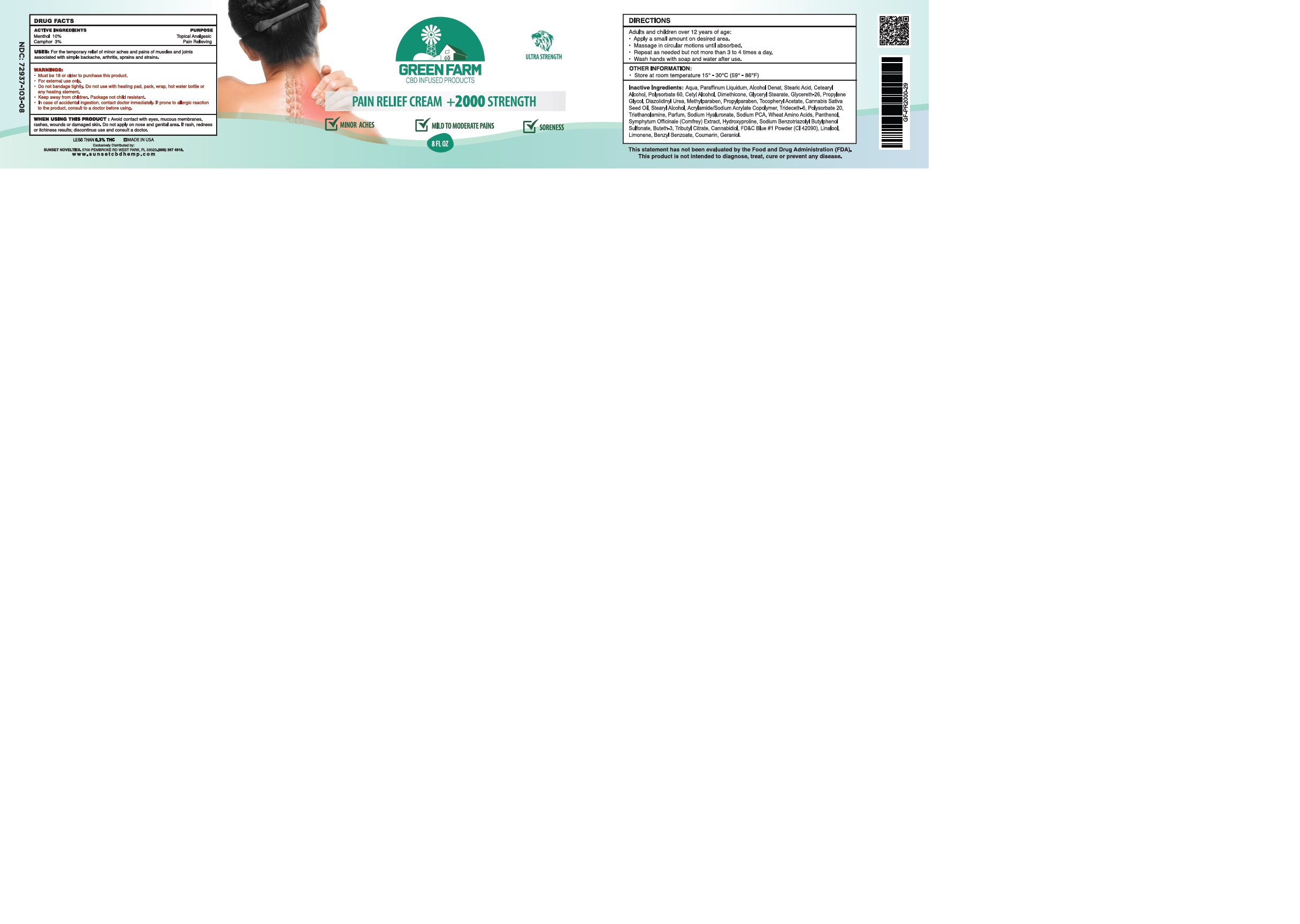
MENTHOL, CAMPHOR 10 g/100g; 3 g/100g Cream, 56 g
🆔 Identity & classification
Where does this data come from?
🏭 Manufacturer & labeler
Where does this data come from?
🩺 Clinical
This is a topical cream containing menthol and camphor, marketed as an over-the-counter monograph drug. Menthol and camphor are commonly used in topical products for their cooling and warming sensations, and are typically applied to skin for temporary relief of minor muscle or joint discomfort. The cream is meant for external use only.
Patient education
Supplement & herbal interactions
Where does this data come from?
Ask a licensed pharmacist directly — free, answered by our team.
💊 What it looks like
Where does this data come from?
🧪 Inactive Ingredients / Excipients
Inactive ingredients, also called excipients, are components of the drug product other than the active ingredient. They may include fillers, dyes, coatings, preservatives, flavors, or other formulation ingredients.
💡 Tap an ingredient (hover on desktop) to see what it is and why it’s used.
-
UNII M4PPW69Y4H
A synthetic polymer made from acrylic acid and sodium acrylate that acts as a binder and thickener. It helps hold tablet ingredients together and controls how quickly the medicine dissolves in the body.
-
UNII 92N74OA24D
A synthetic dye used to color medicines blue. It helps manufacturers identify the product and make tablets or capsules visually distinctive for recognition purposes.
-
UNII OC116GRO69
Buteth-3 is a synthetic compound derived from butyl alcohol combined with ethylene oxide chains. It works as an emulsifier and surfactant, helping mix oil and water-based ingredients together in liquid or gel formulations.
-
UNII 69VJ1LPN1S
Cannabis sativa seed oil is a plant-based oil derived from hemp seeds. It's used in medicines as a carrier or emollient to help deliver active ingredients and improve product texture and absorption.
-
UNII 936JST6JCN
Cetyl alcohol is a waxy, fatty substance derived from plant or animal sources. It acts as an emulsifier and thickener in medicines, helping blend oil and water components and giving products a smooth, creamy texture.
-
UNII H5RIZ3MPW4
A chemical preservative used to prevent bacterial and fungal growth in medicines. It helps extend shelf life and maintain product safety during storage and use.
-
UNII MCU2324216
A silicone-based oil that reduces foaming and helps ingredients mix evenly. It's used as an antifoaming agent and lubricant in tablets, capsules, and liquid formulations.
-
UNII NNE56F2N14
A synthetic compound derived from glycerin and polyethylene glycol. It acts as an emulsifier and solubilizer to help mix water and oil-based ingredients and keep them blended throughout the product's shelf life.
-
UNII FCZ5MH785I
A waxy substance made from glycerin and stearic acid. It works as an emulsifier to help mix oil and water ingredients together, and as a thickener to give the medicine its proper texture and consistency.
-
UNII RMB44WO89X
Hydroxyproline is an amino acid derived from collagen. In medications, it serves as a structural component or filler that may help provide stability and texture to the formulation.
-
UNII A2I8C7HI9T
Methylparaben is a preservative derived from benzoic acid that prevents growth of bacteria, fungi, and mold in medicines. It extends the product's shelf life and maintains safety during storage.
-
UNII WV9CM0O67Z
Panthenol is a humectant and skin-conditioning agent derived from pantothenic acid. It's added to medicines to help retain moisture and soothe skin irritation.
-
UNII 7T1F30V5YH
A synthetic emulsifier derived from sorbitol and oleic acid. It helps mix oil and water-based ingredients together and keeps them from separating in liquid formulations.
-
UNII CAL22UVI4M
A synthetic emulsifier derived from sorbitol and fatty acids. It helps mix oil and water-based ingredients together and improves the texture and stability of the medicine.
-
UNII Z8IX2SC1OH
Propylparaben is a chemical preservative used to prevent bacterial and fungal growth in medicines and personal care products. It helps extend shelf life and maintain product safety during storage.
-
UNII 0LA2QC9O3Z
A synthetic chemical compound used as a preservative and antioxidant in medicines. It helps prevent degradation of the active ingredients and extends the product's shelf life.
-
UNII 4ELV7Z65AP
Stearic acid is a fatty acid derived from plant or animal sources. It acts as a binder and lubricant in tablets and capsules, helping them hold together and flow smoothly during manufacturing.
-
UNII 2KR89I4H1Y
Stearyl alcohol is a waxy, fatty substance derived from natural oils or made synthetically. It acts as an emulsifier and thickener in medicines, helping mix ingredients together and give the product the right texture.
-
UNII 827D5B1B6S
Tributyl citrate is a clear, colorless liquid derived from citric acid. It works as a plasticizer in film coatings around tablets and capsules, making them flexible and less brittle so they dissolve properly.
-
UNII 3T5PCR2H0C
A synthetic detergent and emulsifier made from plant-derived materials. It helps mix oil and water components together and improves how the medicine spreads or absorbs in the body.
-
UNII 059QF0KO0R
Water is a liquid solvent that dissolves and mixes ingredients together in liquid medicines, syrups, and injections. It helps distribute the active drug evenly throughout the product.
21 inactive ingredients listed in the exact product block matched to this NDC.
Label-section wording can be broader than the structured product block and may mention additional formulation ingredients.
Where does this data come from?
ingredient classCode="IACT" elements from the exact product block matched by this NDC. Label-section narrative from DailyMed / the openFDA label index is shown separately when available.Inactive ingredient FAQ
Are inactive ingredients the same for every manufacturer?
Why might an inactive ingredient be missing?
Can inactive ingredients matter?
💲 Pricing
A drug doesn't have one price. Each row is a different public payment system, and none is what you'd pay at the counter — that depends on your insurance. The ⓘ on each row explains what it measures.
| Price system | Per g | Per package |
|---|---|---|
| Retail pharmacies payNADAC · weekly | Not in the retail survey — common for institutional, discontinued, or low-volume packs. | |
| Medicaid paysCMS SDUD · 12 mo | No recent Medicaid claims on file for this NDC — rare and low-volume NDCs are suppressed in the public data. | |
| Medicare drug plans payPart D · quarterly | No Part D plan price is available for this NDC in our data. | |
Where does this data come from?
🔁 Therapeutic equivalents
| Product | Labeler | Pack | NADAC/unit | TE | Status | Price vs. this |
|---|---|---|---|---|---|---|
| Menthol, Camphor 10 g/100g; 3 g/100gthis 72937-0103-02 | SUNSET | 56 g | — | — | Discontinued | — |
Where does this data come from?
⏳ Availability & generic status
We did not find an FDA-approved generic match for this exact strength, form and route.
Where does this data come from?
🔬 Reported adverse events (FAERS)
Top reported reactions
Reporter sex
Where does this data come from?
📦 Packaging — all sizes for this product
| Package NDC | Description | Marketing start | Status |
|---|---|---|---|
| 72937-0103-02 You're viewing this | 56 g in 1 BOTTLE (72937-103-02) | 2020-10-02 | Discontinued by firm |
| 72937-0103-16 | 452 g in 1 BOTTLE (72937-103-16) | 2022-12-05 | Discontinued by firm |
| 72937-0103-04 | 113 g in 1 BOTTLE (72937-103-04) | 2020-10-05 | Discontinued by firm |
| 72937-0103-08 | 226 g in 1 BOTTLE (72937-103-08) | 2020-10-05 | Active |
You're viewing the smallest of 4 pack sizes for this product.
Pack size FAQ
What quantity is in NDC 72937-0103-02?
What is the difference between NDC 72937-0103-02 and NDC 72937-0103-04?
What NDC number is used to bill for this package of MENTHOL, CAMPHOR 10 g/100g; 3 g/100g Cream?
🧭 About this NDC listing & data coverage
What data is (and isn’t) available for this NDC — tap to expand
| NDC identity (package / product / labeler codes) | ✓ Available |
| Labeler | ✓ Available |
| Product & package description | ✓ Available |
| Marketing category & status | ✓ Available |
| Active ingredient / dosage form / route | ✓ Available |
| FDA label (SPL via DailyMed) | ✓ Available |
| Package photos | ✓ Available |
| Inactive ingredients (structured) | ✓ Available |
| NADAC pharmacy acquisition price (CMS) | — Not published for this NDC CMS publishes NADAC only for NDCs reported in its retail-pharmacy survey. |
| Orange Book / therapeutic-equivalence data | — Not published for this NDC Applies only to products approved under an NDA/ANDA; many listings are out of scope. |
| HCPCS J-code billing crosswalk | — Not published for this NDC Most self-administered / retail products have no J-code — that is normal. |
| Medicaid utilization (CMS SDUD) | — Not published for this NDC CMS reports utilization only for NDCs with Medicaid claims above its privacy threshold. |
Questions about this listing
Is this NDC FDA-approved?
Why is there no price listed?
What does the discontinued status mean for this NDC?
Is the NDC printed on the package the same as the 11-digit billing NDC?
What do the three segments of this NDC mean?
Does this product come in other package sizes?
Who lists this product with the FDA?
Do I need a prescription for this product?
Where does this data come from?
📄 FDA label — Drug Facts FDA SPL
🎯 Indications and Usage ▾
USES: For the temporary relief of minor aches and pains of muscles and joints associated with simple backache, arthritis, sprains and strains.
⏱️ Dosage and Administration ▾
DIRECTIONS: Adults and children over 12 years of age; apply a thin layer to affected area and rub gently not more than 3 to 4 times a day. Wash hands with soap and water after use. Children under 12 years of age; do not use unless directed by doctor/physician
⚠️ Warnings ▾
For external use only. Do not bandage tightly. Do not use with heating pad, pack, wrap, hot water bottle or any heating element. In case of accidental ingestion, contact doctor immediately. If prone to allergic reaction to the product, consult to a doctor before using.
📦 Storage and Handling ▾
OTHER INFORMATION: Store at room temperature 15° - 30°C (59° - 86°F)
🧪 Active Ingredient ▾
Menthol 10% Camphor 3%
🧪 Inactive Ingredients ▾
Aqua, Paraffinum Liquidum, Alcohol Denat, Stearic Acid, Cetearyl Alcohol, Polysorbate 60, Cetyl Alcohol, Dimethicone, Glyceryl Stearate, Glycereth-26, Propylene Glycol, Diazolidinyl Urea, Methylparaben, Propylparaben, Tocopheryl Acetate, Cannabis Sativa Seed Oil, Stearyl Alcohol, Acrylamide/Sodium Acrylate Copolymer, Trideceth-6, Polysorbate 20, Triethanolamine, Parfum, Sodium Hyaluronate, Sodium PCA, Wheat Amino Acids, Panthenol, Symphytum Officinale (Comfrey) Extract, Hydroxyproline, Sodium Benzotriazolyl Butylphenol Sulfonate, Buteth-3, Tributyl Citrate, Cannabidiol, FD&C Blue #1 Powder (CI 42090), Linalool, Limonene, Benzyl Benzoate, Coumarin, Geraniol.
🎯 Purpose ▾
External Analgesic Pain Relieving