
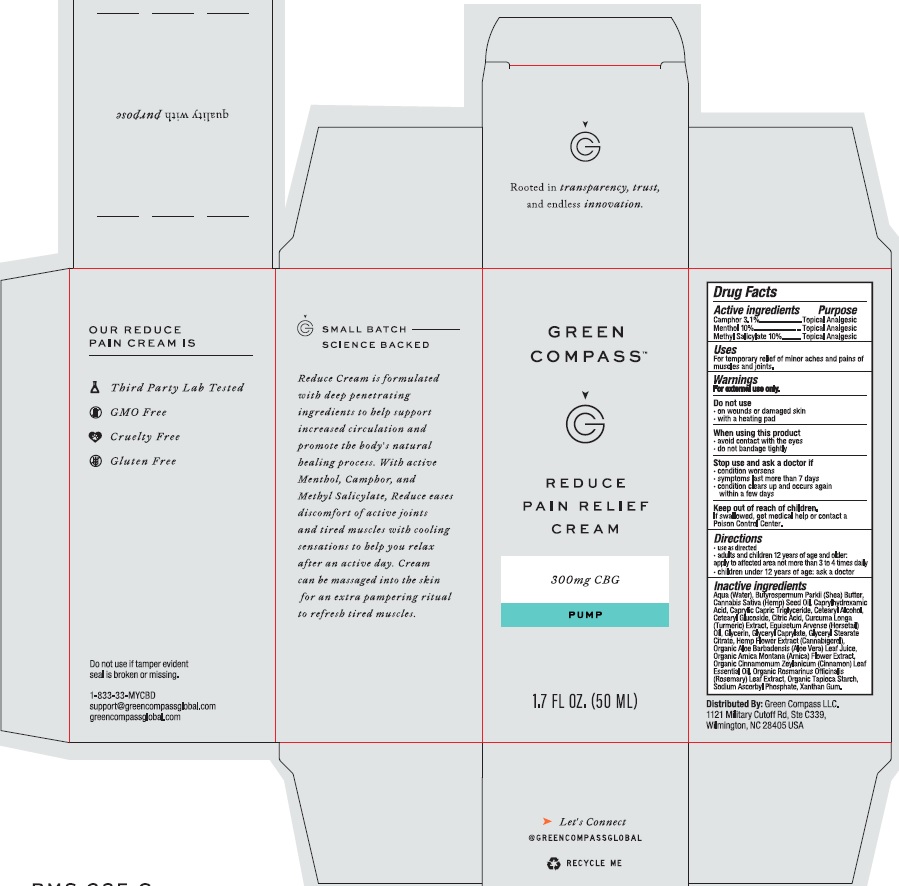
Green Compass Reduce Pain Relief Camphor, Menthol, Methyl Salicylate 3.1 g/100mL; 10 g/100mL; 10 g/100mL Cream
🆔 Identity & classification
Where does this data come from?
🏭 Manufacturer & labeler
Where does this data come from?
🩺 Clinical
Green Compass Reduce Pain Relief is a topical cream applied to the skin. It contains three active ingredients: camphor, menthol, and methyl salicylate. These ingredients are commonly used together in over-the-counter pain relief products because they create a warming or cooling sensation and are typically used to help with minor muscle and joint discomfort when rubbed onto the skin.
Patient education
Supplement & herbal interactions
Where does this data come from?
Ask a licensed pharmacist directly — free, answered by our team.
🧪 Inactive Ingredients / Excipients
Inactive ingredients, also called excipients, are components of the drug product other than the active ingredient. They may include fillers, dyes, coatings, preservatives, flavors, or other formulation ingredients.
💡 Tap an ingredient (hover on desktop) to see what it is and why it’s used.
-
UNII ZY81Z83H0X
Aloe vera leaf is a plant extract derived from the aloe plant. It is used in medicines as a natural moisturizer and skin-soothing agent in topical formulations.
-
UNII O80TY208ZW
Arnica montana is a plant extract used in some formulations as a flavoring agent or traditional botanical ingredient. It may contribute mild taste or aroma to the product.
-
UNII J1K406072N
Cannabigerol is a naturally occurring compound found in cannabis plants. In medications, it serves as an active pharmaceutical ingredient rather than a typical inactive excipient, though it may also function as a carrier or base component in certain formulations.
-
UNII UPY805K99W
A synthetic compound derived from caprylic acid that works as a preservative and antimicrobial agent to help prevent bacterial and fungal growth in the medicine.
-
UNII 09FUA47KNA
Cetearyl glucoside is a plant-derived surfactant made from vegetable oils and glucose. It helps oils and water mix together in creams and lotions, and can also soften and smooth the skin feel of the product.
-
UNII 2DMT128M1S
A waxy solid derived from plant or animal sources. It acts as an emulsifier to blend oil and water components, and also thickens the medicine to give it the right texture and consistency.
-
UNII S92U8SQ71V
A natural oil extracted from cinnamon leaves used as a flavoring agent and fragrance in medicines. It provides taste and aroma to make the product more pleasant to take.
-
UNII 2968PHW8QP
A weak organic acid derived from citrus fruits or made through fermentation. It works as a buffer to control pH, a preservative to extend shelf life, and a flavoring agent in medications.
-
UNII 73DM367W4P
Equisetum arvense is a plant extract, also known as horsetail. It's used in medicines as a natural filler and binder to help hold tablet or capsule ingredients together.
-
UNII PDC6A3C0OX
Glycerin is a clear, thick liquid derived from plant oils or fats. It acts as a humectant to retain moisture, a sweetener, and a solvent in medications.
-
UNII TM2TZD4G4A
A plant-derived oily substance used as an emulsifier and solubilizer in medicines. It helps blend water and oil-based ingredients together and improves how the body absorbs certain active drugs.
-
UNII WH8T92A065
A fatty acid derivative made by combining stearic acid with glycerin and citric acid. It acts as an emulsifier to help mix oil and water-based ingredients, and also serves as a thickener in the medicine formulation.
-
UNII TD1MUT01Q7
Hemp is a plant-derived ingredient used as a binder or filler in solid dosage forms like tablets and capsules. It helps hold other ingredients together and adds bulk to the medicine.
-
UNII C9H2L21V7U
A fat derived from coconut or palm oil containing shorter fatty acid chains. It serves as a solvent and carrier to help dissolve or suspend active ingredients, improving absorption and stability in liquid formulations.
-
UNII IJ67X351P9
A natural plant extract from rosemary leaves used as a preservative to help prevent oils and fats in the medicine from spoiling or becoming rancid during storage.
-
UNII K49155WL9Y
Shea butter is a fat extracted from shea tree nuts. It's used in medicines as an emollient and lubricant to soften the product, improve texture, and help ingredients blend smoothly together.
-
UNII 836SJG51DR
Sodium ascorbyl phosphate is a derivative of vitamin C that acts as an antioxidant and preservative in medications. It helps protect the drug's active ingredients from degradation caused by air and light exposure.
-
UNII 24SC3U704I
A powdery carbohydrate extracted from tapioca plant roots. It acts as a binder to hold tablet ingredients together and as a disintegrant to help the tablet break apart in your digestive system.
-
UNII 856YO1Z64F
Turmeric is a natural spice derived from the turmeric plant root. It serves as a colorant in medicines, giving products a yellow or golden appearance, and may also provide mild flavoring.
-
UNII 059QF0KO0R
Water is a liquid solvent that dissolves and mixes ingredients together in liquid medicines, syrups, and injections. It helps distribute the active drug evenly throughout the product.
-
UNII TTV12P4NEE
Xanthan gum is a thickening and stabilizing ingredient made from fermented corn or other sugars. It's added to medicines to improve texture, prevent separation of liquids and solids, and help the product stay consistent.
21 inactive ingredients listed in the exact product block matched to this NDC.
Label-section wording can be broader than the structured product block and may mention additional formulation ingredients.
Where does this data come from?
ingredient classCode="IACT" elements from the exact product block matched by this NDC. Label-section narrative from DailyMed / the openFDA label index is shown separately when available.Inactive ingredient FAQ
Are inactive ingredients the same for every manufacturer?
Why might an inactive ingredient be missing?
Can inactive ingredients matter?
💲 Pricing
A drug doesn't have one price. Each row is a different public payment system, and none is what you'd pay at the counter — that depends on your insurance. The ⓘ on each row explains what it measures.
| Price system | Per g | Per package |
|---|---|---|
| Retail pharmacies payNADAC · weekly | Not in the retail survey — common for institutional, discontinued, or low-volume packs. | |
| Medicaid paysCMS SDUD · 12 mo | No recent Medicaid claims on file for this NDC — rare and low-volume NDCs are suppressed in the public data. | |
| Medicare drug plans payPart D · quarterly | No Part D plan price is available for this NDC in our data. | |
Where does this data come from?
🔁 Therapeutic equivalents
| Product | Labeler | Pack | NADAC/unit | TE | Status | Price vs. this |
|---|---|---|---|---|---|---|
| Green Compass Reduce Pain Relief 3.1 g/100mL; 10 g/100mL; 10 g/100mLthis 73132-0004-50 | Green | 1 bottle | — | — | FDA listed | — |
Where does this data come from?
⏳ Availability & generic status
We did not find an FDA-approved generic match for this exact strength, form and route.
Where does this data come from?
🔬 Reported adverse events (FAERS)
Top reported reactions
Age at onset
Reporter sex
Serious outcomes
Where does this data come from?
📦 Packaging — all sizes for this product
| Package NDC | Description | Marketing start | Status |
|---|---|---|---|
| 73132-0004-50 You're viewing this | 1 BOTTLE in 1 CARTON (73132-004-50) / 50 mL in 1 BOTTLE | 2023-11-01 | Active |
🧭 About this NDC listing & data coverage
What data is (and isn’t) available for this NDC — tap to expand
| NDC identity (package / product / labeler codes) | ✓ Available |
| Labeler | ✓ Available |
| Product & package description | ✓ Available |
| Marketing category & status | ✓ Available |
| Active ingredient / dosage form / route | ✓ Available |
| FDA label (SPL via DailyMed) | ✓ Available |
| Package photos | ✓ Available |
| Inactive ingredients (structured) | ✓ Available |
| NADAC pharmacy acquisition price (CMS) | — Not published for this NDC CMS publishes NADAC only for NDCs reported in its retail-pharmacy survey. |
| Orange Book / therapeutic-equivalence data | — Not published for this NDC Applies only to products approved under an NDA/ANDA; many listings are out of scope. |
| HCPCS J-code billing crosswalk | — Not published for this NDC Most self-administered / retail products have no J-code — that is normal. |
| Medicaid utilization (CMS SDUD) | — Not published for this NDC CMS reports utilization only for NDCs with Medicaid claims above its privacy threshold. |
Questions about this listing
Is this NDC FDA-approved?
Why is there no price listed?
Is the NDC printed on the package the same as the 11-digit billing NDC?
What do the three segments of this NDC mean?
Is this package still being marketed?
Who lists this product with the FDA?
Do I need a prescription for this product?
Where does this data come from?
📄 FDA label — Drug Facts FDA SPL
🎯 Indications and Usage ▾
Uses For temporary relief of minor aches and pains of muscles and joints.
⏱️ Dosage and Administration ▾
Directions use as directed adults and children 12 years of age and older: apply to affected area not more than 3 to 4 times daily children under 12 years of age: ask a doctor
⚠️ Warnings ▾
Warnings For external use only. Do not use on wounds or damaged skin with a heating pad When using this product avoid contact with the eyes do not bandage tightly Stop use and ask a doctor if condition worsens symptoms last more than 7 days condition clears up and occurs again within a few days Keep out of reach of children. If swallowed, get medical help or contact a Poison Control Center.
🧪 Active Ingredient ▾
Active ingredients Camphor 3.1% Menthol 10% Methyl Salicylate 10%
🧪 Inactive Ingredients ▾
Inactive ingredients Aqua (water), butyrospermum parkii (shea) butter, cannabis sativa (hemp) seed oil, caprylhydroxamid acid, caprylic capric triglyceride, cetearyl alcohol, cetearyl glucoside, citric acid, curcuma longa (turmeric) extract, equisetum arvense (horsetail) oil, glycerin, glyceryl caprylate, glyceryl stearate citrate, hemp flower extract (cannabigerol), organic aloe barbadensis (aloe vera) leaf juice, organic arnica montana (arnica) flower extract, organic cinnamomum zeylanicum (cinnamon) leaf essential oil, organic rosmarinus officinalis (rosemary) leaf extract, organic tapioca starch, sodium ascorbyl phosphate, xanthan gum.
🎯 Purpose ▾
Purpose Topical Analgesic Topical Analgesic Topical Analgesic