
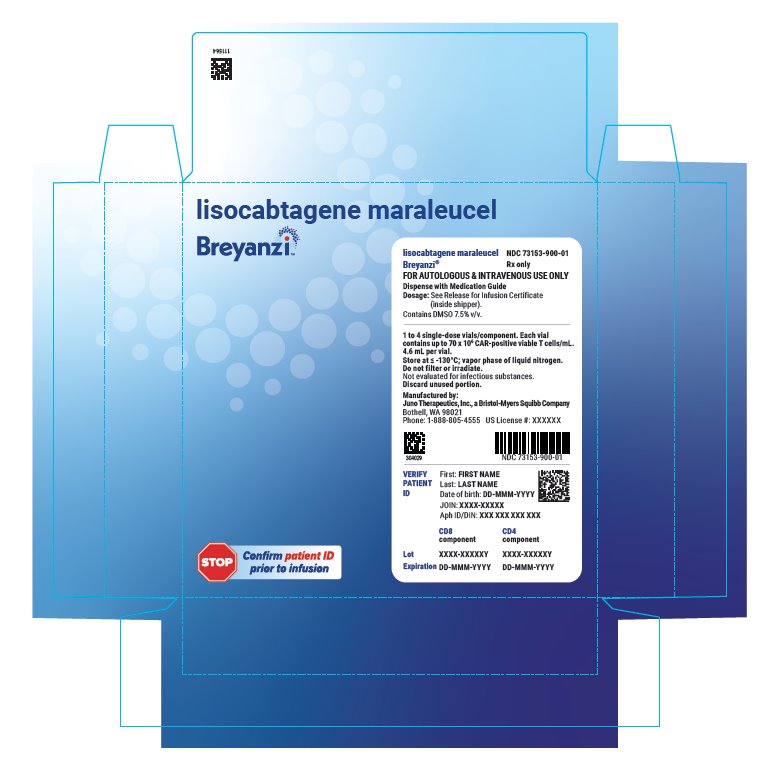
BREYANZI Lisocabtagene maraleucel Kit — NDC 73153-900-01 (Billing 73153-0900-01)
This is a package of BREYANZI Lisocabtagene maraleucel Kit from Juno Therapeutics, Inc., marketed since Feb 2021 and currently FDA-listed. It is this product's only package size.
NDC database record
One package, one record: these facts belong to NDC 73153-900-01 alone.
- Record
- FDA NDC Directory package listing · Cellular therapy
- Code segments
- 73153 labeler · 900 product · 01 package
- Package marketed since
- Feb 5, 2021
- Sample package
- No — commercial package
- Listing certified through
- Dec 31, 2027
- Barcode (UPC-A, from the NDC)
- 3 7315390001 6
- FDA record last changed
- Jul 24, 2026
Identity & classification
Regulatory identifiers FDA, NLM and CMS codes for this package
Drug-database identifiers Medi-Span GPI and First Databank GCN / HICL / AHFS classification
- GSN (GCN sequence number): 081910
- GCN: 49174
- GPI-14 (Medi-Span): 21651050401820
- HICL (First Databank): 047106
- AHFS class code: 10:00.00.00
- RxCUI (RxNorm): 2479140
Where does this data come from?
- FDA openFDA NDC Directory · synced Oct 8, 2026
- FDA label on DailyMed · label index refreshed Oct 8, 2026
- RxNorm (NLM RxNav) · catalog refreshed Oct 1, 2026
- Medi-Span GPI (licensed)
- First Databank (licensed) · refreshed Oct 8, 2026
RxNorm drug class
This medicine belongs to the Antineoplastic cell and gene therapy class.
Where does this data come from?
- RxClass (NLM) · catalog refreshed Oct 1, 2026
Clinical
Lisocabtagene maraleucel injection is used to treat certain types of lymphoma (cancer that begins in the cells of the immune system) and chronic lymphocytic leukemia (CLL; a type of cancer that begins in the white blood cells). Lisocabtagene maraleucel is in a class of medications called autologous cellular immunotherapy, a type of medication prepared using cells from the patient's own blood. It works by causing the body's immune system (a group of cells, tissues, and organs that protects the body from attack by bacteria, viruses, cancer cells, and other substances that cause disease) to fight...
Read the full MedlinePlus article ↗Patient education
Supplement & herbal interactions
Where does this data come from?
- MedlinePlus (NLM) · refreshed Oct 8, 2026
- FDA label on DailyMed · label index refreshed Oct 8, 2026
Ask a licensed pharmacist directly — free, answered by our team.
Pricing
A drug doesn't have one price. Each row is a different public payment system, and none is what you'd pay at the counter — that depends on your insurance. The ⓘ on each row explains what it measures.
| Price system | Per each | Per package |
|---|---|---|
| Retail pharmacies payNADAC · weekly | Not in the retail survey — common for institutional, discontinued, or low-volume packs. | |
| Medicaid paysCMS SDUD · 12 mo | No recent Medicaid claims on file for this NDC — rare and low-volume NDCs are suppressed in the public data. | |
| Medicare drug plans payPart D · quarterly | No Part D plan price is available for this NDC in our data. | |
| Medicare Part B allowsASP · Q2054 | $579,570.614 / Q2054 unit | — |
Where does this data come from?
- CMS NADAC weekly file
- CMS ASP pricing files · refreshed Sep 20, 2026
- CMS Medicaid State Drug Utilization Data · refreshed Oct 8, 2026
- CMS Part D plan pricing files · refreshed Sep 24, 2026
- VA National Acquisition Center price file
Billing & reimbursement
Where does this data come from?
- CMS ASP NDC-HCPCS crosswalk · refreshed Sep 22, 2026
- DMEPDAC NDC-HCPCS crosswalk
- openFDA NSDE billing units · refreshed Oct 7, 2026
Packaging — all sizes for this product
| Package NDC | Description | Marketing start | Marketing end | Status |
|---|---|---|---|---|
| 73153-0900-01 You're viewing this Main listing | 1 KIT in 1 CARTON * 5 mL in 1 VIAL, SINGLE-DOSE * 5 mL in 1 VIAL, SINGLE-DOSE | 2021-02-05 | — | Active |
Therapeutic equivalents
| Product | Labeler | Pack | NADAC/unit | TE | Status | Price vs. this |
|---|---|---|---|---|---|---|
| Breyanzithis 73153-0900-01 | Juno | 1 kit | — | — | FDA listed | — |
Where does this data come from?
- FDA openFDA NDC Directory · synced Oct 8, 2026
- FDA Purple Book · refreshed Oct 5, 2026
- CMS NADAC weekly file
Availability & biosimilar status
Biologics have no small-molecule generics; biosimilar competition is tracked in the FDA Purple Book.
Why the date isn’t exact: Biosimilar timing can change because patents may be challenged, settled, licensed, added or removed, and litigation can move the real date earlier or later.
🛈 What do these terms mean?
- Biologic patent
- A patent the reference product’s maker has publicly listed. A biosimilar generally can’t launch until these expire — unless they’re invalidated or resolved in a settlement.
- Reference-product exclusivity
- A flat 12 years of FDA market protection from the biologic’s first licensure (the BPCIA). No biosimilar can be licensed before it ends, regardless of patents.
- Interchangeable exclusivity
- The first interchangeable biosimilar can earn a period as the only interchangeable version (pharmacists can substitute it without the prescriber).
- Earliest biosimilar (LOE)
- The latest of all the dates above — the soonest a biosimilar can realistically reach the market. Litigation and settlements can move it earlier.
Biologics have no small-molecule “generics” — competition comes from FDA-licensed biosimilars, tracked in the FDA Purple Book.
| Code | What it grants | Expires |
|---|---|---|
| RefProduct | Reference-product exclusivity (12-year, BPCIA) — no biosimilar can be licensed before this date | Feb 5, 2033 |
Is there a biosimilar for BREYANZI VIAL?
Why do different websites show different biosimilar dates?
Can a biosimilar launch before the last patent expires?
What does “current Purple Book estimate” mean?
What does “FDA listed” mean?
What does a patent or protection date mean here?
Where does this data come from?
- FDA Purple Book · refreshed Oct 5, 2026
Inactive Ingredients / Excipients
Inactive ingredients, also called excipients, are components of the drug product other than the active ingredient. They may include fillers, dyes, coatings, preservatives, flavors, or other formulation ingredients.
Where does this data come from?
IACT rows and label-wide narrative are kept separate; availability and product-level specificity depend on the submitted label.- FDA label on DailyMed · label index refreshed Oct 8, 2026
- FDA openFDA NDC Directory · synced Oct 8, 2026
Inactive ingredient FAQ
Are inactive ingredients the same for every manufacturer?
Why might an inactive ingredient be missing?
Can inactive ingredients matter?
Manufacturer & labeler
Where does this data come from?
- FDA openFDA NDC Directory · synced Oct 8, 2026
- Drugs@FDA
Full FDA label FDA SPL
🚨 Boxed Warning ▾
WARNING: CYTOKINE RELEASE SYNDROME, NEUROLOGIC TOXICITIES, AND SECONDARY HEMATOLOGICAL MALIGNANCIES • Cytokine Release Syndrome (CRS), including fatal or life-threatening reactions, occurred in patients receiving BREYANZI. Do not administer BREYANZI to patients with active infection or inflammatory disorders. Treat severe or life-threatening CRS with tocilizumab with or without corticosteroids [see Dosage and Administration ( 2.2 , 2.3 ) and Warnings and Precautions ( 5.1 )] . • Neurologic toxicities, including fatal or life-threatening reactions, occurred in patients receiving BREYANZI, including concurrently with CRS, after CRS resolution, or in the absence of CRS.
Monitor for neurologic events after treatment with BREYANZI. Provide supportive care and/or corticosteroids as needed [see Dosage and Administration ( 2.2 , 2.3 ) and Warnings and Precautions ( 5.2 )] . • T cell malignancies have occurred following treatment of hematologic malignancies with BCMA- and CD19-directed genetically modified autologous T cell immunotherapies, including BREYANZI [see Warnings and Precautions ( 5.7 )] . WARNING: CYTOKINE RELEASE SYNDROME, NEUROLOGIC TOXICITIES, AND SECONDARY HEMATOLOGICAL MALIGNANCIES See full prescribing information for complete boxed warning. • Cytokine Release Syndrome (CRS), including fatal or life-threatening reactions, occurred in patients receiving BREYANZI.
Do not administer BREYANZI to patients with active infection or inflammatory disorders. Treat severe or life-threatening CRS with tocilizumab with or without corticosteroids. ( 2.2 , 2.3 , 5.1 ) • Neurologic toxicities, including fatal or life-threatening reactions, occurred in patients receiving BREYANZI, including concurrently with CRS, after CRS resolution, or in the absence of CRS.
Monitor for neurologic events after treatment with BREYANZI. Provide supportive care and/or corticosteroids as needed. ( 2.2 , 2.3 , 5.2 ) • T cell malignancies have occurred following treatment of hematologic malignancies with BCMA- and CD19-directed genetically modified autologous T cell immunotherapies, including BREYANZI.
( 5.7 )
🎯 Indications and Usage ▾
1 INDICATIONS AND USAGE BREYANZI is a CD19-directed genetically modified autologous T cell immunotherapy indicated for the treatment of: • adult patients with large B-cell lymphoma (LBCL), including diffuse large B-cell lymphoma (DLBCL) not otherwise specified (including DLBCL arising from indolent lymphoma), high-grade B-cell lymphoma, primary mediastinal large B-cell lymphoma, and follicular lymphoma grade 3B, who have: • refractory disease to first-line chemoimmunotherapy or relapse within 12 months of first-line chemoimmunotherapy; or • refractory disease to first-line chemoimmunotherapy or relapse after first-line chemoimmunotherapy and are not eligible for hematopoietic stem cell transplantation (HSCT) due to comorbidities or age; or • relapsed or refractory disease after 2 or more lines of systemic therapy.
( 1.1 ) Limitations of Use: BREYANZI is not indicated for the treatment of patients with primary central nervous system lymphoma. ( 1 , 14 ) • adult patients with relapsed or refractory chronic lymphocytic leukemia (CLL) or small lymphocytic lymphoma (SLL) who have received at least 2 prior lines of therapy, including a Bruton tyrosine kinase (BTK) inhibitor and a B-cell lymphoma 2 (BCL-2) inhibitor. This indication is approved under accelerated approval based on response rate and duration of response.
Continued approval for this indication may be contingent upon verification and description of clinical benefit in confirmatory trial(s). ( 1.2 ) • adult patients with relapsed or refractory follicular lymphoma (FL) who have received 2 or more prior lines of systemic therapy. ( 1.3 ) • adult patients with relapsed or refractory mantle cell lymphoma (MCL) who have received at least 2 prior lines of systemic therapy, including a Bruton tyrosine kinase (BTK) inhibitor.
( 1.4 ) • adult patients with relapsed or refractory marginal zone lymphoma (MZL) who have received at least 2 prior lines of systemic therapy. ( 1.5 )
1.1Large B-cell Lymphoma (LBCL) BREYANZI is indicated for the treatment of adult patients with large B-cell lymphoma (LBCL), including diffuse large B-cell lymphoma (DLBCL) not otherwise specified (including DLBCL arising from indolent lymphoma), high-grade B-cell lymphoma, primary mediastinal large B-cell lymphoma, and follicular lymphoma grade 3B who have: • refractory disease to first-line chemoimmunotherapy or relapse within 12 months of first-line chemoimmunotherapy; or • refractory disease to first-line chemoimmunotherapy or relapse after first-line chemoimmunotherapy and are not eligible for hematopoietic stem cell transplantation (HSCT) due to comorbidities or age; or • relapsed or refractory disease after 2 or more lines of systemic therapy.
Limitations of Use : BREYANZI is not indicated for the treatment of patients with primary central nervous system (CNS) lymphoma [see Clinical Studies ( 14.1 )].
1.2Chronic Lymphocytic Leukemia (CLL) or Small Lymphocytic Lymphoma (SLL) BREYANZI is indicated for the treatment of adult patients with relapsed or refractory chronic lymphocytic leukemia (CLL) or small lymphocytic lymphoma (SLL) who have received at least 2 prior lines of therapy including, a Bruton tyrosine kinase (BTK) inhibitor and a B-cell lymphoma 2 (BCL-2) inhibitor. This indication is approved under accelerated approval based on response rate and duration of response [see Clinical Studies ( 14.2 )] . Continued approval for this indication may be contingent upon verification and description of clinical benefit in confirmatory trial(s).
1.3Follicular Lymphoma (FL) BREYANZI is indicated for the treatment of adult patients with relapsed or refractory follicular lymphoma (FL) who have received 2 or more prior lines of systemic therapy.
1.4Mantle Cell Lymphoma (MCL) BREYANZI is indicated for the treatment of adult patients with relapsed or refractory mantle cell lymphoma (MCL) who have received at least 2 prior lines of systemic therapy, including a Bruton tyrosine kinase (BTK) inhibitor.
1.5Margi… [Excerpted — this section continues on DailyMed.]
⏱️ Dosage and Administration ▾
2 DOSAGE AND ADMINISTRATION For autologous use only. For intravenous use only. • Do NOT use a leukodepleting filter. ( 2.2 ) • Administer a lymphodepleting regimen of fludarabine and cyclophosphamide before infusion of BREYANZI.
( 2.2 ) • Verify the patient’s identity prior to infusion. ( 2.2 ) • Premedicate with acetaminophen and an H 1 antihistamine. ( 2.2 ) • Confirm availability of tocilizumab prior to infusion.
( 2.2 , 5.1 ) • Dosing of BREYANZI is based on the number of chimeric antigen receptor (CAR)-positive viable T cells. ( 2.1 ) For LBCL : • after one line of therapy, the dose is 90 to 110 × 10 6 CAR-positive viable T cells. ( 2.1 ) • after two or more lines of therapy, the dose is 50 to 110 × 10 6 CAR-positive viable T cells.
( 2.1 ) For CLL/SLL, FL, MCL and MZL : • the dose is 90 to 110 × 10 6 CAR-positive viable T cells. ( 2.1 )
2.1Dose For autologous use only. For intravenous use only. See the respective Certificate of Release for Infusion (RFI Certificate) for each component, for the actual cell counts and volumes to be infused [see Dosage and Administration ( 2.2 ) and Dosage Forms and Strengths ( 3 )].
A single dose of BREYANZI contains CAR-positive viable T cells (consisting of 1:1 CAR-positive viable T cells of the CD8 and CD4 components), with each component supplied separately in one to four single-dose vials. See Table 1 for dose range per indication. Table 1: Dose Range Abbreviations: LBCL = large B-cell lymphoma; CLL = chronic lymphocytic leukemia; SLL = small lymphocytic lymphoma; FL = follicular lymphoma; MCL = mantle cell lymphoma; MZL = marginal zone lymphoma.
Indication BREYANZI dose range LBCL after two or more lines of therapy ( 1.1 ) 50 to 110 × 10 6 CAR-positive viable T cells LBCL after one line of therapy ( 1.1 ) 90 to 110 × 10 6 CAR-positive viable T cells CLL or SLL ( 1.2 ) 90 to 110 × 10 6 CAR-positive viable T cells FL ( 1.3 ) 90 to 110 × 10 6 CAR-positive viable T cells MCL ( 1.4 ) 90 to 110 × 10 6 CAR-positive viable T cells MZL ( 1.5 ) 90 to 110 × 10 6 CAR-positive viable T cells
2.2Administration BREYANZI is for autologous use only. The patient’s identity must match the patient identifiers on the BREYANZI cartons, vials, and syringe labels. Do not infuse BREYANZI if the information on the patient-specific labels does not match the intended patient.
Preparing the Patient for BREYANZI Confirm the availability of BREYANZI before starting lymphodepleting chemotherapy. Pretreatment Administer the lymphodepleting chemotherapy regimen before infusion of BREYANZI: fludarabine 30 mg/m 2 /day intravenously (IV), and cyclophosphamide 300 mg/m 2 /day IV for 3 days. See the prescribing information for fludarabine and cyclophosphamide for information on dose adjustment in renal impairment.
Infuse BREYANZI 2 to 7 days after completion of lymphodepleting chemotherapy. Delay the infusion of BREYANZI if the patient has unresolved serious adverse events from preceding chemotherapies, active uncontrolled infection, or active graft-versus-host disease (GVHD). Premedication To minimize the risk of infusion reactions, premedicate the patient with acetaminophen (650 mg orally) and diphenhydramine (25-50 mg, IV or orally), or another H1-antihistamine, approximately 30 to 60 minutes prior to treatment with BREYANZI.
Avoid prophylactic use of systemic corticosteroids, as they may interfere with the activity of BREYANZI. Receipt of BREYANZI • BREYANZI is shipped directly to the cell-associated lab or clinical pharmacy associated with the infusion center in the vapor phase of a liquid nitrogen shipper. • Confirm the patient’s identity with the patient identifiers on the shipper. • If the patient is not expected to be ready for administration before the shipper expires and the infusion site is qualified for onsite storage, transfer BREYANZI to onsite vapor phase of liquid nitrogen storage prior to preparation. • If the patient is not expected to be ready for administration before the shipper expires and the inf… [Excerpted — this section continues on DailyMed.]
💊 Dosage Forms and Strengths ▾
3 DOSAGE FORMS AND STRENGTHS BREYANZI is a cell suspension for infusion. A single dose of BREYANZI contains CAR-positive viable T cells that consist of CD8 and CD4 components, with each component supplied separately in single-dose vials [see Dosage and Administration ( 2.1 )] . More than one vial of each of the CD8 component and/or CD4 component may be needed to achieve the dose of BREYANZI.
Each vial contains between 6.9 × 10 6 and 322 × 10 6 CAR-positive viable T cells in 4.6 mL cell suspension (between 1.5 × 10 6 and 70 x 10 6 CAR-positive viable T cells/mL). The infusion volume is calculated based on the concentration of cryopreserved drug product CAR-positive viable T cells. The volume may differ for each component infused.
See the RFI Certificate for details [see How Supplied/Storage and Handling ( 16 )]. • BREYANZI is a cell suspension for infusion. ( 3 ) • A single dose of BREYANZI consists of 1:1 CAR-positive viable T cells of the CD8 and CD4 components, with each component supplied separately in one to four single-dose 5 mL vials. Each mL contains ≥ 1.5 × 10 6 to 70 × 10 6 CAR-positive viable T cells.
( 3 )
⛔ Contraindications ▾
4 CONTRAINDICATIONS None. None. ( 4 )
⚠️ Warnings and Cautions ▾
5 WARNINGS AND PRECAUTIONS • Hypersensitivity Reactions: Monitor for hypersensitivity reactions during infusion. ( 5.3 ) • Serious Infections: Monitor patients for signs and symptoms of infection; treat appropriately. ( 5.4 ) • Prolonged Cytopenias: Patients may exhibit Grade 3 or higher cytopenias for several weeks following BREYANZI infusion.
Monitor complete blood counts. ( 5.5 ) • Hypogammaglobulinemia: Monitor and consider immunoglobulin replacement therapy. ( 5.6 ) • Secondary Malignancies: T cell malignancies have occurred following treatment of hematologic malignancies with BCMA- and CD19-directed genetically modified autologous T cell immunotherapies, including BREYANZI.
In the event that a secondary malignancy occurs after treatment with BREYANZI, contact Bristol-Myers Squibb at 1-888-805-4555. ( 5.7 )
5.1Cytokine Release Syndrome Cytokine release syndrome (CRS), including fatal or life-threatening reactions, occurred following treatment with BREYANZI. In clinical trials of BREYANZI, which included a total of 769 patients with non-Hodgkin lymphoma (NHL) exposed to BREYANZI, CRS occurred in 56% of patients, including ≥ Grade 3 CRS (Lee grading system 1 ) in 3.4% of patients. The median time to onset was 5 days (range: 1 to 63 days).
CRS resolved in 99% of patients with a median duration of 5 days (range: 1 to 37 days). One patient had fatal CRS and 5 patients had ongoing CRS at the time of death. The most common manifestations of CRS (≥ 10%) included fever, hypotension, chills, tachycardia, hypoxia, and headache.
Serious events that may be associated with CRS include cardiac arrhythmias (including atrial fibrillation and ventricular tachycardia), cardiac arrest, cardiac failure, diffuse alveolar damage, renal insufficiency, capillary leak syndrome, hypotension, hypoxia, and hemophagocytic lymphohistiocytosis/macrophage activation syndrome (HLH/MAS) [see Adverse Reactions ( 6.1 )]. Ensure that 2 doses of tocilizumab are available prior to infusion of BREYANZI. Monitor patients daily for at least 7 days following BREYANZI infusion for signs and symptoms of CRS.
Continue to monitor patients for signs or symptoms of CRS for at least 2 weeks after infusion. At the first sign of CRS, institute treatment with supportive care, tocilizumab, or tocilizumab and corticosteroids as indicated [see Dosage and Administration ( 2.2 , 2.3 )] . Counsel patients to seek immediate medical attention should signs or symptoms of CRS occur at any time [see Patient Counseling Information ( 17 )].
5.2Neurologic Toxicities Neurologic toxicities that were fatal or life-threatening, including immune effector cell-associated neurotoxicity syndrome (ICANS), occurred following treatment with BREYANZI. Serious events including cerebral edema and seizures occurred with BREYANZI. Fatal and serious cases of leukoencephalopathy, some attributable to fludarabine, also occurred.
In clinical trials of BREYANZI, CAR T cell-associated neurologic toxicities occurred in 32% of patients, including ≥ Grade 3 cases in 10% of patients. The median time to onset of neurotoxicity was 8 days (range: 1 to 63 days). Neurologic toxicities resolved in 88% of patients with a median duration of 7.5 days (range: 1 to 119 days).
Of patients developing neurotoxicity, 83% also developed CRS. The most common neurologic toxicities (≥ 5%) included encephalopathy, tremor, aphasia, delirium, and headache. Monitor patients daily for at least 7 days following BREYANZI infusion for signs and symptoms of neurologic toxicities and assess for other causes of neurological symptoms.
Continue to monitor patients for signs or symptoms of neurologic toxicities for at least 2 weeks after infusion and treat promptly. Manage neurologic toxicity with supportive care and/or corticosteroid as needed [see Dosage and Administration ( 2.2 , 2.3 )] . Advise patients to avoid driving for at least 2 weeks following infusion.
Counsel patients to seek immediate medical attention should signs or symptoms of… [Excerpted — this section continues on DailyMed.]
🤒 Adverse Reactions ▾
6 ADVERSE REACTIONS The most common adverse reactions (incidence ≥ 30%) in: • LBCL are fever, CRS, fatigue, musculoskeletal pain, and nausea. The most common Grade 3-4 laboratory abnormalities include lymphocyte count decrease, neutrophil count decrease, platelet count decrease, and hemoglobin decrease. ( 6.1 ) • CLL/SLL are CRS, encephalopathy, fatigue, musculoskeletal pain, nausea, edema and diarrhea.
The most common Grade 3-4 laboratory abnormalities include neutrophil count decrease, white blood cell decrease, hemoglobin decrease, platelet count decrease, and lymphocyte count decrease. ( 6.1 ) • FL are CRS. The most common Grade 3-4 laboratory abnormalities include lymphocyte count decreased, neutrophil count decreased, and white blood cell decreased.
( 6.1 ) • MCL are CRS, fatigue, musculoskeletal pain, and encephalopathy. The most common Grade 3-4 laboratory abnormalities include neutrophil count decrease, white blood cell decrease, and platelet count decrease. ( 6.1 ) • MZL are CRS.
The most common Grade 3-4 laboratory abnormalities include lymphocyte count decreased, neutrophil count decreased, and white blood cell decreased. ( 6.1 ) To report SUSPECTED ADVERSE REACTIONS, contact Bristol-Myers Squibb at 1-800-721-5072 or FDA at 1-800-FDA-1088 or www.fda.gov/medwatch.
6.1Clinical Trials Experience Because clinical trials are conducted under widely varying conditions, adverse reaction rates observed in the clinical trials of a drug cannot be directly compared to rates in the clinical trials of another drug and may not reflect the rates observed in practice. The safety data described in the WARNINGS and PRECAUTIONS and in this section reflects exposure to a single dose of BREYANZI in 769 patients in five clinical studies as described below. Study 1 (JCAR017-BCM-003; Relapsed or Refractory LBCL After One Line of Therapy) Study 1 was a randomized, open-label, multicenter study, in which patients with primary refractory LBCL or relapse within 1 year of first-line chemoimmunotherapy received BREYANZI (N=89) or standard therapy (N=91) [see Clinical Studies ( 14.1 )] .
Patients had not yet received treatment for relapsed or refractory lymphoma and were potential candidates for autologous HSCT. The trial excluded patients who were ineligible for transplant or who had age > 75 years, Eastern Cooperative Oncology Group (ECOG) performance status >1, history of central nervous system (CNS) disorders (such as seizures or stroke), uncontrolled infection, CrCl < 45 mL/min, alanine aminotransferase (ALT) > 5 times the upper limit of normal (ULN), left ventricular ejection fraction (LVEF) < 40%, or absolute neutrophil count (ANC) < 1.0 × 10 9 cells/L or platelets < 50 × 10 9 cells/L in the absence of bone marrow involvement.
The planned dose of BREYANZI was 100 × 10 6 CAR-positive viable T cells. The median age of the BREYANZI-treated population was 59 years (range: 20 to 74 years); 47% were male; 58% were White, 11% were Asian, and 5% were Black. Serious adverse reactions occurred in 38% of patients.
The most common nonlaboratory serious adverse reactions (> 2%) were CRS, sepsis, fever, febrile neutropenia, headache, aphasia, COVID-19 infection, and pulmonary embolism. Table 4 presents selected nonlaboratory adverse reactions in patients treated with BREYANZI, and Table 5 describes selected new or worsening Grade 3 or 4 laboratory abnormalities. The most common nonlaboratory adverse reactions (≥ 20%) were fever, CRS, musculoskeletal pain, headache, fatigue, nausea, constipation, and dizziness.
Table 4: Adverse Reactions in ≥ 10% of Patients with Relapsed or Refractory LBCL Treated with BREYANZI in Study 1 (N=89) * Represents multiple related terms. a Dizziness includes dizziness, dizziness postural, syncope, vertigo. b Motor dysfunction includes fine motor skill dysfunction, muscle spasms, muscular weakness. c Tremor includes resting tremor, tremor, essential tremor. d Hemorrhage includes conjunctival hemorrhage, cystitis hemorrhagic,… [Excerpted — this section continues on DailyMed.]
🔄 Drug Interactions ▾
7 DRUG INTERACTIONS
7.1Drug-Laboratory Test Interactions HIV and the lentivirus used to make BREYANZI have limited, short spans of identical genetic material (RNA). Therefore, some commercial HIV nucleic acid tests may yield false-positive results in patients who have received BREYANZI.
🔄 Drug / Laboratory Test Interactions ▾
7.1Drug-Laboratory Test Interactions HIV and the lentivirus used to make BREYANZI have limited, short spans of identical genetic material (RNA). Therefore, some commercial HIV nucleic acid tests may yield false-positive results in patients who have received BREYANZI.
👥 Use in Specific Populations ▾
8 USE IN SPECIFIC POPULATIONS
8.1Pregnancy Risk Summary There are no available data with BREYANZI use in pregnant women. No animal reproductive and developmental toxicity studies have been conducted with BREYANZI to assess whether it can cause fetal harm when administered to a pregnant woman. It is not known if BREYANZI has the potential to be transferred to the fetus.
Based on the mechanism of action, if the transduced cells cross the placenta, they may cause fetal toxicity, including B-cell lymphocytopenia and hypogammaglobulinemia. Therefore, BREYANZI is not recommended for women who are pregnant, and pregnancy after BREYANZI infusion should be discussed with the treating physician. In the U.S. general population, the estimated background risk of major birth defects and miscarriage in clinically recognized pregnancies is 2% to 4% and 15% to 20%, respectively.
8.2Lactation Risk Summary There is no information regarding the presence of BREYANZI in human milk, the effect on the breastfed infant, and the effects on milk production. The developmental and health benefits of breastfeeding should be considered along with the mother’s clinical need for BREYANZI and any potential adverse effects on the breastfed infant from BREYANZI or from the underlying maternal condition.
8.3Females and Males of Reproductive Potential Pregnancy Testing Pregnancy status of females with reproductive potential should be verified. Sexually active females of reproductive potential should have a pregnancy test prior to starting treatment with BREYANZI. Contraception See the prescribing information for fludarabine and cyclophosphamide for information on the need for effective contraception in patients who receive lymphodepleting chemotherapy.
There are insufficient exposure data to provide a recommendation concerning duration of contraception following treatment with BREYANZI. Infertility There are no data on the effects of BREYANZI on fertility.
8.4Pediatric Use The safety and efficacy of BREYANZI have not been established in pediatric patients.
8.5Geriatric Use In clinical trials of BREYANZI, 111 (41%) of 268 patients with two or more prior lines of therapy for LBCL, and 89 (59%) of 150 patients with one prior line of therapy for LBCL, were 65 years of age or older; 27 (10%) and 28 (19%) were 75 years of age or older, respectively. In patients with CLL/SLL, 51 (57%) of 89 were 65 years of age or older, and 9 (10%) were 75 years of age or older. In patients with FL, 42 (39%) of 107 were 65 years of age or older, and 10 (9%) were 75 years of age or older.
In patients with MCL, 64 (73%) of 88 patients were 65 years of age or older, and 18 (21%) were 75 years of age or older. In patients with MZL, 30 (45%) of 67 patients were 65 years of age or older, and 10 (15%) were 75 years of age or older. No clinically important differences in safety or effectiveness of BREYANZI were observed between patients aged ≥ 65 and younger patients.
🤰 Pregnancy ▾
8.1Pregnancy Risk Summary There are no available data with BREYANZI use in pregnant women. No animal reproductive and developmental toxicity studies have been conducted with BREYANZI to assess whether it can cause fetal harm when administered to a pregnant woman. It is not known if BREYANZI has the potential to be transferred to the fetus.
Based on the mechanism of action, if the transduced cells cross the placenta, they may cause fetal toxicity, including B-cell lymphocytopenia and hypogammaglobulinemia. Therefore, BREYANZI is not recommended for women who are pregnant, and pregnancy after BREYANZI infusion should be discussed with the treating physician. In the U.S. general population, the estimated background risk of major birth defects and miscarriage in clinically recognized pregnancies is 2% to 4% and 15% to 20%, respectively.
🧒 Pediatric Use ▾
8.4Pediatric Use The safety and efficacy of BREYANZI have not been established in pediatric patients.
🧓 Geriatric Use ▾
8.5Geriatric Use In clinical trials of BREYANZI, 111 (41%) of 268 patients with two or more prior lines of therapy for LBCL, and 89 (59%) of 150 patients with one prior line of therapy for LBCL, were 65 years of age or older; 27 (10%) and 28 (19%) were 75 years of age or older, respectively. In patients with CLL/SLL, 51 (57%) of 89 were 65 years of age or older, and 9 (10%) were 75 years of age or older. In patients with FL, 42 (39%) of 107 were 65 years of age or older, and 10 (9%) were 75 years of age or older.
In patients with MCL, 64 (73%) of 88 patients were 65 years of age or older, and 18 (21%) were 75 years of age or older. In patients with MZL, 30 (45%) of 67 patients were 65 years of age or older, and 10 (15%) were 75 years of age or older. No clinically important differences in safety or effectiveness of BREYANZI were observed between patients aged ≥ 65 and younger patients.
🧬 Clinical Pharmacology ▾
12 CLINICAL PHARMACOLOGY
12.1Mechanism of Action BREYANZI is a CD19-directed genetically modified autologous cell immunotherapy administered as a defined composition to reduce variability in CD8-positive and CD4-positive T cell dose. The CAR is comprised of an FMC63 monoclonal antibody-derived single chain variable fragment (scFv), IgG4 hinge region, CD28 transmembrane domain, 4-1BB (CD137) costimulatory domain, and CD3 zeta activation domain. CD3 zeta signaling is critical for initiating activation and antitumor activity, while 4-1BB (CD137) signaling enhances the expansion and persistence of BREYANZI.
CAR binding to CD19 expressed on the cell surface of tumor and normal B cells induces activation and proliferation of CAR T cells, release of pro-inflammatory cytokines, and cytotoxic killing of target cells.
12.2Pharmacodynamics Following BREYANZI infusion, pharmacodynamic responses were evaluated over a 4-week period by measuring transient elevation of soluble biomarkers such as cytokines, chemokines, and other molecules. Peak elevation of soluble biomarkers was observed within the first 14 days after BREYANZI infusion and returned to baseline levels within 28 days. B-cell aplasia, defined as CD19+ B cells comprising less than 3% of peripheral blood lymphocytes, is an on-target effect of BREYANZI.
B-cell aplasia was observed in the majority of patients for up to 1 year following BREYANZI infusion.
12.3Pharmacokinetics Following infusion, BREYANZI exhibited an initial expansion followed by a bi-exponential decline. Relapsed or Refractory LBCL The median time of maximal expansion in peripheral blood occurred 10-12 days after infusion. BREYANZI was present in peripheral blood for an estimated median of 12.1 months (range: 0.1+ to 24.2+ months).
Among patients who received two or more prior lines of therapy for LBCL (Study 3 – LBCL Cohort), responders (N=135) had a 2.3-fold higher median C max than nonresponders (N=37) (35,335 vs. 15,527 copies/µg). Responders had a 1.8-fold higher median AUC 0-28d than nonresponders (273,552 vs.
155,240 day*copies/µg). Patients < 65 years old (N=142) had a 3.1-fold and 2.3-fold higher median C max and AUC 0-28d , respectively, compared to patients ≥ 65 years old (N=96). Sex, race, ethnicity, and body weight did not show clear relationships to C max and AUC 0-28d .
Relapsed or Refractory CLL/SLL The median time of maximal expansion in peripheral blood occurred 14 days after infusion. BREYANZI was present in peripheral blood for an estimated median of 12.0 months (range: 0.1+ to 30.1+ months). Among patients who received prior therapy for CLL/SLL (Study 4), responders (N=27) had a 2.0-fold higher median C max than nonresponders (N=25) (99,559 vs.
48,948 copies/µg). Responders had a 1.9-fold higher median AUC 0-28d than nonresponders (793,893 vs. 408,307 day*copies/µg).
Relapsed or Refractory FL The median time of maximal expansion in peripheral blood occurred 10 days after infusion. Median C max and AUC 0-28d are 33,604 copies/µg and 253,400 day*copies/µg, respectively. BREYANZI was present in peripheral blood for an estimated median of 12.0 months (range: 0.3+ to 48.1 months).
Relapsed or Refractory MCL The median time of maximal expansion in peripheral blood occurred 10 days after infusion. Median C max and AUC 0-28d were 30,968 copies/µg and 375,006 day*copies/µg, respectively. BREYANZI was present in peripheral blood for an estimated median of 17.9 months (range: 0.1+ to 24.2+ months).
Relapsed or Refractory MZL The median time of maximal expansion in peripheral blood occurred 10 days after infusion. Median C max and AUC 0-28d were 81,390 copies/µg and 657,799 day*copies/µg, respectively. BREYANZI was present in peripheral blood for an estimated median of 18.0 months (range: 0.6 to 42.1 months).
Patients receiving medications for CRS and/or neurologic toxicities In general, patients with higher CAR-T cell expansion tended to have higher rates of CRS and neurologic toxicities. Some patients… [Excerpted — this section continues on DailyMed.]
🧬 Mechanism of Action ▾
12.1Mechanism of Action BREYANZI is a CD19-directed genetically modified autologous cell immunotherapy administered as a defined composition to reduce variability in CD8-positive and CD4-positive T cell dose. The CAR is comprised of an FMC63 monoclonal antibody-derived single chain variable fragment (scFv), IgG4 hinge region, CD28 transmembrane domain, 4-1BB (CD137) costimulatory domain, and CD3 zeta activation domain. CD3 zeta signaling is critical for initiating activation and antitumor activity, while 4-1BB (CD137) signaling enhances the expansion and persistence of BREYANZI.
CAR binding to CD19 expressed on the cell surface of tumor and normal B cells induces activation and proliferation of CAR T cells, release of pro-inflammatory cytokines, and cytotoxic killing of target cells.
📦 How Supplied / Storage and Handling ▾
16 HOW SUPPLIED/STORAGE AND HANDLING BREYANZI consists of genetically modified autologous T cells, supplied in vials as separate frozen suspensions of each CD8 component (NDC 73153-901-08) and CD4 component (NDC 73153-902-04). Each CD8 or CD4 component is packed in a carton containing up to 4 vials, depending upon the concentration of the cryopreserved drug product CAR-positive viable T cells. The cartons for each CD8 component and CD4 component are in an outer carton (NDC 73153-900-01).
BREYANZI is shipped directly to the cell lab or clinical pharmacy associated with the infusion center in the vapor phase of a liquid nitrogen shipper. A Release for Infusion (RFI) Certificate for each component and patient-specific syringe labels are affixed inside the shipper. • Confirm patient identity upon receipt. • Store vials in the vapor phase of liquid nitrogen (less than or equal to minus 130°C) in a temperature-monitored system. • Thaw BREYANZI prior to infusion [see Dosage and Administration ( 2.2 )] .
📋 Description ▾
11 DESCRIPTION BREYANZI (lisocabtagene maraleucel) is a CD19-directed genetically modified autologous T cell immunotherapy administered as a defined composition of CAR-positive viable T cells (consisting of CD8 and CD4 components). The CAR is comprised of the FMC63 monoclonal antibody-derived single-chain variable fragment (scFv), IgG4 hinge region, CD28 transmembrane domain, 4-1BB (CD137) costimulatory domain, and CD3 zeta activation domain. In addition, BREYANZI includes a nonfunctional truncated epidermal growth factor receptor (EGFRt) that is co-expressed on the cell surface with the CD19-specific CAR.
BREYANZI is a T cell product. BREYANZI is prepared from the patient’s T cells, which are obtained via a standard leukapheresis procedure. The purified CD8-positive and CD4-positive T cells are separately activated and transduced with the replication-incompetent lentiviral vector containing the anti-CD19 CAR transgene.
The transduced T cells are expanded in cell culture, washed, formulated into a suspension, and cryopreserved as separate CD8 and CD4 component vials that together constitute a single dose of BREYANZI. The product must pass a sterility test before release for shipping as a frozen suspension in patient-specific vials. The product is thawed prior to administration [see Dosage and Administration ( 2.2 ) and How Supplied/Storage and Handling ( 16 )] .
The BREYANZI formulation contains 75% (v/v) Cryostor ® CS10 [containing 7.5% dimethylsulfoxide (v/v)], 24% (v/v) Multiple Electrolytes for Injection, Type 1, 1% (v/v) of 25% albumin (human).
💬 Information for Patients ▾
17 PATIENT COUNSELING INFORMATION Advise the patient to read the FDA-approved patient labeling (Medication Guide). Ensure that patients understand the risk (11%) of manufacturing failure. In case of a manufacturing failure, a second manufacturing of BREYANZI may be attempted.
While the patient awaits the product, additional bridging therapy (not the lymphodepletion) may be necessary. This bridging therapy may be associated with adverse events during the pre-infusion period, which could delay or prevent the administration of BREYANZI. Advise patients that they will be monitored daily for at least 7 days following the BREYANZI infusion and instruct patients to remain close to a healthcare facility for at least 2 weeks following the infusion.
Prior to infusion, advise patients of the following risks: • Cytokine Release Syndrome (CRS) – Signs and symptoms of CRS (fever, chills, hypotension, tachycardia, hypoxia, and fatigue). Counsel patients to seek immediate medical attention should signs or symptoms of CRS occur at any time [see Warnings and Precautions ( 5.1 ) and Adverse Reactions ( 6.1 )]. • Neurologic Toxicities – Signs or symptoms associated with neurologic events including encephalopathy, confusion, decreased consciousness, speech disorders, tremor, and seizures.
Counsel patients to seek immediate medical attention should signs or symptoms of neurologic toxicity occur at any time [see Warnings and Precautions ( 5.2 ) and Adverse Reactions ( 6.1 )]. • Serious Infections – Signs or symptoms associated with infection [see Warnings and Precautions ( 5.4 ) and Adverse Reactions ( 6.1 )] . • Prolonged Cytopenias – Signs or symptoms associated with bone marrow suppression including neutropenia, anemia, thrombocytopenia, or febrile neutropenia [see Warnings and Precautions ( 5.5 ) and Adverse Reactions ( 6.1 )]. • Secondary Malignancies : Secondary malignancies, including T cell malignancies, have occurred [see Boxed Warning, Warnings and Precautions ( 5.7 ), Adverse Reactions ( 6.2 )].
Advise patients of the need to: • Contact Bristol-Myers Squibb at 1-888-805-4555 if they are diagnosed with a secondary malignancy [see Warnings and Precautions ( 5.7 )] . • Avoid driving for at least 2 weeks after BREYANZI administration .
💬 Medication Guide ▾
MEDICATION GUIDE BREYANZI ® (pronounced braye an' zee) (lisocabtagene maraleucel) This Medication Guide has been approved by the U.S. Food and Drug Administration. Revised: December 2025 Read this Medication Guide before you start your BREYANZI treatment.
The more you know about your treatment, the more active you can be in your care. Talk with your healthcare provider if you have questions about your health condition or treatment. Reading this Medication Guide does not take the place of talking with your healthcare provider about your treatment.
What is the most important information I should know about BREYANZI? BREYANZI may cause side effects that are life-threatening and can lead to death. Call your healthcare provider or get emergency help right away if you get any of the following: • difficulty breathing • fever (100.4°F/38°C or higher) • chills/shaking chills • confusion • severe nausea, vomiting, diarrhea • fast or irregular heartbeat • dizziness/lightheadedness • severe fatigue or weakness It is important that you tell your healthcare providers that you have received BREYANZI and to show them your BREYANZI Patient Wallet Card.
Your healthcare provider may give you other medicines to treat your side effects. What is BREYANZI? BREYANZI is a prescription medicine used to treat five types of non-Hodgkin lymphoma: • Large B cell lymphoma, when: o your first treatment has not worked or your cancer returned within a year of your first treatment OR o your first treatment has not worked or your cancer returned after the first treatment, and you are not eligible for hematopoietic stem cell transplantation because of medical conditions or age OR o two or more kinds of treatment have not worked or stopped working. • Chronic lymphocytic leukemia or small lymphocytic lymphoma when two or more kinds of treatment have not worked or stopped working. • Follicular lymphoma, when two or more kinds of treatment have not worked or stopped working. • Mantle cell lymphoma when two or more kinds of treatment have not worked or stopped working, including a prior Bruton tyrosine kinase (BTK) inhibitor medicine. • Marginal zone lymphoma when two or more kinds of treatment have not worked or stopped working.
BREYANZI is different than other cancer medicines because it is made from your own white blood cells, which have been genetically modified to recognize and attack your lymphoma cells. Before getting BREYANZI, tell your healthcare provider about all your medical problems, including if you have or have had: • Neurologic problems (such as seizures, stroke, or memory loss) • Lung or breathing problems • Heart problems • Liver problems • Kidney problems • A recent or active infection Tell your healthcare provider about all the medications you take, including prescription and over-the-counter medicines, vitamins, and herbal supplements.
How will I receive BREYANZI? • BREYANZI is made from your own white blood cells, so your blood will be collected by a process called “leukapheresis” (LOO-kuh-feh-REE-sis). • It takes about 3-4 weeks from the time your cells are received at the manufacturing site and are available to be shipped back to your healthcare provider, but the time may vary. • Before you get BREYANZI, you will get 3 days of chemotherapy to prepare your body. • When your BREYANZI is ready, your healthcare provider will give it to you through a catheter (tube) placed into your vein (intravenous infusion).
BREYANZI is given as infusions of 2 different cell types. o You will receive infusions of one cell type, immediately followed by the other cell type. o The time for infusion will vary but will usually be less than 15 minutes for each of the 2 cell types. • During the first week, you will be monitored daily. • You should plan to stay close to a healthcare facility for at least 2 weeks after getting BREYANZI. Your healthcare provider will check to see that your treatment is working and help you with any side effects that may occur. • You may be… [Excerpted — this section continues on DailyMed.]
🧬 Pharmacokinetics ▾
12.3Pharmacokinetics Following infusion, BREYANZI exhibited an initial expansion followed by a bi-exponential decline. Relapsed or Refractory LBCL The median time of maximal expansion in peripheral blood occurred 10-12 days after infusion. BREYANZI was present in peripheral blood for an estimated median of 12.1 months (range: 0.1+ to 24.2+ months).
Among patients who received two or more prior lines of therapy for LBCL (Study 3 – LBCL Cohort), responders (N=135) had a 2.3-fold higher median C max than nonresponders (N=37) (35,335 vs. 15,527 copies/µg). Responders had a 1.8-fold higher median AUC 0-28d than nonresponders (273,552 vs.
155,240 day*copies/µg). Patients < 65 years old (N=142) had a 3.1-fold and 2.3-fold higher median C max and AUC 0-28d , respectively, compared to patients ≥ 65 years old (N=96). Sex, race, ethnicity, and body weight did not show clear relationships to C max and AUC 0-28d .
Relapsed or Refractory CLL/SLL The median time of maximal expansion in peripheral blood occurred 14 days after infusion. BREYANZI was present in peripheral blood for an estimated median of 12.0 months (range: 0.1+ to 30.1+ months). Among patients who received prior therapy for CLL/SLL (Study 4), responders (N=27) had a 2.0-fold higher median C max than nonresponders (N=25) (99,559 vs.
48,948 copies/µg). Responders had a 1.9-fold higher median AUC 0-28d than nonresponders (793,893 vs. 408,307 day*copies/µg).
Relapsed or Refractory FL The median time of maximal expansion in peripheral blood occurred 10 days after infusion. Median C max and AUC 0-28d are 33,604 copies/µg and 253,400 day*copies/µg, respectively. BREYANZI was present in peripheral blood for an estimated median of 12.0 months (range: 0.3+ to 48.1 months).
Relapsed or Refractory MCL The median time of maximal expansion in peripheral blood occurred 10 days after infusion. Median C max and AUC 0-28d were 30,968 copies/µg and 375,006 day*copies/µg, respectively. BREYANZI was present in peripheral blood for an estimated median of 17.9 months (range: 0.1+ to 24.2+ months).
Relapsed or Refractory MZL The median time of maximal expansion in peripheral blood occurred 10 days after infusion. Median C max and AUC 0-28d were 81,390 copies/µg and 657,799 day*copies/µg, respectively. BREYANZI was present in peripheral blood for an estimated median of 18.0 months (range: 0.6 to 42.1 months).
Patients receiving medications for CRS and/or neurologic toxicities In general, patients with higher CAR-T cell expansion tended to have higher rates of CRS and neurologic toxicities. Some patients required tocilizumab and/or corticosteroids for the management of CRS or neurologic toxicities [see Dosage and Administration ( 2.3 )] . BREYANZI continued to expand and persist in patients who received tocilizumab and/or corticosteroids treatment.
In Study 3 - LBCL Cohort, patients treated with tocilizumab (N=49) had a 3.6-fold and 3.7-fold higher median C max and AUC 0-28d of BREYANZI, respectively, compared to patients who did not receive tocilizumab (N=189). Similarly, patients who received corticosteroids (N=50) had a 3.8-fold and 3.7-fold higher median C max and AUC 0‑28d of BREYANZI, respectively, compared to patients who did not receive corticosteroids (N=188).
🧬 Pharmacodynamics ▾
12.2Pharmacodynamics Following BREYANZI infusion, pharmacodynamic responses were evaluated over a 4-week period by measuring transient elevation of soluble biomarkers such as cytokines, chemokines, and other molecules. Peak elevation of soluble biomarkers was observed within the first 14 days after BREYANZI infusion and returned to baseline levels within 28 days. B-cell aplasia, defined as CD19+ B cells comprising less than 3% of peripheral blood lymphocytes, is an on-target effect of BREYANZI.
B-cell aplasia was observed in the majority of patients for up to 1 year following BREYANZI infusion.
🔬 Clinical Studies ▾
14 CLINICAL STUDIES
14.1Relapsed or Refractory Large B-Cell Lymphoma Relapsed or Refractory LBCL After One Line of Therapy Study 1 A randomized, open-label, multicenter trial evaluated the efficacy of BREYANZI in adult patients with relapsed or refractory LBCL after first-line chemoimmunotherapy (Study 1: JCAR017-BCM-003; NCT03575351). Patients had not yet received treatment for relapsed or refractory lymphoma, were potential candidates for autologous HSCT, and were required to have primary refractory disease or relapse within 12 months from complete response (CR) to initial chemoimmunotherapy.
Eligibility criteria required adequate organ function and blood counts for HSCT. In total, 184 patients were randomized in a 1:1 ratio to receive a single infusion of BREYANZI (planned dose, 100 × 10 6 CAR-positive viable T cells) or to receive standard therapy consisting of 3 cycles of chemoimmunotherapy followed by high-dose therapy and autologous HSCT in patients who attained CR or PR. All patients underwent leukapheresis prior to randomization.
Patients randomized to BREYANZI were to receive lymphodepleting chemotherapy consisting of fludarabine 30 mg/m 2 /day and cyclophosphamide 300 mg/m 2 /day concurrently for 3 days followed by BREYANZI infusion 2 to 7 days after completion of lymphodepleting chemotherapy. Bridging chemotherapy was permitted between leukapheresis and the start of lymphodepleting chemotherapy. BREYANZI was administered in the inpatient (79%) and outpatient (21%) setting.
In the overall study population, the median age was 59 years (range: 20 to 75 years), 57% were male, 59% were White, 10% were Asian, and 4% were Black. Diagnoses included de novo DLBCL NOS (55%), high-grade B-cell lymphoma (23%), primary mediastinal large B-cell lymphoma (10%), and DLBCL arising from indolent lymphoma (8%). Of these patients, 73% had primary refractory disease to last therapy and 27% had relapsed disease within 12 months of achieving CR to first-line therapy.
Of 92 patients randomized to receive BREYANZI, 89 (97%) received BREYANZI. The median time from leukapheresis to product availability was 26 days (range: 19 to 84 days), and the median time from leukapheresis to product infusion was 36 days (range: 25 to 91 days). Fifty-eight (63%) patients received bridging therapy.
One patient received a nonconforming product (manufacturing failure; 1.1%). Of the 92 patients randomized to receive standard therapy, 91 started treatment and 43 (47%) received high-dose therapy and HSCT. The most common reason for not receiving HSCT was lack of efficacy of the salvage chemotherapy.
The primary efficacy measure was event-free survival (EFS) as determined by an independent review committee (IRC). Other efficacy measures included progression-free survival. Efficacy is summarized in Table 18 and Figure 1.
The estimated 1-year EFS was 45% [95% CI: 29, 59] in the BREYANZI arm and 24% [95% CI: 14, 35] in the standard therapy arm. Of the 92 patients in the BREYANZI arm, the estimated median duration of response (DOR) was not reached (95% CI: 7.9 months, NR) in patients who achieved CR (N=61) and 2.3 months (95% CI: 2.1, NR) in patients who achieved a best response of PR (N=18). An interim analysis of overall survival was conducted at the time of the primary EFS analysis.
The interim analysis of overall survival did not meet the criteria for statistical significance. Forty-six patients randomized to the standard therapy arm (50%) subsequently received BREYANZI on protocol. Table 18: Efficacy Results in Patients with Relapsed or Refractory LBCL (Study 1) NR=not reached; CI=confidence interval. a Per the Lugano criteria, as assessed by an IRC. b EFS is defined as time from randomization to the earliest date of disease progression or relapse, death from any cause, failure to achieve CR or PR by 9 weeks post-randomization, or start of new lymphoma therapy due to efficacy concerns. c Kaplan-Meier estimate. d Based on a stratified Cox proportional hazards m… [Excerpted — this section continues on DailyMed.]
🧪 Nonclinical Toxicology ▾
13 NONCLINICAL TOXICOLOGY
13.1Carcinogenesis, Mutagenesis, Impairment of Fertility No carcinogenicity or genotoxicity studies have been conducted with BREYANZI. No studies have been conducted to evaluate the effects of BREYANZI on fertility. In vitro studies with BREYANZI manufactured from healthy donors and patients showed no evidence for transformation and/or immortalization and no preferential integration near genes associated with oncogenic transformation.
📄 Carcinogenesis, Mutagenesis, Impairment of Fertility ▾
13.1Carcinogenesis, Mutagenesis, Impairment of Fertility No carcinogenicity or genotoxicity studies have been conducted with BREYANZI. No studies have been conducted to evaluate the effects of BREYANZI on fertility. In vitro studies with BREYANZI manufactured from healthy donors and patients showed no evidence for transformation and/or immortalization and no preferential integration near genes associated with oncogenic transformation.
📚 References ▾
15 REFERENCES 1. Lee DW, Gardner R, Porter DL, et al. Current concepts in the diagnosis and management of cytokine release syndrome. Blood 2014; 124:188-195.
📄 Recent Major Changes ▾
Indications and Usage, AA Statement Removed ( 1.3 ) 2/2026 Indications and Usage, MZL ( 1.5 ) 12/2025 Dosage and Administration ( 2.1 ) 12/2025 Dosage and Administration ( 2.2 , 2.3 ) 6/2025 Warnings and Precautions, REMS Removed (5.3) 6/2025 Warnings and Precautions ( 5.1 , 5.2 , 5.4 , 5.6 , 5.8 ) 12/2025
📄 Package Label / Principal Display Panel ▾
PRINCIPAL DISPLAY PANEL - Kit Carton lisocabtagene maraleucel Breyanzi ™ lisocabtagene maraleucel Breyanzi ® NDC 73153-900-01 Rx only FOR AUTOLOGOUS & INTRAVENOUS USE ONLY Dispense with Medication Guide Dosage: See Release for Infusion Certificate (inside shipper). Contains DMSO 7.5% v/v. 1 to 4 single-dose vials/component.
Each vial contains up to 70 x 10 6 CAR-positive viable T cells/mL. 4.6 mL per vial. Store at ≤ -130°C; vapor phase of liquid nitrogen.
Do not filter or irradiate. Not evaluated for infectious substances. Discard unused portion.
Manufactured by: Juno Therapeutics, Inc., a Bristol-Myers Squibb Company Bothell, WA 98021 Phone: 1-888-805-4555 US License #: 2156 304029 NDC 73153-900-01 VERIFY PATIENT ID First: FIRST NAME Last: LAST NAME Date of birth: DD-MMM-YYYY JOIN: XXXX-XXXXX Aph ID/DIN: XXX XXX XXX XXX CD8 component CD4 component Lot XXXX-XXXXXY XXXX-XXXXXY Expiration DD-MMM-YYYY DD-MMM-YYYY STOP Confirm patient ID prior to infusion fig_kit_carton
Reported adverse events (FAERS)
Top reported reactions
Age at onset
Reporter sex
Serious outcomes
Where does this data come from?
About this NDC listing & data coverage
Kit / multi-component package
This NDC identifies a kit — a package containing more than one component. Structured data (pricing, ingredients, equivalents) is often reported per component rather than for the kit NDC itself, which can make this page look thinner than the components' own pages.
What data is (and isn’t) available for this NDC — tap to expand
| NDC identity (package / product / labeler codes) | ✓ Available |
| Labeler | ✓ Available |
| Product & package description | ✓ Available |
| Marketing category & status | ✓ Available |
| Active ingredient / dosage form / route | ✓ Available |
| FDA label (SPL via DailyMed) | ✓ Available |
| Package photos | ✓ Available |
| Inactive ingredients (structured) | — Not published for this NDC The labeler did not submit a structured excipient list, or no SPL is available. |
| NADAC pharmacy acquisition price (CMS) | — Not published for this NDC CMS publishes NADAC only for NDCs reported in its retail-pharmacy survey. |
| Orange Book / therapeutic-equivalence data | ✓ Available |
| HCPCS J-code billing crosswalk | ✓ Available |
| Medicaid utilization (CMS SDUD) | — Not published for this NDC CMS reports utilization only for NDCs with Medicaid claims above its privacy threshold. |