
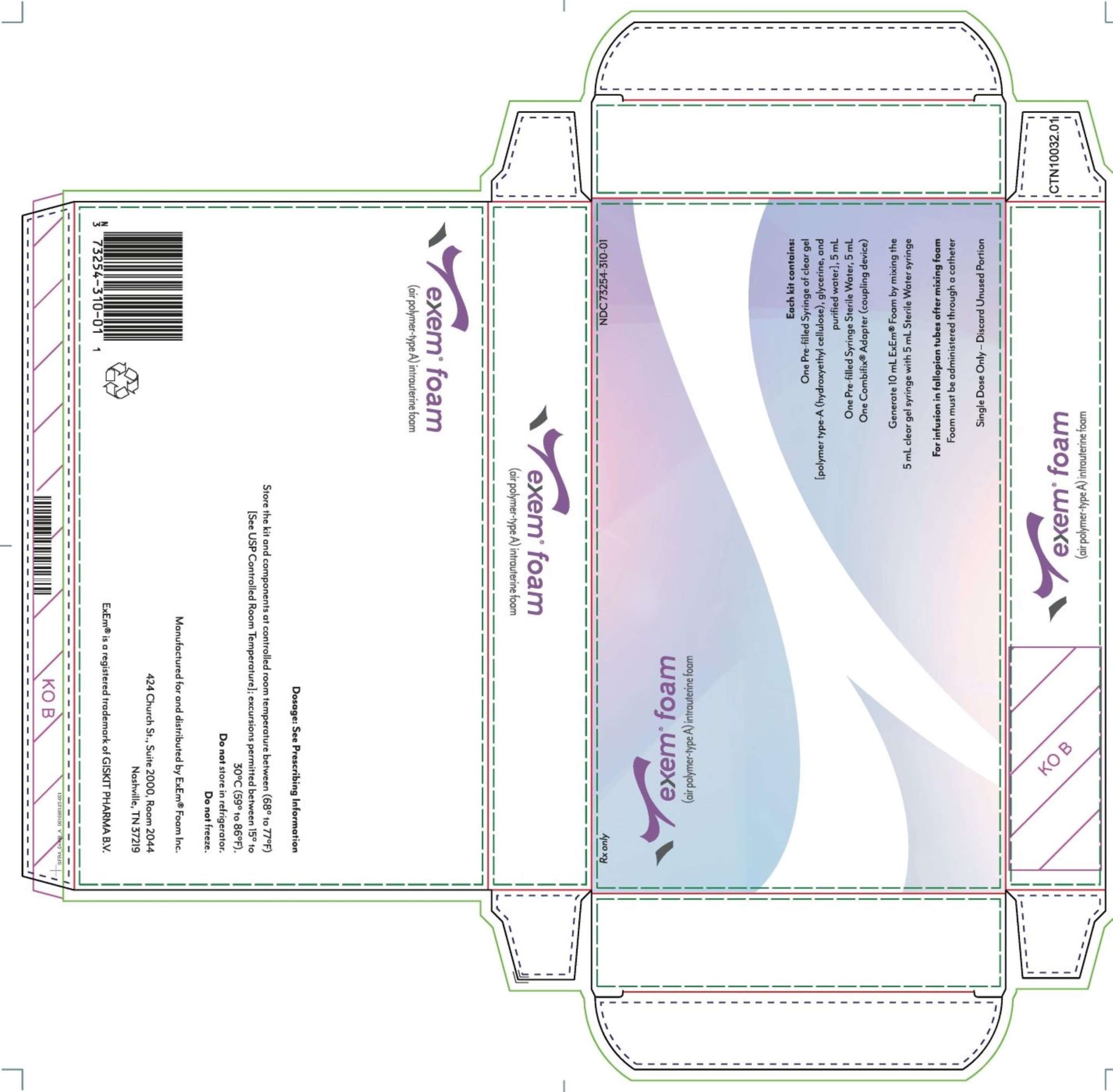
ExEm Foam Air Polymer-Type A Intrauterine Kit
🆔 Identity & classification
Where does this data come from?
🏭 Manufacturer & labeler
Where does this data come from?
🩺 Clinical
Patient education
Supplement & herbal interactions
Where does this data come from?
Ask a licensed pharmacist directly — free, answered by our team.
🧪 Inactive Ingredients / Excipients
Inactive ingredients, also called excipients, are components of the drug product other than the active ingredient. They may include fillers, dyes, coatings, preservatives, flavors, or other formulation ingredients.
Where does this data come from?
IACT rows and label-wide narrative are kept separate; availability and product-level specificity depend on the submitted label.Inactive ingredient FAQ
Are inactive ingredients the same for every manufacturer?
Why might an inactive ingredient be missing?
Can inactive ingredients matter?
💲 Pricing
A drug doesn't have one price. Each row is a different public payment system, and none is what you'd pay at the counter — that depends on your insurance. The ⓘ on each row explains what it measures.
| Price system | Per each | Per package |
|---|---|---|
| Retail pharmacies payNADAC · weekly | Not in the retail survey — common for institutional, discontinued, or low-volume packs. | |
| Medicaid paysCMS SDUD · 12 mo | No recent Medicaid claims on file for this NDC — rare and low-volume NDCs are suppressed in the public data. | |
| Medicare drug plans payPart D · quarterly | No Part D plan price is available for this NDC in our data. | |
Where does this data come from?
🔁 Therapeutic equivalents
| Product | Labeler | Pack | NADAC/unit | TE | Status | Price vs. this |
|---|---|---|---|---|---|---|
| ExEm Foamthis 73254-0310-01 | GISKIT | 1 kit | — | — | FDA listed | — |
Where does this data come from?
⏳ Availability & generic status
We did not find an FDA-approved generic match for this exact strength, form and route. Patent/protection dates below may affect future generic timing.
Why the date isn’t exact: Generic timing can change because patents may be challenged, settled, licensed, added, removed, or worked around with a narrower label — and FDA approval does not always mean a pharmacy can get the generic today.
🛈 What do these terms mean?
- Patent
- Legal protection listed in the Orange Book that may delay generic approval or launch. Issued by the U.S. Patent & Trademark Office.
- Substance patent
- Covers the active drug molecule itself — the hardest to design around. A generic generally can’t launch until it expires.
- Formulation (product) patent
- Covers a specific formulation or dosage form. A generic can sometimes work around it with a different formulation.
- Method-of-use patent
- A patent covering one specific approved use of the drug — not necessarily the whole molecule. A generic can sometimes launch with a “skinny label” that carves out the protected use and keeps the others.
- Skinny label
- A generic label that omits a still-patented use when the FDA allows it — letting a generic reach the market for the unprotected uses.
- Exclusivity
- FDA-granted marketing protection, separate from patents — e.g. 5-yr new chemical entity, 7-yr orphan drug, or a +6-month pediatric extension.
- Paragraph IV
- A generic applicant’s formal challenge to a listed patent. It can potentially lead to earlier generic entry, but often involves litigation or a settlement.
- RLD / RS
- Reference Listed Drug — the brand product the FDA uses as the reference for generic applications. Reference Standard — the product the FDA expects generics to compare against in bioequivalence testing.
- TE / AB rating
- FDA therapeutic-equivalence rating. An AB rating generally means the FDA considers a generic therapeutically equivalent to — and substitutable for — the brand.
- LOE (loss of exclusivity)
- The latest patent or exclusivity currently listed — the loss-of-exclusivity / latest-listed-protection date shown on this page. Paragraph-IV challenges and settlements can move the real date earlier; FDA approval and a manufacturer’s decision to market can move it later.
Built from the FDA Orange Book. The bars above are scaled to each protection’s expiry; the red LOE marker is the last one to lapse.
| Patent | Type | Use code | Expires |
|---|---|---|---|
| US 9034300 ↗ | Method of use | U-2663 | Oct 15, 2030 |
| US 9259494 ↗ | Method of use | U-2663 | May 4, 2035 |
| US 9849199 ↗ | Drug product | — | Feb 11, 2036 |
Is there a generic version of EXEM FOAM?
The FDA approved a generic — why can’t I get it at my pharmacy yet?
Why do different websites show different generic release dates?
What does “FDA listed” mean?
What does a patent or protection date mean here?
What does “current Orange Book estimate” mean?
Can a generic come out before the last patent expires?
Can a generic come out after the listed dates?
What is the difference between patents and exclusivity?
Why are there multiple patent dates?
Where does this data come from?
🔬 Reported adverse events (FAERS)
Top reported reactions
Age at onset
Reporter sex
Serious outcomes
Where does this data come from?
📦 Packaging — all sizes for this product
| Package NDC | Description | Marketing start | Status |
|---|---|---|---|
| 73254-0310-01 You're viewing this | 1 KIT in 1 CARTON (73254-310-01) * 5 mL in 1 SYRINGE, PLASTIC * 5 mL in 1 SYRINGE, PLASTIC | 2020-10-16 | Active |
🧭 About this NDC listing & data coverage
Kit / multi-component package
This NDC identifies a kit — a package containing more than one component. Structured data (pricing, ingredients, equivalents) is often reported per component rather than for the kit NDC itself, which can make this page look thinner than the components' own pages.
What data is (and isn’t) available for this NDC — tap to expand
| NDC identity (package / product / labeler codes) | ✓ Available |
| Labeler | ✓ Available |
| Product & package description | ✓ Available |
| Marketing category & status | ✓ Available |
| Active ingredient / dosage form / route | ✓ Available |
| FDA label (SPL via DailyMed) | ✓ Available |
| Package photos | ✓ Available |
| Inactive ingredients (structured) | — Not published for this NDC The labeler did not submit a structured excipient list, or no SPL is available. |
| NADAC pharmacy acquisition price (CMS) | — Not published for this NDC CMS publishes NADAC only for NDCs reported in its retail-pharmacy survey. |
| Orange Book / therapeutic-equivalence data | ✓ Available |
| HCPCS J-code billing crosswalk | — Not published for this NDC Most self-administered / retail products have no J-code — that is normal. |
| Medicaid utilization (CMS SDUD) | — Not published for this NDC CMS reports utilization only for NDCs with Medicaid claims above its privacy threshold. |
Questions about this listing
Why is there no price listed?
Is the NDC printed on the package the same as the 11-digit billing NDC?
What do the three segments of this NDC mean?
Is this package still being marketed?
Who lists this product with the FDA?
Do I need a prescription for this product?
Where does this data come from?
📄 Full prescribing information FDA SPL
🎯 Indications and Usage ▾
1 INDICATIONS AND USAGE ExEm ® Foam is indicated for sonohysterosalpingography to assess fallopian tube patency in women with known or suspected infertility. ExEm ® Foam is an ultrasound contrast agent indicated for sonohysterosalpingography to assess fallopian tube patency in women with known or suspected infertility. ( 1 )
⏱️ Dosage and Administration ▾
2 DOSAGE AND ADMINISTRATION Confirm the patient is not pregnant prior to ExEm Foam administrations ( 2.1 ) Recommended dose is 2 mL to 3 mL of ExEm Foam by intrauterine infusion using a 5-Fr or larger catheter. Dose may be repeated in 2 mL to 3 mL increments, as needed, to achieve visualization of the fallopian tubes. Maximum total dose is 10 mL ( 2.2 ) See Full Prescribing Information for preparation and administration instructions. ( 2.3 )
2.1Important Pre-Administration Information To ensure that the patient is not pregnant prior to ExEm Foam administration [see Contraindications (4) and Warnings and Precautions (5.1) ]: Confirm that the patient has a negative pregnancy test within the 24 hours before ExEm Foam administration . Confirm the patient is in the pre-ovulatory phase of her menstrual cycle (cycle days 6 through 11).
2.2Recommended Dosage The recommended initial dose of ExEm Foam is 2 mL to 3 mL by intrauterine infusion using a 5-Fr or larger catheter with luer connection. The dose may be repeated in increments of 2 mL to 3 mL, as needed, to achieve visualization of the fallopian tubes. Maximum total dose is 10 mL.
2.3Preparation and Administration The ExEm Foam kit includes the following components: Syringe A containing 5 mL clear Gel [polymer type A (hydroxyethyl cellulose), glycerin and purified water] Syringe B containing 5 mL Sterile Purified Water Combifix Adapter (coupling device) Preparation Examine the package and do not use if package has been previously opened or damaged. Ensure the kit is at room temperature. Handle products following aseptic practices (e.g. sterile gloves).
Generate foam by mixing Syringe A (Gel) with Syringe B (Sterile Purified Water) included in the package as described in Figure 1. Infuse foam within 5 minutes of reconstitution. FIGURE 1: Reconstitution of ExEm Foam Unscrew and discard the caps from each syringe when ready to prepare the foam.
Push and screw Syringe A to one end of the Combifix Adapter. Push and screw Syringe B to the other end of the Combifix Adapter. Make sure these syringes are attached tightly to avoid loss of liquid when mixing.
Push the plunger of one syringe vigorously to transfer, and begin mixing the contents from one syringe to the other syringe. Repeat this process at least 10 times. The reconstituted foam is completely milky white (opaque) in color After mixing, transfer all of the foam into one syringe, then disconnect the adapter and other syringe.
Approximately 10 mL of ExEm Foam is created by mixing Syringe A of clear Gel with Syringe B of Sterile Purified Water. Infuse within 5 minutes of mixing to ensure adequate imaging. Figure Figure Administration Administer through a 5-Fr or larger catheter with luer connection only.
If there is resistance when infusing foam use a larger catheter. Do not infuse forcefully. Infuse 1 mL of foam to confirm proper placement of the catheter tip in the cervix and access to the uterine cavity.
Slowly infuse 2 mL to 3 mL of the foam at a time to avoid patient discomfort. Discard unused portion after use.
2.4Imaging Guidance Conduct transvaginal ultrasound imaging in accordance with ultrasound manufacturer recommendations. ExEm Foam in the fallopian tube will appear as an echogenic line along the length of the tube on the image. A fallopian tube is classified as patent if ExEm Foam is observed to pass from the tube and spill into the peritoneal cavity.
The tube will appear as a thin, bright line. A fallopian tube is classified as occluded if ExEm Foam is not observed to pass from the tube and spill into the peritoneal cavity. As secondary findings, (1) there may be no bright line due to no flow into the fallopian tube, or (2) the tubal lumen may appear distended and contrast flow might be observed only in the intramural or isthmic part of the tube.
💊 Dosage Forms and Strengths ▾
3 DOSAGE FORMS AND STRENGTHS Intrauterine Foam, single-dose kit containing: Syringe A: one syringe with 5 mL clear Gel [polymer-type A (hydoxyethyl cellulose), glycerin and purified water] Syringe B: one syringe with 5 mL Sterile Purified Water One Combifix Adaptor (coupling device) When prepared as directed ExEm Foam will contain between 10,000 to 127,000 bubbles per mL. Intrauterine Foam, single-dose kit containing: one syringe with 5 mL clear Gel [polymer type A (hydroxyethyl cellulose), glycerin and purified water] one syringe with 5 mL Sterile Purified Water one Combifix ® Adaptor (coupling device) ( 3 )
⛔ Contraindications ▾
4 CONTRAINDICATIONS ExEm Foam is contraindicated for use in: Pregnancy [see Warnings and Precautions (5.1) ] . Patients with known or suspected lower genital tract inflammation or infection [see Warnings and Precautions (5.2) ]. Patients who have had a gynecologic procedure within the last 30 days [see Warnings and Precautions (5.2) ].
Patients with vaginal bleeding Due to the risk of intravasation of ExEm Foam as a result of exposure of the endometrial vessels during bleeding, and Due to the potential risk of endometriosis as a result of seeding the peritoneum with endometrial tissue. Patients with known or suspected reproductive tract neoplasia due to the risk of peritoneal spread of neoplasm . ExEm Foam is contraindicated in: Pregnancy ( 4 ) Patients with known or suspected lower genital tract inflammation or infection ( 4 ) Patients who have had a gynecologic procedure within the last 30 days ( 4 ) Patients with vaginal bleeding ( 4 ) Patient with known or suspected reproductive tract neoplasia.
( 4 )
⚠️ Warnings and Cautions ▾
5 WARNINGS AND PRECAUTIONS Risk for fetal harm: Confirm that the patient has a negative pregnancy test within the 24 hours before ExEm Foam administration and confirm that the patient is in the pre-ovulatory phase of her menstrual cycle (cycle days 6 through 11). ( 4 , 5.1 ) Risk for Post-Procedure Gynecologic Infections: Do not use in contraindicated situations even if the patient is receiving antimicrobial therapy. ( 4 , 5.2 )
5.1Risk for Fetal Harm ExEm Foam is contraindicated for use in pregnancy due to the potential risk of fetal harm from an intrauterine procedure. To ensure that the patient is not pregnant prior to ExEm Foam administration, confirm that the patient has a negative pregnancy test within the 24 hours before ExEm Foam administration and confirm that the patient is in the pre-ovulatory phase of her menstrual cycle (cycle days 6 through 11) [see Contraindications (4) ].
5.2Risk for Post-Procedure Gynecologic Infections There is a risk of post-procedure gynecological infections when ExEm Foam is used in sonohysterosalpingography. ExEm Foam is contraindicated for use in patients with known or suspected genital tract inflammation or infections (e.g. including pelvic inflammatory disease (PID) or suspected sexually transmitted disease) even if the patient is receiving antimicrobial therapy. ExEm Foam is contraindicated in patients who have had a gynecologic procedure within the past 30 days (e.g. curettage or conization) due to the risk of post-procedure infections [see Contraindications (4) and Adverse Reactions (6.2) ] .
🤒 Adverse Reactions ▾
6 ADVERSE REACTIONS Common adverse reactions are: pelvic and abdominal pain; vasovagal reactions and associated symptoms such as nausea and faintness; and post-procedure spotting. ( 6.1 ) To report SUSPECTED ADVERSE REACTIONS, contact ExEm Foam Inc. at 1-844-963-EXEM (1-844-963-3936) or FDA at 1-800-FDA-1088 or www.fda.gov/medwatch.
6.1Clinical Trials Experience Because clinical trials are conducted under widely varying conditions, adverse reaction rates observed in the clinical trials of a drug may not reflect the rates observed in practice. The common adverse reactions associated with ExEm Foam when used as indicated in sonohysterosalpingography are: pelvic and abdominal pain; vasovagal reactions and associated symptoms such as nausea and faintness; and post-procedure spotting.
6.2Postmarketing Experience The following adverse reactions have been identified during post-approval use of (air polymer-type A) intrauterine foam outside of the United States. Because these reactions are reported voluntarily from a population of uncertain size, it is not always possible to reliably estimate their frequency or establish a causal relationship to drug exposure. Gynecologic Infections: pelvic inflammatory disease, salpingitis, and tubo-ovarian abscess
👥 Use in Specific Populations ▾
8 USE IN SPECIFIC POPULATIONS
8.1Pregnancy Risk Summary ExEm Foam is contraindicated for use in pregnancy due to the potential risk to the fetus from an intrauterine procedure [see Contraindications (4) and Warnings and Precautions (5.1) ] . There are no available data on the use of ExEm Foam in pregnant women. Animal reproduction studies have not been conducted with ExEm Foam.
8.2Lactation Risk Summary There are no data on the presence of the components used to generate ExEm Foam (glycerin and hydroxyethyl cellulose) in human milk, the effects on the breastfed infant, or the effects on milk production. No adverse effects in breastfed infants are anticipated following maternal administration of ExEm Foam, based on the wide safety margin for glycerol in infants and the expected negligible absorption of hydroxyethyl cellulose [see Clinical Pharmacology (12.3) ]. The developmental and health benefits of breastfeeding should be considered along with the mother's clinical need for ExEm Foam and any potential adverse effects on the breastfed infant from ExEm Foam or from the underlying maternal condition.
8.3Females and Males of Reproductive Potential Confirm that the patient has a negative pregnancy test within the 24 hours before ExEm Foam administration [see Dosage and Administration (2.1) and Use in Specific Populations (8.1) ].
8.4Pediatric Use The safety and effectiveness of ExEm Foam have not been established in pediatric patients.
🤰 Pregnancy ▾
8.1Pregnancy Risk Summary ExEm Foam is contraindicated for use in pregnancy due to the potential risk to the fetus from an intrauterine procedure [see Contraindications (4) and Warnings and Precautions (5.1) ] . There are no available data on the use of ExEm Foam in pregnant women. Animal reproduction studies have not been conducted with ExEm Foam.
🧒 Pediatric Use ▾
8.4Pediatric Use The safety and effectiveness of ExEm Foam have not been established in pediatric patients.
🧬 Clinical Pharmacology ▾
12 CLINICAL PHARMACOLOGY
12.1Mechanism of Action ExEm Foam (air polymer-type A) intrauterine foam is formed by mixing the clear Gel [polymer-type A (hydroxyethyl cellulose), glycerin, and purified water] with air and Sterile Purified Water, creating an echogenic contrast agent. When visualized with ultrasound, the foam appears echogenic or bright within the fallopian tubes and peritoneal cavity.
12.2Pharmacodynamics ExEm Foam has no known pharmacological activity.
12.3Pharmacokinetics Assuming that a full 10 mL of ExEm Foam is used, and all glycerol is absorbed, the normal fasting endogenous glycerol plasma levels would not be affected. No literature data is found on absorption of hydroxyethyl cellulose (HEC) from the female reproductive tract and peritoneum. HEC is poorly permeable across GI epithelial mucosa; therefore, HEC is expected to exhibit very low permeability after administration and to produce negligible HEC systemic exposure.
The metabolism and excretion of HEC are not known.
🧬 Mechanism of Action ▾
12.1Mechanism of Action ExEm Foam (air polymer-type A) intrauterine foam is formed by mixing the clear Gel [polymer-type A (hydroxyethyl cellulose), glycerin, and purified water] with air and Sterile Purified Water, creating an echogenic contrast agent. When visualized with ultrasound, the foam appears echogenic or bright within the fallopian tubes and peritoneal cavity.
📦 How Supplied / Storage and Handling ▾
16 HOW SUPPLIED/STORAGE AND HANDLING Supplied ExEm Foam is supplied as a single-dose kit, NDC 73254-310-01. Each kit contains: Syringe A: One sterile syringe containing 5 mL of clear Gel [polymer-type A (hydroxyethyl cellulose), glycerin and purified water Syringe B: One sterile syringe containing 5 mL of Sterile Purified Water One sterile Combifix Adaptor (coupling device) Storage and Handling Store the kit and components at controlled room temperature between 20° to 25°C (68° to 77°F); [see USP Controlled Room Temperature]; excursions permitted at 15° to 30°C (59° to 86°F).
Do not store in refrigerator. Do not freeze.
📦 Storage and Handling ▾
Storage and Handling Store the kit and components at controlled room temperature between 20° to 25°C (68° to 77°F); [see USP Controlled Room Temperature]; excursions permitted at 15° to 30°C (59° to 86°F). Do not store in refrigerator. Do not freeze.
📋 Description ▾
11 DESCRIPTION ExEm Foam (air polymer-type A) intrauterine foam, is an ultrasound contrast agent. It is provided to the user for preparation as a single-dose kit containing: 5 mL sterile clear Gel [polymer-type A (80.97 mg hydroxyethyl cellulose), 434.80 mg glycerin 85%, and purified water]; with a pH of 6 to 7.5. 5 mL Sterile Purified Water; with a pH of 6 to 7.5.
After preparation, ExEm Foam is a milky-white, water-soluble intrauterine foam with an osmolality of approximately 462 mOsm and will contain between 10,000 to 127,000 bubbles per mL with a median size of 45.6 to 60.6 micrometers (for bubbles between 20 to 200 micrometers).
💬 Information for Patients ▾
17 PATIENT COUNSELING INFORMATION Risk for Post-Procedure Gynecologic Infections Patients should be counseled regarding the risk of post-procedure gynecologic infections. Instruct patients to report to their healthcare provider any continued pelvic and abdominal pain, significant vaginal discharge and/or fever post-procedure [see Warnings and Precautions (5.2) and Adverse Reactions (6.2) ] . Abdominal and Pelvic Pain Inform patients of the potential for transient abdominal and pelvic pain during and after ExEm Foam sonohysterosalpingography [see Adverse Reactions (6.1) ]