
Yorvipath Palopegteriparatide 168 ug/.56mL Injection, Solution — NDC 73362-100-01 (Billing 73362-0100-01)
This is a package of Yorvipath Palopegteriparatide 168 ug/.56mL Injection, Solution from Ascendis Pharma, Endocrinology, Inc., marketed since Aug 2024 and currently FDA-listed. It is this product's only package size.
NDC database record
One package, one record: these facts belong to NDC 73362-100-01 alone.
- Record
- FDA NDC Directory package listing · Human prescription drug
- Code segments
- 73362 labeler · 100 product · 01 package
- Package marketed since
- Aug 9, 2024
- Sample package
- No — commercial package
- Listing certified through
- Dec 31, 2027
- Barcode (UPC-A, from the NDC)
- 3 7336210001 6
- Medicaid fills, this package
- 27 prescriptions in the last four reported quarters
- FDA record last changed
- Aug 27, 2026
Identity & classification
Regulatory identifiers FDA, NLM and CMS codes for this package
Drug-database identifiers Medi-Span GPI and First Databank GCN / HICL / AHFS classification
- GSN (GCN sequence number): 086417
- GCN: 56128
- HICL (First Databank): 049810
- AHFS class code: 68:24.08.00
- RxCUI (RxNorm): 2693637
Where does this data come from?
- FDA openFDA NDC Directory · synced Oct 8, 2026
- FDA label on DailyMed · label index refreshed Oct 8, 2026
- RxNorm (NLM RxNav) · catalog refreshed Oct 8, 2026
- Medi-Span GPI (licensed)
- First Databank (licensed) · refreshed Oct 8, 2026
RxNorm drug class
This medicine belongs to the Parathyroid Hormone Analog class.
Where does this data come from?
- RxClass (NLM) · catalog refreshed Oct 8, 2026
Clinical
Palopegteriparatide is used for the treatment of hypoparathyrodism. Palopegteriparatide is in a class of medications called parathyroid agents. It works by increasing the amount of parathyroid hormone to maintain appropriate calcium levels in the body.
Read the full MedlinePlus article ↗- Most osteoporosis drugs work by slowing down the cells that break bone down. Teriparatide works the opposite way — it actually stimulates your body to build new bone. It's a lab-ma...
- What exactly is teriparatide and how is it different from other osteoporosis medications?
- You'll use a prefilled pen device to inject it just under the skin — into your thigh or abdomen — once a day. Your pharmacist or nurse will walk you through the first time. For the...
- How do I give myself the injection and are there things I need to know before I start?
Patient education
Supplement & herbal interactions
Where does this data come from?
- MedlinePlus (NLM) · refreshed Oct 8, 2026
- FDA label on DailyMed · label index refreshed Oct 8, 2026
Ask a licensed pharmacist directly — free, answered by our team.
Pricing
A drug doesn't have one price. Each row is a different public payment system, and none is what you'd pay at the counter — that depends on your insurance. The ⓘ on each row explains what it measures.
| Price system | Per mL | Per package |
|---|---|---|
| Retail pharmacies payNADAC · weekly | Not in the retail survey — common for institutional, discontinued, or low-volume packs. | |
| Medicaid paysCMS SDUD · 12 mo | $20,445.25 | $22,898.67 / 1.12 ml |
| Medicare drug plans payPart D · Q2 2026 | $20,179.95 | $22,601.55 / 1.12 ml |
Where does this data come from?
- CMS NADAC weekly file
- CMS ASP pricing files · refreshed Sep 20, 2026
- CMS Medicaid State Drug Utilization Data · through Q1 2026
- CMS Part D plan pricing files · refreshed Sep 24, 2026
- VA National Acquisition Center price file
Packaging — all sizes for this product
| Package NDC | Description | Marketing start | Marketing end | Status |
|---|---|---|---|---|
| 73362-0100-01 You're viewing this Main listing | 2 BOX in 1 CARTON / 1 SYRINGE in 1 BOX / 1 CARTRIDGE in 1 SYRINGE / .56 mL in 1 CARTRIDGE | 2024-08-09 | — | Active |
Therapeutic equivalents
| Product | Labeler | Pack | NADAC/unit | TE | Status | Price vs. this |
|---|---|---|---|---|---|---|
| Yorvipath 168 ug/.56mLthis 73362-0100-01 | Ascendis | 1 syringe | — | — | FDA listed | — |
Where does this data come from?
- FDA openFDA NDC Directory · synced Oct 8, 2026
- FDA Orange Book · refreshed Oct 9, 2026
- CMS NADAC weekly file
Availability & generic status
We did not find an FDA-approved generic match for this exact strength, form and route. Patent/protection dates below may affect future generic timing.
Why the date isn’t exact: Generic timing can change because patents may be challenged, settled, licensed, added, removed, or worked around with a narrower label — and FDA approval does not always mean a pharmacy can get the generic today.
Our estimate: 2039 to 2040 a wide window
How sure: Probable. More likely than not, but it can still move.
Why then: The patent fight is likely to end in an agreement that sets the launch. The terms are not public yet.
That is before the November 2042 date above, which is common: a court ruling or a deal with the brand’s maker often lets a generic in before the last patent runs out.
See the full forecast for generic Yorvipath →🛈 What do these terms mean?
- Patent
- Legal protection listed in the Orange Book that may delay generic approval or launch. Issued by the U.S. Patent & Trademark Office.
- Substance patent
- Covers the active drug molecule itself — the hardest to design around. A generic generally can’t launch until it expires.
- Formulation (product) patent
- Covers a specific formulation or dosage form. A generic can sometimes work around it with a different formulation.
- Method-of-use patent
- A patent covering one specific approved use of the drug — not necessarily the whole molecule. A generic can sometimes launch with a “skinny label” that carves out the protected use and keeps the others.
- Skinny label
- A generic label that omits a still-patented use when the FDA allows it — letting a generic reach the market for the unprotected uses.
- Exclusivity
- FDA-granted marketing protection, separate from patents — e.g. 5-yr new chemical entity, 7-yr orphan drug, or a +6-month pediatric extension.
- Paragraph IV
- A generic applicant’s formal challenge to a listed patent. It can potentially lead to earlier generic entry, but often involves litigation or a settlement.
- RLD / RS
- Reference Listed Drug — the brand product the FDA uses as the reference for generic applications. Reference Standard — the product the FDA expects generics to compare against in bioequivalence testing.
- TE / AB rating
- FDA therapeutic-equivalence rating. An AB rating generally means the FDA considers a generic therapeutically equivalent to — and substitutable for — the brand.
- LOE (loss of exclusivity)
- The latest patent or exclusivity currently listed — the loss-of-exclusivity / latest-listed-protection date shown on this page. Paragraph-IV challenges and settlements can move the real date earlier; FDA approval and a manufacturer’s decision to market can move it later.
Built from the FDA Orange Book. The bars above are scaled to each protection’s expiry; the red LOE marker is the last one to lapse.
| Patent | Type | Use code | Expires |
|---|---|---|---|
| US 12453778 ↗ | Method of use | U-3982 | Sep 28, 2037 |
| US 12453778 ↗ | Method of use | U-3982 | Sep 28, 2037 |
| US 12453778 ↗ | Method of use | U-3982 | Sep 28, 2037 |
| US 12403182 ↗ | Method of use | U-3982 | Nov 12, 2042 |
| US 12403182 ↗ | Method of use | U-3982 | Nov 12, 2042 |
| US 12403182 ↗ | Method of use | U-3982 | Nov 12, 2042 |
| US 12295989 ↗ | Method of use | U-3982 | Sep 28, 2037 |
| US 12295989 ↗ | Method of use | U-3982 | Sep 28, 2037 |
| US 12295989 ↗ | Method of use | U-3982 | Sep 28, 2037 |
| US 11857603 ↗ | Method of use | U-3982 | Sep 28, 2037 |
| US 11857603 ↗ | Method of use | U-3982 | Sep 28, 2037 |
| US 11857603 ↗ | Method of use | U-3982 | Sep 28, 2037 |
| US 11590207 ↗ | Method of use | U-3982 | Sep 28, 2037 |
| US 11590207 ↗ | Method of use | U-3982 | Sep 28, 2037 |
| US 11590207 ↗ | Method of use | U-3982 | Sep 28, 2037 |
| US 8906847 ↗ | Drug substance | U-3982 | Apr 30, 2031 |
| US 8906847 ↗ | Drug substance | U-3982 | Apr 30, 2031 |
| US 8906847 ↗ | Drug substance | U-3982 | Apr 30, 2031 |
| US 11890326 ↗ | Drug substance | — | Sep 28, 2037 |
| US 11759504 ↗ | Drug product | — | Sep 28, 2037 |
| US 11890326 ↗ | Drug substance | — | Sep 28, 2037 |
| US 11918628 ↗ | Drug substance | — | Sep 28, 2037 |
| US 11918628 ↗ | Drug substance | — | Sep 28, 2037 |
| US 11759504 ↗ | Drug product | — | Sep 28, 2037 |
| US 11759504 ↗ | Drug product | — | Sep 28, 2037 |
| US 11890326 ↗ | Drug substance | — | Sep 28, 2037 |
| US 11918628 ↗ | Drug substance | — | Sep 28, 2037 |
| Code | What it grants | Expires |
|---|---|---|
| NCE | New Chemical Entity (5-year) | Aug 9, 2029 |
| ODE-492 | Orphan Drug Exclusivity (7-year) | Aug 9, 2031 |
| NCE | New Chemical Entity (5-year) | Aug 9, 2029 |
| ODE-492 | Orphan Drug Exclusivity (7-year) | Aug 9, 2031 |
| NCE | New Chemical Entity (5-year) | Aug 9, 2029 |
| ODE-492 | Orphan Drug Exclusivity (7-year) | Aug 9, 2031 |
Is there a generic version of YORVIPATH 168 MCG/0.56 ML PEN?
The FDA approved a generic — why can’t I get it at my pharmacy yet?
Why do different websites show different generic release dates?
What does “FDA listed” mean?
What does a patent or protection date mean here?
What does “current Orange Book estimate” mean?
Can a generic come out before the last patent expires?
Can a generic come out after the listed dates?
What is the difference between patents and exclusivity?
Why are there multiple patent dates?
Where does this data come from?
- FDA Orange Book · refreshed Oct 9, 2026
Inactive Ingredients / Excipients
Inactive ingredients, also called excipients, are components of the drug product other than the active ingredient. They may include fillers, dyes, coatings, preservatives, flavors, or other formulation ingredients.
🧪 Avoiding an ingredient? See Teriparatide Injection inactive ingredients by manufacturer: every current product's list side by side, so you can ask your pharmacy for the version that does not list it.
Where does this data come from?
IACT rows and label-wide narrative are kept separate; availability and product-level specificity depend on the submitted label.- FDA label on DailyMed · label index refreshed Oct 8, 2026
- FDA openFDA NDC Directory · synced Oct 8, 2026
Inactive ingredient FAQ
Are inactive ingredients the same for every manufacturer?
Why might an inactive ingredient be missing?
Can inactive ingredients matter?
Manufacturer & labeler
More NDCs from Ascendis Pharma, Endocrinology, Inc. labeler code 73362
- Skytrofa Lonapegsomatropin-tcgd 13.3 mg Injection, Powder, Lyophilized, For Solution NDC 73362-011-01
- Skytrofa Lonapegsomatropin-tcgd .7 mg Injection, Powder, Lyophilized, For Solution NDC 73362-012-01
- Skytrofa Lonapegsomatropin-tcgd 1.4 mg Injection, Powder, Lyophilized, For Solution NDC 73362-013-01
- Skytrofa Lonapegsomatropin-tcgd 1.8 mg Injection, Powder, Lyophilized, For Solution NDC 73362-014-01
- Skytrofa Lonapegsomatropin-tcgd 2.1 mg Injection, Powder, Lyophilized, For Solution NDC 73362-015-01
- Skytrofa Lonapegsomatropin-tcgd 2.5 mg Injection, Powder, Lyophilized, For Solution NDC 73362-016-01
- Yorvipath Palopegteriparatide 294 ug/.98mL Injection, Solution NDC 73362-101-01
- Yorvipath Palopegteriparatide 420 ug/1.4mL Injection, Solution NDC 73362-102-01
- Yuviwel Navepegritide Kit NDC 73362-201-01
- Yuviwel Navepegritide Kit NDC 73362-202-01
- Yuviwel Navepegritide Kit NDC 73362-203-01
Where does this data come from?
- FDA openFDA NDC Directory · synced Oct 8, 2026
- Drugs@FDA
Full prescribing information FDA SPL
🎯 Indications and Usage ▾
1 INDICATIONS AND USAGE YORVIPATH is indicated for the treatment of hypoparathyroidism in adults. YORVIPATH is a parathyroid hormone analog (PTH(1-34)) indicated for the treatment of hypoparathyroidism in adults. ( 1 ) Limitations of Use : Not studied for acute post-surgical hypoparathyroidism.
( 1 ) Titration scheme only evaluated in adults who first achieved an albumin-corrected serum calcium of at least 7.8 mg/dL using calcium and active vitamin D treatment. ( 1 ) Limitations of Use YORVIPATH was not studied for acute post-surgical hypoparathyroidism. YORVIPATH's titration scheme was only evaluated in adults who first achieved an albumin-corrected serum calcium of at least 7.8 mg/dL using calcium and active vitamin D treatment [see Dosage and Administration (2.3 , 2.4) and Clinical Studies (14) ] .
⏱️ Dosage and Administration ▾
2 DOSAGE AND ADMINISTRATION Use only one injection to achieve the once daily recommended dosage. ( 2.1 ) Maximum recommended YORVIPATH dosage is 30 mcg subcutaneously once daily. ( 2.1 ) Individualize YORVIPATH dosage based on serum calcium. ( 2.1 ) Refer to the Full Prescribing Information for complete dosage and administration information. ( 2 )
2.1Overview of Dosage and Monitoring Use only one injection to achieve the once daily recommended dosage. Using two injections to achieve the recommended once daily dosage increases the risk of unintended changes in serum calcium levels, including hypocalcemia and hypercalcemia [see Dosage and Administration (2.4 , 2.6) and Warnings and Precautions (5.2) ] . The maximum recommended dosage is 30 mcg subcutaneously once daily.
If an adequate response is not achieved with a maximum YORVIPATH dosage of 30 mcg, consider adding or restarting calcium and/or active vitamin D therapy and/or seek other treatment options [see Warnings and Precautions (5.2) ] . YORVIPATH's once daily subcutaneous dosage is individualized. The recommended starting dosage is 18 mcg once daily and is titrated in 3 mcg increments or decrements with the goal of maintaining serum calcium within the normal range without the need for active vitamin D (e.g., calcitriol) or therapeutic calcium doses (elemental calcium > 600 mg/day).
Calcium supplementation sufficient to meet daily dietary requirements may be continued. Advise patients to monitor daily for clinical signs and symptoms of hypocalcemia or hypercalcemia. Measure serum calcium 7 to 10 days after the first YORVIPATH dose and after any dose change in YORVIPATH, active vitamin D, or calcium supplements, and monitor for clinical signs and symptoms of hypocalcemia or hypercalcemia.
Once the YORVIPATH maintenance dosage is achieved, measure serum calcium levels at a minimum every 4 to 6 weeks or as indicated for symptoms of hypocalcemia or hypercalcemia. Adjust YORVIPATH, active vitamin D, and/or calcium supplements per Figure 1. Some patients may require an increase in the YORVIPATH dose over time to maintain the same therapeutic effect [see Clinical Studies (14) ] .
Refer to the Instructions for Use (IFU) for detailed instructions on the proper preparation and administration of YORVIPATH [see Dosage and Administration (2.6) ] .
2.2Laboratory Testing Prior to Initiation of YORVIPATH Within two weeks before the first dose of YORVIPATH, confirm serum 25(OH) vitamin D is within the normal range and albumin-corrected serum calcium is ≥ 7.8 mg/dL.
2.3Modification of Active Vitamin D and Calcium Supplements on Day of YORVIPATH Initiation or Up-titration On the day of initiation or up-titration of YORVIPATH, adjust the dose of active vitamin D and calcium supplements based on albumin-corrected serum calcium and current active vitamin D intake (Table 1). Table 1: Dosage Adjustments to Active Vitamin D (calcitriol) and Calcium Supplements Upon Initiation or Up-titration of YORVIPATH Treatment Albumin-Corrected Serum Calcium Current Active Vitamin D (calcitriol) Intake Adjust Active Vitamin D (calcitriol) Intake Adjust Calcium Supplements ≥8.3 mg/dL >1 mcg/day Reduce calcitriol dosage by ≥50% Maintain current calcium dosage ≥8.3 mg/dL ≤1 mcg/day Discontinue calcitriol Maintain current calcium dosage ≥7.8 to <8.3 mg/dL Any amount Reduce calcitriol dosage by ≥50% Maintain current calcium dosage ≥7.8 mg/dL Not currently on active vitamin D Not applicable Reduce calcium daily dosage by at least 1500 mg or discontinue If calcium supplements are needed to meet dietary requirements, continuing dietary calcium supplements at elemental dosages ≤ 600 mg/day may be considered instead of discontinuing the calcium entirely. if current calcium daily dosage is ≤1500 mg/day
2.4Recommended Dosage, Titration Scheme, and Monitoring The recommended starting dosage of YORVIPATH is 18 mcg once daily. Dosage adjustments should be made in 3 mcg increments or decrements. Do not increase the YORVI… [Excerpted — this section continues on DailyMed.]
💊 Dosage Forms and Strengths ▾
3 DOSAGE FORMS AND STRENGTHS Injection: Clear, colorless solution in single-patient-use prefilled pens in three presentations Table 2 displays the YORVIPATH prefilled pen presentations, strengths, labeled doses, and deliverable dose ranges. Table 2: YORVIPATH Prefilled Pen Presentations, Strengths, Labeled Doses, and Deliverable Dose Ranges Pen Type and Strength Labeled Dose (mcg) Range of Deliverable Dose Deliverable dose range at each labeled dose setting based on prefilled pen performance. Use only labeled dose for titration (refer to Figure 1).
(Minimum – Maximum) (mcg) Prefilled pen with blue push button (168 mcg/0.56 mL) 6 4.5 - 7.5 9 7.5 - 10.5 12 10.5 -
13.5Prefilled pen with orange push button (294 mcg/0.98 mL) 15 13.1 - 16.5 18 16.1 - 19.5 21 19.1 -
22.5Prefilled pen with burgundy push button (420 mcg/1.4 mL) 24 21.6 - 25.5 27 24.6 - 28.5 30 27.6 -
31.5Injection: single-patient-use prefilled pen ( 3 ) 168 mcg/0.56 mL pen, labeled doses of 6, 9, or 12 mcg 294 mcg/0.98 mL pen, labeled doses of 15, 18, or 21 mcg 420 mcg/1.4 mL pen, labeled doses of 24, 27, or 30 mcg
⛔ Contraindications ▾
4 CONTRAINDICATIONS YORVIPATH is contraindicated in patients with a history of severe hypersensitivity to palopegteriparatide or any of the inactive ingredients of YORVIPATH. Reactions have included anaphylaxis, angioedema, and urticaria. Severe hypersensitivity to palopegteriparatide or any of the inactive ingredients of YORVIPATH. ( 4 )
⚠️ Warnings and Cautions ▾
5 WARNINGS AND PRECAUTIONS Hypersensitivity Reactions : Anaphylaxis, angioedema, and urticaria have been reported in patients treated with parathyroid hormone analogs, including YORVIPATH. If signs or symptoms of a hypersensitivity reaction occur, discontinue treatment with YORVIPATH, initiate supportive care, and monitor until signs and symptoms resolve. Discontinue YORVIPATH permanently in patients with a severe hypersensitivity reaction to YORVIPATH.
( 5.1 ) Unintended Changes in Serum Calcium Levels Related to Number of Daily Injections : Use only one daily YORVIPATH injection. Using two YORVIPATH injections to achieve the recommended once daily dosage increases the variability of the total delivered dose. ( 5.2 ) Serious Hypercalcemia and Hypocalcemia : Have occurred with YORVIPATH.
Periodically measure serum calcium and monitor for signs and symptoms of hypercalcemia and hypocalcemia. ( 5.3 , 5.4 ) Potential Risk of Osteosarcoma : YORVIPATH is not recommended in patients at increased risk of osteosarcoma. ( 5.5 ) Orthostatic Hypotension : Has been reported with YORVIPATH.
Monitor for signs and symptoms of orthostatic hypotension. ( 5.6 ) Digoxin Toxicity : Concomitant use with digoxin may predispose to digitalis toxicity if hypercalcemia develops. With concomitant use, frequently measure serum calcium and digoxin levels, and monitor for signs and symptoms of digoxin toxicity.
( 5.7 , 7.1 )
5.1Hypersensitivity Reactions Hypersensitivity reactions, including anaphylaxis, angioedema, and urticaria have been reported in patients treated with parathyroid hormone (PTH) analogs, including YORVIPATH [see Adverse Reactions (6.2) ] . If signs or symptoms of a hypersensitivity reaction occur, discontinue treatment with YORVIPATH, initiate appropriate supportive care, and monitor until signs and symptoms resolve. Discontinue YORVIPATH permanently in patients with a severe hypersensitivity reaction to YORVIPATH .
YORVIPATH is contraindicated in patients with a history of severe hypersensitivity to palopegteriparatide or any of the inactive ingredients of YORVIPATH [see Contraindications (4) ] .
5.2Risk of Unintended Changes in Serum Calcium Levels Related to Number of Daily Injections Use only one YORVIPATH injection to achieve the recommended once daily dosage. Using two YORVIPATH injections to achieve the recommended once daily dosage increases the variability of the total delivered dose, which can cause unintended changes in serum calcium levels, including hypercalcemia and hypocalcemia [see Dosage and Administration (2.1) and Warning and Precautions (5.3 , 5.4) ] .
5.3Serious Hypercalcemia Serious events of hypercalcemia requiring hospitalization have been reported with YORVIPATH. The risk is highest when starting or increasing the dose of YORVIPATH but may occur at any time. Measure serum calcium 7 to 10 days after any dose change or if there are signs or symptoms of hypercalcemia, and at a minimum of every 4 to 6 weeks once the maintenance dose is achieved.
Treat hypercalcemia if needed. If albumin-corrected serum calcium is greater than 12 mg/dL, withhold YORVIPATH for at least 2-3 days [see Dosage and Administration (2.4) ]. For less serious hypercalcemia, adjust the dose of YORVIPATH, active vitamin D, and/or calcium supplements [see Dosage and Administration (2) and Adverse Reactions (6.1) ] .
5.4Serious Hypocalcemia Serious events of hypocalcemia have been observed with PTH products, including YORVIPATH. The risk is highest when YORVIPATH is abruptly discontinued, but may occur at any time, even in patients who have been on stable doses of YORVIPATH. Measure serum calcium 7 to 10 days after any dose change or if there are signs or symptoms of hypocalcemia, and at a minimum of every 4 to 6 weeks once the maintenance dosage is achieved.
Treat hypocalcemia if needed, and adjust the dose of YORVIPATH, active vitamin D, and/or calcium supplements if hypocalcemia occurs [see Dosage and Administration (2.4) ] .
5.5Potential… [Excerpted — this section continues on DailyMed.]
🤒 Adverse Reactions ▾
6 ADVERSE REACTIONS The following clinically significant adverse reactions are described elsewhere in the labeling: Hypersensitivity Reactions [see Warnings and Precautions (5.1) ] Risk of Unintended Changes in Serum Calcium Levels Related to Number of Daily Injections [see Warnings and Precautions (5.2) ] Serious Hypercalcemia [see Warnings and Precautions (5.3) ] Serious Hypocalcemia [see Warnings and Precautions (5.4) ] Potential Risk of Osteosarcoma [see Warnings and Precautions (5.5) ] Orthostatic Hypotension [see Warnings and Precautions (5.6) ] Risk of Digoxin Toxicity with Concomitant Use of Digitalis Compounds [see Warnings and Precautions (5.7) ] Adverse reactions occurring in ≥ 5% of patients: injection site reactions, vasodilatory signs and symptoms, headache, diarrhea, back pain, hypercalcemia, and oropharyngeal pain.
( 6.1 ) To report SUSPECTED ADVERSE REACTIONS, contact Ascendis Pharma at 1-844-442-7236 or FDA at 1-800-FDA-1088 or www.fda.gov/medwatch.
6.1Clinical Trials Experience Because clinical trials are conducted under widely varying conditions, adverse reaction rates observed in the clinical trials of a drug cannot be directly compared to rates in the clinical trials of another drug and may not reflect the rates observed in practice. The phase 3 trial included 82 subjects with hypoparathyroidism with a median YORVIPATH treatment duration of 182 days (Study 1) [see Clinical Studies (14) ] . Adverse reactions associated with YORVIPATH in Study 1 during the 26-week blinded period (incidence ≥ 5% and occurring ≥ 2% more frequently than placebo) are shown in Table 3.
Table 3: Adverse Reactions in ≥ 5% of Subjects with Hypoparathyroidism Treated with YORVIPATH and with ≥ 2% Higher Frequency Compared to Placebo in Study 1 Adverse Reaction YORVIPATH N=61 n (%) Placebo N=21 n (%) Abbreviations: N, total number of subjects in the treatment arm; n, number of subjects with the adverse reaction; %, percent of subjects with the adverse reaction. Injection site reactions Injection site reactions includes the preferred terms injection site bruising, injection site erythema, injection site rash, and injection site reaction.
24 (39) 1 (5) Vasodilatory signs and symptoms Vasodilatory signs and symptoms includes the preferred terms blood pressure orthostatic decreased, dizziness, dizziness postural, orthostatic hypotension, palpitations, postural orthostatic tachycardia syndrome, presyncope, syncope, and vertigo. 17 (28) 0 Headache 13 (21) 2 (10) Diarrhea 6 (10) 1 (5) Back pain Back pain includes the preferred terms back pain, flank pain, and spinal pain. 5 (8) 0 Hypercalcemia 5 (8) 0 Oropharyngeal pain 4 (7) 0 Description of Selected Adverse Reactions Hypercalcemia Table 4 summarizes the number of subjects who had at least one serum calcium measurement greater than the upper limit of the reference range at a post-baseline visit in Study 1.
The incidence of hypercalcemia was greater in subjects treated with YORVIPATH. Symptomatic hypercalcemia was reported in 8% of subjects treated with YORVIPATH, and all occurred within the first 3 months after initiation of YORVIPATH. Table 4: Incidence of Elevated Albumin-Corrected Serum Calcium (> 10.6 mg/dL or > 12 mg/dL) Post-Baseline in Subjects with Hypoparathyroidism Treated with YORVIPATH or Placebo in Study 1 YORVIPATH N=61 Placebo N=21 Abbreviations: N, total number of subjects in the treatment arm; n, number of subjects meeting criteria.
Albumin-Corrected Serum Calcium >10.6 mg/dL, n (%) Subjects meeting albumin-corrected serum calcium > 10.6 mg/dL criterion includes subjects meeting albumin-corrected serum calcium > 12 mg/dL criterion. 33 (54.1) 2 (9.5) Albumin-Corrected Serum Calcium >12 mg/dL, n (%) 8 (13.1) 0 (0)
6.2Postmarketing Experience The following adverse reactions have been identified during post-approval use of YORVIPATH. Because these reactions are reported voluntarily from a population of uncertain size, it is not always possible to reliably estimate their frequ… [Excerpted — this section continues on DailyMed.]
🔄 Drug Interactions ▾
7 DRUG INTERACTIONS Drugs Known to Affect Calcium : When used concomitantly with YORVIPATH, measure serum calcium levels more frequently. ( 7.2 )
7.1Drugs Affected by Serum Calcium Digoxin YORVIPATH increases serum calcium, therefore, concomitant use with digoxin (which has a narrow therapeutic index) may predispose patients to digitalis toxicity if hypercalcemia develops. Digoxin efficacy may be reduced if hypocalcemia is present. When YORVIPATH is used concomitantly with digoxin, measure serum calcium and digoxin levels, and monitor for signs and symptoms of digoxin toxicity.
Adjustment of the digoxin and/or YORVIPATH dose may be needed.
7.2Drugs Known to Affect Serum Calcium Drugs that affect serum calcium may alter the therapeutic response to YORVIPATH. Measure serum calcium more frequently when YORVIPATH is used concomitantly with these drugs, particularly after these drugs are initiated, discontinued, or dose-adjusted.
👥 Use in Specific Populations ▾
8 USE IN SPECIFIC POPULATIONS Lactation : Monitor breastfed infants for symptoms of hypercalcemia or hypocalcemia. Consider monitoring serum calcium in the breastfed infant ( 8.2 ).
8.1Pregnancy Risk Summary Available data from reports of pregnancies in the clinical trials from drug development are insufficient to identify a drug-associated risk of major birth defects, miscarriage, or other adverse maternal or fetal outcomes. There are disease-associated risks to the mother and fetus related to hypocalcemia in pregnancy (see Clinical Considerations ). In animal reproduction studies, administration of palopegteriparatide to pregnant rats and rabbits during the period of organogenesis resulted in no significant adverse effects up to doses 16- and 13-fold, respectively, the maximum recommended human dose (MRHD), based on PTH(1-34) and active metabolite PTH(1-33) exposure by area under the curve (AUC) (see Data ).
The background risk of birth defects and miscarriages for the indicated population is unknown. All pregnancies have a background risk of birth defect, loss, or other adverse outcomes. In the U.S. general population, the estimated background risk of major birth defects and miscarriages in clinically recognized pregnancies is 2% to 4% and 15% to 20%, respectively.
If YORVIPATH is administered during pregnancy, or if a patient becomes pregnant while receiving YORVIPATH, healthcare providers should report YORVIPATH exposure by calling 1-877-229-2184. Clinical Considerations Disease-Associated Maternal and Embryo/Fetal Risk Maternal hypocalcemia can result in an increased rate of spontaneous abortion, premature and dysfunctional labor, and possibly preeclampsia. Infants born to mothers with hypocalcemia can have associated fetal and neonatal hyperparathyroidism, which may cause fetal and neonatal skeletal demineralization, subperiosteal bone resorption, osteitis fibrosa cystica, and neonatal seizures.
Infants born to mothers with hypocalcemia should be monitored for signs of hypocalcemia or hypercalcemia, including neuromuscular irritability (e.g., myotonic jerks, seizures), apnea, cyanosis, and cardiac arrhythmias. Data Animal Data In an embryo-fetal developmental toxicity study in rats, palopegteriparatide was administered subcutaneously during the period of organogenesis (gestation days (GD) 6 to 17) at doses of 2, 8, and 30 mcg/kg/day. In pregnant rats, there was no evidence of embryo-lethality, fetotoxicity, or fetal malformations up to the highest dose tested corresponding to 16-fold the MRHD, based on PTH(1-34) and active metabolite PTH(1-33) exposure by AUC.
In an embryo-fetal developmental toxicity study in rabbits, palopegteriparatide was administered subcutaneously to pregnant female rabbits during the period of organogenesis (GD 7 to 19) at doses of 1, 3, and 6 mcg/kg/day. There was no evidence of any palopegteriparatide-related embryo-lethality, fetotoxicity, or fetal malformations at any dose level up to 13-fold the MRHD, based on PTH(1-34) exposure by AUC.
8.2Lactation Risk Summary There are no data available on the presence of palopegteriparatide or its metabolite in either human or animal milk, the effects on the breastfed infant, or the effects on milk production. Infants breastfed by females treated with YORVIPATH should be monitored for signs and symptoms of hypercalcemia or hypocalcemia. Monitoring of serum calcium in the infant should be considered.
The developmental and health benefits of breastfeeding should be considered along with the mother's clinical need for YORVIPATH and any potential adverse effects on the breastfed child from YORVIPATH or from the underlying sub-optimally treated maternal condition.
8.4Pediatric Use The safety and effectiveness of YORVIPATH have not been established in pediatric patients.
8.5Geriatric Use In Study 1, 8 of 61 (13%) YORVIPATH-treated subjects were 65 years of age or over compared to 2 of 21 (10%) subjects in the placebo group. Clinical studies of YORVIPATH di… [Excerpted — this section continues on DailyMed.]
🤰 Pregnancy ▾
8.1Pregnancy Risk Summary Available data from reports of pregnancies in the clinical trials from drug development are insufficient to identify a drug-associated risk of major birth defects, miscarriage, or other adverse maternal or fetal outcomes. There are disease-associated risks to the mother and fetus related to hypocalcemia in pregnancy (see Clinical Considerations ). In animal reproduction studies, administration of palopegteriparatide to pregnant rats and rabbits during the period of organogenesis resulted in no significant adverse effects up to doses 16- and 13-fold, respectively, the maximum recommended human dose (MRHD), based on PTH(1-34) and active metabolite PTH(1-33) exposure by area under the curve (AUC) (see Data ).
The background risk of birth defects and miscarriages for the indicated population is unknown. All pregnancies have a background risk of birth defect, loss, or other adverse outcomes. In the U.S. general population, the estimated background risk of major birth defects and miscarriages in clinically recognized pregnancies is 2% to 4% and 15% to 20%, respectively.
If YORVIPATH is administered during pregnancy, or if a patient becomes pregnant while receiving YORVIPATH, healthcare providers should report YORVIPATH exposure by calling 1-877-229-2184. Clinical Considerations Disease-Associated Maternal and Embryo/Fetal Risk Maternal hypocalcemia can result in an increased rate of spontaneous abortion, premature and dysfunctional labor, and possibly preeclampsia. Infants born to mothers with hypocalcemia can have associated fetal and neonatal hyperparathyroidism, which may cause fetal and neonatal skeletal demineralization, subperiosteal bone resorption, osteitis fibrosa cystica, and neonatal seizures.
Infants born to mothers with hypocalcemia should be monitored for signs of hypocalcemia or hypercalcemia, including neuromuscular irritability (e.g., myotonic jerks, seizures), apnea, cyanosis, and cardiac arrhythmias. Data Animal Data In an embryo-fetal developmental toxicity study in rats, palopegteriparatide was administered subcutaneously during the period of organogenesis (gestation days (GD) 6 to 17) at doses of 2, 8, and 30 mcg/kg/day. In pregnant rats, there was no evidence of embryo-lethality, fetotoxicity, or fetal malformations up to the highest dose tested corresponding to 16-fold the MRHD, based on PTH(1-34) and active metabolite PTH(1-33) exposure by AUC.
In an embryo-fetal developmental toxicity study in rabbits, palopegteriparatide was administered subcutaneously to pregnant female rabbits during the period of organogenesis (GD 7 to 19) at doses of 1, 3, and 6 mcg/kg/day. There was no evidence of any palopegteriparatide-related embryo-lethality, fetotoxicity, or fetal malformations at any dose level up to 13-fold the MRHD, based on PTH(1-34) exposure by AUC.
🧒 Pediatric Use ▾
8.4Pediatric Use The safety and effectiveness of YORVIPATH have not been established in pediatric patients.
🧓 Geriatric Use ▾
8.5Geriatric Use In Study 1, 8 of 61 (13%) YORVIPATH-treated subjects were 65 years of age or over compared to 2 of 21 (10%) subjects in the placebo group. Clinical studies of YORVIPATH did not include a sufficient number of subjects 65 years of age and older to determine whether they respond differently from younger adult subjects.
🆘 Overdosage ▾
10 OVERDOSAGE Accidental overdose of YORVIPATH may cause hypercalcemia that can be severe and require medical intervention. One subject in Study 1 accidentally received approximately 3-fold the prescribed dose of YORVIPATH for more than 7 consecutive days and developed albumin-corrected serum calcium as high as 16.1 mg/dL, requiring hospitalization.
🧬 Clinical Pharmacology ▾
12 CLINICAL PHARMACOLOGY
12.1Mechanism of Action At physiological conditions, palopegteriparatide releases PTH(1-34) to maintain a continuous systemic exposure. Endogenous PTH maintains extracellular calcium and phosphate homeostasis by increasing serum calcium and decreasing serum phosphate. These effects are mediated by stimulating bone turnover to mobilize calcium and phosphate from bone, promoting renal calcium reabsorption and phosphate excretion, and facilitating active vitamin D synthesis, in turn increasing intestinal absorption of calcium and phosphate.
Similar to endogenous PTH, PTH(1-34) released from palopegteriparatide exerts these effects through its main receptor, parathyroid hormone 1 receptor (PTH1R), which is highly expressed on osteoblasts, osteocytes, renal tubular cells, and in several other tissues.
12.2Pharmacodynamics Serum PTH(1-34) and serum calcium concentrations increased in a dose-related manner when YORVIPATH was administered to healthy volunteers. Exposure-response is not established in subjects with hypoparathyroidism. Mean steady state concentration-time profile of albumin-corrected serum calcium concentrations over 24 hours following administration of YORVIPATH is presented in Figure 3.
Figure 3: Mean Steady-State Albumin-Corrected Serum Calcium Concentrations Following Subcutaneous Administration of YORVIPATH Mean dose (range): 22.3 (12-33) mcg/day, n = 7. in Subjects with Hypoparathyroidism The normal range for albumin-corrected serum calcium is 8.3 to 10.6 mg/dL. Figure 3
12.3Pharmacokinetics YORVIPATH is a prodrug that releases PTH(1-34) via autocleavage of the TransCon linker. PTH C max and AUC increased proportionally over a YORVIPATH dosage range of 12 to 24 mcg/day. PTH steady state is achieved after administration of YORVIPATH for 7 days.
Mean steady state concentration-time profile of PTH(1-34) over 24 hours following administration of YORVIPATH is presented in Figure 4. At steady state, administration of YORVIPATH resulted in continuous exposure to released PTH throughout the 24-hour dosing period. Figure 4: Mean Steady State PTH(1-34) Following Subcutaneous Administration of YORVIPATH Mean dose (range): 22.3 (12-33) mcg/day, n = 7. in Subjects with Hypoparathyroidism a PTH(1-34) concentrations includes PTH(1-34) and active metabolite PTH(1-33).
Figure 4 Absorption The median (range) time to reach maximum concentrations (T max ) of PTH is 4 (4 to 8) hours. Distribution The estimated apparent volume of distribution (CV%) of palopegteriparatide is 4.8 (50) L. A similar distribution pattern as observed for endogenous PTH is expected for PTH released from palopegteriparatide.
Elimination The apparent half-life of PTH released from palopegteriparatide is approximately 60 hours. The estimated clearance (CV%) of palopegteriparatide at steady state is 0.58 (52) L/day. Metabolism Released PTH includes PTH(1-34) and the active metabolite PTH(1-33).
PTH(1-33) and PTH(1-34) have comparable affinity to and activation of PTH1R. Specific Populations There are no clinically significant differences in the pharmacokinetics of palopegteriparatide based on age, sex, or body weight. The data for race and ethnicity did not show any trends indicating differences, but the available data are too limited to make definitive conclusions.
Patients with Renal Impairment A dedicated renal impairment study showed that mild, moderate, and severe renal impairment did not have a clinically significant impact on systemic exposure of total PTH following a single 50 mcg subcutaneous dose of palopegteriparatide. No studies were conducted in subjects with hypoparathyroidism who have severe renal impairment. Patients with Hepatic Impairment No dedicated hepatic impairment study was conducted.
Mild and moderate hepatic impairment is not expected to have a clinically significant impact on the pharmacokinetics of palopegteriparatide.
12.6Immunogenicity The observed incidence of anti-drug antibodies is highly dependent on… [Excerpted — this section continues on DailyMed.]
🧬 Mechanism of Action ▾
12.1Mechanism of Action At physiological conditions, palopegteriparatide releases PTH(1-34) to maintain a continuous systemic exposure. Endogenous PTH maintains extracellular calcium and phosphate homeostasis by increasing serum calcium and decreasing serum phosphate. These effects are mediated by stimulating bone turnover to mobilize calcium and phosphate from bone, promoting renal calcium reabsorption and phosphate excretion, and facilitating active vitamin D synthesis, in turn increasing intestinal absorption of calcium and phosphate.
Similar to endogenous PTH, PTH(1-34) released from palopegteriparatide exerts these effects through its main receptor, parathyroid hormone 1 receptor (PTH1R), which is highly expressed on osteoblasts, osteocytes, renal tubular cells, and in several other tissues.
📦 How Supplied / Storage and Handling ▾
16 HOW SUPPLIED/STORAGE AND HANDLING
16.1How Supplied YORVIPATH is available in a prefilled, disposable, 14-dose pen-injector (Table 6). Each pen contains a clear and colorless solution of 3456 mcg/mL of palopegteriparatide equivalent to 300 mcg/mL of teriparatide. Each pack contains 2 prefilled pens and 28 needles for 28 injections (plus two spare needles).
Table 6: YORVIPATH Prefilled Pen Presentations Prefilled Pen Presentation Labeled Doses Content of Pack NDC YORVIPATH (168 mcg/0.56 mL) identified by blue push button 6, 9, and 12 mcg 2 prefilled pens 30 needles 73362-100-01 YORVIPATH (294 mcg/0.98 mL) identified by orange push button 15, 18, and 21 mcg 2 prefilled pens 30 needles 73362-101-01 YORVIPATH (420 mcg/1.4 mL) identified by burgundy push button 24, 27, and 30 mcg 2 prefilled pens 30 needles 73362-102-01
16.2Storage and Handling Do not freeze. Store away from heat. Keep YORVIPATH in the packaging to protect from light. Until first use, store YORVIPATH in the refrigerator between 2°C to 8°C (36°F to 46°F). After first use, store YORVIPATH for 14 days at room temperature below 30°C (86°F). After each use, remove the needle and put the pen cap on to protect from light. Discard the prefilled pen 14 days after first use.
📦 Storage and Handling ▾
16.2Storage and Handling Do not freeze. Store away from heat. Keep YORVIPATH in the packaging to protect from light. Until first use, store YORVIPATH in the refrigerator between 2°C to 8°C (36°F to 46°F). After first use, store YORVIPATH for 14 days at room temperature below 30°C (86°F). After each use, remove the needle and put the pen cap on to protect from light. Discard the prefilled pen 14 days after first use.
📋 Description ▾
11 DESCRIPTION YORVIPATH (palopegteriparatide injection) is a parathyroid hormone analog (PTH(1-34)). Palopegteriparatide is a prodrug of teriparatide (PTH(1-34)) consisting of PTH(1-34) transiently conjugated to an inert carrier via a proprietary TransCon Linker. PTH(1-34) is identical to the 34 N-terminal amino acids (the biologically active region) of the 84-amino acid human parathyroid hormone.
The carrier is a branched 40 kDa (2×20 kDa) methoxypolyethylene glycol (mPEG) moiety. The average molecular weight of palopegteriparatide is approximately 47.4 kDa. The structure of palopegteriparatide drug substance is shown in Figure 2.
The theoretical molecular formula is C 209 H 340 N 60 O 59 S 3 + 2 × (C 2 H 4 O) n , where n is between approximately 450 and 500. Figure 2: Structure of Palopegteriparatide YORVIPATH is a sterile, clear, and colorless solution in a glass cartridge which is pre-assembled in a single-patient-use prefilled pen for subcutaneous administration. The prefilled pen is co-packaged with disposable needles to administer 14 doses of YORVIPATH.
YORVIPATH is available in three presentations containing 0.56 mL, 0.98 mL, or 1.4 mL of YORVIPATH solution, and each pen presentation can deliver one of three distinct doses for 14 days of therapy. Each mL of YORVIPATH solution contains 3456 mcg of palopegteriparatide, equivalent to 300 mcg of teriparatide (PTH(1-34)), and the following inactive ingredients: 41.7 mg mannitol, 2.5 mg metacresol, 0.13 mg sodium hydroxide, 1.18 mg succinic acid, and water for injection. YORVIPATH has a pH of 3.7 to 4.3.
Each pen of 0.56 mL contains 168 mcg teriparatide equivalent to 1935 mcg palopegteriparatide. Each pen of 0.98 mL contains 294 mcg teriparatide equivalent to 3387 mcg palopegteriparatide. Each pen of 1.4 mL contains 420 mcg teriparatide equivalent to 4838 mcg palopegteriparatide.
Figure 2
💬 Information for Patients ▾
17 PATIENT COUNSELING INFORMATION Advise the patient to read the FDA-approved patient labeling (Medication Guide and Instructions for Use). Dosage and Administration Advise patients to use only one injection to achieve the once daily recommended dosage [see Dosage and Administration (2.1) and Warnings and Precautions (5.2) ] . Advise patients that the healthcare provider may change the dose of YORVIPATH, calcium, or active vitamin D supplements based on serum calcium levels.
Advise patients to administer YORVIPATH subcutaneously to the abdomen or front of the thigh. Advise patients to rotate the injection site daily [see Dosage and Administration (2.6) ]. Adverse Reactions Hypersensitivity Reactions Advise patients that serious hypersensitivity reactions, including anaphylaxis, angioedema, and urticaria, can occur with YORVIPATH.
Advise patients to discontinue YORVIPATH and promptly seek medical attention if signs or symptoms of hypersensitivity reactions occur [see Contraindications (4) and Warnings and Precautions (5.1) ] . Risk of YORVIPATH Adverse Reactions with Use of Two Injections to Achieve the Recommended Once Daily Dosage Advise patients that using two YORVIPATH injections to achieve the recommended once daily dosage increases the variability of the total delivered dose, which can cause unintended changes in serum calcium levels, including hypercalcemia and hypocalcemia.
Advise patients to use only one YORVIPATH injection to achieve the recommended once daily dosage [see Warnings and Precautions (5.2) ]. Serious Hypercalcemia and Serious Hypocalcemia Advise patients taking YORVIPATH to contact their healthcare provider promptly if they develop symptoms of hypercalcemia (e.g., nausea, vomiting, constipation, lethargy, muscle weakness) or hypocalcemia, to report abrupt discontinuations in YORVIPATH dosing, and to follow recommended serum calcium monitoring [see Warnings and Precautions (5.3 , 5.4) ] .
Potential Risk of Osteosarcoma Advise patients that administration of other PTH products causes an increase in the incidence of osteosarcoma in rats. No increased risk of osteosarcoma was observed with teriparatide compared to a general population. Advise patients to promptly report clinical symptoms (e.g., persistent localized pain) and signs (e.g., soft tissue mass tender to palpation) that could be consistent with osteosarcoma [see Warnings and Precautions (5.5) ] .
Orthostatic Hypotension When initiating YORVIPATH treatment, advise patients to be prepared to immediately sit or lie down during or after administration if they feel lightheaded or have palpitations after the injection until their symptoms resolve. If these symptoms persist or worsen, advise patients to consult their healthcare provider [see Warnings and Precautions (5.6) ] . Digoxin Toxicity Advise patients to report use of a digoxin-containing medication and to follow recommended serum calcium and digoxin monitoring [see Warnings and Precautions (5.7) ] .
Pregnancy Advise females who are exposed to YORVIPATH during pregnancy that there is a pregnancy safety study that monitors pregnancy outcomes. Encourage these patients to report their pregnancy to Ascendis Pharma (1-877-229-2184) [see Use in Specific Populations (8.1) ] .
💬 Medication Guide ▾
MEDICATION GUIDE YORVIPATH ® (YOR-vih-path) (palopegteriparatide) injection, for subcutaneous use This Medication Guide has been approved by the U.S. Food and Drug Administration Revised: 8/2026 What is the most important information I should know about YORVIPATH? YORVIPATH may cause serious side effects, including: Allergic (hypersensitivity) reactions, including anaphylaxis .
Stop taking YORVIPATH and get medical help right away if you have any of the following symptoms of an allergic reaction: swelling of your face, lips, mouth, or tongue breathing problems fainting, dizziness, feeling lightheaded (low blood pressure) fast heartbeat itching rash hives High levels of calcium in the blood (hypercalcemia). YORVIPATH can cause some people to have higher blood calcium levels than normal. Your health care provider should check your blood calcium before you start and during your treatment with YORVIPATH.
Tell your health care provider if you have nausea, vomiting, dizziness, feeling thirsty, confusion, muscle weakness, and irregular heartbeat. Hypercalcemia is more likely to occur within the first 3 months of starting YORVIPATH, but it may occur at any time. Low levels of calcium in the blood (hypocalcemia).
People who stop using, miss, or change a dose of YORVIPATH may have an increased risk of low blood calcium levels, but hypocalcemia may occur at any time. Tell your health care provider if you have tingling in your fingertips, toes, lips or tongue, muscle spasms or cramps, oral numbness, depression, have problems thinking or remembering, abnormal heart rhythms, and seizures. Possible bone cancer (osteosarcoma).
Tell your health care provider right away if you have pain in any areas of your body that does not go away or any new or unusual lumps or swelling under your skin that is tender to touch. These are some of the signs and symptoms of osteosarcoma and your health care provider may need to do further tests. Tell your health care provider right away if you have any of these signs and symptoms of osteosarcoma, or high or low blood calcium levels.
See " What are the possible side effects of YORVIPATH? " for information about side effects. What is YORVIPATH? YORVIPATH is a prescription medicine used to treat adults with low parathyroid hormone (PTH) (hypoparathyroidism).
It is not known if YORVIPATH is safe and effective in people who have been recently diagnosed with hypoparathyroidism after surgery. It is not known if YORVIPATH is safe and effective if it is started in people with low levels of calcium in the blood. It is not known if YORVIPATH is safe and effective in children.
YORVIPATH should not be used in children and young adults whose bones are still growing. Who should not take YORVIPATH? Do not use YORVIPATH if you: have had a severe allergic reaction to palopegteriparatide or any of the other ingredients in YORVIPATH.
Ask your health care provider if you are not sure. See the end of this Medication Guide for a complete list of ingredients in YORVIPATH. Before using YORVIPATH, tell your health care provider about all of your medical conditions, including if you: are at higher risk of a type of bone cancer called osteosarcoma.
This is especially important: if you have a bone disease that increases your risk of developing osteosarcoma (including if you have Paget's disease). if a blood test shows that you have unexplained increases in bone alkaline phosphatase. if you have cancer of the bones or other cancer that has spread to your bones. if you are having or have had radiation therapy to the skeleton. if you are affected with a condition that runs in your family that can increase your chance of getting cancer in your bones. take medicines that contain digoxin. take medicines used to treat osteoporosis. take medicines that can affect calcium levels in your blood. are pregnant or plan to become pregnant.
It is not known if YORVIPATH will harm your unborn baby. Tell your health care provider if you become pregnant during… [Excerpted — this section continues on DailyMed.]
🧬 Pharmacokinetics ▾
12.3Pharmacokinetics YORVIPATH is a prodrug that releases PTH(1-34) via autocleavage of the TransCon linker. PTH C max and AUC increased proportionally over a YORVIPATH dosage range of 12 to 24 mcg/day. PTH steady state is achieved after administration of YORVIPATH for 7 days.
Mean steady state concentration-time profile of PTH(1-34) over 24 hours following administration of YORVIPATH is presented in Figure 4. At steady state, administration of YORVIPATH resulted in continuous exposure to released PTH throughout the 24-hour dosing period. Figure 4: Mean Steady State PTH(1-34) Following Subcutaneous Administration of YORVIPATH Mean dose (range): 22.3 (12-33) mcg/day, n = 7. in Subjects with Hypoparathyroidism a PTH(1-34) concentrations includes PTH(1-34) and active metabolite PTH(1-33).
Figure 4 Absorption The median (range) time to reach maximum concentrations (T max ) of PTH is 4 (4 to 8) hours. Distribution The estimated apparent volume of distribution (CV%) of palopegteriparatide is 4.8 (50) L. A similar distribution pattern as observed for endogenous PTH is expected for PTH released from palopegteriparatide.
Elimination The apparent half-life of PTH released from palopegteriparatide is approximately 60 hours. The estimated clearance (CV%) of palopegteriparatide at steady state is 0.58 (52) L/day. Metabolism Released PTH includes PTH(1-34) and the active metabolite PTH(1-33).
PTH(1-33) and PTH(1-34) have comparable affinity to and activation of PTH1R. Specific Populations There are no clinically significant differences in the pharmacokinetics of palopegteriparatide based on age, sex, or body weight. The data for race and ethnicity did not show any trends indicating differences, but the available data are too limited to make definitive conclusions.
Patients with Renal Impairment A dedicated renal impairment study showed that mild, moderate, and severe renal impairment did not have a clinically significant impact on systemic exposure of total PTH following a single 50 mcg subcutaneous dose of palopegteriparatide. No studies were conducted in subjects with hypoparathyroidism who have severe renal impairment. Patients with Hepatic Impairment No dedicated hepatic impairment study was conducted.
Mild and moderate hepatic impairment is not expected to have a clinically significant impact on the pharmacokinetics of palopegteriparatide.
🧬 Pharmacodynamics ▾
12.2Pharmacodynamics Serum PTH(1-34) and serum calcium concentrations increased in a dose-related manner when YORVIPATH was administered to healthy volunteers. Exposure-response is not established in subjects with hypoparathyroidism. Mean steady state concentration-time profile of albumin-corrected serum calcium concentrations over 24 hours following administration of YORVIPATH is presented in Figure 3.
Figure 3: Mean Steady-State Albumin-Corrected Serum Calcium Concentrations Following Subcutaneous Administration of YORVIPATH Mean dose (range): 22.3 (12-33) mcg/day, n = 7. in Subjects with Hypoparathyroidism The normal range for albumin-corrected serum calcium is 8.3 to 10.6 mg/dL. Figure 3
🔬 Clinical Studies ▾
14 CLINICAL STUDIES
14.1Treatment of Adults With Hypoparathyroidism The effectiveness and safety of YORVIPATH in adults with hypoparathyroidism were evaluated in a 26-week, randomized, double-blind, placebo-controlled, phase 3 study (Study 1 [NCT04701203]). Study 1 was conducted in 82 subjects with hypoparathyroidism. Prior to randomization, all subjects underwent an approximate 4-week screening period in which calcium and active vitamin D supplements were adjusted to achieve an albumin-corrected serum calcium concentration between 7.8 and 10.6 mg/dL, a magnesium concentration ≥ 1.3 mg/dL and below the upper limit of the reference range, and a 25(OH) vitamin D concentration between 20 to 80 ng/mL.
During the double-blind period, subjects were randomized to either YORVIPATH (N = 61) or placebo (N = 21), at a starting dose of 18 mcg/day, co-administered with conventional therapy (calcium and active vitamin D). Randomization was stratified by etiology of hypoparathyroidism (postsurgical vs. all other causes). Study drug and conventional therapy were subsequently titrated according to the albumin-corrected serum calcium levels [see Dosage and Administration (2.3 , 2.4) ] .
The mean age at enrollment was 49 years (range, 19 to 78 years), 78% were female, and 93% were Caucasian. Eighty-five percent (85%) of subjects had hypoparathyroidism acquired from neck surgery. Of the subjects with other etiologies of hypoparathyroidism, 7 (8.5%) subjects had idiopathic disease, 2 had autoimmune polyglandular syndrome type 1 (APS-1), 1 had autosomal dominant hypocalcemia type 1 (ADH1, CaSR mutation), 1 had DiGeorge Syndrome, and 1 had hypoparathyroidism, sensorineural deafness and renal dysplasia (HDR) syndrome ( GATA3 mutation).
At baseline, the median duration of hypoparathyroidism was 8.5 years (range, 1 to 56 years). Baseline mean albumin-corrected serum calcium was 8.8 mg/dL and 8.6 mg/dL and mean 24-hour urine calcium was 392 mg/day and 329 mg/day for YORVIPATH and placebo, respectively. The mean baseline dose of elemental calcium was 1839 mg/day, and the mean baseline doses of active vitamin D were 0.75 mcg/day in calcitriol-treated subjects (n = 70), and 2.3 mcg/day in alfacalcidol-treated subjects (n = 12).
Efficacy Assessment and Results Efficacy was assessed based on the proportion of subjects who achieved all of the following at Week 26: Albumin-corrected serum calcium in the normal range (8.3 to 10.6 mg/dL), Independence from conventional therapy (defined as requiring no active vitamin D and ≤ 600 mg/day of calcium supplementation, including no use of pro re nata [PRN] doses) since Week 22, No increase in the study drug dose since Week 22, No missing active vitamin D and calcium data since Week 22, and Study drug dose of 30 mcg or less once daily during the 26-week treatment period In the YORVIPATH group, 68.9% (42/61) of subjects met the efficacy endpoint at Week 26 compared with 4.8% (1/21) of subjects in the placebo group.
The treatment difference was 64.2% (95% confidence interval: 49.5%, 78.8%) (Table 5). Table 5: Efficacy at Week 26 in Adults with Hypoparathyroidism in Study 1 YORVIPATH (N=61) Placebo (N=21) Response Rate Difference (95% CI) Abbreviations: CI, confidence interval; NA, not applicable; PRN, pro re nata. Overall Response at Week 26 42 (68.9%) 1 (4.8%) 64.2% (49.5%, 78.8%) Response for each component Normal albumin-corrected serum calcium Normal range for albumin-corrected serum calcium was 8.3 to 10.6 mg/dL.
49 (80.3%) 10 (47.6%) 32.7% (9.2%, 56.3%) Independence from active vitamin D No daily standing doses of active vitamin D, no PRN doses, and no missing active vitamin D data within 4 weeks prior to Week 26 visit. 58 (95.1%) 5 (23.8%) 71.3% (52.5%, 90.2%) Independence from therapeutic dose of calcium Average daily standing dose of elemental calcium ≤600 mg, no PRN doses, and no missing calcium data within 4 weeks prior to Week 26 visit. 53 (86.9%) 1 (4.8%) 82.2% (70.0%, 94.4%) No increase in study drug dose s… [Excerpted — this section continues on DailyMed.]
🧪 Nonclinical Toxicology ▾
13 NONCLINICAL TOXICOLOGY
13.1Carcinogenesis, Mutagenesis, Impairment of Fertility Long-term animal studies to address the carcinogenic potential of palopegteriparatide have not been conducted. Palopegteriparatide was not genotoxic in an in vitro bacterial reverse-mutation assay (Ames test), an in vitro human lymphocyte chromosome-aberration assay, and an in vivo rat bone-marrow micronucleus assay. In fertility studies, palopegteriparatide was administered by subcutaneous injection at 2, 6, and 20 mcg/kg/day.
Palopegteriparatide did not impair fertility in male and female rats up to the highest tested dose, which is 7-fold and 11-fold the MRHD, respectively, based on PTH(1-34) and active metabolite PTH(1-33) exposure by AUC.
13.2Animal Toxicology and/or Pharmacology In a 26-week rat study, daily subcutaneous administration of palopegteriparatide resulted in bone turnover imbalances in healthy euparathyroid rats. The bone effects tended towards a net catabolic effect (bone resorption) as evidenced by a decrease in proximal tibial trabecular bone volume and bone mineral content (BMC) in both sexes treated at the low dose of 5 mcg/kg/day (5-fold the MRHD, based on PTH(1-34) and active metabolite PTH(1-33) exposure by AUC) and in females treated at 10 mcg/kg/day (9-fold the MRHD, based on PTH(1-34) and PTH(1-33) exposure by AUC).
A net anabolic bone effect (bone formation) including histologic increases in bone at several skeletal sites accompanied by increased osteoblast cellularity and increases in proximal tibia trabecular bone volume and BMC were observed in males at 10 mcg/kg/day (10-fold the MRHD, based on PTH(1-34) and PTH(1-33) exposure by AUC) and in both sexes treated at the high dose of 20 mcg/kg/day (19-fold the MRHD, based on PTH(1-34) and PTH(1-33) exposure by AUC). In a 4-week study in hypoparathyroid female rats, daily subcutaneous administration of palopegteriparatide at 5 and 10 mcg/kg/day (5- to 9-fold the MRHD, based on PTH(1-34) and PTH(1-33) exposure by AUC) resulted in a net catabolic bone effect as bone resorption (e.g., high urinary C-telopeptide of type 1 collagen, decreased tibial trabecular bone volume, increase in osteoclast surface, and endocortical eroded surface) appeared to exceed bone formation.
📄 Carcinogenesis, Mutagenesis, Impairment of Fertility ▾
13.1Carcinogenesis, Mutagenesis, Impairment of Fertility Long-term animal studies to address the carcinogenic potential of palopegteriparatide have not been conducted. Palopegteriparatide was not genotoxic in an in vitro bacterial reverse-mutation assay (Ames test), an in vitro human lymphocyte chromosome-aberration assay, and an in vivo rat bone-marrow micronucleus assay. In fertility studies, palopegteriparatide was administered by subcutaneous injection at 2, 6, and 20 mcg/kg/day.
Palopegteriparatide did not impair fertility in male and female rats up to the highest tested dose, which is 7-fold and 11-fold the MRHD, respectively, based on PTH(1-34) and active metabolite PTH(1-33) exposure by AUC.
📖 Instructions for Use ▾
Label Content FRONT INSTRUCTIONS FOR USE Yorvipath ® (palopegteriparatide) injection, for subcutaneous use For 6, 9 or 12 mcg doses only This Instructions for Use contains information on how to inject YORVIPATH 168 mcg/0.56 mL (300 mcg/mL) prefilled pen for 6, 9 or 12 mcg doses only ascendis pharma Back Additional information If you need help, please ask your health care provider or nurse for advice or contact the Ascendis Pharma Helpline: Ascendis Pharma Helpline: Toll-free telephone number: 1-844-442-7236 Ascendis Pharma Bone Diseases A/S Tuborg Boulevard 12 DK-2900 Hellerup Denmark ascendis pharma Panel 1 1.
How often must I test the pen flow? You should only test the pen flow (Section 2) the first time you use a new pen (or if you think it might be damaged) to not waste medicine. The test checks to make sure the medicine flows through the pen so that you get the right doses of medicine.
2. I do not see drops appear after I have tested the pen flow 5 times. What should I do?
If you see no drop on the needle tip after 5 attempts it might be because there is no flow through the pen and needle. Change the needle (see Section 5, Step 12 ) and test the pen flow again (see Section 2, Steps A-C ). You can be sure the flow works correctly when you see the drop of medicine.
If it still does not work, throw away (discard) the pen and contact your health care provider. 3. How do I know I have completed the injection?
Your injection is only completed after you have pressed the push button all the way in and the dose selector has rotated back to the "•" and you have kept the needle in the skin for 5 seconds . 4. Why do I have to keep holding the pen in the skin for 5 seconds?
Some medicine might flow back into the pen or flow backward from the injection site and be left on the skin. Holding the pen in the skin for 5 seconds helps to make sure that all the medicine has been injected. 5.
I cannot dial the dose selector to the required dose. What should I do? The pen does not allow a larger dose to be set than what is left in the pen.
If your dose is larger than the amount of medicine left in the pen you will not be able to dial a full dose. You must throw away your pen and take the full dose of medicine with a new pen. Panel 2 Until first use, refrigerate your pens between 2°C to 8°C (36°F to 46°F) and keep in the package to protect from light.
After first use, store your pen for 14 days at room temperature below 30°C (86°F). Do not leave your pen in a car or another place where it can get too hot or too cold. Do not freeze your pen.
Store YORVIPATH away from heat. Keep the YORVIPATH pen out of the reach of children. Tip: You should take a new pen out of the refrigerator 20 minutes before first use to allow the medicine to get to room temperature before injecting.
Panel 3 Caring For Your Pen Handle your pen with care. Keep your pen dry. Use a moist cloth to clean your pen.
Do not drop or knock your pen against hard surfaces. If you do, test the pen flow again (Section 2, Steps A – C) before next use. Do not apply extra force to your pen.
It might be empty, damaged and no longer works properly. Do not attempt to repair a damaged pen yourself. If your pen is damaged, contact the Ascendis Pharma Helpline.
Panel 4 Important Information You Need To Know Before Using Your YORVIPATH Pen Read and follow this Instructions for Use carefully so that you inject YORVIPATH the right way. If you do not understand or are unable to complete a step that is described in this Instructions for Use, contact your health care provider or nurse or the Ascendis Pharma Helpline. Make sure you have received training from your health care provider or nurse before injecting.
This is important to make sure that you get the correct treatment. Inject YORVIPATH into the belly (abdomen) or in the front of the thigh. Your pen can deliver doses of 6, 9 or 12 mcg .
It is used for injections under the skin (subcutaneous) for daily treatment of hypoparathyroidism. Your pen is a… [Excerpted — this section continues on DailyMed.]
📄 Recent Major Changes ▾
Warnings and Precautions, Hypersensitivity Reactions ( 5.1 ) 8/2026
📄 Package Label / Principal Display Panel ▾
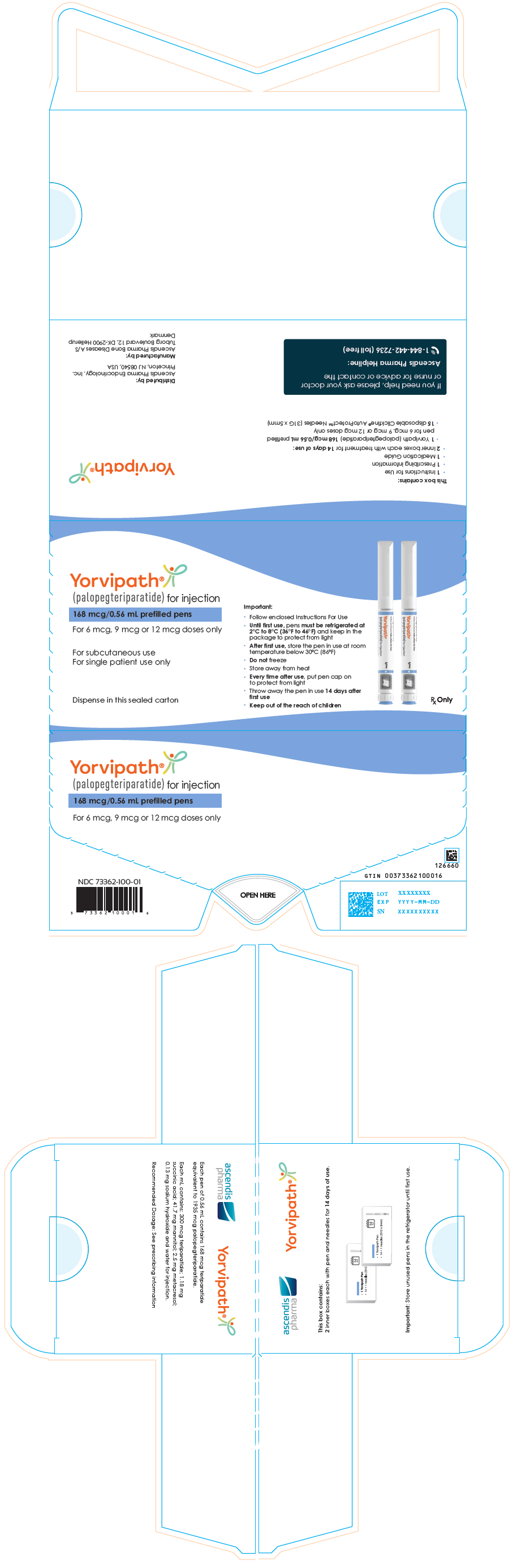
PRINCIPAL DISPLAY PANEL - 168 mcg/0.56 mL Pen Carton Yorvipath ® (palopegteriparatide) for injection 168 mcg/0.56 mL prefilled pens For 6 mcg, 9 mcg or 12 mcg doses only For subcutaneous use For single patient use only Dispense in this sealed carton Important: Follow enclosed Instructions For Use Until first use, pens must be refrigerated at 2°C to 8°C (36°F to 46°F) and keep in the package to protect from light After first use, store the pen in use at room temperature below 30°C (86°F) Do not freeze Store away from heat Every time after use, put pen cap on to protect from light Throw away the pen in use 14 days after first use Keep out of the reach of children R x Only PRINCIPAL DISPLAY PANEL - 168 mcg/0.56 mL Pen Carton
PRINCIPAL DISPLAY PANEL - 294 mcg/0.98 mL Pen Carton Yorvipath ® (palopegteriparatide) for injection 294 mcg/0.98 mL prefilled pens For 15 mcg, 18 mcg or 21 mcg doses only For subcutaneous use For single patient use only Dispense in this sealed carton Important: Follow enclosed Instructions For Use Until first use, pens must be refrigerated at 2°C to 8°C (36°F to 46°F) and keep in the package to protect from light After first use, store the pen in use at room temperature below 30°C (86°F) Do not freeze Store away from heat Every time after use, put pen cap on to protect from light Throw away the pen in use 14 days after first use Keep out of the reach of children R x Only PRINCIPAL DISPLAY PANEL - 294 mcg/0.98 mL Pen Carton
PRINCIPAL DISPLAY PANEL - 420 mcg/1.4 mL Pen Carton Yorvipath ® (palopegteriparatide) for injection 420 mcg/1.4 mL prefilled pens For 24 mcg, 27 mcg or 30 mcg doses only For subcutaneous use For single patient use only Dispense in this sealed carton Important: Follow enclosed Instructions For Use Until first use, pens must be refrigerated at 2°C to 8°C (36°F to 46°F) and keep in the package to protect from light After first use, store the pen in use at room temperature below 30°C (86°F) Do not freeze Store away from heat Every time after use, put pen cap on to protect from light Throw away the pen in use 14 days after first use Keep out of the reach of children R x Only PRINCIPAL DISPLAY PANEL - 420 mcg/1.4 mL Pen Carton
Medicaid utilization & spend
Medicare Part D spend CMS · PART D · 2026 (Q1)
About this NDC listing & data coverage
What data is (and isn’t) available for this NDC — tap to expand
| NDC identity (package / product / labeler codes) | ✓ Available |
| Labeler | ✓ Available |
| Product & package description | ✓ Available |
| Marketing category & status | ✓ Available |
| Active ingredient / dosage form / route | ✓ Available |
| FDA label (SPL via DailyMed) | ✓ Available |
| Package photos | ✓ Available |
| Inactive ingredients (structured) | — Not published for this NDC The labeler did not submit a structured excipient list, or no SPL is available. |
| NADAC pharmacy acquisition price (CMS) | — Not published for this NDC CMS publishes NADAC only for NDCs reported in its retail-pharmacy survey. |
| Orange Book / therapeutic-equivalence data | ✓ Available |
| HCPCS J-code billing crosswalk | — Not published for this NDC Most self-administered / retail products have no J-code — that is normal. |
| Medicaid utilization (CMS SDUD) | ✓ Available |