
Cycloset bromocriptine mesylate .8 mg Tablet, 21-count — NDC 73515-123-21 (Billing 73515-0123-21)
This is a package of 21 tablets of Cycloset bromocriptine mesylate .8 mg Tablet from Avvisto Therapeutics LLC, marketed since May 2024 and currently FDA-listed.
NDC database record
One package, one record: these facts belong to NDC 73515-123-21 alone.
- Record
- FDA NDC Directory package listing · Human prescription drug
- Code segments
- 73515 labeler · 123 product · 21 package
- Package marketed since
- May 23, 2024
- Sample package
- No — commercial package
- Listing certified through
- Dec 31, 2027
- Barcode (UPC-A, from the NDC)
- 3 7351512321 3
- FDA record last changed
- Jul 24, 2026
Other active recalls for Bromocriptine Mesylate (different manufacturers) — 1 · tap to view
Identity & classification
Regulatory identifiers FDA, NLM and CMS codes for this package
Drug-database identifiers Medi-Span GPI and First Databank GCN / HICL / AHFS classification
- GSN (GCN sequence number): 066820
- GCN: 29227
- GPI-14 (Medi-Span): 27574020100320
- HICL (First Databank): 002834
- AHFS class code: 28:36.20.04
- RxCUI (RxNorm): 859077
Where does this data come from?
- FDA openFDA NDC Directory · synced Oct 8, 2026
- FDA label on DailyMed · label index refreshed Oct 8, 2026
- RxNorm (NLM RxNav) · catalog refreshed Oct 8, 2026
- Medi-Span GPI (licensed)
- First Databank (licensed) · refreshed Oct 8, 2026
RxNorm drug class
This medicine belongs to the Ergot Derivative class.
Where does this data come from?
- RxClass (NLM) · catalog refreshed Oct 8, 2026
Clinical
Bromocriptine (Parlodel) is used to treat symptoms of hyperprolactinemia (high levels of a natural substance called prolactin in the body) including lack of menstrual periods, discharge from the nipples, infertility (difficulty becoming pregnant) and hypogonadism (low levels of certain natural substances needed for normal development and sexual function). Bromocriptine (Parlodel) may be used to treat hyperprolactinemia caused by certain types of tumors that produce prolactin, and may shrink these tumors. Bromocriptine (Parlodel) is also used alone or with other treatments to treat acromegaly (...
Read the full MedlinePlus article ↗- It depends on the product. Bromocriptine mesylate treats high prolactin problems, prolactin-secreting pituitary tumors, acromegaly and Parkinson's disease. The Cycloset brand is us...
- Yes. Taking it with food helps, because many people vomited when they took it on an empty stomach. Cycloset should be taken within two hours of waking, with food.
- Nausea, headache, dizziness, tiredness and constipation are the most common, and they are usually mild to moderate. Dizziness on standing is most likely early on. Tell me if side e...
- Call right away for sudden sleepiness, fainting, severe headache with vision changes, chest pain, trouble breathing, leg swelling or new urges to gamble or overspend. Don't drive i...
Patient education
Supplement & herbal interactions
Where does this data come from?
- MedlinePlus (NLM) · refreshed Oct 8, 2026
- FDA label on DailyMed · label index refreshed Oct 8, 2026
Ask a licensed pharmacist directly — free, answered by our team.
Pricing
A drug doesn't have one price. Each row is a different public payment system, and none is what you'd pay at the counter — that depends on your insurance. The ⓘ on each row explains what it measures.
| Price system | Per each | Per package |
|---|---|---|
| Retail pharmacies payNADAC · weekly | Not in the retail survey — common for institutional, discontinued, or low-volume packs. | |
| Medicaid paysCMS SDUD · 12 mo | No recent Medicaid claims on file for this NDC — rare and low-volume NDCs are suppressed in the public data. | |
| Medicare drug plans payPart D · Q2 2026 | $5.24 | $110.00 / 21 tablets |
Where does this data come from?
- CMS NADAC weekly file
- CMS ASP pricing files · refreshed Sep 20, 2026
- CMS Medicaid State Drug Utilization Data · refreshed Oct 9, 2026
- CMS Part D plan pricing files · refreshed Sep 24, 2026
- VA National Acquisition Center price file
Packaging — all sizes for this product
| Package NDC | Description | Per unit | Per pack | Marketing start | Marketing end | Status |
|---|---|---|---|---|---|---|
| 73515-0123-21 You're viewing this | 21 TABLET in 1 BOTTLE | — | — | 2024-05-23 | — | Active |
| 73515-0123-30 73515-123-30 Main listing | 200 TABLET in 1 BOTTLE | $5.26 / ea | $1,051.26 | 2024-05-23 | — | Active |
You're viewing the smallest of 2 pack sizes for this product.
This pack shows little to no recent Medicaid volume — the 200 tablets pack carries most fills. See all packs ↓
Pack size FAQ
What quantity is in this package?
How does this package differ from NDC 73515-0123-30?
What NDC number is used to bill for this package of Cycloset bromocriptine mesylate .8 mg Tablet?
Prices are the latest CMS NADAC pharmacy acquisition cost per NDC; per-pack figures are per-unit × pack quantity, shown only when the pack is denominated in the same measure NADAC prices.
Therapeutic equivalents
| Product | Labeler | Pack | NADAC/unit | TE | Status | Price vs. this |
|---|---|---|---|---|---|---|
| Cycloset .8 mgthis 73515-0123-21 | Avvisto | 21 tablets | — | — | FDA listed | — |
Where does this data come from?
- FDA openFDA NDC Directory · synced Oct 8, 2026
- FDA Orange Book · refreshed Oct 9, 2026
- CMS NADAC weekly file
Availability & generic status
FDA-approved generic versions are listed, and recent pricing/market data suggests they may be available — see Therapeutic equivalents.
Why the date isn’t exact: Generic timing can change because patents may be challenged, settled, licensed, added, removed, or worked around with a narrower label — and FDA approval does not always mean a pharmacy can get the generic today.
🛈 What do these terms mean?
- Patent
- Legal protection listed in the Orange Book that may delay generic approval or launch. Issued by the U.S. Patent & Trademark Office.
- Substance patent
- Covers the active drug molecule itself — the hardest to design around. A generic generally can’t launch until it expires.
- Formulation (product) patent
- Covers a specific formulation or dosage form. A generic can sometimes work around it with a different formulation.
- Method-of-use patent
- A patent covering one specific approved use of the drug — not necessarily the whole molecule. A generic can sometimes launch with a “skinny label” that carves out the protected use and keeps the others.
- Skinny label
- A generic label that omits a still-patented use when the FDA allows it — letting a generic reach the market for the unprotected uses.
- Exclusivity
- FDA-granted marketing protection, separate from patents — e.g. 5-yr new chemical entity, 7-yr orphan drug, or a +6-month pediatric extension.
- Paragraph IV
- A generic applicant’s formal challenge to a listed patent. It can potentially lead to earlier generic entry, but often involves litigation or a settlement.
- RLD / RS
- Reference Listed Drug — the brand product the FDA uses as the reference for generic applications. Reference Standard — the product the FDA expects generics to compare against in bioequivalence testing.
- TE / AB rating
- FDA therapeutic-equivalence rating. An AB rating generally means the FDA considers a generic therapeutically equivalent to — and substitutable for — the brand.
- LOE (loss of exclusivity)
- The latest patent or exclusivity currently listed — the loss-of-exclusivity / latest-listed-protection date shown on this page. Paragraph-IV challenges and settlements can move the real date earlier; FDA approval and a manufacturer’s decision to market can move it later.
Built from the FDA Orange Book. The bars above are scaled to each protection’s expiry; the red LOE marker is the last one to lapse.
| Patent | Type | Use code | Expires |
|---|---|---|---|
| US 8431155 ↗ | Method of use | U-976 | Apr 30, 2032 |
| US 8877708 ↗ | Method of use | U-1706 | Jun 7, 2030 |
| US 9352025 ↗ | Method of use | U-2111 | Jun 7, 2030 |
| US 9352025 ↗ | Method of use | U-2113 | Jun 7, 2030 |
| US 9352025 ↗ | Method of use | U-2117 | Jun 7, 2030 |
| US 9700555 ↗ | Method of use | U-2190 | Apr 30, 2032 |
| US 9700555 ↗ | Method of use | U-2194 | Apr 30, 2032 |
| US 9700555 ↗ | Method of use | U-2188 | Apr 30, 2032 |
| US 9700555 ↗ | Method of use | U-2184 | Apr 30, 2032 |
| US 9700555 ↗ | Method of use | U-2191 | Apr 30, 2032 |
| US 9700555 ↗ | Method of use | U-2187 | Apr 30, 2032 |
| US 9993474 ↗ | Method of use | U-2393 | Apr 30, 2032 |
| US 9993474 ↗ | Method of use | U-2385 | Apr 30, 2032 |
| US 9993474 ↗ | Method of use | U-2391 | Apr 30, 2032 |
| US 9895422 ↗ | Method of use | U-2285 | Jun 7, 2030 |
| US 9895422 ↗ | Method of use | U-2282 | Jun 7, 2030 |
| US 9895422 ↗ | Method of use | U-2287 | Jun 7, 2030 |
| US 9895422 ↗ | Method of use | U-2116 | Jun 7, 2030 |
| US 9895422 ↗ | Method of use | U-2114 | Jun 7, 2030 |
| US 9895422 ↗ | Method of use | U-2284 | Jun 7, 2030 |
| US 9895422 ↗ | Method of use | U-2286 | Jun 7, 2030 |
| US 9192576 ↗ | Method of use | U-976 | Apr 30, 2032 |
| US 9522117 ↗ | Method of use | U-1939 | Apr 30, 2032 |
| US 9352025 ↗ | Method of use | U-2114 | Jun 7, 2030 |
| US 9352025 ↗ | Method of use | U-2118 | Jun 7, 2030 |
| US 9352025 ↗ | Method of use | U-2115 | Jun 7, 2030 |
| US 9700555 ↗ | Method of use | U-2183 | Apr 30, 2032 |
| US 9700555 ↗ | Method of use | U-2193 | Apr 30, 2032 |
| US 9700555 ↗ | Method of use | U-2189 | Apr 30, 2032 |
| US 9700555 ↗ | Method of use | U-2198 | Apr 30, 2032 |
| US 9700555 ↗ | Method of use | U-2192 | Apr 30, 2032 |
| US 9700555 ↗ | Method of use | U-2186 | Apr 30, 2032 |
| US 9700555 ↗ | Method of use | U-2185 | Apr 30, 2032 |
| US 9352025 ↗ | Method of use | U-2112 | Jun 7, 2030 |
| US 9993474 ↗ | Method of use | U-2384 | Apr 30, 2032 |
| US 9993474 ↗ | Method of use | U-2390 | Apr 30, 2032 |
| US 9993474 ↗ | Method of use | U-2388 | Apr 30, 2032 |
| US 9993474 ↗ | Method of use | U-2386 | Apr 30, 2032 |
| US 9993474 ↗ | Method of use | U-2392 | Apr 30, 2032 |
| US 9993474 ↗ | Method of use | U-2387 | Apr 30, 2032 |
| US 9700555 ↗ | Method of use | U-2195 | Apr 30, 2032 |
| US 9700555 ↗ | Method of use | U-2197 | Apr 30, 2032 |
| US 9895422 ↗ | Method of use | U-2281 | Jun 7, 2030 |
| US 9895422 ↗ | Method of use | U-2283 | Jun 7, 2030 |
| US 9700555 ↗ | Method of use | U-2196 | Apr 30, 2032 |
| US 9352025 ↗ | Method of use | U-2119 | Jun 7, 2030 |
| US 9352025 ↗ | Method of use | U-2116 | Jun 7, 2030 |
| US 9522117 ↗ | Method of use | U-976 | Apr 30, 2032 |
| US 10688094 ↗ | Method of use | U-2871 | Apr 30, 2032 |
| US 10688094 ↗ | Method of use | U-2872 | Apr 30, 2032 |
| US 10688094 ↗ | Method of use | U-2875 | Apr 30, 2032 |
| US 10688094 ↗ | Method of use | U-2870 | Apr 30, 2032 |
| US 10688094 ↗ | Method of use | U-2873 | Apr 30, 2032 |
| US 10688094 ↗ | Method of use | U-2874 | Apr 30, 2032 |
| US 10688094 ↗ | Method of use | U-2876 | Apr 30, 2032 |
| US 10688094 ↗ | Method of use | U-2881 | Apr 30, 2032 |
| US 10688094 ↗ | Method of use | U-2878 | Apr 30, 2032 |
| US 10688094 ↗ | Method of use | U-2877 | Apr 30, 2032 |
| US 10688094 ↗ | Method of use | U-2880 | Apr 30, 2032 |
| US 10688094 ↗ | Method of use | U-2879 | Apr 30, 2032 |
| US 10688094 ↗ | Method of use | U-2887 | Apr 30, 2032 |
| US 10688094 ↗ | Method of use | U-2885 | Apr 30, 2032 |
| US 10688094 ↗ | Method of use | U-2884 | Apr 30, 2032 |
| US 10688094 ↗ | Method of use | U-2882 | Apr 30, 2032 |
| US 10688094 ↗ | Method of use | U-2883 | Apr 30, 2032 |
| US 10688094 ↗ | Method of use | U-2888 | Apr 30, 2032 |
| US 10688094 ↗ | Method of use | U-2886 | Apr 30, 2032 |
| US 10688155 ↗ | Method of use | U-2898 | Jun 7, 2030 |
| US 10688155 ↗ | Method of use | U-2905 | Jun 7, 2030 |
| US 10688155 ↗ | Method of use | U-2902 | Jun 7, 2030 |
| US 10688155 ↗ | Method of use | U-2890 | Jun 7, 2030 |
| US 10688155 ↗ | Method of use | U-2914 | Jun 7, 2030 |
| US 10688155 ↗ | Method of use | U-2911 | Jun 7, 2030 |
| US 10688155 ↗ | Method of use | U-2903 | Jun 7, 2030 |
| US 10688155 ↗ | Method of use | U-2281 | Jun 7, 2030 |
| US 10688155 ↗ | Method of use | U-2901 | Jun 7, 2030 |
| US 10688155 ↗ | Method of use | U-2912 | Jun 7, 2030 |
| US 10688155 ↗ | Method of use | U-2891 | Jun 7, 2030 |
| US 10688155 ↗ | Method of use | U-2896 | Jun 7, 2030 |
| US 10688155 ↗ | Method of use | U-2893 | Jun 7, 2030 |
| US 10688155 ↗ | Method of use | U-2899 | Jun 7, 2030 |
| US 10688155 ↗ | Method of use | U-2904 | Jun 7, 2030 |
| US 10688155 ↗ | Method of use | U-2900 | Jun 7, 2030 |
| US 10688155 ↗ | Method of use | U-2906 | Jun 7, 2030 |
| US 10688155 ↗ | Method of use | U-2908 | Jun 7, 2030 |
| US 10688155 ↗ | Method of use | U-2913 | Jun 7, 2030 |
| US 10688155 ↗ | Method of use | U-2894 | Jun 7, 2030 |
| US 10688155 ↗ | Method of use | U-2910 | Jun 7, 2030 |
| US 10688155 ↗ | Method of use | U-2892 | Jun 7, 2030 |
| US 10688155 ↗ | Method of use | U-2895 | Jun 7, 2030 |
| US 10688155 ↗ | Method of use | U-2909 | Jun 7, 2030 |
| US 10688155 ↗ | Method of use | U-2897 | Jun 7, 2030 |
| US 10688155 ↗ | Method of use | U-2907 | Jun 7, 2030 |
| US 9993474 ↗ | Method of use | U-2389 | Apr 30, 2032 |
| US 10688155 ↗ | Method of use | U-2936 | Jun 7, 2030 |
| US 10688155 ↗ | Method of use | U-2915 | Jun 7, 2030 |
| US 10688155 ↗ | Method of use | U-2935 | Jun 7, 2030 |
| US 10688155 ↗ | Method of use | U-2932 | Jun 7, 2030 |
| US 10688155 ↗ | Method of use | U-2924 | Jun 7, 2030 |
| US 10688155 ↗ | Method of use | U-2926 | Jun 7, 2030 |
| US 10688155 ↗ | Method of use | U-2931 | Jun 7, 2030 |
| US 10688155 ↗ | Method of use | U-2927 | Jun 7, 2030 |
| US 10688155 ↗ | Method of use | U-2918 | Jun 7, 2030 |
| US 10688155 ↗ | Method of use | U-2933 | Jun 7, 2030 |
| US 10688155 ↗ | Method of use | U-2916 | Jun 7, 2030 |
| US 10688155 ↗ | Method of use | U-2920 | Jun 7, 2030 |
| US 10688155 ↗ | Method of use | U-2922 | Jun 7, 2030 |
| US 10688155 ↗ | Method of use | U-2921 | Jun 7, 2030 |
| US 10688155 ↗ | Method of use | U-2919 | Jun 7, 2030 |
| US 10688155 ↗ | Method of use | U-2930 | Jun 7, 2030 |
| US 10688155 ↗ | Method of use | U-2917 | Jun 7, 2030 |
| US 10688155 ↗ | Method of use | U-2925 | Jun 7, 2030 |
| US 10688155 ↗ | Method of use | U-2929 | Jun 7, 2030 |
| US 10688155 ↗ | Method of use | U-2923 | Jun 7, 2030 |
| US 10688155 ↗ | Method of use | U-2937 | Jun 7, 2030 |
| US 10688155 ↗ | Method of use | U-2928 | Jun 7, 2030 |
| US 10688155 ↗ | Method of use | U-2934 | Jun 7, 2030 |
| US 11000522 ↗ | Method of use | U-3119 | Apr 30, 2032 |
| US 11000522 ↗ | Method of use | U-3121 | Apr 30, 2032 |
| US 11000522 ↗ | Method of use | U-3120 | Apr 30, 2032 |
| US 11000522 ↗ | Method of use | U-3122 | Apr 30, 2032 |
| US 8613947 ↗ | Method of use | U-976 | Apr 30, 2032 |
| US 11666567 ↗ | Method of use | U-4015 | Apr 30, 2032 |
| US 11666567 ↗ | Method of use | U-4016 | Apr 30, 2032 |
| US 11666567 ↗ | Method of use | U-4017 | Apr 30, 2032 |
| US 11666567 ↗ | Method of use | U-4018 | Apr 30, 2032 |
Is there a generic version of CYCLOSET 0.8 MG TABLET?
The FDA approved a generic — why can’t I get it at my pharmacy yet?
Why do different websites show different generic release dates?
What does “FDA listed” mean?
What does a patent or protection date mean here?
What does “current Orange Book estimate” mean?
Can a generic come out before the last patent expires?
Can a generic come out after the listed dates?
What is the difference between patents and exclusivity?
Why are there multiple patent dates?
Where does this data come from?
- FDA Orange Book · refreshed Oct 9, 2026
What it looks like
Where does this data come from?
- FDA label on DailyMed · label index refreshed Oct 8, 2026
Inactive Ingredients / Excipients
Inactive ingredients, also called excipients, are components of the drug product other than the active ingredient. They may include fillers, dyes, coatings, preservatives, flavors, or other formulation ingredients.
🧪 Avoiding an ingredient? See Bromocriptine inactive ingredients by manufacturer: every current product's list side by side, so you can ask your pharmacy for the version that does not list it.
💡 Tap an ingredient (hover on desktop) to see what it is and why it’s used.
-
UNII 2968PHW8QP
A weak organic acid derived from citrus fruits or made through fermentation. It works as a buffer to control pH, a preservative to extend shelf life, and a flavoring agent in medications.
-
UNII J2B2A4N98G
Lactose is a natural sugar derived from milk. In medications, it serves as a filler and binder to add bulk and help hold tablet or capsule ingredients together during manufacturing.
-
UNII 70097M6I30
Magnesium stearate is a salt made from magnesium and stearic acid, a fatty substance. It's used in tablets and capsules as a lubricant and glidant to help ingredients flow smoothly during manufacturing and prevent sticking.
-
UNII ETJ7Z6XBU4
Silicon dioxide is a naturally occurring mineral used as a glidant and anti-caking agent. It helps powder ingredients flow smoothly and prevents clumping during manufacturing and storage.
-
UNII O8232NY3SJ
A plant-based carbohydrate derived from corn kernels. It acts as a filler to add bulk, a binder to hold ingredients together, and a disintegrant to help the tablet break apart in your stomach for absorption.
5 inactive ingredients listed in the exact product block matched to this NDC.
Where does this data come from?
ingredient classCode="IACT" elements from the exact product block matched by this NDC. Label-section narrative from DailyMed / the openFDA label index is shown separately when available.- FDA label on DailyMed · label index refreshed Oct 8, 2026
- FDA openFDA NDC Directory · synced Oct 8, 2026
Inactive ingredient FAQ
Are inactive ingredients the same for every manufacturer?
Why might an inactive ingredient be missing?
Can inactive ingredients matter?
Manufacturer & labeler
Where does this data come from?
- FDA openFDA NDC Directory · synced Oct 8, 2026
- Drugs@FDA
Full prescribing information FDA SPL
🎯 Indications and Usage ▾
1 INDICATIONS AND USAGE CYCLOSET is indicated as an adjunct to diet and exercise to improve glycemic control in adults with type 2 diabetes mellitus. CYCLOSET is an ergot derivative indicated as an adjunct to diet and exercise to improve glycemic control in adults with type 2 diabetes mellitus. ( 1 ) Limitations of Use: Should not be used to treat type 1 diabetes or diabetic ketoacidosis.
( 1 ) Limited efficacy data in combination with thiazolidinediones. ( 1 ) Efficacy has not been confirmed in combination with insulin. ( 1 ) Limitations of Use CYCLOSET should not be used to treat type 1 diabetes or diabetic ketoacidosis.
Limited efficacy data in combination with thiazolidinediones. Efficacy has not been confirmed in combination with insulin.
⏱️ Dosage and Administration ▾
2 DOSAGE AND ADMINISTRATION Taken within two hours after waking in the morning with food ( 2.1 ) Initial dose is one tablet (0.8 mg) daily increased weekly by one tablet until maximal tolerated daily dose of 1.6 to 4.8 mg is achieved. ( 2.2 ) Limit dose to 1.6 mg daily during concomitant use of a moderate CYP3A4 inhibitor. Avoid concomitant use with strong CYP3A4 inhibitors. ( 2.3 )
2.1Recommended Dosing The recommended dose of CYCLOSET is 1.6 mg to 4.8 mg administered once daily within two hours after waking in the morning. CYCLOSET should be taken with food to potentially reduce gastrointestinal side effects such as nausea. If the morning dose is missed, instruct patients to take their usual dose the following morning. Doses of CYCLOSET should not be doubled the following morning.
2.2Titration CYCLOSET should be initiated at one tablet (0.8 mg) and increased by one tablet per week until a maximum daily dose of 6 tablets (4.8 mg) or until the maximal tolerated number of tablets between 2 and 6 per day is reached.
2.3Use with Concomitant Therapy CYCLOSET dose should not exceed 1.6 mg once daily during concomitant use of a moderate CYP3A4 inhibitor (e.g., erythromycin). Avoid concomitant use of CYCLOSET and strong CYP3A4 inhibitors (e.g., azole antimycotics, HIV protease inhibitors) and ensure adequate washout of the strong CYP3A4 inhibitor drug before initiating CYCLOSET treatment [see Drug Interactions (7) , Clinical Pharmacology (12.3) ] .
💊 Dosage Forms and Strengths ▾
3 DOSAGE FORMS AND STRENGTHS 0.8 mg tablets are white and round, imprinted with "C" on one side and "9" on the other. Tablets: 0.8 mg ( 3 )
⛔ Contraindications ▾
4 CONTRAINDICATIONS CYCLOSET is contraindicated in: Patients with known hypersensitivity to bromocriptine, ergot-related drugs, or any of the excipients in CYCLOSET. Patients with syncopal migraine. Bromocriptine increases the likelihood of a hypotensive episode among patients with syncopal migraine.
Loss of consciousness during a migraine may reflect dopamine receptor hypersensitivity. CYCLOSET is a dopamine receptor agonist and may, therefore, potentiate the risk for syncope in these patients. Postpartum patients.
Serious and life-threatening adverse reactions have been reported with bromocriptine use in this population [see Warnings and Precautions (5.7) , Adverse Reactions (6.2) ] . Lactating patients. CYCLOSET contains bromocriptine which inhibits lactation [see Use in Specific Populations (8.2) ] .
Hypersensitivity to ergot-related drugs, bromocriptine or to any of the excipients in CYCLOSET. ( 4 ) History of syncopal migraines. ( 4 ) Postpartum patients ( 4 , 5.7 ) Lactating patients ( 4 , 8.2 )
⚠️ Warnings and Cautions ▾
5 WARNINGS AND PRECAUTIONS Hypotension: Can cause orthostatic hypotension and syncope, particularly upon initiation or dose escalation. Use caution in patients taking antihypertensive medications. Assess orthostatic vital signs prior to initiation of CYCLOSET and periodically thereafter.
Advise patients during early treatment to avoid situations that could lead to injury if syncope was to occur. ( 5.1 , 6.1 ) Psychosis: May exacerbate psychotic disorders or reduce the effectiveness of drugs that treat psychosis. Use in patients with severe psychotic disorders is not recommended.
( 5.2 ) Impulse control/compulsive behaviors: Ask patients or their caregivers about new or increased gambling urges, sexual urges, uncontrolled spending, or other urges while being treated with CYCLOSET. Consider dose reduction or stopping CYCLOSET if a patient develops such urges. Use of CYCLOSET in patients with impulse control/compulsive behaviors is not recommended.
( 5.3 , 6.2 ). Somnolence: May cause somnolence. Advise patients not to operate heavy machinery if symptoms of somnolence occur.
( 5.4 ) Interaction with dopamine antagonists: Concomitant use with dopamine antagonists such as neuroleptic agents may diminish the effectiveness of both drugs. Concomitant use is not recommended. ( 5.5 , 7 ) Other dopamine receptor agonists: Effectiveness and safety are unknown in patients already taking dopamine receptor agonists for other indications.
Concomitant use is not recommended. ( 5.6 ) Risks in Postpartum Patients: Serious and life-threatening adverse reactions have been reported. ( 5.7 , 6.2 )
5.1Hypotension Hypotension, including orthostatic hypotension, can occur, particularly upon initiation of CYCLOSET therapy and with dose escalation. In a 52-week, randomized clinical trial of 3070 patients, hypotension was reported in 2.2% of patients randomized to CYCLOSET compared to 0.8% of patients randomized to placebo. Among CYCLOSET-treated patients reporting symptomatic hypotension, 98% were on at least one blood pressure medication compared to 73% on such medication in the total study population.
In this trial, six CYCLOSET-treated patients (0.3%) reported orthostatic hypotension compared to 2 (0.2%) placebo-treated patients. All six patients were taking antihypertensive medications. Hypotension can result in syncope.
In this trial, syncope due to any cause was reported in 1.6% of CYCLOSET-treated patients and 0.7% of placebo-treated patients [see Adverse Reactions (6.1) ] . As a precaution, assessment of orthostatic vital signs is recommended prior to initiation of CYCLOSET and periodically thereafter. Advise patients during early treatment with CYCLOSET to make slow postural changes and to avoid situations that could lead to serious injury if syncope was to occur.
Use caution in patients taking antihypertensive medications.
5.2Psychotic Disorders In patients with severe psychotic disorders, treatment with a dopamine receptor agonist such as CYCLOSET may exacerbate the disorder or may diminish the effectiveness of drugs used to treat the disorder. Therefore, the use of CYCLOSET in patients with severe psychotic disorders is not recommended.
5.3Impulse Control/Compulsive Behaviors There have been reports of patients experiencing intense urges to gamble, increased sexual urges, intense urges to spend money uncontrollably, and/or other intense urges, and the inability to control these urges while taking one or more of the medications, including bromocriptine, that increase central dopaminergic tone. In some cases, although not all, these urges were reported to have stopped when the dose was reduced, or the medication was discontinued. Because patients may not recognize these behaviors as abnormal, it is important to specifically ask patients or their caregivers about the development of new or increased gambling urges, sexual urges, uncontrolled spending, or other urges while being treated with CYCLOSET.
Consider dose reduction or discontinuation… [Excerpted — this section continues on DailyMed.]
🤒 Adverse Reactions ▾
6 ADVERSE REACTIONS The following clinically significant adverse reactions are described elsewhere in the labeling: Hypotension [see Warnings and Precautions (5.1) ] Psychotic Disorders [see Warnings and Precautions (5.2) ] Somnolence [see Warnings and Precautions (5.4) ] Risks in Postpartum Women [see Warnings and Precautions (5.7) ] In controlled clinical trials, adverse reactions reported in ≥5% of patients treated with CYCLOSET and reported more commonly than in patients treated with placebo, included nausea, fatigue, dizziness, vomiting, and headache.
( 6.1 ) Postmarketing reports with higher doses of bromocriptine used for other indications include psychotic disorders, hallucinations, and fibrotic complications. ( 6.2 ) To report SUSPECTED ADVERSE REACTIONS, contact VeroScience, LLC at 1-888-621-1215 or FDA at 1-800-FDA-1088 or www.fda.gov/medwatch.
6.1Clinical Trials Experience Because clinical trials are conducted under widely varying conditions, the adverse reaction rates reported in one clinical trial may not be easily compared to those rates reported in another clinical trial and may not reflect the rates actually observed in clinical practice. The CYCLOSET safety trial was a 52-week, placebo-controlled study. A total of 3,070 patients were randomized to CYCLOSET (titrated to 1.6 to 4.8 mg daily, as tolerated) or placebo.
The study population had a mean baseline age of 60 years (range 27-80) and 33% were 65 years of age or older. Approximately 43% of the patients were female, 68% were Caucasian, 17% were Black, 13% were Hispanic, and 1% were Asian. The mean baseline body mass index was 32 kg/m 2 .
The mean duration of diabetes at baseline was 8 years, and the mean baseline HbA1c was 7.0% with a mean baseline fasting plasma glucose of 142 mg/dL. At baseline, 12% of patients were treated with diet only, 40% were treated with one oral antidiabetic agent, 33% were treated with two oral antidiabetic agents, and 16% were treated with insulin alone or insulin in combination with an oral antidiabetic agent. At baseline, 76% of patients reported a history of hypercholesterolemia, 75% reported a history of hypertension, 11% reported a history of revascularization surgery, 10% reported a history of myocardial infarction, 10% reported a history of angina, and 5% reported a history of stroke.
Forty-seven percent of the CYCLOSET-treated patients and 32% of the placebo-treated patients prematurely discontinued treatment. Table 1 summarizes the adverse reactions reported in ≥5% of patients treated with CYCLOSET in clinical trials regardless of investigator assessment of causality. The most commonly reported adverse reactions (nausea, fatigue, vomiting, headache, dizziness) lasted a median of 14 days and were more likely to occur during the initial titration of CYCLOSET.
There were no differences in the pattern of common adverse reactions across race groups or age groups (<65 years old vs. >65 years old). In the 52-week CYCLOSET safety trial, 11.5% of CYCLOSET-treated women compared to 3.6% of placebo-treated women reported vomiting. In this same trial, 5.4% of CYCLOSET-treated men compared to 2.8% of placebo-treated men reported vomiting.
Table 1: Adverse Reactions Occurring in ≥5% in CYCLOSET-Treated Patients and More Frequent than in Placebo in CYCLOSET Clinical Trials All randomized subjects receiving at least one dose of study drug Monotherapy CYCLOSET 1.6 mg – 4.8 mg N (%) Placebo N (%) N = 159 N = 80 N = 79 Nausea 26 (32.5) 6 (7.6) Rhinitis 11 (13.8) 3 (3.8) Headache 10 (12.5) 7 (8.9) Asthenia 10 (12.5) 5 (6.3) Dizziness 10 (12.5) 6 (7.6) Constipation 9 (11.3) 3 (3.8) Sinusitis 8 (10.0) 2 (2.5) Diarrhea 7 (8.8) 4 (5.1) Amblyopia 6 (7.5) 1 (1.3) Dyspepsia 6 (7.5) 2 (2.5) Vomiting 5 (6.3) 1 (1.3) Infection 5 (6.3) 4 (5.1) Anorexia 4 (5.0) 1 (1.3) Adjunct to Sulfonylurea (2 pooled 24-week studies) N = 494 N = 244 N = 250 Nausea 62 (25.4) 12 (4.8) Asthenia 46 (18.9) 20 (8.0) Headache 41 (16.8) 40 (16.0) Flu syndrome 23 (9.4) 19… [Excerpted — this section continues on DailyMed.]
🔄 Drug Interactions ▾
7 DRUG INTERACTIONS The active ingredient in CYCLOSET (bromocriptine mesylate) is highly bound to serum proteins. Therefore, CYCLOSET may increase the unbound fraction of other concomitantly used highly protein-bound therapies (e.g., salicylates, sulfonamides, chloramphenicol and probenecid), which may alter their effectiveness and risk for side effects. CYCLOSET is a dopamine receptor agonist.
Concomitant use of dopamine receptor antagonists, such as neuroleptics (e.g., phenothiazines, butyrophenones, thioxanthenes), or metoclopramide may diminish the effectiveness of CYCLOSET, and CYCLOSET may diminish the effectiveness of these other therapies. The concurrent use of CYCLOSET with these agents has not been studied in clinical trials and is not recommended [see Warnings and Precautions (5.5) ]. CYCLOSET in combination with ergot-related drugs may cause an increase in the occurrence of ergot-related side effects, such as nausea, vomiting, and fatigue, and may also reduce the effectiveness of these ergot therapies when used to treat migraine.
The concurrent use of these ergot agents within 6 hours of CYCLOSET dosing is not recommended. CYCLOSET is extensively metabolized by the liver via CYP3A4. Therefore, potent inhibitors or inducers of CYP3A4 may increase or reduce the circulating levels of CYCLOSET, respectively.
Use caution when co-administering drugs that are inhibitors or inducers of CYP3A4. CYCLOSET dose should not exceed 1.6 mg once daily during concomitant use of a moderate CYP3A4 inhibitor (e.g., erythromycin). Concomitant use of strong CYP3A4 inhibitors (e.g., azole antimycotics, HIV protease inhibitors) with CYCLOSET should be avoided.
Ensure adequate washout of the strong CYP3A4 inhibitor drug before initiating CYCLOSET treatment [see Clinical Pharmacology (12.3) ] . There are postmarketing reports of hypertension and tachycardia when bromocriptine was co-administered with sympathomimetic drugs (e.g., phenylpropanolamine and isometheptene) in postpartum women. There are limited clinical trial data supporting the safety of co-administering sympathomimetic drugs and CYCLOSET for more than 10 days.
Therefore, concomitant use of these agents with CYCLOSET for more than 10 days duration is not recommended. Also, there are limited clinical trial data supporting the safety of selective 5-hydroxytryptamine 1B (5-HT 1B ) agonists (e.g., sumatriptan) used concurrently with CYCLOSET, and the concomitant use of these agents with CYCLOSET should be avoided. May increase the unbound fraction of highly protein-bound therapies, altering their effectiveness and safety profiles.
( 7 ) May increase ergot-related side effects or reduce ergot effectiveness for migraines if co-administered within 6 hours of ergot-related drugs. ( 7 ) Extensively metabolized by CYP3A4. Limit CYCLOSET dose to 1.6 mg/day during concomitant use of moderate CYP3A4 inhibitors.
Avoid concomitant use of CYCLOSET with strong CYP3A4 inhibitors. ( 2.3 , 7 )
👥 Use in Specific Populations ▾
8 USE IN SPECIFIC POPULATIONS Pediatrics: Safety and effectiveness have not been established. ( 8.4 )
8.1Pregnancy Risk Summary There are no available data on CYCLOSET use in pregnant women with type 2 diabetes. However, prolonged experience with bromocriptine use in pregnant women for other indications over several decades, based on data from published clinical trials, case reports, and epidemiological studies, have not established a drug-associated risk for major birth defects, miscarriage, or adverse maternal or fetal outcomes. Furthermore, only a trace amount of bromocriptine was shown to be transported across the placenta in vitro in a published ex vivo human placental perfusion model.
There are risks to the mother and fetus associated with poorly controlled diabetes in pregnancy (see Clinical Considerations ). In animal reproduction studies in which bromocriptine mesylate was administered orally during the period of organogenesis, increased prenatal mortality occurred in rats and rabbits at maternally toxic dosages that were more than 24-times the human dose of 4.8 mg/day based on body surface area. No adverse developmental outcomes were observed in monkeys administered bromocriptine mesylate orally during various periods of gestation at doses up to 10-times a human dose of 4.8 mg daily (see Data ) .
The estimated background risk of major birth defects is 6-10% in women with pre-gestational diabetes with an HbA1c >7 and has been reported to be as high as 20-25% in women with an HbA1c >10. The estimated background risk of miscarriage for the indicated population is unknown. In the U.S. general population, the estimated background risk of major birth defects and miscarriage in clinically recognized pregnancies is 2-4% and 15-20%, respectively.
Clinical Considerations Disease-Associated Maternal and/or Embryo/Fetal Risk Poorly controlled diabetes in pregnancy increases the maternal risk for diabetic ketoacidosis, pre-eclampsia, spontaneous abortions, preterm delivery, and delivery complications. Poorly controlled diabetes increases the fetal risk for major birth defects, stillbirth, and macrosomia related morbidity. Data Human Data While available studies cannot definitively establish the absence of risk, data from published studies have not established an association with bromocriptine use during pregnancy and major birth defects, miscarriage, or adverse maternal or fetal outcomes.
Available epidemiological studies have methodological limitations including small sample size and inconsistent comparator groups. Animal Data Two strains of pregnant rats were dosed orally with 3, 10, and 30 mg/kg/day from Gestation Day (GD) 6-15 and with a single dose of 10 mg/kg on GD 5. Implantation was inhibited at 10 and 30 mg/kg (24 and 72 times the human 4.8 mg daily dose, based on mg/m 2 comparison).
When rats were dosed with 3, 10, and 30 mg/kg/day from GD 8-15 there was an increase in resorptions at ≥10 mg/kg. These effects were probably due to the dependence of implantation and maintenance of gestation upon prolactin in the rat and are not clinically relevant as these events in humans are dependent upon luteinizing hormone. There were no drug-related malformations in the rat.
In two strains of pregnant rabbits treated from GD 6-18 with oral doses of 3, 10, 30, 100, and 300 mg/kg/day, there was maternal toxicity and embryolethality (post-implantation loss/early resorptions) at doses ≥10 mg/kg/day (≥48 times the human 4.8 mg daily dose, based on mg/m 2 comparison) and a low incidences of fetal abnormalities at maternally toxic doses ≥ 100 mg/kg/day (≥480 times the human 4.8 mg daily dose, based on mg/m 2 comparison). There were no treatment-related fetal malformations at doses ≤30 mg/kg/day (140 times the human 4.8 mg daily dose, based on mg/m 2 comparison).
Implantation was not affected in rabbits treated from GD 1-6 with oral doses of 100-300 mg/kg/day (480-1400 times the human 4.8 mg daily dose, based on mg/m 2 comparison). In a sma… [Excerpted — this section continues on DailyMed.]
🤰 Pregnancy ▾
8.1Pregnancy Risk Summary There are no available data on CYCLOSET use in pregnant women with type 2 diabetes. However, prolonged experience with bromocriptine use in pregnant women for other indications over several decades, based on data from published clinical trials, case reports, and epidemiological studies, have not established a drug-associated risk for major birth defects, miscarriage, or adverse maternal or fetal outcomes. Furthermore, only a trace amount of bromocriptine was shown to be transported across the placenta in vitro in a published ex vivo human placental perfusion model.
There are risks to the mother and fetus associated with poorly controlled diabetes in pregnancy (see Clinical Considerations ). In animal reproduction studies in which bromocriptine mesylate was administered orally during the period of organogenesis, increased prenatal mortality occurred in rats and rabbits at maternally toxic dosages that were more than 24-times the human dose of 4.8 mg/day based on body surface area. No adverse developmental outcomes were observed in monkeys administered bromocriptine mesylate orally during various periods of gestation at doses up to 10-times a human dose of 4.8 mg daily (see Data ) .
The estimated background risk of major birth defects is 6-10% in women with pre-gestational diabetes with an HbA1c >7 and has been reported to be as high as 20-25% in women with an HbA1c >10. The estimated background risk of miscarriage for the indicated population is unknown. In the U.S. general population, the estimated background risk of major birth defects and miscarriage in clinically recognized pregnancies is 2-4% and 15-20%, respectively.
Clinical Considerations Disease-Associated Maternal and/or Embryo/Fetal Risk Poorly controlled diabetes in pregnancy increases the maternal risk for diabetic ketoacidosis, pre-eclampsia, spontaneous abortions, preterm delivery, and delivery complications. Poorly controlled diabetes increases the fetal risk for major birth defects, stillbirth, and macrosomia related morbidity. Data Human Data While available studies cannot definitively establish the absence of risk, data from published studies have not established an association with bromocriptine use during pregnancy and major birth defects, miscarriage, or adverse maternal or fetal outcomes.
Available epidemiological studies have methodological limitations including small sample size and inconsistent comparator groups. Animal Data Two strains of pregnant rats were dosed orally with 3, 10, and 30 mg/kg/day from Gestation Day (GD) 6-15 and with a single dose of 10 mg/kg on GD 5. Implantation was inhibited at 10 and 30 mg/kg (24 and 72 times the human 4.8 mg daily dose, based on mg/m 2 comparison).
When rats were dosed with 3, 10, and 30 mg/kg/day from GD 8-15 there was an increase in resorptions at ≥10 mg/kg. These effects were probably due to the dependence of implantation and maintenance of gestation upon prolactin in the rat and are not clinically relevant as these events in humans are dependent upon luteinizing hormone. There were no drug-related malformations in the rat.
In two strains of pregnant rabbits treated from GD 6-18 with oral doses of 3, 10, 30, 100, and 300 mg/kg/day, there was maternal toxicity and embryolethality (post-implantation loss/early resorptions) at doses ≥10 mg/kg/day (≥48 times the human 4.8 mg daily dose, based on mg/m 2 comparison) and a low incidences of fetal abnormalities at maternally toxic doses ≥ 100 mg/kg/day (≥480 times the human 4.8 mg daily dose, based on mg/m 2 comparison). There were no treatment-related fetal malformations at doses ≤30 mg/kg/day (140 times the human 4.8 mg daily dose, based on mg/m 2 comparison).
Implantation was not affected in rabbits treated from GD 1-6 with oral doses of 100-300 mg/kg/day (480-1400 times the human 4.8 mg daily dose, based on mg/m 2 comparison). In a small study in macaque monkeys given oral doses of 2 mg/kg/day (10 times the human 4.8 mg daily dose, bas… [Excerpted — this section continues on DailyMed.]
🧒 Pediatric Use ▾
8.4Pediatric Use The safety and effectiveness of CYCLOSET in pediatric patients have not been established.
🧓 Geriatric Use ▾
8.5Geriatric Use In the two clinical trials of CYCLOSET add-on to sulfonylurea therapy and in the monotherapy trial, a total of 54 patients randomized to CYCLOSET were ≥65 years old. In the 52-week safety trial, 601 of the 2,054 CYCLOSET-treated patients (29%) were ≥65 years old. No overall differences in safety or effectiveness were observed between the elderly and younger patients, but greater sensitivity of some older individuals cannot be ruled out [See Clinical Studies (14) ].
🆘 Overdosage ▾
10 OVERDOSAGE With another formulation of bromocriptine mesylate, the most commonly reported signs and symptoms associated with acute overdose were nausea, vomiting, constipation, diaphoresis, dizziness, pallor, severe hypotension, malaise, confusion, lethargy, drowsiness, delusions, hallucinations, and repetitive yawning. The lethal dose has not been established. Treatment of overdose consists of removal of the drug by emesis (if conscious), gastric lavage, activated charcoal, or saline catharsis.
Careful supervision and recording of fluid intake and output is essential. Hypotension should be treated by placing the patient in the Trendelenburg position and administering intravenous fluids. If satisfactory relief of hypotension cannot be achieved by using the above measures to their fullest extent, vasopressors should be considered.
🧬 Clinical Pharmacology ▾
12 CLINICAL PHARMACOLOGY
12.1Mechanism of Action CYCLOSET contains bromocriptine mesylate, a sympatholytic, dopamine D2 receptor agonist. In patients with type 2 diabetes, timed morning administration of CYCLOSET is associated with increased insulin sensitivity and glucose disposal and reduced fasting and postprandial hyperglycemia throughout the meals of the day without raising plasma insulin levels.
12.2Pharmacodynamics Postprandial Glucose and Insulin Response to a Meal Patients with type 2 diabetes and inadequate glycemic control on diet alone were randomized to CYCLOSET or placebo in a 24-week monotherapy clinical trial. At baseline and study end, plasma samples for insulin and glucose were obtained before and 1 hour, and 2 hours after standardized meals for breakfast, lunch, and dinner. In this trial, once-daily (8 a.m.) CYCLOSET improved postprandial glucose without increasing plasma insulin concentrations.
Insulin-Mediated Glucose Disposal Patients with type 2 diabetes and inadequate glycemic control on sulfonylurea therapy were randomized to CYCLOSET or placebo in a 16-week clinical trial. In this trial CYCLOSET therapy improved insulin-mediated glucose disposal and glucose tolerance and resulted in lower plasma glucose and HbA1c levels.
12.3Pharmacokinetics Absorption and Bioavailability When administered orally, approximately 65-95% of the CYCLOSET dose of bromocriptine mesylate is absorbed. Due to extensive first-pass metabolism, approximately 7% of the dose reaches the systemic circulation. Under fasting conditions the time to maximum plasma concentration is 53 minutes.
In contrast, following a standard high-fat meal, the time to maximum plasma concentration is increased to approximately 90-120 minutes. Also, the relative bioavailability of CYCLOSET is increased under fed as compared to fasting conditions by an average of approximately 55-65% (increase in AUC inf ). Distribution Bromocriptine is 90-96% bound to plasma proteins.
The volume of distribution is approximately 61 L. Metabolism Bromocriptine mesylate is extensively metabolized in the gastrointestinal tract and liver. Metabolism by CYP3A4 is the major metabolic pathway.
Most of the absorbed dose (approximately 93%) undergoes first-pass metabolism. The remaining 7% reaches the systemic circulation. Excretion The major route of excretion of bromocriptine is in the bile with the remaining approximately 2-6% of an oral dose excreted via the urine.
The elimination half-life is approximately 6 hours. Prior consumption of a standard high-fat meal has little to no effect on the elimination half-life of CYCLOSET. Specific Populations Renal Impairment No pharmacokinetic studies have been conducted in patients with renal impairment.
Although the kidney is a minor pathway for elimination of CYCLOSET, caution should be used in patients with renal impairment. Hepatic Impairment No pharmacokinetic studies have been conducted in patients with hepatic impairment. Because CYCLOSET is predominantly metabolized by the liver, caution should be used in patients with hepatic impairment.
Gender The plasma exposure of CYCLOSET is increased 18-30% in females compared to males. Geriatric No pharmacokinetic studies have been conducted in geriatric subjects. Pediatric Studies characterizing the pharmacokinetics of CYCLOSET in pediatric patients have not been performed.
Race Studies characterizing the pharmacokinetics of CYCLOSET among different ethnic groups have not been performed. Drug Interactions In Vitro Assessment Although bromocriptine is a competitive inhibitor of CYP3A4, in vivo drug interaction potential is low because the inhibitory potency for CYP3A4 is approximately 10,000-fold higher than the maximum plasma levels reached in vivo (C max of approximately 80-125 pg/mL) following a 4.8 mg oral dose of CYCLOSET. Agents inducing CYP3A4 activity such as rifampin or dexamethasone would be expected to decrease CYCLOSET plasma levels.
There was no significant in vitro inhibit… [Excerpted — this section continues on DailyMed.]
🧬 Mechanism of Action ▾
12.1Mechanism of Action CYCLOSET contains bromocriptine mesylate, a sympatholytic, dopamine D2 receptor agonist. In patients with type 2 diabetes, timed morning administration of CYCLOSET is associated with increased insulin sensitivity and glucose disposal and reduced fasting and postprandial hyperglycemia throughout the meals of the day without raising plasma insulin levels.
📦 How Supplied / Storage and Handling ▾
16 HOW SUPPLIED/STORAGE AND HANDLING CYCLOSET 0.8 mg tablets are WHITE and round with "C" on one side and "9" on the other. The tablets are supplied as follows: NDC 73515-123-30 unit-of-use bottles of 200 NDC 73515-123-21 unit-of-use bottles of 21 (samples only). Storage Store and dispense: At 20-25°C (68-77°F) in a tight, light-resistant container. See USP Controlled Room Temperature.
📦 Storage and Handling ▾
Storage Store and dispense: At 20-25°C (68-77°F) in a tight, light-resistant container. See USP Controlled Room Temperature.
📋 Description ▾
11 DESCRIPTION CYCLOSET Tablets contain micronized bromocriptine mesylate, an ergot derivative. Bromocriptine mesylate is chemically designated [Ergotaman-3',6',18-trione, 2-bromo-12'-hydroxy-2'-(1-methylethyl)-5'-(2-methylpropyl)-, monomethanesulfonate (salt), (5'α)-]. CYCLOSET is a single enantiomer with absolute configuration 5 R , 8 R , 2' R , 5' S , 11' S , 12' S .
The structural formula of bromocriptine is shown below: Bromocriptine mesylate in CYCLOSET is a white or slightly colored micronized crystalline powder with a molecular formula of C 32 H 40 BrN 5 O 5 ∙CH 4 SO 3 and a molecular weight of 750.72. CYCLOSET Tablets contain bromocriptine mesylate USP in an amount equivalent to 0.8 mg. of bromocriptine. Each tablet contains the following inactive ingredients: lactose, corn starch, magnesium stearate, colloidal silicon dioxide, and citric acid.
Chemical Structure
💬 Information for Patients ▾
17 PATIENT COUNSELING INFORMATION Advise the patient to read the FDA-approved patient labeling (Patient Information). Hypotension Advise patients that they may develop postural (orthostatic) hypotension with or without symptoms such as dizziness, nausea, and diaphoresis. Hypotension and syncope may occur more frequently during initial therapy or with an increase in dose at any time.
During early treatment with CYCLOSET, advise patients to make slow postural changes and to avoid situations that could predispose to serious injury if syncope was to occur [see Warnings and Precautions (5.1) ] . Impulse Control/Compulsive Behaviors Advise patients that they may experience impulse control and/or compulsive behaviors while taking CYCLOSET and to inform their physician or healthcare provider if they develop new or increased gambling urges, sexual urges, uncontrolled spending, binge or compulsive eating, or other urges while being treated with CYCLOSET [see Warnings and Precautions (5.3) ] .
Somnolence Advise patients that CYCLOSET may cause somnolence. Advise patients not to operate heavy machinery if symptoms of somnolence occur [see Warnings and Precautions (5.4) ] . Pregnancy and Lactation Advise patients not to take CYCLOSET postpartum or while lactating [see Warnings and Precautions (5.7) , Use in Specific Populations (8.2) ] .
Serious and life-threatening adverse reactions including hypertension, myocardial infarction, seizures, stroke and psychosis have been reported in postpartum women who were administered bromocriptine for inhibition of lactation. Missed Doses Advise patients to take CYCLOSET within 2 hours after waking in the morning. If the morning dose is missed, instruct patients to take their usual dose the following morning.
Doses of CYCLOSET should not be doubled the following morning.
🧬 Pharmacokinetics ▾
12.3Pharmacokinetics Absorption and Bioavailability When administered orally, approximately 65-95% of the CYCLOSET dose of bromocriptine mesylate is absorbed. Due to extensive first-pass metabolism, approximately 7% of the dose reaches the systemic circulation. Under fasting conditions the time to maximum plasma concentration is 53 minutes.
In contrast, following a standard high-fat meal, the time to maximum plasma concentration is increased to approximately 90-120 minutes. Also, the relative bioavailability of CYCLOSET is increased under fed as compared to fasting conditions by an average of approximately 55-65% (increase in AUC inf ). Distribution Bromocriptine is 90-96% bound to plasma proteins.
The volume of distribution is approximately 61 L. Metabolism Bromocriptine mesylate is extensively metabolized in the gastrointestinal tract and liver. Metabolism by CYP3A4 is the major metabolic pathway.
Most of the absorbed dose (approximately 93%) undergoes first-pass metabolism. The remaining 7% reaches the systemic circulation. Excretion The major route of excretion of bromocriptine is in the bile with the remaining approximately 2-6% of an oral dose excreted via the urine.
The elimination half-life is approximately 6 hours. Prior consumption of a standard high-fat meal has little to no effect on the elimination half-life of CYCLOSET. Specific Populations Renal Impairment No pharmacokinetic studies have been conducted in patients with renal impairment.
Although the kidney is a minor pathway for elimination of CYCLOSET, caution should be used in patients with renal impairment. Hepatic Impairment No pharmacokinetic studies have been conducted in patients with hepatic impairment. Because CYCLOSET is predominantly metabolized by the liver, caution should be used in patients with hepatic impairment.
Gender The plasma exposure of CYCLOSET is increased 18-30% in females compared to males. Geriatric No pharmacokinetic studies have been conducted in geriatric subjects. Pediatric Studies characterizing the pharmacokinetics of CYCLOSET in pediatric patients have not been performed.
Race Studies characterizing the pharmacokinetics of CYCLOSET among different ethnic groups have not been performed. Drug Interactions In Vitro Assessment Although bromocriptine is a competitive inhibitor of CYP3A4, in vivo drug interaction potential is low because the inhibitory potency for CYP3A4 is approximately 10,000-fold higher than the maximum plasma levels reached in vivo (C max of approximately 80-125 pg/mL) following a 4.8 mg oral dose of CYCLOSET. Agents inducing CYP3A4 activity such as rifampin or dexamethasone would be expected to decrease CYCLOSET plasma levels.
There was no significant in vitro inhibition of other major CYP450 enzymes (1A2, 2C9/19, 2D6) by bromocriptine. In Vivo Assessment The concomitant use of macrolide antibiotics such as erythromycin (250 mg four times a day), a known inhibitor of CYP3A4, along with bromocriptine (5 mg) was shown to increase the AUC (2.8-fold) and C max (4.6-fold) of bromocriptine [see Dosage and Administration (2.3) , Drug Interactions (7) ] .
🧬 Pharmacodynamics ▾
12.2Pharmacodynamics Postprandial Glucose and Insulin Response to a Meal Patients with type 2 diabetes and inadequate glycemic control on diet alone were randomized to CYCLOSET or placebo in a 24-week monotherapy clinical trial. At baseline and study end, plasma samples for insulin and glucose were obtained before and 1 hour, and 2 hours after standardized meals for breakfast, lunch, and dinner. In this trial, once-daily (8 a.m.) CYCLOSET improved postprandial glucose without increasing plasma insulin concentrations.
Insulin-Mediated Glucose Disposal Patients with type 2 diabetes and inadequate glycemic control on sulfonylurea therapy were randomized to CYCLOSET or placebo in a 16-week clinical trial. In this trial CYCLOSET therapy improved insulin-mediated glucose disposal and glucose tolerance and resulted in lower plasma glucose and HbA1c levels.
🔬 Clinical Studies ▾
14 CLINICAL STUDIES A total of 3,723 patients with type 2 diabetes were randomized across 4 double-blind, placebo-controlled clinical trials conducted to evaluate the safety and glycemic efficacy of CYCLOSET. In the pooled 24-week monotherapy trial and the two 24-week add-on to sulfonylurea trials (N = 653), the mean age of the CYCLOSET-treated patients (N = 324) was 55 years, 71% were male and 73% Caucasian. In the 52-week safety trial (N = 3,070), the mean age for the entire study population was 60 years and 43% of patients were female, 68% were Caucasian, 17% were Black, 13% were Hispanic, and 1% were Asian.
In all 4 clinical trials, patients assigned to treatment with CYCLOSET received an initial dose of 0.8 mg, which was increased by 0.8 mg each week for 6 weeks (4.8 mg/day final dose) if no intolerance occurred or until the maximum tolerated dose ≥1.6 mg/day was reached. In patients with type 2 diabetes, treatment with CYCLOSET produced clinically significant improvements in HbA1c and postprandial glucose (PPG).
14.1Monotherapy A total of 159 adults with type 2 diabetes, overweight (body mass index ≥26.0 kg/m 2 for males and ≥28.0 kg/m 2 for females), and inadequate glycemic control (HbA1c 7.5-11%) participated in a 24-week, placebo-controlled, monotherapy trial that evaluated the efficacy and safety of CYCLOSET as an adjunct to diet and exercise. Mean body weight at baseline was 93 kg in the CYCLOSET group and 96 kg in the placebo group. Mean HbA1c at baseline was 9.0% in the CYCLOSET group and 8.8% in the placebo group.
Mean duration of diabetes at baseline was 5 years in the CYCLOSET group and 4 years in the placebo group. Of the 80 patients in the CYCLOSET group, 69% (N = 55) achieved the maximum daily dose of 4.8 mg. CYCLOSET improved HbA1c and fasting plasma glucose compared to placebo (Table 2).
Mean change from baseline in body weight was +0.2 kg in the CYCLOSET group (N = 78) and +0.5 kg in the placebo group (N = 77). Table 2: Changes in Glycemic Parameters in a 24-Week Placebo-Controlled Study of CYCLOSET as Monotherapy in Patients with Type 2 Diabetes intent-to-treat population with last observation carried forward CYCLOSET N = 80 (1.6 - 4.8 mg) Placebo N = 79 P-value calculated by ANOVA HbA1c (%) N = 74 N = 74 Baseline (mean) 9.0
8.8Change from baseline (adj. mean) -0.1
0.3Difference from placebo (adj. mean) -0.4 p =
0.05Fasting Plasma Glucose (mg/dL) N = 76 N = 75 Baseline (mean) 215 205 Change from baseline (adj. mean) 0 23 Difference from placebo (adj. mean) -23 p = 0.005
14.2Combination Therapy CYCLOSET Add-on to Sulfonylurea Therapy Patients with type 2 diabetes and inadequate glycemic control (HbA1c 7.8-12.5%) on sulfonylurea therapy (mean HbA1c 9.4%) participated in Study L, a 24-week, randomized, double-blind, placebo-controlled trial that evaluated the safety and glycemic efficacy of CYCLOSET when added to stable sulfonylurea therapy. The mean duration of diabetes was 6 years in the CYCLOSET group and 8 years in the placebo group. The range of body mass index was 26-40 kg/m 2 for men and 28-40 kg/m 2 for women, with a mean of 32 kg/m 2 in both treatment groups.
Of the 122 patients in the CYCLOSET group, 83 (68%) achieved the maximum dose of study drug. The mean change from baseline in body weight was +0.9 kg in the CYCLOSET group and +0.5 kg in the placebo group. In another similarly designed trial, Study K, patients with type 2 diabetes and inadequate glycemic control (HbA1c 7.8-12.5 %) on stable sulfonylurea therapy were randomized to add-on therapy with either CYCLOSET (N = 122) or placebo (N = 123).
The range of body mass index was 26-40 kg/m 2 for men and 28-40 kg/m 2 for women, with a mean of 32 kg/m 2 in the CYCLOSET group and 33 kg/m 2 in the placebo group. Of the 122 patients in the CYCLOSET group, 91 (75%) achieved the maximum dose of study drug. Mean change from baseline in body weight was +1.4 kg in the CYCLOSET group and +0.5 kg in the placebo group.
CYCLOSET improved HbA1c and fast… [Excerpted — this section continues on DailyMed.]
🧪 Nonclinical Toxicology ▾
13 NONCLINICAL TOXICOLOGY
13.1Carcinogenesis, Mutagenesis, Impairment of Fertility Carcinogenesis In a 74-week dietary study in mice at doses up to 50 mg/kg/day (60 times the human 4.8 mg daily dose, based on mg/m 2 comparison), there was no evidence of tumorigenicity. In a 100-week dietary carcinogenicity study in rats at doses of 1.8, 9.9 and 44.5 mg/kg/day (up to 107 times the human 4.8 mg daily dose, based on mg/m 2 comparison), there was a significant increase in the incidence of malignant uterine neoplasms at ≥9.9 mg/kg/day (≥24-times the human 4.8 mg daily dose, based on mg/m 2 comparison).
The increase in uterine neoplasms was probably due to the inhibition of prolactin-stimulated progesterone secretion resulting in estrogen domination and endometrial stimulation in the aging rat. Because prolactin does not play a role in human progesterone production, this finding is unlikely to be clinically relevant. Mutagenicity Bromocriptine was not mutagenic in the in vitro Ames bacterial mutation assay, the V79 Chinese hamster fibroblast mutagenicity test, the in vivo bone marrow micronucleus test in mice and the in vivo Chinese hamster bone marrow chromosomal aberration test.
Impairment of Fertility There was no effect on fertility in female rats treated with oral doses of 1 and 3 mg/kg (2 to 7 times the human 4.8 mg daily dose, based on mg/m 2 comparison) from two weeks prior to mating through two weeks post mating or throughout lactation. Postnatal pup weight gain was reduced dose-dependently in treated groups, probably due to lactation inhibition. In male rats administered oral doses of 2, 10, and 50 mg/kg/day (up to 120 times the human 4.8 mg daily dose, based on mg/m 2 comparison) that were mated with untreated females, there was no effect on mating or fertility.
However, there was a slight increase in postnatal (post-partum days 0-21) pup mortality in the 10 and 50 mg/kg/day groups (24-120 times the human 4.8 mg daily dose, based on mg/m 2 comparison).
📄 Carcinogenesis, Mutagenesis, Impairment of Fertility ▾
13.1Carcinogenesis, Mutagenesis, Impairment of Fertility Carcinogenesis In a 74-week dietary study in mice at doses up to 50 mg/kg/day (60 times the human 4.8 mg daily dose, based on mg/m 2 comparison), there was no evidence of tumorigenicity. In a 100-week dietary carcinogenicity study in rats at doses of 1.8, 9.9 and 44.5 mg/kg/day (up to 107 times the human 4.8 mg daily dose, based on mg/m 2 comparison), there was a significant increase in the incidence of malignant uterine neoplasms at ≥9.9 mg/kg/day (≥24-times the human 4.8 mg daily dose, based on mg/m 2 comparison).
The increase in uterine neoplasms was probably due to the inhibition of prolactin-stimulated progesterone secretion resulting in estrogen domination and endometrial stimulation in the aging rat. Because prolactin does not play a role in human progesterone production, this finding is unlikely to be clinically relevant. Mutagenicity Bromocriptine was not mutagenic in the in vitro Ames bacterial mutation assay, the V79 Chinese hamster fibroblast mutagenicity test, the in vivo bone marrow micronucleus test in mice and the in vivo Chinese hamster bone marrow chromosomal aberration test.
Impairment of Fertility There was no effect on fertility in female rats treated with oral doses of 1 and 3 mg/kg (2 to 7 times the human 4.8 mg daily dose, based on mg/m 2 comparison) from two weeks prior to mating through two weeks post mating or throughout lactation. Postnatal pup weight gain was reduced dose-dependently in treated groups, probably due to lactation inhibition. In male rats administered oral doses of 2, 10, and 50 mg/kg/day (up to 120 times the human 4.8 mg daily dose, based on mg/m 2 comparison) that were mated with untreated females, there was no effect on mating or fertility.
However, there was a slight increase in postnatal (post-partum days 0-21) pup mortality in the 10 and 50 mg/kg/day groups (24-120 times the human 4.8 mg daily dose, based on mg/m 2 comparison).
📄 Patient Package Insert ▾
Patient Information CYCLOSET ® (Sikloset) (bromocriptine mesylate tablets) for oral use This Patient Information has been approved by the U.S. Food and Drug Administration. Revised: 08/2020 Read this Patient Information that comes with CYCLOSET before you start taking it and each time you get a refill.
There may be new information. This information does not take the place of talking with your healthcare provider about your medical condition or treatment. What is CYCLOSET?
CYCLOSET is a prescription medicine used with diet and exercise to lower blood sugar in adults with type 2 diabetes. CYCLOSET is not for people with type 1 diabetes. CYCLOSET is not for people with diabetic ketoacidosis.
It is not known if CYCLOSET is safe and effective in children. Who should not take CYCLOSET? Do not take CYCLOSET if you : are allergic to bromocriptine or any of the ingredients in CYCLOSET.
See the end of this Patient Information leaflet for a complete list of ingredients in CYCLOSET. are allergic to ergot medicines. Ask your healthcare provider for a list of these medicines, if you are not sure. have fainting (syncopal) migraine headaches. are a woman who has recently given birth to a child (postpartum). CYCLOSET can cause serious and life-threatening problems including high blood pressure (hypertension), heart attack, seizures, stroke and psychosis (losing touch with reality). are breastfeeding.
Talk to your healthcare provider before taking CYCLOSET if you have any of these conditions. What should I tell my healthcare provider before taking CYCLOSET? Before taking CYCLOSET, tell your healthcare provider about all of your medical conditions, including if you: have ever passed out (fainted). have migraine headaches. have or have had low blood pressure (hypotension). take medicines for high blood pressure (hypertension). have or have had a mental health problem, especially a psychotic disorder. are pregnant or plan to become pregnant.
It is not known if CYCLOSET will harm your unborn baby. If you are pregnant, talk with your healthcare provider about the best way to control your blood sugar while you are pregnant. Tell your healthcare provider about all the medicines you take , including prescription and over-the-counter medicines, vitamins, and herbal supplements.
Especially tell your healthcare provider if you take : medicines for mental health problems, especially anti-psychotic medicines called dopamine receptor antagonists medicines for migraine or other types of headaches other medicines that work like CYCLOSET (dopamine receptor agonists) to treat conditions such as Parkinson's disease, high levels of a hormone called prolactin in your blood (hyperprolactinemia), restless leg syndrome and too much growth hormone (acromegaly) medicines for type 2 diabetes Ask your healthcare provider or pharmacist for a list of these medicines if you are not sure .
CYCLOSET may affect the way other medicines work, and other medicines may affect how CYCLOSET works. Know the medicines you take. Keep a list of your medicines and show it to your healthcare provider and pharmacist when you get a new medicine.
How should I take CYCLOSET? Take CYCLOSET exactly as your healthcare provider tells you to take it. Take CYCLOSET by mouth each morning with food.
Take CYCLOSET within 2 hours after waking in the morning. If you miss your morning dose, wait until the next morning to take your medication. Do not take a double dose of CYCLOSET.
During periods of stress on the body, such as fever, trauma, infection, or surgery, your medication needs may change. Contact your healthcare provider right away as your medication needs change. If you take too much CYCLOSET, call your healthcare provider or go to the nearest emergency department right away.
While taking CYCLOSET: check your blood sugar as your healthcare provider tells you to stay on your prescribed diet and exercise program talk to your doctor about how to prevent, recognize, and manage low blood sugar (hypogly… [Excerpted — this section continues on DailyMed.]
📄 Recent Major Changes ▾
Warnings and Precautions ( 5.3 ) 04/2020 Warnings and Precautions ( 5.7 ) 08/2020
📄 Package Label / Principal Display Panel ▾
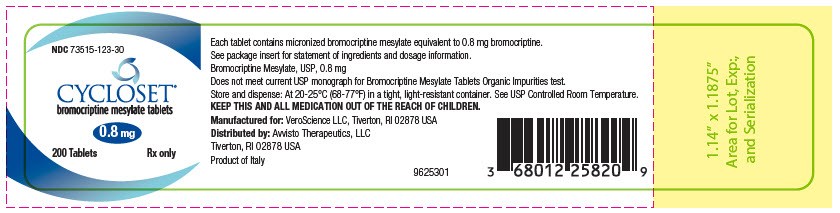
PRINCIPAL DISPLAY PANEL - 0.8 mg Tablet Bottle Label NDC 73515-123-30 CYCLOSET ® bromocriptine mesylate tablets 0.8 mg 200 Tablets Rx only PRINCIPAL DISPLAY PANEL - 0.8 mg Tablet Bottle Label
Medicaid utilization by pack size
Medicare Part D spend CMS · PART D · 2026 (Q1)
About this NDC listing & data coverage
What data is (and isn’t) available for this NDC — tap to expand
| NDC identity (package / product / labeler codes) | ✓ Available |
| Labeler | ✓ Available |
| Product & package description | ✓ Available |
| Marketing category & status | ✓ Available |
| Active ingredient / dosage form / route | ✓ Available |
| FDA label (SPL via DailyMed) | ✓ Available |
| Package photos | ✓ Available |
| Inactive ingredients (structured) | ✓ Available |
| NADAC pharmacy acquisition price (CMS) | — Not published for this NDC CMS publishes NADAC only for NDCs reported in its retail-pharmacy survey. |
| Orange Book / therapeutic-equivalence data | ✓ Available |
| HCPCS J-code billing crosswalk | — Not published for this NDC Most self-administered / retail products have no J-code — that is normal. |
| Medicaid utilization (CMS SDUD) | — Not published for this NDC CMS reports utilization only for NDCs with Medicaid claims above its privacy threshold. |