
TECHNEGAS Kit for the preparation of technetium Tc 99m-labeled carbon inhalation aerosol Kit
🆔 Identity & classification
Where does this data come from?
🏭 Manufacturer & labeler
Where does this data come from?
🩺 Clinical
Patient education
Supplement & herbal interactions
Where does this data come from?
Ask a licensed pharmacist directly — free, answered by our team.
💊 What it looks like
Where does this data come from?
🧪 Inactive Ingredients / Excipients
Inactive ingredients, also called excipients, are components of the drug product other than the active ingredient. They may include fillers, dyes, coatings, preservatives, flavors, or other formulation ingredients.
Where does this data come from?
IACT rows and label-wide narrative are kept separate; availability and product-level specificity depend on the submitted label.Inactive ingredient FAQ
Are inactive ingredients the same for every manufacturer?
Why might an inactive ingredient be missing?
Can inactive ingredients matter?
💲 Pricing
A drug doesn't have one price. Each row is a different public payment system, and none is what you'd pay at the counter — that depends on your insurance. The ⓘ on each row explains what it measures.
| Price system | Per each | Per package |
|---|---|---|
| Retail pharmacies payNADAC · weekly | Not in the retail survey — common for institutional, discontinued, or low-volume packs. | |
| Medicaid paysCMS SDUD · 12 mo | No recent Medicaid claims on file for this NDC — rare and low-volume NDCs are suppressed in the public data. | |
| Medicare drug plans payPart D · quarterly | No Part D plan price is available for this NDC in our data. | |
Where does this data come from?
🔁 Therapeutic equivalents
| Product | Labeler | Pack | NADAC/unit | TE | Status | Price vs. this |
|---|---|---|---|---|---|---|
| Technegasthis 73814-0989-20 | Cyclomedica | 1 kit | — | — | FDA listed | — |
| Technegas 73814-0987-20 | Cyclomedica | 1 kit | — | — | FDA listed | — |
Where does this data come from?
⏳ Availability & generic status
We did not find an FDA-approved generic match for this exact strength, form and route. Patent/protection dates below may affect future generic timing.
Why the date isn’t exact: Generic timing can change because patents may be challenged, settled, licensed, added, removed, or worked around with a narrower label — and FDA approval does not always mean a pharmacy can get the generic today.
🛈 What do these terms mean?
- Patent
- Legal protection listed in the Orange Book that may delay generic approval or launch. Issued by the U.S. Patent & Trademark Office.
- Substance patent
- Covers the active drug molecule itself — the hardest to design around. A generic generally can’t launch until it expires.
- Formulation (product) patent
- Covers a specific formulation or dosage form. A generic can sometimes work around it with a different formulation.
- Method-of-use patent
- A patent covering one specific approved use of the drug — not necessarily the whole molecule. A generic can sometimes launch with a “skinny label” that carves out the protected use and keeps the others.
- Skinny label
- A generic label that omits a still-patented use when the FDA allows it — letting a generic reach the market for the unprotected uses.
- Exclusivity
- FDA-granted marketing protection, separate from patents — e.g. 5-yr new chemical entity, 7-yr orphan drug, or a +6-month pediatric extension.
- Paragraph IV
- A generic applicant’s formal challenge to a listed patent. It can potentially lead to earlier generic entry, but often involves litigation or a settlement.
- RLD / RS
- Reference Listed Drug — the brand product the FDA uses as the reference for generic applications. Reference Standard — the product the FDA expects generics to compare against in bioequivalence testing.
- TE / AB rating
- FDA therapeutic-equivalence rating. An AB rating generally means the FDA considers a generic therapeutically equivalent to — and substitutable for — the brand.
- LOE (loss of exclusivity)
- The latest patent or exclusivity currently listed — the loss-of-exclusivity / latest-listed-protection date shown on this page. Paragraph-IV challenges and settlements can move the real date earlier; FDA approval and a manufacturer’s decision to market can move it later.
Built from the FDA Orange Book. The bars above are scaled to each protection’s expiry; the red LOE marker is the last one to lapse.
| Patent | Type | Use code | Expires |
|---|---|---|---|
| US 7722856 ↗ | Method of use | U-4442 | Feb 24, 2031 |
| Code | What it grants | Expires |
|---|---|---|
| NP | New Product | Sep 29, 2026 |
Is there a generic version of this drug?
The FDA approved a generic — why can’t I get it at my pharmacy yet?
Why do different websites show different generic release dates?
What does “FDA listed” mean?
What does a patent or protection date mean here?
What does “current Orange Book estimate” mean?
Can a generic come out before the last patent expires?
Can a generic come out after the listed dates?
What is the difference between patents and exclusivity?
Why are there multiple patent dates?
Where does this data come from?
📦 Packaging — all sizes for this product
| Package NDC | Description | Marketing start | Status |
|---|---|---|---|
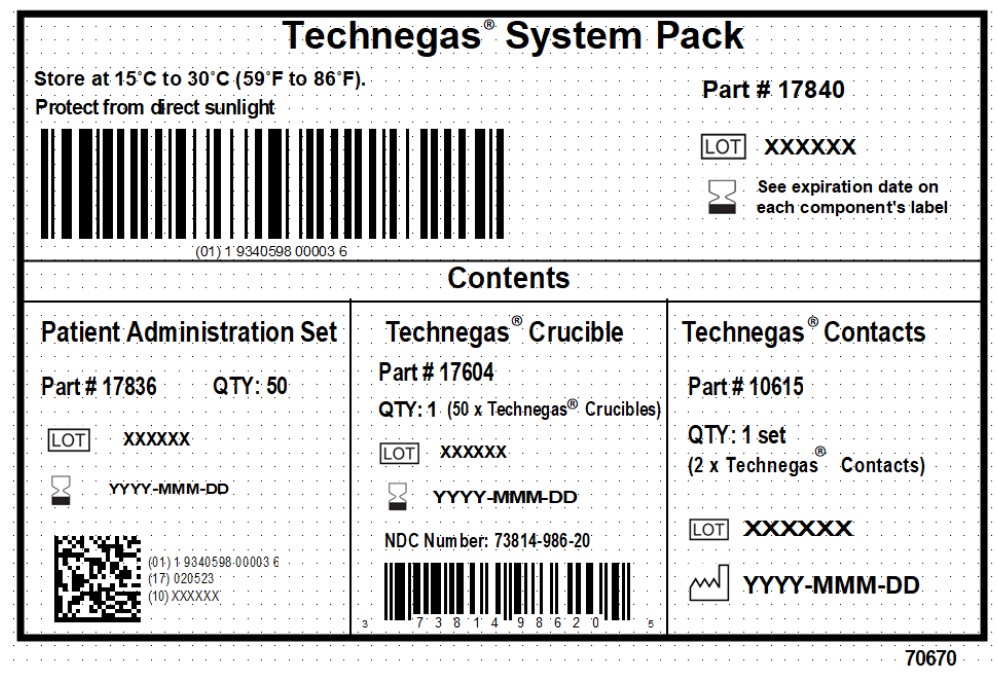
| 73814-0989-20 You're viewing this | 1 KIT in 1 CARTON (73814-989-20) * 50 in 1 CARTON (GS1:19340598000036) * 50 AEROSOL in 1 CARTON (73814-986-20) | 2023-09-29 | Active |
🧭 About this NDC listing & data coverage
Kit / multi-component package
This NDC identifies a kit — a package containing more than one component. Structured data (pricing, ingredients, equivalents) is often reported per component rather than for the kit NDC itself, which can make this page look thinner than the components' own pages.
What data is (and isn’t) available for this NDC — tap to expand
| NDC identity (package / product / labeler codes) | ✓ Available |
| Labeler | ✓ Available |
| Product & package description | ✓ Available |
| Marketing category & status | ✓ Available |
| Active ingredient / dosage form / route | ✓ Available |
| FDA label (SPL via DailyMed) | ✓ Available |
| Package photos | ✓ Available |
| Inactive ingredients (structured) | — Not published for this NDC The labeler did not submit a structured excipient list, or no SPL is available. |
| NADAC pharmacy acquisition price (CMS) | — Not published for this NDC CMS publishes NADAC only for NDCs reported in its retail-pharmacy survey. |
| Orange Book / therapeutic-equivalence data | ✓ Available |
| HCPCS J-code billing crosswalk | — Not published for this NDC Most self-administered / retail products have no J-code — that is normal. |
| Medicaid utilization (CMS SDUD) | — Not published for this NDC CMS reports utilization only for NDCs with Medicaid claims above its privacy threshold. |
Questions about this listing
Why is there no price listed?
Is the NDC printed on the package the same as the 11-digit billing NDC?
What do the three segments of this NDC mean?
Is this package still being marketed?
Who lists this product with the FDA?
Do I need a prescription for this product?
Where does this data come from?
📄 Full prescribing information FDA SPL
🎯 Indications and Usage ▾
1 INDICATIONS AND USAGE TECHNEGAS, when used with sodium pertechnetate Tc 99m in the Technegas Plus System, provides technetium Tc 99m-labeled carbon inhalation aerosol (Technegas Aerosol), for use in adults and pediatric patients aged 6 years and older for: • visualization of pulmonary ventilation • evaluation of pulmonary embolism when paired with perfusion imaging TECHNEGAS, when used with sodium pertechnetate Tc 99m in the Technegas Plus System, provides technetium Tc 99m-labeled carbon inhalation aerosol (Technegas Aerosol), a radioactive diagnostic agent for use in adults and pediatric patients aged 6 years and older for: • visualizationofpulmonaryventilation • evaluationofpulmonaryembolismwhenpairedwithperfusion imaging (1)
⏱️ Dosage and Administration ▾
2 DOSAGE AND ADMINISTRATION For adult patients, the recommended activity of sodium pertechnetate Tc 99m injection to be loaded in the Technegas Crucible is 400 MBq to 1,000 MBq (10.8 mCi to 27 mCi) to achieve a lung count rate between 1,500 counts per second (cps) and 2,500 cps at the end of the last respiration. (2.2) For pediatric patients aged 6 years and older, a sufficient amount of Technegas Aerosol should be inhaled to achieve between 500 cps and 1,000 cps at the end of last respiration. The radioactivity to be loaded in the Technegas Crucible is a fraction of the recommended activity for adults adjusted by body weight.
(2.2) Administer as soon as possible following preparation and complete inhalation within 10 minutes of preparation. (2.2) For drug handling, breathing techniques, preparation, and dosimetry information, see the full prescribing information. (2.1, 2.3, 2.4, 2.5)
2.1Radiation Safety-Drug Handling Handle Technegas Aerosol with appropriate safety measures to minimize radiation exposure to the patient and healthcare providers. During preparation and handling, use waterproof gloves and effective shielding [see Warnings and Precautions (5.2)]. Radiopharmaceuticals should be used by or under the control of healthcare providers who are qualified by specific training and experience in the safe use and handling of radionuclides, and whose experience and training have been approved by the appropriate governmental agency authorized to license the use of radionuclides.
2.2Recommended Dose The activity present in the lungs after each inhalation varies. Follow the pulmonary count rate during oral inhalation of Technegas Aerosol, using a gamma camera equipped with a standard collimator (low energy, low/medium resolution). For adult patients, the recommended activity of sodium pertechnetate Tc 99m injection to be loaded in the Technegas Crucible is 400 MBq to 1,000 MBq (10.8 mCi to 27 mCi) to achieve a lung count rate between 1,500 counts per second (cps) and 2,500 cps at the end of the last respiration.
Discontinue Technegas Aerosol administration at that point. For pediatric patients aged 6 years and older, a sufficient amount of Technegas Aerosol should be inhaled until a lung count rate is obtained between 500 cps and 1,000 cps at the end of last respiration. Discontinue administration at that point.
The radioactivity to be loaded in the Technegas Crucible for pediatric patients aged 6 years and older is a fraction of the recommended activity for adults, and is adjusted by body weight as listed in Table 1. Table 1. Crucible Loading Activity of Sodium Pertechnetate Tc 99m Injection for Pediatric Patients Aged 6 Years and Older Weight (kg) Crucible Loading Activity MBq (mCi) 10 133 (3.6) 12 154 (4.2) 14 175 (4.7) 16 196 (5.3) 18 217 (5.9) 20 238 (6.4) 22 259 (7) 24 270 (7.6) 26 301 (8.1) 28 315 (8.5) 30 336 (9.1) 32 357 (9.7) 34 378 (10) 36 392 (11) 38 413 (11) 40 434 (12) 42 448 (12) 44 469 (13) 46 490 (13) 48 504 (14) 50 525 (14) 52-54 553 (15) 56-58 588 (16) 60-62 623 (17) 64-66 658 (18) 68 686 (19)
2.3Administration Instructions Administer Technegas Aerosol by oral inhalation using an FDA-cleared radionuclide rebreathing system for Technegas Aerosol (e.g., Patient Administration Set from Cyclomedica) that connects directly to the Technegas Plus System (TP) as soon as possible following preparation and complete inhalation within 10 minutes of preparation. Monitor oxygen saturation level in patients with an oximeter [see Warnings and Precautions (5.1)]. Be prepared to allow patients to breathe room air during administration.
Do not detach the patient administration set (PAS) from the patient to prevent residual aerosol from being released. Prepare the patient in the imaging room or a preparation room before preparing Technegas Aerosol. For complete instructions on patient preparation, breathing techniques, and operation of the TP during administration, see the User Manual for the TP.
To facilitate uniform delivery…
💊 Dosage Forms and Strengths ▾
3 DOSAGE FORMS AND STRENGTHS Technegas (kit for the preparation of technetium Tc 99m-labeled carbon inhalation aerosol) is a 1.25 gram single-use dark grey to black small oval graphite carbon crucible (Technegas Crucible). Upon addition of sodium pertechnetate Tc 99m injection, USP to the Technegas Crucible, the Technegas Plus System provides Technegas Aerosol in argon gas. TECHNEGAS (kit for the preparation of technetium Tc 99m labeled carbon inhalation aerosol) is a 1.25 gram single-use black to dark grey oval shaped graphite carbon crucible (Technegas Crucible).
Upon addition of sodium pertechnetate Tc 99m injection, USP to the Technegas Crucible, the Technegas Plus System provides Technegas Aerosol for oral inhalation. (3)
⛔ Contraindications ▾
4 CONTRAINDICATIONS None. None (4)
⚠️ Warnings and Cautions ▾
5 WARNINGS AND PRECAUTIONS Decreased Oxygen Saturation: Monitor oxygen saturation with continuous pulse oximetry. If clinically indicated, allow patients to breathe room air throughout the procedure and consider administration of supplemental oxygen before and at any time during the procedure. (5.1) Radiation Exposure Risk: Ensure safe handling and preparation procedures to protect patients and health care providers from unintentional radiation exposure.
(2.1, 5.2)
5.1Decreased Oxygen Saturation Decrease in oxygen saturation may occur during or after the inhalation of Technegas Aerosol. Oxygen saturation nadirs as low as 60% have been reported in a published study [see Adverse Reactions (6.1)]. In an efficacy trial, 79% of patients received supplemental oxygen or had the flow of Technegas Aerosol interrupted.
Patients with compromised respiratory function may be at increased risk for decreased oxygen saturation. Monitor oxygen saturation with continuous pulse oximetry. If clinically indicated, allow patients to breathe room air throughout the procedure and consider administration of supplemental oxygen before and at any time during the procedure.
5.2Radiation Exposure Risk Technegas Aerosol contributes to a patient’s overall long-term cumulative radiation exposure. Long-term cumulative radiation exposure is associated with an increased risk of cancer. Ensure safe handling and preparation procedures to protect patients and health care providers from unintentional radiation exposure.
5.3Bronchospasm As with other inhaled aerosol medications, Technegas Aerosol may result in acute bronchoconstriction, especially in patients with heightened bronchoreactivity, such as patients with asthma or other lung or allergic disorders. Monitor all patients for bronchospasm.
5.1Decreased Oxygen Saturation Decrease in oxygen saturation may occur during or after the inhalation of Technegas Aerosol. Oxygen saturation nadirs as low as 60% have been reported in a published study [see Adverse Reactions (6.1)]. In an efficacy trial, 79% of patients received supplemental oxygen or had the flow of Technegas Aerosol interrupted.
Patients with compromised respiratory function may be at increased risk for decreased oxygen saturation. Monitor oxygen saturation with continuous pulse oximetry. If clinically indicated, allow patients to breathe room air throughout the procedure and consider administration of supplemental oxygen before and at any time during the procedure.
5.2Radiation Exposure Risk Technegas Aerosol contributes to a patient’s overall long-term cumulative radiation exposure. Long-term cumulative radiation exposure is associated with an increased risk of cancer. Ensure safe handling and preparation procedures to protect patients and health care providers from unintentional radiation exposure.
5.3Bronchospasm As with other inhaled aerosol medications, Technegas Aerosol may result in acute bronchoconstriction, especially in patients with heightened bronchoreactivity, such as patients with asthma or other lung or allergic disorders. Monitor all patients for bronchospasm.
🤒 Adverse Reactions ▾
6 ADVERSE REACTIONS The following clinically significant adverse reactions are described elsewhere in the labeling: Decreased Oxygen Saturation [see Warnings and Precautions (5.1)] The most common adverse reaction (≥ 1%) was hypoxia. (6.1) To report SUSPECTED ADVERSE REACTIONS, contact Cyclomedica Australia Pty Ltd at toll free phone number 1-888-8-586-4396 or FDA at 1-800-FDA-1088 or www.fda.gov/medwatch.
6.1Clinical Trial Experience Because clinical trials are conducted under widely varying conditions, adverse reaction rates observed in the clinical trials of a drug cannot be directly compared to rates in the clinical trials of another drug and may not reflect the rates observed in clinical practice. The safety of Technegas Aerosol was evaluated in 291 patients undergoing ventilation studies with prospective data collection. Patients received an amount of Technegas Aerosol to achieve 1,500 cps to 2,500 cps by oral inhalation.
The mean age of patients was 60 years (range:18 to 95 years); distribution by race was 92 % White, 7% Black or African American, 0.3 % Asian, and 0.3 % unreported; and distribution by ethnicity was 4% Hispanic/Latino and 96 % non-Hispanic/Latino. Adverse reactions were reported in 10 patients (3.4%). The adverse reaction occurring at ≥ 1% in patients receiving Technegas Aerosol was hypoxia (1%).
Adverse reactions reported at < 1% were dizziness, dysgeusia, cough, dyspnea [not otherwise specified], throat irritation, and upper respiratory tract congestion. In one published study, oxygen saturation was monitored in a series of patients undergoing Technegas Aerosol ventilation scintigraphy for suspected pulmonary embolism (n=28) or pulmonary disease (n=10). Of these 38 patients without pre-oxygenation, oxygen saturation fell to < 90% in 26 (68%) patients and < 85% in 15 (39%) patients.
The recorded lowest value for each patient was usually observed after the first or second inhalation.
👥 Use in Specific Populations ▾
8 USE IN SPECIFIC POPULATIONS Lactation : Temporarily discontinue breastfeeding. A lactating woman should pump and discard breastmilk for at least 4 hours after Technegas Aerosol inhalation to minimize exposure to the breastfed infant. (8.2)
8.1Pregnancy Risk Summary Available data with Technegas Aerosol use in pregnant women from several small retrospective studies are insufficient to evaluate for a drug associated risk for major birth defects, miscarriage, or other adverse maternal or fetal outcomes. The radiation dose to the fetus after inhalation of Technegas Aerosol has ranged from 0.007 mGy to 0.14 mGy (see Data). Animal reproduction studies have not been conducted with Technegas Aerosol.
However, all radiopharmaceuticals, including Technegas Aerosol have the potential to cause fetal harm depending on the fetal stage of development and the magnitude of the radiation dose. If considering Technetium Aerosol administration to a pregnant woman, inform the patient of the potential for adverse pregnancy outcomes based on the radiation dose from Technetium Aerosol and the gestational timing of exposure. The background risk of major birth defects and miscarriage for the indicated population is unknown.
All pregnancies have a background risk of birth defect, loss, or other adverse outcomes. In the U.S. general population, the estimated background risks of major birth defects and miscarriage in clinically recognized pregnancies are 2% to 4% and 15% to 20%, respectively. Data Human Data The radiation dose to the fetus after inhalation of Technegas Aerosol was calculated according to the stage of gestation, ranging from 0.007 mGy at the early stage through 3-months of gestation up to 0.011 mGy to 0.14 mGy at 6-months and 9-months of gestation, respectively.
No adverse fetal effects or radiation-related risks have been identified for diagnostic procedures involving less than 50 mGy, which represents less than 10 mGy fetal doses.
8.2Lactation Risk Summary There are no data on the presence of Technegas Aerosol in human milk, the effects of Technegas Aerosol on the breastfed infant, or the effects on milk production. Published case reports describe the presence of technetium-99 in human milk. Based on clinical guidelines, exposure of Technetium Aerosol to a breast fed infant may be minimized by advising a lactating woman to pump and discard breast milk for a minimum of 4 hours after administration of Technegas Aerosol.
The developmental and health benefits of breastfeeding should be considered along with the mother’s clinical need for Technegas Aerosol and any potential adverse effects on the breastfed child from Technegas Aerosol or from the underlying maternal condition.
8.4Pediatric Use The safety and effectiveness of Technegas Aerosol for lung ventilation imaging to visualize pulmonary ventilation and pulmonary embolism when paired with perfusion have been established in pediatric patients aged 6 years and older. The safety and effectiveness of Technegas Aerosol with the patient administration set have not been established in pediatric patients less than 6 years of age.
8.5Geriatric Use Of the total number of patients receiving Technegas Aerosol in clinical studies for lung ventilation imaging, 122 (41.9 %) were 65 years of age and older, while 58 (20 %) were 75 years of age and older. No overall differences in safety or effectiveness were observed between these patients and younger patients, and other reported clinical experience has not identified differences in responses between elderly and younger patients.
🤰 Pregnancy ▾
8.1Pregnancy Risk Summary Available data with Technegas Aerosol use in pregnant women from several small retrospective studies are insufficient to evaluate for a drug associated risk for major birth defects, miscarriage, or other adverse maternal or fetal outcomes. The radiation dose to the fetus after inhalation of Technegas Aerosol has ranged from 0.007 mGy to 0.14 mGy (see Data). Animal reproduction studies have not been conducted with Technegas Aerosol.
However, all radiopharmaceuticals, including Technegas Aerosol have the potential to cause fetal harm depending on the fetal stage of development and the magnitude of the radiation dose. If considering Technetium Aerosol administration to a pregnant woman, inform the patient of the potential for adverse pregnancy outcomes based on the radiation dose from Technetium Aerosol and the gestational timing of exposure. The background risk of major birth defects and miscarriage for the indicated population is unknown.
All pregnancies have a background risk of birth defect, loss, or other adverse outcomes. In the U.S. general population, the estimated background risks of major birth defects and miscarriage in clinically recognized pregnancies are 2% to 4% and 15% to 20%, respectively. Data Human Data The radiation dose to the fetus after inhalation of Technegas Aerosol was calculated according to the stage of gestation, ranging from 0.007 mGy at the early stage through 3-months of gestation up to 0.011 mGy to 0.14 mGy at 6-months and 9-months of gestation, respectively.
No adverse fetal effects or radiation-related risks have been identified for diagnostic procedures involving less than 50 mGy, which represents less than 10 mGy fetal doses.
🧒 Pediatric Use ▾
8.4Pediatric Use The safety and effectiveness of Technegas Aerosol for lung ventilation imaging to visualize pulmonary ventilation and pulmonary embolism when paired with perfusion have been established in pediatric patients aged 6 years and older. The safety and effectiveness of Technegas Aerosol with the patient administration set have not been established in pediatric patients less than 6 years of age.
🧓 Geriatric Use ▾
8.5Geriatric Use Of the total number of patients receiving Technegas Aerosol in clinical studies for lung ventilation imaging, 122 (41.9 %) were 65 years of age and older, while 58 (20 %) were 75 years of age and older. No overall differences in safety or effectiveness were observed between these patients and younger patients, and other reported clinical experience has not identified differences in responses between elderly and younger patients.
🧬 Clinical Pharmacology ▾
12 CLINICAL PHARMACOLOGY
12.1Mechanism of Action When the Technegas Aerosol particles are inhaled, they are mechanically deposited on the epithelium of ventilated pulmonary bronchioles and alveoli. Localization of the aerosol is not mediated by specific pharmacologic receptors; rather the distribution is determined by the aerodynamic function of the lungs.
12.2Pharmacodynamics Technegas Aerosol has no known pharmacological effects.
12.3Pharmacokinetics Distribution After inhalation, Technegas Aerosol is adsorbed on the walls of pulmonary bronchioles and alveoli. The distribution within the lungs is determined by the size and aerodynamic properties of the individual particles. Following inhalation, the particles are retained in the lung.
The redistribution of Technegas Aerosol following inhalation to human subjects has been monitored for as long as 70 hours without evidence of particulate translocation. Elimination There is no intravascular clearance, and the elimination of radioactivity occurs by the physical decay of the Technetium-99m. The Technegas Aerosol particles that are deposited in the mouth and along the mucociliary elevator are cleared by swallowing or expectoration.
The particles that deposit in the alveolar region are cleared by alveolar macrophages.
🧬 Mechanism of Action ▾
12.1Mechanism of Action When the Technegas Aerosol particles are inhaled, they are mechanically deposited on the epithelium of ventilated pulmonary bronchioles and alveoli. Localization of the aerosol is not mediated by specific pharmacologic receptors; rather the distribution is determined by the aerodynamic function of the lungs.
📦 How Supplied / Storage and Handling ▾
16 HOW SUPPLIED/STORAGE AND HANDLING How Supplied TECHNEGAS (kit for the preparation of technetium Tc 99m-labeled carbon inhalation aerosol) is a 1.25 gram single-use black to dark grey oval shape graphite carbon crucible packaged into thermoformed blister packs. Each carton contains five blister packs of 10 single-use Technegas Crucibles (NDC 73814-986-20). The following components are supplied separately by Cyclomedica for the preparation of Technegas Aerosol: Patient Administration Sets (PAS) Technegas Contacts (replacement electrodes) • Technegas Plus System The following items are not supplied by Cyclomedica and are provided by the user: Sodium Pertechnetate Tc 99m Injection, USP Ultra-high purity (minimum 99.997% purity with less than 3 ppm of oxygen) argon gas Ethanol meeting requirements of Alcohol, USP.
Storage and Handling Store Technegas Crucibles at 15°C to 30°C (59°F to 86° F). Store unused crucibles in the original package to prevent contamination of crucibles. The Technegas Crucible and PAS are single use components.
The crucible is split into pieces after use by the Technegas Plus System to prevent its reuse. Dispose of the radioactive crucible pieces and PAS as radioactive waste in accordance with applicable regulations. The maximum use period for the Technegas Plus System is one year or 500 burn cycles, whichever occurs first.
After this period, ask Cyclomedica to perform maintenance and recertify the Technegas Plus System for use. This radiopharmaceutical is approved for use by persons under license by the Nuclear Regulatory Commission or the relevant regulatory authority of an Agreement State.
📋 Description ▾
11 DESCRIPTION
11.1Chemical Characteristics TECHNEGAS (kit for the preparation of technetium Tc 99m-labeled carbon inhalation aerosol) is a 1.25 gram black to dark grey graphite carbon crucible (Technegas Crucible). Graphite is a polymorph of the element carbon, appears opaque, and crystallizes in the hexagonal system. The crucible has the following appearance and physical dimensions: Table 3.
Physical Dimensions of Crucible Length 31.25 to 32.75 mm Wall Thickness 0.39 to 0.81 mm Base Thickness 0.34 to 0.81 mm Maximum volume capacity 0.12 mL Technegas Crucible when used with sodium pertechnetate Tc 99m injection, USP in the Technegas Plus System (also commonly referred to as TechnegasPlus Technegas Generator or TP), provides technetium Tc 99m-labeled carbon inhalation aerosol in argon gas (Technegas Aerosol), a radioactive diagnostic agent for oral inhalation. During the process of formation of technetium Tc 99m-labeled carbon inhalation aerosol, when dried pertechnetate Tc 99m in Technegas Crucible is heated to 2,750°C (4,982°F) for 15 seconds in the TP using the Alternate Current arc, both the technetium and a portion of the carbon crucible are volatilized.
The reduction of pertechnetate Tc 99m results in elemental technetium Tc 99m that serves as a nucleation site for the condensing of the volatile carbon, producing hydrophobic particles made up of a technetium Tc 99m core surrounded by layers of carbon. More than 90% of the technetium Tc 99m activity is technetium Tc 99m-labeled carbon particles. More than 80% of technetium Tc 99m carbon aerosol particles are < 0.92 micrometer in size.
The technetium Tc 99m carbon particles are suspended in argon gas as an aerosol for inhalation. The concentration of carbon labeled particles in argon depends on the amount of technetium Tc 99m used but is less than 98 mcg/liter in Technegas Crucible loading of 0.1ml of Sodium Pertechnetate Tc99m. TECHNEGAS Crucible
11.2Physical Characteristics Technetium-99m decays by isomeric transition with a physical half-life of 6 hours. The photon that is useful for imaging studies is listed in Table 4. Table 4.
Principal Radiation Emission Data for Technetium-99m Radiation Mean % per Disintegration Mean Energy (keV) Gamma-2 88.5 140.5 The specific gamma-ray constant for technetium Tc 99m is 5.23 m2·pGy·(MBq)−1·s−1 [0.795 cm2·R·(mCi)−1·h−1]. The first half-value thickness of lead for technetium-99m is 0.017 cm (Pb). A range of values for the relative attenuation of the radiation emitted by this radionuclide that results from the interposition of various thicknesses of lead is shown in Table 5.
For example, the use of 3 mm thickness of lead will decrease the external radiation exposure by a factor of 1,000. Table 5. Radiation Attenuation by Lead Shielding Lead Shield Thickness (mm) Coefficient of Attenuation 0.25 0.5 1 0.1 2 0.01 3 0.001 4 0.0001 To correct for physical decay of this radionuclide, the fractions that remain at selected time intervals after the time of calibration are shown in Table 6.
Table 6. Physical Decay Chart of Technetium-99m, Half Life: 6 Hours Hours Fraction Remaining Hours Fraction Remaining 0* 1 7 0.447 1 0.891 8 0.398 2 0.794 9 0.355 3 0.708 10 0.316 4 0.631 11 0.282 5 0.562 12 0.251 6 0.501 *Calibration Time
11.1Chemical Characteristics TECHNEGAS (kit for the preparation of technetium Tc 99m-labeled carbon inhalation aerosol) is a 1.25 gram black to dark grey graphite carbon crucible (Technegas Crucible). Graphite is a polymorph of the element carbon, appears opaque, and crystallizes in the hexagonal system. The crucible has the following appearance and physical dimensions: Table 3.
Physical Dimensions of Crucible Length 31.25 to 32.75 mm Wall Thickness 0.39 to 0.81 mm Base Thickness 0.34 to 0.81 mm Maximum volume capacity 0.12 mL Technegas Crucible when used with sodium pertechnetate Tc 99m injection, USP in the Technegas Plus System (also commonly referred to as TechnegasPlus Technegas Generator or TP), provides techn…