
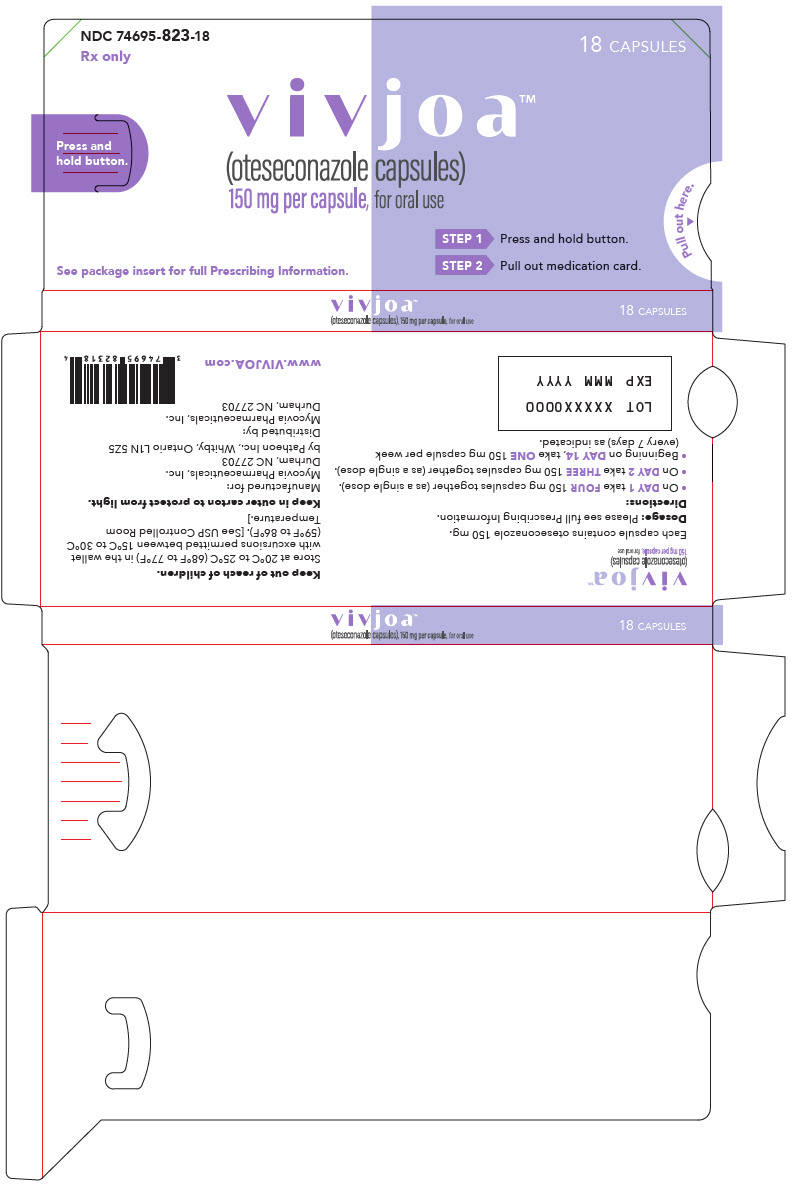
VIVJOA oteseconazole 150 mg Capsule, 18-count
🆔 Identity & classification
Where does this data come from?
🏷️ RxNorm drug class
This medicine belongs to the Azole Antifungal class.
Where does this data come from?
🏭 Manufacturer & labeler
Where does this data come from?
🩺 Clinical
Oteseconazole is used to reduce the number of recurrent vaginal yeast infections in women who are not able to become pregnant. This includes women who are postmenopausal (women who have experienced a change of life; end of menstrual periods) and women who have had surgery to remove their uterus and/or both ovaries or have had a tubal ligation ('tubes tied,' surgery to prevent pregnancy). Oteseconazole is in a class of medications called azole antifungals. It works by slowing the growth of fungi that cause infection.
Read the full MedlinePlus article ↗Patient education
Supplement & herbal interactions
Some supplements/herbs that may interact with Oteseconazole — tap one for details:
Where does this data come from?
Ask a licensed pharmacist directly — free, answered by our team.
💊 What it looks like
Where does this data come from?
🧪 Inactive Ingredients / Excipients
Inactive ingredients, also called excipients, are components of the drug product other than the active ingredient. They may include fillers, dyes, coatings, preservatives, flavors, or other formulation ingredients.
💡 Tap an ingredient (hover on desktop) to see what it is and why it’s used.
-
UNII M28OL1HH48
Croscarmellose sodium is a plant-based substance derived from cellulose. It acts as a disintegrant, helping tablets and capsules break down quickly in the digestive system so the medicine can be absorbed.
-
UNII UKE75GEA7F
Hydroxypropyl cellulose is a plant-based polymer used as a binder and thickener. It helps hold tablet ingredients together, controls how fast the medicine dissolves, and improves the texture of liquid formulations.
-
UNII EWQ57Q8I5X
Lactose monohydrate is a natural sugar derived from milk. It serves as a filler and binder in tablets and capsules, helping create the proper size, texture, and consistency of the medicine.
-
UNII 70097M6I30
Magnesium stearate is a salt made from magnesium and stearic acid, a fatty substance. It's used in tablets and capsules as a lubricant and glidant to help ingredients flow smoothly during manufacturing and prevent sticking.
-
20 mg
UNII OP1R32D61U
Microcrystalline cellulose is a purified form of cellulose, a natural fiber from plant sources. It acts as a binder and filler in tablets and capsules, helping hold ingredients together and give the medicine its shape and size.
-
UNII ETJ7Z6XBU4
Silicon dioxide is a naturally occurring mineral used as a glidant and anti-caking agent. It helps powder ingredients flow smoothly and prevents clumping during manufacturing and storage.
-
UNII 368GB5141J
A detergent and foaming agent derived from coconut or palm oil. In medications, it helps break down and mix oil and water-based ingredients, aids in tablet disintegration, and improves how the drug dissolves and spreads in the mouth or digestive system.
7 inactive ingredients listed in the exact product block matched to this NDC.
Where does this data come from?
ingredient classCode="IACT" elements from the exact product block matched by this NDC. Label-section narrative from DailyMed / the openFDA label index is shown separately when available.Inactive ingredient FAQ
Are inactive ingredients the same for every manufacturer?
Why might an inactive ingredient be missing?
Can inactive ingredients matter?
💲 Pricing
A drug doesn't have one price. Each row is a different public payment system, and none is what you'd pay at the counter — that depends on your insurance. The ⓘ on each row explains what it measures.
| Price system | Per each | Per package |
|---|---|---|
| Retail pharmacies payNADAC · weekly | Not in the retail survey — common for institutional, discontinued, or low-volume packs. | |
| Medicaid paysCMS SDUD · 12 mo | No recent Medicaid claims on file for this NDC — rare and low-volume NDCs are suppressed in the public data. | |
| Medicare drug plans payPart D · Q2 2026 | $167.48 | $3,014.59 / 18 capsules |
Where does this data come from?
🔁 Therapeutic equivalents
| Product | Labeler | Pack | NADAC/unit | TE | Status | Price vs. this |
|---|---|---|---|---|---|---|
| Vivjoa 150 mgthis 74695-0823-18 | Mycovia | 18 capsules | — | — | FDA listed | — |
Where does this data come from?
⏳ Availability & generic status
We did not find an FDA-approved generic match for this exact strength, form and route. Patent/protection dates below may affect future generic timing.
Why the date isn’t exact: Generic timing can change because patents may be challenged, settled, licensed, added, removed, or worked around with a narrower label — and FDA approval does not always mean a pharmacy can get the generic today.
🛈 What do these terms mean?
- Patent
- Legal protection listed in the Orange Book that may delay generic approval or launch. Issued by the U.S. Patent & Trademark Office.
- Substance patent
- Covers the active drug molecule itself — the hardest to design around. A generic generally can’t launch until it expires.
- Formulation (product) patent
- Covers a specific formulation or dosage form. A generic can sometimes work around it with a different formulation.
- Method-of-use patent
- A patent covering one specific approved use of the drug — not necessarily the whole molecule. A generic can sometimes launch with a “skinny label” that carves out the protected use and keeps the others.
- Skinny label
- A generic label that omits a still-patented use when the FDA allows it — letting a generic reach the market for the unprotected uses.
- Exclusivity
- FDA-granted marketing protection, separate from patents — e.g. 5-yr new chemical entity, 7-yr orphan drug, or a +6-month pediatric extension.
- Paragraph IV
- A generic applicant’s formal challenge to a listed patent. It can potentially lead to earlier generic entry, but often involves litigation or a settlement.
- RLD / RS
- Reference Listed Drug — the brand product the FDA uses as the reference for generic applications. Reference Standard — the product the FDA expects generics to compare against in bioequivalence testing.
- TE / AB rating
- FDA therapeutic-equivalence rating. An AB rating generally means the FDA considers a generic therapeutically equivalent to — and substitutable for — the brand.
- LOE (loss of exclusivity)
- The latest patent or exclusivity currently listed — the loss-of-exclusivity / latest-listed-protection date shown on this page. Paragraph-IV challenges and settlements can move the real date earlier; FDA approval and a manufacturer’s decision to market can move it later.
Built from the FDA Orange Book. The bars above are scaled to each protection’s expiry; the red LOE marker is the last one to lapse.
| Patent | Type | Use code | Expires |
|---|---|---|---|
| US 11247981 ↗ | Method of use | U-3366 | May 9, 2033 |
| US 8754227 ↗ | Method of use | U-3366 | Apr 22, 2031 |
| US 8236962 ↗ | Drug substance | — | Apr 22, 2031 |
| US 9840492 ↗ | Drug substance | — | Mar 17, 2036 |
| US 10414751 ↗ | Drug substance | — | Mar 17, 2036 |
| Code | What it grants | Expires |
|---|---|---|
| NCE | New Chemical Entity (5-year) | Apr 26, 2027 |
| GAIN | Qualified Infectious Disease Product (+5-year) | Apr 26, 2032 |
Is there a generic version of VIVJOA 150 MG CAPSULE?
The FDA approved a generic — why can’t I get it at my pharmacy yet?
Why do different websites show different generic release dates?
What does “FDA listed” mean?
What does a patent or protection date mean here?
What does “current Orange Book estimate” mean?
Can a generic come out before the last patent expires?
Can a generic come out after the listed dates?
What is the difference between patents and exclusivity?
Why are there multiple patent dates?
Where does this data come from?
📊 Medicare Part D spend CMS · PART D · 2026 (Q1)
🔬 Reported adverse events (FAERS)
Top reported reactions
Reporter sex
Where does this data come from?
📦 Packaging — all sizes for this product
| Package NDC | Description | Marketing start | Status |
|---|---|---|---|
| 74695-0823-18 You're viewing this | 1 CONTAINER in 1 CARTON (74695-823-18) / 1 BLISTER PACK in 1 CONTAINER / 18 CAPSULE in 1 BLISTER PACK | 2022-07-11 | Active |
🧭 About this NDC listing & data coverage
What data is (and isn’t) available for this NDC — tap to expand
| NDC identity (package / product / labeler codes) | ✓ Available |
| Labeler | ✓ Available |
| Product & package description | ✓ Available |
| Marketing category & status | ✓ Available |
| Active ingredient / dosage form / route | ✓ Available |
| FDA label (SPL via DailyMed) | ✓ Available |
| Package photos | ✓ Available |
| Inactive ingredients (structured) | ✓ Available |
| NADAC pharmacy acquisition price (CMS) | — Not published for this NDC CMS publishes NADAC only for NDCs reported in its retail-pharmacy survey. |
| Orange Book / therapeutic-equivalence data | ✓ Available |
| HCPCS J-code billing crosswalk | — Not published for this NDC Most self-administered / retail products have no J-code — that is normal. |
| Medicaid utilization (CMS SDUD) | — Not published for this NDC CMS reports utilization only for NDCs with Medicaid claims above its privacy threshold. |
Questions about this listing
Why is there no price listed?
Is the NDC printed on the package the same as the 11-digit billing NDC?
What do the three segments of this NDC mean?
Is this package still being marketed?
Who lists this product with the FDA?
Do I need a prescription for this product?
Where does this data come from?
📄 Full prescribing information FDA SPL
🎯 Indications and Usage ▾
1 INDICATIONS AND USAGE VIVJOA™ is an azole antifungal indicated to reduce the incidence of recurrent vulvovaginal candidiasis (RVVC) in females with a history of RVVC who are NOT of reproductive potential. ( 1 )
1.1Vulvovaginal Candidiasis VIVJOA is indicated to reduce the incidence of recurrent vulvovaginal candidiasis (RVVC) in females with a history of RVVC who are NOT of reproductive potential [see Warnings and Precautions (5.1) , Use in Specific Populations (8.3) , and Clinical Studies (14) ] .
1.2Usage If specimens for fungal culture are obtained prior to therapy, antifungal therapy may be instituted before the results of the cultures are known. However, once these results become available, antifungal therapy should be adjusted accordingly.
⏱️ Dosage and Administration ▾
2 DOSAGE AND ADMINISTRATION There are two recommended VIVJOA dosage regimens: a VIVJOA-only regimen and a Fluconazole/VIVJOA regimen. Use one of these two dosage regimens. ( 2.1 ) Administer VIVJOA orally with food.
( 2.1 ) For the VIVJOA-only Dosage Regimen : ( 2.2 ) On Day 1: Administer VIVJOA 600 mg (as a single dose), then On Day 2: Administer VIVJOA 450 mg (as a single dose), then Beginning on Day 14 : Administer VIVJOA 150 mg once a week (every 7 days) for 11 weeks (Weeks 2 through 12). For the Fluconazole/VIVJOA Dosage Regimen , prescribe fluconazole and: ( 2.3 ) On Day 1 , Day 4 , and Day 7 : Administer fluconazole 150 mg orally, then On Days 14 through 20 : Administer VIVJOA 150 mg once daily for 7 days, then Beginning on Day 28 : Administer VIVJOA 150 mg once a week (every 7 days) for 11 weeks (Weeks 4 through 14).
2.1Dosage Overview and Important Administration Instructions There are two recommended VIVJOA dosage regimens: a VIVJOA-only regimen and a Fluconazole/ VIVJOA regimen. Use one of the following two dosage regimens: VIVJOA-only dosage regimen [see Dosage and Administration (2.2) ] Fluconazole/VIVJOA dosage regimen [see Dosage and Administration (2.3) ] . Administer VIVJOA orally with food [see Clinical Pharmacology (12.3) ].
Swallow the capsules whole. Do not chew, crush, dissolve, or open the capsules.
2.2VIVJOA-only Dosage Regimen For the VIVJOA-only dosage regimen: On Day 1: Administer VIVJOA 600 mg (as a single dose), then On Day 2: Administer VIVJOA 450 mg (as a single dose), then Beginning on Day 14: Administer VIVJOA 150 mg once a week (every 7 days) for 11 weeks (Weeks 2 through 12).
2.3Fluconazole/VIVJOA Dosage Regimen For the Fluconazole/VIVJOA dosage regimen, prescribe fluconazole and: On Day 1, Day 4, and Day 7: Administer fluconazole 150 mg orally, then On Days 14 through 20: Administer VIVJOA 150 mg once daily for 7 days, then Beginning on Day 28: Administer VIVJOA 150 mg once a week (every 7 days) for 11 weeks (Weeks 4 through 14).
💊 Dosage Forms and Strengths ▾
3 DOSAGE FORMS AND STRENGTHS VIVJOA Capsules: 150 mg of oteseconazole in lavender hard gelatin capsules imprinted with OTE 150 in black ink. Fluconazole is not supplied in the carton. Capsules: 150 mg of oteseconazole (fluconazole is not supplied in the carton). ( 3 )
⛔ Contraindications ▾
4 CONTRAINDICATIONS VIVJOA is contraindicated in: Females of reproductive potential [see Warnings and Precautions (5.1) and Use in Specific Populations (8.3) ] Pregnant and lactating women [see Warnings and Precautions (5.1) , and Use in Specific Populations (8.1 , 8.2) ] Patients with known hypersensitivity to oteseconazole. Females of Reproductive Potential ( 4 ), ( 5.1 ), ( 8.3 ) Pregnant and Lactating women ( 4 ), ( 8.1 ), ( 8.2 ) Hypersensitivity to oteseconazole ( 4 )
⚠️ Warnings and Cautions ▾
5 WARNINGS AND PRECAUTIONS Embryo-Fetal Toxicity : Based on animal studies, VIVJOA may cause fetal harm. The drug exposure window of approximately 690 days (based on 5 times the half-life of oteseconazole) precludes adequate mitigation of the embryo-fetal toxicity risks. Advise patients that VIVJOA is contraindicated in females of reproductive potential, and in pregnant and lactating women because of potential risks to a fetus or breastfed infant.
( 5.1 , 8.1 , 8.2 , 8.3 )
5.1Embryo-Fetal Toxicity VIVJOA is contraindicated in females of reproductive potential, and in pregnant and lactating women. Based on animal studies, VIVJOA may cause fetal harm. The drug exposure window of approximately 690 days (based on 5 times the half-life of oteseconazole) precludes adequate mitigation of the embryo-fetal toxicity risks.
Ocular abnormalities were observed in the offspring of pregnant rats dosed at 7.5-mg/kg/day during organogenesis through lactation in pre and postnatal developmental studies. The observed ocular abnormalities included cataracts, opacities, exophthalmos/buphthalmos, optic nerve/retinal atrophy, lens degeneration and hemorrhage. Ocular abnormalities occurred at doses about 3.5 times the steady state clinical exposure seen with patients being treated for RVVC.
Advise patients that VIVJOA is contraindicated in females of reproductive potential, and in pregnant and lactating women because of potential risks to a fetus or breastfed infant [see Use in Specific Populations (8.1 , 8.2 , 8.3) ].
🤒 Adverse Reactions ▾
6 ADVERSE REACTIONS The most frequently reported adverse reactions (incidence > 2%) were headache and nausea. ( 6.1 ) To report SUSPECTED ADVERSE REACTIONS, contact Mycovia Pharmaceuticals, Inc. at 1-855-299-0637 or FDA at 1-800-FDA-1088 or www.fda.gov/medwatch.
6.1Clinical Trials Experience Because clinical trials are conducted under widely varying conditions, adverse reaction rates observed in the clinical trials of one drug cannot be directly compared to rates in the clinical trials of another drug and may not reflect the rates observed in practice. A total of 580 patients were treated with VIVJOA in three clinical trials (Trial 1, Trial 2, and Trial 3) [see Clinical Studies (14) ] . Patients in the clinical trials were women with RVVC who received VIVJOA treatment for 12 weeks.
The mean age of the patient population was 34 years (range:16-78 years), with 84% of patients aged 18-44 years and 16% of patients aged 45 years and older. Although females of reproductive potential were included in the clinical safety data, VIVJOA is contraindicated in females of reproductive potential due to the risk of embryo-fetal toxicity [see Contraindications (4) , Warnings and Precautions (5.1) , and Use in Specific Populations (8.1 , 8.3 , 8.4) ] . The clinical trials population was 75% (435/580) White, 17% (96/580) Black or African American, 6% (36/580) Asian, and 2% (13/580) Other women.
Fifteen percent (86/580) of all women were Hispanic/Latino. Patients enrolled in the induction and maintenance phases of the clinical trials were treated with different VIVJOA dosage regimens versus comparators [see Clinical Studies (14) ] . The adverse reaction that led to discontinuation in 1 of 580 (0.2 %) VIVJOA-treated patients was allergic dermatitis.
Overall, similar percentages of serious adverse reactions and adverse reactions leading to drug discontinuation were reported across the VIVJOA and comparator patient dosing groups. The most frequently reported adverse reactions (incidence >2%) among VIVJOA-treated patients in Trial 1, Trial 2 and Trial 3 were headache (includes headache, migraines, sinus headaches) (7.4%) and nausea (3.6%). Other Adverse Reactions The following selected adverse reactions occurred in <2% of patients receiving VIVJOA in Trial 1, Trial 2 and Trial 3: Laboratory investigations: Increased blood creatine phosphokinase Gastrointestinal disorders: Dyspepsia Vascular disorders: Hot flush Renal and urinary disorders: Dysuria Reproductive system and breast disorders: Menorrhagia (includes genital hemorrhage, menorrhagia; menometrorrhagia; uterine hemorrhage, vaginal hemorrhage) metrorrhagia; vulvovaginal irritation (includes vulvovaginal burning sensation, vulvovaginal discomfort, and vulvovaginal pain) Laboratory Findings Elevations in Creatine Phosphokinase Serum creatine phosphokinase (CPK) (an indirect marker of muscle injury/necrosis) elevations greater than or equal to 10 times the upper limit of normal were observed in 11 (1.9%) patients treated with VIVJOA versus 2 (0.7%) patients in the comparator groups during the VIVJOA clinical trials.
The elevations were transient.
🔄 Drug Interactions ▾
7 DRUG INTERACTIONS BCRP (Breast Cancer Resistance Protein) Substrates: Concomitant use of VIVJOA with BCRP substrates may increase the exposure of drugs that are BCRP substrates, which may increase the risk of adverse reactions associated with these drugs. Use the lowest possible starting dose of the BCRP substrate or consider reducing the dose of the substrate drugs and monitor for adverse reactions. ( 7.1 )
7.1Effect of VIVJOA on Other Drugs BCRP (Breast Cancer Resistance Protein) Transporter Substrates Oteseconazole is a BCRP inhibitor. Concomitant use of VIVJOA with BCRP substrates (e.g., rosuvastatin) may increase the exposure of BCRP substrates (e.g., rosuvastatin), which may increase the risk of adverse reactions associated with these drugs. Use the lowest possible starting dose of the BCRP substrate or consider reducing the dose of the substrate drug and monitor for adverse reactions [see Clinical Pharmacology (12.3) ] .
👥 Use in Specific Populations ▾
8 USE IN SPECIFIC POPULATIONS Renal Impairment: Not recommended in severe renal impairment or ESRD (with or without dialysis). ( 8.6 ) Hepatic Impairment: Not recommended in moderate or severe hepatic impairment. ( 8.7 )
8.1Pregnancy Risk Summary VIVJOA is contraindicated in females of reproductive potential and in pregnant women. Based on animal studies, VIVJOA may cause fetal harm when administered to pregnant women. In addition, the drug exposure window of approximately 690 days (based on 5 times the half-life of oteseconazole) precludes adequate mitigation of the embryo-fetal toxicity risks [see Warnings and Precautions (5.1) and Clinical Pharmacology (12.3) ].
Ocular abnormalities were observed in a pre and postnatal animal study in the offspring of rats administered oteseconazole from Gestation Day 6 through Lactation Day 20 at doses about 3.5 times the recommended human dose based on AUC comparisons (see Data ). The observed ocular abnormalities included cataracts, opacities, exophthalmos/buphthalmos, optic nerve/retinal atrophy, lens degeneration and hemorrhage. There are limited human data in pregnant women who were exposed to VIVJOA during the clinical trials; these data are insufficient to exclude a potential risk of cataracts or other eye abnormalities in human infants.
Data Animal Data Rat and rabbit embryofetal development was assessed after oral administration of oteseconazole. There was no embryofetal toxicity or malformations at 40 mg/kg/day following administration of oteseconazole during organogenesis in pregnant rats at doses about 10 times the maximum human exposure for RVVC based on AUC comparisons. Abortions occurred in rabbits in the presence of maternal toxicity (reduced bodyweight gain with reduced food consumption) but there were no malformations at 15 mg/kg/day following administration of oteseconazole during organogenesis in pregnant rabbits about 6 times the maximum human exposure for RVVC based on AUC comparisons.
Ocular abnormalities including cataracts, opacities, exophthalmos/buphthalmos, optic nerve/retinal atrophy, lens degeneration and hemorrhage were observed in the offspring of rats administered oteseconazole from Gestation Day 6 through Lactation Day 20 at 7.5 mg/kg day (about 3.5 times the recommended human dose based on AUC comparisons). There were no effects on pregnancy or parturition in these pre and postnatal studies at any dose.
8.2Lactation Risk Summary VIVJOA is contraindicated in lactating women and females of reproductive potential. There are no data on the presence of oteseconazole in human or animal milk or data on the effects of oteseconazole on milk production. There were no reported adverse effects in breastfed infants following maternal exposure to oteseconazole during lactation; however, given the limited duration of follow-up of the oteseconazole-exposed infants during the post-natal period, no conclusions can be drawn from these data [see Warnings and Precautions (5.1) ] .
Ocular abnormalities were observed in a pre and postnatal study in the offspring of rats administered oteseconazole from Gestation Day 6 through Lactation Day 20 at doses approximately 3.5 times the recommended human dose based on AUC comparisons [see Use in Specific Populations (8.1) ]. The relationship between the observed animal findings and breastfed infants is unknown.
8.3Females of Reproductive Potential VIVJOA is contraindicated in females of reproductive potential based on animal findings. The drug exposure window of approximately 690 days (based on 5 times the half-life of oteseconazole) precludes adequate mitigation of the embryo-fetal toxicity risks [see Warnings and Precautions (5.1) , Use in Specific Populations (8.1) and Clinical Pharmacology (12.3) ]. Females who are NOT of reproductive potential are defined as: persons who are biological females who are postmenopausal or have another reason for permanent infertility (e.g., tubal ligation, hysterectomy, salpingo-oophorectomy).
8.4…
🤰 Pregnancy ▾
8.1Pregnancy Risk Summary VIVJOA is contraindicated in females of reproductive potential and in pregnant women. Based on animal studies, VIVJOA may cause fetal harm when administered to pregnant women. In addition, the drug exposure window of approximately 690 days (based on 5 times the half-life of oteseconazole) precludes adequate mitigation of the embryo-fetal toxicity risks [see Warnings and Precautions (5.1) and Clinical Pharmacology (12.3) ].
Ocular abnormalities were observed in a pre and postnatal animal study in the offspring of rats administered oteseconazole from Gestation Day 6 through Lactation Day 20 at doses about 3.5 times the recommended human dose based on AUC comparisons (see Data ). The observed ocular abnormalities included cataracts, opacities, exophthalmos/buphthalmos, optic nerve/retinal atrophy, lens degeneration and hemorrhage. There are limited human data in pregnant women who were exposed to VIVJOA during the clinical trials; these data are insufficient to exclude a potential risk of cataracts or other eye abnormalities in human infants.
Data Animal Data Rat and rabbit embryofetal development was assessed after oral administration of oteseconazole. There was no embryofetal toxicity or malformations at 40 mg/kg/day following administration of oteseconazole during organogenesis in pregnant rats at doses about 10 times the maximum human exposure for RVVC based on AUC comparisons. Abortions occurred in rabbits in the presence of maternal toxicity (reduced bodyweight gain with reduced food consumption) but there were no malformations at 15 mg/kg/day following administration of oteseconazole during organogenesis in pregnant rabbits about 6 times the maximum human exposure for RVVC based on AUC comparisons.
Ocular abnormalities including cataracts, opacities, exophthalmos/buphthalmos, optic nerve/retinal atrophy, lens degeneration and hemorrhage were observed in the offspring of rats administered oteseconazole from Gestation Day 6 through Lactation Day 20 at 7.5 mg/kg day (about 3.5 times the recommended human dose based on AUC comparisons). There were no effects on pregnancy or parturition in these pre and postnatal studies at any dose.
🧒 Pediatric Use ▾
8.4Pediatric Use VIVJOA is contraindicated in females of reproductive potential. Based on animal studies, VIVJOA may cause fetal harm when administered to a pregnant woman or potential harm to the breastfed infant. The drug exposure window of approximately 690 days (based on 5 times the half-life of oteseconazole) precludes adequate mitigation of the embryo-fetal toxicity risks associated with VIVJOA use [see Contraindications (4) , Warnings and Precautions (5.1) and Use in Specific Populations (8.1 , 8.2 , 8.3) and Clinical Pharmacology (12.3) ] .
The safety and effectiveness of VIVJOA have not been established in pre-menarchal pediatric females.
🧓 Geriatric Use ▾
8.5Geriatric Use Clinical studies of VIVJOA did not include sufficient numbers of patients 65 years of age and older to determine whether they respond differently from younger adult patients.
🧬 Clinical Pharmacology ▾
12 CLINICAL PHARMACOLOGY
12.1Mechanism of Action Oteseconazole is an antifungal drug [see Microbiology (12.4) ] .
12.2Pharmacodynamics Oteseconazole exposure-response relationships and the time course of pharmacodynamic response are unknown. Cardiac Electrophysiology At 5 times the maximum exposures for the recommended dose, VIVJOA does not prolong the QT interval to any clinically relevant extent.
12.3Pharmacokinetics The AUC of oteseconazole increased approximately dose proportionally while the C max increased less than dose proportionally over a dose range of 20 mg (0.13 times the lowest recommended dose) to 320 mg (0.53 times the highest recommended dose). The pharmacokinetic parameters of oteseconazole associated with the administration of the recommended dosing regimen of VIVJOA are presented in Table 1. Table 1: Pharmacokinetic (PK) Parameters of Oteseconazole PK Parameter Following repeat dose administration of VIVJOA at the approved recommended dosage for RVVC at the end of treatment.
Mean (± SD) C max (µg/mL) 2.8 (1.25) AUC 24h (h∙µg/mL) 64.2 (29.4) C min (µg/mL) 2.5 (1.19) Absorption The time to peak plasma concentrations of oteseconazole was approximately 5 to 10 hours. Effect of Food Administration of VIVJOA with a high-fat, high-calorie meal (800-1000 Calories; 50% fat) increased C max and AUC 0-72h by 45% and 36%, but no significant differences were observed with a low-fat, low-calorie meal. Distribution The central volume of distribution of oteseconazole is approximately 423 L.
Oteseconazole is 99.5-99.7% bound to plasma proteins. Animal studies indicated that oteseconazole exposures in vaginal tissue are comparable to plasma exposures. Elimination The median terminal half-life of oteseconazole is approximately 138 days.
Metabolism Oteseconazole does not undergo significant metabolism. Excretion Following oral administration of radiolabeled oteseconazole, approximately 56% of the radiolabeled dose was recovered in feces primarily through biliary excretion and 26% was recovered in urine. Specific Populations There were no clinically significant differences in the pharmacokinetics of oteseconazole based on sex, race/ethnicity or mild to moderate renal impairment.
Drug Interaction Studies BCRP substrates: Oteseconazole increased the C max and AUC 0-24h of rosuvastatin, a BCRP substrate, by 118% and 114%, respectively . Other Drugs: No clinically significant differences in the pharmacokinetics of the following drugs were observed when co-administered with oteseconazole: Midazolam (sensitive CYP3A4 substrate), ethinyl estradiol (CYP3A4 substrate), norethindrone (CYP3A4 substrate), or digoxin (P-gp substrate).
12.4Microbiology Mechanism of Action: Oteseconazole is an azole metalloenzyme inhibitor targeting the fungal sterol, 14α demethylase (CYP51), an enzyme that catalyzes an early step in the biosynthetic pathway of ergosterol, a sterol required for fungal cell membrane formation and integrity. Inhibition of CYP51 results in the accumulation of 14-methylated sterols, some of which are toxic to fungi. Through the inclusion of a tetrazole metal-binding group, oteseconazole has a lower affinity for human CYP enzymes.
Resistance: The potential for increases in minimum inhibitory concentrations (MIC) to oteseconazole has been evaluated in vitro including specific mechanisms of resistance . Increases in oteseconazole MIC were associated with upregulation of the efflux pumps CDR1, MDR1, and the azole target, lanosterol 14-alpha-demethylase (CYP51). Against certain Candida spp. oteseconazole maintained meaningful in vitro activity against clinical isolates that were resistant to fluconazole.
Antimicrobial Activity: The following in vitro data is available, but their clinical significance is unknown. Oteseconazole has been shown to be active against most isolates of the following microorganisms associated with RVVC [see Indications and Usage (1.1) ] : Candida albicans Candida glabrata Candida krusei Candida parapsilosis…
🧬 Mechanism of Action ▾
12.1Mechanism of Action Oteseconazole is an antifungal drug [see Microbiology (12.4) ] .
📦 How Supplied / Storage and Handling ▾
16 HOW SUPPLIED/STORAGE AND HANDLING
16.1How Supplied VIVJOA (oteseconazole capsules) are supplied as lavender hard gelatin capsules. Printed black "OTE 150" on the capsule and contain 150 mg oteseconazole. They are available in an 18-count (NDC 74695-823-18) blister package within a child resistant wallet.
There will be one blister pack per wallet and one wallet per outer carton. The fluconazole/VIVJOA dosage regimen is in an 18-count (NDC 74695-945-18) blister package within a child resistant wallet. There is one blister pack of VIVJOA (oteseconazole capsules) per wallet and one wallet per outer carton.
The outer carton and wallet contain the following: "fluconazole/VIVJOA dosage regimen" and "fluconazole is prescribed separately". Fluconazole is not supplied in the carton.
16.2Storage and Handling Store at 20°C to 25°C (68°F to 77°F); excursions permitted between 15°C and 30°C (59°F to 86°F) [ See USP Controlled Room Temperature ]. Protect from light when removed from the outer carton.
📦 Storage and Handling ▾
16.1How Supplied VIVJOA (oteseconazole capsules) are supplied as lavender hard gelatin capsules. Printed black "OTE 150" on the capsule and contain 150 mg oteseconazole. They are available in an 18-count (NDC 74695-823-18) blister package within a child resistant wallet.
There will be one blister pack per wallet and one wallet per outer carton. The fluconazole/VIVJOA dosage regimen is in an 18-count (NDC 74695-945-18) blister package within a child resistant wallet. There is one blister pack of VIVJOA (oteseconazole capsules) per wallet and one wallet per outer carton.
The outer carton and wallet contain the following: "fluconazole/VIVJOA dosage regimen" and "fluconazole is prescribed separately". Fluconazole is not supplied in the carton.
📋 Description ▾
11 DESCRIPTION VIVJOA (oteseconazole capsules) contains oteseconazole which is an oral azole antifungal agent. The chemical name of oteseconazole is ( R )-2-(2,4-difluorophenyl)-1,1-difluoro-3-(1 H -tetrazol-1-yl)-1-(5-(4-(2,2,2-trifluoroethoxy)phenyl)pyridin-2-yl)propan-2-ol or 2-Pyridineethanol, α-(2,4-difluorophenyl)-β β-difluoro- α-(1 H -tetrazol-1-ylmethyl)-5-(4-(2,2,2-trifluoroethoxy)phenyl)-,(α R )-. The empirical formula is C 23 H 16 F 7 N 5 O 2 .
The molecular weight is 527.39 g/mol. The structural formula is Oteseconazole is a white to off-white crystalline powder and is practically insoluble in water within a pH range of 1 to 9 but is soluble in a variety of organic solvents. Each oteseconazole capsule, for oral use, contains 150 mg oteseconazole and the following inactive ingredients: croscarmellose sodium, hydroxypropyl cellulose, lactose, magnesium stearate, silicified microcrystalline cellulose, and sodium lauryl sulfate.
Capsule shell and print constituents: FD&C Blue #1, FD&C Red #3, gelatin, Opacode SW-9008/SW-9009 and titanium dioxide. Contains no ingredient made from a gluten-containing grain (wheat, barley, or rye). Chemical Structure
💬 Information for Patients ▾
17 PATIENT COUNSELING INFORMATION Advise the patient to read the FDA-approved patient labeling (Patient Information). Embryo-Fetal Toxicity Advise patients that VIVJOA is contraindicated in females of reproductive potential and in pregnant women because it may cause fetal harm [see Contraindications (4) , Warnings and Precautions (5.1) and Use in Specific Populations (8.1 , 8.3) ] . Lactation Advise patients that VIVJOA is contraindicated in lactating women because it may cause harm to the breastfed infant [see Contraindications (4) , Warnings and Precautions (5.1) and Use in Specific Populations (8.2) ].
Important Administration Instructions Advise patients that VIVJOA must be taken with food, and that capsules must be swallowed whole and not chewed, crushed, dissolved, or opened [see Dosage and Administration (2.1) ]. Concomitant Administration with BCRP Transporter Substrates Advise patients to inform their health care provider if they are taking a BCRP substrate (e.g., rosuvastatin). Concomitant use with VIVJOA may increase the exposure of drugs that are BCRP substrates, which may increase the risk of adverse reactions associated with these drugs [see Drug Interactions (7.1) ] .