
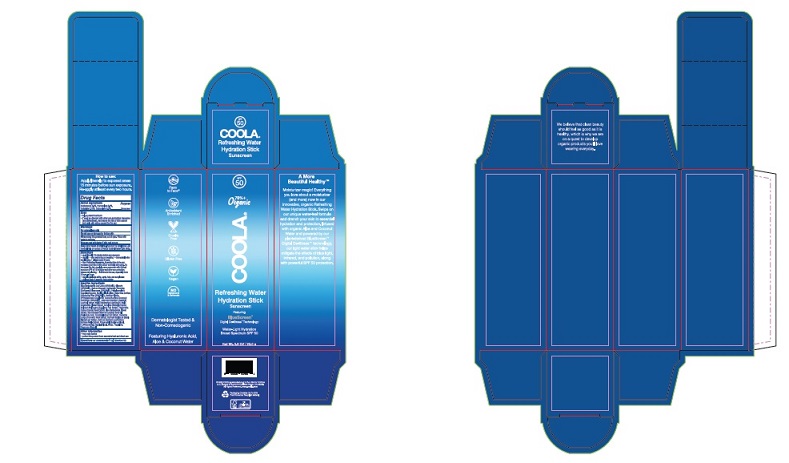
Refreshing Water Hydration Stick SPF 50 AVOBENZONE OCTISALATE HOMOSALATE OCTOCRYLENE 2.5 g/100g; 2.15 g/100g; 3.5 g/100g; 5 g/100g Stick
🆔 Identity & classification
Where does this data come from?
🏭 Manufacturer & labeler
Where does this data come from?
🩺 Clinical
This is an over-the-counter sunscreen stick marketed under FDA's monograph rule for topical sunscreen products. It contains four active ingredients that function as ultraviolet (UV) filters: avobenzone, homosalate, octisalate, and octocrylene. These chemicals are commonly combined in sunscreen formulations to absorb UV radiation and are typically used to help protect skin from sun exposure. The product is applied directly to the skin in stick form and carries an SPF 50 rating.
Patient education
Supplement & herbal interactions
Where does this data come from?
Ask a licensed pharmacist directly — free, answered by our team.
🧪 Inactive Ingredients / Excipients
Inactive ingredients, also called excipients, are components of the drug product other than the active ingredient. They may include fillers, dyes, coatings, preservatives, flavors, or other formulation ingredients.
💡 Tap an ingredient (hover on desktop) to see what it is and why it’s used.
-
UNII TR046Y3K1G
A liquid alcohol derived from petroleum or plant sources. It acts as a solvent and humectant in medicines, helping dissolve active ingredients and retain moisture in the formulation.
-
UNII 575DY8C1ER
Aloe vera flower is a natural plant extract used in medicines as a skin-soothing agent and emollient. It helps soften and moisturize formulations, particularly in topical products like creams and lotions.
-
UNII ZY81Z83H0X
Aloe vera leaf is a plant extract derived from the aloe plant. It is used in medicines as a natural moisturizer and skin-soothing agent in topical formulations.
-
UNII 3TE8A92UPM
Azadirachta indica flower is a botanical extract from the neem plant. It may be used in formulations for its traditional preservative or antioxidant properties to help maintain product stability.
-
UNII HKY915780T
A plant extract from the neem tree, used as a natural flavoring agent and preservative in medicines. It may help maintain product stability and add bitter taste characteristics.
-
UNII 3XUS85K0RA
Butylene glycol is a clear liquid derived from petroleum or plants that acts as a humectant, solvent, and preservative booster in medicines. It helps keep formulations stable, dissolve active ingredients, and maintain moisture in topical products.
-
UNII 2EH13UN8D3
A synthetic compound used as a solvent and penetration enhancer in topical formulations. It helps dissolve active ingredients and allows them to penetrate the skin more effectively.
-
UNII 00YIU5438U
Caprylyl glycol is a clear liquid derived from coconut oil. In medicines, it acts as a humectant to retain moisture, a preservative booster to prevent microbial growth, and a solvent to help dissolve or mix other ingredients.
-
UNII R12CBM0EIZ
A natural wax derived from a Brazilian palm tree, used as a coating and polish on tablets and capsules. It creates a smooth, shiny finish that protects the medicine and improves appearance.
-
UNII 9S60Q72309
A plant-derived ingredient made from safflower seed components. It acts as an emulsifier and carrier to help distribute oils and active ingredients evenly throughout the medicine.
-
UNII VLJ6WOT3K5
A plant extract from the Coccinia indica fruit, used in herbal and traditional formulations. It may serve as a natural flavoring agent, colorant, or active botanical component depending on the product's intended use.
-
UNII D9108TZ9KG
Cocoa is a natural powder made from roasted cacao beans. It's used as a flavoring and coloring agent to make medicines taste better and appear brown.
-
UNII 267F5Y81NT
Coconut water is a natural liquid from inside coconut fruits. It's used in medicines as a vehicle or solvent to help dissolve and deliver active ingredients, and sometimes as a flavor or sweetening agent.
-
UNII 4004498D06
A red algae extract used as a natural colorant and pH buffer in medicines. It provides reddish tones to tablets and capsules while helping maintain stable acidity levels in the formulation.
-
UNII W5K7RAS4VK
A purple vegetable extract used as a natural colorant in some medicines. It provides color to tablets or capsules without affecting how the drug works.
-
UNII PDC6A3C0OX
Glycerin is a clear, thick liquid derived from plant oils or fats. It acts as a humectant to retain moisture, a sweetener, and a solvent in medications.
-
UNII SCJ765569P
Holy basil leaf is a plant-derived ingredient used in some formulations as a flavoring agent or botanical additive. It may contribute taste and aroma to the medicine.
-
UNII S270N0TRQY
Hyaluronic acid is a naturally occurring substance found in skin and joints. In medicines, it acts as a moisturizer and thickening agent to improve texture and help the product spread smoothly.
-
UNII 6OG06384ID
A plant extract from jasmine leaves used as a flavoring agent and fragrance ingredient to improve the taste and aroma of medicines.
-
UNII 724GKU717M
Jojoba oil is a natural liquid wax extracted from jojoba plant seeds. It's used in medicines as an emollient and lubricant to soften and smooth the product, and sometimes as a carrier or penetration enhancer.
-
UNII 7SAB275FP2
A plant extract made from basil flowers and leaves. It's used in medicines as a flavoring agent and may help preserve the product by providing natural antimicrobial properties.
-
UNII TL8V5BW2HC
Polyglyceryl-10 caprate is a surfactant derived from glycerin and coconut oil. It helps oils and water mix together in liquid formulas and improves how the medicine spreads on or absorbs into the skin.
-
UNII YS396CQX5C
A plant-derived emulsifier made from glycerin and caprylic acid (a natural fatty acid). It helps mix water and oil-based ingredients together and keeps the medicine's texture stable.
-
UNII 5965N8W85T
Propanediol is a clear liquid organic compound derived from vegetable sources or synthesized chemically. It acts as a humectant to retain moisture, a solvent to dissolve active ingredients, and a preservative booster in liquid medications and supplements.
-
UNII T8L6O1KSB4
Schinus molle fruiting top is a plant-derived ingredient, commonly known as pink peppercorn. It's used in medicines as a flavoring agent to improve taste.
-
UNII QU7E2XA9TG
Sodium stearate is a salt derived from stearic acid, a natural fatty substance. It acts as a lubricant and binder in tablets and capsules, helping the medicine hold together and flow smoothly during manufacturing.
-
UNII MDL271E3GR
Sorbitan olivate is an emulsifier derived from sorbitol and olive oil. It helps blend water and oil ingredients together to maintain consistent texture and appearance throughout the medicine.
-
UNII 7L6DL16P1T
Tropolone is a naturally occurring organic compound used in medicines as a preservative and antimicrobial agent to help prevent bacterial and fungal growth in the product.
-
UNII 856YO1Z64F
Turmeric is a natural spice derived from the turmeric plant root. It serves as a colorant in medicines, giving products a yellow or golden appearance, and may also provide mild flavoring.
-
UNII KFR5QEN0N9
A synthetic plastic polymer that helps form a protective film coating on the medicine. It's used as a binder and film-former to hold the tablet or capsule together and control how quickly the drug dissolves.
-
UNII 059QF0KO0R
Water is a liquid solvent that dissolves and mixes ingredients together in liquid medicines, syrups, and injections. It helps distribute the active drug evenly throughout the product.
31 inactive ingredients listed in the exact product block matched to this NDC.
Label-section wording can be broader than the structured product block and may mention additional formulation ingredients.
Where does this data come from?
ingredient classCode="IACT" elements from the exact product block matched by this NDC. Label-section narrative from DailyMed / the openFDA label index is shown separately when available.Inactive ingredient FAQ
Are inactive ingredients the same for every manufacturer?
Why might an inactive ingredient be missing?
Can inactive ingredients matter?
💲 Pricing
A drug doesn't have one price. Each row is a different public payment system, and none is what you'd pay at the counter — that depends on your insurance. The ⓘ on each row explains what it measures.
| Price system | Per each | Per package |
|---|---|---|
| Retail pharmacies payNADAC · weekly | Not in the retail survey — common for institutional, discontinued, or low-volume packs. | |
| Medicaid paysCMS SDUD · 12 mo | No recent Medicaid claims on file for this NDC — rare and low-volume NDCs are suppressed in the public data. | |
| Medicare drug plans payPart D · quarterly | No Part D plan price is available for this NDC in our data. | |
Where does this data come from?
🔁 Therapeutic equivalents
| Product | Labeler | Pack | NADAC/unit | TE | Status | Price vs. this |
|---|---|---|---|---|---|---|
| Refreshing Water Hydration Stick SPF 50 2.5 g/100g; 2.15 g/100g; 3.5 g/100g; 5 g/100gthis 79753-0035-01 | COOLA | 1 canister | — | — | FDA listed | — |
Where does this data come from?
⏳ Availability & generic status
We did not find an FDA-approved generic match for this exact strength, form and route.
Where does this data come from?
📦 Packaging — all sizes for this product
| Package NDC | Description | Marketing start | Status |
|---|---|---|---|
| 79753-0035-01 You're viewing this | 1 CANISTER in 1 CARTON (79753-035-01) / 22 g in 1 CANISTER | 2023-01-16 | Active |
🧭 About this NDC listing & data coverage
What data is (and isn’t) available for this NDC — tap to expand
| NDC identity (package / product / labeler codes) | ✓ Available |
| Labeler | ✓ Available |
| Product & package description | ✓ Available |
| Marketing category & status | ✓ Available |
| Active ingredient / dosage form / route | ✓ Available |
| FDA label (SPL via DailyMed) | ✓ Available |
| Package photos | ✓ Available |
| Inactive ingredients (structured) | ✓ Available |
| NADAC pharmacy acquisition price (CMS) | — Not published for this NDC CMS publishes NADAC only for NDCs reported in its retail-pharmacy survey. |
| Orange Book / therapeutic-equivalence data | — Not published for this NDC Applies only to products approved under an NDA/ANDA; many listings are out of scope. |
| HCPCS J-code billing crosswalk | — Not published for this NDC Most self-administered / retail products have no J-code — that is normal. |
| Medicaid utilization (CMS SDUD) | — Not published for this NDC CMS reports utilization only for NDCs with Medicaid claims above its privacy threshold. |
Questions about this listing
Is this NDC FDA-approved?
Why is there no price listed?
Is the NDC printed on the package the same as the 11-digit billing NDC?
What do the three segments of this NDC mean?
Is this package still being marketed?
Who lists this product with the FDA?
Do I need a prescription for this product?
Where does this data come from?
📄 FDA label — Drug Facts FDA SPL
🎯 Indications and Usage ▾
Uses helps prevent sunburn if used as directed with other sun protection measures (see Directions ), decreases the risk of skin cancer and early skin aging caused by the sun
⏱️ Dosage and Administration ▾
Directions ●apply liberally 15 minutes before sun exposure. ● reapply: ●after swimming or sweating ● immediately afte towel drying ● at least every 2 hours ● Sun Protection Measures. Spending time in the sun increases your risk of skin cancer and early skin aging. To decrease this risk, regularly use a sunscreen with a broad spectrum SPF of 15 or higher and other sun protection measures including: ● limit time in the sun, especially from: 10 a.m. - 2 p.m. ● wear long-sleeve shirts, pants, hats, and sunglasses ●Children under 6 months: Ask a doctor
⚠️ Warnings ▾
Warnings For external use only Do not use on damaged or broken skin When using this product keep out of eyes. Rinse with water to remove. Stop use and ask doctor if skin rash occurs
🧪 Active Ingredient ▾
Drug Facts Active Ingredients Avobenzone 2.5%, Homosalate 3.5%, Octisalate 2.15%, Octocrylene 5.0% Purpose Suncreen
🧪 Inactive Ingredients ▾
Inactive Ingredients Aloe Barbadensis Leaf Juice (ORGANIC), Glycerin (ORGANIC), Sodium Stearate, Carthamus Tinctorius (Safflower) Oleosomes (ORGANIC), Polyglyceryl-10 Caprylate/Caprate, Butyloctyl Salicylate, Copernicia Cerifera (Carnauba) Wax (ORGANIC), Sorbitan Olivate, VP/Hexadecene Copolymer, Cocos Nucifera (Coconut) Fruit Water (ORGANIC), Jasminum Sambac (Jasmine) Leaf Cell Extract, Melia Azadirachta Leaf Extract, Melia Azadirachta Flower Extract, Coralline Officinalis Extract, Solanum Melongena (Eggplant) Fruit Extract, Theobroma Cacao (Cocoa) Seed Extract, Aloe Barbadensis Flower Extract, Simmondsia Chinensis (Jojoba) Seed Oil, Hyaluronic Acid, Coccinia Indica Fruit Extract, Curcuma Longa (Turmeric) Root Extract, Ocimum Basilicum (Basil) Flower/Leaf Extract, Ocimum Sanctum Leaf Extract, Schinus Molle Extract, Propanediol, Butylene Glycol, 1,2-Hexanediol, Caprylyl Glycol, Water, Tropolone, Fragrance (Natural)
🎯 Purpose ▾
Purpose Suncreen