
Coola Bare Republic Mineral Face-Lotion SPF 70 TITANIUM DIOXIDE 3.5% ZINC OXIDE 15.8% 15.8 g/100mL; 3.5 g/100mL Lotion, 59 mL
🆔 Identity & classification
Where does this data come from?
🏭 Manufacturer & labeler
Where does this data come from?
🩺 Clinical
This is a mineral sunscreen lotion applied to the face to help protect skin from sun exposure. It contains two active ingredients, titanium dioxide and zinc oxide, which are mineral UV filters that work by reflecting and scattering ultraviolet rays away from the skin. The product is marketed as an over-the-counter sunscreen under FDA's established monograph rules for sunscreen products.
Patient education
Supplement & herbal interactions
Where does this data come from?
Ask a licensed pharmacist directly — free, answered by our team.
🧪 Inactive Ingredients / Excipients
Inactive ingredients, also called excipients, are components of the drug product other than the active ingredient. They may include fillers, dyes, coatings, preservatives, flavors, or other formulation ingredients.
💡 Tap an ingredient (hover on desktop) to see what it is and why it’s used.
-
UNII 7HLS05KP9O
A natural flavoring compound derived from plants or created synthetically. It's added to medicines to improve taste by providing a creamy, fruity flavor note, making the medicine more pleasant to swallow.
-
UNII I1XGH66S8P
A naturally-derived liquid compound used as a flavoring agent in medicines. It provides a creamy, coconut-like taste to mask bitter drug flavors and improve how the medication tastes to patients.
-
UNII UHD6M52X0K
Gamma-octalactone is a natural flavoring compound derived from plants. It's added to medicines to mask unpleasant tastes and improve palatability, particularly in liquid formulations.
-
UNII TR046Y3K1G
A liquid alcohol derived from petroleum or plant sources. It acts as a solvent and humectant in medicines, helping dissolve active ingredients and retain moisture in the formulation.
-
UNII 7QY1MH15BG
A synthetic organic compound used as a flavoring agent in medicines. It provides a mild, pleasant taste to mask bitter drug flavors and improve patient acceptance of oral formulations.
-
UNII AU4CYG9V68
Allyl heptanoate is a synthetic fragrance compound used as a flavoring agent in medicines. It provides taste and aroma to mask bitter or unpleasant flavors in oral formulations.
-
UNII LKG8494WBH
Benzyl alcohol is a clear liquid used as a preservative and solvent in medicines. It helps prevent bacterial and fungal growth and dissolves other ingredients to create uniform liquid formulations.
-
UNII 0C9AC7D6XU
A plant-derived fat from shea nut kernels that remains after soap-making. It acts as a moisturizer, emollient, and texture enhancer in topical formulations, helping soften skin and improve product spreadability.
-
UNII O4M0347C6A
C20-22 alcohols are fatty alcohols derived from natural oils or fats. They act as emulsifiers and thickeners in medicines, helping blend oil and water-based ingredients and give the product its desired texture.
-
UNII L4VKP0Y7RP
A synthetic chemical compound derived from fatty acids with 20-22 carbon atoms, combined with phosphate. It functions as an emulsifier and surfactant to help mix oil and water-based ingredients evenly throughout the medicine.
-
UNII UPY805K99W
A synthetic compound derived from caprylic acid that works as a preservative and antimicrobial agent to help prevent bacterial and fungal growth in the medicine.
-
UNII 00YIU5438U
Caprylyl glycol is a clear liquid derived from coconut oil. In medicines, it acts as a humectant to retain moisture, a preservative booster to prevent microbial growth, and a solvent to help dissolve or mix other ingredients.
-
UNII K679OBS311
Carboxymethylcellulose sodium is a plant-derived thickening agent made from cellulose. In medicines, it acts as a binder to hold ingredients together, a disintegrant to help the tablet break apart, or a thickener in liquids.
-
UNII L56Z1JK48B
A vegetable-derived ingredient used primarily as a natural colorant and flavoring agent in medicines. It provides orange-yellow color and mild taste to tablets, capsules, or liquids.
-
UNII 2DMT128M1S
A waxy solid derived from plant or animal sources. It acts as an emulsifier to blend oil and water components, and also thickens the medicine to give it the right texture and consistency.
-
UNII ICS790225B
A plant-derived cleaning agent made from coconut oil and glucose. It works as a surfactant and emulsifier to help mix oil and water-based ingredients together in the formulation.
-
UNII 8D9H4QU99H
A synthetic fatty acid ester derived from coconut oil, used as an emulsifier and solubilizer to help mix oil and water-based ingredients and improve how the body absorbs certain drugs.
-
UNII 92RU3N3Y1O
Dimethicone is a silicone-based oil that acts as an anti-foaming agent and lubricant in medicines. It reduces gas bubbles in liquid formulations and helps coat and protect the stomach lining when ingested.
-
UNII QB14YV193C
Disodium phthalate is a salt derived from phthalic acid. It works as a pH buffer in medications, helping keep the product at a stable acidity level for proper effectiveness and shelf life.
-
UNII S3KFG6Q5X8
An organic chemical compound used as a UV filter in topical formulations. It helps protect the medicine or product from degradation caused by sunlight exposure during storage and use.
-
UNII PDC6A3C0OX
Glycerin is a clear, thick liquid derived from plant oils or fats. It acts as a humectant to retain moisture, a sweetener, and a solvent in medications.
-
UNII X33R8U0062
Isostearic acid is a fatty acid derived from vegetable oils. It acts as an emulsifier and lubricant in medicines, helping blend ingredients together and reducing friction during tablet or capsule manufacturing.
-
UNII GPW77G0937
Lauryl laurate is a synthetic oily compound made from lauric acid and lauryl alcohol. It acts as an emollient and lubricant in medicines, helping to soften formulations and reduce friction during manufacturing and use.
-
UNII 834K0WOS5G
A natural fat extracted from sunflower seeds. It acts as an emulsifier and lubricant in medicines, helping mix ingredients that don't normally blend together and allowing the product to flow smoothly during manufacturing.
-
UNII C9H2L21V7U
A fat derived from coconut or palm oil containing shorter fatty acid chains. It serves as a solvent and carrier to help dissolve or suspend active ingredients, improving absorption and stability in liquid formulations.
-
UNII 7666FJ0J9F
A rosin-derived compound used as a film-coating agent and binder in tablets and capsules. It helps create a protective layer around the medication and improves tablet hardness.
-
UNII OP1R32D61U
Microcrystalline cellulose is a purified form of cellulose, a natural fiber from plant sources. It acts as a binder and filler in tablets and capsules, helping hold ingredients together and give the medicine its shape and size.
-
UNII KE109YAK00
A chemical compound used as a flavoring agent and fragrance in medicines. It gives products a subtle vanilla or anise-like taste and odor to make them more pleasant to take.
-
UNII 7Q0OK5DOT4
A plant-derived emulsifier made from glycerin and ricinoleic acid (from castor oil). It helps blend oil and water-based ingredients together in formulations and improves product texture and stability.
-
UNII YXH47AOU0F
A synthetic fatty acid used as a thickener and stabilizer in medicines. It helps create the right texture and prevents separation of ingredients in liquid or semi-solid formulations.
-
UNII 8O2V33JG64
A plant extract from red raspberry leaves, used as a natural flavoring or coloring agent in medicines. It may also serve as a mild preservative or provide antioxidant properties to the formulation.
-
UNII 55X04QC32I
A strong alkaline chemical used to adjust and maintain the pH balance of liquid medicines. It helps keep the medicine stable and ensures it stays effective during storage.
-
UNII 4ELV7Z65AP
Stearic acid is a fatty acid derived from plant or animal sources. It acts as a binder and lubricant in tablets and capsules, helping them hold together and flow smoothly during manufacturing.
-
UNII PN88NW0KPK
A synthetic polymer made from citric acid and long-chain alcohols. It acts as a thickener and stabilizer in creams and lotions, helping maintain consistent texture and prevent ingredient separation.
-
UNII 8Z96QXD6UM
Triethyl citrate is a clear liquid derived from citric acid. It acts as a plasticizer and solvent in tablet coatings and film formulations, helping the coating remain flexible and adhere properly to the medicine.
-
UNII CHI530446X
Vanillin is a natural or synthetic aromatic compound that gives vanilla flavor. It's used in medicines as a flavoring agent to mask bitter tastes and improve how the medicine tastes.
-
UNII C34U15ICXA
A plant extract from grape seeds that acts as an antioxidant and preservative in medications. It helps protect the active ingredients from degrading and extends the product's shelf life.
-
UNII 059QF0KO0R
Water is a liquid solvent that dissolves and mixes ingredients together in liquid medicines, syrups, and injections. It helps distribute the active drug evenly throughout the product.
38 inactive ingredients listed in the exact product block matched to this NDC.
Label-section wording can be broader than the structured product block and may mention additional formulation ingredients.
Where does this data come from?
ingredient classCode="IACT" elements from the exact product block matched by this NDC. Label-section narrative from DailyMed / the openFDA label index is shown separately when available.Inactive ingredient FAQ
Are inactive ingredients the same for every manufacturer?
Why might an inactive ingredient be missing?
Can inactive ingredients matter?
💲 Pricing
A drug doesn't have one price. Each row is a different public payment system, and none is what you'd pay at the counter — that depends on your insurance. The ⓘ on each row explains what it measures.
| Price system | Per g | Per package |
|---|---|---|
| Retail pharmacies payNADAC · weekly | Not in the retail survey — common for institutional, discontinued, or low-volume packs. | |
| Medicaid paysCMS SDUD · 12 mo | No recent Medicaid claims on file for this NDC — rare and low-volume NDCs are suppressed in the public data. | |
| Medicare drug plans payPart D · quarterly | No Part D plan price is available for this NDC in our data. | |
Where does this data come from?
🔁 Therapeutic equivalents
| Product | Labeler | Pack | NADAC/unit | TE | Status | Price vs. this |
|---|---|---|---|---|---|---|
| Coola Bare Republic Mineral Face-Lotion SPF 70 15.8 g/100mL; 3.5 g/100mLthis 79753-0041-01 | COOLA | 59 ml | — | — | FDA listed | — |
Where does this data come from?
⏳ Availability & generic status
We did not find an FDA-approved generic match for this exact strength, form and route.
Where does this data come from?
📦 Packaging — all sizes for this product
| Package NDC | Description | Marketing start | Status |
|---|---|---|---|
| 79753-0041-01 You're viewing this | 59 mL in 1 TUBE (79753-041-01) | 2020-05-01 | Active |
🧭 About this NDC listing & data coverage
What data is (and isn’t) available for this NDC — tap to expand
| NDC identity (package / product / labeler codes) | ✓ Available |
| Labeler | ✓ Available |
| Product & package description | ✓ Available |
| Marketing category & status | ✓ Available |
| Active ingredient / dosage form / route | ✓ Available |
| FDA label (SPL via DailyMed) | ✓ Available |
| Package photos | ✓ Available |
| Inactive ingredients (structured) | ✓ Available |
| NADAC pharmacy acquisition price (CMS) | — Not published for this NDC CMS publishes NADAC only for NDCs reported in its retail-pharmacy survey. |
| Orange Book / therapeutic-equivalence data | — Not published for this NDC Applies only to products approved under an NDA/ANDA; many listings are out of scope. |
| HCPCS J-code billing crosswalk | — Not published for this NDC Most self-administered / retail products have no J-code — that is normal. |
| Medicaid utilization (CMS SDUD) | — Not published for this NDC CMS reports utilization only for NDCs with Medicaid claims above its privacy threshold. |
Questions about this listing
Is this NDC FDA-approved?
Why is there no price listed?
Is the NDC printed on the package the same as the 11-digit billing NDC?
What do the three segments of this NDC mean?
Is this package still being marketed?
Who lists this product with the FDA?
Do I need a prescription for this product?
Where does this data come from?
📄 FDA label — Drug Facts FDA SPL
🎯 Indications and Usage ▾
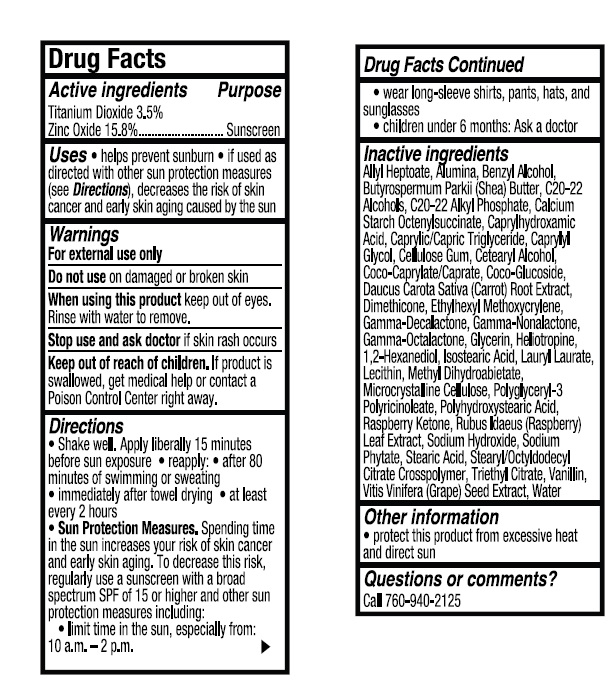
Uses • helps prevent sunburn • if used as directed with other sun protection measures (see Directions ), decreases the risk of skin cancer and early skin aging caused by the sun
⏱️ Dosage and Administration ▾
Directions ● Shake well. Apply liberally 15 minutes before sun exposure ● reapply: ● after 80 minutes of swimming or sweating ● immediately after towel drying ● at least every 2 hours ● Sun Protection Measures. Spending time in the sun increases your risk of skin cancer and early skin aging.
To decrease this risk, regularly use a sunscreen with a broad spectrum SPF of 15 or higher and other sun protection measures including: ● limit time in the sun, especially from: 10 a.m. - 2 p.m. ● wear long-sleeve shirts, pants, hats, and sunglasses ●Children under 6 months: Ask a doctor
⚠️ Warnings ▾
Warnings For external use only Do not use on damaged or broken skin When using this product keep out of eyes. Rinse with water to remove. Stop use and ask doctor if skin rash occurs
🧪 Active Ingredient ▾
Drug Facts Active Ingredients Titanium Dioxide 3.5% Zinc Oxide 15.8% Purpose Suncreen
🧪 Inactive Ingredients ▾
Inactive Ingredients Allyl Heptoate, Alumina, Benzyl Alcohol, Butyrospermum Parkii (Shea) Butter, C20-22 Alcohols, C20-22 Alkyl Phosphate, Calcium Starch Octenylsuccinate, Caprylhydroxamic Acid, Caprylic/Capric Triglyceride, Caprylyl Glycol, Cellulose Gum, Cetearyl Alcohol, Coco-Caprylate/Caprate, Coco-Glucoside, Daucus Carota Sativa (Carrot) Root Extract, Dimethicone, Ethylhexyl Methoxycrylene, Gamma-Decalactone, Gamma-Nonalactone, Gamma-Octalactone, Glycerin, Heliotropine, 1,2-Hexanediol, Isostearic Acid, Lauryl Laurate, Lecithin, Methyl Dihydroabietate, Microcrystalline Cellulose, Polyglyceryl-3 Polyricinoleate, Polyhydroxystearic Acid, Raspberry Ketone, Rubus Idaeus (Raspberry) Leaf Extract, Sodium Hydroxide, Sodium Phytate, Stearic Acid, Stearyl/Octyldodecyl Citrate Crosspolymer, Triethyl Citrate, Vanillin, Vitis Vinifera (Grape) Seed Extract, Water
🎯 Purpose ▾
Purpose Suncreen