
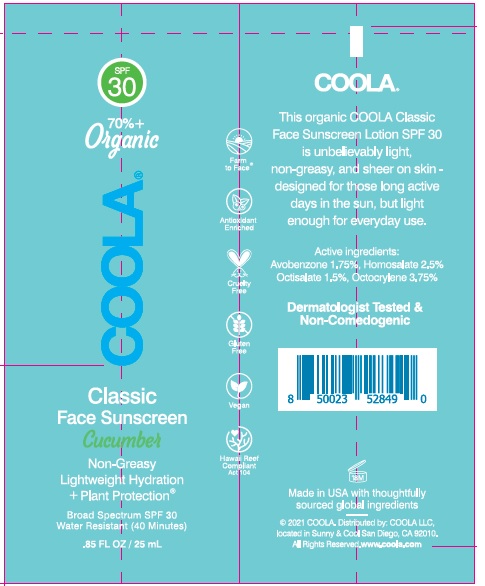
COOLA CLASSIC FACE SUNSCREEN Cucumber Broad Spectrum SPF 30 AVOBENZONE HOMOSALATE OCTISALATE OCTOCRYLENE 1.75 g/100mL; 2.5 g/100mL; 1.5 g/100mL; 3.75 g/100mL Lotion
🆔 Identity & classification
Where does this data come from?
🏭 Manufacturer & labeler
Where does this data come from?
🩺 Clinical
Coola Classic Face Sunscreen is a topical lotion that contains four UV-filtering agents: avobenzone, homosalate, octisalate, and octocrylene. These ingredients are commonly used together in sunscreen products to absorb and scatter ultraviolet radiation from the sun. This product is formulated to broad-spectrum protection and is marketed as an over-the-counter monograph drug, meaning it follows FDA's established rules for sunscreen products rather than undergoing individual product review.
Patient education
Supplement & herbal interactions
Where does this data come from?
Ask a licensed pharmacist directly — free, answered by our team.
🧪 Inactive Ingredients / Excipients
Inactive ingredients, also called excipients, are components of the drug product other than the active ingredient. They may include fillers, dyes, coatings, preservatives, flavors, or other formulation ingredients.
💡 Tap an ingredient (hover on desktop) to see what it is and why it’s used.
-
UNII TR046Y3K1G
A liquid alcohol derived from petroleum or plant sources. It acts as a solvent and humectant in medicines, helping dissolve active ingredients and retain moisture in the formulation.
-
UNII Z331YX9EL9
A synthetic fragrance compound used as a flavoring agent in medicines. It provides taste and aroma to make oral medications more palatable, particularly in liquid formulations or chewable products.
-
UNII V14F8G75P4
A fragrant alcohol compound derived from plants or made synthetically. It's used as a flavor and aroma agent to improve the taste and smell of medicines.
-
UNII ZY81Z83H0X
Aloe vera leaf is a plant extract derived from the aloe plant. It is used in medicines as a natural moisturizer and skin-soothing agent in topical formulations.
-
UNII Q7UI015FF9
A synthetic polymer material used as a thickener and stabilizer in liquid formulations. It helps create the right texture and prevents separation of ingredients in medicines and topical products.
-
UNII I1BJ961J2E
A fragrant essential oil derived from the amyris tree, used as a flavoring and fragrance agent to improve the taste and smell of medicines.
-
UNII N4G8379626
A plant-based oil extracted from rapeseed (also called canola). It's used in medicines as an emulsifier and lubricant to help blend ingredients together and improve how the product flows and feels.
-
UNII 3XUS85K0RA
Butylene glycol is a clear liquid derived from petroleum or plants that acts as a humectant, solvent, and preservative booster in medicines. It helps keep formulations stable, dissolve active ingredients, and maintain moisture in topical products.
-
UNII 12824X01L0
A plant-based oil from camelina seeds used as a carrier or emollient in medicines. It helps deliver active ingredients and may improve how the product feels on skin or in the mouth.
-
UNII 00YIU5438U
Caprylyl glycol is a clear liquid derived from coconut oil. In medicines, it acts as a humectant to retain moisture, a preservative booster to prevent microbial growth, and a solvent to help dissolve or mix other ingredients.
-
UNII 9S60Q72309
A plant-derived ingredient made from safflower seed components. It acts as an emulsifier and carrier to help distribute oils and active ingredients evenly throughout the medicine.
-
UNII 2DMT128M1S
A waxy solid derived from plant or animal sources. It acts as an emulsifier to blend oil and water components, and also thickens the medicine to give it the right texture and consistency.
-
UNII 5ZA2S6B08X
Cetyl palmitate is a waxy substance made from natural fats. It works as a binder and thickener to help hold the medicine together and control how it dissolves in your body.
-
UNII 2968PHW8QP
A weak organic acid derived from citrus fruits or made through fermentation. It works as a buffer to control pH, a preservative to extend shelf life, and a flavoring agent in medications.
-
UNII IZ420RT3OY
A fragrant compound derived from citronella oil or synthetically made. Used as a flavor and aroma agent to make the medicine taste or smell pleasant.
-
UNII 31Z90Q7KQJ
Decanal is a natural aldehyde compound used as a fragrance and flavoring ingredient. It adds aroma and taste to medicines, helping mask unpleasant flavors or odors in the formulation.
-
UNII Z17H97EA6Y
A plant-derived mild cleanser made from natural sugars and oils. It acts as an emulsifier and surfactant to help mix water and oil-based ingredients together in the medicine.
-
UNII 92RU3N3Y1O
Dimethicone is a silicone-based oil that acts as an anti-foaming agent and lubricant in medicines. It reduces gas bubbles in liquid formulations and helps coat and protect the stomach lining when ingested.
-
UNII 9E4CO0W6C5
A silicone-based polymer that forms soft, spongy particles. Used as a texture modifier and suspending agent to improve how the product feels and flows, and to help keep ingredients evenly distributed throughout the formulation.
-
UNII QB14YV193C
Disodium phthalate is a salt derived from phthalic acid. It works as a pH buffer in medications, helping keep the product at a stable acidity level for proper effectiveness and shelf life.
-
UNII PDC6A3C0OX
Glycerin is a clear, thick liquid derived from plant oils or fats. It acts as a humectant to retain moisture, a sweetener, and a solvent in medications.
-
UNII PT792BQ57D
A fragrant liquid compound used as a flavoring or scent agent in medicines. It provides fruity or floral notes to mask unpleasant tastes or odors in the product.
-
UNII 7U7KU3MWT0
Hexyl acetate is a synthetic liquid compound used as a solvent and flavoring agent in medicines. It helps dissolve other ingredients and can contribute to the taste or aroma of the formulation.
-
UNII UDR641JW8W
A plant-derived oil from jojoba seeds that has been broken down into smaller components. It acts as an emollient and skin-conditioning agent to help soften and smooth the product's texture.
-
UNII 7F0EV20QYL
Jojoba oil is a liquid wax extracted from jojoba plant seeds. In medications, it serves as an emollient and carrier oil that helps soften skin, improve texture, and distribute active ingredients evenly in topical formulations.
-
UNII 5K47SSQ51G
A fragrant compound found in plants like lavender and bergamot. It's used as a flavoring and aroma agent to improve the taste and smell of medications.
-
UNII 48H19MS04L
A natural oil derived from the fruit of the Mauritia flexuosa palm tree. It serves as an emollient and skin-conditioning agent in topical formulations, helping soften and smooth the product's texture.
-
UNII 412ZHA4T4Y
A plant-derived oil extracted from meadowfoam seeds. It acts as an emollient and skin-conditioning agent, helping soften and smooth the product texture while improving how it spreads on skin.
-
UNII 7666FJ0J9F
A rosin-derived compound used as a film-coating agent and binder in tablets and capsules. It helps create a protective layer around the medication and improves tablet hardness.
-
UNII 38G5P53250
Nerol is a naturally occurring alcohol found in essential oils. It serves as a fragrance ingredient and solvent in medicines, helping to improve taste, smell, or stability of the product.
-
UNII 23Z87HTQ6P
A plant-derived ingredient from the prickly pear cactus. It's used as a binder and filler to help hold tablet ingredients together and add bulk to the medicine.
-
UNII AKN3KSD11B
Orange oil obtained by cold pressing orange peel. It serves as a flavoring agent and fragrance in medicines to improve taste and aroma.
-
UNII 9S8867952A
A plant-derived oil from raspberry seeds used as an emollient and skin-conditioning agent in topical formulations. It helps soften the product texture and improve skin feel.
-
UNII 65UEH262IS
Safflower oil is a plant-based oil extracted from safflower seeds. It's used in medicines as a solvent and carrier to help dissolve or suspend active ingredients, and sometimes as an emollient to improve texture.
-
UNII ETJ7Z6XBU4
Silicon dioxide is a naturally occurring mineral used as a glidant and anti-caking agent. It helps powder ingredients flow smoothly and prevents clumping during manufacturing and storage.
-
UNII 06XEA2VD56
Sorbitan oleate is an emulsifier derived from sorbitol and oleic acid. It helps mix oil and water-based ingredients together and keeps them from separating in the medicine.
-
UNII 77K6Z421KU
Sorbitan monopalmitate is an emulsifier made from sorbitol, a natural sugar alcohol, combined with palmitic acid. It helps mix oil and water ingredients together in medications and keeps them evenly blended throughout the product's shelf life.
-
UNII GW89575KF9
Squalane is a lightweight oil derived from plant sources or synthesized. It acts as an emollient and lubricant in formulations, helping ingredients blend smoothly and improving product texture and spreadability.
-
UNII 8Z96QXD6UM
Triethyl citrate is a clear liquid derived from citric acid. It acts as a plasticizer and solvent in tablet coatings and film formulations, helping the coating remain flexible and adhere properly to the medicine.
-
UNII 7L6DL16P1T
Tropolone is a naturally occurring organic compound used in medicines as a preservative and antimicrobial agent to help prevent bacterial and fungal growth in the product.
-
UNII 059QF0KO0R
Water is a liquid solvent that dissolves and mixes ingredients together in liquid medicines, syrups, and injections. It helps distribute the active drug evenly throughout the product.
-
UNII TTV12P4NEE
Xanthan gum is a thickening and stabilizing ingredient made from fermented corn or other sugars. It's added to medicines to improve texture, prevent separation of liquids and solids, and help the product stay consistent.
42 inactive ingredients listed in the exact product block matched to this NDC.
Label-section wording can be broader than the structured product block and may mention additional formulation ingredients.
Where does this data come from?
ingredient classCode="IACT" elements from the exact product block matched by this NDC. Label-section narrative from DailyMed / the openFDA label index is shown separately when available.Inactive ingredient FAQ
Are inactive ingredients the same for every manufacturer?
Why might an inactive ingredient be missing?
Can inactive ingredients matter?
💲 Pricing
A drug doesn't have one price. Each row is a different public payment system, and none is what you'd pay at the counter — that depends on your insurance. The ⓘ on each row explains what it measures.
| Price system | Per g | Per package |
|---|---|---|
| Retail pharmacies payNADAC · weekly | Not in the retail survey — common for institutional, discontinued, or low-volume packs. | |
| Medicaid paysCMS SDUD · 12 mo | No recent Medicaid claims on file for this NDC — rare and low-volume NDCs are suppressed in the public data. | |
| Medicare drug plans payPart D · quarterly | No Part D plan price is available for this NDC in our data. | |
Where does this data come from?
🔁 Therapeutic equivalents
| Product | Labeler | Pack | NADAC/unit | TE | Status | Price vs. this |
|---|---|---|---|---|---|---|
| COOLA Classic Body Sunscreen Pina Colada SPF 30 1.75 g/100mL; 2.5 g/100mL; 1.5 g/100mL; 3.75 g/100mL 54111-0146-50 | Bentley | 1 tube | — | — | FDA listed | — |
| COOLA CLASSIC FACE SUNSCREEN Cucumber Broad Spectrum SPF 30 1.75 g/100mL; 2.5 g/100mL; 1.5 g/100mL; 3.75 g/100mLthis 79753-0073-02 | COOLA | 1 tube | — | — | FDA listed | — |
Where does this data come from?
⏳ Availability & generic status
We did not find an FDA-approved generic match for this exact strength, form and route.
Where does this data come from?
🔬 Reported adverse events (FAERS)
Top reported reactions
Reporter sex
Serious outcomes
Where does this data come from?
📦 Packaging — all sizes for this product
| Package NDC | Description | Marketing start | Status |
|---|---|---|---|
| 79753-0073-02 You're viewing this | 1 TUBE in 1 CARTON (79753-073-02) / 25 mL in 1 TUBE | 2023-02-01 | Active |
🧭 About this NDC listing & data coverage
What data is (and isn’t) available for this NDC — tap to expand
| NDC identity (package / product / labeler codes) | ✓ Available |
| Labeler | ✓ Available |
| Product & package description | ✓ Available |
| Marketing category & status | ✓ Available |
| Active ingredient / dosage form / route | ✓ Available |
| FDA label (SPL via DailyMed) | ✓ Available |
| Package photos | ✓ Available |
| Inactive ingredients (structured) | ✓ Available |
| NADAC pharmacy acquisition price (CMS) | — Not published for this NDC CMS publishes NADAC only for NDCs reported in its retail-pharmacy survey. |
| Orange Book / therapeutic-equivalence data | — Not published for this NDC Applies only to products approved under an NDA/ANDA; many listings are out of scope. |
| HCPCS J-code billing crosswalk | — Not published for this NDC Most self-administered / retail products have no J-code — that is normal. |
| Medicaid utilization (CMS SDUD) | — Not published for this NDC CMS reports utilization only for NDCs with Medicaid claims above its privacy threshold. |
Questions about this listing
Is this NDC FDA-approved?
Why is there no price listed?
Is the NDC printed on the package the same as the 11-digit billing NDC?
What do the three segments of this NDC mean?
Is this package still being marketed?
Who lists this product with the FDA?
Do I need a prescription for this product?
Where does this data come from?
📄 FDA label — Drug Facts FDA SPL
🎯 Indications and Usage ▾
Uses • helps prevent sunburn • if used as directed with other sun protection measures (see Directions) decreases the risk of skin cancer and early skin aging caused by the sun.
⏱️ Dosage and Administration ▾
Directions • apply liberally 15 minutes before sun exposure • reapply: • after 40 minutes of swimming or sweating • immediately after towel drying • at least every 2 hours • Sun Protection Measures. Spending time in the sun increases your risk of skin cancer and early skin aging. To decrease this risk, regularly use a sunscreen with a broad spectrum SPF of 15 or higher and after sun protection. measures including: • limit time in the sun, especially from 10 a.m. – 2 p.m. • wear long-sleeve shirts, pants, hats, and sunglasses. • Children under 6 months: Ask a doctor
⚠️ Warnings ▾
Warnings For external use only.
🧪 Active Ingredient ▾
Active Ingredients Avobenzone 1.75% Homosalate 2.5% Octisalate 1.5% Octocrylene 3.75%
🧪 Inactive Ingredients ▾
Inactive Ingredients Aloe Barbadensis Leaf Juice (ORGANIC), Amyris Balsamifera Bark Oil*, Brassica Campestris (Rapeseed) Seed Oil, Butylene Glycol, Camelina Sativa Seed Oil, Caprylyl Glycol, Carthamus Tinctorius (Safflower) Oleosomes, Carthamus Tinctorius (Safflower) Seed Oil (ORGANIC), Cetearyl Alcohol, Cetyl Palmitate, Citric Acid, Citronellyl Acetate*, Citrus Aurantium Dulcis (Orange) Peel Oil*, Decanal*, Decyl Glucoside, Dimethicone, Dimethyl Heptenal*, Glycerin (ORGANIC), 1,2-Hexanediol, 3-Hexenol*, Hexenyl Acetate*, Hexyl Acetate*, Hydrolyzed Jojoba Esters, Jojoba Esters, Limnanthes Alba (Meadowfoam) Seed Oil, Linalyl Acetate*, Mauritia Flexuosa (Buriti) Fruit Oil, Methyl Dihydroabietate, Nerol*, Opuntia Ficus-Indica Flower Extract, Polyacrylate, Crosspolymer-6, Polysilicone-11, Rubus Idaeus (Raspberry) Seed Oil, Silica, Sodium Phytate, Sorbitan Oleate, Sorbitan Palmitate, Squalane, Triethyl Citrate*, Tropolone, Water, Xanthan Gum
🎯 Purpose ▾
Purpose Sunscreen