
Gabapentin 800 mg Tablet, Coated, 120-count — NDC 80425-0204-4 (Billing 80425-0204-04)
This is a package of 120 tablets of Gabapentin 800 mg Tablet, Coated from Advanced Rx of Tennessee, LLC, marketed since Oct 2022 and currently FDA-listed.
NDC database record
One package, one record: these facts belong to NDC 80425-0204-4 alone.
- Record
- FDA NDC Directory package listing · Human prescription drug
- Code segments
- 80425 labeler · 0204 product · 4 package
- Package marketed since
- Nov 1, 2023
- Sample package
- No — commercial package
- Listing certified through
- Dec 31, 2026
- Billing quantity
- 120 EA per package
- Barcode (UPC-A, from the NDC)
- 3 8042502044 0
- FDA record last changed
- Jul 24, 2026
Other active recalls for Gabapentin (different manufacturers) — 5 · tap to view
Identity & classification
Regulatory identifiers FDA, NLM and CMS codes for this package
- RxCUI (RxNorm): 310433
Where does this data come from?
- FDA openFDA NDC Directory · synced Oct 8, 2026
- FDA label on DailyMed · label index refreshed Oct 8, 2026
- RxNorm (NLM RxNav) · catalog refreshed Oct 1, 2026
- Medi-Span GPI (licensed)
- First Databank (licensed) · refreshed Oct 8, 2026
RxNorm drug class
This medicine belongs to the Gabapentinoids class.
Where does this data come from?
- RxClass (NLM) · catalog refreshed Oct 1, 2026
Clinical
- It manages nerve pain after shingles (postherpetic neuralgia). Many gabapentin products are also add-on treatment for partial seizures in epilepsy. Horizant is also used for restle...
- Be careful. Gabapentin can make you sleepy and dizzy and may impair driving. Don't drive or use heavy machinery until you know how it affects you, since it can be hard to judge you...
- Don't stop it on your own. For seizures, stopping suddenly can increase seizure frequency. Reports also describe withdrawal symptoms such as anxiety, trouble sleeping, nausea and s...
- Missed-dose advice depends on the product. With Horizant, for restless legs syndrome take the next dose the following day, and for postherpetic neuralgia skip it and take the next...
Patient education
Supplement & herbal interactions
Some supplements/herbs that may interact with Gabapentin — tap one for details:
Gabapentin may be associated with lower levels of 1 nutrient — worth a chat with your pharmacist, not a cause for alarm.
Where does this data come from?
- MedlinePlus (NLM) · refreshed Oct 8, 2026
- FDA label on DailyMed · label index refreshed Oct 8, 2026
Ask a licensed pharmacist directly — free, answered by our team.
Pricing
A drug doesn't have one price. Each row is a different public payment system, and none is what you'd pay at the counter — that depends on your insurance. The ⓘ on each row explains what it measures.
| Price system | Per each | Per package |
|---|---|---|
| Retail pharmacies payNADAC · weekly | Not in the retail survey — common for institutional, discontinued, or low-volume packs. | |
| Medicaid paysCMS SDUD · 12 mo | No recent Medicaid claims on file for this NDC — rare and low-volume NDCs are suppressed in the public data. | |
| Medicare drug plans payPart D · Q2 2026 | $0.1683 | $20.20 / 120 tablets |
Where does this data come from?
- CMS NADAC weekly file
- CMS ASP pricing files · refreshed Sep 20, 2026
- CMS Medicaid State Drug Utilization Data · refreshed Oct 8, 2026
- CMS Part D plan pricing files · refreshed Sep 24, 2026
- VA National Acquisition Center price file
Packaging — all sizes for this product
| Package NDC | Description | Marketing start | Marketing end | Status |
|---|---|---|---|---|
| 80425-0204-01 80425-0204-1 Main listing | 30 TABLET, COATED in 1 BOTTLE | 2023-11-01 | — | Active |
| 80425-0204-02 80425-0204-2 | 60 TABLET, COATED in 1 BOTTLE | 2023-11-01 | — | Active |
| 80425-0204-03 80425-0204-3 | 90 TABLET, COATED in 1 BOTTLE | 2023-11-01 | — | Active |
| 80425-0204-04 You're viewing this | 120 TABLET, COATED in 1 BOTTLE | 2023-11-01 | — | Active |
You're viewing the largest of 4 pack sizes for this product.
Pack size FAQ
What quantity is in this package?
How does this package differ from NDC 80425-0204-01?
What NDC number is used to bill for this package of Gabapentin 800 mg Tablet, Coated?
Therapeutic equivalents
| Product | Labeler | Pack | NADAC/unit | TE | Status | Price vs. this |
|---|---|---|---|---|---|---|
| Gabapentin 800 mg 00904-7108-61 | Major | 1 tablet | $0.088 | AB1 | Availability likely | — |
| Gabapentin 800 mg 16571-0117-01 | Rising | 100 tablets | $0.088 | AB1 | Availability likely | — |
| Gabapentin 800 mg 16714-0332-01 | NorthStar | 100 tablets | $0.088 | AB1 | Availability likely | — |
| Gabapentin 800 mg 31722-0167-01 | Camber | 100 tablets | $0.088 | AB1 | Availability likely | — |
| Gabapentin 800 mg 50228-0178-01 | ScieGen | 100 tablets | $0.088 | AB1 | Availability likely | — |
| Gabapentin 800 mg 60687-0518-01 | American | 1 tablet | $0.088 | AB1 | Availability likely | — |
| Gabapentin 800 mg 64380-0728-01 | Strides | 100 tablets | $0.088 | AB1 | Availability likely | — |
| Gabapentin 800 mg 65862-0524-01 | Aurobindo | 100 tablets | $0.088 | AB1 | Availability likely | — |
| Gabapentin 800 mg 67877-0429-01 | Ascend | 100 tablets | $0.088 | AB1 | Availability likely | — |
| Gabapentin 800 mg 68001-0412-00 | BluePoint | 100 tablets | $0.088 | AB1 | Availability likely | — |
| Gabapentin 800 mg 68094-0489-50 | Precision | 100 tablets | $0.088 | AB1 | Availability likely | — |
| Gabapentin 800 mg 68382-0205-01 | Zydus | 100 tablets | $0.088 | AB1 | Availability likely | — |
| Gabapentin 800 mg 68462-0127-01 | Glenmark | 100 tablets | $0.088 | AB1 | Availability likely | — |
| Gabapentin 800 mg 69367-0347-05 | Westminster | 500 tablets | $0.088 | AB1 | Availability likely | — |
| Gabapentin 800 mg 70010-0228-01 | Granules | 100 tablets | $0.088 | AB1 | Availability likely | — |
| Gabapentin 800 mg 76282-0406-01 | Exelan | 100 tablets | $0.088 | — | Availability likely | — |
| Gabapentin 800 mg 76282-0707-05 | Exelan | 500 tablets | $0.088 | AB1 | Availability likely | — |
| Gabapentin 800 mg 82009-0072-05 | QUALLENT | 500 tablets | $0.088 | AB1 | Availability likely | — |
| Gabapentin 800 mg 83301-0002-01 | Mullan | 100 tablets | $0.088 | AB1 | Availability likely | — |
| Gabapentin 800 mg 50268-0326-13 | AvPAK | 1 tablet | $0.090 | AB1 | Discontinued | — |
| Gabapentin 800 mg 71093-0112-04 | ACI | 100 tablets | $0.098 | AB1 | Discontinued | — |
| gabapentin 800 mg 62756-0204-01 | Sun | 100 tablets | $0.098 | — | FDA listed | — |
| Gabapentin 800 mg 51224-0121-50 | TAGI | 100 tablets | $0.124 | AB1 | Discontinued | — |
| Neurontin 800 mg 58151-0285-01 | Viatris | 100 tablets | $16.881 | AB1 | Availability likely | — |
| Neurontin 800 mg 00071-0401-24 | Parke-Davis | 100 tablets | $16.978 | AB1 | Discontinued | — |
| Gabapentin 800 mg 42385-0980-01 | Laurus | 100 tablets | — | AB1 | FDA listed | — |
| Gabapentin 800 mg 43063-0611-90 | PD-Rx | 90 tablets | — | AB1 | FDA listed | — |
| Gabapentin 800 mg 50090-6189-00 | A-S | 60 tablets | — | AB1 | FDA listed | — |
| Gabapentin 800 mg 50090-7400-00 | A-S | 60 tablets | — | AB1 | FDA listed | — |
| Gabapentin 800 mg 55154-3366-00 | Cardinal | 1 tablet | — | AB1 | FDA listed | — |
| Gabapentin 800 mg 55154-8193-00 | Cardinal | 1 tablet | — | AB1 | FDA listed | — |
| Gabapentin 800 mg 58118-1167-08 | Clinical | 30 tablets | — | AB1 | FDA listed | — |
| Gabapentin 800 mg 60760-0517-60 | St. | 60 tablets | — | AB1 | Discontinued | — |
| Gabapentin 800 mg 60760-0837-60 | ST. | 60 tablets | — | AB1 | FDA listed | — |
| Gabapentin 800 mg 63187-0010-30 | Proficient | 30 tablets | — | AB1 | FDA listed | — |
| Gabapentin 800 mg 63187-0148-90 | Proficient | 90 tablets | — | AB1 | FDA listed | — |
| Gabapentin 800 mg 63629-7308-01 | Bryant | 90 tablets | — | AB1 | Discontinued | — |
| Gabapentin 800 mg 63629-8489-01 | Bryant | 500 tablets | — | AB1 | FDA listed | — |
| Gabapentin 800 mg 63629-8490-01 | Bryant | 100 tablets | — | AB1 | FDA listed | — |
| Gabapentin 800 mg 65841-0706-01 | Zydus | 100 tablets | — | AB1 | FDA listed | — |
| Gabapentin 800 mg 67046-1536-03 | Coupler | 30 tablets | — | AB1 | FDA listed | — |
| Gabapentin 800 mg 67046-1667-03 | Coupler | 30 tablets | — | AB1 | FDA listed | — |
| Gabapentin 800 mg 68071-2206-01 | NuCare | 100 tablets | — | AB1 | FDA listed | — |
| Gabapentin 800 mg 68071-2214-09 | NuCare | 90 tablets | — | AB1 | FDA listed | — |
| Gabapentin 800 mg 68071-3523-09 | NuCare | 90 tablets | — | AB1 | FDA listed | — |
| Gabapentin 800 mg 68788-7757-01 | Preferred | 100 tablets | — | AB1 | FDA listed | — |
| Gabapentin 800 mg 68788-7774-01 | Preferred | 100 tablets | — | AB1 | FDA listed | — |
| Gabapentin 800 mg 68788-8468-01 | Preferred | 100 tablets | — | AB1 | FDA listed | — |
| Gabapentin 800 mg 68788-8790-01 | Preferred | 100 tablets | — | AB1 | FDA listed | — |
| Gabapentin 800 mg 69097-0811-02 | Cipla | 30 tablets | — | — | FDA listed | — |
| Gabapentin 800 mg 70518-2323-00 | REMEDYREPACK | 30 tablets | — | AB1 | FDA listed | — |
| Gabapentin 800 mg 70518-2912-00 | REMEDYREPACK | 100 tablets | — | AB1 | Discontinued | — |
| Gabapentin 800 mg 71205-0160-30 | Proficient | 30 tablets | — | AB1 | FDA listed | — |
| Gabapentin 800 mg 71205-0514-30 | Proficient | 30 tablets | — | AB1 | FDA listed | — |
| Gabapentin 800 mg 71205-0774-30 | Proficient | 30 tablets | — | AB1 | FDA listed | — |
| Gabapentin 800 mg 71205-0932-00 | Proficient | 100 tablets | — | AB1 | FDA listed | — |
| Gabapentin 800 mg 71335-0254-01 | Bryant | 30 tablets | — | AB1 | FDA listed | — |
| Gabapentin 800 mg 71335-1007-01 | Bryant | 30 tablets | — | AB1 | FDA listed | — |
| Gabapentin 800 mg 71335-1041-01 | Bryant | 90 tablets | — | AB1 | FDA listed | — |
| Gabapentin 800 mg 71335-2037-01 | Bryant | 30 tablets | — | AB1 | FDA listed | — |
| Gabapentin 800 mg 71335-2038-01 | Bryant | 90 tablets | — | AB1 | FDA listed | — |
| Gabapentin 800 mg 71335-2765-01 | Bryant | 30 tablets | — | AB1 | FDA listed | — |
| Gabapentin 800 mg 71335-2819-01 | Bryant | 90 tablets | — | AB1 | FDA listed | — |
| Gabapentin 800 mg 71335-3057-01 | Bryant | 30 tablets | — | AB1 | FDA listed | — |
| Gabapentin 800 mg 71610-0426-60 | Aphena | 90 tablets | — | AB1 | FDA listed | — |
| Gabapentin 800 mg 71610-0630-30 | Aphena | 30 tablets | — | AB1 | FDA listed | — |
| Gabapentin 800 mg 71610-0737-30 | Aphena | 30 tablets | — | AB1 | FDA listed | — |
| Gabapentin 800 mg 71610-0778-45 | Aphena | 45 tablets | — | AB1 | FDA listed | — |
| Gabapentin 800 mg 72162-1531-01 | Bryant | 100 tablets | — | AB1 | FDA listed | — |
| Gabapentin 800 mg 72162-2142-01 | Bryant | 100 tablets | — | AB1 | FDA listed | — |
| Gabapentin 800 mg 72189-0092-90 | DIRECT | 90 tablets | — | AB1 | FDA listed | — |
| Gabapentin 800 mg 72189-0158-30 | DIRECT | 30 tablets | — | AB1 | FDA listed | — |
| Gabapentin 800 mg 72189-0178-30 | DIRECT | 30 tablets | — | AB1 | FDA listed | — |
| Gabapentin 800 mg 72189-0394-72 | Direct_Rx | 120 tablets | — | AB1 | FDA listed | — |
| Gabapentin 800 mg 72189-0619-72 | Direct_Rx | 120 tablets | — | AB1 | FDA listed | — |
| Gabapentin 800 mg 72789-0217-60 | PD-Rx | 60 tablets | — | AB1 | FDA listed | — |
| Gabapentin 800 mg 72865-0256-05 | XLCare | 500 tablets | — | AB1 | FDA listed | — |
| Gabapentin 800 mg 72888-0132-00 | Advagen | 1000 tablets | — | AB1 | FDA listed | — |
| Gabapentin 800 mg 76420-0497-01 | Asclemed | 100 tablets | — | AB1 | FDA listed | — |
| Gabapentin 800 mg 76420-0837-01 | Asclemed | 100 tablets | — | AB1 | FDA listed | — |
| Gabapentin 800 mg 77771-0178-05 | Radha | 500 tablets | — | AB1 | FDA listed | — |
| Gabapentin 800 mg 80425-0035-01 | Advanced | 30 tablets | — | AB1 | FDA listed | — |
| Gabapentin 800 mg 80425-0036-01 | Advanced | 30 tablets | — | AB1 | FDA listed | — |
| Gabapentin 800 mg 80425-0158-01 | Advanced | 30 tablets | — | AB1 | FDA listed | — |
| Gabapentin 800 mgthis 80425-0204-04 | Advanced | 120 tablets | — | AB1 | FDA listed | — |
| Gabapentin 800 mg 82619-0146-01 | Creekwood | 100 tablets | — | AB1 | FDA listed | — |
| Gabapentin 800 mg 82804-0203-30 | Proficient | 30 tablets | — | AB1 | FDA listed | — |
| Gabapentin 800 mg 82804-0249-90 | Proficient | 90 tablets | — | AB1 | FDA listed | — |
| Gabapentin 800 mg 85534-0010-00 | HAWAII | 30 tablets | — | AB1 | FDA listed | — |
| Gabapentin 800 mg 71335-1601-01 | Bryant | 30 tablets | — | AB1 | FDA listed | — |
| Gabapentin 800 mg 68071-5310-09 | NuCare | 90 tablets | — | AB1 | FDA listed | — |
| Gabapentin 800 mg 58118-2127-08 | Clinical | 30 tablets | — | AB1 | FDA listed | — |
Where does this data come from?
- FDA openFDA NDC Directory · synced Oct 8, 2026
- FDA Orange Book · refreshed Oct 3, 2026
- CMS NADAC weekly file
Availability & generic status
This product is an FDA-approved generic. Other versions of the same drug are listed under Therapeutic equivalents, least expensive first.
Where does this data come from?
- FDA Orange Book · refreshed Oct 3, 2026
What it looks like
Where does this data come from?
- FDA label on DailyMed · label index refreshed Oct 8, 2026
Inactive Ingredients / Excipients
Inactive ingredients, also called excipients, are components of the drug product other than the active ingredient. They may include fillers, dyes, coatings, preservatives, flavors, or other formulation ingredients.
🧪 Avoiding an ingredient? See Gabapentin inactive ingredients by manufacturer: every current product's list side by side, so you can ask your pharmacy for the version that does not list it.
Where does this data come from?
IACT rows and label-wide narrative are kept separate; availability and product-level specificity depend on the submitted label.- FDA label on DailyMed · label index refreshed Oct 8, 2026
- FDA openFDA NDC Directory · synced Oct 8, 2026
Inactive ingredient FAQ
Are inactive ingredients the same for every manufacturer?
Why might an inactive ingredient be missing?
Can inactive ingredients matter?
Manufacturer & labeler
More NDCs from Advanced Rx of Tennessee, LLC labeler code 80425
- Diclofenac Sodium DR 50 mg Tablet, Delayed Release NDC 80425-0197-2
- Cefadroxil 500 mg Capsule NDC 80425-0198-1
- Gabapentin 100 mg Capsule NDC 80425-0199-1
- Sertraline Hydrochloride 50 mg Tablet, Film Coated NDC 80425-0200-1
- Gabapentin 600 mg Tablet, Coated NDC 80425-0201-1
- Ramelteon 8 mg Tablet, Film Coated NDC 80425-0203-1
- Baclofen 20 mg Tablet NDC 80425-0205-1
- Allopurinol 300 mg Tablet NDC 80425-0206-1
- Lisinopril and Hydrochlorothiazide 12.5 mg; 10 mg Tablet NDC 80425-0207-3
- Topiramate 25 mg Tablet NDC 80425-0208-1
- Celecoxib 200 mg Capsule NDC 80425-0209-1
- Diclofenac Sodium ER 100 mg Tablet, Film Coated, Extended Release NDC 80425-0210-1
Where does this data come from?
- FDA openFDA NDC Directory · synced Oct 8, 2026
- Drugs@FDA
Full prescribing information FDA SPL
🎯 Indications and Usage ▾
1. Indications and Usage Gabapentin is indicated for: Management of postherpetic neuralgia in adults Adjunctive therapy in the treatment of partial onset seizures, with and without secondary generalization, in adults and pediatric patients 3 years and older with epilepsy
⏱️ Dosage and Administration ▾
2. Dosage and Administration
2.1Dosage for Postherpetic Neuralgia In adults with postherpetic neuralgia, gabapentin may be initiated on Day 1 as a single 300 mg dose, on Day 2 as 600 mg/day (300 mg two times a day), and on Day 3 as 900 mg/day (300 mg three times a day). The dose can subsequently be titrated up as needed for pain relief to a dose of 1,800 mg/day (600 mg three times a day). In clinical studies, efficacy was demonstrated over a range of doses from 1,800 mg/day to 3,600 mg/day with comparable effects across the dose range; however, in these clinical studies, the additional benefit of using doses greater than 1,800 mg/day was not demonstrated.
2.2Dosage for Epilepsy with Partial Onset Seizures Patients 12 years of age and above The starting dose is 300 mg three times a day. The recommended maintenance dose of gabapentin is 300 mg to 600 mg three times a day. Dosages up to 2,400 mg/day have been well tolerated in long-term clinical studies.
Doses of 3,600 mg/day have also been administered to a small number of patients for a relatively short duration, and have been well tolerated. Administer gabapentin three times a day using 600 mg or 800 mg tablets. The maximum time between doses should not exceed 12 hours.
Pediatric Patients Age 3 to 11 years The starting dose range is 10 mg/kg/day to 15 mg/kg/day, given in three divided doses, and the recommended maintenance dose reached by upward titration over a period of approximately 3 days. The recommended maintenance dose of gabapentin in patients 3 to 4 years of age is 40 mg/kg/day, given in three divided doses. The recommended maintenance dose of gabapentin in patients 5 to 11 years of age is 25 mg/kg/day to 35 mg/kg/day, given in three divided doses.
Gabapentin may be administered as the oral solution, capsule, or tablet, or using combinations of these formulations. Dosages up to 50 mg/kg/day have been well tolerated in a long-term clinical study. The maximum time interval between doses should not exceed 12 hours.
2.3Dosage Adjustment in Patients with Renal Impairment Dosage adjustment in patients 12 years of age and older with renal impairment or undergoing hemodialysis is recommended, as follows (see dosing recommendations above for effective doses in each indication): TABLE 1. Gabapentin Dosage Based on Renal Function Renal Function Creatinine Clearance (mL/min) Total Daily Dose Range (mg/day) Dosage Regimen (mg) ≥ 60 900 to 3,600 300 TID 400 TID 600 TID 800 TID 1,200 TID > 30 to 59 400 to 1,400 200 BID 300 BID 400 BID 500 BID 700 BID > 15 to 29 200 to 700 200 QD 300 QD 400 QD 500 QD 700 QD 15 * 100 to 300 100 QD 125 QD 150 QD 200 QD 300 QD Post-Hemodialysis Supplemental Dose (mg) † Hemodialysis 125† 150 † 200† 250 † 350 † TID = Three times a day; BID = Two times a day; QD = Single daily dose * For patients with creatinine clearance < 15 mL/min, reduce daily dose in proportion to creatinine clearance (e.g., patients with a creatinine clearance of 7.5 mL/min should receive one-half the daily dose that patients with a creatinine clearance of 15 mL/min receive). † Patients on hemodialysis should receive maintenance doses based on estimates of creatinine clearance as indicated in the upper portion of the table and a supplemental post-hemodialysis dose administered after each 4 hours of hemodialysis as indicated in the lower portion of the table.
Creatinine clearance (CLCr) is difficult to measure in outpatients. In patients with stable renal function, creatinine clearance can be reasonably well estimated using the equation of Cockcroft and Gault: CLCr =[140 − age (years) ] × weight (kg)( × 0.85 for female patients)72 × serum creatinine (mg/dL) The use of gabapentin in patients less than 12 years of age with compromised renal function has not been studied.
2.4Dosage in Elderly Because elderly patients are more likely to have decreased renal function, care should be taken in dose selection, and dose should be adjusted based on creatinine clearance values in these patie… [Excerpted — this section continues on DailyMed.]
💊 Dosage Forms and Strengths ▾
3. Dosage Forms and Strengths Gabapentin Tablets USP, 600 mg are white, elliptical, film-coated scored tablets debossed "O|E" on one side and "600" on the other side Gabapentin Tablets USP, 800 mg are white, elliptical, film-coated scored tablets debossed "O|E" on one side and "800" on the other side
⛔ Contraindications ▾
4. Contraindications Gabapentin is contraindicated in patients who have demonstrated hypersensitivity to the drug or its ingredients.
⚠️ Warnings and Cautions ▾
5. Warnings and Precautions
5.1Drug Reaction with Eosinophilia and Systemic Symptoms (DRESS)/Multiorgan Hypersensitivity Drug Reaction with Eosinophilia and Systemic Symptoms (DRESS), also known as multiorgan hypersensitivity, has occurred with gabapentin. Some of these reactions have been fatal or life-threatening. DRESS typically, although not exclusively, presents with fever, rash, and/or lymphadenopathy, in association with other organ system involvement, such as hepatitis, nephritis, hematological abnormalities, myocarditis, or myositis sometimes resembling an acute viral infection.
Eosinophilia is often present. This disorder is variable in its expression, and other organ systems not noted here may be involved. It is important to note that early manifestations of hypersensitivity, such as fever or lymphadenopathy, may be present even though rash is not evident.
If such signs or symptoms are present, the patient should be evaluated immediately. Gabapentin should be discontinued if an alternative etiology for the signs or symptoms cannot be established.
5.2Anaphylaxis and Angioedema Gabapentin can cause anaphylaxis and angioedema after the first dose or at any time during treatment. Signs and symptoms in reported cases have included difficulty breathing, swelling of the lips, throat, and tongue, and hypotension requiring emergency treatment. Patients should be instructed to discontinue gabapentin and seek immediate medical care should they experience signs or symptoms of anaphylaxis or angioedema.
5.3Effects on Driving and Operating Heavy Machinery Patients taking gabapentin should not drive until they have gained sufficient experience to assess whether gabapentin impairs their ability to drive. Driving performance studies conducted with a prodrug of gabapentin (gabapentin enacarbil tablet, extended release) indicate that gabapentin may cause significant driving impairment. Prescribers and patients should be aware that patients' ability to assess their own driving competence, as well as their ability to assess the degree of somnolence caused by gabapentin, can be imperfect.
The duration of driving impairment after starting therapy with gabapentin is unknown. Whether the impairment is related to somnolence [see WARNINGS AND PRECAUTIONS (5.4)] or other effects of gabapentin is unknown. Moreover, because gabapentin causes somnolence and dizziness [see WARNINGS AND PRECAUTIONS (5.4)], patients should be advised not to operate complex machinery until they have gained sufficient experience on gabapentin to assess whether gabapentin impairs their ability to perform such tasks.
5.4Somnolence/Sedation and Dizziness During the controlled epilepsy trials in patients older than 12 years of age receiving doses of gabapentin up to 1,800 mg daily, somnolence, dizziness, and ataxia were reported at a greater rate in patients receiving gabapentin compared to placebo: i.e., 19% in drug versus 9% in placebo for somnolence, 17% in drug versus 7% in placebo for dizziness, and 13% in drug versus 6% in placebo for ataxia. In these trials somnolence, ataxia and fatigue were common adverse reactions leading to discontinuation of gabapentin in patients older than 12 years of age, with 1.2%, 0.8% and 0.6% discontinuing for these events, respectively.
During the controlled trials in patients with post-herpetic neuralgia, somnolence, and dizziness were reported at a greater rate compared to placebo in patients receiving gabapentin, in dosages up to 3,600 mg per day: i.e., 21% in gabapentin-treated patients versus 5% in placebo-treated patients for somnolence and 28% in gabapentin-treated patients versus 8% in placebo-treated patients for dizziness. Dizziness and somnolence were among the most common adverse reactions leading to discontinuation of gabapentin. Patients should be carefully observed for signs of central nervous system (CNS) depression, such as somnolence and sedation, when gabapentin is used with other drugs with sedative properties b… [Excerpted — this section continues on DailyMed.]
🤒 Adverse Reactions ▾
6. Adverse Reactions The following serious adverse reactions are discussed in greater detail in other sections: Drug Reaction with Eosinophilia and Systemic Symptoms (DRESS)/Multiorgan Hypersensitivity [see WARNINGS AND PRECAUTIONS (5.1)] Anaphylaxis and Angioedema [see WARNINGS AND PRECAUTIONS (5.2)] Somnolence/Sedation and Dizziness [see WARNINGS AND PRECAUTIONS (5.4)] Withdrawal Precipitated Seizure, Status Epilepticus [see WARNINGS AND PRECAUTIONS (5.5)] Suicidal Behavior and Ideation [see WARNINGS AND PRECAUTIONS (5.6)] Respiratory Depression [see WARNINGS AND PRECAUTIONS (5.7)] Neuropsychiatric Adverse Reactions (Pediatric Patients 3 to 12 Years of Age) [see WARNINGS AND PRECAUTIONS (5.8)] Sudden and Unexplained Death in Patients with Epilepsy [see WARNINGS AND PRECAUTIONS (5.10)]
6.1Clinical Trials Experience Because clinical trials are conducted under widely varying conditions, adverse reaction rates observed in the clinical trials of a drug cannot be directly compared to rates in the clinical trials of another drug and may not reflect the rates observed in practice. Postherpetic Neuralgia The most common adverse reactions associated with the use of gabapentin in adults, not seen at an equivalent frequency among placebo-treated patients, were dizziness, somnolence, and peripheral edema. In the 2 controlled trials in postherpetic neuralgia, 16% of the 336 patients who received gabapentin and 9% of the 227 patients who received placebo discontinued treatment because of an adverse reaction.
The adverse reactions that most frequently led to withdrawal in gabapentin-treated patients were dizziness, somnolence, and nausea. Table 3 lists adverse reactions that occurred in at least 1% of gabapentin-treated patients with postherpetic neuralgia participating in placebo-controlled trials and that were numerically more frequent in the gabapentin group than in the placebo group. TABLE 3.
Adverse Reactions in Pooled Placebo-Controlled Trials in Postherpetic Neuralgia Gabapentin N = 336 % Placebo N = 227 % Body as a Whole Asthenia 6 5 Infection 5 4 Accidental injury 3 1 Digestive System Diarrhea 6 3 Dry mouth 5 1 Constipation 4 2 Nausea 4 3 Vomiting 3 2 Metabolic and Nutritional Disorders Peripheral edema 8 2 Weight gain 2 0 Hyperglycemia 1 0 Nervous System Dizziness 28 8 Somnolence 21 5 Ataxia 3 0 Abnormal thinking 3 0 Abnormal gait 2 0 Incoordination 2 0 Respiratory System Pharyngitis 1 0 Special Senses Amblyopia * 3 1 Conjunctivitis 1 0 Diplopia 1 0 Otitis media 1 0 * Reported as blurred vision Other reactions in more than 1% of patients but equally or more frequent in the placebo group included pain, tremor, neuralgia, back pain, dyspepsia, dyspnea, and flu syndrome.
There were no clinically important differences between men and women in the types and incidence of adverse reactions. Because there were few patients whose race was reported as other than white, there are insufficient data to support a statement regarding the distribution of adverse reactions by race. Epilepsy with Partial Onset Seizures (Adjunctive Therapy) The most common adverse reactions with gabapentin in combination with other antiepileptic drugs in patients > 12 years of age, not seen at an equivalent frequency among placebo-treated patients, were somnolence, dizziness, ataxia, fatigue, and nystagmus.
The most common adverse reactions with gabapentin in combination with other antiepileptic drugs in pediatric patients 3 to 12 years of age, not seen at an equal frequency among placebo-treated patients, were viral infection, fever, nausea and/or vomiting, somnolence, and hostility [see WARNINGS AND PRECAUTIONS (5.8)]. Approximately 7% of the 2,074 patients > 12 years of age and approximately 7% of the 449 pediatric patients 3 to 12 years of age who received gabapentin in premarketing clinical trials discontinued treatment because of an adverse reaction.
The adverse reactions most commonly associated with withdrawal in patients > 12 years of age were somnolence (… [Excerpted — this section continues on DailyMed.]
🔄 Drug Interactions ▾
7. Drug Interactions
7.1Opioids Respiratory depression and sedation, sometimes resulting in death, have been reported following coadministration of gabapentin with opioids (e.g., morphine, hydrocodone, oxycodone, buprenorphine) [see WARNINGS AND PRECAUTIONS (5.7)]. Hydrocodone Coadministration of gabapentin with hydrocodone decreases hydrocodone exposure [see CLINICAL PHARMACOLOGY (12.3)]. The potential for alteration in hydrocodone exposure and effect should be considered when gabapentin is started or discontinued in a patient taking hydrocodone.
Morphine When gabapentin is administered with morphine, patients should be observed for signs of CNS depression, such as somnolence, sedation and respiratory depression [see CLINICAL PHARMACOLOGY (12.3)].
7.2Other Antiepileptic Drugs Gabapentin is not appreciably metabolized nor does it interfere with the metabolism of commonly coadministered antiepileptic drugs [see CLINICAL PHARMACOLOGY (12.3)].
7.3Maalox® (aluminum hydroxide, magnesium hydroxide) The mean bioavailability of gabapentin was reduced by about 20% with concomitant use of an antacid (Maalox®) containing magnesium and aluminum hydroxides. It is recommended that gabapentin be taken at least 2 hours following Maalox administration [see CLINICAL PHARMACOLOGY (12.3)].
7.4Drug/Laboratory Test Interactions Because false positive readings were reported with the Ames N-Multistix SG® dipstick test for urinary protein when gabapentin was added to other antiepileptic drugs, the more specific sulfosalicylic acid precipitation procedure is recommended to determine the presence of urine protein.
👥 Use in Specific Populations ▾
8. Use in Specific Populations
8.1Pregnancy Pregnancy Exposure Registry There is a pregnancy exposure registry that monitors pregnancy outcomes in women exposed to antiepileptic drugs (AEDs), such as gabapentin, during pregnancy. Encourage women who are taking gabapentin during pregnancy to enroll in the North American Antiepileptic Drug (NAAED) Pregnancy Registry by calling the toll free number 1-888-233-2334 or visiting http://www.aedpregnancyregistry.org/. Risk Summary There are no adequate data on the developmental risks associated with the use of gabapentin in pregnant women.
In nonclinical studies in mice, rats, and rabbits, gabapentin was developmentally toxic (increased fetal skeletal and visceral abnormalities, and increased embryofetal mortality) when administered to pregnant animals at doses similar to or lower than those used clinically [see DATA]. In the U.S. general population, the estimated background risk of major birth defects and miscarriage in clinically recognized pregnancies is 2% to 4% and 15% to 20%, respectively. The background risk of major birth defects and miscarriage for the indicated population is unknown.
Data Animal data When pregnant mice received oral doses of gabapentin (500, 1,000, or 3,000 mg/kg/day) during the period of organogenesis, embryofetal toxicity (increased incidences of skeletal variations) was observed at the two highest doses. The no-effect dose for embryofetal developmental toxicity in mice (500 mg/kg/day) is less than the maximum recommended human dose (MRHD) of 3,600 mg on a body surface area (mg/m2) basis. In studies in which rats received oral doses of gabapentin (500 to 2,000 mg/kg/day) during pregnancy, adverse effect on offspring development (increased incidences of hydroureter and/or hydronephrosis) were observed at all doses.
The lowest dose tested is similar to the MRHD on a mg/m2 basis. When pregnant rabbits were treated with gabapentin during the period of organogenesis, an increase in embryofetal mortality was observed at all doses tested (60, 300, or 1,500 mg/kg). The lowest dose tested is less than the MRHD on a mg/m2 basis.
In a published study, gabapentin (400 mg/kg/day) was administered by intraperitoneal injection to neonatal mice during the first postnatal week, a period of synaptogenesis in rodents (corresponding to the last trimester of pregnancy in humans). Gabapentin caused a marked decrease in neuronal synapse formation in brains of intact mice and abnormal neuronal synapse formation in a mouse model of synaptic repair. Gabapentin has been shown in vitro to interfere with activity of the α2δ subunit of voltage-activated calcium channels, a receptor involved in neuronal synaptogenesis.
The clinical significance of these findings is unknown.
8.2Lactation Risk Summary Gabapentin is secreted in human milk following oral administration. The effects on the breastfed infant and on milk production are unknown. The developmental and health benefits of breastfeeding should be considered along with the mother's clinical need for gabapentin and any potential adverse effects on the breastfed infant from gabapentin or from the underlying maternal condition.
8.4Pediatric Use Safety and effectiveness of gabapentin in the management of postherpetic neuralgia in pediatric patients have not been established. Safety and effectiveness as adjunctive therapy in the treatment of partial seizures in pediatric patients below the age of 3 years has not been established [see CLINICAL STUDIES (14.2)].
8.5Geriatric Use The total number of patients treated with gabapentin in controlled clinical trials in patients with postherpetic neuralgia was 336, of which 102 (30%) were 65 to 74 years of age, and 168 (50%) were 75 years of age and older. There was a larger treatment effect in patients 75 years of age and older compared to younger patients who received the same dosage. Since gabapentin is almost exclusively eliminated by renal excretion, the larger treatment effect observed in… [Excerpted — this section continues on DailyMed.]
🆘 Overdosage ▾
10. Overdosage Signs of acute toxicity in animals included ataxia, labored breathing, ptosis, sedation, hypoactivity, or excitation. Acute oral overdoses of gabapentin have been reported.
Symptoms have included double vision, tremor, slurred speech, drowsiness, altered mental status, dizziness, lethargy, and diarrhea. Fatal respiratory depression has been reported with gabapentin overdose, alone and in combination with other CNS depressants. Gabapentin can be removed by hemodialysis.
If overexposure occurs, call your poison control center at 1-800-222-1222.
🧬 Clinical Pharmacology ▾
12. Clinical Pharmacology
12.1Mechanism of Action The precise mechanisms by which gabapentin produces its analgesic and antiepileptic actions are unknown. Gabapentin is structurally related to the neurotransmitter gamma-aminobutyric acid (GABA) but has no effect on GABA binding, uptake, or degradation. In vitro studies have shown that gabapentin binds with high-affinity to the α2δ subunit of voltage-activated calcium channels; however, the relationship of this binding to the therapeutic effects of gabapentin is unknown.
12.3Pharmacokinetics All pharmacological actions following gabapentin administration are due to the activity of the parent compound; gabapentin is not appreciably metabolized in humans. Oral Bioavailability Gabapentin bioavailability is not dose proportional; i.e., as dose is increased, bioavailability decreases. Bioavailability of gabapentin is approximately 60%, 47%, 34%, 33%, and 27% following 900, 1,200, 2,400, 3,600, and 4,800 mg/day given in 3 divided doses, respectively.
Food has only a slight effect on the rate and extent of absorption of gabapentin (14% increase in AUC and Cmax). Distribution Less than 3% of gabapentin circulates bound to plasma protein. The apparent volume of distribution of gabapentin after 150 mg intravenous administration is 58 ± 6 L (mean ± SD).
In patients with epilepsy, steady-state predose (Cmin) concentrations of gabapentin in cerebrospinal fluid were approximately 20% of the corresponding plasma concentrations. Elimination Gabapentin is eliminated from the systemic circulation by renal excretion as unchanged drug. Gabapentin is not appreciably metabolized in humans.
Gabapentin elimination half-life is 5 to 7 hours and is unaltered by dose or following multiple dosing. Gabapentin elimination rate constant, plasma clearance, and renal clearance are directly proportional to creatinine clearance. In elderly patients, and in patients with impaired renal function, gabapentin plasma clearance is reduced.
Gabapentin can be removed from plasma by hemodialysis. Specific Populations Age The effect of age was studied in subjects 20 to 80 years of age. Apparent oral clearance (CL/F) of gabapentin decreased as age increased, from about 225 mL/min in those under 30 years of age to about 125 mL/min in those over 70 years of age.
Renal clearance (CLr) and CLr adjusted for body surface area also declined with age; however, the decline in the renal clearance of gabapentin with age can largely be explained by the decline in renal function [see DOSAGE AND ADMINISTRATION (2.4) and USE IN SPECIFIC POPULATIONS (8.5)]. Gender Although no formal study has been conducted to compare the pharmacokinetics of gabapentin in men and women, it appears that the pharmacokinetic parameters for males and females are similar and there are no significant gender differences.
Race Pharmacokinetic differences due to race have not been studied. Because gabapentin is primarily renally excreted and there are no important racial differences in creatinine clearance, pharmacokinetic differences due to race are not expected. Pediatric Gabapentin pharmacokinetics were determined in 48 pediatric subjects between the ages of 1 month and 12 years following a dose of approximately 10 mg/kg.
Peak plasma concentrations were similar across the entire age group and occurred 2 to 3 hours postdose. In general, pediatric subjects between 1 month and < 5 years of age achieved approximately 30% lower exposure (AUC) than that observed in those 5 years of age and older. Accordingly, oral clearance normalized per body weight was higher in the younger children.
Apparent oral clearance of gabapentin was directly proportional to creatinine clearance. Gabapentin elimination half-life averaged 4.7 hours and was similar across the age groups studied. A population pharmacokinetic analysis was performed in 253 pediatric subjects between 1 month and 13 years of age.
Patients received 10 to 65 mg/kg/day given three times a day. Apparent oral clearan… [Excerpted — this section continues on DailyMed.]
📦 How Supplied / Storage and Handling ▾
16. How Supplied/Storage and Handling Gabapentin tablets, USP are supplied as follows: 600 mg tablets: White, elliptical, film-coated scored tablets debossed "O|E" on one side and "600" on the other side; available in: Bottles of 30 tablets NDC: 80425-0201-01 Bottles of 60 tablets NDC: 80425-0201-02 Bottles of 90 tablets NDC: 80425-0201-03 Bottles of 120 tablets NDC: 80425-0201-04 800 mg tablets: White, elliptical, film-coated scored tablets debossed "O|E" on one side and "800" on the other side; available in: Bottles of 30 tablets NDC: 80425-0204-01 Bottles of 60 tablets NDC: 80425-0204-02 Bottles of 90 tablets NDC: 80425-0204-03 Bottles of 120 tablets NDC: 80425-0204-04 Storage Store at 25°C (77°F); excursions permitted between 15° to 30°C (59° to 86°F) [see USP Controlled Room Temperature].
📋 Description ▾
11. Description The active ingredient in gabapentin tablets, USP is gabapentin, which has the chemical name 1-(aminomethyl) cyclohexaneacetic acid. The molecular formula of gabapentin is C9H17NO2 and the molecular weight is 171.24.
The structural formula of gabapentin is: Gabapentin is a white to off-white crystalline solid with a pKa1 of 3.7 and a pKa2 of 10.7. It is freely soluble in water and both basic and acidic aqueous solutions. The log of the partition coefficient (n-octanol/0.05M phosphate buffer) at pH 7.4 is –1.25.
Each gabapentin tablet, USP contains 600 mg or 800 mg of gabapentin and the following inactive ingredients: copovidone, corn starch, macrogol, magnesium stearate, polyvinyl alcohol, talc and titanium dioxide. Description
💬 Medication Guide ▾
Medguide Gabapentin Tablets, USP (GA-ba-PEN-tin) What is the most important information I should know about gabapentin tablets? Do not stop taking gabapentin tablets without first talking to your healthcare provider. Stopping gabapentin tablets suddenly can cause serious problems.
Gabapentin tablets can cause serious side effects including: 1. Suicidal Thoughts. Like other antiepileptic drugs, gabapentin tablets may cause suicidal thoughts or actions in a very small number of people, about 1 in 500.
Call a healthcare provider right away if you have any of these symptoms, especially if they are new, worse, or worry you: • thoughts about suicide or dying • attempts to commit suicide • new or worse depression • new or worse anxiety • feeling agitated or restless • panic attacks • trouble sleeping (insomnia) • new or worse irritability • acting aggressive, being angry, or violent • acting on dangerous impulses • an extreme increase in activity and talking (mania) • other unusual changes in behavior or mood How can I watch for early symptoms of suicidal thoughts and actions? • Pay attention to any changes, especially sudden changes, in mood, behaviors, thoughts, or feelings. • Keep all follow-up visits with your healthcare provider as scheduled.
Call your healthcare provider between visits as needed, especially if you are worried about symptoms. Do not stop taking gabapentin tablets without first talking to a healthcare provider. • Stopping gabapentin tablets suddenly can cause serious problems. Stopping a seizure medicine suddenly in a patient who has epilepsy can cause seizures that will not stop (status epilepticus). • Suicidal thoughts or actions can be caused by things other than medicines.
If you have suicidal thoughts or actions, your healthcare provider may check for other causes. 2. Changes in behavior and thinking - Using gabapentin tablets in children 3 to 12 years of age can cause emotional changes, aggressive behavior, problems with concentration, restlessness, changes in school performance, and hyperactivity.
3. Gabapentin tablets may cause serious or life-threatening allergic reactions that may affect your skin or other parts of your body such as your liver or blood cells. This may cause you to be hospitalized or to stop gabapentin tablets.
You may or may not have a rash with an allergic reaction caused by gabapentin tablets. Call a healthcare provider right away if you have any of the following symptoms: • skin rash • hives • difficulty breathing • fever • swollen glands that do not go away • swelling of your face, lips, throat, or tongue • yellowing of your skin or of the whites of the eyes • unusual bruising or bleeding • severe fatigue or weakness • unexpected muscle pain • frequent infections These symptoms may be the first signs of a serious reaction.
A healthcare provider should examine you to decide if you should continue taking gabapentin tablets. 4. Serious breathing problems.
Serious breathing problems can occur when gabapentin tablets is taken with other medicines that can cause severe sleepiness or decreased awareness, or when it is taken by someone who already has breathing problems. Watch for increased sleepiness or decreased breathing when starting gabapentin tablets or when the dose is increased. Get help right away if breathing problems occur.
What are gabapentin tablets? Gabapentin tablets are a prescription medicine used to treat: • Pain from damaged nerves (postherpetic pain) that follows healing of shingles (a painful rash that comes after a herpes zoster infection) in adults. • Partial seizures when taken together with other medicines in adults and children 3 years of age and older with seizures. Who should not take gabapentin tablets?
Do not take gabapentin tablets if you are allergic to gabapentin or any of the other ingredients in gabapentin tablets. See the end of this Medication Guide for a complete list of ingredients in gabapentin tablets. What should I tell my healthcare provider before… [Excerpted — this section continues on DailyMed.]
🔬 Clinical Studies ▾
14. Clinical Studies
14.1Postherpetic Neuralgia Gabapentin was evaluated for the management of postherpetic neuralgia (PHN) in two randomized, double-blind, placebo-controlled, multicenter studies. The intent-to-treat (ITT) population consisted of a total of 563 patients with pain for more than 3 months after healing of the herpes zoster skin rash (Table 6). TABLE 6.
Controlled PHN Studies: Duration, Dosages, and Number of Patients Study Study Duration Gabapentin (mg/day) * Target Dose Patients Receiving Gabapentin Patients Receiving Placebo 1 8 weeks 3,600 113 116 2 7 weeks 1,800, 2,400 223 111 Total 336 227 * Given in 3 divided doses (TID) Each study included a 7- or 8-week double-blind phase (3 or 4 weeks of titration and 4 weeks of fixed dose). Patients initiated treatment with titration to a maximum of 900 mg/day gabapentin over 3 days. Dosages were then to be titrated in 600 to 1,200 mg/day increments at 3- to 7-day intervals to the target dose over 3 to 4 weeks.
Patients recorded their pain in a daily diary using an 11-point numeric pain rating scale ranging from 0 (no pain) to 10 (worst possible pain). A mean pain score during baseline of at least 4 was required for randomization. Analyses were conducted using the ITT population (all randomized patients who received at least one dose of study medication).
Both studies demonstrated efficacy compared to placebo at all doses tested. The reduction in weekly mean pain scores was seen by Week 1 in both studies, and were maintained to the end of treatment. Comparable treatment effects were observed in all active treatment arms.
Pharmacokinetic/pharmacodynamic modeling provided confirmatory evidence of efficacy across all doses. Figures 1 and 2 show pain intensity scores over time for Studies 1 and 2. The proportion of responders (those patients reporting at least 50% improvement in endpoint pain score compared to baseline) was calculated for each study (Figure 3).
14.2Epilepsy for Partial Onset Seizures (Adjunctive Therapy) The effectiveness of gabapentin as adjunctive therapy (added to other antiepileptic drugs) was established in multicenter placebo-controlled, double-blind, parallel-group clinical trials in adult and pediatric patients (3 years and older) with refractory partial seizures. Evidence of effectiveness was obtained in three trials conducted in 705 patients (age 12 years and above) and one trial conducted in 247 pediatric patients (3 to 12 years of age). The patients enrolled had a history of at least 4 partial seizures per month in spite of receiving one or more antiepileptic drugs at therapeutic levels and were observed on their established antiepileptic drug regimen during a 12-week baseline period (6 weeks in the study of pediatric patients).
In patients continuing to have at least 2 (or 4 in some studies) seizures per month, gabapentin or placebo was then added on to the existing therapy during a 12-week treatment period. Effectiveness was assessed primarily on the basis of the percent of patients with a 50% or greater reduction in seizure frequency from baseline to treatment (the "responder rate") and a derived measure called response ratio, a measure of change defined as (T - B)/(T + B), in which B is the patient's baseline seizure frequency and T is the patient's seizure frequency during treatment.
Response ratio is distributed within the range -1 to +1. A zero value indicates no change while complete elimination of seizures would give a value of -1; increased seizure rates would give positive values. A response ratio of -0.33 corresponds to a 50% reduction in seizure frequency.
The results given below are for all partial seizures in the intent-to-treat (all patients who received any doses of treatment) population in each study, unless otherwise indicated. One study compared gabapentin 1,200 mg/day, in three divided doses with placebo. Responder rate was 23% (14/61) in the gabapentin group and 9% (6/66) in the placebo group; the difference between grou… [Excerpted — this section continues on DailyMed.]
🔒 Drug Abuse and Dependence ▾
9. Drug Abuse and Dependence
9.1Controlled Substance Gabapentin is not a scheduled drug.
9.2Abuse Abuse is the intentional, non-therapeutic use of a drug, even once, for its desirable psychological or physiological effects. Misuse is the intentional use, for therapeutic purposes, of a drug by an individual in a way other than prescribed by a health care provider or for whom it was not prescribed. Gabapentin does not exhibit affinity for benzodiazepine, opioid (mu, delta or kappa), or cannabinoid 1 receptor sites.
Gabapentin misuse and abuse have been reported in the postmarketing setting and published literature. Most of the individuals described in these reports had a history of polysubstance abuse. Some of these individuals were taking higher than recommended doses of gabapentin for unapproved uses.
When prescribing gabapentin, carefully evaluate patients for a history of drug abuse and observe them for signs and symptoms of gabapentin misuse or abuse (e.g., self-dose escalation and drug-seeking behavior). The abuse potential of gabapentin has not been evaluated in human studies.
9.3Dependence Physical dependence is a state that develops as a result of physiological adaptation in response to repeated drug use, manifested by withdrawal signs and symptoms after abrupt discontinuation or a significant dose reduction of a drug. There are rare postmarketing reports of individuals experiencing withdrawal symptoms shortly after discontinuing higher than recommended doses of gabapentin used to treat illnesses for which the drug is not approved. Such symptoms included agitation, disorientation and confusion after suddenly discontinuing gabapentin that resolved after restarting gabapentin.
The dependence potential of gabapentin has not been evaluated in human studies.
🧪 Nonclinical Toxicology ▾
13. Non-Clinical Toxicology
13.1Carcinogenesis, Mutagenesis, Impairment of Fertility Carcinogenesis Gabapentin was administered orally to mice and rats in 2-year carcinogenicity studies. No evidence of drug-related carcinogenicity was observed in mice treated at doses up to 2,000 mg/kg/day. At 2,000 mg/kg, the plasma gabapentin exposure (AUC) in mice was approximately 2 times that in humans at the MRHD of 3,600 mg/day.
In rats, increases in the incidence of pancreatic acinar cell adenoma and carcinoma were found in male rats receiving the highest dose (2,000 mg/kg), but not at doses of 250 or 1,000 mg/kg/day. At 1,000 mg/kg, the plasma gabapentin exposure (AUC) in rats was approximately 5 times that in humans at the MRHD. Studies designed to investigate the mechanism of gabapentin-induced pancreatic carcinogenesis in rats indicate that gabapentin stimulates DNA synthesis in rat pancreatic acinar cells in vitro and, thus, may be acting as a tumor promoter by enhancing mitogenic activity.
It is not known whether gabapentin has the ability to increase cell proliferation in other cell types or in other species, including humans. Mutagenesis Gabapentin did not demonstrate mutagenic or genotoxic potential in in vitro (Ames test, HGPRT forward mutation assay in Chinese hamster lung cells) and in vivo (chromosomal aberration and micronucleus test in Chinese hamster bone marrow, mouse micronucleus, unscheduled DNA synthesis in rat hepatocytes) assays. Impairment of Fertility No adverse effects on fertility or reproduction were observed in rats at doses up to 2,000 mg/kg.
At 2,000 mg/kg, the plasma gabapentin exposure (AUC) in rats is approximately 8 times that in humans at the MRHD.
📄 Package Label / Principal Display Panel ▾
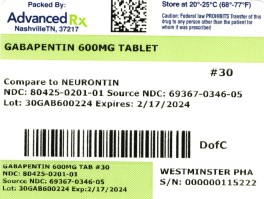
Principal Display Panel - Gabapentin 600mg label 1 label 2 label 3 label 4
Principal Display Panel - Gabapentin 800mg Gabapentin 800 1 Gabapentin 800-2 Gabapentin 800-3 Gabapentin 800-4
Medicare Part D spend CMS · PART D · 2026 (Q1)
About this NDC listing & data coverage
What data is (and isn’t) available for this NDC — tap to expand
| NDC identity (package / product / labeler codes) | ✓ Available |
| Labeler | ✓ Available |
| Product & package description | ✓ Available |
| Marketing category & status | ✓ Available |
| Active ingredient / dosage form / route | ✓ Available |
| FDA label (SPL via DailyMed) | ✓ Available |
| Package photos | ✓ Available |
| Inactive ingredients (structured) | — Not published for this NDC The labeler did not submit a structured excipient list, or no SPL is available. |
| NADAC pharmacy acquisition price (CMS) | — Not published for this NDC CMS publishes NADAC only for NDCs reported in its retail-pharmacy survey. |
| Orange Book / therapeutic-equivalence data | ✓ Available |
| HCPCS J-code billing crosswalk | — Not published for this NDC Most self-administered / retail products have no J-code — that is normal. |
| Medicaid utilization (CMS SDUD) | — Not published for this NDC CMS reports utilization only for NDCs with Medicaid claims above its privacy threshold. |