
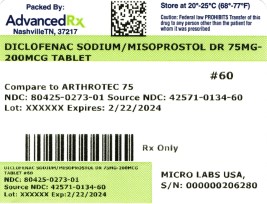
Dicloenac Sodium and Misoprostol DR 75 mg; 200 ug Tablet, 60-count — NDC 80425-0273-1 (Billing 80425-0273-01)
This is a package of 60 tablets of Dicloenac Sodium and Misoprostol DR 75 mg; 200 ug Tablet from Advanced Rx Pharmacy of Tennessee, LLC, marketed since Feb 2023 and currently FDA-listed. It is this product's only package size.
NDC database record
One package, one record: these facts belong to NDC 80425-0273-1 alone.
- Record
- FDA NDC Directory package listing · Human prescription drug
- Code segments
- 80425 labeler · 0273 product · 1 package
- Package marketed since
- Feb 16, 2023
- Sample package
- No — commercial package
- Listing certified through
- Dec 31, 2026
- Billing quantity
- 60 EA per package
- Barcode (UPC-A, from the NDC)
- 3 8042502731 9
- FDA record last changed
- Jul 24, 2026
Identity & classification
Regulatory identifiers FDA, NLM and CMS codes for this package
- RxCUI (RxNorm): 1359105
Where does this data come from?
- FDA openFDA NDC Directory · synced Oct 8, 2026
- FDA label on DailyMed · label index refreshed Oct 6, 2026
- RxNorm (NLM RxNav) · catalog refreshed Oct 1, 2026
- Medi-Span GPI (licensed)
- First Databank (licensed) · refreshed Oct 8, 2026
RxNorm drug class
This medicine belongs to the Nonsteroidal Anti-inflammatory Drug class.
Where does this data come from?
- RxClass (NLM) · catalog refreshed Oct 1, 2026
Clinical
- It treats the signs and symptoms of osteoarthritis or rheumatoid arthritis in adults. It is for people at high risk of stomach or duodenal ulcers from NSAIDs. The misoprostol part...
- Take it by mouth as prescribed, usually three or four times a day. Taking it with food can help cut down on diarrhea. Avoid magnesium-containing antacids, since they can make diarr...
- Stomach upset is the most common, including belly pain, diarrhea, indigestion, nausea and gas. Diarrhea and pain often start early and usually pass in a few days. Call your doctor...
- No. Misoprostol can cause miscarriage, premature birth, birth defects and uterine rupture. If you can become pregnant, your doctor will require a negative pregnancy test and reliab...
Patient education
Supplement & herbal interactions
Where does this data come from?
- MedlinePlus (NLM) · refreshed Oct 1, 2026
- FDA label on DailyMed · label index refreshed Oct 6, 2026
Ask a licensed pharmacist directly — free, answered by our team.
Pricing
A drug doesn't have one price. Each row is a different public payment system, and none is what you'd pay at the counter — that depends on your insurance. The ⓘ on each row explains what it measures.
| Price system | Per each | Per package |
|---|---|---|
| Retail pharmacies payNADAC · weekly | Not in the retail survey — common for institutional, discontinued, or low-volume packs. | |
| Medicaid paysCMS SDUD · 12 mo | No recent Medicaid claims on file for this NDC — rare and low-volume NDCs are suppressed in the public data. | |
| Medicare drug plans payPart D · Q2 2026 | $1.60 | $96.09 / 60 tablets |
Where does this data come from?
- CMS NADAC weekly file
- CMS ASP pricing files · refreshed Sep 20, 2026
- CMS Medicaid State Drug Utilization Data · refreshed Oct 8, 2026
- CMS Part D plan pricing files · refreshed Sep 24, 2026
- VA National Acquisition Center price file
Packaging — all sizes for this product
| Package NDC | Description | Marketing start | Marketing end | Status |
|---|---|---|---|---|
| 80425-0273-01 You're viewing this Main listing | 60 TABLET in 1 BOTTLE | 2023-02-16 | — | Active |
Therapeutic equivalents
| Product | Labeler | Pack | NADAC/unit | TE | Status | Price vs. this |
|---|---|---|---|---|---|---|
| Diclofenac Sodium and Misoprostol 75 mg/1; 200 ug 00591-0398-60 | Actavis | 60 tablets | $0.966 | AB | Availability likely | — |
| Diclofenac sodium and Misoprostol 75 mg/1; 200 ug 59762-0029-01 | Mylan | 60 tablets | $0.966 | AB | Availability likely | — |
| Diclofenac Sodium and Misoprostol 75 mg/1; 200 ug 68001-0232-06 | BluePoint | 60 tablets | $0.966 | AB | Availability likely | — |
| Diclofenac Sodium Misoprostol 75 mg/1; 200 ug 75834-0265-60 | Nivagen | 60 tablets | $0.966 | AB | Availability likely | — |
| Arthrotec 75 mg/1; 200 ug 00025-1421-60 | Pfizer | 60 tablets | $8.475 | AB | Availability likely | — |
| Diclofenac Sodium and Misoprostol 75 mg/1; 200 ug 42291-0233-60 | AvKARE | 60 tablets | — | AB | FDA listed | — |
| Diclofenac Sodium/Misoprostol DICLOFENAC-SODIUM-MISOPROSTOL 75 mg/1; 200 ug 42571-0134-29 | Micro | 600 tablets | — | AB | FDA listed | — |
| Diclofenac Sodium and Misoprostol 75 mg/1; 200 ug 65162-0438-03 | Amneal | 30 tablets | — | AB | FDA listed | — |
| Diclofenac Sodium Misoprostol 75 mg/1; 200 ug 71205-0866-00 | Proficient | 100 tablets | — | AB | FDA listed | — |
| Diclofenac Sodium and Misoprostol 75 mg/1; 200 ug 71335-1183-01 | Bryant | 20 tablets | — | AB | FDA listed | — |
| Diclofenac Sodium Misoprostol 75 mg/1; 200 ug 71335-2441-01 | Bryant | 20 tablets | — | AB | FDA listed | — |
| Diclofenac Sodium/Misoprostol DICLOFENAC-SODIUM-MISOPROSTOL 75 mg/1; 200 ug 71335-2603-01 | Bryant | 20 tablets | — | AB | FDA listed | — |
| Diclofenac Sodium Misoprostol 75 mg/1; 200 ug 72162-2519-06 | Bryant | 60 tablets | — | AB | FDA listed | — |
| Diclofenac sodium and Misoprostol DR 75 mg/1; 200 ug 80425-0272-01 | Advanced | 60 tablets | — | AB | FDA listed | — |
| DICLOENAC SODIUM and MISOPROSTOL DR 75 mg/1; 200 ugthis 80425-0273-01 | Advanced | 60 tablets | — | AB | FDA listed | — |
| Diclofenac Sodium/Misoprostol DICLOFENAC-SODIUM-MISOPROSTOL 75 mg/1; 200 ug 85766-0192-07 | Sportpharm | 7 tablets | — | AB | FDA listed | — |
Where does this data come from?
- FDA openFDA NDC Directory · synced Oct 8, 2026
- FDA Orange Book · refreshed Oct 3, 2026
- CMS NADAC weekly file
Availability & generic status
This product is an FDA-approved generic. Other versions of the same drug are listed under Therapeutic equivalents, least expensive first.
Where does this data come from?
- FDA Orange Book · refreshed Oct 3, 2026
What it looks like
Where does this data come from?
- FDA label on DailyMed · label index refreshed Oct 6, 2026
Inactive Ingredients / Excipients
Inactive ingredients, also called excipients, are components of the drug product other than the active ingredient. They may include fillers, dyes, coatings, preservatives, flavors, or other formulation ingredients.
🧪 Avoiding an ingredient? See Diclofenac and Misoprostol inactive ingredients by manufacturer: every current product's list side by side, so you can ask your pharmacy for the version that does not list it.
Where does this data come from?
IACT rows and label-wide narrative are kept separate; availability and product-level specificity depend on the submitted label.- FDA label on DailyMed · label index refreshed Oct 6, 2026
- FDA openFDA NDC Directory · synced Oct 8, 2026
Inactive ingredient FAQ
Are inactive ingredients the same for every manufacturer?
Why might an inactive ingredient be missing?
Can inactive ingredients matter?
Manufacturer & labeler
More NDCs from Advanced Rx Pharmacy of Tennessee, LLC labeler code 80425
- Ketorolac Tromethamine 10 mg Tablet, Film Coated NDC 80425-0267-1
- Lidocaine hydrochloride 10 mg/mL Injection, Solution NDC 80425-0268-1
- Amoxicillin 500 mg Capsule NDC 80425-0269-1
- Acyclovir 400 mg Tablet NDC 80425-0270-1
- Indomethacin ER 75 mg Capsule, Extended Release NDC 80425-0271-1
- Diclofenac sodium and Misoprostol DR 75 mg; 200 ug Tablet, Film Coated NDC 80425-0272-1
- Tramadol Hydrochloride 50 mg Tablet, Coated NDC 80425-0274-1
- Methocarbamol 500 mg Tablet NDC 80425-0275-1
- Tramadol Hydrochloride 50 mg Tablet, Coated NDC 80425-0276-1
- Pregabalin 100 mg Capsule NDC 80425-0277-1
- Pantoprazole Sodium DR 20 mg Tablet, Delayed Release NDC 80425-0278-1
- Amoxicillin and Clavulanate Potassium 875 mg; 125 mg Tablet, Film Coated NDC 80425-0279-1
Where does this data come from?
- FDA openFDA NDC Directory · synced Oct 8, 2026
- Drugs@FDA
Full prescribing information FDA SPL
🚨 Boxed Warning ▾
WARNING: RISK OF UTERINE RUPTURE, ABORTION, PREMATURE BIRTH, BIRTH DEFECTS; SERIOUS CARDIOVASCULAR EVENTS; AND SERIOUS GASTROINTESTINAL EVENTS Uterine Rupture, Abortion, Premature Birth, and Birth Defects Administration of misoprostol, a component of diclofenac sodium and misoprostol delayed-release tablets, to pregnant women can cause uterine rupture, abortion, premature birth, or birth defects. Uterine rupture has occurred when misoprostol was administered in pregnant women to induce labor or an abortion [see Warnings and Precautions ( 5.1) and Use in Specific Populations ( 8.1)] .
Diclofenac sodium and misoprostol delayed-release tablets are contraindicated in pregnancy [see Contraindications ( 4)] and not recommended in women of childbearing potential. Patients must be advised of the abortifacient property and warned not to give the drug to others [see Warnings and Precautions ( 5.1)] . If diclofenac sodium and misoprostol delayed-release tablets are prescribed, verify the pregnancy status of females of reproductive potential prior to initiation of treatment and advise them to use effective contraception during treatment [see Use in Specific Populations ( 8.3)].
Cardiovascular Thrombotic Events NSAIDs cause an increased risk of serious cardiovascular thrombotic events, including myocardial infarction and stroke, which can be fatal. This risk may occur early in treatment and may increase with duration of use [see Warnings and Precautions ( 5.2)] . Diclofenac sodium and misoprostol delayed-release tablets are contraindicated in the setting of coronary artery bypass graft (CABG) surgery [see Contraindications ( 4) and Warnings and Precautions ( 5.2)].
Gastrointestinal Bleeding, Ulceration, and Perforation NSAIDs cause an increased risk of serious gastrointestinal (GI) adverse events including bleeding, ulceration, and perforation of the stomach or intestines, which can be fatal. These events can occur at any time during use and without warning symptoms. Elderly patients and patients with a prior history of peptic ulcer disease and/or GI bleeding are at greater risk for serious GI events [see Warnings and Precautions ( 5.3)] .
🎯 Indications and Usage ▾
1. Indications and Usage Diclofenac sodium and misoprostol delayed-release tablets are indicated for treatment of the signs and symptoms of osteoarthritis or rheumatoid arthritis in adult patients at high risk of developing NSAID-induced gastric and duodenal ulcers and their complications. For a list of factors that may increase the risk of NSAID-induced gastric and duodenal ulcers and their complications [see Warnings and Precautions ( 5.3)] .
⏱️ Dosage and Administration ▾
2. Dosage and Administration
2.1Important Dosage Information Carefully consider the potential benefits and risks of diclofenac sodium and misoprostol delayed-release tablets and other treatment options before deciding to use diclofenac sodium and misoprostol delayed-release tablets. Use the lowest effective dosage for the shortest duration consistent with individual patient treatment goals [see Warnings and Precautions ( 5)] . After observing the response to initial therapy with diclofenac sodium and misoprostol delayed-release tablets, the dose and frequency should be adjusted to suit an individual patient’s needs.
Diclofenac sodium and misoprostol delayed-release tablets are not recommended for patients who would not receive the appropriate dosage of both active ingredients. Diclofenac sodium and misoprostol delayed-release tablets, a fixed combination product, is administered as diclofenac sodium and misoprostol delayed-release tablets 50 mg/200 mcg (50 mg diclofenac sodium and 200 mcg misoprostol) or diclofenac sodium and misoprostol delayed-release tablets 75 mg/200 mcg (75 mg diclofenac sodium and 200 mcg misoprostol).
2.2Recommended Dosage in Patients with Osteoarthritis The recommended dosage for the treatment of osteoarthritis for maximal GI mucosal protection is diclofenac sodium and misoprostol delayed-release tablets 50 mg/200 mcg three times a day. For patients who experience intolerance, diclofenac sodium and misoprostol delayed-release tablets 75 mg/200 mcg two times a day or diclofenac sodium and misoprostol delayed-release tablets 50 mg/200 mcg two times a day can be used, but these dosages are less effective in preventing ulcers.
A daily dosage of diclofenac sodium greater than 150 mg/day is not recommended. Daily doses of the components delivered with these regimens are as follows: Osteoarthritis Regimen Diclofenac Sodium (mg/day) Misoprostol (mcg/day) Diclofenac sodium and misoprostol delayed-release tablets 50 mg/200 mcg three times a day two times a day* 150 100 600 400 Diclofenac sodium and misoprostol delayed-release tablets 75 mg/200 mcg two times a day* 150 400 *For patients who experience intolerance; these dosages are less effective in preventing ulcers
2.3Recommended Dosage in Patients with Rheumatoid Arthritis The recommended dosage for the treatment of rheumatoid arthritis is diclofenac sodium and misoprostol delayed-release tablets 50 mg/200 mcg three or four times a day. For patients who experience intolerance, diclofenac sodium and misoprostol delayed-release tablets 75 mg/200 mcg two times a day or diclofenac sodium and misoprostol delayed-release tablets 50 mg/200 mcg two times a day can be used, but are less effective in preventing ulcers. A daily dosage of diclofenac sodium greater than 200 mg/day is not recommended.
Daily doses of the components delivered with these regimens are as follows: Rheumatoid Arthritis Regimen Diclofenac Sodium (mg/day) Misoprostol (mcg/day) Diclofenac sodium and misoprostol delayed-release tablets 50 mg/200 mcg four times a day three times a day two times a day* 200 150 100 800 600 400 Diclofenac sodium and misoprostol delayed-release tablets 75 mg/200 mcg two times a day* 150 400 * For patients who experience intolerance; these dosages are less effective in preventing ulcers
2.4Additional Dosage Recommendations Diclofenac sodium and misoprostol delayed-release tablets contains misoprostol, which provides protection against gastric and duodenal ulcers [see Clinical Studies ( 14)] . For gastric ulcer prevention, the 200 mcg four and three times a day regimens are therapeutically equivalent, but more protective than the two times a day regimen. For duodenal ulcer prevention, the four times a day regimen is more protective than the three or two times a day regimens.
However, the four times a day regimen is less well tolerated than the three times a day regimen because of usually self-limited diarrhea related to the misoprostol dose [see Adverse Reactions ( 6.1)… [Excerpted — this section continues on DailyMed.]
💊 Dosage Forms and Strengths ▾
3. Dosage Forms and Strengths Diclofenac sodium and misoprostol delayed-release tablets, USP are supplied as a uncoated tablets in dosage strengths of either 50 mg diclofenac sodium/200 mcg misoprostol or 75 mg diclofenac sodium/200 mcg misoprostol. 50 mg/200 mcg dosage strength is a white to off-white, round, biconvex uncoated tablet, debossed with “D 50 M” on one side and plain on other side.
75 mg/200 mcg dosage strength is a white to off-white, round, biconvex uncoated tablet, debossed with “D 75 M” on one side and plain on other side.
⛔ Contraindications ▾
4. Contraindications Diclofenac sodium and misoprostol delayed-release tablets are contraindicated in the following patients: Pregnancy. Use of misoprostol, a component of diclofenac sodium and misoprostol delayed-release tablets, during pregnancy can result in maternal and fetal harm, including uterine rupture, abortion, premature birth, or birth defects [see Warnings and Precautions ( 5.1) and Use in Specific Populations ( 8.1)] In the setting of coronary artery bypass graft (CABG) surgery [see Warnings and Precautions ( 5.2)] Active gastrointestinal bleeding [see Warnings and Precautions ( 5.3)] History of asthma, urticaria, or other allergic-type reactions after taking aspirin or other NSAIDs.
Severe, sometimes fatal, anaphylactic reactions to NSAIDs have been reported in such patients [see Warnings and Precautions ( 5.8, 5.9)] Known hypersensitivity (e.g., anaphylactic reactions and serious skin reactions) to diclofenac sodium and misoprostol, other prostaglandins, or any components of the drug product [see Warnings and Precautions ( 5.8, 5.10)]
⚠️ Warnings and Cautions ▾
5. Warnings and Precautions
5.1Uterine Rupture, Abortion, Premature Birth, or Birth Defects with Misoprostol and Embryo-Fetal Toxicity with NSAIDs Misoprostol Administration of misoprostol, a component of diclofenac sodium and misoprostol delayed-release tablets, to pregnant women can cause uterine rupture, abortion, premature birth, or birth defects. Uterine rupture has occurred when misoprostol was administered to pregnant women to induce labor or an abortion. Diclofenac sodium and misoprostol delayed-release tablets are contraindicated in pregnant women.
Diclofenac sodium and misoprostol delayed-release tablets are not recommended in women of childbearing potential. Patients must be advised of the abortifacient property and warned not to give the drug to others [see Use in Specific Populations ( 8.1)] . If diclofenac sodium and misoprostol delayed-release tablets are prescribed, verify the pregnancy status of females of reproductive potential prior to initiation of treatment and advise the use effective contraception during treatment with diclofenac sodium and misoprostol delayed-release tablets [see Use in Specific Populations ( 8.3)] .
Diclofenac Premature Closure of Fetal Ductus Arteriosus NSAIDs, including diclofenac, a component of diclofenac sodium and misoprostol delayed-release tablets, increase the risk of premature closure of the fetal ductus arteriosus at about 30 weeks of gestation and later. Oligohydramnios/Neonatal Renal Impairment Use of NSAIDs, including diclofenac, at about 20 weeks gestation or later in pregnancy may cause fetal renal dysfunction leading to oligohydramnios and, in some cases, neonatal renal impairment. These adverse outcomes are seen, on average, after days to weeks of treatment, although oligohydramnios has been infrequently reported as soon as 48 hours after NSAID initiation.
Oligohydramnios is often, but not always, reversible with treatment discontinuation. Complications of prolonged oligohydramnios may, for example, include limb contractures and delayed lung maturation. In some postmarketing cases of impaired neonatal renal function, invasive procedures such as exchange transfusion or dialysis were required [see Use in Specific Populations ( 8.1)] .
5.2Cardiovascular Thrombotic Events Clinical trials of several cyclooxygenase-2 (COX-2) selective and nonselective NSAIDs of up to three years duration have shown an increased risk of serious cardiovascular (CV) thrombotic events, including myocardial infarction (MI) and stroke, which can be fatal. Based on available data, it is unclear that the risk for CV thrombotic events is similar for all NSAIDs. The relative increase in serious CV thrombotic events over baseline conferred by NSAID use appears to be similar in those with and without known CV disease or risk factors for CV disease.
However, patients with known CV disease or risk factors had a higher absolute incidence of excess serious CV thrombotic events, due to their increased baseline rate. Some observational studies found that this increased risk of serious CV thrombotic events began as early as the first weeks of treatment. The increase in CV thrombotic risk has been observed most consistently at higher doses.
To minimize the potential risk for an adverse CV event in NSAID-treated patients, use the lowest effective dose for the shortest duration possible. Physicians and patients should remain alert for the development of such events, throughout the entire treatment course, even in the absence of previous CV symptoms. Patients should be informed about the symptoms of serious CV events and the steps to take if they occur.
There is no consistent evidence that concurrent use of aspirin mitigates the increased risk of serious CV thrombotic events associated with NSAID use. The concurrent use of aspirin and an NSAID, such as diclofenac, increases the risk of serious gastrointestinal (GI) events [see Warnings and Precautions ( 5.3)] . Status Post Coronary Artery Bypass Graft (CABG) Su… [Excerpted — this section continues on DailyMed.]
🤒 Adverse Reactions ▾
6. Adverse Reactions The following adverse reactions are discussed in greater detail in other sections of the labeling: Cardiovascular Thrombotic Events [see Warnings and Precautions ( 5.2)] GI Bleeding, Ulceration and Perforation [see Warnings and Precautions ( 5.3)] Hepatotoxicity [see Warnings and Precautions ( 5.4)] Hypertension [see Warnings and Precautions ( 5.5)] Heart Failure and Edema [see Warnings and Precautions ( 5.6)] Renal Toxicity and Hyperkalemia [see Warnings and Precautions ( 5.7)] Anaphylactic Reactions [see Warnings and Precautions ( 5.8)] Serious Skin Reactions [see Warnings and Precautions ( 5.10)] Hematologic Toxicity [see Warnings and Precautions ( 5.12)]
6.1Clinical Trials Experience Because clinical trials are conducted under widely varying conditions, adverse reaction rates observed in the clinical trials of a drug cannot be directly compared to rates in the clinical trials of another drug and may not reflect the rates observed in practice. Adverse reaction information for diclofenac sodium and misoprostol delayed-release tablets is derived from multinational controlled clinical trials in over 2,000 patients receiving diclofenac sodium and misoprostol delayed-release tablets 50 mg/200 mcg or diclofenac sodium and misoprostol delayed-release tablets 75 mg/200 mcg, as well as from blinded, controlled trials of diclofenac sodium delayed-release tablets and misoprostol tablets.
Gastrointestinal GI disorders had the highest reported incidence of adverse reactions for patients receiving diclofenac sodium and misoprostol delayed-release tablets. These events were generally minor, but led to discontinuation of therapy in 9% of patients on diclofenac sodium and misoprostol delayed-release tablets and 5% of patients on diclofenac sodium. For GI ulcer rates, [see Clinical Studies ( 14)].
GI disorder Diclofenac Sodium and Misoprostol Delayed-Release Tablets Diclofenac Sodium Abdominal pain 21% 15% Diarrhea 19% 11% Dyspepsia 14% 11% Nausea 11% 6% Flatulence 9% 4% Diclofenac sodium and misoprostol delayed-release tablets can cause more abdominal pain, diarrhea, and other GI symptoms than diclofenac alone. Diarrhea and abdominal pain developed early in the course of therapy, and were usually self-limited (resolved after 2 to 7 days). Rare instances of profound diarrhea leading to severe dehydration have been reported in patients receiving misoprostol.
Patients with an underlying condition such as inflammatory bowel disease, or those in whom dehydration, were it to occur, would be dangerous, should be monitored carefully if diclofenac sodium and misoprostol delayed-release tablets are prescribed. The incidence of diarrhea can be minimized by administering diclofenac sodium and misoprostol delayed-release tablets with food and by avoiding co-administration with magnesium-containing antacids. Gynecological Gynecological disorders previously reported with misoprostol use have also been reported for women receiving diclofenac sodium and misoprostol delayed-release tablets (see below).
Postmenopausal vaginal bleeding may be related to administration of diclofenac sodium and misoprostol delayed-release tablets. If it occurs, diagnostic workup should be undertaken to rule out gynecological pathology [see Boxed Warnings, Contraindications ( 4) and Warnings and Precautions ( 5)] . Other adverse experiences reported occasionally with diclofenac sodium and misoprostol delayed-release tablets, diclofenac or other NSAIDs, or misoprostol are: Body as a whole: asthenia, fatigue, malaise.
Central and peripheral nervous system: dizziness, drowsiness, headache, insomnia, paresthesia, vertigo. Digestive: anorexia, appetite changes, constipation, dry mouth, dysphagia, esophageal ulceration, esophagitis, eructation, gastritis, gastroesophageal reflux, GI neoplasm benign, peptic ulcer, tenesmus, vomiting. Female reproductive disorders: breast pain, dysmenorrhea, menstrual disorder, menorrhagia, vaginal hemorrhage.
Hemic and lymphatic sy… [Excerpted — this section continues on DailyMed.]
🔄 Drug Interactions ▾
7. Drug Interactions See Table 1 for clinically significant drug interactions with diclofenac and misoprostol. Table 1: Clinically Significant Drug Interactions with Diclofenac and Misoprostol Drugs That Interfere with Hemostasis Clinical Impact: Diclofenac and anticoagulants such as warfarin have a synergistic effect on bleeding.
The concomitant use of diclofenac and anticoagulants have an increased risk of serious bleeding compared to the use of either drug alone. Serotonin release by platelets plays an important role in hemostasis. Case-control and cohort epidemiological studies showed that concomitant use of drugs that interfere with serotonin reuptake and an NSAID may potentiate the risk of bleeding more than an NSAID alone.
Intervention: Monitor patients with concomitant use of diclofenac sodium and misoprostol delayed-release tablets with anticoagulants (e.g., warfarin), antiplatelet drugs (e.g., aspirin), SSRIs, and SNRIs for signs of bleeding [see Warnings and Precautions ( 5.12)] . Aspirin Clinical Impact: Controlled clinical studies showed that the concomitant use of NSAIDs and analgesic doses of aspirin does not produce any greater therapeutic effect than the use of NSAIDs alone. In a clinical study, the concomitant use of an NSAID and aspirin was associated with a significantly increased incidence of GI adverse reactions as compared to use of the NSAID alone [see Warnings and Precautions ( 5.3)] .
Intervention: Concomitant use of diclofenac sodium and misoprostol delayed-release tablets and analgesic doses of aspirin is not generally recommended because of the increased risk of bleeding [see Warnings and Precautions ( 5.12)] . Diclofenac sodium and misoprostol delayed-release tablets are not a substitute for low dose aspirin for cardiovascular protection. ACE Inhibitors, Angiotensin Receptor Blockers, and Beta-Blockers Clinical Impact: NSAIDs may diminish the antihypertensive effect of ACE inhibitors, ARBs, or beta-blockers (including propranolol).
In patients who are elderly, volume-depleted (including those on diuretic therapy), or have renal impairment, co-administration of an NSAID with ACE inhibitors or ARBs may result in deterioration of renal function, including possible acute renal failure. These effects are usually reversible. Intervention: The concomitant administration of these drugs should be done with caution.
Patients should be adequately hydrated and the clinical need to monitor the renal function should be assessed at the beginning of the concomitant treatment and periodically thereafter. During concomitant use of diclofenac sodium and misoprostol delayed-release tablets and ACE inhibitors, ARBs, or beta-blockers, monitor blood pressure to ensure that the desired blood pressure is obtained. During concomitant use of diclofenac sodium and misoprostol delayed-release tablets and ACE inhibitors or ARBs in patients who are elderly, volume-depleted, or have impaired renal function, monitor for signs of worsening renal function [see Warnings and Precautions ( 5.7)] .
Diuretics Clinical Impact: Clinical studies, as well as post-marketing observations, showed that NSAIDs reduced the natriuretic effect of loop diuretics (e.g., furosemide) and thiazide diuretics in some patients. This effect has been attributed to the NSAID inhibition of renal prostaglandin synthesis. Intervention: During concomitant use of diclofenac sodium and misoprostol delayed-release tablets with diuretics, observe patients for signs of worsening renal function, in addition to assuring diuretic efficacy including antihypertensive effects [see Warnings and Precautions ( 5.7)] .
Digoxin Clinical Impact: The concomitant use of diclofenac with digoxin has been reported to increase the serum concentration and prolong the half-life of digoxin. Intervention: During concomitant use of diclofenac sodium and misoprostol delayed-release tablets and digoxin, monitor serum digoxin levels. Lithium Clinical Impact: NSAIDs have produced elevations in… [Excerpted — this section continues on DailyMed.]
👥 Use in Specific Populations ▾
8. Use in Specific Populations
8.1Pregnancy Risk Summary Diclofenac sodium and misoprostol delayed-release tablets are contraindicated in pregnant women [see Contraindications ( 4)]. If a woman becomes pregnant while taking diclofenac sodium and misoprostol delayed-release tablets, discontinue the drug and advise the woman of the potential risks to her and to a fetus. There are no adequate and well-controlled studies of diclofenac sodium and misoprostol delayed-release tablets in pregnant women; however, there is information available about the active drug components of diclofenac sodium and misoprostol delayed-release tablets, diclofenac sodium and misoprostol.
Administration of misoprostol to pregnant women can cause uterine rupture, abortion, premature birth, or birth defects [see Warnings and Precautions ( 5.1)] . Congenital anomalies sometimes associated with fetal death have been reported subsequent to the unsuccessful use of misoprostol as an abortifacient, but the drug’s teratogenic mechanism has not been demonstrated. Use of NSAIDS, including diclofenac a component of diclofenac sodium and misoprostol delayed-release tablets, can cause premature closure of the fetal ductus arteriosus and fetal renal dysfunction leading to oligohydramnios and, in some cases, neonatal renal impairment ( see Data).
There are clinical considerations when misoprostol and diclofenac are used in pregnant women (see Clinical Considerations). In reproduction studies with pregnant rabbits, there were no skeletal or visceral malformations when the combination of diclofenac sodium and misoprostol was administered during organogenesis at doses less than the maximum recommended human doses (MRHD); however, embryotoxicity was observed at this exposure (see Data). Based on animal data, prostaglandins have been shown to have an important role in endometrial vascular permeability, blastocyst implantation, and decidualization.
In animal studies, administration of prostaglandin synthesis inhibitors such as diclofenac, resulted in increased pre- and post-implantation loss. The estimated background risk of major birth defects and miscarriage for the indicated population is unknown. All pregnancies have a background risk of birth defect, loss, or other adverse outcomes.
The estimated background risk of major birth defects and miscarriage in clinically recognized pregnancies is 2% to 4% and 15% to 20%, respectively. Clinical Considerations Maternal Adverse Reactions Misoprostol may produce uterine contractions, uterine bleeding, and expulsion of the products of conception. Misoprostol has been used to ripen the cervix, to induce labor, and to treat postpartum hemorrhage, outside of its approved indication.
A major adverse effect of these uses is hyperstimulation of the uterus. Uterine rupture, amniotic fluid embolism, severe bleeding, shock, and maternal death have been reported when misoprostol was administered to pregnant women to induce labor to induce abortion beyond the eighth week of pregnancy. Higher doses of misoprostol, including the 100 mcg tablet, may increase the risk of complications from uterine hyperstimulation.
Diclofenac sodium and misoprostol delayed-release tablets, which contains 200 mcg of misoprostol, is likely to have a greater risk of uterine hyperstimulation than the 100 mcg tablet of misoprostol. Abortions caused by misoprostol may be incomplete. Cases of amniotic fluid embolism, which resulted in maternal and fetal death, have been reported with use of misoprostol during pregnancy.
Severe vaginal bleeding, retained placenta, shock, and pelvic pain have also been reported. These women were administered misoprostol vaginally and/or orally over a range of doses. Diclofenac sodium and misoprostol delayed-release tablets are contraindicated in pregnant women [see Contraindications ( 4)].
If a woman is or becomes pregnant while taking this drug, the drug should be discontinued and the patient apprised of the potential hazard to the fetu… [Excerpted — this section continues on DailyMed.]
🆘 Overdosage ▾
10. Overdosage Manage patients with symptomatic and supportive care following an acute NSAID overdosage. There are no specific antidotes.
It is advisable to contact a poison control center (1-800-222-1222) to determine the latest recommendations because strategies for the management of overdose are continually evolving. The toxic dose of diclofenac sodium and misoprostol delayed-release tablets has not been determined. However, signs of overdosage from the components of the product have been described.
Diclofenac Symptoms following acute NSAID overdosages have been typically limited to lethargy, drowsiness, nausea, vomiting, and epigastric pain, which have been generally reversible with supportive care. Gastrointestinal bleeding has occurred. Hypertension, acute renal failure, respiratory depression, and coma have occurred, but were rare [see Warnings and Precautions ( 5.2, 5.3, 5.5, 5.7)] .
Clinical signs that may suggest diclofenac sodium overdose include GI complaints, confusion, drowsiness, or general hypotonia. If gastric decontamination may be potentially beneficial to the patient, e.g., short time since ingestion or a large overdosage (5 to 10 times the recommended dosage), consider emesis and/or activated charcoal (60 grams to 100 grams in adults, 1 gram to 2 grams per kg of body weight in pediatric patients) and/or an osmotic cathartic in symptomatic patients. Forced diuresis, alkalinization of urine, hemodialysis, or hemoperfusion may not be useful due to high protein binding.
Misoprostol The toxic dose of misoprostol in humans has not been determined. Cumulative total daily doses of 1600 mcg have been tolerated, with only symptoms of GI discomfort being reported. Clinical signs that may indicate an overdose are sedation, tremor, convulsions, dyspnea, abdominal pain, diarrhea, fever, palpitations, hypotension, or bradycardia.
Diclofenac Sodium and Misoprostol Delayed-Release Tablets Symptoms of acute overdosage with diclofenac sodium and misoprostol delayed-release tablets should be treated with supportive and symptomatic therapy. There are no specific antidotes. In case of acute overdosage, emesisis and/or gastric lavage may be considered dependent upon amount ingested and time since ingestion.
The use of oral activated charcoal may help to reduce the absorption of diclofenac sodium and misoprostol. Induced diuresis may be beneficial because diclofenac sodium and misoprostol metabolites are excreted in the urine. The effect of dialysis or hemoperfusion on the elimination of diclofenac sodium (99% protein bound) and misoprostol acid remains unproven.
🧬 Clinical Pharmacology ▾
12. Clinical Pharmacology
12.1Mechanism of Action Diclofenac sodium and misoprostol delayed-release tablets are a combination product containing diclofenac sodium, an NSAID with analgesic, anti-inflammatory and antipyretic properties, and misoprostol, a GI mucosal protective prostaglandin-1 (PGE1) analog. Diclofenac The mechanism of action of diclofenac, like that of other NSAIDs, is not completely understood but involves inhibition of cyclooxygenase (COX-1 and COX-2). Diclofenac is a potent inhibitor of prostaglandin (PG) synthesis in vitro.
Diclofenac concentrations reached during therapy have produced in vivo effects. Prostaglandins sensitize afferent nerves and potentiate the action of bradykinin in inducing pain in animal models. Prostaglandins are mediators of inflammation.
Because diclofenac is an inhibitor of prostaglandin synthesis, its mode of action may be due to a decrease of prostaglandins in peripheral tissues. Misoprostol Misoprostol is a synthetic PGE1 analog with gastric antisecretory and mucosal protective properties. NSAIDs inhibit prostaglandin synthesis.
A deficiency of prostaglandins within the gastric and duodenal mucosa may lead to diminishing bicarbonate and mucus secretion and may contribute to the mucosal damage caused by NSAIDs. Misoprostol can increase bicarbonate and mucus production, but it has been shown at doses 200 mcg and above that are also antisecretory. It is therefore not possible to differentiate whether the ability of misoprostol to reduce the risk of gastric and duodenal ulcers is the result of its antisecretory effect, its mucosal protective effect, or both.
In vitro studies on canine parietal cells using titrated misoprostol acid as the ligand have led to the identification and characterization of specific prostaglandin receptors. Receptor binding is saturable, reversible, and stereo-specific. The sites have a high affinity for misoprostol, for its acid metabolite, and for other E type prostaglandins, but not for F or I prostaglandins and other unrelated compounds, such as histamine or cimetidine.
Receptor-site affinity for misoprostol correlates well with an indirect index of antisecretory activity. It is likely that these specific receptors allow misoprostol taken with food to be effective topically, despite the lower serum concentrations attained. Misoprostol, over the range of 50 mcg to 200 mcg, inhibits basal and nocturnal gastric acid secretion, and acid secretion in response to a variety of stimuli, including meals, histamine, pentagastrin, and coffee.
Activity is apparent 30 minutes after oral administration and persists for at least 3 hours. In general, the effects of 50 mcg were modest and shorter-lived, and only the 200 mcg dose had substantial effects on nocturnal secretion or on histamine- and meal-stimulated secretion. Misoprostol also produces a moderate decrease in pepsin concentration during basal conditions, but not during histamine stimulation.
It has no significant effect on fasting or postprandial gastrin nor intrinsic factor output.
12.3Pharmacokinetics General Pharmacokinetic Characteristics The pharmacokinetic profiles of diclofenac and misoprostol administered as the fixed combination (diclofenac sodium and misoprostol delayed-release tablets 50 mg/200 mcg or 75 mg/200 mcg) are similar to the profiles when the two drugs are administered as separate tablets (see Table 2). No pharmacokinetic interaction between the two drugs has been observed following multiple dosing. The diclofenac total exposure [area under the curve (AUC)] is dose-proportional within the range of 25 mg to 150 mg.
Approximately dose-proportional increase in misoprostol exposure was also observed within the range of 200 mcg to 400 mcg. Neither diclofenac nor misoprostol accumulated in plasma following repeated doses of diclofenac sodium and misoprostol delayed-release tablets given every 12 hours under fasted conditions. Table 2: Pharmacokinetic Parameters of Diclofenac and Misoprostol Acid… [Excerpted — this section continues on DailyMed.]
📦 How Supplied / Storage and Handling ▾
16. How Supplied/Storage and Handling Diclofenac sodium and misoprostol delayed-release tablets, USP are supplied as a uncoated tablets in dosage strengths of 75 mg diclofenac sodium/200 mcg misoprostol. 75 mg/200 mcg dosage strength is a white to off-white, round, biconvex uncoated tablet, debossed with “D 75 M” on one side and plain on other side.
The dosage strengths are supplied in: Bottles of 60 Tablets NDC: 80425-0273-01 Store at 20° to 25°C (68° to 77°F) [see USP Controlled Room Temperature].
📋 Description ▾
11. Description Diclofenac sodium and misoprostol delayed-release tablets, USP is a combination product containing diclofenac sodium, an NSAID with analgesic properties, and misoprostol, a gastrointestinal (GI) mucosal protective prostaglandin-1 (PGE1) analog. Diclofenac sodium and misoprostol delayed-release tablets are white to off-white, round, biconvex, and approximately 11 mm in diameter.
Each tablet consists of an enteric-coated core containing 50 mg (diclofenac sodium and misoprostol delayed-release tablets 50 mg/200 mcg) or 75 mg (diclofenac sodium and misoprostol delayed-release tablets 75 mg/200 mcg) of diclofenac sodium (equivalent to 46.39 mg or 69.58 mg of diclofenac, respectively) surrounded by an outer mantle containing 200 mcg misoprostol. Diclofenac sodium is a phenylacetic acid derivative that is a white to off-white, virtually odorless, crystalline powder. Diclofenac sodium is freely soluble in methanol, soluble in ethanol, and practically insoluble in chloroform and in dilute acid.
Diclofenac sodium is sparingly soluble in water. Its chemical formula and name are: C 14H 10Cl 2NO 2Na [M.W. = 318.14] 2-[(2,6-dichlorophenyl) amino] benzeneacetic acid, monosodium salt. Misoprostol is a water-soluble, viscous liquid that contains approximately equal amounts of two diastereomers.
Its chemical formula and name are: C 22H 38O 5 [M.W. = 382.54] (±) methyl 11α,16-dihydroxy-16-methyl-9-oxoprost-13E-en-1-oate. Inactive ingredients in diclofenac sodium and misoprostol delayed-release tablets include: colloidal silicon dioxide; corn starch; crospovidone; hydrogenated castor oil; hypromellose; lactose monohydrate; magnesium stearate; methacrylic acid copolymer; microcrystalline cellulose; povidone; sodium hydroxide; talc; triethyl citrate.
💬 Medication Guide ▾
Med Guide Medication Guide for Diclofenac Sodium (dye-KLOE-fen-ak SOE-dee-um) and Misoprostol (MYE-soe-PROST-ol) Delayed-Release Tablets for oral use What is the most important information I should know about diclofenac sodium and misoprostol delayed-release tablets? Diclofenac sodium and misoprostol delayed-release tablets contains diclofenac (a nonsteroidal anti-inflammatory drug (NSAID)) and misoprostol, and can cause uterus to tear (uterine rupture), abortion, premature birth, or birth defects. The risk of uterine rupture increases as your pregnancy advances, if you have given birth to 5 or more children, and if you have had surgery on the uterus, such as a cesarean delivery.
Do not take diclofenac sodium and misoprostol delayed-release tablets if you are pregnant. Tell your healthcare provider if you become pregnant or think you may be pregnant during treatment with diclofenac sodium and misoprostol delayed-release tablets. If you are able to become pregnant, your healthcare provider should do a pregnancy test before you start treatment with diclofenac sodium and misoprostol delayed-release tablets.
Females who are able to become pregnant should use an effective form of birth control (contraception) during treatment with diclofenac sodium and misoprostol delayed-release tablets. What is the most important information I should know about medicines containing Nonsteroidal Anti-inflammatory Drugs (NSAIDs)? NSAIDs can cause serious side effects, including: Increased risk of a heart attack or stroke that can lead to death.
This risk may happen early in treatment and may increase: with increasing doses of NSAIDs with longer use of NSAIDs Do not take NSAID containing medicines right before or after a heart surgery called a “coronary artery bypass graft (CABG)." Avoid taking NSAID containing medicines after a recent heart attack, unless your healthcare provider tells you to. You may have an increased risk of another heart attack if you take NSAIDs after a recent heart attack. Increased risk of bleeding, ulcers, and tears (perforation) of the esophagus (tube leading from the mouth to the stomach), stomach and intestines: anytime during use without warning symptoms that may cause death The risk of getting an ulcer or bleeding increases with: past history of stomach ulcers, or stomach or intestinal bleeding with use of NSAIDs taking medicines called “corticosteroids”, “antiplatelet drugs”, “anticoagulants”, “SSRIs”, or “SNRIs” increasing doses of NSAIDs older age longer use of NSAIDs poor health smoking advanced liver disease drinking alcohol bleeding problems NSAID containing medicines should only be used: exactly as prescribed at the lowest dose possible for your treatment for the shortest time needed What are diclofenac sodium and misoprostol delayed-release tablets?
Diclofenac sodium and misoprostol delayed-release tablets contains 2 medicines: 1. Diclofenac is a non-steroidal anti-inflammatory drug (NSAID). See “What is the most important information I should know about medicines called Nonsteroidal Anti-inflammatory Drugs (NSAIDs)?
2. Misoprostol is a medicine used to protect the lining of the esophagus, stomach and intestines while taking diclofenac. Diclofenac sodium and misoprostol delayed-release tablets are a prescription medicine used to treat: symptoms of osteoarthritis or rheumatoid arthritis in adults at high risk of developing stomach (gastric) and intestinal (duodenal) ulcers while taking NSAIDs.
It is not known if diclofenac sodium and misoprostol delayed-release tablets are safe and effective for use in children. What are NSAIDs? NSAIDs are used to treat pain and redness, swelling, and heat (inflammation) from medical conditions such as different types of arthritis.
Who should not take diclofenac sodium and misoprostol delayed-release tablets? Do not take diclofenac sodium and misoprostol delayed-release tablets: if you are pregnant. right before or after heart bypass surgery. if you currently have bleeding in you… [Excerpted — this section continues on DailyMed.]
🔬 Clinical Studies ▾
14. Clinical Studies Osteoarthritis Diclofenac sodium, as a single ingredient or in combination with misoprostol, has been shown to be effective in the management of the signs and symptoms of osteoarthritis. Rheumatoid Arthritis Diclofenac sodium, as a single ingredient or in combination with misoprostol, has been shown to be effective in the management of the signs and symptoms of rheumatoid arthritis.
Upper Gastrointestinal Safety Diclofenac, and other NSAIDs, have caused serious gastrointestinal toxicity, such as bleeding, ulceration, and perforation of the stomach, small intestine or large intestine. Misoprostol has been shown to reduce the incidence of endoscopically diagnosed NSAID-induced gastric and duodenal ulcers. In a 12-week, randomized, double-blind, dose-response study, misoprostol 200 mcg administered four, three or two times a day, was significantly more effective than placebo in reducing the incidence of gastric ulcer in osteoarthritis and rheumatoid arthritis patients using a variety of NSAIDs.
The three times a day regimen was therapeutically equivalent to misoprostol 200 mcg four times a day with respect to the prevention of gastric ulcers. Misoprostol 200 mcg given two times a day was less effective than 200 mcg given three or four times a day. The incidence of NSAID-induced duodenal ulcer was also significantly reduced with all three regimens of misoprostol compared to placebo (see Table 3).
Table 3 Misoprostol 200 mcg Dosage Regimen Placebo two times a day three times a day four times a day Gastric ulcer 11% 6%* 3%* 3%* Duodenal ulcer 6% 2%* 3%* 1%* N=1623; 12 weeks *Misoprostol significantly different from placebo (p<0.05) Results of a study in 572 patients with osteoarthritis demonstrate that patients receiving diclofenac sodium and misoprostol delayed-release tablets have a lower incidence of endoscopically defined gastric ulcers compared to patients receiving diclofenac sodium (see Table 4). Table 4 Osteoarthritis patients with history of ulcer or erosive disease (N=572), 6 weeks Incidence of ulcers Gastric Duodenal Diclofenac sodium and misoprostol delayed-release tablets 50 mg/200 mcg three times a day 3%* 6% Diclofenac sodium and misoprostol delayed-release tablets 75 mg/200 mcg two times a day 4%* 3% Diclofenac sodium 75 mg two times a day 11% 7% Placebo 3% 1% *Statistically significantly different from diclofenac (p<0.05)
🧪 Nonclinical Toxicology ▾
13. Non-Clinical Toxicology
13.1Carcinogenesis, Mutagenesis, Impairment of Fertility Carcinogenesis Long-term animal studies to evaluate the potential for carcinogenesis and animal studies to evaluate the effects on fertility have been performed with each component of diclofenac sodium and misoprostol delayed-release tablets given alone. In a 24 month rat carcinogenicity study, misoprostol administered orally at doses up to 2.4 mg/kg/day (14.4 mg/m 2/day, 24 times the MRHD of 0.6 mg/m 2/day) was not tumorigenic. In a 21-month mouse carcinogenicity study, misoprostol administered orally at doses up to 16 mg/kg/day (48 mg/m 2/day), 80 times the MRHD based on body surface area, was not tumorigenic.
In a 24-month rat carcinogenicity study, diclofenac sodium administered orally at up to 2 mg/kg/day (12 mg/m 2/day) was not tumorigenic. In a 24-month mouse carcinogenicity study, oral diclofenac sodium at doses up to 0.3 mg/kg/day (0.9 mg/m 2/day, 0.006 times the MRHD based on body surface area) in males and 1 mg/kg/day (3 mg/m 2/day, 0.02 times the MRHD based on body surface area) in females was not tumorigenic. Mutagenesis Diclofenac sodium and misoprostol combination in 250:1 ratio was not genotoxic in the Ames test, the Chinese hamster ovary cell (CHO/HGPRT) forward mutation test, the rat lymphocyte chromosome aberration test, or the mouse bone marrow micronucleus test.
Impairment of Fertility The effects of diclofenac sodium and misoprostol on male or female fertility have not been studied in animals; however, there are data with diclofenac sodium and misoprostol given alone. Misoprostol, when administered to male and female breeding rats in an oral dose range of 0.1 to 10 mg/kg/day (0.6 to 60 mg/m 2/day, 1 to 100 times the MRHD based on body surface area) produced dose-related pre-and post-implantation losses and a significant decrease in the number of live pups born at the highest dose (60 mg/m 2/day, 100 times the MRHD based on body surface area).
Diclofenac sodium at oral doses up to 4 mg/kg/day (24 mg/m 2/day, 0.16 times the MRHD based on body surface area) was found to have no effect on fertility and reproductive performance of male and female rats.
13.2Animal Toxicology A reversible increase in the number of normal surface gastric epithelial cells occurred in the dog, rat, and mouse during long-term toxicology studies with misoprostol. No such increase has been observed in humans administered misoprostol for up to 1 year. An apparent response of the female mouse to misoprostol in long-term studies at 100 to 1000 times the human dose was hyperostosis, mainly of the medulla of sternebrae.
Hyperostosis did not occur in long-term studies in the dog and rat and has not been seen in humans treated with misoprostol.
📄 Package Label / Principal Display Panel ▾
Diclofenac Sodium-Misoprostol DR 75/200 #60
About this NDC listing & data coverage
What data is (and isn’t) available for this NDC — tap to expand
| NDC identity (package / product / labeler codes) | ✓ Available |
| Labeler | ✓ Available |
| Product & package description | ✓ Available |
| Marketing category & status | ✓ Available |
| Active ingredient / dosage form / route | ✓ Available |
| FDA label (SPL via DailyMed) | ✓ Available |
| Package photos | ✓ Available |
| Inactive ingredients (structured) | — Not published for this NDC The labeler did not submit a structured excipient list, or no SPL is available. |
| NADAC pharmacy acquisition price (CMS) | — Not published for this NDC CMS publishes NADAC only for NDCs reported in its retail-pharmacy survey. |
| Orange Book / therapeutic-equivalence data | ✓ Available |
| HCPCS J-code billing crosswalk | — Not published for this NDC Most self-administered / retail products have no J-code — that is normal. |
| Medicaid utilization (CMS SDUD) | — Not published for this NDC CMS reports utilization only for NDCs with Medicaid claims above its privacy threshold. |