
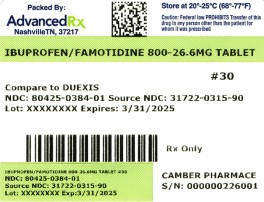
Ibuprofen and Famotidine 800 mg; 26.6 mg Tablet, 90-count — NDC 80425-0384-3 (Billing 80425-0384-03)
This is a package of 90 tablets of Ibuprofen and Famotidine 800 mg; 26.6 mg Tablet from Advanced Rx Pharmacy of Tennessee, LLC, marketed since Apr 2024 and currently FDA-listed.
NDC database record
One package, one record: these facts belong to NDC 80425-0384-3 alone.
- Record
- FDA NDC Directory package listing · Human prescription drug
- Code segments
- 80425 labeler · 0384 product · 3 package
- Package marketed since
- Apr 23, 2024
- Sample package
- No — commercial package
- Listing certified through
- Dec 31, 2026
- Billing quantity
- 90 EA per package
- Barcode (UPC-A, from the NDC)
- 3 8042503843 8
- FDA record last changed
- Aug 27, 2026
Other active recalls for Ibuprofen And Famotidine (different manufacturers) — 1 · tap to view
Identity & classification
Regulatory identifiers FDA, NLM and CMS codes for this package
- RxCUI (RxNorm): 1100066
Where does this data come from?
- FDA openFDA NDC Directory · synced Oct 8, 2026
- FDA label on DailyMed · label index refreshed Oct 8, 2026
- RxNorm (NLM RxNav) · catalog refreshed Oct 1, 2026
- Medi-Span GPI (licensed)
- First Databank (licensed) · refreshed Oct 8, 2026
RxNorm drug class
This medicine belongs to the Histamine-2 Receptor Antagonist class.
Where does this data come from?
- RxClass (NLM) · catalog refreshed Oct 1, 2026
Clinical
Prescription famotidine is used to treat ulcers (sores on the lining of the stomach or small intestine); gastroesophageal reflux disease (GERD, a condition in which backward flow of acid from the stomach causes heartburn and injury of the esophagus [tube that connects the mouth and stomach]); and conditions where the stomach produces too much acid, such as Zollinger-Ellison syndrome (tumors in the pancreas or small intestine that cause increased production of stomach acid). Over-the-counter famotidine is used to prevent and treat heartburn due to acid indigestion and sour stomach caused by eat...
Read the full MedlinePlus article ↗Patient education
Supplement & herbal interactions
Where does this data come from?
- MedlinePlus (NLM) · refreshed Oct 8, 2026
- FDA label on DailyMed · label index refreshed Oct 8, 2026
Ask a licensed pharmacist directly — free, answered by our team.
Pricing
A drug doesn't have one price. Each row is a different public payment system, and none is what you'd pay at the counter — that depends on your insurance. The ⓘ on each row explains what it measures.
| Price system | Per each | Per package |
|---|---|---|
| Retail pharmacies payNADAC · weekly | Not in the retail survey — common for institutional, discontinued, or low-volume packs. | |
| Medicaid paysCMS SDUD · 12 mo | No recent Medicaid claims on file for this NDC — rare and low-volume NDCs are suppressed in the public data. | |
| Medicare drug plans payPart D · Q2 2026 | $0.9336 | $84.02 / 90 tablets |
Where does this data come from?
- CMS NADAC weekly file
- CMS ASP pricing files · refreshed Sep 20, 2026
- CMS Medicaid State Drug Utilization Data · refreshed Oct 8, 2026
- CMS Part D plan pricing files · refreshed Sep 24, 2026
- VA National Acquisition Center price file
Packaging — all sizes for this product
| Package NDC | Description | Marketing start | Marketing end | Status |
|---|---|---|---|---|
| 80425-0384-01 80425-0384-1 Main listing | 30 TABLET in 1 BOTTLE | 2024-04-23 | — | Active |
| 80425-0384-02 80425-0384-2 | 60 TABLET in 1 BOTTLE | 2024-04-23 | — | Active |
| 80425-0384-03 You're viewing this | 90 TABLET in 1 BOTTLE | 2024-04-23 | — | Active |
You're viewing the largest of 3 pack sizes for this product.
Pack size FAQ
What quantity is in this package?
How does this package differ from NDC 80425-0384-01?
What NDC number is used to bill for this package of Ibuprofen and Famotidine 800 mg; 26.6 mg Tablet?
Therapeutic equivalents
| Product | Labeler | Pack | NADAC/unit | TE | Status | Price vs. this |
|---|---|---|---|---|---|---|
| Ibuprofen And Famotidine 800 mg/1; 26.6 mg 31722-0315-90 | Camber | 90 tablets | $0.714 | AB | Availability likely | — |
| Ibuprofen and famotidine 800 mg/1; 26.6 mg 49884-0366-09 | Par | 90 tablets | $0.714 | AB | Availability likely | — |
| Ibuprofen and Famotidine 800 mg/1; 26.6 mg 72578-0214-16 | Viona | 90 tablets | $0.714 | AB | Availability likely | — |
| Ibuprofen and famotidine 800 mg/1; 26.6 mg 59651-0908-90 | Aurobindo | 90 tablets | — | — | FDA listed | — |
| Ibuprofen and famotidine 800 mg/1; 26.6 mg 63629-8891-01 | Bryant | 30 tablets | — | AB | FDA listed | — |
| Ibuprofen and famotidine 800 mg/1; 26.6 mg 67877-0626-01 | Ascend | 100 tablets | — | AB | FDA listed | — |
| Ibuprofen and famotidine 800 mg/1; 26.6 mg 68788-8897-09 | Preferred | 90 tablets | — | AB | FDA listed | — |
| Ibuprofen and famotidine 800 mg/1; 26.6 mg 69306-0266-30 | Doc | 30 tablets | — | AB | FDA listed | — |
| Ibuprofen and famotidine 800 mg/1; 26.6 mg 70518-4580-00 | REMEDYREPACK | 60 tablets | — | AB | FDA listed | — |
| Ibuprofen and Famotidine 800 mg/1; 26.6 mg 70771-1924-09 | Zydus | 90 tablets | — | AB | FDA listed | — |
| Ibuprofen Famotidine 800 mg/1; 26.6 mg 72189-0641-90 | Direct_Rx | 90 tablets | — | AB | FDA listed | — |
| Ibuprofen Famotidine 800 mg/1; 26.6 mg 72189-0667-90 | Direct_Rx | 90 tablets | — | AB | FDA listed | — |
| Ibuprofen and famotidine 800 mg/1; 26.6 mg 76420-0891-01 | Asclemed | 100 tablets | — | AB | FDA listed | — |
| Ibuprofen And Famotidine 800 mg/1; 26.6 mgthis 80425-0384-03 | Advanced | 90 tablets | — | AB | FDA listed | — |
| Ibuprofen and famotidine 800 mg/1; 26.6 mg 80425-0422-01 | Advanced | 30 tablets | — | AB | FDA listed | — |
| Ibuprofen and famotidine 800 mg/1; 26.6 mg 80425-0483-01 | Advanced | 30 tablets | — | AB | FDA listed | — |
| Ibuprofen and Famotidine 800 mg/1; 26.6 mg 80425-0587-01 | Advanced | 30 tablets | — | AB | FDA listed | — |
| Ibuprofen and famotidine 800 mg/1; 26.6 mg 85509-1010-03 | PHOENIX | 30 tablets | — | AB | FDA listed | — |
| Ibuprofen And Famotidine 800 mg/1; 26.6 mg 85509-1315-03 | PHOENIX | 30 tablets | — | AB | FDA listed | — |
| Ibuprofen and famotidine 800 mg/1; 26.6 mg 85509-1626-03 | PHOENIX | 30 tablets | — | AB | FDA listed | — |
| Ibuprofen And Famotidine 800 mg/1; 26.6 mg 43602-0544-05 | Ascent | 500 tablets | — | AB | FDA listed | — |
Where does this data come from?
- FDA openFDA NDC Directory · synced Oct 8, 2026
- FDA Orange Book · refreshed Oct 3, 2026
- CMS NADAC weekly file
Availability & generic status
This product is an FDA-approved generic. Other versions of the same drug are listed under Therapeutic equivalents, least expensive first.
Where does this data come from?
- FDA Orange Book · refreshed Oct 3, 2026
What it looks like
Where does this data come from?
- FDA label on DailyMed · label index refreshed Oct 8, 2026
Inactive Ingredients / Excipients
Inactive ingredients, also called excipients, are components of the drug product other than the active ingredient. They may include fillers, dyes, coatings, preservatives, flavors, or other formulation ingredients.
💡 Tap an ingredient (hover on desktop) to see what it is and why it’s used.
-
UNII M28OL1HH48
Croscarmellose sodium is a plant-based substance derived from cellulose. It acts as a disintegrant, helping tablets and capsules break down quickly in the digestive system so the medicine can be absorbed.
-
UNII H3R47K3TBD
FD&C Blue No. 1 is a synthetic blue dye approved for use in foods and medicines. It serves as a colorant to give the medication its distinctive appearance and help with product identification.
-
UNII L06K8R7DQK
A synthetic blue dye approved by the FDA for use in medications and foods. It serves as a colorant to make pills and liquids visually distinct and easier to identify.
-
UNII PDC6A3C0OX
Glycerin is a clear, thick liquid derived from plant oils or fats. It acts as a humectant to retain moisture, a sweetener, and a solvent in medications.
-
UNII 9XZ8H6N6OH
A plant-based cellulose derivative used as a binder to hold tablet ingredients together, a thickener in liquids, and a coating agent to control how fast the medicine dissolves.
-
UNII 70097M6I30
Magnesium stearate is a salt made from magnesium and stearic acid, a fatty substance. It's used in tablets and capsules as a lubricant and glidant to help ingredients flow smoothly during manufacturing and prevent sticking.
-
UNII OP1R32D61U
Microcrystalline cellulose is a purified form of cellulose, a natural fiber from plant sources. It acts as a binder and filler in tablets and capsules, helping hold ingredients together and give the medicine its shape and size.
-
UNII FZ989GH94E
Povidone is a synthetic polymer made from a plastic-like material. It acts as a binder to hold tablet ingredients together and as a disintegrant to help the tablet break apart in your stomach so the medicine can be absorbed.
-
UNII ETJ7Z6XBU4
Silicon dioxide is a naturally occurring mineral used as a glidant and anti-caking agent. It helps powder ingredients flow smoothly and prevents clumping during manufacturing and storage.
-
UNII O8232NY3SJ
A plant-based carbohydrate derived from corn kernels. It acts as a filler to add bulk, a binder to hold ingredients together, and a disintegrant to help the tablet break apart in your stomach for absorption.
-
UNII 7SEV7J4R1U
A powder made from a naturally occurring mineral. In medicines, talc works as a glidant and anti-caking agent, helping tablets and capsules flow smoothly during manufacturing and preventing clumping.
11 inactive ingredients listed in the exact product block matched to this NDC.
Where does this data come from?
ingredient classCode="IACT" elements from the exact product block matched by this NDC. Label-section narrative from DailyMed / the openFDA label index is shown separately when available.- FDA label on DailyMed · label index refreshed Oct 8, 2026
- FDA openFDA NDC Directory · synced Oct 8, 2026
Inactive ingredient FAQ
Are inactive ingredients the same for every manufacturer?
Why might an inactive ingredient be missing?
Can inactive ingredients matter?
Manufacturer & labeler
More NDCs from Advanced Rx Pharmacy of Tennessee, LLC labeler code 80425
- Sucralfate 1 g Tablet NDC 80425-0377-1
- Naproxen 500 mg Tablet NDC 80425-0378-1
- Moxifloxacin 5 mg/mL Solution/ Drops NDC 80425-0379-1
- Etodolac 600 mg Tablet, Film Coated, Extended Release NDC 80425-0381-1
- Celecoxib 200 mg Capsule NDC 80425-0382-1
- Allopurinol 300 mg Tablet NDC 80425-0383-1
- Lidothol lidocaine and menthol 1 mg/100mg; 4 mg/100mg Patch NDC 80425-0385-1
- Amitriptyline Hydrochloride 10 mg Tablet, Film Coated NDC 80425-0386-1
- Buspirone Hydrochloride 15 mg Tablet NDC 80425-0387-1
- Levofloxacin lLevofloxacin 750 mg Tablet, Film Coated NDC 80425-0388-1
- Duloxetine 60 mg Capsule, Delayed Release NDC 80425-0389-1
- Minocycline Hydrochloride 100 mg Capsule NDC 80425-0390-1
Where does this data come from?
- FDA openFDA NDC Directory · synced Oct 8, 2026
- Drugs@FDA
Full prescribing information FDA SPL
🚨 Boxed Warning ▾
WARNING: RISK OF SERIOUS CARDIOVASCULAR AND GASTROINTESTINAL EVENTS Cardiovascular Thrombotic Events Nonsteroidal anti-inflammatory drugs (NSAIDs) cause an increased risk of serious cardiovascular thrombotic events, including myocardial infarction and stroke, which can be fatal. This risk may occur early in treatment and may increase with duration of use [see Warnings and Precautions (5.1)] . Ibuprofen and famotidine tablet is contraindicated in the setting of coronary artery bypass graft (CABG) surgery [see Contraindications (4) and Warnings and Precautions (5.1)].
Gastrointestinal Bleeding, Ulceration, and Perforation NSAIDs cause an increased risk of serious gastrointestinal (GI) adverse events including bleeding, ulceration, and perforation of the stomach or intestines, which can be fatal. These events can occur at any time during use and without warning symptoms. Elderly patients and patients with a prior history of peptic ulcer disease and/or GI bleeding are at greater risk for serious GI events [see Warnings and Precautions (5.2)] .
WARNING: RISK OF SERIOUS CARDIOVASCULAR AND GASTROINTESTINAL EVENTS See full prescribing information for complete boxed warning . Nonsteroidal anti-inflammatory drugs (NSAIDs) cause an increased risk of serious cardiovascular thrombotic events, including myocardial infarction and stroke, which can be fatal. This risk may occur early in treatment and may increase with duration of use (5.1) Ibuprofen and famotidine tablet is contraindicated in the setting of coronary artery bypass graft (CABG) surgery (4, 5.1) NSAIDs cause an increased risk of serious gastrointestinal (GI) adverse events including bleeding, ulceration, and perforation of the stomach or intestines, which can be fatal.
These events can occur at any time during use and without warning symptoms. Elderly patients and patients with a prior history of peptic ulcer disease and/or GI bleeding are at greater risk for serious GI events (5.2)
🎯 Indications and Usage ▾
1 INDICATIONS AND USAGE Ibuprofen and famotidine tablet, a combination of the NSAID ibuprofen and the histamine H 2 -receptor antagonist famotidine, is indicated for the relief of signs and symptoms of rheumatoid arthritis and osteoarthritis and to decrease the risk of developing upper gastrointestinal ulcers, which in the clinical trials was defined as a gastric and/or duodenal ulcer, in patients who are taking ibuprofen for those indications. The clinical trials primarily enrolled patients less than 65 years of age without a prior history of gastrointestinal ulcer.
Controlled trials do not extend beyond 6 months [see Clinical Studies (14), Use in Specific Populations (8.5)] . Ibuprofen and famotidine tablet, a combination of a nonsteroidal anti-inflammatory drug (NSAID) ibuprofen and the histamine H 2 -receptor antagonist famotidine, is indicated for the relief of signs and symptoms of rheumatoid arthritis and osteoarthritis and to decrease the risk of developing upper gastrointestinal ulcers, which in the clinical trials was defined as a gastric and/or duodenal ulcer, in patients who are taking ibuprofen for those indications.
The clinical trials primarily enrolled patients less than 65 years of age without a prior history of gastrointestinal ulcer. Controlled trials do not extend beyond 6 months. (1)
⏱️ Dosage and Administration ▾
2 DOSAGE AND ADMINISTRATION Carefully consider the potential benefits and risks of ibuprofen and famotidine tablets and other treatment options before deciding to use ibuprofen and famotidine tablets. Use ibuprofen at the lowest effective dosage for the shortest duration consistent with individual patient treatment goals [see Warnings and Precautions (5)] . The recommended daily dose of ibuprofen and famotidine 800 mg/26.6 mg is a single tablet administered orally three times per day.
Ibuprofen and famotidine tablets should be swallowed whole, and should not be cut to supply a lower dose. Do not chew, divide, or crush tablets. Patients should be instructed that if a dose is missed, it should be taken as soon possible.
However, if the next scheduled dose is due, the patient should not take the missed dose, and should be instructed to take the next dose on time. Patients should be instructed not to take 2 doses at one time to make up for a missed dose. Do not substitute ibuprofen and famotidine tablet with the single-ingredient products of ibuprofen and famotidine.
One ibuprofen and famotidine tablet administered orally three times per day. (2) Use ibuprofen at the lowest effective dosage for the shortest duration consistent with individual patient treatment goals. (2) Do not substitute ibuprofen and famotidine tablet with the single-ingredient products of ibuprofen and famotidine.
(2)
💊 Dosage Forms and Strengths ▾
3 DOSAGE FORMS AND STRENGTHS Ibuprofen and famotidine tablets: 800 mg/26.6 mg, are Blue/Light blue coated Modified Oval shaped tablets debossed with T396 on one side and an engraved circle on the other side. Ibuprofen and Famotidine Tablets: 800 mg ibuprofen and 26.6 mg famotidine. (3)
⛔ Contraindications ▾
4 CONTRAINDICATIONS Ibuprofen and famotidine tablet is contraindicated in the following patients: Known hypersensitivity (e.g., anaphylactic reactions and serious skin reactions) to ibuprofen or famotidine or any components of the drug product [see Warnings and Precautions (5.8, 5.11)] . History of asthma, urticaria, or other allergic-type reactions after taking aspirin or other NSAIDs. Severe, sometimes fatal, anaphylactic reactions to NSAIDs have been reported in such patients [see Warnings and Precautions (5.8, 5.10)] .
In the setting of coronary artery bypass graft (CABG) surgery [see Warnings and Precautions (5.1)] . Ibuprofen and famotidine tablet should not be administered to patients with a history of hypersensitivity to other H 2 -receptor antagonists. Cross sensitivity with other H 2 -receptor antagonists has been observed.
Known hypersensitivity to ibuprofen or famotidine or any components of the drug product. (4) History of asthma, urticaria, or allergic-type reactions after taking aspirin or other NSAIDs. (4) In the setting of CABG surgery.
(4) Known hypersensitivity to other H 2 -receptor antagonists. (4)
⚠️ Warnings and Cautions ▾
5 WARNINGS AND PRECAUTIONS • Hepatotoxicity : Inform patients of warning signs and symptoms of hepatotoxicity. Discontinue if abnormal liver tests persist or worsen or if clinical signs and symptoms of liver disease develop. (5.4) • Hypertension : Patients taking some antihypertensive medications may have impaired response to these therapies when taking NSAIDs.
Monitor blood pressure. (5.5, 7) • Heart Failure and Edema : Avoid use of ibuprofen and famotidine tablets in patients with severe heart failure unless benefits are expected to outweigh risk of worsening heart failure. (5.6) • Active Bleeding : Active and clinically significant bleeding from any source can occur; discontinue ibuprofen and famotidine tablet if active bleeding occurs.
(5.3) • Renal Toxicity : Monitor renal function in patients with renal or hepatic impairment, heart failure, dehydration, or hypovolemia. Avoid use of ibuprofen and famotidine tablet in patients with advanced renal disease unless benefits are expected to outweigh risk of worsening renal function. (5.7) • Anaphylactic Reactions : Seek emergency help if an anaphylactic reaction occurs.
(5.8) • Exacerbation of Asthma Related to Aspirin Sensitivity : Ibuprofen and famotidine tablet is contraindicated in patients with aspirin-sensitive asthma. Monitor patients with preexisting asthma (without aspirin-sensitivity). (5.10) • Serious Skin Reactions : Discontinue ibuprofen and famotidine tablet at first appearance of skin rash or other signs of hypersensitivity (5.11). • Drug Reaction with Eosinophilia and Systematic Symptoms (DRESS) :Discontinue and evaluate clinically (5.12). • Fetal Toxicity : Limit use of NSAIDs, including ibuprofen and famotidine tablet, between about 20 to 30 weeks in pregnancy due to the risk of oligohydramnios/fetal renal dysfunction.
Avoid use of NSAIDs in women at about 30 weeks gestation and later in pregnancy due to the risks of oligohydramnios/fetal renal dysfunction and premature closure of the fetal ductus arteriosus (5.13, 8.1) • Hematologic Toxicity : Monitor hemoglobin or hematocrit in patient with any signs or symptoms of anemia. (5.14)
5.1Cardiovascular Thrombotic Events Clinical trials of several COX-2 selective and nonselective NSAIDs of up to three years duration have shown an increased risk of serious cardiovascular (CV) thrombotic events, including myocardial infarction (MI), and stroke, which can be fatal. Based on available data, it is unclear that the risk for CV thrombotic events is similar for all NSAIDs. The relative increase in serious CV thrombotic events over baseline conferred by NSAID use appears to be similar in those with and without known CV disease or risk factors for CV disease.
However, patients with known CV disease or risk factors had a higher absolute incidence of excess serious CV thrombotic events, due to their increased baseline rate. Some observational studies found that this increased risk of serious CV thrombotic events began as early as the first weeks of treatment. The increase in CV thrombotic risk has been observed most consistently at higher doses.
To minimize the potential risk for an adverse CV event in NSAID-treated patients, use the lowest effective dose for the shortest duration possible. Physicians and patients should remain alert for the development of such events, throughout the entire treatment course, even in the absence of previous CV symptoms. Patients should be informed about the symptoms of serious CV events and the steps to take if they occur.
There is no consistent evidence that concurrent use of aspirin mitigates the increased risk of serious CV thrombotic events associated with NSAID use. The concurrent use of aspirin and an NSAID, such as ibuprofen, increases the risk of serious gastrointestinal GI events [see Warnings and Precautions (5.2)] . Status Post Coronary Artery Bypass Graft (CABG) Surgery Two large, controlled, clinical trials of a COX-2 selective NSAID for the treatment of pain in the first 10–14 d… [Excerpted — this section continues on DailyMed.]
🤒 Adverse Reactions ▾
6 ADVERSE REACTIONS The following serious adverse reactions are discussed in greater detail in other sections of the labeling: Cardiovascular Thrombotic Events [see Warnings and Precautions (5.1)] GI Bleeding, Ulceration, and Perforation [see Warnings and Precautions (5.2)] Hepatotoxicity [see Warnings and Precautions (5.4)] Hypertension [see Warnings and Precautions (5.5)] Heart Failure and Edema [see Warnings and Precautions (5.6)] Renal Toxicity and Hyperkalemia [see Warnings and Precautions (5.7)] Anaphylactic Reactions [see Warnings and Precautions (5.
8)] Seizures [see Warnings and Precautions (5.9)] Serious Skin Reactions [see Warnings and Precautions (5.11)] Drug Reaction with Eosinophilia and Systemic Symptoms (DRESS) [see Warnings and Precautions (5.12)] Fetal Toxicity [see Warnings and Precautions (5.13)] Hematologic Toxicity [see Warnings and Precautions (5.14)] Aseptic Meningitis [see Warnings and Precautions (5.18)] Ophthalmological Effects [see Warnings and Precautions (5.19)] Most common adverse reactions (≥1% and greater than ibuprofen alone) are nausea, diarrhea, constipation, upper abdominal pain, and headache.
(6.1) To report SUSPECTED ADVERSE REACTIONS, contact Camber Pharmaceuticals, Inc., at 1-866-495-8330 or FDA at 1-800-FDA-1088 or www.fda.gov/medwatch
6.1Clinical Trials Experience Because clinical trials are conducted under widely varying conditions, adverse reaction rates observed in the clinical trials of a drug cannot be directly compared to rates in the clinical trials of another drug and may not reflect the rates observed in practice. The safety of ibuprofen and famotidine tablet was evaluated in 1022 patients in controlled clinical studies, including 508 patients treated for at least 6 months and 107 patients treated for approximately 1 year. Patients treated with ibuprofen and famotidine tablet ranged in age from 39 to 80 years (median age 55 years), with 67% female, 79% Caucasian, 18% African-American, and 3% other races.
Two randomized, active-controlled clinical studies (Study 301 and Study 303) were conducted for the reduction of the risk of development of ibuprofen-associated, upper gastrointestinal ulcers in patients who required use of ibuprofen, which included 1022 patients on ibuprofen and famotidine tablet and 511 patients on ibuprofen alone. Approximately 15% of patients were on low-dose aspirin. Patients were assigned randomly, in a 2:1 ratio, to treatment with either ibuprofen and famotidine tablet or ibuprofen 800 mg three times a day for 24 consecutive weeks.
Three serious cases of acute renal failure were observed in patients treated with ibuprofen and famotidine tablet in the two controlled clinical trials. All three patients recovered to baseline levels after discontinuation of ibuprofen and famotidine tablet. Additionally, increases in serum creatinine were observed in both treatment arms in the two clinical studies.
Many of these patients were taking concomitant diuretics and/or angiotensin-converting enzyme inhibitors, or angiotensin receptor blockers. There were patients with a normal baseline serum creatinine level who developed abnormal values in the controlled trials as presented in Table 1. Most Commonly Reported Adverse Reactions The most common adverse reactions (≥2%), from pooled data from the two controlled studies are presented in Table 2.
In controlled clinical studies, the discontinuation rate due to adverse events for patients receiving ibuprofen and famotidine tablet and ibuprofen alone were similar. The most common adverse reactions leading to discontinuation from ibuprofen and famotidine tablet therapy were nausea (0.9%) and upper abdominal pain (0.9%). There were no differences in types of related adverse reactions seen during maintenance treatment up to 12 months compared to short-term treatment. table 1 table 2.1 table 2.2
6.2Postmarketing Experience Ibuprofen The following adverse reactions have been identified during post-approval use of ibuprofen. Be… [Excerpted — this section continues on DailyMed.]
🔄 Drug Interactions ▾
7 DRUG INTERACTIONS See Table 3 for clinically significant drug interactions with ibuprofen. Table 3: Clinically Significant Drug Interactions with Ibuprofen and Famotidine See full prescribing information for a list of clinically important drug interactions. (7) table 3.1 table 3.2 table 3.3
👥 Use in Specific Populations ▾
8 USE IN SPECIFIC POPULATIONS Pregnancy : Use of NSAIDs during the third trimester of pregnancy increases the risk of premature closure of the fetal ductus arteriosus. Avoid use of NSAIDs in pregnant women starting at 30 weeks gestation. (5.13, 8.1) Females and Males of Reproductive Potential : NSAIDs are associated with reversible infertility. Consider withdrawal of ibuprofen and famotidine tablet in women who have difficulties conceiving. (8.3)
8.1Pregnancy Risk Summary Use of NSAIDs, including ibuprofen and famotidine tablet, can cause premature closure of the fetal ductus arteriosus and fetal renal dysfunction leading to oligohydramnios and, in some cases, neonatal renal impairment. Because of these risks, limit dose and duration of ibuprofen and famotidine tablet use between about 20 and 30 weeks of gestation and avoid ibuprofen and famotidine tablet use at about 30 weeks of gestation and later in pregnancy (see Clinical Considerations, Data). There are no available data with ibuprofen and famotidine tablet use in pregnant women to inform a drug-associated risk for major birth defects and miscarriage; however, there are published studies with each individual component of ibuprofen and famotidine tablet.
Ibuprofen Data from observational studies regarding potential embryofetal risks of NSAID use in women in the first or second trimesters of pregnancy are inconclusive. In animal reproduction studies, there were no clear developmental effects at doses up to 0.4-times the maximum recommended human dose (MRHD) in the rabbit and 0.5-times in the MRHD rat when dosed throughout gestation. In contrast, an increase in membranous ventricular septal defects was reported in rats treated on Gestation Days 9 & 10 with 0.8-times the MRHD.
Based on animal data, prostaglandins have been shown to have an important role in endometrial vascular permeability, blastocyst implantation, and decidualization. In animal studies, administration of prostaglandin synthesis inhibitors such as ibuprofen, resulted in increased pre- and post- implantation loss. Prostaglandins also have been shown to have an important role in fetal kidney development.
In published animal studies, prostaglandin synthesis inhibitors have been reported to impair kidney development when administered at clinically relevant doses. Famotidine Limited published data do not report an increased risk of congenital malformations or other adverse pregnancy effects with use of H 2 - receptor antagonists, including ibuprofen and famotidine tablet, during pregnancy; however, these data are insufficient to adequately determine a drug-associated risk. Reproductive studies with famotidine have been performed in rats and rabbits at oral doses of up to 2000 and 500 mg/kg/day (approximately 243 and 122 times the recommended human dose, respectively, based on body surface area) and in both species at intravenous (I.V.) doses of up to 200 mg/kg/day, and have revealed no significant evidence of impaired fertility or harm to the fetus due to famotidine.
The estimated background risk of major birth defects and miscarriage for the indicated population is unknown. All pregnancies have a background risk of birth defect, loss, or other adverse outcomes. In the general U.S. population, the estimated background risk of major birth defects and miscarriage in clinically recognized pregnancies is 2-4% and 15-20%, respectively.
Clinical Considerations Fetal/Neonatal Adverse Reactions Premature Closure of Fetal Ductus Arteriosus: Avoid use of NSAIDs in women at about 30 weeks gestation and later in pregnancy, because NSAIDs, including ibuprofen and famotidine tablet, can cause premature closure of the fetal ductus arteriosus (see Data). Oligohydramnios/Neonatal Renal Impairment If an NSAID is necessary at about 20 weeks gestation or later in pregnancy, limit the use to the lowest effective dose and shortest duration possible. If ibuprofen and famotidine tablet treatment is needed for a pregnant woman, conside… [Excerpted — this section continues on DailyMed.]
🆘 Overdosage ▾
10 OVERDOSAGE Symptoms following acute NSAID overdosages have been typically limited to lethargy, drowsiness, nausea, vomiting, and epigastric pain, which have been generally reversible with supportive care. Gastrointestinal bleeding has occurred. Hypertension, acute renal failure, respiratory depression, and coma have occurred, but were rare [see Warnings and Precautions (5.1, 5.2, 5.5, 5.7, 5.9)] .
No data are available with regard to overdose of ibuprofen and famotidine tablet. Findings related to the individual active substances are listed below. Ibuprofen Approximately 1 1/2 hours after the reported ingestion of from 7 to 10 ibuprofen tablets (400 mg), a 19-month-old child weighing 12 kg was seen in the hospital emergency room, apneic and cyanotic, responding only to painful stimuli.
This type of stimulus, however, was sufficient to induce respiration. Oxygen and parenteral fluids were given; a greenish-yellow fluid was aspirated from the stomach with no evidence to indicate the presence of ibuprofen. Two hours after ingestion the child's condition seemed stable; she still responded only to painful stimuli and continued to have periods of apnea lasting from 5 to 10 seconds.
She was admitted to intensive care and sodium bicarbonate was administered as well as infusions of dextrose and normal saline. By 4 hours post-ingestion she could be aroused easily, sit by herself, and respond to spoken commands. Blood level of ibuprofen was 102.9 μg/mL approximately 8.5 hours after accidental ingestion.
At 12 hours she appeared to be completely recovered. In two other reported cases where children (each weighing approximately 10 kg) accidentally, acutely ingested approximately 120 mg/kg, there were no signs of acute intoxication or late sequelae. Blood level in one child 90 minutes after ingestion was 700 μg/mL — about 10 times the peak levels seen in absorption-excretion studies.
A 19-year-old male who had taken 8,000 mg of ibuprofen over a period of a few hours complained of dizziness, and nystagmus was noted. After hospitalization, parenteral hydration and 3 days bed rest, he recovered with no reported sequelae. Famotidine The adverse reactions in overdose cases are similar to the adverse reactions encountered in normal clinical experience.
Oral doses of up to 640 mg/day have been given to adult patients with pathological hypersecretory conditions with no serious adverse effects. Manage patients with symptomatic and supportive care following an NSAID overdosage, including ibuprofen and famotidine tablet overdose. There are no specific antidotes.
Consider emesis and/or activated charcoal (60 to 100 grams in adults, 1 to 2 grams per kg of body weight in pediatric patients) and/or osmotic cathartic in symptomatic patients seen within four hours of ingestion or in patients with a large overdosage (5 to 10 times the recommended dose). Forced diuresis, alkalinization of urine, hemodialysis, or hemoperfusion may not be useful due to high protein binding. If over-exposure occurs, call your poison control center at 1-800-222-1222 for current information on the management of poisoning or over-exposure.
🧬 Clinical Pharmacology ▾
12 CLINICAL PHARMACOLOGY
12.1Mechanism of Action Ibuprofen and famotidine tablet is a fixed-combination tablet of ibuprofen and famotidine. The ibuprofen component has analgesic, anti-inflammatory, and antipyretic properties. The mechanism of action of the ibuprofen component of ibuprofen and famotidine tablet, like that of other NSAIDs, is not completely understood but involves inhibition of cyclooxygenase (COX-1 and COX-2).
Ibuprofen is a potent inhibitor of prostaglandin synthesis in vitro . Ibuprofen concentrations reached during therapy have produced in vivo effects. Prostaglandins sensitize afferent nerves and potentiate the action of bradykinin in inducing pain in animal models.
Prostaglandins are mediators of inflammation. Because ibuprofen is an inhibitor of prostaglandin synthesis, its mode of action may be due to an increase of prostaglandins in peripheral tissues. Famotidine is a competitive inhibitor of histamine H 2 -receptors.
The primary clinically important pharmacologic activity of famotidine is inhibition of gastric secretion. Both the acid concentration and volume of gastric secretion are suppressed by famotidine, while changes in pepsin secretion are proportional to volume output. Systemic effects of famotidine in the CNS, cardiovascular, respiratory, or endocrine systems were not noted in clinical pharmacology studies.
Also, no antiandrogenic effects were noted. Serum hormone levels, including prolactin, cortisol, thyroxine (T 4 ), and testosterone, were not altered after treatment with famotidine.
12.2Pharmacodynamics In a healthy volunteer study, ibuprofen 400 mg given once daily, administered 2 hours prior to immediate-release aspirin (81 mg) for 6 days, showed an interaction with the antiplatelet activity of aspirin as measured by % serum thromboxane B2 (TxB2) inhibition at 24 hours following the day-6 aspirin dose [53%]. An interaction was still observed, but minimized, when ibuprofen 400 mg given once-daily was administered as early as 8 hours prior to the immediate-release aspirin dose [90.7%]. However, there was no interaction with the antiplatelet activity of aspirin when ibuprofen 400 mg, given once daily, was administered 2 hours after (but not concomitantly, 15 min, or 30 min after) the immediate-release aspirin dose [99.2%].
In another study, where immediate-release aspirin 81 mg was administered once daily with ibuprofen 400 mg given three times daily (1, 7, and 13 hours post-aspirin dose) for 10 consecutive days, the mean % serum thromboxane B2 (TxB2) inhibition suggested no interaction with the antiplatelet activity of aspirin [98.3%]. However, there were individual subjects with serum TxB2 inhibition below 95%, with the lowest being 90.2%. When a similarly designed study was conducted with enteric-coated aspirin, where healthy subjects were administered enteric-coated aspirin 81 mg once daily for 6 days and ibuprofen 400 mg three times daily (2, 7, and 12 h post-aspirin dose) for 6 days, there was an interaction with the antiplatelet activity at 24 hours following the day-6 aspirin dose [67%] [see Drug Interactions (7)].
12.3Pharmacokinetics Absorption Ibuprofen and famotidine are rapidly absorbed after a single dose administration of ibuprofen and famotidine tablet. Mean C max values for ibuprofen are 45 µg/mL and are reached approximately 1.9 hours after oral administration of ibuprofen and famotidine tablet. The C max and AUC 0-24hours values for the 800 mg of ibuprofen contained in a ibuprofen and famotidine tablet are bioequivalent to the values for 800 mg of ibuprofen administered alone.
C max values for famotidine were 61 ng/mL and are reached at approximately 2 hours after oral administration of ibuprofen and famotidine tablet. A high-fat meal reduced famotidine C max and AUC by approximately by 15% and 11%, respectively, and reduced ibuprofen AUC by approximately 14% but did not change C max . Food delayed famotidine T max and ibuprofen T max by approximately 1 hour and 0.2 ho… [Excerpted — this section continues on DailyMed.]
📦 How Supplied / Storage and Handling ▾
16 HOW SUPPLIED/STORAGE AND HANDLING Ibuprofen and famotidine tablets, 800 mg/26.6 mg, are Blue/Light blue coated Modified Oval shaped tablets debossed with T396 on one side and an engraved circle on the other side and supplied as: Bottles of 30 NDC: 80425-0384-01 Bottles of 60 NDC: 80425-0384-02 Bottles of 90 NDC: 80425-0384-03 Storage Store at 25°C (77°F); excursions permitted to 15°C - 30°C (59°F - 86°F). [See USP Controlled Room Temperature]
📋 Description ▾
11 DESCRIPTION Ibuprofen and famotidine is supplied as a tablet for oral administration which combines the nonsteroidal anti-inflammatory drug, ibuprofen, and the histamine H 2 -receptor antagonist, famotidine. Ibuprofen is (±)-2-( p- isobutylphenyl)propionic acid. Its chemical formula is C 13 H 18 O 2 and molecular weight is 206.28.
Ibuprofen is a white powder that is very slightly soluble in water (<1 mg/mL) and readily soluble in organic solvents such as ethanol and acetone. Its structural formula is: Famotidine is N'- (aminosulfonyl)-3-[[[2-[(diaminomethylene)amino]-4-thiazolyl]methyl]thio]propanimidamide. Its chemical formula is C 8 H 15 N 7 O 2 S 3 and molecular weight is 337.43.
Famotidine is a white to pale yellow crystalline compound that is freely soluble in glacial acetic acid, slightly soluble in methanol, very slightly soluble in water, and practically insoluble in ethanol. Its structural formula is: Each ibuprofen and famotidine tablet contains ibuprofen (800 mg) and famotidine, USP (26.6 mg). The inactive ingredients in ibuprofen and famotidine tablet include: microcrystalline cellulose, pregelatinized starch, silicon dioxide, magnesium stearate, Hydroxy Propyl Methyl Cellulose, Glycerin, croscarmellose sodium, FD&C Blue#1, talc, povidone, FD&C Blue#2.
Ibu-struct.jpg famotidine-struct.jpg
💬 Information for Patients ▾
17 PATIENT COUNSELING INFORMATION Advise the patient to read the FDA-approved patient labeling (Medication Guide). Inform patients, families, or caregivers of the following before initiating therapy with ibuprofen and famotidine tablet and periodically during the course of ongoing therapy. Cardiovascular Thrombotic Events Advise patients to be alert for the symptoms of cardiovascular thrombotic events, including chest pain, shortness of breath, weakness, or slurring of speech, and to report any of these symptoms to their health care provider immediately [see Warnings and Precautions (5.1)] .
Gastrointestinal Bleeding, Ulceration, and Perforation Advise patients to report symptoms of ulcerations and bleeding, including epigastric pain, dyspepsia, melena, and hematemesis to their health care provider. In the setting of concomitant use of low-dose aspirin for cardiac prophylaxis, inform patients of the increased risk for and the signs and symptoms of GI bleeding [see Warnings and Precautions (5.2)] . Hepatotoxicity Inform patients of the warning signs and symptoms of hepatotoxicity (e.g., nausea, fatigue, lethargy, pruritus, jaundice, right upper quadrant tenderness, and “flu-like” symptoms).
If these occur, instruct patients to stop ibuprofen and famotidine tablet and seek immediate medical therapy [see Warnings and Precautions (5.4 ) ] . Heart Failure and Edema Advise patients to be alert for the symptoms of congestive heart failure including shortness of breath, unexplained weight gain, or edema and to contact their health care provider if such symptoms occur [see Warnings and Precautions (5.6)] . Anaphylactic Reactions Inform patients of the signs of an anaphylactic reaction (e.g., difficulty breathing, swelling of the face or throat).
Instruct patients to seek immediate emergency help if these occur [see Contraindications (4), Warnings and Precautions (5.8)] . Serious Skin Reactions, including DRESS Advise patients to stop taking ibuprofen and famotidine tablet immediately if they develop any type of rash or fever and contact their health care provider as soon as possible [see Warnings and Precautions (5.11, 5.12)] . Infertility Advise females of reproductive potential who desire pregnancy that NSAIDs, including ibuprofen and famotidine tablet, may be associated with a reversible delay in ovulation [see Use in Specific Populations (8.3)] .
Fetal Toxicity Inform pregnant women to avoid use of ibuprofen and famotidine tablet and other NSAIDs starting at 30 weeks gestation because of the risk of the premature closure of the fetal ductus arteriosus. If treatment with ibuprofen and famotidine tablet is needed for a pregnant woman between about 20 to 30 weeks gestation, advise her that she may need to be monitored for oligohydramnios [see Warnings and Precautions (5.13) and Use in Specific Populations (8.1)] . Avoid Concomitant Use of NSAIDs Inform patients that the concomitant use of ibuprofen and famotidine tablet with other NSAIDs or salicylates (e.g., diflunisal, salsalate) is not recommended due to the increased risk of gastrointestinal toxicity, and little or no increase in efficacy [see Warnings and Precautions (5.2, 5.17), Drug Interactions (7)] .
Alert patients that NSAIDs may be present in the “over the counter” medications for treatment of colds, fever or insomnia. Use of NSAIDs and Low-Dose Aspirin Inform patients not to use low-dose aspirin concomitantly with ibuprofen and famotidine tablet until they talk to their health care provider [see Drug Interactions (7)] . Nephrotoxicity Patients should be monitored for development of nephrotoxicity (e.g., azotemia, hypertension, and /or proteinuria).
If these patients should be instructed to stop therapy and seek immediate medical therapy. Creatinine Clearance Ibuprofen and famotidine tablet is not recommended in patients with creatinine clearance <50 mL/min because of seizures, delirium, coma and other CNS effect. Taking ibuprofen and famotidine tablet Inform patients that… [Excerpted — this section continues on DailyMed.]
💬 Medication Guide ▾
Medication Guide IBUPROFEN and FAMOTIDINE (eye-BYOO-proe-fen and fa-MOE-ti-deen) tablets, for oral use What is the most important information I should know about ibuprofen and famotidine tablet? Ibuprofen and famotidine tablet can cause serious side effects including: You should take ibuprofen and famotidine tablet exactly as prescribed, at the lowest dose possible and for the shortest time needed. Ibuprofen and famotidine tablet contains a non-steroidal anti-inflammatory drug NSAID (ibuprofen).
Do notuse ibuprofen and famotidine tablet with other medicines to lessen pain or fever or with other medicines for colds or sleeping problems without talking to your healthcare provider first, because they may contain an NSAID also. Ibuprofen and famotidine tablet may help your acid-related symptoms, but you could still have serious stomach problems. Talk with your healthcare provider.
Ibuprofen and famotidine tablet contains ibuprofen, an NSAID and famotidine, a histamine H 2 -receptor blocker medicine. What is ibuprofen and famotidine tablet? Ibuprofen and famotidine tablet is a prescription medicine used to: relieve the signs and symptoms of rheumatoid arthritis and osteoarthritis. decrease the risk of developing ulcers of the stomach and upper intestines (upper gastrointestinal ulcers) in people taking ibuprofen for rheumatoid arthritis and osteoarthritis.
It is not known if ibuprofen and famotidine tablet is safe and effective in children. Do not take ibuprofen and famotidine tablet: if you are allergic to ibuprofen, famotidine, any other histamine H 2 -receptor blocker, or any of the ingredients in ibuprofen and famotidine tablet. See the end of this Medication Guide for a complete list of ingredients. if you have had an asthma attack, hives, or other allergic reaction with aspirin or any other NSAIDs. right before or after heart bypass surgery.
Before taking ibuprofen and famotidine tablet, tell your healthcare provider about all of your medical conditions, including if you: have liver or kidney problems. have high blood pressure. have heart problems. have asthma. have bleeding problems. are pregnant or plan to become pregnant. Taking ibuprofen and famotidine tablet at about 20 weeks of pregnancy or later may harm your unborn baby. If you need to take ibuprofen and famotidine tablet when you are between 20 and 30 weeks of pregnancy, your healthcare provider may need to monitor the amount of fluid in your womb around your baby.
You should not take ibuprofen and famotidine tablet after about 30 weeks of pregnancy . are breastfeeding or plan to breast feed. Ibuprofen and famotidine can pass into your breast milk. Talk to your healthcare provider about the best way to feed your baby if you take ibuprofen and famotidine tablet.
Tell your healthcare provider about all of the medicines you take, including prescription and over-the-counter medicines, vitamins and herbal supplements. Ibuprofen and famotidine tablet and some other medicines can interact with each other and cause serious side effects. Do not start taking any new medicine without talking to your healthcare provider first .
How should I take ibuprofen and famotidine tablet? Take ibuprofen and famotidine tablet exactly as your healthcare provider tells you to take it. Your healthcare provider will tell you how many ibuprofen and famotidine tablet to take and when to take it.
Do not change your dose or stop ibuprofen and famotidine tablet without first talking to your healthcare provider. Swallow ibuprofen and famotidine tablets whole with liquid. Do not split, chew, crush or dissolve the ibuprofen and famotidine tablet.
Tell your healthcare provider if you cannot swallow the tablet whole. You may need a different medicine. If you forget to take your dose of ibuprofen and famotidine tablet, take it as soon as you remember.
If it is almost time for your next dose, do not take the missed dose. Take the next dose on time. Do not take 2 doses at one time to make up for a missed do… [Excerpted — this section continues on DailyMed.]
🔬 Clinical Studies ▾
14 CLINICAL STUDIES Two multicenter, double-blind, active-controlled, randomized, 24-week studies of ibuprofen and famotidine tablet were conducted in patients who were expected to require daily administration of an NSAID for at least the coming 6 months for conditions such as the following: osteoarthritis, rheumatoid arthritis, chronic low back pain, chronic regional pain syndrome, and chronic soft tissue pain. Patients were assigned randomly, in approximately a 2:1 ratio, to treatment with either ibuprofen and famotidine tablet or ibuprofen (800 mg) three times a day for 24 consecutive weeks.
A total of 1533 patients were enrolled and ranged in age from 39 to 80 years (median age 55 years) with 68% females. Race was distributed as follows: 79% Caucasian, 18% African-American, and 3% Other. Approximately 15% of the patients in Studies 301 and 303 were taking concurrent low-dose aspirin (less than or equal to 325 mg daily), 18% were 65 years of age or older, and 6% had a history of previous upper gastrointestinal ulcer.
Although H. pylori status was negative at baseline, H. pylori status was not reassessed during the trials. Studies 301 and 303 compared the incidence of upper gastrointestinal (gastric and/or duodenal) ulcer formation in a total 930 patients taking ibuprofen and famotidine tablet and 452 patients taking ibuprofen only, either as a primary or secondary endpoint. In both trials, ibuprofen and famotidine was associated with a statistically significantly reduction in the risk of developing upper gastrointestinal ulcers compared to taking ibuprofen only during the 6 month study period.
The data are presented below in Tables 4 and 5. Two analyses for each endpoint were conducted. In one analysis patients who terminated early, without an endoscopic evaluation within 14 days of their last dose of study drug, were classified as not having an ulcer.
In the second analysis, those patients were classified as having an ulcer. Both analyses exclude patients who terminated study prior to the first scheduled endoscopy at 8 weeks. Subgroup analyses of patients who used low-dose aspirin (less than or equal to 325 mg daily), were 65 years and older, or had a prior history of gastrointestinal ulcer are summarized as follows: Of the 1022 patients in clinical studies of ibuprofen and famotidine tablet, 15% (213 patients) used low-dose aspirin and the results were consistent with the overall findings of the study.
In these clinical studies 16% of patients who used low-dose aspirin who were treated with ibuprofen and famotidine tablet developed an upper gastrointestinal ulcer compared to 35% of those patients who received only ibuprofen. The clinical trials primarily enrolled patients less than 65 years without a prior history of gastrointestinal ulcer. Of the 1022 patients in clinical studies of ibuprofen and famotidine tablet, 18% (249 patients) were 65 years of age or older.
In these clinical studies, 23% of patients 65 years of age and older who were treated with ibuprofen and famotidine tablet developed an upper gastrointestinal ulcer compared to 27% of those patients who received only ibuprofen [see Use in Specific Populations (8.5)]. Of the 1022 patients in clinical studies of ibuprofen and famotidine tablet, 6% had a prior history of gastrointestinal ulcer. In these clinical studies, 25% of patients with a prior history of gastrointestinal ulcer who were treated with ibuprofen and famotidine tablet developed an upper gastrointestinal ulcer compared to 24% of those patients who received only ibuprofen. tab4 tab5
🧪 Nonclinical Toxicology ▾
13 NONCLINICAL TOXICOLOGY
13.1Carcinogenesis, Mutagenesis, and Impairment of Fertility Carcinogenesis Studies to evaluate the potential effects of ibuprofen and famotidine tablet on carcinogenicity, mutagenicity, or impairment of fertility have not been conducted. In a 106-week study in rats and a 92-week study in mice, famotidine was given at oral doses of up to 2000 mg/kg/day (approximately 122 and 243 times the recommended human dose, respectively, based on body surface area). There was no evidence of carcinogenic potential for famotidine.
Mutagenesis Famotidine was negative in the microbial mutagen test (Ames test) using Salmonella typhimurium and Escherichia coli with or without rat liver enzyme activation at concentrations up to 10,000 µg/plate. In in vivo mouse micronucleus test and a chromosomal aberration test with famotidine, no evidence of a mutagenic effect was observed. In published studies, ibuprofen was not mutagenic in the in vitro bacterial reverse mutation assay (Ames assay).
Impairment of Fertility In studies of famotidine in rats at oral doses of up to 2000 mg/kg/day (approximately 243 times the recommended human dose, based on body surface area), fertility and reproductive performance were not affected. In a published study, dietary administration of ibuprofen to male and female rats 8-weeks prior to and during mating at dose levels of 20 mg/kg (0.06-times the MRHD based on body surface area comparison) did not impact male or female fertility or litter size. In other studies, adult mice were administered ibuprofen intraperitoneally at a dose of 5.6 mg/kg/day (0.0085-times the MRHD based on body surface area comparison) for 35 or 60 days in males and 35 days in females.
There was no effect on sperm motility or viability in males but decreased ovulation was reported in females.
📄 Recent Major Changes ▾
Warnings and Precautions, Drug Reaction with Eosinophilia and Systemic Symptoms (DRESS) (5.12) 4/2021 Warnings and Precautions, Fetal Toxicity (5.13) 4/2021
📄 Package Label / Principal Display Panel ▾
label 1 label2 label 3
About this NDC listing & data coverage
What data is (and isn’t) available for this NDC — tap to expand
| NDC identity (package / product / labeler codes) | ✓ Available |
| Labeler | ✓ Available |
| Product & package description | ✓ Available |
| Marketing category & status | ✓ Available |
| Active ingredient / dosage form / route | ✓ Available |
| FDA label (SPL via DailyMed) | ✓ Available |
| Package photos | ✓ Available |
| Inactive ingredients (structured) | ✓ Available |
| NADAC pharmacy acquisition price (CMS) | — Not published for this NDC CMS publishes NADAC only for NDCs reported in its retail-pharmacy survey. |
| Orange Book / therapeutic-equivalence data | ✓ Available |
| HCPCS J-code billing crosswalk | — Not published for this NDC Most self-administered / retail products have no J-code — that is normal. |
| Medicaid utilization (CMS SDUD) | — Not published for this NDC CMS reports utilization only for NDCs with Medicaid claims above its privacy threshold. |