
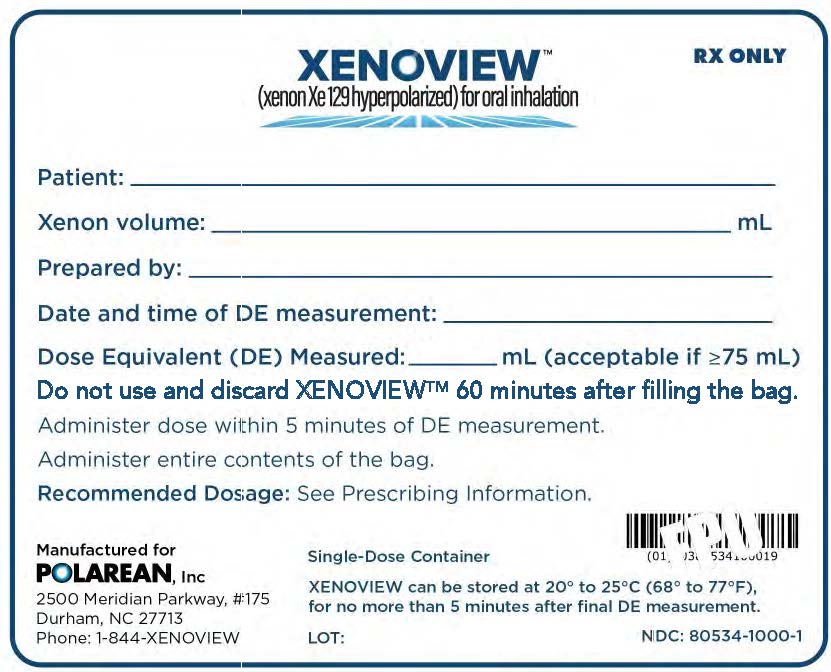
XENOVIEW xenon Xe 129 hyperpolarized 75 mL/300mL Gas
🆔 Identity & classification
Where does this data come from?
🏭 Manufacturer & labeler
Where does this data come from?
🩺 Clinical
Patient education
Supplement & herbal interactions
Where does this data come from?
Ask a licensed pharmacist directly — free, answered by our team.
🧪 Inactive Ingredients / Excipients
Inactive ingredients, also called excipients, are components of the drug product other than the active ingredient. They may include fillers, dyes, coatings, preservatives, flavors, or other formulation ingredients.
Where does this data come from?
IACT rows and label-wide narrative are kept separate; availability and product-level specificity depend on the submitted label.Inactive ingredient FAQ
Are inactive ingredients the same for every manufacturer?
Why might an inactive ingredient be missing?
Can inactive ingredients matter?
💲 Pricing
A drug doesn't have one price. Each row is a different public payment system, and none is what you'd pay at the counter — that depends on your insurance. The ⓘ on each row explains what it measures.
| Price system | Per each | Per package |
|---|---|---|
| Retail pharmacies payNADAC · weekly | Not in the retail survey — common for institutional, discontinued, or low-volume packs. | |
| Medicaid paysCMS SDUD · 12 mo | No recent Medicaid claims on file for this NDC — rare and low-volume NDCs are suppressed in the public data. | |
| Medicare drug plans payPart D · quarterly | No Part D plan price is available for this NDC in our data. | |
Where does this data come from?
🔁 Therapeutic equivalents
| Product | Labeler | Pack | NADAC/unit | TE | Status | Price vs. this |
|---|---|---|---|---|---|---|
| Xenoview 75 mL/300mLthis 80534-0300-01 | Polarean, | 300 ml | — | — | FDA listed | — |
Where does this data come from?
⏳ Availability & generic status
We did not find an FDA-approved generic match for this exact strength, form and route. Patent/protection dates below may affect future generic timing.
Why the date isn’t exact: Generic timing can change because patents may be challenged, settled, licensed, added, removed, or worked around with a narrower label — and FDA approval does not always mean a pharmacy can get the generic today.
🛈 What do these terms mean?
- Patent
- Legal protection listed in the Orange Book that may delay generic approval or launch. Issued by the U.S. Patent & Trademark Office.
- Substance patent
- Covers the active drug molecule itself — the hardest to design around. A generic generally can’t launch until it expires.
- Formulation (product) patent
- Covers a specific formulation or dosage form. A generic can sometimes work around it with a different formulation.
- Method-of-use patent
- A patent covering one specific approved use of the drug — not necessarily the whole molecule. A generic can sometimes launch with a “skinny label” that carves out the protected use and keeps the others.
- Skinny label
- A generic label that omits a still-patented use when the FDA allows it — letting a generic reach the market for the unprotected uses.
- Exclusivity
- FDA-granted marketing protection, separate from patents — e.g. 5-yr new chemical entity, 7-yr orphan drug, or a +6-month pediatric extension.
- Paragraph IV
- A generic applicant’s formal challenge to a listed patent. It can potentially lead to earlier generic entry, but often involves litigation or a settlement.
- RLD / RS
- Reference Listed Drug — the brand product the FDA uses as the reference for generic applications. Reference Standard — the product the FDA expects generics to compare against in bioequivalence testing.
- TE / AB rating
- FDA therapeutic-equivalence rating. An AB rating generally means the FDA considers a generic therapeutically equivalent to — and substitutable for — the brand.
- LOE (loss of exclusivity)
- The latest patent or exclusivity currently listed — the loss-of-exclusivity / latest-listed-protection date shown on this page. Paragraph-IV challenges and settlements can move the real date earlier; FDA approval and a manufacturer’s decision to market can move it later.
Built from the FDA Orange Book. The bars above are scaled to each protection’s expiry; the red LOE marker is the last one to lapse.
| Patent | Type | Use code | Expires |
|---|---|---|---|
| US 10583205 ↗ | Drug product | — | Feb 20, 2035 |
| US 11052161 ↗ | Drug product | — | Dec 29, 2035 |
| Code | What it grants | Expires |
|---|---|---|
| NCE | New Chemical Entity (5-year) | Dec 23, 2027 |
Is there a generic version of this drug?
The FDA approved a generic — why can’t I get it at my pharmacy yet?
Why do different websites show different generic release dates?
What does “FDA listed” mean?
What does a patent or protection date mean here?
What does “current Orange Book estimate” mean?
Can a generic come out before the last patent expires?
Can a generic come out after the listed dates?
What is the difference between patents and exclusivity?
Why are there multiple patent dates?
Where does this data come from?
📦 Packaging — all sizes for this product
| Package NDC | Description | Marketing start | Status |
|---|---|---|---|
| 80534-0300-01 You're viewing this | 50 BAG in 1 CARTON (80534-0300-1) / 300 mL in 1 BAG | 2025-05-30 | Active |
🧭 About this NDC listing & data coverage
What data is (and isn’t) available for this NDC — tap to expand
| NDC identity (package / product / labeler codes) | ✓ Available |
| Labeler | ✓ Available |
| Product & package description | ✓ Available |
| Marketing category & status | ✓ Available |
| Active ingredient / dosage form / route | ✓ Available |
| FDA label (SPL via DailyMed) | ✓ Available |
| Package photos | ✓ Available |
| Inactive ingredients (structured) | — Not published for this NDC The labeler did not submit a structured excipient list, or no SPL is available. |
| NADAC pharmacy acquisition price (CMS) | — Not published for this NDC CMS publishes NADAC only for NDCs reported in its retail-pharmacy survey. |
| Orange Book / therapeutic-equivalence data | ✓ Available |
| HCPCS J-code billing crosswalk | — Not published for this NDC Most self-administered / retail products have no J-code — that is normal. |
| Medicaid utilization (CMS SDUD) | — Not published for this NDC CMS reports utilization only for NDCs with Medicaid claims above its privacy threshold. |
Questions about this listing
Why is there no price listed?
Is the NDC printed on the package the same as the 11-digit billing NDC?
What do the three segments of this NDC mean?
Is this package still being marketed?
Who lists this product with the FDA?
Do I need a prescription for this product?
Where does this data come from?
📄 Full prescribing information FDA SPL
🎯 Indications and Usage ▾
1 INDICATIONS AND USAGE XENOVIEW ® , prepared from the Xenon Xe 129 Gas Blend, is indicated for use with magnetic resonance imaging (MRI) for evaluation of lung ventilation in adults and pediatric patients aged 6 years and older. Limitations of Use XENOVIEW has not been evaluated for use with lung perfusion imaging. XENOVIEW, prepared from the Xenon Xe 129 Gas Blend, is a hyperpolarized contrast agent indicated for use with magnetic resonance imaging (MRI) for evaluation of lung ventilation in adults and pediatric patients aged 6 years and older.
Limitations of Use XENOVIEW has not been evaluated for use with lung perfusion imaging. ( 1 )
⏱️ Dosage and Administration ▾
2 DOSAGE AND ADMINISTRATION The recommended target dose of XENOVIEW for adult and pediatric patients aged 6 years and older is 75 mL to 100 mL Dose Equivalent (DE) volume of hyperpolarized xenon Xe 129 by oral inhalation of the entire contents of one XENOVIEW Dose Delivery Bag. ( 2.1 ) Choose an appropriate size of the Dose Delivery Bag based on patient’s Total Lung Capacity (TLC) or Forced Vital Capacity (FVC). ( 2.1 ) Administer dose within 5 minutes of DE measurement.
( 2.2 ) Initiate imaging immediately after inhalation. ( 2.2 ) See Full Prescribing Information for detailed information regarding preparation, administration, image acquisition, and image interpretation. ( 2.2 , 2.3 )
2.1Recommended Dosage The recommended target dose of XENOVIEW for adults and pediatric patients aged 6 years and older is 75 mL to 100 mL Dose Equivalent (DE) volume of hyperpolarized xenon Xe 129 by oral inhalation of the entire contents of one XENOVIEW Dose Delivery Bag. Each bag contains at least 75 mL DE of hyperpolarized xenon Xe 129 measured within 5 minutes of administration, in a volume of 250 mL to 750 mL total xenon with additional nitrogen, NF (99.999% purity) added to reach a total volume of the Dose Delivery Bag.
Select the Dose Delivery Bag based on the patient’s Total Lung Capacity (TLC) according to Table 1. If TLC is not available at the time of the procedure, select the Dose Delivery Bag based on patient’s Forced Vital Capacity (FVC). If neither TLC nor FVC values are available in the patient’s medical records, select the Dose Delivery Bag based on estimates of the patient’s TLC using American Thoracic Society (ATS)-endorsed plethysmography-based predictive equations based on sex and height.
Table 1. Recommended Dose Delivery Bag Volume Based on TLC TLC (L) FVC † (L) Dose Delivery Bag (mL) <2.0 <1.5 300 2.0 to <3.3 1.5 to <2.5 500 3.3 to <5.0 2.5 to <3.8 750 ≥5.0 ≥3.8 1,000 † FVC is used when TLC is not available. The minimum DE for a dose of XENOVIEW is 75 mL with a recommended DE target range of 75 mL to 100 mL.
DE of greater than 100 mL is acceptable. DE is the volume (mL) of 100% isotopically enriched, 100% hyperpolarized, xenon Xe 129 that would produce the equivalent net magnetization as the Xe 129 dose. The HPX Polarization Measurement Station measures DE.
DE is defined by the following formula: DE = (total volume xenon gas) × (fraction of xenon Xe 129 isotopic enrichment in the xenon gas) × (fraction of hyperpolarization) where the total volume of xenon gas is 250 mL to 750 mL, the fraction of xenon Xe 129 isotopic enrichment is > 80% and the mean fraction of hyperpolarization is no less than 38% to 54% at the completion of polarization of 250 mL of xenon gas. For example, if 300 mL of total xenon gas with 83% enrichment of xenon Xe 129 is dispensed from the HPX Hyperpolarizer at 40% hyperpolarization: DE = 300 mL × 0.83 × 0.40 = 99.6 mL
2.2Preparation, Administration, and Image Acquisition Preparation Choose an appropriate Dose Delivery Bag according to Table 1 [see Dosage and Administration ( 2.1 )] . Prepare hyperpolarized xenon Xe 129 in the HPX Hyperpolarizer from the Xenon Xe 129 Gas Blend and add Nitrogen, NF (99.999% purity) as necessary to fill the remaining volume in the XENOVIEW Dose Delivery Bag, according to the HPX Hyperpolarization System Operator’s Manual. Measure the volume and DE in the XENOVIEW Dose Delivery Bag using the HPX Polarization Measurement Station no more than 5 minutes prior to administration.
The DE measurement should be at least 75 mL. Do not use and discard the dose of XENOVIEW ® if the volume is determined to be outside of the acceptable range or the DE is less than 75 mL. Administer dose within 5 minutes of DE measurement.
Do not use and discard the dose of XENOVIEW 60 minutes after filling of Dose Delivery Bag. Administration Administer XENOVIEW according to the directions provided in the HPX Hyperpolarization System Operator’s Manual, Administering XENOVIEW. Fit the patient with a…
💊 Dosage Forms and Strengths ▾
3 DOSAGE FORMS AND STRENGTHS XENOVIEW, prepared from the Xenon Xe 129 Gas Blend by the HPX Hyperpolarizer, is a clear, colorless, odorless gas contained in a 300 mL, 500 mL, 750 mL or 1,000 mL XENOVIEW Dose Delivery Bag. Each bag contains at least 75 mL Dose Equivalent (DE) of hyperpolarized xenon Xe 129 in a volume of 250 mL to 750 mL total xenon and a total volume administered of 300 mL, 500 mL, 750 mL, or 1,000 mL. The strength is DE per volume administered (see Table 2).
The minimum DE for a dose of XENOVIEW ® is 75 mL with a recommended DE target range of 75 mL to 100 mL. DE of greater than 100 mL is acceptable. Table 2.
Minimum Dosage Strength for Each Dose Delivery Bag Dose Delivery Bag (mL) Minimum Dose Equivalent (mL) Total Volume Administered (mL) Minimum Dosage Strength * 300 75 300 75 mL DE per 300 mL total volume 500 75 500 75 mL DE per 500 mL total volume 750 75 750 75 mL DE per 750 mL total volume 1,000 75 1,000 75 mL DE per 1,000 mL total volume * Minimum Dosage Strength = mL Minimum Dose Equivalent per mL Total Volume Administered XENOVIEW is a clear, colorless, odorless gas contained in a XENOVIEW Dose Delivery Bag. The bag contains at least 75 mL DE of hyperpolarized xenon Xe 129 in a volume of 250 mL to 750 mL total xenon.
The bag total volume administered is 300 mL, 500 mL, 750 mL, or 1,000 mL. The dosage strength is DE per volume administered. The minimum DE for a dose of XENOVIEW is 75 mL with a recommended DE target range of 75 mL to 100 mL.
DE of greater than 100 mL is acceptable. ( 3 )
⛔ Contraindications ▾
4 CONTRAINDICATIONS None. None. ( 4 )
⚠️ Warnings and Cautions ▾
5 WARNINGS AND PRECAUTIONS Risk of Decreased Image Quality from Supplemental Oxygen : Supplemental oxygen administered simultaneously with XENOVIEW inhalation can cause degradation of image quality. For patients on supplemental oxygen, withhold oxygen inhalation for two breaths prior to XENOVIEW inhalation, and resume oxygen inhalation immediately following the imaging breath hold. ( 5.1 ) Risk of Transient Hypoxia : Inhalation of an anoxic gas such as XENOVIEW may cause transient hypoxemia in susceptible patients.
Monitor all patients for oxygen saturation and symptoms of hypoxemia, and treat as clinically indicated. ( 5.2 )
5.1Risk of Decreased Image Quality from Supplemental Oxygen Supplemental oxygen administered simultaneously with XENOVIEW inhalation can cause degradation of image quality due to depolarization of XENOVIEW. For patients on supplemental oxygen, withhold oxygen inhalation for two breaths prior to XENOVIEW inhalation, and resume oxygen inhalation immediately following the imaging breath hold [see Dosage and Administration ( 2.2 )] .
5.2Risk of Transient Hypoxia Inhalation of an anoxic gas such as XENOVIEW may cause transient hypoxemia in susceptible patients [see Adverse Reactions ( 6.1 )] . Monitor all patients for oxygen desaturation and symptoms of hypoxemia, and treat as clinically indicated.
🤒 Adverse Reactions ▾
6 ADVERSE REACTIONS The adverse reactions (> one patient) in efficacy trials in adults were oropharyngeal pain, headache, and dizziness. ( 6.1 ) To report SUSPECTED ADVERSE REACTIONS, contact Polarean, Inc. at 1‑844-936-6843 or FDA at 1-800-FDA-1088 or www.fda.gov/medwatch.
6.1Clinical Trials Experience Because clinical trials are conducted under widely varying conditions, adverse reaction rates observed in the clinical trials of a drug cannot be directly compared to rates in the clinical trials of another drug and may not reflect the rates observed in practice. Adverse Reactions in Adult Patients The safety of XENOVIEW was evaluated in two prospective efficacy trials that enrolled a total of 83 adult patients with various lung disorders who were being evaluated for possible lung surgery [see Clinical Studies ( 14 ) ] .
Mean age of these patients was 62 years, 88% were White and 69% were male. In these two trials, mean xenon gas volume per XENOVIEW dose was 330.2 mL and 81 of 83 patients (98%) received a single administration of XENOVIEW. For safety assessment, the volume of administered xenon gas in the XENOVIEW dose is noted rather than the DE, because isotopic enrichment and hyperpolarization are not known to affect the safety profile of xenon gas.
Adverse reactions were reported in 12 (14%) of the 83 patients. Adverse reactions reported by more than one patient were oropharyngeal pain (n = 4 patients), headache (n = 2 patients), and dizziness (n = 2 patients). A hypersensitivity reaction that included transient pruritus and erythema occurred in one patient with a history of allergic reactions to several drugs, foods, and other substances.
In pooled data of 123 adult patients from published studies, most of whom had lung disorders such as COPD, idiopathic pulmonary fibrosis, and asthma, who received 1 dose to 2 doses of hyperpolarized xenon Xe 129 with xenon volumes of approximately 500 mL to 1,000 mL of xenon gas per dose, the following transient adverse reactions were reported: numbness, tingling, euphoria, and dizziness. Overall frequency of these adverse reactions could not be determined from the published information. Adverse Reactions in Pediatric Patients In pooled data of 120 pediatric patients aged 6 to 18 years from published studies, most of whom had either asthma or cystic fibrosis, who received 1 dose to 2 doses of hyperpolarized xenon Xe 129 with xenon volumes based on predicted TLC, the following transient adverse reactions were reported: blood oxygen desaturation, heart rate elevation, numbness, tingling, dizziness, and euphoria.
Overall frequency of these adverse reactions could not be determined from the published information. In one of the published studies of 23 pediatric patients aged 6 to 18 years, 11 of whom had cystic fibrosis and 12 of whom were healthy, the mean difference of SpO 2 % from baseline was -6% following hyperpolarized xenon Xe 129 administration with xenon volumes based on predicted total lung capacity. In the same study, the mean change in heart rate from baseline was +6.6 beats per minute following hyperpolarized xenon Xe 129 administration.
Both reported oxygen desaturation and heart rate elevation resolved by 2 minutes post-dose without intervention.
👥 Use in Specific Populations ▾
8 USE IN SPECIFIC POPULATIONS
8.1Pregnancy Risk Summary XENOVIEW is minimally absorbed systemically following the inhalation route of administration, and maternal use is not expected to result in fetal exposure to the drug [see Clinical Pharmacology ( 12.3 )]. Adequately designed animal reproduction studies have not been conducted with hyperpolarized xenon Xe 129. Although not adequately designed to evaluate reproductive and developmental toxicity, there are animal reproduction data available in the literature.
Animal reproduction studies were conducted in rats by administering an 80% Xe/20% O 2 gas mixture for 2 hours twice a week for 2 and 10 weeks, with no observed effects on fertility or pregnancy. Gas mixtures containing 70% to 75% Xe gas and 25% to 30% O 2 gas were found to be non-teratogenic in rats when administered for 24 hours. In a separate study, rats were administered an 80%/20% Xe/O 2 gas mixture for 2 hours twice a week from the first to nineteenth day of pregnancy with no observed effects on embryo-fetal development or signs of teratogenicity.
The background risk of major birth defects and miscarriage for the indicated population is unknown. All pregnancies have a background risk of birth defect, loss, or other adverse outcomes. In the U.S general population, the estimated background risks of major birth defects and miscarriage in clinically recognized pregnancies are 2% to 4% and 15% to 20%, respectively.
8.2Lactation Risk Summary XENOVIEW ® is minimally absorbed systemically following the inhalation route of administration, and breastfeeding is not expected to result in exposure of the infant to the drug [see Clinical Pharmacology ( 12.3 )]. There is no information on the presence of hyperpolarized xenon Xe 129 in human milk, the effect on the breastfed infant, or the effect on milk production. The developmental and health benefits of breastfeeding should be considered along with the mother’s clinical need for XENOVIEW ® and any potential adverse effects on the breastfed child from XENOVIEW or from the underlying maternal condition.
8.4Pediatric Use The safety and effectiveness of XENOVIEW have been established in pediatric patients aged 6 years and older for use with MRI to evaluate lung ventilation. Use of XENOVIEW in this age group is supported by evidence from adequate and well-controlled studies in adults with additional safety data from published studies [see Adverse Reactions ( 6.1 ) and Clinical Studies ( 14 )] . Safety and effectiveness of XENOVIEW have not been established in pediatric patients less than 6 years of age.
8.5Geriatric Use Of the total number of patients in clinical studies of XENOVIEW, 36 (43%) were 65 years of age and older, while 6 (7%) were 75 years of age and older. No overall differences in safety or effectiveness have been observed between patients 65 years of age and older and younger adult patients although the number of patients in the trials was not large enough to allow definitive comparison.
🤰 Pregnancy ▾
8.1Pregnancy Risk Summary XENOVIEW is minimally absorbed systemically following the inhalation route of administration, and maternal use is not expected to result in fetal exposure to the drug [see Clinical Pharmacology ( 12.3 )]. Adequately designed animal reproduction studies have not been conducted with hyperpolarized xenon Xe 129. Although not adequately designed to evaluate reproductive and developmental toxicity, there are animal reproduction data available in the literature.
Animal reproduction studies were conducted in rats by administering an 80% Xe/20% O 2 gas mixture for 2 hours twice a week for 2 and 10 weeks, with no observed effects on fertility or pregnancy. Gas mixtures containing 70% to 75% Xe gas and 25% to 30% O 2 gas were found to be non-teratogenic in rats when administered for 24 hours. In a separate study, rats were administered an 80%/20% Xe/O 2 gas mixture for 2 hours twice a week from the first to nineteenth day of pregnancy with no observed effects on embryo-fetal development or signs of teratogenicity.
The background risk of major birth defects and miscarriage for the indicated population is unknown. All pregnancies have a background risk of birth defect, loss, or other adverse outcomes. In the U.S general population, the estimated background risks of major birth defects and miscarriage in clinically recognized pregnancies are 2% to 4% and 15% to 20%, respectively.
🧒 Pediatric Use ▾
8.4Pediatric Use The safety and effectiveness of XENOVIEW have been established in pediatric patients aged 6 years and older for use with MRI to evaluate lung ventilation. Use of XENOVIEW in this age group is supported by evidence from adequate and well-controlled studies in adults with additional safety data from published studies [see Adverse Reactions ( 6.1 ) and Clinical Studies ( 14 )] . Safety and effectiveness of XENOVIEW have not been established in pediatric patients less than 6 years of age.
🧓 Geriatric Use ▾
8.5Geriatric Use Of the total number of patients in clinical studies of XENOVIEW, 36 (43%) were 65 years of age and older, while 6 (7%) were 75 years of age and older. No overall differences in safety or effectiveness have been observed between patients 65 years of age and older and younger adult patients although the number of patients in the trials was not large enough to allow definitive comparison.
🧬 Clinical Pharmacology ▾
12 CLINICAL PHARMACOLOGY
12.1Mechanism of Action When hyperpolarized xenon Xe 129 gas is inhaled, a multi-nuclear capable MRI scanner can be used to image the hyperpolarized xenon Xe 129 distribution throughout the ventilated lung. Hyperpolarized xenon Xe 129 nuclei are directly detected by a Xe 129 MRI coil.
12.2Pharmacodynamics The MRI signal of hyperpolarized xenon Xe 129 is dependent on the volume of the xenon gas inhaled, degree of xenon Xe 129 isotopic enrichment, and degree of hyperpolarization [see Dosage and Administration ( 2.1 )] .
12.3Pharmacokinetics The pharmacokinetics of hyperpolarized xenon Xe 129 are similar to those of non-polarized xenon. Distribution Xenon is a readily diffusible gas. Inhalation of xenon results in dispersion in the ventilated areas of the lung with uptake of a small amount of xenon into the pulmonary vessels followed by distribution to more distal organs.
The solubility of xenon is higher in fatty tissues than in aqueous tissues and body compartments such as plasma. Elimination Following a single breath hold, xenon is eliminated through exhalation with an elimination half-life of 14.5 seconds for a 75% Xe/25% N 2 gas mixture and 14.3 seconds for a 25% Xe/75% N 2 gas mixture.
🧬 Mechanism of Action ▾
12.1Mechanism of Action When hyperpolarized xenon Xe 129 gas is inhaled, a multi-nuclear capable MRI scanner can be used to image the hyperpolarized xenon Xe 129 distribution throughout the ventilated lung. Hyperpolarized xenon Xe 129 nuclei are directly detected by a Xe 129 MRI coil.
📦 How Supplied / Storage and Handling ▾
16 HOW SUPPLIED How Supplied XENOVIEW (xenon Xe 129 hyperpolarized) is prepared from the Xenon Xe 129 Gas Blend by the HPX Hyperpolarizer and is contained in a XENOVIEW Dose Delivery Bag as a clear, colorless, odorless gas. XENOVIEW Dose Delivery Bags are available in four different sizes co-packaged with attachable mouthpieces and affixable dose labels: 300 mL bags in a box of 50 (NDC 80534-0300-1) 500 mL bags in a box of 50 (NDC 80534-0500-1) 750 mL bags in a box of 50 (NDC 80534-0750-1) 1,000 mL bags in a box of 50 (NDC 80534-1000-2) Xenon Xe 129 Gas Blend for preparation of XENOVIEW is supplied as a compressed gas under high pressure (2,105 pounds per square inch gauge [psig]) in size 302 aluminum cylinders with a volume of 6,350 liters (NDC 80534-6350-1).
Storage and Handling Store XENOVIEW at 20° to 25°C (68° to 77°F) for no more than 5 minutes after final DE measurement. Do not use and discard XENOVIEW 60 minutes after filling of Dose Delivery Bag. Store Xenon Xe 129 Gas Blend at 20° to 25°C (68° to 77°F), with excursions permitted to 15°C to 30°C (59°F to 86°F).
Manufactured for: Polarean, Inc. 2500 Meridian Parkway, #175 Durham, NC 27713 Tel: +1-844-936-6843 XENOVIEW ® is a trademark of Polarean, Inc. Doc #: 34660D
📋 Description ▾
11 DESCRIPTION XENOVIEW (xenon Xe 129 hyperpolarized) is a hyperpolarized contrast agent produced on site by the HPX Hyperpolarization System from the isotopically enriched Xenon Xe 129 Gas Blend. The Gas Blend cylinder distributed by Polarean contains xenon (1% total; > 80% isotopic purity Xe 129), nitrogen, NF (10%), and helium, NF (89%). The active pharmaceutical ingredient in XENOVIEW is hyperpolarized xenon Xe 129.
Hyperpolarized xenon Xe 129 is chemically identical to non-polarized xenon Xe 129. Xenon is a clear, colorless, monoatomic, inert, stable, noble gas. It is naturally abundant in air at a level of 0.087 ppm.
Atmospheric xenon is composed of nine non-radioactive isotopes, of which xenon Xe 129 comprises 26.4%. The atomic weight of xenon Xe 129 is 128.9. XENOVIEW is a clear, colorless, odorless gas for oral inhalation use.
Each XENOVIEW Dose Delivery Bag contains a Dose Equivalent (DE) volume of hyperpolarized xenon Xe 129 in a volume of 250 mL to 750 mL total xenon with additional nitrogen, NF (99.999% purity) added as an inert buffer to ensure the total volume of gas reaches the dose delivery bag volume (300 mL, 500 mL, 750 mL, or 1,000 mL). The minimum DE for a dose of XENOVIEW is 75 mL with a recommended DE target range of 75 to 100 mL. DE of greater than 100 mL is acceptable.