
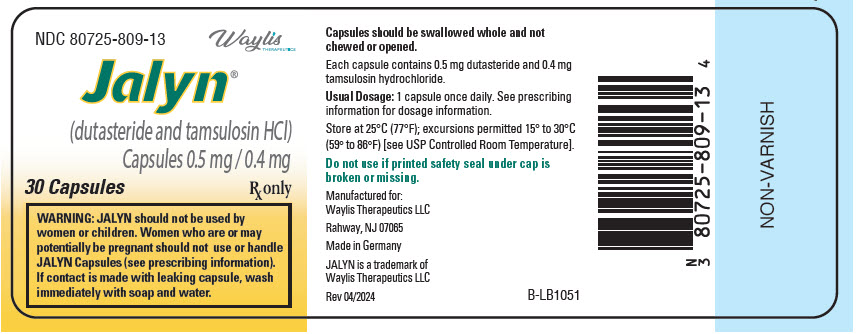
Jalyn DUTASTERIDE and TAMSULOSIN HYDROCHLORIDE .5 mg; .4 mg Capsule, 30-count
🆔 Identity & classification
Where does this data come from?
🏷️ RxNorm drug class
This medicine belongs to the 5-alpha Reductase Inhibitor class.
Where does this data come from?
🏭 Manufacturer & labeler
Where does this data come from?
🩺 Clinical
Patient education
Supplement & herbal interactions
Where does this data come from?
Ask a licensed pharmacist directly — free, answered by our team.
💊 What it looks like
Where does this data come from?
🧪 Inactive Ingredients / Excipients
Inactive ingredients, also called excipients, are components of the drug product other than the active ingredient. They may include fillers, dyes, coatings, preservatives, flavors, or other formulation ingredients.
💡 Tap an ingredient (hover on desktop) to see what it is and why it’s used.
-
UNII NX76LV5T8J
A synthetic plastic polymer made from methacrylic acid and ethyl acrylate. It's used as a coating or binder to control how and where the medicine dissolves in your digestive system.
-
UNII OP1R32D61U
Microcrystalline cellulose is a purified form of cellulose, a natural fiber from plant sources. It acts as a binder and filler in tablets and capsules, helping hold ingredients together and give the medicine its shape and size.
-
UNII 7SEV7J4R1U
A powder made from a naturally occurring mineral. In medicines, talc works as a glidant and anti-caking agent, helping tablets and capsules flow smoothly during manufacturing and preventing clumping.
-
UNII 8Z96QXD6UM
Triethyl citrate is a clear liquid derived from citric acid. It acts as a plasticizer and solvent in tablet coatings and film formulations, helping the coating remain flexible and adhere properly to the medicine.
4 inactive ingredients listed in the exact product block matched to this NDC.
Where does this data come from?
ingredient classCode="IACT" elements from the exact product block matched by this NDC. Label-section narrative from DailyMed / the openFDA label index is shown separately when available.Inactive ingredient FAQ
Are inactive ingredients the same for every manufacturer?
Why might an inactive ingredient be missing?
Can inactive ingredients matter?
💲 Pricing
A drug doesn't have one price. Each row is a different public payment system, and none is what you'd pay at the counter — that depends on your insurance. The ⓘ on each row explains what it measures.
| Price system | Per each | Per package |
|---|---|---|
| Retail pharmacies payNADAC · weekly | Not in the retail survey — common for institutional, discontinued, or low-volume packs. | |
| Medicaid paysCMS SDUD · 12 mo | No recent Medicaid claims on file for this NDC — rare and low-volume NDCs are suppressed in the public data. | |
| Medicare drug plans payPart D · quarterly | No Part D plan price is available for this NDC in our data. | |
Where does this data come from?
🔁 Therapeutic equivalents
| Product | Labeler | Pack | NADAC/unit | TE | Status | Price vs. this |
|---|---|---|---|---|---|---|
| Dutasteride and Tamsulosin Hydrochloride .5 mg/1; .4 mg 10370-0280-09 | Endo | 90 capsules | $1.976 | AB | Discontinued | — |
| Dutasteride and Tamsulosin Hydrochloride .5 mg/1; .4 mg 59651-0063-30 | Aurobindo | 30 capsules | $1.976 | AB | Availability likely | — |
| Dutasteride and tamsulosin hydrochloride .5 mg/1; .4 mg 68382-0640-06 | Zydus | 30 capsules | $1.976 | AB | Availability likely | — |
| Dutasteride and Tamsulosin Hydrochloride .5 mg/1; .4 mg 42291-0031-30 | AvKARE | 30 capsules | — | AB | Discontinued | — |
| Dutasteride and tamsulosin hydrochloride .5 mg/1; .4 mg 70771-1356-03 | Zydus | 30 capsules | — | AB | FDA listed | — |
| Jalyn .5 mg/1; .4 mgthis 80725-0809-13 | Waylis | 30 capsules | — | AB | FDA listed | — |
Where does this data come from?
⏳ Availability & generic status
FDA-approved generic versions are listed, and recent pricing/market data suggests they may be available — see Therapeutic equivalents.
Where does this data come from?
🔬 Reported adverse events (FAERS)
Top reported reactions
Age at onset
Reporter sex
Serious outcomes
Where does this data come from?
📦 Packaging — all sizes for this product
| Package NDC | Description | Marketing start | Status |
|---|---|---|---|
| 80725-0809-13 You're viewing this | 30 CAPSULE in 1 BOTTLE, PLASTIC (80725-809-13) | 2024-03-01 | Active |
| 80725-0809-59 | 90 CAPSULE in 1 BOTTLE, PLASTIC (80725-809-59) | 2024-03-01 | Active |
You're viewing the smallest of 2 pack sizes for this product.
Pack size FAQ
What quantity is in NDC 80725-0809-13?
What is the difference between NDC 80725-0809-13 and NDC 80725-0809-59?
What NDC number is used to bill for this package of Jalyn DUTASTERIDE and TAMSULOSIN HYDROCHLORIDE .5 mg; .4 mg Capsule?
🧭 About this NDC listing & data coverage
What data is (and isn’t) available for this NDC — tap to expand
| NDC identity (package / product / labeler codes) | ✓ Available |
| Labeler | ✓ Available |
| Product & package description | ✓ Available |
| Marketing category & status | ✓ Available |
| Active ingredient / dosage form / route | ✓ Available |
| FDA label (SPL via DailyMed) | ✓ Available |
| Package photos | ✓ Available |
| Inactive ingredients (structured) | ✓ Available |
| NADAC pharmacy acquisition price (CMS) | — Not published for this NDC CMS publishes NADAC only for NDCs reported in its retail-pharmacy survey. |
| Orange Book / therapeutic-equivalence data | ✓ Available |
| HCPCS J-code billing crosswalk | — Not published for this NDC Most self-administered / retail products have no J-code — that is normal. |
| Medicaid utilization (CMS SDUD) | — Not published for this NDC CMS reports utilization only for NDCs with Medicaid claims above its privacy threshold. |
Questions about this listing
Why is there no price listed?
Is the NDC printed on the package the same as the 11-digit billing NDC?
What do the three segments of this NDC mean?
Is this package still being marketed?
Does this product come in other package sizes?
Who lists this product with the FDA?
Do I need a prescription for this product?
Where does this data come from?
📄 Full prescribing information FDA SPL
🎯 Indications and Usage ▾
1 INDICATIONS AND USAGE JALYN is a combination of dutasteride, a 5-alpha-reductase inhibitor, and tamsulosin, an alpha-adrenergic antagonist, indicated for the treatment of symptomatic benign prostatic hyperplasia (BPH) in men with an enlarged prostate. ( 1.1 ) Limitations of Use: Dutasteride-containing products, including JALYN, are not approved for the prevention of prostate cancer. ( 1.2 )
1.1Benign Prostatic Hyperplasia (BPH) Treatment JALYN (dutasteride and tamsulosin hydrochloride) capsules are indicated for the treatment of symptomatic BPH in men with an enlarged prostate.
1.2Limitations of Use Dutasteride-containing products, including JALYN, are not approved for the prevention of prostate cancer.
⏱️ Dosage and Administration ▾
2 DOSAGE AND ADMINISTRATION The recommended dosage of JALYN is 1 capsule (0.5 mg dutasteride and 0.4 mg tamsulosin hydrochloride) taken once daily approximately 30 minutes after the same meal each day. The capsules should be swallowed whole and not chewed or opened. Contact with the contents of the JALYN capsule may result in irritation of the oropharyngeal mucosa.
Take one capsule daily approximately 30 minutes after the same meal each day.( 2 ) Swallow capsule whole. ( 2 )
💊 Dosage Forms and Strengths ▾
3 DOSAGE FORMS AND STRENGTHS JALYN capsules, containing 0.5 mg dutasteride and 0.4 mg tamsulosin hydrochloride, are oblong, hard-shell capsules with a brown body and an orange cap imprinted with "GS 7CZ" in black ink. 0.5 mg dutasteride and 0.4 mg tamsulosin hydrochloride. ( 3 )
⛔ Contraindications ▾
4 CONTRAINDICATIONS JALYN is contraindicated for use in: Pregnancy. Dutasteride use is contraindicated in females who are pregnant. In animal reproduction and developmental toxicity studies, dutasteride inhibited development of male fetus external genitalia.
Therefore, JALYN may cause fetal harm when administered to a pregnant female [see Warnings and Precautions (5.6) , Use in Specific Populations (8.1) ] . Patients with previously demonstrated, clinically significant hypersensitivity (e.g., serious skin reactions, angioedema, urticaria, pruritus, respiratory symptoms) to dutasteride, other 5-alpha-reductase inhibitors, tamsulosin, or any other component of JALYN [see Adverse Reactions (6.2) ] . Pregnancy.
Dutasteride use is contraindicated in females who are pregnant. ( 4 , 5.6 , 8.1 ) Patients with previously demonstrated, clinically significant hypersensitivity (e.g., serious skin reactions, angioedema, urticaria, pruritus, respiratory symptoms) to dutasteride, other 5-alpha-reductase inhibitors, tamsulosin, or any component of JALYN. ( 4 )
⚠️ Warnings and Cautions ▾
5 WARNINGS AND PRECAUTIONS Orthostatic hypotension and/or syncope can occur. Advise patients of symptoms related to postural hypotension and to avoid situations where injury could result if syncope occurs. ( 5.1 ) Do not use JALYN with other alpha-adrenergic antagonists, as this may increase the risk of hypotension.
( 5.2 ) JALYN reduces serum prostate-specific antigen (PSA) concentration by approximately 50%. However, any confirmed increase in PSA while on JALYN may signal the presence of prostate cancer and should be evaluated, even if those values are still within the normal range for untreated men. ( 5.3 ) Do not use JALYN with strong inhibitors of cytochrome P450 (CYP) 3A4 (e.g., ketoconazole).
Use caution in combination with moderate CYP3A4 inhibitors (e.g., erythromycin) or strong (e.g., paroxetine) or moderate CYP2D6 inhibitors, a combination of both CYP3A4 and CYP2D6 inhibitors, or known poor metabolizers of CYP2D6. Concomitant use with known inhibitors can cause a marked increase in drug exposure. ( 5.2 , 7.1 , 12.3 ) Exercise caution with concomitant use of phosphodiesterase-5 (PDE-5) inhibitors, as this may increase the risk of hypotension.
( 5.2 ) Drugs that contain dutasteride, including JALYN, may increase the risk of high-grade prostate cancer. ( 5.4 , 6.1 ) Prior to initiating treatment with JALYN, consideration should be given to other urological conditions that may cause similar symptoms. ( 5.5 ) Females who are pregnant or may be pregnant should not handle JALYN capsules due to potential risk to a male fetus.
( 5.6 , 8.1 ) Advise patients about the possibility and seriousness of priapism. ( 5.7 ) Patients should not donate blood until 6 months after their last dose of JALYN. ( 5.8 ) Intraoperative Floppy Iris Syndrome has been observed during cataract and glaucoma surgery after alpha-adrenergic antagonist exposure.
Advise patients considering cataract or glaucoma surgery to tell their ophthalmologist that they take or have taken JALYN capsules. ( 5.9 ) Exercise caution with concomitant use of warfarin. ( 5.2 , 7.2 , 12.3 )
5.1Orthostatic Hypotension As with other alpha-adrenergic antagonists, orthostatic hypotension (postural hypotension, dizziness, and vertigo) may occur in patients treated with tamsulosin-containing products, including JALYN, and can result in syncope. Patients starting treatment with JALYN should be cautioned to avoid situations where syncope could result in an injury [see Adverse Reactions (6.1) ] .
5.2Drug-Drug Interactions Strong Inhibitors of Cytochrome P450 (CYP) 3A4 Tamsulosin-containing products, including JALYN, should not be coadministered with strong CYP3A4 inhibitors (e.g., ketoconazole) as this can significantly increase tamsulosin exposure [see Drug Interactions (7.1) , Clinical Pharmacology (12.3) ]. Moderate Inhibitors of CYP3A4, Inhibitors of CYP2D6, or a Combination of Both CYP3A4 and CYP2D6 Inhibitors Tamsulosin-containing products, including JALYN, should be used with caution when coadministered with moderate inhibitors of CYP3A4 (e.g., erythromycin), strong (e.g., paroxetine) or moderate (e.g., terbinafine) inhibitors of CYP2D6, a combination of both CYP3A4 and CYP2D6 inhibitors, or in patients known to be poor metabolizers of CYP2D6, as there is a potential for significant increase in tamsulosin exposure [see Drug Interactions (7.1) , Clinical Pharmacology (12.3) ] .
Cimetidine Caution is advised when tamsulosin-containing products, including JALYN, are coadministered with cimetidine [see Drug Interactions (7.1) , Clinical Pharmacology (12.3) ] . Other Alpha-adrenergic Antagonists Tamsulosin-containing products, including JALYN, should not be coadministered with other alpha-adrenergic antagonists because of the increased risk of symptomatic hypotension. Phosphodiesterase-5 (PDE-5) Inhibitors Caution is advised when alpha-adrenergic–antagonist-containing products, including JALYN, are coadministered with PDE-5 inhibitors.
Alpha-adrenergic antagonists and PDE-5 inhib…
🤒 Adverse Reactions ▾
6 ADVERSE REACTIONS The most common adverse reactions, reported in ≥1% of subjects treated with coadministered dutasteride and tamsulosin are ejaculation disorders, impotence, decreased libido, dizziness, and breast disorders. ( 6.1 ) To report SUSPECTED ADVERSE REACTIONS, contact Waylis Therapeutics LLC at 1-844-200-7910 or FDA at 1-800-FDA-1088 or www.fda.gov/medwatch.
6.1Clinical Trials Experience The clinical efficacy and safety of coadministered dutasteride and tamsulosin, which are individual components of JALYN, have been evaluated in a multicenter, randomized, double-blind, parallel group trial (the Combination with Alpha-Blocker Therapy, or CombAT, trial). Because clinical trials are conducted under widely varying conditions, adverse reaction rates observed in the clinical trials of a drug cannot be directly compared with rates in the clinical trial of another drug and may not reflect the rates observed in practice.
The most common adverse reactions reported in subjects receiving coadministered dutasteride and tamsulosin were impotence, decreased libido, breast disorders (including breast enlargement and tenderness), ejaculation disorders, and dizziness. Ejaculation disorders occurred significantly more in subjects receiving coadministration therapy (11%) compared with those receiving dutasteride (2%) or tamsulosin (4%) as monotherapy. Trial withdrawal due to adverse reactions occurred in 6% of subjects receiving coadministered dutasteride and tamsulosin and in 4% of subjects receiving dutasteride or tamsulosin as monotherapy.
The most common adverse reaction in all treatment arms leading to trial withdrawal was erectile dysfunction (1% to 1.5%). In the CombAT trial, over 4,800 male subjects with BPH were randomly assigned to receive 0.5 mg dutasteride, 0.4 mg tamsulosin hydrochloride, or coadmınistration therapy (0.5 mg dutasteride and 0.4 mg tamsulosin hydrochloride) administered once daily in a 4-year double-blind trial. Overall, 1,623 subjects received monotherapy with dutasteride; 1,611 subjects received monotherapy with tamsulosin; and 1,610 subjects received coadministration therapy.
The population was aged 49 to 88 years (mean age: 66 years) and 88% were white. Table 1 summarizes adverse reactions reported in at least 1% of subjects receiving coadministration therapy and at a higher incidence than subjects receiving either dutasteride or tamsulosin as monotherapy. Table 1.
Adverse Reactions Reported over a 48-Month Period in ≥1% of Subjects and More Frequently in the Coadministration Therapy Group than the Dutasteride or Tamsulosin Monotherapy Group (CombAT) by Time of Onset Adverse Reaction Adverse Reaction Time of Onset Year 1 Year 2 Year 3 Year 4 Months 0-6 Months 7-12 Coadministration Coadministration − AVODART 0.5 mg once daily plus tamsulosin 0.4 mg once daily. (n = 1,610) (n = 1,527) (n = 1,428) (n = 1,283) (n = 1,200) Dutasteride (n = 1,623) (n = 1,548) (n = 1,464) (n = 1,325) (n = 1,200) Tamsulosin (n = 1,611) (n = 1,545) (n = 1,468) (n = 1,281) (n = 1,112) Ejaculation disorders Includes anorgasmia, retrograde ejaculation, semen volume decreased, orgasmic sensation decreased, orgasm abnormal, ejaculation delayed, ejaculation disorder, ejaculation failure, and premature ejaculation. , These sexual adverse reactions are associated with dutasteride treatment (including monotherapy and combination with tamsulosin).
These adverse reactions may persist after treatment discontinuation. The role of dutasteride in this persistence is unknown. Coadministration 7.8% 1.6% 1.0% 0.5% <0.1% Dutasteride 1.0% 0.5% 0.5% 0.2% 0.3% Tamsulosin 2.2% 0.5% 0.5% 0.2% 0.3% Impotence , Includes erectile dysfunction and disturbance in sexual arousal.
Coadministration 5.4% 1.1% 1.8% 0.9% 0.4% Dutasteride 4.0% 1.1% 1.6% 0.6% 0.3% Tamsulosin 2.6% 0.8% 1.0% 0.6% 1.1% Decreased libido , Includes libido decreased, libido disorder, loss of libido, sexual dysfunction, and male sexual dysfunction. Coadministration 4.5% 0.9% 0.8% 0.2% 0.…
🔄 Drug Interactions ▾
7 DRUG INTERACTIONS There have been no drug interaction trials using JALYN. The following sections reflect information available for the individual components.
7.1Cytochrome P450 Inhibition Dutasteride Dutasteride is extensively metabolized in humans by the CYP3A4 and CYP3A5 isoenzymes. The effect of potent CYP3A4 inhibitors on dutasteride has not been studied. Because of the potential for drug-drug interactions, use caution when prescribing a dutasteride-containing product, including JALYN, to patients taking potent, chronic CYP3A4 enzyme inhibitors (e.g., ritonavir) [see Clinical Pharmacology (12.3) ] Tamsulosin Strong and Moderate Inhibitors of CYP3A4 or CYP2D6: Tamsulosin is extensively metabolized, mainly by CYP3A4 or CYP2D6.
Concomitant treatment with ketoconazole (a strong inhibitor of CYP3A4) resulted in increases in the C max and area under the concentration-time curve (AUC) of tamsulosin by factors of 2.2 and 2.8, respectively. Concomitant treatment with paroxetine (a strong inhibitor of CYP2D6) resulted in increases in the C max and AUC of tamsulosin by factors of 1.3 and 1.6, respectively. A similar increase in exposure is expected in poor metabolizers (PM) of CYP2D6 as compared to extensive metabolizers (EM).
Since CYP2D6 PMs cannot be readily identified and the potential for significant increase in tamsulosin exposure exists when tamsulosin 0.4 mg is coadministered with strong CYP3A4 inhibitors in CYP2D6 PMs, tamsulosin 0.4 mg capsules should not be used in combination wıth strong inhibitors of CYP3A4 (e.g., ketoconazole). The effects of coadministration of both a CYP3A4 and a CYP2D6 inhibitor with tamsulosin have not been evaluated. However, there is a potential for significant increase in tamsulosin exposure when tamsulosin 0.4 mg is coadministered with a combination of both CYP3A4 and CYP2D6 inhibitors [see Warnings and Precautions (5.2) , Clinical Pharmacology (12.3) ] .
Cimetidine: Treatment with cimetidine resulted in a moderate increase in tamsulosin hydrochloride AUC (44%) [see Warnings and Precautions (5.2) , Clinical Pharmacology (12.3) ] .
7.2Warfarin Dutasteride Concomitant administration of dutasteride 0.5 mg/day for 3 weeks with warfarin does not alter the steady-state pharmacokinetics of the S- or R-warfarin isomers or alter the effect of warfarin on prothrombin time [see Clinical Pharmacology (12.3) ]. Tamsulosin A definitive drug-drug interaction trial between tamsulosin hydrochloride and warfarin was not conducted. Results from limited in vitro and in vivo studies are inconclusive.
Caution should be exercised with concomitant administration of warfarin and tamsulosin-containing products, including JALYN [see Warnings and Precautions (5.2) , Clinical Pharmacology (12.3) ].
7.3Nifedipine, Atenolol, Enalapril Tamsulosin Dosage adjustments are not necessary when tamsulosin is administered concomitantly with nifedipine, atenolol, or enalapril [see Clinical Pharmacology (12.3) ].
7.4Digoxin and Theophylline Dutasteride Dutasteride does not alter the steady-state pharmacokinetics of digoxin when administered concomitantly at a dose of 0.5 mg/day for 3 weeks [see Clinical Pharmacology (12.3) ]. Tamsulosin Dosage adjustments are not necessary when tamsulosin is administered concomitantly with digoxin or theophylline [see Clinical Pharmacology (12.3) ].
7.5Furosemide Tamsulosin Tamsulosin had no effect on the pharmacodynamics (excretion of electrolytes) of furosemide. While furosemide produced an 11% to 12% reduction in tamsulosin hydrochloride C max and AUC, these changes are expected to be clinically insignificant and do not require adjustment of the dose of tamsulosin [see Clinical Pharmacology (12.3) ] .
7.6Calcium Channel Antagonists Dutasteride Coadministration of verapamil or diltiazem decreases dutasteride clearance and leads to increased exposure to dutasteride. The change in dutasteride exposure is not considered to be clinically significant. No dosage adjustment of dutasteride is recommen…
👥 Use in Specific Populations ▾
8 USE IN SPECIFIC POPULATIONS
8.1Pregnancy Risk Summary JALYN is contraindicated for use in pregnancy because it may cause harm to the male fetus [see Contraindications (4) ] . JALYN is not indicated for use in females. Dutasteride, a component of JALYN, is a 5-alpha-reductase inhibitor that prevents conversion of testosterone to dihydrotestosterone (DHT), a hormone necessary for normal development of male genitalia.
Abnormalities in the genitalia of male fetuses is an expected physiological consequence of inhibition of this conversion. These results are similar to observations in male infants with genetic 5-alpha-reductase deficiency. In animal reproduction studies, dutasteride inhibited normal development of external genitalia in male offspring when given to rats or rabbits during organogenesis at less than the maximum recommended human dose (MRHD) of 0.5 mg daily, in the absence of maternal toxicity.
At 15 times the MRHD, prolonged pregnancy, decreased reproductive organ weights, and delayed puberty in male offspring were observed in rats, with no-effect levels less than the MRHD of 0.5 mg daily. Increased placental weights in rabbits were also observed, with no-effect levels less than the MRHD of 0.5 mg daily (see Data ). Although dutasteride is secreted into human semen, the drug concentration in the human female partner is approximately 100 times less than concentrations producing abnormalities of male genitalia in animal studies (see Data ) .
In monkeys dosed during organogenesis at blood concentrations comparable to or above levels to which a human female partner is estimated to be exposed, male offspring external genitalia was not adversely affected. No feminization occurred in male offspring of untreated female rats mated to treated male rats even though detectable blood levels of dutasteride were observed in the female rats [see Nonclinical Toxicology (13.1) ] . No adverse developmental effects were observed in animal studies in which tamsulosin hydrochloride was administered to rats or rabbits during the period of organogenesis (see Data ).
Data Human Data: Dutasteride: The highest measured semen concentration of dutasteride in treated men was 14 ng/mL. Although dutasteride is detected in semen, assuming exposure of a 50-kg female to 5 mL of semen and 100% absorption, the female's expected dutasteride blood concentration through semen would be about 0.0175 ng/mL. This concentration is approximately 100 times less than blood concentrations producing abnormalities of male genitalia in animal studies.
Dutasteride is highly protein bound in human semen (greater than 96%), which may reduce the amount of dutasteride available for vaginal absorption. Animal Data: Dutasteride: In an embryo-fetal development study in rats, oral administration of dutasteride at 10 times less than the MRHD of 0.5 mg daily (based on average blood levels in men) resulted in feminization of male genitalia in the fetus (decreased anogenital distance at 0.05 mg/kg/day with a lack of a no-effect level) in the absence of maternal toxicity. In addition, nipple development, hypospadias, and distended preputial glands occurred in fetuses of dams treated at doses of 2.5 mg/kg/day or greater (approximately 15 times the MRHD).
Reduced fetal body weight and associated delayed ossification in the presence of maternal toxicity (decreased body weight gain) were observed at maternal exposure approximately 15 times the MRHD (dose of 2.5 mg/kg/day or greater). An increase in stillborn pups was observed in dams treated at 30 mg/kg/day (approximately 111 times the MRHD), with a no-effect level of 12.5 mg/kg/day. In a rabbit embryo-fetal development study, doses 28 times the MRHD (doses of 30 mg/kg/day or greater), based on average blood levels in men, were administered orally on Gestation Days 7 to 29 (during organogenesis and the late period of external genitalia development).
Histological evaluation of the genital papilla of fetuses revealed evidence of feminiz…
🤰 Pregnancy ▾
8.1Pregnancy Risk Summary JALYN is contraindicated for use in pregnancy because it may cause harm to the male fetus [see Contraindications (4) ] . JALYN is not indicated for use in females. Dutasteride, a component of JALYN, is a 5-alpha-reductase inhibitor that prevents conversion of testosterone to dihydrotestosterone (DHT), a hormone necessary for normal development of male genitalia.
Abnormalities in the genitalia of male fetuses is an expected physiological consequence of inhibition of this conversion. These results are similar to observations in male infants with genetic 5-alpha-reductase deficiency. In animal reproduction studies, dutasteride inhibited normal development of external genitalia in male offspring when given to rats or rabbits during organogenesis at less than the maximum recommended human dose (MRHD) of 0.5 mg daily, in the absence of maternal toxicity.
At 15 times the MRHD, prolonged pregnancy, decreased reproductive organ weights, and delayed puberty in male offspring were observed in rats, with no-effect levels less than the MRHD of 0.5 mg daily. Increased placental weights in rabbits were also observed, with no-effect levels less than the MRHD of 0.5 mg daily (see Data ). Although dutasteride is secreted into human semen, the drug concentration in the human female partner is approximately 100 times less than concentrations producing abnormalities of male genitalia in animal studies (see Data ) .
In monkeys dosed during organogenesis at blood concentrations comparable to or above levels to which a human female partner is estimated to be exposed, male offspring external genitalia was not adversely affected. No feminization occurred in male offspring of untreated female rats mated to treated male rats even though detectable blood levels of dutasteride were observed in the female rats [see Nonclinical Toxicology (13.1) ] . No adverse developmental effects were observed in animal studies in which tamsulosin hydrochloride was administered to rats or rabbits during the period of organogenesis (see Data ).
Data Human Data: Dutasteride: The highest measured semen concentration of dutasteride in treated men was 14 ng/mL. Although dutasteride is detected in semen, assuming exposure of a 50-kg female to 5 mL of semen and 100% absorption, the female's expected dutasteride blood concentration through semen would be about 0.0175 ng/mL. This concentration is approximately 100 times less than blood concentrations producing abnormalities of male genitalia in animal studies.
Dutasteride is highly protein bound in human semen (greater than 96%), which may reduce the amount of dutasteride available for vaginal absorption. Animal Data: Dutasteride: In an embryo-fetal development study in rats, oral administration of dutasteride at 10 times less than the MRHD of 0.5 mg daily (based on average blood levels in men) resulted in feminization of male genitalia in the fetus (decreased anogenital distance at 0.05 mg/kg/day with a lack of a no-effect level) in the absence of maternal toxicity. In addition, nipple development, hypospadias, and distended preputial glands occurred in fetuses of dams treated at doses of 2.5 mg/kg/day or greater (approximately 15 times the MRHD).
Reduced fetal body weight and associated delayed ossification in the presence of maternal toxicity (decreased body weight gain) were observed at maternal exposure approximately 15 times the MRHD (dose of 2.5 mg/kg/day or greater). An increase in stillborn pups was observed in dams treated at 30 mg/kg/day (approximately 111 times the MRHD), with a no-effect level of 12.5 mg/kg/day. In a rabbit embryo-fetal development study, doses 28 times the MRHD (doses of 30 mg/kg/day or greater), based on average blood levels in men, were administered orally on Gestation Days 7 to 29 (during organogenesis and the late period of external genitalia development).
Histological evaluation of the genital papilla of fetuses revealed evidence of feminization of the male fetus as wel…
🧒 Pediatric Use ▾
8.4Pediatric Use JALYN is not indicated for use in pediatric patients. Safety and effectiveness of JALYN in pediatric patients have not been established.
🧓 Geriatric Use ▾
8.5Geriatric Use Of 1,610 male subjects treated with coadministered dutasteride and tamsulosin in the CombAT trial, 58% of enrolled subjects were aged 65 years and older and 13% of enrolled subjects were aged 75 years and older. No overall differences in safety or efficacy were observed between these subjects and younger subjects but greater sensitivity of some older individuals cannot be ruled out [see Clinical Pharmacology (12.3) ].
🆘 Overdosage ▾
10 OVERDOSAGE No data are available with regard to overdosage with JALYN. The following text reflects information available for the individual components. Dutasteride In volunteer trials, single doses of dutasteride up to 40 mg (80 times the therapeutic dose) for 7 days have been administered without significant safety concerns.
In a clinical trial, daily doses of 5 mg (10 times the therapeutic dose) were administered to 60 subjects for 6 months with no additional adverse effects to those seen at therapeutic doses of 0.5 mg. There is no specific antidote for dutasteride. Therefore, in cases of suspected overdosage symptomatic and supportive treatment should be given as appropriate, taking the long half-life of dutasteride into consideration.
Tamsulosin Should overdosage of tamsulosin lead to hypotension [see Warnings and Precautions (5.1) , Adverse Reactions (6.1) ] , support of the cardiovascular system is of first importance. Restoration of blood pressure and normalization of heart rate may be accomplished by keeping the patient in the supine position. If this measure is inadequate, then administration of intravenous fluids should be considered.
If necessary, vasopressors should then be used and renal function should be monitored and supported as needed. Laboratory data indicate that tamsulosin is 94% to 99% protein bound; therefore, dialysis is unlikely to be of benefit.
🧬 Clinical Pharmacology ▾
12 CLINICAL PHARMACOLOGY
12.1Mechanism of Action JALYN is a combination of 2 drugs with different mechanisms of action to improve symptoms in patients with BPH: dutasteride, a 5-alpha-reductase inhibitor, and tamsulosin, an antagonist of alpha 1A -adrenoreceptors. Dutasteride Dutasteride inhibits the conversion of testosterone to DHT. DHT is the androgen primarily responsible for the initial development and subsequent enlargement of the prostate gland.
Testosterone is converted to DHT by the enzyme 5 alpha-reductase, which exists as 2 isoforms, type 1 and type 2. The type 2 isoenzyme is primarily active in the reproductive tissues, while the type 1 isoenzyme is also responsible for testosterone conversion in the skin and liver. Dutasteride is a competitive and specific inhibitor of both type 1 and type 2 5-alpha-reductase isoenzymes, with which it forms a stable enzyme complex.
Dissociation from this complex has been evaluated under in vitro and in vivo conditions and is extremely slow. Dutasteride does not bind to the human androgen receptor. Tamsulosin Smooth muscle tone is mediated by the sympathetic nervous stimulation of alpha 1 -adrenoceptors, which are abundant in the prostate, prostatic capsule, prostatic urethra, and bladder neck.
Blockade of these adrenoceptors can cause smooth muscles in the bladder neck and prostate to relax, resulting in an improvement in urine flow rate and a reduction in symptoms of BPH. Tamsulosin, an alpha 1 -adrenoceptor blocking agent, exhibits selectivity for alpha 1 -receptors in the human prostate. At least 3 discrete alpha 1 -adrenoceptor subtypes have been identified: alpha 1A , alpha 1B , and alpha 1D ; their distribution differs between human organs and tissue.
Approximately 70% of the alpha 1 -receptors in human prostate are of the alpha 1A subtype. Tamsulosin is not intended for use as an antihypertensive.
12.2Pharmacodynamics Dutasteride Effect on 5 Alpha-Dihydrotestosterone and Testosterone: The maximum effect of daily doses of dutasteride on the reduction of DHT is dose-dependent and is observed within 1 to 2 weeks. After 1 and 2 weeks of daily dosing with dutasteride 0.5 mg, median serum DHT concentrations were reduced by 85% and 90%, respectively. In patients with BPH treated with dutasteride 0.5 mg/day for 4 years, the median decrease in serum DHT was 94% at 1 year, 93% at 2 years, and 95% at both 3 and 4 years.
The median increase in serum testosterone was 19% at both 1 and 2 years, 26% at 3 years, and 22% at 4 years, but the mean and median levels remained within the physiologic range. In patients with BPH treated with 5 mg/day of dutasteride or placebo for up to 12 weeks prior to transurethral resection of the prostate, mean DHT concentrations in prostatic tissue were significantly lower in the dutasteride group compared with placebo (784 and 5,793 pg/g, respectively, P<0.001). Mean prostatic tissue concentrations of testosterone were significantly higher in the dutasteride group compared with placebo (2,073 and 93 pg/g, respectively, P<0.001).
Adult males with genetically inherited type 2 5-alpha-reductase deficiency also have decreased DHT levels. These 5-alpha-reductase-deficient males have a small prostate gland throughout life and do not develop BPH. Except for the associated urogenital defects present at birth, no other clinical abnormalities related to 5-alpha-reductase deficiency have been observed in these individuals.
Effects on Other Hormones: In healthy volunteers, 52 weeks of treatment with dutasteride 0.5 mg/day (n = 26) resulted in no clinically significant change compared with placebo (n = 23) in sex hormone-binding globulin, estradiol, luteinizing hormone, follicle-stimulating hormone, thyroxine (free T4), and dehydroepiandrosterone. Statistically significant, baseline-adjusted mean increases compared with placebo were observed for total testosterone at 8 weeks (97.1 ng/dL, P<0.003) and thyroid-stimulating hormone at 52 weeks (0.4 mcIU/mL, P<0.05).
The me…
🧬 Mechanism of Action ▾
12.1Mechanism of Action JALYN is a combination of 2 drugs with different mechanisms of action to improve symptoms in patients with BPH: dutasteride, a 5-alpha-reductase inhibitor, and tamsulosin, an antagonist of alpha 1A -adrenoreceptors. Dutasteride Dutasteride inhibits the conversion of testosterone to DHT. DHT is the androgen primarily responsible for the initial development and subsequent enlargement of the prostate gland.
Testosterone is converted to DHT by the enzyme 5 alpha-reductase, which exists as 2 isoforms, type 1 and type 2. The type 2 isoenzyme is primarily active in the reproductive tissues, while the type 1 isoenzyme is also responsible for testosterone conversion in the skin and liver. Dutasteride is a competitive and specific inhibitor of both type 1 and type 2 5-alpha-reductase isoenzymes, with which it forms a stable enzyme complex.
Dissociation from this complex has been evaluated under in vitro and in vivo conditions and is extremely slow. Dutasteride does not bind to the human androgen receptor. Tamsulosin Smooth muscle tone is mediated by the sympathetic nervous stimulation of alpha 1 -adrenoceptors, which are abundant in the prostate, prostatic capsule, prostatic urethra, and bladder neck.
Blockade of these adrenoceptors can cause smooth muscles in the bladder neck and prostate to relax, resulting in an improvement in urine flow rate and a reduction in symptoms of BPH. Tamsulosin, an alpha 1 -adrenoceptor blocking agent, exhibits selectivity for alpha 1 -receptors in the human prostate. At least 3 discrete alpha 1 -adrenoceptor subtypes have been identified: alpha 1A , alpha 1B , and alpha 1D ; their distribution differs between human organs and tissue.
Approximately 70% of the alpha 1 -receptors in human prostate are of the alpha 1A subtype. Tamsulosin is not intended for use as an antihypertensive.
📦 How Supplied / Storage and Handling ▾
16 HOW SUPPLIED/STORAGE AND HANDLING JALYN capsules, containing 0.5 mg dutasteride and 0.4 mg tamsulosin hydrochloride, are oblong hard-shell capsules with a brown body and an orange cap imprinted with "GS 7CZ" in black ink. They are available in bottles with child-resistant closures as follows: Bottle of 30 (NDC 80725-809-13). Bottle of 90 (NDC 80725-809-59).
Store at 25°C (77°F); excursions permitted 15° to 30°C (59° to 86°F) [see USP Controlled Room Temperature]. Capsules may become deformed and/or discolored if kept at high temperatures. Dutasteride is absorbed through the skin.
JALYN capsules should not be handled by females who are pregnant or who could become pregnant because of the potential for absorption of dutasteride and the subsequent potential risk to a developing male fetus [see Warnings and Precautions (5.6) ].
📦 Storage and Handling ▾
Store at 25°C (77°F); excursions permitted 15° to 30°C (59° to 86°F) [see USP Controlled Room Temperature]. Capsules may become deformed and/or discolored if kept at high temperatures. Dutasteride is absorbed through the skin.
JALYN capsules should not be handled by females who are pregnant or who could become pregnant because of the potential for absorption of dutasteride and the subsequent potential risk to a developing male fetus [see Warnings and Precautions (5.6) ].
📋 Description ▾
11 DESCRIPTION JALYN (dutasteride and tamsulosin hydrochloride) capsules contain dutasteride (a selective inhibitor of both the type 1 and type 2 isoforms of steroid 5 alpha-reductase, an intracellular enzyme that converts testosterone to DHT and tamsulosin (an antagonist of alpha 1A -adrenoceptors in the prostate). Each JALYN capsule contains the following: One dutasteride oblong, opaque, dull-yellow soft gelatin capsule, containing 0.5 mg of dutasteride dissolved in a mixture of butylated hydroxytoluene and mono-di-glycerides of caprylic/capric acid.
The inactive ingredients in the soft-gelatin capsule shell are ferric oxide (yellow), gelatin (from certified BSE-free bovine sources), glycerin, and titanium dioxide. Tamsulosin hydrochloride white to off-white pellets, containing 0.4 mg tamsulosin hydrochloride and the inactive ingredients: methacrylic acid copolymer dispersion, microcrystalline cellulose, talc, and triethyl citrate. The above components are encapsulated in a hard-shell capsule made with the inactive ingredients of carrageenan, FD&C yellow 6, hypromellose, iron oxide red, potassium chloride, titanıum dioxide, and imprinted with "GS 7CZ" in black ink.
Dutasteride: Dutasteride is a synthetic 4-azasteroid compound chemically designated as (5α,17β)-N-{2,5 bis(trifluoromethyl)phenyl}-3-oxo-4-azaandrost-1-ene-17-carboxamide. The empirical formula of dutasteride is C 27 H 30 F 6 N 2 O 2 , representing a molecular weight of 528.5 with the following structural formula: Dutasteride is a white to pale yellow powder with a melting point of 242° to 250°C. It is soluble in ethanol (44 mg/mL), methanol (64 mg/mL), and polyethylene glycol 400 (3 mg/mL), but it is insoluble in water.
Chemical Structure Tamsulosin: Tamsulosin hydrochloride is a synthetic compound chemically designated as (-)-( R )-5-[2-[[2-( o -Ethoxyphenoxy)ethyl]amino]propyl]-2-methoxybenzenesulfonamide, monohydrochloride. The empirical formula of tamsulosin hydrochloride is C 20 H 28 N 2 O 5 S∙HCl. The molecular weight of tamsulosin hydrochloride is 444.97.
Its structural formula is: Tamsulosin hydrochloride is a white or almost white crystalline powder that melts with decomposition at approximately 234°C. It is sparingly soluble in water and slightly soluble in methanol, ethanol, acetone, and ethyl acetate. Chemical Structure
💬 Information for Patients ▾
17 PATIENT COUNSELING INFORMATION Advise the patient to read the FDA-approved patient labeling (Patient Information). Orthostatic Hypotension Inform patients about the possible occurrence of symptoms related to orthostatic hypotension, such as dizziness and vertigo, and the potential risk of syncope when taking JALYN. Caution patients starting treatment with JALYN to avoid situations where injury could result should syncope occur (e.g., driving, operating machinery, performing hazardous tasks).
Advise patients to sit or lie down at the first signs of orthostatic hypotension [see Warnings and Precautions (5.1) ] . Drug Interactions Advise patients that JALYN should not be used in combination with strong inhibitors of CYP3A4 [see Warnings and Precautions (5.2) , Drug Interactions (7.1) ]. PSA Monitoring Inform patients that JALYN reduces serum PSA levels by approximately 50% within 3 to 6 months of therapy, although it may vary for each individual.
For patients undergoing PSA screening, increases in PSA levels while on treatment with JALYN may signal the presence of prostate cancer and should be evaluated by a healthcare provider [see Warnings and Precautions (5.3) ] . Increased Risk of High-Grade Prostate Cancer Inform patients that there was an increase in high-grade prostate cancer in men treated with 5-alpha-reductase inhibitors (which are indicated for BPH treatment), including dutasteride, which is a component of JALYN, compared with those treated with placebo in trials looking at the use of these drugs to reduce the risk of prostate cancer [see Indications and Usage (1.2) , Warnings and Precautions (5.4) , Adverse Reactions (6.1) ] .
Transdermal Exposure of JALYN in Pregnant or Potentially Pregnant Females—Risk to Male Fetus Inform patients that JALYN capsules should not be handled by females who are pregnant or may potentially be pregnant because of the potential for absorption of dutasteride and the subsequent potential risk to a developing male fetus. Dutasteride can be absorbed through the skin and could result in unintended fetal exposure. If a pregnant or potentially pregnant female comes in contact with leaking JALYN capsules, the contact area should be washed immediately with soap and water [see Warnings and Precautions (5.6) , Use in Specific Populations (8.1) ] .
Effects on Semen Parameters Advise men that JALYN may affect sperm characteristics but the effect on fertility is unknown [see Warnings and Precautions (5.11) , Use in Specific Populations (8.3) ]. Administration Instructions JALYN capsules should be swallowed whole and not chewed, crushed, or opened. JALYN capsules may become deformed and/or discolored if kept at high temperatures.
If this occurs, capsules should not be used. Priapism Inform patients about the possibility of priapism as a result of treatment with JALYN or other alpha-adrenergic–antagonist-containing medications. Inform patients that this reaction is extremely rare, but can lead to permanent erectile dysfunction if not brought to immediate medical attention [see Warnings and Precautions (5.7) ] .
Blood Donation Inform men treated with JALYN that they should not donate blood until at least 6 months following their last dose to prevent pregnant females from receiving dutasteride through blood transfusion [see Warnings and Precautions (5.8) ]. Serum levels of dutasteride are detectable for 4 to 6 months after treatment ends [see Clinical Pharmacology (12.3) ]. Intraoperative Floppy Iris Syndrome (IFIS) Advise patients considering cataract or glaucoma surgery to tell their ophthalmologist that they take or have taken JALYN, an alpha-adrenergic–antagonist-containing product [see Warnings and Precautions (5.9) ] .
The other brands listed are trademarks owned by or licensed to their respective owners and are not owned by or licensed to Waylis Therepeutics LLC. The makers of these brands are not affiliated with and does not endorse Waylis Therepeutics LLC or its products.