
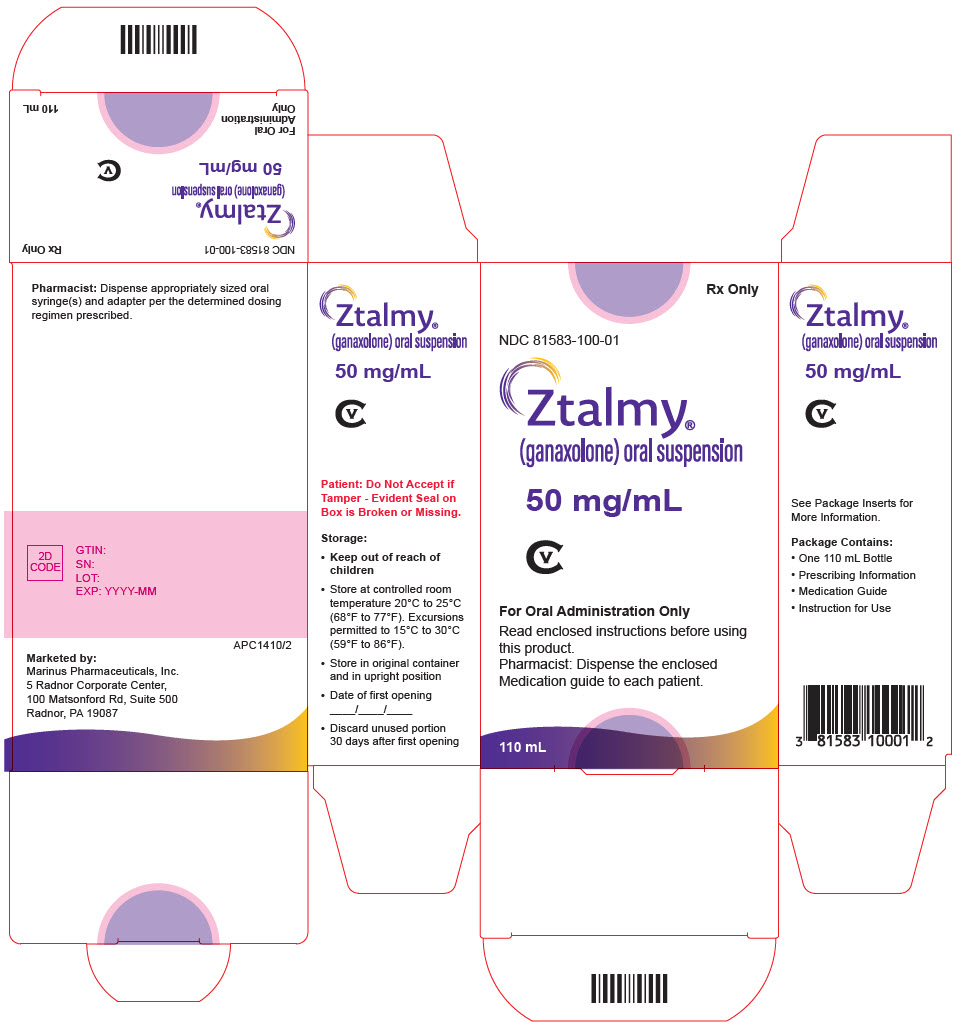
ZTALMY ganaxolone 50 mg/mL Suspension — NDC 81583-100-05 (Billing 81583-0100-05)
This is a package of ZTALMY ganaxolone 50 mg/mL Suspension from Immedica Pharma US Inc, no longer marketed (first marketed Jun 2022), no longer in the FDA NDC Directory.
Identity & classification
Regulatory identifiers FDA, NLM and CMS codes for this package
Drug-database identifiers Medi-Span GPI and First Databank GCN / HICL / AHFS classification
- GSN (GCN sequence number): 083201
- GCN: 52095
- GPI-14 (Medi-Span): 72600033001820
- HICL (First Databank): 047912
- AHFS class code: 28:12.28.00
- RxCUI (RxNorm): 2604694
Where does this data come from?
- FDA openFDA NDC Directory · synced Oct 1, 2026
- FDA label on DailyMed · label index refreshed Oct 1, 2026
- RxNorm (NLM RxNav) · catalog refreshed Oct 1, 2026
- Medi-Span GPI (licensed)
- First Databank (licensed) · refreshed Oct 1, 2026
RxNorm drug class
This medicine belongs to the Neuroactive Steroid Gamma-Aminobutyric Acid A Receptor Positive Modulator class.
Where does this data come from?
- RxClass (NLM) · catalog refreshed Oct 1, 2026
Clinical
- Ztalmy is used to help control seizures in people who have CDKL5 deficiency disorder — often called CDD. CDD is a rare genetic condition that causes frequent, hard-to-treat seizure...
- Yes — you must take Ztalmy with food every single time. This isn't just a comfort tip: food dramatically increases how much of the medication your body actually absorbs. Taking it...
- Do I have to take it with food, and why does that matter?
- Yes, sleepiness is the most common side effect and it's something to watch carefully. About 44% of kids in the clinical trial experienced some degree of sleepiness or sedation with...
Patient education
Supplement & herbal interactions
Some supplements/herbs that may interact with Ganaxolone — tap one for details:
Where does this data come from?
- MedlinePlus (NLM) · refreshed Oct 1, 2026
- FDA label on DailyMed · label index refreshed Oct 1, 2026
Ask a licensed pharmacist directly — free, answered by our team.
Pricing
A drug doesn't have one price. Each row is a different public payment system, and none is what you'd pay at the counter — that depends on your insurance. The ⓘ on each row explains what it measures.
| Price system | Per mL | Per package |
|---|---|---|
| Retail pharmacies payNADAC · weekly | Not in the retail survey — common for institutional, discontinued, or low-volume packs. | |
| Medicaid paysCMS SDUD · 12 mo | No recent Medicaid claims on file for this NDC — rare and low-volume NDCs are suppressed in the public data. | |
| Medicare drug plans payPart D · quarterly | No Part D plan price is available for this NDC in our data. | |
Where does this data come from?
- CMS NADAC weekly file
- CMS ASP pricing files · refreshed Sep 20, 2026
- CMS Medicaid State Drug Utilization Data · refreshed Oct 3, 2026
- CMS Part D plan pricing files · refreshed Sep 24, 2026
- VA National Acquisition Center price file
Packaging — all sizes for this product
| Package NDC | Description | Marketing start | Marketing end | Status |
|---|---|---|---|---|
| 81583-0100-01 81583-100-01 Main listing | 1 BOTTLE, PLASTIC in 1 CARTON / 110 mL in 1 BOTTLE, PLASTIC | 2022-06-06 | — | Active |
| 81583-0100-05 You're viewing this | 5 BOTTLE, PLASTIC in 1 CARTON / 110 mL in 1 BOTTLE, PLASTIC | 2022-06-06 | — | Discontinued by firm |
This pack shows little to no recent Medicaid volume — a different pack size carries most fills. See all packs ↓
Pack size FAQ
What quantity is in this package?
What NDC number is used to bill for this package of ZTALMY ganaxolone 50 mg/mL Suspension?
Therapeutic equivalents
| Product | Labeler | Pack | NADAC/unit | TE | Status | Price vs. this |
|---|---|---|---|---|---|---|
| Ztalmy 50 mg/mLthis 81583-0100-05 | Immedica | 5 bottles | — | — | Discontinued | — |
Where does this data come from?
- FDA openFDA NDC Directory · synced Oct 1, 2026
- FDA Orange Book · refreshed Oct 3, 2026
- CMS NADAC weekly file
Availability & generic status
We did not find an FDA-approved generic match for this exact strength, form and route. Patent/protection dates below may affect future generic timing.
Why the date isn’t exact: Generic timing can change because patents may be challenged, settled, licensed, added, removed, or worked around with a narrower label — and FDA approval does not always mean a pharmacy can get the generic today.
🛈 What do these terms mean?
- Patent
- Legal protection listed in the Orange Book that may delay generic approval or launch. Issued by the U.S. Patent & Trademark Office.
- Substance patent
- Covers the active drug molecule itself — the hardest to design around. A generic generally can’t launch until it expires.
- Formulation (product) patent
- Covers a specific formulation or dosage form. A generic can sometimes work around it with a different formulation.
- Method-of-use patent
- A patent covering one specific approved use of the drug — not necessarily the whole molecule. A generic can sometimes launch with a “skinny label” that carves out the protected use and keeps the others.
- Skinny label
- A generic label that omits a still-patented use when the FDA allows it — letting a generic reach the market for the unprotected uses.
- Exclusivity
- FDA-granted marketing protection, separate from patents — e.g. 5-yr new chemical entity, 7-yr orphan drug, or a +6-month pediatric extension.
- Paragraph IV
- A generic applicant’s formal challenge to a listed patent. It can potentially lead to earlier generic entry, but often involves litigation or a settlement.
- RLD / RS
- Reference Listed Drug — the brand product the FDA uses as the reference for generic applications. Reference Standard — the product the FDA expects generics to compare against in bioequivalence testing.
- TE / AB rating
- FDA therapeutic-equivalence rating. An AB rating generally means the FDA considers a generic therapeutically equivalent to — and substitutable for — the brand.
- LOE (loss of exclusivity)
- The latest patent or exclusivity currently listed — the loss-of-exclusivity / latest-listed-protection date shown on this page. Paragraph-IV challenges and settlements can move the real date earlier; FDA approval and a manufacturer’s decision to market can move it later.
Built from the FDA Orange Book. The bars above are scaled to each protection’s expiry; the red LOE marker is the last one to lapse.
| Patent | Type | Use code | Expires |
|---|---|---|---|
| US 12144801 ↗ | Method of use | U-4034 | Aug 10, 2037 |
| US 8618087 ↗ | Method of use | U-3374 | Nov 28, 2026 |
| US 12115169 ↗ | Method of use | U-3374 | Sep 30, 2042 |
| US 12268696 ↗ | Method of use | U-3374 | Sep 30, 2042 |
| US 10603308 ↗ | Method of use | U-3374 | Aug 10, 2037 |
| US 9056116 ↗ | Method of use | U-3374 | Nov 28, 2026 |
| US 7858609 ↗ | Drug product | — | Nov 28, 2026 |
| US 8022054 ↗ | Drug product | — | Nov 28, 2026 |
| US 8367651 ↗ | Drug product | — | Nov 28, 2026 |
| US 9029355 ↗ | Drug product | — | Nov 28, 2026 |
| US 8318714 ↗ | Drug product | — | Nov 28, 2031 |
| Code | What it grants | Expires |
|---|---|---|
| D-197 | Other change requiring clinical data (3-year) | Oct 16, 2028 |
| NCE | New Chemical Entity (5-year) | Jun 1, 2027 |
| ODE-395 | Orphan Drug Exclusivity (7-year) | Jun 1, 2029 |
Is there a generic version of ZTALMY 50 MG/ML SUSPENSION?
The FDA approved a generic — why can’t I get it at my pharmacy yet?
Why do different websites show different generic release dates?
What does “FDA listed” mean?
What does a patent or protection date mean here?
What does “current Orange Book estimate” mean?
Can a generic come out before the last patent expires?
Can a generic come out after the listed dates?
What is the difference between patents and exclusivity?
Why are there multiple patent dates?
Where does this data come from?
- FDA Orange Book · refreshed Oct 3, 2026
Inactive Ingredients / Excipients
Inactive ingredients, also called excipients, are components of the drug product other than the active ingredient. They may include fillers, dyes, coatings, preservatives, flavors, or other formulation ingredients.
💡 Tap an ingredient (hover on desktop) to see what it is and why it’s used.
-
UNII XF417D3PSL
Anhydrous citric acid is a sour, crystalline powder derived from citric acid with water removed. In medicines, it acts as a buffer to control pH, adds tartness to improve taste, and helps tablets disintegrate.
-
UNII 3NXW29V3WO
Hypromellose is a plant-based thickener made from cellulose. It's used in medicines as a binder to hold ingredients together, a coating for tablets, and a thickener for liquids.
-
UNII A2I8C7HI9T
Methylparaben is a preservative derived from benzoic acid that prevents growth of bacteria, fungi, and mold in medicines. It extends the product's shelf life and maintains safety during storage.
-
UNII 532B59J990
Polyvinyl alcohol is a synthetic polymer made from plant-derived materials. It's used as a binder to hold ingredients together, a film-former in coatings, and a thickener in liquid formulations.
-
UNII Z8IX2SC1OH
Propylparaben is a chemical preservative used to prevent bacterial and fungal growth in medicines and personal care products. It helps extend shelf life and maintain product safety during storage.
-
UNII OJ245FE5EU
Sodium benzoate is a salt derived from benzoic acid, a preservative. It's added to medicines to prevent growth of bacteria, fungi, and other microorganisms that could spoil the product.
-
UNII 1Q73Q2JULR
Sodium citrate is a salt derived from citric acid. It works as a buffer to maintain the medicine's pH level and may also help improve taste or act as a preservative in the formulation.
-
UNII 368GB5141J
A detergent and foaming agent derived from coconut or palm oil. In medications, it helps break down and mix oil and water-based ingredients, aids in tablet disintegration, and improves how the drug dissolves and spreads in the mouth or digestive system.
-
UNII 96K6UQ3ZD4
Sucralose is a synthetic sweetener made from sugar. It's added to medicines to improve taste without adding calories, helping make bitter or unpleasant-tasting drugs easier to take.
-
UNII 059QF0KO0R
Water is a liquid solvent that dissolves and mixes ingredients together in liquid medicines, syrups, and injections. It helps distribute the active drug evenly throughout the product.
10 inactive ingredients listed in the exact product block matched to this NDC.
Where does this data come from?
ingredient classCode="IACT" elements from the exact product block matched by this NDC. Label-section narrative from DailyMed / the openFDA label index is shown separately when available.- FDA label on DailyMed · label index refreshed Oct 1, 2026
- FDA openFDA NDC Directory · synced Oct 1, 2026
Inactive ingredient FAQ
Are inactive ingredients the same for every manufacturer?
Why might an inactive ingredient be missing?
Can inactive ingredients matter?
Manufacturer & labeler
Where does this data come from?
- FDA openFDA NDC Directory · synced Oct 1, 2026
- Drugs@FDA
Full prescribing information FDA SPL
🎯 Indications and Usage ▾
1 INDICATIONS AND USAGE ZTALMY is indicated for the treatment of seizures associated with cyclin-dependent kinase-like 5 (CDKL5) deficiency disorder (CDD) in patients 2 years of age and older. ZTALMY is a neuroactive steroid gamma-aminobutyric acid (GABA) A receptor positive modulator indicated for the treatment of seizures associated with cyclin-dependent kinase-like 5 (CDKL5) deficiency disorder (CDD) in patients 2 years of age and older. ( 1 )
⏱️ Dosage and Administration ▾
2 DOSAGE AND ADMINISTRATION Administer ZTALMY orally three times daily with food. ( 2.1 ) Titrate ZTALMY gradually according to the recommended schedules. See full prescribing information.
( 2.1 ) Dosage for patients weighing 28 kg or less ( 2.1 ): the starting dosage is 2 mg/kg three times daily (6 mg/kg/day) the maximum dosage is 21 mg/kg three times daily (63 mg/kg/day). Dosage for patients weighing over 28 kg ( 2.1 ): the starting dosage is 50 mg three times daily (150 mg daily) the maximum dosage is 600 mg three times daily (1800 mg daily). Patients with severe hepatic impairment: see full prescribing information for dosage recommendation.
( 2.3 )
2.1Dosage Information ZTALMY is administered by mouth three times daily and must be taken with food [see Clinical Pharmacology (12.3) ] . The recommended titration schedule and maintenance dosage are based on body weight for patients weighing 28 kg or less. Dosage recommendations for patients weighing 28 kg or less are included in Table 1, and dosage recommendations for patients weighing more than 28 kg are included in Table 2.
Dosage should be increased based on tolerability no more frequently than every 7 days. Titration increments should not exceed those shown in Table 1 and Table 2. Table 1 ZTALMY Recommended Titration Schedule for Patients Weighing 28 kg or Less Dosage Total Daily Dose Day 2 mg/kg three times daily 6 mg/kg/day 1 to 7 4 mg/kg three times daily 12 mg/kg/day 8 to 14 8 mg/kg three times daily 24 mg/kg/day 15 to 21 14 mg/kg three times daily 42 mg/kg/day 22 to 28 21 mg/kg three times daily 63 mg/kg/day 29 and thereafter Table 2 ZTALMY Recommended Titration Schedule for Patients Weighing More Than 28 kg Dosage Total Daily Dose Day 50 mg three times daily 150 mg 1 to 7 100 mg three times daily 300 mg 8 to 14 200 mg three times daily 600 mg 15 to 21 400 mg three times daily 1,200 mg 22 to 28 600 mg three times daily 1,800 mg 29 and thereafter
2.2Administration Instructions See the Instructions for Use for complete instructions on how to properly prepare and administer ZTALMY. Shake the bottle thoroughly for at least 1 minute and then wait for 1 minute before measuring and administering each dose. Measure and administer the prescribed dose using the oral syringe(s) provided by your pharmacist.
A household teaspoon or tablespoon is not an adequate measuring device and should not be used. ZTALMY must be administered with food [see Clinical Pharmacology (12.3) ] . Discard any unused ZTALMY oral suspension after 30 days of first opening the bottle [see How Supplied/Storage and Handling (16.2) ] .
2.3Dosage in Patients with Severe Hepatic Impairment ZTALMY is administered by mouth three times daily and must be taken with food [see Clinical Pharmacology (12.3) ] . The recommended titration schedule and maintenance dosage are based on body weight for patients weighing 28 kg or less. Dosage recommendations for patients with severe hepatic impairment and weighing 28 kg or less are included in Table 3, and dosage recommendations for patients with severe hepatic impairment (Child-Pugh class C) weighing more than 28 kg are included in Table 4.
Dosage should be increased based on tolerability no more frequently than every 7 days. Titration increments should not exceed those shown in Table 3 and Table 4. No dosage adjustment is necessary in patients with mild (Child-Pugh class A) or moderate (Child-Pugh class B) hepatic impairment.
Table 3 ZTALMY Recommended Titration Schedule for Patients with Severe Hepatic Impairment and Weighing 28 kg or Less Dosage Total Daily Dose Approximate daily dose. Days 0.66 mg/kg three times daily 2 mg/kg/day 1 to 7 1.33 mg/kg three times daily 4 mg/kg/day 8 to 14 2.66 mg/kg three times daily 8 mg/kg/day 15 to 21 4.66 mg/kg three times daily 14 mg/kg/day 22 to 28 7 mg/kg three times daily 21 mg/kg/day 29 and thereafter Table 4 ZTALMY Recommended Titration Schedule for Patients with Severe Hepatic Impairment and Weighing More Than 28 kg Dosage Tota… [Excerpted — this section continues on DailyMed.]
💊 Dosage Forms and Strengths ▾
3 DOSAGE FORMS AND STRENGTHS Oral suspension: 50 mg/mL ganaxolone. Each bottle contains 110 mL of white to off-white cherry flavored suspension. Oral suspension 50 mg/mL ( 3 )
⛔ Contraindications ▾
4 CONTRAINDICATIONS None. None. ( 4 )
⚠️ Warnings and Cautions ▾
5 WARNINGS AND PRECAUTIONS Somnolence and Sedation: Monitor for somnolence and sedation and advise patients not to drive or operate machinery until they have gained sufficient experience with ZTALMY. Concomitant use with other CNS depressants or alcohol could potentiate adverse effects. ( 5.1 ) Suicidal Behavior and Ideation: Monitor patients for suicidal behavior and thoughts.
( 5.2 ) Withdrawal of Antiepileptic Drugs: ZTALMY should be withdrawn gradually to minimize the risk of increased seizure frequency and status epilepticus. ( 5.3 )
5.1Somnolence and Sedation ZTALMY can cause somnolence and sedation. In Study 1 [see Clinical Studies (14) ] , the incidence of somnolence and sedation was 44% in patients treated with ZTALMY, compared with 24% in patients receiving placebo. Somnolence and sedation appeared early during treatment and were generally dose-related [see Adverse Reactions (6.1) ] .
Other central nervous system (CNS) depressants, including opioids, antidepressants, and alcohol, could potentiate somnolence and sedation in patients receiving ZTALMY [see Clinical Pharmacology (12.3) ] . Prescribers should monitor patients for somnolence and sedation, and advise patients not to drive or operate machinery until they have gained sufficient experience on ZTALMY to gauge whether it adversely affects their ability to drive or operate machinery.
5.2Suicidal Behavior and Ideation Antiepileptic drugs (AEDs), including ZTALMY, increase the risk of suicidal thoughts or behavior in patients taking these drugs for any indication. Patients treated with an AED for any indication should be monitored for the emergence or worsening of depression, suicidal thoughts or behavior, or any unusual changes in mood or behavior. Pooled analyses of 199 placebo-controlled clinical trials (mono- and adjunctive therapy) of 11 different AEDs, that did not include ZTALMY, showed that patients randomized to one of the AEDs had approximately twice the risk (adjusted Relative Risk 1.8, 95% CI:1.2, 2.7) of suicidal thinking or behavior compared to patients randomized to placebo.
In these trials, which had a median treatment duration of 12 weeks, the estimated incidence rate of suicidal behavior or ideation among 27,863 AED-treated patients was 0.43%, compared to 0.24% among 16,029 placebo-treated patients, representing an increase of approximately one case of suicidal thinking or behavior for every 530 patients treated. There were 4 suicides in drug-treated patients in the trials and none in placebo-treated patients, but the number is too small to allow any conclusion about drug effect on suicide.
The increased risk of suicidal thoughts or behavior with AEDs was observed as early as 1 week after starting drug treatment with AEDs and persisted for the duration of treatment assessed. Because most trials included in the analysis did not extend beyond 24 weeks, the risk of suicidal thoughts or behavior beyond 24 weeks could not be assessed. The risk of suicidal thoughts or behavior was generally consistent among drugs in the data analyzed.
The finding of increased risk with AEDs of varying mechanisms of action and across a range of indications suggests that the risk applies to all AEDs used for any indication. The risk did not vary substantially by age (5–100 years) in the clinical trials analyzed. Table 5 shows absolute and relative risk by indication for all evaluated AEDs.
Table 5 Risk of Suicidal Thoughts or Behaviors by Indication for Antiepileptic Drugs in the Pooled Analysis Indication Placebo Patients with Events per 1000 Patients Drug Patients with Events per 1000 Patients Relative Risk: Incidence of Events in Drug Patients/ Incidence in Placebo Patients Risk Difference: Additional Drug Patients with Events per 1000 Patients Epilepsy 1.0 3.4 3.5
2.4Psychiatric 5.7 8.5 1.5
2.9Other 1.0 1.8 1.9
0.9Total 2.4 4.3 1.8
1.9The relative risk for suicidal thoughts or behavior was higher in clinical trials in patients with epilepsy than in clinical tria… [Excerpted — this section continues on DailyMed.]
🤒 Adverse Reactions ▾
6 ADVERSE REACTIONS The following important adverse reactions are described elsewhere in the labeling: Somnolence and Sedation [see Warnings and Precautions (5.1) ] Suicidal Behavior and Ideation [see Warnings and Precautions (5.2) ] Withdrawal of Antiepileptic Drugs [see Warnings and Precautions (5.3) ] Most common adverse reactions (incidence of at least 5% for ZTALMY and at least twice the rate of placebo) are somnolence, pyrexia, salivary hypersecretion, and seasonal allergy. ( 6.1 ) To report SUSPECTED ADVERSE REACTIONS, contact Immedica at 1-844-627-4687 or FDA at 1-800-FDA-1088 or www.fda.gov/medwatch.
6.1Clinical Trials Experience Because clinical trials are conducted under widely varying conditions, adverse reaction rates observed in the clinical trials of a drug cannot be directly compared to rates in the clinical trials of another drug and may not reflect the rates observed in practice. In controlled and uncontrolled trials in patients with seizures associated with CDD, 102 patients were treated with ZTALMY, including 83 patients treated for more than 6 months, and 50 patients treated for more than 1 year. In Study 1, 50 patients received ZTALMY [see Clinical Studies (14) ] .
The duration of treatment in this trial was up to 17 weeks. Approximately 78% of these patients were female, 92% were White, and the mean age was 6.8 years (range 2 to 19 years). All patients receiving ZTALMY, except 1, were taking other AEDs.
Adverse reactions in these patients are presented below. The most common adverse reactions (an incidence of at least 5% and at least twice the rate of placebo) were somnolence, pyrexia, salivary hypersecretion, and seasonal allergy (Table 6). The adverse reactions leading to treatment discontinuation in ZTALMY-treated patients were somnolence and seizure (1 patient) and seizure (1 patient).
Twenty-two percent of ZTALMY-treated patients had dosing interrupted or reduced because of any adverse reaction, compared to 16% of placebo-treated patients. The most frequent adverse reactions leading to a dose interruption or reduction in ZTALMY-treated patients were somnolence (10%) and sedation (2%). Table 6 presents the adverse reactions that occurred in ZTALMY-treated patients with seizures associated with CDD at a rate of at least 3% and at a rate greater than in placebo-treated patients during the double-blind phase.
Table 6 Adverse Reactions that Occurred in ZTALMY-Treated Patients with Seizures Associated with CDD at a Rate of At Least 3% and Greater Than in Placebo (Study 1) Adverse Reactions ZTALMY (N=50) Placebo (N=51) % % Somnolence somnolence includes the terms lethargy and hypersomnia adverse reactions that occurred with a 21-day titration; somnolence and sedation are expected to be reduced with the recommended 28-day titration [see Dosage and Administration (2.1, 2.3)] 38 20 Pyrexia 18 8 Upper respiratory tract infection 10 6 Sedation 6 4 Salivary Hypersecretion 6 2 Seasonal allergy 6 0 Bronchitis 4 0 Influenza 4 2 Gait disturbance 4 2 Nasal congestion 4 2
🔄 Drug Interactions ▾
7 DRUG INTERACTIONS UGT inhibitors may increase ganaxolone exposures; consider reduction of a stable ZTALMY dosage when initiating a UGT inhibitor. ( 7.1 ) Cytochrome P450 inducers will decrease ganaxolone exposure. It is recommended to avoid concomitant use with strong or moderate CYP3A4 inducers; if unavoidable, consider a dosage increase of ZTALMY, but do not exceed the maximum recommended dosage. ( 7.2 )
7.1Effect of UGT Inhibitors on ZTALMY Concomitant use of ZTALMY and UGT inhibitors (e.g., valproic acid) may increase the exposure of ganaxolone, which may increase the risk of ZTALMY associated adverse reactions in patients who have titrated to a stable ZTALMY dosage. Consider a reduction of ZTALMY maintenance dosage when initiating a UGT inhibitor [see Clinical Pharmacology (12.3) ].
7.2Effect of Strong or Moderate Cytochrome P450 Inducers on ZTALMY Coadministration of ZTALMY with CYP450 inducers, such as strong or moderate CYP3A4 inducers, will decrease ganaxolone exposure, which can lower the efficacy of ZTALMY [see Clinical Pharmacology (12.3) ] . It is recommended to avoid concomitant use of strong or moderate CYP3A4 inducers with ZTALMY. When concomitant use of strong or moderate CYP3A4 inducers is unavoidable, consider an increase in the dosage of ZTALMY; however, do not exceed the maximum daily dosage of ZTALMY [see Dosage and Administration (2.1) ] .
In patients on a stable ZTALMY dosage who are initiating or increasing the dosages of enzyme-inducing antiepileptic drugs (e.g., carbamazepine, phenytoin, phenobarbital, and primidone), the ZTALMY dosage may need to be increased; however, do not exceed the maximum daily dosage of ZTALMY [see Dosage and Administration (2.1) ] .
7.3Concomitant Use of ZTALMY with CNS Depressants and Alcohol Concomitant use of ZTALMY with CNS depressants, including alcohol, may increase the risk of somnolence and sedation [see Warnings and Precautions (5.1) ] .
👥 Use in Specific Populations ▾
8 USE IN SPECIFIC POPULATIONS Pregnancy: Based on animal data, may cause fetal harm. ( 8.1 )
8.1Pregnancy Pregnancy Exposure Registry There is a pregnancy exposure registry that monitors pregnancy outcomes in women exposed to antiepileptic drugs (AEDs), such as ZTALMY, during pregnancy. Encourage women who are taking ZTALMY during pregnancy to enroll in the North American Antiepileptic Drug (NAAED) Pregnancy Registry by calling the toll-free number 1-888-233-2334 or visiting http://www.aedpregnancyregistry.org/. Risk Summary There are no available data on ZTALMY use in pregnant women to inform a drug-associated risk of adverse developmental outcomes.
In animal studies, adverse effects on development were observed in mice (fetal malformations) and rats (neurobehavioral and growth impairment) following exposure during organogenesis (mouse) or throughout gestation and lactation (rat) at maternal exposures lower than that in human adults at the maximum recommended human dose (MRHD) of 1800 mg. In addition, neuronal death was observed in rats exposed to ganaxolone during a period of brain development that begins during the third trimester of pregnancy in humans and continues during the first few years after birth.
In the US general population, the estimated background risk of major birth defects and miscarriage in clinically recognized pregnancies is 2% to 4% and 15% to 20%, respectively. The background risks of major birth defects and miscarriage for the indicated populations are unknown. Clinical Considerations Disease-associated Maternal and/or Embryofetal Risk Epilepsy, with or without exposure to antiepileptic drugs, has been associated with several adverse outcomes during pregnancy, including preeclampsia, preterm labor, antepartum and postpartum hemorrhage, placental abruption, poor fetal growth, prematurity, fetal death, and maternal mortality.
The risk of maternal or fetal injury may be greatest for patients with untreated or poorly controlled convulsive seizures. Women with epilepsy who become pregnant should not abruptly discontinue antiepileptic drugs, including ZTALMY, due to the risk of status epilepticus or severe seizures, which may be life-threatening [see Warnings and Precautions (5.3) ]. Data Animal Data In an embryofetal development study in mice, oral administration of ganaxolone (0, 50, 175, or 300 mg/kg/day) throughout the period of organogenesis resulted in increased incidences of fetal malformations (external and/or visceral) at all doses in the absence of maternal toxicity.
Maternal plasma drug exposures (AUC) at the low-effect dose (50 mg/kg/day) for embryofetal developmental toxicity in the mouse were approximately 10-fold lower than that in humans at the MRHD. In a combined embryofetal development and pre- and postnatal development study in rats, ganaxolone (0, 10, 20, or 40 mg/kg/day) was administered orally to females throughout gestation and lactation. There were no effects on embryofetal growth, survival, or morphology; however, adverse effects on offspring growth (delayed reflex development, decreased body weight gain) were observed during the postnatal period (prior to and after weaning) at the high dose, and neurobehavioral impairment (decreased locomotor activity) was observed in the offspring at the two highest doses.
The no-effect dose (10 mg/kg/day) for pre- and postnatal developmental toxicity in rats was associated with maternal drug exposures less than that in humans at the MRHD. Oral administration of ganaxolone (0, 20, 45, or 90 mg/kg/day) to rats on postnatal day (PND) 7 resulted in widespread apoptotic neurodegeneration in the brain (cortex, thalamus, and hippocampus) at all doses; a no-effect dose was not identified. Brain development on PND 7 in rat corresponds to that beginning in humans during the third trimester of pregnancy and continuing for the first several months to years after birth [see Use in Specific Populations (8.4) ] .
8.2Lactation Risk Summary Ganaxolone is excreted… [Excerpted — this section continues on DailyMed.]
🤰 Pregnancy ▾
8.1Pregnancy Pregnancy Exposure Registry There is a pregnancy exposure registry that monitors pregnancy outcomes in women exposed to antiepileptic drugs (AEDs), such as ZTALMY, during pregnancy. Encourage women who are taking ZTALMY during pregnancy to enroll in the North American Antiepileptic Drug (NAAED) Pregnancy Registry by calling the toll-free number 1-888-233-2334 or visiting http://www.aedpregnancyregistry.org/. Risk Summary There are no available data on ZTALMY use in pregnant women to inform a drug-associated risk of adverse developmental outcomes.
In animal studies, adverse effects on development were observed in mice (fetal malformations) and rats (neurobehavioral and growth impairment) following exposure during organogenesis (mouse) or throughout gestation and lactation (rat) at maternal exposures lower than that in human adults at the maximum recommended human dose (MRHD) of 1800 mg. In addition, neuronal death was observed in rats exposed to ganaxolone during a period of brain development that begins during the third trimester of pregnancy in humans and continues during the first few years after birth.
In the US general population, the estimated background risk of major birth defects and miscarriage in clinically recognized pregnancies is 2% to 4% and 15% to 20%, respectively. The background risks of major birth defects and miscarriage for the indicated populations are unknown. Clinical Considerations Disease-associated Maternal and/or Embryofetal Risk Epilepsy, with or without exposure to antiepileptic drugs, has been associated with several adverse outcomes during pregnancy, including preeclampsia, preterm labor, antepartum and postpartum hemorrhage, placental abruption, poor fetal growth, prematurity, fetal death, and maternal mortality.
The risk of maternal or fetal injury may be greatest for patients with untreated or poorly controlled convulsive seizures. Women with epilepsy who become pregnant should not abruptly discontinue antiepileptic drugs, including ZTALMY, due to the risk of status epilepticus or severe seizures, which may be life-threatening [see Warnings and Precautions (5.3) ]. Data Animal Data In an embryofetal development study in mice, oral administration of ganaxolone (0, 50, 175, or 300 mg/kg/day) throughout the period of organogenesis resulted in increased incidences of fetal malformations (external and/or visceral) at all doses in the absence of maternal toxicity.
Maternal plasma drug exposures (AUC) at the low-effect dose (50 mg/kg/day) for embryofetal developmental toxicity in the mouse were approximately 10-fold lower than that in humans at the MRHD. In a combined embryofetal development and pre- and postnatal development study in rats, ganaxolone (0, 10, 20, or 40 mg/kg/day) was administered orally to females throughout gestation and lactation. There were no effects on embryofetal growth, survival, or morphology; however, adverse effects on offspring growth (delayed reflex development, decreased body weight gain) were observed during the postnatal period (prior to and after weaning) at the high dose, and neurobehavioral impairment (decreased locomotor activity) was observed in the offspring at the two highest doses.
The no-effect dose (10 mg/kg/day) for pre- and postnatal developmental toxicity in rats was associated with maternal drug exposures less than that in humans at the MRHD. Oral administration of ganaxolone (0, 20, 45, or 90 mg/kg/day) to rats on postnatal day (PND) 7 resulted in widespread apoptotic neurodegeneration in the brain (cortex, thalamus, and hippocampus) at all doses; a no-effect dose was not identified. Brain development on PND 7 in rat corresponds to that beginning in humans during the third trimester of pregnancy and continuing for the first several months to years after birth [see Use in Specific Populations (8.4) ] .
🧒 Pediatric Use ▾
8.4Pediatric Use The safety and effectiveness of ZTALMY for the treatment of seizures associated with CDD have been established in pediatric patients 2 years of age and older. The use of ZTALMY for the treatment of seizures associated with CDD in patients 2 years of age and older is supported by a randomized, double-blind, placebo-controlled trial that included 99 pediatric patients 2 to less than 18 years of age [see Clinical Studies (14) ] . Safety and effectiveness of ZTALMY in pediatric patients below 2 years of age have not been established.
Juvenile Animal Data Oral administration of ganaxolone (0, 20, 45, 90/150/250/500 mg/kg/day) to juvenile rats from postnatal day (PND) 7 through PND 91 resulted in deaths associated with sedation and decreased male reproductive organ weights at the mid and high doses, and delayed female sexual maturation and decreased brain weights at all doses. There were no adverse effects on neurobehavioral (locomotor activity, auditory startle response, learning and memory) or reproductive function. A no-effect dose was not established.
The lowest dose producing developmental toxicity in juvenile rats (20 mg/kg/day) was associated with plasma drug exposures (AUC) less than that in pediatric patients at the maximum recommended human dose (MRHD) of 1800 mg. Oral administration of ganaxolone (0, 10, 45, or 90 mg/kg/day) to rats on postnatal day (PND) 7 resulted in widespread neuronal death in multiple brain regions, including cortex, thalamus, and hippocampus, at all doses. The pattern and extent of neuronal death was similar to that produced by intraperitoneal injection of the positive control, the NMDA receptor antagonist MK-801 (1 mg/kg).
The hippocampus, in particular, is recognized to have an important role in learning and memory. Effects of ganaxolone and MK-801 on neurobehavioral function were not assessed in this study. Brain development on PND 7 in rat corresponds to that beginning in humans during the third trimester of pregnancy and continuing for the first several months to years after birth.
At the lowest-effect dose for neuronal death, plasma drug exposure in the neonatal rat was less than that in pediatric patients at the MRHD. Oral administration of M2 (0, 15, 30, or 60 mg/kg/day), a human-specific metabolite of ganaxolone, to juvenile rats from PNDs 7 to 70 resulted in adverse effects on reproductive system development in both sexes at all doses. Effects in females included decreased corpora lutea and follicular cysts in the ovary at the high dose and signs of precocious puberty and estrous cycle disruption at all doses.
Female reproductive tract changes indicative of estrous cycle disruption persisted after a 5-week recovery period at the high dose. In males, effects consisted of delayed sexual maturation and decreased epididymis and prostate weights at the high dose, seminal vesicle atrophy at mid and high doses, and decreased seminal vesicle weights at all doses. Plasma exposures (AUC) of M2 at the highest dose were 2 times those in humans at the ganaxalone MRHD of 1,800 mg, while exposures at the mid and low doses were below those in humans at the ganaxolone MRHD.
🧓 Geriatric Use ▾
8.5Geriatric Use CDD is largely a disease of pediatric and young adult patients. Clinical studies of ZTALMY did not include patients 65 years of age and older.
🆘 Overdosage ▾
10 OVERDOSAGE There is limited clinical trial experience regarding overdose with ZTALMY. Unintentional overdose has been reported in 1 pediatric patient. This patient received ten times the prescribed dose.
The patient was hospitalized for evaluation, including an electrocardiogram (ECG) and blood tests, and recovered. Patients who overdose should be closely monitored and receive standard supportive care. No specific information is available regarding treatment of overdose.
In the event of overdose, a certified poison control center should be contacted for updated information on the management of overdose with ZTALMY.
🧬 Clinical Pharmacology ▾
12 CLINICAL PHARMACOLOGY
12.1Mechanism of Action The precise mechanism by which ganaxolone exerts its therapeutic effects in the treatment of seizures associated with CDD is unknown, but its anticonvulsant effects are thought to result from positive allosteric modulation of the gamma-aminobutyric acid type A (GABA A ) receptor in the CNS.
12.2Pharmacodynamics Cardiac Electrophysiology At therapeutic exposures, ZTALMY does not prolong the QTc interval. QT effects of ZTALMY at high clinical exposure scenarios have not been evaluated.
12.3Pharmacokinetics Absorption Following oral administration of ZTALMY, ganaxolone is absorbed with a time to maximum plasma concentration (T max ) of 2 to 3 hours. Effect of Food When ZTALMY was administered with a high-fat meal, the C max and AUC increased by 3- and 2-fold, respectively, when compared to administration under fasted conditions. ZTALMY was administered with food in the clinical efficacy study, Study 1 [see Dosage and Administration (2.1) ] .
The efficacy of ZTALMY when administered in the fasted state is unknown. Distribution Ganaxolone is approximately 99% protein-bound in serum. Elimination The terminal half-life for ganaxolone is 34 hours.
Metabolism Ganaxolone is metabolized by CYP3A4/5, CYP2B6, CYP2C19, CYP2D6, UGT1A3, UGT1A6, UGT1A9, UGT2B7, and UGT2B15. Excretion Following a single oral dose of 300 mg [ 14 C]-ganaxolone to healthy male subjects, 55% of the total radioactivity was recovered in feces (2% as unchanged ganaxolone) and 18% of the total radioactivity dose was recovered in urine (undetected as unchanged ganaxolone). Specific Populations Age, sex, and race are not expected to have a clinically-relevant effect on ganaxolone pharmacokinetics, after accounting for body weight.
Pediatric Patients After accounting for body weight, the observed pharmacokinetic exposures in patients in Study 1 [see Clinical Studies (14) ] were comparable across the age groups 2 to less than 6 years of age (n=45), 6 to less than 12 years of age (n=28), and 12 to less than 18 years of age (n=16). Patients with Renal Impairment Following oral administration of a single 300 mg dose of ZTALMY in subjects with severe renal impairment (creatine clearance between 15 and 30 mL/min as estimated by Cockcroft-Gault formula), the AUC 0-INF of ganaxolone decreased 8% and C max decreased 11% as compared to that in subjects with normal renal function (creatinine clearance ≥ 90 mL/min as estimated by Cockcroft-Gault formula).
The changes in ganaxolone exposures when administered in patients with impaired renal function (creatinine clearance <90 mL/min) are not expected to be clinically significant. Patients with Hepatic Impairment The influence of hepatic impairment on the pharmacokinetics of ganaxolone was studied following a single oral dose of ZTALMY 300 mg. In subjects with mild hepatic impairment (Child-Pugh class A), C max and AUC last increased by 38% and 8%, respectively, compared to subjects with normal hepatic function.
In subjects with moderate hepatic impairment (Child-Pugh class B), C max and AUC last increased by 45% and 50%, respectively, compared to subjects with normal hepatic function. In subjects with severe hepatic impairment (Child-Pugh class C), C max and AUC last increased by 148% and 269%, respectively, compared to subjects with normal hepatic function [see Dosage and Administration (2.3) and Use in Specific Populations (8.6) ] . Drug Interaction Studies Clinical Studies CYP3A4 Inducers Coadministration of ZTALMY with rifampin, a strong inducer of CYP2C19 and CYP3A4, and a moderate inducer of CYP2B6, decreased C max and AUC of ganaxolone by 57% and 68%, respectively, in healthy subjects [see Drug Interactions (7.2) ] .
No dedicated drug-interaction studies were conducted with moderate or weak CYP3A4 inducers. CYP3A4 Inhibitors Coadministration of ZTALMY with itraconazole, a strong CYP3A4 inhibitor, increased the AUC of ganaxolone by 17% in healthy subjects (C max was unchanged).… [Excerpted — this section continues on DailyMed.]
🧬 Mechanism of Action ▾
12.1Mechanism of Action The precise mechanism by which ganaxolone exerts its therapeutic effects in the treatment of seizures associated with CDD is unknown, but its anticonvulsant effects are thought to result from positive allosteric modulation of the gamma-aminobutyric acid type A (GABA A ) receptor in the CNS.
📦 How Supplied / Storage and Handling ▾
16 HOW SUPPLIED/STORAGE AND HANDLING
16.1How Supplied ZTALMY (ganaxolone) oral suspension (50 mg/mL) is a cherry flavored white to off-white suspension supplied in a 4 fl. oz (135 mL) round natural high density polyethylene (HDPE) bottle with a propylene child-resistant cap containing 110 mL of ZTALMY oral suspension. ZTALMY is packaged in a carton with 1 bottle (NDC 81583-100-01).
16.2Storage and Handling Store ZTALMY in its original bottle in an upright position at 20°C to 25°C (68°F to 77°F); excursions permitted from 15°C to 30°C (59°F to 86°F) [see USP Controlled Room Temperature]. Keep the cap tightly closed. Use within 30 days of first opening the bottle, then discard any remainder.
📦 Storage and Handling ▾
16.2Storage and Handling Store ZTALMY in its original bottle in an upright position at 20°C to 25°C (68°F to 77°F); excursions permitted from 15°C to 30°C (59°F to 86°F) [see USP Controlled Room Temperature]. Keep the cap tightly closed. Use within 30 days of first opening the bottle, then discard any remainder.
📋 Description ▾
11 DESCRIPTION ZTALMY (ganaxolone) oral suspension contains ganaxolone, a neuroactive steroid gamma-aminobutyric acid A (GABA A ) receptor positive modulator. Ganaxolone (1-[(3R, 5S, 8R, 9S, 10S, 13S, 14S, 17S)-3-hydroxy-3, 10, 13-trimethyl-1, 2, 4, 5, 6, 7, 8, 9, 11, 12, 14, 15, 16, 17-tetradecahydrocyclopenta[a]phenanthren-17-yl]ethanone) is a methyl-substituted (at the 3β position) analog of the endogenous neurosteroid allopregnanolone, a derivative of progesterone. Its empirical formula is C 22 H 36 O 2 , and the molecular weight is 332.53 g/mol.
The chemical structure is: Ganaxolone is a white to off-white crystalline powder that only exists in one crystal form and has low aqueous solubility. ZTALMY is an oral suspension of ganaxolone. Each mL of oral suspension contains 50 mg of ganaxolone.
Inactive ingredients include artificial cherry flavor, citric acid, hypromellose, methylparaben, polyvinyl alcohol, propylparaben, purified water, simethicone emulsion, sodium benzoate, sodium citrate, sodium lauryl sulfate, and sucralose. Chemical Structure
💬 Information for Patients ▾
17 PATIENT COUNSELING INFORMATION Advise the patient to read the FDA-approved patient labeling (Medication Guide and Instructions for Use). Somnolence and Sedation Caution patients about operating hazardous machinery, including motor vehicles, until they are reasonably certain that ZTALMY does not affect them adversely (e.g., impair judgment, thinking, or motor skills) [see Warnings and Precautions (5.1) ] . Suicidal Thinking and Behavior Counsel patients, their caregivers, and their families that antiepileptic drugs, including ZTALMY, may increase the risk of suicidal thoughts and behavior and advise them to be alert for the emergence or worsening of symptoms of depression, any unusual changes in mood or behavior, or the emergence of suicidal thoughts, behavior, or thoughts of self-harm.
Instruct patients, caregivers, and families to report behaviors of concern immediately to healthcare providers [see Warnings and Precautions (5.2) ] . Withdrawal of Antiepileptic Drugs (AEDs) Advise patients not to discontinue use of ZTALMY without consulting with their healthcare provider. ZTALMY should normally be gradually withdrawn to reduce the potential for increased seizure frequency and status epilepticus [see Dosage and Administration (2.4) and Warnings and Precautions (5.3) ] .
Administration information Advise patients who are prescribed ZTALMY to use the adapter and oral dosing syringes provided by their pharmacist [see Dosage and Administration (2.2) and Instructions for Use ] . Instruct patients to take ZTALMY with food [see Dosage and Administration (2.1) ] . Instruct patients to shake ZTALMY thoroughly for at least 1 minute and then wait for 1 minute before measuring and administering each dose [see Dosage and Administration (2.2) and Instructions for Use ] .
Instruct patients to discard any unused ZTALMY oral suspension after 30 days of first opening the bottle [see Dosage and Administration (2.2) and How Supplied/Storage and Handling (16.2) ] . Pregnancy Registry Advise patients to notify their healthcare provider if they become pregnant or intend to become pregnant during ZTALMY therapy. Encourage women who are taking ZTALMY to enroll in the North American Antiepileptic Drug (NAAED) Pregnancy Registry if they become pregnant.
This registry is collecting information about the safety of antiepileptic drugs during pregnancy [see Use in Specific Populations (8.1) ] . Potential for Abuse Advise patients that ZTALMY can be abused or lead to dependence [see Drug Abuse and Dependence (9) ] .
💬 Medication Guide ▾
MEDICATION GUIDE ZTALMY ® (zuh tal' mee) (ganaxolone) oral suspension, CV This Medication Guide has been approved by the U.S. Food and Drug Administration Issued: Issued: 11/2025 What is the most important information I should know about ZTALMY? ZTALMY can cause serious side effects, including: ZTALMY may cause sleepiness.
Taking ZTALMY with central nervous system (CNS) depressants including alcohol may increase sleepiness. Do not drive, operate heavy machinery, or do other dangerous activities until you know how ZTALMY affects you or your child. Like other antiepileptic drugs, ZTALMY may cause suicidal thoughts or actions in a very small number of people, about 1 in 500.
Call a healthcare provider right away if you or your child have any of these symptoms, especially if they are new, worse, or worry you: thoughts about suicide or dying attempt to commit suicide new or worse depression new or worse anxiety feeling agitated or restless panic attacks trouble sleeping (insomnia) new or worse irritability acting aggressive, being angry, or violent acting on dangerous impulses an extreme increase in activity and talking (mania) other unusual changes in behavior or mood How can I watch for early symptoms of suicidal thoughts and actions?
Pay attention to any changes, especially sudden changes in mood, behaviors, thoughts, or feelings. Keep all follow-up visits with your healthcare provider as scheduled. Do not stop taking ZTALMY without first talking to your healthcare provider.
Stopping a seizure medicine such as ZTALMY suddenly can cause you or your child to have seizures more often or seizures that do not stop (status epilepticus). Call your healthcare provider between visits as needed, especially if you are worried about symptoms. WHAT IS ZTALMY?
ZTALMY is a prescription medicine that is used to treat seizures associated with cyclin-dependent kinase-like 5 (CDKL5) deficiency disorder (CDD) in people 2 years of age and older. ZTALMY is a federally controlled substance (CV) because it contains ganaxolone that can be abused and lead to dependence. Keep ZTALMY in a safe place to prevent misuse and abuse.
Selling or giving away ZTALMY may harm others and is against the law. Tell your healthcare provider if you or your child have ever abused or been dependent on alcohol, prescription medicines, or street drugs. It is not known if ZTALMY is safe and effective in children under 2 years of age.
Before taking ZTALMY, tell your healthcare provider about all of your or your child's medical conditions, including if you or your child: drink alcohol. have or have had depression, mood problems, or suicidal thoughts or behavior. have abused or been dependent on prescription medicines, street drugs, or alcohol. have liver problems. are pregnant or plan to become pregnant. Tell your healthcare provider right away if you or your child become pregnant while taking ZTALMY. You and your healthcare provider will decide if you or your child should take ZTALMY while pregnant. if you or your child become pregnant while taking ZTALMY, talk to your healthcare provider about registering with the North American Antiepileptic Drug Pregnancy Registry.
You can enroll in this registry by calling 1-888-233-2334 or go to http://www.aedpregnancyregistry.org/. The purpose of this registry is to collect information about the safety of antiepileptic drugs during pregnancy. are breastfeeding or plan to breastfeed. ZTALMY may pass into breast milk.
Talk to your healthcare provider about the best way to feed your or your child's baby while taking ZTALMY. Tell your healthcare provider about all the medicines you or your child take, including prescription and over-the-counter medicines, vitamins, and herbal supplements. ZTALMY may affect the way other medicines work, and other medicines may affect how ZTALMY works.
Do not stop or start taking other medicines without talking to your healthcare provider. Especially tell your healthcare provider if you or your child take: alco… [Excerpted — this section continues on DailyMed.]
🧬 Pharmacokinetics ▾
12.3Pharmacokinetics Absorption Following oral administration of ZTALMY, ganaxolone is absorbed with a time to maximum plasma concentration (T max ) of 2 to 3 hours. Effect of Food When ZTALMY was administered with a high-fat meal, the C max and AUC increased by 3- and 2-fold, respectively, when compared to administration under fasted conditions. ZTALMY was administered with food in the clinical efficacy study, Study 1 [see Dosage and Administration (2.1) ] .
The efficacy of ZTALMY when administered in the fasted state is unknown. Distribution Ganaxolone is approximately 99% protein-bound in serum. Elimination The terminal half-life for ganaxolone is 34 hours.
Metabolism Ganaxolone is metabolized by CYP3A4/5, CYP2B6, CYP2C19, CYP2D6, UGT1A3, UGT1A6, UGT1A9, UGT2B7, and UGT2B15. Excretion Following a single oral dose of 300 mg [ 14 C]-ganaxolone to healthy male subjects, 55% of the total radioactivity was recovered in feces (2% as unchanged ganaxolone) and 18% of the total radioactivity dose was recovered in urine (undetected as unchanged ganaxolone). Specific Populations Age, sex, and race are not expected to have a clinically-relevant effect on ganaxolone pharmacokinetics, after accounting for body weight.
Pediatric Patients After accounting for body weight, the observed pharmacokinetic exposures in patients in Study 1 [see Clinical Studies (14) ] were comparable across the age groups 2 to less than 6 years of age (n=45), 6 to less than 12 years of age (n=28), and 12 to less than 18 years of age (n=16). Patients with Renal Impairment Following oral administration of a single 300 mg dose of ZTALMY in subjects with severe renal impairment (creatine clearance between 15 and 30 mL/min as estimated by Cockcroft-Gault formula), the AUC 0-INF of ganaxolone decreased 8% and C max decreased 11% as compared to that in subjects with normal renal function (creatinine clearance ≥ 90 mL/min as estimated by Cockcroft-Gault formula).
The changes in ganaxolone exposures when administered in patients with impaired renal function (creatinine clearance <90 mL/min) are not expected to be clinically significant. Patients with Hepatic Impairment The influence of hepatic impairment on the pharmacokinetics of ganaxolone was studied following a single oral dose of ZTALMY 300 mg. In subjects with mild hepatic impairment (Child-Pugh class A), C max and AUC last increased by 38% and 8%, respectively, compared to subjects with normal hepatic function.
In subjects with moderate hepatic impairment (Child-Pugh class B), C max and AUC last increased by 45% and 50%, respectively, compared to subjects with normal hepatic function. In subjects with severe hepatic impairment (Child-Pugh class C), C max and AUC last increased by 148% and 269%, respectively, compared to subjects with normal hepatic function [see Dosage and Administration (2.3) and Use in Specific Populations (8.6) ] . Drug Interaction Studies Clinical Studies CYP3A4 Inducers Coadministration of ZTALMY with rifampin, a strong inducer of CYP2C19 and CYP3A4, and a moderate inducer of CYP2B6, decreased C max and AUC of ganaxolone by 57% and 68%, respectively, in healthy subjects [see Drug Interactions (7.2) ] .
No dedicated drug-interaction studies were conducted with moderate or weak CYP3A4 inducers. CYP3A4 Inhibitors Coadministration of ZTALMY with itraconazole, a strong CYP3A4 inhibitor, increased the AUC of ganaxolone by 17% in healthy subjects (C max was unchanged). Changes in ganaxolone exposures when coadministered with strong, moderate, or weak CYP3A4 inhibitors are not expected to be clinically significant.
CYP3A4 Substrates Coadministration of ganaxolone at steady state (400 mg twice daily; 0.44 times the maximum recommended dosage) with midazolam, a sensitive CYP3A4 substrate, did not result in clinically relevant changes in exposures of the substrate in healthy subjects. In Vitro Studies CYP450 Enzymes Ganaxolone does not inhibit CYP1A2, CYP2B6, CYP2C8, CYP2C9, CYP2C19, CYP2D6, or CYP3A4/5… [Excerpted — this section continues on DailyMed.]
🧬 Pharmacodynamics ▾
12.2Pharmacodynamics Cardiac Electrophysiology At therapeutic exposures, ZTALMY does not prolong the QTc interval. QT effects of ZTALMY at high clinical exposure scenarios have not been evaluated.
🔬 Clinical Studies ▾
14 CLINICAL STUDIES The effectiveness of ZTALMY for the treatment of seizures associated with CDD in patients 2 years of age and older was established in a single, double-blind, randomized, placebo-controlled study in patients 2 to 19 years of age (Study 1, NCT03572933). Patients enrolled in Study 1 (N=50 for ZTALMY; N=51 for placebo) had molecular confirmation of a pathogenic or likely pathogenic mutation in the CDKL5 gene, seizures inadequately controlled by at least 2 previous treatment regimens, and a minimum of 16 major motor seizures (i.e., bilateral tonic, generalized tonic-clonic, bilateral clonic, atonic, focal to bilateral tonic-clonic) per 28 days during a retrospective 2-month period prior to screening.
Patients were randomized in a 1:1 ratio to receive either ZTALMY or placebo. Following a titration period, patients in the ZTALMY arm weighing 28 kg or less received a maintenance dosage of 21 mg/kg three times daily (with a maximum daily dose of 1800 mg) while patients in the ZTALMY arm weighing more than 28 kg received a maintenance dosage of 600 mg three times daily [see Dosage and Administration (2.1) ]. Ninety-six percent of patients were taking between 1 to 4 concomitant AEDs.
The most frequently used concomitant AEDs (in at least 20% of patients) were valproate (34%), levetiracetam (26%), clobazam (25%), and vigabatrin (22%). The primary efficacy endpoint was the percentage change in the 28-day frequency of major motor seizures (defined similarly as in the 2-month period prior to screening) from a 6-week prospective baseline phase during the 17-week double-blind phase. Patients treated with ZTALMY had a significantly greater reduction in the 28-day frequency of major motor seizures compared to patients receiving placebo (see Table 7 ).
Table 7 Change in Frequency of Major Motor Seizures per 28 days in Patients with CDD (Study 1) Frequency of Major Motor Seizures (per 28 days) Placebo (N=51) ZTALMY (N=49) Prospective Baseline Phase Median Seizure Frequency 49 54 Median Percent Change from Baseline During Treatment -7 -31 p-value compared to placebo Obtained from a Wilcoxon rank-sum test 0.0036 Figure 1 displays the percentage of patients by category of reduction from baseline in the 28-day frequency of major motor seizures during the 17-week double-blind phase.
Figure 1 Proportion of Patients by Category of Seizure Response for ZTALMY and Placebo in Patients with CDD (Study 1) Figure 1
🔒 Drug Abuse and Dependence ▾
9 DRUG ABUSE AND DEPENDENCE
9.1Controlled Substance ZTALMY contains ganaxolone, a Schedule V controlled substance (CV).
9.2Abuse Ganaxolone has potential for abuse. Abuse is the intentional non-therapeutic use of a drug, even once, to achieve a desired psychological or physiological effect. In a human abuse potential study, 400, 800, and 2000 mg oral doses of ZTALMY were compared to a 6 mg oral dose of lorazepam and placebo.
On positive subjective measures of "drug liking", "overall drug liking", "high", "good drug effects", and "take drug again", the 400 and 800 mg doses of ZTALMY produced mean scores that were within or just outside of the acceptable placebo range and were not statistically significantly different than placebo. The 2000 mg dose of ZTALMY produced responses on these positive subjective measures that were slightly greater than the acceptable placebo range and were statistically significantly greater than placebo. Scores on these positive subjective measures for all three doses of ZTALMY were statistically significantly lower than those produced by lorazepam.
9.3Dependence Physical dependence is a state that develops as a result of physiological adaptation in response to repeated drug use, manifested by withdrawal signs and symptoms after abrupt discontinuation or a significant dose reduction of a drug. During clinical studies with ZTALMY, it was not possible to assess physical dependence because abrupt discontinuation of an antiepileptic medication in patients with epilepsy presents a serious safety concern. It is recommended that ZTALMY be tapered according to the dosage recommendations, unless symptoms warrant immediate discontinuation [see Dosage and Administration (2.4) and Warnings and Precautions (5.1) ] .
🔒 Controlled Substance ▾
9.1Controlled Substance ZTALMY contains ganaxolone, a Schedule V controlled substance (CV).
🧪 Nonclinical Toxicology ▾
13 NONCLINICAL TOXICOLOGY
13.1Carcinogenesis, Mutagenesis, Impairment of Fertility Carcinogenesis Oral administration of ganaxolone (150, 500, and 1000 mg/kg/day in males and 100, 300, and 1000 mg/kg/day in females) to Tg.rasH2 mice for up to 26 weeks did not result in an increase in tumors. No carcinogenicity studies have been conducted with ganaxolone in rats. Mutagenesis Ganaxolone was negative for genotoxicity in in vitro (Ames and mouse lymphoma) and in vivo (rat bone marrow micronucleus) assays.
The major circulating human metabolite, oxy-dehydro-ganaxolone, was negative for mutagenicity in the in vitro Ames assay but positive for clastogenicity in an in vitro mammalian chromosomal aberration test in human peripheral blood lymphocytes. Impairment of Fertility Oral administration of ganaxolone (0, 10, 20 or 40 mg/kg/day) to male and female rats prior to and throughout mating and continuing in females during early gestation resulted in alterations in estrous cyclicity at the high dose. There were no effects on spermatogenesis, reproductive performance and fertility, or early embryonic development.
The highest dose tested (40 mg/kg/day) was associated with plasma exposures (AUC) less than that in adult humans at the maximum recommended human dose of 1800 mg.
📄 Carcinogenesis, Mutagenesis, Impairment of Fertility ▾
13.1Carcinogenesis, Mutagenesis, Impairment of Fertility Carcinogenesis Oral administration of ganaxolone (150, 500, and 1000 mg/kg/day in males and 100, 300, and 1000 mg/kg/day in females) to Tg.rasH2 mice for up to 26 weeks did not result in an increase in tumors. No carcinogenicity studies have been conducted with ganaxolone in rats. Mutagenesis Ganaxolone was negative for genotoxicity in in vitro (Ames and mouse lymphoma) and in vivo (rat bone marrow micronucleus) assays.
The major circulating human metabolite, oxy-dehydro-ganaxolone, was negative for mutagenicity in the in vitro Ames assay but positive for clastogenicity in an in vitro mammalian chromosomal aberration test in human peripheral blood lymphocytes. Impairment of Fertility Oral administration of ganaxolone (0, 10, 20 or 40 mg/kg/day) to male and female rats prior to and throughout mating and continuing in females during early gestation resulted in alterations in estrous cyclicity at the high dose. There were no effects on spermatogenesis, reproductive performance and fertility, or early embryonic development.
The highest dose tested (40 mg/kg/day) was associated with plasma exposures (AUC) less than that in adult humans at the maximum recommended human dose of 1800 mg.
📖 Instructions for Use ▾
INSTRUCTIONS FOR USE ZTALMY ® ( zuh-tal' mee ) (ganaxolone) oral suspension, CV 50 mg/mL Be sure that you read, understand, and follow these instructions carefully to ensure proper dosing of the oral suspension. Important: Follow your healthcare provider's instructions for how to take or give ZTALMY. ZTALMY should always be given with food.
Ask your healthcare provider or pharmacist if you are not sure how to prepare, take, or give the prescribed dose of ZTALMY. Always use the oral syringe provided by your pharmacist to make sure you measure the right amount of ZTALMY. Do not use ZTALMY after the expiration date on the package and each bottle.
Use ZTALMY within 30 days of first opening the bottle. After 30 days of first opening the bottle, safely throw away (dispose of) any ZTALMY that has not been used. Each package contains: 1 bottle of ZTALMY with a child resistant cap: Supplies not included in the package: press-in bottle adapter oral syringe You can get a press-in bottle adapter and oral syringes from your pharmacy.
Your pharmacist can help you choose the right press-in bottle adapter and oral syringe to use with ZTALMY. Call your pharmacist right away if you do not have a press-in bottle adapter and the right sized oral syringe to use with your medicine. Note: If you lose or damage an oral syringe, or cannot read the markings, contact your pharmacist for a new oral syringe.
Follow the instructions below to use the press-in bottle adapter and oral syringe to measure and take or give ZTALMY. Prepare the bottle Hold the bottle in your hand and shake it up and down well for 1 minute. Always shake the bottle well for 1 minute then let the bottle stand for 1 minute so that any foam build up during shaking can settle before measuring and giving each dose of ZTALMY.
This helps you measure the correct amount of medicine. Note: This step is for each dose of the medicine. Remove the child-resistant cap by pushing down while turning the cap to the left (counter-clockwise).
Puncture and peel off the induction seal from the bottle. Note: This step is only for the first use of the bottle. Push the press-in-bottle adapter firmly into the bottle.
Firmly grasp the bottle in one hand and insert the press-in bottle adapter all the way in the bottle with the other hand using constant pressure. Make sure the press-in bottle adaptor is fully inserted. If not fully inserted, small parts such as the press-in bottle adaptor may become a choking hazard for children and pets.
Note : Do not remove the press-in bottle adapter from the bottle after it is inserted. Prepare the dose Your healthcare provider will tell you how much ZTALMY to take or give. Gather the oral syringe, push the plunger all the way down then insert the tip of the oral syringe fully into the press-in bottle adapter.
With the oral syringe in place, turn the bottle upside down. Slowly pull the plunger of the oral syringe to withdraw the dose of ZTALMY needed. Line up the end of the plunger with the marking for your dose of ZTALMY.
What to do if you see air bubbles : If there are air bubbles in the oral syringe, keep the bottle upside down and slowly push the plunger so that all of the liquid flows back into the bottle. Repeat step 6 until air bubbles are gone. When you have measured the correct amount of ZTALMY, leave the oral syringe in the press-in bottle adapter and turn the bottle right side up.
Carefully remove the oral syringe from the press-in bottle adapter. Take or give ZTALMY Place the tip of the oral syringe against the inside of the cheek and gently push the plunger until all of the ZTALMY in the oral syringe is taken or given. Do not forcefully push the plunger.
Do not direct the medicine to the back of the mouth or throat. This may cause choking. Screw the child-resistant cap back on the bottle tightly by turning the cap to the right (clockwise).
Do not remove the press-in bottle adapter. The child-resistant cap will fit over it. How should I store ZTALMY?
Store ZTALM… [Excerpted — this section continues on DailyMed.]
📄 Recent Major Changes ▾
Dosage and Administration ( 2.1 , 2.3 ) 10/2025
📄 Package Label / Principal Display Panel ▾
PRINCIPAL DISPLAY PANEL - 50 mg/mL Bottle Label NDC 81583-100-01 Rx Only Ztalmy ® (ganaxolone) oral suspension 50 mg/mL CV For Oral Administration Only Recommended Dosage: See prescribing information. Administer with the provided syringe. Date of first opening _____/_____/_____. Discard unused portion 30 days after first opening. PRINCIPAL DISPLAY PANEL - 50 mg/mL Bottle Label
PRINCIPAL DISPLAY PANEL - 50 mg/mL Bottle Carton Rx Only NDC 81583-100-01 Ztalmy ® (ganaxolone) oral suspension 50 mg/mL CV For Oral Administration Only Read enclosed instructions before using this product. Pharmacist: Dispense the enclosed Medication guide to each patient. 110 mL PRINCIPAL DISPLAY PANEL - 50 mg/mL Bottle Carton
Medicaid utilization by pack size
Medicare Part D spend CMS · PART D · 2026 (Q1)
Reported adverse events (FAERS)
Top reported reactions
Age at onset
Reporter sex
Serious outcomes
Where does this data come from?
About this NDC listing & data coverage
What data is (and isn’t) available for this NDC — tap to expand
| NDC identity (package / product / labeler codes) | ✓ Available |
| Labeler | ✓ Available |
| Product & package description | ✓ Available |
| Marketing category & status | ✓ Available |
| Active ingredient / dosage form / route | ✓ Available |
| FDA label (SPL via DailyMed) | ✓ Available |
| Package photos | ✓ Available |
| Inactive ingredients (structured) | ✓ Available |
| NADAC pharmacy acquisition price (CMS) | — Not published for this NDC CMS publishes NADAC only for NDCs reported in its retail-pharmacy survey. |
| Orange Book / therapeutic-equivalence data | ✓ Available |
| HCPCS J-code billing crosswalk | — Not published for this NDC Most self-administered / retail products have no J-code — that is normal. |
| Medicaid utilization (CMS SDUD) | — Not published for this NDC CMS reports utilization only for NDCs with Medicaid claims above its privacy threshold. |