
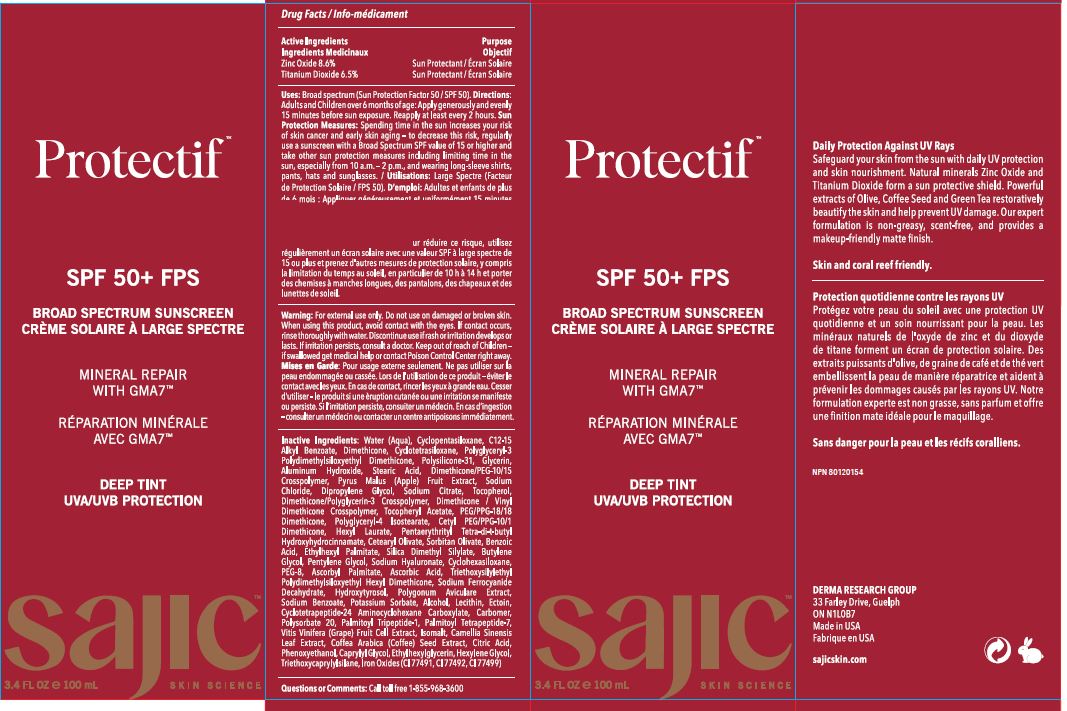
Protectif Deep Tint Zinc Oxide and Titanium Dioxide 6.5 g/100g; 8.6 g/100g Cream
🆔 Identity & classification
Where does this data come from?
🏭 Manufacturer & labeler
Where does this data come from?
🩺 Clinical
Protectif Deep Tint is an over-the-counter cream applied to the skin that contains zinc oxide and titanium dioxide as active ingredients. Both of these mineral compounds are commonly used as physical sun-blocking agents in sunscreen products. They work by sitting on the skin's surface and reflecting ultraviolet light away from the skin. This product is marketed under the FDA's established rules for over-the-counter sunscreen ingredients rather than as an individually reviewed drug application.
Patient education
Supplement & herbal interactions
Where does this data come from?
Ask a licensed pharmacist directly — free, answered by our team.
🧪 Inactive Ingredients / Excipients
Inactive ingredients, also called excipients, are components of the drug product other than the active ingredient. They may include fillers, dyes, coatings, preservatives, flavors, or other formulation ingredients.
💡 Tap an ingredient (hover on desktop) to see what it is and why it’s used.
-
UNII 9E8X80D2L0
A synthetic form of vitamin E used as an antioxidant and preservative in medications. It helps prevent the active ingredients from degrading when exposed to oxygen or light.
-
UNII 3K9958V90M
A liquid solvent derived from fermentation or chemical synthesis. In medicines, alcohol dissolves active ingredients, helps preserve the product, and improves how the body absorbs certain drugs.
-
UNII A9EJ3J61HQ
A synthetic liquid derived from benzoic acid and long-chain alcohols. It functions as a solvent and penetration enhancer in topical formulations, helping active ingredients dissolve and absorb into the skin.
-
UNII 5QB0T2IUN0
Aluminum hydroxide is a white powder mineral compound used as an antacid ingredient in some formulations. It works as a buffer and pH regulator to help neutralize stomach acid in the medicine.
-
UNII B423VGH5S9
A natural fruit ingredient derived from apples, used as a flavoring agent and sweetener to improve taste and palatability of the medicine.
-
UNII 3SW678MX72
A natural flavoring derived from roasted arabica coffee beans. It adds coffee taste and aroma to the medicine, making it more palatable for patients who need to swallow or chew the product.
-
UNII PQ6CK8PD0R
Ascorbic acid, also known as vitamin C, is a white crystalline powder. It serves as an antioxidant to prevent degradation of other ingredients and may also function as a preservative in the formulation.
-
UNII QN83US2B0N
Ascorbyl palmitate is a fat-soluble form of vitamin C used as an antioxidant in medicines. It prevents oils and fats in the product from breaking down and becoming less stable over time.
-
UNII 8SKN0B0MIM
Benzoic acid is a naturally occurring organic acid used as a preservative in medicines and foods. It helps prevent bacterial and fungal growth to extend shelf life and maintain product stability.
-
UNII 3XUS85K0RA
Butylene glycol is a clear liquid derived from petroleum or plants that acts as a humectant, solvent, and preservative booster in medicines. It helps keep formulations stable, dissolve active ingredients, and maintain moisture in topical products.
-
UNII 00YIU5438U
Caprylyl glycol is a clear liquid derived from coconut oil. In medicines, it acts as a humectant to retain moisture, a preservative booster to prevent microbial growth, and a solvent to help dissolve or mix other ingredients.
-
UNII 0A5MM307FC
A synthetic polymer that absorbs water and forms a thick, gel-like substance. In medicines, it works as a thickener and stabilizer to improve texture and help ingredients stay mixed together in creams, gels, and lotions.
-
UNII 58B69Q84JO
A plant-derived emulsifier made from olive oil and fatty alcohols. It helps blend oil and water ingredients together and stabilizes the product's texture in creams, lotions, and similar formulations.
-
UNII 8INO2K35FA
A silicone-based compound that mixes oil and water components together. It acts as an emulsifier and helps distribute ingredients evenly throughout the formulation, improving texture and stability.
-
UNII 2968PHW8QP
A weak organic acid derived from citrus fruits or made through fermentation. It works as a buffer to control pH, a preservative to extend shelf life, and a flavoring agent in medications.
-
UNII CZ227117JE
A silicone-based compound made of linked silicon and oxygen atoms arranged in a ring structure. It acts as a solvent, carrier, or conditioning agent to help distribute active ingredients evenly and improve product texture and spreadability.
-
UNII 0THT5PCI0R
A silicone-based liquid that helps distribute active ingredients evenly throughout topical products. It acts as a solvent and emollient, allowing medicines to spread smoothly on skin while improving texture and absorption.
-
UNII XHK3U310BA
Cyclohexasiloxane is a silicon-based liquid that acts as a solvent and conditioning agent in medicines. It helps dissolve or carry other ingredients and improves how the product spreads or feels on the skin.
-
UNII NR327745KQ
A synthetic cyclic peptide compound used as a solubilizer or penetration enhancer in pharmaceutical formulations. It helps improve drug absorption and stability in topical or oral preparations.
-
UNII 92RU3N3Y1O
Dimethicone is a silicone-based oil that acts as an anti-foaming agent and lubricant in medicines. It reduces gas bubbles in liquid formulations and helps coat and protect the stomach lining when ingested.
-
UNII 21AS8B1BSS
A silicone-based ingredient that combines dimethicone (silicone oil) with polyethylene glycol. It works as a skin-conditioning agent and texture enhancer, helping smooth the product's feel and improve how it spreads on skin.
-
UNII 2P2G24V6T9
A silicone-based ingredient that acts as a glidant and lubricant to help powder particles flow smoothly during manufacturing and tablet compression. It reduces friction and prevents clumping in the final product.
-
UNII 9E4CO0W6C5
A silicone-based polymer that forms soft, spongy particles. Used as a texture modifier and suspending agent to improve how the product feels and flows, and to help keep ingredients evenly distributed throughout the formulation.
-
UNII E107L85C40
Dipropylene glycol is a clear liquid made from propylene glycol. It acts as a solvent and humectant in medicines, helping dissolve active ingredients and retain moisture in the formulation.
-
UNII 7GXZ3858RY
Ectoine is a naturally derived protective compound used in pharmaceuticals as a stabilizer and humectant. It helps preserve the integrity of active ingredients and maintain moisture in formulations.
-
UNII 2865993309
Ethylhexyl palmitate is an oily chemical made from palm oil and alcohol. It acts as an emollient and skin-conditioning agent in topical medicines, helping the product spread smoothly and keeping skin soft.
-
UNII 147D247K3P
Ethylhexylglycerin is a synthetic preservative used to prevent bacteria and mold from growing in medicines and personal care products. It helps keep the product safe and stable throughout its shelf life.
-
UNII 1K09F3G675
Ferric oxide red is an inorganic iron compound used as a colorant in medicines. It gives tablets, capsules, or other dosage forms a red or reddish tint for identification and appearance.
-
UNII EX438O2MRT
Ferric oxide yellow is a naturally occurring iron compound used as a colorant in medications. It gives tablets, capsules, and other forms a yellow or golden hue for identification and appearance.
-
UNII XM0M87F357
A dark iron oxide compound that gives medicines their black or dark color. It's used as a colorant in tablets and capsules to help identify the product and make it visually distinctive.
-
UNII PDC6A3C0OX
Glycerin is a clear, thick liquid derived from plant oils or fats. It acts as a humectant to retain moisture, a sweetener, and a solvent in medications.
-
UNII W2ZU1RY8B0
A plant extract from green tea leaves. It's used as an antioxidant ingredient to help preserve the medicine and maintain its stability during storage.
-
UNII 4CG9F9W01Q
A synthetic fatty acid ester used as an emollient and skin-conditioning agent in topical medicines. It helps soften the product texture and improves how it spreads and absorbs into the skin.
-
UNII KEH0A3F75J
Hexylene glycol is a clear liquid alcohol used as a solvent and preservative in medicines. It helps dissolve other ingredients and keeps the product stable during storage.
-
UNII YSE9PPT4TH
Hyaluronate sodium is a natural carbohydrate that holds moisture. It's used in medicines as a lubricant, thickener, and moisture-retaining agent to improve texture and delivery of the active ingredient.
-
UNII QEU0NE4O90
Hydroxytyrosol is a polyphenol compound derived from olives. It functions as an antioxidant in formulations, helping protect the medicine from degradation caused by oxidation during storage and shelf life.
-
UNII S870P55O2W
Isomalt is a sugar alcohol made from sugar that's used as a sweetener and bulking agent in medicines. It helps give tablets and powders the right texture and sweetness while having minimal calories.
-
UNII 1DI56QDM62
A natural fatty substance from soybeans that helps mix oil and water-based ingredients together. It acts as an emulsifier and lubricant in medicines to improve texture and help the product break down properly in your body.
-
UNII Q41S464P1R
A synthetic peptide (short protein-like molecule) used in skincare and cosmetic formulations as an active conditioning ingredient to help improve skin texture and appearance. It may function as a humectant or skin-conditioning agent in topical products.
-
UNII RV743D216M
A synthetic peptide derived from fatty acids and amino acids. It functions as a skin-conditioning agent and emollient in topical formulations, helping soften and smooth the product texture while supporting skin hydration.
-
UNII 9H0AO7T794
A silicone-based lubricant mixed with polyethylene glycol and polypropylene glycol polymers. It reduces friction between pill surfaces and equipment during manufacturing, and helps the finished product slide smoothly when swallowed.
-
UNII 255PIF62MS
A synthetic antioxidant compound used to prevent oils and fats in medications from breaking down or becoming rancid during storage. It helps maintain the medicine's stability and shelf life.
-
UNII 50C1307PZG
Pentylene glycol is a humectant and preservative helper derived from petroleum or plant sources. It draws moisture into the product and helps prevent bacterial growth, keeping medicines stable during storage.
-
UNII HIE492ZZ3T
Phenoxyethanol is a synthetic preservative and antimicrobial agent used to prevent bacterial and fungal growth in medicines and cosmetic products, extending shelf life and maintaining product safety.
-
UNII B697894SGQ
Polyethylene glycol 400 is a clear, thick liquid made from petroleum-derived polymers. It acts as a solvent and humectant in medicines, helping dissolve active ingredients and retain moisture in the formulation.
-
UNII RLA2U05Z4Q
A silicone-based compound that acts as an emulsifier and skin-conditioning agent in topical formulations. It helps blend oil and water components together and creates a smooth, protective texture on the skin's surface.
-
UNII 820DPX33S7
A synthetic emulsifier derived from glycerin and fatty acids. It helps mix oil and water-based ingredients together and keeps them evenly blended throughout the product.
-
UNII ZCD6009IUF
A plant-derived ingredient from knotweed used as a natural filler and binding agent. It helps hold the medicine's ingredients together and add bulk to tablets or capsules.
-
UNII 7T1F30V5YH
A synthetic emulsifier derived from sorbitol and oleic acid. It helps mix oil and water-based ingredients together and keeps them from separating in liquid formulations.
-
UNII 1VPU26JZZ4
Potassium sorbate is a salt derived from sorbic acid, a naturally occurring preservative. It prevents growth of mold, yeast, and some bacteria, extending the medicine's shelf life.
-
UNII EU2PSP0G0W
Silica dimethyl silylate is a silicon-based powder that acts as a glidant and anti-caking agent. It reduces friction between particles and helps powders flow smoothly during manufacturing and tablet compression.
-
UNII OJ245FE5EU
Sodium benzoate is a salt derived from benzoic acid, a preservative. It's added to medicines to prevent growth of bacteria, fungi, and other microorganisms that could spoil the product.
-
UNII 451W47IQ8X
Sodium chloride is common table salt. It's used in medicines as a buffer to maintain proper pH, as a filler to add bulk, or to adjust the osmotic balance in liquid formulations.
-
UNII 1Q73Q2JULR
Sodium citrate is a salt derived from citric acid. It works as a buffer to maintain the medicine's pH level and may also help improve taste or act as a preservative in the formulation.
-
UNII CG0CLR485X
A chemical compound used as an anti-caking agent in salt products. It prevents clumping by absorbing moisture, helping powders and granules flow smoothly during manufacturing and storage.
-
UNII MDL271E3GR
Sorbitan olivate is an emulsifier derived from sorbitol and olive oil. It helps blend water and oil ingredients together to maintain consistent texture and appearance throughout the medicine.
-
UNII 4ELV7Z65AP
Stearic acid is a fatty acid derived from plant or animal sources. It acts as a binder and lubricant in tablets and capsules, helping them hold together and flow smoothly during manufacturing.
-
UNII R0ZB2556P8
Tocopherol is a form of vitamin E derived from plant oils. It acts as an antioxidant in medicines to prevent oils and fats from breaking down and spoiling during storage.
-
UNII LDC331P08E
A silicone-based compound that acts as a glidant and flow agent in solid medications. It reduces friction between powder particles, helping the medicine flow smoothly during manufacturing and tablet compression.
-
UNII X75PL53TZJ
A silicone-based polymer that functions as a glidant and anti-caking agent, helping the medicine powder flow smoothly during manufacturing and preventing clumping in the final product.
-
UNII 9NH1UDD2RR
A synthetic silicone polymer that forms a smooth, water-resistant film. Used in topical formulations as a skin protectant coating and to improve product texture and spreadability on the skin.
-
UNII 059QF0KO0R
Water is a liquid solvent that dissolves and mixes ingredients together in liquid medicines, syrups, and injections. It helps distribute the active drug evenly throughout the product.
-
UNII 3GOV20705G
Wine grape is a plant-derived ingredient used as a natural flavoring and color source in medications. It provides taste and appearance while serving as a filler or binding component in the formulation.
63 inactive ingredients listed in the exact product block matched to this NDC.
Label-section wording can be broader than the structured product block and may mention additional formulation ingredients.
Where does this data come from?
ingredient classCode="IACT" elements from the exact product block matched by this NDC. Label-section narrative from DailyMed / the openFDA label index is shown separately when available.Inactive ingredient FAQ
Are inactive ingredients the same for every manufacturer?
Why might an inactive ingredient be missing?
Can inactive ingredients matter?
💲 Pricing
A drug doesn't have one price. Each row is a different public payment system, and none is what you'd pay at the counter — that depends on your insurance. The ⓘ on each row explains what it measures.
| Price system | Per g | Per package |
|---|---|---|
| Retail pharmacies payNADAC · weekly | Not in the retail survey — common for institutional, discontinued, or low-volume packs. | |
| Medicaid paysCMS SDUD · 12 mo | No recent Medicaid claims on file for this NDC — rare and low-volume NDCs are suppressed in the public data. | |
| Medicare drug plans payPart D · quarterly | No Part D plan price is available for this NDC in our data. | |
Where does this data come from?
🔁 Therapeutic equivalents
| Product | Labeler | Pack | NADAC/unit | TE | Status | Price vs. this |
|---|---|---|---|---|---|---|
| Protectif Untinted 6.5 g/100g; 8.6 g/100g 62742-4263-02 | Allure | 1 bottle | — | — | FDA listed | — |
| Protectif Deep Tint 6.5 g/100g; 8.6 g/100gthis 82038-0005-02 | Derma | 1 bottle | — | — | FDA listed | — |
| Protectif Untinted 6.5 g/100g; 8.6 g/100g 82038-0007-02 | Derma | 1 bottle | — | — | FDA listed | — |
| Protectif Deep Tint 6.5 g/100g; 8.6 g/100g 62742-4261-02 | Allure | 1 bottle | — | — | FDA listed | — |
Where does this data come from?
⏳ Availability & generic status
We did not find an FDA-approved generic match for this exact strength, form and route.
Where does this data come from?
🔬 Reported adverse events (FAERS)
Top reported reactions
Reporter sex
Serious outcomes
Where does this data come from?
📦 Packaging — all sizes for this product
| Package NDC | Description | Marketing start | Status |
|---|---|---|---|
| 82038-0005-02 You're viewing this | 1 BOTTLE, PUMP in 1 CARTON (82038-005-02) / 100 g in 1 BOTTLE, PUMP (82038-005-01) | 2024-05-09 | Active |
| 82038-0005-04 | 1 BOTTLE, PUMP in 1 CARTON (82038-005-04) / 30 g in 1 BOTTLE, PUMP (82038-005-03) | 2024-05-09 | Active |
Pack size FAQ
What quantity is in NDC 82038-0005-02?
What NDC number is used to bill for this package of Protectif Deep Tint Zinc Oxide and Titanium Dioxide 6.5 g/100g; 8.6 g/100g Cream?
🧭 About this NDC listing & data coverage
What data is (and isn’t) available for this NDC — tap to expand
| NDC identity (package / product / labeler codes) | ✓ Available |
| Labeler | ✓ Available |
| Product & package description | ✓ Available |
| Marketing category & status | ✓ Available |
| Active ingredient / dosage form / route | ✓ Available |
| FDA label (SPL via DailyMed) | ✓ Available |
| Package photos | ✓ Available |
| Inactive ingredients (structured) | ✓ Available |
| NADAC pharmacy acquisition price (CMS) | — Not published for this NDC CMS publishes NADAC only for NDCs reported in its retail-pharmacy survey. |
| Orange Book / therapeutic-equivalence data | — Not published for this NDC Applies only to products approved under an NDA/ANDA; many listings are out of scope. |
| HCPCS J-code billing crosswalk | — Not published for this NDC Most self-administered / retail products have no J-code — that is normal. |
| Medicaid utilization (CMS SDUD) | — Not published for this NDC CMS reports utilization only for NDCs with Medicaid claims above its privacy threshold. |
Questions about this listing
Is this NDC FDA-approved?
Why is there no price listed?
Is the NDC printed on the package the same as the 11-digit billing NDC?
What do the three segments of this NDC mean?
Is this package still being marketed?
Does this product come in other package sizes?
Who lists this product with the FDA?
Do I need a prescription for this product?
Where does this data come from?
📄 FDA label — Drug Facts FDA SPL
🎯 Indications and Usage ▾
Uses: Broad spectrum (Sun Protection Factor 50 /SPF 50).
⏱️ Dosage and Administration ▾
Directions: Adults and Children over 6 months of age: Apply generously and evenly 15 minutes before sun exposure. Reapply at least every 2 hours. Sun Protection Measures: Spending time in the sun increases your risk of skin cancer and early skin aging - to decrease this risk, regularly use a sunscreen with a Broad Spectrum SPF value of 15 or higher and take other sun protection measures including limiting time in the sun, especially from 10 a.m. - 2 p.m., and wearing long-sleeve shirts, pants, hats and sunglasses.
⚠️ Warnings ▾
Warning: For external use only.
🧪 Active Ingredient ▾
Active Ingredients: Zinc Oxide 8.6%, Titanium Dioxide 6.5%
🧪 Inactive Ingredients ▾
Inactive Ingredients: Water (Aqua), Cyclopentasiloxane, C12-15 Alkyl Benzoate, Dimethicone, Cyclotetrasiloxane, Polyglyceryl-3 Polydimethylsiloxyethyl Dimethicone, Polysilicone-31, Glycerin, Aluminum Hydroxide, Stearic Acid, Dimethicone/PEG-10/15 Crosspolymer, Pyrus Malus (Apple) Fruit Extract, Sodium Chloride, Dipropylene Glycol, Sodium Citrate, Tocopherol, Dimethicone/Polyglycerin-3 Crosspolymer, Dimethicone/ Vinyl Dimethicone Crosspolymer, Tocopheryl Acetate, PEG/PPG-18/18 Dimethicone, Polyglyceryl-4 Isostearate, Cetyl PEG/PPG-10/1 Dimethicone, Hexyl Laurate, Pentaerythrityl Tetra-di-tbutyl Hydroxyhydrocinnamate, Cetearyl Olivate, Sorbitan Olivate, Benzoic Acid, Ethylhexyl Palmitate, Silica Dimethyl Silylate, Butylene Glycol, Pentylene Glycol, Sodium Hyaluronate, Cyclohexasiloxane, PEG-8, Ascorbyl Palmitate, Ascorbic Acid, Triethoxysilylethyl Polydimethylsiloxyethyl Hexyl Dimethicone, Sodium Ferrocyanide Decahydrate, Hydroxytyrosol, Polygonum Aviculare Extract, Sodium Benzoate, Potassium Sorbate, Alcohol, Lecithin, Ectoin, Cyclotetrapeptide-24 Aminocyclohexane Carboxylate, Carbomer, Polysorbate 20, Palmitoyl Tripeptide-1, Palmitoyl Tetrapeptide-7, Vitis Vinifera (Grape) Fruit Cell Extract, Isomalt, Camellia Sinensis Leaf Extract, Coffea Arabica (Coffee) Seed Extract, Citric Acid, Phenoxyethanol, Caprylyl Glycol, Ethylhexylglycerin, Hexylene Glycol, Triethoxycaprylylsilane, Iron Oxides (CI 77491, CI 77492, CI 77499)
🎯 Purpose ▾
Purpose: Sun Protectant