
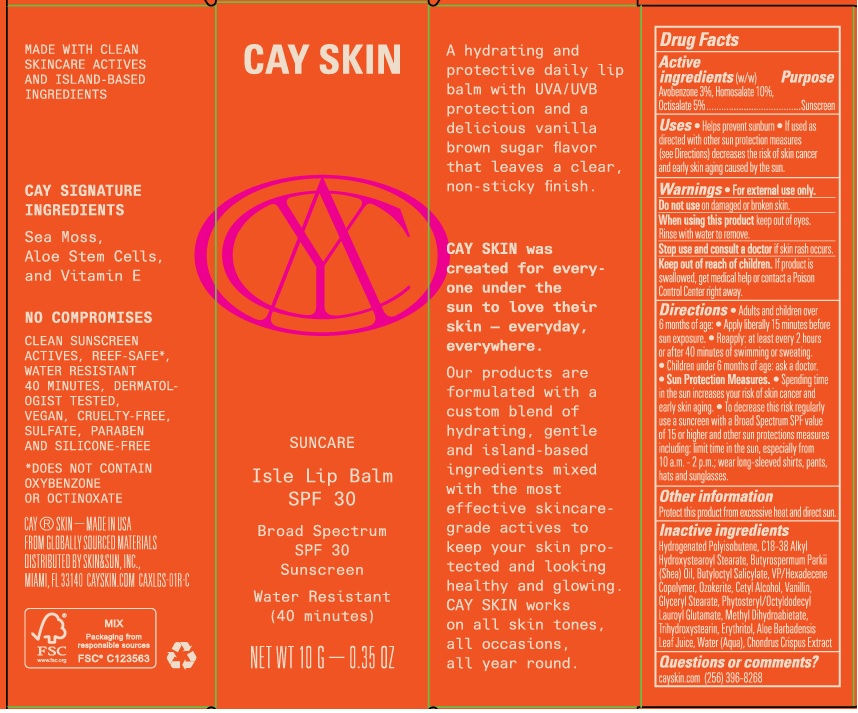
Cay Skin Isle Lip Balm SPF 30 Irie Rose Avobenzone, Homosalate, Octisalate 30 mg/g; 50 mg/g; 100 mg/g Cream
🆔 Identity & classification
Where does this data come from?
🏭 Manufacturer & labeler
Where does this data come from?
🩺 Clinical
Cay Skin Isle Lip Balm SPF 30 Irie Rose is a topical cream marketed as an over-the-counter sunscreen product under FDA's OTC monograph rules. It contains three active ingredients (avobenzone, homosalate, and octisalate) that function as ultraviolet light filters. These chemical sunscreen agents are typically used together in lip balms to help protect the lip area from UV exposure when applied to the skin.
Patient education
Supplement & herbal interactions
Where does this data come from?
Ask a licensed pharmacist directly — free, answered by our team.
🧪 Inactive Ingredients / Excipients
Inactive ingredients, also called excipients, are components of the drug product other than the active ingredient. They may include fillers, dyes, coatings, preservatives, flavors, or other formulation ingredients.
💡 Tap an ingredient (hover on desktop) to see what it is and why it’s used.
-
UNII ZY81Z83H0X
Aloe vera leaf is a plant extract derived from the aloe plant. It is used in medicines as a natural moisturizer and skin-soothing agent in topical formulations.
-
UNII 2EH13UN8D3
A synthetic compound used as a solvent and penetration enhancer in topical formulations. It helps dissolve active ingredients and allows them to penetrate the skin more effectively.
-
UNII WW4FVB2PEM
A waxy compound made from fatty acids, used as an emulsifier and thickener to help blend oil and water ingredients together and give the medicine a smooth, stable texture.
-
UNII Q1LS2UJO3A
Ceresin is a purified mineral wax derived from ozocerite. It functions as a binding agent, thickener, and coating material in medicines to help hold ingredients together and provide texture or protective coating.
-
UNII 936JST6JCN
Cetyl alcohol is a waxy, fatty substance derived from plant or animal sources. It acts as an emulsifier and thickener in medicines, helping blend oil and water components and giving products a smooth, creamy texture.
-
UNII OQS23HUA1X
A seaweed-derived natural thickener and gelling agent. In medicines, it forms a gel-like consistency to improve texture and help the product hold together, or to slow how quickly the body absorbs the medication.
-
UNII 481744AI4O
A synthetic red dye used to color medicines and products. It helps make tablets, capsules, and liquids visually distinct so patients can easily identify their medication.
-
UNII 1K09F3G675
Ferric oxide red is an inorganic iron compound used as a colorant in medicines. It gives tablets, capsules, or other dosage forms a red or reddish tint for identification and appearance.
-
UNII EX438O2MRT
Ferric oxide yellow is a naturally occurring iron compound used as a colorant in medications. It gives tablets, capsules, and other forms a yellow or golden hue for identification and appearance.
-
UNII XM0M87F357
A dark iron oxide compound that gives medicines their black or dark color. It's used as a colorant in tablets and capsules to help identify the product and make it visually distinctive.
-
UNII 2968PHW8QP
A weak organic acid derived from citrus fruits or made through fermentation. It works as a buffer to control pH, a preservative to extend shelf life, and a flavoring agent in medications.
-
UNII RA96B954X6
Erythritol is a sugar alcohol derived from fermented fruits or grains. It's used as a sweetener and bulking agent in medicines to improve taste without adding significant calories.
-
UNII 230OU9XXE4
A waxy substance made from glycerin and stearic acid that acts as an emulsifier to blend oily and watery ingredients together. It also helps thicken and stabilize the medicine's texture.
-
UNII 7D1YQ9Y5EZ
Hydrogenated polybutene is a thick, wax-like ingredient made by chemically processing petroleum. It acts as a binder and lubricant, helping hold tablet ingredients together and allowing pills to slide smoothly during manufacturing and packaging.
-
UNII 7666FJ0J9F
A rosin-derived compound used as a film-coating agent and binder in tablets and capsules. It helps create a protective layer around the medication and improves tablet hardness.
-
UNII 65954KGO9Q
A plant-derived emulsifier made from phytosterols and fatty acids. It helps mix oil and water-based ingredients together and improves texture and spreadability in topical formulations.
-
UNII 1VPU26JZZ4
Potassium sorbate is a salt derived from sorbic acid, a naturally occurring preservative. It prevents growth of mold, yeast, and some bacteria, extending the medicine's shelf life.
-
UNII O88E196QRF
Sheanut oil is a natural fat extracted from shea nuts grown in Africa. It's used in medicines as an emollient, lubricant, and binding agent to improve texture, help ingredients mix smoothly, and keep the product stable.
-
UNII OJ245FE5EU
Sodium benzoate is a salt derived from benzoic acid, a preservative. It's added to medicines to prevent growth of bacteria, fungi, and other microorganisms that could spoil the product.
-
UNII 15FIX9V2JP
Titanium dioxide is a bright white mineral powder commonly used as a colorant and opacifying agent. It makes pills and tablets white or lighter in color and helps make coatings non-transparent.
-
UNII R0ZB2556P8
Tocopherol is a form of vitamin E derived from plant oils. It acts as an antioxidant in medicines to prevent oils and fats from breaking down and spoiling during storage.
-
UNII 06YD7896S3
A waxy, fatty substance derived from stearic acid. It acts as a thickener and texture modifier in medicines, helping control how quickly the drug dissolves and improving the product's firmness and consistency.
-
UNII CHI530446X
Vanillin is a natural or synthetic aromatic compound that gives vanilla flavor. It's used in medicines as a flavoring agent to mask bitter tastes and improve how the medicine tastes.
-
UNII KFR5QEN0N9
A synthetic plastic polymer that helps form a protective film coating on the medicine. It's used as a binder and film-former to hold the tablet or capsule together and control how quickly the drug dissolves.
-
UNII 059QF0KO0R
Water is a liquid solvent that dissolves and mixes ingredients together in liquid medicines, syrups, and injections. It helps distribute the active drug evenly throughout the product.
25 inactive ingredients listed in the exact product block matched to this NDC.
Label-section wording can be broader than the structured product block and may mention additional formulation ingredients.
Where does this data come from?
ingredient classCode="IACT" elements from the exact product block matched by this NDC. Label-section narrative from DailyMed / the openFDA label index is shown separately when available.Inactive ingredient FAQ
Are inactive ingredients the same for every manufacturer?
Why might an inactive ingredient be missing?
Can inactive ingredients matter?
💲 Pricing
A drug doesn't have one price. Each row is a different public payment system, and none is what you'd pay at the counter — that depends on your insurance. The ⓘ on each row explains what it measures.
| Price system | Per g | Per package |
|---|---|---|
| Retail pharmacies payNADAC · weekly | Not in the retail survey — common for institutional, discontinued, or low-volume packs. | |
| Medicaid paysCMS SDUD · 12 mo | No recent Medicaid claims on file for this NDC — rare and low-volume NDCs are suppressed in the public data. | |
| Medicare drug plans payPart D · quarterly | No Part D plan price is available for this NDC in our data. | |
Where does this data come from?
🔁 Therapeutic equivalents
| Product | Labeler | Pack | NADAC/unit | TE | Status | Price vs. this |
|---|---|---|---|---|---|---|
| Cay Skin Isle Lip Balm SPF 30 Cocoa Cabana 30 mg/g; 50 mg/g; 100 mg/g 82657-0010-01 | Cay | 1 tube | — | — | FDA listed | — |
| Cay Skin Isle Lip Balm SPF 30 Bad Gyal Berry 30 mg/g; 50 mg/g; 100 mg/g 82657-0014-01 | Cay | 1 tube | — | — | FDA listed | — |
| Cay Skin Isle Lip Balm SPF 30 30 mg/g; 50 mg/g; 100 mg/g 82657-0001-01 | Cay | 1 tube | — | — | FDA listed | — |
| Cay Skin Isle Lip Balm SPF 30 Nude Ting 30 mg/g; 50 mg/g; 100 mg/g 82657-0012-01 | Cay | 1 tube | — | — | FDA listed | — |
| Cay Skin Isle Lip Balm SPF 30 Irie Rose 30 mg/g; 50 mg/g; 100 mg/gthis 82657-0013-01 | Cay | 1 tube | — | — | FDA listed | — |
| Cay Skin Isle Lip Balm SPF 30 Coral 30 mg/g; 50 mg/g; 100 mg/g 82657-0011-01 | Cay | 1 tube | — | — | FDA listed | — |
Where does this data come from?
⏳ Availability & generic status
We did not find an FDA-approved generic match for this exact strength, form and route.
Where does this data come from?
🔬 Reported adverse events (FAERS)
Top reported reactions
Age at onset
Reporter sex
Serious outcomes
Where does this data come from?
📦 Packaging — all sizes for this product
| Package NDC | Description | Marketing start | Status |
|---|---|---|---|
| 82657-0013-01 You're viewing this | 1 TUBE, WITH APPLICATOR in 1 CARTON (82657-013-01) / 10 g in 1 TUBE, WITH APPLICATOR | 2023-01-01 | Active |
🧭 About this NDC listing & data coverage
What data is (and isn’t) available for this NDC — tap to expand
| NDC identity (package / product / labeler codes) | ✓ Available |
| Labeler | ✓ Available |
| Product & package description | ✓ Available |
| Marketing category & status | ✓ Available |
| Active ingredient / dosage form / route | ✓ Available |
| FDA label (SPL via DailyMed) | ✓ Available |
| Package photos | ✓ Available |
| Inactive ingredients (structured) | ✓ Available |
| NADAC pharmacy acquisition price (CMS) | — Not published for this NDC CMS publishes NADAC only for NDCs reported in its retail-pharmacy survey. |
| Orange Book / therapeutic-equivalence data | — Not published for this NDC Applies only to products approved under an NDA/ANDA; many listings are out of scope. |
| HCPCS J-code billing crosswalk | — Not published for this NDC Most self-administered / retail products have no J-code — that is normal. |
| Medicaid utilization (CMS SDUD) | — Not published for this NDC CMS reports utilization only for NDCs with Medicaid claims above its privacy threshold. |
Questions about this listing
Is this NDC FDA-approved?
Why is there no price listed?
Is the NDC printed on the package the same as the 11-digit billing NDC?
What do the three segments of this NDC mean?
Is this package still being marketed?
Who lists this product with the FDA?
Do I need a prescription for this product?
Where does this data come from?
📄 FDA label — Drug Facts FDA SPL
🎯 Indications and Usage ▾
Uses Helps prevent sunburn If used as directed with other sun protection measures (see Directions) decreases the risk of skin cancer and early skin aging caused by the sun.
⏱️ Dosage and Administration ▾
Directions Adults and children over 6 months of age: Apply liberally 15 minutes before sun exposure. Reapply: at least every 2 hours or after 40 minutes of swimming or sweating. Children under 6 months of age: ask a doctor.
Sun Protection Measures. Spending time in the sun increases your risk of skin cancer and early skin aging. To decrease this risk regularly use a sunscreen with a Broad Spectrum SPF value of 15 or higher and other sun protection measures including: limit time in the sun, especially from 10 a.m. - 2 p.m.; wear long-sleeved shirts, pants, hats and sunglasses.
⚠️ Warnings ▾
Warnings For external use only. Do not use on damaged or broken skin. When using this product keep out of eyes. Rinse with water to remove. Stop use and consult a doctor if skin rash occurs. Keep out of reach of children. If product is swallowed, get medical help or contact a Poison Control Center right away.
🧪 Active Ingredient ▾
Active ingredients (w/w) Avobenzone 3%, Homosalate 10%, Octisalate 5%
🧪 Inactive Ingredients ▾
Inactive ingredients Hydrogenated Polyisobutene, C18-38 Alkyl Hydroxystearoyl Stearate, Butyrospermum Parkii (Shea) Oil, Butyloctyl Salicylate, VP/Hexadecene Copolymer, Ozokerite, Cetyl Alcohol, Vanillin, Glyceryl Stearate, Phytosteryl/Octyldodecyl Lauroyl Glutamate, Methyl Dihydroabietate, Trihydroxystearin, Erythritol, Aloe Barbadensis Leaf Juice, Water (Aqua), Chondrus Crispus Extract Cocoa Cabana Hydrogenated Polyisobutene, C18-38 Alkyl Hydroxystearoyl Stearate, Butyrospermum Parkii (Shea) Oil, Butyloctyl Salicylate, VP/Hexadecene Copolymer, Ozokerite, Cetyl Alcohol, Vanillin, Glyceryl Stearate, Phytosteryl/Octyldodecyl Lauroyl Glutamate, Erythritol, Aqua (Water, Eau), Aloe Barbadensis Leaf Juice, Chondrus Crispus Extract, Tocopherol, Citric Acid, Methyl Dihydroabietate, Trihydroxystearin, Potassium Sorbate, Sodium Benzoate, Vanillin, CI 77891 (Titanium Dioxide), CI 77491/CI 77492/CI 77499 (Iron Oxides), CI 15850 (Red 7 Lake) Coral Hydrogenated Polyisobutene, C18-38 Alkyl Hydroxystearoyl Stearate, Butyrospermum Parkii (Shea) Oil, Butyloctyl Salicylate, VP/Hexadecene Copolymer, Ozokerite, Cetyl Alcohol, Vanillin, Glyceryl Stearate, Phytosteryl/Octyldodecyl Lauroyl Glutamate, Erythritol, Aqua (Water, Eau), Aloe Barbadensis Leaf Juice, Chondrus Crispus Extract, Tocopherol, Citric Acid, Methyl Dihydroabietate, Trihydroxystearin, Potassium Sorbate, Sodium Benzoate, Vanillin, CI 77891 (Titanium Dioxide), CI 77491/CI 77492 Nude Ting Hydrogenated Polyisobutene, C18-38 Alkyl Hydroxystearoyl Stearate, Butyrospermum Parkii (Shea) Oil, Butyloctyl Salicylate, VP/Hexadecene Copolymer, Ozokerite, Cetyl Alcohol, Vanillin, Glyceryl Stearate, Phytosteryl/Octyldodecyl Lauroyl Glutamate, Erythritol, Aqua (Water, Eau), Aloe Barbadensis Leaf Juice, Chondrus Crispus Extract, Tocopherol, Methyl Dihydroabietate, Trihydroxystearin, Citric Acid, Potassium Sorbate, Sodium Benzoate, CI 77891 (Titanium Dioxide), CI 77491/CI 77492/CI 77499 (Iron Oxides) Irie Rose Hydrogenated Polyisobutene, C18-38 Alkyl Hydroxystearoyl Stearate, Butyrospermum Parkii (Shea) Oil, Butyloctyl Salicylate, VP/Hexadecene Copolymer, Ozokerite, Cetyl Alcohol, Vanillin, Glyceryl Stearate, Phytosteryl/Octyldodecyl Lauroyl Glutamate, Erythritol, Aqua (Water, Eau), Aloe Barbadensis Leaf Juice, Chondrus Crispus Extract, Tocopherol, Methyl Dihydroabietate, Trihydroxystearin, Citric Acid, Potassium Sorbate, Sodium Benzoate.
May Contain +/-: CI 77891 (Titanium Dioxide), CI 77491/CI 77492/CI 77499 (Iron Oxides), CI 15850 (Red 7 Lake) Bad Gyal Berry Hydrogenated Polyisobutene, C18-38 Alkyl Hydroxystearoyl Stearate, Butyrospermum Parkii (Shea) Oil, Butyloctyl Salicylate, VP/Hexadecene Copolymer, Ozokerite, Cetyl Alcohol, Vanillin, Glyceryl Stearate, Phytosteryl/Octyldodecyl Lauroyl Glutamate, Erythritol, Aqua (Water, Eau), Aloe Barbadensis Leaf Juice, Chondrus Crispus Extract, Tocopherol, Methyl Dihydroabietate, Trihydroxystearin, Citric Acid, Potassium Sorbate, Sodium Benzoate.
May Contain +/-: CI 77891 (Titanium Dioxide), CI 77491/CI 77492/CI 77499 (Iron Oxides), CI 15850 (Red 7 Lake)
🎯 Purpose ▾
Purpose Sunscreen