
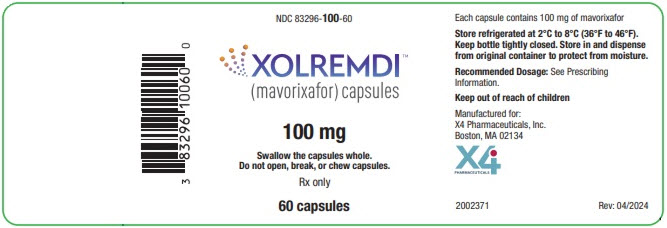
XOLREMDI mavorixafor 100 mg Capsule, Gelatin Coated, 120-count
🆔 Identity & classification
Where does this data come from?
🏷️ RxNorm drug class
This medicine belongs to the CXC Chemokine Receptor 4 Antagonist class.
Where does this data come from?
🏭 Manufacturer & labeler
Where does this data come from?
🩺 Clinical
Mavorixafor is used to treat WHIM syndrome (warts, hypogammaglobulinemia, immunodeficiency, myelokathexis syndrome; an immune system problem that decreases your ability to fight infections from bacteria and viruses, especially human papillomavirus [HPV] infection) in adults and children 12 years of age and older. Mavorixafor is in a class of medications called CXC Chemokine Receptor 4 (CXCR4) antagonists. It works by increasing the number of neutrophils (a type of blood cell needed to fight infection) and lymphocytes (a type of white blood cell) in the body.
Read the full MedlinePlus article ↗Patient education
Supplement & herbal interactions
Where does this data come from?
Ask a licensed pharmacist directly — free, answered by our team.
💊 What it looks like
Where does this data come from?
🧪 Inactive Ingredients / Excipients
Inactive ingredients, also called excipients, are components of the drug product other than the active ingredient. They may include fillers, dyes, coatings, preservatives, flavors, or other formulation ingredients.
💡 Tap an ingredient (hover on desktop) to see what it is and why it’s used.
-
UNII M28OL1HH48
Croscarmellose sodium is a plant-based substance derived from cellulose. It acts as a disintegrant, helping tablets and capsules break down quickly in the digestive system so the medicine can be absorbed.
-
UNII O7TSZ97GEP
A mineral compound that serves as a filler and binding agent in tablets and capsules. It adds bulk to the medicine and helps hold ingredients together during manufacturing.
-
UNII OP1R32D61U
Microcrystalline cellulose is a purified form of cellulose, a natural fiber from plant sources. It acts as a binder and filler in tablets and capsules, helping hold ingredients together and give the medicine its shape and size.
-
UNII ETJ7Z6XBU4
Silicon dioxide is a naturally occurring mineral used as a glidant and anti-caking agent. It helps powder ingredients flow smoothly and prevents clumping during manufacturing and storage.
-
UNII 368GB5141J
A detergent and foaming agent derived from coconut or palm oil. In medications, it helps break down and mix oil and water-based ingredients, aids in tablet disintegration, and improves how the drug dissolves and spreads in the mouth or digestive system.
-
UNII 7CV7WJK4UI
Sodium stearyl fumarate is a synthetic compound made from stearyl alcohol and fumaric acid. It acts as a lubricant and glidant in tablets and capsules, helping ingredients flow smoothly during manufacturing and preventing sticking.
6 inactive ingredients listed in the exact product block matched to this NDC.
Where does this data come from?
ingredient classCode="IACT" elements from the exact product block matched by this NDC. Label-section narrative from DailyMed / the openFDA label index is shown separately when available.Inactive ingredient FAQ
Are inactive ingredients the same for every manufacturer?
Why might an inactive ingredient be missing?
Can inactive ingredients matter?
💲 Pricing
A drug doesn't have one price. Each row is a different public payment system, and none is what you'd pay at the counter — that depends on your insurance. The ⓘ on each row explains what it measures.
| Price system | Per each | Per package |
|---|---|---|
| Retail pharmacies payNADAC · weekly | Not in the retail survey — common for institutional, discontinued, or low-volume packs. | |
| Medicaid paysCMS SDUD · 12 mo | No recent Medicaid claims on file for this NDC — rare and low-volume NDCs are suppressed in the public data. | |
| Medicare drug plans payPart D · Q2 2026 | $398.45 | $47,813.42 / 120 capsules |
Where does this data come from?
🔁 Therapeutic equivalents
| Product | Labeler | Pack | NADAC/unit | TE | Status | Price vs. this |
|---|---|---|---|---|---|---|
| Xolremdi 100 mgthis 83296-0100-12 | X4 | 120 capsules | — | — | FDA listed | — |
Where does this data come from?
⏳ Availability & generic status
We did not find an FDA-approved generic match for this exact strength, form and route. Patent/protection dates below may affect future generic timing.
Why the date isn’t exact: Generic timing can change because patents may be challenged, settled, licensed, added, removed, or worked around with a narrower label — and FDA approval does not always mean a pharmacy can get the generic today.
🛈 What do these terms mean?
- Patent
- Legal protection listed in the Orange Book that may delay generic approval or launch. Issued by the U.S. Patent & Trademark Office.
- Substance patent
- Covers the active drug molecule itself — the hardest to design around. A generic generally can’t launch until it expires.
- Formulation (product) patent
- Covers a specific formulation or dosage form. A generic can sometimes work around it with a different formulation.
- Method-of-use patent
- A patent covering one specific approved use of the drug — not necessarily the whole molecule. A generic can sometimes launch with a “skinny label” that carves out the protected use and keeps the others.
- Skinny label
- A generic label that omits a still-patented use when the FDA allows it — letting a generic reach the market for the unprotected uses.
- Exclusivity
- FDA-granted marketing protection, separate from patents — e.g. 5-yr new chemical entity, 7-yr orphan drug, or a +6-month pediatric extension.
- Paragraph IV
- A generic applicant’s formal challenge to a listed patent. It can potentially lead to earlier generic entry, but often involves litigation or a settlement.
- RLD / RS
- Reference Listed Drug — the brand product the FDA uses as the reference for generic applications. Reference Standard — the product the FDA expects generics to compare against in bioequivalence testing.
- TE / AB rating
- FDA therapeutic-equivalence rating. An AB rating generally means the FDA considers a generic therapeutically equivalent to — and substitutable for — the brand.
- LOE (loss of exclusivity)
- The latest patent or exclusivity currently listed — the loss-of-exclusivity / latest-listed-protection date shown on this page. Paragraph-IV challenges and settlements can move the real date earlier; FDA approval and a manufacturer’s decision to market can move it later.
Built from the FDA Orange Book. The bars above are scaled to each protection’s expiry; the red LOE marker is the last one to lapse.
| Patent | Type | Use code | Expires |
|---|---|---|---|
| US 11219621 ↗ | Method of use | U-3932 | Dec 22, 2036 |
| US 10610527 ↗ | Method of use | U-3932 | Dec 22, 2036 |
| US 11045461 ↗ | Drug product | — | Dec 11, 2038 |
| US 10953003 ↗ | Drug product | — | Dec 14, 2036 |
| US 12115156 ↗ | Drug product | — | Dec 11, 2038 |
| US 10548889 ↗ | Drug product | — | Dec 11, 2038 |
| Code | What it grants | Expires |
|---|---|---|
| NCE | New Chemical Entity (5-year) | Apr 26, 2029 |
| ODE-480 | Orphan Drug Exclusivity (7-year) | Apr 26, 2031 |
Is there a generic version of XOLREMDI 100 MG CAPSULE?
The FDA approved a generic — why can’t I get it at my pharmacy yet?
Why do different websites show different generic release dates?
What does “FDA listed” mean?
What does a patent or protection date mean here?
What does “current Orange Book estimate” mean?
Can a generic come out before the last patent expires?
Can a generic come out after the listed dates?
What is the difference between patents and exclusivity?
Why are there multiple patent dates?
Where does this data come from?
📊 Medicare Part D spend CMS · PART D · 2025 (Q1-Q4)
🔬 Reported adverse events (FAERS)
Top reported reactions
Reporter sex
Serious outcomes
Where does this data come from?
📦 Packaging — all sizes for this product
| Package NDC | Description | Marketing start | Status |
|---|---|---|---|
| 83296-0100-12 You're viewing this | 120 CAPSULE, GELATIN COATED in 1 BOTTLE (83296-100-12) | 2024-05-21 | Active |
| 83296-0100-60 | 60 CAPSULE, GELATIN COATED in 1 BOTTLE (83296-100-60) | 2024-05-21 | Active |
| 83296-0100-90 | 90 CAPSULE, GELATIN COATED in 1 BOTTLE (83296-100-90) | 2024-11-01 | Active |
You're viewing the largest of 3 pack sizes for this product.
Pack size FAQ
What quantity is in NDC 83296-0100-12?
What is the difference between NDC 83296-0100-12 and NDC 83296-0100-60?
What NDC number is used to bill for this package of XOLREMDI mavorixafor 100 mg Capsule, Gelatin Coated?
🧭 About this NDC listing & data coverage
What data is (and isn’t) available for this NDC — tap to expand
| NDC identity (package / product / labeler codes) | ✓ Available |
| Labeler | ✓ Available |
| Product & package description | ✓ Available |
| Marketing category & status | ✓ Available |
| Active ingredient / dosage form / route | ✓ Available |
| FDA label (SPL via DailyMed) | ✓ Available |
| Package photos | ✓ Available |
| Inactive ingredients (structured) | ✓ Available |
| NADAC pharmacy acquisition price (CMS) | — Not published for this NDC CMS publishes NADAC only for NDCs reported in its retail-pharmacy survey. |
| Orange Book / therapeutic-equivalence data | ✓ Available |
| HCPCS J-code billing crosswalk | — Not published for this NDC Most self-administered / retail products have no J-code — that is normal. |
| Medicaid utilization (CMS SDUD) | — Not published for this NDC CMS reports utilization only for NDCs with Medicaid claims above its privacy threshold. |
Questions about this listing
Why is there no price listed?
Is the NDC printed on the package the same as the 11-digit billing NDC?
What do the three segments of this NDC mean?
Is this package still being marketed?
Does this product come in other package sizes?
Who lists this product with the FDA?
Do I need a prescription for this product?
Where does this data come from?
📄 Full prescribing information FDA SPL
🎯 Indications and Usage ▾
1 INDICATIONS AND USAGE XOLREMDI is indicated in patients 12 years of age and older with WHIM syndrome (warts, hypogammaglobulinemia, infections and myelokathexis) to increase the number of circulating mature neutrophils and lympocytes. XOLREMDI is a CXC chemokine receptor 4 antagonist indicated in patients 12 years of age and older with WHIM syndrome (warts, hypogammaglobulinemia, infections and myelokathexis) to increase the number of circulating mature neutrophils and lymphocytes. ( 1 )
⏱️ Dosage and Administration ▾
2 DOSAGE AND ADMINISTRATION Recommended dosage: Weight more than 50 kg: 400 mg orally once daily. ( 2 ) Weight less than or equal to 50 kg: 300 mg orally once daily. ( 2 ) Administer XOLREMDI on an empty stomach after an overnight fast, and at least 30 minutes before food. ( 2 )
2.1Recommended Dosage The recommended dosage of XOLREMDI is: Weight more than 50 kg: 400 mg orally once daily on an empty stomach after an overnight fast, and at least 30 minutes before food. Weight less than or equal to 50 kg: 300 mg orally once daily on an empty stomach after an overnight fast, and at least 30 minutes before food. Swallow the capsules whole.
Do not open, break, or chew capsules. If a dose of XOLREMDI is missed, the next dose should be taken as scheduled. Do not take more than 1 XOLREMDI dose each day.
2.2Dosage Modifications for Strong CYP3A4 inhibitors Reduce daily dosage of XOLREMDI to 200 mg when used concomitantly with strong CYP3A4 inhibitors [see Drug Interactions (7.1) ] .
💊 Dosage Forms and Strengths ▾
3 DOSAGE FORMS AND STRENGTHS Capsules: 100 mg mavorixafor. ( 3 ) Capsules: 100 mg, opaque hard gelatin capsules with white body and light blue cap. The white capsule body is imprinted with "100 mg" in black ink, and the light blue capsule cap is imprinted with "MX4" in black ink.
⛔ Contraindications ▾
4 CONTRAINDICATIONS Use of XOLREMDI is contraindicated with drugs that are highly dependent on CYP2D6 for clearance [see Drug Interactions (7.2) ] . Use with drugs highly dependent on CYP2D6 for clearance. ( 4 , 7.2 )
⚠️ Warnings and Cautions ▾
5 WARNINGS AND PRECAUTIONS Embryo-fetal toxicity: Expected to cause fetal harm. Advise women of reproductive potential to use effective contraception. ( 5.1 , 8.1 , 8.3 ) QTc Interval Prolongation: : Correct any modifiable risk factors, assess QTc at baseline and monitor QTc during treatment as clinically indicated. XOLREMDI dose reduction or discontinuation may be required due to drug-drug interactions. ( 5.2 )
5.1Embryo-Fetal Toxicity Based on its mechanism of action, XOLREMDI is expected to cause fetal harm when administered to a pregnant woman [see Clinical Pharmacology (12.2) ] . Animal models link reductions in CXCR4/SDF-1 signaling to adverse outcomes in mammalian embryo-fetal development and to abnormal placental development. Verify the pregnancy status of female patients of reproductive potential prior to starting XOLREMDI.
Advise females of reproductive potential to use an effective method of contraception during treatment with XOLREMDI and for 3 weeks after the final dose [see Use in Specific Populations (8.1 , 8.3) ] .
5.2QTc Interval Prolongation XOLREMDI causes concentration-dependent QTc interval prolongation. QTc interval prolongation may occur when XOLREMDI is taken with concomitant medications that increase XOLREMDI exposure and/or drug products with a known potential to prolong QTc. Correct any modifiable risk factors for QTc prolongation (e.g., hypokalemia), assess QTc at baseline and monitor QTc during treatment as clinically indicated in patients with risk factors for QTc prolongation such as those receiving concomitant medications that increase XOLREMDI exposure and drug products with a known potential to prolong QTc.
A dose reduction in XOLREMDI or discontinuation of XOLREMDI may be required [see Drug Interactions (7.1 , 7.3) and Clinical Pharmacology (12.2) ].
🤒 Adverse Reactions ▾
6 ADVERSE REACTIONS The following clinically significant adverse reactions are described elsewhere in the labeling: QTc Interval Prolongation [see Warnings and Precautions (5.2) ] The most common adverse reactions (›10% and at a frequency higher than placebo) were: thrombocytopenia, pityriasis, rash, rhinitis, epistaxis, vomiting, and dizziness. ( 6.1 ) To report SUSPECTED ADVERSE REACTIONS, contact X4 Pharmaceuticals, Inc. at 1-866-MED-X4MI (1-866-633-9464) or FDA at 1-800-FDA-1088 or www.fda.gov/medwatch.
6.1Clinical Trials Experience Because clinical trials are conducted under widely varying conditions, adverse reaction rates observed in the clinical trials of a drug cannot be directly compared to rates in the clinical trials of another drug and may not reflect the rates observed in practice. The safety of XOLREMDI was evaluated in Study 1, a randomized placebo-controlled trial of 31 adult and pediatric patients 12 years and older with WHIM syndrome [see Clinical Studies (14) ] . Patients received XOLREMDI 400 mg or 200 mg, based on age and body weight (N=14) or placebo (N=17).
One patient received the 200 mg dose, and 13 patients received the 400 mg dose. Note that the 200 mg XOLREMDI daily dose is only recommended for use in patients receiving strong CYP3A4 inhibitors [see Dosage and Administration (2.1 , 2.2) ] . For all other patients, the recommended dosage is either 400 mg daily (if weighing more than 50 kg) or 300 mg daily (if weighing up to 50 kg), unless dose reductions are needed due to concomitant use with moderate CYP3A4 inhibitors or P-gp inhibitors [see Drug Interactions (7.1) ] .
The data below are based on the 52-week, placebo-controlled portion of the study. Twelve patients received XOLREMDI for at least 6 months, and 10 patients received XOLREMDI for at least 1 year. Table 1 summarizes the most common adverse reactions (>10%) in Study 1, which were thrombocytopenia, pityriasis, rash, rhinitis, epistaxis, vomiting, and dizziness.
Table 1: Adverse Reactions in ≥10% Patients with WHIM Syndrome Receiving XOLREMDI and More Frequently Reported than Placebo During Study 1 Number (N) and Percent (%) of Patients Adverse Reaction XOLREMDI (N=14) Placebo (N=17) Thrombocytopenia 3 (21%) 0 Pityriasis 2 (14%) 0 Rash 2 (14%) 0 Rhinitis 2 (14%) 0 Epistaxis 2 (14%) 1 (6%) Vomiting 2 (14%) 1 (6%) Dizziness 2 (14%) 1 (6%) Serious adverse reactions of thrombocytopenia occurred in 3 of the 14 patients who received XOLREMDI, 2 of which occurred in the setting of infection or febrile neutropenia.
🔄 Drug Interactions ▾
7 DRUG INTERACTIONS Strong CYP3A4 inhibitors: Reduce XOLREMDI daily dosage. ( 2.2 , 7.1 ) P-gp inhibitors or moderate CYP3A4 inhibitors: Monitor more frequently for XOLREMDI adverse reactions and reduce XOLREMDI daily dosage if necessary. ( 7.1 ) Strong CYP3A4 Inducers: Avoid concomitant use. ( 7.1 ) CYP3A4 or P-gp substrates: Monitor more frequently for substrate adverse reactions unless otherwise recommended. ( 7.2 )
7.1Effect of Other Drugs on XOLREMDI Strong or Moderate CYP3A4 Inhibitors Reduce XOLREMDI daily dosage to 200 mg when used concomitantly with a strong CYP3A4 inhibitor [see Dosage and Administration (2.2) ] . Monitor more frequently for XOLREMDI adverse reactions that may be associated with an increase in mavorixafor exposure when used concomitantly with moderate CYP3A4 inhibitor and reduce the XOLREMDI daily dosage by steps of 100 mg, if necessary, but not to a dose less than 200 mg. Mavorixafor is a CYP3A4 substrate.
Concomitant use with a strong CYP3A4 inhibitor increases mavorixafor maximal concentrations (C max ) and area under the concentration-time curve (AUC) [see Clinical Pharmacology (12.3) ] , which may increase the risk of XOLREMDI adverse reactions. Strong CYP3A4 Inducers Avoid concomitant use with a strong CYP3A4 inducer. Mavorixafor is a CYP3A4 substrate.
Concomitant use with a strong CYP3A4 inducer is predicted to decrease mavorixafor C max and AUC based upon a mechanistic understanding of its elimination [see Clinical Pharmacology (12.3) ] , which may reduce XOLREMDI's effectiveness. P-gp Inhibitors Monitor more frequently for XOLREMDI adverse reactions that may be associated with an increase in mavorixafor exposure when used concomitantly with P-gp inhibitors and reduce the XOLREMDI daily dosage by steps of 100 mg, if necessary, but not to a dose less than 200 mg.
Mavorixafor is a P-gp substrate. Concomitant use with a P-gp inhibitors increases mavorixafor C max and AUC [see Clinical Pharmacology (12.3) ] , which may increase the risk of XOLREMDI adverse reactions.
7.2Effect of XOLREMDI on Other Drugs CYP2D6 Substrates The use of XOLREMDI with drugs that are another drug highly dependent on CYP2D6 for clearance is contraindicated [see Contraindications (4) ] . Mavorixafor is a CYP2D6 inhibitor. Mavorixafor increases exposure of CYP2D6 substrates [see Clinical Pharmacology (12.3) ] , which may increase the risk of adverse reactions related to these substrates.
CYP3A4 Substrates Monitor for CYP3A4 substrate related adverse reactions more frequently, unless otherwise recommended in the substrate's Prescribing Information, when XOLREMDI is used concomitantly with CYP3A4 substrates where minimal substrate concentration changes may lead to serious adverse reactions. Mavorixafor is an inhibitor of CYP3A4. Mavorixafor may increase the C max and AUC of CYP3A4 substrates [see Clinical Pharmacology (12.3) ] , which may increase the risk of adverse reactions from the CYP3A4 substrate.
P-gp Substrates Monitor for P-gp substrate related adverse reactions more frequently, unless otherwise recommended in the substrate's Prescribing Information, when XOLREMDI is used concomitantly with P-gp substrates where minimal substrate concentration changes may lead to serious adverse reactions. Digoxin: Measure serum digoxin concentrations before initiating concomitant use with XOLREMDI, and continue monitoring serum digoxin concentrations as recommended in the Prescribing Information for digoxin [see Clinical Pharmacology (12.3) ] .
Mavorixafor is an inhibitor of P-gp. Mavorixafor may increase the C max and AUC of P-gp substrates [see Clinical Pharmacology (12.3) ] , which may increase the risk of adverse reactions from the P-gp substrate. Metformin: Monitor for glycemic control and adjust the dose of metformin as necessary.
Mavorixafor may decrease the mean C max and AUC of metformin, which may reduce metformin's effectiveness. The mechanism of this interaction is unknown.
7.3 Drugs that Prolong the QTc Interval Obta…
👥 Use in Specific Populations ▾
8 USE IN SPECIFIC POPULATIONS Lactation: Advise females that breastfeeding is not recommended. ( 8.2 ) Renal Impairment: Not recommended for use in patients with severe renal impairment or end stage renal disease. ( 8.6 ) Hepatic Impairment: Not recommended for use in patients with moderate to severe hepatic impairment. ( 8.7 )
8.1Pregnancy Risk Summary Based on its mechanism of action, XOLREMDI is expected to cause fetal harm when administered to a pregnant woman [see Clinical Pharmacology (12.1) ] . There are no available data on XOLREMDI use in pregnant women informing the risk of embryo-fetal developmental toxicities. Animal models link reductions in CXCR4/SDF-1 signaling to adverse outcomes in mammalian embryo-fetal development (see Data ) .
No definitive animal studies have been conducted to evaluate the effect of mavorixafor on reproduction and fetal development. Advise pregnant women of the potential risk to the fetus and to use effective contraception [see Warnings and Precautions (5.1) and Use in Specific Populations (8.3) ] . The estimated background risk of major birth defects and miscarriages for the indicated population is unknown.
All pregnancies have a background risk of birth defect, loss, or other adverse outcomes. In the U.S. general population, the estimated background risk of major birth defects and miscarriage in clinically recognized pregnancies is 2% to 4% and 15% to 20%, respectively. Data Animal Data Animal reproduction studies have not been conducted with mavorixafor to evaluate effects on reproduction and embryo-fetal development.
CXCR4/SDF-1 signaling plays an important role in mammalian embryo-fetal and placental development. In mice, CXCR4-/- knockout is embryo lethal and causes multiple developmental toxicities, most notably in the hematopoietic, cardiovascular and nervous systems. CXCR4/SDF-1 levels have a key role in stimulating trophoblast proliferation and differentiation necessary for appropriate placental growth and function in humans [see Warnings and Precautions (5.1) ].
8.2Lactation Risk Summary There are no data on the presence of mavorixafor in human or animal milk, the effects on the breastfed child, or the effects on milk production. Because of the potential for serious adverse reactions in the breastfed child, advise females that breastfeeding is not recommended during treatment with XOLREMDI and for 3 weeks after the final dose.
8.3Females and Males of Reproductive Potential XOLREMDI is expected to cause fetal harm when administered to pregnant women [see Warnings and Precautions (5.1) and Use in Specific Populations (8.1) ] . Pregnancy Testing Verify the pregnancy status in females of reproductive potential prior to initiating XOLREMDI [see Use in Specific Populations (8.1) ] . Contraception Advise females of reproductive potential to use an effective form of contraception during treatment with XOLREMDI and for 3 weeks after the final dose [see Use in Specific Populations (8.1) ].
8.4Pediatric Use The safety and effectiveness of XOLREMDI in WHIM syndrome for increasing the number of circulating mature neutrophils and lymphocytes have been established in pediatric patients aged 12 years and older. Use of XOLREMDI for this indication is supported by evidence from an adequate and well-controlled study in adults and pediatric patients aged 12 years and older [see Clinical Pharmacology (12.3) and Clinical Studies (14) ] . The safety and effectiveness of XOLREMDI have not been established in pediatric patients younger than 12 years of age.
8.5Geriatric Use In clinical studies of XOLREMDI in patients with WHIM syndrome, 2 (5%) patients were aged 65 years and older, and no patients were aged 75 years and older. Clinical studies did not include sufficient numbers of patients aged 65 and older to determine whether they respond differently from younger patients.
8.6Renal Impairment XOLREMDI is not recommended in patients with severe renal impairment (creatinine clearance [CLcr] 15 to…
🤰 Pregnancy ▾
8.1Pregnancy Risk Summary Based on its mechanism of action, XOLREMDI is expected to cause fetal harm when administered to a pregnant woman [see Clinical Pharmacology (12.1) ] . There are no available data on XOLREMDI use in pregnant women informing the risk of embryo-fetal developmental toxicities. Animal models link reductions in CXCR4/SDF-1 signaling to adverse outcomes in mammalian embryo-fetal development (see Data ) .
No definitive animal studies have been conducted to evaluate the effect of mavorixafor on reproduction and fetal development. Advise pregnant women of the potential risk to the fetus and to use effective contraception [see Warnings and Precautions (5.1) and Use in Specific Populations (8.3) ] . The estimated background risk of major birth defects and miscarriages for the indicated population is unknown.
All pregnancies have a background risk of birth defect, loss, or other adverse outcomes. In the U.S. general population, the estimated background risk of major birth defects and miscarriage in clinically recognized pregnancies is 2% to 4% and 15% to 20%, respectively. Data Animal Data Animal reproduction studies have not been conducted with mavorixafor to evaluate effects on reproduction and embryo-fetal development.
CXCR4/SDF-1 signaling plays an important role in mammalian embryo-fetal and placental development. In mice, CXCR4-/- knockout is embryo lethal and causes multiple developmental toxicities, most notably in the hematopoietic, cardiovascular and nervous systems. CXCR4/SDF-1 levels have a key role in stimulating trophoblast proliferation and differentiation necessary for appropriate placental growth and function in humans [see Warnings and Precautions (5.1) ].
🧒 Pediatric Use ▾
8.4Pediatric Use The safety and effectiveness of XOLREMDI in WHIM syndrome for increasing the number of circulating mature neutrophils and lymphocytes have been established in pediatric patients aged 12 years and older. Use of XOLREMDI for this indication is supported by evidence from an adequate and well-controlled study in adults and pediatric patients aged 12 years and older [see Clinical Pharmacology (12.3) and Clinical Studies (14) ] . The safety and effectiveness of XOLREMDI have not been established in pediatric patients younger than 12 years of age.
🧓 Geriatric Use ▾
8.5Geriatric Use In clinical studies of XOLREMDI in patients with WHIM syndrome, 2 (5%) patients were aged 65 years and older, and no patients were aged 75 years and older. Clinical studies did not include sufficient numbers of patients aged 65 and older to determine whether they respond differently from younger patients.
🧬 Clinical Pharmacology ▾
12 CLINICAL PHARMACOLOGY
12.1Mechanism of Action Mavorixafor is an orally bioavailable CXCR4 antagonist that blocks the binding of the CXCR4 ligand, stromal-derived factor-1α (SDF-1α)/CXC Chemokine Ligand 12 (CXCL12). SDF-1/CXCR4 plays a role in trafficking and homing of leukocytes to and from the bone marrow compartment. Gain of function mutations in the CXCR4 receptor gene that occur in patients with WHIM syndrome lead to increased responsiveness to CXCL12 and retention of leukocytes in the bone marrow.
Mavorixafor inhibits the response to CXCL12 in both wild‑type and for mutated CXCR4 variants associated with WHIM syndrome. Treatment with mavorixafor results in increased mobilization of leukocytes and lymphocytes from the bone marrow into peripheral circulation.
12.2Pharmacodynamics Absolute Neutrophil Count (ANC) and Absolute Lymphocyte Count (ALC) ANC and ALC peaked at 4 hours after XOLREMDI dosing and returned towards baseline within 24 h after dosing. Over mavorixafor doses of 50 mg (0.125 times the maximum recommended dosage) to 400 mg once daily, higher mavorixafor exposure at steady state was associated with longer mean time (hours) above ANC threshold (TAT ANC ) of 500 cells/µL and longer mean time (hours) above ALC threshold (TAT ALC ) of 1,000 cells/µL over a 24-hour period.
Cardiac Electrophysiology In a thorough QT (TQT) study, the maximum mean increase in the QTc interval was 15.6 ms (upper bound of the 90% confidence interval = 19.8 ms) after administration of XOLREMDI 800 mg (2 times the maximum recommended dose) in healthy volunteers [ see Warnings and Precautions (5.2) ]. In concentration-QT analysis, increase in QTc interval was concentration-dependent.
12.3Pharmacokinetics Mavorixafor pharmacokinetic parameters are presented as geometric mean (CV%) in adults with WHIM syndrome unless otherwise specified. Mavorixafor steady state C max is 3304 (58.6%) ng/mL and the AUC from 0 to 24 hours (AUC 0-24h ) is 13970 (58.4%) ng*h/mL following 400 mg once daily. Mavorixafor demonstrates nonlinear pharmacokinetics with greater than dose-proportional increases in C max and AUC 0-24 over a dose range of 50 mg (0.125 times the recommended dosage) to 400 mg.
Mavorixafor steady state is reached after approximately 9 to 12 days at the highest approved recommended dosage in healthy subjects. Absorption Mavorixafor median (range) time to C max (T max ) is 2.8 hours (1.9 to 4 hours) at the highest approved recommended dosage. Effect of Food High Fat Meal: Mavorixafor C max decreased by 66% and AUC decreased by 55% following single-dose administration of XOLREMDI 400 mg with a high‑fat meal (1000 calories, 50% fat) to healthy subjects.
Low Fat Meal: Mavorixafor C max decreased by 55% and AUC decreased by 51% following single-dose administration of XOLREMDI 400 mg with a low-fat meal (500 calories, 25% fat) to healthy subjects. In addition, a 14% higher mavorixafor C max and 18% lower AUC was observed following single-dose administration of XOLREMDI 400 mg with a low-fat meal to healthy subjects after an overnight fast compared to fasting for an additional 4 hours after the XOLREMDI dose. Distribution Mavorixafor volume of distribution is 768 L.
Mavorixafor is >93% bound to human plasma proteins in vitro . Elimination Mavorixafor's terminal half-life is 82 h (34%) with an apparent clearance of 62 L/h (40%) following single-dose administration of XOLREMDI 400 mg in health subjects. Mavorixafor exhibits at least partial nonlinear apparent clearance; however, this is not clinically significant at the approved recommended dosage.
Metabolism CYP3A4 and, to a lesser extent, CYP2D6 are primarily responsible for mavorixafor metabolism. Excretion After a single oral dose of radiolabeled mavorixafor, 74.2% of the administered dose was recovered out of which 61.0% of administered radioactivity was recovered in feces and 13.2% (3% unchanged) was recovered in the urine over the 240-hour collection period in healthy subjects. Specific Po…
🧬 Mechanism of Action ▾
12.1Mechanism of Action Mavorixafor is an orally bioavailable CXCR4 antagonist that blocks the binding of the CXCR4 ligand, stromal-derived factor-1α (SDF-1α)/CXC Chemokine Ligand 12 (CXCL12). SDF-1/CXCR4 plays a role in trafficking and homing of leukocytes to and from the bone marrow compartment. Gain of function mutations in the CXCR4 receptor gene that occur in patients with WHIM syndrome lead to increased responsiveness to CXCL12 and retention of leukocytes in the bone marrow.
Mavorixafor inhibits the response to CXCL12 in both wild‑type and for mutated CXCR4 variants associated with WHIM syndrome. Treatment with mavorixafor results in increased mobilization of leukocytes and lymphocytes from the bone marrow into peripheral circulation.
📦 How Supplied / Storage and Handling ▾
16 HOW SUPPLIED/STORAGE AND HANDLING XOLREMDI is supplied as an opaque white, hard gelatin capsule with a light blue cap, containing 100 mg of the active ingredient mavorixafor. The white capsule body is axially imprinted with "100 mg" in black ink, and the light blue capsule cap is axially imprinted with "MX4" in black ink. XOLREMDI is supplied in child-resistant bottles as follows: 60 count– NDC 83296-100-60 90 count - NDC 83296-100-90 120 count– NDC 83296-100-12 Store XOLREMDI refrigerated at 2°C to 8°C (36°F to 46°F).
Keep bottle tightly closed. Store in and dispense from original container to protect from moisture.
📦 Storage and Handling ▾
Store XOLREMDI refrigerated at 2°C to 8°C (36°F to 46°F). Keep bottle tightly closed. Store in and dispense from original container to protect from moisture.
📋 Description ▾
11 DESCRIPTION Mavorixafor is an orally bioavailable CXC Chemokine Receptor 4 (CXCR4) antagonist [see Clinical Pharmacology (12.1) ] . The chemical name of the active ingredient, mavorixafor, is N 1 -(1 H -benzimidazol-2-ylmethyl)- N 1 -[(8 S )-5,6,7,8-tetrahydroquinolin-8-yl]butane-1,4-diamine. It has a molecular formula of C 21 H 27 N 5 and a molecular weight of 349.48 g/mol.
Mavorixafor is of the S configuration and its structural formula is provided in Figure 1. Figure 1: Structural Formula Mavorixafor is optically active and is a white to pale yellow to light brown solid. Mavorixafor is hygroscopic above relative humidities of 70%.
Mavorixafor is freely soluble in methanol, 95% ethanol and n-octanol, soluble in toluene, sparingly soluble in DMSO and acetonitrile, and very slightly soluble in HPLC grade water according to the USP solubility criteria. Mavorixafor is soluble in pH 1.2 to 5.5 aqueous buffers and in pH 6.0 aqueous buffer, sparingly soluble in pH 6.8 aqueous buffer and slightly soluble in pH 7.5 aqueous buffer, according to the USP solubility criteria. XOLREMDI is a hard gelatin capsule for oral administration.
Each capsule contains 100 mg of mavorixafor with the following inactive ingredients: colloidal silicon dioxide, croscarmellose sodium, dibasic calcium phosphate dihydrate, microcrystalline cellulose, sodium lauryl sulfate, and sodium stearyl fumarate. The hard gelatin capsule contains FD&C Blue #2, gelatin, and titanium dioxide. The Black Ink contains ammonium hydroxide 28%, ferrosoferric oxide/black iron oxide (E172), isopropyl alcohol, n-butyl alcohol, propylene glycol, and shellac glaze in ethanol.
Chemical Structure
💬 Information for Patients ▾
17 PATIENT COUNSELING INFORMATION Administration Advise patients to take XOLREMDI on an empty stomach after an overnight fast, 30 minutes before food. Advise patients to swallow the capsules whole and not to open, break, or chew capsules [see Dosage and Administration (2.1) and Clinical Pharmacology (12.3) ] . Embryo-Fetal Toxicity XOLREMDI is expected to cause fetal harm.
Advise females of reproductive potential to use an effective form of contraception during treatment with XOLREMDI and for 3 weeks after the final dose. Advise females to inform their healthcare provider of a known or suspected pregnancy [see Warnings and Precautions (5.1) and Use In Specific Populations (8.1) ] . Lactation Advise females that breastfeeding is not recommended during treatment with XOLREMDI and for 3 weeks after the final dose [see Use in Specific Populations (8.2) ] .
Drug Interactions Advise patients to avoid taking dietary supplements that include goldenseal, as it is a strong CYP3A4 inhibitor and may increase risk of adverse reactions to XOLREMDI. Advise patients to avoid taking dietary supplements that include St. John's Wort, as it is an inducer of CYP3A4 and may reduce the efficacy of XOLREMDI [see Drug Interactions (7.2) ] .
Food Interactions Advise patients to avoid eating or drinking products with grapefruit, as grapefruit is a strong CYP3A4 inhibitor and may increase the risk of adverse reactions to XOLREMDI [see Drug Interactions (7.1) ] .