
Aqneursa levacetylleucine 1000 mg Granule, For Suspension — NDC 83853-101-01 (Billing 83853-0101-01)
This is a package of Aqneursa levacetylleucine 1000 mg Granule, For Suspension from IntraBio Inc, marketed since Sep 2024 and currently FDA-listed. It is this product's only package size.
Identity & classification
Regulatory identifiers FDA, NLM and CMS codes for this package
Drug-database identifiers Medi-Span GPI and First Databank GCN / HICL / AHFS classification
- GSN (GCN sequence number): 086544
- GCN: 56268
- HICL (First Databank): 049883
- AHFS class code: 40:20.00.00
Where does this data come from?
- FDA openFDA NDC Directory · synced Oct 1, 2026
- FDA label on DailyMed · label index refreshed Oct 1, 2026
- RxNorm (NLM RxNav) · catalog refreshed Oct 1, 2026
- Medi-Span GPI (licensed)
- First Databank (licensed) · refreshed Oct 1, 2026
Clinical
Levacetylleucine is used to treat neurologic symptoms in adults and children weighing at least 33 pounds (15 kg) who have Niemann-Pick disease type C (NPC; an inherited disease in which a certain fatty substance is not broken down and used normally in the body and instead builds up in some organs and can cause nerve and brain problems). Levacetylleucine is in a class of medications called modified amino acids. It is not known how levacetylleucine works to treat the neurologic symptoms in patients with Niemann-Pick disease type C.
Read the full MedlinePlus article ↗Patient education
Supplement & herbal interactions
Where does this data come from?
- MedlinePlus (NLM) · refreshed Oct 1, 2026
- FDA label on DailyMed · label index refreshed Oct 1, 2026
Ask a licensed pharmacist directly — free, answered by our team.
Pricing
A drug doesn't have one price. Each row is a different public payment system, and none is what you'd pay at the counter — that depends on your insurance. The ⓘ on each row explains what it measures.
| Price system | Per mL | Per package |
|---|---|---|
| Retail pharmacies payNADAC · weekly | Not in the retail survey — common for institutional, discontinued, or low-volume packs. | |
| Medicaid paysCMS SDUD · 12 mo | $512.33 | — |
| Medicare drug plans payPart D · Q2 2026 | $535.33 | — |
Where does this data come from?
- CMS NADAC weekly file
- CMS ASP pricing files · refreshed Sep 20, 2026
- CMS Medicaid State Drug Utilization Data · through Q1 2026
- CMS Part D plan pricing files · refreshed Sep 24, 2026
- VA National Acquisition Center price file
Packaging — all sizes for this product
| Package NDC | Description | Marketing start | Marketing end | Status |
|---|---|---|---|---|
| 83853-0101-01 You're viewing this Main listing | 28 PACKET in 1 CARTON / 1 GRANULE, FOR SUSPENSION in 1 PACKET | 2024-09-24 | — | Active |
Therapeutic equivalents
| Product | Labeler | Pack | NADAC/unit | TE | Status | Price vs. this |
|---|---|---|---|---|---|---|
| Aqneursa 1000 mgthis 83853-0101-01 | IntraBio | 1 granule | — | — | FDA listed | — |
Where does this data come from?
- FDA openFDA NDC Directory · synced Oct 1, 2026
- FDA Orange Book · refreshed Oct 3, 2026
- CMS NADAC weekly file
Availability & generic status
We did not find an FDA-approved generic match for this exact strength, form and route. Patent/protection dates below may affect future generic timing.
Why the date isn’t exact: Generic timing can change because patents may be challenged, settled, licensed, added, removed, or worked around with a narrower label — and FDA approval does not always mean a pharmacy can get the generic today.
🛈 What do these terms mean?
- Patent
- Legal protection listed in the Orange Book that may delay generic approval or launch. Issued by the U.S. Patent & Trademark Office.
- Substance patent
- Covers the active drug molecule itself — the hardest to design around. A generic generally can’t launch until it expires.
- Formulation (product) patent
- Covers a specific formulation or dosage form. A generic can sometimes work around it with a different formulation.
- Method-of-use patent
- A patent covering one specific approved use of the drug — not necessarily the whole molecule. A generic can sometimes launch with a “skinny label” that carves out the protected use and keeps the others.
- Skinny label
- A generic label that omits a still-patented use when the FDA allows it — letting a generic reach the market for the unprotected uses.
- Exclusivity
- FDA-granted marketing protection, separate from patents — e.g. 5-yr new chemical entity, 7-yr orphan drug, or a +6-month pediatric extension.
- Paragraph IV
- A generic applicant’s formal challenge to a listed patent. It can potentially lead to earlier generic entry, but often involves litigation or a settlement.
- RLD / RS
- Reference Listed Drug — the brand product the FDA uses as the reference for generic applications. Reference Standard — the product the FDA expects generics to compare against in bioequivalence testing.
- TE / AB rating
- FDA therapeutic-equivalence rating. An AB rating generally means the FDA considers a generic therapeutically equivalent to — and substitutable for — the brand.
- LOE (loss of exclusivity)
- The latest patent or exclusivity currently listed — the loss-of-exclusivity / latest-listed-protection date shown on this page. Paragraph-IV challenges and settlements can move the real date earlier; FDA approval and a manufacturer’s decision to market can move it later.
Built from the FDA Orange Book. The bars above are scaled to each protection’s expiry; the red LOE marker is the last one to lapse.
| Patent | Type | Use code | Expires |
|---|---|---|---|
| US 11400067 ↗ | Method of use | U-4170 | Apr 19, 2037 |
| US 12433862 ↗ | Method of use | U-4284 | Apr 19, 2037 |
| US 12433863 ↗ | Method of use | U-4285 | Apr 19, 2037 |
| Code | What it grants | Expires |
|---|---|---|
| NCE | New Chemical Entity (5-year) | Sep 24, 2029 |
| ODE-498 | Orphan Drug Exclusivity (7-year) | Sep 24, 2031 |
Is there a generic version of AQNEURSA 1 GRAM GRANULE PACKET?
The FDA approved a generic — why can’t I get it at my pharmacy yet?
Why do different websites show different generic release dates?
What does “FDA listed” mean?
What does a patent or protection date mean here?
What does “current Orange Book estimate” mean?
Can a generic come out before the last patent expires?
Can a generic come out after the listed dates?
What is the difference between patents and exclusivity?
Why are there multiple patent dates?
Where does this data come from?
- FDA Orange Book · refreshed Oct 3, 2026
What it looks like
Where does this data come from?
- FDA label on DailyMed · label index refreshed Oct 1, 2026
Inactive Ingredients / Excipients
Inactive ingredients, also called excipients, are components of the drug product other than the active ingredient. They may include fillers, dyes, coatings, preservatives, flavors, or other formulation ingredients.
Where does this data come from?
IACT rows and label-wide narrative are kept separate; availability and product-level specificity depend on the submitted label.- FDA label on DailyMed · label index refreshed Oct 1, 2026
- FDA openFDA NDC Directory · synced Oct 1, 2026
Inactive ingredient FAQ
Are inactive ingredients the same for every manufacturer?
Why might an inactive ingredient be missing?
Can inactive ingredients matter?
Manufacturer & labeler
Where does this data come from?
- FDA openFDA NDC Directory · synced Oct 1, 2026
- Drugs@FDA
Full prescribing information FDA SPL
🎯 Indications and Usage ▾
1 INDICATIONS AND USAGE AQNEURSA™ is indicated for the treatment of neurological manifestations of Niemann-Pick disease type C (NPC) in adults and pediatric patients weighing ≥15 kg. AQNEURSA is indicated for the treatment of neurological manifestations of Niemann-Pick disease type C (NPC) in adults and pediatric patients weighing ≥15 kg. ( 1 )
⏱️ Dosage and Administration ▾
2 DOSAGE AND ADMINISTRATION • For females of reproductive potential, verify that the patient is not pregnant prior to initiating treatment. ( 2.1 ) • Recommended dosage ( 2.2 ) Patient Body Weight Morning Dose Afternoon Dose Evening Dose 15 to <25 kg 1 g No Dose 1 g 25 to <35 kg 1 g 1 g 1 g 35 kg or more 2 g 1 g 1 g • See the full prescribing information for administration instructions. ( 2.3 )
2.1Important Recommendation Prior to AQNEURSA Treatment Initiation For females of reproductive potential, verify that the patient is not pregnant [see Use in Specific Populations ( 8.1 , 8.3 )].
2.2Recommended Dosage The recommended dosage of AQNEURSA is based on the patient’s actual body weight (kg) to be administered orally up to three times daily. See Table 1 . AQNEURSA can be taken with or without food [see Clinical Studies ( 14 )] .
For 2 gram levacetylleucine doses, prepare two AQNEURSA packets individually [see Dosage and Administration ( 2.3 )] . Table 1 Recommended Dosage of Levacetylleucine Based on Body Weight (kg) Patient’s Body Weight Morning Dose Afternoon Dose Evening Dose 15 kg to less than 25 kg 1 gram No Dose 1 gram 25 kg to less than 35 kg 1 gram 1 gram 1 gram 35 kg or more 2 gram 1 gram 1 gram One AQNEURSA packet contains 1 gram levacetylleucine. Missed Dose If a dose of AQNEURSA is missed, skip the missed dose and take the next dose at the scheduled time.
Do not take 2 doses at the same time to make up for a missed dose.
2.3Preparation and Administration Instructions Oral Administration For oral administration, administer AQNEURSA as follows: 1. Obtain the required number of AQNEURSA packets for the prescribed dose (one or two packets). 2.
Open and empty the entire contents of one AQNEURSA packet into a container with 40 mL of water, orange juice, or almond milk. Do not use hot liquid. 3.
Stir to form a suspension. 4. Swallow the suspension immediately (within 30 minutes).
5. For doses requiring two AQNEURSA packets, repeat steps 2 to 4. 6.
Discard unused AQNEURSA suspension if not administered within 30 minutes. Use of Gastrostomy Tube (G-Tube) for Feeding Tube Administration For patients who have a G-tube (French size 18 or larger) in place, administer AQNEURSA as follows: 1. Prepare AQNEURSA suspension immediately before administration via gastrostomy tube.
2. Obtain the required number of AQNEURSA packets for the prescribed dose (one or two packets). 3.
Open and empty the entire contents of one AQNEURSA packet into a container with 40 mL of water ONLY. Do not use hot liquid. 4.
Stir to form a suspension. 5. Draw up the suspension into a catheter tip syringe.
6. Administer the suspension immediately through the G-tube. 7.
Flush any residual suspension in the catheter tip syringe with an additional 20 mL of water. 8. Flush the G-tube again, as needed, until no residual suspension is left in the syringe or feeding tube.
9. For doses requiring two AQNEURSA packets, repeat steps 3 to 8. 10.
Discard unused AQNEURSA suspension if not administered immediately.
💊 Dosage Forms and Strengths ▾
3 DOSAGE FORMS AND STRENGTHS For oral suspension: 1 gram levacetylleucine as white to off-white strawberry flavored granules in a unit-dose packet. For oral suspension: 1 gram levacetylleucine in a unit-dose packet. ( 3 )
⛔ Contraindications ▾
4 CONTRAINDICATIONS None. None. ( 4 )
⚠️ Warnings and Cautions ▾
5 WARNINGS AND PRECAUTIONS Embryo-Fetal Toxicity : May cause fetal harm. Advise females of reproductive potential to use effective contraception during treatment and for 7 days after the last dose if AQNEURSA is discontinued. ( 5.1 )
5.1Embryo-Fetal Toxicity Based on findings from animal reproduction studies, AQNEURSA may cause embryo-fetal harm when administered during pregnancy. Administration of levacetylleucine to pregnant rats and rabbits during the period of organogenesis caused an increase in embryo-fetal death (post implantation loss/resorption) and skeletal malformations at a dose that was approximately 1.4-fold and 6-fold, respectively, the maximum recommended human dose (MRHD) of 4 g/day of levacetylleucine (based on body surface area).
The decision to continue or discontinue AQNEURSA treatment during pregnancy should consider the female’s need for AQNEURSA, the potential drug-related risks to the fetus, and the potential adverse outcomes from untreated maternal disease. For females of reproductive potential, verify that the patient is not pregnant prior to initiating treatment with AQNEURSA. Advise females of reproductive potential to use effective contraception during treatment with AQNEURSA and for 7 days after the last dose if AQNEURSA is discontinued [see Use in Specific Populations ( 8.1 , 8.3 )].
🤒 Adverse Reactions ▾
6 ADVERSE REACTIONS Most common adverse reactions (incidence ≥5% and greater than placebo) are abdominal pain, dysphagia, upper respiratory tract infections, and vomiting. ( 6 ) To report SUSPECTED ADVERSE REACTIONS, contact IntraBio Inc. at 1-833-306-9677 or FDA at 1-800-FDA-1088 or www.fda.gov/medwatch .
6.1Clinical Trials Experience Because clinical trials are conducted under widely varying conditions, adverse reaction rates observed in the clinical trials of a drug cannot be directly compared to rates in the clinical trials of another drug and may not reflect the rates observed in practice. The safety of AQNEURSA was evaluated in Trial 1, which included a total of 60 patients with Niemann-Pick disease Type C (NPC), in a placebo-controlled, randomized, crossover trial [see Clinical Studies ( 14 )] . The mean (SD) treatment duration of AQNEURSA was 86.2 (4.7) days (69 min, 97 max); the mean (SD) treatment duration on placebo was 87.3 (4.8) days (78 min, 113 max).
Table 2 summarizes adverse reactions that occurred in patients who were treated with AQNEURSA in Treatment Period I of Trial 1. Table 2 Adverse Reactions that Occurred in Adult and Pediatric Patients with NPC at an Incidence of ≥5% in Treatment Period I of Trial 1 Adverse Reaction AQNEURSA N=30 n (%) Placebo N=30 n (%) Upper respiratory tract infection 5 (17) 1 (3) Abdominal pain 2 (7) 0 (0) Dysphagia 2 (7) 0 (0) Vomiting 2 (7) 0 (0) Rosacea One patient experienced an exacerbation of rosacea during Trial 1 that responded to treatment.
AQNEURSA was not discontinued. Laboratory Findings Thrombocytopenia with platelets < 100 10^3 cells/µL was observed in four patients during Treatment Period 1, all of whom were receiving miglustat for 42 days or longer at the time of enrollment. In two of these patients, the thrombocytopenia was present at baseline.
In the other two patients, the thrombocytopenia developed during the trial.
🔄 Drug Interactions ▾
7 DRUG INTERACTIONS • N-acetyl-DL-leucine or N-acetyl-D-leucine : Avoid concomitant use with AQNEURSA. ( 7.1 ) • P-glycoprotein (P-gp) Transporter Substrates : Monitor for adverse reactions if used with AQNEURSA. ( 7.2 )
7.1Effect of Other Drugs on AQNEURSA N-acetyl-DL-leucine and N-acetyl-D-leucine Avoid concomitant use of AQNEURSA with N-acetyl-DL-leucine and N-acetyl-D-leucine. The D-enantiomer, N-acetyl-D-leucine, competes with levacetylleucine for monocarboxylate transporter uptake, which may reduce the levacetylleucine efficacy.
7.2Effect of AQNEURSA on Other Drugs P-glycoprotein (P-gp) Transporter Substrates Monitor more frequently for P-gp substrate related adverse reactions when used concomitantly with AQNEURSA. Levacetylleucine inhibits P-gp [see Clinical Pharmacology ( 12.3 )] . However, the clinical significance of this finding has not been fully characterized.
👥 Use in Specific Populations ▾
8 USE IN SPECIFIC POPULATIONS
8.1Pregnancy Risk Summary Based on findings from animal reproduction studies, AQNEURSA may cause embryo-fetal harm when administered during pregnancy. In animal reproduction studies, an increase in embryo-fetal death (post implantation loss/resorption), decrease in fetal body weight, and increase in external and skeletal malformations were observed in rats and rabbits when levacetylleucine was administered in pregnant rats and rabbits during the period of organogenesis. These effects were observed in rats and rabbits at the doses that were approximately 1.4-fold and 6-fold, respectively, the maximum recommended human dose (MRHD) in patients taking 4 grams of AQNEURSA per day ( see Data ).
There are no available data on AQNEURSA use in pregnant females to evaluate a drug-associated risk of major birth defects, miscarriage or other adverse maternal or fetal outcomes. Advise a pregnant female of the potential risk to the fetus. The decision to continue or discontinue AQNEURSA treatment during pregnancy should consider the female’s need for AQNEURSA, the potential drug-related risks to the fetus, and the potential adverse outcomes from untreated maternal disease.
The background risk of major birth defects and miscarriage for the indicated population is unknown. All pregnancies have a background risk of birth defect, miscarriage, or other adverse outcomes. In the U.S. general population, the estimated background risk of major birth defects and miscarriage in clinically recognized pregnancies is 2 to 4% and 15 to 20%, respectively.
Data Animal Data In a dose-range finding rat embryo-fetal development study, doses of up to 1000 mg/kg/day oral levacetylleucine were administered daily to pregnant females during organogenesis (Gestation Day [GD] 6 through GD 17). Increases in the mean number of resorptions, mean post-implantation losses and skeletal malformations (thoracic arch of the vertebra-fused thoracic arch, misaligned thoracic arch, hemicentric thoracic centrum, and misaligned thoracic centrum; vertebral column-scoliosis, and ribs-absent costal cartilage and short rib) were observed at a dose of 600 mg/kg/day, which is 1.4-fold the 4 g/day MRHD of levacetylleucine based on body surface area.
In a dose-range finding rabbit embryo-fetal development study, doses of up to 2500 mg/kg/day oral levacetylleucine were administered daily to pregnant females during organogenesis (GD 7 through GD 19). Increased embryo-fetal death (post-implantation loss/resorption), decreased fetal body weight, and increase in external (open or partially open eyes, hyperflexion of limbs) and skeletal malformations (misshapen maxillae and premaxillae, and small interparietal bones) were observed at the dose of 1250 mg/kg/day, which is 6-fold the MRHD of levacetylleucine based on body surface area.
8.2Lactation Risk Summary There are no data on the presence of levacetylleucine or its metabolites in either human or animal milk, the effects on the breastfed infant or the effects on milk production. The developmental and health benefits of breastfeeding should be considered along with the mother’s clinical need for AQNEURSA and any potential adverse effects on the breastfed infant from levacetylleucine or from the underlying maternal condition.
8.3Females and Males of Reproductive Potential AQNEURSA may cause embryo-fetal harm when administered to a pregnant female [see Use in Specific Populations ( 8.1 )] . Pregnancy Testing For a female of reproductive potential, verify that the patient is not pregnant prior to initiating treatment with AQNEURSA. Contraception Females Advise a female of reproductive potential to use effective contraception during treatment and for 7 days after the last dose if AQNEURSA is discontinued.
8.4Pediatric Use The safety and effectiveness of AQNEURSA for the treatment of NPC have been established in 23 pediatric patients weighing ≥15 kg in Trial 1. Use of AQNEURSA for this indication is supported by ev… [Excerpted — this section continues on DailyMed.]
🤰 Pregnancy ▾
8.1Pregnancy Risk Summary Based on findings from animal reproduction studies, AQNEURSA may cause embryo-fetal harm when administered during pregnancy. In animal reproduction studies, an increase in embryo-fetal death (post implantation loss/resorption), decrease in fetal body weight, and increase in external and skeletal malformations were observed in rats and rabbits when levacetylleucine was administered in pregnant rats and rabbits during the period of organogenesis. These effects were observed in rats and rabbits at the doses that were approximately 1.4-fold and 6-fold, respectively, the maximum recommended human dose (MRHD) in patients taking 4 grams of AQNEURSA per day ( see Data ).
There are no available data on AQNEURSA use in pregnant females to evaluate a drug-associated risk of major birth defects, miscarriage or other adverse maternal or fetal outcomes. Advise a pregnant female of the potential risk to the fetus. The decision to continue or discontinue AQNEURSA treatment during pregnancy should consider the female’s need for AQNEURSA, the potential drug-related risks to the fetus, and the potential adverse outcomes from untreated maternal disease.
The background risk of major birth defects and miscarriage for the indicated population is unknown. All pregnancies have a background risk of birth defect, miscarriage, or other adverse outcomes. In the U.S. general population, the estimated background risk of major birth defects and miscarriage in clinically recognized pregnancies is 2 to 4% and 15 to 20%, respectively.
Data Animal Data In a dose-range finding rat embryo-fetal development study, doses of up to 1000 mg/kg/day oral levacetylleucine were administered daily to pregnant females during organogenesis (Gestation Day [GD] 6 through GD 17). Increases in the mean number of resorptions, mean post-implantation losses and skeletal malformations (thoracic arch of the vertebra-fused thoracic arch, misaligned thoracic arch, hemicentric thoracic centrum, and misaligned thoracic centrum; vertebral column-scoliosis, and ribs-absent costal cartilage and short rib) were observed at a dose of 600 mg/kg/day, which is 1.4-fold the 4 g/day MRHD of levacetylleucine based on body surface area.
In a dose-range finding rabbit embryo-fetal development study, doses of up to 2500 mg/kg/day oral levacetylleucine were administered daily to pregnant females during organogenesis (GD 7 through GD 19). Increased embryo-fetal death (post-implantation loss/resorption), decreased fetal body weight, and increase in external (open or partially open eyes, hyperflexion of limbs) and skeletal malformations (misshapen maxillae and premaxillae, and small interparietal bones) were observed at the dose of 1250 mg/kg/day, which is 6-fold the MRHD of levacetylleucine based on body surface area.
🧒 Pediatric Use ▾
8.4Pediatric Use The safety and effectiveness of AQNEURSA for the treatment of NPC have been established in 23 pediatric patients weighing ≥15 kg in Trial 1. Use of AQNEURSA for this indication is supported by evidence from one adequate and well-controlled study in adults and pediatric patients weighing ≥15 kg with additional pharmacokinetic data from 40 adults and 17 pediatric patients who participated in two open-label studies [see Clinical Studies ( 14 ) and Clinical Pharmacology ( 12.3 )] . The safety and effectiveness of AQNEURSA have not been established in pediatric patients weighing <15 kg.
🧓 Geriatric Use ▾
8.5Geriatric Use NPC is largely a disease of pediatric and young adult patients. Clinical studies of AQNEURSA did not include sufficient numbers of patients 65 years of age and older to determine whether they respond differently from younger adult patients.
🧬 Clinical Pharmacology ▾
12 CLINICAL PHARMACOLOGY
12.1Mechanism of Action The distinct molecular target for levacetylleucine in the treatment of NPC is unknown.
12.2Pharmacodynamics Clinical pharmacodynamic studies have not been conducted for levacetylleucine. A relationship was not observed between increasing levacetylleucine exposure and clinical efficacy. The time course of pharmacodynamic response is unknown.
12.3Pharmacokinetics Levacetylleucine pharmacokinetic parameters at steady state are presented as mean (SD) unless otherwise specified. Levacetylleucine maximum concentration (C max ) and area under the curve from time 0 to 24 hours (AUC 0-24hrs ) were 8.3 (3.3) µg/mL and 33.2 (12.5) h*μg/mL. No levacetylleucine accumulation occurs after repeated administration.
Absorption Levacetylleucine time to C max (T max ) is 1 hour (ranging from 0.5 to 2.5 hours). Distribution Levacetylleucine apparent (oral) volume of distribution (V SS /F) is 253 (125) L. Elimination Levacetylleucine estimated half-life is around 1 hour and the apparent (oral) clearance is 139 (59) L/h.
Metabolism Levacetylleucine is metabolized into acetate and L-leucine by ubiquitously expressed enzymes, which are used endogenously in catabolic and metabolic pathways. Cytochrome P450 enzymes are not involved in the metabolism of levacetylleucine. Specific Populations No clinically significant differences in pharmacokinetics of levacetylleucine were observed based on age (range 5 to 67 years), gender (female 45.5%, male 54.5%), or race/ethnicity (White 91%, Asian 4%, Other or not specified 5%).
The effect of renal impairment, hepatic impairment, or pregnancy on levacetylleucine pharmacokinetics is unknown. Body Weight The volume of distribution and clearance of levacetylleucine increases with increasing body weight (20.5 kg to 98.4 kg), but these effects on pharmacokinetics are minimized by the recommended weight-based dosing. Drug Interaction Studies In Vitro Studies Cytochrome P450 (CYP450) enzymes: Levacetylleucine does not inhibit CYP 1A2, 2B6, 2C8, 2C9, 2C19, 2D6, or 3A4 and does not induce CYP 1A2, 2B6, and or 3A4.
Transporter Systems Levacetylleucine is a substrate of organic anion transporter (OAT)1 and OAT3, but not organic cation transporter (OCT)2, breast cancer resistance protein (BCRP), or P-glycoprotein (P-gp). Levacetylleucine inhibits P-gp, BCRP, bile salt export pump (BSEP), OAT1 and OAT3, but does not inhibit organic anion transporting polypeptide (OATP)1B1 and OATP1B3.
🧬 Mechanism of Action ▾
12.1Mechanism of Action The distinct molecular target for levacetylleucine in the treatment of NPC is unknown.
📦 How Supplied / Storage and Handling ▾
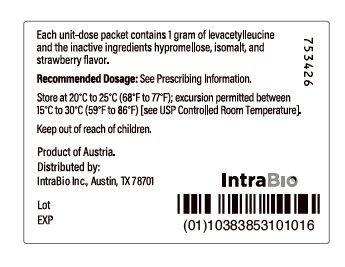
16 HOW SUPPLIED/STORAGE AND HANDLING How Supplied AQNEURSA (levacetylleucine) for oral suspension is supplied as white to off-white granules in a unit-dose multi-layer aluminum/polyethylene packet. Each packet contains 1.7 gram white to off-white granules, equivalent to 1 gram levacetylleucine. NDC 83853-101-01: Carton containing 28 unit-dose packets Storage and Handling Store AQNEURSA at room temperature between 20°C to 25°C (68°F to 77°F); excursion permitted between 15°C to 30°C (59°F to 86°F) [see USP Controlled Room Temperature].
📋 Description ▾
11 DESCRIPTION AQNEURSA (levacetylleucine) for oral suspension contains the drug substance levacetylleucine, a modified amino acid. Levacetylleucine is slightly soluble in aqueous solutions. The chemical name is 2-acetamido-4-methylpentanoic acid.
The empirical formula is C 8 H 15 NO 3 and the molecular weight is 173.21. The chemical structure is: Each packet of AQNEURSA granules contains 1 gram levacetylleucine and the inactive ingredients hypromellose, isomalt and strawberry flavor. 2-acetamido-4-methylpentanoic acid
💬 Information for Patients ▾
17 PATIENT COUNSELING INFORMATION Advise the patient and/or caregiver to read the FDA-approved patient labeling (Instructions for Use). Embryo-Fetal Toxicity AQNEURSA may cause embryo-fetal harm. Advise a pregnant female of the potential risk to the fetus.
Advise a female of reproductive potential and caregiver to inform their healthcare provider of a known or suspected pregnancy [see Warnings and Precautions ( 5.1 ) and Use in Specific Populations ( 8.1 )] . Advise a female of reproductive potential to use effective contraception during treatment and for 7 days after the last dose if AQNEURSA is discontinued [see Use in Specific Populations ( 8.1 , 8.3 )] . Distributed by: IntraBio Inc., Austin TX 78701 AQNEURSA is a trademark of IntraBio.
🧬 Pharmacokinetics ▾
12.3Pharmacokinetics Levacetylleucine pharmacokinetic parameters at steady state are presented as mean (SD) unless otherwise specified. Levacetylleucine maximum concentration (C max ) and area under the curve from time 0 to 24 hours (AUC 0-24hrs ) were 8.3 (3.3) µg/mL and 33.2 (12.5) h*μg/mL. No levacetylleucine accumulation occurs after repeated administration.
Absorption Levacetylleucine time to C max (T max ) is 1 hour (ranging from 0.5 to 2.5 hours). Distribution Levacetylleucine apparent (oral) volume of distribution (V SS /F) is 253 (125) L. Elimination Levacetylleucine estimated half-life is around 1 hour and the apparent (oral) clearance is 139 (59) L/h.
Metabolism Levacetylleucine is metabolized into acetate and L-leucine by ubiquitously expressed enzymes, which are used endogenously in catabolic and metabolic pathways. Cytochrome P450 enzymes are not involved in the metabolism of levacetylleucine. Specific Populations No clinically significant differences in pharmacokinetics of levacetylleucine were observed based on age (range 5 to 67 years), gender (female 45.5%, male 54.5%), or race/ethnicity (White 91%, Asian 4%, Other or not specified 5%).
The effect of renal impairment, hepatic impairment, or pregnancy on levacetylleucine pharmacokinetics is unknown. Body Weight The volume of distribution and clearance of levacetylleucine increases with increasing body weight (20.5 kg to 98.4 kg), but these effects on pharmacokinetics are minimized by the recommended weight-based dosing. Drug Interaction Studies In Vitro Studies Cytochrome P450 (CYP450) enzymes: Levacetylleucine does not inhibit CYP 1A2, 2B6, 2C8, 2C9, 2C19, 2D6, or 3A4 and does not induce CYP 1A2, 2B6, and or 3A4.
Transporter Systems Levacetylleucine is a substrate of organic anion transporter (OAT)1 and OAT3, but not organic cation transporter (OCT)2, breast cancer resistance protein (BCRP), or P-glycoprotein (P-gp). Levacetylleucine inhibits P-gp, BCRP, bile salt export pump (BSEP), OAT1 and OAT3, but does not inhibit organic anion transporting polypeptide (OATP)1B1 and OATP1B3.
🧬 Pharmacodynamics ▾
12.2Pharmacodynamics Clinical pharmacodynamic studies have not been conducted for levacetylleucine. A relationship was not observed between increasing levacetylleucine exposure and clinical efficacy. The time course of pharmacodynamic response is unknown.
🔬 Clinical Studies ▾
14 CLINICAL STUDIES The safety and efficacy of AQNEURSA for the treatment of NPC were evaluated in a randomized, double-blind, placebo-controlled, two-period crossover study (NCT05163288) that evaluated the efficacy of AQNEURSA in 60 patients. To be eligible for the study, patients had to be aged 4 years or older with a confirmed diagnosis of NPC. Patients were required to have at least mild disease-related neurological symptoms.
Patients were assessed over a 2-week baseline period. Patients were then randomized in a 1:1 ratio to one of the two treatment sequences: • Treatment Sequence 1 (N=30): AQNEURSA in Treatment Period I, followed by immediate crossover to placebo in Treatment Period II • Treatment Sequence 2 (N=30): placebo in Treatment Period I, followed by immediate crossover to AQNEURSA in Treatment Period II. AQNEURSA and placebo were administered orally with or without food for 12 weeks in each period.
Patients aged ≥13 years received 4 gram per day (as 2 gram morning dose, 1 gram afternoon dose, and 1 gram evening dose). The AQNEURSA dosage in pediatric patients under 13 years was based on patient’s body weight [ see Dosage and Administration ( 2.2 ) ].The approved dosage regimen is based on body weight and not age. Fifty-nine patients (98%) completed the study and received both placebo and AQNEURSA.
One patient withdrew based on healthcare provider decision during AQNEURSA treatment. Of the 60 randomized patients (37 adults and 23 pediatric patients), 27 were female and 33 were male. The median age at treatment initiation was 25 years (range: 5 to 67 years).
90% of the patients were White, 3% Asian, and 7% Other. The majority of the patients (n=51, 85%) received miglustat treatment prior to randomization and during the trial. The primary efficacy outcome was assessed using a modified version of the Scale for Assessment and Rating of Ataxia (SARA), referred to as the functional SARA (fSARA).
The SARA is a clinical assessment tool that assesses gait, stability, speech, and upper and lower limb coordination across 8 individual domains. The fSARA consists only of gait, sitting, stance, and speech disturbance domains of the original SARA with modifications to the scoring responses. Each domain was rescored from 0 to 4, where 0 is the best neurological status and 4 the worst, with a total score ranging from 0 to 16.
The fSARA score was assessed at baseline, 6 weeks, 12 weeks (the end of Period I), 18 weeks, and 24 weeks (the end of Period II). The estimated mean fSARA total score was 5.1 when patients were treated with AQNEURSA and 5.6 when patients were treated with placebo. The estimated treatment difference for the fSARA total score was -0.4 (95% CI: -0.7, -0.2) ( Table 3 ).
Table 3 Summary of fSARA Efficacy Results CI = confidence interval; SD = standard deviation; SE = standard error. Variable fSARA Total Score Treatment Sequence 1: AQNEURSA - Placebo Treatment Sequence 2: Placebo - AQNEURSA Baseline N=30 N=30 Mean (SD) 5.2 (3.0) 6.3 (3.3) Period I N=29 N=30 Mean (SD) 4.5 (2.6) 6.0 (3.4) Period II N=28 Two patients did not have an assessment at the end of Period II (week 24). N=30 Mean (SD) 5.1 (2.8) 5.6 (3.1) Estimated Mean fSARA Score (SE) by Treatment AQNEURSA 5.1 (0.1) Placebo 5.6 (0.1) Treatment Difference (95% CI) -0.4 (-0.7, -0.2) Two-sided p-value <0.001 Patients who received AQNEURSA in Period I followed by placebo in Period II (Treatment Sequence 1) showed a greater improvement in the fSARA score in Period I with a mean change from baseline of -0.5 (SD 1.2), compared to Period II with a mean change from baseline of 0 (1.5).
Similarly, patients who received placebo in Period I followed by AQNEURSA in Period II (Treatment Sequence 2) experienced greater improvement in the fSARA score while receiving AQNEURSA in Period II with a mean change of -0.7 (0.9), compared to a mean change of -0.3 (0.9) in Period I. Figure 1 Mean (+/- standard error) plot of the fSARA total score by time and treatment sequence Result… [Excerpted — this section continues on DailyMed.]
🧪 Nonclinical Toxicology ▾
13 NONCLINICAL TOXICOLOGY
13.1Carcinogenesis, Mutagenesis, Impairment of Fertility Carcinogenesis Animal studies to evaluate the carcinogenic potential of levacetylleucine have not been conducted. Mutagenesis Levacetylleucine was not mutagenic or clastogenic in a battery of in vitro and in vivo assays including bacterial reverse mutation (Ames), chromosomal aberration (in human lymphocytes) and mouse micronucleus assays. Impairment of Fertility Animal studies to evaluate effects of levacetylleucine on fertility have not been conducted.
📄 Carcinogenesis, Mutagenesis, Impairment of Fertility ▾
13.1Carcinogenesis, Mutagenesis, Impairment of Fertility Carcinogenesis Animal studies to evaluate the carcinogenic potential of levacetylleucine have not been conducted. Mutagenesis Levacetylleucine was not mutagenic or clastogenic in a battery of in vitro and in vivo assays including bacterial reverse mutation (Ames), chromosomal aberration (in human lymphocytes) and mouse micronucleus assays. Impairment of Fertility Animal studies to evaluate effects of levacetylleucine on fertility have not been conducted.
📖 Instructions for Use ▾
INSTRUCTIONS FOR USE AQNEURSA [ak nur' sah] (levacetylleucine) for oral suspension This Instructions for Use contains information on how to prepare and take or give AQNEURSA oral suspension. Read this Instructions for Use before you prepare and take or give the first dose of AQNEURSA oral suspension and each time you get a refill. There may be new information.
This Instructions for Use does not take the place of talking to you or your child’s healthcare provider about your or your child’s medical condition or treatment. Important Information You Need to Know Before Taking or Giving AQNEURSA Oral Suspension • Take or give AQNEURSA oral suspension exactly as instructed by your healthcare provider. • Take or give AQNEURSA oral suspension with or without food. • AQNEURSA oral suspension can be taken or given by mouth or through a gastrostomy tube (G-tube) feeding tube (French size 18 or larger). • Do not use hot liquid with AQNEURSA oral suspension. • For instructions on disposing of expired AQNEURSA packets or unused AQNEURSA oral suspension, see the end of this Instructions for Use.
Supplies Needed to Prepare and Take or Give AQNEURSA Oral Suspension Gather the following supplies on a clean flat surface: • the number of AQNEURSA packets needed for your prescribed dose • a clean spoon • a container • a measuring cup from your pharmacist • 40 mL of water, orange juice, or almond milk • catheter tip syringe (if giving AQNEURSA oral suspension through G-tube) Preparing AQNEURSA Oral Suspension Step 1: Wash and dry your hands. Step 2: Open and empty the entire contents of 1 AQNEURSA packet into a container with 40 mL of: • water, orange juice or almond milk (when taken by mouth), or • water only when given through a G-tube.
Do not use hot liquid. Step 3: Stir to form the suspension. Note: • Go to Step 4 for taking AQNEURSA oral suspension by mouth, or • Go to Step 6 for giving AQNEURSA oral suspension through a gastrostomy tube (G-tube).
Taking AQNEURSA Oral Suspension by Mouth Step 4: Swallow AQNEURSA oral suspension right away (within 30 minutes). Throw away (dispose of) unused AQNEURSA oral suspension if not taken within 30 minutes. Step 5: If your prescribed dose requires 2 AQNEURSA packets, repeat Steps 1 through 4.
Giving AQNEURSA Oral Suspension Through a Gastrostomy Tube (G-tube) • Give AQNEURSA oral suspension through a G-tube that is a French size of 18 or larger. • Follow Steps 1 through 3 to prepare AQNEURSA oral suspension. Note: Only use 40 mL of water for preparing AQNEURSA oral suspension when given through G-tube. Step 6: Draw up the prepared AQNEURSA oral suspension into a catheter tip syringe.
Step 7: Inject the AQNEURSA oral suspension through the G-tube right away. Throw away (dispose of) unused AQNEURSA oral suspension if not given right away. Step 8: Refill the syringe with an additional 20 mL water.
Step 9: Flush the G-tube with water, until no remaining AQNEURSA oral suspension is seen in the syringe or G-tube. Step 10: If your prescribed dose requires 2 AQNEURSA packets, follow Steps 1 through 3 to prepare the AQNEURSA oral suspension, then repeat Steps 6 through 9. Storing AQNEURSA • Store AQNEURSA at room temperature between 68°F to 77°F (20°C to 25°C). • Keep AQNEURSA oral suspension and all medicines out of reach of children.
Disposing of Expired AQNEURSA Packets or Unused AQNEURSA Oral Suspension Throw away (dispose of) expired AQNEURSA packets or unused AQNEURSA oral suspension following the steps below: • Mix medicine with a substance such as dirt, cat litter, or used coffee grounds. • Place the mixture in a container such as a sealed plastic bag. • Throw away (dispose of) the container in your household trash. Distributed by: IntraBio Inc., Austin, TX 78701 This Instructions for Use has been approved by the U.S. Food and Drug Administration.
Issued: 9/2024 Empty the entire contents of 1 AQNEURSA packet into a container with 40 mL water Stir to form the suspension Swallow AQNEURSA oral suspension righ… [Excerpted — this section continues on DailyMed.]
📄 Package Label / Principal Display Panel ▾
PRINCIPAL DISPLAY PANEL AQNEURSA Carton AQNEURSA Packet Front AQNEURSA Packet Back
Medicaid utilization & spend
Medicare Part D spend CMS · PART D · 2026 (Q1)
Reported adverse events (FAERS)
Top reported reactions
Age at onset
Reporter sex
Serious outcomes
Where does this data come from?
About this NDC listing & data coverage
What data is (and isn’t) available for this NDC — tap to expand
| NDC identity (package / product / labeler codes) | ✓ Available |
| Labeler | ✓ Available |
| Product & package description | ✓ Available |
| Marketing category & status | ✓ Available |
| Active ingredient / dosage form / route | ✓ Available |
| FDA label (SPL via DailyMed) | ✓ Available |
| Package photos | ✓ Available |
| Inactive ingredients (structured) | — Not published for this NDC The labeler did not submit a structured excipient list, or no SPL is available. |
| NADAC pharmacy acquisition price (CMS) | — Not published for this NDC CMS publishes NADAC only for NDCs reported in its retail-pharmacy survey. |
| Orange Book / therapeutic-equivalence data | ✓ Available |
| HCPCS J-code billing crosswalk | — Not published for this NDC Most self-administered / retail products have no J-code — that is normal. |
| Medicaid utilization (CMS SDUD) | ✓ Available |