
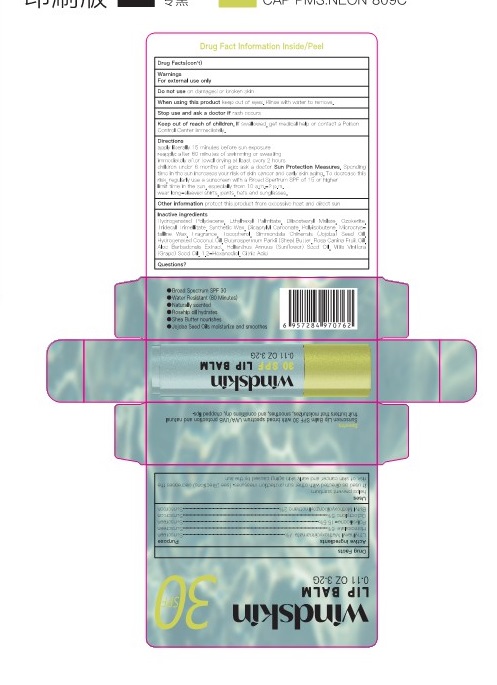
SUNSCREEN LIP BALM Ethylhexyl Methoxycinnamate, Homosalate, Polysilicone-15, Octocrylene, Butyl Methoxydibenzoylmethane 5 g/100g; 5 g/100g; 7 g/100g; 6 g/100g; 2 g/100g Lipstick, 3.2 g — NDC 84066-101-01 (Billing 84066-0101-01)
This is a package of 3.2 g of SUNSCREEN LIP BALM Ethylhexyl Methoxycinnamate, Homosalate, Polysilicone-15, Octocrylene, Butyl Methoxydibenzoylmethane 5 g/100g; 5 g/100g; 7 g/100g; 6 g/100g; 2 g/100g Lipstick from Guangzhou Tata Biotechnology Co., Ltd., marketed since Jan 2024 and currently FDA-listed. It is this product's only package size.
Identity & classification
Regulatory identifiers FDA, NLM and CMS codes for this package
Where does this data come from?
- FDA openFDA NDC Directory · synced Oct 1, 2026
- FDA label on DailyMed · label index refreshed Oct 1, 2026
- RxNorm (NLM RxNav) · catalog refreshed Oct 1, 2026
- Medi-Span GPI (licensed)
- First Databank (licensed) · refreshed Oct 1, 2026
Clinical
This is an over-the-counter lip balm marketed as a sunscreen product and sold under FDA's OTC monograph rules for topical sunscreens. It contains five active ingredients that function as ultraviolet (UV) filters: avobenzone, homosalate, octinoxate, octocrylene, and polysilicone-15. These chemical and mineral UV-blocking agents are commonly used together in lip care products to help protect the lips from sun exposure when applied topically.
Patient education
Supplement & herbal interactions
Where does this data come from?
- MedlinePlus (NLM) · refreshed Oct 1, 2026
- FDA label on DailyMed · label index refreshed Oct 1, 2026
Ask a licensed pharmacist directly — free, answered by our team.
Pricing
A drug doesn't have one price. Each row is a different public payment system, and none is what you'd pay at the counter — that depends on your insurance. The ⓘ on each row explains what it measures.
| Price system | Per each | Per package |
|---|---|---|
| Retail pharmacies payNADAC · weekly | Not in the retail survey — common for institutional, discontinued, or low-volume packs. | |
| Medicaid paysCMS SDUD · 12 mo | No recent Medicaid claims on file for this NDC — rare and low-volume NDCs are suppressed in the public data. | |
| Medicare drug plans payPart D · quarterly | No Part D plan price is available for this NDC in our data. | |
Where does this data come from?
- CMS NADAC weekly file
- CMS ASP pricing files · refreshed Sep 20, 2026
- CMS Medicaid State Drug Utilization Data · refreshed Oct 2, 2026
- CMS Part D plan pricing files · refreshed Sep 24, 2026
- VA National Acquisition Center price file
Packaging — all sizes for this product
| Package NDC | Description | Marketing start | Marketing end | Status |
|---|---|---|---|---|
| 84066-0101-01 You're viewing this Main listing | 3.2 g in 1 TUBE | 2024-01-25 | — | Active |
Therapeutic equivalents
| Product | Labeler | Pack | NADAC/unit | TE | Status | Price vs. this |
|---|---|---|---|---|---|---|
| Sunscreen Lip Balm 5 g/100g; 5 g/100g; 7 g/100g; 6 g/100g; 2 g/100gthis 84066-0101-01 | Guangzhou | 3.2 g | — | — | FDA listed | — |
Where does this data come from?
- FDA openFDA NDC Directory · synced Oct 1, 2026
- FDA Orange Book · refreshed Sep 3, 2026
- CMS NADAC weekly file
Availability & generic status
We did not find an FDA-approved generic match for this exact strength, form and route.
Where does this data come from?
- FDA Orange Book · refreshed Sep 3, 2026
Inactive Ingredients / Excipients
Inactive ingredients, also called excipients, are components of the drug product other than the active ingredient. They may include fillers, dyes, coatings, preservatives, flavors, or other formulation ingredients.
💡 Tap an ingredient (hover on desktop) to see what it is and why it’s used.
-
UNII TR046Y3K1G
A liquid alcohol derived from petroleum or plant sources. It acts as a solvent and humectant in medicines, helping dissolve active ingredients and retain moisture in the formulation.
-
UNII 09TD8L5SQV
A plant extract from the aloe arborescens species. It functions as a skin-soothing and hydrating ingredient in topical formulations, helping maintain moisture and improve texture.
-
UNII Q1LS2UJO3A
Ceresin is a purified mineral wax derived from ozocerite. It functions as a binding agent, thickener, and coating material in medicines to help hold ingredients together and provide texture or protective coating.
-
UNII 2968PHW8QP
A weak organic acid derived from citrus fruits or made through fermentation. It works as a buffer to control pH, a preservative to extend shelf life, and a flavoring agent in medications.
-
UNII 609A3V1SUA
A silky liquid derived from caprylic acid that acts as an emollient and solvent in formulations. It helps dissolve active ingredients and improves the spreadability and feel of lotions, creams, and topical products.
-
UNII QBS8A3XZGQ
A synthetic oil made from diisostearyl alcohol and malic acid. It serves as an emollient and solvent in formulations, helping to dissolve and deliver active ingredients while improving texture and spreadability.
-
UNII 2865993309
Ethylhexyl palmitate is an oily chemical made from palm oil and alcohol. It acts as an emollient and skin-conditioning agent in topical medicines, helping the product spread smoothly and keeping skin soft.
-
UNII 930MLC8XGG
A plant oil extracted from grape seeds, used as an emollient and solvent in medicines. It helps dissolve active ingredients and improve the texture and absorption of topical or liquid formulations.
-
UNII JY81OXM1OM
A plant-based oil from coconut that has been chemically treated to solidify it. It acts as a binder and filler to help hold tablet ingredients together and give the pill its shape and firmness.
-
18.91 g / 100 g
UNII 4YI0729529
A synthetic oil made from plant-derived hydrocarbons that has been chemically saturated. It acts as a lubricant and glidant to help the medicine flow smoothly during manufacturing and improve tablet handling.
-
UNII 724GKU717M
Jojoba oil is a natural liquid wax extracted from jojoba plant seeds. It's used in medicines as an emollient and lubricant to soften and smooth the product, and sometimes as a carrier or penetration enhancer.
-
UNII XOF597Q3KY
A refined form of wax made from petroleum, microcrystalline wax is used in medicines as a coating agent, binder, and hardening ingredient. It helps give tablets and capsules their shape and protective outer layer.
-
UNII I9O0E3H2ZE
Paraffin is a waxy, petroleum-derived substance used as a coating, lubricant, and hardening agent in tablets and capsules. It helps protect the medicine from moisture and gives pills a smooth finish.
-
UNII 5XB3A63Y52
A synthetic rubber polymer used as a glidant and lubricant in tablet and capsule formulations. It reduces friction between particles and equipment surfaces, helping medicines flow smoothly during manufacturing and preventing sticking.
-
UNII CR7307M3QZ
Rosa canina fruit oil is a natural oil extracted from rosehip fruit. It's used in medicines as an emollient and skin-conditioning agent to help soften and smooth the product's texture or skin contact surface.
-
UNII K49155WL9Y
Shea butter is a fat extracted from shea tree nuts. It's used in medicines as an emollient and lubricant to soften the product, improve texture, and help ingredients blend smoothly together.
-
UNII 3W1JG795YI
Sunflower oil is a natural vegetable oil derived from sunflower seeds. It serves as a solvent, lubricant, and carrier in medicines, helping dissolve active ingredients and improve how the medication flows and absorbs in the body.
-
UNII R0ZB2556P8
Tocopherol is a form of vitamin E derived from plant oils. It acts as an antioxidant in medicines to prevent oils and fats from breaking down and spoiling during storage.
-
UNII FY36J270ES
A synthetic chemical compound used as a plasticizer in film coatings. It makes tablet or capsule coatings flexible and durable so they don't crack or break during handling and storage.
19 inactive ingredients listed in the exact product block matched to this NDC.
Label-section wording can be broader than the structured product block and may mention additional formulation ingredients.
Where does this data come from?
ingredient classCode="IACT" elements from the exact product block matched by this NDC. Label-section narrative from DailyMed / the openFDA label index is shown separately when available.- FDA label on DailyMed · label index refreshed Oct 1, 2026
- FDA openFDA NDC Directory · synced Oct 1, 2026
Inactive ingredient FAQ
Are inactive ingredients the same for every manufacturer?
Why might an inactive ingredient be missing?
Can inactive ingredients matter?
Manufacturer & labeler
Where does this data come from?
- FDA openFDA NDC Directory · synced Oct 1, 2026
- Drugs@FDA
FDA label — Drug Facts FDA SPL
🎯 Indications and Usage ▾
helps prevent sumburn if used as directed with other sun protection measures, (see Directions) decreases therisk of skin cancer and early skin aging caused by the sun
⏱️ Dosage and Administration ▾
Directions apply liberally 15 minutes before sun exposure reapply: after 80 minutes of swimming or sweating immediately after towel drying at least every 2 hours children under 6 months of age: ask a doctor Sun Protection Measures. Spendingtime in the sun increases your risk of skin cancer and early skin aging. To decrease thisrisk, regularly use a sunscreen with a Broad Spertrum SPF of 15 or higher limit time in the sun, especially from 10 a.m.-2 p.m. wear long-sleeved shirts,pants,hats and sunglasses
⚠️ Warnings ▾
For external use only
📦 Storage and Handling ▾
Other information protect this product from excessive heat and direct sun
🧪 Active Ingredient ▾
Active ingredients Ethylhexyl Methoxycinnamate 7% Homosalate 6 % Polysilicone-15 5% Octocrylene 5% Butyl Methoxydibenzoylmethane 2%
🧪 Inactive Ingredients ▾
lnactive ingredients:Hydrogenated Polydecene, Ethylhexyl Palmitate, Disostearyl Malate.OzokeriteTridecyl Trimellitate, Synthetic Wax, Dicapryly Carbonate, Polyisobutene, Microcrys-talline Wax,Fragrance, Tocopherol, Simmondsia Chinensis (Jojoba) Seed OilHydrogenated Coconut Oil, Butyrospermum Parkii (Shea) Butter, Rosa Canina Fruit Oi.Aloe Barbadensis Extract, Helianthus Annuus (Sunfower) Seed Oil. Vitis ViniferaGrape) Seed Oil,12-Hexanediol, Citric Acid
🎯 Purpose ▾
Sunscreen
📄 Do Not Use ▾
Do not use on damaged or broken skin
📄 When Using This Product ▾
When using this product keep out of eyes. Rinse with water to remove.
📄 Stop Use and Ask a Doctor If ▾
Stop use and ask a doctor if rash occurs
📄 Keep Out of Reach of Children ▾
Keep out of reach of children. lf swallowed, get medical help or contact a Poison Control Center immediately.
📄 Questions or Comments ▾
Questions or comments? +1-973-907-6739
📄 Package Label / Principal Display Panel ▾
PRINCIPAL DISPLAY PANEL
About this NDC listing & data coverage
What data is (and isn’t) available for this NDC — tap to expand
| NDC identity (package / product / labeler codes) | ✓ Available |
| Labeler | ✓ Available |
| Product & package description | ✓ Available |
| Marketing category & status | ✓ Available |
| Active ingredient / dosage form / route | ✓ Available |
| FDA label (SPL via DailyMed) | ✓ Available |
| Package photos | ✓ Available |
| Inactive ingredients (structured) | ✓ Available |
| NADAC pharmacy acquisition price (CMS) | — Not published for this NDC CMS publishes NADAC only for NDCs reported in its retail-pharmacy survey. |
| Orange Book / therapeutic-equivalence data | — Not published for this NDC Applies only to products approved under an NDA/ANDA; many listings are out of scope. |
| HCPCS J-code billing crosswalk | — Not published for this NDC Most self-administered / retail products have no J-code — that is normal. |
| Medicaid utilization (CMS SDUD) | — Not published for this NDC CMS reports utilization only for NDCs with Medicaid claims above its privacy threshold. |