
Pharmacist Q&A You ask. We answer.
Can You Crush Metoclopramide Tablets? Is It Safe to Dose Half at a Time?
A pharmacist explains whether metoclopramide tablets can be crushed and how to safely split a 10 mg tablet into a 5 mg dose.

Answered by Dr. Brian Staiger, PharmD
wmolina asked HelloPharmacist:
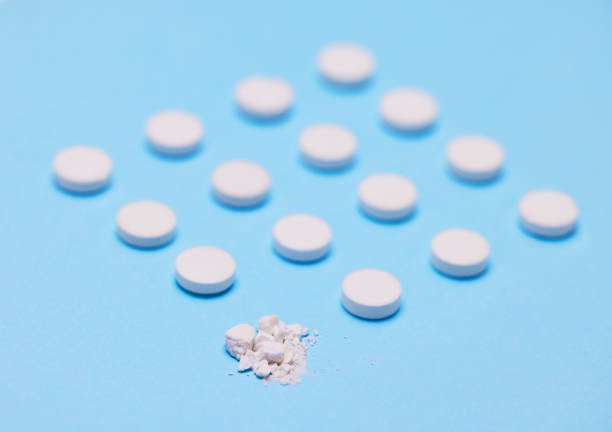
Can a 10 mg metoclopramide tablet be crushed and divided into a 5 mg dose for a cat? It was prescribed by my veterinarian, but I have some doubts about the dosing.
The Quick Answer
- Standard immediate-release metoclopramide tablets are generally safe to crush and split in half to obtain a 5 mg dose from a 10 mg tablet. Split the tablet in half first, then crush the half if needed, and mix it with a small amount of soft food or liquid to give to your cat right away rather than preparing it in advance. If your metoclopramide is a special formulation like an orally disintegrating tablet or oral solution, check with your pharmacist or veterinarian before crushing since different product types may have specific administration instructions.
A quick summary of Dr. Brian Staiger, PharmD's full answer below, condensed by AI from that answer only (not from any outside source). The pharmacist's answer is the source of record.
Medications in this answer · tap one for its full drug page
Dr. Brian Staiger writes:
Hi! Thanks for reaching out!
Metoclopramide is not on our "Do Not Crush" list, and standard immediate-release metoclopramide tablets are generally safe to crush.
The main exception would be if you have a different formulation, such as an orally disintegrating tablet (ODT), oral solution, or another product with specific administration instructions from your pharmacist, prescriber, or veterinarian. However, standard immediate-release metoclopramide tablets are not extended-release or enteric-coated, which are the main types of tablets where crushing is usually a concern.
So, from a dosage form standpoint, crushing an immediate-release metoclopramide tablet is generally acceptable. However, because this is for a cat, dose accuracy is especially important.
You mentioned that your veterinarian prescribed a 5 mg dose using a 10 mg tablet. In general, I would recommend splitting the tablet in half first, then crushing the 5 mg half if needed to make administration easier. While you could crush the entire 10 mg tablet and attempt to divide the powder into two equal portions, doing so is typically less accurate unless you have a precise scale.
You may also be wondering whether one half of a 10 mg tablet actually contains approximately 5 mg of metoclopramide.
Although manufacturers are allowed a small amount of variation, tablets are manufactured so that the active ingredient is distributed as uniformly as possible throughout the tablet. As a result, a properly split immediate-release 10 mg metoclopramide tablet is generally expected to provide approximately 5 mg of medication in each half.
If you do crush the tablet, mix the crushed dose with a small amount of soft food or liquid and take it right away (in this case, administer the medication to your cat right away). Avoid crushing tablets in advance for later use.
Final Words
If you can tell us the specific product or manufacturer you have for metoclopramide, we would be happy to double-check everything for you.
But as an overall answer: yes, standard immediate-release metoclopramide tablets are generally safe to crush, and splitting a 10 mg tablet to obtain an approximately 5 mg dose is a common and reasonable approach when directed by your veterinarian.
Thanks again for reaching out!
References & SourcesShow or hide the references
Credentials
- Doctor of Pharmacy
- Board certified clinical pharmacist (BCPS)
- American Herbalist Guild
- Medication Therapy Management certified
Brian Staiger, PharmD, BCPS, is a licensed pharmacist with more than 13 years of experience across retail pharmacy, clinical pharmacy, medication safety, pharmacy program development, and healthcare administration. He is the founder of HelloPharmacist.com, where he helps patients...
Check Our Do Not Crush List
Our pharmacist-reviewed list of 1,133 tablets and capsules that should not be crushed or chewed, with the reason for each. Not being on it does not mean a medicine can be crushed.
Drug Interactions in This Answer
Every drug each medication in this answer is known to interact with, from our drug interaction library.
Check Metoclopramide with everything you take, in our drug interaction checker
Supplement Interactions for the Medications in This Answer
Every supplement and herb checked against each one, ranked by severity.
NDC Codes for the Medications in This Answer
Every package, labeler and price for each medication in the FDA's National Drug Code directory.
Glossary: Terms in This AnswerShow or hide the glossary
- Metoclopramide
- Metoclopramide is a prokinetic agent used to relieve heartburn and nausea from GERD and slow stomach emptying.
- Immediate-release
- A tablet designed to release the medication quickly into your body, rather than slowly over time.
- Orally disintegrating tablet (ODT)
- A tablet that dissolves quickly in your mouth without needing to be swallowed whole.
- Extended-release
- A tablet designed to slowly release medication over many hours, rather than all at once.
- Enteric-coated
- A tablet with a special coating that prevents it from dissolving in the stomach so the medication reaches the small intestine instead.
- Formulation
- The specific way a medication is prepared and packaged, such as a tablet, liquid, or powder.
- Active ingredient
- The substance in a medication that actually produces the therapeutic effect or treats the condition.
Did this answer your question?
Every situation is a little different. Ask our pharmacist your exact question, it's free →
Check What You Just Read
True or false? 3 quick statements from this answer.
-
Standard immediate-release metoclopramide tablets are not extended-release or enteric-coated, so crushing them is generally acceptable.
True. The pharmacist notes that extended-release and enteric-coated tablets are the main types where crushing is a concern, and immediate-release metoclopramide falls into neither category.
-
Metoclopramide orally disintegrating tablets (ODTs) can be crushed using the same approach as standard immediate-release tablets.
False. The pharmacist specifically lists ODTs as an exception that may have different administration instructions, so the same crushing approach does not automatically apply.
-
When a 10 mg metoclopramide tablet is properly split, each half is generally expected to contain approximately 5 mg of the active ingredient.
True. Tablets are manufactured so that the active ingredient is distributed as uniformly as possible, making a properly split half a reasonable approximation of half the labeled dose.
Statements condensed by AI from Dr. Brian Staiger, PharmD's answer above, which is the source of record. Keep going in the Pharmacist IQ quiz →