
Is Benadryl Safe With 'Robitussin Cough And Cold 8-Hour'?
In our latest question and answer, the pharmacist discusses the use of Benadryl with 'Robitussin Cough and Cold 8-Hour'.
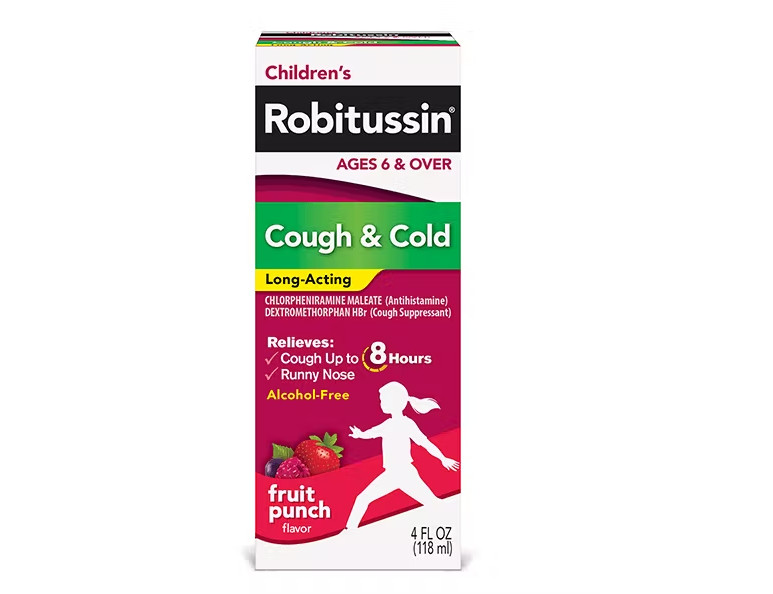

Can children's Robitussin Cough and Cold 8-hour (it contains chlorpheniramine and dextromethorphan) be taken with Benadryl if I alternate as needed?
Oct 14, 2022- Both Robitussin Cold & Cold Long-Acting 8-Hour and Benadryl contain antihistamines that can increase side effects like dizziness, dry mouth, and sedation when taken together at the same time. You can alternate these medications during the same day by waiting at least 8 to 12 hours between doses if you take Robitussin first, or 4 to 6 hours if you take Benadryl first. Talk to your pharmacist about which product is best for your specific symptoms.
Answer
Robitussin Cold & Cold Long-Acting 8-Hour (dextromethorphan; chlorpheniramine) should not be taken at the same time as Benadryl (diphenhydramine) as both contain an antihistamine. Combining them at the same time could increase the risk of side effects.
However, as mentioned in your question, these drugs could certainly be alternated and given during the same day (just not at the same time).
What Is In Robitussin Cold & Cold Long-Acting 8-Hour
Robitussin Cold & Cold Long-Acting 8-Hour contains the following two drugs:
- Dextromethorphan (cough suppressant)
- Chlorpheniramine (antihistamine)
It is the chlorpheniramine in this product we are concerned about giving with Benadryl.
Chlorpheniramine is a first-generation antihistamine contained in several over-the-counter products, including this one and most Dimetapp products.
Like Benadryl, it is sedating, but not quite to the degree that Benadryl is. It is more sedating than second-generation antihistamines (e.g., Claritin, Allegra) however.
One area where chlorpheniramine differs from Benadryl is its duration of action. While Benadryl lasts four to six hours per dose, chlorpheniramine lasts eight to twelve.
What Is Benadryl?
Benadryl contains the sedating antihistamine diphenhydramine. It is a first-generation antihistamine, can be used for allergy symptoms, and is very commonly used in over-the-counter sleep aids.
Concerns Combining Benadryl And Chlorpheniramine
Both Benadryl (diphenhydramine) and chlorpheniramine (contained in Robitussin Cold & Cold Long-Acting 8-Hour) can increase the risk of side effects. Combining both drugs would be considered a 'therapeutic duplication' as they are in the same drug class, work in the same manner, and have similar side effects. Side effects include:
- Dizziness
- Dry mouth
- Sedation
- Dry eyes
- Constipation
- Paradoxical excitation (in children)
Ideally, you want to separate the administration of these drugs. If you take Robitussin Cold & Cold Long-Acting 8-Hour first, you'll want to wait at least 8 to 12 hours before taking Benadryl.
Similarly, if you take Benadryl first, you'll want to wait 4 to 6 hours before taking Robitussin Cold & Cold Long-Acting 8-Hour.
Final Words
Thanks for reaching out and do so again anytime!
References & sources
- Diphenhydramine Monograph — PubChem
- Chlorpheniramine Monograph — PubChem
- Dextromethorphan Monograph — PubChem
- Robitussin Manufacturer Website — Robitussin
Glossary — Terms in This Answer
- Antihistamine
- A medication that blocks the effects of histamine, a chemical released by the body during allergic reactions.
- Dextromethorphan
- A cough suppressant ingredient commonly found in over-the-counter cold medicines.
- Chlorpheniramine
- A first-generation antihistamine used to treat allergy symptoms and contained in cold and allergy medicines.
- Diphenhydramine
- The active ingredient in Benadryl, a sedating antihistamine used for allergies and sleep.
- First-generation antihistamine
- An older type of antihistamine that tends to cause drowsiness as a side effect.
- Therapeutic duplication
- When two medications from the same drug class are used together, doing the same job and potentially causing unnecessary risk.
- Duration of action
- How long a medication remains active and effective in the body after a dose is taken.
- Paradoxical excitation
- An unexpected reaction where a medication meant to calm or sedate instead causes agitation or hyperactivity, particularly in children.
Dr. Brian Staiger, PharmD
Doctor of Pharmacy, board certified clinical pharmacist (BCPS), American Herbalist Guild, Medication Therapy Management certified
Brian Staiger, PharmD, BCPS, is a licensed pharmacist with more than 13 years of experience across retail pharmacy, clinical pharmacy, medication safety, pharmacy program development, and healthcare administration. He is the founder of HelloPharmacist.com, where he helps patients...
More answers from Brian →