
Why Did ProAir HFA Go Away and Why Does Ventolin Feel Weaker?
Why Teva stopped making ProAir HFA, what actually separates Ventolin and generic albuterol inhalers from it.
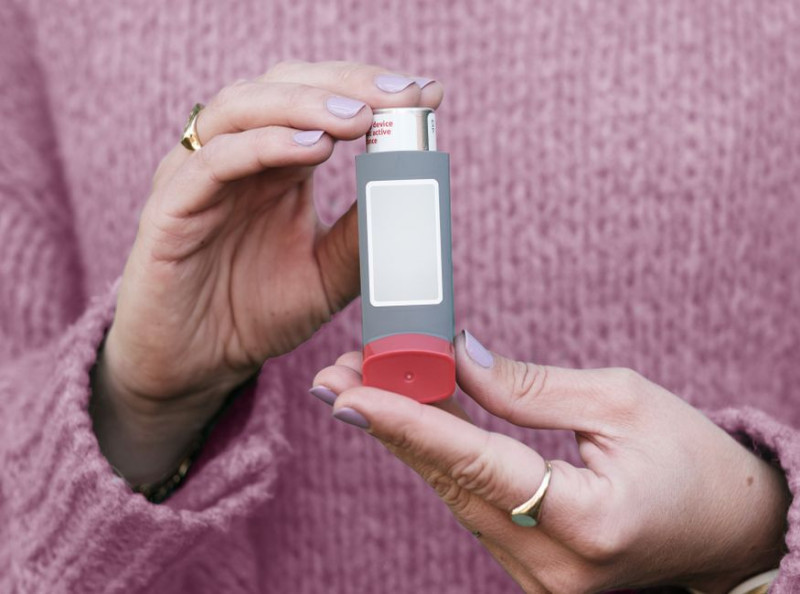

I have been prescribed other inhalers, such as Ventolin and albuterol sulfate. They do not work for me like ProAir. They don't last as long and they seem to be missing something. They say they last 4 to 6 hours, but not for me; they barely make 4 hours. I am so confused as to why ProAir went away. It worked for me! Really well!
Oct 02, 2026- ProAir HFA was discontinued by Teva in late 2022, and Teva still makes its own generic version, albuterol sulfate HFA.
- Ventolin HFA and generic albuterol sulfate deliver the same drug at the same 90 micrograms per puff, but their inactive ingredients and spray feel differ, which can make a puff seem weaker.
- Needing a rescue inhaler again within four hours or more than a couple of times a week suggests asthma that isn't well controlled, so talk with your prescribing doctor about your treatment plan.
Hi, and I appreciate you bringing this question to us! We answered a similar question a while back and discussed the discontinuation of ProAir HFA (What Happened To ProAir HFA And What Alternatives Are There? | HelloPharmacist). Be sure to take a look at that answer for more context as to what happened.
I do hear of this same complaint about the ProAir switch more often than you might expect. ProAir HFA went away because Teva, the company behind it, chose to stop selling the brand in late 2022.
The company continued making its own generic version instead. Ventolin HFA and generic albuterol sulfate provide the same drug at the same dose, so they aren't missing an ingredient.
What may differ is how each one is formulated and how it sprays, and I think that may explain much of what you're feeling.
Why ProAir HFA Left the Market
Teva never provided a detailed public reason, but the business side is fairly clear. The brand competed with Ventolin HFA, Proventil HFA, and several generics, and insurers increasingly favored whichever albuterol inhaler cost them the least.
Before the brand was discontinued, Teva already sold an authorized generic of ProAir, which is the same formulation in the same device with a plain label. Dropping the brand allowed the company to put its effort into that generic, which many pharmacies now stock simply as albuterol sulfate HFA.
A decision like that says nothing negative about the medicine itself, so the years you spent on ProAir weren't a concern. Teva's dry powder version, ProAir RespiClick, has remained on the market as far as I know.
What Separates Ventolin HFA and Generic Albuterol From ProAir
Each of these inhalers gives 90 micrograms of albuterol per puff, the standard rescue dose. The differences are in the inactive parts of the formula and in the device.
ProAir HFA and Proventil HFA contain a small amount of ethanol with the propellant, which changes the taste, the warmth, and the feel of the spray. Ventolin HFA contains no ethanol, only albuterol sulfate and propellant, so it tastes different and the plume comes out faster and cooler.
That difference in sensation matters more than people expect.
A puff that doesn't taste or land as you're used to can seem weaker even when your lungs are getting the same amount of drug.
Generic albuterol sulfate is not a single product either.
Teva makes the authorized generic of ProAir, while other companies produce generics modeled on Ventolin or Proventil, and your pharmacy can tell you which manufacturer filled your last prescription.
If the inhaler you received was not Teva's, asking the pharmacy to order the Teva albuterol sulfate HFA is a reasonable request. It is as close to your previous ProAir as anything on the shelf, since it is the same formulation in the same actuator.
Insurance plans may prefer one brand, so the pharmacy might need to check what yours covers first.
When a Rescue Inhaler Wears Off Before Four Hours
Four to six hours is an average, not a guarantee, and some people have always fallen at the short end of that range. Albuterol relaxes the muscle around the airways, but it does not address the swelling and mucus underneath, so relief fades as soon as the drug wears off.
Needing albuterol again every four hours, or more than a couple of times a week, generally points to asthma that isn't well controlled rather than to a defective inhaler. That warrants a call to the doctor who prescribes your inhalers.
Describe which inhalers you've tried, how long each one lasts, and how often you're reaching for one, and ask whether your treatment plan needs adjustment.
Your doctor has options to consider, including daily controller inhalers and a newer rescue inhaler, Airsupra, that combines albuterol with an inhaled steroid. Those are choices for that visit, not something to change on your own.
Technique can also reduce how long a dose lasts, especially when you change devices. Here are a few things to check with any new HFA inhaler:
- Shake it thoroughly before every puff.
- Prime a new inhaler with the number of test sprays called for in its own instructions, since the brands differ slightly, and re-prime if it sits unused for a couple of weeks.
- Breathe out first, then inhale slowly and deeply while you press down, and hold your breath for about ten seconds.
- Wait about a minute between puffs.
- Rinse the plastic mouthpiece with warm water once a week so dried medicine doesn't block the spray.
- Ask your doctor about using a spacer, which can help more of each puff reach your lungs.
One more point I'd never leave out with a rescue inhaler. If a dose is not helping at all during an attack, you can't speak in full sentences, or your lips or nails look bluish, that is an emergency and the correct call is 911.
Finding Your Closest ProAir Match
The medicine in all of these inhalers is the same, so the solution is usually finding the formulation that feels right to you and making sure your asthma plan is working as intended.
Ask your pharmacy whether Teva's albuterol sulfate HFA is available, and tell your doctor that a rescue dose is only carrying you about four hours.
If your doctor adjusts your plan, you receive a different generic, or your breathing gets worse before that visit, send me a follow-up question with the details and I'll review it with you.
Thanks again for reaching out to us!
References & sources
- Effect of Pulmonary Rehabilitation Exercise on Lung Volume and Respiratory Muscle Recovery in Lung Cancer Patients Undergoing Lobectomy — PubMed
- Bronchodilator effects of ipratropium bromide and albuterol sulfate among subjects with tetraplegia — PubMed
- Effect of nebulized ipratropium bromide on intraocular pressures in children — PubMed
NDC Codes for the Medications in This Answer
Every package, labeler and price for each medication in the FDA's National Drug Code directory.
Glossary — Terms in This Answer
- ProAir HFA
- A brand-name albuterol rescue inhaler that works quickly to open the airways, which Teva stopped selling in late 2022.
- Albuterol sulfate
- The active medicine in rescue inhalers that relaxes the muscles around the airways to make breathing easier.
- HFA inhaler
- A metered-dose inhaler that uses a gas propellant instead of powder to push a measured puff of medicine into the lungs.
- Controller inhaler
- A daily-use inhaler that reduces airway swelling and mucus over time to prevent asthma attacks, rather than giving quick relief.
- Spacer
- A plastic tube attached to an inhaler that holds the spray so more of the medicine reaches the lungs instead of the mouth and throat.
- Primed
- Made ready for use by releasing a few test sprays into the air so the inhaler delivers the correct dose.
- Authorized generic
- A lower-cost version of a brand-name medicine made by the same company with the same formulation and device but sold under a plain label.
- Ethanol
- An alcohol added in small amounts to some inhalers as an inactive ingredient that changes the taste and feel of the spray.
Dr. Brian Staiger, PharmD
Doctor of Pharmacy, board certified clinical pharmacist (BCPS), American Herbalist Guild, Medication Therapy Management certified
Brian Staiger, PharmD, BCPS, is a licensed pharmacist with more than 13 years of experience across retail pharmacy, clinical pharmacy, medication safety, pharmacy program development, and healthcare administration. He is the founder of HelloPharmacist.com, where he helps patients...
More answers from Brian →