
AfterShock Tropical Typhoon Ingredients & Drug Interactions
by MYOGENIX
What is this page for?
First and foremost: checking AfterShock Tropical Typhoon against your medications. The heart of this page is the interaction checker and the full interaction report — how this product’s ingredients may interact with prescription and over-the-counter medicines you may be taking.
Around that, we add a pharmacist’s high-level view of the product as a whole — what’s inside, the evidence for its stated use, how transparent the label is, and what safety data exists — so you can see the full picture in one place. It’s educational information from our licensed clinical databases and the clinical staff at HelloPharmacist — not medical advice — and we don’t sell or endorse products. Our editorial policy
AfterShock Tropical Typhoon is a dietary supplement by MYOGENIX with 19 active ingredients. Its ingredients are commonly taken for morning sickness in pregnancy, premenstrual syndrome (pms), preventing or treating b6 deficiency.Based on those ingredients, 1,584 medications have a known interaction with it, the most serious rated major. The ingredients most likely to interact are Joint Support Blend {Combination}, Vitamin E, Niacin. Use the checker below to test your specific medication, or read the full HelloPharmacist Interaction Report.
Check Your Meds Against AfterShock Tropical Typhoon by MYOGENIX
Ask about any prescription or over-the-counter medication and we check it for interactions with AfterShock Tropical Typhoon by MYOGENIX — and tell you which ingredient is responsible.
AI summaries are generated from our interaction database for education only — always confirm with your pharmacist. How we use AI
Ask the Pharmacist
A licensed pharmacist will answer your question by email — free, usually within 24 hours.
Got it — thank you!
A licensed pharmacist will answer within 24 hours. Keep an eye on your email (worth checking spam, just in case).
HelloPharmacist Scorecard of AfterShock Tropical Typhoon by MYOGENIX
Our pharmacy team’s full take, with four database checks built into the cards below — a summary of what is known, not a grade of the product itself.
What’s inside
Partial disclosure
AfterShock Tropical Typhoon contains 19 active ingredients. The product includes amino acids (L-glutamine, L-norvaline), B vitamins (B6, B12, thiamine, riboflavin, niacin, pantothenic acid, folate), antioxidants (vitamin C, vitamin E, vitamin A), minerals (magnesium, potassium, sodium), and joint-support compounds (glucosamine sulfate, chondroitin sulfate, MSM).
It also contains a proprietary amino stack and magnesium chelates for absorption. The product includes inactive ingredients listed as sweeteners, flavoring, citric acid, colorants (beta-carotene, turmeric color), and alpha lipoic acid.
Does it work?
Not established
Effectiveness data in our records shows that several ingredients have established uses. Glutamine is effective for sickle cell disease and possibly effective for HIV/AIDS-related wasting and postoperative recovery.
Glucosamine sulfate is likely effective for osteoarthritis. Vitamin B6 is effective for sideroblastic anemia and vitamin B6 deficiency.
Vitamin B12 is effective for vitamin B12 deficiency. Vitamin C is effective for vitamin C deficiency.
Magnesium is effective for dyspepsia, constipation, and hypomagnesemia. For other uses this product may be marketed for—like general muscle recovery or joint support—the evidence in our data is either insufficient or we hold no effectiveness ratings.
How safe is it?
Well-documented data
Most of these ingredients are generally well tolerated at recommended doses. However, several carry important cautions.
High-dose vitamin B6 can cause nerve damage (sensory neuropathy) with prolonged use. Glutamine is generally well tolerated but people with kidney or liver disease should use it only under medical supervision, and there isn't enough safety data to recommend it during pregnancy or breastfeeding without medical advice.
High doses of sodium are linked to high blood pressure and heart strain. Potassium supplements carry a risk of dangerously high blood levels, especially in people with kidney disease.
Vitamin A builds up in the body and high doses can be toxic; high doses during pregnancy may cause birth defects. Magnesium can cause diarrhea, nausea, and vomiting at higher doses.
Chondroitin has insufficient safety data in pregnancy and breastfeeding. Vitamin C and vitamin E at very high doses can cause side effects including kidney stones and increased bleeding risk.
Meds to double-check
Major interaction found
Check your medications against this product if you take warfarin or other blood thinners (glucosamine and vitamin A raise bleeding risk), anticonvulsants like phenytoin or phenobarbital (glutamine and vitamin B6 may reduce their effect), levodopa for Parkinson's (magnesium significantly reduces absorption), blood pressure medications (sodium, niacin, and vitamin B6 may interact), diabetes drugs (niacin and magnesium may alter effects), lithium (sodium affects levels), or quinolone antibiotics (magnesium decreases absorption). These span Major and Moderate interactions; use the search tool on this page to verify your specific medications.
The bottom line
Scorecard at a glancePartially disclosed formula with no established evidence rating for its marketed use. Major medication interactions have been identified, and safety information is well characterized.
This is a multi-ingredient sports supplement with established roles for several components (glutamine for certain conditions, magnesium for constipation, glucosamine for joint support). Because it spans 1,343 medication interactions across its ingredients, anyone taking prescription medications should run a check of their exact drugs before starting.
Pay special attention if you take warfarin, anticonvulsants, blood pressure drugs, diabetes medications, blood thinners, or levodopa.
Educational only — not medical advice; always confirm with your pharmacist. Our editorial policy · How we use AI
Assessment coverage: 15 of 19 active ingredients matched to our full ingredient reviews (monographs). Based on the product label dated Jul 24, 2015.
This Scorecard evaluates available label information, ingredient evidence, and known medication-safety considerations. It does not independently verify product identity, purity, potency, contamination, or manufacturing quality. How these ratings are computed
General information
Key facts about AfterShock Tropical Typhoon, straight from the product label.
| Brand | MYOGENIX |
|---|---|
| Barcode (UPC) | 680269119530 |
| Net contents | 2.64 lbs |
| Market status | On market |
| Date entered into DSLD | Jul 24, 2015 |
| DSLD ID | 47940 |
| Product type | Other Combinations |
| Supplement form | Powder |
| Dietary claims / uses | Nutrient, All Other, Structure/Function |
| Intended target group(s) | Adult (18 - 50 Years) |
Everything in this section is reproduced from the manufacturer’s own product label — it’s the label speaking, not HelloPharmacist. We show it so you can see exactly what the maker states; we don’t verify or endorse those statements.
Supplement Facts
The label details for AfterShock Tropical Typhoon by MYOGENIX, sourced from the NIH Dietary Supplement Label Database.
Supplement Facts
| Ingredient | Amount | % DV |
|---|---|---|
| Calories | 290 {Calories} | -- |
| Total Carbohydrates | 35 Gram(s) | 12% |
| L-Glutamine | 0 NP | -- |
| Sugar | 17 Gram(s) | -- |
| Calories from Fat | 10 {Calories} | -- |
| Vitamin B6 | 4 mg | 200% |
| Protein | 34 Gram(s) | -- |
| Saturated Fat | 0.5 Gram(s) | 3% |
| Sodium | 70 mg | 3% |
| Vitamin B12 | 12 mcg | 200% |
| Potassium | 250 mg | 7% |
| Cholesterol | 35 mg | 12% |
| Riboflavin | 3.4 mg | 200% |
| Total Fat | 1.5 Gram(s) | 2% |
| Thiamine | 3 mg | 200% |
| Vitamin C | 1000 mg | 1670% |
| Pantothenic Acid | 20 mg | 200% |
| Niacin | 40 mg | 200% |
| Chondroitin Sulfate | 0 NP | -- |
| Vitamin E | 60 IU | 200% |
| Glucosamine Sulfate | 0 NP | -- |
| Folate | 800 mcg | 200% |
| L-Norvaline | 0 NP | -- |
| MSM | 0 NP | -- |
| Vitamin A | 1000 IU | 20% |
| AMINO STACK | 8 Gram(s) | -- |
| MagnaPower Magnesium Creatine Chelate | 0 NP | -- |
| Magnesium Glycyl Glutamine Chelate | 0 NP | -- |
| Joint Support Blend {Combination} | 1.5 Gram(s) | -- |
Other ingredients: AfterShock(TM) Fast Absorption Protein Blend, Glycogenx(TM), Cane, Natural & Artificial flavors, Citric Acid, Potassium Citrate, Sodium Citrate, Beta-Carotene, Turmeric color, Sucralose, Alpha Lipoic Acid
Tap any ingredient to jump to its full detail below.
These statements are the manufacturer’s wording, reproduced from the product label — the label is saying it, not HelloPharmacist. We don’t verify or endorse them.
Precautions
ALLERGEN STATEMENT: THIS PRODUCT CONTAINS INGREDIENTS DERIVED FROM MILK, SOY, AND CRUSTACEANS. MANUFACTURED IN A FACILITY THAT PROCESSES MILK, SOY, EGGS, AND WHEAT.
Warning: Consult your healthcare professional prior to use if you have or suspect a medical condition, are taking prescription drugs, are pregnant or lactating, or have an allergy to shellfish.
Warning: Consult your healthcare professional prior to use if you have or suspect a medical condition, are taking prescription drugs, are pregnant or lactating, or have an allergy to shellfish.
Formula
ALLERGEN STATEMENT: THIS PRODUCT CONTAINS INGREDIENTS DERIVED FROM MILK, SOY, AND CRUSTACEANS.
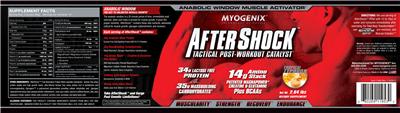
Each serving of AfterShock(TM) contains: 34 grams Anabolic Whey Protein (Lactose Free, Fast Digesting Proteins With Di & Tri Peptides) 35 grams MassBuilding Carbohydrates (Rapid Absorption, Glycogen Replenishing Carbohydrates) 14 grams Amino Stack(TM) – Creatine & Glutamine Plus BCAAs (With High Absorption, Patented MagnaPower(R) (Magnesium Creatine Chelate), Magnesium Glycyl Glutamine, Leucine, Isoleucine, Valine, & Arginine) 1500 mg Joint Support Formula (Glucosamine, Chondroitin & MSM) Strong Antioxidant Blend (Alpha Lipoic Acid, Vitamin C & B-Vitamins)
34 grams LACTOSE FREE PROTEIN with 35 grams MASSBUILDING CARBOHYDRATES 14 grams Amino Stack PATENTED MAGNAPOWER(R) CREATINE & GLUTAMINE Plus BCAAs
Brand IP Statement(s)
ANABOLIC WINDOW THE KEY TO UNLIMITED MUSCLE GROWTH The anabolic window is a 30 minute period of time, immediately post exercise, when your body is primed for muscle growth, if given the proper nutrients. AfterShock(TM) contains these vital nutrients, absolutely critical for muscle growth, glycogen replenishment, and recovery.
Take AfterShock(TM) and Surge Past Genetic Limitations!
(C) All Rights Reserved.
FDA Disclaimer Statement
These statements have not been approved by the FDA. This product is not intended to diagnose, treat, cure, or prevent any diseases.
General Statements
Anabolic Window Muscle Activator Technology of Muscle
Tactical Post-Workout Catalyst
Muscularity Strength Recovery Endurance
Made in the USA
FDA Statement of Identity
Dietary Supplement
Suggested/Recommended/Usage/Directions
DIRECTIONS: Mix one serving of AfterShock(TM) (80 grams) with 12 to 16 oz of water and consume immediately after exercising. For Total Body Transformation(TM) use Hyper Shock(R) Rage pre-workout, and MyoLean Evolution(TM).
Storage
Store in a cool, dry place, away from sunlight.
General
Item 11953 Rev. 1 10/2013
Is this label outdated? Report a formula or label change and our pharmacy team will review it.
AfterShock Tropical Typhoon by MYOGENIX label
The label scan from the NIH Dietary Supplement Label Database. Tap to enlarge.
Label images are published by the NIH Dietary Supplement Label Database for the version of this product on file. Always read your actual product label.
View the full label (PDF)The Ingredients in AfterShock Tropical Typhoon by MYOGENIX
These are the 19 active ingredients this product is made of. Select any to open its full monograph.
Serving size80 Gram(s) Dosage formPowder Servings per container15 Amounts shown are per serving.
Most supplement products combine several ingredients, and a medication can interact with the product through any one of them. Each ingredient below shows whether it has known drug interactions.
Sugar
Vitamin B6
Interacts with210 drugs
Vitamin B6 (pyridoxine) is an essential water-soluble vitamin that your body needs for metabolism, brain function, and making red blood cells. It is b...
Vitamin B6 monograph & interactionsProtein
Sodium
Interacts with205 drugs
Sodium is an essential mineral and electrolyte your body needs to balance fluids, support nerves, and help muscles work. Most people in modern diets g...
Sodium monograph & interactionsVitamin B12
Interacts with20 drugs
Vitamin B12 (cobalamin) is an essential nutrient your body needs to make red blood cells, keep nerves healthy, and support DNA. Supplements are very h...
Vitamin B12 monograph & interactionsPotassium
Interacts with62 drugs
Potassium is an essential mineral your body needs for nerve signals, muscle function, and a steady heartbeat, and most people get enough from a balanc...
Potassium monograph & interactionsRiboflavin
Interacts with20 drugs
Riboflavin (vitamin B2) is an essential nutrient your body needs to turn food into energy and to keep skin, eyes, and nerves healthy. It is generally...
Riboflavin monograph & interactionsThiamine
Interacts with3 drugs
Thiamine (vitamin B1) is an essential nutrient your body needs to turn food into energy and to keep your nerves and heart healthy. Most people get eno...
Thiamine monograph & interactionsVitamin C
Interacts with207 drugs
Vitamin C (ascorbic acid) is an essential nutrient your body needs but cannot make, so you must get it from food or supplements. It's important for im...
Vitamin C monograph & interactionsPantothenic Acid
No knowninteractions
Pantothenic acid is vitamin B5, an essential nutrient your body uses to turn food into energy. True deficiency is very rare because it is found in nea...
Pantothenic Acid monograph & interactionsNiacin
Interacts with727 drugs
Niacin (vitamin B3) is an essential nutrient your body needs for energy and metabolism, and deficiency is uncommon in most developed countries. Prescr...
Niacin monograph & interactionsVitamin E
Interacts with764 drugs
Vitamin E is an essential fat-soluble vitamin and antioxidant that most people get in adequate amounts from a normal diet. Supplements can help correc...
Vitamin E monograph & interactionsFolate
Vitamin A
Interacts with387 drugs
Vitamin A is an essential nutrient important for vision, skin, immune function, and growth. Most people get enough from a balanced diet, and supplemen...
Vitamin A monograph & interactionsAMINO STACK
- › L-Glutamine
- › L-Norvaline
- › MagnaPower Magnesium Creatine Chelate
- › Magnesium Glycyl Glutamine Chelate
Joint Support Blend {Combination}
Interacts with1,136 drugs
Cannabis contains many active compounds, mainly THC (which causes a 'high') and CBD (which does not). Some uses, such as chemotherapy-related nausea,...
Joint Support Blend {Combination} monograph & interactions- › Chondroitin Sulfate
- › Glucosamine Sulfate
- › MSM
Other (inactive) ingredients: AfterShock(TM) Fast Absorption Protein Blend, Glycogenx(TM), Cane, Natural & Artificial flavors, Citric Acid, Potassium Citrate, Sodium Citrate, Beta-Carotene, Turmeric color, Sucralose, Alpha Lipoic Acid. These complete the product’s ingredient list but are not active constituents.
AfterShock Tropical Typhoon by MYOGENIX Drug Interactions
HelloPharmacist Interaction Report
AfterShock Tropical Typhoon by MYOGENIX contains 19 ingredients, many of which interact with medications.
Altogether, these interactions span 1,343 individual medications.
Read the full breakdown — every affected drug type, severity by severity
The most serious interaction involves glucosamine sulfate, which can increase the anticoagulant effects of warfarin and raise the risk of bruising and bleeding. This is a Major-severity interaction that warrants careful monitoring if you take warfarin.
Several other ingredients carry Moderate-severity interactions worth knowing about. Vitamin A can have additive toxic effects with retinoids (vitamin A derivatives) and theoretically increase bleeding risk with warfarin.
Magnesium can significantly reduce how well levodopa/carbidopa works for Parkinson's disease and may interact with skeletal muscle relaxants, potassium-sparing diuretics, calcium channel blockers, quinolone antibiotics, and bisphosphonates. Glutamine theoretically antagonizes anticonvulsant medications.
Vitamin B6 can reduce the effectiveness of phenytoin and phenobarbital at high doses, and may increase photosensitivity from amiodarone. Sodium interacts with blood pressure medications, lithium, certain diuretics, and corticosteroids.
Potassium can raise the risk of dangerously high potassium levels when combined with ACE inhibitors, ARBs, or potassium-sparing diuretics. Vitamin C interacts with estrogens, certain chemotherapy drugs, warfarin, and several others.
Vitamin E may increase bleeding risk with blood thinners and can interact with several chemotherapy drugs. Niacin interacts with blood pressure medications, diabetes drugs, statins, gout medications, and others.
Chondroitin may increase warfarin's anticoagulant effects when combined with glucosamine.
We could not check interactions for folate, L-norvaline, and MagnaPower Magnesium Creatine Chelate because we hold no data for these ingredients.
Use the medication checker on this page to search for your exact medications before starting this product.
Check your own medications below · Editorial policy · How we use AI
Want to check YOUR meds against AfterShock Tropical Typhoon?
Ask about interactions with your drugs in plain English — “Can I take it with lisinopril?” — and we find you the answer in seconds, ingredient by ingredient.
Go to the checkerIngredients driving the most interactions
Individual Drug Interactions
The ingredients in AfterShock Tropical Typhoon interact with 1,584 drugs. Click any drug to see the details.
13 of the 19 ingredients in AfterShock Tropical Typhoon interact with drugs. Each result below shows which ingredient is responsible. Joint Support Blend {Combination} Vitamin E Niacin Vitamin A Magnesium Glycyl Glutamine Chelate Vitamin B6 Vitamin C Sodium Potassium L-Glutamine Vitamin B12 Riboflavin Thiamine
Acetaminophen, ChlorzoxazoneAcetazone Forte, Extra Strength Tylenol Aches & Strains, Parafon Forte
How Acetaminophen, Chlorzoxazone interacts with AfterShock Tropical Typhoon — through 6 ingredients. Tap an ingredient for the detail:
Joint Support Blend {combination}Cytochrome P450 2e1 (cyp2e1) Substrates Moderate
Interaction Summary
Theoretically, cannabis might decrease the levels and clinical effects of CYP2E1 substrates.
Read the full Joint Support Blend {combination} + Acetaminophen, Chlorzoxazone interactionVitamin AHepatotoxic Drugs Moderate
Interaction Summary
Theoretically, taking high doses of vitamin A in combination with other potentially hepatotoxic drugs might increase the risk of liver disease.
Read the full Vitamin A + Acetaminophen, Chlorzoxazone interactionMagnesium Glycyl Glutamine ChelateSkeletal Muscle Relaxants Moderate
Interaction Summary
Parenteral magnesium alters the pharmacokinetics of skeletal muscle relaxants, increasing their effects and accelerating the onset of effect.
Read the full Magnesium Glycyl Glutamine Chelate + Acetaminophen, Chlorzoxazone interactionNiacinHepatotoxic Drugs Moderate
Interaction Summary
Theoretically, concomitant use of niacin and hepatotoxic drugs might increase the risk of hepatotoxicity.
Read the full Niacin + Acetaminophen, Chlorzoxazone interactionVitamin CAcetaminophen (tylenol, Others) Minor
Interaction Summary
High-dose vitamin C might slightly prolong the clearance of acetaminophen.
Read the full Vitamin C + Acetaminophen, Chlorzoxazone interactionGlucosamine SulfateAcetaminophen (tylenol, Others) Minor
Interaction Summary
Acetaminophen might interfere with the activity of glucosamine sulfate by interacting with the sulfate portion.
Read the full Glucosamine Sulfate + Acetaminophen, Chlorzoxazone interactionAcetaminophen, Chlorzoxazone, CodeineAcetazone Forte C8, Parafon Forte C8
How Acetaminophen, Chlorzoxazone, Codeine interacts with AfterShock Tropical Typhoon — through 6 ingredients. Tap an ingredient for the detail:
NiacinHepatotoxic Drugs Moderate
Interaction Summary
Theoretically, concomitant use of niacin and hepatotoxic drugs might increase the risk of hepatotoxicity.
Read the full Niacin + Acetaminophen, Chlorzoxazone, Codeine interactionJoint Support Blend {combination}Cns Depressants, Cytochrome P450 2e1 (cyp2e1) Substrates Moderate
Interaction Summary
Theoretically, cannabis might have additive effects if used with other CNS depressants.
Read the full Joint Support Blend {combination} + Acetaminophen, Chlorzoxazone, Codeine interactionMagnesium Glycyl Glutamine ChelateSkeletal Muscle Relaxants Moderate
Interaction Summary
Parenteral magnesium alters the pharmacokinetics of skeletal muscle relaxants, increasing their effects and accelerating the onset of effect.
Read the full Magnesium Glycyl Glutamine Chelate + Acetaminophen, Chlorzoxazone, Codeine interactionVitamin AHepatotoxic Drugs Moderate
Interaction Summary
Theoretically, taking high doses of vitamin A in combination with other potentially hepatotoxic drugs might increase the risk of liver disease.
Read the full Vitamin A + Acetaminophen, Chlorzoxazone, Codeine interactionGlucosamine SulfateAcetaminophen (tylenol, Others) Minor
Interaction Summary
Acetaminophen might interfere with the activity of glucosamine sulfate by interacting with the sulfate portion.
Read the full Glucosamine Sulfate + Acetaminophen, Chlorzoxazone, Codeine interactionVitamin CAcetaminophen (tylenol, Others) Minor
Interaction Summary
High-dose vitamin C might slightly prolong the clearance of acetaminophen.
Read the full Vitamin C + Acetaminophen, Chlorzoxazone, Codeine interactionAcetaminophen, CodeineTylenol No.3, Tylenol w/ Codeine
How Acetaminophen, Codeine interacts with AfterShock Tropical Typhoon — through 5 ingredients. Tap an ingredient for the detail:
Vitamin AHepatotoxic Drugs Moderate
Interaction Summary
Theoretically, taking high doses of vitamin A in combination with other potentially hepatotoxic drugs might increase the risk of liver disease.
Read the full Vitamin A + Acetaminophen, Codeine interactionNiacinHepatotoxic Drugs Moderate
Interaction Summary
Theoretically, concomitant use of niacin and hepatotoxic drugs might increase the risk of hepatotoxicity.
Read the full Niacin + Acetaminophen, Codeine interactionJoint Support Blend {combination}Cns Depressants, Cytochrome P450 2e1 (cyp2e1) Substrates Moderate
Interaction Summary
Theoretically, cannabis might have additive effects if used with other CNS depressants.
Read the full Joint Support Blend {combination} + Acetaminophen, Codeine interactionVitamin CAcetaminophen (tylenol, Others) Minor
Interaction Summary
High-dose vitamin C might slightly prolong the clearance of acetaminophen.
Read the full Vitamin C + Acetaminophen, Codeine interactionGlucosamine SulfateAcetaminophen (tylenol, Others) Minor
Interaction Summary
Acetaminophen might interfere with the activity of glucosamine sulfate by interacting with the sulfate portion.
Read the full Glucosamine Sulfate + Acetaminophen, Codeine interactionAcetaminophen, Codeine, DoxylamineMersyndol
How Acetaminophen, Codeine, Doxylamine interacts with AfterShock Tropical Typhoon — through 5 ingredients. Tap an ingredient for the detail:
Joint Support Blend {combination}Cytochrome P450 2e1 (cyp2e1) Substrates, Cns Depressants Moderate
Interaction Summary
Theoretically, cannabis might decrease the levels and clinical effects of CYP2E1 substrates.
Read the full Joint Support Blend {combination} + Acetaminophen, Codeine, Doxylamine interactionVitamin AHepatotoxic Drugs Moderate
Interaction Summary
Theoretically, taking high doses of vitamin A in combination with other potentially hepatotoxic drugs might increase the risk of liver disease.
Read the full Vitamin A + Acetaminophen, Codeine, Doxylamine interactionNiacinHepatotoxic Drugs Moderate
Interaction Summary
Theoretically, concomitant use of niacin and hepatotoxic drugs might increase the risk of hepatotoxicity.
Read the full Niacin + Acetaminophen, Codeine, Doxylamine interactionVitamin CAcetaminophen (tylenol, Others) Minor
Interaction Summary
High-dose vitamin C might slightly prolong the clearance of acetaminophen.
Read the full Vitamin C + Acetaminophen, Codeine, Doxylamine interactionGlucosamine SulfateAcetaminophen (tylenol, Others) Minor
Interaction Summary
Acetaminophen might interfere with the activity of glucosamine sulfate by interacting with the sulfate portion.
Read the full Glucosamine Sulfate + Acetaminophen, Codeine, Doxylamine interactionAcetaminophen, Codeine, MethocarbamolAcetaminophen, Codeine, Methocarbamol, Robaxacet 8
How Acetaminophen, Codeine, Methocarbamol interacts with AfterShock Tropical Typhoon — through 6 ingredients. Tap an ingredient for the detail:
NiacinHepatotoxic Drugs Moderate
Interaction Summary
Theoretically, concomitant use of niacin and hepatotoxic drugs might increase the risk of hepatotoxicity.
Read the full Niacin + Acetaminophen, Codeine, Methocarbamol interactionJoint Support Blend {combination}Cns Depressants, Cytochrome P450 2e1 (cyp2e1) Substrates Moderate
Interaction Summary
Theoretically, cannabis might have additive effects if used with other CNS depressants.
Read the full Joint Support Blend {combination} + Acetaminophen, Codeine, Methocarbamol interactionVitamin AHepatotoxic Drugs Moderate
Interaction Summary
Theoretically, taking high doses of vitamin A in combination with other potentially hepatotoxic drugs might increase the risk of liver disease.
Read the full Vitamin A + Acetaminophen, Codeine, Methocarbamol interactionMagnesium Glycyl Glutamine ChelateSkeletal Muscle Relaxants Moderate
Interaction Summary
Parenteral magnesium alters the pharmacokinetics of skeletal muscle relaxants, increasing their effects and accelerating the onset of effect.
Read the full Magnesium Glycyl Glutamine Chelate + Acetaminophen, Codeine, Methocarbamol interactionGlucosamine SulfateAcetaminophen (tylenol, Others) Minor
Interaction Summary
Acetaminophen might interfere with the activity of glucosamine sulfate by interacting with the sulfate portion.
Read the full Glucosamine Sulfate + Acetaminophen, Codeine, Methocarbamol interactionVitamin CAcetaminophen (tylenol, Others) Minor
Interaction Summary
High-dose vitamin C might slightly prolong the clearance of acetaminophen.
Read the full Vitamin C + Acetaminophen, Codeine, Methocarbamol interactionAcetaminophen, Dexbrompheniramine, PseudoephedrineSinadrin Plus
How Acetaminophen, Dexbrompheniramine, Pseudoephedrine interacts with AfterShock Tropical Typhoon — through 5 ingredients. Tap an ingredient for the detail:
Vitamin AHepatotoxic Drugs Moderate
Interaction Summary
Theoretically, taking high doses of vitamin A in combination with other potentially hepatotoxic drugs might increase the risk of liver disease.
Read the full Vitamin A + Acetaminophen, Dexbrompheniramine, Pseudoephedrine interactionNiacinHepatotoxic Drugs Moderate
Interaction Summary
Theoretically, concomitant use of niacin and hepatotoxic drugs might increase the risk of hepatotoxicity.
Read the full Niacin + Acetaminophen, Dexbrompheniramine, Pseudoephedrine interactionJoint Support Blend {combination}Cytochrome P450 2e1 (cyp2e1) Substrates Moderate
Interaction Summary
Theoretically, cannabis might decrease the levels and clinical effects of CYP2E1 substrates.
Read the full Joint Support Blend {combination} + Acetaminophen, Dexbrompheniramine, Pseudoephedrine interactionVitamin CAcetaminophen (tylenol, Others) Minor
Interaction Summary
High-dose vitamin C might slightly prolong the clearance of acetaminophen.
Read the full Vitamin C + Acetaminophen, Dexbrompheniramine, Pseudoephedrine interactionGlucosamine SulfateAcetaminophen (tylenol, Others) Minor
Interaction Summary
Acetaminophen might interfere with the activity of glucosamine sulfate by interacting with the sulfate portion.
Read the full Glucosamine Sulfate + Acetaminophen, Dexbrompheniramine, Pseudoephedrine interactionAcetaminophen, DextromethorphanTylenol Cough Ex Strength
How Acetaminophen, Dextromethorphan interacts with AfterShock Tropical Typhoon — through 6 ingredients. Tap an ingredient for the detail:
Joint Support Blend {combination}Cytochrome P450 2e1 (cyp2e1) Substrates, Cytochrome P450 3a4 (cyp3a4) Substrates Moderate
Interaction Summary
Theoretically, cannabis might decrease the levels and clinical effects of CYP2E1 substrates.
Read the full Joint Support Blend {combination} + Acetaminophen, Dextromethorphan interactionVitamin ECytochrome P450 3a4 (cyp3a4) Substrates Moderate
Interaction Summary
Theoretically, vitamin E might induce metabolism of CYP3A4, possibly reducing the levels CYP3A4 substrates.
Read the full Vitamin E + Acetaminophen, Dextromethorphan interactionVitamin AHepatotoxic Drugs Moderate
Interaction Summary
Theoretically, taking high doses of vitamin A in combination with other potentially hepatotoxic drugs might increase the risk of liver disease.
Read the full Vitamin A + Acetaminophen, Dextromethorphan interactionNiacinHepatotoxic Drugs Moderate
Interaction Summary
Theoretically, concomitant use of niacin and hepatotoxic drugs might increase the risk of hepatotoxicity.
Read the full Niacin + Acetaminophen, Dextromethorphan interactionVitamin CAcetaminophen (tylenol, Others) Minor
Interaction Summary
High-dose vitamin C might slightly prolong the clearance of acetaminophen.
Read the full Vitamin C + Acetaminophen, Dextromethorphan interactionGlucosamine SulfateAcetaminophen (tylenol, Others) Minor
Interaction Summary
Acetaminophen might interfere with the activity of glucosamine sulfate by interacting with the sulfate portion.
Read the full Glucosamine Sulfate + Acetaminophen, Dextromethorphan interactionAcetaminophen, Dextromethorphan, Doxylamine, PseudoephedrineVicks NyQuil
How Acetaminophen, Dextromethorphan, Doxylamine, Pseudoephedrine interacts with AfterShock Tropical Typhoon — through 6 ingredients. Tap an ingredient for the detail:
Vitamin AHepatotoxic Drugs Moderate
Interaction Summary
Theoretically, taking high doses of vitamin A in combination with other potentially hepatotoxic drugs might increase the risk of liver disease.
Read the full Vitamin A + Acetaminophen, Dextromethorphan, Doxylamine, Pseudoephedrine interactionVitamin ECytochrome P450 3a4 (cyp3a4) Substrates Moderate
Interaction Summary
Theoretically, vitamin E might induce metabolism of CYP3A4, possibly reducing the levels CYP3A4 substrates.
Read the full Vitamin E + Acetaminophen, Dextromethorphan, Doxylamine, Pseudoephedrine interactionJoint Support Blend {combination}Cytochrome P450 2e1 (cyp2e1) Substrates, Cytochrome P450 3a4 (cyp3a4) Substrates Moderate
Interaction Summary
Theoretically, cannabis might decrease the levels and clinical effects of CYP2E1 substrates.
Read the full Joint Support Blend {combination} + Acetaminophen, Dextromethorphan, Doxylamine, Pseudoephedrine interactionNiacinHepatotoxic Drugs Moderate
Interaction Summary
Theoretically, concomitant use of niacin and hepatotoxic drugs might increase the risk of hepatotoxicity.
Read the full Niacin + Acetaminophen, Dextromethorphan, Doxylamine, Pseudoephedrine interactionVitamin CAcetaminophen (tylenol, Others) Minor
Interaction Summary
High-dose vitamin C might slightly prolong the clearance of acetaminophen.
Read the full Vitamin C + Acetaminophen, Dextromethorphan, Doxylamine, Pseudoephedrine interactionGlucosamine SulfateAcetaminophen (tylenol, Others) Minor
Interaction Summary
Acetaminophen might interfere with the activity of glucosamine sulfate by interacting with the sulfate portion.
Read the full Glucosamine Sulfate + Acetaminophen, Dextromethorphan, Doxylamine, Pseudoephedrine interactionAcetaminophen, Dextromethorphan, Guaifenesin, PhenylephrineConar-A
How Acetaminophen, Dextromethorphan, Guaifenesin, Phenylephrine interacts with AfterShock Tropical Typhoon — through 6 ingredients. Tap an ingredient for the detail:
NiacinHepatotoxic Drugs Moderate
Interaction Summary
Theoretically, concomitant use of niacin and hepatotoxic drugs might increase the risk of hepatotoxicity.
Read the full Niacin + Acetaminophen, Dextromethorphan, Guaifenesin, Phenylephrine interactionVitamin ECytochrome P450 3a4 (cyp3a4) Substrates Moderate
Interaction Summary
Theoretically, vitamin E might induce metabolism of CYP3A4, possibly reducing the levels CYP3A4 substrates.
Read the full Vitamin E + Acetaminophen, Dextromethorphan, Guaifenesin, Phenylephrine interactionVitamin AHepatotoxic Drugs Moderate
Interaction Summary
Theoretically, taking high doses of vitamin A in combination with other potentially hepatotoxic drugs might increase the risk of liver disease.
Read the full Vitamin A + Acetaminophen, Dextromethorphan, Guaifenesin, Phenylephrine interactionJoint Support Blend {combination}Cytochrome P450 3a4 (cyp3a4) Substrates, Cytochrome P450 2e1 (cyp2e1) Substrates Moderate
Interaction Summary
Theoretically, cannabis may increase the levels and adverse effects of CYP3A4 substrates.
Read the full Joint Support Blend {combination} + Acetaminophen, Dextromethorphan, Guaifenesin, Phenylephrine interactionGlucosamine SulfateAcetaminophen (tylenol, Others) Minor
Interaction Summary
Acetaminophen might interfere with the activity of glucosamine sulfate by interacting with the sulfate portion.
Read the full Glucosamine Sulfate + Acetaminophen, Dextromethorphan, Guaifenesin, Phenylephrine interactionVitamin CAcetaminophen (tylenol, Others) Minor
Interaction Summary
High-dose vitamin C might slightly prolong the clearance of acetaminophen.
Read the full Vitamin C + Acetaminophen, Dextromethorphan, Guaifenesin, Phenylephrine interactionAcetaminophen, Dextromethorphan, Guaifenesin, PhenylpropanolamineAnatuss
How Acetaminophen, Dextromethorphan, Guaifenesin, Phenylpropanolamine interacts with AfterShock Tropical Typhoon — through 6 ingredients. Tap an ingredient for the detail:
Joint Support Blend {combination}Cytochrome P450 3a4 (cyp3a4) Substrates, Cytochrome P450 2e1 (cyp2e1) Substrates Moderate
Interaction Summary
Theoretically, cannabis may increase the levels and adverse effects of CYP3A4 substrates.
Read the full Joint Support Blend {combination} + Acetaminophen, Dextromethorphan, Guaifenesin, Phenylpropanolamine interactionNiacinHepatotoxic Drugs Moderate
Interaction Summary
Theoretically, concomitant use of niacin and hepatotoxic drugs might increase the risk of hepatotoxicity.
Read the full Niacin + Acetaminophen, Dextromethorphan, Guaifenesin, Phenylpropanolamine interactionVitamin AHepatotoxic Drugs Moderate
Interaction Summary
Theoretically, taking high doses of vitamin A in combination with other potentially hepatotoxic drugs might increase the risk of liver disease.
Read the full Vitamin A + Acetaminophen, Dextromethorphan, Guaifenesin, Phenylpropanolamine interactionVitamin ECytochrome P450 3a4 (cyp3a4) Substrates Moderate
Interaction Summary
Theoretically, vitamin E might induce metabolism of CYP3A4, possibly reducing the levels CYP3A4 substrates.
Read the full Vitamin E + Acetaminophen, Dextromethorphan, Guaifenesin, Phenylpropanolamine interactionGlucosamine SulfateAcetaminophen (tylenol, Others) Minor
Interaction Summary
Acetaminophen might interfere with the activity of glucosamine sulfate by interacting with the sulfate portion.
Read the full Glucosamine Sulfate + Acetaminophen, Dextromethorphan, Guaifenesin, Phenylpropanolamine interactionVitamin CAcetaminophen (tylenol, Others) Minor
Interaction Summary
High-dose vitamin C might slightly prolong the clearance of acetaminophen.
Read the full Vitamin C + Acetaminophen, Dextromethorphan, Guaifenesin, Phenylpropanolamine interactionAcetaminophen, Dextromethorphan, Guaifenesin, PseudoephedrineRobitussin Cold, Severe Cold, Suphedrine Cold/Cough
How Acetaminophen, Dextromethorphan, Guaifenesin, Pseudoephedrine interacts with AfterShock Tropical Typhoon — through 6 ingredients. Tap an ingredient for the detail:
Vitamin AHepatotoxic Drugs Moderate
Interaction Summary
Theoretically, taking high doses of vitamin A in combination with other potentially hepatotoxic drugs might increase the risk of liver disease.
Read the full Vitamin A + Acetaminophen, Dextromethorphan, Guaifenesin, Pseudoephedrine interactionVitamin ECytochrome P450 3a4 (cyp3a4) Substrates Moderate
Interaction Summary
Theoretically, vitamin E might induce metabolism of CYP3A4, possibly reducing the levels CYP3A4 substrates.
Read the full Vitamin E + Acetaminophen, Dextromethorphan, Guaifenesin, Pseudoephedrine interactionJoint Support Blend {combination}Cytochrome P450 2e1 (cyp2e1) Substrates, Cytochrome P450 3a4 (cyp3a4) Substrates Moderate
Interaction Summary
Theoretically, cannabis might decrease the levels and clinical effects of CYP2E1 substrates.
Read the full Joint Support Blend {combination} + Acetaminophen, Dextromethorphan, Guaifenesin, Pseudoephedrine interactionNiacinHepatotoxic Drugs Moderate
Interaction Summary
Theoretically, concomitant use of niacin and hepatotoxic drugs might increase the risk of hepatotoxicity.
Read the full Niacin + Acetaminophen, Dextromethorphan, Guaifenesin, Pseudoephedrine interactionVitamin CAcetaminophen (tylenol, Others) Minor
Interaction Summary
High-dose vitamin C might slightly prolong the clearance of acetaminophen.
Read the full Vitamin C + Acetaminophen, Dextromethorphan, Guaifenesin, Pseudoephedrine interactionGlucosamine SulfateAcetaminophen (tylenol, Others) Minor
Interaction Summary
Acetaminophen might interfere with the activity of glucosamine sulfate by interacting with the sulfate portion.
Read the full Glucosamine Sulfate + Acetaminophen, Dextromethorphan, Guaifenesin, Pseudoephedrine interactionAcetaminophen, Dextromethorphan, Phenylpropanolamine, PyrilamineTheracaps
How Acetaminophen, Dextromethorphan, Phenylpropanolamine, Pyrilamine interacts with AfterShock Tropical Typhoon — through 6 ingredients. Tap an ingredient for the detail:
NiacinHepatotoxic Drugs Moderate
Interaction Summary
Theoretically, concomitant use of niacin and hepatotoxic drugs might increase the risk of hepatotoxicity.
Read the full Niacin + Acetaminophen, Dextromethorphan, Phenylpropanolamine, Pyrilamine interactionVitamin AHepatotoxic Drugs Moderate
Interaction Summary
Theoretically, taking high doses of vitamin A in combination with other potentially hepatotoxic drugs might increase the risk of liver disease.
Read the full Vitamin A + Acetaminophen, Dextromethorphan, Phenylpropanolamine, Pyrilamine interactionVitamin ECytochrome P450 3a4 (cyp3a4) Substrates Moderate
Interaction Summary
Theoretically, vitamin E might induce metabolism of CYP3A4, possibly reducing the levels CYP3A4 substrates.
Read the full Vitamin E + Acetaminophen, Dextromethorphan, Phenylpropanolamine, Pyrilamine interactionJoint Support Blend {combination}Cytochrome P450 2e1 (cyp2e1) Substrates, Cytochrome P450 3a4 (cyp3a4) Substrates Moderate
Interaction Summary
Theoretically, cannabis might decrease the levels and clinical effects of CYP2E1 substrates.
Read the full Joint Support Blend {combination} + Acetaminophen, Dextromethorphan, Phenylpropanolamine, Pyrilamine interactionGlucosamine SulfateAcetaminophen (tylenol, Others) Minor
Interaction Summary
Acetaminophen might interfere with the activity of glucosamine sulfate by interacting with the sulfate portion.
Read the full Glucosamine Sulfate + Acetaminophen, Dextromethorphan, Phenylpropanolamine, Pyrilamine interactionVitamin CAcetaminophen (tylenol, Others) Minor
Interaction Summary
High-dose vitamin C might slightly prolong the clearance of acetaminophen.
Read the full Vitamin C + Acetaminophen, Dextromethorphan, Phenylpropanolamine, Pyrilamine interactionAcetaminophen, Dextromethorphan, PseudoephedrineAlka-Seltzer PLUS Flu Liquid Gels, Non Aspirin Cold Caps, Tylenol Cold, Tylenol Flu Daytime Ex Strength, Tylenol Flu Ex Strength
How Acetaminophen, Dextromethorphan, Pseudoephedrine interacts with AfterShock Tropical Typhoon — through 6 ingredients. Tap an ingredient for the detail:
Joint Support Blend {combination}Cytochrome P450 3a4 (cyp3a4) Substrates, Cytochrome P450 2e1 (cyp2e1) Substrates Moderate
Interaction Summary
Theoretically, cannabis may increase the levels and adverse effects of CYP3A4 substrates.
Read the full Joint Support Blend {combination} + Acetaminophen, Dextromethorphan, Pseudoephedrine interactionNiacinHepatotoxic Drugs Moderate
Interaction Summary
Theoretically, concomitant use of niacin and hepatotoxic drugs might increase the risk of hepatotoxicity.
Read the full Niacin + Acetaminophen, Dextromethorphan, Pseudoephedrine interactionVitamin ECytochrome P450 3a4 (cyp3a4) Substrates Moderate
Interaction Summary
Theoretically, vitamin E might induce metabolism of CYP3A4, possibly reducing the levels CYP3A4 substrates.
Read the full Vitamin E + Acetaminophen, Dextromethorphan, Pseudoephedrine interactionVitamin AHepatotoxic Drugs Moderate
Interaction Summary
Theoretically, taking high doses of vitamin A in combination with other potentially hepatotoxic drugs might increase the risk of liver disease.
Read the full Vitamin A + Acetaminophen, Dextromethorphan, Pseudoephedrine interactionGlucosamine SulfateAcetaminophen (tylenol, Others) Minor
Interaction Summary
Acetaminophen might interfere with the activity of glucosamine sulfate by interacting with the sulfate portion.
Read the full Glucosamine Sulfate + Acetaminophen, Dextromethorphan, Pseudoephedrine interactionVitamin CAcetaminophen (tylenol, Others) Minor
Interaction Summary
High-dose vitamin C might slightly prolong the clearance of acetaminophen.
Read the full Vitamin C + Acetaminophen, Dextromethorphan, Pseudoephedrine interactionAcetaminophen, Dichloralantipyrine, IsomethepteneAmidrine, Midchlor, Migquin, Migratine
How Acetaminophen, Dichloralantipyrine, Isometheptene interacts with AfterShock Tropical Typhoon — through 5 ingredients. Tap an ingredient for the detail:
Vitamin AHepatotoxic Drugs Moderate
Interaction Summary
Theoretically, taking high doses of vitamin A in combination with other potentially hepatotoxic drugs might increase the risk of liver disease.
Read the full Vitamin A + Acetaminophen, Dichloralantipyrine, Isometheptene interactionJoint Support Blend {combination}Cytochrome P450 2e1 (cyp2e1) Substrates, Cns Depressants Moderate
Interaction Summary
Theoretically, cannabis might decrease the levels and clinical effects of CYP2E1 substrates.
Read the full Joint Support Blend {combination} + Acetaminophen, Dichloralantipyrine, Isometheptene interactionNiacinHepatotoxic Drugs Moderate
Interaction Summary
Theoretically, concomitant use of niacin and hepatotoxic drugs might increase the risk of hepatotoxicity.
Read the full Niacin + Acetaminophen, Dichloralantipyrine, Isometheptene interactionVitamin CAcetaminophen (tylenol, Others) Minor
Interaction Summary
High-dose vitamin C might slightly prolong the clearance of acetaminophen.
Read the full Vitamin C + Acetaminophen, Dichloralantipyrine, Isometheptene interactionGlucosamine SulfateAcetaminophen (tylenol, Others) Minor
Interaction Summary
Acetaminophen might interfere with the activity of glucosamine sulfate by interacting with the sulfate portion.
Read the full Glucosamine Sulfate + Acetaminophen, Dichloralantipyrine, Isometheptene interactionAcetaminophen, Dichloralphenazone, IsomethepteneMidrin
How Acetaminophen, Dichloralphenazone, Isometheptene interacts with AfterShock Tropical Typhoon — through 5 ingredients. Tap an ingredient for the detail:
NiacinHepatotoxic Drugs Moderate
Interaction Summary
Theoretically, concomitant use of niacin and hepatotoxic drugs might increase the risk of hepatotoxicity.
Read the full Niacin + Acetaminophen, Dichloralphenazone, Isometheptene interactionJoint Support Blend {combination}Cns Depressants, Cytochrome P450 2e1 (cyp2e1) Substrates Moderate
Interaction Summary
Theoretically, cannabis might have additive effects if used with other CNS depressants.
Read the full Joint Support Blend {combination} + Acetaminophen, Dichloralphenazone, Isometheptene interactionVitamin AHepatotoxic Drugs Moderate
Interaction Summary
Theoretically, taking high doses of vitamin A in combination with other potentially hepatotoxic drugs might increase the risk of liver disease.
Read the full Vitamin A + Acetaminophen, Dichloralphenazone, Isometheptene interactionGlucosamine SulfateAcetaminophen (tylenol, Others) Minor
Interaction Summary
Acetaminophen might interfere with the activity of glucosamine sulfate by interacting with the sulfate portion.
Read the full Glucosamine Sulfate + Acetaminophen, Dichloralphenazone, Isometheptene interactionVitamin CAcetaminophen (tylenol, Others) Minor
Interaction Summary
High-dose vitamin C might slightly prolong the clearance of acetaminophen.
Read the full Vitamin C + Acetaminophen, Dichloralphenazone, Isometheptene interactionAcetaminophen, Dichlorophenazone, IsometheptaneIsocom
How Acetaminophen, Dichlorophenazone, Isometheptane interacts with AfterShock Tropical Typhoon — through 5 ingredients. Tap an ingredient for the detail:
Joint Support Blend {combination}Cytochrome P450 2e1 (cyp2e1) Substrates, Cns Depressants Moderate
Interaction Summary
Theoretically, cannabis might decrease the levels and clinical effects of CYP2E1 substrates.
Read the full Joint Support Blend {combination} + Acetaminophen, Dichlorophenazone, Isometheptane interactionNiacinHepatotoxic Drugs Moderate
Interaction Summary
Theoretically, concomitant use of niacin and hepatotoxic drugs might increase the risk of hepatotoxicity.
Read the full Niacin + Acetaminophen, Dichlorophenazone, Isometheptane interactionVitamin AHepatotoxic Drugs Moderate
Interaction Summary
Theoretically, taking high doses of vitamin A in combination with other potentially hepatotoxic drugs might increase the risk of liver disease.
Read the full Vitamin A + Acetaminophen, Dichlorophenazone, Isometheptane interactionGlucosamine SulfateAcetaminophen (tylenol, Others) Minor
Interaction Summary
Acetaminophen might interfere with the activity of glucosamine sulfate by interacting with the sulfate portion.
Read the full Glucosamine Sulfate + Acetaminophen, Dichlorophenazone, Isometheptane interactionVitamin CAcetaminophen (tylenol, Others) Minor
Interaction Summary
High-dose vitamin C might slightly prolong the clearance of acetaminophen.
Read the full Vitamin C + Acetaminophen, Dichlorophenazone, Isometheptane interactionAcetaminophen, DiphenhydramineTylenol PM, Tylenol PM Ex Strength
How Acetaminophen, Diphenhydramine interacts with AfterShock Tropical Typhoon — through 5 ingredients. Tap an ingredient for the detail:
Vitamin AHepatotoxic Drugs Moderate
Interaction Summary
Theoretically, taking high doses of vitamin A in combination with other potentially hepatotoxic drugs might increase the risk of liver disease.
Read the full Vitamin A + Acetaminophen, Diphenhydramine interactionJoint Support Blend {combination}Cytochrome P450 2e1 (cyp2e1) Substrates, Cns Depressants Moderate
Interaction Summary
Theoretically, cannabis might decrease the levels and clinical effects of CYP2E1 substrates.
Read the full Joint Support Blend {combination} + Acetaminophen, Diphenhydramine interactionNiacinHepatotoxic Drugs Moderate
Interaction Summary
Theoretically, concomitant use of niacin and hepatotoxic drugs might increase the risk of hepatotoxicity.
Read the full Niacin + Acetaminophen, Diphenhydramine interactionVitamin CAcetaminophen (tylenol, Others) Minor
Interaction Summary
High-dose vitamin C might slightly prolong the clearance of acetaminophen.
Read the full Vitamin C + Acetaminophen, Diphenhydramine interactionGlucosamine SulfateAcetaminophen (tylenol, Others) Minor
Interaction Summary
Acetaminophen might interfere with the activity of glucosamine sulfate by interacting with the sulfate portion.
Read the full Glucosamine Sulfate + Acetaminophen, Diphenhydramine interactionAcetaminophen, Diphenhydramine, PseudoephedrineChildren's Tylenol Allergy, Cold Control, Contac Night Allergy Relief
How Acetaminophen, Diphenhydramine, Pseudoephedrine interacts with AfterShock Tropical Typhoon — through 5 ingredients. Tap an ingredient for the detail:
Joint Support Blend {combination}Cns Depressants, Cytochrome P450 2e1 (cyp2e1) Substrates Moderate
Interaction Summary
Theoretically, cannabis might have additive effects if used with other CNS depressants.
Read the full Joint Support Blend {combination} + Acetaminophen, Diphenhydramine, Pseudoephedrine interactionNiacinHepatotoxic Drugs Moderate
Interaction Summary
Theoretically, concomitant use of niacin and hepatotoxic drugs might increase the risk of hepatotoxicity.
Read the full Niacin + Acetaminophen, Diphenhydramine, Pseudoephedrine interactionVitamin AHepatotoxic Drugs Moderate
Interaction Summary
Theoretically, taking high doses of vitamin A in combination with other potentially hepatotoxic drugs might increase the risk of liver disease.
Read the full Vitamin A + Acetaminophen, Diphenhydramine, Pseudoephedrine interactionGlucosamine SulfateAcetaminophen (tylenol, Others) Minor
Interaction Summary
Acetaminophen might interfere with the activity of glucosamine sulfate by interacting with the sulfate portion.
Read the full Glucosamine Sulfate + Acetaminophen, Diphenhydramine, Pseudoephedrine interactionVitamin CAcetaminophen (tylenol, Others) Minor
Interaction Summary
High-dose vitamin C might slightly prolong the clearance of acetaminophen.
Read the full Vitamin C + Acetaminophen, Diphenhydramine, Pseudoephedrine interactionAcetaminophen, Doxylamine, PseudoephedrineEx Strength Tylenol Sinus Nighttime
How Acetaminophen, Doxylamine, Pseudoephedrine interacts with AfterShock Tropical Typhoon — through 5 ingredients. Tap an ingredient for the detail:
Joint Support Blend {combination}Cytochrome P450 2e1 (cyp2e1) Substrates Moderate
Interaction Summary
Theoretically, cannabis might decrease the levels and clinical effects of CYP2E1 substrates.
Read the full Joint Support Blend {combination} + Acetaminophen, Doxylamine, Pseudoephedrine interactionNiacinHepatotoxic Drugs Moderate
Interaction Summary
Theoretically, concomitant use of niacin and hepatotoxic drugs might increase the risk of hepatotoxicity.
Read the full Niacin + Acetaminophen, Doxylamine, Pseudoephedrine interactionVitamin AHepatotoxic Drugs Moderate
Interaction Summary
Theoretically, taking high doses of vitamin A in combination with other potentially hepatotoxic drugs might increase the risk of liver disease.
Read the full Vitamin A + Acetaminophen, Doxylamine, Pseudoephedrine interactionGlucosamine SulfateAcetaminophen (tylenol, Others) Minor
Interaction Summary
Acetaminophen might interfere with the activity of glucosamine sulfate by interacting with the sulfate portion.
Read the full Glucosamine Sulfate + Acetaminophen, Doxylamine, Pseudoephedrine interactionVitamin CAcetaminophen (tylenol, Others) Minor
Interaction Summary
High-dose vitamin C might slightly prolong the clearance of acetaminophen.
Read the full Vitamin C + Acetaminophen, Doxylamine, Pseudoephedrine interactionAcetaminophen, HydrocodoneAnexsia, Anodynos DHC, Azdone, Co-Gesic, Doucet, Lorcet +9 more
How Acetaminophen, Hydrocodone interacts with AfterShock Tropical Typhoon — through 6 ingredients. Tap an ingredient for the detail:
Vitamin AHepatotoxic Drugs Moderate
Interaction Summary
Theoretically, taking high doses of vitamin A in combination with other potentially hepatotoxic drugs might increase the risk of liver disease.
Read the full Vitamin A + Acetaminophen, Hydrocodone interactionVitamin ECytochrome P450 3a4 (cyp3a4) Substrates Moderate
Interaction Summary
Theoretically, vitamin E might induce metabolism of CYP3A4, possibly reducing the levels CYP3A4 substrates.
Read the full Vitamin E + Acetaminophen, Hydrocodone interactionJoint Support Blend {combination}Cytochrome P450 2e1 (cyp2e1) Substrates, Cytochrome P450 3a4 (cyp3a4) Substrates +1 Moderate
Interaction Summary
Theoretically, cannabis might decrease the levels and clinical effects of CYP2E1 substrates.
Read the full Joint Support Blend {combination} + Acetaminophen, Hydrocodone interactionNiacinHepatotoxic Drugs Moderate
Interaction Summary
Theoretically, concomitant use of niacin and hepatotoxic drugs might increase the risk of hepatotoxicity.
Read the full Niacin + Acetaminophen, Hydrocodone interactionVitamin CAcetaminophen (tylenol, Others) Minor
Interaction Summary
High-dose vitamin C might slightly prolong the clearance of acetaminophen.
Read the full Vitamin C + Acetaminophen, Hydrocodone interactionGlucosamine SulfateAcetaminophen (tylenol, Others) Minor
Interaction Summary
Acetaminophen might interfere with the activity of glucosamine sulfate by interacting with the sulfate portion.
Read the full Glucosamine Sulfate + Acetaminophen, Hydrocodone interactionAcetaminophen, IbuprofenCombogesic
How Acetaminophen, Ibuprofen interacts with AfterShock Tropical Typhoon — through 7 ingredients. Tap an ingredient for the detail:
NiacinAnticoagulant/antiplatelet Drugs, Hepatotoxic Drugs Moderate
Interaction Summary
Theoretically, niacin may have additive effects when used with anticoagulant or antiplatelet drugs.
Read the full Niacin + Acetaminophen, Ibuprofen interactionVitamin EAnticoagulant/antiplatelet Drugs Moderate
Interaction Summary
Concomitant use of vitamin E and anticoagulant or antiplatelet agents might increase the risk of bleeding.
Read the full Vitamin E + Acetaminophen, Ibuprofen interactionVitamin AHepatotoxic Drugs Moderate
Interaction Summary
Theoretically, taking high doses of vitamin A in combination with other potentially hepatotoxic drugs might increase the risk of liver disease.
Read the full Vitamin A + Acetaminophen, Ibuprofen interactionJoint Support Blend {combination}Cytochrome P450 2c9 (cyp2c9) Substrates, Anticoagulant/antiplatelet Drugs +1 Moderate
Interaction Summary
Theoretically, cannabis might increase the levels and adverse effects of CYP2C9 substrates.
Read the full Joint Support Blend {combination} + Acetaminophen, Ibuprofen interactionGlucosamine SulfateAcetaminophen (tylenol, Others) Minor
Interaction Summary
Acetaminophen might interfere with the activity of glucosamine sulfate by interacting with the sulfate portion.
Read the full Glucosamine Sulfate + Acetaminophen, Ibuprofen interactionVitamin CAcetaminophen (tylenol, Others) Minor
Interaction Summary
High-dose vitamin C might slightly prolong the clearance of acetaminophen.
Read the full Vitamin C + Acetaminophen, Ibuprofen interactionMagnesium Glycyl Glutamine ChelateAnticoagulant/antiplatelet Drugs Minor
Interaction Summary
Theoretically, magnesium may have antiplatelet effects, but the evidence is conflicting.
Read the full Magnesium Glycyl Glutamine Chelate + Acetaminophen, Ibuprofen interactionAcetaminophen, MeperidineDemerol APAP
How Acetaminophen, Meperidine interacts with AfterShock Tropical Typhoon — through 5 ingredients. Tap an ingredient for the detail:
Joint Support Blend {combination}Cytochrome P450 2e1 (cyp2e1) Substrates, Cns Depressants Moderate
Interaction Summary
Theoretically, cannabis might decrease the levels and clinical effects of CYP2E1 substrates.
Read the full Joint Support Blend {combination} + Acetaminophen, Meperidine interactionNiacinHepatotoxic Drugs Moderate
Interaction Summary
Theoretically, concomitant use of niacin and hepatotoxic drugs might increase the risk of hepatotoxicity.
Read the full Niacin + Acetaminophen, Meperidine interactionVitamin AHepatotoxic Drugs Moderate
Interaction Summary
Theoretically, taking high doses of vitamin A in combination with other potentially hepatotoxic drugs might increase the risk of liver disease.
Read the full Vitamin A + Acetaminophen, Meperidine interactionGlucosamine SulfateAcetaminophen (tylenol, Others) Minor
Interaction Summary
Acetaminophen might interfere with the activity of glucosamine sulfate by interacting with the sulfate portion.
Read the full Glucosamine Sulfate + Acetaminophen, Meperidine interactionVitamin CAcetaminophen (tylenol, Others) Minor
Interaction Summary
High-dose vitamin C might slightly prolong the clearance of acetaminophen.
Read the full Vitamin C + Acetaminophen, Meperidine interactionAcetaminophen, MethocarbamolRobaxacet
How Acetaminophen, Methocarbamol interacts with AfterShock Tropical Typhoon — through 6 ingredients. Tap an ingredient for the detail:
Vitamin AHepatotoxic Drugs Moderate
Interaction Summary
Theoretically, taking high doses of vitamin A in combination with other potentially hepatotoxic drugs might increase the risk of liver disease.
Read the full Vitamin A + Acetaminophen, Methocarbamol interactionMagnesium Glycyl Glutamine ChelateSkeletal Muscle Relaxants Moderate
Interaction Summary
Parenteral magnesium alters the pharmacokinetics of skeletal muscle relaxants, increasing their effects and accelerating the onset of effect.
Read the full Magnesium Glycyl Glutamine Chelate + Acetaminophen, Methocarbamol interactionJoint Support Blend {combination}Cytochrome P450 2e1 (cyp2e1) Substrates Moderate
Interaction Summary
Theoretically, cannabis might decrease the levels and clinical effects of CYP2E1 substrates.
Read the full Joint Support Blend {combination} + Acetaminophen, Methocarbamol interactionNiacinHepatotoxic Drugs Moderate
Interaction Summary
Theoretically, concomitant use of niacin and hepatotoxic drugs might increase the risk of hepatotoxicity.
Read the full Niacin + Acetaminophen, Methocarbamol interactionVitamin CAcetaminophen (tylenol, Others) Minor
Interaction Summary
High-dose vitamin C might slightly prolong the clearance of acetaminophen.
Read the full Vitamin C + Acetaminophen, Methocarbamol interactionGlucosamine SulfateAcetaminophen (tylenol, Others) Minor
Interaction Summary
Acetaminophen might interfere with the activity of glucosamine sulfate by interacting with the sulfate portion.
Read the full Glucosamine Sulfate + Acetaminophen, Methocarbamol interactionAcetaminophen, OrphenadrineOrfenagesic
How Acetaminophen, Orphenadrine interacts with AfterShock Tropical Typhoon — through 6 ingredients. Tap an ingredient for the detail:
NiacinHepatotoxic Drugs Moderate
Interaction Summary
Theoretically, concomitant use of niacin and hepatotoxic drugs might increase the risk of hepatotoxicity.
Read the full Niacin + Acetaminophen, Orphenadrine interactionMagnesium Glycyl Glutamine ChelateSkeletal Muscle Relaxants Moderate
Interaction Summary
Parenteral magnesium alters the pharmacokinetics of skeletal muscle relaxants, increasing their effects and accelerating the onset of effect.
Read the full Magnesium Glycyl Glutamine Chelate + Acetaminophen, Orphenadrine interactionVitamin AHepatotoxic Drugs Moderate
Interaction Summary
Theoretically, taking high doses of vitamin A in combination with other potentially hepatotoxic drugs might increase the risk of liver disease.
Read the full Vitamin A + Acetaminophen, Orphenadrine interactionJoint Support Blend {combination}Cytochrome P450 2e1 (cyp2e1) Substrates Moderate
Interaction Summary
Theoretically, cannabis might decrease the levels and clinical effects of CYP2E1 substrates.
Read the full Joint Support Blend {combination} + Acetaminophen, Orphenadrine interactionGlucosamine SulfateAcetaminophen (tylenol, Others) Minor
Interaction Summary
Acetaminophen might interfere with the activity of glucosamine sulfate by interacting with the sulfate portion.
Read the full Glucosamine Sulfate + Acetaminophen, Orphenadrine interactionVitamin CAcetaminophen (tylenol, Others) Minor
Interaction Summary
High-dose vitamin C might slightly prolong the clearance of acetaminophen.
Read the full Vitamin C + Acetaminophen, Orphenadrine interactionAcetaminophen, OxycodonePercocet, Roxicet, Tylox, Xartemis XR
How Acetaminophen, Oxycodone interacts with AfterShock Tropical Typhoon — through 5 ingredients. Tap an ingredient for the detail:
Joint Support Blend {combination}Cytochrome P450 2e1 (cyp2e1) Substrates, Cns Depressants Moderate
Interaction Summary
Theoretically, cannabis might decrease the levels and clinical effects of CYP2E1 substrates.
Read the full Joint Support Blend {combination} + Acetaminophen, Oxycodone interactionNiacinHepatotoxic Drugs Moderate
Interaction Summary
Theoretically, concomitant use of niacin and hepatotoxic drugs might increase the risk of hepatotoxicity.
Read the full Niacin + Acetaminophen, Oxycodone interactionVitamin AHepatotoxic Drugs Moderate
Interaction Summary
Theoretically, taking high doses of vitamin A in combination with other potentially hepatotoxic drugs might increase the risk of liver disease.
Read the full Vitamin A + Acetaminophen, Oxycodone interactionGlucosamine SulfateAcetaminophen (tylenol, Others) Minor
Interaction Summary
Acetaminophen might interfere with the activity of glucosamine sulfate by interacting with the sulfate portion.
Read the full Glucosamine Sulfate + Acetaminophen, Oxycodone interactionVitamin CAcetaminophen (tylenol, Others) Minor
Interaction Summary
High-dose vitamin C might slightly prolong the clearance of acetaminophen.
Read the full Vitamin C + Acetaminophen, Oxycodone interactionAcetaminophen, Pamabrom, PyrilamineMidol Max Strength PMS, Pamprin, Pamprin ES
How Acetaminophen, Pamabrom, Pyrilamine interacts with AfterShock Tropical Typhoon — through 5 ingredients. Tap an ingredient for the detail:
Vitamin AHepatotoxic Drugs Moderate
Interaction Summary
Theoretically, taking high doses of vitamin A in combination with other potentially hepatotoxic drugs might increase the risk of liver disease.
Read the full Vitamin A + Acetaminophen, Pamabrom, Pyrilamine interactionJoint Support Blend {combination}Cytochrome P450 2e1 (cyp2e1) Substrates Moderate
Interaction Summary
Theoretically, cannabis might decrease the levels and clinical effects of CYP2E1 substrates.
Read the full Joint Support Blend {combination} + Acetaminophen, Pamabrom, Pyrilamine interactionNiacinHepatotoxic Drugs Moderate
Interaction Summary
Theoretically, concomitant use of niacin and hepatotoxic drugs might increase the risk of hepatotoxicity.
Read the full Niacin + Acetaminophen, Pamabrom, Pyrilamine interactionVitamin CAcetaminophen (tylenol, Others) Minor
Interaction Summary
High-dose vitamin C might slightly prolong the clearance of acetaminophen.
Read the full Vitamin C + Acetaminophen, Pamabrom, Pyrilamine interactionGlucosamine SulfateAcetaminophen (tylenol, Others) Minor
Interaction Summary
Acetaminophen might interfere with the activity of glucosamine sulfate by interacting with the sulfate portion.
Read the full Glucosamine Sulfate + Acetaminophen, Pamabrom, Pyrilamine interactionAcetaminophen, PentazocineTalacen
How Acetaminophen, Pentazocine interacts with AfterShock Tropical Typhoon — through 5 ingredients. Tap an ingredient for the detail:
NiacinHepatotoxic Drugs Moderate
Interaction Summary
Theoretically, concomitant use of niacin and hepatotoxic drugs might increase the risk of hepatotoxicity.
Read the full Niacin + Acetaminophen, Pentazocine interactionJoint Support Blend {combination}Cns Depressants, Cytochrome P450 2e1 (cyp2e1) Substrates Moderate
Interaction Summary
Theoretically, cannabis might have additive effects if used with other CNS depressants.
Read the full Joint Support Blend {combination} + Acetaminophen, Pentazocine interactionVitamin AHepatotoxic Drugs Moderate
Interaction Summary
Theoretically, taking high doses of vitamin A in combination with other potentially hepatotoxic drugs might increase the risk of liver disease.
Read the full Vitamin A + Acetaminophen, Pentazocine interactionGlucosamine SulfateAcetaminophen (tylenol, Others) Minor
Interaction Summary
Acetaminophen might interfere with the activity of glucosamine sulfate by interacting with the sulfate portion.
Read the full Glucosamine Sulfate + Acetaminophen, Pentazocine interactionVitamin CAcetaminophen (tylenol, Others) Minor
Interaction Summary
High-dose vitamin C might slightly prolong the clearance of acetaminophen.
Read the full Vitamin C + Acetaminophen, Pentazocine interactionAcetaminophen, Phenylephrine, ChlorpheniramineSuper Cold Tabs
How Acetaminophen, Phenylephrine, Chlorpheniramine interacts with AfterShock Tropical Typhoon — through 6 ingredients. Tap an ingredient for the detail:
Joint Support Blend {combination}Cytochrome P450 2e1 (cyp2e1) Substrates, Cytochrome P450 3a4 (cyp3a4) Substrates Moderate
Interaction Summary
Theoretically, cannabis might decrease the levels and clinical effects of CYP2E1 substrates.
Read the full Joint Support Blend {combination} + Acetaminophen, Phenylephrine, Chlorpheniramine interactionNiacinHepatotoxic Drugs Moderate
Interaction Summary
Theoretically, concomitant use of niacin and hepatotoxic drugs might increase the risk of hepatotoxicity.
Read the full Niacin + Acetaminophen, Phenylephrine, Chlorpheniramine interactionVitamin ECytochrome P450 3a4 (cyp3a4) Substrates Moderate
Interaction Summary
Theoretically, vitamin E might induce metabolism of CYP3A4, possibly reducing the levels CYP3A4 substrates.
Read the full Vitamin E + Acetaminophen, Phenylephrine, Chlorpheniramine interactionVitamin AHepatotoxic Drugs Moderate
Interaction Summary
Theoretically, taking high doses of vitamin A in combination with other potentially hepatotoxic drugs might increase the risk of liver disease.
Read the full Vitamin A + Acetaminophen, Phenylephrine, Chlorpheniramine interactionGlucosamine SulfateAcetaminophen (tylenol, Others) Minor
Interaction Summary
Acetaminophen might interfere with the activity of glucosamine sulfate by interacting with the sulfate portion.
Read the full Glucosamine Sulfate + Acetaminophen, Phenylephrine, Chlorpheniramine interactionVitamin CAcetaminophen (tylenol, Others) Minor
Interaction Summary
High-dose vitamin C might slightly prolong the clearance of acetaminophen.
Read the full Vitamin C + Acetaminophen, Phenylephrine, Chlorpheniramine interactionAcetaminophen, PhenylpropanolamineTetra Caps
How Acetaminophen, Phenylpropanolamine interacts with AfterShock Tropical Typhoon — through 5 ingredients. Tap an ingredient for the detail:
Vitamin AHepatotoxic Drugs Moderate
Interaction Summary
Theoretically, taking high doses of vitamin A in combination with other potentially hepatotoxic drugs might increase the risk of liver disease.
Read the full Vitamin A + Acetaminophen, Phenylpropanolamine interactionJoint Support Blend {combination}Cytochrome P450 2e1 (cyp2e1) Substrates Moderate
Interaction Summary
Theoretically, cannabis might decrease the levels and clinical effects of CYP2E1 substrates.
Read the full Joint Support Blend {combination} + Acetaminophen, Phenylpropanolamine interactionNiacinHepatotoxic Drugs Moderate
Interaction Summary
Theoretically, concomitant use of niacin and hepatotoxic drugs might increase the risk of hepatotoxicity.
Read the full Niacin + Acetaminophen, Phenylpropanolamine interactionVitamin CAcetaminophen (tylenol, Others) Minor
Interaction Summary
High-dose vitamin C might slightly prolong the clearance of acetaminophen.
Read the full Vitamin C + Acetaminophen, Phenylpropanolamine interactionGlucosamine SulfateAcetaminophen (tylenol, Others) Minor
Interaction Summary
Acetaminophen might interfere with the activity of glucosamine sulfate by interacting with the sulfate portion.
Read the full Glucosamine Sulfate + Acetaminophen, Phenylpropanolamine interactionAcetaminophen, Phenylpropanolamine, PhenyltoloxamineSinubid
How Acetaminophen, Phenylpropanolamine, Phenyltoloxamine interacts with AfterShock Tropical Typhoon — through 5 ingredients. Tap an ingredient for the detail:
NiacinHepatotoxic Drugs Moderate
Interaction Summary
Theoretically, concomitant use of niacin and hepatotoxic drugs might increase the risk of hepatotoxicity.
Read the full Niacin + Acetaminophen, Phenylpropanolamine, Phenyltoloxamine interactionVitamin AHepatotoxic Drugs Moderate
Interaction Summary
Theoretically, taking high doses of vitamin A in combination with other potentially hepatotoxic drugs might increase the risk of liver disease.
Read the full Vitamin A + Acetaminophen, Phenylpropanolamine, Phenyltoloxamine interactionJoint Support Blend {combination}Cytochrome P450 2e1 (cyp2e1) Substrates Moderate
Interaction Summary
Theoretically, cannabis might decrease the levels and clinical effects of CYP2E1 substrates.
Read the full Joint Support Blend {combination} + Acetaminophen, Phenylpropanolamine, Phenyltoloxamine interactionGlucosamine SulfateAcetaminophen (tylenol, Others) Minor
Interaction Summary
Acetaminophen might interfere with the activity of glucosamine sulfate by interacting with the sulfate portion.
Read the full Glucosamine Sulfate + Acetaminophen, Phenylpropanolamine, Phenyltoloxamine interactionVitamin CAcetaminophen (tylenol, Others) Minor
Interaction Summary
High-dose vitamin C might slightly prolong the clearance of acetaminophen.
Read the full Vitamin C + Acetaminophen, Phenylpropanolamine, Phenyltoloxamine interactionEach ingredient & the kinds of drugs it affects
For each ingredient in AfterShock Tropical Typhoon with known interactions, here are the types of medications they can affect. Open any type for the detail — or search your exact drug in the checker above.
Joint Support Blend {Combination}
Warfarin (Coumadin)
Concomitant use with cannabis seems to increase the levels and clinical effects of warfarin.
In vitro research shows that the cannabis constituents delta-9-tetrahydrocannabinol (THC), cannabidiol (CBD), and cannabinol inhibit the cytochrome P450 2C9 (CYP2C9)-mediated 7-hydroxylation of S-warfarin in a concentration-dependent manner.
Additionally, there are multiple case reports of patients chronically taking warfarin that developed a spike in international normalized ratio (INR) after using cannabis in various forms, including smoking cannabis, taking medical cannabis orally, or drinking water infused with cannabis flower. One patient smoked 2-2.5 grams in one week and another patient had doubled the amount of THC consumed from 7.5 mg to 14.7 mg daily for one week.
Alcohol (Ethanol)
Theoretically, cannabis might have additive effects when used with alcohol.
Cannabis can have CNS depressant effects, similar to synthetic delta-9-tetrahydrocannabinol (THC). Theoretically, concomitant use of alcohol with cannabis can have additive effects including psychomotor impairment, sedation, and changes in mood and behavior.
Anesthesia
Cannabis use might alter the safety and clinical effects of various forms of anesthesia.
A small clinical study shows that higher doses of propofol may be needed to achieve relaxation and loss of consciousness in chronic cannabis users compared with nonusers. Another small clinical study shows that use of cannabis within 72 hours prior to undergoing surgery requiring atropine anesthesia may increase the risk of sustained postoperative tachycardia. The exact mechanisms of these interactions are unclear. Obtain a patient's history of cannabis use preoperatively and advise patients to discontinue cannabis use for at least 2 weeks prior to undergoing surgery.
Anticoagulant/Antiplatelet Drugs
Theoretically, cannabis might increase the risk of bleeding when used concomitantly with anticoagulant/antiplatelet drugs.
In vitro research shows that the cannabis constituents delta-9-tetrahydrocannabinol (THC) and cannabidiol (CBD) inhibit platelet aggregation.
Barbiturates
Theoretically, cannabis might increase the levels and adverse effects of barbiturates.
Some research shows that synthetic delta-9-tetrahydrocannabinol (THC) increases the elimination half-life of pentobarbital by 4 hours when dosed concomitantly.
Cns Depressants
Theoretically, cannabis might have additive effects if used with other CNS depressants.
Cannabis can have CNS depressant effects. Combining cannabis with other CNS depressants might result in additive or synergistic effects. A small clinical trial in healthy adults shows that inhaling a high-grade cannabis (Bedrocan International B.V., Veendam, The Netherlands) 100 mg, containing delta-9-tetrahydrocannabinol 21.8% and cannabinol 0.1%, modestly increases subjective feelings of sedation when compared with cannabis alone.
Cytochrome P450 2C19 (Cyp2C19) Substrates
Cannabis may increase levels of drugs metabolized by CYP2C19.
Research shows that cannabidiol (CBD), a constituent of cannabis, inhibits CYP2C19. In clinical studies and case reports, cannabidiol use resulted in significant increases in the serum levels of topiramate, methadone, citalopram, omeprazole, and N-desmethylclobazam, the primary active metabolite of clobazam. These chemicals are metabolized by CYP2C19. Concomitant use of cannabis with CYP2C19 substrates may increase the risk for adverse effects from these substrates.
Cytochrome P450 2C9 (Cyp2C9) Inducers
Theoretically, drugs that are CYP2C9 inducers might decrease the effects of cannabis.
Delta-9-tetrahydrocannabinol (THC), an active constituent of cannabis, is a substrate of CYP2C9 enzymes.
Cytochrome P450 2C9 (Cyp2C9) Inhibitors
Theoretically, drugs that are CYP2C9 inhibitors might increase the adverse effects of cannabis.
Delta-9-tetrahydrocannabinol (THC), an active constituent of cannabis, is a substrate of CYP2C9 enzymes.
Cytochrome P450 2C9 (Cyp2C9) Substrates
Theoretically, cannabis might increase the levels and adverse effects of CYP2C9 substrates.
In vitro research shows that the cannabis constituents delta-9-tetrahydrocannabinol (THC), cannabidiol (CBD), and cannabinol moderately inhibit the CYP2C9-mediated 7-hydroxylation of S-warfarin in a concentration-dependent manner. In vitro research also shows that cannabis extracts modestly inhibit the CYP2C9 metabolism of tolbutamide; extracts providing the specific cannabinoids CBD and cannabigerol (CBG) had stronger inhibitory effects than extracts containing THC and CBD.
Cytochrome P450 2E1 (Cyp2E1) Substrates
Theoretically, cannabis might decrease the levels and clinical effects of CYP2E1 substrates.
In vitro research shows that cannabis can induce the activity of CYP2E1, which might increase the metabolism of CYP2E1 substrates.
Cytochrome P450 3A4 (Cyp3A4) Inducers
Theoretically, CYP3A4 inducers might reduce the levels and clinical effects of cannabis.
Delta-9-tetrahydrocannabinol (THC), an active constituent of cannabis, is a substrate of CYP3A4 enzymes.
Cytochrome P450 3A4 (Cyp3A4) Inhibitors
Theoretically, CYP3A4 inhibitors might increase the levels and adverse effects of cannabis.
Delta-9-tetrahydrocannabinol (THC), an active constituent of cannabis, is a substrate of CYP3A4 enzymes.
Cytochrome P450 3A4 (Cyp3A4) Substrates
Theoretically, cannabis may increase the levels and adverse effects of CYP3A4 substrates.
In vitro research shows that cannabis can inhibit the activity of CYP3A4 enzymes, which might decrease the metabolism of CYP3A4 substrates. In vitro research also shows that cannabis extracts modestly inhibit the CYP3A4 metabolism of testosterone; extracts providing the specific cannabinoids CBD and cannabigerol (CBG) had stronger inhibitory effects than extracts containing THC and CBD.
P-Glycoprotein Substrates
Theoretically, cannabis might alter levels of drugs that are substrates of P-glycoprotein (P-gp).
Most in vitro research suggests that constituents of cannabis, including cannabidiol (CBD) and delta-9-tetrahydrocannabinol (THC), can inhibit P-gp and increase the accumulation of probe compounds by reducing P-gp mediated drug efflux. In vitro studies in kidney cell lines show that a 1-hour exposure to CBD and THC inhibits P-gp. Cannabis may also alter the expression of P-gp, although this effect appears to vary based on duration of exposure. Some in vitro research in lymphoblastoid leukemia cell lines indicates that a 1-hour exposure to cannabinoids does not affect P-gp expression, while a prolonged 72-hour exposure decreases P-gp expression. Other in vitro research in these cell lines shows that a 4-hour exposure to THC and CBD induces P-gp gene expression, while exposure for longer than 4 hours and up to 48 hours does not induce P-gp gene expression.
Theophylline
Smoking cannabis while taking theophylline might reduce the levels and clinical effects of theophylline.
Similar to smoking tobacco, smoking cannabis seems to increase the metabolism of theophylline.
Thrombolytic Drugs
Cannabis might augment the effects of thrombolytic drugs and increase the risk of severe bleeding.
A case of cerebral hemorrhage has been reported for a 51-year-old female and chronic cannabis user who had consumed a large amount of cannabis prior to receiving recombinant tissue plasminogen activator (rtPA) for ischemic stroke. Hemorrhage had been ruled out prior to providing the rtPA. The exact mechanism of this interaction is unclear.
Antipsychotic Drugs
Cannabis does not seem to affect blood levels or effects of some antipsychotic drugs.
Human research shows that cannabis use does not affect blood levels or clinical effects of amisulpride, aripiprazole, or olanzapine in patients with schizophrenia and related disorders.
Vitamin E
Alkylating Agents
Theoretically, antioxidant effects of vitamin E might reduce the effectiveness of alkylating agents.
There's concern that antioxidants could reduce the activity of chemotherapy drugs which generate free radicals, such as cyclophosphamide, chlorambucil, carmustine, busulfan, and thiotepa. However, some researchers theorize that antioxidants might make chemotherapy more effective by reducing oxidative stress that might interfere with apoptosis (cell death) of cancer cells. More evidence is needed to determine what effect, if any, antioxidants such as vitamin E have on chemotherapy. Advise patients to consult their oncologist before using vitamin E supplements, especially in high doses.
Anticoagulant/Antiplatelet Drugs
Concomitant use of vitamin E and anticoagulant or antiplatelet agents might increase the risk of bleeding.
Vitamin E seems to inhibit of platelet aggregation and antagonize the effects of vitamin K-dependent clotting factors. These effects appear to be dose-dependent, and are probably only likely to be clinically significant with doses of at least 800 units daily. Mixed tocopherols, such as those found in food, might have a greater antiplatelet effect than alpha-tocopherol. RRR alpha-tocopherol (natural vitamin E) 1000 IU daily antagonizes vitamin K-dependent clotting factors. Advise patients to avoid high doses of vitamin E, especially in people with low vitamin K intake or other risk factors for bleeding.
Antitumor Antibiotics
Theoretically, antioxidant effects of vitamin E might reduce the effectiveness of antitumor antibiotics.
There's concern that antioxidants could reduce the activity of antitumor antibiotic drugs such as doxorubicin, which generate free radicals. However, some researchers theorize that antioxidants might make chemotherapy more effective by reducing oxidative stress that might interfere with apoptosis (cell death) of cancer cells. More evidence is needed to determine what effect, if any, antioxidants such as vitamin E have on chemotherapy involving antitumor antibiotics. Advise patients to consult their oncologist before using vitamin E supplements, especially in high doses.
Cyclosporine (Neoral, Sandimmune)
A specific form of vitamin E might increase absorption and levels of cyclosporine.
There is some evidence that one specific formulation of vitamin E (D-alpha-tocopheryl-polyethylene glycol-1000 succinate, TPGS, tocophersolan, Liqui-E) might increase absorption of cyclosporine. This vitamin E formulation forms micelles which seems to increase absorption of cyclosporine by 40% to 72% in some patients. However, this interaction is unlikely to occur with the usual forms of vitamin E.
Cytochrome P450 3A4 (Cyp3A4) Substrates
Theoretically, vitamin E might induce metabolism of CYP3A4, possibly reducing the levels CYP3A4 substrates.
Vitamin E appears to bind with the nuclear receptor, pregnane X receptor (PXR), which results in increased expression of CYP3A4. Although the clinical significance of this is not known, use caution when considering concomitant use of vitamin E and other drugs affected by these enzymes.
Selumetinib (Koselugo)
Taking selumetinib with vitamin E can result in a total daily dose of vitamin E that exceeds safe limits and therefore might increase the risk of bleeding.
Selumetinib contains 48-54 IU vitamin E per capsule. The increased risk of bleeding with vitamin E appears to be dose-dependent. Be cautious when using selumetinib in combination with supplemental vitamin E, especially in patients at higher risk of bleed, such as those with chronic conditions and those taking antiplatelet drugs.
Warfarin (Coumadin)
Using vitamin E with warfarin might increase the risk of bleeding.
Due to interference with production of vitamin K-dependent clotting factors, use of more than 400 IU of vitamin E daily with warfarin might increase prothrombin time (PT), INR, and the risk of bleeding,. At a dose of 1000 IU per day, vitamin E can antagonize vitamin K-dependent clotting factors even in people not taking warfarin. Limited clinical evidence suggests that doses up to 1200 IU daily may be used safely by patients taking warfarin, but this may not be applicable in all patient populations.
Niacin
Vitamin E might decrease the beneficial effects of niacin on high-density lipoprotein (HDL) cholesterol levels.
A combination of niacin and simvastatin (Zocor) effectively raises high-density lipoprotein (HDL) cholesterol levels in people with coronary disease and low HDL levels. Clinical research shows that taking a combination of antioxidants (vitamin C, vitamin E, beta-carotene, and selenium) along with niacin and simvastatin (Zocor) attenuates this rise in HDL, specifically the HDL-2 and apolipoprotein A1 fractions, by more than 50%. Vitamin E alone combined with a statin does not seem to decrease HDL levels. It is not known whether the adverse effect on HDL is due to one of the other antioxidants or to the combination. It also is not known whether it will occur in other patient populations.
Niacin
Alcohol (Ethanol)
Concomitant use of alcohol and niacin might increase the risk of flushing and hepatotoxicity.
Alcohol can exacerbate the flushing and pruritus associated with niacin. Large doses of niacin might also exacerbate liver dysfunction associated with chronic alcohol use. A case report describes delirium and lactic acidosis in a patient taking niacin 3 grams daily who ingested 1 liter of wine. Advise patients to avoid large amounts of alcohol while taking niacin.
Allopurinol (Zyloprim)
Theoretically, niacin might antagonize the therapeutic effects of uricosurics such as allopurinol.
Large doses of niacin can reduce urinary excretion of uric acid, potentially resulting in hyperuricemia. Doses of uricosurics such as allopurinol might need to be increased to maintain control of gout in patients who start taking niacin. People who have frequent attacks of gout despite uricosuric therapy should avoid niacin.
Anticoagulant/Antiplatelet Drugs
Theoretically, niacin may have additive effects when used with anticoagulant or antiplatelet drugs.
Several cases of clotting factor synthesis deficiency and coagulopathy have been reported in patients taking sustained-release niacin. Also, thrombocytopenia has been reported in patients treated with niacin or niacin plus lovastatin.
Antidiabetes Drugs
Niacin can increase blood glucose levels and may diminish the effects of antidiabetes drugs.
Niacin impairs glucose tolerance in a dose-dependent manner, probably by causing or aggravating insulin resistance and increasing hepatic production of glucose. In diabetes patients, niacin 4.5 grams daily for 5 weeks can increase plasma glucose by an average of 16% and glycated hemoglobin (HbA1c) by 21%. However, lower doses of 1.5 grams daily or less appear to have minimal effects on blood glucose. In some patients, glucose levels increase when niacin is started, but then return to baseline when a stable dose is reached. Up to 35% of patients with diabetes may need adjustments in hypoglycemic therapy when niacin is added.
Antihypertensive Drugs
Theoretically, niacin may increase the risk of hypotension when used with antihypertensive drugs.
The vasodilating effects of niacin can cause hypotension. Furthermore, some clinical evidence suggests that a one-hour infusion of niacin can reduce systolic, diastolic, and mean blood pressure in hypertensive patients. This effect is not observed in normotensive patients.
Bile Acid Sequestrants
Bile acid sequestrants can bind niacin and decrease absorption. Separate administration by 4-6 hours to avoid an interaction.
In vitro studies show that colestipol (Colestid) binds about 98% of available niacin and cholestyramine (Questran) binds 10% to 30%.
Gemfibrozil (Lopid)
Theoretically, concomitant use of niacin and gemfibrozil might increase the risk of myopathy in some patients.
A case of myopathy from concomitant use of niacin and gemfibrozil has been reported. Niacin alone has also been associated with cases of myopathy. Using gemfibrozil with niacin might further increase the risk of developing myopathy.
Hepatotoxic Drugs
Theoretically, concomitant use of niacin and hepatotoxic drugs might increase the risk of hepatotoxicity.
Niacin has been associated with cases of liver toxicity, especially when used in pharmacologic doses. Sustained-release niacin preparations appear to be associated with a higher risk of hepatotoxicity than immediate-release niacin.
Hmg-Coa Reductase Inhibitors ("Statins")
Theoretically, concomitant use of niacin and statins might increase the risk of myopathy and rhabdomyolysis in some patients.
Some case reports have raised concerns that niacin might increase the risk of myopathy and rhabdomyolysis when combined with statins. However, a significantly increased risk of myopathy has not been demonstrated in clinical trials, including those using an FDA-approved combination of lovastatin and niacin (Advicor).
Probenecid (Benemid)
Theoretically, niacin might antagonize the therapeutic effects of uricosurics such as probenecid.
Large doses of niacin reduce urinary excretion of uric acid, potentially causing hyperuricemia. Doses of uricosurics such as probenecid might need to be increased to maintain control of gout in patients who start taking niacin. People who have frequent attacks of gout despite uricosuric therapy should avoid niacin.
Sulfinpyrazone (Anturane)
Theoretically, niacin might antagonize the therapeutic effects of uricosurics such as sulfinpyrazone.
Large doses of niacin reduce urinary excretion of uric acid, potentially causing hyperuricemia. Doses of uricosurics such as sulfinpyrazone might need to be increased to maintain control of gout in patients who start taking niacin. People who have frequent attacks of gout despite uricosuric therapy should avoid niacin.
Thyroid Hormone
Theoretically, niacin might antagonize the therapeutic effects of thyroid hormones.
Clinical research and case reports suggests that taking niacin can reduce serum levels of thyroxine-binding globulin by up to 25% and moderately reduce levels of thyroxine (T4). Patients taking thyroid hormone for hypothyroidism might need dose adjustments when using niacin.
Transdermal Nicotine (Nicoderm)
Theoretically, concomitant use of niacin and transdermal nicotine might increase the risk of flushing and dizziness.
Niacin and nicotine can both cause flushing and dizziness.
Warfarin (Coumadin)
There is limited evidence that niacin may increase the anticoagulant effects of warfarin.
In a case report, a patient on warfarin developed an elevated international normalized ratio (INR) of 3.9 after taking niacin for two weeks. The patient's INR was previously stable, ranging between 2 and 3 in recent months, and no other medication changes were identified. The elevated INR returned to therapeutic range within 4 days following the discontinuation of niacin.
Aspirin
Large doses of aspirin might alter the clearance of niacin.
Aspirin is often used with niacin to reduce niacin-induced flushing. Doses of 80-975 mg aspirin have been used, but 325 mg appears to be optimal. Aspirin also seems to reduce the clearance of niacin by competing for glycine conjugation. Taking aspirin 1 gram seems to reduce niacin clearance by 45%. This is probably a dose-related effect and not clinically significant with the more common aspirin dose of 325 mg.
Vitamin A
Retinoids
Concomitant use of retinoids with vitamin A supplements might produce supratherapeutic vitamin A levels.
Retinoids, which are vitamin A derivatives, could have additive toxic effects when taken with vitamin A supplements.
Hepatotoxic Drugs
Theoretically, taking high doses of vitamin A in combination with other potentially hepatotoxic drugs might increase the risk of liver disease.
The tolerable upper intake level (UL) is the highest level of intake that is likely to pose no risk of adverse effects. Doses of vitamin A above the UL can cause hepatotoxicity, ranging from elevated liver enzymes to liver failure.
Tetracycline Antibiotics
Theoretically, taking tetracycline antibiotics with high doses of vitamin A can increase the risk of pseudotumor cerebri.
Benign intracranial hypertension (pseudotumor cerebri) can occur with tetracyclines and with acute or chronic vitamin A toxicity. Case reports suggest that taking tetracyclines and vitamin A concurrently can increase the risk of this condition. Avoid high doses of vitamin A in people taking tetracyclines chronically.
Warfarin (Coumadin)
Theoretically, high doses of vitamin A could increase the risk of bleeding with warfarin.
Vitamin A toxicity is associated with hemorrhage and hypoprothrombinemia, possibly due to vitamin K antagonism. Advise patients taking warfarin to avoid doses of vitamin A above the tolerable upper intake level of 10,000 IU/day for adults.
Magnesium Glycyl Glutamine Chelate
Levodopa/Carbidopa (Sinemet)
Magnesium can reduce the bioavailability of levodopa/carbidopa.
Clinical research in healthy volunteers shows that taking magnesium oxide 1000 mg with levodopa 100 mg/carbidopa 10 mg reduces the area under the curve (AUC) of levodopa by 35% and of carbidopa by 81%. In vitro and animal research shows that magnesium produces an alkaline environment in the digestive tract, which might lead to degradation and reduced bioavailability of levodopa/carbidopa.
Aminoglycoside Antibiotics
Concomitant use of aminoglycoside antibiotics and magnesium can increase the risk for neuromuscular weakness.
Both aminoglycosides and magnesium reduce presynaptic acetylcholine release, which can lead to neuromuscular blockade and possible paralysis. This is most likely to occur with high doses of magnesium given intravenously.
Antacids
Use of acid reducers may reduce the laxative effect of magnesium oxide.
A retrospective analysis shows that, in the presence of H2 receptor antagonists (H2RAs) or proton pump inhibitors (PPIs), a higher dose of magnesium oxide is needed for a laxative effect. This may also occur with antacids. Under acidic conditions, magnesium oxide is converted to magnesium chloride and then to magnesium bicarbonate, which has an osmotic laxative effect. By reducing acidity, antacids may reduce the conversion of magnesium oxide to the active bicarbonate salt.
Bictegravir/Emtricitabine/Tenofovir Alafenamide (Biktarvy)
Magnesium might decrease levels of bictegravir/emtricitabine/tenofovir alafenamide by reducing its absorption.
Advise patients that bictegravir/emtricitabine/tenofovir alafenamide should be taken at least 2 hours before or 6 hours after magnesium containing products.
Bisphosphonates
Magnesium can decrease absorption of bisphosphonates.
Cations, including magnesium, can decrease bisphosphonate absorption. Advise patients to separate doses of magnesium and these drugs by at least 2 hours.
Calcium Channel Blockers
Magnesium can have additive effects with calcium channel blockers, although evidence is conflicting.
Magnesium inhibits calcium entry into smooth muscle cells and may therefore have additive effects with calcium channel blockers. Severe hypotension and neuromuscular blockades may occur when nifedipine is used with intravenous magnesium, although some contradictory evidence suggests that concurrent use of magnesium with nifedipine does not increase the risk of neuromuscular weakness. High doses of magnesium could theoretically have additive effects with other calcium channel blockers.
Digoxin
Magnesium salts may reduce absorption of digoxin.
Clinical evidence suggests that treatment with oral magnesium hydroxide or magnesium trisilicate reduces absorption of digoxin from the intestines. This may reduce the blood levels of digoxin and decrease its therapeutic effects.
Potassium-Sparing Diuretics
Potassium-sparing diuretics decrease excretion of magnesium, possibly increasing magnesium levels.
Potassium-sparing diuretics also have magnesium-sparing properties, which can counteract the magnesium losses associated with loop and thiazide diuretics. Theoretically, increased magnesium levels could result from concomitant use of potassium-sparing diuretics and magnesium supplements.
Quinolone Antibiotics
Magnesium decreases absorption of quinolones.
Magnesium can form insoluble complexes with quinolones and decrease their absorption. Advise patients to take these drugs at least 2 hours before, or 4 to 6 hours after, magnesium supplements.
Skeletal Muscle Relaxants
Parenteral magnesium alters the pharmacokinetics of skeletal muscle relaxants, increasing their effects and accelerating the onset of effect.
Parenteral magnesium shortens the time to onset of skeletal muscle relaxants by about 1 minute and prolongs the duration of action by about 2 minutes. Magnesium potentiates the effects of skeletal muscle relaxants by decreasing calcium-mediated release of acetylcholine from presynaptic nerve terminals, reducing postsynaptic sensitivity to acetylcholine, and having a direct effect on the membrane potential of myocytes. Magnesium also has vasodilatory actions and increases cardiac output, allowing a greater amount of muscle relaxant to reach the motor end plate. A clinical study found that low-dose rocuronium (0.45 mg/kg), when given after administration of magnesium 30 mg/kg over 10 minutes, has an accelerated onset of effect, which matches the onset of effect seen with a full-dose rocuronium regimen (0.6 mg/kg). In another clinical study, onset times for rocuronium doses of 0.3, 0.6, and 1.2 mg/kg were 86, 76, and 50 seconds, respectively, when given alone, but were reduced to 66, 44, and 38 seconds, respectively, when the doses were given after a 15-minute infusion of magnesium sulfate 60 mg/kg. Giving intraoperative intravenous magnesium sulfate, 50 mg/kg loading dose followed by 15 mg/kg/hour, reduces the onset time of rocuronium, enhances its clinical effects, reduces the dose of intraoperative opiates, and prolongs the spontaneous recovery time. It does not affect the activity of subsequently administered neostigmine.
Sulfonylureas
Magnesium increases the systemic absorption of sulfonylureas, increasing their effects and side effects.
Clinical research shows that administration of magnesium hydroxide with glyburide increases glyburide absorption, increases maximal insulin response by 35-fold, and increases the risk of hypoglycemia, when compared with glyburide alone. A similar interaction occurs between magnesium hydroxide and glipizide. The mechanism of this effect appears to be related to the elevation of gastrointestinal pH by magnesium-based antacids, increasing solubility and enhancing absorption of sulfonylureas.
Tetracycline Antibiotics
Magnesium decreases absorption of tetracyclines.
Magnesium can form insoluble complexes with tetracyclines in the gut and decrease their absorption and antibacterial activity. Advise patients to take these drugs 1 hour before or 2 hours after magnesium supplements.
Anticoagulant/Antiplatelet Drugs
Theoretically, magnesium may have antiplatelet effects, but the evidence is conflicting.
In vitro evidence shows that magnesium sulfate inhibits platelet aggregation, even at low concentrations. Some preliminary clinical evidence shows that infusion of magnesium sulfate increases bleeding time by 48% and reduces platelet activity. However, other clinical research shows that magnesium does not affect platelet aggregation, although inhibition of platelet-dependent thrombosis can occur.
Gabapentin (Neurontin)
Gabapentin absorption can be decreased by magnesium.
Clinical research shows that giving magnesium oxide orally along with gabapentin decreases the maximum plasma concentration of gabapentin by 33%, time to maximum concentration by 36%, and area under the curve by 43%. Advise patients to take gabapentin at least 2 hours before, or 4 to 6 hours after, magnesium supplements.
Sevelamer (Renagel, Renvela)
Sevelamer may increase serum magnesium levels.
In patients on hemodialysis, sevelamer use was associated with a 0.28 mg/dL increase in serum magnesium. The mechanism of this interaction remains unclear.
Vitamin B6
Amiodarone (Cordarone)
Theoretically, vitamin B6 might increase the photosensitivity caused by amiodarone.
Despite initial case reports suggesting that pyridoxine may have a protective effect against amiodarone-induced photosensitivity, preliminary clinical research suggests that pyridoxine may actually exacerbate this adverse effect.
Antihypertensive Drugs
Theoretically, vitamin B6 may have additive effects when used with antihypertensive drugs.
Research in hypertensive rats shows that vitamin B6 can decrease systolic blood pressure. Similarly, clinical research in patients with hypertension shows that taking high doses of vitamin B6 may reduce systolic and diastolic blood pressure, possibly by reducing plasma levels of epinephrine and norepinephrine.
Phenobarbital (Luminal)
High doses of vitamin B6 may reduce the levels and clinical effects of phenobarbital.
Preliminary clinical evidence suggests that vitamin B6 200 mg daily can reduce plasma levels of phenobarbital, possibly by increasing metabolism. It is not known whether lower doses have any effect. Advise people taking phenobarbital to avoid high doses of vitamin B6.
Phenytoin (Dilantin)
High doses of vitamin B6 may reduce the levels and clinical effects of phenytoin.
Preliminary clinical evidence suggests that vitamin B6 200 mg daily can reduce plasma levels of phenytoin, possibly by increasing metabolism. It is not known whether lower doses have any effect. Advise people taking phenytoin to avoid high doses of vitamin B6.
Levodopa
Vitamin B6 may increase the metabolism of levodopa when taken alone, but not when taken in conjunction with carbidopa.
Vitamin B6 (pyridoxine) enhances the metabolism of levodopa, reducing its clinical effects. However, this interaction does not occur when carbidopa is used concurrently with levodopa (Sinemet). Therefore, it is not likely to be a problem in most people.
Vitamin C
Alkylating Agents
Theoretically, antioxidant effects of vitamin C might reduce the effectiveness of alkylating agents.
The use of antioxidants like vitamin C during chemotherapy is controversial. There is concern that antioxidants could reduce the activity of chemotherapy drugs that generate free radicals, such as cyclophosphamide, chlorambucil, carmustine, busulfan, and thiotepa. In contrast, some researchers theorize that antioxidants might make chemotherapy more effective by reducing oxidative stress that could interfere with apoptosis (cell death) of cancer cells. More evidence is needed to determine what effect, if any, antioxidants such as vitamin C have on chemotherapy.
Aluminum
Vitamin C can increase the amount of aluminum absorbed from aluminum compounds.
Research in animals and humans shows that vitamin C increases aluminum absorption, theoretically by chelating aluminum and keeping it in solution where it is available for absorption. In people with normal renal function, urinary excretion of aluminum will likely increase, making aluminum retention and toxicity unlikely. Patients with renal failure who take aluminum-containing compounds such as phosphate binders should avoid vitamin C supplements in doses above the recommended dietary allowances.
Antitumor Antibiotics
Theoretically, the antioxidant effects of vitamin C might reduce the effectiveness of antitumor antibiotics.
The use of antioxidants like vitamin C during chemotherapy is controversial. There is concern that antioxidants could reduce the activity of chemotherapy drugs which generate free radicals, such as doxorubicin. In contrast, some researchers theorize that antioxidants might make chemotherapy more effective by reducing oxidative stress that could interfere with apoptosis (cell death) of cancer cells. More evidence is needed to determine what effects, if any, antioxidants such as vitamin C have on chemotherapy.
Estrogens
Vitamin C might increase blood levels of estrogens.
Increases in plasma estrogen levels of up to 55% occur under some circumstances when vitamin C is taken concurrently with oral contraceptives or hormone replacement therapy, including topical products. It is suggested that vitamin C prevents oxidation of estrogen in the tissues, regenerates oxidized estrogen, and reduces sulfate conjugation of estrogen in the gut wall. When tissue levels of vitamin C are high, these processes are already maximized and supplemental vitamin C does not have any effect on estrogen levels. Increases in plasma estrogen levels may occur when patients who are deficient in vitamin C take supplements. Monitor these patients for estrogen-related side effects.
Fluphenazine (Prolixin)
Theoretically, vitamin C might decrease levels of fluphenazine.
In one patient there was a clinically significant decrease in fluphenazine levels when vitamin C (500 mg twice daily) was started. The mechanism is not known, and there is no further data to confirm this interaction.
Indinavir (Crixivan)
Vitamin C can modestly reduce indinavir levels.
One pharmacokinetic study shows that taking vitamin C 1 gram orally once daily along with indinavir 800 mg orally three times daily reduces the area under the concentration-time curve of indinavir by 14%. The mechanism of this interaction is unknown, but it is unlikely to be clinically significant in most patients. The effect of higher doses of vitamin C on indinavir levels is unknown.
Levothyroxine (Synthroid, Others)
Vitamin C can increase levothyroxine absorption.
Two clinical studies in adults with poorly controlled hypothyroidism show that swallowing levothyroxine with a glass of water containing vitamin C 500-1000 mg in solution reduces thyroid stimulating hormone (TSH) levels and increases thyroxine (T4) levels when compared with taking levothyroxine alone. This suggests that vitamin C increases the oral absorption of levothyroxine, possibly due to a reduction in pH.
Warfarin (Coumadin)
High-dose vitamin C might reduce the levels and effectiveness of warfarin.
Vitamin C in high doses may cause diarrhea and possibly reduce warfarin absorption. There are reports of two people who took up to 16 grams daily of vitamin C and had a reduction in prothrombin time. Lower doses of 5-10 grams daily can also reduce warfarin absorption. In many cases, this does not seem to be clinically significant. However, a case of warfarin resistance has been reported for a patient who took vitamin C 500 mg twice daily. Cessation of vitamin C supplementation resulted in a rapid increase in international normalized ratio (INR). Tell patients taking warfarin to avoid taking vitamin C in excessively high doses (greater than 10 grams daily). Lower doses may be safe, but the anticoagulation activity of warfarin should be monitored. Patients who are stabilized on warfarin while taking vitamin C should avoid adjusting vitamin C dosage to prevent the possibility of warfarin resistance.
Acetaminophen (Tylenol, Others)
High-dose vitamin C might slightly prolong the clearance of acetaminophen.
A small pharmacokinetic study in healthy volunteers shows that taking high-dose vitamin C (3 grams) 1.5 hours after taking acetaminophen 1 gram slightly increases the apparent half-life of acetaminophen from around 2.3 hours to 3.1 hours. Ascorbic acid competitively inhibits sulfate conjugation of acetaminophen. However, to compensate, elimination of acetaminophen glucuronide and unconjugated acetaminophen increases. This effect is not likely to be clinically significant.
Aspirin
Acidification of the urine by vitamin C might increase aspirin levels.
It has been suggested that acidification of the urine by vitamin C could increase reabsorption of salicylates by the renal tubules, and increase plasma salicylate levels. However, short-term use of up to 6 grams daily of vitamin C does not seem to affect urinary pH or salicylate excretion, suggesting this interaction is not clinically significant.
Choline Magnesium Trisalicylate (Trilisate)
Acidification of the urine by vitamin C might increase choline magnesium trisalicylate levels.
It has been suggested that acidification of the urine by vitamin C could increase reabsorption of salicylates by the renal tubules, and increase plasma salicylate levels. However, short-term use of up to 6 grams daily of vitamin C does not seem to affect urinary pH or salicylate excretion, suggesting this interaction probably is not clinically significant.
Niacin
Vitamin C might decrease the beneficial effects of niacin on high-density lipoprotein (HDL) cholesterol levels.
A combination of niacin and simvastatin (Zocor) effectively raises HDL cholesterol levels in patients with coronary disease and low HDL levels. Clinical research shows that taking a combination of antioxidants (vitamin C, vitamin E, beta-carotene, and selenium) along with niacin and simvastatin (Zocor) attenuates this rise in HDL, specifically the HDL-2 and apolipoprotein A1 fractions, by more than 50% in patients with coronary disease. It is not known whether this adverse effect is due to a single antioxidant such as vitamin C, or to the combination. It also is not known whether it will occur in other patient populations.
Salsalate (Disalcid)
Acidification of the urine by vitamin C might increase salsalate levels.
It has been suggested that acidification of the urine by vitamin C could increase reabsorption of salicylates by the renal tubules, and increase plasma salicylate levels. However, short-term use of up to 6 grams/day vitamin C does not seem to affect urinary pH or salicylate excretion, suggesting this interaction probably is not clinically significant.
Sodium
Antihypertensive Drugs
Theoretically, a high intake of dietary sodium might reduce the effectiveness of antihypertensive drugs.
High intake of dietary sodium can increase systolic and diastolic blood pressure. Also, high intake of sodium may necessitate increased use of antihypertensive medications to achieve blood pressure control in some patients, such as those with chronic kidney disease.
Corticosteroids
Concomitant use of mineralocorticoids and some glucocorticoids with sodium supplements might increase the risk of hypernatremia.
Mineralocorticoids and some glucocorticoids (corticosteroids) cause sodium retention. This effect is dose-related and depends on mineralocorticoid potency. It is most common with hydrocortisone, cortisone, and fludrocortisone, followed by prednisone and prednisolone.
Didanosine (Videx)
Concomitant use of didanosine with additional sodium from dietary or supplemental sources may increase the risk of hypernatremia.
Didanosine formulations contain a significant amount of sodium.
Lithium
Altering dietary intake of sodium might alter the levels and clinical effects of lithium.
High sodium intake can reduce plasma concentrations of lithium by increasing lithium excretion. Reducing sodium intake can significantly increase plasma concentrations of lithium and cause lithium toxicity in patients being treated with lithium carbonate. Stabilizing sodium intake is shown to reduce the percentage of patients with lithium level fluctuations above 0.8 mEq/L. Patients taking lithium should avoid significant alterations in their dietary intake of sodium.
Sodium Phosphates
Theoretically, concomitant use of sodium phosphate with sodium supplements might increase the risk of hypernatremia.
Use of high doses (> 45 mL in 24 hours) of sodium phosphate, such as those used for bowel cleansing before surgery, can lead to serious electrolyte disturbances, including hypernatremia. The risk of hypernatremia is highest in the elderly and people with other risk factors for electrolyte disturbances.
Sodium-Containing Drugs
Concomitant use of sodium-containing drugs with additional sodium from dietary or supplemental sources may increase the risk of hypernatremia and long-term sodium-related complications.
The Chronic Disease Risk Reduction (CDRR) intake level of 2.3 grams of sodium daily indicates the intake at which it is believed that chronic disease risk increases for the apparently healthy population. Some medications contain high quantities of sodium. When used in conjunction with sodium supplements or high-sodium diets, the CDRR may be exceeded. Additionally, concomitant use may increase the risk for hypernatremia; this risk is highest in the elderly and people with other risk factors for electrolyte disturbances.
Tolvaptan (Samsca)
Theoretically, concomitant use of tolvaptan with sodium might increase the risk of hypernatremia.
Tolvaptan is a vasopressin receptor 2 antagonist that is used to increase sodium levels in patients with hyponatremia. Patients taking tolvaptan should use caution with the use of sodium salts such as sodium chloride.
Potassium
Ace Inhibitors (Aceis)
Using ACEIs with high doses of potassium increases the risk of hyperkalemia.
ACEIs block the actions of the renin-angiotensin-aldosterone system and reduce potassium excretion. Concomitant use of these drugs with potassium supplements increases the risk of hyperkalemia. However, concomitant use of these drugs with moderate dietary potassium intake (about 3775-5200 mg daily) does not increase serum potassium levels.
Angiotensin Receptor Blockers (Arbs)
Using ARBs with high doses of potassium increases the risk of hyperkalemia.
ARBs block the actions of the renin-angiotensin-aldosterone system and reduce potassium excretion. Concomitant use of these drugs with potassium supplements increases the risk of hyperkalemia. However, concomitant use of these drugs with moderate dietary potassium intake (about 3775-5200 mg daily) does not increase serum potassium levels.
Potassium-Sparing Diuretics
Concomitant use increases the risk of hyperkalemia.
Using potassium-sparing diuretics with potassium supplements increases the risk of hyperkalemia.
L-Glutamine
Anticonvulsants
Theoretically, glutamine might antagonize the effects of anticonvulsant medications.
Glutamine is metabolized to the excitatory neurotransmitter glutamate. Glutamate might have antagonistic effects with anticonvulsant drugs. However, this interaction has not yet been reported in humans.
Vitamin B12
Metformin (Glucophage)
Metformin, a common medication used to manage type 2 diabetes, has been associated with lower vitamin B12 levels in some individuals. Prolonged use of metformin can interfere with the absorption of B12 in the digestive system, potentially leading to a deficiency in this essential vitamin.
Riboflavin
Tetracycline Antibiotics
Theoretically, taking riboflavin with tetracycline antibiotics may decrease the potency of these antibiotics.
In vitro research suggests that riboflavin may inhibit the potency of tetracycline antibiotics. It is not clear if this effect is clinically significant, as this interaction has not been reported in humans.
Thiamine
Trimethoprim (Proloprim)
Trimethoprim might increase blood levels of thiamine.
In vitro, animal, and clinical research suggest that trimethoprim inhibits intestinal thiamine transporter ThTR-2, hepatic transporter OCT1, and renal transporters OCT2, MATE1, and MATE2, resulting in paradoxically increased thiamine plasma concentrations.
Brand information
Manufacturer and brand details for AfterShock Tropical Typhoon, from the product label.
MYOGENIX
See all MYOGENIX products- Name
- MYOGENIX(R) Inc.
- Street Address
- 2309 A St.
- City
- Santa Maria
- State
- CA
- ZipCode
- 93445
- Phone Number
- 800-950-0348
- Web Address
- www.myogenix.com
AfterShock Tropical Typhoon by MYOGENIX: Common Questions
Does AfterShock Tropical Typhoon by MYOGENIX interact with any medications?
How can one product interact with so many drugs?
Where does this information come from?
Does this product contain creatine?
Is it safe to use this if I'm pregnant?
Can I take this while breastfeeding?
What is glucosamine sulfate for?
How much sodium does this product contain?
Will this interfere with my diabetes medication?
Written and reviewed by the HelloPharmacist editorial staff. Our editorial policy
Not sure if AfterShock Tropical Typhoon is safe with your meds?
Our pharmacists answer your medication & supplement questions — free.
Label information is sourced from the NIH Dietary Supplement Label Database and reflects the product version on file; always read your actual product label. This page is for education only and is not a substitute for professional medical advice. Confirm with your pharmacist or doctor before combining supplements and medications.
The Full Monographs Behind AfterShock Tropical Typhoon’s Ingredients
Every ingredient we hold a full HelloPharmacist monograph for — uses, evidence, safety, and the complete interaction list.
Vitamin B6
Interacts with 210 drugsVitamin B6 (pyridoxine) is an essential water-soluble vitamin that your body needs for metabolism, brain function, and making red blood cells. It is best known for helping with pregnancy-rel...
Read the full Vitamin B6 monograph → Herb & supplement monographSodium
Interacts with 205 drugsSodium is an essential mineral and electrolyte your body needs to balance fluids, support nerves, and help muscles work. Most people in modern diets get more than enough—often too much—from...
Read the full Sodium monograph → Herb & supplement monographVitamin B12
Interacts with 20 drugsVitamin B12 (cobalamin) is an essential nutrient your body needs to make red blood cells, keep nerves healthy, and support DNA. Supplements are very helpful for people who are deficient — su...
Read the full Vitamin B12 monograph → Herb & supplement monographPotassium
Interacts with 62 drugsPotassium is an essential mineral your body needs for nerve signals, muscle function, and a steady heartbeat, and most people get enough from a balanced diet rich in fruits and vegetables. P...
Read the full Potassium monograph → Herb & supplement monographRiboflavin
Interacts with 20 drugsRiboflavin (vitamin B2) is an essential nutrient your body needs to turn food into energy and to keep skin, eyes, and nerves healthy. It is generally very safe at typical doses, and the stro...
Read the full Riboflavin monograph → Herb & supplement monographThiamine
Interacts with 3 drugsThiamine (vitamin B1) is an essential nutrient your body needs to turn food into energy and to keep your nerves and heart healthy. Most people get enough from food, but supplements are clear...
Read the full Thiamine monograph → Herb & supplement monographVitamin C
Interacts with 207 drugsVitamin C (ascorbic acid) is an essential nutrient your body needs but cannot make, so you must get it from food or supplements. It's important for immune function, collagen, and acts as an...
Read the full Vitamin C monograph → Herb & supplement monographPantothenic Acid
Pantothenic acid is vitamin B5, an essential nutrient your body uses to turn food into energy. True deficiency is very rare because it is found in nearly all foods, and most people meet thei...
Read the full Pantothenic Acid monograph → Herb & supplement monographNiacin
Interacts with 727 drugsNiacin (vitamin B3) is an essential nutrient your body needs for energy and metabolism, and deficiency is uncommon in most developed countries. Prescription-strength niacin has been used to...
Read the full Niacin monograph → Herb & supplement monographVitamin E
Interacts with 764 drugsVitamin E is an essential fat-soluble vitamin and antioxidant that most people get in adequate amounts from a normal diet. Supplements can help correct a true deficiency, but high-dose vitam...
Read the full Vitamin E monograph → Herb & supplement monographVitamin A
Interacts with 387 drugsVitamin A is an essential nutrient important for vision, skin, immune function, and growth. Most people get enough from a balanced diet, and supplements are mainly useful for correcting a tr...
Read the full Vitamin A monograph → Herb & supplement monographGlutamine
Interacts with 50 drugsGlutamine is the most abundant amino acid in the body and is usually made in your muscles. A prescription form is FDA-approved to help reduce sickle cell disease complications, but for most...
Read the full Glutamine monograph → Herb & supplement monographMagnesium
Interacts with 295 drugsMagnesium is an essential mineral your body needs for muscles, nerves, blood pressure, and many other functions, and supplements are useful for preventing or correcting deficiency. Some othe...
Read the full Magnesium monograph → Herb & supplement monographCannabis
Interacts with 1,136 drugsCannabis contains many active compounds, mainly THC (which causes a 'high') and CBD (which does not). Some uses, such as chemotherapy-related nausea, certain seizure disorders, and muscle sp...
Read the full Cannabis monograph → Herb & supplement monographChondroitin Sulfate
Interacts with 2 drugsChondroitin sulfate is a naturally occurring building block of cartilage that is widely taken, often with glucosamine, for osteoarthritis joint pain. The evidence is mixed—some people report...
Read the full Chondroitin Sulfate monograph → Herb & supplement monographGlucosamine
Interacts with 170 drugsGlucosamine is a natural compound found in cartilage and joint fluid, and it is one of the most popular supplements for osteoarthritis, especially of the knee. The evidence is mixed, with so...
Read the full Glucosamine monograph →Sources & How We Checked
AfterShock Tropical Typhoon's label data comes from the NIH Dietary Supplement Label Database; the ingredient interaction data is from the Natural Medicines database, reviewed by our pharmacists.
- NIH Dietary Supplement Label Database (DSLD) — The official product label on file for this supplement.
- Natural Medicines (Therapeutic Research Center) — Evidence-graded clinical reference behind the ingredient interaction data.
Content is written and reviewed by licensed HelloPharmacist pharmacists. See our data sources and editorial standards for how this information is built and checked.
The 781 references behind this product’s interaction data
Every citation that drives the interaction findings for this product’s ingredients, from the evidence-graded Natural Medicines (TRC Healthcare) database. Open an ingredient to browse its citations — links open the study on PubMed or the publisher’s site.
Glutamine 11 references
- Miller AL. Therapeutic considerations of L-glutamine: a review of the literature. Altern Med Rev 1999;4:239-48..
- Bozzetti F, Biganzoli L, Gavazzi C, et al. Glutamine supplementation in cancer patients receiving chemotherapy: a double-blind randomized study. Nutrition 1997;13:748-51.. PubMed
- Mebane AH. L-Glutamine and mania. Am J Psychiatry 984;141:1302-3.
- Meldrum BS. Glutamate as a neurotransmitter in the brain: review of physiology and pathology. J Nutr 2000;130:1007S-15S.. PubMed
- Garlick PJ. Assessment of the safety of glutamine and other amino acids. J Nutr 2001;131:2556S-61S.. PubMed
- Chapman AG. Glutamate and epilepsy. J Nutr 2000;130:1043S-5S.. PubMed
- Ziegler TR. Glutamine supplementation in cancer patients receiving bone marrow transplantation and high dose chemotherapy. J Nutr 2001;131:2578S-84S.. PubMed
- Laviano A, Molfino A, Lacaria MT, Canelli A, De Leo S, Preziosa I, Rossi Fanelli F. Glutamine supplementation favors weight loss in nondieting obese female patients. A pilot study. Eur J Clin Nutr. 2014 Nov;68(11):1264-6. PubMed
- Endari (l-glutamine) [package insert]. Torrance, CA: Emmaus Medical,Inc; 2017.
- Niihara Y, Miller ST, Kanter J, et al. A Phase 3 Trial of l-Glutamine in Sickle Cell Disease. N Engl J Med 2018;379(3):226-35. doi: 10.1056/NEJMoa1715971.
- Ogden HB, Child RB, Fallowfield JL, et al. Gastrointestinal Tolerance of Low, Medium and High Dose Acute Oral l-Glutamine Supplementation in Healthy Adults: A Pilot Study. Nutrients. 2020;12(10):2953. PubMed
Vitamin B6 32 references
- Hansten PD, Horn JR. Drug Interactions Analysis and Management. Vancouver, WA: Applied Therapeutics Inc., 1997 and updates.
- Yates AA, Schlicker SA, Suitor CW. Dietary reference intakes: The new basis for recommendations for calcium and related nutrients, B vitamins, and choline. J Am Diet Assoc 1998;98:699-706. PubMed
- Geerling BJ, Dagnelie PC, Badart-Smook A, et al. Diet as a risk factor for the development of ulcerative colitis. Am J Gastroenterol 2000;95:1008-13. PubMed
- South M. Neonatal seizures after pyridoxine use -- reply. Lancet 1999;354:2083. PubMed
- Food and Nutrition Board, Institute of Medicine. Dietary Reference Intakes for Thiamin, Riboflavin, Niacin, Vitamin B6, Folate, Vitamin B12, Pantothenic Acid, Biotin, and Choline (2000). Washington, DC: National Academy Press, 2000. Available at: http://b
- Baxter P, Aicardi J. Neonatal seizures after pyridoxine use. Lancet 1999;354:2082-3. PubMed
- Bendich A, Cohen M. Vitamin B6 safety issues. Ann N Y Acad Sci 1990;585:321-30.
- Schaumburg H, Kaplan J, Windebank A. Sensory neuropathy from pyridoxine abuse. A new megavitamin syndrome. N Engl J Med 1983;309:445-8. PubMed
- Gordon N. Pyridoxine dependency: an update. Dev Med Child Neurol 1997;39:63-5. PubMed
- Lewis PJ. Pain in the hand and wrist. Pyridoxine supplements may help patients with carpal tunnel syndrome. BMJ 1995;310:1534. PubMed
- Kaufman G. Pyridoxine against amiodarone-induced photosensitivity (letter). Lancet 1984;1:51-2. PubMed
- Mulrow JP, Mulrow CD, McKenna WJ. Pyridoxine and amiodarone-induced photosensitivity. Ann Intern Med 1985;103:68-9. PubMed
- Kawada A, Kashima A, Shiraishi H, et al. Pyridoxine-induced photosensitivity and hypophosphatasia. Dermatology 2000;201:356-60.. PubMed
- Vasile A, Goldberg R, Kornberg B. Pyridoxine toxicity: report of a case. J Am Osteopath Assoc 1984;83:790-1. DOI
- Hansson O, Sillanpaa M. Pyridoxine and serum concentration of phenytoin and phenobarbitone. Lancet 1976;1:256. DOI
- Jansen T, Romiti R, Kreuter A, Altmeyer P. Rosacea fulminans triggered by high-dose vitamins B6 and B12. J Eur Acad Dermatol Venereol 2001;15:484-5..
- Chittumma P, Kaewkiattikun K, Wiriyasiriwach B. Comparison of the effectiveness of ginger and vitamin B6 for treatment of nausea and vomiting in early pregnancy: a randomized double-blind controlled trial. J Med Assoc Thai 2007;90:15-20.
- Hatzitolios, A., Iliadis, F., Katsiki, N., and Baltatzi, M. Is the anti-hypertensive effect of dietary supplements via aldehydes reduction evidence based? A systematic review. Clin Exp.Hypertens. 2008;30(7):628-639. PubMed
- Vasdev, S., Ford, C. A., Parai, S., Longerich, L., and Gadag, V. Dietary vitamin B6 supplementation attenuates hypertension in spontaneously hypertensive rats. Mol.Cell Biochem. 1999;200(1-2):155-162.
- de, Vogel S., Dindore, V., van, Engeland M., Goldbohm, R. A., van den Brandt, P. A., and Weijenberg, M. P. Dietary folate, methionine, riboflavin, and vitamin B-6 and risk of sporadic colorectal cancer. J Nutr 2008;138(12):2372-2378. PubMed
- Hagen, I., Nesheim, B. I., and Tuntland, T. No effect of vitamin B-6 against premenstrual tension. A controlled clinical study. Acta Obstet.Gynecol.Scand. 1985;64(8):667-670. PubMed
- Aybak, M., Sermet, A., Ayyildiz, M. O., and Karakilcik, A. Z. Effect of oral pyridoxine hydrochloride supplementation on arterial blood pressure in patients with essential hypertension. Arzneimittelforschung. 1995;45(12):1271-1273.
- Lal, K. J., Dakshinamurti, K., and Thliveris, J. The effect of vitamin B6 on the systolic blood pressure of rats in various animal models of hypertension. J Hypertens. 1996;14(3):355-363. PubMed
- Lauritzen CH, Reuter HD, Repges R, Bohnert K, and Schmidt U. Treatment of premenstrual tension syndrome with Vitex agnus castus. Controlled, double-blind study versus pyridoxine. Phytomed 1997;4(3):183-189. PubMed
- Fonseca VA, Lavery LA, Thethi TK, et al. Metanx in type 2 diabetes with peripheral neuropathy: A randomized trial. Am J Med 2013;126(2):141-9. PubMed
- Hankey GJ, Eikelboom JW, Yi Q, et al. Treatment with B vitamins and incidence of cancer in patients with previous stroke or transient ischemic attack: Results of a randomized placebo-controlled trial. Stroke 2012;43(6):1572-7. PubMed
- Hoyer-Kuhn H, Kohbrok S, Volland R, Franklin J, Hero B, Beck BB, Hoppe B. Vitamin B6 in primary hyperoxaluria I: first prospective trial after 40 years of practice. Clin J Am Soc Nephrol. 2014 Mar;9(3):468-77. PubMed
- Mahmoud A, Tabassum S, Al Enazi S, et al. Amelioration of levetiracetam-induced behavioral side effects by pyridoxine. A randomized double blind controlled study. Pediatr Neurol 2021;119:15-21. PubMed
- Gupta M, Gallante B, Bamberger JN, et al. Prospective randomized evaluation of idiopathic hyperoxaluria treatments. J Endourol 2021;35(12):1844-1851. PubMed
- Li H, Chen M, Liang S, et al. Excessive vitamin B6 during treatment is related to poor prognosis of patients with nasopharyngeal carcinoma: A U-shaped distribution suggests low dose supplement. Clin Nutr 2021;40(4):2293-2300. PubMed
- Tanigawa J, Nabatame S, Tominaga K, et al. High-dose pyridoxine treatment for inherited glycosylphosphatidylinositol deficiency. Brain Dev 2021;43(6):680-687. PubMed
- Committee on Practice Bulletins-Obstetrics. ACOG Practice Bulletin No. 189: Nausea And Vomiting Of Pregnancy. Obstet Gynecol. 2018;131(1):e15-e30. PubMed
Sodium 38 references
- Garabedian-Ruffalo SM, Ruffalo RL. Drug and nutrient interactions. Am Fam Physician 1986;33:165-74.
- Food and Drug Administration Science Background: Safety of Sodium Phosphates Oral Solution. September 17, 2001. Available at: http://www.fda.gov/cder/drug/safety/sodiumphospate.htm
- Coton T, Mallaret C, Coilliot C, Carre D, Guisset M. Severe acute ulcerated gastritis induced by salt. Presse Med 2009;38(3):499-500. PubMed
- Frings-Meuthen P, Buehlmeier J, Baecker N, et al. High sodium chloride intake exacerbates immobilization-induced bone resorption and protein losses. J Appl Physiol 2011;111(2):537-542. PubMed
- Frings-Meuthen P, Baecker N, Heer M. Low-grade metabolic acidosis may be the cause of sodium chloride-induced exaggerated bone resorption. J Bone Miner Res 2008;23(4):517-524. PubMed
- Alam S, Johnson AG. A meta-analysis of randomised controlled trials (RCT) among healthy normotensive and essential hypertensive elderly patients to determine the effect of high salt (NaCl) diet of blood pressure. J Hum Hypertens 1999;13(6):367-74.
- Boudville N, Ward S, Benaroia M, House AA. Increased sodium intake correlates with greater use of antihypertensive agents by subjects with chronic kidney disease. Am J Hypertens 2005;18(10):1300-5. PubMed
- Bennett WM. Drug interactions and consequences of sodium restriction. Am J Clin Nutr 1997;65(2 Suppl):678S-681S. PubMed
- Okusa MD, Crystal LJ. Clinical manifestations and management of acute lithium intoxication. Am J Med 1994;97(4):383-9. PubMed
- Food and Nutrition Board, Institute of Medicine. Dietary reference intakes for water, potassium, sodium, chloride, and sulfate. Washington, DC: National Academy Press, 2005. Available at: http://www.nap.edu/openbook.php?record_id=10925. DOI
- D'Elia L, Rossi G, Ippolito R, Cappuccio FP, Strazzullo P. Habitual salt intake and risk of gastric cancer: a meta-analysis of prospective studies. Clin Nutr 2012;31(4):489-98. PubMed
- Goldsmith SR. Hyponatremia in heart failure: time for a trial. J Card Fail 2013;19(6):398-400. PubMed
- Willocks L, Brettle R, Keen J, Valentine C, Pinching AJ. Formulations of didanosine (ddI) and salt overload. Lancet 1992;339(8786):190.
- Chen L, Zhang Z, Chen W, Whelton PK, Appel LJ. Lower Sodium Intake and Risk of Headaches: Results From the Trial of Nonpharmacologic Interventions in the Elderly. Am J Public Health. 2016;106(7):1270-5. PubMed
- Cook NR, Appel LJ, Whelton PK. Lower levels of sodium intake and reduced cardiovascular risk. Circulation. 2014;129(9):981-9. PubMed
- Cook NR, Appel LJ, Whelton PK. Sodium Intake and All-Cause Mortality Over 20 Years in the Trials of Hypertension Prevention. J Am Coll Cardiol. 2016;68(15):1609-1617. PubMed
- Mente A, O'Donnell M, Rangarajan S, et al. Associations of urinary sodium excretion with cardiovascular events in individuals with and without hypertension: a pooled analysis of data from four studies. Lancet. 2016;388(10043):465-75. PubMed
- Moosavian SP, Haghighatdoost F, Surkan PJ, Azadbakht L. Salt and obesity: a systematic review and meta-analysis of observational studies. Int J Food Sci Nutr. 2017;68(3):265-277. PubMed
- O'Donnell M, Mente A, Rangarajan S, et al. Urinary sodium and potassium excretion, mortality, and cardiovascular events. N Engl J Med. 2014;371(7):612-23. DOI
- Poggio R, Gutierrez L, Matta MG, Elorriaga N, Irazola V, Rubinstein A. Daily sodium consumption and CVD mortality in the general population: systematic review and meta-analysis of prospective studies. Public Health Nutr. 2015;18(4):695-704. PubMed
- Stallings VA, Harrison M, Oria M; Committee to Review the Dietary Reference Intakes for Sodium and Potassium, Food and Nutrition Board, Health and Medicine Division, National Academies of Sciences, Engineering, and Medicine. Washington (DC): National Acad
- Mahtani KR, Heneghan C, Onakpoya I, et al. Reduced Salt Intake for Heart Failure: A Systematic Review. JAMA Intern Med. 2018 Dec 1;178(12):1693-1700. PubMed
- Yancy CW. Sodium Restriction in Heart Failure: Too Much Uncertainty-Do the Trials. JAMA Intern Med. 2018 Dec 1;178(12):1700-1701. PubMed
- He FJ, Campbell NRC, Ma Y, MacGregor GA, Cogswell ME, Cook NR. Errors in estimating usual sodium intake by the Kawasaki formula alter its relationship with mortality: implications for public health. Int J Epidemiol. 2018;47(6):1784-1795. PubMed
- Murthy K, Ondrey GJ, Malkani N, et al. THE EFFECTS OF HYPONATREMIA ON BONE DENSITY AND FRACTURES: A SYSTEMATIC REVIEW AND META-ANALYSIS. Endocr Pract. 2019;25(4):366-378. PubMed
- Messerli FH, Hofstetter L, Syrogiannouli L, et al. Sodium intake, life expectancy, and all-cause mortality. Eur Heart J 2021;42(21):2103-2112. PubMed
- Graudal NA, Hubeck-Graudal T, Jurgens G. Effects of low sodium diet versus high sodium diet on blood pressure, renin, aldosterone, catecholamines, cholesterol, and triglyceride. Cochrane Database Syst Rev 2020;12(12):CD004022. PubMed
- Giatti S, Santos RB, Aielo AN, et al. Association of sodium with obstructive sleep apnea. The ELSA-Brasil study. Ann Am Thorac Soc 2021;18(3):502-510. PubMed
- Nan X, Lu H, Wu J, et al. The interactive association between sodium intake, alcohol consumption and hypertension among elderly in northern China: a cross-sectional study. BMC Geriatr 2021;21(1):135. PubMed
- Kyozuka H, Fukusda T, Murata T, et al. Impact of preconception sodium intake on hypertensive disorders of pregnancy: The Japan Environment and Children's study. Pregnancy Hypertens 2021;23:66-72. PubMed
- Zhao L, Ogden CL, Yang Q, et al. Association of usual sodium intake with obesity among US children and adolescents, NHANES 2009-2016. Obesity (Silver Spring) 2021;29(3):587-594. PubMed
- Ma Y, He FJ, Sun Q, et al. 24-Hour urinary sodium and potassium excretion and cardiovascular risk. N Engl J Med 2022;386(3):252-263. PubMed
- Liu J, Yang X, Zhang P, et al. Association of urinary sodium excretion and left ventricular hypertrophy in people with type 2 diabetes mellitus: A cross-sectional study. Front Endocrinol (Lausanne) 2021;12:728493. PubMed
- Filippini T, Malavolti M, Whelton PK, Vinceti M. Sodium intake and risk of hypertension: A systematic review and dose-response meta-analysis of observational cohort studies. Curr Hypertens Rep 2022;24(5):133-144. PubMed
- Wang DD, Li Y, Nguyen XT, et al. Dietary sodium and potassium intake and risk of non-fatal cardiovascular diseases: The million veteran program. Nutrients 2022;14(5):1121. PubMed
- Kwak JH, Park CH, Eun CS, et al. The associations of dietary intake of high sodium and low zinc with gastric cancer mortality: A prospective cohort study in Korea. Nutr Cancer 2022;74(10):3501-3508. PubMed
- George S, Maiti R, Mishra BR, Jena M, Mohapatra D. Effect of regulated add-on sodium chloride intake on stabilization of serum lithium concentration in bipolar disorder: A randomized controlled trial. Bipolar Disord 2023;25(1):66-75. PubMed
- Zhou TL, Schütten MTJ, Kroon AA, et al. Urinary Sodium Excretion and Salt Intake Are Not Associated With Blood Pressure Variability in a White General Population. J Am Heart Assoc 2023;12(1):e026578. PubMed
Vitamin B12 30 references
- Food and Nutrition Board, Institute of Medicine. Dietary Reference Intakes for Thiamin, Riboflavin, Niacin, Vitamin B6, Folate, Vitamin B12, Pantothenic Acid, Biotin, and Choline (2000). Washington, DC: National Academy Press, 2000. Available at: http://b
- Hartman TJ, Woodson K, Stolzenberg-Solomon R, et al. Association of the B-vitamins pyridoxal 5'-phosphate (B6), B12, and folate with lung cancer risk in older men. Am J Epidemiol 2001;153:688-94.. DOI
- Jansen T, Romiti R, Kreuter A, Altmeyer P. Rosacea fulminans triggered by high-dose vitamins B6 and B12. J Eur Acad Dermatol Venereol 2001;15:484-5..
- Lange H, Suryapranata H, De Luca G, et al. Folate therapy and in-stent restenosis after coronary stenting. N Engl J Med 2004;350:2673-81. PubMed
- Collin, S. M., Metcalfe, C., Refsum, H., Lewis, S. J., Zuccolo, L., Smith, G. D., Chen, L., Harris, R., Davis, M., Marsden, G., Johnston, C., Lane, J. A., Ebbing, M., Bonaa, K. H., Nygard, O., Ueland, P. M., Grau, M. V., Baron, J. A., Donovan, J. L., Nea
- Geissbuhler, P., Mermillod, B., and Rapin, C. H. Elevated serum vitamin B12 levels associated with CRP as a predictive factor of mortality in palliative care cancer patients: a prospective study over five years. J.Pain Symptom.Manage. 2000;20(2):93-103. PubMed
- Salles, N., Herrmann, F., Sakbani, K., Rapin, C. H., and Sieber, C. High vitamin B12 level: a strong predictor of mortality in elderly inpatients. J Am Geriatr.Soc 2005;53(5):917-918.
- Looker, H. C., Fagot-Campagna, A., Gunter, E. W., Pfeiffer, C. M., Sievers, M. L., Bennett, P. H., Nelson, R. G., Hanson, R. L., and Knowler, W. C. Homocysteine and vitamin B(12) concentrations and mortality rates in type 2 diabetes. Diabetes Metab Res R
- Uhl, W., Nolting, A., Golor, G., Rost, K. L., and Kovar, A. Safety of hydroxocobalamin in healthy volunteers in a randomized, placebo-controlled study. Clin Toxicol (Phila) 2006;44 Suppl 1:17-28. PubMed
- Borron, S. W., Baud, F. J., Barriot, P., Imbert, M., and Bismuth, C. Prospective study of hydroxocobalamin for acute cyanide poisoning in smoke inhalation. Ann Emerg.Med 2007;49(6):794-801, 801. PubMed
- Borron, S. W., Baud, F. J., Megarbane, B., and Bismuth, C. Hydroxocobalamin for severe acute cyanide poisoning by ingestion or inhalation. Am J Emerg.Med 2007;25(5):551-558. PubMed
- Lewis, J. G. Gout, Steatorrhoea, and Megaloblastic Anaemia. Ann Rheum.Dis 1962;21(3):284-286. PubMed
- Tal, S., Shavit, Y., Stern, F., and Malnick, S. Association between vitamin B12 levels and mortality in hospitalized older adults. J Am Geriatr.Soc 2010;58(3):523-526. PubMed
- Baztan, J. J., Gavidia, J. J., Gomez-Pavon, J., Esteve, A., and Ruiperez, I. High vitamin B12 levels and in-hospital mortality. J Am Geriatr.Soc 2010;58(11):2237-2238. PubMed
- Omboni, E., Checchini, M., and Longoni, F. [Hypopotassemia and megaloblastic anemia. Presentation of a case]. Minerva Med 8-31-1987;78(16):1255-1257.
- Aalfs As, Scholvinck LH, Horvath B. Acneiform eruption in a 5-year old due to vitamin B12 supplementation. Eur J Dermatol 2013;23(5):726-7. PubMed
- Balta I, Ozuguz P. Vitamin B12-induced acneiform eruption. Cutan Ocul Toxicol 2014;33(2):94-5. PubMed
- Carman KB, Belgemen T, Yis U. Involuntary movements misdiagnosed as seizure during vitamin B12 treatment. Pediatr Emerg Care 2013;29(11):1223-4. PubMed
- Djuric V, Bogic M, Popadic AP, et al. Anaphylactic reaction to hydroxycobalamin with tolerance to cyanocobalamin. Ann Allergy Asthma Immunol 2012;108(3):207-8. PubMed
- Kartel O, Gulec M, Demirel F, et al. Vitamin B12 allergy and successful desensitization with cyanocobalamin: A case report. Allergol Immunopath (Madr) 2012;40(5):324-5.
- Patiroglu T, Unal E, Yildirim S. Infantile tremor syndrome associated with cobalamin therapy: A case report. Clin Neurol Neurosurg 2013;115(9):1903-5. PubMed
- Schulte S, Barkema LW, Kardaun SH. Long-lasting atypical acneiform eruption with prominent comedones induced by hydroxocobalamin (vitamin B12). J Dtsch Dermatol Ges 2014;12(6):502-3.
- Zanus C, Alberini E, Costa P, et al. Involuntary movements after correction of vitamin B12 deficiency: A video-case report. Epileptic Disord 2012;14(2):174-80. PubMed
- Fanidi A, Carreras-Torres R, Larose TL, et al. Is high vitamin B12 status a cause of lung cancer? Int J Cancer. 2019 Sep 15;145(6):1499-1503. PubMed
- Fujita Y, Mizukami T, Maya Y, et al. Vitamin B12 allergy manifesting as lymphomatoid contact dermatitis. Eur J Dermatol. 2020;30(3):304-305. PubMed
- Dépret F, Hoffmann C, Daoud L, et al. Association between hydroxocobalamin administration and acute kidney injury after smoke inhalation: a multicenter retrospective study. Crit Care. 2019;23(1):421. PubMed
- Khairan P, Sobue T, Eshak ES, et al. Association of dietary intakes of vitamin B12, vitamin B6, folate, and methionine with the risk of esophageal cancer: the Japan Public Health Center-based (JPHC) prospective study. BMC Cancer 2021;21(1):982. PubMed
- Evans J, Pandya A, Ding Y, Qunibi WY. Hydroxocobalamin-Induced Oxalate Nephropathy in a Patient With Smoke Inhalation. Kidney Int Rep 2021;6(8):2228-2231. PubMed
- Lacombe V, Chabrun F, Lacout C, et al. Persistent elevation of plasma vitamin B12 is strongly associated with solid cancer. Sci Rep 2021;11(1):13361. PubMed
- Pegalajar-García MD, Cebolla-Verdugo M, Prados-Carmona Á, Llamas-Segura C, Navarro-Triviño FJ. Systemic allergic dermatitis to cobalt present in cyanocobalamin supplementation. Contact Dermatitis 2023;89(3):203-205. PubMed
Potassium 12 references
- McEvoy GK, ed. AHFS Drug Information. Bethesda, MD: American Society of Health-System Pharmacists, 1998.
- Gennaro A. Remington: The Science and Practice of Pharmacy. 19th ed. Lippincott: Williams & Wilkins, 1996.
- Whelton PK, He J, Cutler JA, et al. Effects of oral potassium on blood pressure. Meta-analysis of randomized controlled clinical trials. JAMA 1997;277:1624-32. PubMed
- Phillips, C. O., Kashani, A., Ko, D. K., Francis, G., and Krumholz, H. M. Adverse effects of combination angiotensin II receptor blockers plus angiotensin-converting enzyme inhibitors for left ventricular dysfunction: a quantitative review of data from ra DOI
- Altieri, P. I., Herrero, C., Suero, R., and Ortiz, A. Bleeding duodenal ulcer in a patient taking slow-releasing potassium tablets. Bol.Asoc.Med P.R. 1977;69(8):276.
- Raf, L. E. Enteric-coated potassium chloride tablets and ulcer of the small intestine. Acta Chir Scand Suppl 1967;(374):1-87.
- Potassium chloride oral solution [package insert]. Allentown, PA: Lehigh Valley Technologies, Inc.; 2014.
- Potassium chloride injection [package insert]. Lake Forest, IL: Hospira Inc.; 2009.
- Patel RB, Tannenbaum S, Viana-Tejedor A, et al. Serum potassium levels, cardiac arrhythmias, and mortality following non-ST-elevation myocardial infarction or unstable angina: insights from MERLIN-TIMI 36. Eur Heart J Acute Cardiovasc Care 2017 Feb;6(1):1 PubMed
- Malta D, Arcand J, Ravindran A, Floras V, Allard JP, Newton GE. Adequate intake of potassium does not cause hyperkalemia in hypertensive individuals taking medications that antagonize the renin angiotensin aldosterone system. Am J Clin Nutr 2016 Oct;104(4 PubMed
- Keskin M, Kaya A, Tatlisu MA, et al. The effect of serum potassium level on in-hospital and long-term mortality in ST elevation myocardial infarction. Int J cardiol. 2016 Oct 15;221:505-10.
- Stallings VA, Harrison M, Oria M; Committee to Review the Dietary Reference Intakes for Sodium and Potassium, Food and Nutrition Board, Health and Medicine Division, National Academies of Sciences, Engineering, and Medicine. Washington (DC): National Acad
Riboflavin 5 references
- Schoenen J, Jacquy J, Lenaerts M. Effectiveness of high-dose riboflavin in migraine prophylaxis. A randomized controlled trial. Neurology 1998;50:466-70. PubMed
- Yates AA, Schlicker SA, Suitor CW. Dietary reference intakes: The new basis for recommendations for calcium and related nutrients, B vitamins, and choline. J Am Diet Assoc 1998;98:699-706. PubMed
- Leeson LJ, Weidenheimer JF. Stability of tetracycline and riboflavin. J Pharm Sci. 1969;58(3):355-7. PubMed
- MacLennan, S. C., Wade, F. M., Forrest, K. M., Ratanayake, P. D., Fagan, E., and Antony, J. High-dose riboflavin for migraine prophylaxis in children: a double-blind, randomized, placebo-controlled trial. J Child Neurol. 2008;23(11):1300-1304.
- Dietary reference intakes (DRIs): estimated average requirements. Food and Nutrition Board, Institute of Medicine, National Academics. https://www.nal.usda.gov/sites/default/files/fnic_uploads//recommended_intakes_individuals.pdf Accessed July 24, 2017.
Thiamine 7 references
- McEvoy GK, ed. AHFS Drug Information. Bethesda, MD: American Society of Health-System Pharmacists, 1998.
- Yates AA, Schlicker SA, Suitor CW. Dietary reference intakes: The new basis for recommendations for calcium and related nutrients, B vitamins, and choline. J Am Diet Assoc 1998;98:699-706. PubMed
- Food and Nutrition Board, Institute of Medicine. Dietary Reference Intakes for Thiamin, Riboflavin, Niacin, Vitamin B6, Folate, Vitamin B12, Pantothenic Acid, Biotin, and Choline (2000). Washington, DC: National Academy Press, 2000. Available at: http://b
- Rogovik, A. L., Vohra, S., and Goldman, R. D. Safety considerations and potential interactions of vitamins: should vitamins be considered drugs? Ann.Pharmacother. 2010;44(2):311-324. PubMed
- Arruti N, Bernedo N, Audicana MT, Villarreal O, Uriel O, Muñoz D. Systemic allergic dermatitis caused by thiamine after iontophoresis. Contact Dermatitis. 2013 Dec;69(6):375-6. PubMed
- Thiamine hydrochloride injection package insert. Lake Zurich, IL: Fresenius Kabi, LLC; September 2019.
- Vora B, Wen A, Yee SW, et al. The Effect of Trimethoprim on Thiamine Absorption: A Transporter-Mediated Drug-Nutrient Interaction. Clin Pharmacol Ther 2023;114(2):381-392.
Vitamin C 51 references
- McEvoy GK, ed. AHFS Drug Information. Bethesda, MD: American Society of Health-System Pharmacists, 1998.
- Back DJ, Breckenridge AM, MacIver M, et al. Interaction of ethinyloestradiol with ascorbic acid in man. Br Med J (Clin Res Ed) 1981;282:1516.
- Morris JC, Beeley L, Ballantine N. Interaction of ethinyloestradiol with ascorbic acid in man [letter]. Br Med J (Clin Res Ed) 1981;283:503.
- Labriola D, Livingston R. Possible interactions between dietary antioxidants and chemotherapy. Oncology 1999;13:1003-8.
- Dwyer JH, Merz NB, Shirocre AM, et al. Progression of early atherosclerosis and intake of vitamin C and vitamin E from supplements and food. The Los Angeles Atherosclerosis Study. 41st Annual Conference on Cardiovascular Disease Epidemiology and Prevent
- Levine M, Rumsey SC, Daruwala R, et al. Criteria and recommendations for vitamin C intake. JAMA 1999;281:1415-23. PubMed
- Hansten PD, Horn JR. Drug Interactions Analysis and Management. Vancouver, WA: Applied Therapeutics Inc., 1997 and updates.
- Segal S, Kaminski S. Drug-nutrient interactions. American Druggist 1996 Jul;42-8.
- Food and Nutrition Board, Institute of Medicine. Dietary Reference Intakes for Vitamin C, Vitamin E, Selenium, and Carotenoids. Washington, DC: National Academy Press, 2000. Available at: http://www.nap.edu/books/0309069351/html/.
- Houston JB, Levy G. Drug biotransformation interactions in man VI: Acetaminophen and ascorbic acid. J Pharm Sci 1976;65:1218-21. PubMed
- Brown BG, Zhao XQ, Chait A, et al. Simvastatin and niacin, antioxidant vitamins, or the combination for the prevention of coronary disease. N Engl J Med 2001;345:1583-93. DOI
- Rosenthal G. Interaction of ascorbic acid and warfarin. JAMA 1971;215:1671. DOI
- Hume R, Johnstone JM, Weyers E. Interaction of ascorbic acid and warfarin. JAMA 1972;219:1479. DOI
- Smith EC, Skalski RJ, Johnson GC, Rossi GV. Interaction of ascorbic acid and warfarin. JAMA 1972;221:1166. DOI
- Traxer O, Huet B, Poindexter J, et al. Effect of ascorbic acid consumption on urinary stone risk factors. J Urol 2003;170:397-401.. PubMed
- Domingo JL, Gomez M, Llobet JM, Richart C. Effect of ascorbic acid on gastrointestinal aluminum absorption (letter). Lancet 1991;338:1467.
- Domingo JL, Gomez M, Llobet JM, Corbella J. Influence of some dietary constituents on aluminum absorption and retention in rats. Kidney Int 1991;39:598-601. PubMed
- Partridge NA, Regnier FE, White JL, Hem SL. Influence of dietary constituents on intestinal absorption of aluminum. Kidney Int 1989;35:1413-7. PubMed
- Mc Leod DC, Nahata MC. Inefficacy of ascorbic acid as a urinary acidifier (letter). N Engl J Med 1977;296:1413. DOI
- Hansten PD, Hayton WL. Effect of antacid and ascorbic acid on serum salicylate concentration. J Clin Pharmacol 1980;20:326-31. PubMed
- Dysken MW, Cumming RJ, Channon RA, Davis JM. Drug interaction between ascorbic acid and fluphenazine. JAMA 1979;241:2008. DOI
- Vihtamaki T, Parantainen J, Koivisto AM, et al. Oral ascorbic acid increases plasma oestradiol during postmenopausal hormone replacement therapy. Maturitas 2002;42:129-35. PubMed
- Slain D, Amsden JR, Khakoo RA, et al. Effect of high-dose vitamin C on the steady-state pharmacokinetics of the protease inhibitor indinavir in healthy volunteers. Pharmacotherapy 2005;25:165-70. PubMed
- Cheung MC, Zhao XQ, Chait A, et al. Antioxidant supplements block the response of HDL to simvastatin-niacin therapy in patients with coronary artery disease and low HDL. Arterioscler Thromb Vasc Biol 2001;21:1320-6. PubMed
- Feetam CL, Leach RH, Meynell MJ. Lack of a clinically important interaction between warfarin and ascorbic acid. Toxicol Appl Pharmacol 1975;31:544-7. PubMed
- Weintraub M, Griner PF. Warfarin and ascorbic acid: lack of evidence for a drug interaction. Toxicol Appl Pharmacol 1974;28:53-6. PubMed
- Lee DH, Folsom AR, Harnack L, et al. Does supplemental vitamin C increase cardiovascular disease risk in women with diabetes? Am J Clin Nutr 2004;80:1194-200. PubMed
- Taylor EN, Stampfer MJ, Curhan GC. Dietary factors and the risk of incident kidney stones in men: new insights after 14 years of follow-up. J Am Soc Nephrol 2004;15:3225-32. PubMed
- Ward NC, Hodgson JM, Croft KD, et al. The combination of vitamin C and grape-seed polyphenols increases blood pressure: a randomized, double-blind, placebo-controlled trial. J Hypertens 2005;23:427-34.. PubMed
- Prasad KN. Rationale for using high-dose multiple dietary antioxidants as an adjunct to radiation therapy and chemotherapy. J Nutr 2004;134:3182S-3S. PubMed
- Conklin KA. Cancer chemotherapy and antioxidants. J Nutr 2004;134:3201S-3204S. PubMed
- Fairweather-Tait S, Hickson K, McGaw B, et al. Orange juice enhances aluminium absorption from antacid preparation. Eur J Clin Nutr. 1994;48(1):71-3.
- Gruenwald, J., Graubaum, H. J., Busch, R., and Bentley, C. Safety and tolerance of ester-C compared with regular ascorbic acid. Adv.Ther. 2006;23(1):171-178.
- Rahimi, R., Nikfar, S., Rezaie, A., and Abdollahi, M. A meta-analysis on the efficacy and safety of combined vitamin C and E supplementation in preeclamptic women. Hypertens.Pregnancy. 2009;28(4):417-434. PubMed
- Einerson, B., Nathorn, C., Kitiyakara, C., Sirada, M., and Thamlikitkul, V. The efficacy of ascorbic acid in suboptimal responsive anemic hemodialysis patients receiving erythropoietin: a meta-analysis. J Med.Assoc.Thai. 2011;94 Suppl 1:S134-S146.
- Li, G., Li, L., Yu, C., and Chen, L. Effect of vitamins C and E supplementation on Helicobacter pylori eradication: a meta-analysis. Br.J Nutr 2011;106(11):1632-1637.
- Chen X, Shen L, Gu X, et al. High-dose supplementation with vitamin C--induced pediatric urolithiasis: the first case report in a child and literature review. Urology. 2014;84(4):922-4. PubMed
- Sattar A, Willman JE, Kolluri R. Possible warfarin resistance due to interaction with ascorbic acid: case report and literature review. Am J Health Syst Pharm. 2013;70(9):782-6. PubMed
- Yaich S, Chaabouni Y, Charfeddine K, et al. Secondary oxalosis due to excess vitamin C intake: a cause of graft loss in a renal transplant recipient. Saudi J Kidney Dis Transpl. 2014;25(1):113-6. PubMed
- Jalloh MA, Gregory PJ, Hein D, et al. Dietary supplement interactions with antiretrovirals: a systematic review. Int J STD AIDS. 2017 Jan;28(1):4-15. PubMed
- Rumbold A, Ota E, Nagata C, Shahrook S, Crowther CA. Vitamin C supplementation in pregnancy. Cochrane Database Syst Rev. 2015;(9):CD004072. PubMed
- Seo MS, Kim JK, Shim JY. High-dose vitamin C promotes regression of multiple pulmonary metastases originating from hepatocellular carcinoma. Yonsei Med J. 2015;56(5):1449-52. PubMed
- Skelin M, Lucijanic T, Amidzic Klaric D, et al. Factors Affecting Gastrointestinal Absorption of Levothyroxine: A Review. Clin Ther. 2017 Feb;39(2):378-403. PubMed
- Jiang K, Tang K, Liu H, Xu H, Ye Z, Chen Z. Ascorbic acid supplements and kidney stones incidence among men and women: a systematic review and meta-analysis. Urol J. 2019;16(2):115-120.
- Thomas S, Patel D, Bittel B, et al. Effect of High-Dose Zinc and Ascorbic Acid Supplementation vs Usual Care on Symptom Length and Reduction Among Ambulatory Patients With SARS-CoV-2 Infection: The COVID A to Z Randomized Clinical Trial. JAMA Netw Open. 2 PubMed
- Giffen MA, McLemore JL. Hyperoxalosis Secondary to Intravenous Vitamin C Administration as a Non-Allopathic Treatment for Cancer. Acad Forensic Pathol 2019;9(1-2):118-126. PubMed
- Maike A, Sturgill D, Gallan A. Oxalate Nephropathy in a Renal Transplant Recipient After Receiving High Dose Ascorbic Acid. Am J Med Sci 2021. PubMed
- Shen ZY, Chen YR, Wang MC, Chang SS. High-dose vitamin C-induced acute oxalate nephropathy in a renal transplant recipient: a case report and literature review. Asian J Surg 2022. PubMed
- Yanase F, Spano S, Maeda A, et al. Mega-dose sodium ascorbate: a pilot, single-dose, physiological effect, double-blind, randomized, controlled trial. Crit Care 2023;27(1):371. PubMed
- Sharma Y, Sumanadasa S, Shahi R, et al. Efficacy and safety of vitamin C supplementation in the treatment of community-acquired pneumonia: a systematic review and meta-analysis with trial sequential analysis. Sci Rep 2024;14(1):11846. PubMed
- Pejcic AV, Petrovic NZ, Djordjic MD, Milosavljevic MN. Vitamin C Levels in Pregnant Women and the Efficacy of Vitamin C Supplements in Preventing Premature Rupture of Membranes: A Systematic Review and Meta-Analysis. Balkan Med J 2024;41(4):248-260. PubMed
Pantothenic Acid 11 references
- McEvoy GK, ed. AHFS Drug Information. Bethesda, MD: American Society of Health-System Pharmacists, 1998.
- Yates AA, Schlicker SA, Suitor CW. Dietary reference intakes: The new basis for recommendations for calcium and related nutrients, B vitamins, and choline. J Am Diet Assoc 1998;98:699-706. PubMed
- Debourdeau PM, Djezzar S, Estival JL, et al. Life-threatening eosinophilic pleuropericardial effusion related to vitamins B5 and H. Ann Pharmacother 2001;35:424-6. DOI
- Schmuth, M., Wimmer, M. A., Hofer, S., Sztankay, A., Weinlich, G., Linder, D. M., Elias, P. M., Fritsch, P. O., and Fritsch, E. Topical corticosteroid therapy for acute radiation dermatitis: a prospective, randomized, double-blind study. Br.J.Dermatol. 2 PubMed
- Schreck, U., Paulsen, F., Bamberg, M., and Budach, W. Intraindividual comparison of two different skin care conceptions in patients undergoing radiotherapy of the head-and-neck region. Creme or powder? Strahlenther.Onkol. 2002;178(6):321-329. PubMed
- Herbst, R. A., Uter, W., Pirker, C., Geier, J., and Frosch, P. J. Allergic and non-allergic periorbital dermatitis: patch test results of the Information Network of the Departments of Dermatology during a 5-year period. Contact Dermatitis 2004;51(1):13-1 PubMed
- Champault, G. and Patel, J. C. [Treatment of constipation with Bepanthene]. Med.Chir Dig. 1977;6(1):57-59.
- Scott LN, Fiume M, Bergfeld WF, et al. Safety Assessment of Panthenol, Pantothenic Acid, and Derivatives as Used in Cosmetics. Int J Toxicol 2022;41(3_suppl):77-128. PubMed
- Han J, Warshaw EM. Allergic Contact Dermatitis to Panthenol in "Hypoallergenic" Products. Dermatitis 2023;34(1):62-63. PubMed
- Blanchard G, Kerre S, Walker A, et al. Allergic contact dermatitis from pantolactone and dexpanthenol in wound healing creams. Contact Dermatitis 2022;87(5):468-471. PubMed
- Peltier E, Trapp S, de Salvo R, et al. A new dexpanthenol-containing liquid cleanser for atopic-prone skin: Results from two prospective clinical studies evaluating cutaneous tolerability, moisturization potential, and effects on barrier function. J Cosme PubMed
Niacin 66 references
- Garg R, Malinow MR, Pettinger M, et al. Niacin treatment increases plasma homocysteine levels. Am Heart J 1999;138:1082-7.
- Anon. Inositol hexaniacinate. Altern Med Rev 1998;3:222-3.
- Knodel LC, Talbert RL. Adverse effects of hypolipidaemic drugs. Med Toxicol 1987;2:10-32. PubMed
- Guyton JR, Blazing MA, Hagar J, et al. Extended-release niacin vs gemfibrozil for the treatment of low levels of high-density lipoprotein cholesterol. Niaspan-Gemfibrozil Study Group. Arch Intern Med 2000;160:1177-84. PubMed
- Gibbons LW, Gonzalez V, Gordon N, Grundy S. The prevalence of side effects with regular and sustained-release nicotinic acid. Am J Med 1995;99:378-85. PubMed
- Whelan AM, Price SO, Fowler SF, Hainer BL. The effect of aspirin on niacin-induced cutaneous reactions. J Fam Pract 1992;34:165-8.
- Jungnickel PW, Maloley PA, Vander Tuin EL, et al. Effect of two aspirin pretreatment regimens on niacin-induced cutaneous reactions. J Gen Intern Med 1997;12:591-6. PubMed
- Capuzzi DM, Guyton JR, Morgan JM, et al. Efficacy and safety of an extended-release niacin (Niaspan): a long-term study. Am J Cardiol 1998;82:74-81;disc. 85U-6U. PubMed
- Gray DR, Morgan T, Chretien SD, Kashyap ML. Efficacy and safety of controlled-release niacin in dyslipoproteinemic veterans. Ann Intern Med 1994;121:252-8. PubMed
- McKenney JM, Proctor JD, Harris S, Chinchili VM. A comparison of the efficacy and toxic effects of sustained- vs immediate-release niacin in hypercholesterolemic patients. JAMA 1994;271:672-7. DOI
- Knopp RH, Alagona P, Davidson M, et al. Equivalent efficacy of a time-release form of niacin (Niaspan) given once-a-night versus plain niacin in the management of hyperlipidemia. Metabolism 1998;47:1097-104. PubMed
- Knopp RH. Clinical profiles of plain versus sustained-release niacin (Niaspan) and the physiologic rationale for nighttime dosing. Am J Cardiol 1998;82:24U-28U;discussion 39U-41U. PubMed
- Garg A, Grundy SM. Nicotinic acid as therapy for dyslipidemia in non-insulin-dependent diabetes mellitus. JAMA 1990;264:723-6. DOI
- Leighton RF, Gordon NF, Small GS, et al. Dental and gingival pain as side effects of niacin therapy. Chest 1998;114:1472-4. PubMed
- American Society of Health-System Pharmacists. ASHP Therapeutic Position Statement on the safe use of niacin in the management of dyslipidemias. Am J Health Syst Pharm 1997;54:2815-9. DOI
- Vega GL, Grundy SM. Lipoprotein responses to treatment with lovastatin, gemfibrozil, and nicotinic acid in normolipidemic patients with hypoalphalipoproteinemia. Arch Intern Med 1994;154:73-82. DOI
- Guyton JR, Goldberg AC, Kreisberg RA, et al. Effectiveness of once-nightly dosing of extended-release niacin alone and in combination for hypercholesterolemia. Am J Cardiol 1998;82:737-43.
- Food and Nutrition Board, Institute of Medicine. Dietary Reference Intakes for Thiamin, Riboflavin, Niacin, Vitamin B6, Folate, Vitamin B12, Pantothenic Acid, Biotin, and Choline (2000). Washington, DC: National Academy Press, 2000. Available at: http://b
- Brown BG, Zhao XQ, Chait A, et al. Simvastatin and niacin, antioxidant vitamins, or the combination for the prevention of coronary disease. N Engl J Med 2001;345:1583-93. DOI
- Bays HE, Dujovne CA. Drug interactions of lipid-altering drugs. Drug Saf 1998;19:355-71. PubMed
- Rader JI, Calvert RJ, Hathcock JN. Hepatic toxicity of unmodified and time-release preparations of niacin. Am J Med 1992;92:77-81. PubMed
- Kahn SE, Beard JC, Schwartz MW, et al. Increased B-cell secretory capacity as mechanism for islet adaptation to nicotinic acid-induced insulin resistance. Diabetes 1989;38:562-8.
- Schwartz ML. Severe reversible hyperglycemia as a consequence of niacin therapy. Arch Int Med 1993;153:2050-2. DOI
- Raising HDL and Niacin Use. Pharmacist's Letter/Prescriber's Letter 2004;20(5):200504.
- McKenney J. New perspectives on the use of niacin in the treatment of lipid disorders. Arch Intern Med 2004;164:697-705. PubMed
- Reaven P, Witztum JL. Lovastatin, nicotinic acid and rhabdomyolysis (letter). Ann Int Med 1988;109:597-8. PubMed
- Ito MK. Advances in the understanding and management of dyslipidemia: using niacin-based therapies. Am J Health-Syst Pharm 2003;60(suppl 2):s15-21. PubMed
- Schwab RA, Bachhuber BH. Delirium and lactic acidosis caused by ethanol and niacin coingestion. Am J Emerg Med 1991;9:363-5. PubMed
- Product information: Niaspan. Kos Pharmaceuticals. Cranbury, NJ. 2005. Available at www.niaspan.com/professional/content/pdfs/productinfo.pdf. (Accessed 3 March 2006).
- Ding RW, Kolbe K, Merz B, et al. Pharmacokinetics of nicotinic acid-salicylic acid interaction. Clin Pharmacol Ther 1989;46:642-7. PubMed
- NIH News. NIH stops clinical trial on combination cholesterol treatment. May 26, 2011. http://www.nih.gov/news/health/may2011/nhlbi-26.htm. (Accessed 3 June 2011).
- Dearing BD, Lavie CJ, Lohmann TP, Genton E. Niacin-induced clotting factor synthesis deficiency with coagulopathy. Arch Intern Med. 1992;152(4):861-3. DOI
- O'Brien T, Silverberg JD, Nguyen TT. Nicotinic acid-induced toxicity associated with cytopenia and decreased levels of thyroxine-binding globulin. Mayo Clin Proc. 1992;67(5):465-8. PubMed
- Gadegbeku CA, Dhandayuthapani A, Shrayyef MZ, Egan BM. Hemodynamic effects of nicotinic acid infusion in normotensive and hypertensive subjects. Am J Hypertens. 2003;16(1):67-71. PubMed
- Garnett WR. Interactions with hydroxymethylglutaryl-coenzyme A reductase inhibitors. Am J Health Syst Pharm. 1995;52(15):1639-45. PubMed
- Litin SC, Anderson CF. Nicotinic acid-associated myopathy: a report of three cases. Am J Med. 1989;86(4):481-3. PubMed
- Dunn RT, Ford MA, Rindone JP, Kwiecinski FA. Low-Dose Aspirin and Ibuprofen Reduce the Cutaneous Reactions Following Niacin Administration. Am J Ther. 1995;2(7):478-480. PubMed
- Cashin-Hemphill L, Spencer CA, Nicoloff JT, et al. Alterations in serum thyroid hormonal indices with colestipol-niacin therapy. Ann Intern Med. 1987;107(3):324-9. PubMed
- Drinka PJ. Alterations in thyroid and hepatic function tests associated with preparations of sustained-release niacin. Mayo Clin Proc. 1992;67(12):1206. PubMed
- Shakir KM, Kroll S, Aprill BS, Drake AJ 3rd, Eisold JF. Nicotinic acid decreases serum thyroid hormone levels while maintaining a euthyroid state. Mayo Clin Proc. 1995;70(6):556-8. PubMed
- Etchason JA, Miller TD, Squires RW, et al. Niacin-induced hepatitis: a potential side effect with low-dose time-release niacin. Mayo Clin Proc. 1991;66(1):23-8. PubMed
- Henkin Y, Johnson KC, Segrest JP. Rechallenge with crystalline niacin after drug-induced hepatitis from sustained-release niacin. JAMA. 1990;264(2):241-3. DOI
- Henkin Y, Oberman A, Hurst DC, Segrest JP. Niacin revisited: clinical observations on an important but underutilized drug. Am J Med. 1991;91(3):239-46. PubMed
- Brown BG, Bardsley J, Poulin D, et al. Moderate dose, three-drug therapy with niacin, lovastatin, and colestipol to reduce low-density lipoprotein cholesterol <100 mg/dl in patients with hyperlipidemia and coronary artery disease. Am J Cardiol. 1997;80(2)
- Goldberg A, Alagona P Jr, Capuzzi DM, et al. Multiple-dose efficacy and safety of an extended-release form of niacin in the management of hyperlipidemia. Am J Cardiol. 2000;85(9):1100-5. PubMed
- Aronov DM, Keenan JM, Akhmedzhanov NM, et al. Clinical trial of wax-matrix sustained-release niacin in a Russian population with hypercholesterolemia. Arch Fam Med. 1996;5(10):567-75. PubMed
- Morgan JM, Capuzzi DM, Guyton JR, et al. Treatment Effect of Niaspan, a Controlled-release Niacin, in Patients With Hypercholesterolemia: A Placebo-controlled Trial. J Cardiovasc Pharmacol Ther. 1996;1(3):195-202. PubMed
- Andersson RG, Aberg G, Brattsand R, Ericsson E, Lundholm L. Studies on the mechanism of flush induced by nicotinic acid. Acta Pharmacol Toxicol (Copenh). 1977 Jul;41(1):1-10. PubMed
- Brown WV. Niacin for lipid disorders. Indications, effectiveness, and safety. Postgrad Med. 1995 Aug;98(2):185-9, 192-3. PubMed
- O'REILLY PO, CALLBECK MJ, HOFFER A. Sustained-release nicotinic acid (nicospan); effect on (1) cholesterol levels and (2) leukocytes. Can Med Assoc J. 1959;80(5):359-62.
- Gharavi AG, Diamond JA, Smith DA, Phillips RA. Niacin-induced myopathy. Am J Cardiol. 1994;74(8):841-2. PubMed
- Litin SC, Anderson CF. Nicotinic acid-associated myopathy: a report of three cases. Am J Med. 1989;86(4):481-3. PubMed
- Fraunfelder FW, Fraunfelder FT, Illingworth DR. Adverse ocular effects associated with niacin therapy. Br J Ophthalmol 1995;79:54-56. PubMed
- Ali EH, McJunkin B, Jubelirer S, Hood W. Niacin induced coagulopathy as a manifestation of occult liver injury. W V Med J. 2013 Jan-Feb;109(1):12-4
- Aramwit P, Srisawadwong R, Supasyndh O. Effectiveness and safety of extended-release nicotinic acid for reducing serum phosphorus in hemodialysis patients. J Nephrol. 2012 May-Jun;25(3):354-62. PubMed
- Bassan M. A case for immediate-release niacin. Heart Lung. 2012 Jan-Feb;41(1):95-8. PubMed
- Davidson MH, Rooney M, Pollock E, Drucker J, Choy Y. Effect of colesevelam and niacin on low-density lipoprotein cholesterol and glycemic control in subjects with dyslipidemia and impaired fasting glucose. J Clin Lipidol. 2013 Sep-Oct;7(5):423-32. PubMed
- Guyton JR, Fazio S, Adewale AJ, Jensen E, Tomassini JE, Shah A, Tershakovec AM. Effect of extended-release niacin on new-onset diabetes among hyperlipidemic patients treated with ezetimibe/simvastatin in a randomized controlled trial. Diabetes Care. 2012 PubMed
- Loebl T, Raskin S. A novel case report: acute manic psychotic episode after treatment with niacin. J Neuropsychiatry Clin Neurosci. 2013 Fall;25(4):E14. PubMed
- Teo KK, Goldstein LB, Chaitman BR, Grant S, Weintraub WS, Anderson DC, Sila CA, Cruz-Flores S, Padley RJ, Kostuk WJ, Boden WE; AIM-HIGH Investigators. Extended-release niacin therapy and risk of ischemic stroke in patients with cardiovascular disease: the
- Goldie C, Taylor AJ, Nguyen P, McCoy C, Zhao XQ, Preiss D. Niacin therapy and the risk of new-onset diabetes: a meta-analysis of randomized controlled trials. Heart. 2016 Feb;102(3):198-203.
- Schandelmaier S, Briel M, Saccilotto R, Olu KK, Arpagaus A, Hemkens LG, Nordmann AJ. Niacin for primary and secondary prevention of cardiovascular events. Cochrane Database Syst Rev. 2017 Jun 14;6:CD009744. PubMed
- Jenkins DJA, Spence JD, Giovannucci EL, et al. Supplemental vitamins and minerals for CVD prevention and treatment. J Am Coll Cardiol 2018;71(22):2570-84. PubMed
- Song S, Lee CJ, Oh J, Park S, Kang SM, Lee SH. Effect of Niacin on Carotid Atherosclerosis in Patients at Low-Density Lipoprotein-Cholesterol Goal but High Lipoprotein (a) Level: a 2-Year Follow-Up Study. J Lipid Atheroscler. 2019;8(1):58-66. PubMed
- Kimura H, Umemori Y, Yuki D. Anaphylactic shock-like symptoms due to niacin overdose: A case report. J Dermatol 2022;49(8):e287-e288. PubMed
- Nawaz N, Mistretta T, Karime C, Lewis J, Wolf E. Cholestatic Drug-Induced Liver Injury in a Patient Taking High-Dose Niacin for Hyperlipidemia. J Investig Med High Impact Case Rep 2024;12:23247096231224349. PubMed
Chondroitin Sulfate 22 references
- Food and Nutrition Board, Institute of Medicine. Dietary Reference Intakes for Vitamin A, Vitamin K, Arsenic, Boron, Chromium, Copper, Iodine, Iron, Manganese, Molybdenum, Nickel, Silicon, Vanadium, and Zinc. Washington, DC: National Academy Press, 2002.
- Tallia AF, Cardone DA. Asthma exacerbation associated with glucosamine-chondroitin supplement. J Am Board Fam Pract 2002;15:481-4..
- Danao-Camara T. Potential side effects of treatment with glucosamine and chondroitin. Arthritis Rheum 2000;43:2853. PubMed
- Rozenfeld V, Crain JL, Callahan AK. Possible augmentation of warfarin effect by glucosamine-chondroitin. Am J Health Syst Pharm 2004;61:306-307. PubMed
- Clegg DO, Reda DJ, Harris CL, et al. Glucosamine, chondroitin sulfate, and the two in combination for painful knee osteoarthritis. N Engl J Med 2006;354:795-808. DOI
- Knudsen J, Sokol GH. Potential glucosamine-warfarin interaction resulting in increased international normalized ratio: Case report and review of the literature and MedWatch database. Pharmacotherapy 2008;28:540-8. PubMed
- Yue QY, Strandell J, Myrberg O. Concomitant use of glucosamine potentiates the effect of warfarin. Jan 2006. Drug Safety 29(10):911-1010. DOI
- Nordling, J. and van, Ophoven A. Intravesical glycosaminoglycan replenishment with chondroitin sulphate in chronic forms of cystitis. A multi-national, multi-centre, prospective observational clinical trial. Arzneimittelforschung. 2008;58(7):328-335. PubMed
- Nickel, J. C., Egerdie, B., Downey, J., Singh, R., Skehan, A., Carr, L., and Irvine-Bird, K. A real-life multicentre clinical practice study to evaluate the efficacy and safety of intravesical chondroitin sulphate for the treatment of interstitial cystit
- Oliviero, U., Sorrentino, G. P., De Paola, P., Tranfaglia, E., D'Alessandro, A., Carifi, S., Porfido, F. A., Cerio, R., Grasso, A. M., Policicchio, D., and . Effects of the treatment with matrix on elderly people with chronic articular degeneration. Drug
- Crowley, D. C., Lau, F. C., Sharma, P., Evans, M., Guthrie, N., Bagchi, M., Bagchi, D., Dey, D. K., and Raychaudhuri, S. P. Safety and efficacy of undenatured type II collagen in the treatment of osteoarthritis of the knee: a clinical trial. Int.J.Med.Sc PubMed
- Nickel, J. C., Egerdie, R. B., Steinhoff, G., Palmer, B., and Hanno, P. A multicenter, randomized, double-blind, parallel group pilot evaluation of the efficacy and safety of intravesical sodium chondroitin sulfate versus vehicle control in patients with
- Sawitzke, A. D., Shi, H., Finco, M. F., Dunlop, D. D., Harris, C. L., Singer, N. G., Bradley, J. D., Silver, D., Jackson, C. G., Lane, N. E., Oddis, C. V., Wolfe, F., Lisse, J., Furst, D. E., Bingham, C. O., Reda, D. J., Moskowitz, R. W., Williams, H. J.
- Wildi, L. M., Raynauld, J. P., Martel-Pelletier, J., Beaulieu, A., Bessette, L., Morin, F., Abram, F., Dorais, M., and Pelletier, J. P. Chondroitin sulphate reduces both cartilage volume loss and bone marrow lesions in knee osteoarthritis patients starti
- Pavelka and et al. Double-blind, dose effect study of oral cs 4 & 6 1200mg, 800mg, 200mg against placebo in the treatment of femorotibial osteoarthritis. Wular Rheumatol Liter 1998;27(suppl 2):63.
- Cerda C, Bruguera M, Parés A. Hepatotoxicity associated with glucosamine and chondroitin sulfate in patients with chronic liver disease. World J Gastroenterol 2013;19(32):5381-4. PubMed
- von Felden J, Montani M, Kessebohm K, Stickel F. Drug-induced acute liver injury mimicking autoimmune hepatitis after intake of dietary supplements containing glucosamine and chondroitin sulfate. Int J Clin Pharmacol Ther 2013;51(3):219-23. PubMed
- Provenza JR, Shinjo SK, Silva JM, Peron CR, Rocha FA. Combined glucosamine and chondroitin sulfate, once or three times daily, provides clinically relevant analgesia in knee osteoarthritis. Clin Rheumatol 2015;34:1455-62. PubMed
- Ossendza RA, Grandval P, Chinoune F, Rocher F, Chapel F, Bernardini D. [Acute cholestatic hepatitis due to glucosamine forte]. Gastroenterol Clin Biol. 2007 Apr;31(4):449-50.
- Greenlee H, Crew KD, Shao T, Kranwinkel G, Kalinsky K, Maurer M, Brafman L, Insel B, Tsai WY, Hershman DL. Phase II study of glucosamine with chondroitin on aromatase inhibitor-associated joint symptoms in women with breast cancer. Support Care Cancer 201 PubMed
- Chu EC, Huang KHK, Cheung G, Ng G, Lin A. Delayed Skin Allergy to Glucosamine Chondroitin Supplement. Cureus 2023;15(3):e36310. PubMed
- Lila AM, Alekseeva LI, Baranov AA, et al. Chondroitin sulfate and glucosamine combination in patients with knee and hip osteoarthritis: A long-term observational study in Russia. World J Orthop 2023;14(6):443-457. PubMed
Vitamin E 64 references
- Kim JM, White RH. Effect of vitamin E on the anticoagulant response to warfarin. Am J Cardiol 1996;77:545-6. PubMed
- Corrigan JJ Jr. The effect of vitamin E on warfarin-induced vitamin K deficiency. Ann N Y Acad Sci 1982;393:361-8. PubMed
- Corrigan JJ Jr. Coagulation problems relating to vitamin E. Am J Pediatr Hematol Oncol 1979;1:169-73.
- Corrigan JJ Jr, Marcus FI. Coagulopathy associated with vitamin E ingestion. JAMA 1974;230:1300-1. DOI
- Labriola D, Livingston R. Possible interactions between dietary antioxidants and chemotherapy. Oncology 1999;13:1003-8.
- Chang T, Benet LZ, Hebert MF. The effect of water-soluble vitamin E on cyclosporine pharmacokinetics in healthy volunteers. Clin Pharmacol Ther 1996;59:297-303. PubMed
- Pan SH, Lopez RR Jr, Sher LS, et al. Enhanced oral cyclosporine absorption with water-soluble vitamin E early after liver transplantation. Pharmacother 1996;16:59-65. DOI
- Anon. Dietary supplementation with n-3 polyunsaturated fatty acids and vitamin E after myocardial infarction: results of the GISSI-Prevenzione trial. Gruppo Italiano per lo Studio della Soprawivenza nell'Infarto miocardico. Lancet 1999;354:447-55. DOI
- Chappell LC, Seed PT, Briley AL, et al. Effect of antioxidants on the occurrence of pre-eclampsia in women at increased risk: a randomised trial. Lancet 1999;354:810-6. DOI
- Yusuf S, Dagenais G, Pogue J, et al. Vitamin E supplementation and cardiovascular events in high-risk patients. The heart outcomes prevention evaluation study investigators. N Engl J Med 2000;342:154-60. PubMed
- Stephens NG, Parsons A, Schofield PM, et al. Randomised controlled trial of vitamin E in patients with coronary disease: Cambridge Heart Antioxidant Study. Lancet 1996;347:781-6.
- The Alpha-Tocopherol, Beta Carotene Cancer Prevention Study Group. The effect of vitamin E and beta carotene on the incidence of lung cancer and other cancers in male smokers. N Engl J Med 1994;330:1029-35. PubMed
- Takahashi O. Haemorrhagic toxicity of a large dose of alpha-, beta-, gamma- and delta-tocopherols, ubiquinone, beta-carotene, retinol acetate and L-ascorbic acid in the rat. Food Chem Toxicol 1995;33:121-8.
- Briggs GB, Freeman RK, Yaffe SJ. Drugs in Pregnancy and Lactation. 5th ed. Philadelphia, PA: Lippincott Williams & Wilkins; 1998.
- Sano M, Ernesto C, Thomas RG, et al. A controlled trial of selegiline, alpha-tocopherol, or both as treatment for Alzheimer's disease. The Alzheimer's Disease Cooperative Study. N Engl J Med 1997;336:1216-22. PubMed
- Liede KE, Haukka JK, Saxen LM, Heinonen OP. Increased tendency towards gingival bleeding caused by joint effect of alpha-tocopherol supplementation and acetylsalicylic acid. Ann Med 1998;30:542-6.
- Food and Nutrition Board, Institute of Medicine. Dietary Reference Intakes for Vitamin C, Vitamin E, Selenium, and Carotenoids. Washington, DC: National Academy Press, 2000. Available at: http://www.nap.edu/books/0309069351/html/.
- Brown BG, Zhao XQ, Chait A, et al. Simvastatin and niacin, antioxidant vitamins, or the combination for the prevention of coronary disease. N Engl J Med 2001;345:1583-93. DOI
- Liu M, Wallmon A, Olsson-Mortlock C, et al. Mixed tocopherols inhibit platelet aggregation in humans: potential mechanisms. Am J Clin Nutr 2003;77:700-6. PubMed
- Sokol RJ, Johnson KE, Karrer FM, et al. Improvement of cyclosporin absorption in children after liver transplantation by means of water-soluble vitamin E. Lancet 1991;338:212-4.. PubMed
- Stein JH, Carlsson CM, Papcke-Benson K, et al. The effects of lipid-lowering and antioxidant vitamin therapies on flow-mediated vasodilation of the brachial artery in older adults with hypercholesterolemia. J Am Coll Cardiol 2001;38:1806-13.. PubMed
- Carlsson CM, Papcke-Benson K, Carnes M, et al. Health-related quality of life and long-term therapy with pravastatin and tocopherol (vitamin E) in older adults. Drugs Aging 2002;19:793-805. . PubMed
- Cheung MC, Zhao XQ, Chait A, et al. Antioxidant supplements block the response of HDL to simvastatin-niacin therapy in patients with coronary artery disease and low HDL. Arterioscler Thromb Vasc Biol 2001;21:1320-6. PubMed
- Schrogie JJ. Coagulopathy and fat-soluble vitamins (letter). JAMA 1975;232:19. DOI
- Celestini A, Pulcinelli FM, Pignatelli P, et al. Vitamin E potentiates the antiplatelet activity of aspirin in collagen-stimulated platelets. Haematologica 2002;87:420-6.
- Stampfer MJ, Jakubowski JA, Faigel D, et al. Vitamin E supplementation effect on human platelet function, arachidonic acid metabolism, and plasma prostacyclin levels. Am J Clin Nutr 1988;47:700-6. PubMed
- Jandak J, Steiner M, Richardson PD. Alpha-tocopherol, an effective inhibitor of platelet adhesion. Blood 1989;73:141-9. DOI
- Freedman JE, Farhat JH, Loscalzo J, Keaney JF. Alpha-tocopherol inhibits aggregation of human platelets by a protein kinase C-dependent mechanism. Circulation 1996;94:2434-40. PubMed
- Steiner M. Vitamin E, a modifier of platelet function: rationale and use in cardiovascular and cerebrovascular disease. Nutr Rev 1999;57:306-9. PubMed
- Brodkin RH, Bleiberg J. Sensitivity to topically applied vitamin E. Arch Dermatol 1965;92:76-7. DOI
- Booth SL, Golly I, Sacheck JM, et al. Effect of vitamin E supplementation on vitamin K status in adults with normal coagulation status. Am J Clin Nutr 2004;80:143-8. PubMed
- Miller ER 3rd, Pastor-Barriuso R, Dalal D, et al. Meta-analysis: High-dosage vitamin E supplementation may increase all-cause mortality. Ann Intern Med 2005;142:60520-53. PubMed
- Lonn E, Bosch J, Yusuf S, et al. HOPE and HOPE-TOO Trial Investigators. Effects of long-term vitamin E supplementation on cardiovascular events and cancer: a randomized controlled trial. JAMA 2005;293:1338-47. PubMed
- Landes N, Pfluger P, Kluth D, et al. Vitamin E activates gene expression via the pregnane X receptor. Biochem Pharmacol 2003;65:269-73. . PubMed
- Brigelius-Flohe R. Vitamin E and drug metabolism. Biochem Biophys Res Commun 2003;305:737-40. PubMed
- Prasad KN. Rationale for using high-dose multiple dietary antioxidants as an adjunct to radiation therapy and chemotherapy. J Nutr 2004;134:3182S-3S. PubMed
- Conklin KA. Cancer chemotherapy and antioxidants. J Nutr 2004;134:3201S-3204S. PubMed
- Schurks M, Glynn RJ, Rist PM, et al. Effects of vitamin E on stroke subtypes: meta-analysis of randomized controlled trials. BMJ 2010;341: c5702. doi: 10.1136/bmj.c5702.
- Lawson KA, Wright ME, Subar A, et al. Multivitamin use and risk of prostate cancer in the National Institutes of Health-AARP Diet and Health Study. J Natl Cancer Inst 2007;99:754-64. PubMed
- Gaziano JM, Glynn RJ, Christen WG, et al. Vitamins E and C in the prevention of prostate total cancer in men: the physicians' health study II randomised controlled trial. JAMA 2009;301:52-62.
- Hayden KM, Welsh-Bohmer KA, Wengreen HJ, et al; Cache County Investigators. Risk of mortality with vitamin E supplements: the Cache County study. Am L Med 2007;120:180-4. PubMed
- Smedts HP, de Vries JH, Rakhshandehroo M, et al. High maternal vitamin E intake by diet or supplements is associated with congenital heart defects in the offspring. BJOG 2009;116:416-23. PubMed
- Klein EA, Thompson IM Jr, Tangen CM, et al. Vitamin E and the risk of prostate cancer: the Selenium and Vitamin E Cancer Prevention Trial (SELECT). JAMA 2011;306:1549-56. PubMed
- Huang, H. Y., Caballero, B., Chang, S., Alberg, A. J., Semba, R. D., Schneyer, C. R., Wilson, R. F., Cheng, T. Y., Vassy, J., Prokopowicz, G., Barnes, G. J., and Bass, E. B. The efficacy and safety of multivitamin and mineral supplement use to prevent ca
- Sesso, H. D., Buring, J. E., Christen, W. G., Kurth, T., Belanger, C., MacFadyen, J., Bubes, V., Manson, J. E., Glynn, R. J., and Gaziano, J. M. Vitamins E and C in the prevention of cardiovascular disease in men: the Physicians' Health Study II randomiz
- Papaioannou, D., Cooper, K. L., Carroll, C., Hind, D., Squires, H., Tappenden, P., and Logan, R. F. Antioxidants in the chemoprevention of colorectal cancer and colorectal adenomas in the general population: a systematic review and meta-analysis. Colorec PubMed
- Cooper, K., Squires, H., Carroll, C., Papaioannou, D., Booth, A., Logan, R. F., Maguire, C., Hind, D., and Tappenden, P. Chemoprevention of colorectal cancer: systematic review and economic evaluation. Health Technol.Assess. 2010;14(32):1-206. PubMed
- Mathew, M. C., Ervin, A. M., Tao, J., and Davis, R. M. Antioxidant vitamin supplementation for preventing and slowing the progression of age-related cataract. Cochrane.Database.Syst.Rev. 2012;6:CD004567. PubMed
- Rahimi, R., Nikfar, S., Rezaie, A., and Abdollahi, M. A meta-analysis on the efficacy and safety of combined vitamin C and E supplementation in preeclamptic women. Hypertens.Pregnancy. 2009;28(4):417-434. PubMed
- Soares, K. V. and McGrath, J. J. Vitamin E for neuroleptic-induced tardive dyskinesia. Cochrane.Database.Syst.Rev. 2001;(4):CD000209. DOI
- Roed-Petersen, J. and Hjorth, N. Contact dermatitis from antioxidants. Br.J.Dermatol. 1976;94(3):233-241. PubMed
- Brion, L. P., Bell, E. F., Raghuveer, T. S., and Soghier, L. What is the appropriate intravenous dose of vitamin E for very-low-birth-weight infants? J.Perinatol. 2004;24(4):205-207. PubMed
- Manny, T., Pettus, J., Hemal, A., Marks, M., and Mirzazadeh, M. Penile sclerosing lipogranulomas and disfigurement from use of "1Super Extenze" among Laotian immigrants. J.Sex Med. 2011;8(12):3505-3510. PubMed
- Musso, G., Cassader, M., Rosina, F., and Gambino, R. Impact of current treatments on liver disease, glucose metabolism and cardiovascular risk in non-alcoholic fatty liver disease (NAFLD): a systematic review and meta-analysis of randomised trials. Diabe PubMed
- Bell, E. F. Upper limit of vitamin E in infant formulas. J.Nutr. 1989;119(12 Suppl):1829-1831. PubMed
- Manzano, D., Aguirre, A., Gardeazabal, J., Eizaguirre, X., and Diaz Perez, J. L. Allergic contact dermatitis from tocopheryl acetate (vitamin E) and retinol palmitate (vitamin A) in a moisturizing cream. Contact Dermatitis 1994;31(5):324.
- Barak, Y., Swartz, M., Shamir, E., Stein, D., and Weizman, A. Vitamin E (alpha-tocopherol) in the treatment of tardive dyskinesia: a statistical meta-analysis. Ann.Clin.Psychiatry 1998;10(3):101-105.
- Chae CU, Albert CM, Moorthy MV, et al. Vitamin E supplementation and the risk of heart failure in women. Circ Heart Fail. 2012;5(2):176-82. PubMed
- Rumbold A, Ota E, Hori H, Miyazaki C, Crowther CA. Vitamin E supplementation in pregnancy. Cochrane Database Syst Rev. 2015;(9):CD004069. PubMed
- Prescribing information: KOSELUGO (selumetinib) capsules. U.S. Food and Drug Administration. Available at: https://www.accessdata.fda.gov/drugsatfda_docs/label/2020/213756s000lbl.pdf.
- Warshaw EM, Ruggiero JL, DeKoven JG, et al. Patch testing with tocopherol and tocopherol acetate: the North American Contact Dermatitis Group experience, 2001 to 2016. Dermatitis. 2021;32(5):308-18. PubMed
- US Preventive Services Task Force, Mangione CM, Barry MJ, et al. Vitamin, Mineral, and Multivitamin Supplementation to Prevent Cardiovascular Disease and Cancer: US Preventive Services Task Force Recommendation Statement. JAMA 2022;327(23):2326-2333. PubMed
- Abrol R, Kaushik R, Goel D, Sama S, Kaushik RM, Kala M. Vitamin E-induced coagulopathy in a young patient: a case report. J Med Case Rep 2023;17(1):107. PubMed
- Abtahi-Naeini B, Rastegarnasab F, Saffaei A. Liquid vitamin E injection for cosmetic facial rejuvenation: A disaster report of lipogranuloma. J Cosmet Dermatol 2022;21(11):5549-5554. PubMed
Glucosamine 58 references
- Adams ME. Hype about glucosamine. Lancet 1999;354:353-4. PubMed
- Balkan B, Dunning BE. Glucosamine inhibits glucokinase in vitro and produces a glucose-specific impairment of in vivo insulin secretion in rats. Diabetes 1994;43:1173-9. PubMed
- Giaccari A, Morviducci L, Zorretta D, et al. In vivo effects of glucosamine on insulin secretion and insulin sensitivity in the rat: possible relevance to the maladaptive responses to chronic hyperglycaemia. Diabetologia 1995;38:518-24. PubMed
- Holmang A, Nilsson C, Niklasson M, et al. Induction of insulin resistance by glucosamine reduces blood flow but not interstitial levels of either glucose or insulin. Diabetes 1999;48:106-11. PubMed
- Houpt JB, McMillan R, Wein C, Paget-Dellio SD. Effect of glucosamine hydrochloride in the treatment of pain of osteoarthritis of the knee. J Rheumatol 1999;26:2423-30.
- Barclay TS, Tsourounis C, McCart GM. Glucosamine. Ann Pharmacother 1998;32:574-9.
- Shankar RR, Zhu JS, Baron AD. Glucosamine infusion in rats mimics the beta-cell dysfunction of non-insulin-dependent diabetes mellitus. Metabolism 1998;47:573-7.
- Almada A, Harvey P, Platt K. Effects of chronic oral glucosamine sulfate on fasting insulin resistance index (FIRI) in non-diabetic individuals. FASEB J 2000;14:A750.
- Reginster JY, Deroisy R, Rovati LC, et al. Long-term effects of glucosamine sulfate on osteoarthritis progression: a randomised, placebo-controlled trial. Lancet 2001;357:251-6.
- Does glucosamine increase serum lipid levels and blood pressure? Pharmacist's Letter/Prescriber's Letter 2001;17(11):171115.
- Food and Nutrition Board, Institute of Medicine. Dietary Reference Intakes for Vitamin A, Vitamin K, Arsenic, Boron, Chromium, Copper, Iodine, Iron, Manganese, Molybdenum, Nickel, Silicon, Vanadium, and Zinc. Washington, DC: National Academy Press, 2002.
- Monauni T, Zenti MG, Cretti A, et al. Effects of glucosamine infusion on insulin secretion and insulin action in humans. Diabetes 2000;49:926-35. PubMed
- Pouwels MJ, Jacobs JR, Span PN, et al. Short-term glucosamine infusion does not affect insulin sensitivity in humans. J Clin Endocrinol Metab 2001;86:2099-103. DOI
- Yun J, Tomida A, Nagata K, Tsuruo T. Glucose-regulated stresses confer resistance to VP-16 in human cancer cells through a decreased expression of DNA topoisomerase II. Oncol Res 1995;7:583-90.
- Pavelka K, Gatterova J, Olejarova M, et al. Glucosamine sulfate use and delay of progression of knee osteoarthritis: A 3-year, randomized, placebo-controlled, double-blind study. Arch Intern Med 2002;162:2113-23. PubMed
- Tallia AF, Cardone DA. Asthma exacerbation associated with glucosamine-chondroitin supplement. J Am Board Fam Pract 2002;15:481-4..
- Scroggie DA, Albright A, Harris MD. The effect of glucosamine-chondroitin supplementation on glycosylated hemoglobin levels in patients with type 2 diabetes mellitus: a placebo-controlled, double-blinded, randomized clinical trial. Arch Intern Med 2003; PubMed
- Hoffer LJ, Kaplan LN, Hamadeh MJ, et al. Sulfate could mediate the therapeutic effect of glucosamine sulfate. Metabolism 2001;50:767-70.. PubMed
- Yu JG, Boies SM, Olefsky JM. The effect of oral glucosamine sulfate on insulin sensitivity in human subjects. Diabetes Care 2003;26:1941-2. PubMed
- Danao-Camara T. Potential side effects of treatment with glucosamine and chondroitin. Arthritis Rheum 2000;43:2853. PubMed
- Guillaume MP, Peretz A. Possible association between glucosamine treatment and renal toxicity: comment on the letter by Danao-Camara. Arthritis Rheum 2001;44:2943-4. PubMed
- Rozenfeld V, Crain JL, Callahan AK. Possible augmentation of warfarin effect by glucosamine-chondroitin. Am J Health Syst Pharm 2004;61:306-307. PubMed
- Tannis AJ, Barban J, Conquer JA. Effect of glucosamine supplementation on fasting and non-fasting plasma glucose and serum insulin concentrations in healthy individuals. Osteoarthritis Cartilage 2004;12:506-11. PubMed
- Bush TM, Rayburn KS, Holloway SW, et al. Adverse interactions between herbal and dietary substances and prescription medications: a clinical survey. Altern Ther Health Med 2007;13:30-5.
- Stumpf JL, Lin SW. Effect of glucosamine on glucose control. Ann Pharmacother 2006;40:694-8. PubMed
- Pham T, Cornea A, Blick KE, et al. Oral glucosamine in doses used to treat osteoarthritis worsens insulin resistance. Am J Med Sci 2007;333:333-9. PubMed
- Muniyappa R, Karne RJ, Hall G, et al. Oral glucosamine for 6 weeks at standard doses does not cause or worsen insulin resistance or endothelial dysfunction in lean or obese subjects. Diabetes 2006;55:3142-50. PubMed
- Knudsen J, Sokol GH. Potential glucosamine-warfarin interaction resulting in increased international normalized ratio: Case report and review of the literature and MedWatch database. Pharmacotherapy 2008;28:540-8. PubMed
- Yue QY, Strandell J, Myrberg O. Concomitant use of glucosamine potentiates the effect of warfarin. Jan 2006. Drug Safety 29(10):911-1010. DOI
- Rozendaal RM, Koes BW, van Osch GJVM, et al. Effect of glucosamine sulfate on hip osteoarthritis: A randomized trial. Ann Intern Med 2008;148:268-77. PubMed
- Baron AD, Zhu JS, Zhu JH, et al. Glucosamine induces insulin resistance in vivo by affecting GLUT 4 translocation in skeletal muscle. Implications for glucose toxicity. J Clin Invest 1995;96(6):2792-801. PubMed
- Nelson BA, Robinson KA, Buse MG. High glucose and glucosamine induce insulin resistance via different mechanisms in 3T3-L1 adipocytes. Diabetes 2000;49(6):981-91. PubMed
- Giordano N, Fioravanti A, Papakostas P, et al. The efficacy and tolerability of glucosamine sulfate in the treatment of knee osteoarthritis: a randomized, double-blind, placebo-controlled trial. Curr Ther Res Clin Exp 2009;70(3):185-196. PubMed
- Shaygannejad, V., Janghorbani, M., Savoj, M. R., and Ashtari, F. Effects of adjunct glucosamine sulfate on relapsing-remitting multiple sclerosis progression: preliminary findings of a randomized, placebo-controlled trial. Neurol Res 2010;32(9):981-985. PubMed
- Cahlin, B. J. and Dahlstrom, L. No effect of glucosamine sulfate on osteoarthritis in the temporomandibular joints--a randomized, controlled, short-term study. Oral Surg Oral Med Oral Pathol Oral Radiol Endod 2011;112(6):760-766. PubMed
- Cerda C, Bruguera M, Parés A. Hepatotoxicity associated with glucosamine and chondroitin sulfate in patients with chronic liver disease. World J Gastroenterol 2013;19(32):5381-4. PubMed
- Hochberg MC, Martel-Pelletier J, Monfort J, Möller I, Castillo JR, Arden N,Berenbaum F, Blanco FJ, Conaghan PG, Doménech G, Henrotin Y, Pap T, Richette P, Sawitzke A, du Souich P, Pelletier JP; on behalf of the MOVES Investigation Group. Combined chondroi
- von Felden J, Montani M, Kessebohm K, Stickel F. Drug-induced acute liver injury mimicking autoimmune hepatitis after intake of dietary supplements containing glucosamine and chondroitin sulfate. Int J Clin Pharmacol Ther 2013;51(3):219-23. PubMed
- Provenza JR, Shinjo SK, Silva JM, Peron CR, Rocha FA. Combined glucosamine and chondroitin sulfate, once or three times daily, provides clinically relevant analgesia in knee osteoarthritis. Clin Rheumatol 2015;34:1455-62. PubMed
- Ossendza RA, Grandval P, Chinoune F, Rocher F, Chapel F, Bernardini D. [Acute cholestatic hepatitis due to glucosamine forte]. Gastroenterol Clin Biol. 2007 Apr;31(4):449-50.
- Audimoolam VK, Bhandari S. Acute interstitial nephritis induced by glucosamine. Nephrol Dial Transplant 2006;21(7):2031. PubMed
- Greenlee H, Crew KD, Shao T, Kranwinkel G, Kalinsky K, Maurer M, Brafman L, Insel B, Tsai WY, Hershman DL. Phase II study of glucosamine with chondroitin on aromatase inhibitor-associated joint symptoms in women with breast cancer. Support Care Cancer 201 PubMed
- Wilkens, P., Scheel, I. B., Grundnes, O., Hellum, C., and Storheim, K. Effect of glucosamine on pain-related disability in patients with chronic low back pain and degenerative lumbar osteoarthritis: a randomized controlled trial. JAMA 2010;304(1):45-52. PubMed
- Simon RR, Marks V, Leeds AR, Anderson JW. A comprehensive review of oral glucosamine use and effects on glucose metabolism in normal and diabetic individuals. Diabetes Metab Res Rev 2011;27(1):14-27. PubMed
- Smidt D, Torpet LA, Nauntofte B, Heegaard KM, Pedersen AM. Associations between labial and whole salivary flow rates, systemic diseases and medications in a sample of older people. Community Dent Oral Epidemiol 2010;38(5):422-35. PubMed
- Wangroongsub Y, Tanavalee A, Wilairatana V, Ngarmukos S. Comparable clinical outcomes between glucosamine sulfate-potassium chloride and glucosamine sulfate sodium chloride in patients with mild and moderate knee osteoarthritis: a randomized, double-blind
- Chopra A, Saluja M, Tillu G, Venugopalan A, Sarmukaddam S, Raut AK, Bichile L, Narsimulu G, Handa R, Patwardhan B. A Randomized Controlled Exploratory Evaluation of Standardized Ayurvedic Formulations in Symptomatic Osteoarthritis Knees: A Government of I
- Swinburne LM. Glucosamine sulphate and osteoarthritis. Lancet 2001;357(9268):1617. PubMed
- Murphy RK, Ketzler L, Rice RD, Johnson SM, Doss MS, Jaccoma EH. Oral glucosamine supplements as a possible ocular hypertensive agent. JAMA Ophthalmol 2013;131(7):955-7. PubMed
- Kimball AB, Kaczvinsky JR, Li J, et al. Reduction in the appearance of facial hyperpigmentation after use of moisturizers with a combination of topical niacinamide and N-acetyl glucosamine: results of a randomized, double-blind, vehicle-controlled trial.
- Ma H, Li X, Sun D, et al. Association of habitual glucosamine use with risk of cardiovascular disease: prospective study in UK Biobank. BMJ. 2019 May 14;365:l1628. PubMed
- Hoban C, Byard R, Musgrave I. Hypersensitive adverse drug reactions to glucosamine and chondroitin preparations in Australia between 2000 and 2011. Postgrad Med J. 2019 Oct 9. pii: postgradmedj-2019-136957. PubMed
- Tenti S, Veronese N, Cheleschi S, et al. Prescription-grade crystalline glucosamine sulfate as an add-on therapy to conventional treatments in erosive osteoarthritis of the hand: results from a 6-month observational retrospective study. Aging Clin Exp Res PubMed
- Yu H, Wu J, Chen H, et al. Glucosamine use is associated with a higher risk of cardiovascular diseases in patients with osteoarthritis: results from a large study in 685,778 subjects. Nutrients 2022;14(18):3694. PubMed
- Chu EC, Huang KHK, Cheung G, Ng G, Lin A. Delayed Skin Allergy to Glucosamine Chondroitin Supplement. Cureus 2023;15(3):e36310. PubMed
- Lila AM, Alekseeva LI, Baranov AA, et al. Chondroitin sulfate and glucosamine combination in patients with knee and hip osteoarthritis: A long-term observational study in Russia. World J Orthop 2023;14(6):443-457. PubMed
- Lehrer S, Morello T, Karrasch C, Rheinstein PH, Danias J. Effect of Glucosamine on Intraocular Pressure and Risk of Developing Glaucoma. J Glaucoma 2023. PubMed
- Rabade A, Viswanatha GL, Nandakumar K, Kishore A. Evaluation of efficacy and safety of glucosamine sulfate, chondroitin sulfate, and their combination regimen in the management of knee osteoarthritis: a systematic review and meta-analysis. Inflammopharmac PubMed
Vitamin A 31 references
- McEvoy GK, ed. AHFS Drug Information. Bethesda, MD: American Society of Health-System Pharmacists, 1998.
- Griffiths JK. The vitamin A paradox. J Pediatr 2000;137:604-7.. PubMed
- Hardman JG, Limbird LL, Molinoff PB, eds. Goodman and Gillman's The Pharmacological Basis of Therapeutics, 9th ed. New York, NY: McGraw-Hill, 1996.
- Hansten PD, Horn JR. Drug Interactions Analysis and Management. Vancouver, WA: Applied Therapeutics Inc., 1997 and updates.
- FDA Talk Paper. Vitamin A and birth defects (T95-56). Food and Drug Administration, U.S. Department of Health and Human Services, Rockville, MD. October 6, 1995.
- Russell RM. The vitamin A spectrum: from deficiency to toxicity. Am J Clin Nutr 2000;71:878-84. PubMed
- Food and Nutrition Board, Institute of Medicine. Dietary Reference Intakes for Vitamin A, Vitamin K, Arsenic, Boron, Chromium, Copper, Iodine, Iron, Manganese, Molybdenum, Nickel, Silicon, Vanadium, and Zinc. Washington, DC: National Academy Press, 2002.
- Feskanich D, Singh V, Willett WC, Colditz GA. Vitamin A intake and hip fractures among postmenopausal women. JAMA 2002;287:47-54. PubMed
- Melhus H, Michaelsson K, Kindmark A, et al. Excessive dietary intake of vitamin A is associated with reduced bone mineral density and increased risk for hip fracture. Ann Intern Med 1998;129:770-8. PubMed
- Michaelsson K, Lithell H, Vessby B, Melhus H. Serum retinol levels and the risk of fracture. N Engl J Med 2003;348:287-94.. PubMed
- Botterweck AA, van den Brandt PA, Goldbohm RA. Vitamins, carotenoids, dietary fiber, and the risk of gastric carcinoma: results from a prospective study after 6.3 years of follow-up. Cancer 2000;88:737-48.. DOI
- Meyskens FL Jr, Graham V, Chvapil M, et al. A phase I trial of beta-all-trans-retinoic acid delivered via a collagen sponge and a cervical cap for mild or moderate intraepithelial cervical neoplasia. J Natl Cancer Inst 1983;71:921-5..
- Hathcock JN, Hattan DG, Jenkins MY, et al. Evaluation of vitamin A toxicity. Am J Clin Nutr 1990;52:183-202.. PubMed
- Walters BN, Gubbay SS. Tetracycline and benign intracranial hypertension: report of five cases. Br Med J 1981;282:19-20.. PubMed
- Pearson MG, Littlewood SM, Bowden AN. Tetracycline and benign intracranial hypertension (letter). Br Med J 1981;282:568-9.. PubMed
- Azais-Braesco V, Pascal G. Vitamin A in pregnancy: requirements and safety limits. Am J Clin Nutr 2000;71:1325S-33S. PubMed
- Smedts HP, de Vries JH, Rakhshandehroo M, et al. High maternal vitamin E intake by diet or supplements is associated with congenital heart defects in the offspring. BJOG 2009;116:416-23. PubMed
- Grotto, I., Mimouni, M., Gdalevich, M., and Mimouni, D. Vitamin A supplementation and childhood morbidity from diarrhea and respiratory infections: a meta-analysis. J Pediatr 2003;142(3):297-304. PubMed
- Mahalanabis, D., Lahiri, M., Paul, D., Gupta, S., Gupta, A., Wahed, M. A., and Khaled, M. A. Randomized, double-blind, placebo-controlled clinical trial of the efficacy of treatment with zinc or vitamin A in infants and young children with severe acute l
- Long, K. Z., Montoya, Y., Hertzmark, E., Santos, J. I., and Rosado, J. L. A double-blind, randomized, clinical trial of the effect of vitamin A and zinc supplementation on diarrheal disease and respiratory tract infections in children in Mexico City, Mex
- Fritz, H., Kennedy, D., Fergusson, D., Fernandes, R., Doucette, S., Cooley, K., Seely, A., Sagar, S., Wong, R., and Seely, D. Vitamin A and retinoid derivatives for lung cancer: a systematic review and meta analysis. PLoS.One. 2011;6(6):e21107. PubMed
- Mayo-Wilson, E., Imdad, A., Herzer, K., Yakoob, M. Y., and Bhutta, Z. A. Vitamin A supplements for preventing mortality, illness, and blindness in children aged under 5: systematic review and meta-analysis. BMJ 2011;343:d5094. PubMed
- Mazumder S, Taneja S, Bhatia K, Yoshida S, Kaur J, Dube B, Toteja GS, Bahl R, Fontaine O, Martines J, Bhandari N; Neovita India Study Group. Efficacy of early neonatal supplementation with vitamin A to reduce mortality in infancy in Haryana, India (Neovit
- Baineni R, Gulati R, Delhi CK. Vitamin A toxicity presenting as bone pain. Arch Dis Child. 2017;102(6):556-8. PubMed
- Darlow BA, Graham PJ, Rojas-Reyes MX. Vitamin A supplementation to prevent mortality and short- and long-term morbidity in very low birth weight infants. Cochrane Database Syst Rev. 2016;(8):CD000501. PubMed
- Haider BA, Sharma R, Bhutta ZA. Neonatal vitamin A supplementation for the prevention of mortality and morbidity in term neonates in low and middle income countries. Cochrane Database Syst Rev. 2017;2:CD006980. PubMed
- Mohammad YM, Raslan IR, Al-Hussain FA. Idiopathic Intracranial Hypertension Induced by Topical Application of Vitamin A. J Neuroophthalmol. 2016;36(4):412-3. PubMed
- Masnadi Shirazi K, Nikniaz Z, Masnadi Shirazi A, Rohani M. Vitamin A supplementation decreases disease activity index in patients with ulcerative colitis: A randomized controlled clinical trial. Complement Ther Med. 2018 Dec;41:215-219. PubMed
- Ding Y, Hu P, Yang Y, et al. Impact of maternal daily oral low-dose vitamin A supplementation on the mother-infant pair: a randomised placebo-controlled trial in China. Nutrients 2021;13(7):2370. PubMed
- Knapik JJ, Hoedebecke SS. Vitamin A and bone fractures: systematic review and meta-analysis. J Spec Oper Med 2021;21(2):100-7. PubMed
- Imdad A, Mayo-Wilson E, Haykal MR, et al. Vitamin A supplementation for preventing morbidity and mortality in children from six months to five years of age. Cochrane Database Syst Rev 2022;3(3):CD008524. PubMed
Magnesium 82 references
- Rodin SM, Johnson BF. Pharmacokinetic interactions with digoxin. Clin Pharmacokinet 1988;15:227-44.
- Covington TR, et al. Handbook of Nonprescription Drugs. 11th ed. Washington, DC: American Pharmaceutical Association, 1996.
- Dahle LO, Berg G, Hammar M, et al. The effect of oral magnesium substitution on pregnancy-induced leg cramps. Am J Obstet Gynecol 1995;173:175-80. PubMed
- Hansten PD, Horn JR. Drug Interactions Analysis and Management. Vancouver, WA: Applied Therapeutics Inc., 1997 and updates.
- Peikert A, Wilimzig C, Kohne-Volland R. Prophylaxis of migraine with oral magnesium: results from a prospective, multi-center, placebo-controlled and double-blind randomized study. Cephalalgia 1996;16:257-63. PubMed
- Food and Nutrition Board, Institute of Medicine. Dietary Reference Intakes for Calcium, Phosphorus, Magnesium, Vitamin D, and Fluoride. Washington, DC: National Academy Press, 1999. Available at: http://books.nap.edu/books/0309063507/html/index.html.
- Birrer RB, Shallash AJ, Totten V. Hypermagnesemia-induced fatality following epsom salt gargles. J Emerg Med 2002;22:185-8. PubMed
- Ryan MP. Diuretics and potassium/magnesium depletion. Directions for treatment. Am J Med 1987;82:38-47.. PubMed
- Hollifield JW. Magnesium depletion, diuretics, and arrhythmias. Am J Med 1987;82:30-7.. PubMed
- Heidenreich O. Mode of action of conventional and potassium-sparing diuretics--aspects with relevance to Mg-sparing effects. Magnesium 1984;3:248-56..
- Pfaffenrath V, Wessely P, Meyer C, et al. Magnesium in the prophylaxis of migraine--a double-blind placebo-controlled study. Cephalalgia 1996;16:436-40.. PubMed
- Wang F, Van Den Eeden SK, Ackerson LM, et al. Oral magnesium oxide prophylaxis of frequent migrainous headache in children: a randomized, double-blind, placebo-controlled trial. Headache 2003;43:601-10.. PubMed
- Sompolinsky D, Samra Z. Influence of magnesium and manganese on some biological and physical properties of tetracycline. J Bacteriol 1972;110:468-76.. PubMed
- Jeyabalan A, Caritis SN. Pharmacologic inhibition of preterm labor. Clin Obstet Gynecol 2002;45:99-113. PubMed
- Mittendorf R, Dambrosia J, Pryde PG, et al. Association between the use of antenatal magnesium sulfate in preterm labor and adverse health outcomes in infants. Am J Obstet Gynecol 2002;186:1111-8.. PubMed
- Witlin AG, Sibai BM. Magnesium sulfate therapy in preeclampsia and eclampsia. Obstet Gynecol 1998;92:883-9.. DOI
- Crowther CA, Hiller JE, Doyle LW. Magnesium sulphate for preventing preterm birth in threatened preterm labour. Cochrane Database Syst Rev 2002;4:CD001060. . PubMed
- Davey MJ, Teubner D. A randomized controlled trial of magnesium sulfate, in addition to usual care, for rate control in atrial fibrillation. Ann Emerg Med 2005;45:347-53.. PubMed
- L'Hommedieu CS, Nicholas D, Armes DA, et al. Potentiation of magnesium sulfate--induced neuromuscular weakness by gentamicin, tobramycin, and amikacin. J Pediatr 1983;102:629-31..
- Dunn CJ, Goa KL. Risedronate: a review of its pharmacological properties and clinical use in resorptive bone disease. Drugs 2001;61:685-712..
- Kass L, Weekes J, Carpenter L. Effect of magnesium supplementation on blood pressure: a meta-analysis. Eur J Clin Nutr 2012;66:411-8. PubMed
- Koontz SL, Friedman SA, Schwartz ML. Symptomatic hypocalcemia after tocolytic therapy with magnesium sulfate and nifedipine. Am J Obstet Gynecol. 2004;190(6):1773-6. PubMed
- Snyder SW, Cardwell MS. Neuromuscular blockade with magnesium sulfate and nifedipine. Am J Obstet Gynecol. 1989;161(1):35-6. PubMed
- Waisman GD, Mayorga LM, Cámera MI, et al. Magnesium plus nifedipine: potentiation of hypotensive effect in preeclampsia? Am J Obstet Gynecol. 1988;159(2):308-9. PubMed
- Brown DD, Juhl RP. Decreased bioavailability of digoxin due to antacids and kaolin-pectin. N Engl J Med. 1976;295(19):1034-7. PubMed
- Allen MD, Greenblatt DJ, Harmatz JS, et al. Effect of magnesium--aluminum hydroxide and kaolin--pectin on absorption of digoxin from tablets and capsules. J Clin Pharmacol. 1981;21(1):26-30. PubMed
- Ravn HB, Vissinger H, Kristensen SD, et al. Magnesium inhibits platelet activity--an in vitro study. Thromb Haemost. 1996;76(1):88-93. DOI
- Ravn HB, Kristensen SD, Vissinger H, et al. Magnesium inhibits human platelets. Blood Coagul Fibrinolysis. 1996;7(2):241-4. PubMed
- Ravn HB, Vissinger H, Kristensen SD, et al. Magnesium inhibits platelet activity--an infusion study in healthy volunteers. Thromb Haemost. 1996;75(6):939-44. DOI
- Neuvonen PJ, Kivistö KT. The effects of magnesium hydroxide on the absorption and efficacy of two glibenclamide preparations. Br J Clin Pharmacol. 1991;32(2):215-20. PubMed
- Kivistö KT, Neuvonen PJ. Enhancement of absorption and effect of glipizide by magnesium hydroxide. Clin Pharmacol Ther. 1991;49(1):39-43. PubMed
- Neuvonen PJ, Kivistö KT. Enhancement of drug absorption by antacids. An unrecognised drug interaction. Clin Pharmacokinet. 1994;27(2):120-8. PubMed
- Shechter, M., Merz, C. N., Paul-Labrador, M., Meisel, S. R., Rude, R. K., Molloy, M. D., Dwyer, J. H., Shah, P. K., and Kaul, S. Beneficial antithrombotic effects of the association of pharmacological oral magnesium therapy with aspirin in coronary heart
- Ganzevoort, J. W., Hoogerwaard, E. M., and van der Post, J. A. [Hypocalcemic delirium due to magnesium sulphate therapy in a pregnant woman with pre-eclampsia]. Ned.Tijdschr.Geneeskd. 8-3-2002;146(31):1453-1456.
- Horner, S. M. Efficacy of intravenous magnesium in acute myocardial infarction in reducing arrhythmias and mortality. Meta-analysis of magnesium in acute myocardial infarction. Circulation 1992;86(3):774-779. PubMed
- Azria, E., Tsatsaris, V., Goffinet, F., Kayem, G., Mignon, A., and Cabrol, D. [Magnesium sulfate in obstetrics: current data]. J Gynecol.Obstet.Biol.Reprod.(Paris) 2004;33(6 Pt 1):510-517.
- Magee, L. A., Miremadi, S., Li, J., Cheng, C., Ensom, M. H., Carleton, B., Cote, A. M., and von Dadelszen, P. Therapy with both magnesium sulfate and nifedipine does not increase the risk of serious magnesium-related maternal side effects in women with p
- Henyan, N. N., Gillespie, E. L., White, C. M., Kluger, J., and Coleman, C. I. Impact of intravenous magnesium on post-cardiothoracic surgery atrial fibrillation and length of hospital stay: a meta-analysis. Ann.Thorac.Surg. 2005;80(6):2402-2406. PubMed
- Li, J., Zhang, Q., Zhang, M., and Egger, M. Intravenous magnesium for acute myocardial infarction. Cochrane.Database.Syst.Rev. 2007;(2):CD002755. PubMed
- Doyle, L. W., Crowther, C. A., Middleton, P., Marret, S., and Rouse, D. Magnesium sulphate for women at risk of preterm birth for neuroprotection of the fetus. Cochrane.Database.Syst.Rev. 2009;(1):CD004661. PubMed
- Han, S., Crowther, C. A., and Moore, V. Magnesium maintenance therapy for preventing preterm birth after threatened preterm labour. Cochrane.Database.Syst.Rev. 2010;(7):CD000940. PubMed
- Duley, L., Gulmezoglu, A. M., Henderson-Smart, D. J., and Chou, D. Magnesium sulphate and other anticonvulsants for women with pre-eclampsia. Cochrane.Database.Syst.Rev. 2010;(11):CD000025. PubMed
- Conde-Agudelo, A., Romero, R., and Kusanovic, J. P. Nifedipine in the management of preterm labor: a systematic review and metaanalysis. Am J Obstet.Gynecol. 2011;204(2):134-20. PubMed
- Wong, G. K., Boet, R., Poon, W. S., Chan, M. T., Gin, T., Ng, S. C., and Zee, B. C. Intravenous magnesium sulphate for aneurysmal subarachnoid hemorrhage: an updated systemic review and meta-analysis. Crit Care 2011;15(1):R52. PubMed
- Magee, L., Sawchuck, D., Synnes, A., and von, Dadelszen P. SOGC Clinical Practice Guideline. Magnesium sulphate for fetal neuroprotection. J Obstet.Gynaecol.Can. 2011;33(5):516-529.
- Doyle, L. W. Antenatal magnesium sulfate and neuroprotection. Curr Opin Pediatr 2012;24(2):154-159. PubMed
- McDonald, S. D., Lutsiv, O., Dzaja, N., and Duley, L. A systematic review of maternal and infant outcomes following magnesium sulfate for pre-eclampsia/eclampsia in real-world use. Int J Gynaecol.Obstet. 2012;118(2):90-96. PubMed
- Gordon, M., Naidoo, K., Akobeng, A. K., and Thomas, A. G. Osmotic and stimulant laxatives for the management of childhood constipation. Cochrane.Database.Syst.Rev. 2012;7:CD009118. PubMed
- Dodd, J. M., Crowther, C. A., and Middleton, P. Oral betamimetics for maintenance therapy after threatened preterm labour. Cochrane.Database.Syst.Rev. 2012;12:CD003927. PubMed
- Wu, X., Wang, C., Zhu, J., Zhang, C., Zhang, Y., and Gao, Y. Meta-analysis of randomized controlled trials on magnesium in addition to beta-blocker for prevention of postoperative atrial arrhythmias after coronary artery bypass grafting. BMC.Cardiovasc.D PubMed
- Thorp, J. M., Jr., Katz, V. L., Campbell, D., and Cefalo, R. C. Hypersensitivity to magnesium sulfate. Am.J.Obstet.Gynecol. 1989;161(4):889-890. PubMed
- Duley L and Gulmezoglu AM. Magnesium sulphate versus lytic cocktail for eclampsia. Cochrane Database of Systematic Reviews 2000;(3) PubMed
- Gibbins KJ, Browning KR, Lopes VV, Anderson BL, Rouse DJ. Evaluation of the clinical use of magnesium sulfate for cerebral palsy prevention. Obstet Gynecol 2013;121(2 Pt 1):235-40. PubMed
- Ji D. Oral magnesium sulfate causes perforation during bowel preparation for fiberoptic colonoscopy in patients with colorectal cancer. J Emerg Med 2012;43(4):716-7. PubMed
- Yagi T, Naito T, Mino Y, Umemura K, Kawakami J. Impact of concomitant antacid administration on gabapentin plasma exposure and oral bioavailability in healthy adult subjects. Drug Metab Pharmacokinet 2012;27(2):248-54. PubMed
- Yamasaki M, Funakoshi S, Matsuda S, Imazu T, Takeda Y, Murakami T, Maeda Y. Interaction of magnesium oxide with gastric acid secretion inhibitors in clinical pharmacotherapy. Eur J Clin Pharmacol 2014;70(8):921-4. PubMed
- Choi ES, Jeong WJ, Ahn SH, Oh AY, Jeon YT, Do SH. Magnesium sulfate accelerates the onset of low-dose rocuronium in patients undergoing laryngeal microsurgery. J Clin Anesth. 2017 Feb;36:102-106. PubMed
- Ikee R, Toyoyama T, Endo T, Tsunoda M, Hashimoto N. Impact of sevelamer hydrochloride on serum magnesium concentrations in hemodialysis patients. Magnes Res. 2016 Apr 1;29(4):184-90. PubMed
- Miller ES, Sakowicz A, Leger E. Lange E, Yee LM. The association between receipt of intrapartum magnesium and postpartum hemorrhage. Am J Obstet Gynecol 2018;218(1 Suppl):S165.
- Rodríguez-Rubio L, Solis Garcia Del Pozo J, Nava E, Jordán J. Interaction between magnesium sulfate and neuromuscular blockers during the perioperative period. A systematic review and meta-analysis. J Clin Anesth. 2016;34:524-34. PubMed
- Brown RS. Magnesium Sulfate: Another Cause of a Solute Diuresis. Am J Kidney Dis. 2017;69(4):550-551. PubMed
- Park H, Qin R, Smith TJ, et al. North Central Cancer Treatment Group N10C2 (Alliance): a double-blind placebo-controlled study of magnesium supplements to reduce menopausal hot flashes. Menopause. 2015;22(6):627-32. PubMed
- Sakanoue M, Sanada J, Kanekura T. Skin eruption elicited by magnesium oxide (Maglax). J Dermatol. 2016;43(2):221-2.
- Iwamuro M, Saito S, Yoshioka M, et al. A Magnesium Oxide Bezoar. Intern Med. 2018;57(21):3087-3091. PubMed
- Vilchez G, Dai J, Kumar K, Mundy D, Kontopoulos E, Sokol RJ. Racial/ethnic disparities in magnesium sulfate neuroprotection: a subgroup analysis of a multicenter randomized controlled trial. J Matern Fetal Neonatal Med. 2018;31(17):2304-2311. PubMed
- Drug Safety Communication: FDA Recommends Against Prolonged Use of Magnesium Sulfate to Stop Pre-term Labor Due to Bone Changes in Exposed Babies. U.S. Food and Drug Administration (FDA), May 30, 2013. https://www.fda.gov/downloads/Drugs/DrugSafety/UCM353
- Committee Opinion: Magnesium Sulfate Use in Obstetrics. The American College of Obstetricians and Gynecologists Committee on Obstetric Practice Society for Maternal-Fetal Medicine, Number 652, January 2016. https://www.acog.org/Clinical-Guidance-and-Publi
- Kashihara Y, Terao Y, Yoda K, et al. Effects of magnesium oxide on pharmacokinetics of L-dopa/carbidopa and assessment of pharmacodynamic changes by a model-based simulation. Eur J Clin Pharmacol. 2019;75(3):351-361. PubMed
- Shepherd E, Salam RA, Manhas D, et al. Antenatal magnesium sulphate and adverse neonatal outcomes: A systematic review and meta-analysis. PLoS Med. 2019;16(12):e1002988. PubMed
- Hong JY, Hong JY, Choi YS, et al. Antenatal magnesium sulfate treatment and risk of necrotizing enterocolitis in preterm infants born at less than 32 weeks of gestation. Sci Rep. 2020;10(1):12826. PubMed
- Schuh S, Sweeney J, Rumantir M, et al. Effect of nebulized magnesium vs placebo added to albuterol on hospitalization among children with refractory acute asthma treated in the emergency department: a randomized clinical trial. JAMA. 2020;324(20):2038-20 PubMed
- Almeida CED, Carvalho LR, Andrade CVC, Nascimento PD Jr, Barros GAM, Modolo NSP. Effects of magnesium sulphate on the onset time of rocuronium at different doses: a randomized clinical trial. Braz J Anesthesiol. 2021;71(5):482-8. PubMed
- Gochi Valdovinos A, Arriaga-Redondo M, Dejuan Bitriá E, Pérez Rodríguez I, Márquez Isidro E, Blanco Bravo D. Prenatal therapy with magnesium sulphate and intestinal obstruction due to meconium in preterm newborns. An Pediatr (Engl Ed). 2022 Feb;96(2):138- PubMed
- Iio K, Kondo E, Shibata E, et al. Long-term tocolysis with magnesium sulfate as a risk factor for low bone mass: a case series. J Med Cases. 2022 Feb;13(2):47-50. PubMed
- Eiraku K, Uozumi Y, Hieda M, Maruyama T, Nomura H. A senile case of heart failure associated with hypermagnesemia induced by magnesium-containing laxative agent. Geriatr Gerontol Int. 2022;22(10):897-899.
- Enayati A, Gin JH, Sajeev JK, et al. Efficacy of intravenous magnesium for the management of non-post operative atrial fibrillation with rapid ventricular response: A systematic review and meta-analysis. J Cardiovasc Electrophysiol 2023;34(5):1286-1295. PubMed
- Su YH, Luo DC, Pang Y. Effects of intraoperative Magnesium sulfate infusion on emergency agitation during general anesthesia in patients undergoing radical mastectomy: a randomized controlled study. BMC Anesthesiol 2023;23(1):326. PubMed
- Han J, Park HY, Shin HJ, Chung SH, Do SH. Effects of magnesium sulphate on neostigmine-induced recovery from moderate neuromuscular blockade with rocuronium: a randomized controlled trial. Magnes Res 2023;36(2):31-39. PubMed
- Lee AT, Cordova JC, Jamplis RP, Pomicter GR. Posterior Reversible Encephalopathy Syndrome and Eclampsia in the Setting of Magnesium Toxicity: A Case Report. A A Pract 2023;17(11):e01726. PubMed
- Darmawan D, Rengganis I, Rumende CM, et al. Effectiveness and Safety of Nebulized Magnesium as Last Line Treatment in Adults with Acute Asthma Attack: A Systematic Review and Meta-Analysis. Acta Med Indones 2024;56(1):3-12.
- Shepherd ES, Goldsmith S, Doyle LW, et al. Magnesium sulphate for women at risk of preterm birth for neuroprotection of the fetus. Cochrane Database Syst Rev 2024;5(5):CD004661. PubMed
- US Food and Drug Administration (FDA). Biktarvy Prescribing Information. October 2024. Available at: https://www.accessdata.fda.gov/drugsatfda_docs/label/2024/210251Orig1s020lbl.pdf. Accessed July 16, 2025.
Cannabis 261 references
- Robbers JE, Speedie MK, Tyler VE. Pharmacognosy and Pharmacobiotechnology. Baltimore, MD: Williams & Wilkins, 1996.
- Gruenwald J, Brendler T, Jaenicke C. PDR for Herbal Medicines. 1st ed. Montvale, NJ: Medical Economics Company, Inc., 1998.
- Johnson MA, Robin P, Smith RP, Morrisona D, et al. Large lung bullae in marijuana smokers. Thorax 2000;55:340-2.. PubMed
- Hebel SK, ed. Drug Facts and Comparisons. 52nd ed. St. Louis: Facts and Comparisons, 1998.
- Tyrey L. Delta 9-Tetrahydrocannabinol: a potent inhibitor of episodic luteinizing hormone secretion. J Pharmacol Exp Ther 1980;213:306-8. DOI
- Briggs GB, Freeman RK, Yaffe SJ. Drugs in Pregnancy and Lactation. 5th ed. Philadelphia, PA: Lippincott Williams & Wilkins; 1998.
- Solowij N, Stephens RS, Roffman RA, et al. Cognitive functioning of long-term heavy cannabis users seeking treatment. JAMA 2002;287:1123-31.. PubMed
- Marinol Prescribing Information. Solvay Pharmaceuticals, Rev March 2008. Available at: http://www.solvaypharmaceuticals-us.com/static/wma/pdf/1/3/2/5/0/004InsertText500012RevMar2008.pdf (Accessed 2 July 2009).
- Yamreudeewong W, Wong HK, Brausch LM, Pulley KR. Probable interaction between warfarin and marijuana smoking. Ann Pharmacother 2009;43:1347-53. PubMed
- Ware MA, Wang T, Shapiro S, et al. Smoked cannabis for chronic neuropathic pain: a randomized controlled trial. CMAJ 2010;182:e694-e701. PubMed
- Pellinen, P., Honkakoski, P., Stenback, F., Niemitz, M., Alhava, E., Pelkonen, O., Lang, M. A., and Pasanen, M. Cocaine N-demethylation and the metabolism-related hepatotoxicity can be prevented by cytochrome P450 3A inhibitors. Eur.J Pharmacol 1-3-1994;2 PubMed
- Johnson, E. M. Substance abuse and women's health. Public Health Rep. 1987;102(4 Suppl):42-48.
- Astley, S. J. and Little, R. E. Maternal marijuana use during lactation and infant development at one year. Neurotoxicol.Teratol. 1990;12(2):161-168. PubMed
- Levy, R., Schurr, A., Nathan, I., Dvilanski, A., and Livne, A. Impairment of ADP-induced platelet aggregation by hashish components. Thromb.Haemost. 12-31-1976;36(3):634-640. DOI
- Payne, R. J. and Brand, S. N. The toxicity of intravenously used marihuana. JAMA 7-28-1975;233(4):351-354. DOI
- Sheweita, S. A. Narcotic drugs change the expression of cytochrome P450 2E1 and 2C6 and other activities of carcinogen-metabolizing enzymes in the liver of male mice. Toxicology 9-30-2003;191(2-3):133-142. PubMed
- Rog, D. J., Nurmikko, T. J., Friede, T., and Young, C. A. Randomized, controlled trial of cannabis-based medicine in central pain in multiple sclerosis. Neurology 9-27-2005;65(6):812-819. PubMed
- Perras, C. Sativex for the management of multiple sclerosis symptoms. Issues Emerg.Health Technol. 2005;(72):1-4.
- Zhu, H. J., Wang, J. S., Markowitz, J. S., Donovan, J. L., Gibson, B. B., Gefroh, H. A., and Devane, C. L. Characterization of P-glycoprotein inhibition by major cannabinoids from marijuana. J Pharmacol Exp.Ther. 2006;317(2):850-857. PubMed
- Holland, M. L., Panetta, J. A., Hoskins, J. M., Bebawy, M., Roufogalis, B. D., Allen, J. D., and Arnold, J. C. The effects of cannabinoids on P-glycoprotein transport and expression in multidrug resistant cells. Biochem.Pharmacol 4-14-2006;71(8):1146-115 PubMed
- Tetrault, J. M., Crothers, K., Moore, B. A., Mehra, R., Concato, J., and Fiellin, D. A. Effects of marijuana smoking on pulmonary function and respiratory complications: a systematic review. Arch.Intern.Med. 2-12-2007;167(3):221-228. PubMed
- Moore, T. H., Zammit, S., Lingford-Hughes, A., Barnes, T. R., Jones, P. B., Burke, M., and Lewis, G. Cannabis use and risk of psychotic or affective mental health outcomes: a systematic review. Lancet 7-28-2007;370(9584):319-328. PubMed
- Aldington, S., Williams, M., Nowitz, M., Weatherall, M., Pritchard, A., McNaughton, A., Robinson, G., and Beasley, R. Effects of cannabis on pulmonary structure, function and symptoms. Thorax 2007;62(12):1058-1063. PubMed
- Ben Amar, M. and Potvin, S. Cannabis and psychosis: what is the link? J Psychoactive Drugs 2007;39(2):131-142. PubMed
- Vidal, C., Fuente, R., Iglesias, A., and Saez, A. Bronchial asthma due to Cannabis sativa seed. Allergy 1991;46(8):647-649.
- Beshay, M., Kaiser, H., Niedhart, D., Reymond, M. A., and Schmid, R. A. Emphysema and secondary pneumothorax in young adults smoking cannabis. Eur.J Cardiothorac.Surg. 2007;32(6):834-838. PubMed
- Rog, D. J., Nurmikko, T. J., and Young, C. A. Oromucosal delta9-tetrahydrocannabinol/cannabidiol for neuropathic pain associated with multiple sclerosis: an uncontrolled, open-label, 2-year extension trial. Clin Ther. 2007;29(9):2068-2079.
- Aldington, S., Harwood, M., Cox, B., Weatherall, M., Beckert, L., Hansell, A., Pritchard, A., Robinson, G., and Beasley, R. Cannabis use and risk of lung cancer: a case-control study. Eur.Respir.J 2008;31(2):280-286. PubMed
- Noel, B., Ruf, I., and Panizzon, R. G. Cannabis arteritis. J Am.Acad.Dermatol. 2008;58(5 Suppl 1):S65-S67.
- Cappelli, F., Lazzeri, C., Gensini, G. F., and Valente, S. Cannabis: a trigger for acute myocardial infarction? A case report. J Cardiovasc.Med.(Hagerstown.) 2008;9(7):725-728. PubMed
- Indlekofer, F., Piechatzek, M., Daamen, M., Glasmacher, C., Lieb, R., Pfister, H., Tucha, O., Lange, K. W., Wittchen, H. U., and Schutz, C. G. Reduced memory and attention performance in a population-based sample of young adults with a moderate lifetime
- Mushtaq, F., Mondelli, V., and Pariante, C. M. The metabolic implications of long term cannabis use in patients with psychosis. Epidemiol.Psichiatr.Soc. 2008;17(3):221-226. PubMed
- Zammit, S., Moore, T. H., Lingford-Hughes, A., Barnes, T. R., Jones, P. B., Burke, M., and Lewis, G. Effects of cannabis use on outcomes of psychotic disorders: systematic review. Br.J Psychiatry 2008;193(5):357-363. PubMed
- Tucker, P. Substance misuse and early psychosis. Australas.Psychiatry 2009;17(4):291-294. PubMed
- Reece, A. S. Chronic toxicology of cannabis. Clin Toxicol.(Phila) 2009;47(6):517-524. PubMed
- Grotenhermen, F. Cannabis-associated arteritis. Vasa 2010;39(1):43-53. PubMed
- McGrath, J., Welham, J., Scott, J., Varghese, D., Degenhardt, L., Hayatbakhsh, M. R., Alati, R., Williams, G. M., Bor, W., and Najman, J. M. Association between cannabis use and psychosis-related outcomes using sibling pair analysis in a cohort of young
- Genetic Risk and Outcome in Psychosis (GROUP) Investigators. Evidence that familial liability for psychosis is expressed as differential sensitivity to cannabis: an analysis of patient-sibling and sibling-control pairs. Arch.Gen.Psychiatry 2011;68(2):138 PubMed
- Le Guen, P. Y., Gestin, S., Plat, E., Quehe, P., and Bressollette, L. [Renal and spleen infarction after massive consumption of cannabis and cocaine in a young man]. J.Mal Vasc. 2011;36(1):41-44.
- Large, M., Sharma, S., Compton, M. T., Slade, T., and Nielssen, O. Cannabis use and earlier onset of psychosis: a systematic meta-analysis. Arch.Gen.Psychiatry 2011;68(6):555-561. PubMed
- Lynch, M. E. and Campbell, F. Cannabinoids for treatment of chronic non-cancer pain; a systematic review of randomized trials. Br.J.Clin.Pharmacol. 2011;72(5):735-744. PubMed
- Li, M. C., Brady, J. E., DiMaggio, C. J., Lusardi, A. R., Tzong, K. Y., and Li, G. Marijuana use and motor vehicle crashes. Epidemiol.Rev. 2012;34(1):65-72. PubMed
- Richards, B. L., Whittle, S. L., and Buchbinder, R. Neuromodulators for pain management in rheumatoid arthritis. Cochrane.Database.Syst.Rev. 2012;1:CD008921. PubMed
- Asbridge, M., Hayden, J. A., and Cartwright, J. L. Acute cannabis consumption and motor vehicle collision risk: systematic review of observational studies and meta-analysis. BMJ 2012;344:e536. PubMed
- Fajardo, L. L. Association of spontaneous pneumomediastinum with substance abuse. West J Med 1990;152(3):301-304.
- Formukong, E. A., Evans, A. T., and Evans, F. J. The inhibitory effects of cannabinoids, the active constituents of Cannabis sativa L. on human and rabbit platelet aggregation. J.Pharm.Pharmacol. 1989;41(10):705-709.
- Hollister, L. E. Interactions of cannabis with other drugs in man. NIDA Res.Monogr 1986;68:110-116. DOI
- Harvey DJ. Absorption, distribution, and biotransformation of the cannabinoids. Marijuana and Medicine. 1999;91-103. DOI
- Bornheim LM, Everhart ET, Li J, Correia MA. Characterization of cannabidiol-mediated cytochrome P450 inactivation. Biochem Pharmacol 1993;45(6):1323-31. PubMed
- Mittleman MA, Lewis RA, Maclure M, Sherwood JB, Muller JE. Triggering myocardial infarction by marijuana. Circulation. 2001;103(23):2805-9. PubMed
- Combemale P, Consort T, Denis-Thelis L, et al. Cannabis arteritis. Br J Dermatol. 2005;152(1):166-9.
- Gibbs M, Winsper C, Marwaha S, et al. Cannabis use and mania symptoms: a systematic review and meta-analysis. J Affect Disord. 2015;171:39-47. PubMed
- Hackam DG. Cannabis and stroke: systematic appraisal of case reports. Stroke. 2015;46(3):852-6.
- Hancock-Allen JB, Barker L, VanDyke M, Holmes DB. Notes from the Field: Death Following Ingestion of an Edible Marijuana Product--Colorado, March 2014. MMWR Morb Mortal Wkly Rep. 2015;64(28):771-2. PubMed
- Ince B, Benbir G, Yuksel O, et al. Both hemorrhagic and ischemic stroke following high doses of cannabis consumption. Presse Med. 2015;44(1):106-7. PubMed
- Lev-Ran S, Roerecke M, Le Foll B, et al. The association between cannabis use and depression: a systematic review and meta-analysis of longitudinal studies. Psychol Med. 2014;44(4):797-810. PubMed
- Ozyurt S, Muderrisoglu F, Ermete M, Afsar F. Cannabis-induced erythema multiforme-like recurrent drug eruption. Int J Dermatol. 2014;53(1):e22-3. PubMed
- Jouanjus E, Lapeyre-Mestre M, Micallef J; French Association of the Regional Abuse and Dependence Monitoring Centres (CEIP-A) Working Group on Cannabis Complications. Cannabis use: signal of increasing risk of serious cardiovascular disorders. J Am Heart PubMed
- Westover AN, McBride S, Haley RW. Stroke in young adults who abuse amphetamines or cocaine: a population-based study of hospitalized patients. Arch Gen Psychiatry. 2007 Apr;64(4):495-502. PubMed
- Barber PA, Pridmore HM, Krishnamurthy V, et al. Cannabis, ischemic stroke, and transient ischemic attack: a case-control study. Stroke. 2013 Aug;44(8):2327-9. PubMed
- Clark SC, Greene C, Karr GW, MacCannell KL, Milstein SL. Cardiovascular effects of marihuana in man. Can J Physiol Pharmacol. 1974 Jun;52(3):706-19. PubMed
- Beaconsfield P, Ginsburg J, Rainsbury R. Marihuana smoking. Cardiovascular effects in man and possible mechanisms. N Engl J Med. 1972 Aug 3;287(5):209-12.
- Clark SC. Marihuana and the cardiovascular system. Pharmacol Biochem Behavior. 1975;3(2):299-306. PubMed
- Sidney S. Cardiovascular Consequences of Marijuana Use. J Clin Pharmacol. 2002;42(11 Suppl):64S-70S. PubMed
- Greenberg I, Kuehnle J, Mendelson JH, Bernstein JG. Effects of Marihuana use on body weight and caloric intake in humans. Psychopharmacol. 1976;49:79-84. PubMed
- Sansone RA, Sansone LA. Marijuana and body weight. Innov Clin Neurosci. 2014;11(7-8):50-4.
- Reece AS. Severe multisystem dysfunction in a case of high level exposure to smoked cannabis. BMJ Case Rep. 2009;2009. pii: bcr08.2008.0798. PubMed
- Huson HB, Granados TM, Rasko Y. Surgical considerations of marijuana use in elective procedures. Heliyon. 2018;4(9):e00779. PubMed
- Goyal H, Awad HH, Ghali JK. Role of cannabis in cardiovascular disorders. J Thorac Dis. 2017;9(7):2079-2092. PubMed
- Wilsey B, Marcotte TD, Deutsch R, Zhao H, Prasad H, Phan A. An exploratory human laboratory experiment evaluating vaporized cannabis in the treatment of neuropathic pain from spinal cord injury and disease. J Pain. 2016;17(9):982-1000. PubMed
- Gunn JK, Rosales CB, Center KE, et al. Prenatal exposure to cannabis and maternal and child health outcomes: a systematic review and meta-analysis. BMJ Open. 2016;6(4):e009986. PubMed
- Marconi A, Di Forti M, Lewis CM, Murray RM, Vassos E. Meta-analysis of the association between the level of cannabis use and risk of psychosis. Schizophr Bull. 2016;42(5):1262-9. PubMed
- Schoeler T, Monk A, Sami MB, et al. Continued versus discontinued cannabis use in patients with psychosis: a systematic review and meta-analysis. Lancet Psychiatry. 2016;3(3):215-25. PubMed
- Whiting PF, Wolff RF, Deshpande S, et al. Cannabinoids for medical use: A systematic review and meta-analysis. JAMA. 2015;313(24):2456-73. PubMed
- Kedzior KK, Laeber LT. A positive association between anxiety disorders and cannabis use or cannabis use disorders in the general population--a meta-analysis of 31 studies. BMC Psychiatry. 2014;14:136. PubMed
- Ocampo TL, Rans TS. Cannabis sativa: the unconventional "weed" allergen. Ann Allergy Asthma Immunol. 2015;114(3):187-92. PubMed
- Shere A, Goyal H. Cannabis can augment thrombolytic properties of rtPA: Intracranial hemorrhage in a heavy cannabis user. Am J Emerg Med. 2017;35(12):1988.e1-1988.e2. PubMed
- Atchaneeyasakul K, Torres LF, Malik AM. Large amount of cannabis ingestion resulting in spontaneous intracerebral hemorrhage: A case report. J Stroke Cerebrovasc Dis. 2017;26(7):e138-e139. PubMed
- Lotan I, Treves TA, Roditi Y, Djaldetti R. Cannabis (medical marijuana) treatment for motor and non-motor symptoms of Parkinson disease: an open-label observational study. Clin Neuropharmacol. 2014;37(2):41-4. PubMed
- Duran M, Pérez E, Abanades S, et al. Preliminary efficacy and safety of an oromucosal standardized cannabis extract in chemotherapy-induced nausea and vomiting. Br J Clin Pharmacol. 2010;70(5):656-63. PubMed
- Gaston TE, Bebin EM, Cutter GR, Liu Y, Szaflarski JP; UAB CBD Program. Interactions between cannabidiol and commonly used antiepileptic drugs. Epilepsia. 2017 Sep;58(9):1586-92. PubMed
- Devinsky O, Marsh E, Friedman D, et la. Cannabidiol in patients with treatment-resistant epilepsy: an open-label interventional trial. Lancet Neurol. 2016 Mar;15(3):270-8.
- Geffrey AL, Pollack SF, Bruno PL, Thiele EA. Drug-drug interaction between clobazam and cannabidiol in children with refractory epilepsy. Epilepsia. 2015 Aug;56(8):1246-51. PubMed
- Akturk HK, Taylor DD, Camsari UM, Rewers A, Kinney GL, Shah VN. Association Between Cannabis Use and Risk for Diabetic Ketoacidosis in Adults With Type 1 Diabetes. JAMA Intern Med. 2018. PubMed
- Bahorik AL, Sterling SA, Campbell CI, Weisner C, Ramo D, Satre DD. Medical and non-medical marijuana use in depression: Longitudinal associations with suicidal ideation, everyday functioning, and psychiatry service utilization. J Affect Disord. 2018;241:8 PubMed
- Bonnet U, Preuss UW. The cannabis withdrawal syndrome: current insights. Subst Abuse Rehabil. 2017;8:9-37. PubMed
- Cadman PE. Hypophosphatemia in Users of Cannabis. Am J Kidney Dis. 2017;69(1):152-155. PubMed
- Damkier P, Lassen D, Christensen MMH, Madsen KG, Hellfritzsch M, Pottegård A. Interaction between warfarin and cannabis. Basic Clin Pharmacol Toxicol. 2019;124(1):28-31. PubMed
- Fogang YF, Camara M, Mbonda PC, Toffa D, Touré K. Late onset epilepsy associated with marijuana abuse: a case report with MRI findings. Pan Afr Med J. 2014;17:158. PubMed
- Ghasemiesfe M, Ravi D, Vali M, et al. Marijuana Use, Respiratory Symptoms, and Pulmonary Function: A Systematic Review and Meta-analysis. Ann Intern Med. 2018;169(2):106-115. PubMed
- Howaizi M, Chahine M, Haydar F, Jemaa Y, Lapoile E. Cannabis-induced recurrent acute pancreatitis. Acta Gastroenterol Belg. 2012;75(4):446-7.
- Lawn W, Freeman TP, Pope RA, et al. Acute and chronic effects of cannabinoids on effort-related decision-making and reward learning: an evaluation of the cannabis 'amotivational' hypotheses. Psychopharmacology (Berl). 2016;233(19-20):3537-52. PubMed
- Matta A, Tandra PK, Berim L. Priapism in a patient with sickle cell trait using marijuana. BMJ Case Rep. 2014;2014. PubMed
- Nourbakhsh M, Miller A, Gofton J, Jones G, Adeagbo B. Cannabinoid Hyperemesis Syndrome: Reports of Fatal Cases. J Forensic Sci. 2019;64(1):270-274. PubMed
- Toce MS, Farias M, Powell AJ, Daly KP, Vargas SO, Burns MM. Myocardial Infarct After Marijuana Inhalation in a 16-year-old Adolescent Boy. Pediatr Dev Pathol. 2019;22(1):80-86. PubMed
- Zhang LR, Morgenstern H, Greenland S, et al. Cannabis smoking and lung cancer risk: Pooled analysis in the International Lung Cancer Consortium. Int J Cancer. 2015;136(4):894-903.
- Product information for Marinol. AbbVie. North Chicago, IL 60064. August 2017. Available at: https://www.accessdata.fda.gov/drugsatfda_docs/label/2017/018651s029lbl.pdf.
- Hogendorf AM, Fendler W, Sieroslawski J, et al. Breaking the Taboo: Illicit Drug Use among Adolescents with Type 1 Diabetes Mellitus. J Diabetes Res. 2016;2016:4153278. Epub 2015 Dec 29. PubMed
- Lee P, Greenfield JR, Gilbert K, Campbell LV. Recreational drug use in type 1 diabetes: an invisible accomplice to poor glycaemic control? Intern Med J. 2012 Feb;42(2):198-202. PubMed
- Winhusen T, Theobald J, Kaelber D, Tlimat A, Lewis D. Using big data to evaluate the association between substance use disorders (SUDS) and T2DM-complications. Journal of General Internal Medicine. 2018;33(2):S382. Abstract Only.
- Thurheimer-Cacciotti JL, Sereika SM, Schmitt P, et al. The effect of risk-taking behaviors on hemoglobin A1c in women with type 1 diabetes. Diabetes. 2017;66:A226. Abstract Only.
- van de Donk T, Niesters M, Kowal MA, Olofsen E, Dahan A, van Velzen M. An experimental randomized study on the analgesic effects of pharmaceutical-grade cannabis in chronic pain patients with fibromyalgia. Pain. 2019 Apr;160(4):860-869. PubMed
- Chocron Y, Zuber JP, Vaucher J. Cannabinoid hyperemesis syndrome. BMJ. 2019 Jul 19;366:l4336. PubMed
- Kheifets M, Karniel E, Landa D, Vons SA, Meridor K, Charach G. Resolution of Cannabinoid Hyperemesis Syndrome with Benzodiazepines: A Case Series. Isr Med Assoc J. 2019 Jun;21(6):404-407.
- Corsi DJ, Walsh L, Weiss D, et al. Association Between Self-reported Prenatal Cannabis Use and Maternal, Perinatal, and Neonatal Outcomes. JAMA. 2019 Jul 9;322(2):145-152. PubMed
- Di Forti M, Quattrone D, Freeman TP, et al. The contribution of cannabis use to variation in the incidence of psychotic disorder across Europe (EU-GEI): a multicentre case-control study. Lancet Psychiatry. 2019 May;6(5):427-436.
- Ogeil RP, Cheetham A, Mooney A, et al. Early adolescent drinking and cannabis use predicts later sleep-quality problems. Psychol Addict Behav. 2019 May;33(3):266-273. PubMed
- Ghasemiesfe M, Barrow B, Leonard S, Keyhani S, Korenstein D. Association between marijuana use and risk of cancer: a systematic review and meta-analysis. JAMA Netw Open. 2019 Nov 1;2(11):e1916318. PubMed
- Rodriguez CE, Sheeder J, Allshouse AA, et al. Marijuana use in young mothers and adverse pregnancy outcomes: a retrospective cohort study. BJOG. 2019 Nov;126(12):1491-1497. PubMed
- Smid MC. Marijuana use among young pregnant women: more common and more harmful than we think. BJOG. 2019 Nov;126(12):1498. PubMed
- Brar BK, Patil PS, Jackson DN, Gardner MO, Alexander JM, Doyle NM. Effect of intrauterine marijuana exposure on fetal growth patterns and placental vascular resistance. J Matern Fetal Neonatal Med. 2019 Nov 11:1-5. PubMed
- Adejumo AC, Flanagan R, Kuo B, Staller K. Relationship Between Recreational Marijuana Use and Bowel Function in a Nationwide Cohort Study. Am J Gastroenterol. 2019 Nov 22. PubMed
- Qian ZJ, Alyono JC. An association between marijuana use and tinnitus. Am J Otolaryngol. 2020 Jan - Feb;41(1):102314. PubMed
- Lovell ME, Akhurst J, Padgett C, Garry MI, Matthews A. Cognitive outcomes associated with long-term, regular, recreational cannabis use in adults: A meta-analysis. Exp Clin Psychopharmacol. 2019 Oct 31. PubMed
- Alshaarawy O, Anthony JC. Are cannabis users less likely to gain weight? Results from a national 3-year prospective study. Int J Epidemiol. 2019 Oct 1;48(5):1695-1700. PubMed
- Budney AJ, Roffman R, Stephens R, Walker D. Marijuana dependence and its treatment. Addict Sci Clin Pract. 2007;4(1):4-16. PubMed
- Zehra A, Burns J, Liu CK, et al. Cannabis Addiction and the Brain: a Review. J Neuroimmune Pharmacol. 2018;13(4):438-52. PubMed
- Bahji A, Stephenson C, Tyo R, Hawken ER, Seitz DP. Prevalence of Cannabis Withdrawal Symptoms Among People With Regular or Dependent Use of Cannabinoids: A Systematic Review and Meta-analysis. JAMA Netw Open. 2020;3(4):e202370. PubMed
- Madden K, Tanco K, Bruera E. Clinically Significant Drug-Drug Interaction Between Methadone and Cannabidiol. Pediatrics. 2020;e20193256. PubMed
- Baltz JW, Le LT. Serotonin Syndrome versus Cannabis Toxicity in the Emergency Department. Clin Pract Cases Emerg Med. 2020;4(2):171-173. PubMed
- Bucchino L, Monzani A, Fracon S, Genoni G, Cena T, Bellone S. Cannabis-Related Diffuse Alveolar Hemorrhage in a 16-Year-Old Patient: A Case Report. Front Pediatr. 2019;7:468. PubMed
- Hindley G, Beck K, Borgan F, et al. Psychiatric symptoms caused by cannabis constituents: a systematic review and meta-analysis. Lancet Psychiatry. 2020;7(4):344-353. PubMed
- Santaella-Tenorio J, Wheeler-Martin K, DiMaggio CJ, et al. Association of Recreational Cannabis Laws in Colorado and Washington State With Changes in Traffic Fatalities, 2005-2017. JAMA Intern Med. 2020. PubMed
- Kloft L, Otgaar H, Blokland A, Garbaciak A, Monds LA, Ramaekers JG. False memory formation in cannabis users: a field study. Psychopharmacology (Berl). 2019;236(12):3439-3450. PubMed
- Rosekind MR, Ehsani JP, Michael JP. Reducing Impaired Driving Fatalities: Data Need to Drive Testing, Enforcement, and Policy. JAMA Intern Med. 2020. PubMed
- Parekh T, Pemmasani S, Desai R. Marijuana Use Among Young Adults (18-44 Years of Age) and Risk of Stroke: A Behavioral Risk Factor Surveillance System Survey Analysis. Stroke. 2020;51(1):308-310. PubMed
- Ramphul K, Joynauth J. Cardiac Arrhythmias Among Teenagers Using Cannabis in the United States. Am J Cardiol. 2019;124(12):1966. PubMed
- Kamer RS, Warshafsky S, Kamer GC. Change in Traffic Fatality Rates in the First 4 States to Legalize Recreational Marijuana. JAMA Intern Med. 2020. PubMed
- Zaidi SR, Khan ZH, Mukhtar K, Ahmed MM, Syed SH. A Case of Intussusception in a Patient with Marijuana Use: Coincidence or Possible Correlation? Cureus. 2020;12(3):e7493. PubMed
- Paul SP, Hatoum AS, Fine JD, et al. Associations between prenatal cannabis exposure and childhood outcomes: results from the ABCD Study. JAMA Psychiatry. 2020;e202902. PubMed
- Ammerman SD, Ryan SA, Adelman WP, et al. The impact of marijuana policies on youth: clinical, research, and legal update. Pediatrics. 2015;135(3):584-7. DOI
- Emoto J, Weeks K, Kallail KJ. Accidental Acute Cannabis Intoxication Presenting as Seizure in Pediatrics Patients. Kans J Med. 2020;13: 129-130. DOI
- Hines LA, Freeman TP, Gage SH, et al. Association of High-Potency Cannabis Use With Mental Health and Substance Use in Adolescence. JAMA Psychiatry. 2020;77(10):1044-1051. PubMed
- Monte AA, K Shelton SK, Mills E., Acute Illness Associated With Cannabis Use, by Route of Exposure: An Observational Study. Ann Intern Med. 2019 Apr 16;170(8):531-537. PubMed
- San Luis CV, Nobleza COS, Shekhar S, et al. Association between recent cannabinoid use and acute ischemic stroke. Neurol Clin Pract. 2020;10(4):333-339. PubMed
- Arkell TR, Vinckenbosch F, Kevin RC, Theunissen EL, McGregor IS, Ramaekers JG. Effect of Cannabidiol and ?9-Tetrahydrocannabinol on Driving Performance: A Randomized Clinical Trial. JAMA. 2020;324(21):2177-2186.
- Brown GW, Bellnier TJ, Janda M, Miskowitz K. ?-9-tetrahydrocannabinol dose increase leads to warfarin drug interaction and elevated INR. J Am Pharm Assoc (2003). 2021;61(1):e57-e60. PubMed
- Cole TB, Saitz R. Cannabis and Impaired Driving. JAMA. 2020;324(21):2163-2164. PubMed
- Corsi DJ, Donelle J, Sucha E, et al. Maternal cannabis use in pregnancy and child neurodevelopmental outcomes. Nat Med. 2020;26(10):1536-1540. PubMed
- Dellazizzo L, Potvin S, Dou BY, et al. Association Between the Use of Cannabis and Physical Violence in Youths: A Meta-Analytical Investigation. Am J Psychiatry. 2020;177(7):619-626. PubMed
- Faustino ISP, González-Arriagada WA, Cordero-Torres K, Lopes MA. Candidiasis of the tongue in cannabis users: a report of 2 cases. Gen Dent. 2020;68(5):66-68.
- Gorfinkel LR, Stohl M, Hasin D. Association of Depression With Past-Month Cannabis Use Among US Adults Aged 20 to 59 Years, 2005 to 2016. JAMA Netw Open. 2020;3(8):e2013802. PubMed
- Grzeskowiak LE, Grieger JA, Andraweera P, et al. The deleterious effects of cannabis during pregnancy on neonatal outcomes. Med J Aust. 2020;212(11):519-524. PubMed
- Lawin D, Lawrenz T, Tego A, Stellbrink C. Cannabis-induced recurrent myocardial infarction in a 21-year-old man: a case report. Eur Heart J Case Rep. 2020;4(3):1-5. PubMed
- Lewis B, Fleeger T, Judge B, Riley B, Jones JS. Acute toxicity associated with cannabis edibles following decriminalization of marijuana in Michigan. Am J Emerg Med. 2020:S0735-6757(20)30872-X. PubMed
- Manning T, Bartow C, McNaughton M, Reynolds E, Chen Z. Vaping Cannabis Oil: A Case of Catatonia Associated With Use of High-Potency Cannabis. Psychosomatics. 2020;61(6):745-751. PubMed
- Mekala H, Malik Z, Lone J, Shah K, Ishaq M. Cannabis-Induced Catatonia: A Case Series. Cureus. 2020;12(6):e8603. PubMed
- Tournier N, Lucie Chevillard L, Megarbane B, et al. Interaction of drugs of abuse and maintenance treatments with human P-glycoprotein (ABCB1) and breast cancer resistance protein (ABCG2). Int J Neuropsychopharmacol. 2010;13(7):905-15. PubMed
- Arnold JC, Hone P, Holland ML, Allen JD. CB2 and TRPV1 receptors mediate cannabinoid actions on MDR1 expression in multidrug resistant cells. Pharmacol Rep. 2012;64(3):751-7. PubMed
- Wymore EM, Palmer C, Wang GS, et al. Persistence of ?-9-Tetrahydrocannabinol in Human Breast Milk JAMA Pediatr. 2021. doi: 10.1001/jamapediatrics.2020.6098. PubMed
- Anderson LL, Doohan PT, Oldfield L, et al. Citalopram and Cannabidiol: In Vitro and In Vivo Evidence of Pharmacokinetic Interactions Relevant to the Treatment of Anxiety Disorders in Young People. J Clin Psychopharmacol. 2021. PubMed
- Nasrin S, Watson CJW, Perez-Paramo YX, Lazarus P. Cannabinoid Metabolites as Inhibitors of Major Hepatic CYP450 Enzymes, with Implications for Cannabis-Drug Interactions. Drug Metab Dispos 2021;49(12):1070-1080. PubMed
- Noori A, Miroshnychenko A, Shergill Y, et al. Opioid-sparing effects of medical cannabis or cannabinoids for chronic pain: a systematic review and meta-analysis of randomised and observational studies. BMJ Open 2021;11(7):e047717. PubMed
- Puri C, Rhee K, Harish VK, Slack D. Marijuana induced spontaneous pneumomediastinum. J Community Hosp Intern Med Perspect 2021;11(4):516-517. PubMed
- Rao SJ, Kirse DJ, Shetty AK. Cannabis induced thermal epiglottitis in a pediatric patient. Am J Emerg Med 2021;49:114-116. PubMed
- Sheikh B, Hirachan T, Gandhi K, Desai S, Arif R, Isakov O. Cannabis-Induced Malignant Catatonia: A Medical Emergency and Review of Prior Case Series. Cureus 2021;13(8):e17490. PubMed
- Malviya A, Khan SA, Gupta A, Mishra A. Chronic Marijuana Consumption Leading to High-Grade Atrioventricular Block in a Young Male. Cureus 2021;13(7):e16202. PubMed
- Sly M, Clark K, Karaghossian G, Narang VK, Gill M, Ragland AS. Cannabis-Induced Pancreatitis in a Young Adult Male. J Investig Med High Impact Case Rep 2021;9:23247096211035238. PubMed
- Kiburi SK, Molebatsi K, Ntlantsana V, Lynskey MT. Cannabis use in adolescence and risk of psychosis: Are there factors that moderate this relationship? A systematic review and meta-analysis. Subst Abus 2021;42(4):527-542. PubMed
- Kasuda S, Kondo T, Terazawa I, Morimoto M, Yuui K, Kudo R. Cardiac sudden death in a young cannabis user. Leg Med (Tokyo) 2021;53:101955. PubMed
- Singh BO, Panda PK, Walia R. Recreational cannabis use causing non-ischaemic cardiomyopathy and cardioembolism in a young adult. BMJ Case Rep 2021;14(6):e243193. PubMed
- Matta A, Elenizi K, Elbaz M, Roncalli J. Left main coronary artery thrombus after cannabis consumption: a case report. Eur Heart J Case Rep 2021;5(6):ytab179. PubMed
- Onorato A, Shapiro J, Griffin L, Aldulescu M, Arva NC, Shah A. Chronic cough and weight loss in an adolescent marijuana smoker. SAGE Open Med Case Rep 2022;10:2050313X221085779. PubMed
- Farouji I, Chan KH, Battah A, et al. A rare case of marijuana associated with ascending aorta thrombosis complicated with stroke and bilateral renal infarcts. Radiol Case Rep 2021;17(1):119-123. PubMed
- Banana Y, Bashir H, Boukabous S, Rezziki A, Benzirar A, El Mahi O. Cannabis arteritis: A case report and brief review of the literature. Ann Med Surg (Lond) 2022;76:103523. PubMed
- Busse JW, Vankrunkelsven P, Zeng L, et al. Medical cannabis or cannabinoids for chronic pain: a clinical practice guideline. BMJ 2021;374:n2040. PubMed
- Marchand G, Masoud AT, Govindan M, et al. Birth Outcomes of Neonates Exposed to Marijuana in Utero: A Systematic Review and Meta-analysis. JAMA Netw Open 2022;5(1):e2145653. PubMed
- Ramos B, Santos Martins AF, Lima Osório ES. Psychotic cannabis withdrawal: A clinical case. Cureus 2022;14(11):e31465. PubMed
- Robinson T, Ali MU, Easterbrook B, et al. Identifying risk-thresholds for the association between frequency of cannabis use and development of cannabis use disorder: A systematic review and meta-analysis. Drug Alcohol Depend 2022;238:109582. PubMed
- Fresán A, Dionisio-García DM, González-Castro TB, et al. Cannabis smoking increases the risk of suicide ideation and suicide attempt in young individuals of 11-21 years: A systematic review and meta-analysis. J Psychiatr Res 2022;153:90-98. PubMed
- Maharaj N, Swarath S, Seecheran R, Seecheran V, Seecheran NA. Suspected cannabis vaping-induced pericardial effusion. J Investig Med High Impact Case Rep 2022;10:23247096221140251. PubMed
- Alirezaei T, Mohammadi MKA, Irilouzadian R, Zarinparsa H. Marijuana-induced myocarditis in a 24-year-old man. Arch Clin Cases 2022;9(2):69-74. PubMed
- Kothadia JP, Dash A, Verma R, Kreitman K, Snell PD, Ismail MK. Adult intussusception in chronic marijuana users. Gastroenterology Res 2022;15(5):278-283. PubMed
- Abosheaishaa H, Nassar M, Haseeb Ul Rasool M, Makhoul K, Abdelwahed M. Marijuana-induced acute hepatitis: A case report. Cureus 2022;14(10):e30273. PubMed
- Jain A, Ashiq A, Ahmed R, Rane RP, Hussain KM. A case of pneumothorax secondary to marijuana use disorder. Cureus 2022;14(7):e26634. PubMed
- Prota C, Ravera A, Caleo O, Campanile A. Marijuana-induced toxic myocarditis: a case report and a review of the literature. J Cardiovasc Med (Hagerstown) 2022;23(12):814-818. PubMed
- Idris I, Diez JR, Assoku BA, Beker S. Accidental ingestion of tetrahydrocannabinol-laced gummies causing bradycardia and first-degree atrioventricular block in a pediatric patient: A case report. Cureus 2022;14(7):e26826. PubMed
- Simonsen SK, Rittig NF, Poulsen PL, Svart MV. Hypokalemic paresis in a 26-year-old man after recreational cannabis use. Am J Case Rep 2022;23:e936008. PubMed
- Chabot C, Gouat F. Rare finding of acute eosinophilic pneumonia associated with heavy cannabis use: A case-report. Radiol Case Rep 2022;17(9):3040-3042. PubMed
- Gayá García-Manso I, Martínez García MÁ, Pérez Pérez JL. Acute eosinophilic pneumonia associated with marijuana smoking for chronic pain management. Med Clin (Barc) 2022;159(6):e41-e42. DOI
- Englund A, Oliver D, Chesney E, et al. Does cannabidiol make cannabis safer? A randomised, double-blind, cross-over trial of cannabis with four different CBD:THC ratios. Neuropsychopharmacology 2022. PubMed
- Hutten NRPW, Arkell TR, Vinckenbosch F, et al. Cannabis containing equivalent concentrations of delta-9-tetrahydrocannabinol (THC) and cannabidiol (CBD) induces less state anxiety than THC-dominant cannabis. Psychopharmacology (Berl) 2022;239(11):3731-374 PubMed
- Bell AD, MacCallum C, Margolese S, et al. Clinical Practice Guidelines for cannabis and cannabinoid-based medicines in the management of chronic pain and co-occurring conditions. Cannabis Cannabinoid Res. 2023. PubMed
- Graves JM, Dilley JA, Klein T, Liebelt E. Suspected suicidal cannabis exposures reported to US Poison Centers, 2009-2021. JAMA Netw Open. 2023;6(4):e239044. PubMed
- Moussa MK, Hall MAK, Akwe J. Cannabis-induced acute encephalopathy in a 94-year-old woman due to family administration of cannabidiol (CBD) products: A case report. Cureus 2023;15(4):e37927.
- Le Q, Dangol G, Bhandari A. A rare case of diffuse alveolar hemorrhage caused by fentanyl-laced marijuana. Cureus 2023;15(5):e38523. PubMed
- Mankgele M, Hlawe D, Tsabedze N. Cannabis-associated myocardial infarction with non-obstructive coronary arteries in a young patient with underlying myocardial bridge. Am J Case Rep 2023;24:e938175. PubMed
- Khan MA, Khan FH, Khan HB, Brabham D. Marijuana as a cause of diffuse coronary vasospasm leading to cardiac arrest. Cureus 2023;15(4):e38026. PubMed
- Alisauskiene R, Johnsen E, Gjestad R, et al. Does drug use affect the efficacy of amisulpride, aripiprazole and olanzapine in patients with schizophrenia spectrum disorders? Results from a pragmatic, randomised study. Gen Hosp Psychiatry 2023;83:185-193. PubMed
- Nana Sede Mbakop R, Kesiena O, Greene TE, Amakye D. Cannabinoid hyperemesis syndrome in a 23-year-old woman with uncontrolled type 1 diabetes mellitus. Am J Case Rep 2023;24:e938418. PubMed
- Johnson GA, Guerra L, Oxner A. A case of panic attacks developing after 10 years of chronic cannabis use in a patient with no prior psychiatric history. Cureus 2023;15(1):e34197. PubMed
- Li J, Miller M, Abu Khalaf S, Nelson TB. Weeding out the culprit: Cannabinoid-associated Stevens-Johnson Syndrome. Cureus 2023;15(5):e39454. PubMed
- Osagie E, Mirza O. Recurrent severe burns due to cannabinoid hyperemesis syndrome. Cureus 2023;15(2):e34552. PubMed
- Ploucher S, Koilpillai S, Iyyani M, Carlan S. A case of near-fatal bradycardia caused by accidental cannabis intoxication. Cureus 2023;15(4):e37430. PubMed
- Gauthier T, Prakash PB, Keopple D, Vardis R. Cannabis-induced catatonia in a 15-year-old male: A case report. WMJ 2023;122(2):131-133.
- Pilitsi E, Kennamer B, Trepanowski N, et al. Cannabis arteritis presenting with Raynaud's and digital ulcerations: a case-based review of a controversial thromboangiitis obliterans-like condition. Clin Rheumatol 2023;42(7):1981-1985. PubMed
- Luke ND, Vefali B, Chow P, Miller R. Acute recreational cannabis-induced hypersensitivity pneumonitis: A case report. Cureus 2023;15(4):e37312. PubMed
- Rahman A, Alqaisi S. Myopericarditis associated with marijuana intake: A case report and literature review. Cureus 2023;15(5):e39413. PubMed
- Patel M, Sathiya Narayanan R, Peela AS. A case of a patient with cannabis hyperemesis syndrome along with recurrent nephrolithiasis. Cureus 2023;15(4):e37182. PubMed
- Zamarripa CA, Spindle TR, Surujunarain R, et al. Assessment of orally administered ?9-tetrahydrocannabinol when coadministered with cannabidiol on ?9-tetrahydrocannabinol pharmacokinetics and pharmacodynamics in healthy adults: A randomized clinical trial PubMed
- Phan AT, Hu J, Ghantarchyan HH, Nguyen VP, Hasan M. Marijuana-induced lung injury: A case report and a review of the literature. Cureus 2023;15(2):e34635. PubMed
- van Dam CJ, van der Schrier R, van Velzen M, et al. Inhaled Delta(9)-tetrahydrocannabinol does not enhance oxycodone-induced respiratory depression: randomised controlled trial in healthy volunteers. Br J Anaesth 2023;130(4):485-493.
- Hjorthøj C, Compton W, Starzer M, et al. Association between cannabis use disorder and schizophrenia stronger in young males than in females. Psychol Med. 2023;1-7. PubMed
- Treyer A, Reinhardt JK, Eigenmann DE, Oufir M, Hamburger M. Phytochemical comparison of medicinal cannabis extracts and study of their CYP-mediated interactions with coumarinic oral anticoagulants. Med Cannabis Cannabinoids. 2023;6(1):21-31. PubMed
- Nadeem Z, Wu C, Burke S, Parker S. Serotonin syndrome and cannabis: A case report. Australas Psychiatry. 2024;32(1):100-101. PubMed
- Arshad H, Mousa A, Oudah B, Kakhktsyan T, Abu-Abaa M, Kass R. Cannabis-Induced ST-Segment Elevation Myocardial Infarction With Possible Coronary Artery Dissection: A Case Report. Cureus. 2023;15(5):e39594. PubMed
- Licciardi M, Utzeri E, Marchetti MF, Nissardi V, Cecchetto G, Montisci M, Montisci R. Syncope and Cannabis: hypervagotonia from chronic abuse? A case report and literature review. BMC Cardiovasc Disord. 2023;23(1):518. PubMed
- Oudah B, Al-Ameri N, Mousa A, Arshad H, Abu-Abaa M, Park S. Variant Angina and Cannabis-Induced Myocarditis: A Rare Presentation of Myocardial Inflammation. Cureus. 2023;15(6):e41196. PubMed
- Fontane Hoyos CN, Boos J, Goldminz AM. Airborne allergic contact dermatitis to medical marijuana. Contact Dermatitis. 2024;90(1):89-91. PubMed
- Alduraibi RK, Altowayan YF, AlMharwal BT. Unexpected cause of recurrent diabetic ketoacidosis in type 1 diabetes: a case report. BMC Endocr Disord. 2023;23(1):137. PubMed
- Singh A, Apostolatos A, Iyer A, Bescobedo B, Middlemas M. Cannabis Use: An Uncommon Cause of Hypokalemia-Induced Acute Paralysis. Cureus. 2023;15(8):e44393. PubMed
- Moshfeghinia R, Oji B, Hosseinzadeh M, Pourfridoni M, Ahmadi J. Early onset frontotemporal dementia following cannabis abuse: a case report. BMC Psychiatry. 2023;23(1):484. PubMed
- Sharma A, Sharma V. A Case of Cannabis-Induced Catatonia and Management With Electroconvulsive Therapy. Cureus. 2023;15(8):e43478. PubMed
- Leczycki M, Zaki P, Espiridion ED. Moon Rock Cannabis-Induced Psychosis and New-Onset Seizures in a 20-Year-Old Male. Cureus. 2023;15(7):e42752. PubMed
- Ahmad Z, Mukherjee A, Garcia A, Asif H. Spontaneous Pneumomediastinum in Marijuana Users. Cureus. 2023;15(9):e45033. PubMed
- Oladunjoye AF, Li E, Aneni K, Onigu-Otite E. Cannabis use disorder, suicide attempts, and self-harm among adolescents: A national inpatient study across the United States. PLoS One. 2023;18(10):e0292922. Erratum in: PLoS One. 2023 Nov 30;18(11):e0294303. PubMed
- Chhabra M, Ben-Eltriki M, Paul A, Lê ML, Herbert A, Oberoi S, Bradford N, Bowers A, Rassekh SR, Kelly LE. Cannabinoids for symptom management in children with cancer: A systematic review and meta-analysis. Cancer. 2023 Nov 15;129(22):3656-3670. doi: 10.10 PubMed
- Delker E, Hayes S, Kelly AE, Jones KL, Chambers C, Bandoli G. Prenatal Exposure to Cannabis and Risk of Major Structural Birth Defects: A Systematic Review and Meta-analysis. Obstet Gynecol. 2023;142(2):269-283. PubMed
- Reis MG, Ferreira AJF, Sohouli MH, Taimeirão DR, Vieira RAL, Guimarães NS. Effect of cannabis and subproducts on anthropometric measures: a systematic review and meta-analysis. Int J Obes (Lond). 2024;48(1):44-54. PubMed
- Bansal S, Zamarripa CA, Spindle TR, et al. Evaluation of Cytochrome P450-Mediated Cannabinoid-Drug Interactions in Healthy Adult Participants. Clin Pharmacol Ther 2023.
- Jeffers AM, Glantz S, Byers AL, Keyhani S. Association of Cannabis Use With Cardiovascular Outcomes Among US Adults. J Am Heart Assoc. 2024 Mar 5;13(5):e030178. PubMed
- Elnagar A, Kgomo M, Mokone M, Yousif B. Cannabinoid hyperemesis syndrome. BMJ Case Rep 2024;17(4):e256921. PubMed
- Braun IM, Bohlke K, Abrams DI, et al. Cannabis and Cannabinoids in Adults With Cancer: ASCO Guideline. J Clin Oncol 2024;42(13):1575-1593. PubMed
- Mensah DN, Livingston J, Maddukuri V. Cannabis-Associated Pneumothorax: A Case Report. Cureus 2023;15(12):e50825. PubMed
- Crichton M, Dissanayaka T, Marx W, et al. Does medicinal cannabis affect depression, anxiety, and stress in people with cancer? A systematic review and meta-analysis of intervention studies. Maturitas 2024;184:107941. PubMed
- Tadesse AW, Dachew BA, Ayano G, Betts K, Alati R. Prenatal cannabis use and the risk of attention deficit hyperactivity disorder and autism spectrum disorder in offspring: A systematic review and meta-analysis. J Psychiatr Res 2024;171:142-151. PubMed
- Oliveira Gracini CL, Nascimento GG, Vidigal MTC, et al. Suicide ideation and psychotropic recreational drug use by adolescents: a systematic review and meta-analysis. Sao Paulo Med J 2024;142(4):e2022641. PubMed
- Tadesse AW, Ayano G, Dachew BA, et al. The association between prenatal cannabis use and congenital birth defects in offspring: A cumulative meta-analysis. Neurotoxicol Teratol 2024;102:107340. PubMed
- Lowe DJE, Sorkhou M, George TP. Cannabis use in adolescents and anxiety symptoms and disorders: a systematic review and meta-analysis. Am J Drug Alcohol Abuse 2024;50(2):150-161. PubMed
- Dawson D, Stjepanovic D, Lorenzetti V, Cheung C, Hall W, Leung J. The prevalence of cannabis use disorders in people who use medicinal cannabis: A systematic review and meta-analysis. Drug Alcohol Depend 2024;257:111263. PubMed
- Shukla R, Shukla N. Cannabis-induced obsessive-compulsive disorder: Is it a paradox?. Indian J Psychiatry 2023;65(11):1200-1201. PubMed
- Hutchinson J, Sall S, Stevens L. The Effect of Cannabis Use on Depression. Cureus 2024;16(1):e51803. PubMed
- Yang G, Li F, Wang Q, Liu Y, Guo J, Yue C. Association between history of cannabis use and outcomes after total hip or knee arthroplasty: a systematic review and meta-analysis. Front Public Health 2024;12:1377688. PubMed
- Moshfeghinia R, Hosseinzadeh M, Mostafavi S, et al. Recurrent cannabis-induced catatonia: a case report and comprehensive systematic literature review. Front Psychiatry 2024;15:1332310. PubMed
- Zafrullah F, Raheela F, Ali F, et al. Spontaneous Coronary Artery Dissection in the Setting of Marijuana: A Case Report. Cureus 2024;16(4):e59284. PubMed
- Shehataa MS, Abdelfattah AH, Selim AN. A Case Report of Acute Respiratory Distress Syndrome From Cannabis and Amphetamine Use. Cureus 2023;15(12):e50003. PubMed
- Khalili MR, Hosseini S, Shirvani M. Bilateral Optic Neuropathy Associated with Acute Inhaled Marijuana Use: Case Report and Review of the Literature. Neuroophthalmology 2024;48(3):186-192. PubMed
- Kaplan EF, Link CN, Schmalzried S, Rosenblatt A, Kellams A, Holland E. Association of Cannabis with Apneic Episodes in a Breastfed Infant: A Case Study. Breastfeed Med 2024;19(6):490-493. PubMed
- Solanki NN, Thill CA, Chaker M, Messina Alvarez AA, Manasrah N, Chaudhary AJ. Recurrent Spontaneous Pneumothorax Secondary to Marijuana and Tobacco Abuse. Cureus 2024;16(1):e52391. PubMed
- Velez Oquendo G, Balaji N, Ignatowicz A, Qutob H. Vanishing Lung Syndrome in a Young Male With Chronic Marijuana Use: A Case Report. Cureus 2023;15(12):e51223. PubMed
- Heyne S, Steininger J, Bauer A. Occupational allergic contact dermatitis to marijuana. Contact Dermatitis 2024. PubMed
- Acharya P, Mishra A, Kuikel S, et al. Severe and rapidly changing hypophosphatemia in cannabinoid hyperemesis syndrome: a case report. Oxf Med Case Reports 2024;2024(6):omae055. PubMed
- Moy M, Truonghuynh A, Villarreal E, Neal D. Antepartum Psychosis in the Setting of Preeclampsia With Severe Features: A Case Report. Cureus 2023;15(11):e49678. PubMed
- Park JB, Lee D, Adebagbo OD, et al. Impact of marijuana on masculinization top surgery postoperative complications: Single-surgeon single-institutional experience. J Plast Reconstr Aesthet Surg 2024;93:302-304. PubMed
- Zebbakh H, Imrani K, Benbrahim F, Moatassim Billah N, Nassar I. Acute toxic hippocampal encephalopathy in heavy cannabis users: A case report. Radiol Case Rep 2024;19(5):1913-1916. PubMed
- Bhana M, Perner Y. Can cannabinoids contribute to cholecystitis - a case of gangrenous acalculous cholecystitis. S Afr J Surg 2024;62(2):71. DOI
- Salmerón S, Ochandiano I, Andreu H, et al. Cannabis withdrawal and manic episodes: Three cases of an unknown trigger for bipolar disorder. Bipolar Disord 2024;26(3):296-299. PubMed
- Colling M, Souri Y, Reifsnyder T. Tetrahydrocannabinol vape-associated cannabis arteritis in a patient with minimal tobacco exposure. J Vasc Surg Cases Innov Tech 2024;11(1):101673. PubMed
- Bennasser A, Oudrhiri Safiani M, El Mostarchid A, Zhim M, Jiddane M, Touarsa F. Posterior reversible encephalopathy syndrome (PRES) following cannabis consumption: A rare association. Radiol Case Rep 2024;20(1):59-63. PubMed
- de Andrade Silva S, Velozo C, de Almeida Souto Montenegro L, et al. Effect of Preoperative Oral Cannabidiol-Rich Cannabis Extract on Anxiety and Postoperative Pain after Endodontic Treatment: A Double-Blind Randomized Clinical Trial. J Endod 2024;50(12):1 PubMed
- Ricci V, De Berardis D, Martinotti G, Maina G. New insight in psychotic cannabis withdrawal: case series and brief overview. Riv Psichiatr 2024;59(6):316-321. PubMed
- Grimison P, Mersiades A, Kirby A, et al. Oral Cannabis Extract for Secondary Prevention of Chemotherapy-Induced Nausea and Vomiting: Final Results of a Randomized, Placebo-Controlled, Phase II/III Trial. J Clin Oncol 2024;42(34):4040-4050. PubMed
- Udomuksorn W, Saowaneepitak N, Dolthammasiri P, et al. Unveiling the impact of water-boiled cannabis on warfarin: A case report of atrial fibrillation patients after cannabis legalization in Thailand. Toxicol Rep 2024;13:101838. PubMed
- Munroe M, Shah Z, Setya A. Wernicke encephalopathy in a pediatric patient with cannabinoid hyperemesis: A novel case report. JPGN Rep 2024;5(3):411-413. PubMed
- Storck W, Elbaz M, Vindis C, et al. Cardiovascular risk associated with the use of cannabis and cannabinoids: a systematic review and meta-analysis. Heart. 2025:heartjnl-2024-325429. PubMed
- Dogra R, Dogra V, Badyal H, Avasthi S. Hot Dab Associated Pneumonitis - a case report. BMC Pulm Med 2024;24(1):449. PubMed
- Ei Sherif Y, Gouher S, Abualhab MM, El-Khoury J. Cannabis Hyperemesis Syndrome in a Recently Abstinent Chronic User: Assessment and Intervention. Consort Psychiatr 2024;5(1):27-32. PubMed
- Knight HE, Singla A, Smerina M, et al. A Rare Complication of Cannabinoid Hyperemesis Syndrome. Am J Case Rep 2024;25:e945106. PubMed
- Wasik J, Likonska A, Kurowski M. IgE-Mediated Allergy and Asymptomatic Sensitization to Cannabis Allergens-Review of Current Knowledge and Presentation of Six Cases. Medicina (Kaunas) 2024;60(6):954. PubMed
- Strickler L, Baker A, DeGonza H, Alkhouri R. Intussusception in an Infant Chronically Ingesting Marijuana Via Breastfeeding. Breastfeed Med. 2025;20(6):450-452. PubMed
- Daoudi I, Mabchour A, Rasquin F, Van Bol L, Demols P. Retinal arterial macroaneurysm rupture in a 17-year-old: Could cannabis consumption be a risk factor? J Fr Ophtalmol. 2025:S0181-5512(25)00141-X. PubMed
Parts of this content are provided by the Therapeutic Research Center, LLC.
DISCLAIMER: Currently this does not check for drug-drug interactions. This is not an all-inclusive comprehensive list of potential interactions and is for informational purposes only. Not all interactions are known or well-reported in the scientific literature, and new interactions are continually being reported. Input is needed from a qualified healthcare provider including a pharmacist before starting any therapy. Application of clinical judgment is necessary.
© 2021 Therapeutic Research Center, LLC