
Aminos Berry Ingredients & Drug Interactions
What is this page for?
First and foremost: checking Aminos Berry against your medications. The heart of this page is the interaction checker and the full interaction report — how this product’s ingredients may interact with prescription and over-the-counter medicines you may be taking.
Around that, we add a pharmacist’s high-level view of the product as a whole — what’s inside, the evidence for its stated use, how transparent the label is, and what safety data exists — so you can see the full picture in one place. It’s educational information from our licensed clinical databases and the clinical staff at HelloPharmacist — not medical advice — and we don’t sell or endorse products. Our editorial policy
Aminos Berry is a dietary supplement by EXOS Performance Nutrition with 13 active ingredients. Its ingredients are commonly taken for acetaminophen (tylenol) overdose support, liver health, urinary tract acidification.Based on those ingredients, 423 medications have a known interaction with it, the most serious rated major. The ingredients most likely to interact are L-Tryptophan, L-Tyrosine, L-Phenylalanine. Use the checker below to test your specific medication, or read the full HelloPharmacist Interaction Report.
Check Your Meds Against Aminos Berry by EXOS Performance Nutrition
Ask about any prescription or over-the-counter medication and we check it for interactions with Aminos Berry by EXOS Performance Nutrition — and tell you which ingredient is responsible.
AI summaries are generated from our interaction database for education only — always confirm with your pharmacist. How we use AI
Ask the Pharmacist
A licensed pharmacist will answer your question by email — free, usually within 24 hours.
Got it — thank you!
A licensed pharmacist will answer within 24 hours. Keep an eye on your email (worth checking spam, just in case).
HelloPharmacist Scorecard of Aminos Berry by EXOS Performance Nutrition
Our pharmacy team’s full take, with four database checks built into the cards below — a summary of what is known, not a grade of the product itself.
What’s inside
Partial disclosure
Aminos Berry contains 12 ingredients, including nine amino acids: L-leucine, L-isoleucine, L-methionine, L-tyrosine, L-phenylalanine, L-valine, L-threonine, L-tryptophan, L-lysine, and L-histidine. These are the building blocks your body uses for muscle repair, neurotransmitter production, and other vital functions.
The remaining active ingredients are alpha-glucan oligosaccharide and other carbohydrates, which supply quick energy. The product also contains inactive ingredients—citric acid, flavors, stevia extract, silicon dioxide, and vegetable juice—that add taste and help the powder mix.
Does it work?
Strong evidence
The amino acids in this product show mixed effectiveness for different uses based on available research. L-tyrosine is possibly effective for memory and cognitive function, and it's effective for the rare genetic condition phenylketonuria (PKU).
L-phenylalanine is possibly effective for vitiligo. L-lysine is possibly effective for cold sores.
L-methionine is possibly effective for neural tube birth defects. For most other claimed uses—like athletic performance, depression, anxiety, and attention deficit disorder—the evidence is either insufficient to rate or suggests the ingredient is possibly ineffective.
We hold no effectiveness data for L-leucine, L-isoleucine, L-valine, L-threonine, L-tryptophan, L-histidine, the carbohydrates, or the other fillers in this product.
How safe is it?
Well-documented data
The amino acids here are generally well tolerated in food amounts. L-phenylalanine must be avoided by anyone with PKU (phenylketonuria), a genetic disorder.
Common mild side effects across the amino acids can include headache, nausea, heartburn, diarrhea, and drowsiness. L-tryptophan carries historical concern—contaminated batches in 1989–1990 were linked to a serious neurological condition called eosinophilia-myalgia syndrome (EMS), though nearly all cases came from a single Japanese manufacturer and the product is no longer widely available in uncontrolled forms.
L-methionine at high supplemental doses may raise homocysteine levels, a risk factor for vascular disease, though food amounts are expected to be fine. For pregnancy and breastfeeding: L-phenylalanine should be avoided during both pregnancy and breastfeeding due to lack of safety data.
L-tryptophan is best avoided in pregnancy and should not be used while breastfeeding. L-methionine, L-tyrosine, L-threonine, and L-lysine have insufficient safety data in pregnancy—talk with your doctor or pharmacist before using if you are pregnant or nursing.
L-histidine is rated likely safe in pregnancy and breastfeeding. We hold no pregnancy or breastfeeding safety data for L-leucine, L-isoleucine, L-valine, or the carbohydrates.
Meds to double-check
Major interaction found
Before taking Aminos Berry, double-check with your pharmacist if you use any of these: levodopa (Parkinson's), NMDA antagonists (ketamine, memantine), CNS depressants (sedatives, sleep aids, opioids), serotonergic drugs (SSRIs, SNRIs, tricyclic antidepressants, certain pain or migraine medications), MAOIs (older antidepressants like phenelzine or tranylcypromine), baclofen, thyroid hormone replacements, or 5-HT4 agonists (alosetron, cisapride). These carry Major, Moderate, or Minor interaction risks with one or more amino acids in the blend.
The bottom line
Scorecard at a glancePartially disclosed formula with strong clinical evidence behind its ingredients' uses. Major medication interactions have been identified, and safety information is well characterized.
This amino acid blend is designed for muscle recovery and athletic support, and the individual amino acids are generally well tolerated. However, if you take levodopa (for Parkinson's disease), an MAOI antidepressant, baclofen, thyroid hormone, sedatives, antidepressants, or medications for nerve pain or migraine, you need to check with your pharmacist before starting.
Pregnant or breastfeeding women—especially those considering L-phenylalanine or L-tryptophan—should discuss this product with their doctor first.
Educational only — not medical advice; always confirm with your pharmacist. Our editorial policy · How we use AI
Assessment coverage: 7 of 12 active ingredients matched to our full ingredient reviews (monographs). Based on the product label dated Sep 25, 2015.
This Scorecard evaluates available label information, ingredient evidence, and known medication-safety considerations. It does not independently verify product identity, purity, potency, contamination, or manufacturing quality. How these ratings are computed
General information
Key facts about Aminos Berry, straight from the product label.
| Brand | EXOS Performance Nutrition |
|---|---|
| Barcode (UPC) | 693749005452 |
| Net contents | 8.1 oz.; 231 Gram(s) |
| Market status | On market |
| Date entered into DSLD | Sep 25, 2015 |
| DSLD ID | 50417 |
| Product type | Amino Acid/protein |
| Supplement form | Powder |
| Dietary claims / uses | All Other, Structure/Function |
| Intended target group(s) | Adult (18 - 50 Years) |
Everything in this section is reproduced from the manufacturer’s own product label — it’s the label speaking, not HelloPharmacist. We show it so you can see exactly what the maker states; we don’t verify or endorse those statements.
Supplement Facts
The label details for Aminos Berry by EXOS Performance Nutrition, sourced from the NIH Dietary Supplement Label Database.
Supplement Facts
| Ingredient | Amount | % DV |
|---|---|---|
| Calories | 20 {Calories} | -- |
| Total Carbohydrates | 1 Gram(s) | 1% |
| Sugar | 0 Gram(s) | -- |
| L-Leucine | 1.25 Gram(s) | -- |
| L-Isoleucine | 625 mg | -- |
| L-Methionine | 50 mg | -- |
| L-Tyrosine | 30 mg | -- |
| L-Phenylalanine | 100 mg | -- |
| L-Valine | 625 mg | -- |
| L-Threonine | 350 mg | -- |
| L-Tryptophan | 20 mg | -- |
| Alpha-Glucan Oligosaccharide | 150 mg | -- |
| Other Carbohydrates | 0 Gram(s) | -- |
| L-Lysine | 650 mg | -- |
| L-Histidine | 150 mg | -- |
Other ingredients: Citric Acid, Flavors, Stevia extract, Silicon Dioxide, Vegetable Juice
Tap any ingredient to jump to its full detail below.
These statements are the manufacturer’s wording, reproduced from the product label — the label is saying it, not HelloPharmacist. We don’t verify or endorse them.
General
EXOS641 LEXOS64103
Precautions
If pregnant consult your health-care practitioner before using this product.
Tamper evident: Use only if bottle is sealed.
Storage
Store tightly sealed in a cool, dry place.
Seals/Symbols
Pn Precision Nutrition approved
NSF Certified For Sport
General Statements
Powered by Thorne Research Performance Nutrition
RESTORE
FOUNDATION BOOST RESTORE
A blend of essential amino acids to repair muscle - perfect for those looking to build and maintain lean mass.
FDA Statement of Identity
Dietary Supplement
Formulation
No Artificial sweeteners No Artificial colors No Unnecessary additives
Suggested/Recommended/Usage/Directions
Suggested use: Mix 1 level scoop in 6 oz. of water one to two times daily or as recommended by your health-care or performance professional.
FDA Disclaimer Statement
This statement has not been evaluated by the Food and Drug Administration. This product is not intended to diagnose, treat, cure, or prevent any disease.
Is this label outdated? Report a formula or label change and our pharmacy team will review it.
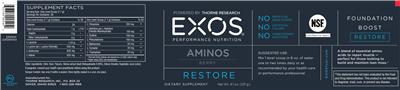
Aminos Berry by EXOS Performance Nutrition label
The label scan from the NIH Dietary Supplement Label Database. Tap to enlarge.
Label images are published by the NIH Dietary Supplement Label Database for the version of this product on file. Always read your actual product label.
View the full label (PDF)The Ingredients in Aminos Berry by EXOS Performance Nutrition
These are the 13 active ingredients this product is made of. Select any to open its full monograph.
Serving size7.7 Gram(s) Dosage formPowder Servings per container30 Amounts shown are per serving.
Most supplement products combine several ingredients, and a medication can interact with the product through any one of them. Each ingredient below shows whether it has known drug interactions.
Sugar
L-Leucine
L-Isoleucine
L-Methionine
No knowninteractions
Methionine is an essential amino acid that your body needs for protein building and many basic chemical reactions. Most people get enough from a norma...
L-Methionine monograph & interactionsL-Tyrosine
Interacts with21 drugs
L-tyrosine is an amino acid your body uses to make brain chemicals like dopamine and norepinephrine. Some studies suggest it may help mental performan...
L-Tyrosine monograph & interactionsL-Phenylalanine
Interacts with16 drugs
Phenylalanine is an essential amino acid the body uses to make brain chemicals like dopamine and norepinephrine. Some people take it for mood, vitilig...
L-Phenylalanine monograph & interactionsL-Valine
L-Threonine
Interacts with3 drugs
Threonine is an essential amino acid your body needs but cannot make, so you must get it from food or supplements. Most people get plenty from a norma...
L-Threonine monograph & interactionsL-Tryptophan
Interacts with394 drugs
L-tryptophan is an essential amino acid the body uses to make serotonin and melatonin, and people take it to support sleep and mood. The evidence for...
L-Tryptophan monograph & interactionsAlpha-Glucan Oligosaccharide
Other Carbohydrates
L-Lysine
Interacts with1 drug
Lysine is an essential amino acid your body cannot make on its own, so it must come from food or supplements. People most often take extra lysine to t...
L-Lysine monograph & interactionsL-Histidine
No knowninteractions
Histidine is an essential amino acid your body needs to build proteins and to make compounds like histamine and carnosine. Most people get enough from...
L-Histidine monograph & interactionsOther (inactive) ingredients: Citric Acid, Flavors, Stevia extract, Silicon Dioxide, Vegetable Juice. These complete the product’s ingredient list but are not active constituents.
Aminos Berry by EXOS Performance Nutrition Drug Interactions
HelloPharmacist Interaction Report
Aminos Berry by EXOS Performance Nutrition contains several amino acids with documented interactions.
The most serious is L-phenylalanine with levodopa (a Parkinson's medication)—phenylalanine competes for transport into the brain and can worsen tremor, rigidity, and movement fluctuations. L-phenylalanine also carries a Major interaction risk with NMDA antagonists (used for some neurological conditions and anesthesia), though the mechanism involves a different amino acid in the product.
Read the full breakdown — every affected drug type, severity by severity
L-tryptophan poses Major risk with CNS depressants (sedatives, sleeping pills, opioids) due to additive drowsiness, and Moderate risk with serotonergic drugs (antidepressants, certain pain or migraine medications) because of the theoretical risk of serotonin syndrome. L-tyrosine carries Moderate interactions with levodopa (competing for absorption; doses should be separated by at least 2 hours) and thyroid hormone medications (tyrosine may have additive effects).
L-phenylalanine also has a Moderate interaction with baclofen (a muscle relaxant) by reducing its absorption, and with MAOIs (older antidepressants) due to risk of dangerously high blood pressure.
L-threonine has a Major interaction with NMDA antagonists by potentially decreasing their effects. L-lysine carries a Minor interaction with 5-HT4 agonists (certain medications for irritable bowel syndrome and gastroparesis).
We could not check L-leucine, L-isoleucine, L-valine, alpha-glucan oligosaccharide, or other carbohydrates—no interaction data is on file for them. Altogether, these interactions span 423 individual medications.
Run your exact prescriptions through the checker below before starting this product.
Check your own medications below · Editorial policy · How we use AI
Want to check YOUR meds against Aminos Berry?
Ask about interactions with your drugs in plain English — “Can I take it with lisinopril?” — and we find you the answer in seconds, ingredient by ingredient.
Go to the checkerIngredients driving the most interactions
Individual Drug Interactions
The ingredients in Aminos Berry interact with 423 drugs. Click any drug to see the details.
5 of the 13 ingredients in Aminos Berry interact with drugs. Each result below shows which ingredient is responsible. L-Tryptophan L-Tyrosine L-Phenylalanine L-Threonine L-Lysine
AcepromazineAtravet
How Acepromazine interacts with Aminos Berry — through 1 ingredient. Tap an ingredient for the detail:
L-tryptophanCns Depressants Major
Interaction Summary
Theoretically, concomitant use of L-tryptophan with CNS depressants might cause additive sedative effects.
Read the full L-tryptophan + Acepromazine interactionAcetaminophen, Butalbital, Caffeine, CodeineEsgic with Codeine, Fioricet w/ Codeine
How Acetaminophen, Butalbital, Caffeine, Codeine interacts with Aminos Berry — through 1 ingredient. Tap an ingredient for the detail:
L-tryptophanCns Depressants Major
Interaction Summary
Theoretically, concomitant use of L-tryptophan with CNS depressants might cause additive sedative effects.
Read the full L-tryptophan + Acetaminophen, Butalbital, Caffeine, Codeine interactionAcetaminophen, Butalbital, CodeineBancap w/ Codeine
How Acetaminophen, Butalbital, Codeine interacts with Aminos Berry — through 1 ingredient. Tap an ingredient for the detail:
L-tryptophanCns Depressants Major
Interaction Summary
Theoretically, concomitant use of L-tryptophan with CNS depressants might cause additive sedative effects.
Read the full L-tryptophan + Acetaminophen, Butalbital, Codeine interactionAcetaminophen, Butalbital, Codeine PhosphatePhrenilin #3
How Acetaminophen, Butalbital, Codeine Phosphate interacts with Aminos Berry — through 1 ingredient. Tap an ingredient for the detail:
L-tryptophanCns Depressants Major
Interaction Summary
Theoretically, concomitant use of L-tryptophan with CNS depressants might cause additive sedative effects.
Read the full L-tryptophan + Acetaminophen, Butalbital, Codeine Phosphate interactionAcetaminophen, Caffeine, Chlorpheniramine, Hydrocodone, PhenylephrineHycomine Compound
How Acetaminophen, Caffeine, Chlorpheniramine, Hydrocodone, Phenylephrine interacts with Aminos Berry — through 1 ingredient. Tap an ingredient for the detail:
L-tryptophanCns Depressants Major
Interaction Summary
Theoretically, concomitant use of L-tryptophan with CNS depressants might cause additive sedative effects.
Read the full L-tryptophan + Acetaminophen, Caffeine, Chlorpheniramine, Hydrocodone, Phenylephrine interactionAcetaminophen, Caffeine, CodeineGesic C15, Gesic C30, Gesic C8, Lenoltec 1, Lenoltec 2, Lenoltec 3 +1 more
How Acetaminophen, Caffeine, Codeine interacts with Aminos Berry — through 1 ingredient. Tap an ingredient for the detail:
L-tryptophanCns Depressants Major
Interaction Summary
Theoretically, concomitant use of L-tryptophan with CNS depressants might cause additive sedative effects.
Read the full L-tryptophan + Acetaminophen, Caffeine, Codeine interactionAcetaminophen, Caffeine, Codeine, SalicylamideCodalan No.1, Codalan No.2, Codalan No.3
How Acetaminophen, Caffeine, Codeine, Salicylamide interacts with Aminos Berry — through 1 ingredient. Tap an ingredient for the detail:
L-tryptophanCns Depressants Major
Interaction Summary
Theoretically, concomitant use of L-tryptophan with CNS depressants might cause additive sedative effects.
Read the full L-tryptophan + Acetaminophen, Caffeine, Codeine, Salicylamide interactionAcetaminophen, Caffeine, DihydrocodeineDHC Plus, Panlor DC, Panlor SS
How Acetaminophen, Caffeine, Dihydrocodeine interacts with Aminos Berry — through 1 ingredient. Tap an ingredient for the detail:
L-tryptophanCns Depressants Major
Interaction Summary
Theoretically, concomitant use of L-tryptophan with CNS depressants might cause additive sedative effects.
Read the full L-tryptophan + Acetaminophen, Caffeine, Dihydrocodeine interactionAcetaminophen, Chlorpheniramine, Codeine, PhenylephrineColrex
How Acetaminophen, Chlorpheniramine, Codeine, Phenylephrine interacts with Aminos Berry — through 1 ingredient. Tap an ingredient for the detail:
L-tryptophanSerotonergic Drugs, Cns Depressants Major
Interaction Summary
Theoretically, combining L-tryptophan with serotonergic drugs might cause additive serotonergic effects.
Read the full L-tryptophan + Acetaminophen, Chlorpheniramine, Codeine, Phenylephrine interactionAcetaminophen, Chlorpheniramine, Phenylpropanolamine, OpiumHista-Derfule
How Acetaminophen, Chlorpheniramine, Phenylpropanolamine, Opium interacts with Aminos Berry — through 1 ingredient. Tap an ingredient for the detail:
L-tryptophanSerotonergic Drugs, Cns Depressants Major
Interaction Summary
Theoretically, combining L-tryptophan with serotonergic drugs might cause additive serotonergic effects.
Read the full L-tryptophan + Acetaminophen, Chlorpheniramine, Phenylpropanolamine, Opium interactionAcetaminophen, Chlorzoxazone, CodeineAcetazone Forte C8, Parafon Forte C8
How Acetaminophen, Chlorzoxazone, Codeine interacts with Aminos Berry — through 1 ingredient. Tap an ingredient for the detail:
L-tryptophanCns Depressants Major
Interaction Summary
Theoretically, concomitant use of L-tryptophan with CNS depressants might cause additive sedative effects.
Read the full L-tryptophan + Acetaminophen, Chlorzoxazone, Codeine interactionAcetaminophen, CodeineTylenol No.3, Tylenol w/ Codeine
How Acetaminophen, Codeine interacts with Aminos Berry — through 1 ingredient. Tap an ingredient for the detail:
L-tryptophanCns Depressants Major
Interaction Summary
Theoretically, concomitant use of L-tryptophan with CNS depressants might cause additive sedative effects.
Read the full L-tryptophan + Acetaminophen, Codeine interactionAcetaminophen, Codeine, DoxylamineMersyndol
How Acetaminophen, Codeine, Doxylamine interacts with Aminos Berry — through 1 ingredient. Tap an ingredient for the detail:
L-tryptophanCns Depressants Major
Interaction Summary
Theoretically, concomitant use of L-tryptophan with CNS depressants might cause additive sedative effects.
Read the full L-tryptophan + Acetaminophen, Codeine, Doxylamine interactionAcetaminophen, Codeine, MethocarbamolAcetaminophen, Codeine, Methocarbamol, Robaxacet 8
How Acetaminophen, Codeine, Methocarbamol interacts with Aminos Berry — through 1 ingredient. Tap an ingredient for the detail:
L-tryptophanCns Depressants Major
Interaction Summary
Theoretically, concomitant use of L-tryptophan with CNS depressants might cause additive sedative effects.
Read the full L-tryptophan + Acetaminophen, Codeine, Methocarbamol interactionAcetaminophen, Dichloralantipyrine, IsomethepteneAmidrine, Midchlor, Migquin, Migratine
How Acetaminophen, Dichloralantipyrine, Isometheptene interacts with Aminos Berry — through 1 ingredient. Tap an ingredient for the detail:
L-tryptophanCns Depressants Major
Interaction Summary
Theoretically, concomitant use of L-tryptophan with CNS depressants might cause additive sedative effects.
Read the full L-tryptophan + Acetaminophen, Dichloralantipyrine, Isometheptene interactionAcetaminophen, Dichloralphenazone, IsomethepteneMidrin
How Acetaminophen, Dichloralphenazone, Isometheptene interacts with Aminos Berry — through 1 ingredient. Tap an ingredient for the detail:
L-tryptophanCns Depressants Major
Interaction Summary
Theoretically, concomitant use of L-tryptophan with CNS depressants might cause additive sedative effects.
Read the full L-tryptophan + Acetaminophen, Dichloralphenazone, Isometheptene interactionAcetaminophen, Dichlorophenazone, IsometheptaneIsocom
How Acetaminophen, Dichlorophenazone, Isometheptane interacts with Aminos Berry — through 1 ingredient. Tap an ingredient for the detail:
L-tryptophanCns Depressants Major
Interaction Summary
Theoretically, concomitant use of L-tryptophan with CNS depressants might cause additive sedative effects.
Read the full L-tryptophan + Acetaminophen, Dichlorophenazone, Isometheptane interactionAcetaminophen, DiphenhydramineTylenol PM, Tylenol PM Ex Strength
How Acetaminophen, Diphenhydramine interacts with Aminos Berry — through 1 ingredient. Tap an ingredient for the detail:
L-tryptophanCns Depressants Major
Interaction Summary
Theoretically, concomitant use of L-tryptophan with CNS depressants might cause additive sedative effects.
Read the full L-tryptophan + Acetaminophen, Diphenhydramine interactionAcetaminophen, Diphenhydramine, PseudoephedrineChildren's Tylenol Allergy, Cold Control, Contac Night Allergy Relief
How Acetaminophen, Diphenhydramine, Pseudoephedrine interacts with Aminos Berry — through 1 ingredient. Tap an ingredient for the detail:
L-tryptophanCns Depressants Major
Interaction Summary
Theoretically, concomitant use of L-tryptophan with CNS depressants might cause additive sedative effects.
Read the full L-tryptophan + Acetaminophen, Diphenhydramine, Pseudoephedrine interactionAcetaminophen, HydrocodoneAnexsia, Anodynos DHC, Azdone, Co-Gesic, Doucet, Lorcet +9 more
How Acetaminophen, Hydrocodone interacts with Aminos Berry — through 1 ingredient. Tap an ingredient for the detail:
L-tryptophanCns Depressants Major
Interaction Summary
Theoretically, concomitant use of L-tryptophan with CNS depressants might cause additive sedative effects.
Read the full L-tryptophan + Acetaminophen, Hydrocodone interactionAcetaminophen, MeperidineDemerol APAP
How Acetaminophen, Meperidine interacts with Aminos Berry — through 1 ingredient. Tap an ingredient for the detail:
L-tryptophanCns Depressants, Serotonergic Drugs Major
Interaction Summary
Theoretically, concomitant use of L-tryptophan with CNS depressants might cause additive sedative effects.
Read the full L-tryptophan + Acetaminophen, Meperidine interactionAcetaminophen, OxycodonePercocet, Roxicet, Tylox, Xartemis XR
How Acetaminophen, Oxycodone interacts with Aminos Berry — through 1 ingredient. Tap an ingredient for the detail:
L-tryptophanCns Depressants Major
Interaction Summary
Theoretically, concomitant use of L-tryptophan with CNS depressants might cause additive sedative effects.
Read the full L-tryptophan + Acetaminophen, Oxycodone interactionAcetaminophen, PentazocineTalacen
How Acetaminophen, Pentazocine interacts with Aminos Berry — through 1 ingredient. Tap an ingredient for the detail:
L-tryptophanCns Depressants Major
Interaction Summary
Theoretically, concomitant use of L-tryptophan with CNS depressants might cause additive sedative effects.
Read the full L-tryptophan + Acetaminophen, Pentazocine interactionAcetaminophen, PropoxypheneDarvocet-N 100, Darvocet-N 50, E-Lor, Wygesic
How Acetaminophen, Propoxyphene interacts with Aminos Berry — through 1 ingredient. Tap an ingredient for the detail:
L-tryptophanCns Depressants Major
Interaction Summary
Theoretically, concomitant use of L-tryptophan with CNS depressants might cause additive sedative effects.
Read the full L-tryptophan + Acetaminophen, Propoxyphene interactionAcetazolamideAk-Zol, Diamox
How Acetazolamide interacts with Aminos Berry — through 1 ingredient. Tap an ingredient for the detail:
L-tryptophanCns Depressants Major
Interaction Summary
Theoretically, concomitant use of L-tryptophan with CNS depressants might cause additive sedative effects.
Read the full L-tryptophan + Acetazolamide interactionAlfentanilAlfenta
How Alfentanil interacts with Aminos Berry — through 1 ingredient. Tap an ingredient for the detail:
L-tryptophanCns Depressants Major
Interaction Summary
Theoretically, concomitant use of L-tryptophan with CNS depressants might cause additive sedative effects.
Read the full L-tryptophan + Alfentanil interactionAlprazolamNiravam, Xanax
How Alprazolam interacts with Aminos Berry — through 1 ingredient. Tap an ingredient for the detail:
L-tryptophanCns Depressants Major
Interaction Summary
Theoretically, concomitant use of L-tryptophan with CNS depressants might cause additive sedative effects.
Read the full L-tryptophan + Alprazolam interactionAluminum Hydroxide, Aspirin, Codeine Phosphate, Magnesium HydroxideAscriptin Codeine #2
How Aluminum Hydroxide, Aspirin, Codeine Phosphate, Magnesium Hydroxide interacts with Aminos Berry — through 1 ingredient. Tap an ingredient for the detail:
L-tryptophanCns Depressants Major
Interaction Summary
Theoretically, concomitant use of L-tryptophan with CNS depressants might cause additive sedative effects.
Read the full L-tryptophan + Aluminum Hydroxide, Aspirin, Codeine Phosphate, Magnesium Hydroxide interactionAminoglutethimideCytadren
How Aminoglutethimide interacts with Aminos Berry — through 1 ingredient. Tap an ingredient for the detail:
L-tryptophanCns Depressants Major
Interaction Summary
Theoretically, concomitant use of L-tryptophan with CNS depressants might cause additive sedative effects.
Read the full L-tryptophan + Aminoglutethimide interactionAminophylline, Amobarbital, EphedrineAmesec
How Aminophylline, Amobarbital, Ephedrine interacts with Aminos Berry — through 1 ingredient. Tap an ingredient for the detail:
L-tryptophanCns Depressants Major
Interaction Summary
Theoretically, concomitant use of L-tryptophan with CNS depressants might cause additive sedative effects.
Read the full L-tryptophan + Aminophylline, Amobarbital, Ephedrine interactionEach ingredient & the kinds of drugs it affects
For each ingredient in Aminos Berry with known interactions, here are the types of medications they can affect. Open any type for the detail — or search your exact drug in the checker above.
L-Tryptophan
Cns Depressants
Theoretically, concomitant use of L-tryptophan with CNS depressants might cause additive sedative effects.
Clinical research shows that L-tryptophan can cause fatigue and drowsiness.
Serotonergic Drugs
Theoretically, combining L-tryptophan with serotonergic drugs might cause additive serotonergic effects.
L-tryptophan is a precursor to serotonin. Theoretically, combining serotonergic drugs with L-tryptophan might increase the risk of serotonergic side effects, including serotonin syndrome and cerebral vasoconstrictive disorders.
L-Tyrosine
Levodopa
Theoretically, tyrosine might decrease the effectiveness of levodopa.
Tyrosine and levodopa compete for absorption in the proximal duodenum by the large neutral amino acid (LNAA) transport system. Advise patients to separate doses of tyrosine and levodopa by at least 2 hours.
Thyroid Hormone
Theoretically, tyrosine might have additive effects with thyroid hormone medications.
Tyrosine is a precursor to thyroxine and might increase levels of thyroid hormones.
L-Phenylalanine
Levodopa
Phenylalanine, especially in high doses, can reduce the effectiveness of levodopa.
Phenylalanine competes with levodopa for carrier-mediated transport into the brain. The resulting reduction in levels of levodopa in the brain can exacerbate tremor, rigidity, and the "on-off" phenomenon in patients with Parkinson disease.
Baclofen
Concomitant intake of phenylalanine may reduce the intestinal absorption of baclofen.
Phenylalanine and baclofen share the same intestinal carrier for absorption; phenylalanine competitively inhibits the absorption of baclofen, reducing its plasma levels.
Monoamine Oxidase Inhibitors (Maois)
Theoretically, concomitant use of L-phenylalanine and non-selective MAOIs might increase the risk of hypertensive crisis.
L-phenylalanine is metabolized to tyrosine. Some evidence suggests that L-phenylalanine, given with the non-selective MAOI pargyline, might prevent the elimination of tyramine, increasing the risk of hypertensive crisis. However, this was not reported in a small number of patients when using L-phenylalanine with the partially selective MAO-B inhibitor, selegiline.
L-Threonine
Nmda Antagonists
Theoretically, threonine might decrease the effects of NMDA antagonists.
Threonine increases central nervous system (CNS) glycine levels. Glycine seems to bind a site on NMDA receptors and enhance the activity of the receptors.
L-Lysine
5-Ht4 Agonists
Theoretically, lysine may reduce the effects of 5-HT4 agonists.
Animal research suggests that L-lysine is a partial serotonin receptor 4 (5-HT4) antagonist and inhibits diarrhea induced by the 5-HT4 agonist, 5-hydroxytryptophane.
Brand information
Manufacturer and brand details for Aminos Berry, from the product label.
Aminos Berry by EXOS Performance Nutrition: Common Questions
Does Aminos Berry by EXOS Performance Nutrition interact with any medications?
How can one product interact with so many drugs?
Where does this information come from?
Will this help my athletic performance?
Can I take this if I'm pregnant?
Is this safe for someone with PKU?
What are amino acids for?
Does L-lysine in this product help with cold sores?
Can I breastfeed while taking this?
Written and reviewed by the HelloPharmacist editorial staff. Our editorial policy
Not sure if Aminos Berry is safe with your meds?
Our pharmacists answer your medication & supplement questions — free.
Label information is sourced from the NIH Dietary Supplement Label Database and reflects the product version on file; always read your actual product label. This page is for education only and is not a substitute for professional medical advice. Confirm with your pharmacist or doctor before combining supplements and medications.
The Full Monographs Behind Aminos Berry’s Ingredients
Every ingredient we hold a full HelloPharmacist monograph for — uses, evidence, safety, and the complete interaction list.
Methionine
Methionine is an essential amino acid that your body needs for protein building and many basic chemical reactions. Most people get enough from a normal diet, and supplements are generally no...
Read the full Methionine monograph → Herb & supplement monographTyrosine
Interacts with 21 drugsL-tyrosine is an amino acid your body uses to make brain chemicals like dopamine and norepinephrine. Some studies suggest it may help mental performance during short-term stress, sleep loss,...
Read the full Tyrosine monograph → Herb & supplement monographPhenylalanine
Interacts with 16 drugsPhenylalanine is an essential amino acid the body uses to make brain chemicals like dopamine and norepinephrine. Some people take it for mood, vitiligo, or pain, but the evidence is mostly l...
Read the full Phenylalanine monograph → Herb & supplement monographThreonine
Interacts with 3 drugsThreonine is an essential amino acid your body needs but cannot make, so you must get it from food or supplements. Most people get plenty from a normal diet, and high-quality evidence for ta...
Read the full Threonine monograph → Herb & supplement monographL-tryptophan
Interacts with 394 drugsL-tryptophan is an essential amino acid the body uses to make serotonin and melatonin, and people take it to support sleep and mood. The evidence for supplement use is limited and mixed, and...
Read the full L-tryptophan monograph → Herb & supplement monographLysine
Interacts with 1 drugLysine is an essential amino acid your body cannot make on its own, so it must come from food or supplements. People most often take extra lysine to try to prevent or shorten cold sores, but...
Read the full Lysine monograph → Herb & supplement monographHistidine
Histidine is an essential amino acid your body needs to build proteins and to make compounds like histamine and carnosine. Most people get enough from a normal diet, and good-quality researc...
Read the full Histidine monograph →Sources & How We Checked
Aminos Berry's label data comes from the NIH Dietary Supplement Label Database; the ingredient interaction data is from the Natural Medicines database, reviewed by our pharmacists.
- NIH Dietary Supplement Label Database (DSLD) — The official product label on file for this supplement.
- Natural Medicines (Therapeutic Research Center) — Evidence-graded clinical reference behind the ingredient interaction data.
Content is written and reviewed by licensed HelloPharmacist pharmacists. See our data sources and editorial standards for how this information is built and checked.
The 71 references behind this product’s interaction data
Every citation that drives the interaction findings for this product’s ingredients, from the evidence-graded Natural Medicines (TRC Healthcare) database. Open an ingredient to browse its citations — links open the study on PubMed or the publisher’s site.
Methionine 12 references
- La Vecchia C, Negri E, Franceschi S, Decarli A. Case-control study on influence of methionine, nitrite, and salt on gastric carcinogenesis in northern Italy. Nutr Cancer 1997;27:65-8. PubMed
- Btaiche IF, Khalidi N. Parenteral nutrition-associated liver complications in children. Pharmacotherapy 2002;22:188-211.. PubMed
- Cottington EM, LaMantia C, Stabler SP, et al. Adverse event associated with methionine loading test: a case report. Arterioscler Thromb Vasc Biol 2002;22:1046-50.. PubMed
- Anon. Should methionine be added to paracetamol formulations? Drug Ther Perspect 1997;10:11-3. DOI
- Smulders, Y. M., Rakic, M., Slaats, E. H., Treskes, M., Sijbrands, E. J., Odekerken, D. A., Stehouwer, C. D., and Silberbusch, J. Fasting and post-methionine homocysteine levels in NIDDM. Determinants and correlations with retinopathy, albuminuria, and c
- McAuley, D. F., Hanratty, C. G., McGurk, C., Nugent, A. G., and Johnston, G. D. Effect of methionine supplementation on endothelial function, plasma homocysteine, and lipid peroxidation. J.Toxicol.Clin.Toxicol. 1999;37(4):435-440. PubMed
- Hanratty, C. G., McGrath, L. T., McAuley, D. F., Young, I. S., and Johnston, G. D. The effects of oral methionine and homocysteine on endothelial function. Heart 2001;85(3):326-330. PubMed
- Ward, M., McNulty, H., McPartlin, J., Strain, J. J., Weir, D. G., and Scott, J. M. Effect of supplemental methionine on plasma homocysteine concentrations in healthy men: a preliminary study. Int.J.Vitam.Nutr.Res. 2001;71(1):82-86. PubMed
- Yaghmai, R., Kashani, A. H., Geraghty, M. T., Okoh, J., Pomper, M., Tangerman, A., Wagner, C., Stabler, S. P., Allen, R. H., Mudd, S. H., and Braverman, N. Progressive cerebral edema associated with high methionine levels and betaine therapy in a patient
- Talukdar R, Murthy HV, Reddy DN. Role of methionine containing antioxidant combination in the management of pain in chronic pancreatitis: a systematic review and meta-analysis. Pancreatology 2015;15(2):136-44. PubMed
- Food and Nutrition Board, Institute of Medicine. Dietary Reference Intakes for Energy, Carbohydrate, Fiber, Fat, Fatty Acids, Cholesterol, Protein, and Amino Acids. Washington, DC: The National Academies Press, 2005. Available at: https://doi.org/10.17226 DOI
- Khairan P, Sobue T, Eshak ES, et al. Association of B Vitamins and Methionine Intake with the Risk of Gastric Cancer: The Japan Public Health Center-based Prospective Study. Cancer Prev Res (Phila) 2022;15(2):101-110. PubMed
Tyrosine 4 references
- Meyer JS, Welch KM, Deshmukh VD, et al. Neurotransmitter precursor amino acids in the treatment of multi-infarct dementia and Alzheimer's disease. J Amer Geriat Soc 1977;25:289-98.
- DiPiro JT, Talbert RL, Yee GC, et al; eds. Pharmacotherapy: A pathophysiologic approach. 4th ed. Stamford, CT: Appleton & Lange, 1999.
- Wood DR, Reimherr FW, Wender PH. Amino acid precursors for the treatment of attention deficit disorder, residual type. Psychopharmacol Bull 1985;21:146-9.
- van Spronsen FJ, van Rijn M, Bekhof J. Phenylketonuria: tyrosine supplementation in phenylalanine-restricted diets. Am J Clin Nutr 2001;73:153-7. PubMed
Phenylalanine 23 references
- Rouse B, Azen C, Koch R, et al. Maternal phenylketonuria collaborative Study (MPKUCS) offspring: facial anomalies, malformations, and early neurological sequelae. Am J Med Genet 1997;69:89-95. DOI
- Sturtevant FM. Use of aspartame in pregnancy. Int J Fertil 1985;30:85-7.
- Silkaitis RP, Mosnaim AD. Pathways linking L-phenylalanine and 2-phenylethylamine with p-tyramine in rabbit brain. Brain Res 1976;114:105-15.
- Lehmann WD, Theobald N, Fischer R, Heinrich HC. Stereospecificity of phenylalanine plasma kinetics and hydroxylation in man following oral application of a stable isotope-labelled pseudo-racemic mixture of L- and D-phenylalanine. Clin Chim Acta 1983;128 PubMed
- Mosnik DM, Spring B, Rogers K, Baruah S. Tardive dyskinesia exacerbated after ingestion of phenylalanine by schizophrenic patients. Neuropsychopharmacology 1997;16:136-46. PubMed
- Siddiqui AH, Stolk LM, Bhaggoe R, et al. L-phenylalanine and UVA irradiation in the treatment of vitiligo. Dermatology 1994;88:215-8. PubMed
- Birkmayer W, Riederer P, Linauer W, Knoll J. L-deprenyl plus L-phenylalanine in the treatment of depression. J Neural Transm 1984;59:81-7. PubMed
- Nutt JG, Woodward WR, Hammerstad JP, et al. The "on-off" phenomenon in Parkinson's disease. Relation to levodopa absorption and transport. N Engl J Med 1984;310:483-8. PubMed
- Baruzzi A, Contin M, Riva R, et al. Influence of meal ingestion time on pharmacokinetics of orally administered levodopa in parkinsonian patients. Clin Neuropharmacol 1987;10:527-37. PubMed
- Juncos JL, Fabbrini G, Mouradian MM, et al. Dietary influences on the antiparkinsonian response to levodopa. Arch Neurol 1987;44:1003-5. PubMed
- Eriksson T, Granerus AK, Linde A, et al. "On-off" phenomenon in Parkinson's disease: relationship between dopa and other large neutral amino acids in plasma. Neurology 1988;38:1245-8. PubMed
- Baker GB, Bornstein RA, Rouget AC, et al. Phenylethylaminergic mechanisms in attention-deficit disorder. Biol Psychiatry 1991;29:15-22.. PubMed
- Wood DR, Reimherr FW, Wender PH. Treatment of attention deficit disorder with DL-phenylalanine. Psychiatry Res 1985;16:21-6.. PubMed
- Food and Nutrition Board, Institute of Medicine. Dietary Reference Intakes for Energy, Carbohydrate, Fiber, Fat, Fatty Acids, Cholesterol, Protein, and Amino Acids (Macronutrients). Washington, DC: National Academy Press, 2002. Available at: http://www.n
- Cederbaum S. Phenylketonuria: an update. Curr Opin Pediatr 2002;14:702-6. PubMed
- Cejudo-Ferragud, E., Nacher, A., Polache, A., Cercos-Fortea, T., Merino, M., and Casabo, V. G. Evidence of competitive inhibition for the intestinal absorption of baclofen by phenylalanine. Int J of Pharm (Amsterdam) 1996;132:63-69. DOI
- Fischer, E., Heller, B., Nachon, M., and Spatz, H. Therapy of depression by phenylalanine. Preliminary note. Arzneimittelforschung. 1975;25(1):132.
- Beckmann, H., Strauss, M. A., and Ludolph, E. Dl-phenylalanine in depressed patients: an open study. J.Neural Transm. 1977;41(2-3):123-134. PubMed
- Sabelli, H. C., Fawcett, J., Gusovsky, F., Javaid, J. I., Wynn, P., Edwards, J., Jeffriess, H., and Kravitz, H. Clinical studies on the phenylethylamine hypothesis of affective disorder: urine and blood phenylacetic acid and phenylalanine dietary supplem
- Cotzias, G. C., Van Woert, M. H., and Schiffer, L. M. Aromatic amino acids and modification of parkinsonism. N Engl.J Med 2-16-1967;276(7):374-379. PubMed
- Kravitz, H. M., Sabelli, H. C., and Fawcett, J. Dietary supplements of phenylalanine and other amino acid precursors of brain neuroamines in the treatment of depressive disorders. J Am Osteopath.Assoc 1984;84(1 Suppl):119-123. DOI
- Mann, J., Peselow, E. D., Snyderman, S., and Gershon, S. D-phenylalanine in endogenous depression. Am.J.Psychiatry 1980;137(12):1611-1612. PubMed
- Katoulis AC, Alevizou A, Bozi E, et al. A randomized, double-blind, vehicle-controlled study of a preparation containing undecylenoyl phenylalanine 2% in the treatment of solar lentigines. Clin Exp Dermatol 2010;35(5):473-6. PubMed
Threonine 4 references
- Tandan R, Bromberg MB, Forshew D, et al. A controlled trial of amino acid therapy in amyotrophic lateral sclerosis: I. Clinical, functional, and maximum isometric torque data. Neurology 1996;47:1220-6. PubMed
- Lee A, Patterson V. A double blind study of L-threonine in patients with spinal spasticity. Acta Neurol Scand 1993;88:334-8. PubMed
- Blin O, Pouget J, Aubrespy G, et al. A double-blind placebo controlled trial of L-threonine in amyotrophic lateral sclerosis. J Neurol 1992;239:79-81.
- Roufs JB. L-threonine as a symptomatic treatment for amyotrophic lateral sclerosis (ALS). Med Hypotheses 1991;34:20-3. PubMed
L-tryptophan 18 references
- Messiha FS. Fluoxetine: adverse effects and drug-drug interactions. J Toxicol Clin Toxicol 1993;31:603-30. PubMed
- Devoe LD, Castillo RA, Searle NS. Maternal dietary substrates and human fetal biophysical activity. The effects of tryptophan and glucose on fetal breathing movements. Am J Obstet Gynecol 1986;155:135-9. DOI
- Lieberman HR, Corkin S, Spring BJ. The effects of dietary neurotransmitter precursors on human behavior. Am J Clin Nutr 1985;42:366-70. PubMed
- U. S. Food and Drug Administration, Center for Food Safety and Applied Nutrition, Office of Nutritional Products, Labeling, and Dietary Supplements. Information Paper on L-Tryptophan and 5-hydroxy-L-tryptophan, February 2001.
- Sullivan EA, Kamb ML, Jones JL, et al. The natural history of eosinophilia-myalgia syndrome in a tryptophan-exposed cohort in South Carolina. Arch Intern Med 1996;156:973-9. DOI
- Philen RM, Hill RH, Flanders WD, et al. Tryptophan contaminants associated with eosinophilia-myalgia syndrome. Am J Epidemiol 1993;138:154-9. PubMed
- Bohme A, Wolter M, Hoelzer D. L-tryptophan-related eosinophilia-myalgia syndrome possibly associated with a chronic B-lymphocytic leukemia. Ann Hematol 1998;77:235-8. PubMed
- Singhal AB, Caviness VS, Begleiter AF, et al. Cerebral vasoconstriction and stroke after use of serotonergic drugs. Neurology 2002;58:130-3. PubMed
- Priori R, Conti F, Luan FL, et al. Chronic fatigue: a peculiar evolution of eosinophilia myalgia syndrome following treatment with L-tryptophan in four Italian adolescents. Eur J Pediatr 1994;153:344-6..
- Klein R, Berg PA. A comparative study on antibodies to nucleoli and 5-hydroxytryptamine in patients with fibromyalgia syndrome and tryptophan-induced eosinophilia-myalgia syndrome. Clin Investig 1994;72:541-9.. PubMed
- Simat TJ, Kleeberg KK, Muller B, Sierts A. Synthesis, formation, and occurrence of contaminants in biotechnologically manufactured L-tryptophan. Adv Exp Med Biol 1999;467:469-80.. PubMed
- Shaw K, Turner J, Del Mar C. Tryptophan and 5-hydroxytryptophan for depression. Cochrane Database Syst Rev 2002;(1):CD003198. PubMed
- Kilbourne EM, Philen RM, Kamb ML, Falk H. Tryptophan produced by Showa Denko and epidemic eosinophilia-myalgia syndrome. J Rheumatol Suppl 1996;46:81-8.
- Horwitz RI, Daniels SR. Bias or biology: evaluating the epidemiologic studies of L-tryptophan and the eosinophilia-myalgia syndrome. J Rheumatol Suppl 1996;46:60-72.
- Shapiro S. Epidemiologic studies of the association of L-tryptophan with the eosinophilia-myalgia syndrome: a critique. J Rheumatol Suppl 1996;46:44-58.
- Mayeno AN, Gleich GJ. The eosinophilia-myalgia syndrome: lessons from Germany. Mayo Clin Proc 1994;69:702-4. PubMed
- Carr L, Ruther E, Berg PA, Lehnert H. Eosinophilia-myalgia syndrome in Germany: an epidemiologic review. Mayo Clin Proc 1994;69:620-5. PubMed
- Ullrich SS, Fitzgerald PCE, Giesbertz P, Steinert RE, Horowitz M, Feinle-Bisset C. Effects of intragastric administration of tryptophan on the blood glucose response to a nutrient drink and energy intake, in lean and obese men. Nutrients 2018;10(4). pii: PubMed
Lysine 7 references
- Thein DJ, Hurt WC. Lysine as a prophylactic agent in the treatment of recurrent herpes simplex labialis. Oral Surg Oral Med Oral Pathol 1984;58:659-66. PubMed
- McCune MA, Perry HO, Muller SA, O'Fallon WM. Treatment of recurrent herpes simplex infections with L-lysine monohydrochloride. Cutis 1984;34:366-73.
- DiGiovanna JJ, Blank H. Failure of lysine in frequently recurrent herpes simplex infection. Treatment and prophylaxis. Arch Dermatol 1984;120:48-51. DOI
- Milman N, Scheibel J, Jessen O. Lysine prophylaxis in recurrent herpes simplex labialis: a double-blind, controlled crossover study. Acta Derm Venereol 1980;60:85-7.
- Griffith RS, Walsh DE, Myrmel KH, et al. Success of L-lysine therapy in frequently recurrent herpes simplex infection. Treatment and prophylaxis. Dermatologica 1987;175:183-90. DOI
- Lo JC, Chertow GM, Rennke H, Seifter JL. Fanconi's syndrome and tubulointerstitial nephritis in association with L-lysine ingestion. Am J Kidney Dis 1996;28:614-7. PubMed
- Smriga M, Torii K. L-Lysine acts like a partial serotonin receptor 4 antagonist and inhibits serotonin-mediated intestinal pathologies and anxiety in rats. Proc Natl Acad Sci U S A. 2003 Dec 23;100(26):15370-5.
Parts of this content are provided by the Therapeutic Research Center, LLC.
DISCLAIMER: Currently this does not check for drug-drug interactions. This is not an all-inclusive comprehensive list of potential interactions and is for informational purposes only. Not all interactions are known or well-reported in the scientific literature, and new interactions are continually being reported. Input is needed from a qualified healthcare provider including a pharmacist before starting any therapy. Application of clinical judgment is necessary.
© 2021 Therapeutic Research Center, LLC