
Artichoke & Lipase Complex Ingredients & Drug Interactions
by BioCare
What is this page for?
First and foremost: checking Artichoke & Lipase Complex against your medications. The heart of this page is the interaction checker and the full interaction report — how this product’s ingredients may interact with prescription and over-the-counter medicines you may be taking.
Around that, we add a pharmacist’s high-level view of the product as a whole — what’s inside, the evidence for its stated use, how transparent the label is, and what safety data exists — so you can see the full picture in one place. It’s educational information from our licensed clinical databases and the clinical staff at HelloPharmacist — not medical advice — and we don’t sell or endorse products. Our editorial policy
Artichoke & Lipase Complex is a dietary supplement by BioCare with 5 active ingredients. Its ingredients are commonly taken for exercise performance and endurance, heart health, energy support.Based on those ingredients, 376 medications have a known interaction with it, the most serious rated moderate. The ingredients most likely to interact are Artichoke extract, Taurine, Choline. Use the checker below to test your specific medication, or read the full HelloPharmacist Interaction Report.
Check Your Meds Against Artichoke & Lipase Complex by BioCare
Ask about any prescription or over-the-counter medication and we check it for interactions with Artichoke & Lipase Complex by BioCare — and tell you which ingredient is responsible.
AI summaries are generated from our interaction database for education only — always confirm with your pharmacist. How we use AI
Ask the Pharmacist
A licensed pharmacist will answer your question by email — free, usually within 24 hours.
Got it — thank you!
A licensed pharmacist will answer within 24 hours. Keep an eye on your email (worth checking spam, just in case).
HelloPharmacist Scorecard of Artichoke & Lipase Complex by BioCare
Our pharmacy team’s full take, with four database checks built into the cards below — a summary of what is known, not a grade of the product itself.
What’s inside
Partial disclosure
Artichoke & Lipase Complex contains five active ingredients. Taurine is an amino acid thought to support heart health and blood pressure.
Lipase is an enzyme that helps break down dietary fats. Glycine is another amino acid.
Choline is a nutrient involved in brain and liver function. Artichoke extract comes from the leaves of the artichoke plant and is used for digestive and cholesterol support.
The product also contains inactive ingredients including capsule material, rice, and ascorbyl palmitate as a preservative.
Does it work?
Moderate evidence
Taurine is possibly effective for hepatitis and heart failure (congestive heart failure). For weight loss, the evidence suggests it's possibly ineffective.
Artichoke extract is possibly effective for high cholesterol (hyperlipidemia) and indigestion (dyspepsia), but evidence for nonalcoholic fatty liver disease is insufficient. Lipase's effectiveness for digestive conditions and inflammatory bowel disease is not yet established in the data we hold.
Glycine is possibly effective for schizophrenia, but evidence for other conditions listed—ADHD, enlarged prostate (benign prostatic hyperplasia), and others—is insufficient. Choline's effectiveness for the conditions listed (athletic performance, cognitive decline, liver health, allergies, and Alzheimer disease) ranges from possibly ineffective to insufficient evidence.
How safe is it?
Well-documented data
These ingredients are generally well tolerated at typical doses short-term, though long-term safety data are limited for several of them. Taurine is well tolerated orally for up to a year and causes only mild, common side effects like constipation, diarrhea, and indigestion in most people.
Rare cases of allergic reactions have been reported, particularly in people sensitive to sulfonamides or sulfites. Lipase has no reported adverse effects in adults, though people with serious digestive conditions should use it only under medical guidance.
Glycine rarely causes mild sedation or gastrointestinal upset, both of which resolve quickly when stopped. Choline is well tolerated at normal doses but can cause fishy body odor, and at very high doses (above 3.5 grams daily) may cause diarrhea, nausea, sweating, and vomiting.
Artichoke extract is generally well tolerated but can cause abdominal pain, diarrhea, bloating, nausea, or allergic reactions—especially in people sensitive to ragweed, daisies, or other plants in the daisy family. Rare cases of severe allergic shock to artichoke have been reported.
Meds to double-check
Moderate interaction found
Before taking this product, double-check with your pharmacist if you take blood pressure medications (both taurine and artichoke may lower blood pressure further), lithium for bipolar disorder (taurine may raise its levels), clozapine for schizophrenia (glycine may worsen symptoms), diabetes medications (artichoke may increase low blood sugar risk), or any drugs broken down by your liver's CYP2C19 or CYP2B6 enzymes (artichoke may raise their levels). Also mention atropine if you take it.
The bottom line
Scorecard at a glancePartially disclosed formula with some supporting evidence for its stated purpose. Moderate medication interactions have been identified, and safety information is well characterized.
This product may help with high cholesterol and indigestion if you don't take blood pressure or diabetes medications. If you take any medications, especially for blood pressure, bipolar disorder, schizophrenia, or diabetes, check with your pharmacist before starting—interactions are possible.
Pregnant or breastfeeding? Talk to your doctor first, since safety data vary by ingredient.
We can help you cross-check your medicines with the tool on this page.
Educational only — not medical advice; always confirm with your pharmacist. Our editorial policy · How we use AI
Assessment coverage: 5 of 5 active ingredients matched to our full ingredient reviews (monographs). Based on the product label dated Sep 25, 2025.
This Scorecard evaluates available label information, ingredient evidence, and known medication-safety considerations. It does not independently verify product identity, purity, potency, contamination, or manufacturing quality. How these ratings are computed
General information
Key facts about Artichoke & Lipase Complex, straight from the product label.
| Brand | BioCare |
|---|---|
| Barcode (UPC) | 5033290589905 |
| Net contents | 90 Vegetable Capsule(s) |
| Market status | On market |
| Date entered into DSLD | Sep 25, 2025 |
| DSLD ID | 340091 |
| Product type | Other Combinations |
| Supplement form | Capsule |
| Dietary claims / uses | All Other, Structure/Function |
| Intended target group(s) | Vegan, Vegetarian, Adult (18 - 50 Years), Women (not pregnant or lactating), Dairy Free |
Everything in this section is reproduced from the manufacturer’s own product label — it’s the label speaking, not HelloPharmacist. We show it so you can see exactly what the maker states; we don’t verify or endorse those statements.
Supplement Facts
The label details for Artichoke & Lipase Complex by BioCare, sourced from the NIH Dietary Supplement Label Database.
Supplement Facts
| Ingredient | Amount | % DV |
|---|---|---|
| Taurine | 100 mg | -- |
| Lipase | 0 NP | -- |
| Glycine | 100 mg | -- |
| Choline | 100 mg | -- |
| Artichoke extract | 100 mg | -- |
Other ingredients: Choline Bitartrate, Hydroxypropylmethylcellulose, L-Glycine, Artichoke Leaf Extract, Ascorbyl Palmitate, Rice
Tap any ingredient to jump to its full detail below.
These statements are the manufacturer’s wording, reproduced from the product label — the label is saying it, not HelloPharmacist. We don’t verify or endorse them.
Suggested/Recommended/Usage/Directions
Directions: 1 capsule taken with each fat-containing meal, or as professionally directed.
Precautions
This product should not be used as a substitute for a varied diet and healthy lifestyle. Do not exceed the stated recommended daily intake. Do not purchase if the seal is broken.
Keep out of reach of children.
If you are under medical supervision, please consult a doctor before use.
Not suitable for use during planned pregnancy, pregnancy or breastfeeding.
Caution with gallstones and individuals without a gallbladder.
Storage
Store in a cool, dry place. For best before and batch, see base.
Formulation
Vegetarian & vegan
Choline contributes to the maintenance of normal liver function & normal lipid metabolism.
Formula
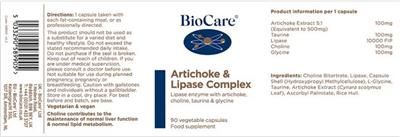
Lipase enzyme with artichoke. choline, taurine & glycine
FDA Statement of Identity
Food Supplement
Is this label outdated? Report a formula or label change and our pharmacy team will review it.
Artichoke & Lipase Complex by BioCare label
The label scan from the NIH Dietary Supplement Label Database. Tap to enlarge.
Label images are published by the NIH Dietary Supplement Label Database for the version of this product on file. Always read your actual product label.
View the full label (PDF)The Ingredients in Artichoke & Lipase Complex by BioCare
These are the 5 active ingredients this product is made of. Select any to open its full monograph.
Serving size1 Capsule(s) Dosage formCapsule Servings per container90 Amounts shown are per serving.
Most supplement products combine several ingredients, and a medication can interact with the product through any one of them. Each ingredient below shows whether it has known drug interactions.
Taurine
Interacts with173 drugs
Taurine is an amino acid your body makes naturally and that you also get from animal foods. It is widely used in energy drinks and sports supplements,...
Taurine monograph & interactionsLipase
No knowninteractions
Lipase is a digestive enzyme that helps your body break down dietary fats. It is well established as part of prescription pancreatic enzyme therapy fo...
Lipase monograph & interactionsGlycine
Interacts with1 drug
Glycine is a non-essential amino acid your body makes on its own and that also appears in protein-rich foods. It is most studied for improving sleep q...
Glycine monograph & interactionsCholine
Interacts with16 drugs
Choline is an essential nutrient your body needs for liver function, brain health, and nerve signaling, and many people get enough from foods like egg...
Choline monograph & interactionsArtichoke extract
Interacts with363 drugs
Artichoke leaf extract is a generally well-tolerated supplement that may have a mild cholesterol-lowering effect and is often used for indigestion, th...
Artichoke extract monograph & interactionsOther (inactive) ingredients: Choline Bitartrate, Hydroxypropylmethylcellulose, L-Glycine, Artichoke Leaf Extract, Ascorbyl Palmitate, Rice. These complete the product’s ingredient list but are not active constituents.
Artichoke & Lipase Complex by BioCare Drug Interactions
HelloPharmacist Interaction Report
Artichoke & Lipase Complex by BioCare contains five active ingredients, and four of them interact with medications.
The most serious interactions are with blood pressure medications (antihypertensive drugs), where both taurine and artichoke extract may lower blood pressure further and increase the risk of dangerously low blood pressure (hypotension)—these are rated Moderate severity.
Read the full breakdown — every affected drug type, severity by severity
Taurine also interacts with lithium, a mood stabilizer used for bipolar disorder; it may reduce how your body clears lithium and raise its levels to unsafe amounts. Artichoke extract interacts with several drug-processing pathways in your liver, potentially raising levels of medications broken down by CYP2C19 and CYP2B6 enzymes—though this hasn't been seen in humans yet.
It may also increase the risk of low blood sugar (hypoglycemia) if you take diabetes medications. Glycine interacts with clozapine (an antipsychotic), and adding glycine to clozapine therapy worsened schizophrenia symptoms in a small study.
Choline has a minor interaction with atropine, a drug used for certain conditions, and may decrease atropine's effects in the brain.
Lipase had no interactions documented in our data. Altogether, these interactions span 373 individual medications.
Use the search tool below to check your exact medications before starting this product.
Check your own medications below · Editorial policy · How we use AI
Want to check YOUR meds against Artichoke & Lipase Complex?
Ask about interactions with your drugs in plain English — “Can I take it with lisinopril?” — and we find you the answer in seconds, ingredient by ingredient.
Go to the checkerIngredients driving the most interactions
Individual Drug Interactions
The ingredients in Artichoke & Lipase Complex interact with 376 drugs. Click any drug to see the details.
4 of the 5 ingredients in Artichoke & Lipase Complex interact with drugs. Each result below shows which ingredient is responsible. Artichoke extract Taurine Choline Glycine
AprocitentanTryvio
How Aprocitentan interacts with Artichoke & Lipase Complex — through 2 ingredients. Tap an ingredient for the detail:
TaurineAntihypertensive Drugs Moderate
Interaction Summary
Theoretically, taurine might increase the risk of hypotension when taken with antihypertensive drugs.
Read the full Taurine + Aprocitentan interactionArtichoke ExtractAntihypertensive Drugs Moderate
Interaction Summary
Theoretically, artichoke leaf extract may increase the risk of hypotension when taken with antihypertensive drugs.
Read the full Artichoke Extract + Aprocitentan interactionAspirin, Caffeine, OrphenadrineInvagesic, Invagesic Forte, Norgesic, Norgesic Forte, Orphengesic, Orphengesic Forte
How Aspirin, Caffeine, Orphenadrine interacts with Artichoke & Lipase Complex — through 1 ingredient. Tap an ingredient for the detail:
Artichoke ExtractCytochrome P450 2b6 (cyp2b6) Substrates Moderate
Interaction Summary
Theoretically, artichoke might increase serum levels of drugs metabolized by CYP2B6.
Read the full Artichoke Extract + Aspirin, Caffeine, Orphenadrine interactionAspirin, CarisoprodolSoma Compound
How Aspirin, Carisoprodol interacts with Artichoke & Lipase Complex — through 1 ingredient. Tap an ingredient for the detail:
Artichoke ExtractCytochrome P450 2c19 (cyp2c19) Substrates Moderate
Interaction Summary
Theoretically, artichoke might increase serum levels of drugs metabolized by CYP2C19.
Read the full Artichoke Extract + Aspirin, Carisoprodol interactionAspirin, Carisoprodol, Codeine PhosphateSoma Compound w/ Codeine
How Aspirin, Carisoprodol, Codeine Phosphate interacts with Artichoke & Lipase Complex — through 1 ingredient. Tap an ingredient for the detail:
Artichoke ExtractCytochrome P450 2c19 (cyp2c19) Substrates Moderate
Interaction Summary
Theoretically, artichoke might increase serum levels of drugs metabolized by CYP2C19.
Read the full Artichoke Extract + Aspirin, Carisoprodol, Codeine Phosphate interactionAspirin, Codeine Phosphate, PhenobarbitalPhenaphen
How Aspirin, Codeine Phosphate, Phenobarbital interacts with Artichoke & Lipase Complex — through 1 ingredient. Tap an ingredient for the detail:
Artichoke ExtractCytochrome P450 2b6 (cyp2b6) Substrates Moderate
Interaction Summary
Theoretically, artichoke might increase serum levels of drugs metabolized by CYP2B6.
Read the full Artichoke Extract + Aspirin, Codeine Phosphate, Phenobarbital interactionAspirin, OmeprazoleYosprala
How Aspirin, Omeprazole interacts with Artichoke & Lipase Complex — through 1 ingredient. Tap an ingredient for the detail:
Artichoke ExtractCytochrome P450 2c19 (cyp2c19) Substrates Moderate
Interaction Summary
Theoretically, artichoke might increase serum levels of drugs metabolized by CYP2C19.
Read the full Artichoke Extract + Aspirin, Omeprazole interactionAtenololAtenix, Tenormin
How Atenolol interacts with Artichoke & Lipase Complex — through 2 ingredients. Tap an ingredient for the detail:
TaurineAntihypertensive Drugs Moderate
Interaction Summary
Theoretically, taurine might increase the risk of hypotension when taken with antihypertensive drugs.
Read the full Taurine + Atenolol interactionArtichoke ExtractAntihypertensive Drugs Moderate
Interaction Summary
Theoretically, artichoke leaf extract may increase the risk of hypotension when taken with antihypertensive drugs.
Read the full Artichoke Extract + Atenolol interactionAtenolol, ChlortalidoneAtenixCo, Tenoret 50, Totaretic
How Atenolol, Chlortalidone interacts with Artichoke & Lipase Complex — through 2 ingredients. Tap an ingredient for the detail:
Artichoke ExtractAntihypertensive Drugs Moderate
Interaction Summary
Theoretically, artichoke leaf extract may increase the risk of hypotension when taken with antihypertensive drugs.
Read the full Artichoke Extract + Atenolol, Chlortalidone interactionTaurineAntihypertensive Drugs Moderate
Interaction Summary
Theoretically, taurine might increase the risk of hypotension when taken with antihypertensive drugs.
Read the full Taurine + Atenolol, Chlortalidone interactionAtenolol, ChlorthalidoneTenoretic
How Atenolol, Chlorthalidone interacts with Artichoke & Lipase Complex — through 2 ingredients. Tap an ingredient for the detail:
TaurineAntihypertensive Drugs Moderate
Interaction Summary
Theoretically, taurine might increase the risk of hypotension when taken with antihypertensive drugs.
Read the full Taurine + Atenolol, Chlorthalidone interactionArtichoke ExtractAntihypertensive Drugs Moderate
Interaction Summary
Theoretically, artichoke leaf extract may increase the risk of hypotension when taken with antihypertensive drugs.
Read the full Artichoke Extract + Atenolol, Chlorthalidone interactionAtovaquone, ProguanilMalarone
How Atovaquone, Proguanil interacts with Artichoke & Lipase Complex — through 1 ingredient. Tap an ingredient for the detail:
Artichoke ExtractCytochrome P450 2c19 (cyp2c19) Substrates Moderate
Interaction Summary
Theoretically, artichoke might increase serum levels of drugs metabolized by CYP2C19.
Read the full Artichoke Extract + Atovaquone, Proguanil interactionAtropine, Hyoscyamine, PhenobarbitalHypnaldyne
How Atropine, Hyoscyamine, Phenobarbital interacts with Artichoke & Lipase Complex — through 2 ingredients. Tap an ingredient for the detail:
Artichoke ExtractCytochrome P450 2b6 (cyp2b6) Substrates Moderate
Interaction Summary
Theoretically, artichoke might increase serum levels of drugs metabolized by CYP2B6.
Read the full Artichoke Extract + Atropine, Hyoscyamine, Phenobarbital interactionCholineAtropine Minor
Interaction Summary
Theoretically, choline might decrease the effects of atropine in the brain.
Read the full Choline + Atropine, Hyoscyamine, Phenobarbital interactionAtropine, Hyoscyamine, Phenobarbital, ScopolamineBarbidonna No. 2, Belladonna Phenobarbital
How Atropine, Hyoscyamine, Phenobarbital, Scopolamine interacts with Artichoke & Lipase Complex — through 2 ingredients. Tap an ingredient for the detail:
Artichoke ExtractCytochrome P450 2b6 (cyp2b6) Substrates Moderate
Interaction Summary
Theoretically, artichoke might increase serum levels of drugs metabolized by CYP2B6.
Read the full Artichoke Extract + Atropine, Hyoscyamine, Phenobarbital, Scopolamine interactionCholineAtropine Minor
Interaction Summary
Theoretically, choline might decrease the effects of atropine in the brain.
Read the full Choline + Atropine, Hyoscyamine, Phenobarbital, Scopolamine interactionAtropine, Hyoscyamine, Scopolamine, PhenobarbitalBarbeloid, Donnatal #2, Donphen
How Atropine, Hyoscyamine, Scopolamine, Phenobarbital interacts with Artichoke & Lipase Complex — through 2 ingredients. Tap an ingredient for the detail:
Artichoke ExtractCytochrome P450 2b6 (cyp2b6) Substrates Moderate
Interaction Summary
Theoretically, artichoke might increase serum levels of drugs metabolized by CYP2B6.
Read the full Artichoke Extract + Atropine, Hyoscyamine, Scopolamine, Phenobarbital interactionCholineAtropine Minor
Interaction Summary
Theoretically, choline might decrease the effects of atropine in the brain.
Read the full Choline + Atropine, Hyoscyamine, Scopolamine, Phenobarbital interactionAtropine, PhenobarbitalAnthrocol
How Atropine, Phenobarbital interacts with Artichoke & Lipase Complex — through 2 ingredients. Tap an ingredient for the detail:
Artichoke ExtractCytochrome P450 2b6 (cyp2b6) Substrates Moderate
Interaction Summary
Theoretically, artichoke might increase serum levels of drugs metabolized by CYP2B6.
Read the full Artichoke Extract + Atropine, Phenobarbital interactionCholineAtropine Minor
Interaction Summary
Theoretically, choline might decrease the effects of atropine in the brain.
Read the full Choline + Atropine, Phenobarbital interactionAzilsartanEdarbi
How Azilsartan interacts with Artichoke & Lipase Complex — through 2 ingredients. Tap an ingredient for the detail:
TaurineAntihypertensive Drugs Moderate
Interaction Summary
Theoretically, taurine might increase the risk of hypotension when taken with antihypertensive drugs.
Read the full Taurine + Azilsartan interactionArtichoke ExtractAntihypertensive Drugs Moderate
Interaction Summary
Theoretically, artichoke leaf extract may increase the risk of hypotension when taken with antihypertensive drugs.
Read the full Artichoke Extract + Azilsartan interactionAzilsartan, ChlorthalidoneEdarbyclor
How Azilsartan, Chlorthalidone interacts with Artichoke & Lipase Complex — through 2 ingredients. Tap an ingredient for the detail:
Artichoke ExtractAntihypertensive Drugs Moderate
Interaction Summary
Theoretically, artichoke leaf extract may increase the risk of hypotension when taken with antihypertensive drugs.
Read the full Artichoke Extract + Azilsartan, Chlorthalidone interactionTaurineAntihypertensive Drugs Moderate
Interaction Summary
Theoretically, taurine might increase the risk of hypotension when taken with antihypertensive drugs.
Read the full Taurine + Azilsartan, Chlorthalidone interactionBelladona Extract, PhenobarbitalChardonna-2
How Belladona Extract, Phenobarbital interacts with Artichoke & Lipase Complex — through 1 ingredient. Tap an ingredient for the detail:
Artichoke ExtractCytochrome P450 2b6 (cyp2b6) Substrates Moderate
Interaction Summary
Theoretically, artichoke might increase serum levels of drugs metabolized by CYP2B6.
Read the full Artichoke Extract + Belladona Extract, Phenobarbital interactionBelladonna Alkaloids, Ergotamine Tartrate, PhenobarbitalBel Tabs, Bellamine-S, Bellaphen-S, Duragal S, Phenarbal S, Spastrin
How Belladonna Alkaloids, Ergotamine Tartrate, Phenobarbital interacts with Artichoke & Lipase Complex — through 1 ingredient. Tap an ingredient for the detail:
Artichoke ExtractCytochrome P450 2b6 (cyp2b6) Substrates Moderate
Interaction Summary
Theoretically, artichoke might increase serum levels of drugs metabolized by CYP2B6.
Read the full Artichoke Extract + Belladonna Alkaloids, Ergotamine Tartrate, Phenobarbital interactionBelladonna Alkaloids, PhenobarbitalBarbidonna, Donnatal
How Belladonna Alkaloids, Phenobarbital interacts with Artichoke & Lipase Complex — through 2 ingredients. Tap an ingredient for the detail:
Artichoke ExtractCytochrome P450 2b6 (cyp2b6) Substrates Moderate
Interaction Summary
Theoretically, artichoke might increase serum levels of drugs metabolized by CYP2B6.
Read the full Artichoke Extract + Belladonna Alkaloids, Phenobarbital interactionCholineAtropine Minor
Interaction Summary
Theoretically, choline might decrease the effects of atropine in the brain.
Read the full Choline + Belladonna Alkaloids, Phenobarbital interactionBelladonna Extract, PhenobarbitalBelap
How Belladonna Extract, Phenobarbital interacts with Artichoke & Lipase Complex — through 1 ingredient. Tap an ingredient for the detail:
Artichoke ExtractCytochrome P450 2b6 (cyp2b6) Substrates Moderate
Interaction Summary
Theoretically, artichoke might increase serum levels of drugs metabolized by CYP2B6.
Read the full Artichoke Extract + Belladonna Extract, Phenobarbital interactionBelladonna, Ergotamine Tartrate, Phenobarbital
How Belladonna, Ergotamine Tartrate, Phenobarbital interacts with Artichoke & Lipase Complex — through 1 ingredient. Tap an ingredient for the detail:
Artichoke ExtractCytochrome P450 2b6 (cyp2b6) Substrates Moderate
Interaction Summary
Theoretically, artichoke might increase serum levels of drugs metabolized by CYP2B6.
Read the full Artichoke Extract + Belladonna, Ergotamine Tartrate, Phenobarbital interactionBelladonna, Ergotamine, PhenobarbitalBellergal-S
How Belladonna, Ergotamine, Phenobarbital interacts with Artichoke & Lipase Complex — through 1 ingredient. Tap an ingredient for the detail:
Artichoke ExtractCytochrome P450 2b6 (cyp2b6) Substrates Moderate
Interaction Summary
Theoretically, artichoke might increase serum levels of drugs metabolized by CYP2B6.
Read the full Artichoke Extract + Belladonna, Ergotamine, Phenobarbital interactionBelladonna, PhenobarbitalBellophen, Susano
How Belladonna, Phenobarbital interacts with Artichoke & Lipase Complex — through 1 ingredient. Tap an ingredient for the detail:
Artichoke ExtractCytochrome P450 2b6 (cyp2b6) Substrates Moderate
Interaction Summary
Theoretically, artichoke might increase serum levels of drugs metabolized by CYP2B6.
Read the full Artichoke Extract + Belladonna, Phenobarbital interactionBellafoline, PhenobarbitalBelladenal, Belladenal-S
How Bellafoline, Phenobarbital interacts with Artichoke & Lipase Complex — through 1 ingredient. Tap an ingredient for the detail:
Artichoke ExtractCytochrome P450 2b6 (cyp2b6) Substrates Moderate
Interaction Summary
Theoretically, artichoke might increase serum levels of drugs metabolized by CYP2B6.
Read the full Artichoke Extract + Bellafoline, Phenobarbital interactionBelzutifanWelireg
How Belzutifan interacts with Artichoke & Lipase Complex — through 1 ingredient. Tap an ingredient for the detail:
Artichoke ExtractCytochrome P450 2c19 (cyp2c19) Substrates Moderate
Interaction Summary
Theoretically, artichoke might increase serum levels of drugs metabolized by CYP2C19.
Read the full Artichoke Extract + Belzutifan interactionBenazeprilLotensin
How Benazepril interacts with Artichoke & Lipase Complex — through 2 ingredients. Tap an ingredient for the detail:
TaurineAntihypertensive Drugs Moderate
Interaction Summary
Theoretically, taurine might increase the risk of hypotension when taken with antihypertensive drugs.
Read the full Taurine + Benazepril interactionArtichoke ExtractAntihypertensive Drugs Moderate
Interaction Summary
Theoretically, artichoke leaf extract may increase the risk of hypotension when taken with antihypertensive drugs.
Read the full Artichoke Extract + Benazepril interactionBenazepril, HydrochlorothiazideLotensin HCT
How Benazepril, Hydrochlorothiazide interacts with Artichoke & Lipase Complex — through 2 ingredients. Tap an ingredient for the detail:
Artichoke ExtractAntihypertensive Drugs Moderate
Interaction Summary
Theoretically, artichoke leaf extract may increase the risk of hypotension when taken with antihypertensive drugs.
Read the full Artichoke Extract + Benazepril, Hydrochlorothiazide interactionTaurineAntihypertensive Drugs Moderate
Interaction Summary
Theoretically, taurine might increase the risk of hypotension when taken with antihypertensive drugs.
Read the full Taurine + Benazepril, Hydrochlorothiazide interactionBendroflumethiazideAprinox, Naturetin, Neo-NaClex
How Bendroflumethiazide interacts with Artichoke & Lipase Complex — through 2 ingredients. Tap an ingredient for the detail:
TaurineAntihypertensive Drugs Moderate
Interaction Summary
Theoretically, taurine might increase the risk of hypotension when taken with antihypertensive drugs.
Read the full Taurine + Bendroflumethiazide interactionArtichoke ExtractAntihypertensive Drugs Moderate
Interaction Summary
Theoretically, artichoke leaf extract may increase the risk of hypotension when taken with antihypertensive drugs.
Read the full Artichoke Extract + Bendroflumethiazide interactionBendroflumethiazide, NadololCorzide
How Bendroflumethiazide, Nadolol interacts with Artichoke & Lipase Complex — through 2 ingredients. Tap an ingredient for the detail:
Artichoke ExtractAntihypertensive Drugs Moderate
Interaction Summary
Theoretically, artichoke leaf extract may increase the risk of hypotension when taken with antihypertensive drugs.
Read the full Artichoke Extract + Bendroflumethiazide, Nadolol interactionTaurineAntihypertensive Drugs Moderate
Interaction Summary
Theoretically, taurine might increase the risk of hypotension when taken with antihypertensive drugs.
Read the full Taurine + Bendroflumethiazide, Nadolol interactionBendroflumethiazide, Rauwolfia SerpentinaRauzide
How Bendroflumethiazide, Rauwolfia Serpentina interacts with Artichoke & Lipase Complex — through 2 ingredients. Tap an ingredient for the detail:
TaurineAntihypertensive Drugs Moderate
Interaction Summary
Theoretically, taurine might increase the risk of hypotension when taken with antihypertensive drugs.
Read the full Taurine + Bendroflumethiazide, Rauwolfia Serpentina interactionArtichoke ExtractAntihypertensive Drugs Moderate
Interaction Summary
Theoretically, artichoke leaf extract may increase the risk of hypotension when taken with antihypertensive drugs.
Read the full Artichoke Extract + Bendroflumethiazide, Rauwolfia Serpentina interactionEach ingredient & the kinds of drugs it affects
For each ingredient in Artichoke & Lipase Complex with known interactions, here are the types of medications they can affect. Open any type for the detail — or search your exact drug in the checker above.
Artichoke extract
Antidiabetes Drugs
Theoretically, artichoke leaf extract may increase the risk of hypoglycemia when taken with antidiabetes drugs.
A meta-analysis of small clinical studies shows that taking artichoke leaf extract for 8-12 weeks can modestly reduce fasting plasma glucose when compared with placebo.
Antihypertensive Drugs
Theoretically, artichoke leaf extract may increase the risk of hypotension when taken with antihypertensive drugs.
A meta-analysis of small clinical studies in patients with hypertension shows that taking artichoke can reduce systolic blood pressure by around 3 mmHg and diastolic blood pressure by around 2 mmHg when compared with placebo.
Cytochrome P450 2B6 (Cyp2B6) Substrates
Theoretically, artichoke might increase serum levels of drugs metabolized by CYP2B6.
In vitro research shows that artichoke leaf extract inhibits CYP2B6 activity. However, this interaction has not been reported in humans.
Cytochrome P450 2C19 (Cyp2C19) Substrates
Theoretically, artichoke might increase serum levels of drugs metabolized by CYP2C19.
In vitro research shows that artichoke leaf extract inhibits CYP2C19 activity. However, this interaction has not been reported in humans.
Taurine
Antihypertensive Drugs
Theoretically, taurine might increase the risk of hypotension when taken with antihypertensive drugs.
Some clinical evidence suggests that taurine can reduce both systolic and diastolic blood pressure.
Lithium
Theoretically, taurine might reduce excretion and increase plasma levels of lithium.
Taurine is thought to have diuretic properties, which might reduce the excretion of lithium.
Choline
Atropine
Theoretically, choline might decrease the effects of atropine in the brain.
Animal research shows that administering choline one hour before administering atropine can attenuate atropine-induced decreases in brain levels of acetylcholine. Theoretically, concomitant use of choline and atropine may decrease the effects of atropine.
Glycine
Clozapine (Clozaril)
Theoretically, glycine might decrease the effectiveness of clozapine.
One small clinical study in patients with schizophrenia shows that adding glycine to clozapine therapy worsens symptoms of schizophrenia when compared with clozapine alone. The mechanism of this interaction is unclear.
Brand information
Manufacturer and brand details for Artichoke & Lipase Complex, from the product label.
BioCare
See all BioCare products- Name
- UK - BioCare Ltd
- Street Address
- 1 Hedera Road
- State
- Redditch
- ZipCode
- B98 9EY
- Phone Number
- +44 0121 433 3727
- Web Address
- www.biocare.co.uk
Artichoke & Lipase Complex by BioCare: Common Questions
Does Artichoke & Lipase Complex by BioCare interact with any medications?
How can one product interact with so many drugs?
Where does this information come from?
What is taurine in this product, and why is it included?
Can I take this if I'm pregnant or breastfeeding?
What's lipase, and does it actually help digestion?
Are there common side effects I should watch for?
Does artichoke extract lower cholesterol?
Is there any concern about this product if I'm on multiple medications?
Written and reviewed by the HelloPharmacist editorial staff. Our editorial policy
Not sure if Artichoke & Lipase Complex is safe with your meds?
Our pharmacists answer your medication & supplement questions — free.
Label information is sourced from the NIH Dietary Supplement Label Database and reflects the product version on file; always read your actual product label. This page is for education only and is not a substitute for professional medical advice. Confirm with your pharmacist or doctor before combining supplements and medications.
The Full Monographs Behind Artichoke & Lipase Complex’s Ingredients
Every ingredient we hold a full HelloPharmacist monograph for — uses, evidence, safety, and the complete interaction list.
Taurine
Interacts with 173 drugsTaurine is an amino acid your body makes naturally and that you also get from animal foods. It is widely used in energy drinks and sports supplements, and short-term use appears generally sa...
Read the full Taurine monograph → Herb & supplement monographLipase
Lipase is a digestive enzyme that helps your body break down dietary fats. It is well established as part of prescription pancreatic enzyme therapy for people who cannot make enough of their...
Read the full Lipase monograph → Herb & supplement monographGlycine
Interacts with 1 drugGlycine is a non-essential amino acid your body makes on its own and that also appears in protein-rich foods. It is most studied for improving sleep quality, where early research is promisin...
Read the full Glycine monograph → Herb & supplement monographCholine
Interacts with 16 drugsCholine is an essential nutrient your body needs for liver function, brain health, and nerve signaling, and many people get enough from foods like eggs, meat, and fish. Supplements may help...
Read the full Choline monograph → Herb & supplement monographArtichoke
Interacts with 363 drugsArtichoke leaf extract is a generally well-tolerated supplement that may have a mild cholesterol-lowering effect and is often used for indigestion, though the evidence is modest. It is not a...
Read the full Artichoke monograph →Sources & How We Checked
Artichoke & Lipase Complex's label data comes from the NIH Dietary Supplement Label Database; the ingredient interaction data is from the Natural Medicines database, reviewed by our pharmacists.
- NIH Dietary Supplement Label Database (DSLD) — The official product label on file for this supplement.
- Natural Medicines (Therapeutic Research Center) — Evidence-graded clinical reference behind the ingredient interaction data.
Content is written and reviewed by licensed HelloPharmacist pharmacists. See our data sources and editorial standards for how this information is built and checked.
The 57 references behind this product’s interaction data
Every citation that drives the interaction findings for this product’s ingredients, from the evidence-graded Natural Medicines (TRC Healthcare) database. Open an ingredient to browse its citations — links open the study on PubMed or the publisher’s site.
Taurine 21 references
- Ahmad S, Robertson HT, Golper TA, et al. Multicenter trial of L-carnitine in maintenance hemodialysis patients. II. Clinical and biochemical effects. Kidney Int 1990;38:912-8. PubMed
- Machado-Vieira R, Viale CI, Kapczinski F. Mania associated with an energy drink: the possible role of caffeine, taurine, and inositol. Can J Psychiatry 2001;46:454-5. PubMed
- Obermann M, Schorn CF, Mummel P, et al. Taurine induced toxic encephalopathy? Clin Neurol Neurosurg 2006;108:812-3. PubMed
- Bichler, A., Swenson, A., and Harris, M. A. A combination of caffeine and taurine has no effect on short term memory but induces changes in heart rate and mean arterial blood pressure. Amino Acids 2006;31(4):471-476. PubMed
- Iyadurai, S. J. and Chung, S. S. New-onset seizures in adults: possible association with consumption of popular energy drinks. Epilepsy Behav 2007;10(3):504-508. PubMed
- Berger, A. J. and Alford, K. Cardiac arrest in a young man following excess consumption of caffeinated "energy drinks". Med J Aust. 1-5-2009;190(1):41-43. PubMed
- Worthley, M. I., Prabhu, A., De, Sciscio P., Schultz, C., Sanders, P., and Willoughby, S. R. Detrimental effects of energy drink consumption on platelet and endothelial function. Am J Med 2010;123(2):184-187. PubMed
- Morchon, Simon D. and Perez Castrillon, J. L. [Hypoglycemia by intake of taurine]. Rev.Clin Esp. 2010;210(1):49.
- Livshits, Z., Hoffman, R. S., Hymes, K. B., and Nelson, L. S. If vitamins could kill: massive hemolysis following naturopathic vitamin infusion. J Med Toxicol. 2011;7(3):224-226. PubMed
- Schoffl, I., Kothmann, J. F., Schoffl, V., Rupprecht, H. D., and Rupprecht, T. "Vodka energy": too much for the adolescent nephron? Pediatrics 2011;128(1):e227-e231. PubMed
- Calabro, R. S., Italiano, D., Gervasi, G., and Bramanti, P. Single tonic-clonic seizure after energy drink abuse. Epilepsy Behav 2012;23(3):384-385. PubMed
- Fujita, T., Ando, K., Noda, H., Ito, Y., and Sato, Y. Effects of increased adrenomedullary activity and taurine in young patients with borderline hypertension. Circulation 1987;75(3):525-532. PubMed
- Darling, P. B., Lepage, G., Leroy, C., Masson, P., and Roy, C. C. Effect of taurine supplements on fat absorption in cystic fibrosis. Pediatr Res 1985;19(6):578-582. PubMed
- Fukuyama, Y. and Ochiai, Y. Therapeutic trial by taurine for intractable childhood epilepsies. Brain Dev. 1982;4(1):63-69. PubMed
- Franconi, F., Bennardini, F., Mattana, A., Miceli, M., Ciuti, M., Mian, M., Gironi, A., Anichini, R., and Seghieri, G. Plasma and platelet taurine are reduced in subjects with insulin-dependent diabetes mellitus: effects of taurine supplementation. Am.J. DOI
- Stohs SJ, Miller M. A case study involving allergic reactions to sulfur-containing compounds including, sulfite, taurine, acesulfame potassium and sulfonamides. Food Chem Toxicol. 2014 Jan;63:240-3. PubMed
- Sun Q, Wang B, Li Y, Sun F, et al. Taurine supplementation lowers blood pressure and improves vascular function in prehypertension: randomized, double-blind, placebo-controlled study. Hypertension 2016 Mar;67(3):541-9. PubMed
- Jang ES, Hwang SH, Kim JW, Jeong SH. Effectiveness of 4-week oral taurine treatment for muscle cramps in patients with liver cirrhosis: a single-arm pilot study. Yonsei Med J 2021;62(1):21-8. PubMed
- Guan L, Miao P. The effects of taurine supplementation on obesity, blood pressure and lipid profile: A meta-analysis of randomized controlled trials. Eur J Pharmacol 2020;885:173533. PubMed
- Higgins JP, Liras GN, Liras IN, et al. Energy Drink Effects on Hemodynamics and Endothelial Function in Young Adults. Cardiology. 2021;146(2):258-262. PubMed
- Pallangyo P, Bhalia SV, Komba M, et al. Acute Myocardial Infarction Following the Consumption of Energy Drink in a 28-Year-Old Male: A Case Report. J Investig Med High Impact Case Rep. 2023 Jan-Dec;11:23247096231168811. PubMed
Lipase 1 reference
- Casper C, Hascoet JM, Ertl T, et al. Recombinant bile salt-stimulated lipase in preterm infant feeding: A randomized phase 3 study. PLoS One. 2016;11(5):e0156071. PubMed
Glycine 5 references
- Heresco-Levy U, Javitt DC, Ermilov M, et al. Efficacy of high-dose glycine in the treatment of enduring negative symptoms of schizophrenia. Arch Gen Psychiatry 1999;56:29-36.. PubMed
- Potkin SG, Jin Y, Bunney BG, Costa J, Gulasekaram B. Effect of clozapine and adjunctive high-dose glycine in treatment-resistant schizophrenia. Am J Psychiatry 1999;156:145-7.. PubMed
- Gusev EI, Skvortsova VI, Dambinova SA, et al. Neuroprotective effects of glycine for therapy of acute ischaemic stroke. Cerebrovasc Dis 2000;10:49-60. PubMed
- Inagawa K, Kawai N, Ono K, Sukegawa E, Tsubuku S, Takahashi M. Assessment of acute adverse effects of glycine ingestion at a high dose in human volunteers. Seikatsu Eisei. 2006; 50:27-32.
- Woods SW, Walsh BC, Hawkins KA, Miller TJ, Saksa JR, D'Souza DC, Pearlson GD, Javitt DC, McGlashan TH, Krystal JH. Glycine treatment of the risk syndrome for psychosis: report of two pilot studies. Eur Neuropsychopharmacol. 2013 Aug;23(8):931-40. PubMed
Choline 14 references
- Yates AA, Schlicker SA, Suitor CW. Dietary reference intakes: The new basis for recommendations for calcium and related nutrients, B vitamins, and choline. J Am Diet Assoc 1998;98:699-706. PubMed
- Cho E, Willett WC, Colditz GA, et al. Dietary choline and betaine and the risk of distal colorectal adenoma in women. J Natl Cancer Inst 2007;99:1224-31. PubMed
- Schmidt, C., Abicht, A., Krampfl, K., Voss, W., Stucka, R., Mildner, G., Petrova, S., Schara, U., Mortier, W., Bufler, J., Huebner, A., and Lochmuller, H. Congenital myasthenic syndrome due to a novel missense mutation in the gene encoding choline acetyl
- Tamminga, C., Smith, R. C., Chang, S., Haraszti, J. S., and Davis, J. M. Depression associated with oral choline. Lancet 10-23-1976;2(7991):905. PubMed
- Wood, J. L. and Allison, R. G. Effects of consumption of choline and lecithin on neurological and cardiovascular systems. Fed.Proc. 1982;41(14):3015-3021.
- Growdon, J. H. and Gelenberg, A. J. Choline and lecithin administration to patients with tardive dyskinesia. Trans.Am.Neurol.Assoc. 1978;103:95-99.
- Smith, C. M., Swash, M., Exton-Smith, A. N., Phillips, M. J., Overstall, P. W., Piper, M. E., and Bailey, M. R. Choline therapy in Alzheimer's disease. Lancet 8-5-1978;2(8084):318. PubMed
- Morrison, L. M. and W. F. Gonzales. Choline in coronary atherosclerosis. Amer.Heart J. 1950;39:729.
- Christie, J. G. Blackburn 1. M. Glen A. I. M. Zeisel S. Shering A. & Yates C. M. Effects of choline and lecithin on CSF choline levels and on cognitive functioning in patients with presenile dementia of the Alzheimer type. Nutrition and the brain 1979;5
- Sidhu N, Davies S, Nadarajah A, et al. Oral choline supplementation for postoperative pain. Br J Anaesth 2013;111(2):249-55. PubMed
- Wozniak JR, Fuglestad AJ, Eckerle JK, et al. Choline supplementation in children with fetal alcohol spectrum disorders has high feasibility and tolerability. Nutr Res. 2013;33(11):897-904. PubMed
- Wozniak JR, Fuglestad AJ, Eckerle JK, et al. Choline supplementation in children with fetal alcohol disorders: a randomized, double-blind, placebo-controlled trial. Am J Clin Nutr. 2015;102(5): 1113-25.
- Ross RG, Hunter SK, McCarthy L, et al. Perinatal choline effects on neonatal pathophysiology related to later schizophrenia risk. Am J Psychiatry. 2013;170(3):290-8. PubMed
- Food and Nutrition Board, Institute of Medicine. Choline. Dietary Reference Intakes: Thiamin, Riboflavin, Niacin, Vitamin B-6, Vitamin B-12, Pantothenic Acid, Biotin, and Choline. Washington D.C.: National Academy Press; 1998:390-422.
Artichoke 16 references
- Leung AY, Foster S. Encyclopedia of Common Natural Ingredients Used in Food, Drugs and Cosmetics. 2nd ed. New York, NY: John Wiley & Sons, 1996.
- Walker AF, Middleton RW, Petrowicz O. Artichoke leaf extract reduces symptoms of irritable bowel syndrome in a post-marketing surveillance study. Phytother Res 2001;15:58-61. PubMed
- Pittler MH, White AR, Stevinson C, Ernst E. Effectiveness of artichoke extract in preventing alcohol-induced hangovers: a randomized controlled trial. CMAJ 2003;169:1269-73.
- Romano, C., Ferrara, A., and Falagiani, P. A case of allergy to globe artichoke and other clinical cases of rare food allergy. J Investig.Allergol.Clin Immunol. 2000;10(2):102-104.
- Miralles, J. C., Garcia-Sells, J., Bartolome, B., and Negro, J. M. Occupational rhinitis and bronchial asthma due to artichoke (Cynara scolymus). Ann Allergy Asthma Immunol. 2003;91(1):92-95. PubMed
- Franck, P., Moneret-Vautrin, D. A., Morisset, M., Kanny, G., Megret-Gabeaux, M. L., and Olivier, J. L. Anaphylactic reaction to inulin: first identification of specific IgEs to an inulin protein compound. Int Arch Allergy Immunol 2005;136(2):155-158. PubMed
- Meding, B. Allergic contact dermatitis from artichoke, Cynara scolymus. Contact Dermatitis 1983;9(4):314.
- Quirce, S., Tabar, A. I., Olaguibel, J. M., and Cuevas, M. Occupational contact urticaria syndrome caused by globe artichoke (Cynara scolymus). J Allergy Clin Immunol. 1996;97(2):710-711. PubMed
- Held C. Von der 1. Deutsche-Ungarischen Phytopharmakon-Konferenz, Budapest, 20. November 1991. Z Klin Med 1992;47:92-93.
- Barrat E, Zaïr Y, Ogier N, et al. A combined natural supplement lowers LDL cholesterol in subjects with moderate untreated hypercholesterolemia: a randomized placebo-controlled trial. Int J Food Sci Nutr. 2013;64(7):882-9. PubMed
- Huber R, Müller M, Naumann J, Schenk T, Lüdtke R. Artichoke leave extract for chronic hepatitis C - a pilot study. Phytomedicine. 2009 Sep;16(9):801-4. PubMed
- Caputo F, Barranco R, Bonsignore A, Fraternali Orcioni G, Ventura F. A rare case of fatal bowel obstruction secondary to a colonic bezoar. Am J Forensic Med Pathol. 2018;39(1):38-40. PubMed
- Elsebai MF, Abass K, Hakkola J, Atawia AR, Farag MA. The wild Egyptian artichoke as a promising functional food for the treatment of hepatitis C virus as revealed via UPLC-MS and clinical trials. Food Funct. 2016;7(7):3006-16. PubMed
- Moradi M, Sohrabi G, Golbidi M, et al. Effects of artichoke on blood pressure: a systematic review and meta-analysis. Complement Ther Med 2021;57:102668. PubMed
- Jalili C, Moradi S, Babaei A, et al. Effects of Cynara scolymus L. on glycemic indices: a systematic review and meta-analysis of randomized clinical trials. Complement Ther Med 2020;52:102496. PubMed
- Gallo R, Oddenino G, Trave I, Gasparini G, Guadagno A, Parodi A. Contact sensitivity to sesquiterpene lactone mix and artichoke in a patient with severe recurrent dermatitis: A puzzling case. Contact Dermatitis 2023;88(2):156-158. PubMed
Parts of this content are provided by the Therapeutic Research Center, LLC.
DISCLAIMER: Currently this does not check for drug-drug interactions. This is not an all-inclusive comprehensive list of potential interactions and is for informational purposes only. Not all interactions are known or well-reported in the scientific literature, and new interactions are continually being reported. Input is needed from a qualified healthcare provider including a pharmacist before starting any therapy. Application of clinical judgment is necessary.
© 2021 Therapeutic Research Center, LLC