
Chlorophyll Complex Ingredients & Drug Interactions
What is this page for?
First and foremost: checking Chlorophyll Complex against your medications. The heart of this page is the interaction checker and the full interaction report — how this product’s ingredients may interact with prescription and over-the-counter medicines you may be taking.
Around that, we add a pharmacist’s high-level view of the product as a whole — what’s inside, the evidence for its stated use, how transparent the label is, and what safety data exists — so you can see the full picture in one place. It’s educational information from our licensed clinical databases and the clinical staff at HelloPharmacist — not medical advice — and we don’t sell or endorse products. Our editorial policy
Chlorophyll Complex is a dietary supplement by SP Standard Process with 8 active ingredients. Its ingredients are commonly taken for eye and vision health, skin health and acne, immune support.Based on those ingredients, 812 medications have a known interaction with it, the most serious rated major. The ingredients most likely to interact are Sesame Seed Oil, Vitamin A. Use the checker below to test your specific medication, or read the full HelloPharmacist Interaction Report.
Check Your Meds Against Chlorophyll Complex by SP Standard Process
Ask about any prescription or over-the-counter medication and we check it for interactions with Chlorophyll Complex by SP Standard Process — and tell you which ingredient is responsible.
AI summaries are generated from our interaction database for education only — always confirm with your pharmacist. How we use AI
Ask the Pharmacist
A licensed pharmacist will answer your question by email — free, usually within 24 hours.
Got it — thank you!
A licensed pharmacist will answer within 24 hours. Keep an eye on your email (worth checking spam, just in case).
HelloPharmacist Scorecard of Chlorophyll Complex by SP Standard Process
Our pharmacy team’s full take, with four database checks built into the cards below — a summary of what is known, not a grade of the product itself.
What’s inside
Low disclosure
This product contains 8 ingredients total. The active players are vitamin A (a fat-soluble vitamin for vision and immune function), sunflower lecithin (a phospholipid that may support cell health), carrot (a source of beta-carotene and other nutrients), sesame seed oil (rich in antioxidants), buckwheat (a plant seed), pea vine juice powder, Spanish Moss, and a fat soluble extract.
Three other ingredients—gelatin, water, and glycerin—are inert fillers and the capsule itself.
Does it work?
Strong evidence
Vitamin A is effective for treating vitamin A deficiency and possibly effective for oral leukoplakia, aging skin, measles, ulcerative colitis, and bronchopulmonary dysplasia. Sesame seed oil is possibly effective for high blood pressure.
The evidence for the other active ingredients—sunflower lecithin, carrot, buckwheat, and the ones we could not check—is either insufficient or not established in the data we hold.
How safe is it?
Well-documented data
Vitamin A is generally well-tolerated at standard doses, but the facts note it builds up in your body and high doses can be toxic. High doses have rarely caused pseudotumor cerebri, liver damage, and serious neurological effects.
Chronic toxicity from large doses causes dry, cracked, itchy skin, hair loss, and brittle nails. Sunflower lecithin and carrot are generally well-tolerated; lecithin may cause stomach pain, diarrhea, or nausea in some people, and both can trigger allergic reactions (especially if you have egg, soy, or carrot allergies).
Sesame is a major allergen—allergic reactions can include hives, swelling, asthma, or anaphylaxis. Buckwheat is generally safe as a food but can cause allergic reactions including asthma and anaphylaxis in sensitive people.
Pregnancy and lactation: Vitamin A carries mixed guidance—recommended amounts are needed, but high doses (especially as retinol) risk birth defects. Sunflower lecithin is likely safe during pregnancy and lactation.
Carrot as food is likely safe, but concentrated supplements aren't well studied during pregnancy or lactation. Sesame and buckwheat safety during pregnancy and lactation is not well established in our data; check with your doctor.
We hold no pregnancy/lactation data for Spanish Moss, Fat Soluble Extract, or Pea Vine Juice Powder.
Meds to double-check
Major interaction found
Before you take this, double-check with your pharmacist if you're on retinoids (Major severity), blood thinners like warfarin, hepatotoxic (liver-damaging) drugs, tetracycline antibiotics, blood pressure medications, diabetes drugs, CYP2C9 substrates, or tamoxifen. No interactions are documented for sunflower lecithin, carrot, and buckwheat; Spanish Moss, Fat Soluble Extract, and Pea Vine Juice Powder were not checked.
The bottom line
Scorecard at a glanceFormula with limited ingredient disclosure with strong clinical evidence behind its ingredients' uses. Major medication interactions have been identified, and safety information is well characterized.
If you're pregnant, nursing, or take retinoids, blood thinners, blood pressure drugs, diabetes medications, tetracycline antibiotics, or tamoxifen, talk to your pharmacist or doctor before using this product—the interactions are real and can affect how your drugs work or your safety. If you have sesame or buckwheat allergies, this product isn't for you.
For anyone else, check your exact medications with the tool on this page before you start.
Educational only — not medical advice; always confirm with your pharmacist. Our editorial policy · How we use AI
Assessment coverage: 5 of 8 active ingredients matched to our full ingredient reviews (monographs). Based on the product label dated Sep 25, 2025.
This Scorecard evaluates available label information, ingredient evidence, and known medication-safety considerations. It does not independently verify product identity, purity, potency, contamination, or manufacturing quality. How these ratings are computed
General information
Key facts about Chlorophyll Complex, straight from the product label.
| Brand | SP Standard Process |
|---|---|
| Barcode (UPC) | 812122010504 |
| Net contents | 240 Softgel(s) |
| Market status | On market |
| Date entered into DSLD | Sep 25, 2025 |
| DSLD ID | 340153 |
| Product type | Botanical With Nutrients |
| Supplement form | Softgel Capsule |
| Dietary claims / uses | All Other, Structure/Function |
| Intended target group(s) | Adult (18 - 50 Years), Gluten Free |
Everything in this section is reproduced from the manufacturer’s own product label — it’s the label speaking, not HelloPharmacist. We show it so you can see exactly what the maker states; we don’t verify or endorse those statements.
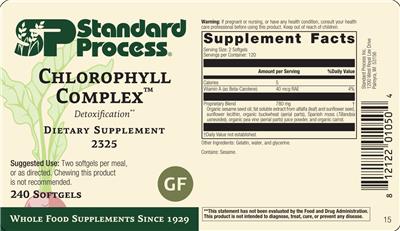
Supplement Facts
The label details for Chlorophyll Complex by SP Standard Process, sourced from the NIH Dietary Supplement Label Database.
Supplement Facts
| Ingredient | Amount | % DV |
|---|---|---|
| Calories | 5 Calorie(s) | -- |
| Vitamin A | 40 mcg RAE | 4% |
| Proprietary Blend | 780 mg | -- |
| Sunflower Lecithin | 0 NP | -- |
| Carrot | 0 NP | -- |
| Spanish Moss | 0 NP | -- |
| Sesame Seed Oil | 0 NP | -- |
| Fat Soluble Extract | 0 NP | -- |
| Buckwheat | 0 NP | -- |
| Pea Vine Juice, Powder | 0 NP | -- |
Other ingredients: Gelatin, Water, Glycerin
Tap any ingredient to jump to its full detail below.
These statements are the manufacturer’s wording, reproduced from the product label — the label is saying it, not HelloPharmacist. We don’t verify or endorse them.
Formulation
Detoxification
GF (gluten free)
FDA Statement of Identity
Dietary Supplement
Suggested/Recommended/Usage/Directions
Suggested Use: Two softgels per meal, or as directed. Chewing this product is not recommended.
General Statements
Whole food supplements since 1929
Precautions
Warning: If pregnant or nursing, or have any health condition, consult your health care professional before using this product.
Keep out of reach of children.
Contains: Sesame.
FDA Disclaimer Statement
This statement has not been evaluated by the Food and Drug Administration. This product is not intended to diagnose, treat, cure, or prevent any disease.
Is this label outdated? Report a formula or label change and our pharmacy team will review it.
Chlorophyll Complex by SP Standard Process label
The label scan from the NIH Dietary Supplement Label Database. Tap to enlarge.
Label images are published by the NIH Dietary Supplement Label Database for the version of this product on file. Always read your actual product label.
View the full label (PDF)The Ingredients in Chlorophyll Complex by SP Standard Process
These are the 8 active ingredients this product is made of. Select any to open its full monograph.
Serving size2 Softgel(s) Dosage formSoftgel Capsule Servings per container120 Amounts shown are per serving.
Most supplement products combine several ingredients, and a medication can interact with the product through any one of them. Each ingredient below shows whether it has known drug interactions.
Vitamin A
Interacts with387 drugs
Vitamin A is an essential nutrient important for vision, skin, immune function, and growth. Most people get enough from a balanced diet, and supplemen...
Vitamin A monograph & interactionsProprietary Blend
- › Sunflower Lecithin
- › Carrot
- › Spanish Moss
- › Sesame Seed Oil
- › Fat Soluble Extract
- › Buckwheat
- › Pea Vine Juice, Powder
Other (inactive) ingredients: Gelatin, Water, Glycerin. These complete the product’s ingredient list but are not active constituents.
Chlorophyll Complex by SP Standard Process Drug Interactions
HelloPharmacist Interaction Report
Chlorophyll Complex by SP Standard Process contains vitamin A, which interacts with multiple medications.
The most serious concern is with retinoids (vitamin A derivatives like isotretinoin and tretinoin)—taking them together can cause vitamin A levels to reach unsafe amounts, with potentially severe toxic effects.
Read the full breakdown — every affected drug type, severity by severity
Vitamin A also interacts with blood thinners like warfarin (a Moderate interaction where high doses raise bleeding risk), hepatotoxic drugs (liver-damaging medications that pose added liver toxicity risk when paired with vitamin A), and tetracycline antibiotics (which together increase the rare risk of pseudotumor cerebri, a type of high pressure inside the skull). Sesame seed oil, another active ingredient here, interacts with blood pressure drugs and diabetes medications (raising the risk of low blood pressure or low blood sugar), CYP2C9 substrates (a group of drugs your liver processes), and tamoxifen (a breast cancer medication).
These are Moderate interactions; sesame also has a Minor interaction with P-glycoprotein substrates, a broad class of medications.
We could not check Spanish Moss, Fat Soluble Extract, or Pea Vine Juice Powder—we hold no interaction data for them. Sunflower Lecithin, Carrot, and Buckwheat, which we did check, show no documented interactions.
Altogether, these interactions span 793 individual medications. Use the search tool on this page to check your exact prescriptions before you start.
Check your own medications below · Editorial policy · How we use AI
Want to check YOUR meds against Chlorophyll Complex?
Ask about interactions with your drugs in plain English — “Can I take it with lisinopril?” — and we find you the answer in seconds, ingredient by ingredient.
Go to the checkerIngredients driving the most interactions
Individual Drug Interactions
The ingredients in Chlorophyll Complex interact with 812 drugs. Click any drug to see the details.
2 of the 8 ingredients in Chlorophyll Complex interact with drugs. Each result below shows which ingredient is responsible. Sesame Seed Oil Vitamin A
6-mercaptopurinePurinethol
How 6-mercaptopurine interacts with Chlorophyll Complex — through 1 ingredient. Tap an ingredient for the detail:
Vitamin AHepatotoxic Drugs Moderate
Interaction Summary
Theoretically, taking high doses of vitamin A in combination with other potentially hepatotoxic drugs might increase the risk of liver disease.
Read the full Vitamin A + 6-mercaptopurine interactionAbacavir Sulfate, Dolutegravir, LamivudineTriumeq
How Abacavir Sulfate, Dolutegravir, Lamivudine interacts with Chlorophyll Complex — through 1 ingredient. Tap an ingredient for the detail:
Vitamin AHepatotoxic Drugs Moderate
Interaction Summary
Theoretically, taking high doses of vitamin A in combination with other potentially hepatotoxic drugs might increase the risk of liver disease.
Read the full Vitamin A + Abacavir Sulfate, Dolutegravir, Lamivudine interactionAbacavir, LamivudineEpzicom
How Abacavir, Lamivudine interacts with Chlorophyll Complex — through 1 ingredient. Tap an ingredient for the detail:
Vitamin AHepatotoxic Drugs Moderate
Interaction Summary
Theoretically, taking high doses of vitamin A in combination with other potentially hepatotoxic drugs might increase the risk of liver disease.
Read the full Vitamin A + Abacavir, Lamivudine interactionAbiraterone
How Abiraterone interacts with Chlorophyll Complex — through 1 ingredient. Tap an ingredient for the detail:
Vitamin AHepatotoxic Drugs Moderate
Interaction Summary
Theoretically, taking high doses of vitamin A in combination with other potentially hepatotoxic drugs might increase the risk of liver disease.
Read the full Vitamin A + Abiraterone interactionAbiraterone AcetateYonsa, Zytiga
How Abiraterone Acetate interacts with Chlorophyll Complex — through 1 ingredient. Tap an ingredient for the detail:
Vitamin AHepatotoxic Drugs Moderate
Interaction Summary
Theoretically, taking high doses of vitamin A in combination with other potentially hepatotoxic drugs might increase the risk of liver disease.
Read the full Vitamin A + Abiraterone Acetate interactionAbrocitinibCibinqo
How Abrocitinib interacts with Chlorophyll Complex — through 1 ingredient. Tap an ingredient for the detail:
Sesame Seed OilCytochrome P450 2c9 (cyp2c9) Substrates Moderate
Interaction Summary
Theoretically, sesame might increase the levels and clinical effects of CYP2C9 substrates.
Read the full Sesame Seed Oil + Abrocitinib interactionAcarboseGlucobay, Prandase, Precose
How Acarbose interacts with Chlorophyll Complex — through 2 ingredients. Tap an ingredient for the detail:
Sesame Seed OilAntidiabetes Drugs Moderate
Interaction Summary
Taking sesame oil with antidiabetes drugs might increase the risk of hypoglycemia.
Read the full Sesame Seed Oil + Acarbose interactionVitamin AHepatotoxic Drugs Moderate
Interaction Summary
Theoretically, taking high doses of vitamin A in combination with other potentially hepatotoxic drugs might increase the risk of liver disease.
Read the full Vitamin A + Acarbose interactionAcebutololRhotral, Sectral
How Acebutolol interacts with Chlorophyll Complex — through 2 ingredients. Tap an ingredient for the detail:
Vitamin AHepatotoxic Drugs Moderate
Interaction Summary
Theoretically, taking high doses of vitamin A in combination with other potentially hepatotoxic drugs might increase the risk of liver disease.
Read the full Vitamin A + Acebutolol interactionSesame Seed OilAntihypertensive Drugs Moderate
Interaction Summary
Taking sesame oil with antihypertensive drugs might increase the risk of hypotension.
Read the full Sesame Seed Oil + Acebutolol interactionAcetaminophenChildren's Tylenol, Children's Tylenol Meltaways, Tylenol, Tylenol Ex Strength
How Acetaminophen interacts with Chlorophyll Complex — through 1 ingredient. Tap an ingredient for the detail:
Vitamin AHepatotoxic Drugs Moderate
Interaction Summary
Theoretically, taking high doses of vitamin A in combination with other potentially hepatotoxic drugs might increase the risk of liver disease.
Read the full Vitamin A + Acetaminophen interactionAcetaminophen, AspirinGemnisyn
How Acetaminophen, Aspirin interacts with Chlorophyll Complex — through 1 ingredient. Tap an ingredient for the detail:
Vitamin AHepatotoxic Drugs Moderate
Interaction Summary
Theoretically, taking high doses of vitamin A in combination with other potentially hepatotoxic drugs might increase the risk of liver disease.
Read the full Vitamin A + Acetaminophen, Aspirin interactionAcetaminophen, Aspirin, CaffeineExcedrin, Excedrin Extra Strength, Excedrin Migraine
How Acetaminophen, Aspirin, Caffeine interacts with Chlorophyll Complex — through 1 ingredient. Tap an ingredient for the detail:
Vitamin AHepatotoxic Drugs Moderate
Interaction Summary
Theoretically, taking high doses of vitamin A in combination with other potentially hepatotoxic drugs might increase the risk of liver disease.
Read the full Vitamin A + Acetaminophen, Aspirin, Caffeine interactionAcetaminophen, Brompheniramine, PhenylpropanolamineDimetapp Cold and Flu
How Acetaminophen, Brompheniramine, Phenylpropanolamine interacts with Chlorophyll Complex — through 1 ingredient. Tap an ingredient for the detail:
Vitamin AHepatotoxic Drugs Moderate
Interaction Summary
Theoretically, taking high doses of vitamin A in combination with other potentially hepatotoxic drugs might increase the risk of liver disease.
Read the full Vitamin A + Acetaminophen, Brompheniramine, Phenylpropanolamine interactionAcetaminophen, ButalbitalAxocet, Bancap, Bucet, Butex Forte, Esgic CF, Orbivan CF +5 more
How Acetaminophen, Butalbital interacts with Chlorophyll Complex — through 1 ingredient. Tap an ingredient for the detail:
Vitamin AHepatotoxic Drugs Moderate
Interaction Summary
Theoretically, taking high doses of vitamin A in combination with other potentially hepatotoxic drugs might increase the risk of liver disease.
Read the full Vitamin A + Acetaminophen, Butalbital interactionAcetaminophen, Butalbital, CaffeineEsgic, Esgic Plus, Fiogesic, Fioricet, Repan, Tecnal +1 more
How Acetaminophen, Butalbital, Caffeine interacts with Chlorophyll Complex — through 1 ingredient. Tap an ingredient for the detail:
Vitamin AHepatotoxic Drugs Moderate
Interaction Summary
Theoretically, taking high doses of vitamin A in combination with other potentially hepatotoxic drugs might increase the risk of liver disease.
Read the full Vitamin A + Acetaminophen, Butalbital, Caffeine interactionAcetaminophen, Butalbital, Caffeine, CodeineEsgic with Codeine, Fioricet w/ Codeine
How Acetaminophen, Butalbital, Caffeine, Codeine interacts with Chlorophyll Complex — through 1 ingredient. Tap an ingredient for the detail:
Vitamin AHepatotoxic Drugs Moderate
Interaction Summary
Theoretically, taking high doses of vitamin A in combination with other potentially hepatotoxic drugs might increase the risk of liver disease.
Read the full Vitamin A + Acetaminophen, Butalbital, Caffeine, Codeine interactionAcetaminophen, Butalbital, CodeineBancap w/ Codeine
How Acetaminophen, Butalbital, Codeine interacts with Chlorophyll Complex — through 1 ingredient. Tap an ingredient for the detail:
Vitamin AHepatotoxic Drugs Moderate
Interaction Summary
Theoretically, taking high doses of vitamin A in combination with other potentially hepatotoxic drugs might increase the risk of liver disease.
Read the full Vitamin A + Acetaminophen, Butalbital, Codeine interactionAcetaminophen, Butalbital, Codeine PhosphatePhrenilin #3
How Acetaminophen, Butalbital, Codeine Phosphate interacts with Chlorophyll Complex — through 1 ingredient. Tap an ingredient for the detail:
Vitamin AHepatotoxic Drugs Moderate
Interaction Summary
Theoretically, taking high doses of vitamin A in combination with other potentially hepatotoxic drugs might increase the risk of liver disease.
Read the full Vitamin A + Acetaminophen, Butalbital, Codeine Phosphate interactionAcetaminophen, Caffeine, Chlorpheniramine, Hydrocodone, PhenylephrineHycomine Compound
How Acetaminophen, Caffeine, Chlorpheniramine, Hydrocodone, Phenylephrine interacts with Chlorophyll Complex — through 1 ingredient. Tap an ingredient for the detail:
Vitamin AHepatotoxic Drugs Moderate
Interaction Summary
Theoretically, taking high doses of vitamin A in combination with other potentially hepatotoxic drugs might increase the risk of liver disease.
Read the full Vitamin A + Acetaminophen, Caffeine, Chlorpheniramine, Hydrocodone, Phenylephrine interactionAcetaminophen, Caffeine, CodeineGesic C15, Gesic C30, Gesic C8, Lenoltec 1, Lenoltec 2, Lenoltec 3 +1 more
How Acetaminophen, Caffeine, Codeine interacts with Chlorophyll Complex — through 1 ingredient. Tap an ingredient for the detail:
Vitamin AHepatotoxic Drugs Moderate
Interaction Summary
Theoretically, taking high doses of vitamin A in combination with other potentially hepatotoxic drugs might increase the risk of liver disease.
Read the full Vitamin A + Acetaminophen, Caffeine, Codeine interactionAcetaminophen, Caffeine, Codeine, SalicylamideCodalan No.1, Codalan No.2, Codalan No.3
How Acetaminophen, Caffeine, Codeine, Salicylamide interacts with Chlorophyll Complex — through 1 ingredient. Tap an ingredient for the detail:
Vitamin AHepatotoxic Drugs Moderate
Interaction Summary
Theoretically, taking high doses of vitamin A in combination with other potentially hepatotoxic drugs might increase the risk of liver disease.
Read the full Vitamin A + Acetaminophen, Caffeine, Codeine, Salicylamide interactionAcetaminophen, Caffeine, DihydrocodeineDHC Plus, Panlor DC, Panlor SS
How Acetaminophen, Caffeine, Dihydrocodeine interacts with Chlorophyll Complex — through 1 ingredient. Tap an ingredient for the detail:
Vitamin AHepatotoxic Drugs Moderate
Interaction Summary
Theoretically, taking high doses of vitamin A in combination with other potentially hepatotoxic drugs might increase the risk of liver disease.
Read the full Vitamin A + Acetaminophen, Caffeine, Dihydrocodeine interactionAcetaminophen, Caffeine, IsomethepteneMigralam
How Acetaminophen, Caffeine, Isometheptene interacts with Chlorophyll Complex — through 1 ingredient. Tap an ingredient for the detail:
Vitamin AHepatotoxic Drugs Moderate
Interaction Summary
Theoretically, taking high doses of vitamin A in combination with other potentially hepatotoxic drugs might increase the risk of liver disease.
Read the full Vitamin A + Acetaminophen, Caffeine, Isometheptene interactionAcetaminophen, Caffeine, PyrilamineMidol Max Strength Menstrual
How Acetaminophen, Caffeine, Pyrilamine interacts with Chlorophyll Complex — through 1 ingredient. Tap an ingredient for the detail:
Vitamin AHepatotoxic Drugs Moderate
Interaction Summary
Theoretically, taking high doses of vitamin A in combination with other potentially hepatotoxic drugs might increase the risk of liver disease.
Read the full Vitamin A + Acetaminophen, Caffeine, Pyrilamine interactionAcetaminophen, Chlorpheniramine Maleate, Dextromethorphan HbrVicks Formula 44M Cough, Cold & Flu Relief
How Acetaminophen, Chlorpheniramine Maleate, Dextromethorphan Hbr interacts with Chlorophyll Complex — through 1 ingredient. Tap an ingredient for the detail:
Vitamin AHepatotoxic Drugs Moderate
Interaction Summary
Theoretically, taking high doses of vitamin A in combination with other potentially hepatotoxic drugs might increase the risk of liver disease.
Read the full Vitamin A + Acetaminophen, Chlorpheniramine Maleate, Dextromethorphan Hbr interactionAcetaminophen, Chlorpheniramine, Codeine, PhenylephrineColrex
How Acetaminophen, Chlorpheniramine, Codeine, Phenylephrine interacts with Chlorophyll Complex — through 1 ingredient. Tap an ingredient for the detail:
Vitamin AHepatotoxic Drugs Moderate
Interaction Summary
Theoretically, taking high doses of vitamin A in combination with other potentially hepatotoxic drugs might increase the risk of liver disease.
Read the full Vitamin A + Acetaminophen, Chlorpheniramine, Codeine, Phenylephrine interactionAcetaminophen, Chlorpheniramine, DextromethorphanCoricidin II Extra Strength Cold and Flu
How Acetaminophen, Chlorpheniramine, Dextromethorphan interacts with Chlorophyll Complex — through 1 ingredient. Tap an ingredient for the detail:
Vitamin AHepatotoxic Drugs Moderate
Interaction Summary
Theoretically, taking high doses of vitamin A in combination with other potentially hepatotoxic drugs might increase the risk of liver disease.
Read the full Vitamin A + Acetaminophen, Chlorpheniramine, Dextromethorphan interactionAcetaminophen, Chlorpheniramine, Dextromethorphan HydrobromideCoricidin HBP Maximum Strength Flu
How Acetaminophen, Chlorpheniramine, Dextromethorphan Hydrobromide interacts with Chlorophyll Complex — through 1 ingredient. Tap an ingredient for the detail:
Vitamin AHepatotoxic Drugs Moderate
Interaction Summary
Theoretically, taking high doses of vitamin A in combination with other potentially hepatotoxic drugs might increase the risk of liver disease.
Read the full Vitamin A + Acetaminophen, Chlorpheniramine, Dextromethorphan Hydrobromide interactionAcetaminophen, Chlorpheniramine, Dextromethorphan, PhenylpropanolamineMulti Symptom Cold Relief
How Acetaminophen, Chlorpheniramine, Dextromethorphan, Phenylpropanolamine interacts with Chlorophyll Complex — through 1 ingredient. Tap an ingredient for the detail:
Vitamin AHepatotoxic Drugs Moderate
Interaction Summary
Theoretically, taking high doses of vitamin A in combination with other potentially hepatotoxic drugs might increase the risk of liver disease.
Read the full Vitamin A + Acetaminophen, Chlorpheniramine, Dextromethorphan, Phenylpropanolamine interactionAcetaminophen, Chlorpheniramine, Dextromethorphan, PseudoephedrineChildren's Tylenol Cold Plus Cough, Tylenol Cold Ex Strength
How Acetaminophen, Chlorpheniramine, Dextromethorphan, Pseudoephedrine interacts with Chlorophyll Complex — through 1 ingredient. Tap an ingredient for the detail:
Vitamin AHepatotoxic Drugs Moderate
Interaction Summary
Theoretically, taking high doses of vitamin A in combination with other potentially hepatotoxic drugs might increase the risk of liver disease.
Read the full Vitamin A + Acetaminophen, Chlorpheniramine, Dextromethorphan, Pseudoephedrine interactionAcetaminophen, Chlorpheniramine, Guaifenesin, Phenylephrine, SalicylamideRhinogesic GG
How Acetaminophen, Chlorpheniramine, Guaifenesin, Phenylephrine, Salicylamide interacts with Chlorophyll Complex — through 1 ingredient. Tap an ingredient for the detail:
Vitamin AHepatotoxic Drugs Moderate
Interaction Summary
Theoretically, taking high doses of vitamin A in combination with other potentially hepatotoxic drugs might increase the risk of liver disease.
Read the full Vitamin A + Acetaminophen, Chlorpheniramine, Guaifenesin, Phenylephrine, Salicylamide interactionEach ingredient & the kinds of drugs it affects
For each ingredient in Chlorophyll Complex with known interactions, here are the types of medications they can affect. Open any type for the detail — or search your exact drug in the checker above.
Sesame Seed Oil
Antidiabetes Drugs
Taking sesame oil with antidiabetes drugs might increase the risk of hypoglycemia.
Clinical studies show that sesame oil can decrease plasma glucose and glycated hemoglobin (HbA1c) levels. Some clinical research in patients taking glibenclamide shows that using sesame oil or a blend of sesame oil and rice bran oil in place of other oil for cooking reduces plasma glucose more than glibenclamide alone. Monitor blood glucose levels closely. Dose adjustments might be necessary.
Antihypertensive Drugs
Taking sesame oil with antihypertensive drugs might increase the risk of hypotension.
Clinical research shows that replacing other cooking oil with sesame oil can lower systolic blood pressure (SBP) and diastolic blood pressure (DBP) in patients with or without hypertension. There is also some evidence that sesame oil has additive effects in patients also taking atenolol, nifedipine, and/or hydrochlorothiazide. In patients using nifedipine, using a blend of sesame oil and rice bran oil for cooking reduces both SBP and DBP more than nifedipine alone.
Cytochrome P450 2C9 (Cyp2C9) Substrates
Theoretically, sesame might increase the levels and clinical effects of CYP2C9 substrates.
In vitro, sesame inhibits CYP2C9. However, this interaction has not been reported in humans.
Tamoxifen (Nolvadex)
Theoretically, sesame might interfere with tamoxifen.
In animal research, sesame seed reduces the tumor-inhibitory effect of tamoxifen by reducing apoptosis and increasing proliferation. This interaction has not been reported in humans.
P-Glycoprotein Substrates
Theoretically, sesame might alter the transport of P-glycoprotein substrates.
In vitro research suggests that sesamin, a constituent of sesame, can inhibit the multi-drug transporter protein, P-glycoprotein. However, this interaction has not been reported in humans.
Vitamin A
Retinoids
Concomitant use of retinoids with vitamin A supplements might produce supratherapeutic vitamin A levels.
Retinoids, which are vitamin A derivatives, could have additive toxic effects when taken with vitamin A supplements.
Hepatotoxic Drugs
Theoretically, taking high doses of vitamin A in combination with other potentially hepatotoxic drugs might increase the risk of liver disease.
The tolerable upper intake level (UL) is the highest level of intake that is likely to pose no risk of adverse effects. Doses of vitamin A above the UL can cause hepatotoxicity, ranging from elevated liver enzymes to liver failure.
Tetracycline Antibiotics
Theoretically, taking tetracycline antibiotics with high doses of vitamin A can increase the risk of pseudotumor cerebri.
Benign intracranial hypertension (pseudotumor cerebri) can occur with tetracyclines and with acute or chronic vitamin A toxicity. Case reports suggest that taking tetracyclines and vitamin A concurrently can increase the risk of this condition. Avoid high doses of vitamin A in people taking tetracyclines chronically.
Warfarin (Coumadin)
Theoretically, high doses of vitamin A could increase the risk of bleeding with warfarin.
Vitamin A toxicity is associated with hemorrhage and hypoprothrombinemia, possibly due to vitamin K antagonism. Advise patients taking warfarin to avoid doses of vitamin A above the tolerable upper intake level of 10,000 IU/day for adults.
Brand information
Manufacturer and brand details for Chlorophyll Complex, from the product label.
SP Standard Process
See all SP Standard Process products- Name
- Standard Process Inc.
- Street Address
- 1200 West Royal Lee Drive
- City
- Palmyra
- State
- WI
- ZipCode
- 53156
Chlorophyll Complex by SP Standard Process: Common Questions
Does Chlorophyll Complex by SP Standard Process interact with any medications?
How can one product interact with so many drugs?
Where does this information come from?
Is vitamin A safe during pregnancy?
What does sesame seed oil do in this product?
Can I take this if I'm allergic to sesame?
What are the most common side effects?
Will this help with my skin?
Is there anything in here I can't check for drug interactions?
Written and reviewed by the HelloPharmacist editorial staff. Our editorial policy
Not sure if Chlorophyll Complex is safe with your meds?
Our pharmacists answer your medication & supplement questions — free.
Label information is sourced from the NIH Dietary Supplement Label Database and reflects the product version on file; always read your actual product label. This page is for education only and is not a substitute for professional medical advice. Confirm with your pharmacist or doctor before combining supplements and medications.
The Full Monographs Behind Chlorophyll Complex’s Ingredients
Every ingredient we hold a full HelloPharmacist monograph for — uses, evidence, safety, and the complete interaction list.
Vitamin A
Interacts with 387 drugsVitamin A is an essential nutrient important for vision, skin, immune function, and growth. Most people get enough from a balanced diet, and supplements are mainly useful for correcting a tr...
Read the full Vitamin A monograph → Herb & supplement monographLecithin
Lecithin is a natural fatty substance found in foods and made by the body that is widely used as a supplement and food emulsifier. Evidence supporting most of its health claims is limited, t...
Read the full Lecithin monograph → Herb & supplement monographCarrot
Carrot is a common food vegetable that is a rich source of beta-carotene (which the body turns into vitamin A) and other nutrients. Eating carrots is safe and nutritious for most people, but...
Read the full Carrot monograph → Herb & supplement monographSesame
Interacts with 528 drugsSesame is a nutritious seed and oil widely used in cooking and traditional medicine, and it provides healthy fats, fiber, and antioxidant compounds called lignans. Some early research sugges...
Read the full Sesame monograph → Herb & supplement monographBuckwheat
Buckwheat is a nutritious, naturally gluten-free seed that is high in fiber, protein, and antioxidants like rutin. As a food it can be part of a heart-healthy diet, but evidence that buckwhe...
Read the full Buckwheat monograph →Sources & How We Checked
Chlorophyll Complex's label data comes from the NIH Dietary Supplement Label Database; the ingredient interaction data is from the Natural Medicines database, reviewed by our pharmacists.
- NIH Dietary Supplement Label Database (DSLD) — The official product label on file for this supplement.
- Natural Medicines (Therapeutic Research Center) — Evidence-graded clinical reference behind the ingredient interaction data.
Content is written and reviewed by licensed HelloPharmacist pharmacists. See our data sources and editorial standards for how this information is built and checked.
The 119 references behind this product’s interaction data
Every citation that drives the interaction findings for this product’s ingredients, from the evidence-graded Natural Medicines (TRC Healthcare) database. Open an ingredient to browse its citations — links open the study on PubMed or the publisher’s site.
Vitamin A 31 references
- McEvoy GK, ed. AHFS Drug Information. Bethesda, MD: American Society of Health-System Pharmacists, 1998.
- Griffiths JK. The vitamin A paradox. J Pediatr 2000;137:604-7.. PubMed
- Hardman JG, Limbird LL, Molinoff PB, eds. Goodman and Gillman's The Pharmacological Basis of Therapeutics, 9th ed. New York, NY: McGraw-Hill, 1996.
- Hansten PD, Horn JR. Drug Interactions Analysis and Management. Vancouver, WA: Applied Therapeutics Inc., 1997 and updates.
- FDA Talk Paper. Vitamin A and birth defects (T95-56). Food and Drug Administration, U.S. Department of Health and Human Services, Rockville, MD. October 6, 1995.
- Russell RM. The vitamin A spectrum: from deficiency to toxicity. Am J Clin Nutr 2000;71:878-84. PubMed
- Food and Nutrition Board, Institute of Medicine. Dietary Reference Intakes for Vitamin A, Vitamin K, Arsenic, Boron, Chromium, Copper, Iodine, Iron, Manganese, Molybdenum, Nickel, Silicon, Vanadium, and Zinc. Washington, DC: National Academy Press, 2002.
- Feskanich D, Singh V, Willett WC, Colditz GA. Vitamin A intake and hip fractures among postmenopausal women. JAMA 2002;287:47-54. PubMed
- Melhus H, Michaelsson K, Kindmark A, et al. Excessive dietary intake of vitamin A is associated with reduced bone mineral density and increased risk for hip fracture. Ann Intern Med 1998;129:770-8. PubMed
- Michaelsson K, Lithell H, Vessby B, Melhus H. Serum retinol levels and the risk of fracture. N Engl J Med 2003;348:287-94.. PubMed
- Botterweck AA, van den Brandt PA, Goldbohm RA. Vitamins, carotenoids, dietary fiber, and the risk of gastric carcinoma: results from a prospective study after 6.3 years of follow-up. Cancer 2000;88:737-48.. DOI
- Meyskens FL Jr, Graham V, Chvapil M, et al. A phase I trial of beta-all-trans-retinoic acid delivered via a collagen sponge and a cervical cap for mild or moderate intraepithelial cervical neoplasia. J Natl Cancer Inst 1983;71:921-5..
- Hathcock JN, Hattan DG, Jenkins MY, et al. Evaluation of vitamin A toxicity. Am J Clin Nutr 1990;52:183-202.. PubMed
- Walters BN, Gubbay SS. Tetracycline and benign intracranial hypertension: report of five cases. Br Med J 1981;282:19-20.. PubMed
- Pearson MG, Littlewood SM, Bowden AN. Tetracycline and benign intracranial hypertension (letter). Br Med J 1981;282:568-9.. PubMed
- Azais-Braesco V, Pascal G. Vitamin A in pregnancy: requirements and safety limits. Am J Clin Nutr 2000;71:1325S-33S. PubMed
- Smedts HP, de Vries JH, Rakhshandehroo M, et al. High maternal vitamin E intake by diet or supplements is associated with congenital heart defects in the offspring. BJOG 2009;116:416-23. PubMed
- Grotto, I., Mimouni, M., Gdalevich, M., and Mimouni, D. Vitamin A supplementation and childhood morbidity from diarrhea and respiratory infections: a meta-analysis. J Pediatr 2003;142(3):297-304. PubMed
- Mahalanabis, D., Lahiri, M., Paul, D., Gupta, S., Gupta, A., Wahed, M. A., and Khaled, M. A. Randomized, double-blind, placebo-controlled clinical trial of the efficacy of treatment with zinc or vitamin A in infants and young children with severe acute l
- Long, K. Z., Montoya, Y., Hertzmark, E., Santos, J. I., and Rosado, J. L. A double-blind, randomized, clinical trial of the effect of vitamin A and zinc supplementation on diarrheal disease and respiratory tract infections in children in Mexico City, Mex
- Fritz, H., Kennedy, D., Fergusson, D., Fernandes, R., Doucette, S., Cooley, K., Seely, A., Sagar, S., Wong, R., and Seely, D. Vitamin A and retinoid derivatives for lung cancer: a systematic review and meta analysis. PLoS.One. 2011;6(6):e21107. PubMed
- Mayo-Wilson, E., Imdad, A., Herzer, K., Yakoob, M. Y., and Bhutta, Z. A. Vitamin A supplements for preventing mortality, illness, and blindness in children aged under 5: systematic review and meta-analysis. BMJ 2011;343:d5094. PubMed
- Mazumder S, Taneja S, Bhatia K, Yoshida S, Kaur J, Dube B, Toteja GS, Bahl R, Fontaine O, Martines J, Bhandari N; Neovita India Study Group. Efficacy of early neonatal supplementation with vitamin A to reduce mortality in infancy in Haryana, India (Neovit
- Baineni R, Gulati R, Delhi CK. Vitamin A toxicity presenting as bone pain. Arch Dis Child. 2017;102(6):556-8. PubMed
- Darlow BA, Graham PJ, Rojas-Reyes MX. Vitamin A supplementation to prevent mortality and short- and long-term morbidity in very low birth weight infants. Cochrane Database Syst Rev. 2016;(8):CD000501. PubMed
- Haider BA, Sharma R, Bhutta ZA. Neonatal vitamin A supplementation for the prevention of mortality and morbidity in term neonates in low and middle income countries. Cochrane Database Syst Rev. 2017;2:CD006980. PubMed
- Mohammad YM, Raslan IR, Al-Hussain FA. Idiopathic Intracranial Hypertension Induced by Topical Application of Vitamin A. J Neuroophthalmol. 2016;36(4):412-3. PubMed
- Masnadi Shirazi K, Nikniaz Z, Masnadi Shirazi A, Rohani M. Vitamin A supplementation decreases disease activity index in patients with ulcerative colitis: A randomized controlled clinical trial. Complement Ther Med. 2018 Dec;41:215-219. PubMed
- Ding Y, Hu P, Yang Y, et al. Impact of maternal daily oral low-dose vitamin A supplementation on the mother-infant pair: a randomised placebo-controlled trial in China. Nutrients 2021;13(7):2370. PubMed
- Knapik JJ, Hoedebecke SS. Vitamin A and bone fractures: systematic review and meta-analysis. J Spec Oper Med 2021;21(2):100-7. PubMed
- Imdad A, Mayo-Wilson E, Haykal MR, et al. Vitamin A supplementation for preventing morbidity and mortality in children from six months to five years of age. Cochrane Database Syst Rev 2022;3(3):CD008524. PubMed
Lecithin 9 references
- Buchman AL, Dubin M, Jenden D, et al. Lecithin increases plasma free choline and decreases hepatic steatosis in long-term total parenteral nutrition patients. Gastroenterology 1992;102:1363-70.
- Food and Nutrition Board, Institute of Medicine. Dietary Reference Intakes for Thiamin, Riboflavin, Niacin, Vitamin B6, Folate, Vitamin B12, Pantothenic Acid, Biotin, and Choline (2000). Washington, DC: National Academy Press, 2000. Available at: http://b
- Chatellier G, Lacomblez L. Tacrine (tetrahydroaminoacridine; THA) and lecithin in senile dementia of the Alzheimer type: a multicentre trial. Groupe Francais d'Etude de la Tetrahydroaminoacridine. BMJ 1990;300:495-9.
- Gelenberg AJ, Dorer DJ, Wojcik JD, et al. A crossover study of lecithin treatment of tardive dyskinesia. J Clin Psychiatry 1990;51:149-53.
- Little A, Levy R, Chuaqui-Kidd P, Hand D. A double-blind, placebo controlled trial of high-dose lecithin in Alzheimer's disease. J Neurol Neurosurg Psychiatry 1985;48:736-42. PubMed
- Palm M, Moneret-Vautrin DA, Kanny G, et al. Food allergy to egg and soy lecithins. Allergy 1999;54:1116-7. PubMed
- Drachman DA, Glosser G, Fleming P, et al. Memory decline in the aged: treatment with lecithin and physostigmine. Neurology 1982;32:944-50. PubMed
- Gelenberg, A. J., Doller-Wojcik, J. C., and Growdon, J. H. Choline and lecithin in the treatment of tardive dyskinesia: preliminary results from a pilot study. Am J Psychiatry 1979;136(6):772-776. PubMed
- Electronic Code of Federal Regulations. Title 21, Chapter 1, Subchapter B, Part 184: Direct food substances affirmed as Generally Recognized as Safe. Subpart B - listing of specific substances affirmed as GRAS. Sec. 184.1400 Lecithin. Available at: https:
Carrot 14 references
- Electronic Code of Federal Regulations. Title 21. Part 182 -- Substances Generally Recognized As Safe. Available at: https://www.accessdata.fda.gov/scripts/cdrh/cfdocs/cfcfr/CFRSearch.cfm?CFRPart=182
- Wetzel WE, Lehn W, Grieb A. [Carotene jaundice in infants with "sugar nursing bottle syndrome"]. Monatsschr Kinderheilkd 1989;137(10):659-61.
- el-Arab AE, Khalil F, Hussein L. Vitamin A deficiency among preschool children in a rural area of Egypt: the results of dietary assessment and biochemical assay. Int J Food Sci Nutr 2002;53(6):465-74. PubMed
- Helbling A. [Food allergy]. Ther Umsch 1994;51(1):31-7.
- Kaplan R. Carrot addiction. Aust N Z J Psychiatry 1996;30(5):698-700.
- Ncube, T. N., Greiner, T., Malaba, L. C., and Gebre-Medhin, M. Supplementing lactating women with puréed papaya and grated carrots improved vitamin A status in a placebo-controlled trial. J Nutr 2001;131(5):1497-1502. PubMed
- Mullins M, Froelke BR, Rivera MR. Effect of delayed activated charcoal on acetaminophen concentration after simulated overdose of oxycodone and acetaminophen. Clin Toxicol (Phila) 2009;47(2):112-5. PubMed
- Kawai M, Tamagawa-Mineoka R, Hagura A, Masuda K, Katoh N. Allergic contact dermatitis due to carrots. J Dermatol 2014;41(8):753-4. PubMed
- Xu X, Cheng Y, Li S, et al. Dietary carrot consumption and the risk of prostate cancer. Eur J Nutr 2014;53(8):1615-23. PubMed
- Donaldson MS, Speight N, Loomis S. Fibromyalgia syndrome improved using a mostly raw vegetarian diet: an observational study. BMC Complement Altern Med. 2001;1:7. PubMed
- Chen H, Shao F, Zhang F, Miao Q. Association between dietary carrot intake and breast cancer: A meta-analysis. Medicine (Baltimore). 2018;97(37):e12164. PubMed
- Bosanac SS, Clark AK, Sivamani RK. Phytophotodermatitis related to carrot extract-containing sunscreen. Dermatol Online J. 2018;24(1). pii: 13030/qt2nv2d1n0. DOI
- Deding U, Baatrup G, Christensen LP, Kobaek-Larsen M. Carrot Intake and Risk of Colorectal Cancer: A Prospective Cohort Study of 57,053 Danes. Nutrients 2020;12(2):332. PubMed
- Sánchez-Guerrero IM, Nieto A, Meseguer J, et al. Occupational Rhinoconjunctivitis Induced by Unusual Allergens of Carrot. J Investig Allergol Clin Immunol 2020;30(3):204-206. PubMed
Sesame 53 references
- von Moltke LL, Weemhoff JL, Bedir E, et al. Inhibition of human cytochromes P450 by components of Ginkgo biloba. J Pharm Pharmacol 2004;56:1039-44.
- Sankar, D., Sambandam, G., Ramakrishna, Rao M., and Pugalendi, K. V. Modulation of blood pressure, lipid profiles and redox status in hypertensive patients taking different edible oils. Clin Chim Acta 2005;355(1-2):97-104. PubMed
- Sankar, D., Rao, M. R., Sambandam, G., and Pugalendi, K. V. A pilot study of open label sesame oil in hypertensive diabetics. J Med Food 2006;9(3):408-412. PubMed
- Sankar, D., Rao, M. R., Sambandam, G., and Pugalendi, K. V. Effect of sesame oil on diuretics or Beta-blockers in the modulation of blood pressure, anthropometry, lipid profile, and redox status. Yale J Biol.Med. 2006;79(1):19-26.
- Sacco, S. M., Chen, J., Power, K. A., Ward, W. E., and Thompson, L. U. Lignan-rich sesame seed negates the tumor-inhibitory effect of tamoxifen but maintains bone health in a postmenopausal athymic mouse model with estrogen-responsive breast tumors. Menop PubMed
- Sacco, S. M., Power, K. A., Chen, J., Ward, W. E., and Thompson, L. U. Interaction of sesame seed and tamoxifen on tumor growth and bone health in athymic mice. Exp Biol Med (Maywood) 2007;232(6):754-761.
- Hsiao, E. S., Lin, L. J., Li, F. Y., Wang, M. M., Liao, M. Y., and Tzen, J. T. Gene families encoding isoforms of two major sesame seed storage proteins, 11S globulin and 2S albumin. J Agric Food Chem 2006;54(25):9544-9550. PubMed
- Ramesh, B., Saravanan, R., and Pugalendi, K. V. Influence of sesame oil on blood glucose, lipid peroxidation, and antioxidant status in streptozotocin diabetic rats. J Med Food 2005;8(3):377-381. PubMed
- Panizzolo, C., Tura, M., and Barbato, A. Anaphylaxis to sesame paste. Eur Ann Allergy Clin Immunol 2005;37(1):34-35.
- Leduc, V., Moneret-Vautrin, D. A., Tzen, J. T., Morisset, M., Guerin, L., and Kanny, G. Identification of oleosins as major allergens in sesame seed allergic patients. Allergy 2006;61(3):349-356. PubMed
- Agne, P. S., Bidat, E., Agne, P. S., Rance, F., and Paty, E. Sesame seed allergy in children. Eur Ann Allergy Clin Immunol 2004;36(8):300-305.
- Dalal, I., Binson, I., Levine, A., Somekh, E., Ballin, A., and Reifen, R. The pattern of sesame sensitivity among infants and children. Pediatr Allergy Immunol 2003;14(4):312-316. PubMed
- Moneret-Vautrin, D. A., Kanny, G., and Lagrange, A. [Occupational asthma caused by organic substances]. Rev Med Interne 1994;15 Suppl 2:216s-225s.
- Keskinen, H., Ostman, P., Vaheri, E., Tarvainen, K., Grenquist-Norden, B., Karppinen, O., and Nordman, H. A case of occupational asthma, rhinitis and urticaria due to sesame seed. Clin Exp Allergy 1991;21(5):623-624. PubMed
- Alday, E., Curiel, G., Lopez-Gil, M. J., Carreno, D., and Moneo, I. Occupational hypersensitivity to sesame seeds. Allergy 1996;51(1):69-70. DOI
- Kubo, Y., Nonaka, S., and Yoshida, H. Contact sensitivity to unsaponifiable substances in sesame oil. Contact Dermatitis 1986;15(4):215-217. PubMed
- Steurich, F. [Allergy to sesame seeds]. Pneumologie 1989;43(12):710-714.
- Morisset, M., Moneret-Vautrin, D. A., Kanny, G., Guenard, L., Beaudouin, E., Flabbee, J., and Hatahet, R. Thresholds of clinical reactivity to milk, egg, peanut and sesame in immunoglobulin E-dependent allergies: evaluation by double-blind or single-blind
- Tsai, H. J., Kumar, R., Pongracic, J., Liu, X., Story, R., Yu, Y., Caruso, D., Costello, J., Schroeder, A., Fang, Y., Demirtas, H., Meyer, K. E., O'Gorman, M. R., and Wang, X. Familial aggregation of food allergy and sensitization to food allergens: a fam
- James, C., Williams-Akita, A., Rao, Y. A., Chiarmonte, L. T., and Scheider, A. T. Sesame seed anaphylaxis. N Y State J Med 1991;91(10):457-458.
- Chiu, J. T. and Haydik, I. B. Sesame seed oil anaphylaxis. J Allergy Clin Immunol 1991;88(3 Pt 1):414-415. PubMed
- Asero, R., Mistrello, G., Roncarolo, D., Antoniotti, P. L., and Falagiani, P. A case of sesame seed-induced anaphylaxis. Allergy 1999;54(5):526-527.
- Pajno, G. B., Passalacqua, G., Magazzu, G., Barberio, G., Vita, D., and Canonica, G. W. Anaphylaxis to sesame. Allergy 2000;55(2):199-201. PubMed
- Neering, H., Vitanyi, B. E., Malten, K. E., van Ketel, W. G., and van Dijk, E. Allergens in sesame oil contact dermatitis. Acta Derm Venereol 1975;55(1):31-34. DOI
- Caminiti, L., Vita, D., Passalacqua, G., Arrigo, T., Barberi, S., Lombardo, F., and Pajno, G. B. Tahini, a little known sesame-containing food, as an unexpected cause of severe allergic reaction. J Investig Allergol Clin Immunol 2006;16(5):308-310.
- Phan, T. G., Strasser, S. I., Koorey, D., McCaughan, G. W., Rimmer, J., Dunckley, H., Goddard, L., and Adelstein, S. Passive transfer of nut allergy after liver transplantation. Arch Intern Med 2003;163(2):237-239. PubMed
- Oiso, N., Yamadori, Y., Higashimori, N., Kawara, S., and Kawada, A. Allergic contact dermatitis caused by sesame oil in a topical Chinese medicine, shi-un-ko. Contact Dermatitis 2008;58(2):109.
- VAN Dijk, E., Dijk, E., Neering, H., and Vitanyi, B. E. Contact hypersensitivity to sesame oil in patients with leg ulcers and eczema. Acta Derm Venereol 1973;53(2):133-135. DOI
- Beyer, K., Bardina, L., Grishina, G., and Sampson, H. A. Identification of sesame seed allergens by 2-dimensional proteomics and Edman sequencing: seed storage proteins as common food allergens. J Allergy Clin Immunol 2002;110(1):154-159. PubMed
- Koopman, M., Richter, C., Parren, R. J., and Janssen, M. Bodybuilding, sesame oil and vasculitis. Rheumatology (Oxford) 2005;44(9):1135. PubMed
- Kagi, M. K. and Wuthrich, B. Falafel burger anaphylaxis due to sesame seed allergy. Ann Allergy 1993;71(2):127-129.
- Hayakawa, R., Matsunaga, K., Suzuki, M., Hosokawa, K., Arima, Y., Shin, C. S., and Yoshida, M. Is sesamol present in sesame oil? Contact Dermatitis 1987;17(3):133-135.
- Malish, D., Glovsky, M. M., Hoffman, D. R., Ghekiere, L., and Hawkins, J. M. Anaphylaxis after sesame seed ingestion. J Allergy Clin Immunol 1981;67(1):35-38. PubMed
- Fremont, S., Zitouni, N., Kanny, G., Veneri, V., Metche, M., Moneret-Vautrin, D. A., and Nicolas, J. P. Allergenicity of some isoforms of white sesame proteins. Clin Exp Allergy 2002;32(8):1211-1215. PubMed
- Pastorello, E. A., Varin, E., Farioli, L., Pravettoni, V., Ortolani, C., Trambaioli, C., Fortunato, D., Giuffrida, M. G., Rivolta, F., Robino, A., Calamari, A. M., Lacava, L., and Conti, A. The major allergen of sesame seeds (Sesamum indicum) is a 2S albu
- Wolff, N., Cogan, U., Admon, A., Dalal, I., Katz, Y., Hodos, N., Karin, N., and Yannai, S. Allergy to sesame in humans is associated primarily with IgE antibody to a 14 kDa 2S albumin precursor. Food Chem Toxicol 2003;41(8):1165-1174. PubMed
- Wolff, N., Yannai, S., Karin, N., Levy, Y., Reifen, R., Dalal, I., and Cogan, U. Identification and characterization of linear B-cell epitopes of beta-globulin, a major allergen of sesame seeds. J Allergy Clin Immunol 2004;114(5):1151-1158.
- Navuluri, L., Parvataneni, S., Hassan, H., Birmingham, N. P., Kelly, C., and Gangur, V. Allergic and anaphylactic response to sesame seeds in mice: identification of Ses i 3 and basic subunit of 11s globulins as allergens. Int Arch Allergy Immunol 2006;14 PubMed
- Beyer, K., Grishina, G., Bardina, L., and Sampson, H. A. Identification of 2 new sesame seed allergens: Ses i 6 and Ses i 7. J Allergy Clin Immunol 2007;119(6):1554-1556. PubMed
- Moreno, F. J., Rubio, L. A., Olano, A., and Clemente, A. Uptake of 2S albumin allergens, Ber e 1 and Ses i 1, across human intestinal epithelial Caco-2 cell monolayers. J Agric Food Chem 2006;54(22):8631-8639. PubMed
- Moreno, F. J., Maldonado, B. M., Wellner, N., and Mills, E. N. Thermostability and in vitro digestibility of a purified major allergen 2S albumin (Ses i 1) from white sesame seeds (Sesamum indicum L.). Biochim Biophys Acta 2005;1752(2):142-153. PubMed
- Okura, T., Ibe, M., Umegaki, K., Shinozuka, K., and Yamada, S. Effects of dietary ingredients on function and expression of P-glycoprotein in human intestinal epithelial cells. Biol Pharm Bull 2010;33(2):255-259. PubMed
- Nabekura, T., Yamaki, T., Ueno, K., and Kitagawa, S. Inhibition of P-glycoprotein and multidrug resistance protein 1 by dietary phytochemicals. Cancer Chemother Pharmacol 2008;62(5):867-873. PubMed
- Devarajan S, Chatterjee B, Urata H, et al. A blend of sesame and rice bran oils lowers hyperglycemia and improves the lipids. Am J Med. 2016;129(7):731-9. PubMed
- Khosravi-Boroujeni H, Nikbakht E, Natanelov E, Khalesi S. Can sesame consumption improve blood pressure? A systematic review and meta-analysis of controlled trials. J Sci Food Agric. 2017;97(10):3087-3094. PubMed
- Devarajan S, Singh R, Chatterjee B, Zhang B, Ali A. A blend of sesame oil and rice bran oil lowers blood pressure and improves the lipid profile in mild-to-moderate hypertensive patients. J Clin Lipidol. 2016;10(2):339-49. PubMed
- Warren CM, Chadha AS, Sicherer SH. Prevalence and severity of sesame allergy in the United States. JAMA Netw Open. 2019;2(8):e199144. PubMed
- Sillcox C, Gabrielli S, Clarke AE, et al. Sesame-induced anaphylaxis in pediatric patients from the cross-Canada anaphylaxis registry. Ann Allergy Asthma Immunol 2022;129(3):342-346. PubMed
- Yargholi A, Najafi MH, Zareian MA, Hawkins J, Shirbeigi L, Ayati MH. The effects of sesame consumption on glycemic control in adults: A systematic review and meta-analysis of randomized clinical trial. Evid Based Complement Alternat Med 2021;2021:2873534. PubMed
- Sohouli MH, Haghshenas N, Hernández-Ruiz Á, Shidfar F. Consumption of sesame seeds and sesame products has favorable effects on blood glucose levels but not on insulin resistance: A systematic review and meta-analysis of controlled clinical trials. Phytot PubMed
- Atefi M, Entezari MH, Vahedi H, Hassanzadeh A. The effects of sesame oil on metabolic biomarkers: a systematic review and meta-analysis of clinical trials. J Diabetes Metab Disord 2022;21(1):1065-1080. PubMed
- Khani B, Bidgoli SR, Moattar F, Hassani H. Effect of sesame on sperm quality of infertile men. J Res Med Sci. 2013;18(3):184-7.
- Huang H, Zhou G, Pu R, Cui Y, Liao D. Clinical evidence of dietary supplementation with sesame on cardiovascular risk factors: An updated meta-analysis of randomized controlled trials. Crit Rev Food Sci Nutr. 2022;62(20):5592-5602. PubMed
Buckwheat 12 references
- Schiffner R, Przybilla B, Burgdorff T, et al. Anaphylaxis to buckwheat. Allergy 2001;56:1020-1. PubMed
- Lee SY, Lee KS, Hong CH, Lee KY. Three cases of childhood nocturnal asthma due to buckwheat allergy. Allergy 2001;56:763-6. PubMed
- Wieslander G, Norback D. Buckwheat allergy. Allergy 2001;56:703-4.
- Skrabanja V, Liljeberg Elmstahl HG, Kreft I, Bjorck IM. Nutritional properties of starch in buckwheat products: studies in vitro and in vivo. J Agric Food Chem 2001;49:490-6. PubMed
- Bijlani RL, Gandhi BM, Gupta MC, et al. Effect of whole buckwheat (Fagopyrum esculentum) flour supplementation on lipid profile & glucose tolerance. Indian J Med Res 1985;81:162-8.
- Fritz SB, Gold BL. Buckwheat pillow-induced asthma and allergic rhinitis. Ann Allergy Asthma Immunol 2003;90:355-8. PubMed
- Ihme, N., Kiesewetter, H., Jung, F., Hoffmann, K. H., Birk, A., Muller, A., and Grutzner, K. I. Leg oedema protection from a buckwheat herb tea in patients with chronic venous insufficiency: a single-centre, randomised, double-blind, placebo-controlled c
- Archimowicz-Cyrylowska B and et al. Clinical effect of buckwheat herb, Ruscus extract and troxerutin on retinopathy and lipids in diabetic patients. Phytother Res 1996;10(659):62. DOI
- Cifuentes L, Mistrello G, Amato S, et al. Identification of cross-reactivity between buckwheat and coconut. Ann Allergy Asthma Immunol. 2015 Dec;115(6):530-2. PubMed
- De Maat-Bleeker F, Stapel SO. Cross-reactivity between buckwheat and latex. Allergy. 1998 May;53(5):538-9. PubMed
- Qiu J, Liu Y, Yue Y, Qin Y, Li Z. Dietary tartary buckwheat intake attenuates insulin resistance and improves lipid profiles in patients with type 2 diabetes: a randomized controlled trial. Nutr Res. 2016 Dec;36(12):1392-1401. PubMed
- Li L, Lietz G, Seal C. Buckwheat and CVD risk markers: a systematic review and meta-analysis. Nutrients. 2018;10(5). pii: E619. PubMed
Parts of this content are provided by the Therapeutic Research Center, LLC.
DISCLAIMER: Currently this does not check for drug-drug interactions. This is not an all-inclusive comprehensive list of potential interactions and is for informational purposes only. Not all interactions are known or well-reported in the scientific literature, and new interactions are continually being reported. Input is needed from a qualified healthcare provider including a pharmacist before starting any therapy. Application of clinical judgment is necessary.
© 2021 Therapeutic Research Center, LLC