
Citrus Break Ingredients & Drug Interactions
by Revive
What is this page for?
First and foremost: checking Citrus Break against your medications. The heart of this page is the interaction checker and the full interaction report — how this product’s ingredients may interact with prescription and over-the-counter medicines you may be taking.
Around that, we add a pharmacist’s high-level view of the product as a whole — what’s inside, the evidence for its stated use, how transparent the label is, and what safety data exists — so you can see the full picture in one place. It’s educational information from our licensed clinical databases and the clinical staff at HelloPharmacist — not medical advice — and we don’t sell or endorse products. Our editorial policy
Citrus Break is a dietary supplement by Revive with 6 active ingredients. Its ingredients are commonly taken for source of vitamin c, digestive complaints, antimicrobial (seed extract).Based on those ingredients, 1,204 medications have a known interaction with it, the most serious rated major. The ingredients most likely to interact are Grapefruit peel oil, Tangerine Peel Oil, Spearmint leaf Oil. Use the checker below to test your specific medication, or read the full HelloPharmacist Interaction Report.
Check Your Meds Against Citrus Break by Revive
Ask about any prescription or over-the-counter medication and we check it for interactions with Citrus Break by Revive — and tell you which ingredient is responsible.
AI summaries are generated from our interaction database for education only — always confirm with your pharmacist. How we use AI
Ask the Pharmacist
A licensed pharmacist will answer your question by email — free, usually within 24 hours.
Got it — thank you!
A licensed pharmacist will answer within 24 hours. Keep an eye on your email (worth checking spam, just in case).
HelloPharmacist Scorecard of Citrus Break by Revive
Our pharmacy team’s full take, with four database checks built into the cards below — a summary of what is known, not a grade of the product itself.
What’s inside
Low disclosure
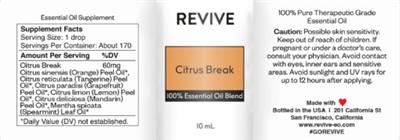
Citrus Break contains 6 ingredients, all of them active oils extracted from citrus peels and spearmint leaf: grapefruit peel oil, orange peel oil, lemon peel oil, spearmint leaf oil, tangerine peel oil, and mandarin peel oil. There are no inactive ingredients listed for this product.
These are concentrated plant extracts — not the same as eating the whole fruit.
Does it work?
Couldn't assess
The evidence for Citrus Break's effectiveness is not established in our data. Grapefruit peel oil shows insufficient reliable evidence for acne, asthma, atherosclerosis, headache, upper respiratory tract infection, and depression.
Lemon peel oil is similarly unproven for allergic rhinitis, anxiety, respiratory tract infections, high blood pressure, and kidney stones. Spearmint leaf oil has insufficient evidence for age-related cognitive decline, cognitive function, bloating, irritable bowel syndrome, postoperative nausea, and osteoarthritis.
Tangerine peel oil shows insufficient evidence for cancer. In short, we don't have established effectiveness data for any of the conditions these ingredients have been proposed for.
How safe is it?
Well-documented data
Orally, grapefruit and lemon are generally well tolerated in food amounts, though lemon juice taken at medicinal doses (like 60 mL twice daily) has caused heartburn and stomach upset in some trial participants. Spearmint is also well tolerated as food or tea.
However, the safety of concentrated supplements and essential oils — which is what you have in this liquid — has not been well studied. Grapefruit in large amounts has rarely caused serious effects like arrhythmias (irregular heartbeat) and QT prolongation (a heart rhythm abnormality), and some early population research suggests that people who eat a quarter or more of a whole grapefruit daily may have a higher risk of breast cancer, though more evidence is needed.
Allergic reactions are rare but have been reported with citrus and spearmint oils. Pregnancy and lactation safety data are not on file for these ingredients.
Meds to double-check
Major interaction found
Before you take this product, double-check your medications for interactions with grapefruit, lemon, spearmint, and tangerine oils. The biggest concerns are cyclosporine, scopolamine, amiodarone, terfenadine, buspirone, dextromethorphan, and other drugs metabolized by your liver — especially transplant and heart medications.
Also watch for sedating drugs and drugs that stress the liver if you're taking spearmint oil. If you're on itraconazole, tell your pharmacist.
Use the medication checker on this page with your exact prescriptions.
The bottom line
Scorecard at a glanceFormula with limited ingredient disclosure with no assessable stated purpose. Major medication interactions have been identified, and safety information is well characterized.
If you take any prescription medications, especially heart drugs, transplant antirejection drugs, sedatives, antifungals, or any drug metabolized by the liver, check with your pharmacist before starting Citrus Break — the grapefruit oil poses real risks. For most people taking no medications, it's generally well tolerated, but the evidence that it actually works for any health condition isn't established.
Talk to your pharmacist about your specific medicines before you use this product.
Educational only — not medical advice; always confirm with your pharmacist. Our editorial policy · How we use AI
Assessment coverage: 5 of 6 active ingredients matched to our full ingredient reviews (monographs). Based on the product label dated Jun 25, 2025.
This Scorecard evaluates available label information, ingredient evidence, and known medication-safety considerations. It does not independently verify product identity, purity, potency, contamination, or manufacturing quality. How these ratings are computed
General information
Key facts about Citrus Break, straight from the product label.
Everything in this section is reproduced from the manufacturer’s own product label — it’s the label speaking, not HelloPharmacist. We show it so you can see exactly what the maker states; we don’t verify or endorse those statements.
Supplement Facts
The label details for Citrus Break by Revive, sourced from the NIH Dietary Supplement Label Database.
Supplement Facts
| Ingredient | Amount | % DV |
|---|---|---|
| Grapefruit peel oil | 0 NP | -- |
| Orange Peel Oil | 0 NP | -- |
| Lemon Peel Oil | 0 NP | -- |
| Spearmint leaf Oil | 0 NP | -- |
| Citrus Break | 60 mg | -- |
| Tangerine Peel Oil | 0 NP | -- |
| Mandarin Peel Oil | 0 NP | -- |
Tap any ingredient to jump to its full detail below.
These statements are the manufacturer’s wording, reproduced from the product label — the label is saying it, not HelloPharmacist. We don’t verify or endorse them.
FDA Statement of Identity
Essential Oil Supplement
Formula
100% Pure essential oil 100% pure therapeutic grade essential oil
Precautions
Caution: Possible skin sensitivity. Avoid contact with eyes, inner ears and sensitive areas. Avoid sunlight and UV rays for up to 12 hours after applying.
Keep out of reach of children.
If pregnant or under a doctor's care, consult your physician.
General Statements
Made with love #Gorevive
Formulation
Bottled in the USA
Is this label outdated? Report a formula or label change and our pharmacy team will review it.
Citrus Break by Revive label
The label scan from the NIH Dietary Supplement Label Database. Tap to enlarge.
Label images are published by the NIH Dietary Supplement Label Database for the version of this product on file. Always read your actual product label.
View the full label (PDF)The Ingredients in Citrus Break by Revive
These are the 6 active ingredients this product is made of. Select any to open its full monograph.
Serving size1 Drop(s) Dosage formLiquid Servings per container170 Amounts shown are per serving.
Most supplement products combine several ingredients, and a medication can interact with the product through any one of them. Each ingredient below shows whether it has known drug interactions.
Citrus Break
- › Grapefruit peel oil
- › Orange Peel Oil
- › Lemon Peel Oil
- › Spearmint leaf Oil
- › Tangerine Peel Oil
- › Mandarin Peel Oil
Citrus Break by Revive Drug Interactions
HelloPharmacist Interaction Report
Citrus Break by Revive is a liquid blend of citrus and mint oils, and it does interact with medications.
The most serious concerns come from grapefruit peel oil, which can significantly raise blood levels of several drugs. Grapefruit blocks an enzyme in your gut and liver (cytochrome P450 3A4) that normally clears many medications, so they stay in your body longer and stronger than intended.
Read the full breakdown — every affected drug type, severity by severity
Grapefruit peel oil in this product has Major-severity interactions with oral cyclosporine (used after organ transplant), scopolamine (motion sickness patch), amiodarone (heart rhythm), terfenadine (antihistamine), buspirone (anxiety), dextromethorphan (cough suppressant), and several others — potentially increasing their side effects. It can also decrease blood levels of celiprolol (beta-blocker) and etoposide (chemotherapy), which may weaken their effects.
Lemon peel oil carries a Minor interaction with itraconazole (antifungal), and spearmint leaf oil has Moderate interactions with sedating drugs (CNS depressants) and drugs that stress the liver (hepatotoxic drugs). Tangerine peel oil has Minor interactions with midazolam (sedative) and other CYP3A4 substrates, though human data suggest the effect may be small.
We could not check orange peel oil or mandarin peel oil — no data is on file for those.
Altogether, these interactions span 1,178 individual medications. Use the medication checker on this page with your exact prescriptions, or talk to your pharmacist before you start.
Check your own medications below · Editorial policy · How we use AI
Want to check YOUR meds against Citrus Break?
Ask about interactions with your drugs in plain English — “Can I take it with lisinopril?” — and we find you the answer in seconds, ingredient by ingredient.
Go to the checkerIngredients driving the most interactions
Individual Drug Interactions
The ingredients in Citrus Break interact with 1,204 drugs. Click any drug to see the details.
5 of the 6 ingredients in Citrus Break interact with drugs. Each result below shows which ingredient is responsible. Grapefruit peel oil Tangerine Peel Oil Spearmint leaf Oil Orange Peel Oil Lemon Peel Oil
CetirizineCetirizine, Quzyttir, Zyrtec
How Cetirizine interacts with Citrus Break — through 1 ingredient. Tap an ingredient for the detail:
Spearmint Leaf OilCns Depressants Moderate
Interaction Summary
Theoretically, spearmint might alter the sedative effects of CNS depressants.
Read the full Spearmint Leaf Oil + Cetirizine interactionChloral HydrateChloral Hydrate
How Chloral Hydrate interacts with Citrus Break — through 1 ingredient. Tap an ingredient for the detail:
Spearmint Leaf OilCns Depressants Moderate
Interaction Summary
Theoretically, spearmint might alter the sedative effects of CNS depressants.
Read the full Spearmint Leaf Oil + Chloral Hydrate interactionChloroquine, Primaquine PhosphateAralen / Primaquine
How Chloroquine, Primaquine Phosphate interacts with Citrus Break — through 1 ingredient. Tap an ingredient for the detail:
Grapefruit Peel OilPrimaquine Moderate
Interaction Summary
Grapefruit juice may increase blood levels of primaquine, potentially increasing the effects and adverse effects of primaquine.
Read the full Grapefruit Peel Oil + Chloroquine, Primaquine Phosphate interactionChlorothiazide, MethyldopaAldochlor, Aldoclor 150, Aldoclor 250
How Chlorothiazide, Methyldopa interacts with Citrus Break — through 1 ingredient. Tap an ingredient for the detail:
Spearmint Leaf OilHepatotoxic Drugs Moderate
Interaction Summary
Theoretically, high doses of spearmint might increase the risk of liver damage when taken with hepatotoxic drugs.
Read the full Spearmint Leaf Oil + Chlorothiazide, Methyldopa interactionChlorpropamideChlorpropam, Diabinese
How Chlorpropamide interacts with Citrus Break — through 1 ingredient. Tap an ingredient for the detail:
Spearmint Leaf OilHepatotoxic Drugs Moderate
Interaction Summary
Theoretically, high doses of spearmint might increase the risk of liver damage when taken with hepatotoxic drugs.
Read the full Spearmint Leaf Oil + Chlorpropamide interactionChlortetracyclineAureomycin
How Chlortetracycline interacts with Citrus Break — through 3 ingredients. Tap an ingredient for the detail:
Spearmint Leaf OilHepatotoxic Drugs Moderate
Interaction Summary
Theoretically, high doses of spearmint might increase the risk of liver damage when taken with hepatotoxic drugs.
Read the full Spearmint Leaf Oil + Chlortetracycline interactionOrange Peel OilP-glycoprotein Substrates Moderate
Interaction Summary
Sweet orange juice seems to modulate P-glycoprotein (P-gp), which might affect the blood levels of P-gp substrates.
Read the full Orange Peel Oil + Chlortetracycline interactionGrapefruit Peel OilP-glycoprotein Substrates Minor
Interaction Summary
Grapefruit juice does not seem to affect renal P-glycoprotein (P-gp).
Read the full Grapefruit Peel Oil + Chlortetracycline interactionCholine Magnesium TrisalicylateTricosal, Trilisate
How Choline Magnesium Trisalicylate interacts with Citrus Break — through 1 ingredient. Tap an ingredient for the detail:
Spearmint Leaf OilHepatotoxic Drugs Moderate
Interaction Summary
Theoretically, high doses of spearmint might increase the risk of liver damage when taken with hepatotoxic drugs.
Read the full Spearmint Leaf Oil + Choline Magnesium Trisalicylate interactionCholine SalicylateArthropan
How Choline Salicylate interacts with Citrus Break — through 1 ingredient. Tap an ingredient for the detail:
Spearmint Leaf OilHepatotoxic Drugs Moderate
Interaction Summary
Theoretically, high doses of spearmint might increase the risk of liver damage when taken with hepatotoxic drugs.
Read the full Spearmint Leaf Oil + Choline Salicylate interactionCimetidineCimetidine Injection, Tagamet, Tagamet HB
How Cimetidine interacts with Citrus Break — through 2 ingredients. Tap an ingredient for the detail:
Orange Peel OilP-glycoprotein Substrates Moderate
Interaction Summary
Sweet orange juice seems to modulate P-glycoprotein (P-gp), which might affect the blood levels of P-gp substrates.
Read the full Orange Peel Oil + Cimetidine interactionGrapefruit Peel OilP-glycoprotein Substrates Minor
Interaction Summary
Grapefruit juice does not seem to affect renal P-glycoprotein (P-gp).
Read the full Grapefruit Peel Oil + Cimetidine interactionClobetasolClobex, Temovate
How Clobetasol interacts with Citrus Break — through 2 ingredients. Tap an ingredient for the detail:
Orange Peel OilP-glycoprotein Substrates Moderate
Interaction Summary
Sweet orange juice seems to modulate P-glycoprotein (P-gp), which might affect the blood levels of P-gp substrates.
Read the full Orange Peel Oil + Clobetasol interactionGrapefruit Peel OilP-glycoprotein Substrates Minor
Interaction Summary
Grapefruit juice does not seem to affect renal P-glycoprotein (P-gp).
Read the full Grapefruit Peel Oil + Clobetasol interactionClozapineClozaril, Versacloz
How Clozapine interacts with Citrus Break — through 1 ingredient. Tap an ingredient for the detail:
Grapefruit Peel OilCytochrome P450 1a2 (cyp1a2) Substrates Moderate
Interaction Summary
Theoretically, grapefruit juice might increase levels of drugs metabolized by CYP1A2.
Read the full Grapefruit Peel Oil + Clozapine interactionCodeine PhosphateCodeine
How Codeine Phosphate interacts with Citrus Break — through 1 ingredient. Tap an ingredient for the detail:
Spearmint Leaf OilCns Depressants Moderate
Interaction Summary
Theoretically, spearmint might alter the sedative effects of CNS depressants.
Read the full Spearmint Leaf Oil + Codeine Phosphate interactionCodeine Phosphate, GuaifenesinBrontex, Robitussin AC
How Codeine Phosphate, Guaifenesin interacts with Citrus Break — through 1 ingredient. Tap an ingredient for the detail:
Spearmint Leaf OilCns Depressants Moderate
Interaction Summary
Theoretically, spearmint might alter the sedative effects of CNS depressants.
Read the full Spearmint Leaf Oil + Codeine Phosphate, Guaifenesin interactionCodeine Phosphate, PseudoephedrineKg Fed, Nucofed
How Codeine Phosphate, Pseudoephedrine interacts with Citrus Break — through 1 ingredient. Tap an ingredient for the detail:
Spearmint Leaf OilCns Depressants Moderate
Interaction Summary
Theoretically, spearmint might alter the sedative effects of CNS depressants.
Read the full Spearmint Leaf Oil + Codeine Phosphate, Pseudoephedrine interactionCodeine Phosphate, Pseudoephedrine, TriprolidineCoActifed
How Codeine Phosphate, Pseudoephedrine, Triprolidine interacts with Citrus Break — through 1 ingredient. Tap an ingredient for the detail:
Spearmint Leaf OilCns Depressants Moderate
Interaction Summary
Theoretically, spearmint might alter the sedative effects of CNS depressants.
Read the full Spearmint Leaf Oil + Codeine Phosphate, Pseudoephedrine, Triprolidine interactionCodeine SulfateCodeine Sulfate
How Codeine Sulfate interacts with Citrus Break — through 1 ingredient. Tap an ingredient for the detail:
Spearmint Leaf OilCns Depressants Moderate
Interaction Summary
Theoretically, spearmint might alter the sedative effects of CNS depressants.
Read the full Spearmint Leaf Oil + Codeine Sulfate interactionCodeine, PapaverineCopavin
How Codeine, Papaverine interacts with Citrus Break — through 1 ingredient. Tap an ingredient for the detail:
Spearmint Leaf OilCns Depressants Moderate
Interaction Summary
Theoretically, spearmint might alter the sedative effects of CNS depressants.
Read the full Spearmint Leaf Oil + Codeine, Papaverine interactionCodeine, ParacetamolCo-codamol
How Codeine, Paracetamol interacts with Citrus Break — through 2 ingredients. Tap an ingredient for the detail:
Spearmint Leaf OilCns Depressants, Hepatotoxic Drugs Moderate
Interaction Summary
Theoretically, spearmint might alter the sedative effects of CNS depressants.
Read the full Spearmint Leaf Oil + Codeine, Paracetamol interactionGrapefruit Peel OilCytochrome P450 1a2 (cyp1a2) Substrates Moderate
Interaction Summary
Theoretically, grapefruit juice might increase levels of drugs metabolized by CYP1A2.
Read the full Grapefruit Peel Oil + Codeine, Paracetamol interactionCortisone AcetateCortisone Tablets, Cortone
How Cortisone Acetate interacts with Citrus Break — through 2 ingredients. Tap an ingredient for the detail:
Orange Peel OilP-glycoprotein Substrates Moderate
Interaction Summary
Sweet orange juice seems to modulate P-glycoprotein (P-gp), which might affect the blood levels of P-gp substrates.
Read the full Orange Peel Oil + Cortisone Acetate interactionGrapefruit Peel OilP-glycoprotein Substrates Minor
Interaction Summary
Grapefruit juice does not seem to affect renal P-glycoprotein (P-gp).
Read the full Grapefruit Peel Oil + Cortisone Acetate interactionCyamemazineTercian
How Cyamemazine interacts with Citrus Break — through 1 ingredient. Tap an ingredient for the detail:
Spearmint Leaf OilCns Depressants Moderate
Interaction Summary
Theoretically, spearmint might alter the sedative effects of CNS depressants.
Read the full Spearmint Leaf Oil + Cyamemazine interactionDaclizumabZenapax, Zinbryta
How Daclizumab interacts with Citrus Break — through 1 ingredient. Tap an ingredient for the detail:
Spearmint Leaf OilHepatotoxic Drugs Moderate
Interaction Summary
Theoretically, high doses of spearmint might increase the risk of liver damage when taken with hepatotoxic drugs.
Read the full Spearmint Leaf Oil + Daclizumab interactionDantroleneDantrium, Dantrium Intravenous
How Dantrolene interacts with Citrus Break — through 1 ingredient. Tap an ingredient for the detail:
Spearmint Leaf OilHepatotoxic Drugs Moderate
Interaction Summary
Theoretically, high doses of spearmint might increase the risk of liver damage when taken with hepatotoxic drugs.
Read the full Spearmint Leaf Oil + Dantrolene interactionDantrolene SodiumRyanodex
How Dantrolene Sodium interacts with Citrus Break — through 1 ingredient. Tap an ingredient for the detail:
Spearmint Leaf OilHepatotoxic Drugs Moderate
Interaction Summary
Theoretically, high doses of spearmint might increase the risk of liver damage when taken with hepatotoxic drugs.
Read the full Spearmint Leaf Oil + Dantrolene Sodium interactionDaunorubicin, CytarabineVyxeos
How Daunorubicin, Cytarabine interacts with Citrus Break — through 1 ingredient. Tap an ingredient for the detail:
Spearmint Leaf OilHepatotoxic Drugs Moderate
Interaction Summary
Theoretically, high doses of spearmint might increase the risk of liver damage when taken with hepatotoxic drugs.
Read the full Spearmint Leaf Oil + Daunorubicin, Cytarabine interactionDeferasiroxExjade, Jadenu
How Deferasirox interacts with Citrus Break — through 1 ingredient. Tap an ingredient for the detail:
Spearmint Leaf OilHepatotoxic Drugs Moderate
Interaction Summary
Theoretically, high doses of spearmint might increase the risk of liver damage when taken with hepatotoxic drugs.
Read the full Spearmint Leaf Oil + Deferasirox interactionDehydrocholic Acid, Homatropine Methylbromide, PhenobarbitalG.B.S.
How Dehydrocholic Acid, Homatropine Methylbromide, Phenobarbital interacts with Citrus Break — through 1 ingredient. Tap an ingredient for the detail:
Spearmint Leaf OilCns Depressants Moderate
Interaction Summary
Theoretically, spearmint might alter the sedative effects of CNS depressants.
Read the full Spearmint Leaf Oil + Dehydrocholic Acid, Homatropine Methylbromide, Phenobarbital interactionDemeclocyclineDeclomycin
How Demeclocycline interacts with Citrus Break — through 3 ingredients. Tap an ingredient for the detail:
Orange Peel OilP-glycoprotein Substrates Moderate
Interaction Summary
Sweet orange juice seems to modulate P-glycoprotein (P-gp), which might affect the blood levels of P-gp substrates.
Read the full Orange Peel Oil + Demeclocycline interactionSpearmint Leaf OilHepatotoxic Drugs Moderate
Interaction Summary
Theoretically, high doses of spearmint might increase the risk of liver damage when taken with hepatotoxic drugs.
Read the full Spearmint Leaf Oil + Demeclocycline interactionGrapefruit Peel OilP-glycoprotein Substrates Minor
Interaction Summary
Grapefruit juice does not seem to affect renal P-glycoprotein (P-gp).
Read the full Grapefruit Peel Oil + Demeclocycline interactionDeucravacitinibSotyktu
How Deucravacitinib interacts with Citrus Break — through 1 ingredient. Tap an ingredient for the detail:
Spearmint Leaf OilHepatotoxic Drugs Moderate
Interaction Summary
Theoretically, high doses of spearmint might increase the risk of liver damage when taken with hepatotoxic drugs.
Read the full Spearmint Leaf Oil + Deucravacitinib interactionDiclofenacZorvolex
How Diclofenac interacts with Citrus Break — through 2 ingredients. Tap an ingredient for the detail:
Grapefruit Peel OilCytochrome P450 2c9 (cyp2c9) Substrates Moderate
Interaction Summary
Theoretically, grapefruit juice might increase levels of drugs metabolized by CYP2C9.
Read the full Grapefruit Peel Oil + Diclofenac interactionSpearmint Leaf OilHepatotoxic Drugs Moderate
Interaction Summary
Theoretically, high doses of spearmint might increase the risk of liver damage when taken with hepatotoxic drugs.
Read the full Spearmint Leaf Oil + Diclofenac interactionDiclofenac PotassiumCambia, Cataflam, Cataflam IR, Voltaren Rapide, Voltarol Rapid
How Diclofenac Potassium interacts with Citrus Break — through 2 ingredients. Tap an ingredient for the detail:
Spearmint Leaf OilHepatotoxic Drugs Moderate
Interaction Summary
Theoretically, high doses of spearmint might increase the risk of liver damage when taken with hepatotoxic drugs.
Read the full Spearmint Leaf Oil + Diclofenac Potassium interactionGrapefruit Peel OilCytochrome P450 2c9 (cyp2c9) Substrates Moderate
Interaction Summary
Theoretically, grapefruit juice might increase levels of drugs metabolized by CYP2C9.
Read the full Grapefruit Peel Oil + Diclofenac Potassium interactionEach ingredient & the kinds of drugs it affects
For each ingredient in Citrus Break with known interactions, here are the types of medications they can affect. Open any type for the detail — or search your exact drug in the checker above.
Grapefruit peel oil
Amiodarone (Cordarone)
Grapefruit juice can increase blood levels of amiodarone, potentially increasing the effects and adverse effects of amiodarone.
Clinical research shows that grapefruit juice inhibits metabolism and increases absorption of amiodarone. Grapefruit juice increases amiodarone plasma levels by 50% and peak concentration by 84%.
Artemether (Artenam, Paluther)
Grapefruit juice can increase blood levels of oral artemether, potentially increasing the effects and adverse effects of artemether.
Clinical research shows that grapefruit juice increases the levels of oral artemether by 90% to 250% in healthy males.
Benzodiazepines
Grapefruit juice might increase blood levels of some oral benzodiazepines, potentially increasing the effects and adverse effects of these drugs.
Clinical research shows that grapefruit juice can increase plasma triazolam concentrations. Repeated consumption of grapefruit juice greatly increases triazolam concentrations and prolongs the half-life, probably due to inhibition of cytochrome P450 3A4 (CYP3A4). Some studies show that grapefruit juice, particularly when taken in large quantities, reduces the clearance and increases the maximum blood levels, area under the plasma concentration curve (AUC), and duration of effect of midazolam. However, there is no effect on intravenous midazolam. Grapefruit juice has also been shown to increase the maximum blood levels and duration of effect of diazepam, but the clinical significance of this is not known. This interaction does not appear to occur with alprazolam.
Buspirone (Buspar)
Grapefruit juice can increase blood levels of buspirone, potentially increasing the effects and adverse effects of buspirone.
Clinical research shows that grapefruit juice increases absorption and plasma concentrations of buspirone.
Calcium Channel Blockers
Grapefruit juice can increase blood levels of oral calcium channel blockers, potentially increasing the effects and adverse effects of these drugs.
Clinical research shows that grapefruit juice increases absorption and plasma concentrations of amlodipine, nifedipine, nisoldipine, verapamil, felodipine, nimodipine, nicardipine, diltiazem, pranidipine, nitrendipine, and manidipine,
This interaction is likely the result of the inhibition of intestinal metabolism of these drugs by CYP3A4, although some research suggests grapefruit may alter plasma drug levels by reducing the rate of gastric emptying. Consuming grapefruit juice 1 liter daily increases steady state concentrations of verapamil by as much as 50%. However, some references dispute the clinical relevance of the interactions with amlodipine, diltiazem, and verapamil. Other research in healthy individuals suggests plasma levels of felodipine and nifedipine are not affected when given intravenously. There is considerable interindividual variability in the effect of grapefruit juice on drug metabolism, which might account for inconsistent study results. In healthy older adults, the hemodynamic response to felodipine plus grapefruit juice might be influenced by altered autonomic regulation. In older healthy adults, a single dose of grapefruit juice and felodipine enhanced the blood pressure-lowering effects of felodipine. However, after a week of grapefruit juice and felodipine (steady state), the hypotensive activity was reduced, possibly due to compensatory tachycardia. Research indicates it is necessary to withhold grapefruit juice for as long as 3 days to avoid interactions with felodipine and nisoldipine.
Carbamazepine (Tegretol)
Grapefruit juice can increase blood levels of carbamazepine, potentially increasing the effects and adverse effects of carbamazepine.
Clinical research shows that grapefruit juice increases absorption and plasma concentrations of carbamazepine.
Carvedilol (Coreg)
Grapefruit juice can increase blood levels of carvedilol, potentially increasing the effects and adverse effects of carvedilol.
Clinical research shows that grapefruit juice increases the bioavailability of a single dose of carvedilol by 16%.
Celiprolol (Celicard)
Grapefruit juice can decrease blood levels of celiprolol, potentially decreasing the clinical effects of celiprolol.
In human research, taking grapefruit juice within two hours of celiprolol appears to decrease absorption and blood levels of celiprolol by approximately 85%. This interaction is due to grapefruit-induced inhibition of organic anion transporting polypeptide (OATP). Grapefruit juice is thought to affect OATP for only a short time. Therefore, separating drug administration and consumption of grapefruit by at least 4 hours is likely to prevent this interaction.
Cisapride (Propulsid)
Grapefruit juice can increase blood levels of cisapride, potentially increasing the effects and adverse effects of cisapride.
Clinical research shows that grapefruit juice increases the absorption and plasma concentrations of cisapride. According to the cisapride prescribing information, grapefruit juice is contraindicated in patients taking cisapride.
Clomipramine (Anafranil)
Theoretically, grapefruit juice might increase blood levels of clomipramine, potentially increasing the effects and adverse effects of clomipramine.
Case reports have shown that clomipramine trough levels increase significantly after the addition of grapefruit juice to the therapeutic regimen.
Clopidogrel (Plavix)
Grapefruit juice can decrease blood levels of the active metabolite of clopidogrel, thereby decreasing the antiplatelet effect of clopidogrel.
Clopidogrel is an antiplatelet prodrug that is metabolized primarily by cytochrome P450 2C19 (CYP2C19) to form the active metabolite. A small clinical study shows that taking grapefruit juice with clopidogrel decreases plasma levels of the active metabolite by more than 80% and impairs the antiplatelet effect of clopidogrel. This effect is possibly due to grapefruit-induced inhibition of CYP2C19.
Cyclosporine (Neoral, Sandimmune)
Grapefruit juice can increase blood levels of oral cyclosporine, potentially increasing the effects and adverse effects of cyclosporine.
Clinical research shows that grapefruit juice increases the absorption and plasma concentrations of cyclosporine. The mechanism of action is unclear. However, there is no effect on intravenous cyclosporine.
Cytochrome P450 3A4 (Cyp3A4) Substrates
Grapefruit juice can increase levels of drugs metabolized by CYP3A4.
Clinical research shows that grapefruit juice can inhibit CYP3A4 metabolism of drugs, causing increased drug levels and potentially increasing the risk of adverse effects. When taken orally, effects of grapefruit juice on CYP3A4 levels appear to last at least 48 hours. Grapefruit's ability to inhibit CYP3A4 has even been harnessed to intentionally increase levels of venetoclax, which is metabolized by CYP3A4, in an elderly patient with acute myeloid leukemia who could not afford full dose venetoclax. The lower dose of venetoclax in combination with grapefruit juice resulted in serum levels of venetoclax in the therapeutic reference range of full dose venetoclax and positive treatment outcomes for the patient.
Professional consensus recommends the consideration of patient age, existing medical conditions, additional medications, and the potential for additive adverse effects when evaluating the risks of concomitant use of grapefruit juice with any medication metabolized by CYP3A4. While all patients are at risk for interactions with grapefruit juice consumption, patients older than 70 years of age and those taking multiple medications are at the greatest risk for a serious or fatal interaction with grapefruit juice.
Dextromethorphan (Robitussin Dm, Others)
Grapefruit juice can increase blood levels of dextromethorphan, potentially increasing the effects and adverse effects of dextromethorphan.
Clinical research shows that grapefruit juice can inhibit cytochrome P450 3A4 (CYP3A4) metabolism, causing increased dextromethorphan levels.
Estrogens
Grapefruit juice can increase blood levels of estrogens, potentially increasing the effects and adverse effects of estrogens.
Clinical research shows that grapefruit increases the levels of endogenous and exogenous estrogens by inhibiting cytochrome P450 3A4 (CYP3A4) enzymes. Grapefruit juice increases exogenously administered 17-beta-estradiol by about 20% in females without ovaries and ethinyl-estradiol in healthy females.
Etoposide (Vepesid)
Grapefruit juice can decrease blood levels of etoposide, potentially decreasing the clinical effects of etoposide.
Clinical research shows that grapefruit juice decreases the absorption and plasma concentrations of etoposide. There is some evidence that grapefruit juice co-administered with oral etoposide can reduce levels of etoposide by about 26%. Grapefruit juice seems to inhibit organic anion transporting polypeptide (OATP), which is a drug transporter in the gut, liver, and kidney. Grapefruit juice is thought to affect OATP for only a short time. Therefore, separating drug administration and consumption of grapefruit by at least 4 hours is likely to prevent this interaction.
Halofantrine
Grapefruit juice can increase blood levels of halofantrine, potentially increasing the effects and adverse effects of halofantrine.
Clinical research shows that grapefruit juice inhibits cytochrome P450 3A4 (CYP3A4) metabolism, which increases halofantrine levels and peak concentration, as well as a marker of ventricular tachyarrhythmia potential.
Hmg-Coa Reductase Inhibitors ("Statins")
Grapefruit juice can increase blood levels of statins that are metabolized by cytochrome P450 3A4 (CYP3A4), potentially increasing the effects and adverse effects of these statins. Additionally, grapefruit juice might interfere with the bioavailability of statins that are substrates of organic anion transporting polypeptides (OATP).
Clinical research shows that grapefruit juice inhibits metabolism and increases absorption and plasma concentrations of statins that are metabolized by CYP3A4. These include lovastatin, simvastatin, and atorvastatin. Keep in mind that there is considerable variability in the effect of grapefruit juice on drug metabolism, so individual patient response is difficult to predict.
Some statins, including pravastatin, fluvastatin, pitavastatin, and rosuvastatin, are not metabolized by CYP3A4. However, grapefruit juice might still affect the bioavailability of these statins. These statins are substrates of OATP. Grapefruit juice can inhibit OATP. Therefore, grapefruit juice may reduce the bioavailability or increase drug levels of these statins depending on the type of OATP. However, grapefruit juice affects OATP for only a short time. Therefore, separating drug administration by at least 4 hours is likely to avoid this interaction.
Methadone (Dolophine)
Grapefruit juice can increase blood levels of methadone, potentially increasing the effects and adverse effects of methadone.
Clinical research shows that grapefruit juice inhibits the metabolism of methadone, increasing methadone levels and peak concentrations. In one case, a 51-year-old male taking methadone 90 mg daily and no other medications was found unresponsive. The patient reported drinking grapefruit juice 500 mL daily for 3 days prior to the event. Methadone is a substrate of cytochrome P450 3A4 (CYP3A4), and grapefruit juice-induced inhibition of CYP3A4 is the likely cause of this interaction.
Methylprednisolone
Grapefruit juice can increase blood levels of methylprednisolone, potentially increasing the effects and adverse effects of methylprednisolone.
Clinical research shows that grapefruit juice can increase the plasma concentration of orally administered methylprednisolone. Grapefruit juice 200 mL three times daily given with methylprednisolone 16 mg increased methylprednisolone half-life by 35%, peak plasma concentration by 27%, and total area under the curve by 75%.
Organic Anion-Transporting Polypeptide Substrates (Oatp)
Grapefruit juice can decrease levels of drugs that are substrates of OATP.
In vitro and clinical research show that consuming grapefruit juice inhibits OATP, which reduces the bioavailability of oral drugs that are substrates of OATP. Various clinical studies have shown reduced absorption of OATP substrates when taken with grapefruit, including fexofenadine, acebutolol, aliskiren, celiprolol, levothyroxine, nadolol, and pitavastatin. Grapefruit juice is thought to affect OATP for only a short time. Therefore, separating drug administration and consumption of grapefruit by at least 4 hours is likely to prevent this interaction.
Praziquantel (Biltricide)
Grapefruit juice can increase blood levels of praziquantel, potentially increasing the effects and adverse effects of praziquantel.
Clinical research shows that grapefruit juice can inhibit cytochrome P450 3A4 (CYP3A4) metabolism of praziquantel. Plasma concentrations of praziquantel can increase by as much as 160% when administered with 250 mL of commercially available grapefruit juice.
Qt Interval-Prolonging Drugs
Grapefruit or grapefruit juice, especially if consumed in large amounts, can cause additive QT interval prolongation when taken with QT interval-prolonging drugs, potentially increasing the risk of ventricular arrhythmias.
Clinical research in healthy volunteers shows that drinking 6 liters of grapefruit juice over 6 hours prolonged the QTc by a peak amount of 14 milliseconds (ms). This prolongation was similar to the QT prolongation caused by the drug moxifloxacin. In individuals with long QT syndrome, a smaller dose of grapefruit juice, 1.5 liters, resulted in a greater peak QTc prolongation of about 30 ms. The effect of smaller quantities of grapefruit juice on the QT interval is unclear.
Quetiapine (Seroquel)
Grapefruit juice may increase blood levels of quetiapine, increasing the effects and adverse effects of quetiapine.
Quetiapine is metabolized by cytochrome P450 3A4 (CYP3A4). Grapefruit can inhibit CYP3A4. In one case report, a healthy 28-year-old female with bipolar disorder stabilized on quetiapine 800 mg daily presented with quetiapine toxicity considered to be related to consuming a gallon of grapefruit juice over the past 24 hours.
Quinidine
Grapefruit juice can alter blood levels of quinidine, potentially increasing or decreasing the clinical effects of quinidine.
Clinical research shows that grapefruit juice decreases quinidine absorption, clearance, and metabolism, and prolongs the half-life by about 20%.
Tangerine Peel Oil
Cytochrome P450 3A4 (Cyp3A4) Substrates
In vitro, tangeretin, a constituent of tangerine, induces a 52% increase in the metabolism of midazolam by cytochrome P450 3A4 (CYP3A4). This suggests that tangeretin may stimulate CYP3A4 activity. However, in humans, drinking tangerine juice 200 mL slightly delayed the absorption, but did not affect the metabolism, of midazolam, a CYP3A4 substrate. Theoretically, tangerine juice might increase CYP3A4 activity and decrease levels of drugs metabolized by this enzyme. However, this effect is unlikely.
Some drugs metabolized by CYP3A4 include amitriptyline (Elavil), amiodarone (Cordarone), citalopram (Celexa), felodipine (Plendil), lansoprazole (Prevacid), ondansetron (Zofran), prednisone (Deltasone, Orasone), sertraline (Zoloft), sibutramine (Meridia), and many others.
Midazolam (Versed)
In vitro, tangeretin, a constituent of tangerine, appears to increase the metabolism of midazolam in human liver microsomes by up to 52%. However, in humans, drinking tangerine juice 200 mL slightly delayed the absorption, but did not affect the metabolism, of midazolam. Theoretically, tangerine juice might increase the metabolism and reduce the effects of midazolam. However, this effect is unlikely.
Spearmint leaf Oil
Cns Depressants
Theoretically, spearmint might alter the sedative effects of CNS depressants.
Animal research suggests that (-)-carvone, a major constituent of spearmint, has sedative effects. However, in humans, chewing spearmint-flavored gum induced arousal effects.
Hepatotoxic Drugs
Theoretically, high doses of spearmint might increase the risk of liver damage when taken with hepatotoxic drugs.
Animal research suggests that drinking spearmint tea for 30 days can increase markers of liver damage, including aspartate aminotransferase (AST) and alanine aminotransferase (ALT), and cause liver degeneration and necrosis, in a dose-dependent manner. This effect has not been reported in humans.
Orange Peel Oil
Celiprolol (Celicard)
Consuming sweet orange with celiprolol can decrease oral absorption of celiprolol.
A pharmacokinetic study in healthy volunteers shows that celiprolol levels, after a single dose of 100 mg, are decreased by up to 90% in people who drink sweet orange juice 200 mL three times daily. It's not known if lower consumption of sweet orange juice will have the same effect. Theoretically, this occurs due to short-term inhibition of organic anion transporting polypeptide (OATP). Recommend separating drug administration and consumption of sweet orange by at least 4 hours.
Ivermectin (Stromectol, Others)
Consuming sweet orange juice with ivermectin can decrease the oral absorption of ivermectin.
A pharmacokinetic study in healthy volunteers shows that taking ivermectin orally with sweet orange juice 750 mL over 4 hours reduces the bioavailability of ivermectin. This effect does not seem to be related to effects on P-glycoprotein. The effect on ivermectin is more pronounced in males compared to females.
Organic Anion-Transporting Polypeptide Substrates (Oatp)
Consuming sweet orange juice can decrease oral absorption of OATP substrates. Separate administration by at least 4 hours.
Clinical research shows that consuming sweet orange juice inhibits OATP, which reduces bioavailability of oral drugs that are substrates of OATP. For example, sweet orange juice decreases bioavailability of fexofenadine, a substrate of OATP, by about 72% and of celiprolol, another OATP substrate, by up to 90%. Since sweet orange juice seems to affect OATP for a short time, recommend separating drug administration and consumption of sweet orange juice by at least 4 hours.
Pravastatin (Pravachol)
Consuming sweet orange juice with pravastatin can increase the absorption of pravastatin.
A small pharmacokinetic study in healthy volunteers shows that consuming sweet orange juice 800 mL over 3 hours, including before, during, and after taking pravastatin 10 mg, increases pravastatin levels by about 149%, without affecting pravastatin elimination. Theoretically this effect might be due to modulation of organic anion transporting polypeptides (OATPs) by sweet orange juice. Sweet orange juice does not seem to affect simvastatin levels, but it is not known if sweet orange affects any of the other statins.
Fexofenadine (Allegra)
Consuming sweet orange juice with fexofenadine can decrease oral absorption of fexofenadine.
Clinical research shows that coadministration of sweet orange juice 1200 mL decreases bioavailability of fexofenadine by about 72%. In an animal model, sweet orange juice decreased bioavailability of fexofenadine by 31%. Fexofenadine manufacturer data indicates that concomitant administration of sweet orange juice and fexofenadine results in larger wheal and flare sizes in research models. This suggests that sweet orange reduces the clinical response to fexofenadine. Theoretically, this occurs due to short-term inhibition of organic anion transporting polypeptide (OATP). Recommend separating drug administration and consumption of sweet orange by at least 4 hours.
P-Glycoprotein Substrates
Sweet orange juice seems to modulate P-glycoprotein (P-gp), which might affect the blood levels of P-gp substrates.
Animal and in vitro research suggest that orange juice extract inhibits drug efflux by P-gp, increasing absorption and levels of P-gp substrates. In contrast, pharmacokinetic research in humans shows that drinking large amounts of sweet orange juice decreases absorption and levels of the P-gp substrate celiprolol. This suggests that orange juice actually induces drug efflux by P-gp or affects drug levels by another mechanism such as inhibiting the gut drug transporter called organic anion transporting polypeptide (OATP). Until more is known, sweet orange juice should be used cautiously in people taking P-gp substrates.
Quinolone Antibiotics
Calcium-fortified sweet orange juice might reduce quinolone absorption.
Calcium binds to quinolones in the gut. Theoretically, the calcium in certain fortified orange juices can also bind to quinolone antibiotics and reduce their absorption and levels.
Lemon Peel Oil
Itraconazole (Sporanox)
Theoretically, taking itraconazole capsules or tablets with a beverage containing lemon might increase the levels and clinical effects of itraconazole.
In one case report, dissolving itraconazole tablets in a small amount of specific beverages containing lemon prior to administration increased the level of itraconazole in a lung transplant patient. In this case, the increased bioavailability was desirable and was likely due to improved tablet dissolution in the acidic beverage.
Brand information
Manufacturer and brand details for Citrus Break, from the product label.
Revive
See all Revive products- Name
- Revive
- Street Address
- 201 California St
- City
- San Francisco
- State
- California
- Web Address
- www.revive-eo.com
Citrus Break by Revive: Common Questions
Does Citrus Break by Revive interact with any medications?
How can one product interact with so many drugs?
Where does this information come from?
Is this safe to take with my heart medication?
Can I take this if I'm on a transplant antirejection drug?
What does this product actually do — what's it for?
Is it okay to use if I take no medications?
Can I take this if I'm pregnant or breastfeeding?
Will this cause heartburn or stomach upset?
Written and reviewed by the HelloPharmacist editorial staff. Our editorial policy
Not sure if Citrus Break is safe with your meds?
Our pharmacists answer your medication & supplement questions — free.
Label information is sourced from the NIH Dietary Supplement Label Database and reflects the product version on file; always read your actual product label. This page is for education only and is not a substitute for professional medical advice. Confirm with your pharmacist or doctor before combining supplements and medications.
The Full Monographs Behind Citrus Break’s Ingredients
Every ingredient we hold a full HelloPharmacist monograph for — uses, evidence, safety, and the complete interaction list.
Grapefruit
Interacts with 991 drugsGrapefruit is a nutritious citrus fruit rich in vitamin C and other nutrients, and it is generally safe to eat. However, grapefruit is famous for serious interactions with many prescription...
Read the full Grapefruit monograph → Herb & supplement monographSweet Orange
Interacts with 247 drugsSweet orange is a common citrus fruit that is a good source of vitamin C, fiber, and antioxidants, and is enjoyed as a food worldwide. Its peel and essential oil are used in aromatherapy and...
Read the full Sweet Orange monograph → Herb & supplement monographLemon
Interacts with 1 drugLemon is a common citrus fruit that is a good source of vitamin C and citric acid, and it is widely used in food, drinks, and home remedies. While it can support hydration and a healthy diet...
Read the full Lemon monograph → Herb & supplement monographSpearmint
Interacts with 581 drugsSpearmint is a common culinary mint that is generally safe in food and tea amounts. Early research suggests possible benefits for digestion, mild hormone-related issues (such as excess facia...
Read the full Spearmint monograph → Herb & supplement monographTangerine
Interacts with 645 drugsTangerine is a sweet citrus fruit that is a good source of vitamin C and other nutrients, and is widely enjoyed as food. While the peel and essential oil are used in traditional medicine and...
Read the full Tangerine monograph →Sources & How We Checked
Citrus Break's label data comes from the NIH Dietary Supplement Label Database; the ingredient interaction data is from the Natural Medicines database, reviewed by our pharmacists.
- NIH Dietary Supplement Label Database (DSLD) — The official product label on file for this supplement.
- Natural Medicines (Therapeutic Research Center) — Evidence-graded clinical reference behind the ingredient interaction data.
Content is written and reviewed by licensed HelloPharmacist pharmacists. See our data sources and editorial standards for how this information is built and checked.
The 199 references behind this product’s interaction data
Every citation that drives the interaction findings for this product’s ingredients, from the evidence-graded Natural Medicines (TRC Healthcare) database. Open an ingredient to browse its citations — links open the study on PubMed or the publisher’s site.
Grapefruit 157 references
- Penzak SR, Gubbins PO, Gurley BJ, et al. Grapefruit juice decreases the systemic availability of itraconazole capsules in healthy volunteers. Ther Drug Monit 1999;21:304-9. PubMed
- Ioannides-Demos LL, Christophidis N, et al. Dosing implications of a clinical interaction between grapefruit juice and cyclosporine and metabolite concentrations in patients with autoimmune diseases. J Rheumatol 1997;24:49-54.
- Josefsson M, Zackrisson AL, Ahlner J. Effect of grapefruit juice on the pharmacokinetics of amlodipine in healthy volunteers. Eur J Clin Pharmacol 1996;51:189-93. PubMed
- Garg SK, Kumar N, Bhargava VK, Prabhakar SK. Effect of grapefruit juice on carbamazepine bioavailability in patients with epilepsy. Clin Pharmacol Ther 1998;64:286-8. PubMed
- Weber A, Jager R, Borner A, et al. Can grapefruit juice influence ethinylestradiol bioavailability? Contraception 1996;53:41-7.
- Schubert W, Cullberg G, Edgar B, Hedner T. Inhibition of 17 beta-estradiol metabolism by grapefruit juice in ovariectomized women. Maturitas 1994;20:155-63.
- Kantola T, Kivisto KT, Neuvonen PJ, et al. Grapefruit juice greatly increases serum concentrations of lovastatin and lovastatin acid. Clin Pharmacol Ther 1998 63:397-402. PubMed
- Bailey DG, Spence JD, Munoz C, Arnold JM. Interaction of citrus juices with felodipine and nifedipine. Lancet 1991;337:268-9. PubMed
- Bailey DG, Arnold JM, Strong HA, et al. Effect of grapefruit juice and naringin on nisoldipine pharmacokinetics. Clin Pharmacol Ther 1993;54:589-94. PubMed
- Rau SE, Bend JR, Arnold MO, et al. Grapefruit juice-terfenadine single-dose interaction: magnitude, mechanism, and relevance. Clin Pharmacol Ther 1997 61:401-9. PubMed
- Offman EM, Freeman DJ, Dresser GK, et al. Cisapride interaction with grapefruit juice and red wine. Clin Pharmacol Ther 2000;67:110 (abstract PI-83).
- Bailey DG, Dresser GK, Kreeft JH, et al. Grapefruit juice-felodipine interaction: Effect of segments and an extract from unprocessed fruit. Clin Pharmacol Ther 2000;67:107 (abstract PI-71).
- Soldner A, Christians U, Susanto M, et al. Grapefruit juice activates P-glycoprotein-mediated drug transport. Pharm Res 1999;16:478-85. PubMed
- Zaidenstein R, Avni B, Dishi V, et al. Effect of grapefruit juice on the pharmacokinetics of losartan in healthy volunteers. Clin Pharmacol Ther 1998;65:(abstract PI-60). DOI
- Dresser GK, Bailey DG, Carruthers SG. Grapefruit juice-felodipine interaction in healthy seniors. Clin Pharmacol Ther 1998;65:(abstract PIII-63).
- Varis T, Kivisto KT, Neuvonen PJ. Grapefruit juice can increase the plasma concentration of methylprednisolone. Eur J Clin Pharmacol 2000;56:489-93.
- Gross AS, Goh YD, Addison RS, et al. Influence of grapefruit juice on cisapride pharmacokinetics. Clin Pharmacol Ther 1999;65:395-401. PubMed
- Lilja JJ, Kivisto KT, Neuvonen PJ. Grapefruit juice increases serum concentrations of atorvastatin and has no effect on pravastatin. Clin Pharmacol Ther 1999;66:118-27. DOI
- Ozdemir M, Aktan Y, Boydag BS. Interaction between grapefruit juice and diazepam in humans. Eur J Drug Metab Pharmacokinet 1998;23:55-9. PubMed
- Zaidenstein R, Dishi V, Gips M, et al. The effect of grapefruit juice on the pharmacokinetics of orally administered verapamil. Eur J Clin Pharmacol 1998;54:337-40. PubMed
- Lilja JJ, Kivisto KT, Backman JT, et al. Grapefruit juice substantially increases plasma concentrations of buspirone. Clin Pharmacol Ther 1998;64:655-60. PubMed
- Kupferschmidt HH, Fattinger KE, Ha HR, et al. Grapefruit juice enhances the bioavailability of the HIV protease inhibitor saquinavir in man. Br J Clin Pharmacol 1998;45:355-9. DOI
- Lilja JJ, Kivisto KT, Neuvonen PJ. Grapefruit juice-simvastatin interaction: effect on serum concentrations of simvastatin, simvastatin acid, and HMG-CoA reductase inhibitors. Clin Pharmacol Ther 1998;64:477-83. PubMed
- Curhan GC, Willett WC, Speizer FE, Stamfer MJ. Beverage use and risk of kidney stones in women. Ann Intern Med 1998;128:534-40.
- Fuhr U. Drug Interactions with Grapefruit Juice. Drug Saf 1998;18:251-72. DOI
- Oesterheld J, Kallepalli BR. Grapefruit juice and clomipramine: shifting metabolitic ratios. J Clin Psychopharmacol 1997;17:62-3. PubMed
- van Agtmael MA, Gupta V, van der Wosten TH, et al. Grapefruit juice increases the bioavailability of artemether. Eur J Clin Pharmacol 1999;55:405-10. PubMed
- van Agtmael MA, Gupta V, van der Graaf CA, van Boxtel CJ. The effect of grapefruit juice on the time-dependent decline of artemether plasma levels in healthy subjects. Clin Pharmacol Ther 1999;66:408-14.
- Damkier P, Hansen LL, Brosen K. Effect of diclofenac, disulfiram, itraconazole, grapefruit juice and erythromycin on the pharmacokinetics of quinidine. Br J Clin Pharmacol 1999;48:829-38. PubMed
- Takanaga H, Ohnishi A, Murakami H, et al. Relationship between time after intake of grapefruit juice and the effect on pharmacokinetics and pharmacodynamics of nisoldipine in healthy subjects. Clin Pharmacol Ther 2000:67:201-14. PubMed
- Takanaga H, Ohnishi A, Matsuo H, et al. Pharmacokinetic analysis of felodipine-grapefruit juice interaction based on an irreversible enzyme inhibition model. Br J Clin Pharmacol 2000;49:49-58. PubMed
- Coreg monograph. In: Gillis MC, Ed. Compendium of Pharmaceuticals and Specialities (CPS). 34th ed. Ottawa, Ontario, CAN:Canadian Pharmacists Assn, 1999:395.
- Dresser GK, Bailey DG, Carruthers SG. Grapefruit juice-felodipine interaction in the elderly. Clin Pharmacol Ther 2000;68:28-34. PubMed
- Bailey DG, Dresser GK, Munoz C, et al. Reduction of fexofenadine bioavailability by fruit juices. Clin Pharmacol Ther 2001;69:P21.
- Lilja JJ, Kivisto KT, Backman JT, Neuvonen PJ. Effect of grapefruit juice dose on grapefruit juice-triazolam interaction: repeated consumption prolongs triazolam half-life. Eur J Clin Pharmacol 2000;56:411-5. PubMed
- Erlund I, Meririnne E, Alfthan G, Aro A. Plasma kinetics and urinary excretion of the flavanones naringenin and hesperetin in humans after ingestion of orange juice and grapefruit juice. J Nutr 2001;131:235-41. PubMed
- Ho PC, Ghose K, Saville D, Wanwimolruk S. Effect of grapefruit juice on pharmacokinetics and pharmacodynamics of verapamil enantiomers in healthy volunteers. Eur J Clin Pharmacol 2000;56:693-8. PubMed
- Uno T, Ohkubo T, Sugawara K, et al. Effects of grapefruit juice on the stereoselective disposition of nicardipine in humans: evidence for dominant presystemic elimination at the gut site. Eur J Clin Pharmacol 2000;56:643-9. PubMed
- Bailey DG, Dresser GK. Grapefruit juice-lovastatin interaction. Clin Pharmacol Ther 2000;67:690.
- Lilja JJ, Kivisto KT, Neuvonen PJ. Duration of effect of grapefruit juice on the pharmacokinetics of the CYP3A4 substrate simvastatin. Clin Pharmacol Ther 2000;68:384-90. PubMed
- Castro N, Jung H, Medina R, et al. Interaction between grapefruit juice and praziquantel in humans. Antimicrob Agents Chemother 2002;46:1614-6. PubMed
- Jetter A, Kinzig-Schippers M, Walchner-Bonjean M, et al. Effects of grapefruit juice on the pharmacokinetics of sildenafil. Clin Pharmacol Ther 2002;71:21-9. PubMed
- Ebert U, Oertel R, Kirch W. Influence of grapefruit juice on scopolamine pharmacokinetics and pharmacodynamics in healthy male and female subjects. Int J Clin Pharmacol Ther 2000;38:523-31. PubMed
- Fuhr U, Muller-Peltzer H, Kern R, et al. Effects of grapefruit juice and smoking on verapamil concentrations in steady state. Eur J Clin Pharmacol 2002;58:45-53. PubMed
- Kanazawa S, Ohkubo T, Sugawara K. The effects of grapefruit juice on the pharmacokinetics of erythromycin. Eur J Clin Pharmacol 2001;56:799-803. PubMed
- Reif S, Nicolson M, Bisset D, et al. Effect of grapefruit juice intake on etoposide bioavailability. Eur J Clin Pharmacol 2002;58:491-4.. PubMed
- Greenblatt DJ, von Moltke LL, Harmatz JS. Time course of recovery of cytochrome P450 3A function after single doses of grapefruit juice. Clin Pharmacol Ther 2003;74:121-29 . PubMed
- Gupta MC, Garg SK, Badyal D, et al. Effect of grapefruit juice on the pharmacokinetics of theophylline in healthy male volunteers. Methods Find Exp Clin Pharmacol 1999;21:679-82. PubMed
- Edwards DJ, Fitzsimmons ME, Schuetz EG, et al. 6',7'-Dihydroxybergamottin in grapefruit juice and Seville orange juice: effects on cyclosporine disposition, enterocyte CYP3A4, and P-glycoprotein. Clin Pharmacol Ther 1999;65:237-44. PubMed
- Rogers JD, Zhao J, Liu L, et al. Grapefruit juice has minimal effects on plasma concentrations of lovastatin-derived 3-hydroxy-3-methylglutaryl coenzyme A reductase inhibitors. Clin Pharmacol Ther 1999;66:358-66. PubMed
- Veronese ML, Gillen LP, Burke JP, et al. Exposure-dependent inhibition of intestinal and hepatic CYP3A4 in vivo by grapefruit juice. J Clin Pharmacol 2003;43:831-9. . PubMed
- Bailey DG, Dresser GK, Bend JR. Bergamottin, lime juice, and red wine as inhibitors of cytochrome P450 3A4 activity: comparison with grapefruit juice. Clin Pharmacol Ther 2003;73:529-37 . PubMed
- Becquemont L, Verstuyft C, Kerb R, et al. Effect of grapefruit juice on digoxin pharmacokinetics in humans. Clin Pharmacol Ther 2001;70:311-6. DOI
- Dresser GK, Bailey DG, Leake BF, et al. Fruit juices inhibit organic anion transporting polypeptide-mediated drug uptake to decrease the oral availability of fexofenadine. Clin Pharmacol Ther 2002;71:11-20. PubMed
- Parker RB, Yates CR, Soberman JE, Laizure SC. Effects of grapefruit juice on intestinal P-glycoprotein: evaluation using digoxin in humans. Pharmacotherapy 2003;23:979-87. PubMed
- Di Marco MP, Edwards DJ, Wainer IW, Ducharme MP. The effect of grapefruit juice and seville orange juice on the pharmacokinetics of dextromethorphan: the role of gut CYP3A and P-glycoprotein. Life Sci 2002;71:1149-60. PubMed
- Gaudineau C, Beckerman R, Welbourn S, Auclair K. Inhibition of human P450 enzymes by multiple constituents of the Ginkgo biloba extract. Biochem Biophys Res Comm 2004;318:1072–8. PubMed
- Sullivan DM, Ford MA, Boyden TW. Grapefruit juice and the response to warfarin. Am J Health-Syst Pharm 1998;55:1581-3. PubMed
- Fukazawa I, Uchida N, Uchida E, Yasuhara H. Effects of grapefruit juice on the pharmacokinetics of atorvastatin and pravastatin in Japanese. Br J Clin Pharmacol 2003;57:448-55.
- Unger M, Frank A. Simultaneous determination of the inhibitory potency of herbal extracts on the activity of six major cytochrome P450 enzymes using liquid chromatography/mass spectrometry and automated online extraction. Rapid Commun Mass Spectrom 2004;1 PubMed
- Zitron E, Scholz E, Owen RW, et al. QTc prolongation by grapefruit juice and its potential pharmacological basis: HERG channel blockade by flavonoids. Circulation 2005;835:835-8. PubMed
- Monroe KR, Murphy SP, Kolonel LN, Pike MC. Prospective study of grapefruit intake and risk of breast cancer in postmenopausal women: the Mutliethnic Cohort Study. Br J Cancer 2007;97:440-5.
- Farkas D, Oleson LE, Zhao Y, et al. Pomegranate juice does not impair clearance of oral or intravenous midazolam, a probe for cytochrome P450-3A activity: comparison with grapefruit juice. J Clin Pharmacol 2007;47:286-94. PubMed
- Potential drug interactions with grapefruit. Pharmacist's Letter / Prescriber's Letter 2007;23(2):230204.
- Dresser GK, Kim RB, Bailey DG. Effect of grapefruit juice volume on the reduction of fexofenadine bioavailability: possible role of organic anion transporting polypeptides. Clin Pharmacol Ther 2005;77:170-7. PubMed
- Greenblatt DJ. Analysis of drug interactions involving fruit beverages and organic anion-transporting polypeptides. J Clin Pharmacol 2009;49:1403-7. PubMed
- Bailey DG. Fruit juice inhibition of uptake transport: a new type of food-drug interaction. Br J Clin Pharmacol 2010;70:645-55. PubMed
- Product information for Cordarone. Wyeth Pharmaceuticals, Inc. Philadelphia, PA 19101. September 2006.
- Demarles D, Gillotin C, Bonaventure-Paci S, et al. Single-dose pharmacokinetics of amprenavir coadministered with grapefruit juice. Antimicrob Agents Chemother 2002;46:1589-90. PubMed
- Yasui N, Kondo T, Furukori H, et al. Effects of repeated ingestion of grapefruit juice on the single and multiple oral-dose pharmacokinetics and pharmacodynamics of alprazolam. Psychopharmacology (Berl) 2000;150:185-90. PubMed
- Hori H, Yoshimura R, Ueda N, et al. Grapefruit juice-fluvoxamine interaction -- is it risky or not? J Clin Psychopharmacol 2003;23:422-4. PubMed
- Benmebarek M, Devaud C, Gex-Fabry M, et al. Effects of grapefruit juice on the pharmacokinetics of the enantiomers of methadone. Clin Pharmacol Ther 2004;76:55-63.
- Yin OQ, Gallagher N, Li A, et al. Effect of grapefruit juice on the pharmacokinetics of nilotinib in healthy participants. J Clin Pharmacol 2010;50:188-94. PubMed
- Lilja JJ, Raaska K, Neuvonen PJ. Effects of grapefruit juice on the pharmacokinetics of acebutolol. Br J Clin Pharmacol 2005;60:659-63. PubMed
- Hollander, A. A., van Rooij, J., Lentjes, G. W., Arbouw, F., van Bree, J. B., Schoemaker, R. C., van Es, L. A., van der Woude, F. J., and Cohen, A. F. The effect of grapefruit juice on cyclosporine and prednisone metabolism in transplant patients. Clin Ph PubMed
- Sigusch, H., Hippius, M., Henschel, L., Kaufmann, K., and Hoffmann, A. Influence of grapefruit juice on the pharmacokinetics of a slow release nifedipine formulation. Pharmazie 1994;49(7):522-524.
- Andersen, V., Pedersen, N., Larsen, N. E., Sonne, J., and Larsen, S. Intestinal first pass metabolism of midazolam in liver cirrhosis --effect of grapefruit juice. Br J Clin Pharmacol 2002;54(2):120-124. PubMed
- Hukkinen, S. K., Varhe, A., Olkkola, K. T., and Neuvonen, P. J. Plasma concentrations of triazolam are increased by concomitant ingestion of grapefruit juice. Clin Pharmacol Ther 1995;58(2):127-131. PubMed
- Kupferschmidt, H. H., Ha, H. R., Ziegler, W. H., Meier, P. J., and Krahenbuhl, S. Interaction between grapefruit juice and midazolam in humans. Clin Pharmacol Ther 1995;58(1):20-28. PubMed
- Libersa, C. C., Brique, S. A., Motte, K. B., Caron, J. F., Guedon-Moreau, L. M., Humbert, L., Vincent, A., Devos, P., and Lhermitte, M. A. Dramatic inhibition of amiodarone metabolism induced by grapefruit juice. Br J Clin Pharmacol 2000;49(4):373-378. PubMed
- Min, D. I., Ku, Y. M., Geraets, D. R., and Lee, H. Effect of grapefruit juice on the pharmacokinetics and pharmacodynamics of quinidine in healthy volunteers. J Clin Pharmacol 1996;36(5):469-476. PubMed
- Lee, A. J., Chan, W. K., Harralson, A. F., Buffum, J., and Bui, B. C. The effects of grapefruit juice on sertraline metabolism: an in vitro and in vivo study. Clin Ther 1999;21(11):1890-1899. PubMed
- Kawakami, M., Suzuki, K., Ishizuka, T., Hidaka, T., Matsuki, Y., and Nakamura, H. Effect of grapefruit juice on pharmacokinetics of itraconazole in healthy subjects. Int J Clin Pharmacol Ther 1998;36(6):306-308.
- Benton, R. E., Honig, P. K., Zamani, K., Cantilena, L. R., and Woosley, R. L. Grapefruit juice alters terfenadine pharmacokinetics, resulting in prolongation of repolarization on the electrocardiogram. Clin Pharmacol Ther 1996;59(4):383-388. PubMed
- Clifford, C. P., Adams, D. A., Murray, S., Taylor, G. W., Wilkins, M. R., Boobis, A. R., and Davies, D. S. The cardiac effects of terfenadine after inhibition of its metabolism by grapefruit juice. Eur J Clin Pharmacol 1997;52(4):311-315. PubMed
- Ando, H., Tsuruoka, S., Yanagihara, H., Sugimoto, K., Miyata, M., Yamazoe, Y., Takamura, T., Kaneko, S., and Fujimura, A. Effects of grapefruit juice on the pharmacokinetics of pitavastatin and atorvastatin. Br J Clin Pharmacol 2005;60(5):494-497. DOI
- Lilja, J. J., Neuvonen, M., and Neuvonen, P. J. Effects of regular consumption of grapefruit juice on the pharmacokinetics of simvastatin. Br J Clin Pharmacol 2004;58(1):56-60. PubMed
- Charbit, B., Becquemont, L., Lepere, B., Peytavin, G., and Funck-Brentano, C. Pharmacokinetic and pharmacodynamic interaction between grapefruit juice and halofantrine. Clin Pharmacol Ther 2002;72(5):514-523. PubMed
- Cuong, B. T., Binh, V. Q., Dai, B., Duy, D. N., Lovell, C. M., Rieckmann, K. H., and Edstein, M. D. Does gender, food or grapefruit juice alter the pharmacokinetics of primaquine in healthy subjects? Br J Clin Pharmacol 2006;61(6):682-689. PubMed
- Culm-Merdek, K. E., von Moltke, L. L., Gan, L., Horan, K. A., Reynolds, R., Harmatz, J. S., Court MH, and Greenblatt, D. J. Effect of extended exposure to grapefruit juice on cytochrome P450 3A activity in humans: comparison with ritonavir. Clin Pharmacol
- Hugen, P. W., Burger, D. M., Koopmans, P. P., Stuart, J. W., Kroon, F. P., van Leusen, R., and Hekster, Y. A. Saquinavir soft-gel capsules (Fortovase) give lower exposure than expected, even after a high-fat breakfast. Pharm World Sci 2002;24(3):83-86.
- Sugimoto, K., Araki, N., Ohmori, M., Harada, K., Cui, Y., Tsuruoka, S., Kawaguchi, A., and Fujimura, A. Interaction between grapefruit juice and hypnotic drugs: comparison of triazolam and quazepam. Eur J Clin Pharmacol 2006;62(3):209-215. PubMed
- Lilja, J. J., Backman, J. T., Laitila, J., Luurila, H., and Neuvonen, P. J. Itraconazole increases but grapefruit juice greatly decreases plasma concentrations of celiprolol. Clin Pharmacol Ther 2003;73(3):192-198. PubMed
- Schwarz, U. I., Seemann, D., Oertel, R., Miehlke, S., Kuhlisch, E., Fromm, M. F., Kim, R. B., Bailey, D. G., and Kirch, W. Grapefruit juice ingestion significantly reduces talinolol bioavailability. Clin Pharmacol Ther 2005;77(4):291-301. PubMed
- Bailey, D. G., Arnold, J. M., Munoz, C., and Spence, J. D. Grapefruit juice--felodipine interaction: mechanism, predictability, and effect of naringin. Clin Pharmacol Ther 1993;53(6):637-642. PubMed
- Bailey, D. G., Arnold, J. M., Bend, J. R., Tran, L. T., and Spence, J. D. Grapefruit juice-felodipine interaction: reproducibility and characterization with the extended release drug formulation. Br J Clin Pharmacol 1995;40(2):135-140.
- Christensen, H., Asberg, A., Holmboe, A. B., and Berg, K. J. Coadministration of grapefruit juice increases systemic exposure of diltiazem in healthy volunteers. Eur J Clin Pharmacol 2002;58(8):515-520. PubMed
- Edgar, B., Bailey, D., Bergstrand, R., Johnsson, G., and Regardh, C. G. Acute effects of drinking grapefruit juice on the pharmacokinetics and dynamics of felodipine--and its potential clinical relevance. Eur J Clin Pharmacol 1992;42(3):313-317.
- Goosen, T. C., Cillie, D., Bailey, D. G., Yu, C., He, K., Hollenberg, P. F., Woster, P. M., Cohen, L., Williams, J. A., Rheeders, M., and Dijkstra, H. P. Bergamottin contribution to the grapefruit juice-felodipine interaction and disposition in humans. Cl PubMed
- Fuhr, U., Maier-Bruggemann, A., Blume, H., Muck, W., Unger, S., Kuhlmann, J., Huschka, C., Zaigler, M., Rietbrock, S., and Staib, A. H. Grapefruit juice increases oral nimodipine bioavailability. Int J Clin Pharmacol Ther 1998;36(3):126-132.
- Hashimoto, K., Shirafuji, T., Sekino, H., Matsuoka, O., Sekino, H., Onnagawa, O., Okamoto, T., Kudo, S., and Azuma, J. Interaction of citrus juices with pranidipine, a new 1,4-dihydropyridine calcium antagonist, in healthy subjects. Eur J Clin Pharmacol 1 PubMed
- Lundahl, J., Regardh, C. G., Edgar, B., and Johnsson, G. Effects of grapefruit juice ingestion--pharmacokinetics and haemodynamics of intravenously and orally administered felodipine in healthy men. Eur J Clin Pharmacol 1997;52(2):139-145. PubMed
- Lundahl, J., Regardh, C. G., Edgar, B., and Johnsson, G. Relationship between time of intake of grapefruit juice and its effect on pharmacokinetics and pharmacodynamics of felodipine in healthy subjects. Eur J Clin Pharmacol 1995;49(1-2):61-67. PubMed
- Rashid, T. J., Martin, U., Clarke, H., Waller, D. G., Renwick, A. G., and George, C. F. Factors affecting the absolute bioavailability of nifedipine. Br J Clin Pharmacol 1995;40(1):51-58. PubMed
- Soons, P. A., Vogels, B. A., Roosemalen, M. C., Schoemaker, H. C., Uchida, E., Edgar, B., Lundahl, J., Cohen, A. F., and Breimer, D. D. Grapefruit juice and cimetidine inhibit stereoselective metabolism of nitrendipine in humans. Clin Pharmacol Ther 1991; PubMed
- Rashid, J., McKinstry, C., Renwick, A. G., Dirnhuber, M., Waller, D. G., and George, C. F. Quercetin, an in vitro inhibitor of CYP3A, does not contribute to the interaction between nifedipine and grapefruit juice. Br J Clin Pharmacol 1993;36(5):460-463.
- Uno, T., Ohkubo, T., Motomura, S., and Sugawara, K. Effect of grapefruit juice on the disposition of manidipine enantiomers in healthy subjects. Br J Clin Pharmacol 2006;61(5):533-537. DOI
- Bistrup, C., Nielsen, F. T., Jeppesen, U. E., and Dieperink, H. Effect of grapefruit juice on Sandimmun Neoral absorption among stable renal allograft recipients. Nephrol Dial.Transplant. 2001;16(2):373-377. PubMed
- Ducharme, M. P., Warbasse, L. H., and Edwards, D. J. Disposition of intravenous and oral cyclosporine after administration with grapefruit juice. Clin Pharmacol Ther 1995;57(5):485-491. PubMed
- Ku, Y. M., Min, D. I., and Flanigan, M. Effect of grapefruit juice on the pharmacokinetics of microemulsion cyclosporine and its metabolite in healthy volunteers: does the formulation difference matter? J Clin Pharmacol 1998;38(10):959-965. PubMed
- Lee, M., Min, D. I., Ku, Y. M., and Flanigan, M. Effect of grapefruit juice on pharmacokinetics of microemulsion cyclosporine in African American subjects compared with Caucasian subjects: does ethnic difference matter? J Clin Pharmacol 2001;41(3):317-323 PubMed
- Schwarz, U. I., Johnston, P. E., Bailey, D. G., Kim, R. B., Mayo, G., and Milstone, A. Impact of citrus soft drinks relative to grapefruit juice on ciclosporin disposition. Br J Clin Pharmacol 2006;62(4):485-491. PubMed
- Yee, G. C., Stanley, D. L., Pessa, L. J., Dalla, Costa T., Beltz, S. E., Ruiz, J., and Lowenthal, D. T. Effect of grapefruit juice on blood cyclosporin concentration. Lancet 4-15-1995;345(8955):955-956. PubMed
- Paine, M. F., Widmer, W. W., Hart, H. L., Pusek, S. N., Beavers, K. L., Criss, A. B., Brown, S. S., Thomas, B. F., and Watkins, P. B. A furanocoumarin-free grapefruit juice establishes furanocoumarins as the mediators of the grapefruit juice-felodipine in
- Sigusch, H., Henschel, L., Kraul, H., Merkel, U., and Hoffmann, A. Lack of effect of grapefruit juice on diltiazem bioavailability in normal subjects. Pharmazie 1994;49(9):675-679.
- Fingerova, H., Oborna, I., Petrova, P., Budikova, M., and Jezdinsky, J. [Does grapefruit juice increase the bioavailability of orally administered sex steroids?]. Ceska.Gynekol. 2003;68(2):117-121.
- Glaeser, H., Bailey, D. G., Dresser, G. K., Gregor, J. C., Schwarz, U. I., McGrath, J. S., Jolicoeur, E., Lee, W., Leake, B. F., Tirona, R. G., and Kim, R. B. Intestinal drug transporter expression and the impact of grapefruit juice in humans. Clin Pharma PubMed
- Lilja, J. J., Laitinen, K., and Neuvonen, P. J. Effects of grapefruit juice on the absorption of levothyroxine. Br J Clin Pharmacol 2005;60(3):337-341. PubMed
- Kivisto, K. T., Lilja, J. J., Backman, J. T., and Neuvonen, P. J. Repeated consumption of grapefruit juice considerably increases plasma concentrations of cisapride. Clin Pharmacol Ther 1999;66(5):448-453. PubMed
- Desta, Z., Kivisto, K. T., Lilja, J. J., Backman, J. T., Soukhova, N., Neuvonen, P. J., and Flockhart, D. A. Stereoselective pharmacokinetics of cisapride in healthy volunteers and the effect of repeated administration of grapefruit juice. Br J Clin Pharm PubMed
- Odou, P., Ferrari, N., Barthelemy, C., Brique, S., Lhermitte, M., Vincent, A., Libersa, C., and Robert, H. Grapefruit juice-nifedipine interaction: possible involvement of several mechanisms. J Clin Pharm Ther 2005;30(2):153-158. PubMed
- Wason, S., DiGiacinto, J. L., and Davis, M. W. Effects of grapefruit and Seville orange juices on the pharmacokinetic properties of colchicine in healthy subjects. Clin Ther 2012;34(10):2161-2173. PubMed
- Bailey, D. G., Dresser, G. K., Kreeft, J. H., Munoz, C., Freeman, D. J., and Bend, J. R. Grapefruit-felodipine interaction: effect of unprocessed fruit and probable active ingredients. Clin Pharmacol Ther 2000;68(5):468-477. PubMed
- Kumar, A., Teuber, S. S., Naguwa, S., Prindiville, T., and Gershwin, M. E. Eosinophilic gastroenteritis and citrus-induced urticaria. Clin Rev Allergy Immunol 2006;30(1):61-70. PubMed
- Ferdman, R. M., Ong, P. Y., and Church, J. A. Pectin anaphylaxis and possible association with cashew allergy. Ann.Allergy Asthma Immunol. 2006;97(6):759-760. PubMed
- Guo, L. Q., Chen, Q. Y., Wang, X., Liu, Y. X., Chu, X. M., Cao, X. M., Li, J. H., and Yamazoe, Y. Different roles of pummelo furanocoumarin and cytochrome P450 3A5*3 polymorphism in the fate and action of felodipine. Curr Drug Metab 2007;8(6):623-630. PubMed
- Curhan, G. C., Willett, W. C., Rimm, E. B., Spiegelman, D., and Stampfer, M. J. Prospective study of beverage use and the risk of kidney stones. Am J Epidemiol. 2-1-1996;143(3):240-247. PubMed
- Holmberg MT, Tornio A, Joutsi-Korhonen L, Neuvonen M, Neuvonen PJ, Lassila R, Niemi M, Backman JT. Grapefruit juice markedly increases the plasma concentrations and antiplatelet effects of ticagrelor in healthy subjects. Br J Clin Pharmacol. 2013 Jun;75(6 PubMed
- Holmberg MT, Tornio A, Neuvonen M, Neuvonen PJ, Backman JT, Niemi M. Grapefruit juice inhibits the metabolic activation of clopidogrel. Clin Pharmacol Ther. 2014 Mar;95(3):307-13. PubMed
- Hu M, Mak VW, Yin OQ, Chu TT, Tomlinson B. Effects of grapefruit juice and SLCO1B1 388A>G polymorphism on the pharmacokinetics of pitavastatin. Drug Metab Pharmacokinet. 2013;28(2):104-8.
- Ieiri I, Doi Y, Maeda K, Sasaki T, Kimura M, Hirota T, Chiyoda T, Miyagawa M, Irie S, Iwasaki K, Sugiyama Y. Microdosing clinical study: pharmacokinetic, pharmacogenomic (SLCO2B1), and interaction (grapefruit juice) profiles of celiprolol following the or
- Misaka S, Miyazaki N, Yatabe MS, Ono T, Shikama Y, Fukushima T, Kimura J. Pharmacokinetic and pharmacodynamic interaction of nadolol with itraconazole, rifampicin and grapefruit juice in healthy volunteers. J Clin Pharmacol. 2013 Jul;53(7):738-45. PubMed
- Nieminen TH, Hagelberg NM, Saari TI, Neuvonen M, Neuvonen PJ, Laine K, Olkkola KT. Grapefruit juice enhances the exposure to oral oxycodone. Basic Clin Pharmacol Toxicol. 2010 Oct;107(4):782-8. PubMed
- Piccirillo G, Magrì D, Matera S, Magnanti M, Pasquazzi E, Schifano E, Velitti S, Mitra M, Marigliano V, Paroli M, Ghiselli A. Effects of pink grapefruit juice on QT variability in patients with dilated or hypertensive cardiomyopathy and in healthy subject
- Seidegård J, Randvall G, Nyberg L, Borgå O. Grapefruit juice interaction with oral budesonide: equal effect on immediate-release and delayed-release formulations. Pharmazie. 2009 Jul;64(7):461-5. DOI
- Shoaf SE, Mallikaarjun S, Bricmont P. Effect of grapefruit juice on the pharmacokinetics of tolvaptan, a non-peptide arginine vasopressin antagonist, in healthy subjects. Eur J Clin Pharmacol. 2012 Feb;68(2):207-11. PubMed
- Tanaka S, Uchida S, Miyakawa S, Inui N, Takeuchi K, Watanabe H, Namiki N. Comparison of inhibitory duration of grapefruit juice on organic anion-transporting polypeptide and cytochrome P450 3A4. Biol Pharm Bull. 2013;36(12):1936-41. PubMed
- Tapaninen T, Neuvonen PJ, Niemi M. Grapefruit juice greatly reduces the plasma concentrations of the OATP2B1 and CYP3A4 substrate aliskiren. Clin Pharmacol Ther. 2010 Sep;88(3):339-42. PubMed
- van Erp NP, Baker SD, Zandvliet AS, Ploeger BA, den Hollander M, Chen Z, den Hartigh J, König-Quartel JM, Guchelaar HJ, Gelderblom H. Marginal increase of sunitinib exposure by grapefruit juice. Cancer Chemother Pharmacol. 2011 Mar;67(3):695-703. PubMed
- Goldbart A, Press J, Sofer S, Kapelushnik J. Near fatal acute colchicine intoxication in a child. A case report. Eur J Pediatr. 2000;159(12):895-7. PubMed
- Dahan A, Amidon GL. Grapefruit juice and its constituents augment colchicine intestinal absorption: potential hazardous interaction and the role of p-glycoprotein. Pharm Res. 2009 Apr;26(4):883-92. PubMed
- Bailey DG. Predicting clinical relevance of grapefruit-drug interactions: a complicated process. J Clin Pharm Ther. 2017 Apr;42(2):125-27. PubMed
- Mouly S, Lloret-Linares C, Sellire PO, Sene D, Bergmann JF. Is the clinical relevance of drug-food and drug-herb interactions limited to grapefruit juice and Saint-John's Wort? Pharmacol Res. 2017 Apr;118:82-92. PubMed
- Tsuji H, Ohmura K, Nakashima R, et al. Efficacy and safety of grapefruit juice intake accompanying tacrolimus treatment in connective tissues disease patients. Intern Med. 2016;55(12):1547-52.
- Jia Y, Liu J, Xu J. Influence of grapefruit juice on pharmacokinetics of triptolide in rats grapefruit juice on the effects of triptolide. Xenobiotica. 2017 Apr 16:1-5. PubMed
- Kawaguchi-Suzuki M, Nasiri-Kenari N, Shuster J, et al. Effect of low-furanocoumarin hybrid grapefruit juice consumption on midazolam pharmacokinetics. J Clin Pharmacol. 2017 Mar;57(3):305-11. PubMed
- Chorin E, Hochstadt A, Granot Y, et al. Grapefruit juice prolongs the QT interval of healthy volunteers and patients with long QT syndrome. Heart Rhythm. 2019. pii: S1547-5271(19)30368-6. PubMed
- Ershad M, Cruz MD, Mostafa A, Mckeever R, Vearrier D, Greenberg MI. Opioid toxidrome following grapefruit juice consumption in the setting of methadone maintenance. J Addict Med 2019;[Epub ahead of print]. PubMed
- Shen X, Chen F, Wang F, Huang P, Luo W. The effect of grapefruit juice on the pharmacokinetics of tadalafil in rats. Biomed Res Int 2020;2020:1631735. PubMed
- Loretz C, Ho MD, Alam N, Mitchell W, Li AP. Application of cryopreserved human intestinal mucosa and cryopreserved human enterocytes in the evaluation of herb-drug interactions: evaluation of CYP3A inhibitory potential of grapefruit juice and commercial f
- Holmberg MT, Tornio A, Hyvärinen H, et al. Effect of grapefruit juice on the bioactivation of prasugrel. Br J Clin Pharmacol. 2015;80(1):139-45. PubMed
- Guideline on the investigation of drug interactions. CPMP/EWP/560/95/Rev. 1 Corr. 2. European Medicines Agency, 2015. Available at: https://www.ema.europa.eu/en/documents/scientific-guideline/guideline-investigation-drug-interactions-revision-1_en.pdf (As
- Cinderella MA, Morell B, Munjal S. Grapefruit Juice Cleanse Mimicking Quetiapine Overdose: Case Report and Review of Literature. J Clin Psychopharmacol 2021;41(6):690-692. PubMed
- Long Z, Ruan M, Wu W, Zeng Q, Li Q, Huang Z. The successful combination of grapefruit juice and venetoclax in an unfit acute myeloid leukemia patient with adverse risk: A case report. Front Oncol 2022;12:912696. PubMed
- Piscitelli J, Nikanjam M, Capparelli EV, et al. Fexofenadine Plasma Concentrations to Estimate Systemic Exposure in Healthy Adults Using a Limited Sampling Strategy with a Population Pharmacokinetic Approach. Ther Drug Monit 2023;45(4):539-545. PubMed
- Abu Dayyih W, Zakaraya Z, Hailat M, et al. The Validation and Determination of Empagliflozin Concentration in the Presence of Grapefruit Juice Using HPLC for Pharmacokinetic Applications. Molecules 2024;29(6):1236. PubMed
- Moffid MA, Mostafa EA, Mahmoud ST, Sayed RM. An eco-friendly ultra-performance liquid chromatography-mass spectrometry method for quantification of rivaroxaban and ticagrelor in rat plasma: grapefruit interactions. Bioanalysis 2023;15(22):1327-1341. PubMed
Sweet Orange 17 references
- Leung AY, Foster S. Encyclopedia of Common Natural Ingredients Used in Food, Drugs and Cosmetics. 2nd ed. New York, NY: John Wiley & Sons, 1996.
- FDA, CFSAN. FDA-approved potassium health claim notification for potassium containing foods. 2000. Available at: www.cfsan.fda.gov/~dms/hclm-k.html.
- Kurowska EM, Spence JD, Jordan J, et al. HDL-cholesterol-raising effect of orange juice in subjects with hypercholesterolemia. Am J Clin Nutr 2000;72:1095-100. PubMed
- Murry JJ, Healy MD. Drug-mineral interactions: a new responsibility for the hospital dietician. J Am Diet Assoc 1991;91:66-73.
- Bailey DG, Dresser GK, Munoz C, et al. Reduction of fexofenadine bioavailability by fruit juices. Clin Pharmacol Ther 2001;69:P21.
- Pletz MW, Petzold P, Allen A, et al. Effect of calcium carbonate on bioavailability of orally administered gemifloxacin. Antimicrob Agents Chemother 2003;47:2158-60.. PubMed
- Lilja JJ, Juntti-Patinen L, Neuvonen PJ. Orange juice substantially reduces the bioavailability of the beta-adrenergic-blocking agent celiprolol. Clin Pharmacol Ther 2004;75:184-90.
- Tian R, Koyabu N, Takanaga H, et al. Effects of grapefruit juice and orange juice on the intestinal efflux of P-glycoprotein substrates. Pharm Res 2002;19:802-9. PubMed
- Vanapalli SR, Chen Y, Ellingrod VL, et al. Orange juice decreases the oral bioavailability of ivermectin in health volunteers. Clin Pharmacol Ther 2003;73 (Abstract PDII-A-10):P94.
- Huang SM, Lesko LJ. Drug-drug, drug-dietary supplement, and drug-citrus fruit and other food interactions: what have we learned? J Clin Pharmacol 2004;44:559-69. PubMed
- Koitabashi Y, Kumai T, Matsumoto N, et al. Orange juice increased the bioavailability of pravastatin, 3-hydroxy-3-methylglutaryl CoA reductase inhibitor, in rats and healthy human subjects. Life Sci 2006;78:2852-9. PubMed
- Takanaga H, Ohnishi A, Yamada S, et al. Polymethoxylated flavones in orange juice are inhibitors of P-glycoprotein but not cytochrome P450 3A4. J Pharmacol Exp Ther 2000;293:230-6. DOI
- Greenblatt DJ. Analysis of drug interactions involving fruit beverages and organic anion-transporting polypeptides. J Clin Pharmacol 2009;49:1403-7. PubMed
- Bailey DG. Fruit juice inhibition of uptake transport: a new type of food-drug interaction. Br J Clin Pharmacol 2010;70:645-55. PubMed
- Kamath AV, Yao M, Zhang Y, Chong S. Effect of fruit juices on the oral bioavailability of fexofenadine in rats. J Pharm Sci 2005;94:233-9. PubMed
- Kays MB, Overholser BR, Mueller BA, et al. Effects of sevelamer hydrochloride and calcium acetate on the oral bioavailability of ciprofloxacin. Am J Kidney Dis. 2003;42(6):1253-9. PubMed
- Neuhofel, A. L., Wilton, J. H., Victory, J. M., Hejmanowsk, L. G., and Amsden, G. W. Lack of bioequivalence of ciprofloxacin when administered with calcium-fortified orange juice: a new twist on an old interaction. J Clin Pharmacol. 2002;42(4):461-466. DOI
Lemon 2 references
- Ruggenenti P, Caruso MR, Cortinovis M, et al. Fresh lemon juice supplementation for the prevention of recurrent stones in calcium oxalate nephrolithiasis: A pragmatic, prospective, randomised, open, blinded endpoint (PROBE) trial. EClinicalMedicine 2021;4 PubMed
- Umemura K, Katada Y, Nakagawa S, et al. Improved absorption of itraconazole tablet by co-administration with lemon beverages in a lung transplant recipient: A case report. J Infect Chemother 2022;28(8):1203-1207. PubMed
Spearmint 20 references
- Electronic Code of Federal Regulations. Title 21. Part 182 -- Substances Generally Recognized As Safe. Available at: https://www.accessdata.fda.gov/scripts/cdrh/cfdocs/cfcfr/CFRSearch.cfm?CFRPart=182
- Akdogan M, Ozguner M, Aydin G, Gokalp O. Investigation of biochemical and histopathological effects of Mentha piperita Labiatae and Mentha spicata Labiatae on liver tissue in rats. Hum Exp Toxicol 2004;23:21-8.
- Poon, T. S. and Freeman, S. Cheilitis caused by contact allergy to anethole in spearmint flavoured toothpaste. Australas.J Dermatol. 2006;47(4):300-301. PubMed
- Andersen, K. E. Contact allergy to toothpaste flavors. Contact Dermatitis 1978;4(4):195-198. PubMed
- de Sousa, D. P., Farias Nobrega, F. F., and de Almeida, R. N. Influence of the chirality of (R)-(-)- and (S)-(+)-carvone in the central nervous system: a comparative study. Chirality 5-5-2007;19(4):264-268.
- Larsen, W., Nakayama, H., Fischer, T., Elsner, P., Frosch, P., Burrows, D., Jordan, W., Shaw, S., Wilkinson, J., Marks, J., Jr., Sugawara, M., Nethercott, M., and Nethercott, J. Fragrance contact dermatitis: a worldwide multicenter investigation (Part II PubMed
- Guney, M., Oral, B., Karahanli, N., Mungan, T., and Akdogan, M. The effect of Mentha spicata Labiatae on uterine tissue in rats. Toxicol.Ind.Health 2006;22(8):343-348.
- Masumoto, Y., Morinushi, T., Kawasaki, H., Ogura, T., and Takigawa, M. Effects of three principal constituents in chewing gum on electroencephalographic activity. Psychiatry Clin.Neurosci. 1999;53(1):17-23. PubMed
- Bulat, R., Fachnie, E., Chauhan, U., Chen, Y., and Tougas, G. Lack of effect of spearmint on lower oesophageal sphincter function and acid reflux in healthy volunteers. Aliment.Pharmacol Ther. 1999;13(6):805-812. PubMed
- Francalanci, S., Sertoli, A., Giorgini, S., Pigatto, P., Santucci, B., and Valsecchi, R. Multicentre study of allergic contact cheilitis from toothpastes. Contact Dermatitis 2000;43(4):216-222. PubMed
- Bonamonte, D., Mundo, L., Daddabbo, M., and Foti, C. Allergic contact dermatitis from Mentha spicata (spearmint). Contact Dermatitis 2001;45(5):298.
- Tomson, N., Murdoch, S., and Finch, T. M. The dangers of making mint sauce. Contact Dermatitis 2004;51(2):92-93. PubMed
- Clayton, R. and Orton, D. Contact allergy to spearmint oil in a patient with oral lichen planus. Contact Dermatitis 2004;51(5-6):314-315. PubMed
- Dal Sacco, D., Gibelli, D., and Gallo, R. Contact allergy in the burning mouth syndrome: a retrospective study on 38 patients. Acta Derm.Venereol. 2005;85(1):63-64. PubMed
- Goncalves, J. C., Oliveira, Fde S., Benedito, R. B., de Sousa, D. P., de Almeida, R. N., and de Araujo, D. A. Antinociceptive activity of (-)-carvone: evidence of association with decreased peripheral nerve excitability. Biol Pharm Bull. 2008;31(5):1017- PubMed
- Ormerod, A. D. and Main, R. A. Sensitisation to "sensitive teeth" toothpaste. Contact Dermatitis 1985;13(3):192-193. PubMed
- Skrebova, N., Brocks, K., and Karlsmark, T. Allergic contact cheilitis from spearmint oil. Contact Dermatitis 1998;39(1):35. PubMed
- Damiani E, Aloia AM, Priore MG, et al. Allergy to mint (Mentha spicata). J Investig Allergol Clin Immunol 2012;22:309-10.
- Connelly AE, Tucker AJ, Tulk H, et al. High-rosmarinic acid spearmint tea in the management of knee osteoarthritis symptoms. J Med Food 2014;17:1361-7. PubMed
- Lasrado JA, Nieman KM, Fonseca BA, et al. Safety and tolerability of a dried aqueous spearmint extract. Regul Toxicol Pharmacol 2017;86:167-176. PubMed
Tangerine 3 references
- Yuan, J. M., Wang, X. L., Xiang, Y. B., Gao, Y. T., Ross, R. K., and Yu, M. C. Preserved foods in relation to risk of nasopharyngeal carcinoma in Shanghai, China. Int J Cancer 2000;85(3):358-363. DOI
- Backman, J. T., Maenpaa, J., Belle, D. J., Wrighton, S. A., Kivisto, K. T., and Neuvonen, P. J. Lack of correlation between in vitro and in vivo studies on the effects of tangeretin and tangerine juice on midazolam hydroxylation. Clin Pharmacol Ther 2000; PubMed
- Vilaplana, J. and Romaguera, C. Contact dermatitis from the essential oil of tangerine in fragrance. Contact Dermatitis 2002;46(2):108. PubMed
Parts of this content are provided by the Therapeutic Research Center, LLC.
DISCLAIMER: Currently this does not check for drug-drug interactions. This is not an all-inclusive comprehensive list of potential interactions and is for informational purposes only. Not all interactions are known or well-reported in the scientific literature, and new interactions are continually being reported. Input is needed from a qualified healthcare provider including a pharmacist before starting any therapy. Application of clinical judgment is necessary.
© 2021 Therapeutic Research Center, LLC