
Healthy PSA Levels Ingredients & Drug Interactions
What is this page for?
First and foremost: checking Healthy PSA Levels against your medications. The heart of this page is the interaction checker and the full interaction report — how this product’s ingredients may interact with prescription and over-the-counter medicines you may be taking.
Around that, we add a pharmacist’s high-level view of the product as a whole — what’s inside, the evidence for its stated use, how transparent the label is, and what safety data exists — so you can see the full picture in one place. It’s educational information from our licensed clinical databases and the clinical staff at HelloPharmacist — not medical advice — and we don’t sell or endorse products. Our editorial policy
Healthy PSA Levels is a dietary supplement by Terry Naturally with 5 active ingredients. Its ingredients are commonly taken for bone health and osteoporosis, correcting vitamin d deficiency, immune system support.Based on those ingredients, 1,041 medications have a known interaction with it, the most serious rated moderate. The ingredients most likely to interact are Pomegranate Seed Oil Supercritical Extract, VX1, Vitamin D3. Use the checker below to test your specific medication, or read the full HelloPharmacist Interaction Report.
Check Your Meds Against Healthy PSA Levels by Terry Naturally
Ask about any prescription or over-the-counter medication and we check it for interactions with Healthy PSA Levels by Terry Naturally — and tell you which ingredient is responsible.
AI summaries are generated from our interaction database for education only — always confirm with your pharmacist. How we use AI
Ask the Pharmacist
A licensed pharmacist will answer your question by email — free, usually within 24 hours.
Got it — thank you!
A licensed pharmacist will answer within 24 hours. Keep an eye on your email (worth checking spam, just in case).
HelloPharmacist Scorecard of Healthy PSA Levels by Terry Naturally
Our pharmacy team’s full take, with four database checks built into the cards below — a summary of what is known, not a grade of the product itself.
What’s inside
Low disclosure
Healthy PSA Levels contains five active ingredients. Vitamin D3 is a fat-soluble vitamin that supports bone health and immune function.
Silybin Phytosome is a milk thistle extract, BCM-95 Curcugreen is a curcumin formulation from turmeric, VX1 is a grape extract (the monograph calls it grape), and Pomegranate Seed Oil Supercritical Extract is a concentrated form of pomegranate. The product also contains several inactive ingredients — sunflower oil, gelatin, glycerin, lecithin, beeswax, water, and small amounts of turmeric, annatto (a natural color), olive oil, and rosemary extract as a preservative.
Does it work?
Leans against
Vitamin D3 is Effective for rickets, familial hypophosphatemia, hypoparathyroidism, osteomalacia (soft bones), and renal bone disease. The grape extract (VX1) is rated Possibly Effective for chronic venous insufficiency (poor circulation in the legs) but Possibly Ineffective for allergies, nausea from chemotherapy, and weight loss.
Pomegranate is rated Possibly Effective for high blood pressure but Possibly Ineffective for high cholesterol and diabetes; the evidence for nonalcoholic fatty liver disease is insufficient to rate. We hold no effectiveness data for Silybin Phytosome or BCM-95 Curcugreen in our monographs.
How safe is it?
Well-documented data
Vitamin D3 is generally well tolerated at recommended doses, but very high doses over time can cause toxicity with symptoms of high blood calcium, kidney problems, and anemia. It's often used during pregnancy at normal amounts but only under a doctor's guidance.
The grape extract seems well tolerated; adverse effects in studies include abdominal pain, diarrhea, dry mouth, headache, joint pain, and nausea, with rare cases of severe allergic reaction reported. Pomegranate is also well tolerated; mild gastrointestinal upset (diarrhea, flatulence, nausea) occurs in a small number of people, especially at higher extract doses.
Grape supplements should be avoided during pregnancy due to limited safety data; pomegranate during pregnancy is possibly safe but concentrated extracts haven't been well studied in breastfeeding. We hold no pregnancy or breastfeeding safety data for Silybin Phytosome or BCM-95 Curcugreen.
Meds to double-check
Moderate interaction found
Before you take this product, double-check if you're on thiazide water pills, heart rhythm drugs (verapamil, diltiazem), digoxin, warfarin or other blood thinners, blood pressure medications, atorvastatin or rosuvastatin, cyclosporine, midazolam, carbamazepine, ACE inhibitors, or any drug metabolized by your liver's cytochrome P450 system (CYP1A2, 2D6, 2E1, 2C9, or 3A4). The interactions are mostly Moderate severity.
The bottom line
Scorecard at a glanceFormula with limited ingredient disclosure with graded evidence leaning against its stated purpose. Moderate medication interactions have been identified, and safety information is well characterized.
This product is built on vitamin D3 — an essential nutrient with proven benefit for bone and mineral disorders — combined with plant extracts that have limited evidence for their claimed benefits. If you take any heart medications, blood thinners, blood pressure drugs, statins, or immune-suppressing drugs, you need to check your exact medications with the tool below before starting.
Talk to your pharmacist or doctor first, especially if you're pregnant, breastfeeding, or taking multiple medications.
Educational only — not medical advice; always confirm with your pharmacist. Our editorial policy · How we use AI
Assessment coverage: 3 of 5 active ingredients matched to our full ingredient reviews (monographs). Based on the product label dated Jan 23, 2025.
This Scorecard evaluates available label information, ingredient evidence, and known medication-safety considerations. It does not independently verify product identity, purity, potency, contamination, or manufacturing quality. How these ratings are computed
General information
Key facts about Healthy PSA Levels, straight from the product label.
| Brand | Terry Naturally |
|---|---|
| Barcode (UPC) | 367703394561 |
| Net contents | 60 Softgel(s) |
| Market status | On market |
| Date entered into DSLD | Jan 23, 2025 |
| DSLD ID | 325751 |
| Product type | Other Combinations |
| Supplement form | Softgel Capsule |
| Dietary claims / uses | All Other, Structure/Function |
| Intended target group(s) | Adult Male (18-50 Years), Seniors/Mature (>50 Years) - Men ONLY, Gluten Free, Dairy Free, Sugar Free |
Everything in this section is reproduced from the manufacturer’s own product label — it’s the label speaking, not HelloPharmacist. We show it so you can see exactly what the maker states; we don’t verify or endorse those statements.
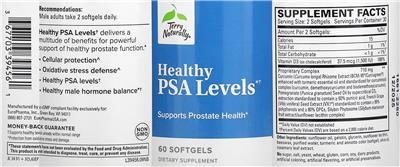
Supplement Facts
The label details for Healthy PSA Levels by Terry Naturally, sourced from the NIH Dietary Supplement Label Database.
Supplement Facts
| Ingredient | Amount | % DV |
|---|---|---|
| Calories | 15 Calorie(s) | -- |
| Total Carbohydrates | 1 Gram(s) | 1% |
| Vitamin D3 | 37.5 mcg | 188% |
| Total Fat | 1 Gram(s) | 1% |
| Silybin Phytosome | 0 NP | -- |
| BCM-95 Curcugreen | 0 NP | -- |
| Proprietary Complex | 710 mg | -- |
| VX1 | 0 NP | -- |
| Pomegranate Seed Oil Supercritical Extract | 0 NP | -- |
Other ingredients: Sunflower Oil, Gelatin, Glycerin, Sunflower Lecithin, Beeswax, Water, Purified, Turmeric, Annatto, Olive Oil, Rosemary Leaf Extract
Tap any ingredient to jump to its full detail below.
These statements are the manufacturer’s wording, reproduced from the product label — the label is saying it, not HelloPharmacist. We don’t verify or endorse them.
Suggested/Recommended/Usage/Directions
Recommendations: Male adults take 2 softgels daily.
Formulation
Healthy PSA levels delivers a multitude of benefits for powerful support of healthy prostate function. Cellular protection Oxidative stress defense Healthy PSA levels Healthy male hormone balance Supports healthy levels already withing normal range Protection from oxidative stress and damage
Money-back guarantee
Non GMO
Supports prostate health
No sugar, salt, yeast, wheat, gluten, corn, soy, dairy products, artificial coloring, artificial flavoring, or artificial preservatives.
FDA Disclaimer Statement
These statements have not been evaluated by the Food and Drug Administration. This product is not intended to diagnose, treat, cure, or prevent any disease.
FDA Statement of Identity
Dietary Supplement
Is this label outdated? Report a formula or label change and our pharmacy team will review it.
Healthy PSA Levels by Terry Naturally label
The label scan from the NIH Dietary Supplement Label Database. Tap to enlarge.
Label images are published by the NIH Dietary Supplement Label Database for the version of this product on file. Always read your actual product label.
View the full label (PDF)The Ingredients in Healthy PSA Levels by Terry Naturally
These are the 5 active ingredients this product is made of. Select any to open its full monograph.
Serving size2 Softgel(s) Dosage formSoftgel Capsule Servings per container30 Amounts shown are per serving.
Most supplement products combine several ingredients, and a medication can interact with the product through any one of them. Each ingredient below shows whether it has known drug interactions.
Vitamin D3
Interacts with715 drugs
Vitamin D is a fat-soluble vitamin that helps your body absorb calcium and is important for healthy bones, muscles, and immune function. Many people,...
Vitamin D3 monograph & interactionsProprietary Complex
- › Silybin Phytosome
- › BCM-95 Curcugreen
- › VX1
- › Pomegranate Seed Oil Supercritical Extract
Other (inactive) ingredients: Sunflower Oil, Gelatin, Glycerin, Sunflower Lecithin, Beeswax, Water, Purified, Turmeric, Annatto, Olive Oil, Rosemary Leaf Extract. These complete the product’s ingredient list but are not active constituents.
Healthy PSA Levels by Terry Naturally Drug Interactions
HelloPharmacist Interaction Report
Healthy PSA Levels by Terry Naturally contains five active ingredients, and the ones we could check show documented interactions with a substantial number of medications.
The most serious concern is vitamin D3, which can cause high blood calcium (hypercalcemia) when taken in high doses alongside thiazide water pills — a Moderate severity interaction that reduces how your kidneys clear calcium and may weaken your heart rhythm control.
Read the full breakdown — every affected drug type, severity by severity
Vitamin D3 also interacts Moderately with heart rhythm medications (verapamil and diltiazem), digoxin (a heart drug), the blood thinner warfarin alternative warfarin, the statin atorvastatin, the psoriasis drug calcipotriene, and aluminum-containing products. The grape extract (VX1) carries Moderate interactions with blood thinners (anticoagulants and antiplatelets), several liver enzyme systems (CYP1A2, 2D6, 2E1, and 3A4 substrates), cyclosporine, midazolam, and phenacetin.
Pomegranate seed oil adds Moderate interactions with blood pressure drugs, ACE inhibitors, warfarin, the statin rosuvastatin, and CYP2D6 substrates, plus Minor interactions with other statins and carbamazepine.
We could not check Silybin Phytosome or BCM-95 Curcugreen — no interaction data is on file for those. Altogether, these interactions span 1,030 individual medications.
Run your exact medications through the search tool on this page before you start.
Check your own medications below · Editorial policy · How we use AI
Want to check YOUR meds against Healthy PSA Levels?
Ask about interactions with your drugs in plain English — “Can I take it with lisinopril?” — and we find you the answer in seconds, ingredient by ingredient.
Go to the checkerIngredients driving the most interactions
Individual Drug Interactions
The ingredients in Healthy PSA Levels interact with 1,041 drugs. Click any drug to see the details.
3 of the 5 ingredients in Healthy PSA Levels interact with drugs. Each result below shows which ingredient is responsible. Pomegranate Seed Oil Supercritical Extract VX1 Vitamin D3
Ado-trastuzumab EmtansineKadcyla
How Ado-trastuzumab Emtansine interacts with Healthy PSA Levels — through 3 ingredients. Tap an ingredient for the detail:
Vx1Cytochrome P450 3a4 (cyp3a4) Substrates Moderate
Interaction Summary
It is unclear if grape seed extract inhibits or induces CYP3A4; research is conflicting.
Read the full Vx1 + Ado-trastuzumab Emtansine interactionPomegranate Seed Oil Supercritical ExtractCytochrome P450 3a4 (cyp3a4) Substrates Minor
Interaction Summary
Theoretically, pomegranate might increase levels of drugs metabolized by CYP3A4, but most research suggests this interaction is unlikely to be clinically significant.
Read the full Pomegranate Seed Oil Supercritical Extract + Ado-trastuzumab Emtansine interactionVitamin D3Cytochrome P450 3a4 (cyp3a4) Substrates Minor
Interaction Summary
Vitamin D might induce CYP3A4 enzymes and reduce the bioavailability of CYP3A4 substrates.
Read the full Vitamin D3 + Ado-trastuzumab Emtansine interactionAbciximabReoPro
How Abciximab interacts with Healthy PSA Levels — through 1 ingredient. Tap an ingredient for the detail:
Vx1Anticoagulant/antiplatelet Drugs Moderate
Interaction Summary
Theoretically, grape extracts may have antiplatelet effects and may increase the risk of bleeding if used with anticoagulant or antiplatelet drugs.
Read the full Vx1 + Abciximab interactionAbemaciclibVerzenio
How Abemaciclib interacts with Healthy PSA Levels — through 3 ingredients. Tap an ingredient for the detail:
Vx1Cytochrome P450 3a4 (cyp3a4) Substrates Moderate
Interaction Summary
It is unclear if grape seed extract inhibits or induces CYP3A4; research is conflicting.
Read the full Vx1 + Abemaciclib interactionPomegranate Seed Oil Supercritical ExtractCytochrome P450 3a4 (cyp3a4) Substrates Minor
Interaction Summary
Theoretically, pomegranate might increase levels of drugs metabolized by CYP3A4, but most research suggests this interaction is unlikely to be clinically significant.
Read the full Pomegranate Seed Oil Supercritical Extract + Abemaciclib interactionVitamin D3Cytochrome P450 3a4 (cyp3a4) Substrates Minor
Interaction Summary
Vitamin D might induce CYP3A4 enzymes and reduce the bioavailability of CYP3A4 substrates.
Read the full Vitamin D3 + Abemaciclib interactionAbiraterone
How Abiraterone interacts with Healthy PSA Levels — through 3 ingredients. Tap an ingredient for the detail:
Vx1Cytochrome P450 3a4 (cyp3a4) Substrates Moderate
Interaction Summary
It is unclear if grape seed extract inhibits or induces CYP3A4; research is conflicting.
Read the full Vx1 + Abiraterone interactionVitamin D3Cytochrome P450 3a4 (cyp3a4) Substrates Minor
Interaction Summary
Vitamin D might induce CYP3A4 enzymes and reduce the bioavailability of CYP3A4 substrates.
Read the full Vitamin D3 + Abiraterone interactionPomegranate Seed Oil Supercritical ExtractCytochrome P450 3a4 (cyp3a4) Substrates Minor
Interaction Summary
Theoretically, pomegranate might increase levels of drugs metabolized by CYP3A4, but most research suggests this interaction is unlikely to be clinically significant.
Read the full Pomegranate Seed Oil Supercritical Extract + Abiraterone interactionAbiraterone AcetateYonsa, Zytiga
How Abiraterone Acetate interacts with Healthy PSA Levels — through 3 ingredients. Tap an ingredient for the detail:
Vx1Cytochrome P450 3a4 (cyp3a4) Substrates Moderate
Interaction Summary
It is unclear if grape seed extract inhibits or induces CYP3A4; research is conflicting.
Read the full Vx1 + Abiraterone Acetate interactionPomegranate Seed Oil Supercritical ExtractCytochrome P450 3a4 (cyp3a4) Substrates Minor
Interaction Summary
Theoretically, pomegranate might increase levels of drugs metabolized by CYP3A4, but most research suggests this interaction is unlikely to be clinically significant.
Read the full Pomegranate Seed Oil Supercritical Extract + Abiraterone Acetate interactionVitamin D3Cytochrome P450 3a4 (cyp3a4) Substrates Minor
Interaction Summary
Vitamin D might induce CYP3A4 enzymes and reduce the bioavailability of CYP3A4 substrates.
Read the full Vitamin D3 + Abiraterone Acetate interactionAbrocitinibCibinqo
How Abrocitinib interacts with Healthy PSA Levels — through 2 ingredients. Tap an ingredient for the detail:
Vx1Cytochrome P450 2c9 (cyp2c9) Substrates, Anticoagulant/antiplatelet Drugs Moderate
Interaction Summary
It is unclear if grape juice or grape seed extract inhibits CYP2C9; research is conflicting.
Read the full Vx1 + Abrocitinib interactionPomegranate Seed Oil Supercritical ExtractCytochrome P450 2c9 (cyp2c9) Substrates Minor
Interaction Summary
Theoretically, pomegranate might increase levels of drugs metabolized by CYP2C9.
Read the full Pomegranate Seed Oil Supercritical Extract + Abrocitinib interactionAcalabrutinibCalquence
How Acalabrutinib interacts with Healthy PSA Levels — through 3 ingredients. Tap an ingredient for the detail:
Vx1Cytochrome P450 3a4 (cyp3a4) Substrates Moderate
Interaction Summary
It is unclear if grape seed extract inhibits or induces CYP3A4; research is conflicting.
Read the full Vx1 + Acalabrutinib interactionVitamin D3Cytochrome P450 3a4 (cyp3a4) Substrates Minor
Interaction Summary
Vitamin D might induce CYP3A4 enzymes and reduce the bioavailability of CYP3A4 substrates.
Read the full Vitamin D3 + Acalabrutinib interactionPomegranate Seed Oil Supercritical ExtractCytochrome P450 3a4 (cyp3a4) Substrates Minor
Interaction Summary
Theoretically, pomegranate might increase levels of drugs metabolized by CYP3A4, but most research suggests this interaction is unlikely to be clinically significant.
Read the full Pomegranate Seed Oil Supercritical Extract + Acalabrutinib interactionAcebutololRhotral, Sectral
How Acebutolol interacts with Healthy PSA Levels — through 1 ingredient. Tap an ingredient for the detail:
Pomegranate Seed Oil Supercritical ExtractAntihypertensive Drugs Moderate
Interaction Summary
Theoretically, taking pomegranate with antihypertensive drugs might increase the risk of hypotension.
Read the full Pomegranate Seed Oil Supercritical Extract + Acebutolol interactionAcenocoumarolSintrom
How Acenocoumarol interacts with Healthy PSA Levels — through 1 ingredient. Tap an ingredient for the detail:
Vx1Anticoagulant/antiplatelet Drugs Moderate
Interaction Summary
Theoretically, grape extracts may have antiplatelet effects and may increase the risk of bleeding if used with anticoagulant or antiplatelet drugs.
Read the full Vx1 + Acenocoumarol interactionAcetaminophenChildren's Tylenol, Children's Tylenol Meltaways, Tylenol, Tylenol Ex Strength
How Acetaminophen interacts with Healthy PSA Levels — through 1 ingredient. Tap an ingredient for the detail:
Vx1Cytochrome P450 2e1 (cyp2e1) Substrates, Cytochrome P450 1a2 (cyp1a2) Substrates Moderate
Interaction Summary
Theoretically, grape seed extract might increase the levels of CYP2E1 substrates.
Read the full Vx1 + Acetaminophen interactionAcetaminophen, AspirinGemnisyn
How Acetaminophen, Aspirin interacts with Healthy PSA Levels — through 1 ingredient. Tap an ingredient for the detail:
Vx1Cytochrome P450 1a2 (cyp1a2) Substrates, Anticoagulant/antiplatelet Drugs +1 Moderate
Interaction Summary
Theoretically, grape juice might reduce the levels of CYP1A2 substrates.
Read the full Vx1 + Acetaminophen, Aspirin interactionAcetaminophen, Aspirin, CaffeineExcedrin, Excedrin Extra Strength, Excedrin Migraine
How Acetaminophen, Aspirin, Caffeine interacts with Healthy PSA Levels — through 3 ingredients. Tap an ingredient for the detail:
Vx1Anticoagulant/antiplatelet Drugs, Cytochrome P450 2e1 (cyp2e1) Substrates +2 Moderate
Interaction Summary
Theoretically, grape extracts may have antiplatelet effects and may increase the risk of bleeding if used with anticoagulant or antiplatelet drugs.
Read the full Vx1 + Acetaminophen, Aspirin, Caffeine interactionPomegranate Seed Oil Supercritical ExtractCytochrome P450 3a4 (cyp3a4) Substrates Minor
Interaction Summary
Theoretically, pomegranate might increase levels of drugs metabolized by CYP3A4, but most research suggests this interaction is unlikely to be clinically significant.
Read the full Pomegranate Seed Oil Supercritical Extract + Acetaminophen, Aspirin, Caffeine interactionVitamin D3Cytochrome P450 3a4 (cyp3a4) Substrates Minor
Interaction Summary
Vitamin D might induce CYP3A4 enzymes and reduce the bioavailability of CYP3A4 substrates.
Read the full Vitamin D3 + Acetaminophen, Aspirin, Caffeine interactionAcetaminophen, Brompheniramine, PhenylpropanolamineDimetapp Cold and Flu
How Acetaminophen, Brompheniramine, Phenylpropanolamine interacts with Healthy PSA Levels — through 1 ingredient. Tap an ingredient for the detail:
Vx1Cytochrome P450 2e1 (cyp2e1) Substrates, Cytochrome P450 1a2 (cyp1a2) Substrates Moderate
Interaction Summary
Theoretically, grape seed extract might increase the levels of CYP2E1 substrates.
Read the full Vx1 + Acetaminophen, Brompheniramine, Phenylpropanolamine interactionAcetaminophen, ButalbitalAxocet, Bancap, Bucet, Butex Forte, Esgic CF, Orbivan CF +5 more
How Acetaminophen, Butalbital interacts with Healthy PSA Levels — through 1 ingredient. Tap an ingredient for the detail:
Vx1Cytochrome P450 1a2 (cyp1a2) Substrates, Cytochrome P450 2e1 (cyp2e1) Substrates Moderate
Interaction Summary
Theoretically, grape juice might reduce the levels of CYP1A2 substrates.
Read the full Vx1 + Acetaminophen, Butalbital interactionAcetaminophen, Butalbital, CaffeineEsgic, Esgic Plus, Fiogesic, Fioricet, Repan, Tecnal +1 more
How Acetaminophen, Butalbital, Caffeine interacts with Healthy PSA Levels — through 3 ingredients. Tap an ingredient for the detail:
Vx1Cytochrome P450 2e1 (cyp2e1) Substrates, Cytochrome P450 3a4 (cyp3a4) Substrates +1 Moderate
Interaction Summary
Theoretically, grape seed extract might increase the levels of CYP2E1 substrates.
Read the full Vx1 + Acetaminophen, Butalbital, Caffeine interactionPomegranate Seed Oil Supercritical ExtractCytochrome P450 3a4 (cyp3a4) Substrates Minor
Interaction Summary
Theoretically, pomegranate might increase levels of drugs metabolized by CYP3A4, but most research suggests this interaction is unlikely to be clinically significant.
Read the full Pomegranate Seed Oil Supercritical Extract + Acetaminophen, Butalbital, Caffeine interactionVitamin D3Cytochrome P450 3a4 (cyp3a4) Substrates Minor
Interaction Summary
Vitamin D might induce CYP3A4 enzymes and reduce the bioavailability of CYP3A4 substrates.
Read the full Vitamin D3 + Acetaminophen, Butalbital, Caffeine interactionAcetaminophen, Butalbital, Caffeine, CodeineEsgic with Codeine, Fioricet w/ Codeine
How Acetaminophen, Butalbital, Caffeine, Codeine interacts with Healthy PSA Levels — through 3 ingredients. Tap an ingredient for the detail:
Vx1Cytochrome P450 2e1 (cyp2e1) Substrates, Cytochrome P450 3a4 (cyp3a4) Substrates +2 Moderate
Interaction Summary
Theoretically, grape seed extract might increase the levels of CYP2E1 substrates.
Read the full Vx1 + Acetaminophen, Butalbital, Caffeine, Codeine interactionPomegranate Seed Oil Supercritical ExtractCytochrome P450 2d6 (cyp2d6) Substrates, Cytochrome P450 3a4 (cyp3a4) Substrates Moderate
Interaction Summary
Theoretically, pomegranate might increase levels of drugs metabolized by CYP2D6.
Read the full Pomegranate Seed Oil Supercritical Extract + Acetaminophen, Butalbital, Caffeine, Codeine interactionVitamin D3Cytochrome P450 3a4 (cyp3a4) Substrates Minor
Interaction Summary
Vitamin D might induce CYP3A4 enzymes and reduce the bioavailability of CYP3A4 substrates.
Read the full Vitamin D3 + Acetaminophen, Butalbital, Caffeine, Codeine interactionAcetaminophen, Butalbital, CodeineBancap w/ Codeine
How Acetaminophen, Butalbital, Codeine interacts with Healthy PSA Levels — through 2 ingredients. Tap an ingredient for the detail:
Vx1Cytochrome P450 2d6 (cyp2d6) Substrates, Cytochrome P450 2e1 (cyp2e1) Substrates +1 Moderate
Interaction Summary
Theoretically, grape seed extract may increase the levels of CYP2D6 substrates.
Read the full Vx1 + Acetaminophen, Butalbital, Codeine interactionPomegranate Seed Oil Supercritical ExtractCytochrome P450 2d6 (cyp2d6) Substrates Moderate
Interaction Summary
Theoretically, pomegranate might increase levels of drugs metabolized by CYP2D6.
Read the full Pomegranate Seed Oil Supercritical Extract + Acetaminophen, Butalbital, Codeine interactionAcetaminophen, Butalbital, Codeine PhosphatePhrenilin #3
How Acetaminophen, Butalbital, Codeine Phosphate interacts with Healthy PSA Levels — through 2 ingredients. Tap an ingredient for the detail:
Vx1Cytochrome P450 2d6 (cyp2d6) Substrates, Cytochrome P450 1a2 (cyp1a2) Substrates +1 Moderate
Interaction Summary
Theoretically, grape seed extract may increase the levels of CYP2D6 substrates.
Read the full Vx1 + Acetaminophen, Butalbital, Codeine Phosphate interactionPomegranate Seed Oil Supercritical ExtractCytochrome P450 2d6 (cyp2d6) Substrates Moderate
Interaction Summary
Theoretically, pomegranate might increase levels of drugs metabolized by CYP2D6.
Read the full Pomegranate Seed Oil Supercritical Extract + Acetaminophen, Butalbital, Codeine Phosphate interactionAcetaminophen, Caffeine, Chlorpheniramine, Hydrocodone, PhenylephrineHycomine Compound
How Acetaminophen, Caffeine, Chlorpheniramine, Hydrocodone, Phenylephrine interacts with Healthy PSA Levels — through 3 ingredients. Tap an ingredient for the detail:
Vx1Cytochrome P450 2e1 (cyp2e1) Substrates, Cytochrome P450 2d6 (cyp2d6) Substrates +2 Moderate
Interaction Summary
Theoretically, grape seed extract might increase the levels of CYP2E1 substrates.
Read the full Vx1 + Acetaminophen, Caffeine, Chlorpheniramine, Hydrocodone, Phenylephrine interactionPomegranate Seed Oil Supercritical ExtractCytochrome P450 2d6 (cyp2d6) Substrates, Cytochrome P450 3a4 (cyp3a4) Substrates Moderate
Interaction Summary
Theoretically, pomegranate might increase levels of drugs metabolized by CYP2D6.
Read the full Pomegranate Seed Oil Supercritical Extract + Acetaminophen, Caffeine, Chlorpheniramine, Hydrocodone, Phenylephrine interactionVitamin D3Cytochrome P450 3a4 (cyp3a4) Substrates Minor
Interaction Summary
Vitamin D might induce CYP3A4 enzymes and reduce the bioavailability of CYP3A4 substrates.
Read the full Vitamin D3 + Acetaminophen, Caffeine, Chlorpheniramine, Hydrocodone, Phenylephrine interactionAcetaminophen, Caffeine, CodeineGesic C15, Gesic C30, Gesic C8, Lenoltec 1, Lenoltec 2, Lenoltec 3 +1 more
How Acetaminophen, Caffeine, Codeine interacts with Healthy PSA Levels — through 3 ingredients. Tap an ingredient for the detail:
Pomegranate Seed Oil Supercritical ExtractCytochrome P450 3a4 (cyp3a4) Substrates, Cytochrome P450 2d6 (cyp2d6) Substrates Moderate
Interaction Summary
Theoretically, pomegranate might increase levels of drugs metabolized by CYP3A4, but most research suggests this interaction is unlikely to be clinically significant.
Read the full Pomegranate Seed Oil Supercritical Extract + Acetaminophen, Caffeine, Codeine interactionVx1Cytochrome P450 2e1 (cyp2e1) Substrates, Cytochrome P450 2d6 (cyp2d6) Substrates +2 Moderate
Interaction Summary
Theoretically, grape seed extract might increase the levels of CYP2E1 substrates.
Read the full Vx1 + Acetaminophen, Caffeine, Codeine interactionVitamin D3Cytochrome P450 3a4 (cyp3a4) Substrates Minor
Interaction Summary
Vitamin D might induce CYP3A4 enzymes and reduce the bioavailability of CYP3A4 substrates.
Read the full Vitamin D3 + Acetaminophen, Caffeine, Codeine interactionAcetaminophen, Caffeine, Codeine, SalicylamideCodalan No.1, Codalan No.2, Codalan No.3
How Acetaminophen, Caffeine, Codeine, Salicylamide interacts with Healthy PSA Levels — through 3 ingredients. Tap an ingredient for the detail:
Vx1Cytochrome P450 2e1 (cyp2e1) Substrates, Cytochrome P450 1a2 (cyp1a2) Substrates +2 Moderate
Interaction Summary
Theoretically, grape seed extract might increase the levels of CYP2E1 substrates.
Read the full Vx1 + Acetaminophen, Caffeine, Codeine, Salicylamide interactionPomegranate Seed Oil Supercritical ExtractCytochrome P450 3a4 (cyp3a4) Substrates, Cytochrome P450 2d6 (cyp2d6) Substrates Moderate
Interaction Summary
Theoretically, pomegranate might increase levels of drugs metabolized by CYP3A4, but most research suggests this interaction is unlikely to be clinically significant.
Read the full Pomegranate Seed Oil Supercritical Extract + Acetaminophen, Caffeine, Codeine, Salicylamide interactionVitamin D3Cytochrome P450 3a4 (cyp3a4) Substrates Minor
Interaction Summary
Vitamin D might induce CYP3A4 enzymes and reduce the bioavailability of CYP3A4 substrates.
Read the full Vitamin D3 + Acetaminophen, Caffeine, Codeine, Salicylamide interactionAcetaminophen, Caffeine, DihydrocodeineDHC Plus, Panlor DC, Panlor SS
How Acetaminophen, Caffeine, Dihydrocodeine interacts with Healthy PSA Levels — through 3 ingredients. Tap an ingredient for the detail:
Vx1Cytochrome P450 2d6 (cyp2d6) Substrates, Cytochrome P450 2e1 (cyp2e1) Substrates +2 Moderate
Interaction Summary
Theoretically, grape seed extract may increase the levels of CYP2D6 substrates.
Read the full Vx1 + Acetaminophen, Caffeine, Dihydrocodeine interactionPomegranate Seed Oil Supercritical ExtractCytochrome P450 3a4 (cyp3a4) Substrates, Cytochrome P450 2d6 (cyp2d6) Substrates Moderate
Interaction Summary
Theoretically, pomegranate might increase levels of drugs metabolized by CYP3A4, but most research suggests this interaction is unlikely to be clinically significant.
Read the full Pomegranate Seed Oil Supercritical Extract + Acetaminophen, Caffeine, Dihydrocodeine interactionVitamin D3Cytochrome P450 3a4 (cyp3a4) Substrates Minor
Interaction Summary
Vitamin D might induce CYP3A4 enzymes and reduce the bioavailability of CYP3A4 substrates.
Read the full Vitamin D3 + Acetaminophen, Caffeine, Dihydrocodeine interactionAcetaminophen, Caffeine, IsomethepteneMigralam
How Acetaminophen, Caffeine, Isometheptene interacts with Healthy PSA Levels — through 3 ingredients. Tap an ingredient for the detail:
Vx1Cytochrome P450 1a2 (cyp1a2) Substrates, Cytochrome P450 2e1 (cyp2e1) Substrates +1 Moderate
Interaction Summary
Theoretically, grape juice might reduce the levels of CYP1A2 substrates.
Read the full Vx1 + Acetaminophen, Caffeine, Isometheptene interactionPomegranate Seed Oil Supercritical ExtractCytochrome P450 3a4 (cyp3a4) Substrates Minor
Interaction Summary
Theoretically, pomegranate might increase levels of drugs metabolized by CYP3A4, but most research suggests this interaction is unlikely to be clinically significant.
Read the full Pomegranate Seed Oil Supercritical Extract + Acetaminophen, Caffeine, Isometheptene interactionVitamin D3Cytochrome P450 3a4 (cyp3a4) Substrates Minor
Interaction Summary
Vitamin D might induce CYP3A4 enzymes and reduce the bioavailability of CYP3A4 substrates.
Read the full Vitamin D3 + Acetaminophen, Caffeine, Isometheptene interactionAcetaminophen, Caffeine, PyrilamineMidol Max Strength Menstrual
How Acetaminophen, Caffeine, Pyrilamine interacts with Healthy PSA Levels — through 3 ingredients. Tap an ingredient for the detail:
Vx1Cytochrome P450 3a4 (cyp3a4) Substrates, Cytochrome P450 1a2 (cyp1a2) Substrates +1 Moderate
Interaction Summary
It is unclear if grape seed extract inhibits or induces CYP3A4; research is conflicting.
Read the full Vx1 + Acetaminophen, Caffeine, Pyrilamine interactionPomegranate Seed Oil Supercritical ExtractCytochrome P450 3a4 (cyp3a4) Substrates Minor
Interaction Summary
Theoretically, pomegranate might increase levels of drugs metabolized by CYP3A4, but most research suggests this interaction is unlikely to be clinically significant.
Read the full Pomegranate Seed Oil Supercritical Extract + Acetaminophen, Caffeine, Pyrilamine interactionVitamin D3Cytochrome P450 3a4 (cyp3a4) Substrates Minor
Interaction Summary
Vitamin D might induce CYP3A4 enzymes and reduce the bioavailability of CYP3A4 substrates.
Read the full Vitamin D3 + Acetaminophen, Caffeine, Pyrilamine interactionAcetaminophen, Chlorpheniramine Maleate, Dextromethorphan HbrVicks Formula 44M Cough, Cold & Flu Relief
How Acetaminophen, Chlorpheniramine Maleate, Dextromethorphan Hbr interacts with Healthy PSA Levels — through 3 ingredients. Tap an ingredient for the detail:
Vx1Cytochrome P450 2e1 (cyp2e1) Substrates, Cytochrome P450 2d6 (cyp2d6) Substrates +2 Moderate
Interaction Summary
Theoretically, grape seed extract might increase the levels of CYP2E1 substrates.
Read the full Vx1 + Acetaminophen, Chlorpheniramine Maleate, Dextromethorphan Hbr interactionPomegranate Seed Oil Supercritical ExtractCytochrome P450 3a4 (cyp3a4) Substrates, Cytochrome P450 2d6 (cyp2d6) Substrates Moderate
Interaction Summary
Theoretically, pomegranate might increase levels of drugs metabolized by CYP3A4, but most research suggests this interaction is unlikely to be clinically significant.
Read the full Pomegranate Seed Oil Supercritical Extract + Acetaminophen, Chlorpheniramine Maleate, Dextromethorphan Hbr interactionVitamin D3Cytochrome P450 3a4 (cyp3a4) Substrates Minor
Interaction Summary
Vitamin D might induce CYP3A4 enzymes and reduce the bioavailability of CYP3A4 substrates.
Read the full Vitamin D3 + Acetaminophen, Chlorpheniramine Maleate, Dextromethorphan Hbr interactionAcetaminophen, Chlorpheniramine, Codeine, PhenylephrineColrex
How Acetaminophen, Chlorpheniramine, Codeine, Phenylephrine interacts with Healthy PSA Levels — through 3 ingredients. Tap an ingredient for the detail:
Vx1Cytochrome P450 2d6 (cyp2d6) Substrates, Cytochrome P450 3a4 (cyp3a4) Substrates +2 Moderate
Interaction Summary
Theoretically, grape seed extract may increase the levels of CYP2D6 substrates.
Read the full Vx1 + Acetaminophen, Chlorpheniramine, Codeine, Phenylephrine interactionPomegranate Seed Oil Supercritical ExtractCytochrome P450 2d6 (cyp2d6) Substrates, Cytochrome P450 3a4 (cyp3a4) Substrates Moderate
Interaction Summary
Theoretically, pomegranate might increase levels of drugs metabolized by CYP2D6.
Read the full Pomegranate Seed Oil Supercritical Extract + Acetaminophen, Chlorpheniramine, Codeine, Phenylephrine interactionVitamin D3Cytochrome P450 3a4 (cyp3a4) Substrates Minor
Interaction Summary
Vitamin D might induce CYP3A4 enzymes and reduce the bioavailability of CYP3A4 substrates.
Read the full Vitamin D3 + Acetaminophen, Chlorpheniramine, Codeine, Phenylephrine interactionAcetaminophen, Chlorpheniramine, DextromethorphanCoricidin II Extra Strength Cold and Flu
How Acetaminophen, Chlorpheniramine, Dextromethorphan interacts with Healthy PSA Levels — through 3 ingredients. Tap an ingredient for the detail:
Vx1Cytochrome P450 2e1 (cyp2e1) Substrates, Cytochrome P450 2d6 (cyp2d6) Substrates +2 Moderate
Interaction Summary
Theoretically, grape seed extract might increase the levels of CYP2E1 substrates.
Read the full Vx1 + Acetaminophen, Chlorpheniramine, Dextromethorphan interactionPomegranate Seed Oil Supercritical ExtractCytochrome P450 3a4 (cyp3a4) Substrates, Cytochrome P450 2d6 (cyp2d6) Substrates Moderate
Interaction Summary
Theoretically, pomegranate might increase levels of drugs metabolized by CYP3A4, but most research suggests this interaction is unlikely to be clinically significant.
Read the full Pomegranate Seed Oil Supercritical Extract + Acetaminophen, Chlorpheniramine, Dextromethorphan interactionVitamin D3Cytochrome P450 3a4 (cyp3a4) Substrates Minor
Interaction Summary
Vitamin D might induce CYP3A4 enzymes and reduce the bioavailability of CYP3A4 substrates.
Read the full Vitamin D3 + Acetaminophen, Chlorpheniramine, Dextromethorphan interactionAcetaminophen, Chlorpheniramine, Dextromethorphan HydrobromideCoricidin HBP Maximum Strength Flu
How Acetaminophen, Chlorpheniramine, Dextromethorphan Hydrobromide interacts with Healthy PSA Levels — through 3 ingredients. Tap an ingredient for the detail:
Vx1Cytochrome P450 3a4 (cyp3a4) Substrates, Cytochrome P450 2d6 (cyp2d6) Substrates +2 Moderate
Interaction Summary
It is unclear if grape seed extract inhibits or induces CYP3A4; research is conflicting.
Read the full Vx1 + Acetaminophen, Chlorpheniramine, Dextromethorphan Hydrobromide interactionPomegranate Seed Oil Supercritical ExtractCytochrome P450 3a4 (cyp3a4) Substrates, Cytochrome P450 2d6 (cyp2d6) Substrates Moderate
Interaction Summary
Theoretically, pomegranate might increase levels of drugs metabolized by CYP3A4, but most research suggests this interaction is unlikely to be clinically significant.
Read the full Pomegranate Seed Oil Supercritical Extract + Acetaminophen, Chlorpheniramine, Dextromethorphan Hydrobromide interactionVitamin D3Cytochrome P450 3a4 (cyp3a4) Substrates Minor
Interaction Summary
Vitamin D might induce CYP3A4 enzymes and reduce the bioavailability of CYP3A4 substrates.
Read the full Vitamin D3 + Acetaminophen, Chlorpheniramine, Dextromethorphan Hydrobromide interactionAcetaminophen, Chlorpheniramine, Dextromethorphan, PhenylpropanolamineMulti Symptom Cold Relief
How Acetaminophen, Chlorpheniramine, Dextromethorphan, Phenylpropanolamine interacts with Healthy PSA Levels — through 3 ingredients. Tap an ingredient for the detail:
Vx1Cytochrome P450 2d6 (cyp2d6) Substrates, Cytochrome P450 2e1 (cyp2e1) Substrates +2 Moderate
Interaction Summary
Theoretically, grape seed extract may increase the levels of CYP2D6 substrates.
Read the full Vx1 + Acetaminophen, Chlorpheniramine, Dextromethorphan, Phenylpropanolamine interactionPomegranate Seed Oil Supercritical ExtractCytochrome P450 3a4 (cyp3a4) Substrates, Cytochrome P450 2d6 (cyp2d6) Substrates Moderate
Interaction Summary
Theoretically, pomegranate might increase levels of drugs metabolized by CYP3A4, but most research suggests this interaction is unlikely to be clinically significant.
Read the full Pomegranate Seed Oil Supercritical Extract + Acetaminophen, Chlorpheniramine, Dextromethorphan, Phenylpropanolamine interactionVitamin D3Cytochrome P450 3a4 (cyp3a4) Substrates Minor
Interaction Summary
Vitamin D might induce CYP3A4 enzymes and reduce the bioavailability of CYP3A4 substrates.
Read the full Vitamin D3 + Acetaminophen, Chlorpheniramine, Dextromethorphan, Phenylpropanolamine interactionAcetaminophen, Chlorpheniramine, Dextromethorphan, PseudoephedrineChildren's Tylenol Cold Plus Cough, Tylenol Cold Ex Strength
How Acetaminophen, Chlorpheniramine, Dextromethorphan, Pseudoephedrine interacts with Healthy PSA Levels — through 3 ingredients. Tap an ingredient for the detail:
Pomegranate Seed Oil Supercritical ExtractCytochrome P450 2d6 (cyp2d6) Substrates, Cytochrome P450 3a4 (cyp3a4) Substrates Moderate
Interaction Summary
Theoretically, pomegranate might increase levels of drugs metabolized by CYP2D6.
Read the full Pomegranate Seed Oil Supercritical Extract + Acetaminophen, Chlorpheniramine, Dextromethorphan, Pseudoephedrine interactionVx1Cytochrome P450 2e1 (cyp2e1) Substrates, Cytochrome P450 2d6 (cyp2d6) Substrates +2 Moderate
Interaction Summary
Theoretically, grape seed extract might increase the levels of CYP2E1 substrates.
Read the full Vx1 + Acetaminophen, Chlorpheniramine, Dextromethorphan, Pseudoephedrine interactionVitamin D3Cytochrome P450 3a4 (cyp3a4) Substrates Minor
Interaction Summary
Vitamin D might induce CYP3A4 enzymes and reduce the bioavailability of CYP3A4 substrates.
Read the full Vitamin D3 + Acetaminophen, Chlorpheniramine, Dextromethorphan, Pseudoephedrine interactionEach ingredient & the kinds of drugs it affects
For each ingredient in Healthy PSA Levels with known interactions, here are the types of medications they can affect. Open any type for the detail — or search your exact drug in the checker above.
Pomegranate Seed Oil Supercritical Extract
Ace Inhibitors (Aceis)
Theoretically, taking pomegranate with ACEIs might increase the risk of adverse effects.
Pomegranate juice is thought to have ACE inhibitor-like effects.
Antihypertensive Drugs
Theoretically, taking pomegranate with antihypertensive drugs might increase the risk of hypotension.
Consuming pomegranate juice can modestly lower blood pressure.
Cytochrome P450 2D6 (Cyp2D6) Substrates
Theoretically, pomegranate might increase levels of drugs metabolized by CYP2D6.
In vitro, pomegranate juice inhibits CYP2D6. However, the clinical significance of this potential interaction in humans is not known.
Rosuvastatin (Crestor)
Theoretically, taking pomegranate with rosuvastatin might increase the risk of adverse effects.
In one case, a patient taking rosuvastatin 5 mg every other day in combination with ezetimibe 10 mg daily developed rhabdomyolysis after drinking pomegranate juice 200 mL twice weekly for 3 weeks. This patient had a history of elevated creatine kinase levels while not receiving any statin treatment. This suggests a possible underlying myopathy and predisposition to rhabdomyolysis.
Warfarin (Coumadin)
Theoretically, pomegranate might increase warfarin levels and increase the risk of bleeding. Also, discontinuing regular consumption of pomegranate juice might decrease warfarin levels.
In one case report, a patient had a stable, therapeutic bleeding time, as measured by international normalized ratio (INR), while taking warfarin in combination with pomegranate juice 2-3 times per week. The patient became subtherapeutic within about 10 days after discontinuing pomegranate juice, which required a warfarin dose increase. In another case report, a patient with a stable INR for over one year presented with an INR of 14. The patient noted no changes to medications or diet but did report consuming around 3 liters of pomegranate juice over the previous week. The patient's INR stabilized upon moderation of pomegranate juice consumption. The mechanism of this potential interaction is unclear.
Carbamazepine (Tegretol)
Theoretically, taking pomegranate with carbamazepine might increase the risk of adverse effects, although research suggests this interaction is unlikely to be clinically significant.
Animal research shows that pomegranate juice may inhibit cytochrome P450 3A4 (CYP3A4) metabolism of carbamazepine and increase levels of carbamazepine by 1.5 times without prolonging the elimination half-life. This suggests that pomegranate juice inhibits intestinal CYP3A4, but might not inhibit hepatic CYP3A4. However, some human research suggests that pomegranate does not significantly inhibit CYP3A4 drug metabolism in humans.
Cytochrome P450 2C9 (Cyp2C9) Substrates
Theoretically, pomegranate might increase levels of drugs metabolized by CYP2C9.
Some animal and in vitro research shows that pomegranate juice inhibits intestinal, but not hepatic, CYP2C9 isoenzyme activity. However, clinical research shows that neither pomegranate juice nor pomegranate extract have a significant effect on CYP2C9 activity in humans.
Cytochrome P450 3A4 (Cyp3A4) Substrates
Theoretically, pomegranate might increase levels of drugs metabolized by CYP3A4, but most research suggests this interaction is unlikely to be clinically significant.
Pomegranate contains several polyphenols that have individually been shown to inhibit CYP3A4. However, there is contradictory evidence about the effect of whole pomegranate juice on CYP3A4 activity. In vitro, pomegranate juice significantly inhibits the CYP3A4 enzyme, with comparable inhibition to grapefruit juice. In an animal model, pomegranate juice inhibits CYP3A4 metabolism of carbamazepine and increases levels of carbamazepine by 1.5 times; however, in human volunteers, drinking a single glass of pomegranate juice 240 mL or taking 200 mL daily for 2 weeks does not significantly affect levels of the CYP3A4 substrate midazolam after oral or intravenous administration. Another study in healthy volunteers shows that consuming pomegranate juice 300 mL three times daily for three days also does not significantly affect levels of simvastatin, a CYP3A4 substrate This suggests that pomegranate is unlikely to significantly affect levels of CYP3A4 substrates in humans.
Tolbutamide (Orinase)
Theoretically, pomegranate might increase levels of tolbutamide, although research suggests this interaction is unlikely to be clinically significant.
Animal research shows that pomegranate juice inhibits the cytochrome P450 2C9 (CYP2C9) metabolism of tolbutamide. Pomegranate juice increased tolbutamide levels by 1.2 times without prolonging the elimination half-life. This suggests that pomegranate juice inhibits intestinal CYP2C9, but might not inhibit hepatic CYP2C9. Despite this evidence, clinical research shows that neither pomegranate juice nor pomegranate extract have a significant effect on CYP2C9 activity in humans. This interaction does not appear to be clinically significant in humans.
VX1
Anticoagulant/Antiplatelet Drugs
Theoretically, grape extracts may have antiplatelet effects and may increase the risk of bleeding if used with anticoagulant or antiplatelet drugs.
In vitro evidence suggests that grape extracts might decrease platelet aggregation.
Cyclosporine (Neoral, Sandimmune)
Ingesting grape juice with cyclosporine can reduce cyclosporine absorption.
A small pharmacokinetic study in healthy young adults shows that intake of purple grape juice 200 mL along with cyclosporine can decrease the absorption of cyclosporine by up to 30% when compared with water. Separate doses of grape juice and cyclosporine by at least 2 hours to avoid this interaction.
Cytochrome P450 1A2 (Cyp1A2) Substrates
Theoretically, grape juice might reduce the levels of CYP1A2 substrates.
A small pharmacokinetic study in healthy adults shows that ingestion of 200 mL of grape juice decreases phenacetin plasma levels. This is thought to be due to induction of CYP1A2.
Cytochrome P450 2D6 (Cyp2D6) Substrates
Theoretically, grape seed extract may increase the levels of CYP2D6 substrates.
In vitro evidence suggests that grape seed extract might inhibit CYP2D6 enzymes. However, this interaction has not been reported in humans.
Cytochrome P450 2E1 (Cyp2E1) Substrates
Theoretically, grape seed extract might increase the levels of CYP2E1 substrates.
In vitro and animal research suggests that grape seed proanthocyanidin extract inhibits CYP2E1 enzymes. However, this interaction has not been reported in humans.
Cytochrome P450 3A4 (Cyp3A4) Substrates
It is unclear if grape seed extract inhibits or induces CYP3A4; research is conflicting.
In vitro evidence suggests that grape seed extract might inhibit CYP3A4 enzymes. However, evidence from animal research shows that grape seed extract may induce CYP3A4 in the liver. So far, these interactions have not been reported in humans.
Midazolam (Versed)
Theoretically, long-term intake of grape seed extract might decrease the effects of midazolam.
Animal research shows that subchronic ingestions of grape seed extract can increase the elimination of intravenous midazolam by increasing hepatic CYP3A4 activity. Single doses of grape seed extract do not appear to affect midazolam elimination.
Phenacetin
Grape juice might decrease phenacetin absorption.
A small pharmacokinetic study in healthy adults shows that ingestion of 200 mL of grape juice decreases phenacetin plasma levels. This is thought to be due to induction of cytochrome P450 1A2 (CYP1A2).
Cytochrome P450 2C9 (Cyp2C9) Substrates
It is unclear if grape juice or grape seed extract inhibits CYP2C9; research is conflicting.
In vitro evidence shows that grape seed extract or grape juice might inhibit CYP2C9 enzymes. However, a small pharmacokinetic study in healthy adults shows that drinking 8 ounces of grape juice once does not affect the clearance of flurbiprofen, a probe-drug for CYP2C9 metabolism. The effects of continued grape juice consumption are unclear.
Vitamin D3
Aluminum
Vitamin D might increase aluminum absorption and toxicity, but this has only been reported in people with renal failure.
The protein that transports calcium across the intestinal wall can also bind and transport aluminum. This protein is stimulated by vitamin D, which may therefore increase aluminum absorption. This mechanism may contribute to increased aluminum levels and toxicity in people with renal failure, when they take vitamin D and aluminum-containing phosphate binders chronically.
Atorvastatin (Lipitor)
Vitamin D might reduce absorption of atorvastatin.
A small, low-quality clinical study shows that taking vitamin D reduces levels of atorvastatin and its active metabolites by up to 55%. However, while atorvastatin levels decreased, total cholesterol, low-density lipoprotein (LDL) cholesterol, and high-density lipoprotein (HDL) cholesterol levels did not substantially change. Atorvastatin is metabolized in the gut by CYP3A4 enzymes, and researchers theorized that vitamin D might induce CYP3A4, causing reduced levels of atorvastatin. However, this proposed mechanism was not specifically studied.
Calcipotriene (Dovonex)
Taking calcipotriene with vitamin D increases the risk for hypercalcemia.
Calcipotriene is a vitamin D analog used topically for psoriasis. It can be absorbed in sufficient amounts to cause systemic effects, including hypercalcemia. Theoretically, combining calcipotriene with vitamin D supplements might increase the risk of hypercalcemia.
Digoxin (Lanoxin)
Theoretically, hypercalcemia induced by high-dose vitamin D can increase the risk of arrhythmia from digoxin.
High doses of vitamin D can cause hypercalcemia. Hypercalcemia increases the risk of fatal cardiac arrhythmias with digoxin. Avoid vitamin D doses above the tolerable upper intake level (4000 IU daily for adults) and monitor serum calcium levels in people taking vitamin D and digoxin concurrently.
Diltiazem (Cardizem, Others)
Theoretically, hypercalcemia induced by high-dose vitamin D can reduce the therapeutic effects of diltiazem for arrhythmia.
High doses of vitamin D can cause hypercalcemia. Hypercalcemia can reduce the effectiveness of verapamil in atrial fibrillation. Theoretically this could also occur with diltiazem. Avoid vitamin D doses above the tolerable upper intake level (4000 IU daily for adults) and monitor serum calcium levels in people taking vitamin D and diltiazem concurrently.
Thiazide Diuretics
Theoretically, taking thiazide diuretics and high-dose vitamin D can increase the risk of hypercalcemia.
Thiazide diuretics decrease urinary calcium excretion, which could lead to hypercalcemia if vitamin D supplements are taken concurrently. This has been reported in people being treated with vitamin D for hypoparathyroidism, and also in elderly people with normal parathyroid function who were taking a thiazide, vitamin D, and calcium-containing antacids daily.
Verapamil (Calan, Others)
Hypercalcemia induced by high-dose vitamin D can reduce the therapeutic effects of verapamil for arrhythmia.
Hypercalcemia due to high doses of vitamin D can reduce the effectiveness of verapamil in atrial fibrillation. Avoid vitamin D doses above the tolerable upper intake level (4000 IU daily for adults) and monitor serum calcium levels in people taking vitamin D and verapamil concurrently.
Cytochrome P450 3A4 (Cyp3A4) Substrates
Vitamin D might induce CYP3A4 enzymes and reduce the bioavailability of CYP3A4 substrates.
There is some concern that vitamin D might induce CYP3A4. In vitro research suggests that vitamin D induces CYP3A4 transcription. Additionally, observational research has found that increased UV light exposure and serum vitamin D levels are associated with decreased serum levels of CYP3A4 substrates such as tacrolimus and sirolimus, while no association between UV light exposure or vitamin D levels and levels of mycophenolic acid, a non-CYP3A4 substrate, was found. A small, low-quality clinical study shows that taking vitamin D reduces levels of the CYP3A4 substrate atorvastatin and its active metabolites by up to 55%; however, the clinical effects of atorvastatin were not reduced. While researchers theorized that vitamin D might induce CYP3A4, this proposed mechanism was not specifically studied.
Brand information
Manufacturer and brand details for Healthy PSA Levels, from the product label.
Terry Naturally
See all Terry Naturally products- Name
- EuroPharma, Inc.
- City
- Green Bay
- State
- WI
- ZipCode
- 54311
- Phone Number
- (866) 807-2731
- Web Address
- EuroPharmaUSA.com
Healthy PSA Levels by Terry Naturally: Common Questions
Does Healthy PSA Levels by Terry Naturally interact with any medications?
How can one product interact with so many drugs?
Where does this information come from?
What is vitamin D3 in this product for?
Can I take this if I'm pregnant?
What side effects might I notice?
Does pomegranate in this product lower blood pressure?
What is the grape extract for?
Is this product safe to take long-term?
Written and reviewed by the HelloPharmacist editorial staff. Our editorial policy
Not sure if Healthy PSA Levels is safe with your meds?
Our pharmacists answer your medication & supplement questions — free.
Label information is sourced from the NIH Dietary Supplement Label Database and reflects the product version on file; always read your actual product label. This page is for education only and is not a substitute for professional medical advice. Confirm with your pharmacist or doctor before combining supplements and medications.
The Full Monographs Behind Healthy PSA Levels’s Ingredients
Every ingredient we hold a full HelloPharmacist monograph for — uses, evidence, safety, and the complete interaction list.
Vitamin D
Interacts with 715 drugsVitamin D is a fat-soluble vitamin that helps your body absorb calcium and is important for healthy bones, muscles, and immune function. Many people, especially those with low sun exposure,...
Read the full Vitamin D monograph → Herb & supplement monographGrape
Interacts with 910 drugsGrapes and grape products like grape seed extract contain antioxidant compounds such as resveratrol and proanthocyanidins that may support heart and blood vessel health. While the food is he...
Read the full Grape monograph → Herb & supplement monographPomegranate
Interacts with 922 drugsPomegranate is a nutrient-rich fruit that is high in antioxidants and is widely enjoyed as food and juice. Early research suggests it may support heart health and blood pressure, but the evi...
Read the full Pomegranate monograph →Sources & How We Checked
Healthy PSA Levels's label data comes from the NIH Dietary Supplement Label Database; the ingredient interaction data is from the Natural Medicines database, reviewed by our pharmacists.
- NIH Dietary Supplement Label Database (DSLD) — The official product label on file for this supplement.
- Natural Medicines (Therapeutic Research Center) — Evidence-graded clinical reference behind the ingredient interaction data.
Content is written and reviewed by licensed HelloPharmacist pharmacists. See our data sources and editorial standards for how this information is built and checked.
The 87 references behind this product’s interaction data
Every citation that drives the interaction findings for this product’s ingredients, from the evidence-graded Natural Medicines (TRC Healthcare) database. Open an ingredient to browse its citations — links open the study on PubMed or the publisher’s site.
Vitamin D 26 references
- McEvoy GK, ed. AHFS Drug Information. Bethesda, MD: American Society of Health-System Pharmacists, 1998.
- Tatro DS, ed. Drug Interactions Facts. Facts and Comparisons Inc., St. Louis, MO. 1999.
- Koutkia P, Chen TC, Holick MF. Vitamin D intoxication associated with an over-the-counter supplement. N Engl J Med 2001;345:66-7. PubMed
- Bar-Or D, Yoel G. Calcium and calciferol antagonize effect of verapamil in atrial fibrillation. Br Med J 1981;282:1585-6.
- Demontis R, Leflon A, Fournier A, et al. 1 alpha(OH) vitamin D3 increases plasma aluminum in hemodialyzed patients taking AI(OH)3. Clin Nephrol 1986;26:146-9.
- Crowe M, Wollner L, Griffiths RA. Hypercalcemia following vitamin D and thiazide therapy in the elderly. Practitioner 1984;228:312-3.
- Parfitt AM. Thiazide-induced hypercalcemia in vitamin D-treated hypoparathyroidism. Ann Intern Med 1972;77:557-63. PubMed
- Thiazide diuretics and the risk of osteoporosis. Pharmacist's Letter/Prescriber's Letter 2003;19(11):191105.
- Moon J. The role of vitamin D in toxic metal absorption. J Am Coll Nutr 1994;13:559-64.
- Demontis R, Reissi D, Noel C, et al. Indirect clinical evidence that 1alphaOH vitamin D<SUB>3</SUB> increases the intestinal absorption of aluminum. Clin Nephrol 1989;31:123-7.
- Adler AJ, Berlyne GM. Duodenal aluminum absorption in the rat: effect of vitamin D. Am J Physiol 1985;249:G209-13. PubMed
- Schwartz JB. Effects of vitamin D supplementation in atorvastatin-treated patients: A new drug interaction with an unexpected consequence. Clin Pharmacol Ther 2009;85:198-203. PubMed
- Dietary reference intakes for calcium and vitamin D. Institute of Medicine, November 30, 2010. Available at: http://www.iom.edu/~/media/Files/Report%20Files/2010/Dietary-Reference-Intakes-for-Calcium-and-Vitamin-D/Vitamin%20D%20and%20Calcium%202010%20Repo
- Cox KA, Dunn MA. Aluminum toxicity alters the regulation of calbindin-D28k protein and mRNA expression in chick intestine. J Nutr 2001;131:2007-13. PubMed
- Escribano, J., Balaguer, A., Pagone, F., Feliu, A., and Roque, I. Figuls. Pharmacological interventions for preventing complications in idiopathic hypercalciuria. Cochrane.Database.Syst.Rev. 2009;(1):CD004754. PubMed
- Carlton, S., Clopton, D., and Cappuzzo, K. A. Vitamin D deficiency: appropriate replenishment therapies and the effects of vitamin D toxicity. Consult Pharm 2010;25(3):171-177. PubMed
- Wang, H., Xia, N., Yang, Y., and Peng, D. Q. Influence of vitamin D supplementation on plasma lipid profiles: a meta-analysis of randomized controlled trials. Lipids Health Dis. 2012;11:42. PubMed
- Turner AN, Carr Reese P, Fields KS, Anderson J, Ervin M, Davis JA, Fichorova RN, Roberts MW, Klebanoff MA, Jackson RD. A blinded, randomized controlled trial of high-dose vitamin D supplementation to reduce recurrence of bacterial vaginosis. Am J Obstet G PubMed
- Weiner M, Epstein FH. Signs and symptoms of electrolyte disorders. Yale J Biol Med. 1970;43(2):76-109.
- Lappe J, Watson P, Travers-Gustafson D, Recker R, Garland C, Gorham E, Baggerly K, McDonnell SL. Effect of Vitamin D and Calcium Supplementation on Cancer Incidence in Older Women: A Randomized Clinical Trial. JAMA. 2017 Mar 28;317(12):1234-1243. PubMed
- Roth DE, Leung M, Mesfin E, Qamar H, Watterworth J, Papp E. Vitamin D supplementation during pregnancy: state of the evidence from a systematic review of randomised trials. BMJ. 2017;359:j5237. PubMed
- Murai IH, Fernandes AL, Sales LP, et al. Effect of a single high dose of vitamin D3 on hospital length of stay in patients with moderate to severe COVID-19: A randomized clinical trial. JAMA. 2021.
- Wang Z, Schuetz EG, Xu Y, Thummel KE. Interplay between vitamin D and the drug metabolizing enzyme CYP3A4. J Steroid Biochem Mol Biol 2013;136:54-8. PubMed
- Doyle D, Browne U, Brickley A, Murphy D. Vitamin D-induced hypercalcaemia and acute kidney injury in sarcoidosis. BMJ Case Rep 2023;16(1):e250580. PubMed
- Williamson A, Martineau AR, Sheikh A, Jolliffe D, Griffiths CJ. Vitamin D for the management of asthma. Cochrane Database Syst Rev 2023;2(2):CD011511. PubMed
- Kinesya E, Santoso D, Gde Arya N, et al. Vitamin D as adjuvant therapy for diabetic foot ulcers: Systematic review and meta-analysis approach. Clin Nutr ESPEN 2023;54:137-143. PubMed
Grape 34 references
- Kiesewetter H, Koscielny J, Kalus U, et al. Efficacy of orally administered extract of red vine leaf AS 195 (folia vitis viniferae) in chronic venous insufficiency (stages I-II). A randomized, double-blind, placebo-controlled trial. Arzneimittelforschung
- Xiao Dong S, Zhi Ping Z, Zhong Xiao W, et al. Possible enhancement of the first-pass metabolism of phenacetin by ingestion of grape juice in Chinese subjects. Br J Clin Pharmacol 1999;48:638-40. PubMed
- Vaswani SK, Hamilton RG, Carey RN, et al. Anaphylaxis recurrent urticaria and angioedema from grape hypersensitivity. J Allergy Clin Immunol 1998;101:S31.
- Chevallier A. The Encyclopedia of Medicinal Plants. London, UK: Dorling Kindersley, Ltd., 1996.
- Bernstein DI, Bernstein CK, Deng C, et al. Evaluation of the clinical efficacy and safety of grapeseed extract in the treatment of fall seasonal allergic rhinitis: a pilot study. Ann Allergy Asthma Immunol 2002;88:272-8.. PubMed
- Greenblatt DJ, von Moltke LL, Perloff ES, et al. Interaction of flurbiprofen with cranberry juice, grape juice, tea, and fluconazole: in vitro and clinical studies. Clin Pharmacol Ther 2006;79:125-33. PubMed
- Ward NC, Hodgson JM, Croft KD, et al. The combination of vitamin C and grape-seed polyphenols increases blood pressure: a randomized, double-blind, placebo-controlled trial. J Hypertens 2005;23:427-34.. PubMed
- Ray, S. D., Parikh, H., Hickey, E., Bagchi, M., and Bagchi, D. Differential effects of IH636 grape seed proanthocyanidin extract and a DNA repair modulator 4-aminobenzamide on liver microsomal cytochrome 4502E1-dependent aniline hydroxylation. Mol Cell B PubMed
- O'Byrne, D. J., Devaraj, S., Grundy, S. M., and Jialal, I. Comparison of the antioxidant effects of Concord grape juice flavonoids alpha-tocopherol on markers of oxidative stress in healthy adults. Am J Clin.Nutr. 2002;76(6):1367-1374.
- Schaefer, E., Peil, H., Ambrosetti, L., and Petrini, O. Oedema protective properties of the red vine leaf extract AS 195 (Folia vitis viniferae) in the treatment of chronic venous insufficiency. A 6-week observational clinical trial. Arzneimittelforschun PubMed
- Nishikawa, M., Ariyoshi, N., Kotani, A., Ishii, I., Nakamura, H., Nakasa, H., Ida, M., Nakamura, H., Kimura, N., Kimura, M., Hasegawa, A., Kusu, F., Ohmori, S., Nakazawa, K., and Kitada, M. Effects of continuous ingestion of green tea or grape seed extra
- de Lange, D. W., Scholman, W. L., Kraaijenhagen, R. J., Akkerman, J. W., and van de Wiel, A. Alcohol and polyphenolic grape extract inhibit platelet adhesion in flowing blood. Eur.J Clin.Invest 2004;34(12):818-824. PubMed
- Samet, J. M. and Coultas, D. B. Reduced forced vital capacity in California grape workers. What does it mean? Am Rev.Respir.Dis 1992;145(2 Pt 1):255-256. PubMed
- Gamsky, T. E., McCurdy, S. A., Samuels, S. J., and Schenker, M. B. Reduced FVC among California grape workers. Am Rev.Respir.Dis 1992;145(2 Pt 1):257-262. PubMed
- de Lange, D. W., Verhoef, S., Gorter, G., Kraaijenhagen, R. J., van de Wiel, A., and Akkerman, J. W. Polyphenolic grape extract inhibits platelet activation through PECAM-1: an explanation for the French paradox. Alcohol Clin.Exp.Res 2007;31(8):1308-1314 PubMed
- Etheridge, A. S., Black, S. R., Patel, P. R., So, J., and Mathews, J. M. An in vitro evaluation of cytochrome P450 inhibition and P-glycoprotein interaction with goldenseal, Ginkgo biloba, grape seed, milk thistle, and ginseng extracts and their constitu
- Krikorian, R., Nash, T. A., Shidler, M. D., Shukitt-Hale, B., and Joseph, J. A. Concord grape juice supplementation improves memory function in older adults with mild cognitive impairment. Br J Nutr. 2010;103(5):730-734. PubMed
- Ingersoll, G. L., Wasilewski, A., Haller, M., Pandya, K., Bennett, J., He, H., Hoffmire, C., and Berry, C. Effect of concord grape juice on chemotherapy-induced nausea and vomiting: results of a pilot study. Oncol.Nurs.Forum 2010;37(2):213-221. PubMed
- Oliveira-Freitas, V. L., Dalla, Costa T., Manfro, R. C., Cruz, L. B., and Schwartsmann, G. Influence of purple grape juice in cyclosporine bioavailability. J Ren Nutr. 2010;20(5):309-313. PubMed
- Hollis, J. H., Houchins, J. A., Blumberg, J. B., and Mattes, R. D. Effects of concord grape juice on appetite, diet, body weight, lipid profile, and antioxidant status of adults. J Am Coll.Nutr. 2009;28(5):574-582. PubMed
- Dohadwala, M. M., Hamburg, N. M., Holbrook, M., Kim, B. H., Duess, M. A., Levit, A., Titas, M., Chung, W. B., Vincent, F. B., Caiano, T. L., Frame, A. A., Keaney, J. F., Jr., and Vita, J. A. Effects of Concord grape juice on ambulatory blood pressure in
- Rabe, E., Stucker, M., Esperester, A., Schafer, E., and Ottillinger, B. Efficacy and tolerability of a red-vine-leaf extract in patients suffering from chronic venous insufficiency--results of a double-blind placebo-controlled study. Eur.J Vasc.Endovasc. PubMed
- Trotta, M., Cesaretti, M., Conzi, R., Derchi, L. E., and Borgonovo, G. Elderly male with mesogastric pain. Small bowel obstruction caused by an intact fresh grape. Ann.Emerg.Med 2011;58(4):e1-e2. PubMed
- McCurdy, S. A., Wiggins, P., Schenker, M. B., Munn, S., Shaieb, A. M., Weinbaum, Z., Goldsmith, D., McGillis, S. T., Berman, B., and Samuels, S. Assessing dermatitis in epidemiologic studies: occupational skin disease among California grape and tomato ha
- Winter, C. K. and Kurtz, P. H. Factors influencing grape worker susceptibility to skin rashes. Bull.Environ.Contam Toxicol. 1985;35(3):418-426. PubMed
- Yamasaki, R., Dekio, S., and Jidoi, J. Contact dermatitis from grape bud. Contact Dermatitis 1985;12(4):226-227. PubMed
- Cox, J. and Grigg, M. Small bowel obstruction by an intact grape. J Am Geriatr.Soc 1986;34(7):550. PubMed
- Faircloth, D. E. and Robison, W. J. Obstruction of the sigmoid colon by grape seeds. JAMA 11-27-1981;246(21):2430. PubMed
- Marguerie, C. and Drouet, M. [Occupational eosinophilic lung in a grape grower: role of sulfites]. Allerg.Immunol.(Paris) 1995;27(5):163-167.
- Brito, FF., Martinez, A., Palacios, R., Mur, P., Gomez, E., Galindo, P. A., Borja, J., and Martinez, J. Rhinoconjunctivitis and asthma caused by vine pollen: a case report. J Allergy Clin Immunol 1999;103(2 Pt 1):262-266. PubMed
- Ras RT, Zock PL, Zebregs YE, et al. Effect of polyphenol-rich grape seed extract on ambulatory blood pressure in subjects with pre- and stage I hypertension. Br J Nutr 2013;110(12):2234-41. PubMed
- Berry AC, Nakshabendi R, Abidali H, et al. Adverse effects of grape seed extract supplement: A clinical case and long-term follow-up. J Diet Suppl. 2016;13(2):232-5. PubMed
- Martínez-Maqueda D, Zapatera B, Gallego-Narbón A, Vaquero MP, Saura-Calixto F, Pérez-Jiménez J. A 6-week supplementation with grape pomace to subjects at cardiometabolic risk ameliorates insulin sensitivity, without affecting other metabolic syndrome mark
- Moon SW, Shin YU, Cho H, Bae SH, Kim HK; and for the Mogen Study Group. Effect of grape seed proanthocyanidin extract on hard exudates in patients with non-proliferative diabetic retinopathy. Medicine (Baltimore) 2019;98(21):e15515. PubMed
Pomegranate 27 references
- Igea JM, Cuesta J, Cuevas M, et al. Adverse reaction to pomegranate ingestion. Allergy 1991;46:472-4. DOI
- Gaig P, Bartolome B, Lleonart R, et al. Allergy to pomegranate (Punica granatum). Allergy 1999;54:287-8.
- Aviram M, Dornfeld L. Pomegranate juice consumption inhibits serum angiotensin converting enzyme activity and reduces systolic blood pressure. Atherosclerosis 2001;158:195-8. PubMed
- Valsecchi R, Reseghetti A, Leghissa P, et al. Immediate contact hypersensitivity to pomegranate. Contact Dermatitis 1998;38:44-5. PubMed
- Esmaillzadeh A, Tahbaz F, Gaieni I, et al. Concentrated pomegranate juice improves lipid profiles in diabetic patients with hyperlipidemia. J Med Food 2004;7:305-8. PubMed
- Aviram M, Rosenblat M, Gaitini D, et al. Pomegranate juice consumption for 3 years by patients with carotid artery stenosis reduces common carotid intima-media thickness, blood pressure and LDL oxidation. Clin Nutr 2004;23:423-33. DOI
- Hidaka M, Okumura M, Fujita K, et al. Effects of pomegranate juice on human cytochrome p450 3A (CYP3A) and carbamazepine pharmacokinetics in rats. Drug Metab Dispos 2005;33:644-8. PubMed
- Loren DJ, Seeram NP, Schulman RN, Holtzman DM. Maternal dietary supplementation with pomegranate juice is neuroprotective in an animal model of neonatal hypoxic-ischemic brain injury. Pediatr Res 2005;57:858-64. PubMed
- Kim ND, Mehta R, Yu W, et al. Chemopreventive and adjuvant therapeutic potential of pomegranate (Punica granatum) for human breast cancer. Breast Cancer Res Treat 2002;71:203-17. PubMed
- Sorokin AV, Duncan B, Panetta R, Thompson PD. Rhabdomyolysis associated with pomegranate juice consumption. Am J Cardiol 2006;98:705-6. PubMed
- Farkas D, Oleson LE, Zhao Y, et al. Pomegranate juice does not impair clearance of oral or intravenous midazolam, a probe for cytochrome P450-3A activity: comparison with grapefruit juice. J Clin Pharmacol 2007;47:286-94. PubMed
- Yeo C, Shon J, Liu K, et al. The effects of pomegranate juice on the pharmacokinetics of simvastatin in healthy Korean subjects (PI-63). Clin Pharmacol Ther 2006;79:23.
- Farkas D, Greenblatt DJ. Influence of fruit juices on drug disposition: discrepancies between in vitro and clinical studies. Expert Opin Drug Metab Toxicol 2008;4:381-93.
- Nagata M, Hidaka M, Sekiya H, et al. Effects of pomegranate juice on human cytochrome P450 2C9 and tolbutamide pharmacokinetics in rats. Drug Metab Dispos 2007;35:302-5. PubMed
- Komperda KE. Potential interaction between pomegranate juice and warfarin. Pharmacotherapy 2009;29:1002-6. PubMed
- Gangemi S, Mistrello G, Roncarolo D, et al. Pomegranate-dependent exercise-induced anaphylaxis. J Investig Allergol Clin Immunol 2008;18:491-2.
- Misaka S, Nakamura R, Uchida S, et al. Effect of 2 weeks' consumption of pomegranate juice on the pharmacokinetics of a single dose of midazolam: an open-label, randomized, single-center, 2-period crossover study in healthy Japanese volunteers. Clin Ther PubMed
- Jarvis S, Li C, Bogle RG. Possible interaction between pomegranate juice and warfarin. Emerg Med J 2010;27:74-5. PubMed
- Esmaillzadeh, A., Tahbaz, F., Gaieni, I., Alavi-Majd, H., and Azadbakht, L. Cholesterol-lowering effect of concentrated pomegranate juice consumption in type II diabetic patients with hyperlipidemia. Int J Vitam.Nutr Res 2006;76(3):147-151. PubMed
- Forest, C. P., Padma-Nathan, H., and Liker, H. R. Efficacy and safety of pomegranate juice on improvement of erectile dysfunction in male patients with mild to moderate erectile dysfunction: a randomized, placebo-controlled, double-blind, crossover study PubMed
- Wright, H. and Pipkin F. B. Pomegranates (Punica granatum), kiwifruit (Actinidia deliciosa) and blood pressure: a pilot study. Proceedings of the Nutrition Society 2008;67(8):1.
- Sohrab G, Sotoodeh G, Siasi F, et al. Effect of pomegranate juice consumption on blood pressure in type 2 diabetic patients. Iranian Journal of Endocrinology and Metabolism 2008;9:399-405, 470.
- Enrique E, Utz M, De Mateo JA, et al. Allergy to lipid transfer proteins: cross-reactivity among pomegranate, hazelnut, and peanut. Ann Allergy Asthma Immunol 2006;96(1):122-3. PubMed
- Hanley MJ, Masse G, Harmatz JS, et al. Pomegranate juice and pomegranate extract do not impair oral clearance of flurbiprofen in human volunteers: divergence from in vitro results. Clin Pharmacol Ther 2012;92(5):651-7. PubMed
- Paller CJ, Ye X, Wozniak PJ, et al. A randomized phase II study of pomegranate extract for men with rising PSA following initial therapy for localized prostate cancer. Prostate Cancer Prostatic Dis 2013;16(1):50-5. PubMed
- Park SJ, Yeo CW, Shim EJ, et al. Pomegranate juice does not affect the disposition of simvastatin in healthy subjects. Eur J Drug Metab Pharmacokinet 2016;41(4):339-44. PubMed
- Ross MM, Cherkerzian S, Mikulis ND, et al. A randomized controlled trial investigating the impact of maternal dietary supplementation with pomegranate juice on brain injury in infants with IUGR. Sci Rep. 2021;11(1):3569. PubMed
Parts of this content are provided by the Therapeutic Research Center, LLC.
DISCLAIMER: Currently this does not check for drug-drug interactions. This is not an all-inclusive comprehensive list of potential interactions and is for informational purposes only. Not all interactions are known or well-reported in the scientific literature, and new interactions are continually being reported. Input is needed from a qualified healthcare provider including a pharmacist before starting any therapy. Application of clinical judgment is necessary.
© 2021 Therapeutic Research Center, LLC