
IntestiBal Ingredients & Drug Interactions
by Genestra Brands
What is this page for?
First and foremost: checking IntestiBal against your medications. The heart of this page is the interaction checker and the full interaction report — how this product’s ingredients may interact with prescription and over-the-counter medicines you may be taking.
Around that, we add a pharmacist’s high-level view of the product as a whole — what’s inside, the evidence for its stated use, how transparent the label is, and what safety data exists — so you can see the full picture in one place. It’s educational information from our licensed clinical databases and the clinical staff at HelloPharmacist — not medical advice — and we don’t sell or endorse products. Our editorial policy
IntestiBal is a dietary supplement by Genestra Brands with 5 active ingredients. Its ingredients are commonly taken for digestive upset, respiratory and cold symptoms, antimicrobial support.Based on those ingredients, 1,108 medications have a known interaction with it, the most serious rated moderate. The ingredients most likely to interact are Ginger Root Essential Oil, Clove Leaf Essential Oil, Evening Primrose Seed Oil. Use the checker below to test your specific medication, or read the full HelloPharmacist Interaction Report.
Check Your Meds Against IntestiBal by Genestra Brands
Ask about any prescription or over-the-counter medication and we check it for interactions with IntestiBal by Genestra Brands — and tell you which ingredient is responsible.
AI summaries are generated from our interaction database for education only — always confirm with your pharmacist. How we use AI
Ask the Pharmacist
A licensed pharmacist will answer your question by email — free, usually within 24 hours.
Got it — thank you!
A licensed pharmacist will answer within 24 hours. Keep an eye on your email (worth checking spam, just in case).
HelloPharmacist Scorecard of IntestiBal by Genestra Brands
Our pharmacy team’s full take, with four database checks built into the cards below — a summary of what is known, not a grade of the product itself.
What’s inside
Full disclosure
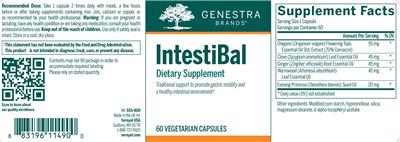
IntestiBal contains five active ingredients, all in concentrated essential oil form: oregano flowering tops, clove leaf, ginger root, wormwood leaf, and evening primrose seed oil. The product also contains inactive ingredients — corn starch, hypromellose (a capsule binder), silica, magnesium stearate, and vitamin E acetate — which serve as fillers and stabilizers.
Each of these herbal extracts has been traditionally used for digestive or anti-inflammatory purposes, though the evidence supporting their effectiveness varies.
Does it work?
Not established
The evidence for IntestiBal's ingredients is limited. Ginger has possibly effective ratings for pregnancy-related nausea, period pain (dysmenorrhea), and osteoarthritis, and clove is possibly effective for ventilator-associated pneumonia in hospitalized patients — though that's not a use relevant to a general digestive supplement.
Oregano, wormwood, and evening primrose all lack sufficient reliable evidence to rate their effectiveness for the conditions listed in our data. The product itself isn't rated, so we can't speak to how well this particular combination works for digestive health.
How safe is it?
Well-documented data
When used in food amounts, oregano and clove are generally well tolerated, but this supplement contains concentrated essential oils, which are stronger and less studied than culinary amounts. Ginger is generally well tolerated in typical supplement doses, though doses above 5 grams daily increase the risk of side effects like heartburn, diarrhea, and abdominal discomfort.
Wormwood contains thujone, a neurotoxin, and can cause nausea, vomiting, muscle aches, kidney problems, and seizures, particularly with chronic use or higher doses. Evening primrose is generally well tolerated short-term and may cause abdominal pain, diarrhea, nausea, or rash in some people.
Regarding pregnancy: wormwood is considered unsafe — it may stimulate the uterus. Oregano supplements should be avoided in pregnancy (food amounts are likely fine).
Ginger has insufficient data, so talk with your doctor if you're using it for morning sickness. Evening primrose should be avoided in pregnancy due to unclear evidence and some safety concerns.
Clove is likely safe in normal food amounts, and ginger and evening primrose have insufficient data on breastfeeding safety, so check with your provider if nursing.
Meds to double-check
Moderate interaction found
Before taking IntestiBal, double-check these medication types with your pharmacist: anticonvulsant drugs (seizure medications), blood thinners and antiplatelet drugs (warfarin, aspirin, clopidogrel), diabetes medications, medications broken down by liver enzymes CYP2D6, CYP1A2, CYP3A4, and CYP2C9, blood pressure drugs (especially nifedipine and losartan), lithium, and phenothiazine antipsychotics. Wormwood's interaction with seizure drugs is the most serious concern.
The bottom line
Scorecard at a glanceFully disclosed formula with no established evidence rating for its marketed use. Moderate medication interactions have been identified, and safety information is well characterized.
IntestiBal is a multi-ingredient herbal supplement best suited for people seeking traditional digestive support who don't take blood thinners, diabetes drugs, anticonvulsants, lithium, or certain psychiatric medications. If you take any prescription medication, check your exact drugs against the interaction checker on this page before adding this product.
Talk to your pharmacist or doctor about whether it's right for you, especially if you're pregnant, breastfeeding, or have a seizure disorder.
Educational only — not medical advice; always confirm with your pharmacist. Our editorial policy · How we use AI
Assessment coverage: 5 of 5 active ingredients matched to our full ingredient reviews (monographs). Based on the product label dated Aug 22, 2025.
This Scorecard evaluates available label information, ingredient evidence, and known medication-safety considerations. It does not independently verify product identity, purity, potency, contamination, or manufacturing quality. How these ratings are computed
General information
Key facts about IntestiBal, straight from the product label.
| Brand | Genestra Brands |
|---|---|
| Barcode (UPC) | 883196114900 |
| Net contents | 60 Vegetarian Capsule(s) |
| Market status | On market |
| Date entered into DSLD | Aug 22, 2025 |
| DSLD ID | 337421 |
| Product type | Botanical |
| Supplement form | Capsule |
| Dietary claims / uses | All Other, Structure/Function |
| Intended target group(s) | Adult (18 - 50 Years) |
Everything in this section is reproduced from the manufacturer’s own product label — it’s the label speaking, not HelloPharmacist. We show it so you can see exactly what the maker states; we don’t verify or endorse those statements.
Supplement Facts
The label details for IntestiBal by Genestra Brands, sourced from the NIH Dietary Supplement Label Database.
Supplement Facts
| Ingredient | Amount | % DV |
|---|---|---|
| Oregano Flowering Tops Essential Oil Extract | 95 mg | -- |
| Clove Leaf Essential Oil | 45 mg | -- |
| Ginger Root Essential Oil | 45 mg | -- |
| Wormwood Leaf Essential Oil | 45 mg | -- |
| Evening Primrose Seed Oil | 20 mg | -- |
Other ingredients: Corn Starch, Modified, Hypromellose, Silica, Magnesium Stearate, D-Alpha Tocopheryl Acetate
Tap any ingredient to jump to its full detail below.
These statements are the manufacturer’s wording, reproduced from the product label — the label is saying it, not HelloPharmacist. We don’t verify or endorse them.
Suggested/Recommended/Usage/Directions
Recommended Dose: Take 1 capsule 2 times daily with meals, a few hours before or after taking supplements containing iron, zinc, calcium or copper, or as recommended by your health professional.
Precautions
Warning: If you are pregnant or lactating, have any health condition or are taking any medication, consult your health professional before use.
Keep out of reach of children.
Use only if safety seal is intact.
Storage
Store in a cool, dry place.
FDA Disclaimer Statement
This statement has not been evaluated by the Food and Drug Administration. This product is not intended to diagnose, treat, cure, or prevent any disease.
General Statements
Contents may not fill package in order to accommodate required labeling. Please rely on stated quantity. Scan to learn about our quality excellence
FDA Statement of Identity
Dietary Supplement
Formulation
Traditional support to promote gastric motility and a healthy intestinal environment
Is this label outdated? Report a formula or label change and our pharmacy team will review it.
IntestiBal by Genestra Brands label
The label scan from the NIH Dietary Supplement Label Database. Tap to enlarge.
Label images are published by the NIH Dietary Supplement Label Database for the version of this product on file. Always read your actual product label.
View the full label (PDF)The Ingredients in IntestiBal by Genestra Brands
These are the 5 active ingredients this product is made of. Select any to open its full monograph.
Serving size1 Capsule(s) Dosage formCapsule Servings per container60 Amounts shown are per serving.
Most supplement products combine several ingredients, and a medication can interact with the product through any one of them. Each ingredient below shows whether it has known drug interactions.
Oregano Flowering Tops Essential Oil Extract
Interacts with208 drugs
Oregano is a common Mediterranean cooking herb that is also sold as a concentrated oil or supplement, often standardized for a compound called carvacr...
Oregano Flowering Tops Essential Oil Extract monograph & interactionsClove Leaf Essential Oil
Interacts with977 drugs
Clove is a common cooking spice that is also used in traditional medicine, especially as a topical numbing agent for tooth pain thanks to its main com...
Clove Leaf Essential Oil monograph & interactionsGinger Root Essential Oil
Interacts with1,007 drugs
Ginger is a widely used culinary spice with a long history in traditional medicine, and it has the strongest evidence for helping with nausea and vomi...
Ginger Root Essential Oil monograph & interactionsWormwood Leaf Essential Oil
Interacts with50 drugs
Wormwood is a very bitter herb traditionally used to stimulate appetite and ease digestion, and it has early research interest in Crohn's disease. It...
Wormwood Leaf Essential Oil monograph & interactionsEvening Primrose Seed Oil
Interacts with233 drugs
Evening primrose oil is a seed oil rich in gamma-linolenic acid (GLA), an omega-6 fatty acid, that is popularly used for skin conditions, PMS, and bre...
Evening Primrose Seed Oil monograph & interactionsOther (inactive) ingredients: Corn Starch, Modified, Hypromellose, Silica, Magnesium Stearate, D-Alpha Tocopheryl Acetate. These complete the product’s ingredient list but are not active constituents.
IntestiBal by Genestra Brands Drug Interactions
HelloPharmacist Interaction Report
IntestiBal by Genestra Brands contains five herbal essential oil extracts, and several of them interact with medications.
The most serious interaction involves wormwood leaf essential oil and anticonvulsant drugs — wormwood contains thujone, a compound that can interfere with seizure control and theoretically reduce the effectiveness of anticonvulsants.
Read the full breakdown — every affected drug type, severity by severity
Oregano, clove, ginger, and evening primrose all interact with blood thinners and antiplatelet drugs (like warfarin, aspirin, and clopidogrel) at Moderate severity, raising the risk of bleeding. Oregano and clove may also increase the risk of low blood sugar (hypoglycemia) if you take diabetes medications.
Clove contains eugenol, which can inhibit several liver enzymes (CYP2D6, CYP1A2, CYP3A4, and CYP2C9) and theoretically increase the levels of drugs broken down by those pathways — this hasn't been seen in humans, but the potential exists. Ginger carries Moderate interactions with several blood pressure and blood thinner medications, including warfarin, nifedipine, and losartan, and may also inhibit the CYP3A4 enzyme and affect P-glycoprotein transporters that move drugs in and out of cells.
Evening primrose oil may reduce lithium levels and effects, and theoretically increase the risk of seizures if taken with phenothiazine antipsychotics. Altogether, these interactions span 1,094 individual medications.
Use the medication checker below with your exact prescriptions and over-the-counter drugs before starting IntestiBal.
Check your own medications below · Editorial policy · How we use AI
Want to check YOUR meds against IntestiBal?
Ask about interactions with your drugs in plain English — “Can I take it with lisinopril?” — and we find you the answer in seconds, ingredient by ingredient.
Go to the checkerIngredients driving the most interactions
Individual Drug Interactions
The ingredients in IntestiBal interact with 1,108 drugs. Click any drug to see the details.
5 of the 5 ingredients in IntestiBal interact with drugs. Each result below shows which ingredient is responsible. Ginger Root Essential Oil Clove Leaf Essential Oil Evening Primrose Seed Oil Oregano Flowering Tops Essential Oil Extract Wormwood Leaf Essential Oil
Acetaminophen, Chlorpheniramine, Dextromethorphan, PseudoephedrineChildren's Tylenol Cold Plus Cough, Tylenol Cold Ex Strength
How Acetaminophen, Chlorpheniramine, Dextromethorphan, Pseudoephedrine interacts with IntestiBal — through 2 ingredients. Tap an ingredient for the detail:
Ginger Root Essential OilCytochrome P450 1a2 (cyp1a2) Substrates, Cytochrome P450 3a4 (cyp3a4) Substrates Moderate
Interaction Summary
Theoretically, ginger might increase the levels of CYP1A2 substrates.
Read the full Ginger Root Essential Oil + Acetaminophen, Chlorpheniramine, Dextromethorphan, Pseudoephedrine interactionClove Leaf Essential OilCytochrome P450 2d6 (cyp2d6) Substrates, Cytochrome P450 1a2 (cyp1a2) Substrates +1 Moderate
Interaction Summary
Theoretically, concomitant use of clove may increase levels of drugs metabolized by CYP2D6.
Read the full Clove Leaf Essential Oil + Acetaminophen, Chlorpheniramine, Dextromethorphan, Pseudoephedrine interactionAcetaminophen, Chlorpheniramine, Guaifenesin, Phenylephrine, SalicylamideRhinogesic GG
How Acetaminophen, Chlorpheniramine, Guaifenesin, Phenylephrine, Salicylamide interacts with IntestiBal — through 2 ingredients. Tap an ingredient for the detail:
Clove Leaf Essential OilCytochrome P450 3a4 (cyp3a4) Substrates, Cytochrome P450 1a2 (cyp1a2) Substrates Moderate
Interaction Summary
Theoretically, concomitant use of clove may increase levels of drugs metabolized by CYP3A4.
Read the full Clove Leaf Essential Oil + Acetaminophen, Chlorpheniramine, Guaifenesin, Phenylephrine, Salicylamide interactionGinger Root Essential OilCytochrome P450 1a2 (cyp1a2) Substrates, Cytochrome P450 3a4 (cyp3a4) Substrates Moderate
Interaction Summary
Theoretically, ginger might increase the levels of CYP1A2 substrates.
Read the full Ginger Root Essential Oil + Acetaminophen, Chlorpheniramine, Guaifenesin, Phenylephrine, Salicylamide interactionAcetaminophen, Chlorpheniramine, PhenylephrineAlka-Seltzer PLUS, Histex SR, Protid
How Acetaminophen, Chlorpheniramine, Phenylephrine interacts with IntestiBal — through 2 ingredients. Tap an ingredient for the detail:
Clove Leaf Essential OilCytochrome P450 3a4 (cyp3a4) Substrates, Cytochrome P450 1a2 (cyp1a2) Substrates Moderate
Interaction Summary
Theoretically, concomitant use of clove may increase levels of drugs metabolized by CYP3A4.
Read the full Clove Leaf Essential Oil + Acetaminophen, Chlorpheniramine, Phenylephrine interactionGinger Root Essential OilCytochrome P450 1a2 (cyp1a2) Substrates, Cytochrome P450 3a4 (cyp3a4) Substrates Moderate
Interaction Summary
Theoretically, ginger might increase the levels of CYP1A2 substrates.
Read the full Ginger Root Essential Oil + Acetaminophen, Chlorpheniramine, Phenylephrine interactionAcetaminophen, Chlorpheniramine, Phenylephrine, SalicylamideRhinogesic, Rhinogesic JR
How Acetaminophen, Chlorpheniramine, Phenylephrine, Salicylamide interacts with IntestiBal — through 2 ingredients. Tap an ingredient for the detail:
Clove Leaf Essential OilCytochrome P450 1a2 (cyp1a2) Substrates, Cytochrome P450 3a4 (cyp3a4) Substrates Moderate
Interaction Summary
Theoretically, concomitant use of clove may increase levels of drugs metabolized by CYP1A2.
Read the full Clove Leaf Essential Oil + Acetaminophen, Chlorpheniramine, Phenylephrine, Salicylamide interactionGinger Root Essential OilCytochrome P450 1a2 (cyp1a2) Substrates, Cytochrome P450 3a4 (cyp3a4) Substrates Moderate
Interaction Summary
Theoretically, ginger might increase the levels of CYP1A2 substrates.
Read the full Ginger Root Essential Oil + Acetaminophen, Chlorpheniramine, Phenylephrine, Salicylamide interactionAcetaminophen, Chlorpheniramine, PhenylpropanolamineAlumadrine, Conex, Sinadrin Max Strength, Sinulin
How Acetaminophen, Chlorpheniramine, Phenylpropanolamine interacts with IntestiBal — through 2 ingredients. Tap an ingredient for the detail:
Ginger Root Essential OilCytochrome P450 1a2 (cyp1a2) Substrates, Cytochrome P450 3a4 (cyp3a4) Substrates Moderate
Interaction Summary
Theoretically, ginger might increase the levels of CYP1A2 substrates.
Read the full Ginger Root Essential Oil + Acetaminophen, Chlorpheniramine, Phenylpropanolamine interactionClove Leaf Essential OilCytochrome P450 1a2 (cyp1a2) Substrates, Cytochrome P450 3a4 (cyp3a4) Substrates Moderate
Interaction Summary
Theoretically, concomitant use of clove may increase levels of drugs metabolized by CYP1A2.
Read the full Clove Leaf Essential Oil + Acetaminophen, Chlorpheniramine, Phenylpropanolamine interactionAcetaminophen, Chlorpheniramine, Phenylpropanolamine, OpiumHista-Derfule
How Acetaminophen, Chlorpheniramine, Phenylpropanolamine, Opium interacts with IntestiBal — through 2 ingredients. Tap an ingredient for the detail:
Ginger Root Essential OilCytochrome P450 3a4 (cyp3a4) Substrates, Cytochrome P450 1a2 (cyp1a2) Substrates Moderate
Interaction Summary
Ginger might increase or decrease the levels of CYP3A4 substrates.
Read the full Ginger Root Essential Oil + Acetaminophen, Chlorpheniramine, Phenylpropanolamine, Opium interactionClove Leaf Essential OilCytochrome P450 1a2 (cyp1a2) Substrates, Cytochrome P450 3a4 (cyp3a4) Substrates Moderate
Interaction Summary
Theoretically, concomitant use of clove may increase levels of drugs metabolized by CYP1A2.
Read the full Clove Leaf Essential Oil + Acetaminophen, Chlorpheniramine, Phenylpropanolamine, Opium interactionAcetaminophen, Chlorpheniramine, Phenylpropanolamine, PhenyltoloxamineNorel Plus
How Acetaminophen, Chlorpheniramine, Phenylpropanolamine, Phenyltoloxamine interacts with IntestiBal — through 2 ingredients. Tap an ingredient for the detail:
Clove Leaf Essential OilCytochrome P450 1a2 (cyp1a2) Substrates, Cytochrome P450 3a4 (cyp3a4) Substrates Moderate
Interaction Summary
Theoretically, concomitant use of clove may increase levels of drugs metabolized by CYP1A2.
Read the full Clove Leaf Essential Oil + Acetaminophen, Chlorpheniramine, Phenylpropanolamine, Phenyltoloxamine interactionGinger Root Essential OilCytochrome P450 3a4 (cyp3a4) Substrates, Cytochrome P450 1a2 (cyp1a2) Substrates Moderate
Interaction Summary
Ginger might increase or decrease the levels of CYP3A4 substrates.
Read the full Ginger Root Essential Oil + Acetaminophen, Chlorpheniramine, Phenylpropanolamine, Phenyltoloxamine interactionAcetaminophen, Chlorpheniramine, PseudoephedrineAlka-Seltzer PLUS Liquid Gels, Children's Tylenol Cold, Codimal, Comtrex, Extra Strength Tylenol Allergy Sinus, Lorsin +3 more
How Acetaminophen, Chlorpheniramine, Pseudoephedrine interacts with IntestiBal — through 2 ingredients. Tap an ingredient for the detail:
Ginger Root Essential OilCytochrome P450 1a2 (cyp1a2) Substrates, Cytochrome P450 3a4 (cyp3a4) Substrates Moderate
Interaction Summary
Theoretically, ginger might increase the levels of CYP1A2 substrates.
Read the full Ginger Root Essential Oil + Acetaminophen, Chlorpheniramine, Pseudoephedrine interactionClove Leaf Essential OilCytochrome P450 3a4 (cyp3a4) Substrates, Cytochrome P450 1a2 (cyp1a2) Substrates Moderate
Interaction Summary
Theoretically, concomitant use of clove may increase levels of drugs metabolized by CYP3A4.
Read the full Clove Leaf Essential Oil + Acetaminophen, Chlorpheniramine, Pseudoephedrine interactionAcetaminophen, ChlorzoxazoneAcetazone Forte, Extra Strength Tylenol Aches & Strains, Parafon Forte
How Acetaminophen, Chlorzoxazone interacts with IntestiBal — through 2 ingredients. Tap an ingredient for the detail:
Clove Leaf Essential OilCytochrome P450 1a2 (cyp1a2) Substrates Moderate
Interaction Summary
Theoretically, concomitant use of clove may increase levels of drugs metabolized by CYP1A2.
Read the full Clove Leaf Essential Oil + Acetaminophen, Chlorzoxazone interactionGinger Root Essential OilCytochrome P450 1a2 (cyp1a2) Substrates Minor
Interaction Summary
Theoretically, ginger might increase the levels of CYP1A2 substrates.
Read the full Ginger Root Essential Oil + Acetaminophen, Chlorzoxazone interactionAcetaminophen, Chlorzoxazone, CodeineAcetazone Forte C8, Parafon Forte C8
How Acetaminophen, Chlorzoxazone, Codeine interacts with IntestiBal — through 2 ingredients. Tap an ingredient for the detail:
Clove Leaf Essential OilCytochrome P450 2d6 (cyp2d6) Substrates, Cytochrome P450 1a2 (cyp1a2) Substrates Moderate
Interaction Summary
Theoretically, concomitant use of clove may increase levels of drugs metabolized by CYP2D6.
Read the full Clove Leaf Essential Oil + Acetaminophen, Chlorzoxazone, Codeine interactionGinger Root Essential OilCytochrome P450 1a2 (cyp1a2) Substrates Minor
Interaction Summary
Theoretically, ginger might increase the levels of CYP1A2 substrates.
Read the full Ginger Root Essential Oil + Acetaminophen, Chlorzoxazone, Codeine interactionAcetaminophen, CodeineTylenol No.3, Tylenol w/ Codeine
How Acetaminophen, Codeine interacts with IntestiBal — through 2 ingredients. Tap an ingredient for the detail:
Clove Leaf Essential OilCytochrome P450 2d6 (cyp2d6) Substrates, Cytochrome P450 1a2 (cyp1a2) Substrates Moderate
Interaction Summary
Theoretically, concomitant use of clove may increase levels of drugs metabolized by CYP2D6.
Read the full Clove Leaf Essential Oil + Acetaminophen, Codeine interactionGinger Root Essential OilCytochrome P450 1a2 (cyp1a2) Substrates Minor
Interaction Summary
Theoretically, ginger might increase the levels of CYP1A2 substrates.
Read the full Ginger Root Essential Oil + Acetaminophen, Codeine interactionAcetaminophen, Codeine, DoxylamineMersyndol
How Acetaminophen, Codeine, Doxylamine interacts with IntestiBal — through 2 ingredients. Tap an ingredient for the detail:
Clove Leaf Essential OilCytochrome P450 1a2 (cyp1a2) Substrates, Cytochrome P450 2d6 (cyp2d6) Substrates Moderate
Interaction Summary
Theoretically, concomitant use of clove may increase levels of drugs metabolized by CYP1A2.
Read the full Clove Leaf Essential Oil + Acetaminophen, Codeine, Doxylamine interactionGinger Root Essential OilCytochrome P450 1a2 (cyp1a2) Substrates Minor
Interaction Summary
Theoretically, ginger might increase the levels of CYP1A2 substrates.
Read the full Ginger Root Essential Oil + Acetaminophen, Codeine, Doxylamine interactionAcetaminophen, Codeine, MethocarbamolAcetaminophen, Codeine, Methocarbamol, Robaxacet 8
How Acetaminophen, Codeine, Methocarbamol interacts with IntestiBal — through 2 ingredients. Tap an ingredient for the detail:
Clove Leaf Essential OilCytochrome P450 2d6 (cyp2d6) Substrates, Cytochrome P450 1a2 (cyp1a2) Substrates Moderate
Interaction Summary
Theoretically, concomitant use of clove may increase levels of drugs metabolized by CYP2D6.
Read the full Clove Leaf Essential Oil + Acetaminophen, Codeine, Methocarbamol interactionGinger Root Essential OilCytochrome P450 1a2 (cyp1a2) Substrates Minor
Interaction Summary
Theoretically, ginger might increase the levels of CYP1A2 substrates.
Read the full Ginger Root Essential Oil + Acetaminophen, Codeine, Methocarbamol interactionAcetaminophen, Dexbrompheniramine, PseudoephedrineSinadrin Plus
How Acetaminophen, Dexbrompheniramine, Pseudoephedrine interacts with IntestiBal — through 2 ingredients. Tap an ingredient for the detail:
Clove Leaf Essential OilCytochrome P450 1a2 (cyp1a2) Substrates Moderate
Interaction Summary
Theoretically, concomitant use of clove may increase levels of drugs metabolized by CYP1A2.
Read the full Clove Leaf Essential Oil + Acetaminophen, Dexbrompheniramine, Pseudoephedrine interactionGinger Root Essential OilCytochrome P450 1a2 (cyp1a2) Substrates Minor
Interaction Summary
Theoretically, ginger might increase the levels of CYP1A2 substrates.
Read the full Ginger Root Essential Oil + Acetaminophen, Dexbrompheniramine, Pseudoephedrine interactionAcetaminophen, DextromethorphanTylenol Cough Ex Strength
How Acetaminophen, Dextromethorphan interacts with IntestiBal — through 2 ingredients. Tap an ingredient for the detail:
Clove Leaf Essential OilCytochrome P450 2d6 (cyp2d6) Substrates, Cytochrome P450 1a2 (cyp1a2) Substrates +1 Moderate
Interaction Summary
Theoretically, concomitant use of clove may increase levels of drugs metabolized by CYP2D6.
Read the full Clove Leaf Essential Oil + Acetaminophen, Dextromethorphan interactionGinger Root Essential OilCytochrome P450 1a2 (cyp1a2) Substrates, Cytochrome P450 3a4 (cyp3a4) Substrates Moderate
Interaction Summary
Theoretically, ginger might increase the levels of CYP1A2 substrates.
Read the full Ginger Root Essential Oil + Acetaminophen, Dextromethorphan interactionAcetaminophen, Dextromethorphan, Doxylamine, PseudoephedrineVicks NyQuil
How Acetaminophen, Dextromethorphan, Doxylamine, Pseudoephedrine interacts with IntestiBal — through 2 ingredients. Tap an ingredient for the detail:
Clove Leaf Essential OilCytochrome P450 1a2 (cyp1a2) Substrates, Cytochrome P450 2d6 (cyp2d6) Substrates +1 Moderate
Interaction Summary
Theoretically, concomitant use of clove may increase levels of drugs metabolized by CYP1A2.
Read the full Clove Leaf Essential Oil + Acetaminophen, Dextromethorphan, Doxylamine, Pseudoephedrine interactionGinger Root Essential OilCytochrome P450 1a2 (cyp1a2) Substrates, Cytochrome P450 3a4 (cyp3a4) Substrates Moderate
Interaction Summary
Theoretically, ginger might increase the levels of CYP1A2 substrates.
Read the full Ginger Root Essential Oil + Acetaminophen, Dextromethorphan, Doxylamine, Pseudoephedrine interactionAcetaminophen, Dextromethorphan, Guaifenesin, PhenylephrineConar-A
How Acetaminophen, Dextromethorphan, Guaifenesin, Phenylephrine interacts with IntestiBal — through 2 ingredients. Tap an ingredient for the detail:
Clove Leaf Essential OilCytochrome P450 3a4 (cyp3a4) Substrates, Cytochrome P450 2d6 (cyp2d6) Substrates +1 Moderate
Interaction Summary
Theoretically, concomitant use of clove may increase levels of drugs metabolized by CYP3A4.
Read the full Clove Leaf Essential Oil + Acetaminophen, Dextromethorphan, Guaifenesin, Phenylephrine interactionGinger Root Essential OilCytochrome P450 3a4 (cyp3a4) Substrates, Cytochrome P450 1a2 (cyp1a2) Substrates Moderate
Interaction Summary
Ginger might increase or decrease the levels of CYP3A4 substrates.
Read the full Ginger Root Essential Oil + Acetaminophen, Dextromethorphan, Guaifenesin, Phenylephrine interactionAcetaminophen, Dextromethorphan, Guaifenesin, PhenylpropanolamineAnatuss
How Acetaminophen, Dextromethorphan, Guaifenesin, Phenylpropanolamine interacts with IntestiBal — through 2 ingredients. Tap an ingredient for the detail:
Ginger Root Essential OilCytochrome P450 1a2 (cyp1a2) Substrates, Cytochrome P450 3a4 (cyp3a4) Substrates Moderate
Interaction Summary
Theoretically, ginger might increase the levels of CYP1A2 substrates.
Read the full Ginger Root Essential Oil + Acetaminophen, Dextromethorphan, Guaifenesin, Phenylpropanolamine interactionClove Leaf Essential OilCytochrome P450 1a2 (cyp1a2) Substrates, Cytochrome P450 3a4 (cyp3a4) Substrates +1 Moderate
Interaction Summary
Theoretically, concomitant use of clove may increase levels of drugs metabolized by CYP1A2.
Read the full Clove Leaf Essential Oil + Acetaminophen, Dextromethorphan, Guaifenesin, Phenylpropanolamine interactionAcetaminophen, Dextromethorphan, Guaifenesin, PseudoephedrineRobitussin Cold, Severe Cold, Suphedrine Cold/Cough
How Acetaminophen, Dextromethorphan, Guaifenesin, Pseudoephedrine interacts with IntestiBal — through 2 ingredients. Tap an ingredient for the detail:
Clove Leaf Essential OilCytochrome P450 1a2 (cyp1a2) Substrates, Cytochrome P450 3a4 (cyp3a4) Substrates +1 Moderate
Interaction Summary
Theoretically, concomitant use of clove may increase levels of drugs metabolized by CYP1A2.
Read the full Clove Leaf Essential Oil + Acetaminophen, Dextromethorphan, Guaifenesin, Pseudoephedrine interactionGinger Root Essential OilCytochrome P450 1a2 (cyp1a2) Substrates, Cytochrome P450 3a4 (cyp3a4) Substrates Moderate
Interaction Summary
Theoretically, ginger might increase the levels of CYP1A2 substrates.
Read the full Ginger Root Essential Oil + Acetaminophen, Dextromethorphan, Guaifenesin, Pseudoephedrine interactionAcetaminophen, Dextromethorphan, Phenylpropanolamine, PyrilamineTheracaps
How Acetaminophen, Dextromethorphan, Phenylpropanolamine, Pyrilamine interacts with IntestiBal — through 2 ingredients. Tap an ingredient for the detail:
Clove Leaf Essential OilCytochrome P450 2d6 (cyp2d6) Substrates, Cytochrome P450 1a2 (cyp1a2) Substrates +1 Moderate
Interaction Summary
Theoretically, concomitant use of clove may increase levels of drugs metabolized by CYP2D6.
Read the full Clove Leaf Essential Oil + Acetaminophen, Dextromethorphan, Phenylpropanolamine, Pyrilamine interactionGinger Root Essential OilCytochrome P450 1a2 (cyp1a2) Substrates, Cytochrome P450 3a4 (cyp3a4) Substrates Moderate
Interaction Summary
Theoretically, ginger might increase the levels of CYP1A2 substrates.
Read the full Ginger Root Essential Oil + Acetaminophen, Dextromethorphan, Phenylpropanolamine, Pyrilamine interactionAcetaminophen, Dextromethorphan, PseudoephedrineAlka-Seltzer PLUS Flu Liquid Gels, Non Aspirin Cold Caps, Tylenol Cold, Tylenol Flu Daytime Ex Strength, Tylenol Flu Ex Strength
How Acetaminophen, Dextromethorphan, Pseudoephedrine interacts with IntestiBal — through 2 ingredients. Tap an ingredient for the detail:
Clove Leaf Essential OilCytochrome P450 3a4 (cyp3a4) Substrates, Cytochrome P450 2d6 (cyp2d6) Substrates +1 Moderate
Interaction Summary
Theoretically, concomitant use of clove may increase levels of drugs metabolized by CYP3A4.
Read the full Clove Leaf Essential Oil + Acetaminophen, Dextromethorphan, Pseudoephedrine interactionGinger Root Essential OilCytochrome P450 3a4 (cyp3a4) Substrates, Cytochrome P450 1a2 (cyp1a2) Substrates Moderate
Interaction Summary
Ginger might increase or decrease the levels of CYP3A4 substrates.
Read the full Ginger Root Essential Oil + Acetaminophen, Dextromethorphan, Pseudoephedrine interactionAcetaminophen, Dichloralantipyrine, IsomethepteneAmidrine, Midchlor, Migquin, Migratine
How Acetaminophen, Dichloralantipyrine, Isometheptene interacts with IntestiBal — through 2 ingredients. Tap an ingredient for the detail:
Clove Leaf Essential OilCytochrome P450 1a2 (cyp1a2) Substrates Moderate
Interaction Summary
Theoretically, concomitant use of clove may increase levels of drugs metabolized by CYP1A2.
Read the full Clove Leaf Essential Oil + Acetaminophen, Dichloralantipyrine, Isometheptene interactionGinger Root Essential OilCytochrome P450 1a2 (cyp1a2) Substrates Minor
Interaction Summary
Theoretically, ginger might increase the levels of CYP1A2 substrates.
Read the full Ginger Root Essential Oil + Acetaminophen, Dichloralantipyrine, Isometheptene interactionAcetaminophen, Dichloralphenazone, IsomethepteneMidrin
How Acetaminophen, Dichloralphenazone, Isometheptene interacts with IntestiBal — through 2 ingredients. Tap an ingredient for the detail:
Clove Leaf Essential OilCytochrome P450 1a2 (cyp1a2) Substrates Moderate
Interaction Summary
Theoretically, concomitant use of clove may increase levels of drugs metabolized by CYP1A2.
Read the full Clove Leaf Essential Oil + Acetaminophen, Dichloralphenazone, Isometheptene interactionGinger Root Essential OilCytochrome P450 1a2 (cyp1a2) Substrates Minor
Interaction Summary
Theoretically, ginger might increase the levels of CYP1A2 substrates.
Read the full Ginger Root Essential Oil + Acetaminophen, Dichloralphenazone, Isometheptene interactionAcetaminophen, Dichlorophenazone, IsometheptaneIsocom
How Acetaminophen, Dichlorophenazone, Isometheptane interacts with IntestiBal — through 2 ingredients. Tap an ingredient for the detail:
Clove Leaf Essential OilCytochrome P450 1a2 (cyp1a2) Substrates Moderate
Interaction Summary
Theoretically, concomitant use of clove may increase levels of drugs metabolized by CYP1A2.
Read the full Clove Leaf Essential Oil + Acetaminophen, Dichlorophenazone, Isometheptane interactionGinger Root Essential OilCytochrome P450 1a2 (cyp1a2) Substrates Minor
Interaction Summary
Theoretically, ginger might increase the levels of CYP1A2 substrates.
Read the full Ginger Root Essential Oil + Acetaminophen, Dichlorophenazone, Isometheptane interactionAcetaminophen, DiphenhydramineTylenol PM, Tylenol PM Ex Strength
How Acetaminophen, Diphenhydramine interacts with IntestiBal — through 2 ingredients. Tap an ingredient for the detail:
Clove Leaf Essential OilCytochrome P450 1a2 (cyp1a2) Substrates Moderate
Interaction Summary
Theoretically, concomitant use of clove may increase levels of drugs metabolized by CYP1A2.
Read the full Clove Leaf Essential Oil + Acetaminophen, Diphenhydramine interactionGinger Root Essential OilCytochrome P450 1a2 (cyp1a2) Substrates Minor
Interaction Summary
Theoretically, ginger might increase the levels of CYP1A2 substrates.
Read the full Ginger Root Essential Oil + Acetaminophen, Diphenhydramine interactionAcetaminophen, Diphenhydramine, PseudoephedrineChildren's Tylenol Allergy, Cold Control, Contac Night Allergy Relief
How Acetaminophen, Diphenhydramine, Pseudoephedrine interacts with IntestiBal — through 2 ingredients. Tap an ingredient for the detail:
Clove Leaf Essential OilCytochrome P450 1a2 (cyp1a2) Substrates Moderate
Interaction Summary
Theoretically, concomitant use of clove may increase levels of drugs metabolized by CYP1A2.
Read the full Clove Leaf Essential Oil + Acetaminophen, Diphenhydramine, Pseudoephedrine interactionGinger Root Essential OilCytochrome P450 1a2 (cyp1a2) Substrates Minor
Interaction Summary
Theoretically, ginger might increase the levels of CYP1A2 substrates.
Read the full Ginger Root Essential Oil + Acetaminophen, Diphenhydramine, Pseudoephedrine interactionAcetaminophen, Doxylamine, PseudoephedrineEx Strength Tylenol Sinus Nighttime
How Acetaminophen, Doxylamine, Pseudoephedrine interacts with IntestiBal — through 2 ingredients. Tap an ingredient for the detail:
Clove Leaf Essential OilCytochrome P450 1a2 (cyp1a2) Substrates Moderate
Interaction Summary
Theoretically, concomitant use of clove may increase levels of drugs metabolized by CYP1A2.
Read the full Clove Leaf Essential Oil + Acetaminophen, Doxylamine, Pseudoephedrine interactionGinger Root Essential OilCytochrome P450 1a2 (cyp1a2) Substrates Minor
Interaction Summary
Theoretically, ginger might increase the levels of CYP1A2 substrates.
Read the full Ginger Root Essential Oil + Acetaminophen, Doxylamine, Pseudoephedrine interactionAcetaminophen, HydrocodoneAnexsia, Anodynos DHC, Azdone, Co-Gesic, Doucet, Lorcet +9 more
How Acetaminophen, Hydrocodone interacts with IntestiBal — through 2 ingredients. Tap an ingredient for the detail:
Clove Leaf Essential OilCytochrome P450 1a2 (cyp1a2) Substrates, Cytochrome P450 3a4 (cyp3a4) Substrates +1 Moderate
Interaction Summary
Theoretically, concomitant use of clove may increase levels of drugs metabolized by CYP1A2.
Read the full Clove Leaf Essential Oil + Acetaminophen, Hydrocodone interactionGinger Root Essential OilCytochrome P450 1a2 (cyp1a2) Substrates, Cytochrome P450 3a4 (cyp3a4) Substrates Moderate
Interaction Summary
Theoretically, ginger might increase the levels of CYP1A2 substrates.
Read the full Ginger Root Essential Oil + Acetaminophen, Hydrocodone interactionAcetaminophen, IbuprofenCombogesic
How Acetaminophen, Ibuprofen interacts with IntestiBal — through 4 ingredients. Tap an ingredient for the detail:
Ginger Root Essential OilCytochrome P450 1a2 (cyp1a2) Substrates, Cytochrome P450 2c9 (cyp2c9) Substrates +1 Moderate
Interaction Summary
Theoretically, ginger might increase the levels of CYP1A2 substrates.
Read the full Ginger Root Essential Oil + Acetaminophen, Ibuprofen interactionClove Leaf Essential OilIbuprofen (advil, Others), Anticoagulant/antiplatelet Drugs +2 Moderate
Interaction Summary
Theoretically, topical application of clove oil with ibuprofen might increase the absorption and side effects of topical ibuprofen.
Read the full Clove Leaf Essential Oil + Acetaminophen, Ibuprofen interactionEvening Primrose Seed OilAnticoagulant/antiplatelet Drugs, Cytochrome P450 2c9 (cyp2c9) Substrates Moderate
Interaction Summary
Theoretically, evening primrose oil may increase the risk of bleeding if used with anticoagulant or antiplatelet drugs.
Read the full Evening Primrose Seed Oil + Acetaminophen, Ibuprofen interactionOregano Flowering Tops Essential Oil ExtractAnticoagulant/antiplatelet Drugs Moderate
Interaction Summary
Theoretically, oregano might increase the risk of bleeding when taken with anticoagulant or antiplatelet drugs.
Read the full Oregano Flowering Tops Essential Oil Extract + Acetaminophen, Ibuprofen interactionAcetaminophen, MeperidineDemerol APAP
How Acetaminophen, Meperidine interacts with IntestiBal — through 2 ingredients. Tap an ingredient for the detail:
Clove Leaf Essential OilCytochrome P450 1a2 (cyp1a2) Substrates, Cytochrome P450 2d6 (cyp2d6) Substrates Moderate
Interaction Summary
Theoretically, concomitant use of clove may increase levels of drugs metabolized by CYP1A2.
Read the full Clove Leaf Essential Oil + Acetaminophen, Meperidine interactionGinger Root Essential OilCytochrome P450 1a2 (cyp1a2) Substrates Minor
Interaction Summary
Theoretically, ginger might increase the levels of CYP1A2 substrates.
Read the full Ginger Root Essential Oil + Acetaminophen, Meperidine interactionEach ingredient & the kinds of drugs it affects
For each ingredient in IntestiBal with known interactions, here are the types of medications they can affect. Open any type for the detail — or search your exact drug in the checker above.
Ginger Root Essential Oil
Anticoagulant/Antiplatelet Drugs
Ginger may have antiplatelet effects and may increase the risk of bleeding if used with anticoagulant or antiplatelet drugs. However, research is conflicting.
Laboratory research suggests that ginger inhibits thromboxane synthetase and decreases platelet aggregation. However, this has not been demonstrated unequivocally in humans, with mixed results from clinical trials. Theoretically, excessive amounts of ginger might increase the risk of bleeding when used with anticoagulant/antiplatelet drugs.
Antidiabetes Drugs
Theoretically, taking ginger with antidiabetes drugs might increase the risk of hypoglycemia.
Animal and human research suggests that ginger might increase insulin levels and/or decrease blood glucose levels.
Cytochrome P450 3A4 (Cyp3A4) Substrates
Ginger might increase or decrease the levels of CYP3A4 substrates.
In vitro research and some case reports suggest that ginger inhibits CYP3A4 activity. Three case reports from the World Health Organization (WHO) adverse drug reaction database describe increased toxicity in patients taking ginger and cancer medications that are CYP3A4 substrates (imatinib, dabrafenib, and crizotinib). However, the causality of this interaction is unclear due to the presence of multiple interacting drugs and routes of administration.
Conversely, other in vitro research suggests that ginger induces CYP3A4 activity, leading to reduced levels of CYP3A4 substrates. However, this interaction has not been reported in humans.
Losartan (Cozaar)
Theoretically, ginger might increase levels of losartan and the risk of hypotension.
In animal research, ginger increased the levels and hypotensive effects of a single dose of losartan. It is not clear if ginger alters the concentration or effects of losartan when taken continuously. Additionally, this interaction has not been shown in humans.
Nifedipine (Procardia)
Ginger may have antiplatelet effects and increase the risk of bleeding if used with nifedipine.
Clinical research shows that combined treatment with ginger 1 gram plus nifedipine 10 mg significantly inhibits platelet aggregation when compared to nifedipine or ginger alone.
P-Glycoprotein Substrates
Ginger might increase the absorption and blood levels of P-glycoprotein (P-gp) substrates.
In vitro research and case reports suggest that ginger inhibits drug efflux by P-gp, potentially increasing absorption and serum levels of P-gp substrates. Two case reports from the World Health Organization (WHO) adverse drug reaction database describe increased toxicity in patients taking ginger and cancer medications that are P-gp substrates (trametinib, crizotinib). However, the causality of this interaction is unclear due to the presence of multiple interacting drugs and routes of administration.
Phenprocoumon (Marcoumar, Others)
Ginger might increase the risk of bleeding with phenprocoumon.
Phenprocoumon, a warfarin-related anticoagulant, might increase the international normalized ratio (INR) when taken with ginger. There is one case report of a 76-year-old woman with a stable INR on phenprocoumon that increased to greater than 10 when she began consuming dried ginger and ginger tea.
Warfarin (Coumadin)
Ginger might increase the risk of bleeding with warfarin.
Laboratory research suggests that ginger might inhibit thromboxane synthetase and decrease platelet aggregation. In one case report, ginger increased the INR when taken with phenprocoumon, which has similar pharmacological effects as warfarin. In another case report, ginger increased the INR when taken with a combination of warfarin, hydrochlorothiazide, and acetaminophen. A longitudinal analysis suggests that taking ginger increases the risk of bleeding in patients taking warfarin for at least 4 months. However, research in healthy people suggests that ginger has no effect on INR, or the pharmacokinetics or pharmacodynamics of warfarin. Until more is known, monitor INRs closely in patients taking large amounts of ginger.
Calcium Channel Blockers
Theoretically, taking ginger with calcium channel blockers might increase the risk of hypotension.
Some animal and in vitro research suggests that ginger has hypotensive and calcium channel-blocking effects. Another animal study shows that concomitant administration of ginger and the calcium channel blocker amlodipine leads to greater reductions in blood pressure when compared with amlodipine alone.
Cyclosporine (Neoral, Sandimmune)
Theoretically, when taken prior to cyclosporine, ginger might decrease cyclosporine levels.
In an animal model, ginger juice taken 2 hours prior to cyclosporine administration reduced the maximum concentration and area under the curve of cyclosporine by 51% and 40%, respectively. This effect was not observed when ginger juice and cyclosporine were administered at the same time.
Cytochrome P450 1A2 (Cyp1A2) Substrates
Theoretically, ginger might increase the levels of CYP1A2 substrates.
In vitro research shows that ginger inhibits CYP1A2 activity. However, this interaction has not been reported in humans.
Cytochrome P450 2B6 (Cyp2B6) Substrates
Theoretically, ginger might increase the levels of CYP2B6 substrates.
In vitro research shows that ginger inhibits CYP2B6 activity. However, this interaction has not been reported in humans.
Cytochrome P450 2C9 (Cyp2C9) Substrates
Theoretically, ginger might increase the levels of CYP2C9 substrates.
In vitro research shows that ginger inhibits CYP2C9 activity. However, this interaction has not been reported in humans.
Metronidazole (Flagyl)
Theoretically, ginger might increase levels of metronidazole.
In an animal model, ginger increased the absorption and plasma half-life of metronidazole. In addition, the elimination rate and clearance of metronidazole was significantly reduced.
Clove Leaf Essential Oil
Antidiabetes Drugs
Theoretically, concomitant use of clove extracts with antidiabetes drugs might increase the risk of hypoglycemia.
Clinical and laboratory research suggest that polyphenol extracts from clove flower buds might lower blood glucose levels. Dosing adjustments for insulin or oral hypoglycemic agents may be necessary when taken with clove. Monitor blood glucose levels closely.
Cytochrome P450 1A2 (Cyp1A2) Substrates
Theoretically, concomitant use of clove may increase levels of drugs metabolized by CYP1A2.
In vitro research shows that eugenol, the principal constituent of clove, can inhibit CYP1A2 in a dose-dependent manner,. This effect has not been reported in humans.
Cytochrome P450 2C9 (Cyp2C9) Substrates
Theoretically, concomitant use of clove may increase levels of drugs metabolized by CYP2C9.
In vitro research shows that eugenol, the principal constituent of clove, inhibits CYP2C9 in a dose-dependent manner. This effect has not been reported in humans.
Cytochrome P450 2D6 (Cyp2D6) Substrates
Theoretically, concomitant use of clove may increase levels of drugs metabolized by CYP2D6.
In vitro research shows that eugenol, the principal constituent of clove, can inhibit CYP2D6 in a dose-dependent manner. This effect has not been reported in humans.
Cytochrome P450 3A4 (Cyp3A4) Substrates
Theoretically, concomitant use of clove may increase levels of drugs metabolized by CYP3A4.
In vitro research shows that eugenol, the principal constituent of clove, can inhibit CYP3A4 in a dose-dependent manner. This effect has not been reported in humans.
Anticoagulant/Antiplatelet Drugs
Theoretically, clove oil may increase the risk of bleeding if used with anticoagulant or antiplatelet drugs.
Laboratory research suggests that eugenol, a constituent of clove, has antiplatelet activity. This interaction has not been reported in humans.
Ibuprofen (Advil, Others)
Theoretically, topical application of clove oil with ibuprofen might increase the absorption and side effects of topical ibuprofen.
Laboratory research shows that topical application of clove oil increases the absorption of topical ibuprofen. This interaction has not been reported in humans.
Evening Primrose Seed Oil
Anticoagulant/Antiplatelet Drugs
Theoretically, evening primrose oil may increase the risk of bleeding if used with anticoagulant or antiplatelet drugs.
Evening primrose oil contains gamma linolenic acid (GLA). There is preliminary clinical evidence that GLA can reduce platelet aggregation and prolong bleeding time.
Lithium
Theoretically, concomitant use of lithium with evening primrose oil might decrease lithium levels and effects.
In a case report, a patient on a stable dose of lithium for 10 years experienced a reduction in lithium levels after taking evening primrose oil 500 mg daily. Baseline levels were 0.69 mmol/L, which decreased to 0.37 mmol/L after 2 months and 0.23 mmol/L after 3 months of use. Lithium levels increased within 6 weeks of discontinuing evening primrose oil, to 0.73 mmol/L; no clinical effects were noted.
Lopinavir/Ritonavir (Kaletra)
Theoretically, evening primrose oil might increase the levels and effects of lopinavir.
In a case report, an HIV patient who took evening primrose oil (Efamol) along with lopinavir/ritonavir experienced an increase in serum levels of lopinavir to 15.2 mg/L. Six weeks after discontinuing evening primrose oil, levels of lopinavir returned to the normal range of 5-10 mg/L. When re-challenged with evening primrose oil for a week, the patient's lopinavir levels increased from 6.69 to 8.11 mg/L. It is suspected that evening primrose oil increases levels of lopinavir by inhibiting cytochrome P450 3A4 (CYP3A4), which metabolizes lopinavir. However, this effect has not been reported in other research.
Phenothiazines
Theoretically, taking evening primrose oil with phenothiazines might increase the risk of convulsions.
Evening primrose oil contains gamma-linolenic acid (GLA). There is some concern that taking supplements containing GLA might cause seizures, or lower the seizure threshold, when taken with phenothiazines. In one report, three patients with schizophrenia who had received phenothiazines developed EEG changes suggestive of temporal lobe epilepsy after starting treatment with GLA, although none experienced an actual seizure. In another report, two patients with schizophrenia who were stabilized on phenothiazines developed seizures when evening primrose oil 4 grams daily was added. One of these patients had a prior history of seizures. It is unclear whether evening primrose oil had any additive epileptogenic effects with the phenothiazines; there is no evidence that taking evening primrose oil alone causes seizures.
Cytochrome P450 2C9 (Cyp2C9) Substrates
Theoretically, evening primrose may increase the levels and clinical effects of CYP2C9 substrates.
In vitro research shows that linoleic acid, a constituent of evening primrose oil, inhibits CYP2C9.
Oregano Flowering Tops Essential Oil Extract
Anticoagulant/Antiplatelet Drugs
Theoretically, oregano might increase the risk of bleeding when taken with anticoagulant or antiplatelet drugs.
In vitro research shows that aristolochic acid isolated from oregano leaves has antithrombin activity. It has also been reported that oregano oil inhibits arachidonic acid-induced, and ADP-induced, platelet aggregation.
Antidiabetes Drugs
Theoretically, oregano might increase the risk for hypoglycemia when taken with antidiabetes drugs.
In vitro and animal research shows that oregano extracts might lower blood glucose levels.
Wormwood Leaf Essential Oil
Anticonvulsants
Theoretically, taking wormwood might interfere with the effects of anticonvulsant drugs.
Thujone, a constituent of wormwood, has convulsant effects.
Brand information
Manufacturer and brand details for IntestiBal, from the product label.
Genestra Brands
- Name
- Seroyal USA
- City
- Pittsburg
- State
- PA
- ZipCode
- 15275
- Phone Number
- 1-888-737-6925
IntestiBal by Genestra Brands: Common Questions
Does IntestiBal by Genestra Brands interact with any medications?
How can one product interact with so many drugs?
Where does this information come from?
Can I take IntestiBal if I'm pregnant?
What are the most common side effects?
Does ginger in IntestiBal actually help with nausea?
Is there anything else in the capsule besides the herbs?
Why does wormwood have so many warnings?
Can I take IntestiBal with my heart medication?
Written and reviewed by the HelloPharmacist editorial staff. Our editorial policy
Not sure if IntestiBal is safe with your meds?
Our pharmacists answer your medication & supplement questions — free.
Label information is sourced from the NIH Dietary Supplement Label Database and reflects the product version on file; always read your actual product label. This page is for education only and is not a substitute for professional medical advice. Confirm with your pharmacist or doctor before combining supplements and medications.
The Full Monographs Behind IntestiBal’s Ingredients
Every ingredient we hold a full HelloPharmacist monograph for — uses, evidence, safety, and the complete interaction list.
Oregano
Interacts with 208 drugsOregano is a common Mediterranean cooking herb that is also sold as a concentrated oil or supplement, often standardized for a compound called carvacrol. While lab studies suggest it may hav...
Read the full Oregano monograph → Herb & supplement monographClove
Interacts with 977 drugsClove is a common cooking spice that is also used in traditional medicine, especially as a topical numbing agent for tooth pain thanks to its main compound, eugenol. Food amounts are general...
Read the full Clove monograph → Herb & supplement monographGinger
Interacts with 1,007 drugsGinger is a widely used culinary spice with a long history in traditional medicine, and it has the strongest evidence for helping with nausea and vomiting, including from motion sickness, pr...
Read the full Ginger monograph → Herb & supplement monographWormwood
Interacts with 50 drugsWormwood is a very bitter herb traditionally used to stimulate appetite and ease digestion, and it has early research interest in Crohn's disease. It contains thujone, which can be toxic in...
Read the full Wormwood monograph → Herb & supplement monographEvening Primrose
Interacts with 233 drugsEvening primrose oil is a seed oil rich in gamma-linolenic acid (GLA), an omega-6 fatty acid, that is popularly used for skin conditions, PMS, and breast pain. The evidence behind most of th...
Read the full Evening Primrose monograph →Sources & How We Checked
IntestiBal's label data comes from the NIH Dietary Supplement Label Database; the ingredient interaction data is from the Natural Medicines database, reviewed by our pharmacists.
- NIH Dietary Supplement Label Database (DSLD) — The official product label on file for this supplement.
- Natural Medicines (Therapeutic Research Center) — Evidence-graded clinical reference behind the ingredient interaction data.
Content is written and reviewed by licensed HelloPharmacist pharmacists. See our data sources and editorial standards for how this information is built and checked.
The 145 references behind this product’s interaction data
Every citation that drives the interaction findings for this product’s ingredients, from the evidence-graded Natural Medicines (TRC Healthcare) database. Open an ingredient to browse its citations — links open the study on PubMed or the publisher’s site.
Oregano 12 references
- Brinker F. Herb Contraindications and Drug Interactions. 2nd ed. Sandy, OR: Eclectic Medical Publications, 1998.
- Benito M, Jorro G, Morales C, et al. Labiatae allergy: systemic reactions due to ingestion of oregano and thyme. Ann Allergy Asthma Immunol 1996;76:416-8. PubMed
- Chevallier A. Encyclopedia of Herbal Medicine. 2nd ed. New York, NY: DK Publ, Inc., 2000.
- Ciganda C, and Laborde A. Herbal infusions used for induced abortion. J Toxicol.Clin Toxicol. 2003;41:235-239. PubMed
- Futrell, J. M. and Rietschel, R. L. Spice allergy evaluated by results of patch tests. Cutis 1993;52(5):288-290.
- Tognolini, M., Barocelli, E., Ballabeni, V., Bruni, R., Bianchi, A., Chiavarini, M., and Impicciatore, M. Comparative screening of plant essential oils: phenylpropanoid moiety as basic core for antiplatelet activity. Life Sci. 2-23-2006;78(13):1419-1432. PubMed
- Goun, E., Cunningham, G., Solodnikov, S., Krasnykch, O., and Miles, H. Antithrombin activity of some constituents from Origanum vulgare. Fitoterapia 2002;73(7-8):692-694. PubMed
- Lemhadri, A., Zeggwagh, N. A., Maghrani, M., Jouad, H., and Eddouks, M. Anti-hyperglycaemic activity of the aqueous extract of Origanum vulgare growing wild in Tafilalet region. J Ethnopharmacol. 2004;92(2-3):251-256. PubMed
- McCue, P., Vattem, D., and Shetty, K. Inhibitory effect of clonal oregano extracts against porcine pancreatic amylase in vitro. Asia Pac.J Clin.Nutr. 2004;13(4):401-408.
- Ragi, J., Pappert, A., Rao, B., Havkin-Frenkel, D., and Milgraum, S. Oregano extract ointment for wound healing: a randomized, double-blind, petrolatum-controlled study evaluating efficacy. J.Drugs Dermatol. 2011;10(10):1168-1172.
- Singletary K. Oregano: overview of the literature on health benefits. Nutrition Today 2010;45(3):129-38.
- Silva MLAE, Lucarini R, Dos Santos FF, et al. Hypoglycemic effect of rosmarinic acid-rich infusion (RosCE) from Origanum vulgare in alloxan-induced diabetic rats. Nat Prod Res 2022;36(17):4525-4531.
Clove 26 references
- The Review of Natural Products by Facts and Comparisons. St. Louis, MO: Wolters Kluwer Co., 1999.
- Electronic Code of Federal Regulations. Title 21. Part 182 -- Substances Generally Recognized As Safe. Available at: https://www.accessdata.fda.gov/scripts/cdrh/cfdocs/cfcfr/CFRSearch.cfm?CFRPart=182
- Kanerva L, Estlander T, Jolanki R. Occupational allergic contact dermatitis from spices. Contact Dermatitis 1996;35:157-62. PubMed
- Chen SJ, Wang MH, Chen IJ. Antiplatelet and calcium inhibitory properties of eugenol and sodium eugenol acetate. Gen Pharmacol 1996;27:629-33. PubMed
- Malson JL, Lee EM, Murty R, et al. Clove cigarette smoking: biochemical, physiological, and subjective effects. Pharmacol Biochem Behav 2003;74:739-45. PubMed
- Kirsch CM, Yenokida GG, Jensen WA, et al. Non-cardiogenic pulmonary oedema due to the intravenous administration of clove oil. Thorax 1990;45:235-6. PubMed
- Pallares, D. E. Link between clove cigarettes and urticaria? Postgrad.Med 10-1-1999;106(4):153. PubMed
- Barnard, D. R. Repellency of essential oils to mosquitoes (Diptera: Culicidae). J Med Entomol. 1999;36(5):625-629. PubMed
- Sanchez-Perez, J. and Garcia-Diez, A. Occupational allergic contact dermatitis from eugenol, oil of cinnamon and oil of cloves in a physiotherapist. Contact Dermatitis 1999;41(6):346-347. PubMed
- Andersen, K. E., Johansen, J. D., Bruze, M., Frosch, P. J., Goossens, A., Lepoittevin, J. P., Rastogi, S., White, I., and Menne, T. The time-dose-response relationship for elicitation of contact dermatitis in isoeugenol allergic individuals. Toxicol.Appl PubMed
- Alqareer, A., Alyahya, A., and Andersson, L. The effect of clove and benzocaine versus placebo as topical anesthetics. J Dent 2006;34(10):747-750. PubMed
- Lane, B. W., Ellenhorn, M. J., Hulbert, T. V., and McCarron, M. Clove oil ingestion in an infant. Hum.Exp Toxicol. 1991;10(4):291-294. PubMed
- Quirce, S., Fernandez-Nieto, M., del, Pozo, V, Sastre, B., and Sastre, J. Occupational asthma and rhinitis caused by eugenol in a hairdresser. Allergy 2008;63(1):137-138. PubMed
- Srivastava, K. C. and Malhotra, N. Acetyl eugenol, a component of oil of cloves (Syzygium aromaticum L.) inhibits aggregation and alters arachidonic acid metabolism in human blood platelets. Prostaglandins Leukot.Essent.Fatty Acids 1991;42(1):73-81. PubMed
- Dyrbye, B. A., Dubois, L., Vink, R., and Horn, J. A patient with clove oil intoxication. Anaesth.Intensive Care 2012;40(2):365-366.
- Guidotti, T. L., Laing, L., and Prakash, U. B. Clove cigarettes. The basis for concern regarding health effects. West J Med 1989;151(2):220-228.
- Anonymous. Evaluation of the health hazard of clove cigarettes. Council on Scientific Affairs. JAMA 12-23-1988;260(24):3641-3644. DOI
- Romaguera, C., Alomar, A., Camarasa, J. M., Garcia, Bravo B., Garcia, Perez A., Grimalt, F., Guerra, P., Lopez, Gorretcher B., Pascual, A. M., Miranda, A., and . Contact dermatitis in children. Contact Dermatitis 1985;12(5):283-284. PubMed
- Hackett, P. H., Rodriguez, G., and Roach, R. C. Clove cigarettes and high-altitude pulmonary edema. JAMA 6-28-1985;253(24):3551-3552. DOI
- Isaacs, G. Permanent local anaesthesia and anhidrosis after clove oil spillage. Lancet 4-16-1983;1(8329):882. PubMed
- Saeed, S. A. and Gilani, A. H. Antithrombotic activity of clove oil. J Pak Med Assoc 1994;44(5):112-115.
- Hartnoll, G., Moore, D., and Douek, D. Near fatal ingestion of oil of cloves. Arch.Dis Child 1993;69(3):392-393. PubMed
- Srivastava, K. C. Antiplatelet principles from a food spice clove (Syzygium aromaticum L) [corrected]. Prostaglandins Leukot.Essent.Fatty Acids 1993;48(5):363-372.
- Jiang Q, Wu Y, Zhang H, et al. Development of essential oils as skin permeation enhancers: penetration enhancement effect and mechanism of action. Pharmaceutical Biol. 2017;55(1):1592-1600. PubMed
- Mohan R, Jose S, Mulakkal J, Karpinsky-Semper D, Swick AG, Krishnakumar IM. Water-soluble polyphenol-rich clove extract lowers pre- and post-prandial blood glucose levels in healthy and prediabetic volunteers: an open label pilot study. BMC Complement Alt PubMed
- Alharbi NFM, Ahad A, Bin Jardan YA, Al-Jenoobi FI. Effect of eugenol on cytochrome P450 1A2, 2C9, 2D6, and 3A4 activity in human liver microsomes. Saudi Pharm J 2024;32(7):102118. PubMed
Ginger 64 references
- Fischer-Rasmussen W, Kjaer SK, Dahl C, Asping U. Ginger treatment of hyperemesis gravidarum. Eur J Obstet Gynecol Reprod Biol 1991;38:19-24. PubMed
- Jewell D, Young G. Interventions for nausea and vomiting in early pregnancy. Cochrane Database Syst Rev 2000;(2):CD000145. PubMed
- Vutyavanich T, Kraisarin T, Ruangsri R. Ginger for nausea and vomiting in pregnancy: randomized, double-masked, placebo-controlled trial. Obstet Gynecol 2001;97:577-82. DOI
- Backon J. Ginger in preventing nausea and vomiting of pregnancy; a caveat due to its thromboxane synthetase activity and effect on testosterone binding. Eur J Obstet Gynecol Reprod Biol 1991;42:163-4. PubMed
- Srivastava KC. Effect of onion and ginger consumption on platelet thromboxane production in humans. Prostaglandins Leukot Essent Fatty Acids 1989;35:183-5. PubMed
- Stewart JJ, Wood MJ, Wood CD, Mims ME. Effects of ginger on motion sickness susceptibility and gastric function. Pharmacology 1991;42:111-20. PubMed
- Smith C, Crowther C, Willson K, et al. A randomized controlled trial of ginger to treat nausea and vomiting in pregnancy. Obstet Gynecol 2004;103:639-45. PubMed
- Portnoi G, Chng LA, Karimi-Tabesh L, et al. Prospective comparative study of the safety and effectiveness of ginger for the treatment of nausea and vomiting in pregnancy. Am J Obstet Gynecol 2003;189:1374-7.. PubMed
- Wigler I, Grotto I, Caspi D, Yaron M. The effects of Zintona EC (a ginger extract) on symptomatic gonarthritis. Osteoarthritis Cartilage 2003;11:783-9. PubMed
- Ghayur MN, Gilani AH. Ginger lowers blood pressure through blockade of voltage-dependent calcium channels. J Cardiovasc Pharmacol 2005;45:74-80. PubMed
- Thomson M, Al-Qattan KK, Al-Sawan SM, et al. The use of ginger (Zingiber officinale Rosc.) as a potential anti-inflammatory and antithrombotic agent. Prostaglandins Leukot Essent Fatty Acids 2002;67:475-8. PubMed
- Kanerva L, Estlander T, Jolanki R. Occupational allergic contact dermatitis from spices. Contact Dermatitis 1996;35:157-62. PubMed
- Akhani SP, Vishwakarma SL, Goyal RK. Anti-diabetic activity of Zingiber officinale in streptozotocin-induced type I diabetic rats. J Pharm Pharmacol 2004;56:101-5.
- Kruth P, Brosi E, Fux R, et al. Ginger-associated overanticoagulation by phenprocoumon. Ann Pharmacother 2004;38:257-60. PubMed
- Jiang X, Williams KM, Liauw WS, et al. Effect of ginkgo and ginger on the pharmacokinetics and pharmacodynamics of warfarin in healthy subjects. Br J Clin Pharmacol 2005;59:425-32. PubMed
- Borrelli F, Capasso R, Aviello G, et al. Effectiveness and safety of ginger in the treatment of pregnancy-induced nausea and vomiting. Obstet Gynecol 2005;105:849-56. PubMed
- Smith C, Crowther C, Wilson K et al. A randomized controlled trial of ginger to treat nausea and vomiting in pregnancy. Obstet Gynecol 2004;103:639-45. PubMed
- Jiang X, Blair EY, McLachlan AJ. Investigation of the effects of herbal medicines on warfarin response in healthy subjects: a population pharmacokinetic-pharmacodynamic modeling approach. J Clin Pharmacol 2006;46:1370-8. PubMed
- Chittumma P, Kaewkiattikun K, Wiriyasiriwach B. Comparison of the effectiveness of ginger and vitamin B6 for treatment of nausea and vomiting in early pregnancy: a randomized double-blind controlled trial. J Med Assoc Thai 2007;90:15-20.
- Ozgoli G, Goli M, Moattar F. Comparison of effects of ginger, mefenamic acid, and ibuprofen on pain in women with primary dysmenorrhea. J Altern Complement Med 2009;15:129-32. PubMed
- Black CD, Herring MP, Hurley DJ, O'Connor PJ. Ginger (Zingiber officinale) reduces muscle pain caused by eccentric exercise. J Pain 2010;11:894-903. PubMed
- Heitmann K, Nordeng H, Holst L. Safety of ginger use in pregnancy: results from a large population-based cohort study. Eur J Clin Pharmacol 2012 Jun 17. PubMed
- Ryan JL, Heckler CE, Roscoe JA, et al. Ginger (Zingiber officinale) reduces acute chemotherapy-induced nausea: a URCC CCOP study of 576 patients. Support Care Cancer. 2012;20:1479-89. PubMed
- Backon J. Ginger as an antiemetic: possible side effects due to its thromboxane synthetase activity. Anaesthesia. 1991;46(8):705-6.. PubMed
- Abebe W. Herbal medication: potential for adverse interactions with analgesic drugs. J Clin Pharm Ther. 2002;27:391-401. PubMed
- Argento A, Tiraferri E, Marzaloni M. [Oral anticoagulants and medicinal plants. An emerging interaction]. Ann Ital Med Int. 2000;15:139-43.
- Young HY, Liao JC, Chang YS, et al. Synergistic effect of ginger and nifedipine on human platelet aggregation: a study in hypertensive patients and normal volunteers. Am J Chin Med. 2006;34:545-51. PubMed
- Greenway FL, Liu Z, Martin CK, et al. Safety and efficacy of NT, an herbal supplement, in treating human obesity. Int J Obes (Lond). 2006;30:1737-41. PubMed
- Shalansky S, Lynd L, Richardson K, et al. Risk of warfarin-related bleeding events and supratherapeutic international normalized ratios associated with complementary and alternative medicine: a longitudinal analysis. Pharmacotherapy. 2007;27:1237-47. PubMed
- Lesho EP, Saullo L, Udvari-Nagy S. A 76-year-old woman with erratic anticoagulation. Cleve Clin J Med. 2004;71:651-6. PubMed
- Okonta JM, Uboh M, Obonga WO. Herb-Drug Interaction: A Case Study of Effect of Ginger on the Pharmacokinetic of Metronidazole in Rabbit. Indian Journal of Pharmaceutical Sciences (India) 2008;70(230):232. PubMed
- Chiang HM, Chao PD, Hsiu SL, et al. Ginger significantly decreased the oral bioavailability of cyclosporine in rats. Am J Chin Med. 2006;34:845-55. PubMed
- Bhandari U, Kanojia R, Pillai KK. Effect of ethanolic extract of Zingiber officinale on dyslipidaemia in diabetic rats. J Ethnopharmacol. 2005;97:227-30. PubMed
- Ojewole JA. Analgesic, antiinflammatory and hypoglycaemic effects of ethanol extract of Zingiber officinale (Roscoe) rhizomes (Zingiberaceae) in mice and rats. Phytother Res. 2006;20:764-72.
- Al-Amin ZM, Thomson M, Al-Qattan KK, et al. Anti-diabetic and hypolipidaemic properties of ginger (Zingiber officinale) in streptozotocin-induced diabetic rats. Br J Nutr. 2006;96:660-6.
- Islam MS, Choi H. Comparative effects of dietary ginger (Zingiber officinale) and garlic (Allium sativum) investigated in a type 2 diabetes model of rats. J Med Food. 2008;11:152-9.
- Cady RK, Goldstein J, Nett R, et al. A double-blind placebo-controlled pilot study of sublingual feverfew and ginger (LipiGesic M) in the treatment of migraine. Headache 2011;51:1078-86.
- Futrell, J. M. and Rietschel, R. L. Spice allergy evaluated by results of patch tests. Cutis 1993;52(5):288-290.
- Sripramote, M. and Lekhyananda, N. A randomized comparison of ginger and vitamin B6 in the treatment of nausea and vomiting of pregnancy. J Med Assoc.Thai. 2003;86(9):846-853.
- Lohsiriwat, S., Rukkiat, M., Chaikomin, R., and Leelakusolvong, S. Effect of ginger on lower esophageal sphincter pressure. J.Med.Assoc.Thai. 2010;93(3):366-372.
- Liu, P. H. and Ho, H. L. Ginger and drug bezoar induced small bowel obstruction. J R.Coll.Surg.Edinb. 1983;28(6):397-398.
- Maghbooli M, Golipour F, Moghimi Esfandabadi A, Yousefi M. Comparison between the efficacy of ginger and sumatriptan in the ablative treatment of the common migraine. Phytother Res 2014;28(3):412-5. PubMed
- Mahluji S, Attari VE, Mobasseri M, Payahoo L, Ostadrahimi A, Golzari SE. Effects of ginger (Zingiber officinale) on plasma glucose level, HbA1c and insulin sensitivity in type 2 diabetic patients. Int J Food Sci Nutr 2013;64(6):682-6.
- Mozaffari-Khosravi H, Talaei B, Jalali BA, Najarzadeh A, Mozayan MR. The effect of ginger powder supplementation on insulin resistance and glycemic indices in patients with type 2 diabetes: a randomized, double-blind, placebo-controlled trial. Complement PubMed
- Paramdeep G. Efficacy and tolerability of ginger (Zingiber officinale) in patients of osteoarthritis of knee. Indian J Physiol Pharmacol 2013;57(2):177-83.
- Rahnama P, Montazeri A, Huseini HF, Kianbakht S, Naseri M. Effect of Zingiber officinale R. rhizomes (ginger) on pain relief in primary dysmenorrhea: a placebo randomized trial. BMC Complement Altern Med 2012;12:92. PubMed
- Viljoen E, Visser J, Koen N, Musekiwa A. A systematic review and meta-analysis of the effect and safety of ginger in the treatment of pregnancy-associated nausea and vomiting. Nutr J 2014;13:20. PubMed
- Bartels EM, Folmer VN, Bliddal H, et al. Efficacy and safety of ginger in osteoarthritis patients: a meta-analysis of randomized placebo-controlled trials. Osteoarthritis Cartilage. 2015;23(1):13-21. PubMed
- Choi JS, Han JY, Ahn HK, et al. Assessment of fetal and neonatal outcomes in the offspring of women who had been treated with dried ginger (Zingiberis rhizoma siccus) for a variety of illnesses during pregnancy. J Obstet Gynaecol. 2015;35(2):125-30.
- Marx W, McKavanagh D, McCarthy AL, Bird R, Ried K, Chan A, Isenring L. The effect of ginger (Zingiber officinale) on platelet aggregation: A systematic literature review. PLoS One. 2015;10(10):e0141119. PubMed
- Crichton M, Marshall S, Marx W, McCarthy AL, Isenring E. Efficacy of ginger (Zingiber officinale) in ameliorating chemotherapy-induced nausea and vomiting and chemotherapy-related outcomes: A systematic review update and meta-analysis. J Acad Nutr Diet. 2 PubMed
- Martins LB, Rodrigues AMDS, Monteze NM, et al. Double-blind placebo-controlled randomized clinical trial of ginger (Zingiber officinale Rosc.) in the prophylactic treatment of migraine. Cephalalgia. 2020;40(1):88-95.
- Martins LB, Rodrigues AMDS, Rodrigues DF, Dos Santos LC, Teixeira AL, Ferreira AVM. Double-blind placebo-controlled randomized clinical trial of ginger (Zingiber officinale Rosc.) addition in migraine acute treatment. Cephalalgia. 2019;39(1):68-76.
- Ahad A, Raish M, Bin Jardan YA, Alam MA, Al-Mohizea AM, Al-Jenoobi FI. Effect of Hibiscus sabdariffa and Zingiber officinale on the antihypertensive activity and pharmacokinetic of losartan in hypertensive rats. Xenobiotica. 2020:1-11.
- Okuhira H, Nakatani Y, Furukawa F, Kanazawa N. Anaphylaxis to ginger induced by herbal medicine. Allergol Int. 2020;69(1):159-160. PubMed
- Yamprasert R, Chanvimalueng W, Mukkasombut N, Itharat A. Ginger extract versus Loratadine in the treatment of allergic rhinitis: a randomized controlled trial. BMC Complement Med Ther. 2020;20(1):116. PubMed
- Ebrahimzadeh A, Ebrahimzadeh A, Mirghazanfari SM, Hazrati E, Hadi S, Milajerdi A. The effect of ginger supplementation on metabolic profiles in patients with type 2 diabetes mellitus: a systematic review and meta-analysis of randomized controlled trials. PubMed
- Alam MA, Bin Jardan YA, Alzenaidy B, et al. Effect of Hibiscus sabdariffa and Zingiber officinale on pharmacokinetics and pharmacodynamics of amlodipine. J Pharm Pharmacol 2021;73(9):1151-60.
- Akbarzadeh E, Heydari M, Atarzadeh F, Jaladat AM. Chronic dysuria following ginger (Zingiber officinale) use: a case report. Galen Med J 2018;7:e1086. DOI
- Haron MH, Dale O, Martin K, et al. Evaluation of the Herb-Drug Interaction Potential of Commonly Used Botanicals on the US Market with Regard to PXR- and AhR-Mediated Influences on CYP3A4 and CYP1A2. J Diet Suppl 2022. PubMed
- Rostamkhani H, Veisi P, Niknafs B, Jafarabadi MA, Ghoreishi Z. The effect of zingiber officinale on prooxidant-antioxidant balance and glycemic control in diabetic patients with ESRD undergoing hemodialysis: a double-blind randomized control trial. BMC Co PubMed
- Husain I, Dale OR, Idrisi M, et al. Evaluation of the Herb-Drug Interaction (HDI) Potential of Zingiber officinale and Its Major Phytoconstituents. J Agric Food Chem. 2023;71(19):7521-7534.
- Committee on Practice Bulletins-Obstetrics. ACOG Practice Bulletin No. 189: Nausea And Vomiting Of Pregnancy. Obstet Gynecol. 2018;131(1):e15-e30. PubMed
- Pochet S, Lechon AS, Lescrainier C, et al. Herb-anticancer drug interactions in real life based on VigiBase, the WHO global database. Sci Rep 2022;12(1):14178. PubMed
Wormwood 10 references
- Weisbord SD, Soule JB, Kimmel PL. Poison on line-acute renal failure caused by oil of wormwood purchased through the internet. N Engl J Med 1997;337:825-7. PubMed
- Gambelunghe C, Melai P. Absinthe: enjoying a new popularity among young people? Forensic Sci Int 2002;130:183-6.
- Hold KM, Sirisoma NS, Casida JE. Detoxification of alpha- and beta-Thujones (the active ingredients of absinthe): site specificity and species differences in cytochrome P450 oxidation in vitro and in vivo. Chem Res Toxicol 2001;14:589-95.
- Lachenmeier DW, Walch SG, Padosch SA, Kroner LU. Absinthe--a review. Crit Rev Food Sci Nutr 2006;46:365-77.
- Padosch SA, Lachenmeier DW, Kroner LU. Absinthism: a fictitious 19th century syndrome with present impact. Subst Abuse Treat Prev Policy 2006;1:14. PubMed
- Lachenmeier DW, Emmert J, Kuballa T, Sartor G. Thujone--cause of absinthism? Forensic Sci Int 2006;158:1-8. PubMed
- Dettling, A., Grass, H., Schuff, A., Skopp, G., Strohbeck-Kuehner, P., and Haffner, H. T. Absinthe: attention performance and mood under the influence of thujone. J Stud.Alcohol 2004;65(5):573-581. PubMed
- Benezet-Mazuecos, J. and de la Fuente, A. Electrocardiographic findings after acute absinthe intoxication. Int J Cardiol. 11-10-2006;113(2):e48-e50. PubMed
- El Makrini NI, Hassam B. Artemisia absinthium: burning plant! Pan Afr Med J. 2016 Jan 22;23:10. PubMed
- Kocaoglu C, Ozel A. Persistent metabolic acidosis and severe diarrhoea due to Artemisia absinthium poisoning. J Pak Med Assoc. 2014 Sep;64(9):1081-3.
Evening Primrose 33 references
- Shaw D, Leon C, Kolev S, Murray V. Traditional remedies and food supplements: a 5-year toxicological study (1991-1995). Drug Saf 1997;17:342-56.
- Laivuori H, Hovatta O, Viinikka L, et al. Dietary supplementation with primrose oil or fish oil does not change urinary excretion of prostacyclin and thromboxane metabolites in pre-eclamptic women. Prostaglandins Leukot Essent Fatty Acids 1993;49:691-4. PubMed
- Dove D, Johnson P. Oral evening primrose oil: its effect on length of pregnancy and selected intrapartum outcomes in low-risk nulliparous women (abstract). J Nurse Midwifery 1999;44:320-4. PubMed
- Guivernau M, Meza N, Barja P, Roman O. Clinical and experimental study on the long-term effect of dietary gamma-linolenic acid on plasma lipids, platelet aggregation, thromboxane formation, and prostacyclin production. Prostaglandins Leukot Essent Fatty A PubMed
- Cant A, Shay J, Horrobin DF. The effect of maternal supplementation with linoleic and gamma- linolenic acids on the fat composition and content of human milk: a placebo-controlled trial. J Nutr Sci Vitaminol (Tokyo) 1991;37:573-9. PubMed
- Keen H, Payan J, Allawi J, et al. Treatment of diabetic neuropathy with gamma-linolenic acid. The gamma-Linolenic Acid Multicenter Trial Group. Diabetes Care 1993;16:8-15.
- Blommers J, de Lange-De Klerk ES, Kuik DJ, et al. Evening primrose oil and fish oil for severe chronic mastalgia: a randomized, double-blind, controlled trial. Am J Obstet Gynecol 2002;187:1389-94.. DOI
- Cheung KL. Management of cyclical mastalgia in oriental women: pioneer experience of using gamolenic acid (Efamast) in Asia. Aust N Z J Surg 1999;69:492-4..
- Das UN. The lipids that matter from infant nutrition to insulin resistance. Prostaglandins Leukot Essent Fatty Acids 2002;67:1-12. PubMed
- Wedig KE, Whitsett JA. Down the primrose path: petechiae in a neonate exposed to herbal remedy for parturition. J Pediatr 2008;152:140, 140.e1. PubMed
- Ty-Torredes KA. The effect of oral evening primrose oil on bishop score and cervical length amongst term gravidas. Am J Obstet Gynecol. 2006;195(6 Suppl 1):S30.
- Moodley J and Norman RJ. Attempts at dietary alteration of prostaglandin pathways in the management of pre-eclampsia. Prostaglandins Leukot Essent Fatty Acids 1989;37(3):145-147. PubMed
- Tong M. [Treatment of hyperlipemia with evening primrose oil capsules]. Zhong Xi Yi Jie He Za Zhi. 1988;8:469-71, 452-3.
- Holman CP and Bell AF. A trial of evening primrose oil in the treatment of chronic schizophrenia. J Orhtomolecular Psych 1983;12:302-304.
- Vaddadi KS. The use of gamma-linolenic acid and linoleic acid to differentiate between temporal lobe epilepsy and schizophrenia. Prostaglandins Med 1981;6(4):375-379. PubMed
- Zou L, Harkey MR, and Henderson GL. Effects of herbal components on cDNA-expressed cytochrome P450 enzyme catalytic activity. Life Sci 8-16-2002;71(13):1579-1589. PubMed
- Yoon, S., Lee, J., and Lee, S. The therapeutic effect of evening primrose oil in atopic dermatitis patients with dry scaly skin lesions is associated with the normalization of serum gamma-interferon levels. Skin Pharmacol Appl.Skin Physiol 2002;15(1):20- PubMed
- Bamford, J. T., Gibson, R. W., and Renier, C. M. Atopic eczema unresponsive to evening primrose oil (linoleic and gamma- linolenic acids). J Am.Acad.Dermatol. 1985;13(6):959-965.
- Preece PE, Hanslip JI Gilbert L. Evening primrose oil (Efamol) for mastalgia. In: Horrobin DF. Clinical Uses of Essential Fatty Acids . Montreal, Quebec: Eden;1982.
- Parveen, S. Sarwar G. Ali M. Channa G. A. Danazol versus oil of evening primrose in the treatment of mastalgia. Pakistan Journal of Surgery. 2007;23(1):10-13.
- Belch JJF, Shaw B, O'Dowd A, et al. Evening primrose oil (Efamol) as a treatment for cold-induced vasospasm (Raynaud's phenomenon). Prog Lipid Res 1986;25:335-40.
- Johnson, M., Ostlund, S., Fransson, G., Kadesjo, B., and Gillberg, C. Omega-3/omega-6 fatty acids for attention deficit hyperactivity disorder: a randomized placebo-controlled trial in children and adolescents. J.Atten.Disord. 2009;12(5):394-401. PubMed
- Farzaneh F, Fatehi S, Sohrabi MR, Alizadeh K. The effect of oral evening primrose oil on menopausal hot flashes: a randomized clinical trial. Arch Gynecol Obstet 2013;288(5):1075-9. PubMed
- Puri BK. The safety of evening primrose oil in epilepsy. Prostaglandins Leukotrienes Essential Fatty Acids 2007;77:101-3. PubMed
- Jalloh MA, Gregory PJ, Hein D, et al. Dietary supplement interactions with antiretrovirals: a systematic review. Int J STD AIDS. 2017 Jan;28(1):4-15. PubMed
- Osman M, Badawi E. Evening primrose oil reducing serum lithium concentration. Ther Adv Psychopharmacol. 2016 Oct;6(5):343-44. PubMed
- Kalati M, Kashanian M, Jahdi F, Naseri M, Haghani H, SHeikhansari N. Evening primrose oil and labour, is it effective? A randomized clinical trial. J Obstet Gynaecol. 2018 Feb 9:1-5.
- Sharif SN, Darsareh F. Impact of evening primrose oil consumption on psychological symptoms of postmenopausal women: a randomized double-blinded placebo-controlled clinical trial. Menopause. 2020;27(2):194-198. PubMed
- Shahraki AD, Mirhoseini S, Movahedi M, Hajihashemy M, Haghollahi F. Comparative Study of the Effect of Vaginal use of Primrose Oil with Misoprostol on Cervical Preparation of Prim Gravid Women: A Double-blind Clinical Trial. Adv Biomed Res 2023;12:78. PubMed
- Shahinfar S, Abedi P, Jahanfar S, Khajehpoor M, Chashmyazdan M. The effect of evening primrose oil on cervical ripening and birth outcomes: A systematic review and meta-analysis. Heliyon 2023;9(2):e13414. PubMed
- Mahmoodinasab M, Loripoor M, Vazirinejad R, Aminzadeh F. Effect of misoprostol with and without evening primrose (Oenothera biennis) on induction of missed abortion. Avicenna J Phytomed 2023;13(5):454-462.
- Hashemi H, Hasanpoor-Azghady SB, Farahani M, Amiri-Farahani L. Comparison of the effect of vaginal misoprostol and evening primrose oil capsule with misoprostol alone on the consequences of abortion in women with intrauterine fetal death: a randomized cli
- Ariana S, Amjadi N, Kazemi SN, Ahmadli Z. The Use of Evening Primrose Oil for Cervical Ripening in Low-Risk Women with Term Pregnancy: A Randomized Double-Blinded Controlled Trial. Complement Med Res 2024;31(3):215-221. PubMed
Parts of this content are provided by the Therapeutic Research Center, LLC.
DISCLAIMER: Currently this does not check for drug-drug interactions. This is not an all-inclusive comprehensive list of potential interactions and is for informational purposes only. Not all interactions are known or well-reported in the scientific literature, and new interactions are continually being reported. Input is needed from a qualified healthcare provider including a pharmacist before starting any therapy. Application of clinical judgment is necessary.
© 2021 Therapeutic Research Center, LLC