
Joint Health Ingredients & Drug Interactions
What is this page for?
First and foremost: checking Joint Health against your medications. The heart of this page is the interaction checker and the full interaction report — how this product’s ingredients may interact with prescription and over-the-counter medicines you may be taking.
Around that, we add a pharmacist’s high-level view of the product as a whole — what’s inside, the evidence for its stated use, how transparent the label is, and what safety data exists — so you can see the full picture in one place. It’s educational information from our licensed clinical databases and the clinical staff at HelloPharmacist — not medical advice — and we don’t sell or endorse products. Our editorial policy
Joint Health is a dietary supplement by GNC Women's Ultra Mega with 2 active ingredients. Its ingredients are commonly taken for mouth and throat soreness, diarrhea and digestive upset, skin wounds and bleeding gums.Based on those ingredients, 1,039 medications have a known interaction with it, the most serious rated moderate. The ingredients most likely to interact are Chinese Skullcap (Scutellaria baicalensis) root extract, Acacia catechu wood & bark extract. Use the checker below to test your specific medication, or read the full HelloPharmacist Interaction Report.
Check Your Meds Against Joint Health by GNC Women's Ultra Mega
Ask about any prescription or over-the-counter medication and we check it for interactions with Joint Health by GNC Women's Ultra Mega — and tell you which ingredient is responsible.
AI summaries are generated from our interaction database for education only — always confirm with your pharmacist. How we use AI
Ask the Pharmacist
A licensed pharmacist will answer your question by email — free, usually within 24 hours.
Got it — thank you!
A licensed pharmacist will answer within 24 hours. Keep an eye on your email (worth checking spam, just in case).
HelloPharmacist Scorecard of Joint Health by GNC Women's Ultra Mega
Our pharmacy team’s full take, with four database checks built into the cards below — a summary of what is known, not a grade of the product itself.
What’s inside
Low disclosure
This product has two active ingredients. Acacia catechu wood & bark extract comes from a tree native to Asia and has been used in traditional medicine.
Chinese Skullcap (Baikal Skullcap) root extract is derived from a plant root also used in traditional herbal practice. The remaining ingredients — cellulose, gelatin, stearic acid, magnesium stearate, and silicon dioxide — are inactive binders and capsule materials that hold the product together.
Does it work?
Not established
The data we hold shows insufficient reliable evidence to rate either ingredient for the conditions this product targets. Catechu's evidence isn't established for exercise-induced muscle soreness or osteoarthritis.
Baikal Skullcap similarly lacks sufficient evidence for conditions like anxiety, allergic rhinitis, ADHD, headache, atherosclerosis, and prostate cancer. That doesn't mean these ingredients don't work — it means the research we have access to isn't robust enough yet to make a solid claim.
How safe is it?
Well-documented data
Catechu is likely fine for short-term use in the small amounts found in food, but safety data on concentrated supplements are limited. Baikal Skullcap is generally well tolerated when taken by mouth; the most common side effects are mild stomach issues — abdominal pain, nausea, constipation, diarrhea, and vomiting.
Rarely, oral use has been linked to liver damage and hypersensitivity pneumonitis (a lung inflammation), though these were reported with a specific combination product called Limbrel that the FDA recalled in 2017. During pregnancy, safety data are not sufficient for either ingredient — the evidence advises against use.
Breastfeeding safety is also unclear for Baikal Skullcap; data for catechu while breastfeeding aren't on file, though one source notes catechu is likely safe during lactation.
Meds to double-check
Moderate interaction found
Before taking this product, check with your pharmacist if you take blood pressure medication — both ingredients may lower your pressure further. Also double-check if you're on blood thinners (anticoagulants or antiplatelet drugs), diabetes medications, lithium, thyroid drugs, antithyroid medication, immunosuppressants, hormone replacement therapy, or drugs processed through your liver's CYP1A2 or CYP2C19 pathways.
Theophylline (for asthma or breathing) is of particular note with the catechu extract.
The bottom line
Scorecard at a glanceFormula with limited ingredient disclosure with no established evidence rating for its marketed use. Moderate medication interactions have been identified, and safety information is well characterized.
If you take any blood pressure medication, blood thinner, diabetes drug, thyroid medication, lithium, or an immunosuppressant, or if you're using hormone replacement therapy, talk to your pharmacist or doctor before starting this product. Pregnant or breastfeeding?
Skip it and ask your doctor. Generally, Baikal Skullcap is well tolerated, but both ingredients have moderate interactions worth checking against your specific medications.
Educational only — not medical advice; always confirm with your pharmacist. Our editorial policy · How we use AI
Assessment coverage: 2 of 2 active ingredients matched to our full ingredient reviews (monographs). Based on the product label dated Jan 25, 2017.
This Scorecard evaluates available label information, ingredient evidence, and known medication-safety considerations. It does not independently verify product identity, purity, potency, contamination, or manufacturing quality. How these ratings are computed
General information
Key facts about Joint Health, straight from the product label.
| Brand | GNC Women's Ultra Mega |
|---|---|
| Net contents | 30 Pack(s) |
| Market status | On market |
| Date entered into DSLD | Jan 25, 2017 |
| DSLD ID | 69501 |
| Product type | Botanical |
| Supplement form | Capsule |
| Dietary claims / uses | All Other, Structure/Function |
| Intended target group(s) | Adult Female (18 - 50 Years) |
Everything in this section is reproduced from the manufacturer’s own product label — it’s the label speaking, not HelloPharmacist. We show it so you can see exactly what the maker states; we don’t verify or endorse those statements.
Supplement Facts
The label details for Joint Health by GNC Women's Ultra Mega, sourced from the NIH Dietary Supplement Label Database.
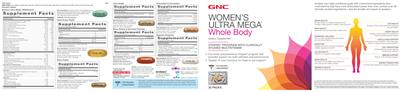
Supplement Facts
| Ingredient | Amount | % DV |
|---|---|---|
| Blend | 250 mg | -- |
| Acacia catechu wood & bark extract | 0 NP | -- |
| Chinese Skullcap (Scutellaria baicalensis) root extract | 0 NP | -- |
Other ingredients: Cellulose, Gelatin, Stearic Acid, Magnesium Stearate, Silicon Dioxide
Tap any ingredient to jump to its full detail below.
These statements are the manufacturer’s wording, reproduced from the product label — the label is saying it, not HelloPharmacist. We don’t verify or endorse them.
General Statements
Achieve your daily nutritional goals with customized ingredients plus multivitamins that have more antioxidant power than ever, contain over 30 clinically studied ingredients - and are smaller and easier to swallow.
Each pack contains: Joint Health
Conforms to USP <2091> for weight. Meets USP <2040> disintegration.
In a randomized, double-blind, placebo-controlled study of 112 healthy volunteers, subjects taking the GNC vitamin and mineral blends for six weeks experienced significant improvements in serum levels of certain key nutrients compared to a placebo and a basic multivitamin formula based upon multivariate statistical analyses of a group of B vitamins (thiamin, niacin, riboflavin, pantothenic acid, biotin, folic acid and vitamins B-6 and B-12) and key antioxidants and carotenoids (a group of beta-carotene, alpha-tocopherol, selenium, lutein and lycopene). Statistical improvements in SF-36 vitality and mental health scores were also observed compared to placebo.
Actual Size
Physician endorsed This product is endorsed by the GNC Medical Advisory Board. This team of esteemed physicians utilizes their extensive medical knowledge and experience to aid in the creation of GNC premium products, helping you to achieve optimal health through comprehensive nutritional support so you can live your best life!
Targets 13 core functions for head-to-toe support
General
CODE 204611 GQG
Suggested/Recommended/Usage/Directions
Directions: As a dietary supplement, take the contents of one pack daily with food. For maximum benefits, take as directed every day.
FDA Disclaimer Statement
These statements have not been evaluated by the Food and Drug Administration. This product is not intended to diagnose, treat, cure, or prevent any disease.
Precautions
Warning: Consult your physician prior to using this product if you are pregnant, nursing, taking medication, or have a medical condition.
Discontinue use two weeks prior to surgery.
Keep out of reach of children.
Formulation
No artificial colors, no artificial flavors, yeast free.
Storage
Store in a cool, dry place.
FDA Statement of Identity
Dietary Supplement
Brand IP Statement(s)
Vitapak program with clinically studied multivitamin
Our most comprehensive Vitapak program that provides support for both wellness and performance
Seals/Symbols
Physician endorsed
Is this label outdated? Report a formula or label change and our pharmacy team will review it.
Joint Health by GNC Women's Ultra Mega label
The label scan from the NIH Dietary Supplement Label Database. Tap to enlarge.
Label images are published by the NIH Dietary Supplement Label Database for the version of this product on file. Always read your actual product label.
View the full label (PDF)The Ingredients in Joint Health by GNC Women's Ultra Mega
These are the 2 active ingredients this product is made of. Select any to open its full monograph.
Serving size1 Capsule(s) Dosage formCapsule Amounts shown are per serving.
Most supplement products combine several ingredients, and a medication can interact with the product through any one of them. Each ingredient below shows whether it has known drug interactions.
Other (inactive) ingredients: Cellulose, Gelatin, Stearic Acid, Magnesium Stearate, Silicon Dioxide. These complete the product’s ingredient list but are not active constituents.
Joint Health by GNC Women's Ultra Mega Drug Interactions
HelloPharmacist Interaction Report
GNC Women's Ultra Mega Joint Health contains two active ingredients — Acacia catechu wood & bark extract and Chinese Skullcap (Baikal Skullcap) root extract — and both carry documented interactions with medications.
The most serious concern is with blood pressure medications (antihypertensives): both ingredients may lower blood pressure on their own, and using them together with your blood pressure drug could push your pressure too low.
Read the full breakdown — every affected drug type, severity by severity
Baikal Skullcap also interacts with several other drug categories. It may increase blood levels of drugs broken down by your liver's CYP2C19 and CYP1A2 enzymes (Moderate severity), raising their side effects.
It can theoretically boost the blood-thinning effect of anticoagulants and antiplatelet drugs like warfarin or aspirin (Moderate). It may enhance blood-sugar-lowering drugs' effects (Moderate), increase lithium levels in your blood — potentially toxic (Moderate) — and theoretically worsen the risk of low thyroid hormone if you're on antithyroid medication (Moderate).
Baikal Skullcap may also interfere with hormone replacement therapy by competing with estrogens (Moderate).
Catechu carries its own interactions: it may raise levels of theophylline (used for asthma and breathing problems) and other drugs metabolized by CYP1A2 enzymes (Moderate), and it theoretically could interfere with immunosuppressant medications used after organ transplant or for autoimmune conditions (Moderate).
Altogether, these interactions span 1,026 individual medications. Use the medication checker below with your exact prescriptions before you start this product.
Check your own medications below · Editorial policy · How we use AI
Want to check YOUR meds against Joint Health?
Ask about interactions with your drugs in plain English — “Can I take it with lisinopril?” — and we find you the answer in seconds, ingredient by ingredient.
Go to the checkerIngredients driving the most interactions
Individual Drug Interactions
The ingredients in Joint Health interact with 1,039 drugs. Click any drug to see the details.
2 of the 2 ingredients in Joint Health interact with drugs. Each result below shows which ingredient is responsible. Chinese Skullcap (Scutellaria baicalensis) root extract Acacia catechu wood & bark extract
6-mercaptopurinePurinethol
How 6-mercaptopurine interacts with Joint Health — through 1 ingredient. Tap an ingredient for the detail:
Acacia Catechu Wood & Bark ExtractImmunosuppressants Moderate
Interaction Summary
Theoretically, catechu might interfere with immunosuppressant therapy.
Read the full Acacia Catechu Wood & Bark Extract + 6-mercaptopurine interactionAbciximabReoPro
How Abciximab interacts with Joint Health — through 1 ingredient. Tap an ingredient for the detail:
Chinese Skullcap (scutellaria Baicalensis) Root ExtractAnticoagulant/antiplatelet Drugs Moderate
Interaction Summary
Theoretically, Baikal skullcap might increase the risk of bleeding when used concomitantly with anticoagulant and antiplatelet drugs.
Read the full Chinese Skullcap (scutellaria Baicalensis) Root Extract + Abciximab interactionAbrocitinibCibinqo
How Abrocitinib interacts with Joint Health — through 2 ingredients. Tap an ingredient for the detail:
Chinese Skullcap (scutellaria Baicalensis) Root ExtractAnticoagulant/antiplatelet Drugs, Cytochrome P450 2c19 (cyp2c19) Substrates Moderate
Interaction Summary
Theoretically, Baikal skullcap might increase the risk of bleeding when used concomitantly with anticoagulant and antiplatelet drugs.
Read the full Chinese Skullcap (scutellaria Baicalensis) Root Extract + Abrocitinib interactionAcacia Catechu Wood & Bark ExtractImmunosuppressants Moderate
Interaction Summary
Theoretically, catechu might interfere with immunosuppressant therapy.
Read the full Acacia Catechu Wood & Bark Extract + Abrocitinib interactionAcarboseGlucobay, Prandase, Precose
How Acarbose interacts with Joint Health — through 1 ingredient. Tap an ingredient for the detail:
Chinese Skullcap (scutellaria Baicalensis) Root ExtractAntidiabetes Drugs Moderate
Interaction Summary
Theoretically, concomitant use of Baikal skullcap with antidiabetes drugs might enhance blood glucose lowering effects.
Read the full Chinese Skullcap (scutellaria Baicalensis) Root Extract + Acarbose interactionAcebutololRhotral, Sectral
How Acebutolol interacts with Joint Health — through 2 ingredients. Tap an ingredient for the detail:
Acacia Catechu Wood & Bark ExtractAntihypertensive Drugs Moderate
Interaction Summary
Theoretically, concomitant use with antihypertensive drugs might increase the risk of hypotension.
Read the full Acacia Catechu Wood & Bark Extract + Acebutolol interactionChinese Skullcap (scutellaria Baicalensis) Root ExtractAntihypertensive Drugs Moderate
Interaction Summary
Theoretically, concomitant use of Baikal skullcap with antihypertensive drugs might have additive effects and increase the risk of hypotension.
Read the full Chinese Skullcap (scutellaria Baicalensis) Root Extract + Acebutolol interactionAcenocoumarolSintrom
How Acenocoumarol interacts with Joint Health — through 1 ingredient. Tap an ingredient for the detail:
Chinese Skullcap (scutellaria Baicalensis) Root ExtractAnticoagulant/antiplatelet Drugs Moderate
Interaction Summary
Theoretically, Baikal skullcap might increase the risk of bleeding when used concomitantly with anticoagulant and antiplatelet drugs.
Read the full Chinese Skullcap (scutellaria Baicalensis) Root Extract + Acenocoumarol interactionAcetaminophenChildren's Tylenol, Children's Tylenol Meltaways, Tylenol, Tylenol Ex Strength
How Acetaminophen interacts with Joint Health — through 2 ingredients. Tap an ingredient for the detail:
Acacia Catechu Wood & Bark ExtractCytochrome P450 1a2 (cyp1a2) Substrates Moderate
Interaction Summary
Theoretically, black catechu may increase the levels and clinical effects of CYP1A2 substrates.
Read the full Acacia Catechu Wood & Bark Extract + Acetaminophen interactionChinese Skullcap (scutellaria Baicalensis) Root ExtractCytochrome P450 1a2 (cyp1a2) Substrates Moderate
Interaction Summary
Theoretically, Baikal skullcap may increase levels of drugs metabolized by CYP1A2 enzymes.
Read the full Chinese Skullcap (scutellaria Baicalensis) Root Extract + Acetaminophen interactionAcetaminophen, AspirinGemnisyn
How Acetaminophen, Aspirin interacts with Joint Health — through 2 ingredients. Tap an ingredient for the detail:
Chinese Skullcap (scutellaria Baicalensis) Root ExtractCytochrome P450 1a2 (cyp1a2) Substrates, Anticoagulant/antiplatelet Drugs Moderate
Interaction Summary
Theoretically, Baikal skullcap may increase levels of drugs metabolized by CYP1A2 enzymes.
Read the full Chinese Skullcap (scutellaria Baicalensis) Root Extract + Acetaminophen, Aspirin interactionAcacia Catechu Wood & Bark ExtractCytochrome P450 1a2 (cyp1a2) Substrates Moderate
Interaction Summary
Theoretically, black catechu may increase the levels and clinical effects of CYP1A2 substrates.
Read the full Acacia Catechu Wood & Bark Extract + Acetaminophen, Aspirin interactionAcetaminophen, Aspirin, CaffeineExcedrin, Excedrin Extra Strength, Excedrin Migraine
How Acetaminophen, Aspirin, Caffeine interacts with Joint Health — through 2 ingredients. Tap an ingredient for the detail:
Chinese Skullcap (scutellaria Baicalensis) Root ExtractCytochrome P450 1a2 (cyp1a2) Substrates, Anticoagulant/antiplatelet Drugs Moderate
Interaction Summary
Theoretically, Baikal skullcap may increase levels of drugs metabolized by CYP1A2 enzymes.
Read the full Chinese Skullcap (scutellaria Baicalensis) Root Extract + Acetaminophen, Aspirin, Caffeine interactionAcacia Catechu Wood & Bark ExtractCytochrome P450 1a2 (cyp1a2) Substrates Moderate
Interaction Summary
Theoretically, black catechu may increase the levels and clinical effects of CYP1A2 substrates.
Read the full Acacia Catechu Wood & Bark Extract + Acetaminophen, Aspirin, Caffeine interactionAcetaminophen, Brompheniramine, PhenylpropanolamineDimetapp Cold and Flu
How Acetaminophen, Brompheniramine, Phenylpropanolamine interacts with Joint Health — through 2 ingredients. Tap an ingredient for the detail:
Acacia Catechu Wood & Bark ExtractCytochrome P450 1a2 (cyp1a2) Substrates Moderate
Interaction Summary
Theoretically, black catechu may increase the levels and clinical effects of CYP1A2 substrates.
Read the full Acacia Catechu Wood & Bark Extract + Acetaminophen, Brompheniramine, Phenylpropanolamine interactionChinese Skullcap (scutellaria Baicalensis) Root ExtractCytochrome P450 1a2 (cyp1a2) Substrates Moderate
Interaction Summary
Theoretically, Baikal skullcap may increase levels of drugs metabolized by CYP1A2 enzymes.
Read the full Chinese Skullcap (scutellaria Baicalensis) Root Extract + Acetaminophen, Brompheniramine, Phenylpropanolamine interactionAcetaminophen, ButalbitalAxocet, Bancap, Bucet, Butex Forte, Esgic CF, Orbivan CF +5 more
How Acetaminophen, Butalbital interacts with Joint Health — through 2 ingredients. Tap an ingredient for the detail:
Chinese Skullcap (scutellaria Baicalensis) Root ExtractCytochrome P450 1a2 (cyp1a2) Substrates Moderate
Interaction Summary
Theoretically, Baikal skullcap may increase levels of drugs metabolized by CYP1A2 enzymes.
Read the full Chinese Skullcap (scutellaria Baicalensis) Root Extract + Acetaminophen, Butalbital interactionAcacia Catechu Wood & Bark ExtractCytochrome P450 1a2 (cyp1a2) Substrates Moderate
Interaction Summary
Theoretically, black catechu may increase the levels and clinical effects of CYP1A2 substrates.
Read the full Acacia Catechu Wood & Bark Extract + Acetaminophen, Butalbital interactionAcetaminophen, Butalbital, CaffeineEsgic, Esgic Plus, Fiogesic, Fioricet, Repan, Tecnal +1 more
How Acetaminophen, Butalbital, Caffeine interacts with Joint Health — through 2 ingredients. Tap an ingredient for the detail:
Acacia Catechu Wood & Bark ExtractCytochrome P450 1a2 (cyp1a2) Substrates Moderate
Interaction Summary
Theoretically, black catechu may increase the levels and clinical effects of CYP1A2 substrates.
Read the full Acacia Catechu Wood & Bark Extract + Acetaminophen, Butalbital, Caffeine interactionChinese Skullcap (scutellaria Baicalensis) Root ExtractCytochrome P450 1a2 (cyp1a2) Substrates Moderate
Interaction Summary
Theoretically, Baikal skullcap may increase levels of drugs metabolized by CYP1A2 enzymes.
Read the full Chinese Skullcap (scutellaria Baicalensis) Root Extract + Acetaminophen, Butalbital, Caffeine interactionAcetaminophen, Butalbital, Caffeine, CodeineEsgic with Codeine, Fioricet w/ Codeine
How Acetaminophen, Butalbital, Caffeine, Codeine interacts with Joint Health — through 2 ingredients. Tap an ingredient for the detail:
Chinese Skullcap (scutellaria Baicalensis) Root ExtractCytochrome P450 1a2 (cyp1a2) Substrates, Cns Depressants Moderate
Interaction Summary
Theoretically, Baikal skullcap may increase levels of drugs metabolized by CYP1A2 enzymes.
Read the full Chinese Skullcap (scutellaria Baicalensis) Root Extract + Acetaminophen, Butalbital, Caffeine, Codeine interactionAcacia Catechu Wood & Bark ExtractCytochrome P450 1a2 (cyp1a2) Substrates Moderate
Interaction Summary
Theoretically, black catechu may increase the levels and clinical effects of CYP1A2 substrates.
Read the full Acacia Catechu Wood & Bark Extract + Acetaminophen, Butalbital, Caffeine, Codeine interactionAcetaminophen, Butalbital, CodeineBancap w/ Codeine
How Acetaminophen, Butalbital, Codeine interacts with Joint Health — through 2 ingredients. Tap an ingredient for the detail:
Chinese Skullcap (scutellaria Baicalensis) Root ExtractCns Depressants, Cytochrome P450 1a2 (cyp1a2) Substrates Moderate
Interaction Summary
Theoretically, Baikal skullcap might cause additive therapeutic and adverse effects when used concomitantly with drugs with sedative properties.
Read the full Chinese Skullcap (scutellaria Baicalensis) Root Extract + Acetaminophen, Butalbital, Codeine interactionAcacia Catechu Wood & Bark ExtractCytochrome P450 1a2 (cyp1a2) Substrates Moderate
Interaction Summary
Theoretically, black catechu may increase the levels and clinical effects of CYP1A2 substrates.
Read the full Acacia Catechu Wood & Bark Extract + Acetaminophen, Butalbital, Codeine interactionAcetaminophen, Butalbital, Codeine PhosphatePhrenilin #3
How Acetaminophen, Butalbital, Codeine Phosphate interacts with Joint Health — through 2 ingredients. Tap an ingredient for the detail:
Chinese Skullcap (scutellaria Baicalensis) Root ExtractCns Depressants, Cytochrome P450 1a2 (cyp1a2) Substrates Moderate
Interaction Summary
Theoretically, Baikal skullcap might cause additive therapeutic and adverse effects when used concomitantly with drugs with sedative properties.
Read the full Chinese Skullcap (scutellaria Baicalensis) Root Extract + Acetaminophen, Butalbital, Codeine Phosphate interactionAcacia Catechu Wood & Bark ExtractCytochrome P450 1a2 (cyp1a2) Substrates Moderate
Interaction Summary
Theoretically, black catechu may increase the levels and clinical effects of CYP1A2 substrates.
Read the full Acacia Catechu Wood & Bark Extract + Acetaminophen, Butalbital, Codeine Phosphate interactionAcetaminophen, Caffeine, Chlorpheniramine, Hydrocodone, PhenylephrineHycomine Compound
How Acetaminophen, Caffeine, Chlorpheniramine, Hydrocodone, Phenylephrine interacts with Joint Health — through 2 ingredients. Tap an ingredient for the detail:
Chinese Skullcap (scutellaria Baicalensis) Root ExtractCytochrome P450 1a2 (cyp1a2) Substrates, Cns Depressants Moderate
Interaction Summary
Theoretically, Baikal skullcap may increase levels of drugs metabolized by CYP1A2 enzymes.
Read the full Chinese Skullcap (scutellaria Baicalensis) Root Extract + Acetaminophen, Caffeine, Chlorpheniramine, Hydrocodone, Phenylephrine interactionAcacia Catechu Wood & Bark ExtractCytochrome P450 1a2 (cyp1a2) Substrates Moderate
Interaction Summary
Theoretically, black catechu may increase the levels and clinical effects of CYP1A2 substrates.
Read the full Acacia Catechu Wood & Bark Extract + Acetaminophen, Caffeine, Chlorpheniramine, Hydrocodone, Phenylephrine interactionAcetaminophen, Caffeine, CodeineGesic C15, Gesic C30, Gesic C8, Lenoltec 1, Lenoltec 2, Lenoltec 3 +1 more
How Acetaminophen, Caffeine, Codeine interacts with Joint Health — through 2 ingredients. Tap an ingredient for the detail:
Acacia Catechu Wood & Bark ExtractCytochrome P450 1a2 (cyp1a2) Substrates Moderate
Interaction Summary
Theoretically, black catechu may increase the levels and clinical effects of CYP1A2 substrates.
Read the full Acacia Catechu Wood & Bark Extract + Acetaminophen, Caffeine, Codeine interactionChinese Skullcap (scutellaria Baicalensis) Root ExtractCns Depressants, Cytochrome P450 1a2 (cyp1a2) Substrates Moderate
Interaction Summary
Theoretically, Baikal skullcap might cause additive therapeutic and adverse effects when used concomitantly with drugs with sedative properties.
Read the full Chinese Skullcap (scutellaria Baicalensis) Root Extract + Acetaminophen, Caffeine, Codeine interactionAcetaminophen, Caffeine, Codeine, SalicylamideCodalan No.1, Codalan No.2, Codalan No.3
How Acetaminophen, Caffeine, Codeine, Salicylamide interacts with Joint Health — through 2 ingredients. Tap an ingredient for the detail:
Chinese Skullcap (scutellaria Baicalensis) Root ExtractCytochrome P450 1a2 (cyp1a2) Substrates, Cns Depressants Moderate
Interaction Summary
Theoretically, Baikal skullcap may increase levels of drugs metabolized by CYP1A2 enzymes.
Read the full Chinese Skullcap (scutellaria Baicalensis) Root Extract + Acetaminophen, Caffeine, Codeine, Salicylamide interactionAcacia Catechu Wood & Bark ExtractCytochrome P450 1a2 (cyp1a2) Substrates Moderate
Interaction Summary
Theoretically, black catechu may increase the levels and clinical effects of CYP1A2 substrates.
Read the full Acacia Catechu Wood & Bark Extract + Acetaminophen, Caffeine, Codeine, Salicylamide interactionAcetaminophen, Caffeine, DihydrocodeineDHC Plus, Panlor DC, Panlor SS
How Acetaminophen, Caffeine, Dihydrocodeine interacts with Joint Health — through 2 ingredients. Tap an ingredient for the detail:
Chinese Skullcap (scutellaria Baicalensis) Root ExtractCytochrome P450 1a2 (cyp1a2) Substrates, Cns Depressants Moderate
Interaction Summary
Theoretically, Baikal skullcap may increase levels of drugs metabolized by CYP1A2 enzymes.
Read the full Chinese Skullcap (scutellaria Baicalensis) Root Extract + Acetaminophen, Caffeine, Dihydrocodeine interactionAcacia Catechu Wood & Bark ExtractCytochrome P450 1a2 (cyp1a2) Substrates Moderate
Interaction Summary
Theoretically, black catechu may increase the levels and clinical effects of CYP1A2 substrates.
Read the full Acacia Catechu Wood & Bark Extract + Acetaminophen, Caffeine, Dihydrocodeine interactionAcetaminophen, Caffeine, IsomethepteneMigralam
How Acetaminophen, Caffeine, Isometheptene interacts with Joint Health — through 2 ingredients. Tap an ingredient for the detail:
Chinese Skullcap (scutellaria Baicalensis) Root ExtractCytochrome P450 1a2 (cyp1a2) Substrates Moderate
Interaction Summary
Theoretically, Baikal skullcap may increase levels of drugs metabolized by CYP1A2 enzymes.
Read the full Chinese Skullcap (scutellaria Baicalensis) Root Extract + Acetaminophen, Caffeine, Isometheptene interactionAcacia Catechu Wood & Bark ExtractCytochrome P450 1a2 (cyp1a2) Substrates Moderate
Interaction Summary
Theoretically, black catechu may increase the levels and clinical effects of CYP1A2 substrates.
Read the full Acacia Catechu Wood & Bark Extract + Acetaminophen, Caffeine, Isometheptene interactionAcetaminophen, Caffeine, PyrilamineMidol Max Strength Menstrual
How Acetaminophen, Caffeine, Pyrilamine interacts with Joint Health — through 2 ingredients. Tap an ingredient for the detail:
Acacia Catechu Wood & Bark ExtractCytochrome P450 1a2 (cyp1a2) Substrates Moderate
Interaction Summary
Theoretically, black catechu may increase the levels and clinical effects of CYP1A2 substrates.
Read the full Acacia Catechu Wood & Bark Extract + Acetaminophen, Caffeine, Pyrilamine interactionChinese Skullcap (scutellaria Baicalensis) Root ExtractCytochrome P450 1a2 (cyp1a2) Substrates Moderate
Interaction Summary
Theoretically, Baikal skullcap may increase levels of drugs metabolized by CYP1A2 enzymes.
Read the full Chinese Skullcap (scutellaria Baicalensis) Root Extract + Acetaminophen, Caffeine, Pyrilamine interactionAcetaminophen, Chlorpheniramine Maleate, Dextromethorphan HbrVicks Formula 44M Cough, Cold & Flu Relief
How Acetaminophen, Chlorpheniramine Maleate, Dextromethorphan Hbr interacts with Joint Health — through 2 ingredients. Tap an ingredient for the detail:
Chinese Skullcap (scutellaria Baicalensis) Root ExtractCytochrome P450 1a2 (cyp1a2) Substrates Moderate
Interaction Summary
Theoretically, Baikal skullcap may increase levels of drugs metabolized by CYP1A2 enzymes.
Read the full Chinese Skullcap (scutellaria Baicalensis) Root Extract + Acetaminophen, Chlorpheniramine Maleate, Dextromethorphan Hbr interactionAcacia Catechu Wood & Bark ExtractCytochrome P450 1a2 (cyp1a2) Substrates Moderate
Interaction Summary
Theoretically, black catechu may increase the levels and clinical effects of CYP1A2 substrates.
Read the full Acacia Catechu Wood & Bark Extract + Acetaminophen, Chlorpheniramine Maleate, Dextromethorphan Hbr interactionAcetaminophen, Chlorpheniramine, Codeine, PhenylephrineColrex
How Acetaminophen, Chlorpheniramine, Codeine, Phenylephrine interacts with Joint Health — through 2 ingredients. Tap an ingredient for the detail:
Chinese Skullcap (scutellaria Baicalensis) Root ExtractCytochrome P450 1a2 (cyp1a2) Substrates, Cns Depressants Moderate
Interaction Summary
Theoretically, Baikal skullcap may increase levels of drugs metabolized by CYP1A2 enzymes.
Read the full Chinese Skullcap (scutellaria Baicalensis) Root Extract + Acetaminophen, Chlorpheniramine, Codeine, Phenylephrine interactionAcacia Catechu Wood & Bark ExtractCytochrome P450 1a2 (cyp1a2) Substrates Moderate
Interaction Summary
Theoretically, black catechu may increase the levels and clinical effects of CYP1A2 substrates.
Read the full Acacia Catechu Wood & Bark Extract + Acetaminophen, Chlorpheniramine, Codeine, Phenylephrine interactionAcetaminophen, Chlorpheniramine, DextromethorphanCoricidin II Extra Strength Cold and Flu
How Acetaminophen, Chlorpheniramine, Dextromethorphan interacts with Joint Health — through 2 ingredients. Tap an ingredient for the detail:
Chinese Skullcap (scutellaria Baicalensis) Root ExtractCytochrome P450 1a2 (cyp1a2) Substrates Moderate
Interaction Summary
Theoretically, Baikal skullcap may increase levels of drugs metabolized by CYP1A2 enzymes.
Read the full Chinese Skullcap (scutellaria Baicalensis) Root Extract + Acetaminophen, Chlorpheniramine, Dextromethorphan interactionAcacia Catechu Wood & Bark ExtractCytochrome P450 1a2 (cyp1a2) Substrates Moderate
Interaction Summary
Theoretically, black catechu may increase the levels and clinical effects of CYP1A2 substrates.
Read the full Acacia Catechu Wood & Bark Extract + Acetaminophen, Chlorpheniramine, Dextromethorphan interactionAcetaminophen, Chlorpheniramine, Dextromethorphan HydrobromideCoricidin HBP Maximum Strength Flu
How Acetaminophen, Chlorpheniramine, Dextromethorphan Hydrobromide interacts with Joint Health — through 2 ingredients. Tap an ingredient for the detail:
Acacia Catechu Wood & Bark ExtractCytochrome P450 1a2 (cyp1a2) Substrates Moderate
Interaction Summary
Theoretically, black catechu may increase the levels and clinical effects of CYP1A2 substrates.
Read the full Acacia Catechu Wood & Bark Extract + Acetaminophen, Chlorpheniramine, Dextromethorphan Hydrobromide interactionChinese Skullcap (scutellaria Baicalensis) Root ExtractCytochrome P450 1a2 (cyp1a2) Substrates Moderate
Interaction Summary
Theoretically, Baikal skullcap may increase levels of drugs metabolized by CYP1A2 enzymes.
Read the full Chinese Skullcap (scutellaria Baicalensis) Root Extract + Acetaminophen, Chlorpheniramine, Dextromethorphan Hydrobromide interactionAcetaminophen, Chlorpheniramine, Dextromethorphan, PhenylpropanolamineMulti Symptom Cold Relief
How Acetaminophen, Chlorpheniramine, Dextromethorphan, Phenylpropanolamine interacts with Joint Health — through 2 ingredients. Tap an ingredient for the detail:
Chinese Skullcap (scutellaria Baicalensis) Root ExtractCytochrome P450 1a2 (cyp1a2) Substrates Moderate
Interaction Summary
Theoretically, Baikal skullcap may increase levels of drugs metabolized by CYP1A2 enzymes.
Read the full Chinese Skullcap (scutellaria Baicalensis) Root Extract + Acetaminophen, Chlorpheniramine, Dextromethorphan, Phenylpropanolamine interactionAcacia Catechu Wood & Bark ExtractCytochrome P450 1a2 (cyp1a2) Substrates Moderate
Interaction Summary
Theoretically, black catechu may increase the levels and clinical effects of CYP1A2 substrates.
Read the full Acacia Catechu Wood & Bark Extract + Acetaminophen, Chlorpheniramine, Dextromethorphan, Phenylpropanolamine interactionAcetaminophen, Chlorpheniramine, Dextromethorphan, PseudoephedrineChildren's Tylenol Cold Plus Cough, Tylenol Cold Ex Strength
How Acetaminophen, Chlorpheniramine, Dextromethorphan, Pseudoephedrine interacts with Joint Health — through 2 ingredients. Tap an ingredient for the detail:
Acacia Catechu Wood & Bark ExtractCytochrome P450 1a2 (cyp1a2) Substrates Moderate
Interaction Summary
Theoretically, black catechu may increase the levels and clinical effects of CYP1A2 substrates.
Read the full Acacia Catechu Wood & Bark Extract + Acetaminophen, Chlorpheniramine, Dextromethorphan, Pseudoephedrine interactionChinese Skullcap (scutellaria Baicalensis) Root ExtractCytochrome P450 1a2 (cyp1a2) Substrates Moderate
Interaction Summary
Theoretically, Baikal skullcap may increase levels of drugs metabolized by CYP1A2 enzymes.
Read the full Chinese Skullcap (scutellaria Baicalensis) Root Extract + Acetaminophen, Chlorpheniramine, Dextromethorphan, Pseudoephedrine interactionAcetaminophen, Chlorpheniramine, Guaifenesin, Phenylephrine, SalicylamideRhinogesic GG
How Acetaminophen, Chlorpheniramine, Guaifenesin, Phenylephrine, Salicylamide interacts with Joint Health — through 2 ingredients. Tap an ingredient for the detail:
Chinese Skullcap (scutellaria Baicalensis) Root ExtractCytochrome P450 1a2 (cyp1a2) Substrates Moderate
Interaction Summary
Theoretically, Baikal skullcap may increase levels of drugs metabolized by CYP1A2 enzymes.
Read the full Chinese Skullcap (scutellaria Baicalensis) Root Extract + Acetaminophen, Chlorpheniramine, Guaifenesin, Phenylephrine, Salicylamide interactionAcacia Catechu Wood & Bark ExtractCytochrome P450 1a2 (cyp1a2) Substrates Moderate
Interaction Summary
Theoretically, black catechu may increase the levels and clinical effects of CYP1A2 substrates.
Read the full Acacia Catechu Wood & Bark Extract + Acetaminophen, Chlorpheniramine, Guaifenesin, Phenylephrine, Salicylamide interactionAcetaminophen, Chlorpheniramine, PhenylephrineAlka-Seltzer PLUS, Histex SR, Protid
How Acetaminophen, Chlorpheniramine, Phenylephrine interacts with Joint Health — through 2 ingredients. Tap an ingredient for the detail:
Chinese Skullcap (scutellaria Baicalensis) Root ExtractCytochrome P450 1a2 (cyp1a2) Substrates Moderate
Interaction Summary
Theoretically, Baikal skullcap may increase levels of drugs metabolized by CYP1A2 enzymes.
Read the full Chinese Skullcap (scutellaria Baicalensis) Root Extract + Acetaminophen, Chlorpheniramine, Phenylephrine interactionAcacia Catechu Wood & Bark ExtractCytochrome P450 1a2 (cyp1a2) Substrates Moderate
Interaction Summary
Theoretically, black catechu may increase the levels and clinical effects of CYP1A2 substrates.
Read the full Acacia Catechu Wood & Bark Extract + Acetaminophen, Chlorpheniramine, Phenylephrine interactionAcetaminophen, Chlorpheniramine, Phenylephrine, SalicylamideRhinogesic, Rhinogesic JR
How Acetaminophen, Chlorpheniramine, Phenylephrine, Salicylamide interacts with Joint Health — through 2 ingredients. Tap an ingredient for the detail:
Chinese Skullcap (scutellaria Baicalensis) Root ExtractCytochrome P450 1a2 (cyp1a2) Substrates Moderate
Interaction Summary
Theoretically, Baikal skullcap may increase levels of drugs metabolized by CYP1A2 enzymes.
Read the full Chinese Skullcap (scutellaria Baicalensis) Root Extract + Acetaminophen, Chlorpheniramine, Phenylephrine, Salicylamide interactionAcacia Catechu Wood & Bark ExtractCytochrome P450 1a2 (cyp1a2) Substrates Moderate
Interaction Summary
Theoretically, black catechu may increase the levels and clinical effects of CYP1A2 substrates.
Read the full Acacia Catechu Wood & Bark Extract + Acetaminophen, Chlorpheniramine, Phenylephrine, Salicylamide interactionEach ingredient & the kinds of drugs it affects
For each ingredient in Joint Health with known interactions, here are the types of medications they can affect. Open any type for the detail — or search your exact drug in the checker above.
Chinese Skullcap (Scutellaria baicalensis) root extract
Anticoagulant/Antiplatelet Drugs
Theoretically, Baikal skullcap might increase the risk of bleeding when used concomitantly with anticoagulant and antiplatelet drugs.
Preliminary clinical research suggests that taking capsules containing a combination of astragalus, goldthread, and Baikal skullcap daily for 4 weeks inhibits platelet aggregation; the effect seems to be similar to that of aspirin 50 mg daily. It is unclear if this effect is due to Baikal skullcap, other ingredients, or the combination.
Antidiabetes Drugs
Theoretically, concomitant use of Baikal skullcap with antidiabetes drugs might enhance blood glucose lowering effects.
Baicalein, a constituent of Baikal skullcap, has alpha-glucosidase inhibitory activity in vitro. Animal research also suggests that Baikal skullcap enhances the antidiabetic effects of metformin. However, in a small human study, taking Baikal skullcap extract did not enhance the antidiabetic effects of metformin, although it did modestly lower glucose levels during an oral glucose tolerance test (OGTT). Until more is known, use cautiously.
Antihypertensive Drugs
Theoretically, concomitant use of Baikal skullcap with antihypertensive drugs might have additive effects and increase the risk of hypotension.
Animal research suggests that baicalein, a constituent of Baikal skullcap, might lower blood pressure.
Antithyroid Drugs
Theoretically, concomitant use of Baikal skullcap and antithyroid drugs may result in additive activity and increase the risk of hypothyroidism.
In an animal hyperthyroid model, Baikal skullcap improved levels of triiodothyronine (T3), thyroxine (T4), and thyroid stimulating hormone (TSH). The clinical significance of this effect is unclear.
Cytochrome P450 1A2 (Cyp1A2) Substrates
Theoretically, Baikal skullcap may increase levels of drugs metabolized by CYP1A2 enzymes.
In vitro evidence suggests that constituents of Baikal skullcap inhibit the activity of CYP1A2. This effect has not been reported in humans.
Cytochrome P450 2C19 (Cyp2C19) Substrates
Theoretically, Baikal skullcap might increase levels of drugs metabolized by CYP2C19 enzymes.
In vitro evidence suggest that wogonin, a constituent of Baikal skullcap, modestly inhibits the activity of CYP2C19 enzymes. This effect has not been reported in humans.
Estrogens
Theoretically, concomitant use of large amounts of Baikal skullcap might interfere with hormone replacement therapy, due to competition for estrogen receptors.
In vitro evidence suggests that Baikal skullcap has estrogenic activity.
Lithium
Theoretically, Baikal skullcap might reduce lithium excretion and increase serum levels of lithium.
Baikal skullcap is thought to have diuretic properties, which may reduce lithium excretion. The dose of lithium might need to be decreased.
Alcohol (Ethanol)
Theoretically, Baikal skullcap might potentiate the sedative effects of alcohol.
In vitro and animal research suggests that Baikal skullcap binds to GABA-A receptors and causes sedation. Theoretically, Baikal skullcap might potentiate the sedative effects of alcohol. Preliminary clinical research has not identified clinically relevant sedation after use of Baikal skullcap; however, a thorough evaluation of safety outcomes has not been conducted.
Cns Depressants
Theoretically, Baikal skullcap might cause additive therapeutic and adverse effects when used concomitantly with drugs with sedative properties.
In vitro and animal research suggests that Baikal skullcap binds to GABA-A receptors and causes sedation. Theoretically, Baikal skullcap might cause additive therapeutic and adverse effects when used concomitantly with drugs with sedative properties. Preliminary clinical research has not identified clinically relevant sedation after use of Baikal skullcap; however, a thorough evaluation of safety outcomes has not been conducted.
Organic Anion-Transporting Polypeptide Substrates (Oatp)
Theoretically, Baikal skullcap might alter the levels and clinical effects of OATP substrates.
Some pharmacokinetic research shows that baicalin, a constituent of Baikal skullcap, can decrease plasma levels of rosuvastatin. The mechanism is thought to involve stimulation of the activity of the organic anion-transporting polypeptide 1B1 (OATP1B1), which transports rosuvastatin into the liver. This decreases plasma levels of the drug, but increases levels at the site of action in the liver. The degree to which rosuvastatin levels are affected depends on the OATP1B1 haplotype of the individual. Baikal skullcap might also affect other OATP1B1 substrates.
P-Glycoprotein Substrates
Theoretically, Baikal skullcap might increase levels of drugs transported by P-glycoprotein.
In vitro and animal research suggests that baicalein, oroxylin A, and wogonin, constituents of Baikal skullcap, can inhibit P-glycoprotein. This effect has not been reported in humans.
Acacia catechu wood & bark extract
Antihypertensive Drugs
Theoretically, concomitant use with antihypertensive drugs might increase the risk of hypotension.
Catechu might lower blood pressure.
Cytochrome P450 1A2 (Cyp1A2) Substrates
Theoretically, black catechu may increase the levels and clinical effects of CYP1A2 substrates.
Animal research shows that black catechu can increase theophylline concentrations in the blood, possibly by inhibiting CYP1A2. Theophylline is a CYP1A2 substrate.
Immunosuppressants
Theoretically, catechu might interfere with immunosuppressant therapy.
Animal and in vitro studies suggest that catechu has immunomodulating effects.
Theophylline
Theoretically, black catechu may increase the levels and clinical effects of theophylline.
Animal research shows that black catechu can increase theophylline concentrations in the blood, possibly by inhibiting cytochrome P450 1A2.
Brand information
Manufacturer and brand details for Joint Health, from the product label.
GNC Women's Ultra Mega
See all GNC Women's Ultra Mega products- Name
- General Nutrition Corporation
- City
- Pittsburgh
- State
- PA
- ZipCode
- 15222
- Phone Number
- 1-888-462-2548
- Web Address
- gnc.com
Joint Health by GNC Women's Ultra Mega: Common Questions
Does Joint Health by GNC Women's Ultra Mega interact with any medications?
How can one product interact with so many drugs?
Where does this information come from?
Can I take this while pregnant or breastfeeding?
What are the most common side effects?
Is this product tested for joints or joint pain?
Why does one ingredient (catechu) say 'Blend' in the label?
Can this interfere with my blood pressure medicine?
What is Baikal Skullcap used for?
Written and reviewed by the HelloPharmacist editorial staff. Our editorial policy
Not sure if Joint Health is safe with your meds?
Our pharmacists answer your medication & supplement questions — free.
Label information is sourced from the NIH Dietary Supplement Label Database and reflects the product version on file; always read your actual product label. This page is for education only and is not a substitute for professional medical advice. Confirm with your pharmacist or doctor before combining supplements and medications.
The Full Monographs Behind Joint Health’s Ingredients
Every ingredient we hold a full HelloPharmacist monograph for — uses, evidence, safety, and the complete interaction list.
Catechu
Interacts with 475 drugsCatechu is an astringent extract made from the heartwood of the Acacia (Senegalia) catechu tree, used traditionally for mouth sores, sore throat, diarrhea, and minor skin problems. Strong hu...
Read the full Catechu monograph → Herb & supplement monographBaikal Skullcap
Interacts with 946 drugsBaikal skullcap is a traditional Chinese herb (Huang Qin) used for inflammation, allergies, and infections, with active compounds like baicalin and baicalein studied mostly in the lab. Human...
Read the full Baikal Skullcap monograph →Sources & How We Checked
Joint Health's label data comes from the NIH Dietary Supplement Label Database; the ingredient interaction data is from the Natural Medicines database, reviewed by our pharmacists.
- NIH Dietary Supplement Label Database (DSLD) — The official product label on file for this supplement.
- Natural Medicines (Therapeutic Research Center) — Evidence-graded clinical reference behind the ingredient interaction data.
Content is written and reviewed by licensed HelloPharmacist pharmacists. See our data sources and editorial standards for how this information is built and checked.
The 43 references behind this product’s interaction data
Every citation that drives the interaction findings for this product’s ingredients, from the evidence-graded Natural Medicines (TRC Healthcare) database. Open an ingredient to browse its citations — links open the study on PubMed or the publisher’s site.
Catechu 9 references
- Electronic Code of Federal Regulations. Title 21. Part 182 -- Substances Generally Recognized As Safe. Available at: https://www.accessdata.fda.gov/scripts/cdrh/cfdocs/cfcfr/CFRSearch.cfm?CFRPart=182
- Sham JS, Chiu KW, Pang PK. Hypotensive action of Acacia catechu. Planta Med 1984;50:177-80.
- Chalasani N, Vuppalanchi R, Navarro V, et al. Acute liver injury due to flavocoxid (Limbrel), a medical food for osteoarthritis: a case series. Ann Intern Med 2012;156:857-60. PubMed
- Reichenbach S, Juni P. Medical food and food supplements: not always as safe as generally assumed. Ann Intern Med 2012;156:894-5. PubMed
- PL-Detail Document, Liver Toxicity and Limbrel. Pharmacist's Letter/Prescriber's Letter. September 2012.
- Al-Mohizea AM, Raish M, Ahad A, et al. Pharmacokinetic interaction of Acacia catechu with CYP1A substrate theophylline in rabbits. J Tradit Chin Med 2015;35(5):588-93. PubMed
- Papafragkakis C, Ona MA, Reddy M, et al. Acute hepatitis after ingestion of a preparation of chinese skullcap and black catechu for joint pain. Case Reports Hepatol 2016;2016:4356749. PubMed
- Sunil MA, Sunitha VS, Ashitha A, et al. Catechin rich butanol fraction extracted from Acacia catechu L. (a thirst quencher) exhibits immunostimulatory potential. J Food Drug Anal. 2019;27(1):195-207. PubMed
- US Food and Drug Administration (FDA). FDA Alerts Consumers About Potentially Life-Threatening Health Problems Linked to Limbrel. December 19, 2017. Available at: https://www.fda.gov/food/alerts-advisories-safety-information/fda-alerts-consumers-about-pot
Baikal Skullcap 34 references
- Huang KC. The pharmacology of Chinese herbs. 2nd ed. New York, NY: CRC Press LLC. 1999;385-6, 400-1.
- Hui KM, Wang XH, Xue H. Interaction of flavones from the roots of Scutellaria baicalensis with the benzodiazepine site. Planta Med 2000;66:91-3.
- Liao JF, Wang HH, Chen MC, et al. Benzodiazepine binding site-interactive flavones from Scutellaria baicalensis root. Planta Med 1998;64:571-2.
- Nishioka T, Kawabata J, Aoyama Y. Baicalein, an alpha-glucosidase inhibitor from Scutellaria baicalensis. J Nat Prod 1998;61:1413-5.
- Zhang CZ, Wang SX, Zhang Y, et al. In vitro estrogenic activities of Chinese medicinal plants traditionally used for the management of menopausal symptoms. J Ethnopharmacol 2005;98:295-300. PubMed
- Fan L, Zhang W, Guo D, et al. The effect of herbal medicine baicalin on pharmacokinetics of rosuvastatin, substrate of organic anion-transporting polypeptide 1B1. Clin Pharmacol Ther 2007;83:471-6. PubMed
- Chen C, Mireles RJ, Campbell SD, et al. Differential interaction of 3-hydroxy-3-methylglutaryl-CoA reductase inhibitors with ABCB1, ABCC2, and OATP1B1. Drug Metab Dispos 2005;33:537-46. PubMed
- Pasanen MK, Fredrikson H, Neuvonen PJ, Niemi M. Different effects of SLCO1B1 polymorphism on the pharmacokinetics of atorvastatin and rosuvastatin. Clin Pharmacol Ther 2007;82:726-33. PubMed
- Konig J, Seithel A, Gradhand U, Fromm MF. Pharmacogenomics of human OATP transporters. Naunyn-Schmiedeberg Arch Pharmacol 2006;372:432-43. PubMed
- Chalasani N, Vuppalanchi R, Navarro V, et al. Acute liver injury due to flavocoxid (Limbrel), a medical food for osteoarthritis: a case series. Ann Intern Med 2012;156:857-60. PubMed
- Reichenbach S, Juni P. Medical food and food supplements: not always as safe as generally assumed. Ann Intern Med 2012;156:894-5. PubMed
- Huang, W. M., Yan, J., and Xu, J. [Clinical and experimental study on inhibitory effect of sanhuang mixture on platelet aggregation]. Zhongguo Zhong.Xi.Yi.Jie.He.Za Zhi. 1995;15(8):465-467.
- Kim, B. R., Kim, D. H., Park, R., Kwon, K. B., Ryu, D. G., Kim, Y. C., Kim, N. Y., Jeong, S., Kang, B. K., and Kim, K. S. Effect of an extract of the root of Scutellaria baicalensis and its flavonoids on aflatoxin B1 oxidizing cytochrome P450 enzymes. Pl PubMed
- Lee, Y., Yeo, H., Liu, S. H., Jiang, Z., Savizky, R. M., Austin, D. J., and Cheng, Y. C. Increased anti-P-glycoprotein activity of baicalein by alkylation on the A ring. J Med Chem 10-21-2004;47(22):5555-5566. PubMed
- Huang, Y., Tsang, S. Y., Yao, X., and Chen, Z. Y. Biological properties of baicalein in cardiovascular system. Curr Drug Targets.Cardiovasc.Haematol.Disord 2005;5(2):177-184. PubMed
- Lee, E., Enomoto, R., Suzuki, C., Ohno, M., Ohashi, T., Miyauchi, A., Tanimoto, E., Maeda, K., Hirano, H., Yokoi, T., and Sugahara, C. Wogonin, a plant flavone, potentiates etoposide-induced apoptosis in cancer cells. Ann N Y Acad Sci 2007;1095:521-526. PubMed
- Waisundara, V. Y., Hsu, A., Huang, D., and Tan, B. K. Scutellaria baicalensis enhances the anti-diabetic activity of metformin in streptozotocin-induced diabetic Wistar rats. Am J Chin Med 2008;36(3):517-540.
- Go, W. J., Ryu, J. H., Qiang, F., and Han, H. K. Evaluation of the flavonoid oroxylin A as an inhibitor of P-glycoprotein-mediated cellular efflux. J Nat Prod 2009;72(9):1616-1619. PubMed
- Linnebur, S. A., Rapacchietta, O. C., and Vejar, M. Hepatotoxicity associated with chinese skullcap contained in Move Free Advanced dietary supplement: two case reports and review of the literature. Pharmacotherapy 2010;30(7):750, 258e-750, 262e. PubMed
- Enomoto, R., Koshiba, C., Suzuki, C., and Lee, E. Wogonin potentiates the antitumor action of etoposide and ameliorates its adverse effects. Cancer Chemother.Pharmacol 2011;67(5):1063-1072. PubMed
- Chang, H. H., Yi, P. L., Cheng, C. H., Lu, C. Y., Hsiao, Y. T., Tsai, Y. F., Li, C. L., and Chang, F. C. Biphasic effects of baicalin, an active constituent of Scutellaria baicalensis Georgi, in the spontaneous sleep-wake regulation. J Ethnopharmacol. 5- PubMed
- Li, T., Li, N., Guo, Q., Ji, H., Zhao, D., Xie, S., Li, X., Qiu, Z., Han, D., Chen, X., and You, Q. Inhibitory effects of wogonin on catalytic activity of cytochrome P450 enzyme in human liver microsomes. Eur J Drug Metab Pharmacokinet. 6-29-2011; PubMed
- Lin H, Zhou J, Lin K, et al. Efficacy of Scutellaria baicalensis for the treatment of hand, foot, and mouth disease associated with encephalitis in patients infected with EV71: a multicenter, retrospective analysis. Biomed Res Int 2016;2016:5697571.
- Papafragkakis C, Ona MA, Reddy M, Anand S. Acute hepatitis after ingestion of a preparation of Chinese skullcap and black catechu for joint pain. Case Reports Heptal 2016;2016:4356749. PubMed
- Kim M, Lee BC. Therapeutic effect of Scutellaria baicalensis on L-thyroxine-induced hyperthyroidism rats. Evid Based Complement Alternat Med. 2019;2019:3239649.
- Braude MR, Bassily R. Drug-induced liver injury secondary to Scutellaria baicalensis (Chinese skullcap). Intern Med J. 2019;49(4):544-546. PubMed
- Shin NR, Gu N, Choi HS, Kim H. Combined effects of Scutellaria baicalensis with metformin on glucose tolerance of patients with type 2 diabetes via gut microbiota modulation. Am J Physiol Endocrinol Metab. 2020;318(1):E52-E61.
- Li WJ, Bao J, Zheng DC, et al. Treatments of Peyronie's disease with Scutellaria baicalensis and surgery according to the disease course: a single-center retrospective study of 261 patients. Ann Palliat Med. 2021 Mar;10(3):2979-2989. PubMed
- Adam T, Bursztejn AC, Schmutz JL. Facial eczema from a sunscreen: Scutellaria baicalensis, a novel allergen beginning to attract attention. Contact Dermatitis. 2020 Apr;82(4):253-254.
- Luna-Bastante L, Gatica-Ortega ME, Pastor-Nieto MA, et al. Allergic contact dermatitis to Tinosorb S, Scutellaria baicalensis, and other emerging allergens in cosmetics. Contact Dermatitis. 2020 May;82(5):307-309.
- US Food and Drug Administration (FDA). FDA Alerts Consumers About Potentially Life-Threatening Health Problems Linked to Limbrel. December 19, 2017. Available at: https://www.fda.gov/food/alerts-advisories-safety-information/fda-alerts-consumers-about-pot
- Li L, Gao H, Lou K, et al. Safety, tolerability, and pharmacokinetics of oral baicalein tablets in healthy Chinese subjects: A single-center, randomized, double-blind, placebo-controlled multiple-ascending-dose study. Clin Transl Sci 2021;14(5):2017-2024. PubMed
- Badaoui A. Allergic contact dermatitis to resveratrol and Scutellaria baicalensis root extract in a cosmetic product. Contact Dermatitis 2022.
- Nogami T, Arai M. Incidence of Herb-induced Liver Injury Caused by Kampo Formulae Containing Scutellariae Radix. Tokai J Exp Clin Med 2022;47(3):94-98.
Parts of this content are provided by the Therapeutic Research Center, LLC.
DISCLAIMER: Currently this does not check for drug-drug interactions. This is not an all-inclusive comprehensive list of potential interactions and is for informational purposes only. Not all interactions are known or well-reported in the scientific literature, and new interactions are continually being reported. Input is needed from a qualified healthcare provider including a pharmacist before starting any therapy. Application of clinical judgment is necessary.
© 2021 Therapeutic Research Center, LLC