
LungCare Ingredients & Drug Interactions
by Herbs SRA
What is this page for?
First and foremost: checking LungCare against your medications. The heart of this page is the interaction checker and the full interaction report — how this product’s ingredients may interact with prescription and over-the-counter medicines you may be taking.
Around that, we add a pharmacist’s high-level view of the product as a whole — what’s inside, the evidence for its stated use, how transparent the label is, and what safety data exists — so you can see the full picture in one place. It’s educational information from our licensed clinical databases and the clinical staff at HelloPharmacist — not medical advice — and we don’t sell or endorse products. Our editorial policy
LungCare is a dietary supplement by Herbs SRA with 6 active ingredients. Its ingredients are commonly taken for heart health, statin-related muscle aches, migraine prevention.Based on those ingredients, 1,093 medications have a known interaction with it, the most serious rated moderate. The ingredients most likely to interact are Eucalyptus Extract, Oregano, Coenzyme Q-10. Use the checker below to test your specific medication, or read the full HelloPharmacist Interaction Report.
Check Your Meds Against LungCare by Herbs SRA
Ask about any prescription or over-the-counter medication and we check it for interactions with LungCare by Herbs SRA — and tell you which ingredient is responsible.
AI summaries are generated from our interaction database for education only — always confirm with your pharmacist. How we use AI
Ask the Pharmacist
A licensed pharmacist will answer your question by email — free, usually within 24 hours.
Got it — thank you!
A licensed pharmacist will answer within 24 hours. Keep an eye on your email (worth checking spam, just in case).
HelloPharmacist Scorecard of LungCare by Herbs SRA
Our pharmacy team’s full take, with four database checks built into the cards below — a summary of what is known, not a grade of the product itself.
What’s inside
Full disclosure
LungCare contains 6 active ingredients: Coenzyme Q10 (an antioxidant the body makes naturally), Lungwort Extract, Eucalyptus Extract, Oregano, Potassium, and Vitamin B5. These are combined with cellulose, an inactive filler.
The product is designed as a respiratory support formula, though the evidence for most of these ingredients in lung health is not well established in the data we hold.
Does it work?
Not established
The evidence for LungCare's ingredients in treating respiratory conditions is limited. Eucalyptus and Oregano have insufficient reliable evidence for conditions like asthma, bronchitis, and upper respiratory infections.
Coenzyme Q10 is likely effective for CoQ10 deficiency and possibly effective for fibromyalgia, migraines, heart failure, and diabetic nerve damage—but those aren't lung-related uses. Lungwort's effectiveness has not been rated in our data, and Vitamin B5 and Potassium have no effectiveness ratings for respiratory support either.
If you're taking this for lung health, the evidence backing these specific ingredients for that purpose isn't established in our data.
How safe is it?
Well-documented data
Coenzyme Q10 is generally well tolerated, though gastrointestinal upset (nausea, diarrhea, heartburn) occurs in less than 1% of users. Headache, dizziness, and insomnia have been reported rarely.
Eucalyptus is safe in small amounts for inhalation or diluted use, but the undiluted oil is poisonous if swallowed and can cause serious toxicity including seizures, coma, and death at very low doses. Oregano is safe as food but less studied in supplement form; concentrated oregano oil can cause allergic reactions including anaphylaxis in sensitive people.
Potassium is generally well tolerated from food sources, but supplements can cause dangerously high blood potassium levels, especially in people with kidney disease, leading to heart rhythm problems and confusion. Lungwort has not been well studied for safety in modern research.
Meds to double-check
Moderate interaction found
Before taking LungCare, check with your pharmacist if you take: chemotherapy drugs (alkylating agents), warfarin or other blood thinners, diabetes medications, blood pressure drugs including ACE inhibitors or ARBs, potassium-sparing diuretics, or medications broken down by liver enzymes like certain antidepressants and antiarrhythmics. Moderate-severity interactions are documented for all of these drug types.
The bottom line
Scorecard at a glanceFully disclosed formula with no established evidence rating for its marketed use. Moderate medication interactions have been identified, and safety information is well characterized.
This product combines herbal extracts with Coenzyme Q10 and potassium, but the lung benefits aren't well established. If you take blood thinners, diabetes drugs, blood pressure medications, or chemotherapy, talk with your pharmacist or doctor before starting—several ingredients can interact with these drugs.
Anyone with kidney disease should be especially cautious due to the potassium content.
Educational only — not medical advice; always confirm with your pharmacist. Our editorial policy · How we use AI
Assessment coverage: 5 of 6 active ingredients matched to our full ingredient reviews (monographs). Based on the product label dated Jul 25, 2024.
This Scorecard evaluates available label information, ingredient evidence, and known medication-safety considerations. It does not independently verify product identity, purity, potency, contamination, or manufacturing quality. How these ratings are computed
General information
Key facts about LungCare, straight from the product label.
Everything in this section is reproduced from the manufacturer’s own product label — it’s the label speaking, not HelloPharmacist. We show it so you can see exactly what the maker states; we don’t verify or endorse those statements.
Supplement Facts
The label details for LungCare by Herbs SRA, sourced from the NIH Dietary Supplement Label Database.
Supplement Facts
| Ingredient | Amount | % DV |
|---|---|---|
| Vitamin B5 | 60 mg | -- |
| Coenzyme Q-10 | 60 mg | -- |
| Lungwort Extract | 158 mg | -- |
| Eucalyptus Extract | 60 mg | -- |
| Oregano | 60 mg | -- |
| Potassium | 2 mg | -- |
Other ingredients: Cellulose
Tap any ingredient to jump to its full detail below.
These statements are the manufacturer’s wording, reproduced from the product label — the label is saying it, not HelloPharmacist. We don’t verify or endorse them.
Suggested/Recommended/Usage/Directions
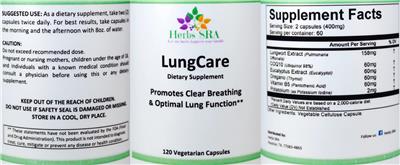
Suggested Use: As a dietary supplement, take two (2) capsules twice daily. For best results, take capsules in the morning and the afternoon with 8 oz of water.
Precautions
Caution: Do not exceed recommended dose.
Pregnant or nursing mothers, children under the age of 18 and individuals with a known medical condition should consult a physician before using this or any dietary supplement.
Pregnant or nursing mothers, children under the age of 18 and individuals with a known medical condition should consult a physician before using this or any dietary supplement. Keep out of the reach of children.
Do not use if safety seal is damaged or missing.
Storage
Store in a cool, dry place.
FDA Disclaimer Statement
These statements have not been evaluated by the FDA (Food and Drug Administration). This product is not intended to diagnose, treat, cure, mitigate or prevent any disease or health condition.
Brand IP Statement(s)
Herbs SRA Let the Herbs Improve Your Health
FDA Statement of Identity
Dietary Supplement
Formulation
Promotes Clear Breathing & Optimal Lung Function
General Statements
Follow us: Facebook Herbs SRA
Is this label outdated? Report a formula or label change and our pharmacy team will review it.
LungCare by Herbs SRA label
The label scan from the NIH Dietary Supplement Label Database. Tap to enlarge.
Label images are published by the NIH Dietary Supplement Label Database for the version of this product on file. Always read your actual product label.
View the full label (PDF)The Ingredients in LungCare by Herbs SRA
These are the 6 active ingredients this product is made of. Select any to open its full monograph.
Serving size2 Capsule(s) Dosage formCapsule Servings per container60 Amounts shown are per serving.
Most supplement products combine several ingredients, and a medication can interact with the product through any one of them. Each ingredient below shows whether it has known drug interactions.
Vitamin B5
Coenzyme Q-10
Interacts with198 drugs
CoQ10 is a vitamin-like substance your body makes naturally that helps cells produce energy and acts as an antioxidant. It is generally well tolerated...
Coenzyme Q-10 monograph & interactionsLungwort Extract
No knowninteractions
Lungwort (Pulmonaria officinalis) is a traditional European herb long used as a tea for coughs and minor breathing complaints, named for its lung-shap...
Lungwort Extract monograph & interactionsEucalyptus Extract
Interacts with878 drugs
Eucalyptus is best known for its strong-smelling oil used in vapor rubs, inhalants, and lozenges to ease coughs and congestion. It may provide mild, s...
Eucalyptus Extract monograph & interactionsOregano
Interacts with208 drugs
Oregano is a common Mediterranean cooking herb that is also sold as a concentrated oil or supplement, often standardized for a compound called carvacr...
Oregano monograph & interactionsPotassium
Interacts with62 drugs
Potassium is an essential mineral your body needs for nerve signals, muscle function, and a steady heartbeat, and most people get enough from a balanc...
Potassium monograph & interactionsOther (inactive) ingredients: Cellulose. These complete the product’s ingredient list but are not active constituents.
LungCare by Herbs SRA Drug Interactions
HelloPharmacist Interaction Report
LungCare by Herbs SRA contains several ingredients with documented interactions with medications.
The most serious concern involves Coenzyme Q10 and chemotherapy drugs called alkylating agents (like cyclophosphamide used in cancer treatment): the antioxidant effect of CoQ10 may theoretically reduce how well these drugs work. This is a Moderate severity interaction.
Read the full breakdown — every affected drug type, severity by severity
Coenzyme Q10 also interacts with warfarin (a blood thinner), potentially decreasing its effectiveness—four cases of reduced warfarin effect have been reported. It may also slightly lower blood pressure when combined with blood pressure medications.
Eucalyptus Extract can theoretically increase levels of several medications broken down by the liver (CYP1A2, CYP2C19, CYP2C9, and CYP3A4 substrates), though this hasn't been seen in humans yet. It may also increase the risk of low blood sugar (hypoglycemia) with diabetes drugs, reduce the effect of amphetamines, and reduce the effectiveness of pentobarbital (a sedative).
Oregano may increase bleeding risk with blood thinners (anticoagulants/antiplatelets) and raise the risk of low blood sugar with diabetes medications. Potassium in this product can raise your potassium to dangerous levels if you take potassium-sparing diuretics, ACE inhibitors, or ARBs—all used for blood pressure or heart conditions.
Lungwort Extract and Vitamin B5 have no documented interactions in our data. Altogether, these interactions span 1,081 individual medications.
Use the search tool on this page to check your exact medications before taking this product.
Check your own medications below · Editorial policy · How we use AI
Want to check YOUR meds against LungCare?
Ask about interactions with your drugs in plain English — “Can I take it with lisinopril?” — and we find you the answer in seconds, ingredient by ingredient.
Go to the checkerIngredients driving the most interactions
Individual Drug Interactions
The ingredients in LungCare interact with 1,093 drugs. Click any drug to see the details.
4 of the 6 ingredients in LungCare interact with drugs. Each result below shows which ingredient is responsible. Eucalyptus Extract Oregano Coenzyme Q-10 Potassium
Acetaminophen, Chlorpheniramine, Guaifenesin, Phenylephrine, SalicylamideRhinogesic GG
How Acetaminophen, Chlorpheniramine, Guaifenesin, Phenylephrine, Salicylamide interacts with LungCare — through 1 ingredient. Tap an ingredient for the detail:
Eucalyptus ExtractCytochrome P450 1a2 (cyp1a2) Substrates, Cytochrome P450 3a4 (cyp3a4) Substrates Moderate
Interaction Summary
Theoretically, eucalyptus might increase the levels of CYP1A2 substrates.
Read the full Eucalyptus Extract + Acetaminophen, Chlorpheniramine, Guaifenesin, Phenylephrine, Salicylamide interactionAcetaminophen, Chlorpheniramine, PhenylephrineAlka-Seltzer PLUS, Histex SR, Protid
How Acetaminophen, Chlorpheniramine, Phenylephrine interacts with LungCare — through 1 ingredient. Tap an ingredient for the detail:
Eucalyptus ExtractCytochrome P450 1a2 (cyp1a2) Substrates, Cytochrome P450 3a4 (cyp3a4) Substrates Moderate
Interaction Summary
Theoretically, eucalyptus might increase the levels of CYP1A2 substrates.
Read the full Eucalyptus Extract + Acetaminophen, Chlorpheniramine, Phenylephrine interactionAcetaminophen, Chlorpheniramine, Phenylephrine, SalicylamideRhinogesic, Rhinogesic JR
How Acetaminophen, Chlorpheniramine, Phenylephrine, Salicylamide interacts with LungCare — through 1 ingredient. Tap an ingredient for the detail:
Eucalyptus ExtractCytochrome P450 1a2 (cyp1a2) Substrates, Cytochrome P450 3a4 (cyp3a4) Substrates Moderate
Interaction Summary
Theoretically, eucalyptus might increase the levels of CYP1A2 substrates.
Read the full Eucalyptus Extract + Acetaminophen, Chlorpheniramine, Phenylephrine, Salicylamide interactionAcetaminophen, Chlorpheniramine, PhenylpropanolamineAlumadrine, Conex, Sinadrin Max Strength, Sinulin
How Acetaminophen, Chlorpheniramine, Phenylpropanolamine interacts with LungCare — through 1 ingredient. Tap an ingredient for the detail:
Eucalyptus ExtractCytochrome P450 1a2 (cyp1a2) Substrates, Cytochrome P450 3a4 (cyp3a4) Substrates Moderate
Interaction Summary
Theoretically, eucalyptus might increase the levels of CYP1A2 substrates.
Read the full Eucalyptus Extract + Acetaminophen, Chlorpheniramine, Phenylpropanolamine interactionAcetaminophen, Chlorpheniramine, Phenylpropanolamine, OpiumHista-Derfule
How Acetaminophen, Chlorpheniramine, Phenylpropanolamine, Opium interacts with LungCare — through 1 ingredient. Tap an ingredient for the detail:
Eucalyptus ExtractCytochrome P450 3a4 (cyp3a4) Substrates, Cytochrome P450 1a2 (cyp1a2) Substrates Moderate
Interaction Summary
Theoretically, eucalyptus might increase the levels of CYP3A4 substrates.
Read the full Eucalyptus Extract + Acetaminophen, Chlorpheniramine, Phenylpropanolamine, Opium interactionAcetaminophen, Chlorpheniramine, Phenylpropanolamine, PhenyltoloxamineNorel Plus
How Acetaminophen, Chlorpheniramine, Phenylpropanolamine, Phenyltoloxamine interacts with LungCare — through 1 ingredient. Tap an ingredient for the detail:
Eucalyptus ExtractCytochrome P450 1a2 (cyp1a2) Substrates, Cytochrome P450 3a4 (cyp3a4) Substrates Moderate
Interaction Summary
Theoretically, eucalyptus might increase the levels of CYP1A2 substrates.
Read the full Eucalyptus Extract + Acetaminophen, Chlorpheniramine, Phenylpropanolamine, Phenyltoloxamine interactionAcetaminophen, Chlorpheniramine, PseudoephedrineAlka-Seltzer PLUS Liquid Gels, Children's Tylenol Cold, Codimal, Comtrex, Extra Strength Tylenol Allergy Sinus, Lorsin +3 more
How Acetaminophen, Chlorpheniramine, Pseudoephedrine interacts with LungCare — through 1 ingredient. Tap an ingredient for the detail:
Eucalyptus ExtractCytochrome P450 3a4 (cyp3a4) Substrates, Cytochrome P450 1a2 (cyp1a2) Substrates Moderate
Interaction Summary
Theoretically, eucalyptus might increase the levels of CYP3A4 substrates.
Read the full Eucalyptus Extract + Acetaminophen, Chlorpheniramine, Pseudoephedrine interactionAcetaminophen, ChlorzoxazoneAcetazone Forte, Extra Strength Tylenol Aches & Strains, Parafon Forte
How Acetaminophen, Chlorzoxazone interacts with LungCare — through 1 ingredient. Tap an ingredient for the detail:
Eucalyptus ExtractCytochrome P450 1a2 (cyp1a2) Substrates Moderate
Interaction Summary
Theoretically, eucalyptus might increase the levels of CYP1A2 substrates.
Read the full Eucalyptus Extract + Acetaminophen, Chlorzoxazone interactionAcetaminophen, Chlorzoxazone, CodeineAcetazone Forte C8, Parafon Forte C8
How Acetaminophen, Chlorzoxazone, Codeine interacts with LungCare — through 1 ingredient. Tap an ingredient for the detail:
Eucalyptus ExtractCytochrome P450 1a2 (cyp1a2) Substrates Moderate
Interaction Summary
Theoretically, eucalyptus might increase the levels of CYP1A2 substrates.
Read the full Eucalyptus Extract + Acetaminophen, Chlorzoxazone, Codeine interactionAcetaminophen, CodeineTylenol No.3, Tylenol w/ Codeine
How Acetaminophen, Codeine interacts with LungCare — through 1 ingredient. Tap an ingredient for the detail:
Eucalyptus ExtractCytochrome P450 1a2 (cyp1a2) Substrates Moderate
Interaction Summary
Theoretically, eucalyptus might increase the levels of CYP1A2 substrates.
Read the full Eucalyptus Extract + Acetaminophen, Codeine interactionAcetaminophen, Codeine, DoxylamineMersyndol
How Acetaminophen, Codeine, Doxylamine interacts with LungCare — through 1 ingredient. Tap an ingredient for the detail:
Eucalyptus ExtractCytochrome P450 1a2 (cyp1a2) Substrates Moderate
Interaction Summary
Theoretically, eucalyptus might increase the levels of CYP1A2 substrates.
Read the full Eucalyptus Extract + Acetaminophen, Codeine, Doxylamine interactionAcetaminophen, Codeine, MethocarbamolAcetaminophen, Codeine, Methocarbamol, Robaxacet 8
How Acetaminophen, Codeine, Methocarbamol interacts with LungCare — through 1 ingredient. Tap an ingredient for the detail:
Eucalyptus ExtractCytochrome P450 1a2 (cyp1a2) Substrates Moderate
Interaction Summary
Theoretically, eucalyptus might increase the levels of CYP1A2 substrates.
Read the full Eucalyptus Extract + Acetaminophen, Codeine, Methocarbamol interactionAcetaminophen, Dexbrompheniramine, PseudoephedrineSinadrin Plus
How Acetaminophen, Dexbrompheniramine, Pseudoephedrine interacts with LungCare — through 1 ingredient. Tap an ingredient for the detail:
Eucalyptus ExtractCytochrome P450 1a2 (cyp1a2) Substrates Moderate
Interaction Summary
Theoretically, eucalyptus might increase the levels of CYP1A2 substrates.
Read the full Eucalyptus Extract + Acetaminophen, Dexbrompheniramine, Pseudoephedrine interactionAcetaminophen, DextromethorphanTylenol Cough Ex Strength
How Acetaminophen, Dextromethorphan interacts with LungCare — through 1 ingredient. Tap an ingredient for the detail:
Eucalyptus ExtractCytochrome P450 1a2 (cyp1a2) Substrates, Cytochrome P450 3a4 (cyp3a4) Substrates Moderate
Interaction Summary
Theoretically, eucalyptus might increase the levels of CYP1A2 substrates.
Read the full Eucalyptus Extract + Acetaminophen, Dextromethorphan interactionAcetaminophen, Dextromethorphan, Doxylamine, PseudoephedrineVicks NyQuil
How Acetaminophen, Dextromethorphan, Doxylamine, Pseudoephedrine interacts with LungCare — through 1 ingredient. Tap an ingredient for the detail:
Eucalyptus ExtractCytochrome P450 1a2 (cyp1a2) Substrates, Cytochrome P450 3a4 (cyp3a4) Substrates Moderate
Interaction Summary
Theoretically, eucalyptus might increase the levels of CYP1A2 substrates.
Read the full Eucalyptus Extract + Acetaminophen, Dextromethorphan, Doxylamine, Pseudoephedrine interactionAcetaminophen, Dextromethorphan, Guaifenesin, PhenylephrineConar-A
How Acetaminophen, Dextromethorphan, Guaifenesin, Phenylephrine interacts with LungCare — through 1 ingredient. Tap an ingredient for the detail:
Eucalyptus ExtractCytochrome P450 3a4 (cyp3a4) Substrates, Cytochrome P450 1a2 (cyp1a2) Substrates Moderate
Interaction Summary
Theoretically, eucalyptus might increase the levels of CYP3A4 substrates.
Read the full Eucalyptus Extract + Acetaminophen, Dextromethorphan, Guaifenesin, Phenylephrine interactionAcetaminophen, Dextromethorphan, Guaifenesin, PhenylpropanolamineAnatuss
How Acetaminophen, Dextromethorphan, Guaifenesin, Phenylpropanolamine interacts with LungCare — through 1 ingredient. Tap an ingredient for the detail:
Eucalyptus ExtractCytochrome P450 1a2 (cyp1a2) Substrates, Cytochrome P450 3a4 (cyp3a4) Substrates Moderate
Interaction Summary
Theoretically, eucalyptus might increase the levels of CYP1A2 substrates.
Read the full Eucalyptus Extract + Acetaminophen, Dextromethorphan, Guaifenesin, Phenylpropanolamine interactionAcetaminophen, Dextromethorphan, Guaifenesin, PseudoephedrineRobitussin Cold, Severe Cold, Suphedrine Cold/Cough
How Acetaminophen, Dextromethorphan, Guaifenesin, Pseudoephedrine interacts with LungCare — through 1 ingredient. Tap an ingredient for the detail:
Eucalyptus ExtractCytochrome P450 1a2 (cyp1a2) Substrates, Cytochrome P450 3a4 (cyp3a4) Substrates Moderate
Interaction Summary
Theoretically, eucalyptus might increase the levels of CYP1A2 substrates.
Read the full Eucalyptus Extract + Acetaminophen, Dextromethorphan, Guaifenesin, Pseudoephedrine interactionAcetaminophen, Dextromethorphan, Phenylpropanolamine, PyrilamineTheracaps
How Acetaminophen, Dextromethorphan, Phenylpropanolamine, Pyrilamine interacts with LungCare — through 1 ingredient. Tap an ingredient for the detail:
Eucalyptus ExtractCytochrome P450 1a2 (cyp1a2) Substrates, Cytochrome P450 3a4 (cyp3a4) Substrates Moderate
Interaction Summary
Theoretically, eucalyptus might increase the levels of CYP1A2 substrates.
Read the full Eucalyptus Extract + Acetaminophen, Dextromethorphan, Phenylpropanolamine, Pyrilamine interactionAcetaminophen, Dextromethorphan, PseudoephedrineAlka-Seltzer PLUS Flu Liquid Gels, Non Aspirin Cold Caps, Tylenol Cold, Tylenol Flu Daytime Ex Strength, Tylenol Flu Ex Strength
How Acetaminophen, Dextromethorphan, Pseudoephedrine interacts with LungCare — through 1 ingredient. Tap an ingredient for the detail:
Eucalyptus ExtractCytochrome P450 3a4 (cyp3a4) Substrates, Cytochrome P450 1a2 (cyp1a2) Substrates Moderate
Interaction Summary
Theoretically, eucalyptus might increase the levels of CYP3A4 substrates.
Read the full Eucalyptus Extract + Acetaminophen, Dextromethorphan, Pseudoephedrine interactionAcetaminophen, Dichloralantipyrine, IsomethepteneAmidrine, Midchlor, Migquin, Migratine
How Acetaminophen, Dichloralantipyrine, Isometheptene interacts with LungCare — through 1 ingredient. Tap an ingredient for the detail:
Eucalyptus ExtractCytochrome P450 1a2 (cyp1a2) Substrates Moderate
Interaction Summary
Theoretically, eucalyptus might increase the levels of CYP1A2 substrates.
Read the full Eucalyptus Extract + Acetaminophen, Dichloralantipyrine, Isometheptene interactionAcetaminophen, Dichloralphenazone, IsomethepteneMidrin
How Acetaminophen, Dichloralphenazone, Isometheptene interacts with LungCare — through 1 ingredient. Tap an ingredient for the detail:
Eucalyptus ExtractCytochrome P450 1a2 (cyp1a2) Substrates Moderate
Interaction Summary
Theoretically, eucalyptus might increase the levels of CYP1A2 substrates.
Read the full Eucalyptus Extract + Acetaminophen, Dichloralphenazone, Isometheptene interactionAcetaminophen, Dichlorophenazone, IsometheptaneIsocom
How Acetaminophen, Dichlorophenazone, Isometheptane interacts with LungCare — through 1 ingredient. Tap an ingredient for the detail:
Eucalyptus ExtractCytochrome P450 1a2 (cyp1a2) Substrates Moderate
Interaction Summary
Theoretically, eucalyptus might increase the levels of CYP1A2 substrates.
Read the full Eucalyptus Extract + Acetaminophen, Dichlorophenazone, Isometheptane interactionAcetaminophen, DiphenhydramineTylenol PM, Tylenol PM Ex Strength
How Acetaminophen, Diphenhydramine interacts with LungCare — through 1 ingredient. Tap an ingredient for the detail:
Eucalyptus ExtractCytochrome P450 1a2 (cyp1a2) Substrates Moderate
Interaction Summary
Theoretically, eucalyptus might increase the levels of CYP1A2 substrates.
Read the full Eucalyptus Extract + Acetaminophen, Diphenhydramine interactionAcetaminophen, Diphenhydramine, PseudoephedrineChildren's Tylenol Allergy, Cold Control, Contac Night Allergy Relief
How Acetaminophen, Diphenhydramine, Pseudoephedrine interacts with LungCare — through 1 ingredient. Tap an ingredient for the detail:
Eucalyptus ExtractCytochrome P450 1a2 (cyp1a2) Substrates Moderate
Interaction Summary
Theoretically, eucalyptus might increase the levels of CYP1A2 substrates.
Read the full Eucalyptus Extract + Acetaminophen, Diphenhydramine, Pseudoephedrine interactionAcetaminophen, Doxylamine, PseudoephedrineEx Strength Tylenol Sinus Nighttime
How Acetaminophen, Doxylamine, Pseudoephedrine interacts with LungCare — through 1 ingredient. Tap an ingredient for the detail:
Eucalyptus ExtractCytochrome P450 1a2 (cyp1a2) Substrates Moderate
Interaction Summary
Theoretically, eucalyptus might increase the levels of CYP1A2 substrates.
Read the full Eucalyptus Extract + Acetaminophen, Doxylamine, Pseudoephedrine interactionAcetaminophen, HydrocodoneAnexsia, Anodynos DHC, Azdone, Co-Gesic, Doucet, Lorcet +9 more
How Acetaminophen, Hydrocodone interacts with LungCare — through 1 ingredient. Tap an ingredient for the detail:
Eucalyptus ExtractCytochrome P450 1a2 (cyp1a2) Substrates, Cytochrome P450 3a4 (cyp3a4) Substrates Moderate
Interaction Summary
Theoretically, eucalyptus might increase the levels of CYP1A2 substrates.
Read the full Eucalyptus Extract + Acetaminophen, Hydrocodone interactionAcetaminophen, IbuprofenCombogesic
How Acetaminophen, Ibuprofen interacts with LungCare — through 2 ingredients. Tap an ingredient for the detail:
Eucalyptus ExtractCytochrome P450 2c9 (cyp2c9) Substrates, Cytochrome P450 1a2 (cyp1a2) Substrates Moderate
Interaction Summary
Theoretically, eucalyptus might increase the levels of CYP2C9 substrates.
Read the full Eucalyptus Extract + Acetaminophen, Ibuprofen interactionOreganoAnticoagulant/antiplatelet Drugs Moderate
Interaction Summary
Theoretically, oregano might increase the risk of bleeding when taken with anticoagulant or antiplatelet drugs.
Read the full Oregano + Acetaminophen, Ibuprofen interactionAcetaminophen, MeperidineDemerol APAP
How Acetaminophen, Meperidine interacts with LungCare — through 1 ingredient. Tap an ingredient for the detail:
Eucalyptus ExtractCytochrome P450 1a2 (cyp1a2) Substrates Moderate
Interaction Summary
Theoretically, eucalyptus might increase the levels of CYP1A2 substrates.
Read the full Eucalyptus Extract + Acetaminophen, Meperidine interactionAcetaminophen, MethocarbamolRobaxacet
How Acetaminophen, Methocarbamol interacts with LungCare — through 1 ingredient. Tap an ingredient for the detail:
Eucalyptus ExtractCytochrome P450 1a2 (cyp1a2) Substrates Moderate
Interaction Summary
Theoretically, eucalyptus might increase the levels of CYP1A2 substrates.
Read the full Eucalyptus Extract + Acetaminophen, Methocarbamol interactionEach ingredient & the kinds of drugs it affects
For each ingredient in LungCare with known interactions, here are the types of medications they can affect. Open any type for the detail — or search your exact drug in the checker above.
Eucalyptus Extract
Amphetamines
Theoretically, inhaling eucalyptol may reduce the effectiveness of amphetamines.
Animal research suggests that inhaling eucalyptol may reduce the levels of amphetamines in the blood.
Antidiabetes Drugs
Theoretically, eucalyptus leaf might increase the risk of hypoglycemia.
Animal research suggests that eucalyptus leaf might have hypoglycemic activity, and might have additive effects when used with antidiabetes drugs.
Cytochrome P450 1A2 (Cyp1A2) Substrates
Theoretically, eucalyptus might increase the levels of CYP1A2 substrates.
In vitro research suggests that eucalyptus oil might inhibit CYP1A2, although this has not been reported in humans.
Cytochrome P450 2C19 (Cyp2C19) Substrates
Theoretically, eucalyptus might increase the levels of CYP2C19 substrates.
In vitro research suggests that eucalyptus oil might inhibit CYP2C19, although this has not been reported in humans.
Cytochrome P450 2C9 (Cyp2C9) Substrates
Theoretically, eucalyptus might increase the levels of CYP2C9 substrates.
In vitro research suggests that eucalyptus oil might inhibit CYP2C9, although this has not been reported in humans.
Cytochrome P450 3A4 (Cyp3A4) Substrates
Theoretically, eucalyptus might increase the levels of CYP3A4 substrates.
In vitro research suggests that eucalyptus oil might inhibit CYP3A4, although this has not been reported in humans.
Pentobarbital (Nembutal)
Theoretically, inhaling eucalyptol might reduce the effectiveness of pentobarbital.
Animal research suggests that inhaling eucalyptol reduces the level of pentobarbital that reaches the brain.
Oregano
Anticoagulant/Antiplatelet Drugs
Theoretically, oregano might increase the risk of bleeding when taken with anticoagulant or antiplatelet drugs.
In vitro research shows that aristolochic acid isolated from oregano leaves has antithrombin activity. It has also been reported that oregano oil inhibits arachidonic acid-induced, and ADP-induced, platelet aggregation.
Antidiabetes Drugs
Theoretically, oregano might increase the risk for hypoglycemia when taken with antidiabetes drugs.
In vitro and animal research shows that oregano extracts might lower blood glucose levels.
Coenzyme Q-10
Alkylating Agents
Coenzyme Q10 has antioxidant effects. Theoretically, this may reduce the activity of chemotherapy drugs that generate free radicals.
Theoretically, antioxidants such as coenzyme Q10 might protect tumor cells from chemotherapeutic agents that work by inducing oxidative stress, such as alkylating agents (e.g., cyclophosphamide) and radiation therapy. The clinical importance of this interaction is unknown.
Warfarin (Coumadin)
Coenzyme Q10 is chemically similar to menaquinone and might have vitamin K-like procoagulant effects, which could decrease the effects of warfarin.
Concomitant use of coenzyme Q10 and warfarin might reduce the anticoagulant effects of warfarin. Four cases of decreased warfarin efficacy thought to be due to coenzyme Q10 have been reported. However, there is some preliminary clinical research that suggests coenzyme Q10 might not significantly decrease the effects of warfarin in patients who have a stable INR.
Antihypertensive Drugs
Theoretically, coenzyme Q10 might have additive effects with antihypertensive drugs.
Some clinical research shows that coenzyme Q10 can significantly lower blood pressure, although other studies have shown conflicting results.
Potassium
Ace Inhibitors (Aceis)
Using ACEIs with high doses of potassium increases the risk of hyperkalemia.
ACEIs block the actions of the renin-angiotensin-aldosterone system and reduce potassium excretion. Concomitant use of these drugs with potassium supplements increases the risk of hyperkalemia. However, concomitant use of these drugs with moderate dietary potassium intake (about 3775-5200 mg daily) does not increase serum potassium levels.
Angiotensin Receptor Blockers (Arbs)
Using ARBs with high doses of potassium increases the risk of hyperkalemia.
ARBs block the actions of the renin-angiotensin-aldosterone system and reduce potassium excretion. Concomitant use of these drugs with potassium supplements increases the risk of hyperkalemia. However, concomitant use of these drugs with moderate dietary potassium intake (about 3775-5200 mg daily) does not increase serum potassium levels.
Potassium-Sparing Diuretics
Concomitant use increases the risk of hyperkalemia.
Using potassium-sparing diuretics with potassium supplements increases the risk of hyperkalemia.
Brand information
Manufacturer and brand details for LungCare, from the product label.
LungCare by Herbs SRA: Common Questions
Does LungCare by Herbs SRA interact with any medications?
How can one product interact with so many drugs?
Where does this information come from?
Can I take this if I'm on warfarin?
Does LungCare help with asthma or bronchitis?
Is it safe if I have kidney disease?
What side effects does Coenzyme Q10 cause?
Is eucalyptus oil safe in this supplement?
Can I take this while pregnant or breastfeeding?
Written and reviewed by the HelloPharmacist editorial staff. Our editorial policy
Not sure if LungCare is safe with your meds?
Our pharmacists answer your medication & supplement questions — free.
Label information is sourced from the NIH Dietary Supplement Label Database and reflects the product version on file; always read your actual product label. This page is for education only and is not a substitute for professional medical advice. Confirm with your pharmacist or doctor before combining supplements and medications.
The Full Monographs Behind LungCare’s Ingredients
Every ingredient we hold a full HelloPharmacist monograph for — uses, evidence, safety, and the complete interaction list.
Coenzyme Q10
Interacts with 198 drugsCoQ10 is a vitamin-like substance your body makes naturally that helps cells produce energy and acts as an antioxidant. It is generally well tolerated and is most studied for heart condition...
Read the full Coenzyme Q10 monograph → Herb & supplement monographLungwort
Lungwort (Pulmonaria officinalis) is a traditional European herb long used as a tea for coughs and minor breathing complaints, named for its lung-shaped, spotted leaves. There is very little...
Read the full Lungwort monograph → Herb & supplement monographEucalyptus
Interacts with 878 drugsEucalyptus is best known for its strong-smelling oil used in vapor rubs, inhalants, and lozenges to ease coughs and congestion. It may provide mild, short-term relief of cold symptoms, but t...
Read the full Eucalyptus monograph → Herb & supplement monographOregano
Interacts with 208 drugsOregano is a common Mediterranean cooking herb that is also sold as a concentrated oil or supplement, often standardized for a compound called carvacrol. While lab studies suggest it may hav...
Read the full Oregano monograph → Herb & supplement monographPotassium
Interacts with 62 drugsPotassium is an essential mineral your body needs for nerve signals, muscle function, and a steady heartbeat, and most people get enough from a balanced diet rich in fruits and vegetables. P...
Read the full Potassium monograph →Sources & How We Checked
LungCare's label data comes from the NIH Dietary Supplement Label Database; the ingredient interaction data is from the Natural Medicines database, reviewed by our pharmacists.
- NIH Dietary Supplement Label Database (DSLD) — The official product label on file for this supplement.
- Natural Medicines (Therapeutic Research Center) — Evidence-graded clinical reference behind the ingredient interaction data.
Content is written and reviewed by licensed HelloPharmacist pharmacists. See our data sources and editorial standards for how this information is built and checked.
The 88 references behind this product’s interaction data
Every citation that drives the interaction findings for this product’s ingredients, from the evidence-graded Natural Medicines (TRC Healthcare) database. Open an ingredient to browse its citations — links open the study on PubMed or the publisher’s site.
Coenzyme Q10 40 references
- Kamikawa T, Kobayashi A, Yamashita T, et al. Effects of coenzyme Q10 on exercise tolerance in chronic stable angina pectoris. Am J Cardiol 1985;56:247-51. PubMed
- Langsjoen P, Willis R, Folkers K. Treatment of essential hypertension with coenzyme Q10. Mol Aspects Med 1994;S265-72. PubMed
- Spigset O. Reduced effect of warfarin caused by ubidecarenone. Lancet 1994;334:1372-3. PubMed
- Singh RB, Niaz MA, Rastogi SS, et al. Effect of hydrosoluble coenzyme Q10 on blood pressures and insulin resistance in hypertensive patients with coronary artery disease. J Hum Hypertens 1999;13:203-8. PubMed
- Portakal O, Ozkaya O, Erden Inal M, et al. Coenzyme Q10 concentrations and antioxidant status in tissues of breast cancer patients. Clin Biochem 2000;33:279-84. PubMed
- Lund EL, Quistorff B, Spang-Thomsen M, Kristjansen PE. Effect of radiation therapy on small-cell lung cancer is reduced by ubiquinone intake. Folia Microbiol (Praha) 1998;43:505-6. PubMed
- Langsjoen PH, Langsjoen PH, Folkers K. Long-term efficacy and safety of coenzyme Q10 therapy for idiopathic dilated cardiomyopathy. Am J Cardiol 1990;65:521-3. PubMed
- Heck AM, DeWitt BA, Lukes AL. Potential interactions between alternative therapies and warfarin. Am J Health Syst Pharm 2000;57:1221-7. DOI
- Landbo C, Almdal TP. [Interaction between warfarin and coenzyme Q10]. Ugeskr Laeger 1998;160:3226-7.
- Baggio E, Gandini R, Plauncher AC, et al. Italian multicenter study on the safety and efficacy of coenzyme Q10 as adjunctive therapy in heart failure. CoQ10 Drug Surveillance Investigators. Mol Aspects Med 1994;15 Suppl:S287-94. PubMed
- Burke BE, Neuenschwander R, Olson RD. Randomized, double-blind, placebo-controlled trial of coenzyme Q10 in isolated systolic hypertension. South Med J 2001;94:1112-7. PubMed
- The Huntington Study Group. A randomized, placebo-controlled trial of coenzyme Q10 and remacemide in Huntington's disease. Neurology 2001;57:397-404.
- Hodgson JM, Watts GF, Playford DA, et al. Coenzyme Q10 improves blood pressure and glycaemic control: a controlled trial in subjects with type 2 diabetes. Eur J Clin Nutr 2002;56:1137-42. PubMed
- Singh RB, Neki NS, Kartikey K, et al. Effect of coenzyme Q10 on risk of atherosclerosis in patients with recent myocardial infarction. Mol Cell Biochem 2003;246:75-82. DOI
- Porterfield LM. Why did the response to warfarin change? RN 2000;63:107.
- Sandor PS, Di Clemente L, Coppola G, et al. Efficacy of coenzyme Q10 in migraine prophylaxis: A randomized controlled trial. Neurology 2005;64:713-5. PubMed
- Engelsen J, Nielsen JD, Winther K. Effect of coenzyme Q10 and Ginkgo biloba on warfarin dosage in stable, long-term warfarin treated outpatients. A randomised, double blind, placebo-crossover trial. Thromb Haemost 2002;87:1075-6. DOI
- Berman M, Erman A, Ben-Gal T, et al. Coenzyme Q10 in patients with end-stage heart failure awaiting cardiac transplantation: a randomized, placebo-controlled study. Clin Cardiol 2004;27:295–9. PubMed
- Storch A, Jost WH, Vieregge P, et al. Randomized, double-blind, placebo-controlled trial on symptomatic effects of coenzyme Q10 in Parkinson disease. Arch Neurol 2007;64:938-44. DOI
- Digiesi V, Cantini F, Oradei A, et al. Coenzyme Q10 in essential hypertension. Mol Aspects Med 1994;15 Suppl:s257-63. PubMed
- Yamagami T, Takagi M, Akagami H, et al. Effect of coenzyme Q10 on essential hypertension, a double blind controlled study. In: Folkers KA, Yamamura Y, eds. Biomedical and Clinical Aspects of Coenzyme Q, Vol. 5. Amsterdam: Elsevier Science Publications, 19
- Ho MJ, Bellusci A, Wright JM. Blood pressure lowering efficacy of coenzyme Q10 for primary hypertension (review). Cochrane Database Syst Rev 2009;(4):CD007435. PubMed
- Rosenfeldt, F. L., Haas, S. J., Krum, H., Hadj, A., Ng, K., Leong, J. Y., and Watts, G. F. Coenzyme Q10 in the treatment of hypertension: a meta-analysis of the clinical trials. J Hum.Hypertens. 2007;21(4):297-306. PubMed
- Stamelou, M., Reuss, A., Pilatus, U., Magerkurth, J., Niklowitz, P., Eggert, K. M., Krisp, A., Menke, T., Schade-Brittinger, C., Oertel, W. H., and Hoglinger, G. U. Short-term effects of coenzyme Q10 in progressive supranuclear palsy: a randomized, place DOI
- Keogh A, Fenton S, Leslie C, et al. Randomised double-blind, placebo-controlled trial of coenzyme Q, therapy in class II and III systolic heart failure. Heart Lung Circ. 2003;12:135-41.
- Gane, E. J., Weilert, F., Orr, D. W., Keogh, G. F., Gibson, M., Lockhart, M. M., Frampton, C. M., Taylor, K. M., Smith, R. A., and Murphy, M. P. The mitochondria-targeted anti-oxidant mitoquinone decreases liver damage in a phase II study of hepatitis C
- Lynch, D. R., Perlman, S. L., and Meier, T. A phase 3, double-blind, placebo-controlled trial of idebenone in friedreich ataxia. Arch Neurol. 2010;67(8):941-947. PubMed
- Young, J. M., Florkowski, C. M., Molyneux, S. L., McEwan, R. G., Frampton, C. M., Nicholls, M. G., Scott, R. S., and George, P. M. A randomized, double-blind, placebo-controlled crossover study of coenzyme Q10 therapy in hypertensive patients with the me
- Ishiyama, T., Morita, Y., Toyama, S., Yamagami, T., and Tsukamoto, N. A clinical study of the effect of coenzyme Q on congestive heart failure. Jpn.Heart J 1976;17(1):32-42. PubMed
- Matthews, P. M., Ford, B., Dandurand, R. J., Eidelman, D. H., O'Connor, D., Sherwin, A., Karpati, G., Andermann, F., and Arnold, D. L. Coenzyme Q10 with multiple vitamins is generally ineffective in treatment of mitochondrial disease. Neurology 1993;43(5
- Malm, C., Svensson, M., Sjoberg, B., Ekblom, B., and Sjodin, B. Supplementation with ubiquinone-10 causes cellular damage during intense exercise. Acta Physiol Scand. 1996;157(4):511-512. PubMed
- Singh, R. B., Wander, G. S., Rastogi, A., Shukla, P. K., Mittal, A., Sharma, J. P., Mehrotra, S. K., Kapoor, R., and Chopra, R. K. Randomized, double-blind placebo-controlled trial of coenzyme Q10 in patients with acute myocardial infarction. Cardiovasc. PubMed
- Digiesi V, Cantini F, and Brodbeck B. Effect of coenzyme Q10 on essential arterial hypertension. Current Therapeutic Research 1990;47(5):841-845.
- Parkinson Study Group QE3 Investigators, Beal MF, Oakes D, et al. A randomized clinical trial of high-dosage coenzyme Q10 in early Parkinson disease: no evidence of benefit. JAMA Neurol. 2014;71(5):543-52.
- Alehagen U, Johansson P, Bjornstedt M, et al. Cardiovascular mortality and N-terminal-proBNP reduced after combined selenium and coenzyme Q10 supplementation: A 5-year prospective randomized double-blind placebo-controlled trial among elderly Swedish citi
- Ho MJ, Li EC, Wright JM. Blood pressure lowering efficacy of coenzyme Q10 for primary hypertension. Cochrane Database Syst Rev. 2016 Mar 3;3:CD007435. doi: 10.1002/14651858.CD007435.pub3. PubMed
- Tabrizi R, Akbari M, Sharifi N, Lankarani KB, Moosazadeh M, Kolahdooz F, et al. The effects of coenzyme Q10 supplementation on blood pressures among patients with metabolic diseases: a systematic review and meta-analysis of randomized controlled trials. PubMed
- Tsai IC, Hsu CW, Chang CH, Tseng PT, Chang KV. Effectiveness of coenzyme Q10 supplementation for reducing fatigue: A systematic review and meta-analysis of randomized controlled trials. Front Pharmacol 2022;13:883251. PubMed
- Yaghini O, Hoseini N, Ghazavi MR, et al. A comparative study on the efficacy of coenzyme Q10 and amitriptyline in the prophylactic treatment of migraine headaches in children: A randomized controlled trial. Adv Biomed Res 2022;11:43. PubMed
- Hansen KS, Mogensen TH, Agergaard J, et al. High-dose coenzyme Q10 therapy versus placebo in patients with post COVID-19 condition: A randomized, phase 2, crossover trial. Lancet Reg Health Eur 2022. PubMed
Lungwort 1 reference
- Pyrrolizidine Alkaloids — NIH LiverTox Source
Eucalyptus 23 references
- Electronic Code of Federal Regulations. Title 21. Part 182 -- Substances Generally Recognized As Safe. Available at: https://www.accessdata.fda.gov/scripts/cdrh/cfdocs/cfcfr/CFRSearch.cfm?CFRPart=182
- Unger M, Frank A. Simultaneous determination of the inhibitory potency of herbal extracts on the activity of six major cytochrome P450 enzymes using liquid chromatography/mass spectrometry and automated online extraction. Rapid Commun Mass Spectrom 2004;1 PubMed
- De Vincenzi M, Silano M, De Vincenzi A, et al. Constituents of aromatic plants: eucalyptol. Fitoterapia 2002;73:269-75. PubMed
- Gray AM, Flatt PR. Antihyperglycemic actions of Eucalyptus globulus (Eucalyptus) are associated with pancreatic and extra-pancreatic effects in mice. J Nutr 1998;128:2319-23. PubMed
- Whitman BW, Ghazizadeh H. Eucalyptus oil: therapeutic and toxic aspects of pharmacology in humans and animals. J Paediatr Child Health 1994;30:190-1. PubMed
- Barker SC and Altman PM. An ex vivo, assessor blind, randomised, parallel group, comparative efficacy trial of the ovicidal activity of three pediculicides after a single application--melaleuca oil and lavender oil, eucalyptus oil and lemon tea tree oil,
- Vilaplana, J. and Romaguera, C. Allergic contact dermatitis due to eucalyptol in an anti-inflammatory cream. Contact Dermatitis 2000;43(2):118.
- Juergens, U. R. [Reducing the need for cortisone. Does eucalyptus oil work in asthma? (interview by Brigitte Moreano]. MMW.Fortschr Med 3-29-2001;143(13):14.
- Tascini, C., Ferranti, S., Gemignani, G., Messina, F., and Menichetti, F. Clinical microbiological case: fever and headache in a heavy consumer of eucalyptus extract. Clin Microbiol.Infect. 2002;8(7):437, 445-437, 446. PubMed
- Galdi, E., Perfetti, L., Calcagno, G., Marcotulli, M. C., and Moscato, G. Exacerbation of asthma related to Eucalyptus pollens and to herb infusion containing Eucalyptus. Monaldi Arch.Chest Dis. 2003;59(3):220-221.
- Spoerke, D. G., Vandenberg, S. A., Smolinske, S. C., Kulig, K., and Rumack, B. H. Eucalyptus oil: 14 cases of exposure. Vet Hum.Toxicol 1989;31(2):166-168.
- Jori, A., Bianchetti, A., Prestini, P. E., and Gerattini, S. Effect of eucalyptol (1,8-cineole) on the metabolism of other drugs in rats and in man. Eur.J Pharmacol 1970;9(3):362-366. PubMed
- Tibballs, J. Clinical effects and management of eucalyptus oil ingestion in infants and young children. Med J Aust 8-21-1995;163(4):177-180. PubMed
- Webb, N. J. and Pitt, W. R. Eucalyptus oil poisoning in childhood: 41 cases in south-east Queensland. J Paediatr.Child Health 1993;29(5):368-371. PubMed
- Gyldenløve M, Menné T, Thyssen JP. Eucalyptus contact allergy. Contact Dermatitis. 2014;71(5):303-304. PubMed
- Higgins C, Palmer A, Nixon R. Eucalyptus oil: contact allergy and safety. Contact Dermatitis. 2015;72(5):344-346. PubMed
- de Groot AC, Schmidt E. Eucalyptus oil and tea tree oil. Contact Dermatitis. 2015;73(6):381-386. PubMed
- Greive KA, Barnes TM. The efficacy of Australian essential oils for the treatment of head lice infestation in children: A randomised controlled trial. Australas J Dermatol. 2018;59(2):e99-e105. PubMed
- Paulsen E, Thormann H, Vestergaard L. Eucalyptus species as a cause of airborne allergic contact dermatitis. Contact Dermatitis. 2018;78(4):301-303.
- Mathew T, John SK, Kamath V, et al. Essential oil related seizures (EORS): A multi-center prospective study on essential oils and seizures in adults. Epilepsy Res. 2021;173:106626. PubMed
- Dudipala SC, Mandapuram P, Ch LK. Eucalyptus Oil-Induced Seizures in Children: Case Reports and Review of the Literature. J Neurosci Rural Pract 2021;12(1):112-115. PubMed
- Panda PK, Sharawat IK, Panda P, Dawman L, Kasinathan A. Clinico-laboratory characteristics and outcome of patients with eucalyptus oil-induced/provoked seizures: A case series and systematic review of the published patients. Trop Doct 2021;51(4):518-522. PubMed
- Sai Chandar D, Prashanthi M, Laxman Kumar C, Amith Kumar C. Eucalyptus Oil-Induced Seizures in Children: A Single-Center Prospective Study. Cureus 2021;13(3):e14109. PubMed
Oregano 12 references
- Brinker F. Herb Contraindications and Drug Interactions. 2nd ed. Sandy, OR: Eclectic Medical Publications, 1998.
- Benito M, Jorro G, Morales C, et al. Labiatae allergy: systemic reactions due to ingestion of oregano and thyme. Ann Allergy Asthma Immunol 1996;76:416-8. PubMed
- Chevallier A. Encyclopedia of Herbal Medicine. 2nd ed. New York, NY: DK Publ, Inc., 2000.
- Ciganda C, and Laborde A. Herbal infusions used for induced abortion. J Toxicol.Clin Toxicol. 2003;41:235-239. PubMed
- Futrell, J. M. and Rietschel, R. L. Spice allergy evaluated by results of patch tests. Cutis 1993;52(5):288-290.
- Tognolini, M., Barocelli, E., Ballabeni, V., Bruni, R., Bianchi, A., Chiavarini, M., and Impicciatore, M. Comparative screening of plant essential oils: phenylpropanoid moiety as basic core for antiplatelet activity. Life Sci. 2-23-2006;78(13):1419-1432. PubMed
- Goun, E., Cunningham, G., Solodnikov, S., Krasnykch, O., and Miles, H. Antithrombin activity of some constituents from Origanum vulgare. Fitoterapia 2002;73(7-8):692-694. PubMed
- Lemhadri, A., Zeggwagh, N. A., Maghrani, M., Jouad, H., and Eddouks, M. Anti-hyperglycaemic activity of the aqueous extract of Origanum vulgare growing wild in Tafilalet region. J Ethnopharmacol. 2004;92(2-3):251-256. PubMed
- McCue, P., Vattem, D., and Shetty, K. Inhibitory effect of clonal oregano extracts against porcine pancreatic amylase in vitro. Asia Pac.J Clin.Nutr. 2004;13(4):401-408.
- Ragi, J., Pappert, A., Rao, B., Havkin-Frenkel, D., and Milgraum, S. Oregano extract ointment for wound healing: a randomized, double-blind, petrolatum-controlled study evaluating efficacy. J.Drugs Dermatol. 2011;10(10):1168-1172.
- Singletary K. Oregano: overview of the literature on health benefits. Nutrition Today 2010;45(3):129-38.
- Silva MLAE, Lucarini R, Dos Santos FF, et al. Hypoglycemic effect of rosmarinic acid-rich infusion (RosCE) from Origanum vulgare in alloxan-induced diabetic rats. Nat Prod Res 2022;36(17):4525-4531.
Potassium 12 references
- McEvoy GK, ed. AHFS Drug Information. Bethesda, MD: American Society of Health-System Pharmacists, 1998.
- Gennaro A. Remington: The Science and Practice of Pharmacy. 19th ed. Lippincott: Williams & Wilkins, 1996.
- Whelton PK, He J, Cutler JA, et al. Effects of oral potassium on blood pressure. Meta-analysis of randomized controlled clinical trials. JAMA 1997;277:1624-32. PubMed
- Phillips, C. O., Kashani, A., Ko, D. K., Francis, G., and Krumholz, H. M. Adverse effects of combination angiotensin II receptor blockers plus angiotensin-converting enzyme inhibitors for left ventricular dysfunction: a quantitative review of data from ra DOI
- Altieri, P. I., Herrero, C., Suero, R., and Ortiz, A. Bleeding duodenal ulcer in a patient taking slow-releasing potassium tablets. Bol.Asoc.Med P.R. 1977;69(8):276.
- Raf, L. E. Enteric-coated potassium chloride tablets and ulcer of the small intestine. Acta Chir Scand Suppl 1967;(374):1-87.
- Potassium chloride oral solution [package insert]. Allentown, PA: Lehigh Valley Technologies, Inc.; 2014.
- Potassium chloride injection [package insert]. Lake Forest, IL: Hospira Inc.; 2009.
- Patel RB, Tannenbaum S, Viana-Tejedor A, et al. Serum potassium levels, cardiac arrhythmias, and mortality following non-ST-elevation myocardial infarction or unstable angina: insights from MERLIN-TIMI 36. Eur Heart J Acute Cardiovasc Care 2017 Feb;6(1):1 PubMed
- Malta D, Arcand J, Ravindran A, Floras V, Allard JP, Newton GE. Adequate intake of potassium does not cause hyperkalemia in hypertensive individuals taking medications that antagonize the renin angiotensin aldosterone system. Am J Clin Nutr 2016 Oct;104(4 PubMed
- Keskin M, Kaya A, Tatlisu MA, et al. The effect of serum potassium level on in-hospital and long-term mortality in ST elevation myocardial infarction. Int J cardiol. 2016 Oct 15;221:505-10.
- Stallings VA, Harrison M, Oria M; Committee to Review the Dietary Reference Intakes for Sodium and Potassium, Food and Nutrition Board, Health and Medicine Division, National Academies of Sciences, Engineering, and Medicine. Washington (DC): National Acad
Parts of this content are provided by the Therapeutic Research Center, LLC.
DISCLAIMER: Currently this does not check for drug-drug interactions. This is not an all-inclusive comprehensive list of potential interactions and is for informational purposes only. Not all interactions are known or well-reported in the scientific literature, and new interactions are continually being reported. Input is needed from a qualified healthcare provider including a pharmacist before starting any therapy. Application of clinical judgment is necessary.
© 2021 Therapeutic Research Center, LLC